We have heard a lot of cases of teen depression and suicides due to the same, it’s a common problem of the modern and developing world. But have you ever been able to share something that’s bothering you frankly with your family? Or were you forced to keep that feeling inside you and decided to move on with it?
MYTH VERSUS FACTS
Growing up in an Indian family, most of us must have undergone the pressure of having strict parents who always behaved like the devil with two horns on its head. With that, we were well aware to not talk about our mental being with them because usually, the topic was avoided or changed by the intervention of your marks or the progress in the subject you were failing.
If ever kids try to explain how they feel, they are often shut or are scolded for the reason of their messed up schedule. The adults who are literate and know about mental well-being, ignore this aspect thinking that it’s taboo and shouldn’t be considered for discussion.
The pressure of acting neutral before parents and gulping their actual feelings make new teens undergo phases that are not only depressive but disturbing, which leads to self-harm and suicide.
Depression isn’t a disease but a mental state, and people should understand that it cannot be cured by fixing the monotonous schedule or by waking up earlier than the individual normally does.
CAUSES OF DEPRESSION
Mental health refers to psychological, emotional, and social well-being, and should be considered as an important factor at all stages of life.
Excessive stress about work, studies, and peer pressure of doing what one is forced to leads to depression. If a child spends most of the time alone, instead of indulging with kids of their own age results in loneliness in the long term, which is often harmful to their mental development.
The constant nagging from parents and people around about any activity that the teen performs, might lead to long term trauma and fear of coming out to people, which will force them to stay hidden from society because of the fear of being judged will let them down and they’ll probably start liking being alone for a time period until it becomes addictive and courses way to depression and mental instability.
Depression isn’t supposed to look like, a person who is always sitting in the dark and does nothing, it has nothing to do with one’s psychical appearances because that can be faked way too easily; it’s about their mental state which might not be stable even when they’re sitting with you, laughing and having a good time of their lives. We should never judge a person by how they look or what they do because we’re absolutely unaware of what they’re going through.
EARLY SIGNS OF DEPRESSION
Experiencing any such following thing might be seen as an indicating warning sign of depression:
eating too much not eating at all
having low or no energy
pulling away from people and usual activities
feeling numb or useless
yelling or fighting, friends, and family
sleeping too much or not at all
having persistent thoughts and memories you can’t get out of your head
thinking of harming yourself or others
feeling unusually confused, forgetful, on edge, angry, upset, worried, or scared
experiencing severe mood swings
hearing voices or believing things that are not true
CONCLUSION
Depression should be normalized and talked freely, teens should be educated over this topic and should be provided an environment where they feel safe about sharing their feelings and mental state. The unnecessary pressure must be avoided from the side of parents and mentors, letting them have the space to think correctly and not by force.
Ethos of Vedanta are based on supreme truth & supreme soul. If you do good to someone , you will get good . If you are good , the whole world is good to you . Management ethics is the ethical treatment of employees, stockholders, owners and the public by a company. A company, while needing to make a profit, should have good ethics. Employees should be treated well, whether they are employed here or overseas. By being respectful of the environment in the community a compound ethics, and good, honest records also show respect to stockholders and owners. Most of us would agree that it is ethics in practice that makes sense; just having it carefully drafted and redrafted in books may not serve the purpose. Of course all of us want businesses to be fair, clean and beneficial to the society. For that to happen, organizations need to abide by ethics or rule of law, engage themselves in fair practices and competition; all of which will benefit the consumer, the society and organization.
When ethics are used in management , organization grow at a different level .
In these days of globalization, Vedanta-based values will surely have to make a sympathetic assessment of values of those brought up according to Islamic or Christian faith. However desirable it may be to universalize the teachings culled from the Vedanta philosophy, ultimately one will have to find in that same school the lessons of co-existence with alien cultures and roots.
Ethics are about making choices that may not always feel good or seem like they benefit you but are the ‘right’ choices to make. They are the choices that are examples of ‘model citizen’ and are the examples of ‘golden rules’ like; don’t hurt, don’t steal, don’t be dishonest, don’t lie. But if we take Ethics as a subjective philosophy then what will happen to these golden rules. Especially at the time of facing any ethical dilemma how one should decide-what is ethical and what’s unethical? Organization provides rules, regulations, code of conduct, protocols which provide guidelines to work, it shows how to walk, but it does not show the correct path to walk on. Ethical dilemmas faced by managers are often more real to life and highly complex with no clear guidelines, whether in law or often in religion. Ethics gives us a message to always look forward , which gives a message to look at a long go . Ethics teaches a management the most important thing that is forward looking approach . With this forward looking approach , it teaches to be always true to the organization .
Some of the principles of Indian ethos are :
Know who you are & what is your purpose of existence , this concept is used in management because a management’s main motive is to know what who they have to manage & what they have to deal through
Holistic approach : We should behave with others in the manner which we expect from them . Effectiveness & efficiency of an organization increases when the employees are highly motivated.
Service motive : A person should have service motive & at the same time should have a smiling face while providing that service . An organizations main motive is to provide service to other , & they should not be profit oriented .
Self sacrifice : One should have self sacrifice attitude , means sacrificing self ego , & should always be helpful to others
Coco, Zaya, and the last dragon those are such of brilliant animated movie we are obsessed off, showing a story differently with updated techniques but who started it, how an animated movie was back when it started forming.
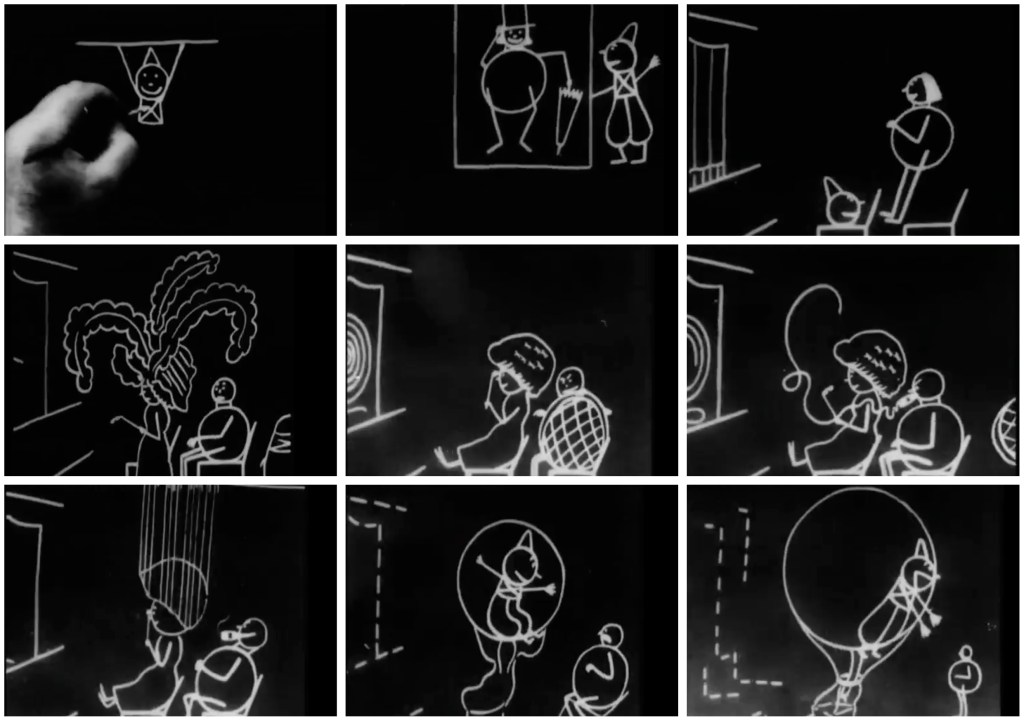
On 17 August 1908 a movie was released not a normal one it was the world’s first fully animated movie ‘Fantasmagorie’, created by Emile Cohl in a hand-drawn style, released by the Gaumont Company in Paris. The movie was a tribute to the Incoherent Art Movement which was banished by that time. The name was derived from the Fantasmograph, a 19th-century lantern that projects shadowy images on the wall. The word ‘Fantasmagorie’ means a constantly shifting complex succession of things seen or imagined.
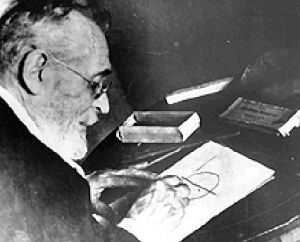
Emile Cohl did not have a very privileged Childhood his artistic capabilities were discovered at the age of seven at the boarding school he was enrolled in. With the Franco-Prussian war in progress, he came under the influence of political caricature and puppet Drama, in the 1880s or 90s he developed himself as a writer, caricaturist, and cartoonist. he worked as the assistant for caricaturist Andre Gill, later he joined to Goumant company and directed many films before moving to animation. It took five months for Emile Cohl to create the movie, he made 700 drawing for 1 minute 20 seconds, he used an illuminated glass plate and traced consecutive drawings with the variations needed for the consistent movement and continuity among the drawings, it was projected at a rate of 16 frames per second, he made eight drawings for each second photographed each twice. The drawings were placed one by one on a lightbox and photographed. The movie ’Fantasmagorie’ is about the interaction of a Stick man with different objects.This movie made a hit in the time ’90s, which led to the creation of new techniques for the problems that arise while makes such movies.
Coco, Zaya, and the last dragon those are such of brilliant animated movie we are obsessed off, showing a story differently with updated techniques but who started it, how an animated movie was back when it started forming.
On 17 August 1908 a movie was released not a normal one it was the world’s first fully animated movie ‘Fantasmagorie’, created by Emile Cohl in a hand-drawn style, released by the Gaumont Company in Paris. The movie was a tribute to the Incoherent Art Movement which was banished by that time. The name was derived from the Fantasmograph, a 19th-century lantern that projects shadowy images on the wall. The word ‘Fantasmagorie’ means a constantly shifting complex succession of things seen or imagined.
Emile Cohl did not have a very privileged Childhood his artistic capabilities were discovered at the age of seven at the boarding school he was enrolled in. With the Franco-Prussian war in progress, he came under the influence of political caricature and puppet Drama, in the 1880s or 90s he developed himself as a writer, caricaturist, and cartoonist. he worked as the assistant for caricaturist Andre Gill, later he joined to Goumant company and directed many films before moving to animation. It took five months for Emile Cohl to create the movie, he made 700 drawing for 1 minute 20 seconds, he used an illuminated glass plate and traced consecutive drawings with the variations needed for the consistent movement and continuity among the drawings, it was projected at a rate of 16 frames per second, he made eight drawings for each second photographed each twice. The drawings were placed one by one on a lightbox and photographed. The movie ’Fantasmagorie’ is about the interaction of a Stick man with different objects.This movie made a hit in the time ’90s, which led to the creation of new techniques for the problems that arise while makes such movies.
Union Minister for Road Transport and Highways Nitin Gadkari has proposed to increase the speed limit of vehicle on highways up to 20kmph . In a meeting with his officials , Gadkari stated that the conditions of highways have improved overtime and can bolster faster travel . Gadkari also mentioned putting mechanism for uniformity of speeds limit on certain stretches rather than effect frequent changes in notified speed limits even on short stretches . This comes alongside the Ministry’s efforts to the Government has planned to shift public transport and logistics to 100 percent clean energy sources , Union minister said that asserting that India has made significant progress towards improving green energy access over last decade . Addressing a virtual event organised by industry body CII , the road transport and highways minister said India is already on track to reach its goal of 175GW of installed renewable capacity by 2022.They have stated that conditions of highways have improved overtime and can bolster faster travel times .The minister said to reduce congestion on corridors and enhance logistic efficiency , 35 locations have been identified for the development of multimodal logistics parks . These logistics parks would also trigger the development of manufacturing clusters in adjacent rural and tier 2 urban. Godkari said ” Society should be livable , workable , and sustainable for all with an important focus on ethics, ecology, and the environment .”
Union Minister for Road Transport and Highways Nitin Gadkari has proposed to increase the speed limit of vehicle on highways up to 20kmph . In a meeting with his officials , Gadkari stated that the conditions of highways have improved overtime and can bolster faster travel . Gadkari also mentioned putting mechanism for uniformity of speeds limit on certain stretches rather than effect frequent changes in notified speed limits even on short stretches . This comes alongside the Ministry’s efforts to the Government has planned to shift public transport and logistics to 100 percent clean energy sources , Union minister said that asserting that India has made significant progress towards improving green energy access over last decade . Addressing a virtual event organised by industry body CII , the road transport and highways minister said India is already on track to reach its goal of 175GW of installed renewable capacity by 2022.They have stated that conditions of highways have improved overtime and can bolster faster travel times .The minister said to reduce congestion on corridors and enhance logistic efficiency , 35 locations have been identified for the development of multimodal logistics parks . These logistics parks would also trigger the development of manufacturing clusters in adjacent rural and tier 2 urban. Godkari said ” Society should be livable , workable , and sustainable for all with an important focus on ethics, ecology, and the environment .”
Teacher is most essential and important creature to make us uplift to live life in better way in clear direction
Its a teacher only which guide us towards goal,help in establishing the correct and desired goal to reach success ,help to embark knowledge ,strength ,weakness and help to live our life fully
India is a large country. It ranks seventh in the world. Also, it is the second-most populous country in the world. It is home to large biodiversity and a large proportion of people live in the lap of nature. Indeed, nature has provided ways and means for the sustenance of life on earth. Alongside, it is also one of the biggest sources of destruction. It can be due to earthquakes, floods, droughts, landslides, and many more. These are termed natural hazards and can cause great damage to human habitations.
This article is concerned with the mechanism of Earthquakes and how to manage and sustain them in case one arrives in our vicinity.
What is an earthquake? – Sudden movements under the earth’s crust cause shaking or vibrations of a part of the earth’s surface. These vibrations are called earthquakes. The shaking movements sent out by an earthquake are called seismic waves and the study of this phenomenon is called seismology.
The place of origin of an earthquake is called its focus and the place which is directly above the focus on the surface of the earth is called the epicentre. The effect of an earthquake is usually felt the strongest near the epicentre and it is most likely that the major part of the damage will also be caused in the surrounding areas.
Near about a million earthquakes are experienced on the earth every year. Most of them are just minor tremors and go unnoticed.
A natural question may arise that if we have so much information about earthquakes, don’t we need to devise a method to track the movement and damage of an earthquake?
Well, much effort isn’t needed because a sensitive device named a seismograph is used to detect the occurrence of an earthquake.
Seismograph explained – Seismic waves are the vibrations from earthquakes that travel through the earth. They are recorded on instruments called seismographs, which follow a zigzag trace that shows the varying amplitude of ground oscillations beneath the instrument. The sensor part of a seismograph is referred to as the seismometer, while the graphing capability was added as a later invention. Sensitive seismographs, which greatly magnify these ground motions, can detect strong earthquakes from sources anywhere in the world. The time, location, and magnitude of an earthquake can be determined from the data recorded by seismograph stations.
The intensity of an earthquake is measured using an instrument known as the Richter scale. The Richter magnitude scale was developed in 1935 by Charles F. Richter of the California Institute of Technology as a mathematical device to compare the size of earthquakes.
What to do in case of an earthquake? – As already mentioned, not all earthquakes are life-threatening. But it is important to safeguard ourselves and the people around us from such a disaster. Given below are steps that need to be kept in mind while dealing with an earthquake.
1) Moving to an open area helps. In case of a high-intensity earthquake, the buildings may fall and cause hurt. It is best to find an open spot.
2) Basic first-aid functions need to be learned in case of injuries suffered to you or people around you.
3) In case you are trapped in a building, try remaining close to an interior wall and protect your head with your arms ( in case the ceiling may fall). Also, avoid using a lift.
4) If you are already outdoors, keep away from trees, signboards, poles, and electric wires.
5) Never take shelter inside a car or a bus.
These are methods that are simple and easy to follow. But if you panic in such situations, chances are you wouldn’t be able to recall them. Hence the key tip is to remain calm and composed and then follow the steps.
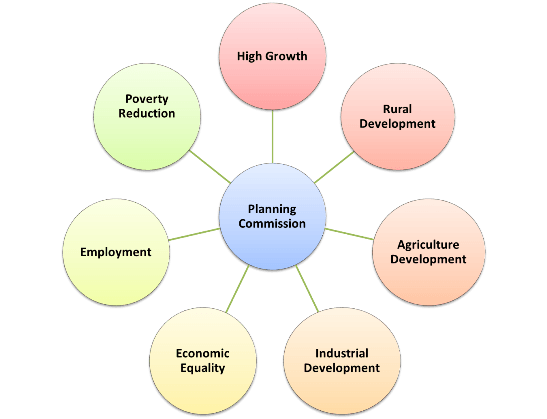
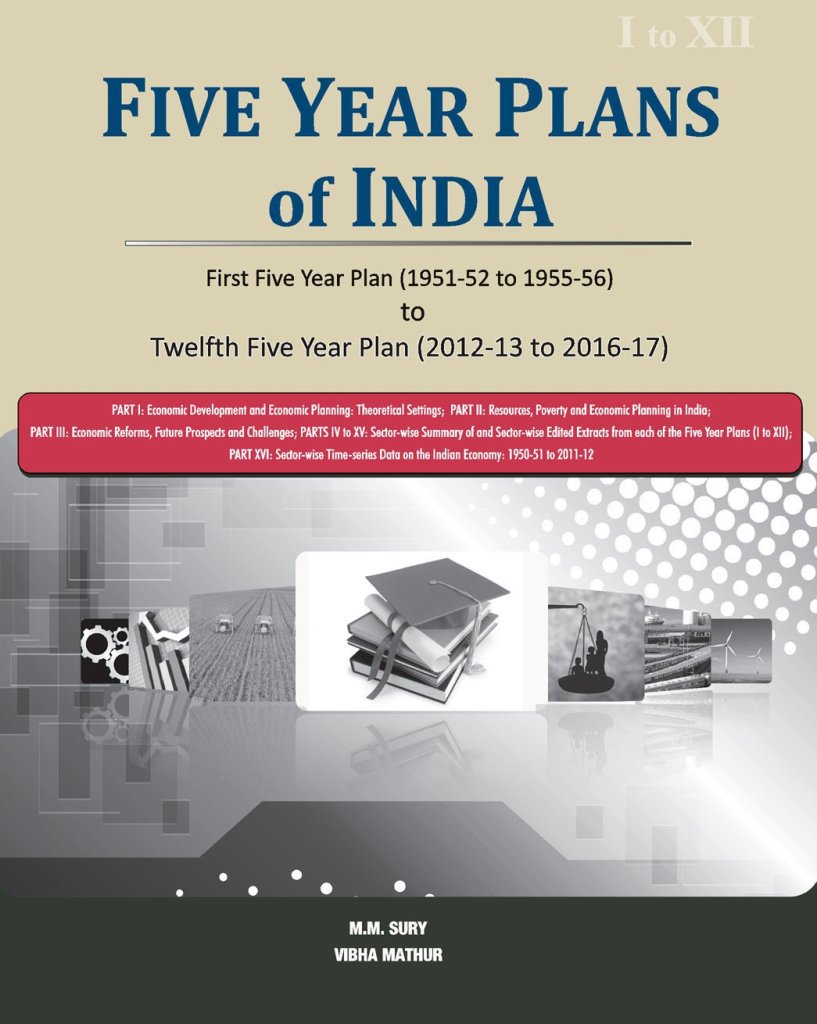
From 1947 to 2017, the Indian economy was premised on the concept of planning. This was carried through the Five-Year Plans, developed, executed, and monitored by the Planning Commission (1951-2014) and the NITI Aayog (2015-2017). With the prime minister as the ex-officio chairman, the commission has a nominated deputy chairman, who holds the rank of a cabinet minister. The first year plan was Harrod – Domar model of development economics. FYP had a target of 2.1% PA growth in national income. Top priority was given to the development of agricultural sector. The idea was agricultural development would lead to higher rate of economic growth.
FIRST PLAN (1951-1956)
Based on Harrod-Domar model. There were arrival of large number of refugees, severe food shortage and mounting inflation confronted the country at the onset of the first five year plan. High priority was given to agriculture, price stability, power and transport. It was a successful plan primarily because of good harvest in the last two years of the plan. Objectives of normal life of refugee, food self-sufficiency and control of prices were more or less achieved. The target growth rate was 2.1 and actual growth rate achieved was 3.7.
SECOND PLAN (1956-61)
Second plan was prepared by Prof. P.C. Mahalanobis. It has s also called Mahalanobis plan. Second plan was conceived in an atmosphere of economic stability. The plan was focused on rapid industrialization by setting up of heavy and basic industries. Importance was given to the public sector. The industrial policy was based on establishment of a socialistic pattern of society as the goal of economic policy. The target growth rate was 4.5 and the actual growth rate achieved was 4.3.
THIRD PLAN (1961-1966)
When this plan was started it was felt that Indian economy has entered a “takeoff stage”. Therefore it’s aim was to make India a self-reliant and self- generating economy. Based on the experience of first two plans, agriculture was given top priority to support the the exports and industry. The plan was thorough failure in reaching the targets due to Chinese aggression (1962), Indo-Park (1965), severe drought (1965-66), food shortage, inflation and adverse balance of payments, Devaluation of the rupee happened in 1966. The target growth rate was 5.6 and the actual growth rate achieved was 2.8.
ANNUAL PLANS (1966-69)
Failure of Third plan and that of the Devaluation of rupee along with inflationary recession led to postponement of fourth FYP. Three annual plans were introduced instead. During the Annual plan a whole new agricultural strategy called the High Yielding Variety Program also known as Green Revolution was implemented.
FOURTH PLAN (1969-74)
The main objective of the fourth plan was “growth with stability” and “progressive achievement of self- reliance. First two years of the plan saw record production. The plan was to improve the standard of living of the weaker sections of the society through employment programmes. The target growth rate was 5.7 and the actual growth rate achieved was 3.3.
FIFTH PLAN (1974-79)
The fifth plan was prepared and launched by D.P. Dhar in the backdrop of economic crisis arising out of run-away fuelled by hike in oil prices and failure of the Government takeover of the wholesome trade in wheat. The two main objectives of this plan is ‘removal of poverty’ (Garibihatao) and ‘attainment of self-reliance’. But due to high inflation, cost calculations for the plan proved to be completely wrong. The target growth rate was 4.4 and the actual growth rate achieved was 4.8.
ANNUAL PLANS (1978-80) AND HINDU RATE OF GROWTH
There were two annual plans 1978-79 and 1978-80. The objectives of first plan were removal of unemployment and provision of basic necessities of drinking water, primary education and health care. Second plan was focused on the rural sector with importance accorded to agriculture.
The phrase Hindu rate of growth, economist Raj Krishna who used it to describe India’s unsatisfactory growth trend in 1950-80 was stuck at 3.5 to 4 per cent per year. The word ‘Hindu’ was used to refer the inactive growth rate of Indian economy.
SIXTH PLAN (1980-85)
The plan was focused in national income and modernization of technology. Sixth plan was considered as success as most of the target were realised even though during the last year (1984-1985) many parts faced severe famine conditions and agricultural output was less than the record output of previous year. The target growth rate was 5.2 and the actual growth rate achieved was 5.7.
SEVENTH PLAN (1985-90)
The plan aimed at accelerating food grain production, increasing employment opportunities and raising productivity with focus on food, work and productivity. The plan was successful. The target growth rate was 5 per cent and the achieved growth rate was 6.
ANNUAL PLAN (1990-92)
The eight plan was postponed by two years because of political uncertainty at the centre. The focus of the plans was to increase employment opportunities and social transformation.
EIGHTH PLAN (1992-97)
There was issues during the launch of plan were Worsening Balance of Payment position, rising debt burden, widening budget deficits, recession in industry and inflation. The plan undertook drastic policy measures to combat the bad economic situation and to undertake an annual average growth of 5.6 percent under Prime Minister of Shri P V Narasimha Rao. The annual growth rate was 6.5 per cent and the achieved growth rate was 34 percent.
NINTH PLAN (1997-2002)
The plan prepared under United Front Government focused on “Growth with Social Justice and Equality”. The plan aimed to demand predominantly on the private sector, India as well as foreign (FDI). It assigned priority to agriculture and rural development with a view to generate productive employment and eradicate poverty. The target growth rate was 6.5 and the actual growth rate achieved was 5.4.
TENTH PLAN (2002-2007)
Other than the economical growth, tenth plan had set “monitorable targets” in reduction in gender gaps in literacy and wage rate, reduction in infant and maternal mortality rates, improvement in literacy, access to potable drinking water cleaning of major polluted rivers. The target growth rate was 8.0 and the actual growth rate achieved was 7.6.
ELEVENTH PLAN (2007-2012)
Eleventh Plan was aimed “Towards Faster and More Inclusive Growth”. The vision of Eleventh Plan included several inter related components like rapid growth reducing poverty and creating employment opportunities. Access to essential services in health and education, specially for poor, extension of employment opportunities using National Rural Employment Guarantee Programme, environmental sustainability and reduction of gender inequality. Its growth rate was 8.1 per cent but it achieved only 7.9 per cent.
TWELFTHFIVE YEAR PLAN (2012-2017)
The Twelfth Plan commenced at a time when the global economy was going through a second financial crisis. This crisis affected all countries including India. Growth rate slowed down to 6.2 per cent. Therefore the plan emphasizes that the first priority must to bring economy back to rapid growth in all fields. The aim was bring back economic growth faster, more inclusive and with sustainable growth. The target growth rate was 8.0
With the Planning Commission dissolved, no more formal plans are made for the economy, but Five-Year Defence Plans continue to be made. The latest would have been 2017–2022. However, there is no Thirteenth Five-Year Plan.
India is a large country. It ranks seventh in the world. Also, it is the second-most populous country in the world. It is home to large biodiversity and a large proportion of people live in the lap of nature. Indeed, nature has provided ways and means for the sustenance of life on earth. Alongside, it is also one of the biggest sources of destruction. It can be due to earthquakes, floods, droughts, landslides, and many more. These are termed natural hazards and can cause great damage to human habitations.
This article is concerned with the mechanism of Earthquakes and how to manage and sustain them in case one arrives in our vicinity.
What is an earthquake? – Sudden movements under the earth’s crust cause shaking or vibrations of a part of the earth’s surface. These vibrations are called earthquakes. The shaking movements sent out by an earthquake are called seismic waves and the study of this phenomenon is called seismology.
The place of origin of an earthquake is called its focus and the place which is directly above the focus on the surface of the earth is called the epicentre. The effect of an earthquake is usually felt the strongest near the epicentre and it is most likely that the major part of the damage will also be caused in the surrounding areas.
Near about a million earthquakes are experienced on the earth every year. Most of them are just minor tremors and go unnoticed.
A natural question may arise that if we have so much information about earthquakes, don’t we need to devise a method to track the movement and damage of an earthquake?
Well, much effort isn’t needed because a sensitive device named a seismograph is used to detect the occurrence of an earthquake.
Seismograph explained – Seismic waves are the vibrations from earthquakes that travel through the earth. They are recorded on instruments called seismographs, which follow a zigzag trace that shows the varying amplitude of ground oscillations beneath the instrument. The sensor part of a seismograph is referred to as the seismometer, while the graphing capability was added as a later invention. Sensitive seismographs, which greatly magnify these ground motions, can detect strong earthquakes from sources anywhere in the world. The time, location, and magnitude of an earthquake can be determined from the data recorded by seismograph stations.
The intensity of an earthquake is measured using an instrument known as the Richter scale. The Richter magnitude scale was developed in 1935 by Charles F. Richter of the California Institute of Technology as a mathematical device to compare the size of earthquakes.
What to do in case of an earthquake? – As already mentioned, not all earthquakes are life-threatening. But it is important to safeguard ourselves and the people around us from such a disaster. Given below are steps that need to be kept in mind while dealing with an earthquake.
1) Moving to an open area helps. In case of a high-intensity earthquake, the buildings may fall and cause hurt. It is best to find an open spot.
2) Basic first-aid functions need to be learned in case of injuries suffered to you or people around you.
3) In case you are trapped in a building, try remaining close to an interior wall and protect your head with your arms ( in case the ceiling may fall). Also, avoid using a lift.
4) If you are already outdoors, keep away from trees, signboards, poles, and electric wires.
5) Never take shelter inside a car or a bus.
These are methods that are simple and easy to follow. But if you panic in such situations, chances are you wouldn’t be able to recall them. Hence the key tip is to remain calm and composed and then follow the steps.
From 1947 to 2017, the Indian economy was premised on the concept of planning. This was carried through the Five-Year Plans, developed, executed, and monitored by the Planning Commission (1951-2014) and the NITI Aayog (2015-2017). With the prime minister as the ex-officio chairman, the commission has a nominated deputy chairman, who holds the rank of a cabinet minister. The first year plan was Harrod – Domar model of development economics. FYP had a target of 2.1% PA growth in national income. Top priority was given to the development of agricultural sector. The idea was agricultural development would lead to higher rate of economic growth.
FIRST PLAN (1951-1956)
Based on Harrod-Domar model. There were arrival of large number of refugees, severe food shortage and mounting inflation confronted the country at the onset of the first five year plan. High priority was given to agriculture, price stability, power and transport. It was a successful plan primarily because of good harvest in the last two years of the plan. Objectives of normal life of refugee, food self-sufficiency and control of prices were more or less achieved. The target growth rate was 2.1 and actual growth rate achieved was 3.7.
SECOND PLAN (1956-61)
Second plan was prepared by Prof. P.C. Mahalanobis. It has s also called Mahalanobis plan. Second plan was conceived in an atmosphere of economic stability. The plan was focused on rapid industrialization by setting up of heavy and basic industries. Importance was given to the public sector. The industrial policy was based on establishment of a socialistic pattern of society as the goal of economic policy. The target growth rate was 4.5 and the actual growth rate achieved was 4.3.
THIRD PLAN (1961-1966)
When this plan was started it was felt that Indian economy has entered a “takeoff stage”. Therefore it’s aim was to make India a self-reliant and self- generating economy. Based on the experience of first two plans, agriculture was given top priority to support the the exports and industry. The plan was thorough failure in reaching the targets due to Chinese aggression (1962), Indo-Park (1965), severe drought (1965-66), food shortage, inflation and adverse balance of payments, Devaluation of the rupee happened in 1966. The target growth rate was 5.6 and the actual growth rate achieved was 2.8.
ANNUAL PLANS (1966-69)
Failure of Third plan and that of the Devaluation of rupee along with inflationary recession led to postponement of fourth FYP. Three annual plans were introduced instead. During the Annual plan a whole new agricultural strategy called the High Yielding Variety Program also known as Green Revolution was implemented.
FOURTH PLAN (1969-74)
The main objective of the fourth plan was “growth with stability” and “progressive achievement of self- reliance. First two years of the plan saw record production. The plan was to improve the standard of living of the weaker sections of the society through employment programmes. The target growth rate was 5.7 and the actual growth rate achieved was 3.3.
FIFTH PLAN (1974-79)
The fifth plan was prepared and launched by D.P. Dhar in the backdrop of economic crisis arising out of run-away fuelled by hike in oil prices and failure of the Government takeover of the wholesome trade in wheat. The two main objectives of this plan is ‘removal of poverty’ (Garibihatao) and ‘attainment of self-reliance’. But due to high inflation, cost calculations for the plan proved to be completely wrong. The target growth rate was 4.4 and the actual growth rate achieved was 4.8.
ANNUAL PLANS (1978-80) AND HINDU RATE OF GROWTH
There were two annual plans 1978-79 and 1978-80. The objectives of first plan were removal of unemployment and provision of basic necessities of drinking water, primary education and health care. Second plan was focused on the rural sector with importance accorded to agriculture.
The phrase Hindu rate of growth, economist Raj Krishna who used it to describe India’s unsatisfactory growth trend in 1950-80 was stuck at 3.5 to 4 per cent per year. The word ‘Hindu’ was used to refer the inactive growth rate of Indian economy.
SIXTH PLAN (1980-85)
The plan was focused in national income and modernization of technology. Sixth plan was considered as success as most of the target were realised even though during the last year (1984-1985) many parts faced severe famine conditions and agricultural output was less than the record output of previous year. The target growth rate was 5.2 and the actual growth rate achieved was 5.7.
SEVENTH PLAN (1985-90)
The plan aimed at accelerating food grain production, increasing employment opportunities and raising productivity with focus on food, work and productivity. The plan was successful. The target growth rate was 5 per cent and the achieved growth rate was 6.
ANNUAL PLAN (1990-92)
The eight plan was postponed by two years because of political uncertainty at the centre. The focus of the plans was to increase employment opportunities and social transformation.
EIGHTH PLAN (1992-97)
There was issues during the launch of plan were Worsening Balance of Payment position, rising debt burden, widening budget deficits, recession in industry and inflation. The plan undertook drastic policy measures to combat the bad economic situation and to undertake an annual average growth of 5.6 percent under Prime Minister of Shri P V Narasimha Rao. The annual growth rate was 6.5 per cent and the achieved growth rate was 34 percent.
NINTH PLAN (1997-2002)
The plan prepared under United Front Government focused on “Growth with Social Justice and Equality”. The plan aimed to demand predominantly on the private sector, India as well as foreign (FDI). It assigned priority to agriculture and rural development with a view to generate productive employment and eradicate poverty. The target growth rate was 6.5 and the actual growth rate achieved was 5.4.
TENTH PLAN (2002-2007)
Other than the economical growth, tenth plan had set “monitorable targets” in reduction in gender gaps in literacy and wage rate, reduction in infant and maternal mortality rates, improvement in literacy, access to potable drinking water cleaning of major polluted rivers. The target growth rate was 8.0 and the actual growth rate achieved was 7.6.
ELEVENTH PLAN (2007-2012)
Eleventh Plan was aimed “Towards Faster and More Inclusive Growth”. The vision of Eleventh Plan included several inter related components like rapid growth reducing poverty and creating employment opportunities. Access to essential services in health and education, specially for poor, extension of employment opportunities using National Rural Employment Guarantee Programme, environmental sustainability and reduction of gender inequality. Its growth rate was 8.1 per cent but it achieved only 7.9 per cent.
TWELFTHFIVE YEAR PLAN (2012-2017)
The Twelfth Plan commenced at a time when the global economy was going through a second financial crisis. This crisis affected all countries including India. Growth rate slowed down to 6.2 per cent. Therefore the plan emphasizes that the first priority must to bring economy back to rapid growth in all fields. The aim was bring back economic growth faster, more inclusive and with sustainable growth. The target growth rate was 8.0
With the Planning Commission dissolved, no more formal plans are made for the economy, but Five-Year Defence Plans continue to be made. The latest would have been 2017–2022. However, there is no Thirteenth Five-Year Plan.
Biotechnology is the technology that uses living organisms or parts of living organisms to develop and create various products. It harnesses cellular and biomolecular processes to develop technologies and products that help improve our lives and the health of our planet. Today, biotechnology covers many different fields (eg. genetics, biochemistry, molecular biology, etc.). New technologies and products are developed every year within the areas of eg. medicine (development of new medicines and therapies), agriculture (development of genetically modified plants, biofuels, biological treatment) or industrial biotechnology (production of chemicals, paper, textiles and food). Biotech is being used in the medical field to reduce rates of infectious diseases, create tools for precise disease detection and combating everyday biological threats.
In the agricultural field, biotech is being used to improve crop insect resistance, enhance crop herbicide tolerance and it also facilitates the use of more environmentally sustainable farming practices. Through this, higher crop yields are being generated and food produced is free of any allergens or toxins. Biotech has also reduced the amount of input needed for a good yield, helped produce crops that need fewer applications of pesticides and helped develop crops with enhanced nutrition profiles that solve vitamin and nutrient deficiencies.
Biotech has also immensely helped the industrial world. It uses biological processes such as fermentation and harnesses biocatalysts such as enzymes, yeast, and other microbes to become microscopic manufacturing plants. It has helped streamline chemical manufacturing processes and has improved the efficiency of manufacturing processes. This has saved companies millions of dollars in operating costs. Biofuels are being used much more today and have cut greenhouse gas emmissions by over 50%. Hence, the dependance on and usage of petrochemicals has reduced significantly. Biotech is also helping decrease water usage and waste generation and is tapping into the full potential of biomass waste products.
Overall, the revenues of U.S. and European biotechnology industries roughly doubled over the five-year period from 1996 through 2000. Rapid growth continued into the 21st century, fueled by the introduction of new products, particularly in health care. By 2020 the biotechnology market size was estimated at $752.88 billion globally, with new opportunities for growth emerging in particular from government- and industry-driven efforts to accelerate drug development and product-approval processes. Recent advances in biotechnology are helping us prepare for and meet society’s most pressing challenges. It is no doubt, very important for the future of our species as well as the planet.






 Eduindex
You must be logged in to post a comment.