Plea for south bench of the Supreme Court

Bar Council heads of the southern States including Telangana, Andhra Pradesh, Tamil Nadu, Kerala, and Karnataka have appealed to Vice-President M. Venkaiah Naidu, and the Chief Justice of India N.V. Ramana to consider setting up the long pending demand of a Supreme Court bench in the south on Monday.

The delegation consisting of TS BC chairman A. Narasimha Reddy, AP BC chief G. Rama Rao, TN BC chief P.S. Amal Raj, Karnataka BC chief L. Srinivasa Babu, Kerala BC chief K.N Anil Kumar along with ex-MLC N. Ramchander Rao met both the dignitaries at Delhi where they presented a memorandum highlighting the need for such a step listing out the advantages. Pointing out that there were 65,000 cases pending in the SC, they argued for immediate reforms like establishing permanent regional centres of the Apex Court for the north, south, east and west at Delhi, Kolkata, Chennai and Mumbai as it was the need of the hour to ensure accessible and speedy justice to the people. Over the decades, several standing committees of the Parliament, Law Commissions, Bar Councils and several others have made several representations in this regard. In fact, the Law Commission in 2009 recommended setting up of a Constitution Bench with seven judges in Delhi and four Cessation Benches in Chennai/Hyderabad, Mumbai and Kolkata with four to six judges each. These were to work as appellate courts arising out of orders of the SC.

Though this was rejected in 2010 by SC the time has come to revisit this, they asserted. They also stated that Article 130 of the Constitution empowers the CJ to constitute with the consent of the President these regional benches. It would not only allow common people who cannot afford to make trips to Delhi to appeal to the highest courts but will also open up opportunities for the legal fraternity besides helping in reducing the pendency of cases in the courts.

“The present system of working of the SC needs to be changed if the delayed justice notion is to be changed,” they said and claimed in a press release later in the evening that both the VP and CJ had “responded positively”.

Words of the former law minister; Ravi Shankar Prasad

Law Minister Ravi Shankar Prasad, in a letter to Rajya Sabha member and Marumalarchi Dravida Munnetra Kazhagam (MDMK) chief Vaiko, said that though the matter of setting up a Southern Bench of the Supreme Court of India is pending in the top court, the issue has so far not found favour. The letter, dated February 12, responded to a query raised by Mr. Vaiko in Parliament, in which he asked if a Bench of the Supreme Court of India can be set up in south India.

“As as you must be aware, according to Article 130 of the Constitution, the Supreme Court shall sit in Delhi or in any other place or places as the Chief Justice of India may, with the approval of the President of India, from time to time, appoint. Representations have been received at various times from various quarters for the establishment of Benches of the Supreme Court in various parts of the country,” Mr. Prasad said in his letter.

Domestic violence


                                                        (Photo: Bar and Bench)

Domestic violence (also named domestic abuse or family violence) is violence or other abuse in a domestic setting, such as in marriage or cohabitation.  Domestic violence may be used as a synonym for intimate partner violence, which is committed by a spouse or partner in an intimate relationship against the other spouse or partner, and can take place in heterosexual or same sex relationships, or between former spouses or partners. In the broadest sense, domestic violence can also involve violence against children, parents, or the elderly. It takes a number of forms, including physical, verbal, emotional, economic, religious, reproductive and sexual abuse, which can range from subtle, coercive forms to marital rape and to violent physical abuse such as choking, beating, female genital mutilation, and acid throwing that results in disfigurement or death. Domestic murders include stoning, bride burning, honor killing and dowry death(which sometimes involve non-cohabitating family members). 

FORMS OF DOMESTIC VIOLENCE

Physical abuse is that involving contact intended to cause fear, pain, injury, other physical suffering or bodily harm. In the context of coercive control, physical abuse is to control the victim. Physical violence can be the culmination of other abusive behavior, such as threats, intimidation, and restriction of victim self-determination through isolation, manipulation and other limitations of personal freedom. Denying medical care, sleep deprivation, and forced drug or alcohol use, are also forms of physical abuse.

Sexual abuse, is defined by World Health Organization as any sexual act, attempt to obtain a sexual act, unwanted sexual comments or advances, or acts to traffic, or otherwise directed, against a person’s sexuality using coercion. Aside from initiation of the sexual act through physical force, sexual abuse occurs if a person is verbally pressured into consenting, unable to understand the nature or condition of the act, unable to decline participation, or unable to communicate unwillingness to engage in the sexual act. This could be because of underage immaturity, illness, disability, or the influence of alcohol or other drugs, or due to intimidation or pressure.

Emotional abuse includes minimizing threats, isolation,  public humiliation, unrelenting criticism. Stalking is a common form of psychological intimidation. Victims tend to feel their partner has nearly total control over them, greatly affecting the power dynamic in a relationship, empowering the perpetrator, and disempowering the victim. Victims often suffer from depression, putting them at increased risk of eating disorders, suicide, and drug and alcohol abuse.

Economic abuse (or financial abuse) is a form of abuse when one intimate partner has control over the other partner’s access to economic resources. Marital assets are used as a means of control. Economic abuse diminishes the victim’s capacity to support themselves, increasing dependence on the perpetrator, including reduced access to education, employment, career advancement, and assets acquirement. Forcing or pressuring a family member to sign documents, to sell things, or to change a will are forms of economic abuse.

 CAUSES

A partner’s domination may take the form of emotional, physical or sexual abuse. Studies suggest that violent behavior often is caused by an interaction of situational and individual factors. That means that abusers learn violent behavior from their family, people in their community and other cultural influences as they grow up. They may have seen violence often or they may have been victims themselves. Some abusers acknowledge growing up having been abused as a child.

Children who witness or are the victims of violence may learn to believe that violence is a reasonable way to resolve conflict between people. Boys who learn that women are not to be valued or respected and who see violence directed against women are more likely to abuse women when they grow up. Girls who witness domestic violence in their families of origin are more likely to be victimized by their own husbands. Although women are most often the victim of domestic violence, the gender roles can and are reversed sometimes.

Alcohol and drugs may contribute to violent behavior. A drunk or high person will be less likely to control his or her violent impulses toward their partner, so keeping such drinking or drug use episodes to a minimum may be valuable for a person living in a domestic violence situation.

No cause of domestic violence, however, justifies the actions of the abuser, nor should it be used as a rationale for their behavior. These possible causes are only to better understand why an abuser believes it is acceptable to abuse their partner physically, sexually, psychologically or emotionally. Ultimately an abuser needs to get help for their unhealthy and destructive behavior, or find themselves living a solitary and lonely life.

 STATISTICS OF DOMESTIC VIOLENCE

        1 in 4 women and 1 in 7 men will experience severe physical violence by an intimate partner in their lifetime. (CDC, 2017)

        1 in 10 women in the United States will be raped by an intimate partner in her lifetime. (CDC, 2010)

    Approximately 16.9% of women and 8.0% of men will experience sexual violence other than rape by an intimate partner at some point in their lifetime. (CDC, 2010)

        Data on sexual violence against men may be underreported.

        An estimated 9.7% of women and 2.3% of men have been stalked by an intimate partner during their lifetime. (CDC, 2017)

        Nearly half of all women and men in the United States will experience psychological aggression by an intimate partner in their lifetime. (CDC, 2017)

GOVERNMENT SCHEMES TO CURB DOMESTIC VIOLENCE

  • Beti Bachao, Beti Padhao, meant for uplifting women in the sphere of women’s education
  • Sukanya Samriddhi Account, meant to help families’ save for their daughters
  • One Stop Center scheme meant to offer easy access for women suffering from domestic abuse or violence, and needing support
  • Pradhan Mantri Ujjwala Yojana meant to offer free LPG connections to women living below poverty line
  • Mahila Haat meant to support women entrepreneurs and women self-help groups
  • Rajiv Gandhi National Crèche Scheme for Children of Working Mothers meant to provide affordable daycare services to working women
  • Maternity Benefit Scheme meant for pregnant women and lactating mothers
  • Women’s Helpline 1091 meant to provide emergency assistance to women in trouble, especially those facing violence of any kind
WHAT CAN WE DO?

        Calling the police if you see or hear evidence of domestic violence.

        Speak out publicly against domestic violence.

        Consider reaching out to your neighbor, friends, family.

        Educating others on domestic violence.

        Organize campaigns special in rural areas.

  •   Donating to domestic violence counselling programs


LIFE-GIVING GANGA’S PLIGHT

“Best of rivers, born of all the sacred waters,” the Ganges, Described in the Mahabharata.

Ganga river, also deemed as the Ganges River, flows 2,700 km from the Himalayas mountains to the Bay of Bengal in northern India and Bangladesh The Ganga rises from the Gangotri glacier about 4,000 metres above sea level on the southern slopes of the Himalayan Alps. The Bhagirathi is joined by the tributaries Alaknanda and Mandakini to form the Ganga in the Himalayan region. Its river basin covers over 1 million square kilometres and is home to more than 650 million people. The Ganges is vital for the survival of millions of people and a diverse range of biodiversity.

The Ganga and its tributaries support a diverse range of fauna and flora. The Ganges supports 104 species of Rotifers, or minute creatures, 378 species of fish, eleven amphibian species, twenty-seven reptile species, eleven types of mammals, and 177 species of aquatic birds, according to the Zoological Survey of India. The Ganges River dolphin, the Sundarbans’ Royal Bengal tiger, freshwater turtles, Gharial crocodiles, Sarius Crane, egrets, herons, and terns are just a few well-known species.

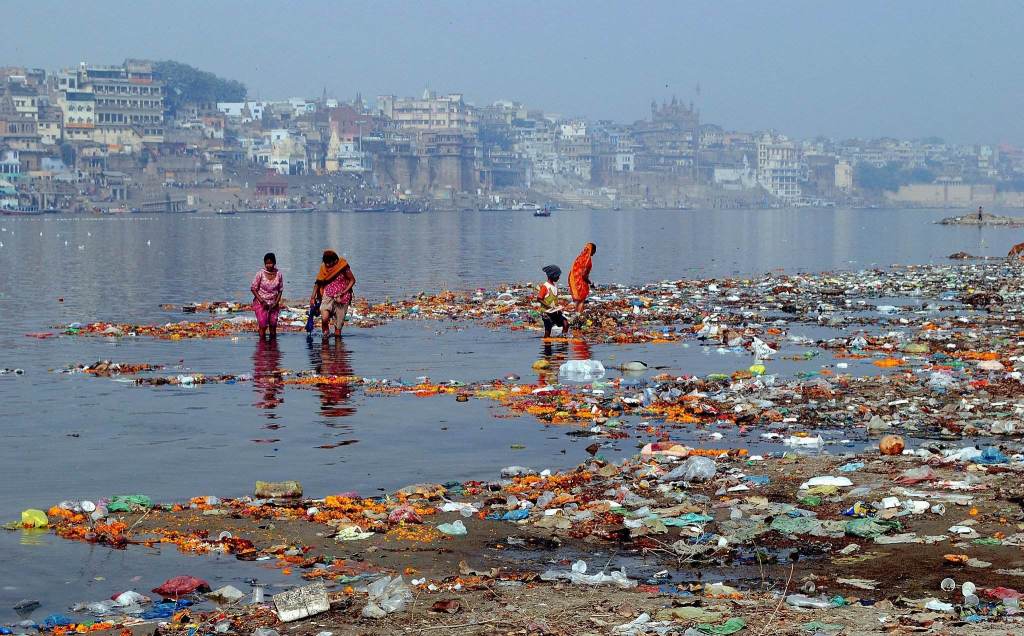
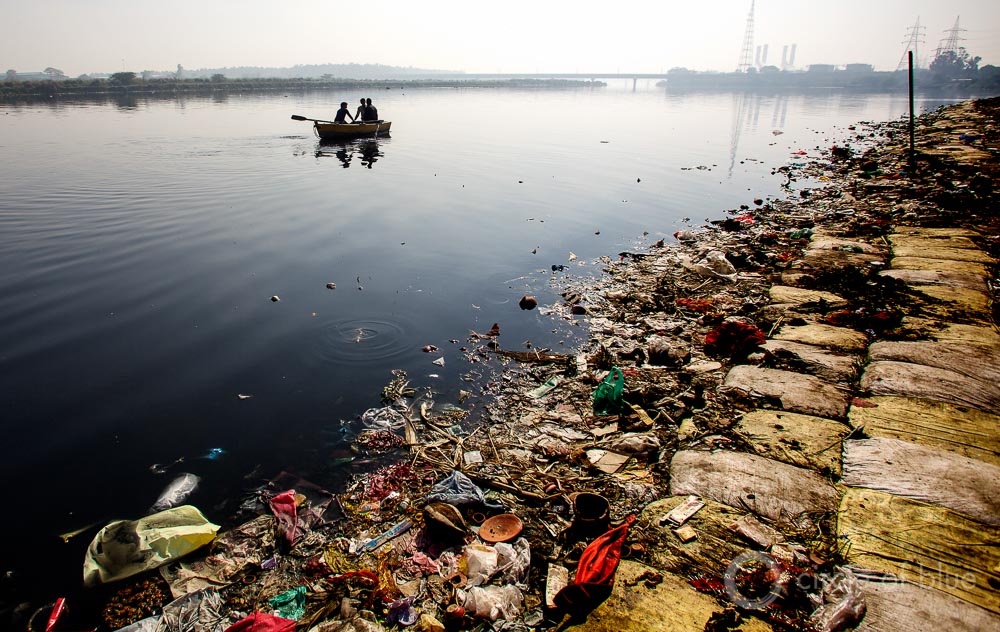
But due to the rapid rise of urbanization, farming, and commercialization in recent decades, the Ganges currently faces serious concerns. The Ganga has now become one of the five highly polluted rivers on the planet. Excessive water drawn-out for cultivation and other purposes, barrages, dams hindrance in the natural movement of the Ganges, and trash from households and industries have irreparably damaged this once pure and mighty, free-flowing river.

River pollution’s key sources

  • Hazardous trash from textile mills, slaughterhouses, abattoirs, hospitals, distilleries, and chemical facilities, being discharged into the river in large quantities.
  • The massive number of fertilizers and pesticides regularly employed in agriculture activities is washed into the Ganga with rainwater, endangering marine life.
  • Dams disrupting the river’s natural movement are also responsible for polluting the Ganga.
  • Open defecation on the river banks, some 70% of those living in rural areas have no access to toilets.
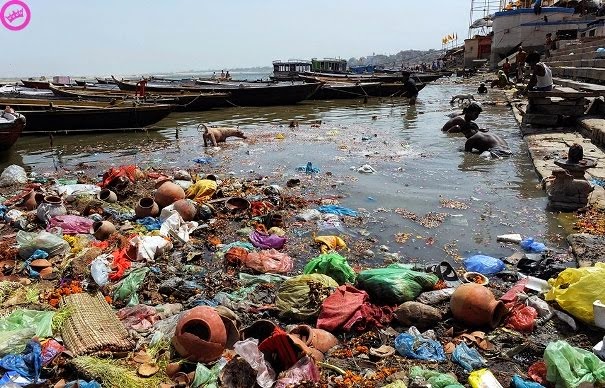
  •  Disposal of lost loved ones’ remains in the river since it is a river worshipped by a larger religious community.

Sewage- the most prominent contaminant

A report published by The Inter-Ministerial Group, established by the Indian government to study the pollution sources in the Ganga River, revealed that sewage and contaminated water dumped in the river are the principal sources of pollution in the Ganga. It also discovered a significant disparity between the quantity of garbage produced along the Ganga and the scale of waste treatment. It identified that plenty of cities along the Ganga’s banks, such as Kanpur, Varanasi, and Allahabad, lack any kind of sewerage systems at all. Approximately 2.9 billion liters of sewage, residential, and industrial wastewater are discharged straight into the Ganga daily. Millions of people who rely on the Ganga for all of their water needs are harmed by pollution. Many of these individuals have little choice but to continue to rely on the Ganga’s contaminated waters for survival, exposing themselves to waterborne diseases like dysentery, cholera, diarrhea, and typhoid.

OVerburdened Sewage Treatment Plants (STPs)

Among wastewater treatment capacity and ‘official estimated’ production, there is an 80% disparity. As per the Central Pollution Control Board, sewage is produced at a rate of 6,087 million liters per day (MLD), with a treatment capacity of 1,208.8 MLD. Since most cities are already established and overpopulated, constructing new conveyance and treatment systems isn’t just a difficult but an enormously expensive undertaking. Many of the already set up STPs are no longer functional or are underused due to a lack of financing from cities and local municipalities.

INDUSTRIAL & COMMERCIAL WASTE

More than 500 million liters of industrial wastewater is thrown straight into the Ganga daily. With toxic chemicals and pollutants flooding its waters at levels far past any form of permissible or safe levels, the Ganga has now become a toxic supplier of drinking and bathing water. 764 of the factories, approximately utilize 1123 MLD of water and dump 500 MLD of contaminated water in the Ganga’s mainstream. Tanneries produce the most hazardous types of toxins, and in a location like Unnao, more than 790 times the permitted level of chromium (about 1,125 tonnes), is dumped into the river. Small-scale companies continue to pollute the Ganga with over a billion gallons of toxic chemicals due to the lack of efficient and economical treatment methods.

FLAWED SOLID WASTE MANAGEMENT 

Many cities along the Ganga and its tributaries lack solid waste management systems, & even if they have, they are never adequate to handle the volume of waste generated each day. This solid trash is carried into the Ganga and its tributaries, either deliberately or because of rains during the monsoon. Vast quantities of biodegradable debris in the water consume a lot of oxygen as it breaks down, inflicting illness or death in aquatic animals like the threatened Gangetic dolphin. There were once tens of thousands of Ganges River dolphins in the river, but there are currently only about 1,200-1,800 left. Non-biodegradable materials float through rivers, obstructing the natural flow of air and gradually releasing their harmful toxins into the river. Aquatic species frequently eat these items obliviously and perish as a consequence. The general public lacks environmental awareness and education, inadvertently throwing their litter into the surroundings, utterly oblivious to the effects.

INAPPROPRIATE AGRICULTURAL PRACTICES

Over 80% of the river’s water is used for irrigation, while numerous hydro-power projects dry out vast swathes of the river, upping levels of pollution drastically. Evaporation and other variables cause around half of the water drawn from the Ganga for irrigation to be wasted before it can nurture a single crop. Out-of-date infrastructures, such as damaged and poorly assembled pipes and unsustainable farming techniques, are to blame for much of this damage. Groundwater depletion as a consequence of over-extraction for irrigation purposes.

The Ganges River nurtures the entire country and is crucial for everyone’s survival. Therefore, it must be rescued from its current plight. The public must be educated and made aware of the problem; efficient drainage systems must be built; and illegal dumping of harmful and hazardous materials by industries and households must be prohibited, promotion of water conservation for irrigation, Enactment of rules to keep dangerous chemical run-off out of the Ganga, Increasing farmer awareness of the practices and benefits of sustainable, organic farming, Solid waste collection and treatment at the source, minimizing and repurposing solid waste need to be done.

LIFE-GIVING GANGA'S PLIGHT

“Best of rivers, born of all the sacred waters,” the Ganges, Described in the Mahabharata.

Ganga river, also deemed as the Ganges River, flows 2,700 km from the Himalayas mountains to the Bay of Bengal in northern India and Bangladesh The Ganga rises from the Gangotri glacier about 4,000 metres above sea level on the southern slopes of the Himalayan Alps. The Bhagirathi is joined by the tributaries Alaknanda and Mandakini to form the Ganga in the Himalayan region. Its river basin covers over 1 million square kilometres and is home to more than 650 million people. The Ganges is vital for the survival of millions of people and a diverse range of biodiversity.

The Ganga and its tributaries support a diverse range of fauna and flora. The Ganges supports 104 species of Rotifers, or minute creatures, 378 species of fish, eleven amphibian species, twenty-seven reptile species, eleven types of mammals, and 177 species of aquatic birds, according to the Zoological Survey of India. The Ganges River dolphin, the Sundarbans’ Royal Bengal tiger, freshwater turtles, Gharial crocodiles, Sarius Crane, egrets, herons, and terns are just a few well-known species.

But due to the rapid rise of urbanization, farming, and commercialization in recent decades, the Ganges currently faces serious concerns. The Ganga has now become one of the five highly polluted rivers on the planet. Excessive water drawn-out for cultivation and other purposes, barrages, dams hindrance in the natural movement of the Ganges, and trash from households and industries have irreparably damaged this once pure and mighty, free-flowing river.

River pollution’s key sources

  • Hazardous trash from textile mills, slaughterhouses, abattoirs, hospitals, distilleries, and chemical facilities, being discharged into the river in large quantities.
  • The massive number of fertilizers and pesticides regularly employed in agriculture activities is washed into the Ganga with rainwater, endangering marine life.
  • Dams disrupting the river’s natural movement are also responsible for polluting the Ganga.
  • Open defecation on the river banks, some 70% of those living in rural areas have no access to toilets.
  •  Disposal of lost loved ones’ remains in the river since it is a river worshipped by a larger religious community.

Sewage- the most prominent contaminant

A report published by The Inter-Ministerial Group, established by the Indian government to study the pollution sources in the Ganga River, revealed that sewage and contaminated water dumped in the river are the principal sources of pollution in the Ganga. It also discovered a significant disparity between the quantity of garbage produced along the Ganga and the scale of waste treatment. It identified that plenty of cities along the Ganga’s banks, such as Kanpur, Varanasi, and Allahabad, lack any kind of sewerage systems at all. Approximately 2.9 billion liters of sewage, residential, and industrial wastewater are discharged straight into the Ganga daily. Millions of people who rely on the Ganga for all of their water needs are harmed by pollution. Many of these individuals have little choice but to continue to rely on the Ganga’s contaminated waters for survival, exposing themselves to waterborne diseases like dysentery, cholera, diarrhea, and typhoid.

OVerburdened Sewage Treatment Plants (STPs)

Among wastewater treatment capacity and ‘official estimated’ production, there is an 80% disparity. As per the Central Pollution Control Board, sewage is produced at a rate of 6,087 million liters per day (MLD), with a treatment capacity of 1,208.8 MLD. Since most cities are already established and overpopulated, constructing new conveyance and treatment systems isn’t just a difficult but an enormously expensive undertaking. Many of the already set up STPs are no longer functional or are underused due to a lack of financing from cities and local municipalities.

INDUSTRIAL & COMMERCIAL WASTE

More than 500 million liters of industrial wastewater is thrown straight into the Ganga daily. With toxic chemicals and pollutants flooding its waters at levels far past any form of permissible or safe levels, the Ganga has now become a toxic supplier of drinking and bathing water. 764 of the factories, approximately utilize 1123 MLD of water and dump 500 MLD of contaminated water in the Ganga’s mainstream. Tanneries produce the most hazardous types of toxins, and in a location like Unnao, more than 790 times the permitted level of chromium (about 1,125 tonnes), is dumped into the river. Small-scale companies continue to pollute the Ganga with over a billion gallons of toxic chemicals due to the lack of efficient and economical treatment methods.

FLAWED SOLID WASTE MANAGEMENT 

Many cities along the Ganga and its tributaries lack solid waste management systems, & even if they have, they are never adequate to handle the volume of waste generated each day. This solid trash is carried into the Ganga and its tributaries, either deliberately or because of rains during the monsoon. Vast quantities of biodegradable debris in the water consume a lot of oxygen as it breaks down, inflicting illness or death in aquatic animals like the threatened Gangetic dolphin. There were once tens of thousands of Ganges River dolphins in the river, but there are currently only about 1,200-1,800 left. Non-biodegradable materials float through rivers, obstructing the natural flow of air and gradually releasing their harmful toxins into the river. Aquatic species frequently eat these items obliviously and perish as a consequence. The general public lacks environmental awareness and education, inadvertently throwing their litter into the surroundings, utterly oblivious to the effects.

INAPPROPRIATE AGRICULTURAL PRACTICES

Over 80% of the river’s water is used for irrigation, while numerous hydro-power projects dry out vast swathes of the river, upping levels of pollution drastically. Evaporation and other variables cause around half of the water drawn from the Ganga for irrigation to be wasted before it can nurture a single crop. Out-of-date infrastructures, such as damaged and poorly assembled pipes and unsustainable farming techniques, are to blame for much of this damage. Groundwater depletion as a consequence of over-extraction for irrigation purposes.

The Ganges River nurtures the entire country and is crucial for everyone’s survival. Therefore, it must be rescued from its current plight. The public must be educated and made aware of the problem; efficient drainage systems must be built; and illegal dumping of harmful and hazardous materials by industries and households must be prohibited, promotion of water conservation for irrigation, Enactment of rules to keep dangerous chemical run-off out of the Ganga, Increasing farmer awareness of the practices and benefits of sustainable, organic farming, Solid waste collection and treatment at the source, minimizing and repurposing solid waste need to be done.

Importance and Benefits of Reading Books.

Growing up we all have learned basic skills and out of all the skills, our ability to read is the most significant. Whatever you read, it ends up enlightening you. And when it comes to books, each book that you read is an opportunity to learn something new. By reading you can broaden your vocabulary, improve your writing skills, train your mind, enhance your wellness, lower stress, and most important thing you can discover something new about yourself. 

Why is reading important?

It has been said that a person who can read can educate themselves in any field of life they’d like to. In this modern era, everything is flooding with fresh information. And reading is the best way to clarify and relate to further information. 

Although you can find it easier to watch a Youtube video or listen to a podcast, reading still tastes the cake when it comes to comprehension and enhancing your education. 

What are the benefits of reading books? 

If you are a bookworm, you already know many of the benefits of reading books. And if you are not then you are reading the right article. Mentioned below are some of the benefits of reading books:-

I) Improves Concentration

Reading requires concentration, time, and patience. In simple words, reading forces you to use your brain. According to One World Literacy Foundation, “when you read, you need to reason things out that are unfamiliar to you.”

II)  Broaden Vocabulary 

If you read, you uncover new words, that allow understanding on a greater level. If you read an hour per day, you’ll end up exposing yourself to approx 4 million words in a year. Isn’t it amazing?

III) Reduces Stress

According to a study by Sussex University, reading can reduce stress by 68%. When you read you involve your mind in reading, which takes away your focus from all the worries.  

David Lewis​ (a cognitive neuropsychologist) said, “It doesn’t matter what book you read. By losing yourself in a thoroughly engrossing book you can escape from the worries and stresses of the everyday world and spend a while exploring the domain of the author’s imagination.”

IV) Makes You A Better Communicator

When you learn new vocabulary, you become a far better communicator. With all the new vocabulary, you’ll know which word is right for which context. For example, when you feel bad, it can be anything like you are feeling hungry, you have a fever, you have a headache, etc. But if you say that I am feeling bad then you are not specifying the feelings, which results in another person not understanding what are you going through. In that case, your vocabulary can help, that you learn by reading.

V) It Helps Your Writing

With all the creativity, vocabulary, and communication skills gained from reading, imagine what you can do with your writing skills. By reading other’s work you can experience their way of explaining a feeling or certain situation. Hence, you learn how to use other writers’ experiences to improve yours.

VI) Reading Improves Empathy

Empathy is being able to put yourself in someone’s else shoes. Reading fiction or non-fiction can bring you as close as you’ll ever be in someone”s shoes. Studies have shown that readers have a better sense of empathy. 

There is a saying, “Books are man’s best friend.” I believe every one of us should follow this and start reading. 

Importance and Benefits of Reading Books.

Growing up we all have learned basic skills and out of all the skills, our ability to read is the most significant. Whatever you read, it ends up enlightening you. And when it comes to books, each book that you read is an opportunity to learn something new. By reading you can broaden your vocabulary, improve your writing skills, train your mind, enhance your wellness, lower stress, and most important thing you can discover something new about yourself. 

Why is reading important?

It has been said that a person who can read can educate themselves in any field of life they’d like to. In this modern era, everything is flooding with fresh information. And reading is the best way to clarify and relate to further information. 

Although you can find it easier to watch a Youtube video or listen to a podcast, reading still tastes the cake when it comes to comprehension and enhancing your education. 

What are the benefits of reading books? 

If you are a bookworm, you already know many of the benefits of reading books. And if you are not then you are reading the right article. Mentioned below are some of the benefits of reading books:-

I) Improves Concentration

Reading requires concentration, time, and patience. In simple words, reading forces you to use your brain. According to One World Literacy Foundation, “when you read, you need to reason things out that are unfamiliar to you.”

II)  Broaden Vocabulary 

If you read, you uncover new words, that allow understanding on a greater level. If you read an hour per day, you’ll end up exposing yourself to approx 4 million words in a year. Isn’t it amazing?

III) Reduces Stress

According to a study by Sussex University, reading can reduce stress by 68%. When you read you involve your mind in reading, which takes away your focus from all the worries.  

David Lewis​ (a cognitive neuropsychologist) said, “It doesn’t matter what book you read. By losing yourself in a thoroughly engrossing book you can escape from the worries and stresses of the everyday world and spend a while exploring the domain of the author’s imagination.”

IV) Makes You A Better Communicator

When you learn new vocabulary, you become a far better communicator. With all the new vocabulary, you’ll know which word is right for which context. For example, when you feel bad, it can be anything like you are feeling hungry, you have a fever, you have a headache, etc. But if you say that I am feeling bad then you are not specifying the feelings, which results in another person not understanding what are you going through. In that case, your vocabulary can help, that you learn by reading.

V) It Helps Your Writing

With all the creativity, vocabulary, and communication skills gained from reading, imagine what you can do with your writing skills. By reading other’s work you can experience their way of explaining a feeling or certain situation. Hence, you learn how to use other writers’ experiences to improve yours.

VI) Reading Improves Empathy

Empathy is being able to put yourself in someone’s else shoes. Reading fiction or non-fiction can bring you as close as you’ll ever be in someone”s shoes. Studies have shown that readers have a better sense of empathy. 

There is a saying, “Books are man’s best friend.” I believe every one of us should follow this and start reading. 

Importance and benefits of reading books!


Growing up we all have learned basic skills and out of all the skills, our ability to read is the most significant. Whatever you read, it ends up enlightening you. And when it comes to books, each book that you read is an opportunity to learn something new. By reading you can broaden your vocabulary, improve your writing skills, train your mind, enhance your wellness, lower stress, and most important thing you can discover something new about yourself. 

Why is reading important?

It has been said that a person who can read can educate themselves in any field of life they’d like to. In this modern era, everything is flooding with fresh information. And reading is the best way to clarify and relate to further information. 

Although you can find it easier to watch a Youtube video or listen to a podcast, reading still tastes the cake when it comes to comprehension and enhancing your education. 

What are the benefits of reading books? 

If you are a bookworm, you already know many of the benefits of reading books. And if you are not then you are reading the right article. Mentioned below are some of the benefits of reading books:-

I) Improves Concentration

Reading requires concentration, time, and patience. In simple words, reading forces you to use your brain. According to One World Literacy Foundation, “when you read, you need to reason things out that are unfamiliar to you.”

II)  Broaden Vocabulary 

If you read, you uncover new words, that allow understanding on a greater level. If you read an hour per day, you’ll end up exposing yourself to approx 4 million words in a year. Isn’t it amazing?

III) Reduces Stress

According to a study by Sussex University, reading can reduce stress by 68%. When you read you involve your mind in reading, which takes away your focus from all the worries.  

David Lewis​ (a cognitive neuropsychologist) said, “It doesn’t matter what book you read. By losing yourself in a thoroughly engrossing book you can escape from the worries and stresses of the everyday world and spend a while exploring the domain of the author’s imagination.”

IV) Makes You A Better Communicator

When you learn new vocabulary, you become a far better communicator. With all the new vocabulary, you’ll know which word is right for which context. For example, when you feel bad, it can be anything like you are feeling hungry, you have a fever, you have a headache, etc. But if you say that I am feeling bad then you are not specifying the feelings, which results in another person not understanding what are you going through. In that case, your vocabulary can help, that you learn by reading.

V) It Helps Your Writing

With all the creativity, vocabulary, and communication skills gained from reading, imagine what you can do with your writing skills. By reading other’s work you can experience their way of explaining a feeling or certain situation. Hence, you learn how to use other writers’ experiences to improve yours.

VI) Reading Improves Empathy

Empathy is being able to put yourself in someone’s else shoes. Reading fiction or non-fiction can bring you as close as you’ll ever be in someone”s shoes. Studies have shown that readers have a better sense of empathy. 

There is a saying, “Books are man’s best friend.” I believe every one of us should follow this and start reading. 

The President

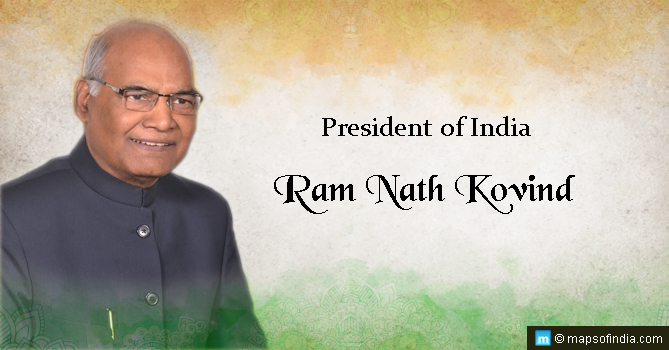
At the head of the Union Executive stands the President of India.

Election of the President of India:- The President of India is elected by indirect election, that is, by an electoral college, by the system of proportional representation using the single transferable vote. The electoral college shall consist of the following:

(a) the elected members of both the House of Parliament;

(b) the elected members of the Legislative Assembly of the state; and the elected members of the Legislative Assembly of the Union Territories [Article 54].

The system of indirect was criticized by some as falling short of the democratic ideal underlying universal franchise, but the indirect election was supported by the framers of the Constitution, on the following grounds-

(i) Direct election by an electorate of some 510 million people would mean an enormous loss of time, energy, and money.

(ii) Under the system of responsible Government introduced by the Constitution, real power would vest in the ministry; so, it would be bizarre to elect the President directly by the people without giving them real power.

Qualification of the President:- In order to be qualified as President of india, one must –

(a) be a citizen of India;

(b) has completed the age of 35 years;

(c) be qualified for election as a member of the House of the People; and

(d) must not hold any office of profit under the Government of India or the Government of any of the state or any local or other authority subject to the control of any of the said Government [Article 58].

Term of Office of President:- The President holds his office for five years from the date of the appointment in the office, and he is eligible for re-election [Article 56-57].

Appointment of the President:- The President is appointed by the Prime Minister into his office.

Termination:- The President’s office may terminate within the term of five years in either of the two ways-

(a) by written resignation in his handwriting, addressed to the Vice President of India.

(b) by removal for the violation of the Constitution [Article 61(1)].

Procedure for the impeachment of the President:- An impeachment is a quasi-judicial procedure in Parliament. Any of the House may charge for the violation of the Constitution, before the other, and shall either investigate the charges by themselves or may stimulate once to be investigated. But the charge cannot be preferable unless-

(a) a resolution passed by the any House of the Parliament with not less than 1/4 of the total members of that House within 14 days of notice.

(b) the resolution was then passed by a majority of not less than 2/3 of the members of both the House of the Parliament.

Employments Allowances of the President:- The President shall be entitled without payment of rent to the use of his official residence and shall also be entitled to such emoluments, allowances, and privileges as may be determined by the Parliament. The emoluments and allowances of the President cannot be diminished till he holds his office [Article 54(4)].

The President

At the head of the Union Executive stands the President of India.

Election of the President of India:- The President of India is elected by indirect election, that is, by an electoral college, by the system of proportional representation using the single transferable vote. The electoral college shall consist of the following:

(a) the elected members of both the House of Parliament;

(b) the elected members of the Legislative Assembly of the state; and the elected members of the Legislative Assembly of the Union Territories [Article 54].

The system of indirect was criticized by some as falling short of the democratic ideal underlying universal franchise, but the indirect election was supported by the framers of the Constitution, on the following grounds-

(i) Direct election by an electorate of some 510 million people would mean an enormous loss of time, energy, and money.

(ii) Under the system of responsible Government introduced by the Constitution, real power would vest in the ministry; so, it would be bizarre to elect the President directly by the people without giving them real power.

Qualification of the President:- In order to be qualified as President of india, one must –

(a) be a citizen of India;

(b) has completed the age of 35 years;

(c) be qualified for election as a member of the House of the People; and

(d) must not hold any office of profit under the Government of India or the Government of any of the state or any local or other authority subject to the control of any of the said Government [Article 58].

Term of Office of President:- The President holds his office for five years from the date of the appointment in the office, and he is eligible for re-election [Article 56-57].

Appointment of the President:- The President is appointed by the Prime Minister into his office.

Termination:- The President’s office may terminate within the term of five years in either of the two ways-

(a) by written resignation in his handwriting, addressed to the Vice President of India.

(b) by removal for the violation of the Constitution [Article 61(1)].

Procedure for the impeachment of the President:- An impeachment is a quasi-judicial procedure in Parliament. Any of the House may charge for the violation of the Constitution, before the other, and shall either investigate the charges by themselves or may stimulate once to be investigated. But the charge cannot be preferable unless-

(a) a resolution passed by the any House of the Parliament with not less than 1/4 of the total members of that House within 14 days of notice.

(b) the resolution was then passed by a majority of not less than 2/3 of the members of both the House of the Parliament.

Employments Allowances of the President:- The President shall be entitled without payment of rent to the use of his official residence and shall also be entitled to such emoluments, allowances, and privileges as may be determined by the Parliament. The emoluments and allowances of the President cannot be diminished till he holds his office [Article 54(4)].

A PIECE OF HEAVEN ON EARTH- ANDAMAN AND NICOBAR ISLAND.

In this article, I am going to take you to the middle of the sea. Wondering where? The island which is very famous because of our freedom fighters where they had to spend years behind the bars. Yes, you are guessing right, I am talking about Andaman and Nicobar Island. This place is heaven on the earth if you haven’t visited yet after reading this blog about Andaman and Nicobar Island, I am sure that you all will be going to book your tickets now! So, let’s start our online trip to Andaman and Nicobar.

I am going to talk about the places where I had visited in Andaman and Nicobar.

  1. Havelock
  2. Neil island
  3. Cellular Jail
  4. Ross Island

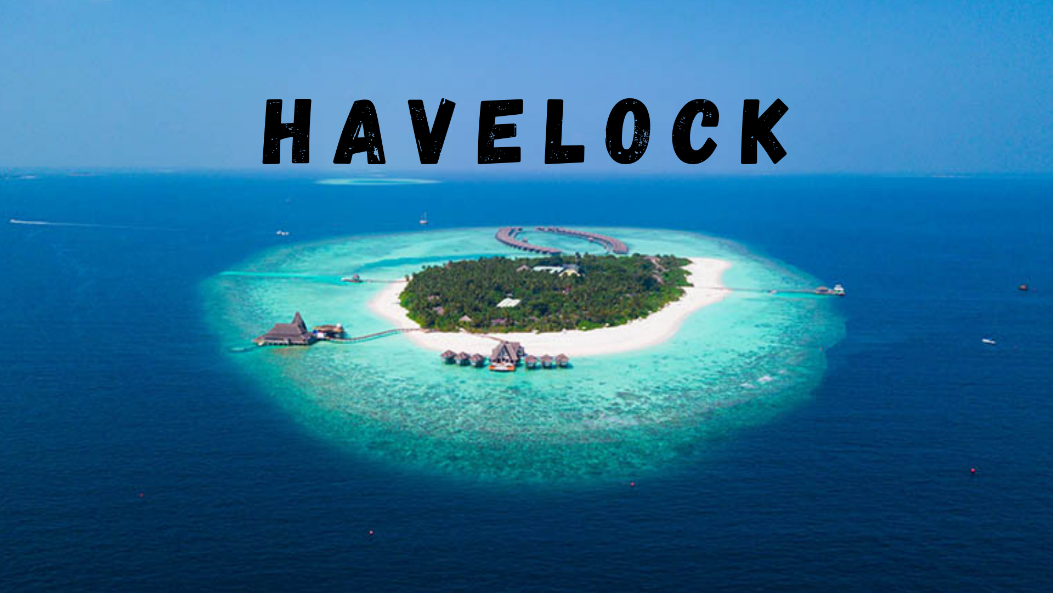
Havelock is the spotlight of the Andaman and Nicobar tourism, it is very famous for the beaches and greenery, in short, it is the feast for the eyes. Clyster clear water, white sand will definitely soothe your eyes. In 2018 our prime minister Narendra Modi has changed the name of havelock to swaraj deep. Yes I know you all want to know how to reach there, you have to book ferries and it will take 90 min to reach there. Places to visit in havelock are:

  1. RADHA NAGAR BEACH:

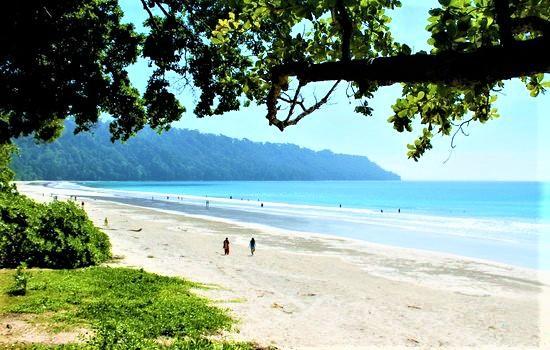
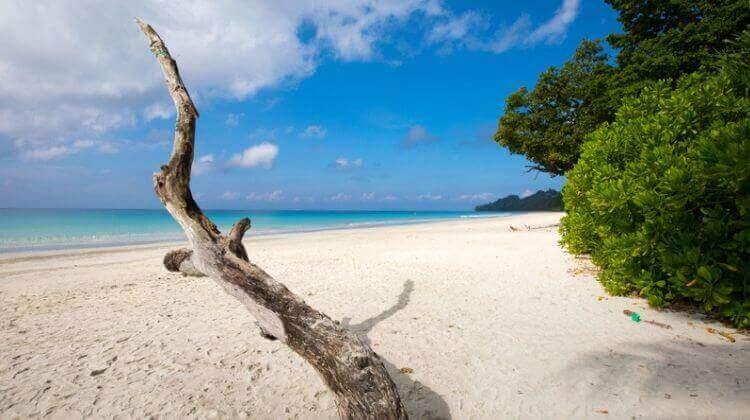
Radha Nagar beach is one of the most well-known beaches in Andaman and Nicobar and  the best beach in Asian  described by the Time magazine. sky blue sea with crystal clear water and white sand where you and enjoy your day you can play in the water you can swim in the water you can also take sun-bath there. There are large numbers of huts, benches and wooden chairs where you can sit and relax there and can enjoy the beauty of nature.

They also provide you with changing rooms where you can change you wet cloths.

  1. ELEPHANT BEACH 

Don’t judge this place by its name, you might be thinking that there must be many elephants but it is not like that. Elephant beach is very famous for water sports, it gives you numerous water activities. Let’s discuss in more details about water sports.

  • SCUBA DIVING : 

In scuba diving, you are taken under-water where you can see the breath-taking view of aquatic life. You can see untouched coral reefs, vibrant fishes, under-water vegetation and under-water ecosystem.

  • SNORKELING :

Snorkelling is little bit same as scuba diving but it doesn’t allow you to go deep inside the water, you can only go to the surface of the water and can see through your goggles, and also can swim.

  • SEA WALKING: 

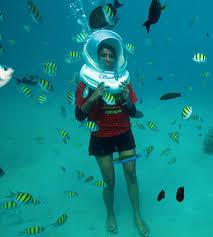
Yes, you heard right you can walk under the sea, sea walking is most unique and very adventurous. Diving and swimming are okay but have you ever imagined walking under the sea. Once you reached the bottom of the sea you will see that you will get surrounded by hoards of fishes you can actually feed them, isn’t it really exciting?

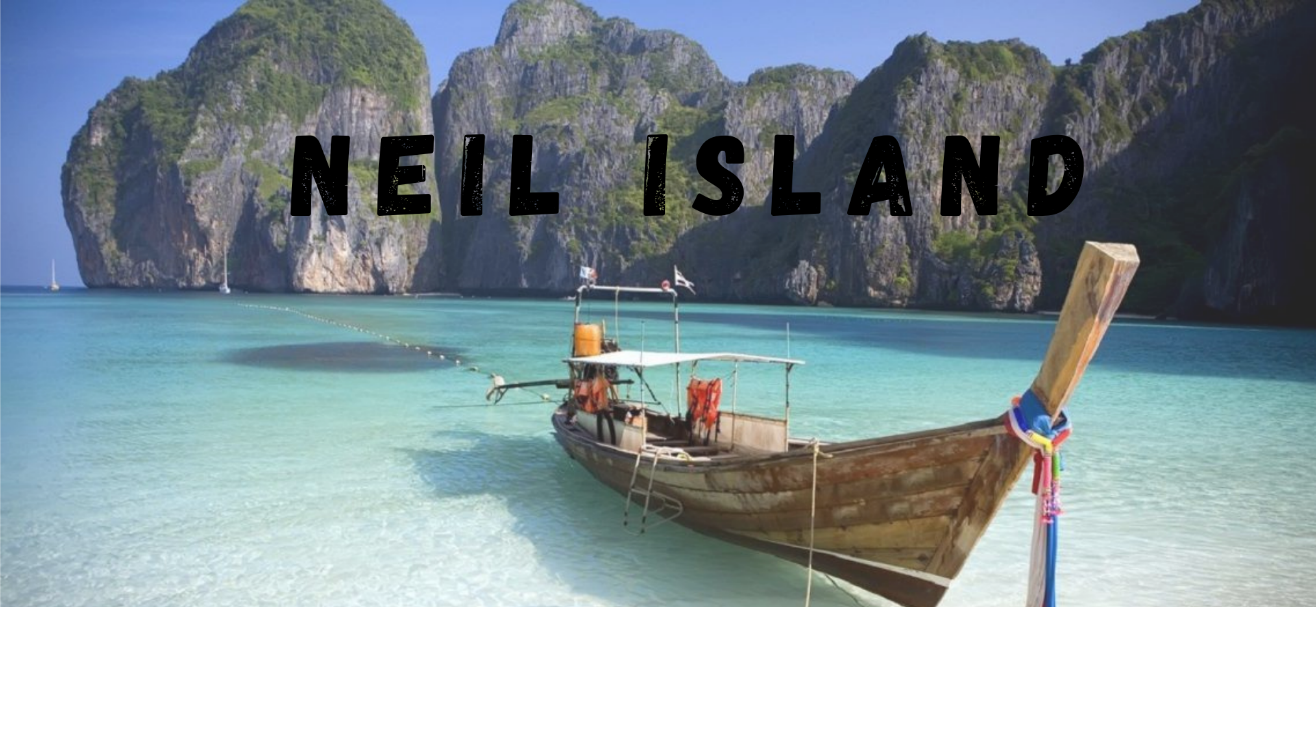
It is another island full of beaches, this island is for those who want to be far from noise, disturbance as you can find a smaller number of vehicles, market and less population. Here also you can find water sports activities like jet skiing and a glass bottom boat ride. Let me make you more clear about these water sports.

  • JET SKIING:

Jet skiing is one of the most enjoyable water sports activity as it can be enjoyed by anyone and it is available at Bharatpur Beach in Neil. It will give you a unique feeling that you are riding a bike on water. Timing for this activity is from 9AM to 4PM. I personally advise you to book jet ski as it is always available and t is cheaper than other water sports activities.

  • GLASS BOTTOM BOAT RIDE:

this activity is appropriate for those who don’t want to get wet or doesn’t want to go into the water. By the name itself, it is clear that you will be travelling on a boat which will have a see-through glass from which you can see the underwater life, you can see fishes, corals and many more.

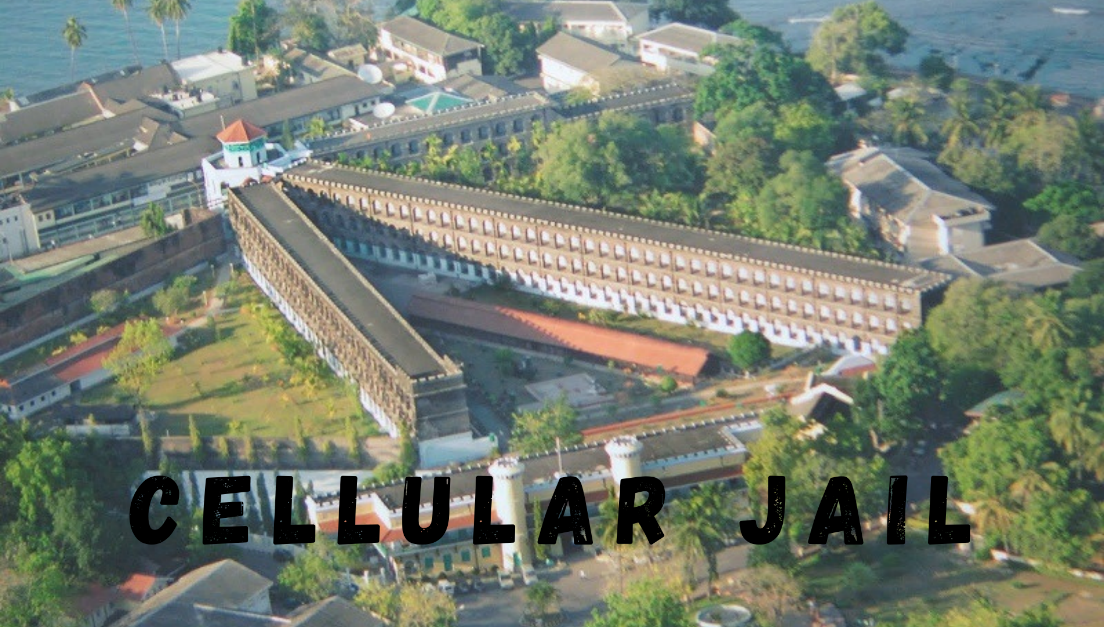
Cellular jail is one of the most historic monuments in Andaman and Nicobar, also known as kaala Pani, it will definitely give you goosebumps while exploring the jail. Every wall of the jail will tell you the story of our soldiers. There you will see how much sacrifice has been done by our freedom fighters. Britishers used to send the soldiers in this whenever they try to protest against them. You can visit the jail at 9AM to 12:30PM and 1:00PM to 5PM (except on Mondays and on national holiday)

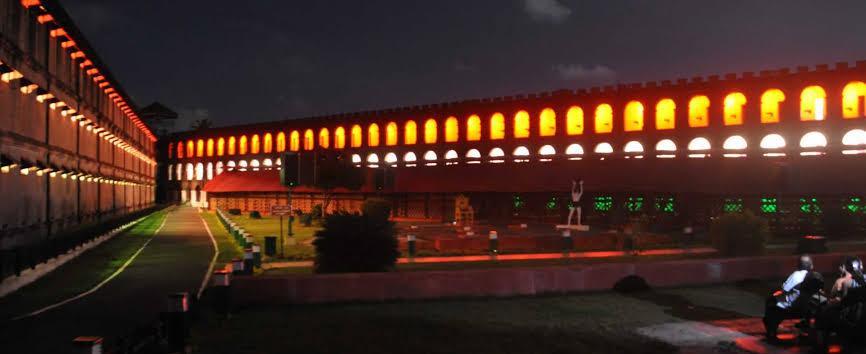
Cellular jail will provide you light and sound show, in this you will get narrated the whole story of how freedom fighters lived there how they survived there and how has been treated there. It is a must-watch show. The show is in both Hindi language and in the English language. You can enjoy this show at 6PM    (Hindi) and 7:15PM (English).

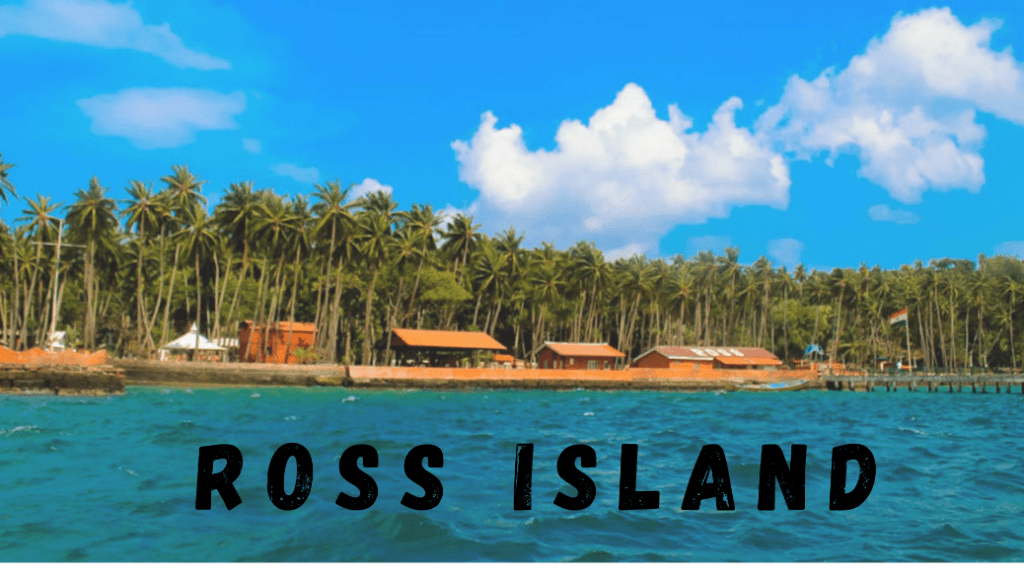
The one who is a nature lover, Ross island is a perfect place to visit. There you are surrounded by nature. There you can see animals and the best part is that they are not caged they will roam here and there. You will see rabbits, deer, peacocks roaming here and there and you can experience the beauty of the nature. You can sit there for hours in cool breeze and can also enjoy the beach view. In 2018 our Prime Minister Narender Modi has changed the name of RossIsland to Netaji Shubhas Chandra Bose island.

Next question you all will get that how one can reach there?

You can get a boat from phoenix bay jetty and it will help you to reach in 15 mins, the people over there will provide you with a life jacket also or else you can choose a helicopter tour. 

Yes, this is the short and adventurous trip of mine to Andaman and Nicobar, I am sure that after reading this article and you will definitely plan your future trip to Andaman and Nicobar. I personally suggest you to visit Andaman and Nicobar during summer months. 

A PIECE OF HEAVEN ON EARTH- ANDAMAN AND NICOBAR ISLAND.

In this article, I am going to take you to the middle of the sea. Wondering where? The island which is very famous because of our freedom fighters where they had to spend years behind the bars. Yes, you are guessing right, I am talking about Andaman and Nicobar Island. This place is heaven on the earth if you haven’t visited yet after reading this blog about Andaman and Nicobar Island, I am sure that you all will be going to book your tickets now! So, let’s start our online trip to Andaman and Nicobar.

I am going to talk about the places where I had visited in Andaman and Nicobar.

  1. Havelock
  2. Neil island
  3. Cellular Jail
  4. Ross Island

Havelock is the spotlight of the Andaman and Nicobar tourism, it is very famous for the beaches and greenery, in short, it is the feast for the eyes. Clyster clear water, white sand will definitely soothe your eyes. In 2018 our prime minister Narendra Modi has changed the name of havelock to swaraj deep. Yes I know you all want to know how to reach there, you have to book ferries and it will take 90 min to reach there. Places to visit in havelock are:

  1. RADHA NAGAR BEACH:

Radha Nagar beach is one of the most well-known beaches in Andaman and Nicobar and  the best beach in Asian  described by the Time magazine. sky blue sea with crystal clear water and white sand where you and enjoy your day you can play in the water you can swim in the water you can also take sun-bath there. There are large numbers of huts, benches and wooden chairs where you can sit and relax there and can enjoy the beauty of nature.

They also provide you with changing rooms where you can change you wet cloths.

  1. ELEPHANT BEACH 

Don’t judge this place by its name, you might be thinking that there must be many elephants but it is not like that. Elephant beach is very famous for water sports, it gives you numerous water activities. Let’s discuss in more details about water sports.

  • SCUBA DIVING : 

In scuba diving, you are taken under-water where you can see the breath-taking view of aquatic life. You can see untouched coral reefs, vibrant fishes, under-water vegetation and under-water ecosystem.

  • SNORKELING :

Snorkelling is little bit same as scuba diving but it doesn’t allow you to go deep inside the water, you can only go to the surface of the water and can see through your goggles, and also can swim.

  • SEA WALKING: 

Yes, you heard right you can walk under the sea, sea walking is most unique and very adventurous. Diving and swimming are okay but have you ever imagined walking under the sea. Once you reached the bottom of the sea you will see that you will get surrounded by hoards of fishes you can actually feed them, isn’t it really exciting?

It is another island full of beaches, this island is for those who want to be far from noise, disturbance as you can find a smaller number of vehicles, market and less population. Here also you can find water sports activities like jet skiing and a glass bottom boat ride. Let me make you more clear about these water sports.

  • JET SKIING:

Jet skiing is one of the most enjoyable water sports activity as it can be enjoyed by anyone and it is available at Bharatpur Beach in Neil. It will give you a unique feeling that you are riding a bike on water. Timing for this activity is from 9AM to 4PM. I personally advise you to book jet ski as it is always available and t is cheaper than other water sports activities.

  • GLASS BOTTOM BOAT RIDE:

this activity is appropriate for those who don’t want to get wet or doesn’t want to go into the water. By the name itself, it is clear that you will be travelling on a boat which will have a see-through glass from which you can see the underwater life, you can see fishes, corals and many more.

Cellular jail is one of the most historic monuments in Andaman and Nicobar, also known as kaala Pani, it will definitely give you goosebumps while exploring the jail. Every wall of the jail will tell you the story of our soldiers. There you will see how much sacrifice has been done by our freedom fighters. Britishers used to send the soldiers in this whenever they try to protest against them. You can visit the jail at 9AM to 12:30PM and 1:00PM to 5PM (except on Mondays and on national holiday)

Cellular jail will provide you light and sound show, in this you will get narrated the whole story of how freedom fighters lived there how they survived there and how has been treated there. It is a must-watch show. The show is in both Hindi language and in the English language. You can enjoy this show at 6PM    (Hindi) and 7:15PM (English).

The one who is a nature lover, Ross island is a perfect place to visit. There you are surrounded by nature. There you can see animals and the best part is that they are not caged they will roam here and there. You will see rabbits, deer, peacocks roaming here and there and you can experience the beauty of the nature. You can sit there for hours in cool breeze and can also enjoy the beach view. In 2018 our Prime Minister Narender Modi has changed the name of RossIsland to Netaji Shubhas Chandra Bose island.

Next question you all will get that how one can reach there?

You can get a boat from phoenix bay jetty and it will help you to reach in 15 mins, the people over there will provide you with a life jacket also or else you can choose a helicopter tour. 

Yes, this is the short and adventurous trip of mine to Andaman and Nicobar, I am sure that after reading this article and you will definitely plan your future trip to Andaman and Nicobar. I personally suggest you to visit Andaman and Nicobar during summer months. 

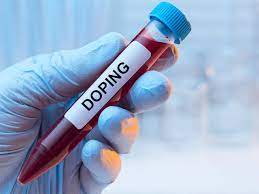
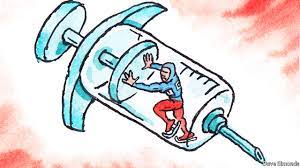
DOPING IN SPORTS

Do athletes always abide to the “spirit of the sport”?. While most of them do, there are some who go against it and fall as a prey to some unethical and wicked act such as doping.

“Doping” refers to the use of prohibited medications, drugs, or treatments by athletes with the intension of improving the athlete’s performance. The idea of doping has been in practice by athlete’s centuries ago but recently its rate has been increased due to the wide variety of potential in upcoming athletes. It has found to be unethical and banned by most of the sports organization.

HISTORY:

Doping was first noted at the Olympic Games, in 1904, in a runner who was injected with strychnine to assist with speed and therefore giving him the strength to finish the race. It adverse outcomes and effects lead to the first ban on doping by the International Association of Athletics Federation in 1928.Later in 1967 the International Olympic Committee (IOC) banned doping, and in 1999 the IOC led the initiative to form the World Anti-Doping Agency (WADA).

SUBSTANCES USED FOR DOPING:

Doping substances are used to increase muscle mass, decrease recovery time, increase energy and endurance, and also mask the presence of other drug. Some of the drugs used for doping are

  • ERYTHROPOIETIN (EPO)
  • SYNTHETIC OXYGEN CARRIERS
  • CERA
  • DIURETICS

WHY IS DOPING SUCH A BIG DEAL?

It is indeed a big deal because it has many substances that can be harmful and has a long lasting effects on health of the person who uses it. It can also put an individual’s life at risk. Doping leads to several issues in human health such as

  • Abnormal growth
  • Diabetes
  • Blood cancers
  • Arthritis
  • Enlarged heart and

In the worst case it also leads to premature death.

TESTING:

A urine and/or blood sample will be collected from an athlete. In case of urine sample, the athlete will collect the sample himself/herself. However, to ensure that the sample has been provided from the athlete’s body and that no other dishonest practice has been committed, a specialist of the same gender as the athlete will be present during the sample collection. These samples will be collected and tested to find out if any doping substances are used.

WADA and the IOC aim to decrease the incidence of doping and eliminate its use in sport. But its not all about it. Its also in the hands of the individual and the athletes taking part in sports and promise an oath to themselves not to involve in unethical and immoral activities that goes against the spirit of the game.

NOTE: In Tokyo Olympics 2020, INDIAN player MIRABAI CHANU stands chance to get gold if Chinese weightlifter fails in dope test.

DOPING IN SPORTS

Do athletes always abide to the “spirit of the sport”?. While most of them do, there are some who go against it and fall as a prey to some unethical and wicked act such as doping.

“Doping” refers to the use of prohibited medications, drugs, or treatments by athletes with the intension of improving the athlete’s performance. The idea of doping has been in practice by athlete’s centuries ago but recently its rate has been increased due to the wide variety of potential in upcoming athletes. It has found to be unethical and banned by most of the sports organization.

HISTORY:

Doping was first noted at the Olympic Games, in 1904, in a runner who was injected with strychnine to assist with speed and therefore giving him the strength to finish the race. It adverse outcomes and effects lead to the first ban on doping by the International Association of Athletics Federation in 1928.Later in 1967 the International Olympic Committee (IOC) banned doping, and in 1999 the IOC led the initiative to form the World Anti-Doping Agency (WADA).

SUBSTANCES USED FOR DOPING:

Doping substances are used to increase muscle mass, decrease recovery time, increase energy and endurance, and also mask the presence of other drug. Some of the drugs used for doping are

  • ERYTHROPOIETIN (EPO)
  • SYNTHETIC OXYGEN CARRIERS
  • CERA
  • DIURETICS

WHY IS DOPING SUCH A BIG DEAL?

It is indeed a big deal because it has many substances that can be harmful and has a long lasting effects on health of the person who uses it. It can also put an individual’s life at risk. Doping leads to several issues in human health such as

  • Abnormal growth
  • Diabetes
  • Blood cancers
  • Arthritis
  • Enlarged heart and

In the worst case it also leads to premature death.

TESTING:

A urine and/or blood sample will be collected from an athlete. In case of urine sample, the athlete will collect the sample himself/herself. However, to ensure that the sample has been provided from the athlete’s body and that no other dishonest practice has been committed, a specialist of the same gender as the athlete will be present during the sample collection. These samples will be collected and tested to find out if any doping substances are used.

WADA and the IOC aim to decrease the incidence of doping and eliminate its use in sport. But its not all about it. Its also in the hands of the individual and the athletes taking part in sports and promise an oath to themselves not to involve in unethical and immoral activities that goes against the spirit of the game.

NOTE: In Tokyo Olympics 2020, INDIAN player MIRABAI CHANU stands chance to get gold if Chinese weightlifter fails in dope test.

THE MOST TERRIBLE VARIANT TILL TODAY- THE DELTA PLUS VARIANT OF COVID-19

With the decrease in the number of the corona cases in India, we the people of India started to experience that the devastation has finally came to an end. But sadly, the moment we started to go out again, the new variant of virus had emerged – the Delta Plus Variant, which gave another shock to the people of India.

The muted variety of Delta Variant- Delta Plus Variant has spread widely across the country, Indian.

THE SPREAD

49 cases of Delta+ variant had been recorded by 12 states of India till date. Maharashtra been one of the states again got hit badly with highest number of cases.

The Delta+ variant has already broadened in 85 countries around the world and South Africa is the reason behind the spread of this infection.

REASON TO BE CONCERN ABOUT DELTA+ VARIANT

Delta+ variant a.k.a AY.1, it is 60% more infectious when compared to previous version. Considerably it is more threatening for the lungs of patients who are already facing problems with their lungs.

The Indian Council of Medical Research (ICMR) declared that these mutations have raised the capacity of transmission and with this the spread from one person to other has become easy. This mutation made the virus job easy to get into the cells of the patients.

The reason to be concern about the variant is that the specialist of epidemiology and communicable diseases stated that Delta+ variant is dangerous variation of corona virus till date.

HOW TO TRACE

The Delta+ variant shows both the symptoms of delta variant as well as beta variant. And the symptoms are:

Headache, Chest pain, Fever, Cough, Skin rash, Shortness of breath and Diarrhoea.

PREVENTION

The World Health Organization (WHO) has already warned that the Delta variant of corona virus is one of the reasons to be extra caution about it. Maintain social distancing is one of the essential while going out.

And other measures to be taken are:

Going out when it is really an emergency, wearing of mask every time you out, maintain 6 feet distance in crowd, use of sanitizer is a must, wash hands every time you come back home and the last but most important get yourself vaccinate as soon as possible.

TREATMENT

Till now there is no such way to treat the Delta Plus variant infection. Antibodies are the only way till now to treat this as per doctors. Get vaccine to ensure the safety of your as well as your family. Till now there is no such treatment found by doctors or scientist to cure this variant as of now.

TAKEAWAY

With is spread of Delta+ variant across India, again have to face the uncomfortable situation where we again got to lock up ourselves in 2 walled room, facing lockdown for months again and the worst was the shortage of beds at hospitals, oxygen cylinder and lifesaving medication. If we do not want to get in this trouble again lets, follow the instructions and protocol established by the government. Let’s pledge will not show our careless behaviour and ensure the safety of ourselves and others.

THE MOST TERRIBLE VARIANT TILL TODAY- THE DELTA PLUS VARIANT OF COVID-19

With the decrease in the number of the corona cases in India, we the people of India started to experience that the devastation has finally came to an end. But sadly, the moment we started to go out again, the new variant of virus had emerged – the Delta Plus Variant, which gave another shock to the people of India.

The muted variety of Delta Variant- Delta Plus Variant has spread widely across the country, Indian.

THE SPREAD

49 cases of Delta+ variant had been recorded by 12 states of India till date. Maharashtra been one of the states again got hit badly with highest number of cases.

The Delta+ variant has already broadened in 85 countries around the world and South Africa is the reason behind the spread of this infection.

REASON TO BE CONCERN ABOUT DELTA+ VARIANT

Delta+ variant a.k.a AY.1, it is 60% more infectious when compared to previous version. Considerably it is more threatening for the lungs of patients who are already facing problems with their lungs.

The Indian Council of Medical Research (ICMR) declared that these mutations have raised the capacity of transmission and with this the spread from one person to other has become easy. This mutation made the virus job easy to get into the cells of the patients.

The reason to be concern about the variant is that the specialist of epidemiology and communicable diseases stated that Delta+ variant is dangerous variation of corona virus till date.

HOW TO TRACE

The Delta+ variant shows both the symptoms of delta variant as well as beta variant. And the symptoms are:

Headache, Chest pain, Fever, Cough, Skin rash, Shortness of breath and Diarrhoea.

PREVENTION

The World Health Organization (WHO) has already warned that the Delta variant of corona virus is one of the reasons to be extra caution about it. Maintain social distancing is one of the essential while going out.

And other measures to be taken are:

Going out when it is really an emergency, wearing of mask every time you out, maintain 6 feet distance in crowd, use of sanitizer is a must, wash hands every time you come back home and the last but most important get yourself vaccinate as soon as possible.

TREATMENT

Till now there is no such way to treat the Delta Plus variant infection. Antibodies are the only way till now to treat this as per doctors. Get vaccine to ensure the safety of your as well as your family. Till now there is no such treatment found by doctors or scientist to cure this variant as of now.

TAKEAWAY

With is spread of Delta+ variant across India, again have to face the uncomfortable situation where we again got to lock up ourselves in 2 walled room, facing lockdown for months again and the worst was the shortage of beds at hospitals, oxygen cylinder and lifesaving medication. If we do not want to get in this trouble again lets, follow the instructions and protocol established by the government. Let’s pledge will not show our careless behaviour and ensure the safety of ourselves and others.