"The lady who spread her wings"- Ashweeta Shetty


Ashweeta
Shetty: Bodhi Tree Skills

Societal norms such as gender inequalities,
child marriage and lack of education still prevail in both rural and urban
regions.  These norms have forbidden
people to spread their wings. Many people are mustering up courage and are
proving that dreams can come true if you have the passion and courage to do it.
One of those courageous people included Ashweetha Shetty.

Knowing about Ashweeta Shetty

Ashweeta Shetty grew up in a
village called Nikuran in Tirunelveli district of Tamil Nadu. The village is
very famous for beedi rolling. All the people of her village rolled beedis as
their main source of income. 

Although Ashweeta grew up in a simple and peaceful
environment, but one thing that she observed that like education was not
encouraged. People in her village had a mindset that beedi rolling was more
important than going to school.  


Challenges faced

Her parents had the same
mindset and since her parents were illiterate, it was even more difficult for
her to persuade them that she wanted to do something different. Her parents grew
up in Karnataka which is a different state from Tamil Nadu, so they were even
more concerned about her safety. This was another reason why they didn’t
encourage her to pursue higher studies.


Another ‘societal’ convention
was that girls got married at an early age. Her sister got married at an early
age and her brother did some electrician course and then went for a job instead
of pursuing higher studies. Fortunately, she was able to convince her parents
and was the first one to go to a college in her family.


She pursued Bachelor’s in
Business Administration from a different place which was two hours from her
village. Initially, she kind of dropped out and still didn’t give up. With the
help of hard work and perseverance, she scored well and everyone encouraged her
to pursue higher studies. Her parents then sent her to a good college which was
blessing for her.

 Her parents were not really restrictive but
had always taught her that every decision that she makes, she has to bear the
difficulties and consequences.


Spreading her Wings

She still had the same resolute
and in her second year of graduation she thought to implement her dreams. She
looked for opportunities, applied to all the branch exams, post graduation
exams etc. Her librarian saw an advertisement about the Young India internship
and pushed her to apply for the same and luckily she got it.


When she was in fellowship, she
struggled as she was the only one who studied in rural college. She was finding
difficulty to adjust in a completely different environment but still she
overcame all her difficulties and believed that her difficulties made her grow and
learn more. She learnt to accept herself and became gentle and that year had
transformed her life.

She then started working at a
health center. She did health awareness programmes , spread awareness in many
villages about diseases, worked with school and college children on diabetic
and hyper tension condition for senior citizens.


She
wanted to improve the fact that many graduates like her who pursue for higher
education were not as privileged as her; very few of them got basic facilities
and opportunities. She focused on removing the urban-rural gap and motivating
every rural college graduate that they have a lot of potential and that if we she
can make it so can everyone. This gave birth to Bodhi Tree Skills (non- profit
organization).


She
implemented her idea by creating awareness and actively creating opportunities for
rural graduates. But she faced difficulty because of her other engagements
instead of focusing on the things which could solve the situation. She along
with her organization members focused more on improving the potency.

Aftermath

Passion,
perseverance, courage and devotion encouraged Ashweeta to raise her voice and
became the voice of several rural people who are underprivileged. The most
important lesson that she learnt was instead of looking outside and going along
with the herd, one should focus more on looking inside as everyone is unique this
could help them to clearly live their life.


She
feels that privileged people should acknowledge what they have and they should
also use their resources wisely. They should be responsible and have a desire
to do something better and if they also think in a similar manner like her, the
world would be a much better place.

The Greatest Threat to Wildlife

In Africa the poaching of animals such as tigers or elephants for their skins or tusks has been a problem well known throughout the world. But the impact of hunting for their meat may pose a greater threat, such a trade is known as bushmeat trade. It refers to the non-traditional hunting of non-game animals for meat. Wild chimpanzees and other forest animals are systematically hunted and sold as meat through markets across Africa and cities across the world. What once was a form of subsistence hunting in rural villages, has now evolved into a commercial trade that has grown in scale over recent decades.

While Bushmeat has been practiced since the late 1800s, the scale of hunting is far greater today and has been increasing, facilitated by road building in the forest for logging and mining operations and fuelled by growing demand in urban markets, where comparatively well-off customers consider wild-sourced protein a delicacy and a status symbol. A smaller international market for exotic meat thrives in Europe and the United States.

THE ENVIRONMENTAL IMPACTS OF BUSHMEAT TRADING

  • Environmental Imbalance

 Poachers and hunters involved in the illegal bushmeat market mainly use snares to trap these beasts and often larger animals like jackals, lions, cheetahs, wild dogs get caught in these traps. These carnivores the primary one being lions are the ones most affected due to the trading of bushmeat in two ways; by dramatically reducing the populations of animals that are food sources for lions such as antelopes and other small animals (pigs and boars) and by directly killing these animals who inadvertently are caught in the wire snares that are set to illegally harvest other species. The removal of any animal from the food chain causes an imbalance for both the species as well as other species dependant on it for food.

  • Endangering of animals

There are roughly 301 mammal species threatened by hunting for bushmeat including 126 primates, 65 even-toed ungulates, 27 bats, 26 diprotodont marsupials, 21 rodents, 12 carnivores and all Pangolin species. On Bioko Island, off the coast of Equatorial Guinea, for example, hunting for bushmeat has decimated populations of the island’s seven endemic monkey species, which are all endangered. Another prime example is the elephant which have been hunted for their tusks are also for their meat. It has been done to the extent that the bushmeat trade is estimated to be worth higher than the ivory industry. While the ivory obtained from tusks may be sold for around $180 (in 2007), a poacher could sell the meat (approximately 1,000 pounds) for up to $6,000 this may be primarily due to the high demand and the fact that the elephant’s meat is considered prestigious and hence sold at higher costs. The elephant’s population has dropped by 62% in the recent decade and the situation has not improved since with population going from 1.34 million in 1976 to barely 415,00 elephants in 2018

The Impact of Bushmeat on Humans

Animal sources may have been the cause for infectious diseases such as tuberculosis, leprosy, cholera, smallpox, measles, influenza, and syphilis acquired by early agrarians. The emergence of HIV-1, AIDS, Ebola virus disease, and Creutzfeldt-Jakob disease are attributed to animal sources today. Thomas’s rope squirrel and red-legged sun squirrel were identified as reservoirs of the monkeypox virus in the Democratic Republic of the Congo in the 1980s. Outbreaks of the Ebola virus in the Congo Basin and in Gabon in the 1990s have been associated with the butchering and consumption of chimpanzees and bonobos. The risk of bloodborne diseases to be transmitted is higher when butchering a carcass than when transporting, cooking and eating it. Many hunters and traders are not aware of zoonosis and the risks of disease transmissions. An interview survey in rural communities in Nigeria revealed that 55% of the respondents knew of zoonoses, but their education and cultural traditions are important drivers for hunting and eating bushmeat despite the risks involved.

Wild meat provides a primary food source for many millions of people throughout the developing world, especially where other food options are not readily available. Unsustainable hunting has now metamorphosed into a global hunting crisis taking the form of a serious threat to the food security of many people as well as the immediate survival of hundreds of mammal species, other wildlife and altered ecological cascades rippling through ecosystems. Averting this crisis requires bold and prompt actions. Approaches that benefit both local people and wildlife will be required to avoid a future of hungry desperate people inhabiting ‘empty landscapes’ across much of the planet Earth.

5 things to expect in any Online Counseling Session


Often, in our lives, we experience some happy moments,
confusing moments, nostalgic moments, regret, disappointment, frustration,
success etc.

Even though one may have lots or few friends and a
loving and supporting family, sometimes some people still feel very
uncomfortable in sharing their deep-rooted problems with their loved ones and decide
to take help from counselors.

About Personal Counseling

Personal counseling is
a one-to-one session between a client and a trained therapist, in a safe,
caring, and confidential environment. The client expresses whatever personal
problem he or she is facing be it anxiety, lack of self-love, heartbreak,
discrimination etc to the therapist.

They help their clients
in facing their problems and helps them in dealing with their emotions by
suggesting simple things such as diary writing, taking a walk, listening to
instrumental music, role -playing etc.

Introduction
to Online Counseling

During tough times like
pandemic, the mental health of the people is severely affected.

 Recently, a new method called online counseling
has been introduced to help people address their mental or personal problems
just by sitting at home.

Online counseling is an
online method wherein, professional counseling services are provided
through the use of emails, real-time chat, and video conferencing. This model
is becoming popular among young people who are in need of personal help.


Expectations
from Online Counseling:

Many people who go for their
first online session have certain expectations which are according to me are as
follows:

1.   
Patience

The counsellor should
be very good at being patient. Every client as a human being would expect their
therapist to patiently listen to them.

 Some people are affected so much by their
trauma that they tend to say same things repeatedly. They feel insecure about
it too and tend to restrict themselves from sharing everything.

So, counsellors need to
exhibit a lot of patience while dealing with such situations especially in
online counseling.

They should not get
irritated if their client is not able to see or follow their perspective. This
is because a person who is already stressed or feeling sad may have thousands
of negative thoughts going in their mind and any signs of anger and irritation
would make them even more insecure, worthless and helpless.

Sometimes, all we want
is a crying shoulder and a listening ear rather than a solution!


2.   
Comfort

The therapist,
especially when they are providing their counseling services in an online
platform, needs to create a comfortable environment for their clients.

The clients too feel
very uncomfortable or anxious while sharing their life story to a third person.
They might feel that a third person too would laugh at them or be disgusted by
them.

So, If I was the
client, I would expect my therapist to make me feel comfortable and assure me
that he/ she won’t judge me and the information shared would be confidential.

3.   
Gentle Tone

Clients generally
expect their therapist to be gentle towards their pain and problems when they
first approach online counseling sessions.

In online sessions, the
therapist should also take care that their tone is not misinterpreted by the
client. It is just like misinterpreting any message sent on the phone.

 If the client misinterprets the tone, he or
she might be uncomfortable in sharing things with the therapist. So, if such
things happen, the therapist should clear the misunderstanding as soon as
possible.


4.   
Understanding

Sometimes people feel
uncomfortable in sharing their feelings or pain with their family and close
friends because they feel that their friends and family are not on the same page
and cannot understand them intellectually and emotionally in certain aspects.

 The person feels that he or she doesn’t “belong”
anywhere. So, it may feel like the person gets along with everyone but inside
no one would have the idea that the person feels suffocated and depressed from
inside.

So, the people who opt
for online sessions expect that their therapist understand them intellectually
and emotionally with an open mind, acknowledging their pains and letting them
know that they are not “abnormal” and they do “belong in the world”.


5.   
Will to live


Often, the people who
are suffering from traumas think that they have no reason to exist or their
existence doesn’t matter.

While taking online
sessions for the first time, the clients expect their therapist to act as their
crying shoulder who allow them to let out all their emotions, stay by their
side each time in their need and assure them that their existence does matter.

The therapist is too
expected to go out of their way and act like their client’s night in the
shining armor where they understand and find problem in depth and help the
client to build a new and positive perspective where the client feels free and
loves themselves even more and finds many reasons to live again.


How to write good blog posts?


Writing a blog post is a little like driving; you can study the highway code (or read articles telling you how to write a blog post) for months, but nothing can prepare you for the real thing like getting behind the wheel and hitting the open road. Or something.

“Wait for it… wait for it… BASS DROP.”

Now that I’m done thoroughly mangling that vague metaphor, let’s get down to business. You know you need to start blogging to grow your business, but you don’t know-how. In today’s article, I’ll show you how to write a great blog post in five simple steps that people will actually want to read. So let’s get started:-

  • Step 1- Planning
          First, a disclaimer – the entire process of writing a blog post often takes more than a             couple of  hours, even if you can type eighty words per minute and your writing skills           are sharp. From the seed of the idea to finally hitting “Publish,” you might spend                   several days or maybe even a week “writing” a blog post, but it’s important to spend             those vital hours planning your post and even thinking about your post (yes, thinking             counts as working if you’re a blogger) before you actually write it.

        Long before you sit down to put digital pen to paper, you need to make sure you                    have everything you need to sit down and write. Many new bloggers overlook                       the planning process, and while you might be able to get away with skipping the                  planning stage, doing your homework will actually save you time further down the                  road and help you develop good blogging habits.

  • Step 2- Writing a Great Headline

         Everyone and their grandmother have an opinion about headlines. Some say you                   should be as specific as possible (to avoid misleading your readers and manage their             expectations), while others recommend taking a more abstract approach. Vague                     headlines might work just fine if you’re Barkha Dutt, but for most of us, being                       specific is better. There are two main approaches you can take to writing blog post                 headlines. You can either decide on your final headline before you write the rest of                 your post (and use your headline to structure your outline), or you can write your blog           post with a working title and see what fits when you’re done.

  • Step 3- The Writing Part

         So, you’ve done your research, settled on a headline (or at least a working title), and             now you’re ready to actually write a blog post. So get to it. Similarly to headlines,                 there are two main approaches to writing a blog post. You can either sit down and                 write an entire draft in a single sitting (my preferred workflow), or you can chip away           at it gradually over time. There is no right or wrong answer here – only whatever                   works for you. However, I’d recommend getting as much done in one session as                   possible. This makes it easier to stay focused on the topic, minimizes the chance that             you’ll forget crucial points, and also lets you get the damned thing out of your hair                 faster.

  • Step 4- Using Image Effectively 

         Writing for the web is an entirely different animal than writing for print. Oftentimes,             people simply don’t have the time, will, or ability to focus on lengthy blog posts                   without some visual stimulation. Even a well-formatted blog post consisting solely of           text is likely to send your reader screaming back to Reddit or Twitter within minutes,             which is why it’s so important to include images in your posts.

  • Step 5- The Editing Part

         Actually writing a blog post is hard. Editing a blog post is harder. Many people                     mistakenly assume that editing is simply striking through sentences that don’t work or           fixing grammatical errors. Although sentence structure and grammar are both very                 important, editing is about seeing the piece as a whole and, sometimes, being willing             to sacrifice words (and the hours it took to write them) for the sake of cohesion.

Lastly one should always express his thoughts in his blogs as the blog will reflect the writer’s personality. Follow all the points and I can bet that you’ll definitely ace at writing blogs.

How to Improve Concentration?

“Concentrate all your thoughts upon the work at hand. The sun’s rays do not burn until brought to a focus”

– Alexander Graham Bell

Introduction

The definition of concentration is exclusive attention to one object. Concentration means focused attention and it is very important. It helps in studying, allows faster comprehension, improves memory, helps in focusing on a task, allows to ignore unwanted thoughts. It is also helpful in meditation. It is very common to be reading a paragraph when you realize you zoned out and then having to go back and read the whole paragraph just to be zoned out again and repeating the cycle. This happens because of a lack of focus or concentration. This article aims to discuss ways to improve concentration.

Train your brain

Results from a study show that spending 15 minutes a day for 5 days a week on training your brain has a huge impact on your power of concentration. You can train your brain by playing games such as sudoku, crossword puzzles, chess, jigsaw puzzle, scrambles, and memory games. These games can also help in developing short-term memory and will also teach you problem-solving skills. In kids, even colouring improves concentration.

Get your game on

Some new research shows that playing video games can also help in boosting concentration. It says that playing video games for an hour can help in improving visual selective attention (VSA), which is the ability to focus on some tasks while ignoring distractions. Note that this research has been done on a very small level so it is not conclusive yet.

Improve sleep

Sleep is a very important part of our day as getting enough of it helps in a lot of areas of our day. Sleep deprivation easily disrupts our concentration and other functions like memory and attention. Not getting enough sleep on a regular basis can result in affecting your mood and performance at tasks, it can also slow down your reflexes. With enough sleep, you have enough energy to focus on your task without getting sleepy.

Make time for exercise

A 2018 study shows that physical activity helps in improving concentration and attention. Regular exercise has many benefits like increased concentration. In older adults, it shows that moderate physical activity for a year can help in stopping or reversing memory loss. Any type of exercise can work, the point is to get your heart rate up, it can be a walk for half an hour, a morning jog, walk to whatever place you have to go to or bike.

Spend time in nature

Getting outside in nature for even 15 to 20 minutes will help in boosting your concentration. Research from 2014 found evidence which says that including plants in office spaces has helped employees with their productivity, adding to that, it also increases the air quality. It can be any kind of exposure to nature, going for a walk in the park, or even just sitting in your backyard.

Listen to music

According to research, playing music, nature sounds, or even white noise to cover up background noise can help in improving concentration and other brain functions.

Conclusion

Having the power to focus and concentrate will make a huge change in your life. It lets you be more productive as you will be able to focus on your tasks without distractions, and when there are no distractions, things get done faster. Once you start concentrating, you will realize how much time you were wasting normally.

References

How is the GMAT Scored?


Congratulations on your outstanding achievement in finishing your undergraduate program. Completing college is not easy and takes a lot of effort and work. Between the fall of 2009 to 2019, the number of undergraduate enrollments in postsecondary institutions decreased by 5 percent, from 17.5 million to 16.6 million students. Of that number, only an average of 62 percent will be able to finish their bachelor’s degree in six years.

If you look at the total population, the percentage is even lower. In 2019, only around 22.5 percent of people ages 25 and older finished four years of college. Now that you are done with your bachelor’s degree, you might feel ready to face the challenges of the corporate world.

But are you really ready? With the competitive workplace, you might need more tools and skills for your career to move forward. Enrolling in graduate business school would give you a competitive edge. However, applying for graduate school can be overwhelming. So make sure you’re as prepared as possible.

The first step in your graduate school preparation is taking the GMAT, which is recognized globally as an indicator of your readiness to take a graduate business school. The GMAT measures relevant skills such as critical thinking and reasoning skills needed by the world’s top graduate business school. The GMAT exam is the most common test for MBA admission and is taken by at least 200,000 graduate school candidates each year. With over 7,000 MBA and master’s programs using the GMAT exam to screen their prospective graduate school students, it’s imperative to prepare thoroughly for the exam.

Understand The Sections

Total, Verbal, and Quantitative Scores

Analytical Writing Assessment Scores

Integrated Reasoning Scores

Take your time

The GMAT is a 3.5-hour business school entrance exam that has three sections:

● Analytical writing assessment– Measures your ability to analyze and critique an argument. It also measures your ability to communicate ideas and think critically through an essay in English. Topics will include business and other subjects that can help assess critical thinking and communication skills.

● Quantitative and verbal reasoning– Quantitative reasoning measures your mathematical reasoning, skills in problem-solving, and interpreting graphical data. It will involve an understanding of common concepts of geometry, arithmetic, and elementary algebra.

Meanwhile, verbal reasoning measures your reading comprehension, critical reasoning, and editing abilities. It also involves evaluating arguments and correcting materials to express ideas effectively.

● Integrated reasoning– Measures how good students are at analyzing and interpreting data displayed in different formats. It involves synthesizing information from graphics, numbers, text, table analysis, and evaluating information from multiple sources.

Total GMAT scores can range from 200-800. The average score between January 2015 to December 2017 was about 521.27 out of a total score of 800. Verbal and Quantitative sections are scored interactively and adaptively.

The number of questions answered, how correct they are, and even the question difficulty determine your score. These two sections have scores anywhere from 0-60 after being tabulated. However, scores below 6 and above 51 are rare in verbal and quantitative reasoning.

The Analytical Writing Assessment (AWA) involves the analysis of one argumentative essay. Scores are from 0-6 in intervals of 0.5. Machine algorithms and professional essay raters are used in scoring the essay. You can request a rescore if you feel it was inaccurate. The score can be adjusted pending the review of another human rater for a fee of $45, but any requests for rescoring should be made within six months of the date of the test.

Integrated Reasoning (IR) is rated on a scale of 1-8 within single-digit intervals. You are allowed to use an online calculator with basic functions to answer the questions. However, each question requires multiple responses and parts completed. So you have to answer all responses correctly because you do not receive partial credit if you leave sections blank.

Get Prepared for GMAT

You have to do your best to get the best score on GMAT and show you have what it takes to enter business school. Now that you know the scoring methodology, you need preparation to get your target score required to get into business school. It would be best to select suitable materials and a clear study plan. Then, shift into high gear and find resources such as a GMAT prep courseto help you fine-tune your test-taking.

The GMAT exam is a crucial step for business school candidates. Around 62 percent of GMAT test takers complete four or more weeks of preparation before their exam. The more time you put into studying, the greater chance you will do better in the exam.

<!–
/* Style Definitions */
p.MsoNormal, li.MsoNormal, div.MsoNormal
{mso-style-unhide:no;
mso-style-qformat:yes;
mso-style-parent:””;
margin:0cm;
line-height:115%;
mso-pagination:widow-orphan;
font-size:11.0pt;
font-family:”Arial”,sans-serif;
mso-fareast-font-family:Arial;
mso-ansi-language:EN;}
h1
{mso-style-priority:9;
mso-style-unhide:no;
mso-style-qformat:yes;
mso-style-link:”Heading 1 Char”;
mso-style-next:Normal;
margin-top:20.0pt;
margin-right:0cm;
margin-bottom:6.0pt;
margin-left:0cm;
line-height:115%;
mso-pagination:widow-orphan lines-together;
page-break-after:avoid;
mso-outline-level:1;
font-size:20.0pt;
font-family:”Arial”,sans-serif;
mso-font-kerning:0pt;
mso-ansi-language:EN;
font-weight:normal;}
h2
{mso-style-priority:9;
mso-style-qformat:yes;
mso-style-link:”Heading 2 Char”;
mso-style-next:Normal;
margin-top:18.0pt;
margin-right:0cm;
margin-bottom:6.0pt;
margin-left:0cm;
line-height:115%;
mso-pagination:widow-orphan lines-together;
page-break-after:avoid;
mso-outline-level:2;
font-size:16.0pt;
font-family:”Arial”,sans-serif;
mso-ansi-language:EN;
font-weight:normal;}
span.Heading1Char
{mso-style-name:”Heading 1 Char”;
mso-style-priority:9;
mso-style-unhide:no;
mso-style-locked:yes;
mso-style-link:”Heading 1″;
mso-ansi-font-size:20.0pt;
mso-bidi-font-size:20.0pt;}
span.Heading2Char
{mso-style-name:”Heading 2 Char”;
mso-style-priority:9;
mso-style-unhide:no;
mso-style-locked:yes;
mso-style-link:”Heading 2″;
mso-ansi-font-size:16.0pt;
mso-bidi-font-size:16.0pt;}
.MsoChpDefault
{mso-style-type:export-only;
mso-default-props:yes;
font-size:11.0pt;
mso-ansi-font-size:11.0pt;
mso-bidi-font-size:11.0pt;
font-family:”Arial”,sans-serif;
mso-ascii-font-family:Arial;
mso-fareast-font-family:Arial;
mso-hansi-font-family:Arial;
mso-bidi-font-family:Arial;
mso-ansi-language:EN;}
.MsoPapDefault
{mso-style-type:export-only;
line-height:115%;}
@page WordSection1
{size:612.0pt 792.0pt;
margin:72.0pt 72.0pt 72.0pt 72.0pt;
mso-header-margin:36.0pt;
mso-footer-margin:36.0pt;
mso-page-numbers:1;
mso-paper-source:0;}
div.WordSection1
{page:WordSection1;}
/* List Definitions */
@list l0
{mso-list-id:609973364;
mso-list-template-ids:-1877600202;}
@list l0:level1
{mso-level-number-format:bullet;
mso-level-text:●;
mso-level-tab-stop:none;
mso-level-number-position:left;
text-indent:-18.0pt;
color:#0E101A;
text-decoration:none;
text-underline:none;}
@list l0:level2
{mso-level-number-format:bullet;
mso-level-text:○;
mso-level-tab-stop:none;
mso-level-number-position:left;
text-indent:-18.0pt;
text-decoration:none;
text-underline:none;}
@list l0:level3
{mso-level-number-format:bullet;
mso-level-text:■;
mso-level-tab-stop:none;
mso-level-number-position:left;
text-indent:-18.0pt;
text-decoration:none;
text-underline:none;}
@list l0:level4
{mso-level-number-format:bullet;
mso-level-text:●;
mso-level-tab-stop:none;
mso-level-number-position:left;
text-indent:-18.0pt;
text-decoration:none;
text-underline:none;}
@list l0:level5
{mso-level-number-format:bullet;
mso-level-text:○;
mso-level-tab-stop:none;
mso-level-number-position:left;
text-indent:-18.0pt;
text-decoration:none;
text-underline:none;}
@list l0:level6
{mso-level-number-format:bullet;
mso-level-text:■;
mso-level-tab-stop:none;
mso-level-number-position:left;
text-indent:-18.0pt;
text-decoration:none;
text-underline:none;}
@list l0:level7
{mso-level-number-format:bullet;
mso-level-text:●;
mso-level-tab-stop:none;
mso-level-number-position:left;
text-indent:-18.0pt;
text-decoration:none;
text-underline:none;}
@list l0:level8
{mso-level-number-format:bullet;
mso-level-text:○;
mso-level-tab-stop:none;
mso-level-number-position:left;
text-indent:-18.0pt;
text-decoration:none;
text-underline:none;}
@list l0:level9
{mso-level-number-format:bullet;
mso-level-text:■;
mso-level-tab-stop:none;
mso-level-number-position:left;
text-indent:-18.0pt;
text-decoration:none;
text-underline:none;}
@list l1
{mso-list-id:634678560;
mso-list-template-ids:1746455336;}
@list l1:level1
{mso-level-number-format:bullet;
mso-level-text:●;
mso-level-tab-stop:none;
mso-level-number-position:left;
text-indent:-18.0pt;
color:#0E101A;
text-decoration:none;
text-underline:none;}
@list l1:level2
{mso-level-number-format:bullet;
mso-level-text:○;
mso-level-tab-stop:none;
mso-level-number-position:left;
text-indent:-18.0pt;
text-decoration:none;
text-underline:none;}
@list l1:level3
{mso-level-number-format:bullet;
mso-level-text:■;
mso-level-tab-stop:none;
mso-level-number-position:left;
text-indent:-18.0pt;
text-decoration:none;
text-underline:none;}
@list l1:level4
{mso-level-number-format:bullet;
mso-level-text:●;
mso-level-tab-stop:none;
mso-level-number-position:left;
text-indent:-18.0pt;
text-decoration:none;
text-underline:none;}
@list l1:level5
{mso-level-number-format:bullet;
mso-level-text:○;
mso-level-tab-stop:none;
mso-level-number-position:left;
text-indent:-18.0pt;
text-decoration:none;
text-underline:none;}
@list l1:level6
{mso-level-number-format:bullet;
mso-level-text:■;
mso-level-tab-stop:none;
mso-level-number-position:left;
text-indent:-18.0pt;
text-decoration:none;
text-underline:none;}
@list l1:level7
{mso-level-number-format:bullet;
mso-level-text:●;
mso-level-tab-stop:none;
mso-level-number-position:left;
text-indent:-18.0pt;
text-decoration:none;
text-underline:none;}
@list l1:level8
{mso-level-number-format:bullet;
mso-level-text:○;
mso-level-tab-stop:none;
mso-level-number-position:left;
text-indent:-18.0pt;
text-decoration:none;
text-underline:none;}
@list l1:level9
{mso-level-number-format:bullet;
mso-level-text:■;
mso-level-tab-stop:none;
mso-level-number-position:left;
text-indent:-18.0pt;
text-decoration:none;
text-underline:none;}

–>

Environment conservation day

Environment conservation day , it reminds us two thing firstly that we need to put efforts into environment conservation at global level and secondly, how bad have things been in the past few decades in context to environment because definitely we can not ignore all the forest fires, land slide, floods, heat waves, tsunami, earthquakes and all the disasters that have occurred worldwide, the damage it caused and these are only the problems we can see, the ones which we can not are even more deadly, the human breed is effected by it indirectly for instance – ocean acidification, ozone layer depletion and so many other problems.


The statistics can be more scary, the biggest reason behind all this is when the human breed decided to be selfish about itself as a result, we opted for insane killing and initiated the destruction process, and now when things are slowly going out of the hand. We are thinking why all this is happening to earth?


Nature conservation, in schools we are always taught how are we dependent on earth, and the term mother earth is not a joke also the organisms and creatures that live on earth they are a part of family it is not like humans are the only one who have the right to live.
Every year a theme is decide on nature conservation day, this year it is forest and livelihoods: sustaining people and planet. The wrath of nature can be more worst in coming future, so its better that we understand that environment conservation is the need of the hour. As the theme says sustainability is the goal with conservation so that the resources can be preserved for the future generation as well. Basically we should work on improving the current situation by taking effective steps and keeping in mind the need of future generation we can save their future as well.


Environment conservation can begin from home by implementing few changes in our life and stop wasting the resources unnecessarily. Even a small size plastic bag is harmful if left unrecycled for e.g. milk packets, the sanitary pads that we use every month is a form of plastic so it is better to use recyclable or reusable pads. Similarly, there are many such small changes that can be implemented and can bring the much-needed change in the world. Spreading awareness among the people who are unaware about all this is also an effort that can be made towards environment conservation.
In COVID crisis the tons of bio medical waste were generated which again is a cause of concern. Biomedical waste can be hazardous for both human and animals.
If all the people can come together to answer and find solution or environment friendly alternatives of the ongoing problems then the aim of sustainability and environment conservation can be met. We have the vision, capacity, and ability to plan the betterment of earth. It is not possible to keep extracting and using whatever nature has given us, it will all end soon if not used carefully, it is our duty to give back to the planet as responsible residents of planet earth

How to Increase Productivity? (For Students)

“The key is not to prioritize what’s on your schedule, but to schedule your priorities.”

– Stephen Covey

Introduction

Productivity isn’t only for working people, it is equally if not more important for students. As a student you are learning a lot of new things at the same time, it might even become overwhelming. You can be in school or college, you will still need productivity and organization. It is important to stay on track, achieve your goals, be it short-term or long-term. Life as a student can be very distracting, there are too many things begging for attention, such as sports, friends, a social life, partying. At the same time, you are absorbing a lot of new information from everywhere, and to be on top of all your work will help in not feeling overwhelmed. This article aims to discuss how to increase productivity as a student.

Make a To-Do List

Now, this might sound a little stupid but To-Do Lists help a lot, speaking from personal experience. It will be ideal to make the list before sleeping, that way you will not have to waste some time of the day in making the list, and it will also help you in understanding how much you need to get done and you will wake up prepared for it. The very basic way is to just list down the tasks you have for the day but if you want to go a level up, you can schedule your tasks by the hour, that is make a timetable for the day which will include your daily activities as well. For Example:

7:30 – Wake up

8:00 – Attend Family Law Class

10:40 – Have breakfast

11:15 – Do research for Memo

1:00 – Have lunch

Understand Your Learning Style

Everyone has a different style of learning:

Visual learning – learning things by looking at things like graphs, charts, and infographics. Learning things by looking at them.

Kinesthetic learning – learning things through a practical approach like experiments.

Auditory learning – learning things by hearing them said aloud.

Reading and Writing Learner – learning things by writing them and then revising from them.

Once you figure out your learning style, you should try to follow it as that is the best-suited one for you and will help you in understanding better and quicker.

Take Breaks

Studies show that your productivity stays intact when you take short breaks after studying for some time. This gives your brain time to stay focused and motivated. If you keep pushing your brain beyond its capability, you are creating stress and you start getting tired.

Reduce Social Media time

It is a well-known fact that social media is the biggest distraction for everyone. Asking to quit also may sound absurd but all of it depends on your self-control. Personally, I am good at staying away from it when needed so I have never had to quit it temporarily, but if you know you do not have good self-control, you should try to quit it for some time. If that sounds like too much to you, you can try to set time slots when you get to check social media and keep it away when doing a task. Remember that developing self-control is very important.

Reward Yourself

It is important to understand that the practice of rewarding yourself will only work if you have a good sense of self-control. Once you achieve your goal, you can reward yourself with little things like watching a movie, an episode of your favourite series or going out with your friend. This way you have something to look forward to after finishing your work.

Conclusion

Productivity is best accompanied by time management, they both go hand-in-hand. You can only become more productive if you have learnt to manage your time properly. These tips should help with increasing productivity but you should take efforts to increase your self-control as it is a huge part of everything in our life.

References

Interesting facts about Men’s

Boys can test your patience, run your ragged, and make you want to pull your hair out. But they also melt ur heart with just one sweet look, and make you wonder how you ever exited before them.

1.  If you shake your groove thing in front of a man,  you’re pretty much guaranteed to have anything you want.

2.    Men enjoy long romantic walks to the beer fridge.

3.     Men waste thousands of gallons of fuel every year, driving around while not asking for directions.

4.     Men can slip into a coma while sitting in a retail store chair waiting for you to come out of the fitting room.

5.     50% of men claim they would feel comfortable if their girlfriend had a lesbian lover.

 6.     Putting toilet paper on the roll is not common sense, it’s a super power.  Apparently only women have this magical power.

.     For the love of Pete, what is the big deal about golf ?!  It’s a big patch of grass with a little dimpled ball… MmmKay.

8.     Men roll their eyes at words like “commitment, and change the toilet paper roll “

9.     If you find dirty socks and underwear near-to or semi-near the hamper, there is a man nearby.

10.    A woman speaks about 7,000 words a day; a man speaks about 2,000.

11.     If it’s attention that you want, don’t get in a relationship with a man during playoff season.

12.    Men do things that make us go aaaackkkkkk and make us go ahhhhhhhhh all at once.

13.    The front lawn is the Holy Land.   It’s not to be messed with.

14.     Men like gadgets with lots of fancy shiny black buttons.  It makes them feel dang important.

15.     Dear men, your Mother is not a saint.  A saint would have taught you to put the lid down.

16.      When men talk with food in their mouth, it makes you want to reach right across the table and slap them with a hot dog while mumbling the word wanker under your breath.

.      If men make the bed and do the laundry, we will gasp.

18.     Enough already with the combover.  It has never once fooled anyone into thinking you have hair.  Never.  Not once.  Ever.  In the history of ever.

19.    Breathing like a normal person seems like no biggie to women.

20.     It’s easier for a man to buy a bathing suit :

Women have two types :   depressing and more depressing.

Men have two types :   sexy-cool and a horrific-speedo.

21.    Booby kryptonite :  Dear men, they are just boobs.  Breathe.  Do you want to know who else has boobs?  Your Mom.

22.    It’s funny how men are brave enough to go to war, but shudder at the thought of a bikini wax.

23.    Men would rather take a bullet than pick up tampons at the grocery store.

24.     After a bottle of champagne, they start licking faces.  It makes you want to punch them and kiss them all at once.

25.     Men like to barbecue.  They suddenly like to cook if danger and fire are involved.  Weird how that happens.

26.     Let’s face it, they go a little bit bonkers if you don’t change the oil in your car.  Whatevers.  Oil schmoil.

27.     Bad boys are like cupcakes.  They are delicious for two nibbles and then you start to hate yourself.

28.     Getting a man organized is like herding a cat or pushing a rope uphill.

29.     You can praise them, but go easy on the pedal or Mr. Stud muffin will puff up like a peacock.

30.     Honest to Pete… do you have an unfinished project in your household that can only be completed by a man !?!  Light it on fire.

John Keats & Rabindranath Tagore

John Keats born on 1795 was a British Romantic poet. Although trained to be a surgeon, Keats decided to devote himself wholly to poetry. Keats’ secret, his power to sway and delight the readers, lies primarily on his gift for perceiving the world and living his moods and aspirations in terms of language.

“A Thing of Beauty ‘ is an excerpt from his poem ‘ Endymion: A Poetic Romance’. The poem is based on a Greek legend, in which Endymion, a beautiful young shepherd and poet who lived on Mount Latmos, had a vision of Cynthia, the Moon Goddess. The enchanted youth resolved to seek her outstand so wandered away through the forest and down under the sea.

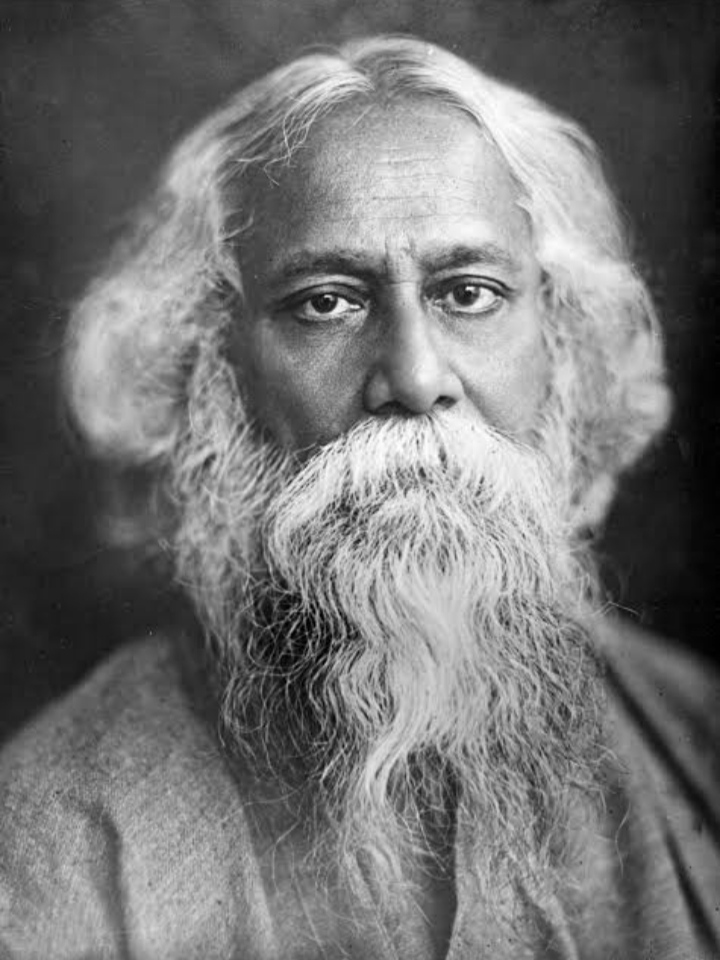
Rabindranath Tagore

Rabindranath Tagore was born on 1861, Nobel prize- winning Bengali poet, author, philosopher, artist, and educator wrote “Gitanjali”(1912).

“My Reminiscences’ was written and published in his fiftieth year, shortly before he started on a trip to Europe and America for his failing health in 1912. It was in the course of this trip that he wrote for the first time in the English language for publication.

Biography- Sri Ramakrishna Paramhansa

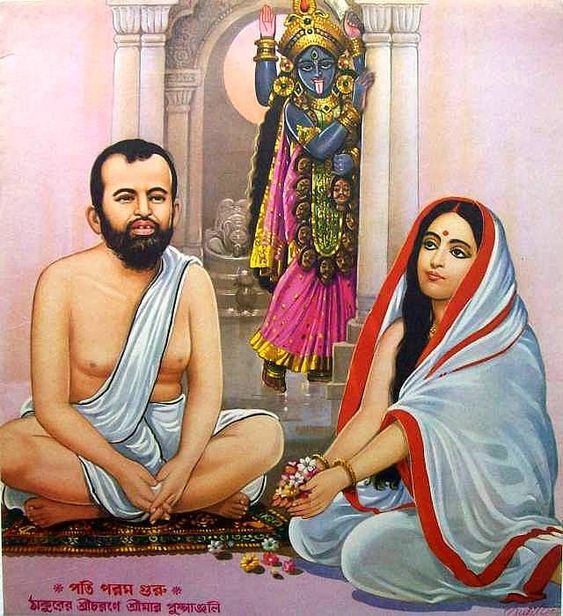
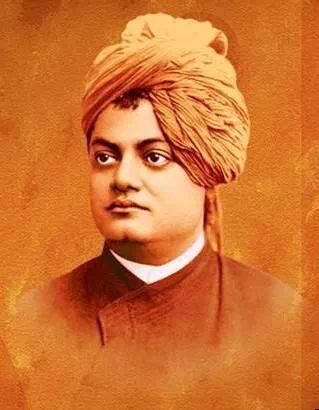
Sri Ramakrishna, the God-man of modern India, was born on 18 February 1836 at Kamarpukur in the Hooghly district in India. His parents Khudiram and Srimati Chandramoni were exceptionally devoted persons and earned the love and respect of the villagers for their charity, truthfulness and kindness. Sri Ramakrishna’s early name was Gadadhar Chattopadhyaya or Gadai and later known as Ramakrishna Paramhansa.  Paramhansa is a title of honor applied to Hindu spiritual teachers who have become enlightened. He learnt some lessons in the village pathshala but he was not very much interested in it. Sri Ramakrishna experienced spiritual ecstasies from a young age and was influenced by several religious traditions, including devotion toward the Goddess Kali, Tantra, Bhakti and Advaita Vedanta. Gadadhar was seven years old when his father died. At the age of sixteen, Gadadhar came to Calcutta (now Kolkata) with his elder brother Ramkumar, who wished his assistance in his priestly duties. At that time a rich widow named Rani Rasmani built a temple for the goddess Kali on the eastern bank of the Ganga at Dakshineswar. Being invited by Rasmani, Ramkumar with his brother Gadadhar came to the sacred temple garden and Gadadhar found greater opportunities to pursue his spiritual practices. In 1855 Ramakrishna was appointed as the priest of Dakshineswar Kali Temple, built by Rani Rashmoni. To Sri Ramakrishna, the image of Kali was not an inert stone, but the Mother herself. Rani Rashmani was greatly attracted to Sri Ramakrishna, for she felt that his strange behaviour was for the fullness of devotion to goddess Kali. Sri Ramakrishna had a catholic spirit from the very beginning and he made no distinction between one form of God in Hinduism to another in Islam or Christianity. Rumours spread to Kamarpukur that Ramakrishna had become unstable as a result of his spiritual practices at Dakshineswar. Ramakrishna’s mother and his elder brother Rameswar decided to get Ramakrishna married, thinking that marriage would be a good steadying influence upon him—by forcing him to accept responsibility and to keep his attention on normal affairs rather than his spiritual practices and visions. Ramakrishna himself mentioned that they could find the bride at the house of Ramchandra Mukherjee in Jayrambati, three miles to the northwest of Kamarpukur. The five-year-old bride, Saradamani Mukhopadhyay (later known as Sarada Devi; she is also considered as an avatar) was found, and the marriage was duly solemnised in 1859. Ramakrishna was twenty-three at this point, but this age difference for marriage was typical for nineteenth-century rural Bengal. They later spent three months together in Kamarpukur. Sarada Devi was fourteen, while Ramakrishna was thirty-two. Ramakrishna became a very influential figure in Sarada’s life, and she became a strong follower of his teachings. After the marriage, Sarada stayed at Jayrambati and joined Ramakrishna in Dakshineswar at the age of eighteen.

To spread his message to the world around Sri Ramakrishna needs a strong instrument. And such an instrument was found in Narendranath Dutta, his beloved Naren, later known to the world as Swami Vivekananda.

The last days of Sri Ramkrishna were with his devoted disciples. Ramakrishna’s condition gradually worsened, and he died in the early morning hours of 16 August 1886 at the Cossipore garden house. According to his disciples, this was mahasamadhi. After the death of their master, the monastic disciples led by Vivekananda formed a fellowship at a half-ruined house at Baranagar near the river Ganges, with the financial assistance of the householder disciples. This became the first Math or monastery of the disciples who constituted the first Ramakrishna Order.

Goals Don’t Replace Systems - And Vice Versa

People who claim that setting goals are a bad thing are out of their minds. They probably set some goals in the past, failed, and never set a goal again.

I know there’s a lot of confusion about goals and systems these days. I’ve contributed to the confusion as well.

A lot of us share the idea that you either have a system or set goals.

But thinking “this or that” is not helpful because it limits our beliefs. I know this because I used to think that way too. But then, I learned that many things in life could be this and that.

So in this article, I’ll explain why goals and systems complement each other, and why I have both.

But first, let’s start with the definitions.

  • goal tells you where you’re going tomorrow
  • system tells you what to do today

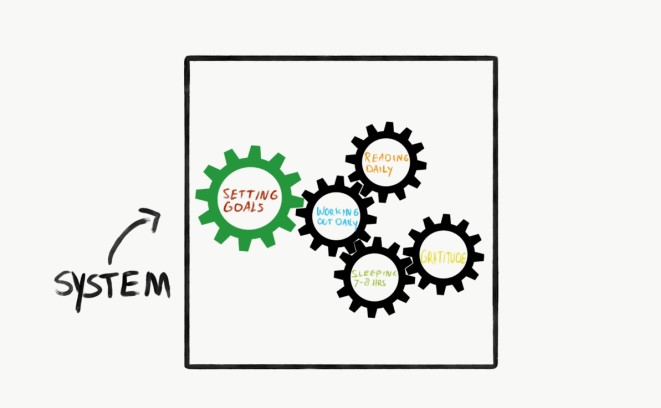
Makes sense? There is a clear difference. A system is a collection of tasks and strategies that help you to function. And setting goals can be part of that system.

1. Why you need goals

Every time I read about people who claim you shouldn’t set goals, I get upset. It’s possibly the worst advice one could receive.

When someone is telling you not to set goals, they are essentially saying you should stop moving forward.

Goals are inherent to human nature. We thrive on progress. We need something to strive for. If we don’t have a vision of what our future could look like, why would we do anything at all?

It’s the classic question that philosophers and scientists have examined since the start of modern civilization. Over and over again, we’ve learned that we need goals to grow.

Let’s stop and think about that for a second. Why are we alive? I say we’re here to live a useful life. That’s what makes us happy; as a result, it makes our life good.

However, setting goals is not an easy skill. In the past, I would set goals that I had zero control over.

“I want to make a million bucks,” you might think.

Alright, great. But here’s the thing, you don’t control the rewards you get. What do you control? Your effort. So, it’s better to set goals that are related to your effort.

  • How many books are you going to read?
  • What degrees will you get?
  • How many potential mentors will you reach out to?
  • How many articles/books/videos/songs will you create?
  • How much of your money are you going to invest?

You see, these types of questions are related to goals that you can influence. That’s the way to go.

2. Why you need systems

Systems have different meanings to people. For example, Scott Adams, the author of How to Fail at Almost Everything and Still Win Big, did a great job explaining how systems work for him. He doesn’t set goals and only has systems. That’s not how I look at it.

Once we set goals, we know that we have to put in the work to achieve them. That’s when systems come into play.

It comes down to this: What do I need to do EVERY DAY to achieve the goals I desire?

Let’s say you want to become financially independent by age 50. You might think:

  • I need to save at least 30% of my income
  • I need to increase my income yearly
  • I need to be mentally strong so that I can do my job
  • I need to be in good shape, so I don’t get ill and have high energy
  • I need to learn every day, so I get better at my job
  • I need to look at my goals every day to remind myself of where I’m going
  • I need to reflect on the past to learn and be grateful for where I am

Alright, congratulations. You have created a system. When you do the above things, you will make progress, no matter what.

One thing we must be aware of is that we keep an open mind: Goals and systems change all the time. Don’t fixate on one thing for a long time. Change your goals and systems as your priorities change.

3. Why you need higher goals

We’ve established that we need both goals and systems to live a good life. Here’s what I’ve learned over the past few years.

Set higher goals!

No, you don’t need to make 10 million bucks. That’s just your superficial brain speaking for you.

Set the bar higher for yourself.

  • Become the best at your job.
  • Become stronger, fitter, and smarter than ever
  • Have divine relationships

Go beyond where you currently are. I like how Jordan Peterson puts it in his immensely popular book, 12 Rules For Life:

“You should never give up the better that resides within for the security you already have.”

Yes, why would you deserve anything but the best? Because you’re afraid of losing what you have? That’s not a good reason to live a timid and mediocre life.

When we aim low, we deserve to receive low. When we aim high, we might fail, but we still have a better life than people who aim low. Because of the failure of someone who aims high is much more profound than the life of someone who aims low.

“Yeah, but I don’t need much.”

Well, that sounds like a pretty high aim for me. It’s funny to me that people pretend like “being content” is easy.

Being grateful and content is the highest aim in life.

You know what’s low? Complaining, being ungrateful, consumerism, anger, doing nothing, etc.

Aim high. Live a life of contribution. Dedicate yourself to knowledge and self-study. Help yourself, your family, and your community. That’s the highest goal one can set.

So, do yourself a favor, sit down for 10 minutes, and think about this:

  • What are your goals for this week?
  • What are your goals for this month?
  • What are your goals for this year?
  • What are your goals for next year?
  • What are your 3-year goals?
  • What are your 5-year goals?

I guarantee that you will feel ecstatic about life after you’ve done this little exercise. Go!

I’ve also published a podcast episode, where I talk about 2 books that I recommend reading about goals and systems. 

7 Productivity Apps That Shave 10 Hours Off Your Week

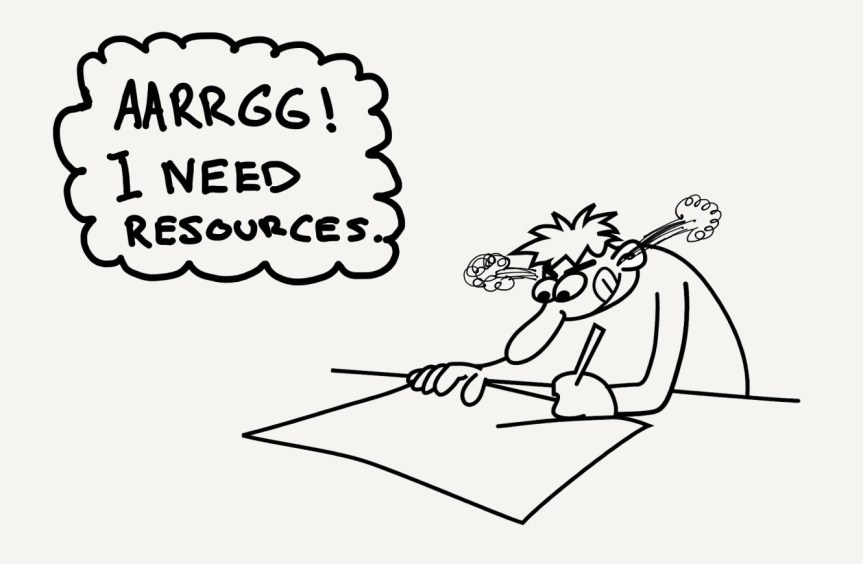
I need tools and resources

My general opinion about productivity apps, tools, and resources is this: It doesn’t matter. I say that because most people hide behind their apps. We’re always looking for the ONE app that will turn us into a productivity monster.

Or we believe that tools or other resources will help us do better work. YouTuber and filmmaker Casey Neistat makes this point very clear, he says:

“The gear never matters. Tell a great story really well, and people will forgive whatever gear you shoot it on.”

When it comes to writing, Stephen King has a similar approach. Whenever he’s asked about tools, he doesn’t even answer. If you want to become a better writer, he says:

“You learn best by reading a lot and writing a lot, and the most valuable lessons of all are the ones you teach yourself.”

I’m sure you know there’s only one way to get things done: Put your head down and work hard. But often, we still think these type of thoughts:

  • “A new laptop makes me more productive.”
  • “This app helps me to get more done.”
  • “The newest DSLR camera makes me a better photographer.”

These are all reasons we procrastinate. Now, of course, tools matter. But they are not the determining factor. You are.

It’s not about the resources you have; it’s about what you do with them. Life is about resourcefulness. And that’s the point people like Casey Neistat and Stephen King want to make.

What you’ll find next is a list of 7 of my favorite apps and how I use them. When you use the tools in the right way, you can easily save 10 hours per week.

1. Grammarly

If you’re reading this, you’re probably a knowledge worker. And a knowledge worker’s primary weapon is her words.

I strongly believe that if you want to become a better communicator, it all starts on paper. Learn how to think and write well, and you will ultimately become better at speaking, sales, copywriting, programming, doing interviews, leading, etc.

The very words you use are EVERYTHING in how you conduct yourself. Especially in an increasingly digital world where people shy away from face-to-face contact.

And Grammarly is the best productivity app to help you with communicating. Most people think a grammar checker is only for writers.

But I mainly use Grammar’s browser extension for daily use. I use it for writing emails in Gmail, responding to comments, or any other site I have to write something.

I also edit my articles with Grammarly (they also have an MS Office add-on). It checks for passive voice, grammatical, spelling, and punctuation mistakes.

All in all, this app saves me about 30 minutes a day in sheer brainpower. With Grammarly, I can just focus on writing and communicating my message; they do the rest.

2. Blinkist

Reading improves focus, productivity, creativity, and it reduces stress. The benefits are so great that it makes you think everybody should be reading books like crazy.

Nope.

23% of Americans have not read a single book in the past year. And the number of books people read per year are also not pretty. Only 28% reads more than 11 books per year.

And I get it. Reading takes time. Plus, one of my main challenges is to select which books I’m going to read.

In the past, I’ve often bought books, and quit them half-way through because they were not useful or interesting. That costs me time and money. That’s frustrating, especially because you can only read so many books every year.

If you’re like me, your reading list grows faster than you cross off books, and that’s a problem. Why? You want to read the RIGHT books. You want to read books that make you grow; personally, professionally, financially.

And I’ve finally found a solution to the question of: “What book should I read next?”

Blinkist creates quality summaries of non-fiction books. Every day I read one book summary, and if I want to learn more, I get the actual book. If not, I just eliminate the book from my reading list.

You have to be realistic; you just can’t read all the books in the world. And it’s important to figure out how you decide which books you’re going to read.

Also, I don’t rely on reviews to select books because a book that’s useless to you can be valuable to me.

3. Trello

  • “What should I do next?”
  • “I’m bored.”

You should eliminate those two thoughts from your head. Why? Because they plant the seeds of something that’s called: WASTING TIME.

I use this productivity app as a backlog of tasks that I have to do. If you don’t know Trello; it’s a versatile project management tool that can be used in many ways.

With Trello you can create ‘boards’ for every project you have. And on every board, you can list all the actions you have to complete for that project.

Every week I take some time to update my projects. That helps me to improve my focus, so I know what I have to do.

Whenever I don’t know what to do, I open Trello: There’s ALWAYS something to do.

4. Feedly / Medium

Browsing blogs remains one of the main sources of wasting time for most of us. I have a simple tip for you: Stop clicking on articles you see in your social feeds.

Most people open Facebook, Twitter, or even news sites, and they click on anything thing that looks slightly interesting.

DON’T.

Instead, make a list of 5–10 blogs/authors you love to read. Then, add them to Feedly or follow the bloggers/publications on Medium. Every day, only read your articles through Feedly and Medium.

This saves at least 1 hour of mindless browsing per week.

5. Office 365 / Google Docs

I still meet a lot of entrepreneurs and freelancers who don’t work in the cloud. If you’re one of them, you’re wasting a lot of time.

Just the few minutes it takes to open files from folders, save them on external drives, or share your documents with others, adds up quickly.

A few minutes here and there become a few hours a week, and hundreds of hours per year.

I use Office 365 because I like to work offline too (plus, I’m a little old school — I’m used to Office). But Google Docs also works well.

Let’s keep this short: If you’re not working in the cloud, it’s time to move there.

I save about 1 hour per week by having easy access to all my documents (on all my devices) in the cloud. I only focus on working and sharing documents, spreadsheets, and presentations.

I don’t want to think about anything else that’s involved with productivity. And that’s what these productivity apps are great at.

6. The Free Calendar App On Your Phone

Forget about to-do lists, fancy productivity apps, or anything else that promises you to get shit done.

There’s only one thing that helps you to get things done: Your calendar.

It’s so obvious that most of us ignore it. We prefer fancy looking to-do lists with all colors of the rainbow, and that make sounds when you check off an item.

The research is clear: To-do lists don’t work. And yet, most people stick to them.

Ditch the to-do list and use your calendar as your number one productivity tool. Take some time to plan your week. Ask: When will I do what? Then, schedule it in your calendar. I do this exercise every day.

I promise that it will save you at least 15 minutes a day of updating your to-do list.

7. Tomighty

I love working with the Pomodoro method. Research shows that it improves focus and the quality of your output.

Whenever I don’t use an app like Tomighty, I just waste hours every day. This app can easily save you one hour per DAY.

How? When you work in intervals, you get more done in less time because of the improved focus.

In total, these 7 productivity apps will shave at least 10 hours off your week. And with practice, you can even double your time savings.

As you might have noticed, productivity is all about eliminating time-wasting activities, and improving your focus.

In that way you get the RIGHT things done, and you ultimately save a lot of hours every week.

Start living more consciously of your time and productivity: Save your time for other, more important, things.

If you do that, you can use those precious hours with your family, friends, spouse. Or you can spend the time to improve your skills.

Because at the end of the ride, when you’re on your deathbed, you won’t think about all apps, tools, or resources you used. No, you’ll reflect on all the great things you did with them.

So what are you waiting for? You have the tools you need to be successful. Only thing left is this: Go out and DO things with the resources you have.

Manage Your Personal Energy To Improve The Quality Of Life

Many things in life always sound better in theory.

  • “I’m going to save my money, buy real estate, and live off the rent money.”
  • “I’m going to start a blog, sell courses, and live off the passive income.”
  • “I’m going to open a yoga school and only work a few hours a day.”

Alright, that’s great. I’ve talked about putting in the work many times before. I’m not going to do that again. We know that by know.

So let’s assume you are putting in the work. And to be honest, I’m pretty sure you’re taking your career seriously. Why else would you read these types of articles, right?

However, we also want to live a good life. I believe that life is meant to be enjoyed. Richard Koch, the author of the seminal book The 80/20 Principle, said it best:

“Do the things that you like doing. Make them your job. Make your job them.”

Let’s be honest here. If you’re currently not enjoying your life, and you’re not waking up every morning with a sense of excitement, you need to do something about it.

You deserve to live a good life. The people in your life deserve that as well. In fact, we all deserve that. No one wants to live or work with a pessimist.

And in this article, I want to share one idea with you that has made a tremendous impact on the quality of my life. In his book, Richard Koch talks about how 20% of activities result in 80% of our happiness.

It’s a term, originated from the economist Vilfredo Pareto, that was coined by Joseph Juran. Pareto found that 80% of the land in most countries was owned by 20% of the population.

But that idea goes beyond wealth distribution. Richard Koch applied it to everything, from business to happiness. And not everything has to be distributed 80/20. Some things are distributed 90/10 or even 99/1. The point is that cause and effect is not a 50/50 relationship.

For example, 100% of my happiness comes from only one measure: My personal energy.

Understanding the impact of mood on happiness

I’ve been thinking about this concept for a long time. I always want to know how and why things happen. So I ask myself things like:

  • Why am I in a good mood today?
  • Why am I in a shitty mood today?
  • Why am I happy in this moment?
  • Why am I stressed right now?

To answer those questions, I keep a journal. If you’re a regular reader of my blog, you know I’m a big advocate of journaling. I also wrote an article about my journaling system.

And recently, I finally discovered a pattern. How I feel is determined by my personal energy.

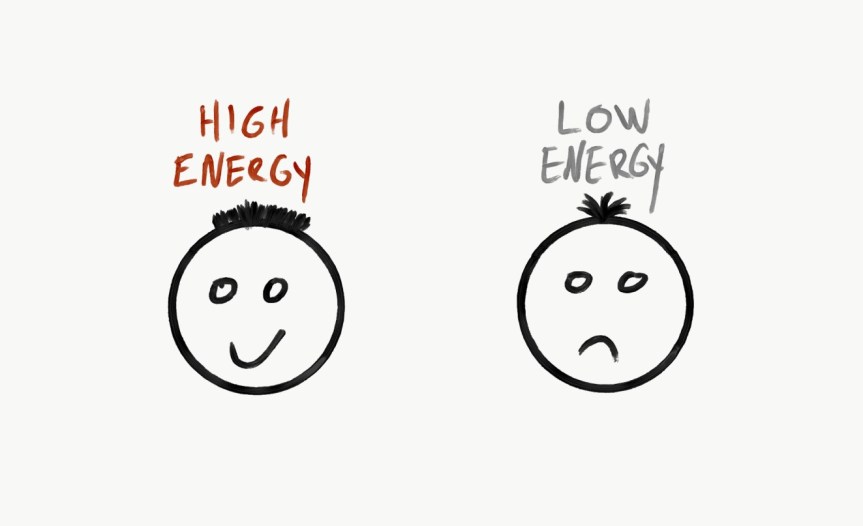
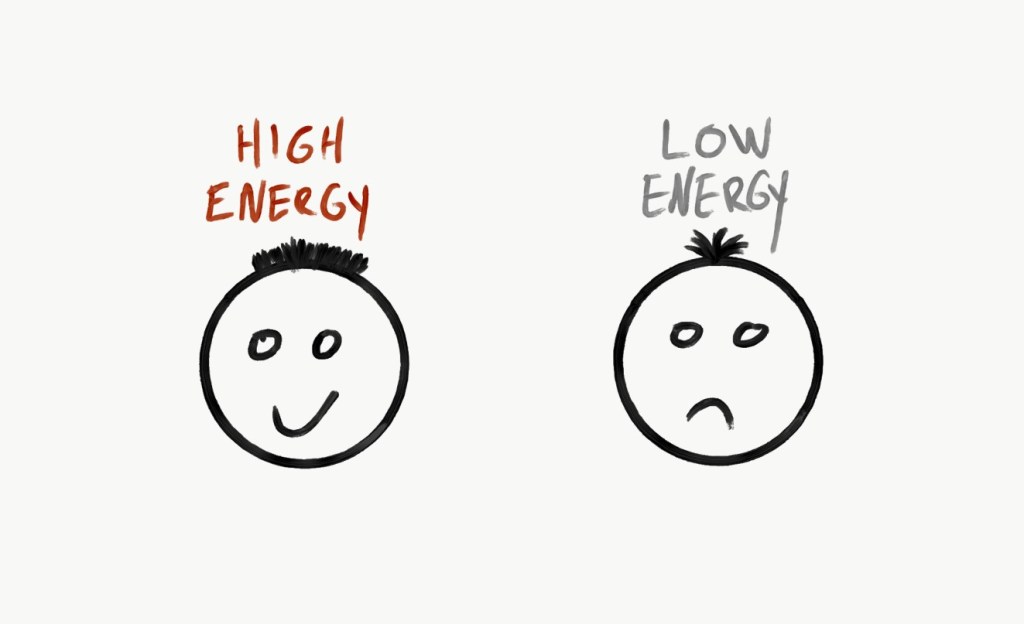
  • High energy? Good mood, feeling confident, looking forward to the future, chest up, smiling, enjoying myself, and doing whatever I like.
  • Low energy? Bad mood, sad, afraid of the future, timid, shying away from eye contact, worrying, etc, etc.

Now, you might think that’s pretty obvious. But no one ever taught me to manage my energy. Not in school, not at work, and not in business. But managing it has made a big impact on the quality of my life.

“So how do you manage your personal energy?”

In practice, it looks like this. Ask yourself:

  1. “What activities destroy my mood and drain my energy?”
  2. ”What activities make me feel good and give energy?”

Before the childish folks go out and say, “I love partying and spending all my money,” I want to say that if you want to be smartass—go and do that somewhere else.

Here’s an example of what I mean. I think writing is a hard and tedious activity. I don’t enjoy it at all, to be honest.

However, after I do it, I feel good about myself, and it gives me a lot of energy. So that makes it worth it to me. So it’s not about avoiding hard things. It’s about looking at the results activities have on your mood.

Here are two other things I’ve learned about managing your personal energy.

  • Identify 20% of the activities that bring you the most results for every aspect of your life.
    Look at your relationships, business, health, money. Then, focus on doing more of the activities that improve those aspects.
  • Continuously re-evaluate.
    Get feedback. Journal. And always ask yourself whether you’re on the right track. Life is not static. You must adjust your course manually. There’s no autopilot. So always take time every day to reflect and look forward.
  • You don’t have to be in a good mood all the time.
    That’s not realistic. I aim for being in a good mood 95% of the time. Also, you can be in a good mood and go through difficulty. Life is tough. So It’s better to be in a good mood to make it easier.

Look, life is long. And if you play it right, you can do most of the things you always wanted. You just need to have patience and manage your energy so you can ENJOY the things you do.

Start now by asking yourself: “What’s the one thing I can do today to improve my mood?”

Ask yourself the same question tomorrow.

And the day after that.

And so forth.

Goals Don’t Replace Systems – And Vice Versa

People who claim that setting goals are a bad thing are out of their minds. They probably set some goals in the past, failed, and never set a goal again.

I know there’s a lot of confusion about goals and systems these days. I’ve contributed to the confusion as well.

A lot of us share the idea that you either have a system or set goals.

But thinking “this or that” is not helpful because it limits our beliefs. I know this because I used to think that way too. But then, I learned that many things in life could be this and that.

So in this article, I’ll explain why goals and systems complement each other, and why I have both.

But first, let’s start with the definitions.

  • goal tells you where you’re going tomorrow
  • system tells you what to do today

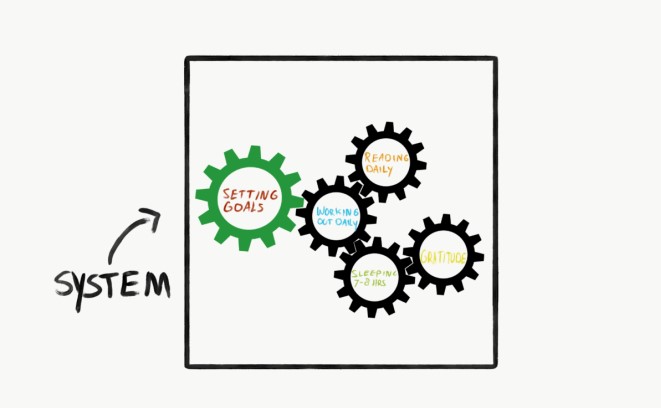
Makes sense? There is a clear difference. A system is a collection of tasks and strategies that help you to function. And setting goals can be part of that system.

1. Why you need goals

Every time I read about people who claim you shouldn’t set goals, I get upset. It’s possibly the worst advice one could receive.

When someone is telling you not to set goals, they are essentially saying you should stop moving forward.

Goals are inherent to human nature. We thrive on progress. We need something to strive for. If we don’t have a vision of what our future could look like, why would we do anything at all?

It’s the classic question that philosophers and scientists have examined since the start of modern civilization. Over and over again, we’ve learned that we need goals to grow.

Let’s stop and think about that for a second. Why are we alive? I say we’re here to live a useful life. That’s what makes us happy; as a result, it makes our life good.

However, setting goals is not an easy skill. In the past, I would set goals that I had zero control over.

“I want to make a million bucks,” you might think.

Alright, great. But here’s the thing, you don’t control the rewards you get. What do you control? Your effort. So, it’s better to set goals that are related to your effort.

  • How many books are you going to read?
  • What degrees will you get?
  • How many potential mentors will you reach out to?
  • How many articles/books/videos/songs will you create?
  • How much of your money are you going to invest?

You see, these types of questions are related to goals that you can influence. That’s the way to go.

2. Why you need systems

Systems have different meanings to people. For example, Scott Adams, the author of How to Fail at Almost Everything and Still Win Big, did a great job explaining how systems work for him. He doesn’t set goals and only has systems. That’s not how I look at it.

Once we set goals, we know that we have to put in the work to achieve them. That’s when systems come into play.

It comes down to this: What do I need to do EVERY DAY to achieve the goals I desire?

Let’s say you want to become financially independent by age 50. You might think:

  • I need to save at least 30% of my income
  • I need to increase my income yearly
  • I need to be mentally strong so that I can do my job
  • I need to be in good shape, so I don’t get ill and have high energy
  • I need to learn every day, so I get better at my job
  • I need to look at my goals every day to remind myself of where I’m going
  • I need to reflect on the past to learn and be grateful for where I am

Alright, congratulations. You have created a system. When you do the above things, you will make progress, no matter what.

One thing we must be aware of is that we keep an open mind: Goals and systems change all the time. Don’t fixate on one thing for a long time. Change your goals and systems as your priorities change.

3. Why you need higher goals

We’ve established that we need both goals and systems to live a good life. Here’s what I’ve learned over the past few years.

Set higher goals!

No, you don’t need to make 10 million bucks. That’s just your superficial brain speaking for you.

Set the bar higher for yourself.

  • Become the best at your job.
  • Become stronger, fitter, and smarter than ever
  • Have divine relationships

Go beyond where you currently are. I like how Jordan Peterson puts it in his immensely popular book, 12 Rules For Life:

“You should never give up the better that resides within for the security you already have.”

Yes, why would you deserve anything but the best? Because you’re afraid of losing what you have? That’s not a good reason to live a timid and mediocre life.

When we aim low, we deserve to receive low. When we aim high, we might fail, but we still have a better life than people who aim low. Because of the failure of someone who aims high is much more profound than the life of someone who aims low.

“Yeah, but I don’t need much.”

Well, that sounds like a pretty high aim for me. It’s funny to me that people pretend like “being content” is easy.

Being grateful and content is the highest aim in life.

You know what’s low? Complaining, being ungrateful, consumerism, anger, doing nothing, etc.

Aim high. Live a life of contribution. Dedicate yourself to knowledge and self-study. Help yourself, your family, and your community. That’s the highest goal one can set.

So, do yourself a favor, sit down for 10 minutes, and think about this:

  • What are your goals for this week?
  • What are your goals for this month?
  • What are your goals for this year?
  • What are your goals for next year?
  • What are your 3-year goals?
  • What are your 5-year goals?

I guarantee that you will feel ecstatic about life after you’ve done this little exercise. Go!

I’ve also published a podcast episode, where I talk about 2 books that I recommend reading about goals and systems.