HEARTBREAKING ANIME TO WATCH

Anime is hand-drawn and computer animation originating from Japan. It describes all animated works, regardless of style or origin. However, outside of Japan and in English, anime is colloquial for Japanese animation and refers specifically to animation produced in Japan. If you want to try something new then you can always jump into anime.

People usually turn up to sad songs or even sad books, but no doubt that anime has some of the most heartbreaking and sad stories to ever exist. If you are a person who likes a good crying and feel the emotions to the soul, then here is a list of anime you must watch!

A SILENT VOICE

A silent boice can be very difficult to watch. It deals with the effects of bullying, mental health and suicide. The story is a bout a young boy who bullies and young deaf girl who is a new student in his class. The girl soon leaves the school and everyone turns against the boy for treating the deaf girl harshly. Ages later they happen to meet again and the boy now is trying to pay for his guilty actions of the past. They become good friends and find a way to like each other. But the universe is not on their side and uncertain events take place that turns the entire story.

YOUR LIE IN APRIL

This anime has a great set of music and melodies as this anime about a girl who plays violin and a boy who played piano but stopped after the death of his mother. Music and loss are at the heart of the series. The time someone has with their loved ones is limited. Like a song, it will be over before they know it. But we never forget the melody. A short tale of love and friendship that touches your heart with great classical performances.

CLANNAD AFTER STORY

This anime is the sequel to the acclaimed slice-of-life anime Clannad, Clannad After Story follows it’s high school characters into adulthood. This anime gives us a box full of joys, self discoveries, and disappointments. The anime is filled with heartbreaking circumstances that can get us confused, and give us joy at the same time. At the climax of the anime Clannad After Story asks, “It is really better to have loved and lost than to never love at all?”  No matter what the answer is, the anime is meant to make you cry.

BANANA FISH

Banana fish is the story of a young gang leader investigating a strange drug. It has a dark theme with characters that have complex relationships. Banana Fish deals with the devastating events that lead a person to believe they are not worthy of love, and the healing potential of unconditional love. The tears could be out of rage or sorrow, but tears are definitely going to make its way out the viewers eyes.

I WANT TO EAT YOUR PANCREAS

Yes! I was confused of the name as well as it seems so random but once you watch this movie you will realize how deep the meaning of those words is. This anime talks about a simple and cute love story of an outgoing chaotic girl who is dying of pancreatic cancer, and a shy and introverted boy who happened to be the only one to know about her illness other than her family. They both dedicated their time in completing the bucket list of the girl as she knows she will be dying very soon. This anime is a tear-jerker but not in the way audiences would expect. There are some twists that help the movie subvert its genre. What makes I Want To Eat Your Pancreas remarkable is how it deals with the idea of chance and the choices we make when we no longer have a say in our fate.

ORANGE

This anime is about the letter that a 16 year old starts to receive from her future self. The letters inspires the 16 year old to not take any decisions that will make her regretful in the future. Her biggest regret turns out to be a friend of her’s who is no longer alive in the next ten years. Orange asks its viewers to examine their past regrets and ask if those regrets weigh more than the happiness they enjoy now.

Article by : Haniah Mirza


Climate Change

Environmental change incorporates both a worldwide temperature alteration driven by human-prompted discharges of ozone depleting substances and the subsequent huge scope shifts in climate designs. However there have been past times of climatic change, since the mid-twentieth century people remarkably affect Earth’s environment framework and caused change on a worldwide scale.

The biggest driver of warming is the emanation of gases that make a nursery impact, of which over 90% are carbon dioxide (CO2) and methane. Petroleum product consuming (coal, oil, and flammable gas) for energy utilization is the fundamental wellspring of these emanations, with extra commitments from agribusiness, deforestation, and assembling. The human reason for environmental change isn’t questioned by any logical assemblage of public or global standing. Temperature rise is sped up or tempered by environment inputs, for example, loss of daylight reflecting snow and ice cover, expanded water fume (an ozone harming substance itself), and changes to land and sea carbon sinks.

Temperature ascend ashore is about double the worldwide normal increment, prompting desert extension and more normal warmth waves and out of control fires. Temperature rise is additionally intensified in the Arctic, where it has added to dissolving permafrost, icy retreat and ocean ice misfortune. Hotter temperatures are expanding paces of dissipation, causing more serious tempests and climate limits. Effects on biological systems incorporate the migration or annihilation of numerous species as their current circumstance changes, most promptly in coral reefs, mountains, and the Arctic. Environmental change undermines individuals with food instability, water shortage, flooding, irresistible infections, outrageous warmth, monetary misfortunes, and relocation. These human effects have driven the World Health Organization to call environmental change the best danger to worldwide wellbeing in the 21st century. Regardless of whether endeavors to limit future warming are fruitful, a few impacts will proceed for quite a long time, including rising ocean levels, rising sea temperatures, and sea fermentation.

Energy streams between space, the air, and Earth’s surface. Current ozone depleting substance levels are causing a radiative unevenness of about 0.9 W/m2.

A considerable lot of these effects are as of now felt at the current degree of warming, which is about 1.2 °C (2.2 °F). The Intergovernmental Panel on Climate Change (IPCC) has given a progression of reports that project huge expansions in these effects as warming proceeds to 1.5 °C (2.7 °F) and past. Extra warming additionally expands the danger of setting off basic edges called tipping focuses. Reacting to these effects includes both relief and transformation. Relief – restricting environmental change – comprises of lessening ozone depleting substance discharges and eliminating them from the climate. Techniques to accomplish this incorporate the turn of events and organization of low-carbon fuel sources, for example, wind and sun powered, an eliminate of coal, improved energy proficiency, and backwoods protection. Transformation comprises of acclimating to genuine or anticipated environment, for example, through further developed coastline insurance, better calamity the executives, helped colonization, and the improvement of more safe yields. Transformation alone can’t turn away the danger of “serious, far reaching and irreversible” impacts.

Under the 2015 Paris Agreement, countries altogether consented to continue to warm “well under 2.0 °C (3.6 °F)” through moderation endeavors. In any case, with vows settled on under the Agreement, a dangerous atmospheric devation would in any case reach about 2.8 °C (5.0 °F) before the century’s over. Restricting warming to 1.5 °C (2.7 °F) would require splitting emanations by 2030 and accomplishing almost zero discharges by 2050.

Law and Its Importance in our Society

What is Law?

Law is a system of rules created and enforced through social or governmental institutions to regulate behaviour, with its precise definition a matter of longstanding debate. It has been variously described as a science and the art of justice. State-enforced laws can be made by a group legislature or by a single legislator, resulting in statutes; by the executive through decrees and regulations; or established by judges through precedent, usually in common law jurisdictions. Private individuals may create legally binding contracts, including arbitration agreements that adopt alternative ways of resolving disputes to standard court litigation. The creation of laws themselves may be influenced by a constitution, written or tacit, and the rights encoded therein. The law shapes politics, economics, history and society in various ways and serves as a mediator of relations between people.

Given below are the various Definitions for law by most famous legal authors worldwide.

John Austin

“Province of Jurisprudence Determined”

Duhaime’s Law Dictionary

“All the rules of conduct that have been approved by the government and which are in force over a certain territory and which must be obeyed by all persons on that territory (eg. the “laws” of Australia). Violation of these rules could lead to government action such as imprisonment or fine, or private action such as a legal judgement against the offender obtained by the person injured by the action prohibited by law. Synonymous to act or statute although in common usage, “law” refers not only to legislation or statutes but also to the body of unwritten law in those states which recognize common law”

Greek philosopher Plato and Aristotle

“An embodiment of Reason”, whether in the individual or the community’.

Aristotle

“By ‘particular’ law mean that which an individual community lays down for itself; and by ‘universal’ law I mean the law of nature. For there is a natural and universal notion of right and wrong, one which all men instinctively apprehend.”

Importance of Law in our Society:-

The law is a set of proper guidelines and orders accepted by the society as a norm of conduct for citizens. It is the pivot of the society and the citizens follow according to it. Without the existence of a law, there would be the situation of chaos and conflicts among communities and social groups. Law is man-made and is very important as it introduces justice to the society. There must be ground rules and principles set for modulation of society and its proper conduction. Law has helped society and its citizens in each and every aspect of life. Due to laws, there have been changes brought to our society like- abolition of practices like Sati, child marriage, dowry, etc.

  • Law can provide justice to the victims and punish those who are responsible for unlawful actions.
  • In courts, a law is used to settle conflicts among the people.
  • The main function of law is to ensure all-round development of people by providing security, peace, and protection.
  • Without law, people were free to do anything they wish. But, a law has imposed certain limitations and restrictions that have to be followed by each and every citizen. Failing or violation of which would be a punishable offense.
  • An example of the role of law in our lives is Health Insurance. Nowadays people are able to secure their lives just because of law.
  • It is the law that is responsible for the behaviour of people among each other. Without it, there would be actions like stealing, damaging one’s property, hurting one’s sentiments, etc.

Raj Kundra scam:

Tip-off on adult film shoot, led cops to Raj Kundra!! Know More

It was February 4. The Mumbai Police received a tip-off: a porn movie being shot at a bungalow in Madh Island. In a prompt raid on the bungalow that followed, the police found two persons in a state of undress being filmed in intimate poses in an uncomfortable position.

According to the police five persons assisting in the filming process were arrested and a woman was rescued from the house that day. Later a complaint was made in the case which eventually led to the arrest of businessman and Bollywood actor Shilpa Shetty’s husband, Raj Kundra, five months later on July 19.

Kundra was produced in a court on Tuesday that sent him to police custody till July 23 and got extended till July 27 in connection with the alleged making of pornographic films and publishing them through some mobile applications.

Police said that five persons, arrested from the Madh Island bungalow, would promise aspiring actresses coming to Mumbai, from areas like Beed in rural Maharashtra or states like Jharkhand, roles in web series. On the day of the shoot, the accused would tell the women the script had been changed. They would allegedly ask them to undress and shoot intimate scenes.

If the women refuses, police claimed, they would be threatened with the bill for setting up the shooting. Coming from humble backgrounds, most of these women would succumb to the pressure, the police stated.

Once the movies were shot, the accused allegedly put them on mobile applications like Hot Hit Movies and Hotshots. They allegedly also offered subscriptions on the lines of mainstream OTT platforms and also put up advertisements on social media platforms.

According to the police in June 2020, the Hotshots app was removed from the Apple store and from Google Store in November 2020 following complaints that it was streaming pornographic material.

The crime branch said that during the probe, they found that these adult movies were normally shot within a day at a rented bungalow on the outskirts of Mumbai, like Madh Island. There would be minimal staff of five to six people, who would double up as directors, dialogue writers, location scouts and web app developers. These apps became especially popular during the lockdown, with some gaining a subscriber base of lakhs, the police claimed.

Initially, during the course of its investigation, the Mumbai Police had focused on producers and others who assisted in the process of shooting. Those arrested included Rowa Khan, producer of such films, small-time actor of Gandi Baat web series Gehna Vasisht among others.

Later, the crime branch started focusing on platforms to which such films were sold. It was during this probe that the police arrested Umesh Kamat, who worked with UK-based Kenrin Pvt Ltd, a production company that owns the Hotshots app where some of these movies were uploaded.

Based on Kamat’s questioning and going through his call records, the police found that while Kenrin owned the app, it was allegedly being run by Raj Kundra through his Mumbai-based company Viaan Industries. A charge sheet filed in April, however, did not name Kundra.

After further probe and a scan of the technical data on Kamat’s laptop, the police sought the court’s permission to search Kundra’s office. Eventually, a police team raided the place on Monday and claimed to have found “incriminating evidence” based on which he was arrested late that night.

The police is still investigating in this case  and can find big evidences against this case!!!!

Terrorism

The meaning of psychological oppression is a troublesome idea to plan and has been the wellspring of conflict in scholarly world and strategy for a quite a long while at this point. Where a few researchers and specialists have decided to work with open-finished definitions, others have portrayed a few distinct kinds of definitions, all investigating and endeavoring to incorporate the numerous components that encapsulate what psychological oppression is. In this paper, I will unload why see how these definitions are politically created and classified into law and strategy by different predominant states in the West. I will likewise delineate why it is significant that anybody undertaking a basic investigation of fear based oppressor contemplates should not just inspect why the meaning of psychological warfare is significant, yet additionally who is characterized as a psychological militant rather than a political dissident, and by whom the entirety of this definitional work is finished. In doing as such, I desire to bring up basic issues concerning why the terms psychological warfare and fear monger are questionable, what the legislative issues behind those choices are and what the systems are for the goal of this debate after some time and in various settings. Ultimately, I will draw on the contemporary discussions about psychological militant savagery and who executes it in the United States of America to reveal insight into the way that contention around these issues can’t be settled where there is no will to arrive at goal.

Researchers have since quite a while ago expounded on the unpredictable issues engaged with endeavoring to track down a general meaning of psychological oppression. A portion of those researchers have affirmed that it is essentially difficult to characterize the term and that somewhat, a spectator would ‘know it when they saw it’ (Weinberg et al, 2004: 777-778), highlighting the many, shifted implies and strategies that could be portrayed as psychological militant demonstrations. Besides, Witbeck (2004, refered to in Shanahan, 2016: 103) grows this definition – or undoubtedly non-meaning of psychological warfare – by expressing that there is a component of plan to keeping the term wide and without significance on the grounds that “maybe the lone legitimate and worldwide useful meaning of illegal intimidation is an unequivocally emotional one – ‘brutality I don’t uphold'”. Surrendering to the impulse to leave the meaning of the idea this open-finished and wide is certifiably not a practical choice or answer for the intricacy of the issue. There are numerous definitions that have been set up throughout the long term which are helpful in both responding to the general inquiry of this paper and building up a functional definition for the reasons for this article.

To this end, a valid statement of takeoff might be simply the starting points of the word. The word ‘dread’ arose in the English language as a descriptor for the activities of French progressives against their homegrown foes in 1793 and 1794, most eminently alluding to constraint as executions. Starting with references from the 1790s, psychological warfare was straightforwardly characterized as (1) government by terrorizing as coordinated and completed by the gathering in power in France during the Revolution of 1989-94 and (2) arrangement planned to strike dread in those against whom it is received (Tilly, 2004: 8). The last 50% of this early meaning of fear has endured through worldwide history and legislative issues, with numerous researchers concurring that the place of illegal intimidation is to threaten, with the demonstration of doing as such truly accepted by a coordinated power (Chailand and Blin, 2007: 2).

Alongside dread and terrorizing, there are different factors frequently viewed as urgent to outlining when activities taken by a gathering or an individual comprise psychological warfare or not. These components incorporate yet are not restricted to brutality, hurt, and dangers; irregularity or unpredictable viciousness; political inspiration; the focusing of regular citizens, non-warriors thus called blameless people; and intentional endeavors to expose the demonstrations of fear. There is a bunch of various definitions that incorporate a portion of these variables, that avoid a few and that join various components into one yet in this article, it won’t be feasible to cover these potential definitions or to talk about the benefits and deficiencies of each. Considering the previously mentioned definitions, and for the reasons for this paper, I think it is important to attest that the establishment of any meaning of psychological oppression is that it is a demonstration or set of activities including the danger of or the utilization of power and savagery determined to accomplish pre-decided results.

WIPRO

Wipro Limited is an Indian multinational corporation that provides information technology, consulting and business process services. The Fortune India 500 ranks it the 29th largest Indian company by total revenue. It is also ranked the 9th largest employer in India with nearly 195,000 employees.

The company was incorporated on 29 December 1945 in Amalner, Maharashtra by Mohamed Premji as “Western India Products”, later abbreviated to “Wipro”. It was initially set up as a manufacturer of vegetable and refined oils in Amalner, Maharashtra, British India, under the trade names of Kisan, Sunflower, and Camel. During the 1970s and 1980, the company shifted its focus to new opportunities in the IT and computing industry, which was at a nascent stage in India at the time.

Wipro continued to expand in the consumer products domain with the launch of “Ralak” a Tulsi based family soap and “Wipro Jasmine”, a toilet soap.

In 1988,Wipro added mobile hydraulic cylinders and heavy-duty industrial cylinders to its line of products. A joint venture company with the United States’

General Electric in the name of Wipro GE Medical Systems Pvt. Ltd. was set up in 1989 for the manufacture, sales, and service of diagnostic and imaging products. In February 2002,Wipro became the first software technology and services company in India to be ISO 14001 certified. Wipro Consumer Care and Lighting Group entered the market of compact fluorescent lamps, with the launch of a range of CFL, under the brand name of Wipro Smartlite. As the company grew, a study revealed that Wipro was the fastest wealth creator for 5 years (1997–2002). It set up a wholly owned subsidiary company (Wipro Consumer Care Limited) to manufacture consumer care and lighting products.

Indian IT services firm Wipro believes it is “very critical” today for all enterprises to move beyond traditional AI and looking at historical data. Instead, Wipro said, it’s time for companies to embrace advanced AI capabilities, which means ensuring an AI system can recognize emerging patterns. With AI permeating all aspects of technology, building an AI practice has become a logical step for channel partners. Over a year ago,Wipro developed what it calls the STRL — or sense, think, respond and learn – framework.

The STRL framework aims to help customers use AI across their entire data and analytics value chain to identify patterns, make predictions and shape the outcomes of what they’re looking at, as well as understand customer behavior, said Manoj Madhusudhanan, Wipro’s global head of cognitive technologies. The framework also seeks to help organizations understand the behavior of their end customer.

Wipro Consumer Care and Lighting is among the fastest growing FMCG businesses in its operating geographies of Asia the Middle East and Africa, with revenues of over Rs.7700 Crore. Its businesses include personal wash products, skincare products, male grooming products, toiletries, wellness products, household products, electrical wire devices, domestic and commercial Lighting and modular office furniture. It has a strong brand presence with significant market share across segments in India, South East Asia, East Asia, Africa and the Middle East.


MAGIC OF PILGRIMAGE ON PEOPLE

India is the land of culture and religion. Here religion has influenced living style, life as well as mentality.
Though India has a diverse culture also known as 'unity in diversity.’ People of diverse cultures and religions live with a single citizenship under one Constitution.
Majority of the population in India follows Hinduism. It is believed that in ancient times Hindu people used to live here. Later Mughals and other people arrived here and spread their religion.
Though constitutionally, India gives right to every religion, when one observes these things from a bird’s eye view, Indian people and their diversity seems to be so much united and hormonal but at the core every religion wants to be superior. People fight and kill each other in the name of religion.
In every religion whether it is Hinduism, Christianity, Muslim or Jainism, pilgrimage has its own importance. It is said that people travel to various places where their God lived, took birth and spent their life. By doing this they earn virtue and their souls get a place in the so-called heaven.
In India, there are around two million temples, and each year the number increases substantially. This data is just of Hinduism. There are many places of worship for different religions in India.
People here everyday visit a lot of temples to worship God. Some people travel as they have taken a vow in the name of a particular God.
Varanasi, Tirupati, Balaji, Dwarka, Puri, Badrinath, Kedarnath, Amaranth, Ujjain are such cities for Hindus. Mecca and Madina for Muslims. Jerusalem for Christians. Thousands of people visit these cities on a daily basis.
Of course there is nothing bad about visiting places, not even temples. When you visit any place, you explore it, you learn about it and can remember its importance very easily. Travelling makes you know about the world so easily.
But the problem here is with which feeling or by thinking you are travelling, or you are visiting a particular place.
It's worthless to travel to a place of worship with some motive, in the hope that the visit will fulfil your wish. You don't visit it for the love of God. You visit him for your own benefit. Your selfish nature makes you visit there and name it as admiration for God.
How illogical is pilgrimage? Whether God exists in any corner of this universe is uncertain. People don't have faith in God. They have blind faith in their statues. They believe that visiting and worshipping these statues will solve their problems, will make their lives happy. Whatever they want they will get.. Which never happens.
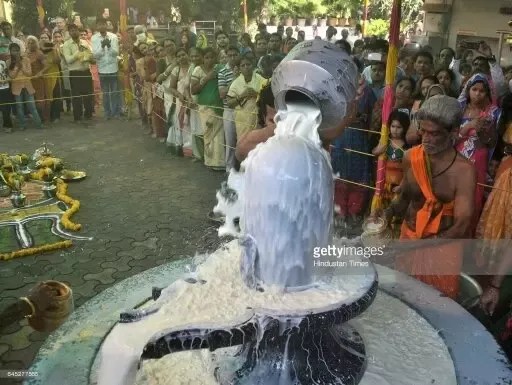
For once let's believe that God exists, and he loves its devotees. Does a loving person ask you to remain hungry? Does he become angry if you don't do what you said? Does he ask you to give him a bath with milk and other stuff? Does he ask to donate money for him? Does he ask to stand in the queue to meet him? Does he ask you to offer coconut? No, of course not.
When one visits a big temple, let's say Badrinath or Kedarnath. Huge number of people have to wait in long queues, where the assistant of a particular God i.e pandit, manages how long he/she can worship, from where to enter, whether to touch the statue or not. The irony is there is a VIP quota for visiting the statue. One who has a VIP pass can visit God soon.
I wonder how the same God can have different status? Kedarnath's Lord shiva is God of bigger status rather than the one in the temple near you. If one can find the same God nearby, what's the point of going to Kedarnath, just because it is said that visiting Kedarnath fulfills your wish.
People give their everything when they visit their God's place. In Mathura people crawl around the Govardhan Parvat. People donate their hair at Tirupati in the name of a vow they have taken.
It's hard to make people understand this is just a business practiced by owners or associations who built temples. A person will not give a penny extra to the one who sells vegetables day and night. They would bargain with him, but whenever they will visit the temple, especially one which is famous, they would give several rupees unnecessarily to the pandit or in the name of adonation.
People here donate money in thousands and lakhs for building temples. Today also in India not every class of people are allowed to enter temples. The time is fixed when God's statue will be visible and when it will not.
Visiting these places is good only when you don't have any expectation of return after visiting there. It's better to give money to one who earns by working hard rather than wasting it here and there. Every year people donate tonnes of gold and lakhs of money to these temples.
Even if one has faith in God he/she should know that giving bribe to God is injustice to their faith. If God exists he would never demand this.
No doubt temples are the shelter for many poors. These temples provide meals to the poor. Giving food to someone is the source of pleasure to so many but offering gold and huge money which goes in the pocket of wrong people is again injustice.
It's not like that only Hindu community has fake faith in pilgrimage. Each and every religion has the same condition in other countries too.

Things one must know before starting college


Excited about starting college but slightly nervous too? Well keeping that in mind I’ve written an article addressing the very topic.

Starting college is like entering a whole new world and there’s so much to think about:

  1. Will I make friends?
  2. What Major should I pick?
  3. How will I juggle everything?
  4. What should I bring?

And, lot’s more.

That’s why I’ve created this list of things you need to know before you (or your child ) start college. Let’s get started!

1. What to Take With You to College


(You can skip this if you are living off-campus – but it’s still good to read.)

For most students, going to college is the first time they live away from home. So, the question is, What do you take with you when moving into a dorm?

Before deciding…Get in touch with your college and ask for their approved and prohibited items checklist. Every college will have one and each college will have slightly different guidelines. Some colleges won’t even allow a power strip! So…make sure you contact them before spending money on things like mini-fridges. Another thing to consider is space. Freshmen tend to underestimate how much space they need, and dorm storage space is notoriously less than it seems at first(quick tip – find out the exact dorm room dimensions and measure any larger items you want to take figure out how much will fit –good to know before showing up in a U-Haul!).

A good rule of thumb is just only to take what’s necessary:

  • Comfortable clothing for class.
  • A formal outfit & shoes for special occasions and job hunting
  • Laptop & phone (obviously)
  • Bathroom supplies
  • Bedding (sheets, pillows, blanket)
  • School supplies i.e. pens, rulers, calculators, sticky notes, etc.
  • Eye mask, earplugs, and pain medication (just trust me)
  • Of course, there’s more, but these are the essentials.

Many students wonder if you can bring your car to campus. This is something you will need to check with your college. Some allow cars; others don’t.

Talking about transportation ….

2. Things to Do On And Off Campus


Think about what you would like to do with your spare time (and how you will get there). College campuses and their surrounding areas are packed with things to do. Almost every college has plenty of clubs, events, and activities on offer for students. So…when you’re on the phone with the college and asking about what things you can take with you, make sure to find out about things to do on and off-campus. You will also want to get off campus now and then. Do google maps search using the college’s address to find out what there is to do out and about the college.

For example, you could search for:

  • Starbucks near [college name]
  • Restaurants near [college name]
  • Movie theatres near [college name]
  • Comic Conventions near [college name]

And so on…These kinds of places know that students love their products and services. So chances are they will be located around the college.

Then…you need to know how to get there! Once you know where you want to go, make sure that you come up with an idea of how you can get there by bus, train or bicycle (if you have one). Knowing how much it costs to get where you want to go is also an important element in making your weekly budget.

3. What Classes You Will Take


Maybe you have already chosen your Major, maybe you haven’t. Either way: If you look around the room on the first day of college, statistically up to half of them haven’t chosen their major either. Even then…Two-thirds of all college students who have picked their major, change it at least once before graduation. Having said that: You should look into which classes you will be attending in your first semester. Because you will need to prepare beforehand. You will need to buy books for example. However, don’t order them just yet, we’ll give you a few tips about saving money on books later. More importantly…Did you know that you forget almost 82% of what you learn in a class within 28 days? And after graduating from high school, students often have three or four months before starting class again.

This is a great way for students to relax after the stress of their final year of high school but the problem is that because of a natural memory drain, getting back into the flow of studying again can be stressful and overwhelming. That’s why we suggest taking a few pre-college tutoring classes based on classes you will have during the first and second semesters. That way you can hit the ground running with one less thing to worry about when starting college.

4. How to Improve Your Memorization


College can be challenging. There is so much to learn and topics you have never studied before. And…Like I said in the last section: The average person loses 82% of what they learn within 3-4 weeks, while a typical college semester is fifteen weeks long. This means that by the end of the semester: When it’s time for exams, you will only remember 18% of what you learned in the first two-thirds of the semester! Frustrating, right? So, I’m going to share three memory tips that will help you retain much more of your course content and while having fun doing it:

Tip 1. Find Your Why

Think about why you want to study your subjects. If you are just learning to pass an exam, chances are you will forget everything the next day. When you want to learn, you need to have a strong (emotional) motivation. Just tapping into a desire to learn something will increase your memory retention and learning abilities. For example:

Those who want to be doctors are more likely to have an active interest in topics like biology or chemistry and therefore find it easier to remember key facts and information from those classes. What is your end goal? Find something you want to achieve and connect it with your academic success. Once you find your own key motivation for studying, everything becomes easier to learn and remember.

Tip 2. Learn Use Mnemonic Devices

Mnemonic devices are ageless proven tricks to help you remember almost anything more easily. And…Many of the techniques have been around for thousands of years. So what does a Mnemonic device look like? They are simply different methods to help you remember specific chunks of information. Here’s an example:

This mnemonic device helps you to memorize the first 10 elements and their position.

“Henry Hester Likes Beer But Can Not Obtain Food Now”

Just by remembering this line, you are able to remember each of the first 10 elements and their position in the list:

  • Henry – Hydrogen
  • Hester – Helium
  • Likes – Lithium
  • Beer – Beryllium
  • But – Boron
  • Can – Carbon
  • Not – Nitrogen
  • Obtain – Oxygen
  • Food – Fluorine
  • Now – Neon

See how each word represents an element in its position? This is a type of mnemonic device. Our brains find it easier to remember a storyline or a structured sentence rather than a list of random names of elements. You can use Mnemonic devices to memorize nearly anything. The more you practice the easier it gets, too. And…If you practice these tricks often, studying for any exam will become a breeze.

Lastly:

Tip 3. Use Regular review

The best way to move something from your short-term memory banks to your long-term memory banks is to repeat it a few times.

So, schedule some time every week to review your class notes from the semester. Don’t just review what you learned that week. Review what you learned 2,3,4 weeks ago as well. Another extra trick here is to practise recalling the information out of sequence. This cements the info even further into your brain.

5. How to Take Notes Like a Boss


Notetaking is one of the best ways to help you learn faster, as long as you read them – see the previous chapter.

Here are some of our top notetaking tips to become a note-taking pro.

  1. Be prepared. Look over the upcoming class’ outline and slides if available to get an initial picture of the lesson to come.
  2. Use your notetaking to summarize, not transcribe. Focus on recognizing key concepts (often indicated in the class slides).
  3. Practice your listening skills. Learn to Identify the most important snippets of information and forget the rest. Create a few notes on the big picture, then pinpoint “subheadings” underneath with brief, key information under each.
  4. If the lecturer is going too fast for you, take a photo of the slides or board notes with your phone for later review. (Check first whether your faculty allows this)

Recognizing Key Topics

Wondering how to identify key information in a lecture? Here are a few things to listen out for which suggest what your professor feels is key information:

  • Introductory comments outlining the class topic
  • Repeated phrases or information.
  • Auditory changes such as verbal emphasis or change in speech pattern.
  • Verbal cues indicating something to be important.
  • Final remarks in the form of a summary or review of the lecture’s main idea.


Pseudo Feminism

There are women’s activists and afterward pseudo-women’s activists go along. Pseudo-feminism recommends that ladies merit more regard, or individuals of other genders don’t merit regard. Living in a culture where ladies face numerous difficulties consistently is the most noticeably terrible thing is that a few group hurt the term feminism.Ladies via online media who recognize themselves as women’s activists need balance and acknowledgment for ladies they think to merit it. They will slam a lady in case he’s their lesser spouse or sister like a lawmaker yet they will uphold a lady slamming that equivalent political pioneer. Lip service and pseudo-feminism get a mixture here.

Feminism is basically about opportunity and isn’t about judgment. Individuals who perceive feminism don’t wear the women’s activist identification. These are individuals who need a well-rounded schooling for their girl, support their buddy assuming she needs to be working in the field. A few ladies need to give their spouses food; a few ladies need to take more consideration of their home and youngsters than work. That isn’t making them slaves; it is dependent upon them to choose what to do.

The world is gaining huge headway in the 21st century. People are putting innovation, innovation, and science at their place. Humankind’s very definition is going through a colossal change and this time it’s about correspondence, sexual orientation rights and equity for everybody. The well established discussion between the genders is as yet going on and we are as yet battling about predominance among people and a few occasions and episodes have as of late vitiated the climate. I’m interested by the new discussion and the subject of feminism. Each polite man knows the idea of feminism apparently, and he esteems it sincere and upholds it. This age knows about every one of the issues and is very unyielding about the way that ladies are as great if worse than men and we are seeing the change happening just before us. Ladies were presidents, head administrators, CEOs all around the world and the unreasonable impediment was broken and obliterated.

Individuals like Harvey Weinstein and US President Donald John Trump, who by being in power have acted like domineering jerks and are liable for killing a lady’s spirit in any event, when she’s alive, haven’t helped the strong men’s motivation. However, there are a large number of men all throughout the planet who are regarded, gazed upward to, and have faith in equity and balance for each Weinstein and Trump. Since men don’t shout and yell about the lobby from the housetop doesn’t mean they’re distorted or malicious individuals. Humankind is as yet alive and many humble men will kick the bucket ensuring a lady’s honor and will consistently defend certified causes and testimonial for ladies. We live in occasions when male-slamming has become a standard, and we are summing up each man as some sort of creature that jumps and obliterates the pride of the lady. We as a whole realize our way of life isn’t great and equivalent, and it’s constantly been slanted for the other sex, so it’s an ideal opportunity to dive in and make the necessary enhancements.

A women’s activist may take care of business, lady, or any individual who accepts sex ought not be a factor in choosing what ladies’ privileges are. It is an idea that makes progress toward sex fairness; it tries to make it so that ladies are given a similar schooling, a similar stage, and the very chances that a man has in his day to day existence. Likewise, it targets dispensing with the generalizing of ladies who have been pervasive for a long time. Ladies ought not be driven away from school early and wed, or do housework, or fit in more customary jobs. I think a great deal of us are women’s activists without understanding that. Pseudo-feminism is a term some of the time relegated to a part of feminism with which some disagree. Much of the time, the meaning of feminism is wrong and pitiless. As they guarantee, a couple of rotten ones ruin the pot, and individuals will now and again utilize pseudo-women’s activist motivations to bring up non-existent irregularities in the general concept of feminism. Supporting a thought and proliferating it is a certain something yet spreading scorn and disunity inanely in its name would just obliterate all the decency that was done before for the sake of that thought.

Pseudo-women’s activists are likewise marked on the Internet as “feminazis” by console heroes, they are people who don’t totally get a handle on the meaning of feminism and who attempt to discover indications of unfairness and viciousness despite the fact that there is none. Pseudo-women’s activists have figured out how to damage the meaning of feminism from what it is to a brand of man-disdain, looking for any chance to look for retaliation instead of fairness. While they are one-sided in advancing their own motivation, local area, or sex, women’s activists look for balance instead of prevalence. While recognizing a pseudo-women’s activist or somebody who doesn’t completely comprehend the idea of feminism isn’t incredibly uncommon, it’s not normal. All things considered, we need to develop to the idea of sexual orientation balance and give ladies the chances they merit, however what we don’t require is individuals spreading disdain and agitation for the sake of feminism. Hence, we can say that Incomplete understanding of an idea is something hazardous and from multiple points of view, we have seen this, not simply feminism. Half-information is more risky than the very obliviousness. Only one out of every odd man out there is an attacker, following or gazing at a lady out there. Feminism is a type of equivalent treatment; pseudo-feminism is a type of hawkishness. There is no benchmarking and no challenge.

Corruption

Corruption not just has become an inescapable part of Indian governmental issues yet additionally has become an undeniably significant factor in Indian elections. The broad job of the Indian state in offering types of assistance and advancing monetary advancement has consistently set out the freedom for utilizing public assets for private advantage.

As unofficial law of business was stretched out during the 1960s and corporate gifts were prohibited in 1969, exchanging financial blessings for under-the-table commitments to ideological groups turned into an undeniably inescapable political practice. During the 1980s and 1990s, corruption became related with the inhabitants of the greatest echelons of India’s political framework.

Rajiv Gandhi’s administration was shaken by outrages, similar to the public authority of P.V. Narasimha Rao. Legislators have gotten so firmly related to corruption in the public eye that a Times of India survey of 1,554 grown-ups in six metropolitan urban communities tracked down that 98% of the general population is persuaded that lawmakers and priests are bad, with 85% seeing that corruption is on the expansion.

The conspicuousness of political corruption in India during the 1990s is not really extraordinary to India. Different nations additionally have encountered corruption that has shaken their political frameworks. What is amazing about India is the tireless enemy of occupant conclusion among its electorate. Since Indira’s triumph in her 1971 “garibi hatao” political decision, just one decision party has been reappointed to control in the Central Government. In a significant sense, the special case demonstrates the standard in light of the fact that the Congress (I) won re-appointment in 1984 in no little measure on the grounds that the electorate saw in Rajiv Gandhi a “Mr. Clean” who might lead another age of legislators in purifying the political framework. Hostile to occupant assumption is similarly as solid at the state level, where the decision gatherings of all political influences in India’s significant states lost eleven of thirteen authoritative get together races held from 1991 through spring 1995.

Corruption in straightforward terms might be depicted as ‘a demonstration of pay off’. Corruption is characterized as the utilization of public office for private gains in a manner that comprises a penetrate of law or a deviation from the standards of society. Sizes of corruption can be Grand, Middling or Petty and installment of pay-offs can be because of conspiracy between the pay off taker and the pay off supplier, because of pressure or even expectant.

This was the upheaval of Mahatma Gandhi against wild corruption in Congress services shaped under 1935 Act in six states in the year 1937. The pupils of Gandhi notwithstanding, disregarded his anxiety over corruption in post-Independence India, when they came to control.

More than sixty years of vote based guideline has made individuals so resistant to corruption that they have figured out how to live with the framework despite the fact that the harmful development of this disease may at long last kill it. The Tehelka scene overcharged the political air of the nation however it scarcely uncovered whatever was obscure to individuals of this greatest vote based country. Legislators are completely mindful of the corruption and nepotism as the principle explanations for the fall of Roman Empire, the French Revolution, October Revolution in Russia, fall of Chiang Kai-Shek Gov­ernment on the terrain of China-and surprisingly the loss of the powerful Congress party in India. Yet, they are not prepared to take any exercise from the pages of history.

Evidence: Noah’s Ark is Real

Evidence: Noah’s Ark is Real

Have you ever heard of the great flood that occurred in the time of Noah? It was the first time the world had seen rain let alone a Flood. Noah was the family chosen and instructed by God to build an Ark. He was to take along with his family every living creature on land in pairs so that they would be able to reproduce and fill the earth once again when the flood recedes.

I’m almost certain that it has always left us wondering however did Noah get all those animals inside? Did he have enough food to feed his family and the animals and much more?

Ark Encounter presents a theme park in Grant County, Kentucky. It represents Noah’s Ark based on Genesis in the Bible.

To answer all your doubts and questions, keep scrolling down and you might even be surprised.

Construction

It is 510 feet long, 85 feet wide and 51 feet high; yes it is massive. People who have gone to visit the architectural marvel have stated that going into the Ark had changed their whole perspective.

The first floor has cages for animals of every size. The builders and architects researched and built the structures, cages, the feeding system, the waste collection etc. based on how the things were made back then – right from the designing to the locking system.

Now if you might think that people of the olden age were not smart and could barely make a few huts and pots with stones and clay; you are wrong! They had much knowledge and techniques incorporated into their constructions. And the Ark is an example of that.

Most of the time we find in Bible stories for kids the Giraffe’s head popping out through the windows of the ark. The Ark Encounter proves that that never happened and everyone had enough room inside no matter how long or tall they were.

One could say that Noah put good thought into considering for the animals entrusted to him. He needed to keep them safe and secure through those tough times.

How did Noah manage to bring millions of species into the boat that we see today?

Now before we go into that, let us look at what the Bible says. In Genesis God commands Noah to take animals in pairs of each ‘kind’.

Species as we see now does not mean the kind that God was referring to. If you look at the classification : Division -> Class -> Order -> Family -> Genus -> Species, this category of species is what we witness now. But initially, when Noah took in the animals there wasn’t a category of species.

Instead ‘kind’ meant Family. This is the key point.

Like if you take the ‘dog kind’ you would have wolves, coyotes, dogs, etc. and the cat kind meaning cheetah, leopard, lion, tire etc.

And if you look at it, evolution only started after the flood. Hence the cat kind that Noah had given shelter to in the Ark gave rise to the tigers, lions, cheetahs that you see now.

So Noah had to only take in a pair of each kind which actually meant that there were just enough animals living at that time which could fit into Noah’s Ark.

The animals that were on the ark wouldn’t be the same as what we see today because they have evolved and you can find a plethora of species around you.

Does this change your perspective on the event that happened many years ago? This one model of the Ark has opened doors for understanding and believing.

Check out the video on Ark Encounter : https://www.youtube.com/watch?v=1MV0_P4vA4Y

FRENCH REVOLUTION (1789-1799)

France was for years ruled by the spots like Louis XIV. The kings ruled the country as they like without caring for the good of the common people. As a result of this indifference of the autocratic monarchs. There was famine and suffering all over the country the popular upsurge against the tyranny of kings culminated in the abolition of monarchy and their establishment of the French public.

CAUSES FOR THE REVOLUTION:

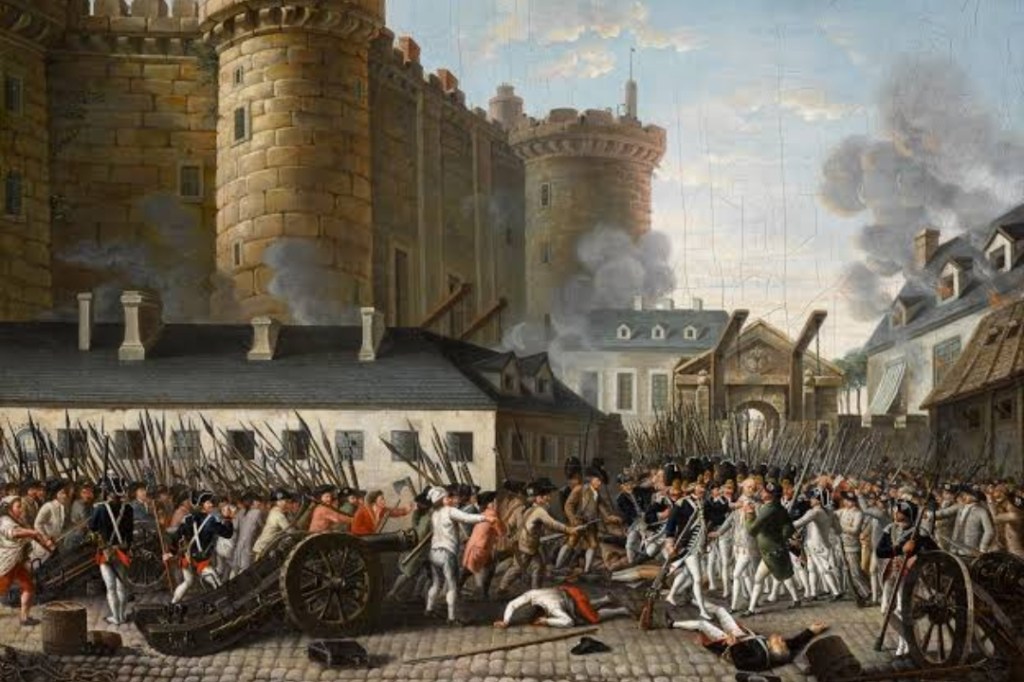
The French revolution started with the breaking open of the state prison “Bastille” on 14 July 1789 their reign of terror that followed their beheading of King Louis XVI and his Queen ended only when Napoleon became Emperor in May 1804. In 1793 England was forced to declare war against French Revolution because the French Revolutionary rules offered to help all nations who wished to follow the example of the French and overthrow their kings. The war continued up to the “Battle of Waterloo” in 1815 when Lord Wellington inflicted a crushing defeat on Napoleon.

EFFECTS OF REVOLUTION:

NATIONAL DEBT: This prolonged war of twenty years had lasting effects on England. The most important and immediate effect was the huge National Debt. It has been estimated that the cost of the war from the beginning to the end was nearly £1,000,000,000. The nation which consisted of nineteen million people had to pay annually a large amount by way of interest. In 1815 the country had to raise £ 74,000,000 by taxation alone.

UNEMPLOYMENT: The peace that followed the war was the cause of a fall in the prices of coal and iron. Many men employed in the industry was thrown out of their jobs. alAfter the signing of the peace treaty nearly half a million of soldiers sailors and others who had been engage directly in the war were dismissed from active service. They added to the already swelling army of the unemployed. Thus the problem of unemployment become much more accurate than before.

CORN LAW: During the twenty years of War there was no import of European corn into England. This caused the price of corn to go high. But the agricultural lords stood to the benefit by this. However after the Restoration of peace the free flow of European corn was resumed which brought down the price of English corn. This was resented by the English agriculturist. The corn law was passed in 1816 and this have disastrous effect on the poor and especially in the time of famine. Their sufferings led to the formation of Anti-corn law League. It was this association that was ultimately responsible for the repeal of the corn law in 1846 by the then Prime Minister of Robert Peel.

THE BATTLE OF PETERLOO: In 1819 the magistrates of Manchester foolishly attempted to arrest a radical leader known as Orator Hunt at a large gathering in St. Peter’s field. On meeting with resistance from the crowd the government officer order the cavalry charge upon the unarmed mob. Eleven persons were killed and 600 wounded. The even popularly was called the battle of peetalu or the Manchester massacre was used by agitators to embarrass the government. To get their grievances redressed the poor agitated for parliamentary reform and after much opposition from the lords the first reform bill was passed in 1832.

Battle of Trafalgar

THE ARMY AND NAVY BECOME THE NATIONAL INSTITUTIONS: Another effect of the French revolution was that both navy and army recognized as national institutions. The battle of Trafalgar won by Lord Nelson during the Revolutionary war in 1805 highlighted the greatness of the English navy. Their victory was commemorated renaming a part of London as Trafalgar square where the statue of Nelson stands on a lofty column. Trafalgar square with its 1.5 metre column top by the statue of Admiral Horatio Nelson looking out to the River Thames, is one of the favourite tourist spots in London. It is the traditional end of most protest marches and rallies in the capital. With the victories of Lord Wellington at Waterloo in 1815 on land the army became popular as it had never been before. Barracks were built to house the troops and the haphazard billeting of soldiers in public houses came to an end. This was done to the great relief of both the civilian population and the soldiers themselves.

INFLUENCE IN ENGLISH LITERATURE: The French revolution ushered in a new era in the history of English literature. Coming when it did, English romanticism should be considered as a byproduct of the great political event. Romanticism or the romantic movement started when Wordsworth and Coleridge together published the Lyrical ballads in 1798. Wordsworth discarded the artificial style and showed by practice that beautiful poems could be written on ordinary subjects and in ordinary language. The movement was completed by younger poets like Byron, Shelley and keats.

Success of P & G

The Procter & Gamble Company (P&G) is an American multinational consumer goods corporation headquartered in Cincinnati, Ohio, founded in 1837 by William Procter and James Gamble.It specializes in a wide range of personal health/consumer health, and personal care and hygiene products; these products are organized into several segments including Beauty; Grooming; Health Care; Fabric & Home Care; and Baby, Feminine, & Family Care. Before the sale of Pringles to Kellogg’s, its product portfolio also included food, snacks, and beverages. P&G is incorporated in Ohio.

In 2014, P&G recorded $83.1 billion in sales. On August 1, 2014, P&G announced it was streamlining the company, dropping and selling off around 100 brands from its product portfolio in order to focus on the remaining 65 brands,which produced 95% of the company’s profits. A.G. Lafley—the company’s chairman, and CEO until October 31, 2015—said the future P&G would be “a much simpler, much less complex company of leading brands that’s easier to manage and operate”.

Companies typically don’t open their innovation centres and reveal their cutting-edge technology to outsiders, but P&G gave us a peek at theirs under an NTUC programme to help working people progress in their careers Called the Innovation Exchange (IEX).

1. Innovation Has Kept P&G Relevant For Decades

P&G has established itself in 1837, which means that it has been 180 years since the FMCG company gained a foothold in the industry. From their early years of making soap and candles, to creating shampoos, shavers, and even more today, P&G has been constantly innovating to make everyday life better for their consumers.

“Innovation has always been in our DNA. It’s how we drive growth, prevent the commoditisation of categories, reduce costs, and deliver value,” said James Kaw, Director of P&G’s Singapore Innovation Centre (SGIC).The company spends nearly US$2 billion annually on R&D. And each year, it invests at least another US$400 million in foundational consumer research to discover opportunities for innovation. Kaw strongly believes that innovation starts with the consumer itself and as such, P&G places a huge focus on gaining insights into consumers’ everyday lives so they can combine “what’s needed” and “what’s possible”.

As such, P&G ropes in consumers in their product development process. It invites a group of consumers to its Consumer Lab – housed in its Singapore Innovation Centre – so that P&G researchers can observe how they use the products in a regular, everyday setting.

Ultimately, their goal is to offer consumers product options at all pricing tiers to drive preference for their brands and provide meaningful value.

2. Customise For Your Customer 

At P&G, the innovation efforts are focused on the needs and demands of the customer, especially since customer needs tend to constantly evolve. Kaw also pointed out that businesses must also innovate their products according to customer habits. Citing Pampers – their first 10-billion-dollar brand – as an example, Kaw said the product is reinvented based on the target market.

“In the US, Pampers is a tape diaper because parents typically change diapers on a changing table. But in Japan, the babies’ diapers are changed on a ‘tatami’ (traditional Japanese mat),” said Kaw. “Since it’s done on the floor, babies tend to run around the room, which makes it harder for the parents to put on the diapers. And that’s why we’ve come up with pull-up diapers for this group of consumers.”

3. Diversity Is Strength

In Asia, P&G hires 10,000 staff from 70+ countries of origin, with three innovation centres spread across the region, including Singapore. With over 61 nationalities, their 7,000-strong R&D team (of which 1,000 are in Asia) adopts a very diverse thinking.

4. Protect Your Innovation

How does P&G work on preserving innovation? Patents.

So far, it has secured 55,000 patents globally.

“Novel ideas that are superior to existing solutions is the basis of a strong foundation; and patent is an important way for us to protect the novelty of this idea.”

Kaw emphasised that these novel ideas, or “inventions”, need to be consumer-centric to be considered of value.

He pointed out that “inventions are worthless if you cannot translate it into consumer need. You need to show why it’s important.”

5. P&G = Persistence And Grit Against The Odds

“As you innovate, you are bound to face challenges or experience failures. And usually when you have a new idea, people will shoot you down and say that it will not work. That’s why you need persistence and grit – that’s what P&G stands for,” said Kaw.

“How you deal with failure will determine your success. If you get disheartened by failure and you spiral down, that’s not going to be helpful. You need to have the ability to pull yourself up and keep going. That’s how you can continue to innovate,” he added.

But how does P&G assess this intangible trait of persistence and grit in interviews?

“What you do in the past will always be a reflection of your future. Our interview processes is very much focused on what you’ve done in specific areas, your learnings, and how you define the problems. These are the areas we look out for during interviews and it helps us frame the ‘fit’ of the people”.

“Some people may or may not fit with P&G. Ultimately, we look for people who have technical aptitude, ownership (to own the problem and look for solutions), confidence, and very engaging attitudes.”

6. Note To All Bosses: Invest In The Right People

For generations, P&G created most of its phenomenal growth by innovating from within – building global research facilities, and hiring the best talents.

“P&G is a culture that is very different from most organisations. We only promote from within so it is incredibly important for us to invest in people – to develop the best and to retain the best. If we don’t do that, it takes a long time to replace them.”

Organic Farming

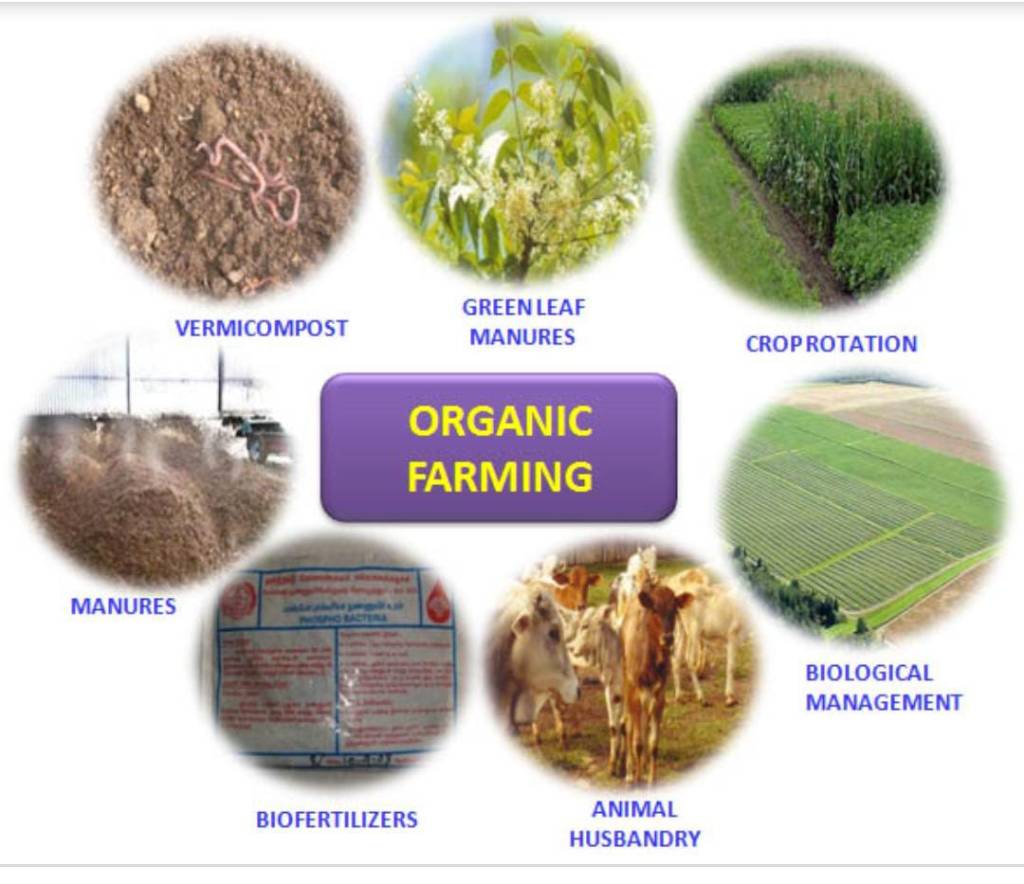
Organic farming is in a nascent stage in India.About 2.78 million hectare of farmland was under organic cultivation. Organic farming is a production system which avoids or largely excludes the use of synthetically compounded fertilizers, pesticides, growth regulators, genetically modified organisms and livestock food additives. To the maximum extent possible organic farming system rely upon crop rotations, use of crop residues, animal manures, legumes, green manures, off farm organic wastes, biofertilizers, mechanical cultivation, mineral bearing rocks and aspects of biological control to maintain soil productivity and tilth to supply plant nutrients and to control insect, weeds and other pests.

Organic methods can increase farm productivity, repair decades of environmental damage and knit small farm families into more sustainable distribution networks leading to improved food security if they organize themselves in production, certification and marketing. During last few years an increasing number of farmers have shown lack of interest in farming and the people who used to cultivate are migrating to other areas. Organic farming is one way to promote either self-sufficiency or food security. Use of massive inputs of chemical fertilizers and toxic pesticides poisons the land and water heavily. The after-effects of this are severe environmental consequences, including loss of topsoil, decrease in soil fertility, surface and ground water contamination and loss of genetic diversity.

Organic farming which is a holistic production management system that promotes and enhances agro-ecosystem health, including biodiversity, biological cycles, and soil biological activity is hence important. Many studies have shown that organic farming methods can produce even higher yields than conventional methods. Significant difference in soil health indicators such as nitrogen mineralization potential and microbial abundance and diversity, which were higher in the organic farms can also be seen. The increased soil health in organic farms also resulted in considerably lower insect and disease incidence. The emphasis on small-scale integrated farming systems has the potential to revitalize rural areas and their economies.

Advantages

  • Organic farming is environment friendly as there is no usage of chemicals.
  • Organic food is more nutritional, healthier and tastes better.
  • Organic farming reduces pollution.
  • Farmers will have a healthy working environment.
  • The demand of organic food is growing faster than supply and thus we can get a good return on investment.

Disadvantages

  • Organic food is more expensive.The production is less compared to inorganic farming.
  • Production costs are higher because farmers need more workers.
  • Organic farming cannot produce enough food that the world’s population needs to survive.
  • Lack of marketing for organic farming.
  • Organic food generally spoil faster.

Gregor Johann Mendel- Father of Genetics

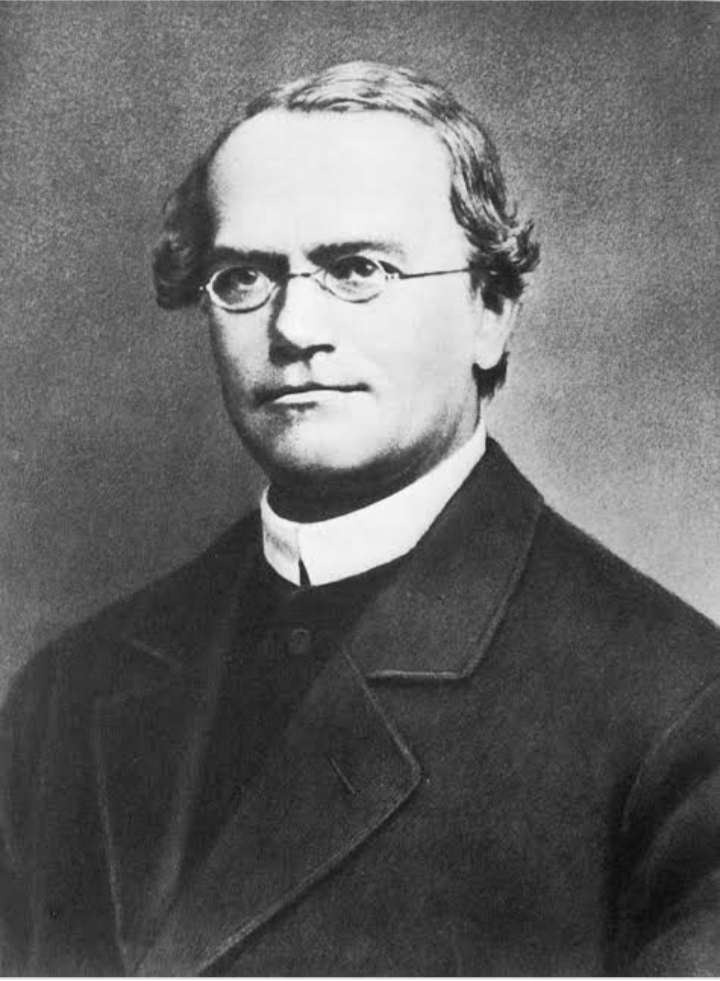
Mendel (1822-1884) was an Austrian monk who discovered the basic principles of heredity through his experiments. His experiments are the foundation for modern genetics. He was born in 1882 to a family of farmers in Silesian of Czechoslovakia. After finishing his high school at the age of 18, he entered the Augustinian Monastery at Brunn as a priest. From there he went to the University of Vienna for training in physics, mathematics and natural science. Mendel returned to the monastery in 1854 and continued to work as a priest and teach in high school. In his leisure time he started his famous experiments on the garden pea plant. He conducted his experiments in the monastery for about nine years from 1856 to 1865. He had worked on nearly 10000 pea plants of 34 different varieties. Mendel noted that they differ from one another in many ways. Thus Mendel had chosen 7 pairs of contrasting characters in many ways.

Reasons for Mendel’s Success

He chose the pea plant as it was advantageous for experimental work in many aspects

It is naturally self- pollinating and so is very easy to raise pure breeding individuals. It has a short life span as it is an annual and so it was possible to follow several generations. It is easy to cross- pollinate. It has deeply defined contrasting characters. The flowers are bisexual.