Indore Municipal Corporation (IMC) in India has been at the forefront of waste management and recycling initiatives, setting an exemplary model for other cities to follow. The city has gained international recognition for its successful waste management practices, particularly in the area of waste recycling.
One of the key initiatives undertaken by Indore Municipal Corporation is the establishment of a comprehensive waste segregation system at the source. The residents are educated and encouraged to separate their household waste into categories like organic, plastic, paper, and metal at home itself. This segregation at the source plays a crucial role in making the recycling process more efficient.
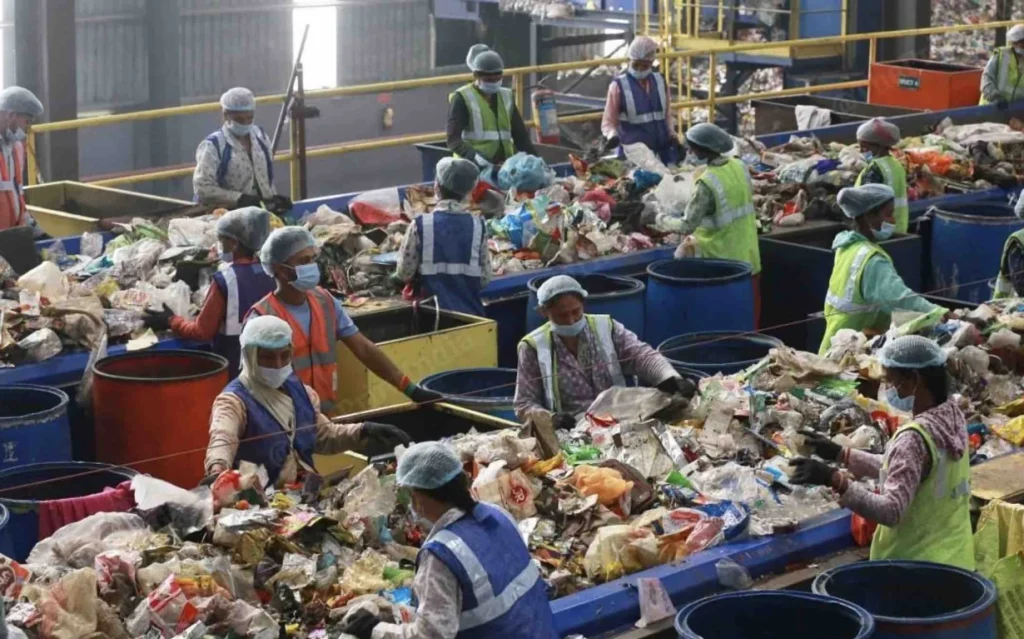
IMC has implemented a decentralized waste processing model, establishing multiple Material Recovery Facilities (MRFs) across the city. These MRFs serve as collection and processing centers where the segregated waste is further sorted and processed. Skilled workers at these facilities manually segregate recyclable materials from the waste stream, ensuring that materials like plastics, glass, paper, and metals are separated for recycling.
The city has also embraced the concept of door-to-door collection of waste, ensuring a more organized and efficient waste management system. Specially designed waste collection vehicles make rounds to collect segregated waste directly from households, reducing the chances of mixing different types of waste.
In addition to the manual sorting processes, Indore Municipal Corporation has incorporated modern technology into its waste management practices. Advanced machinery is used to recycle different materials efficiently. For example, plastic waste is processed through shredding and granulation machines to produce raw material for manufacturing new plastic products.
To promote recycling and encourage citizens to actively participate in waste management, IMC has launched various awareness campaigns and programs. Schools, colleges, and community groups are involved in educational initiatives to raise awareness about the importance of waste segregation and recycling. The corporation also conducts workshops and events to engage the community in sustainable waste management practices.
Moreover, Indore Municipal Corporation collaborates with various non-governmental organizations (NGOs) and private enterprises to strengthen its waste recycling initiatives. These partnerships help in maximizing the reach and effectiveness of the recycling programs and ensure the proper disposal of non-recyclable waste through environmentally friendly methods.
The success of Indore’s waste recycling initiatives can be attributed to the combination of community involvement, efficient infrastructure, and innovative approaches to waste management. By prioritizing sustainability and embracing technological advancements, Indore Municipal Corporation has set a commendable example for other cities striving to achieve effective waste recycling and environmental conservation.
Theme this year: “Teach someone how to play chess”
The idea to commemorate International Chess Day was proposed by UNESCO after it was established by FIDE in 1966. FIDE, the International Chess Federation has 181 chess federations as its members organize chess events and competitions across the globe on International Chess Day.
FIDE: Fédération Internationale des Échecs
-Chess was invented in India around 8th Century. It was known as chatrang-
Chess:
Chess is a board game played by two players. It is enjoyed all over the world. There have been many grandmasters and the records get tougher to hold the title. Chess is an abstract strategy game and involves no hidden information.
It is played on a square chessboard with 64 squares arranged in an eight-by-eight grid. At the start, each player controls sixteen pieces: one king, one queen, two rooks, two knights, two bishops, and eight pawns. The main chessboard and pawns are black and white.
The goal of the game is to put the opponent’s king under immediate attack .i.e. in “check” and give no way for it to escape. There are also several ways a game can end in a draw. Each pawn has its own limitation of movements.
It is one of the most fun, intellectual, and brainy indoor games.
Players: 2
Abilities: Strategy, tactics
Fact: In 1997, Deep Blue became the first computer to beat the reigning World Champion in a match when it defeated Garry Kasparov.
History:
The origin of chess date around 7-8th century. Three are written in Pahlavi and one, the Harshacharita, is in Sanskrit. Chatrang was named shatranj, after the Islamic conquest of Persia. Xiangqi is the form of chess best-known in China
The modern piece movement rules began to appear in intellectual circles in Valencia, Spain around 1475. The queen replaced the vizier chess piece and by the 15th century had become the most powerful piece.
Prague-born Wilhelm Steinitz laid the foundations for a scientific approach to the game, the art of breaking a position down into components. In addition to his theoretical achievements, his triumph over the leading German master Johannes Zukertort in 1886 is regarded as the first official World Chess Championship.
Significance of chess:
“The United Nations recognizes that sports, the arts and physical activity have the power to change perceptions, prejudices and behaviours, as well as to inspire people, break down racial and political barriers, combat discrimination and defuse conflict, and therefore contrabute in promoting education, sustainable development, peace, cooperation, solidarity, social inclusion and health at the local, regional and international levels.
The designation of World Chess Day of the UN will not only recognize the important role of the FIDE in supporting international cooperation for chess activity and aiming to improve friendly harmony among all peoples of the world, but also to provide an important platform to foster, dialogue, solidarity and culture of peace”
-United Nations
Fact: The rules of chess are published by FIDE (Fédération Internationale des Échecs)
Notable Men and women in the world of chess:
Judit Polgár
Garry Kasparov
Vera Menchik
Magnus Carlsen
Rohini Khadilkar
Andrey Espienko
Nona GAprindashvili
Hou Yifan
Movies to watch:
The Queen’s Gambit
Queen of Katwe
Pawn Sacrifice
Searching for Bobby Fischer
Brooklyn Castle
Hikaru no Go
What to do?
LEARN CHESS!!
Cause why not? Learning moves or moving pieces entirely after thorough thought, being on your toes to find the easiest or quickest win to checkmate, and tricking someone to make the move you wanted them to do! It is a load of exercise for your brain.
Shall we all just rewind 2021 few days back and see, how we all were suffering due to the second wave of Covid-19.Many of us where struggling financially, some got unemployed, some faced lack of medicine, some died due to the shortage of remdesivir injection, some due to non-availability of hospital bed, some of us might have lose their loved ones forever and this all happened due to the sudden increase in Covid positive patient as we were hit by the second wave of Covid-19,which was the ultimate result of our carelessness. And today without any precautions people are relaxing in various tourist spots. Now, it looks like we are going to repeat the same cycle again.
Increase in Tourist-on going carelessness
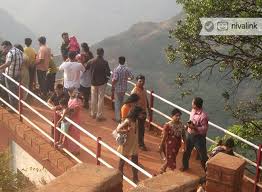
Looking at these pictures, can anyone believe pandemic is going on? The above are recent pictures from the northern part of India, which has been fully crowded by the tourists across India. Due to the sudden increase in tourist, hotel rooms are unavailable. It’s not only about northern India, even east part of Maharashtra witnessed crowd of tourist. Lonavala, Mahabaleshwar there’s a sudden increase in tourists. This ultimately results in no precaution.
Post Lockdown crowd witnessed by Lonavala and Mahabaleshwar
By looking at the crowd and increasing number of tourist, it all says about happening of 3rd wave of Covid. This phenomena has a name “Revenge Travel“. According to Union Health Ministry if this increase in number of tourist continuous to happen, not only third wave but also India should expect fourth wave as well.
What is rEveNge tRavEl?
Sitting home for several months and getting vacation plans cancelled due to second wave, all people started thinking the same. So when the restrictions due to pandemic where lifted and improvement in condition was observed, all the people started stepping out for a vacation in order to get out of all the anxiety and restlessness caused due to the second wave lockdown-and as I say all people started thinking the same. As per Health Ministry, Covid cases in India have reduced by 30%-which is a great news!!But still states like Maharashtra, Tamil-Nadu, Assam, Odisha have a positivity rate of 10%.
Once the positivity rate comes down to 5%,
then it can be considered safe.
So we need to maintain
the same momentum of testing.
  -Dr Balram Bhargava,
       DG,ICMR
So in order to achieve the positivity rate of 5% we need to vaccinate as many people as possible and continue the process of vaccination. Meanwhile, in such scenario when we get to see such pictures of large number of tourist-frightens us.
Have we leaRnt notHing?
Once the cases started coming down in numbers across the country, we immediately started normalizing the things and stepped out of the house without any precautions. Aren’t the things happening in the similar fashion as that after first wave which led to sudden increase in cases resulted in second wave-more deadlier than first wave. And now it seems like we are repeating the same cycle again. This what we call carelessness. The way people were careful, at the same level people are careless now towards the pandemic. The main problem or the reason for this is majority of people don’t understand the difference between CARELESS and CAREFREE.
How Revenge Travel can devastate in long run.
As the cases reduced overnight increase in tourist number has been observed leading to no booking in the hotels and lodges, which created a difficulty in managing the tourist. In order to manage the crowd led to the need of employees. The hotels starts hiring employees from other villages or town.90% tourist and newly hired staff don’t carry Covid but the remaining 10% carry, who are further responsible for the increase in cases. Later on due to sudden increase in cases government gets forced to take measures like Curfew and lockdown. This leds to shut down of tourists places and the newly hired staff gets unemployed (i.e., temporary employment).Now this unemployed staff gets back to their native, along with new variants. That’s why we were hit by the second wave which was more deadlier than the first. But, do we have learnt anything from the past situation? This wave of uncertainty is not only dangerous to our lives but for our economy as well. This is not only India, the same circle is happening outside as well. Example: UK reports increase in cases since Jan 21.Cases were about to control when a more infectious variant was detected in the country. Fear arises that lambda COVID-19 variant from Peru is more deadlier than Delta variant. This variant has also been found in 30 countries so far.
Here we need to understand that as long as this pandemic exists, new variant will also get detected which may be resistant to the vaccine as vaccines against these variants are not yet tested. We need to have this realization that vaccine is the only weapon we have today against Covid-19,if this fails then there may be no hopes for the end of the Covid-19 and pandemic will never end.
There still exists some sensible people, who don’t leave their house unnecesarily and follow all the Covid related measures and take the precautions because of some restless and insensible people we still have the hanging sword on our neck.
We cannot live in Extreme
Look I know everyone is tired of sitting at home, we want to travel, economy is hitting hard. The travel and hospitality sector is suffering badly. Off course travel gradually needs to open as well, but the problem is we seem to live in absolute extremes. Either it is a extreme like a lockdown or the extreme of utter carelessness. Our new normal should somewhere lie between these both.
My intention is not to target anyone or to villain out anyone. It’s totally understandable that we all were going through a complicated situation. This article is just to remind us, to be in touch with some most essential facts in order to overcome this pandemic situation. To make understand that what we should prioritize.
CHANEL is a well know French luxury fashion brand. Chanel was founded in 1910, Coco Chanel is the founder of this world-famous brand. It throws the light on women’s high fashion, ready to wear outfits, the luxury goods, and varieties of accessories.
BEAUTY PRODUCTS LAUNCHED BY CHANEL
FACE: FOUNDATION
LES BEIGES
PRODUCT: A liquid/fluid foundation with light-to-medium coverage which will lasts up to 12 hours and gives you the frictionless texture and luminous finish for your naturally looking skin and makes them look healthy and glowing.
COMPOSITION: This Les Beiges give you a smooth and uplifts your skin with light-reflecting results with a precise brightness, while antioxidants aid you to protect your skin from pollution, free radicals, and blue light. Les Beiges consist of 40 percent with water, the long-lasting formula is augmented with the ingredients that moisturise and hydrate skin instantly and lasts for up to 12 hours.
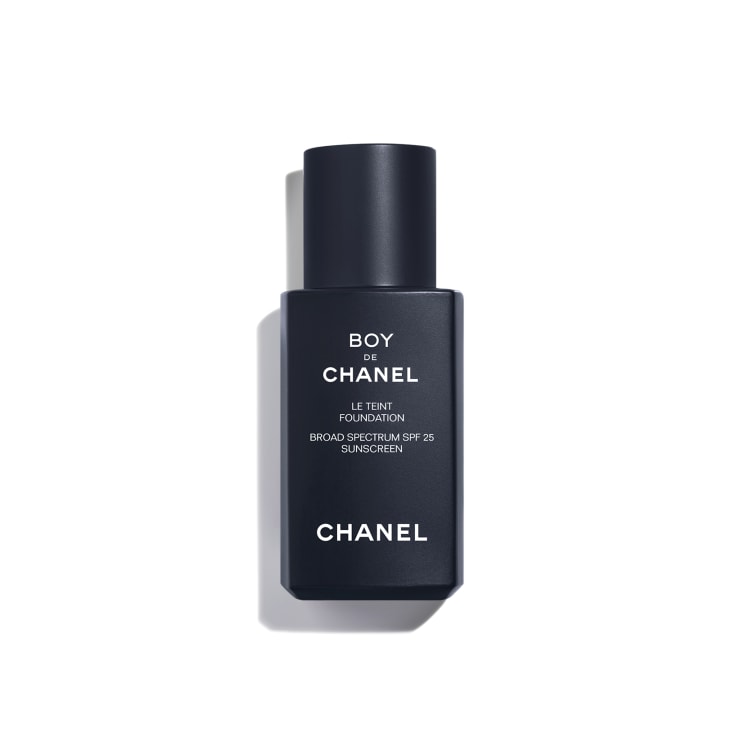
2. BOY DE CHANEl
PRODUCT: With BOY DE CHANEL FOUNDATION, with the formula of an invisible light as a feather weight you will get a smooth and even complexion. Comfortable and easy-to-apply, the fresh, fluid formula skim on effortlessly, and blends with your skin perfectly and keeps it hydrated.
COMPOSITION: The feature with long running formula soft-focus micro-particles help to make skin look more flawless and rectifies your imperfections perfectly. Formula includes Hyaluronic Acid for lasting comfort and hydration Broad Spectrum protection and SPF 25 helps to be protected against the environmental strains.
3. VITALUMIERE
product: For Creamy comforting and deluxe lightweight, this melted foundation which immediately brace and moisten the complexion one can go with the foundation. The Vitalmumiere blends smoothly and effortlessly that makes your skin look perfectly radiant this is all possible because of the help of medium-coverage formula.
COMPOSITON: The Vitalimiere foundation is made for dry, dull, and uneven skin texture the moisturizing agents helps to keep your skin hydrated and comfortable. Marine Extract helps to enhances glare while light-reflecting shade smooth away flaws. Walnut Extract revive and screen skin.
EYES: EYESHADOW
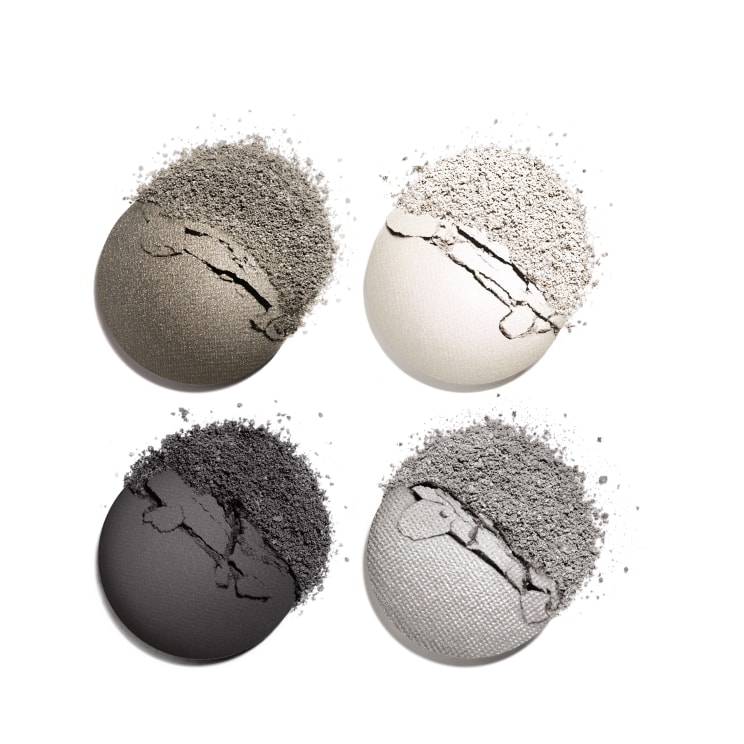
LES 4 OMBRES
product: The LES 4 OMBRES eyeshadow palettes shows a lively, all the four lavishing shades in palette are rich with the formula inspired by threads of CHANEL tweed. With a range of shade combinations and finish that gives your eye a matte look with simmer for endless eye makeup looks.
composition: This compact with four shades offers infinite possibilities, that offers medium tones to colour and to contour, the intense shades in the palette to intensify and a light tone to highlight. Natural, long-running tone ensure an intense colour effect where on other hand the soft, effortless touch allows an easy as pie application.
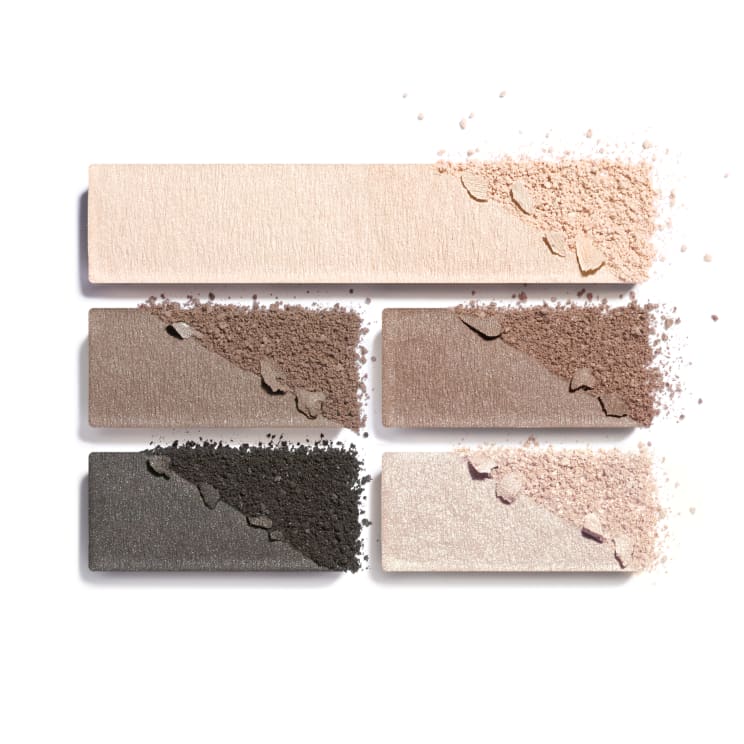
2. LES BEIGES
PRODUCT: For easy, neutral-toned looks you can go with this versatile shadow palette. Containing five verities of smudge free colour, with long running features— from soft to intense, gives you the matte and shimmery finish also — offer base, highlighter, and liner effects.
COMPOSITON: Use of soft-hair brush can help you to get smooth, optimal finish.
3. ILLUSION D’OMBRE
PRODUCT: With both soft and cushiony innovative texture, this gives intensely shimmer look, this long-lasting creamy eyeshadow can be worn as eyeshadow as well as an eyeliner.
COMPOSITION: A mixture of pure pigments of varieties of colours and sizes: coverage and colour intensity are contributed by small pigments; large pigments gives the results a shady shimmer.
“Swami Vivekananda” earlier he was known as “Narendra”. He was an Indian Hindu Monk and the chief disciple of the 19th century Indian mystic Ramakrishna. He born on January 12, 1863, Calcutta, Bengal Presidency, British India. His father’s name of “Vishwanath data” and mother’s name of “Bhuvaneshwari Devi”. He was born in Kayastha family. His father was an attorney at the Calcutta High court And his mother was a devout housewife. He was the six of his ten siblings.
He acquired his preliminary education in 1871 at the age of eight from Ishwar Chandra Vidyasagar Metropolitan institution. Narendra completed his graduation in 1884 in arts the Presidency College, Calcutta. Narendra met Ramakrishna in 1881 at Dakshineswar. During this time Narendra was undergoing a time of spiritual crisis it was his famous question to Ramakrishna “have you seen God” Ramakrishna did not convince Narendra completely at the first go. But after noticed some great virtue of Ramakrishna, he become a frequent visitor to Ramakrishna after the tragic death of his father he becomes closer to Ramakrishna and received help to move out of the spiritual crisis situation in 1885. Ramakrishna was diagnosed with throat cancer then Narendra took great care of his master and nurse him with utmost devotion and love. Before renouncing body Ramakrishna made Narendra the leader of a new monastic order post the death of Ramakrishna. Narendra along with his young disciples began to live at Baranagar. In 1887, he took the formal vows of sannyasa, thereby assuming new names.
Narendra came to be known as Swami Vivekananda. In 1888, to Profess the message of Ramakrishna to the world Swami Vivekananda resolved to embark on a journey extensively exploring India in the initial years. He walked on foot, lived on alms and led a life of a wandering Monk. By this time he understood that the masses required to kinds of knowledge one which allowed them to improve their economic condition and the second which help them to build faith and strength and their moral sense to accomplish. His goal of bettering the life of the masses Swami Vivekananda are aimed at initiating an Organisation. In 1893, he travelled abroad for the first time to be a part of the world’s parliament of religion at the Parliament, Swami Vivekananda become known as the ” orator of divine right” and ” Messenger of Indian wisdom to the Western world”. Then he travelled in the Eastern part of us and London to spread the message of Vedanta upon returning to India in 1897, he initiated Ramakrishna Mission, and organisation which propagated the teaching of practical Vedanta and commenced various forms of social service. In 1898, Swami Vivekananda acquired a huge property at Belur which become a permanent abode of the monastery and monastic order. The place became known as Ramakrishna Math and waopen to all men. Swami did not married at all he died at Belur Math Bengal Presidency British India on 4th July 1902 the age of 39. “Awake and do not stop until the goal is reached”. Said by Swami Vivekananda.
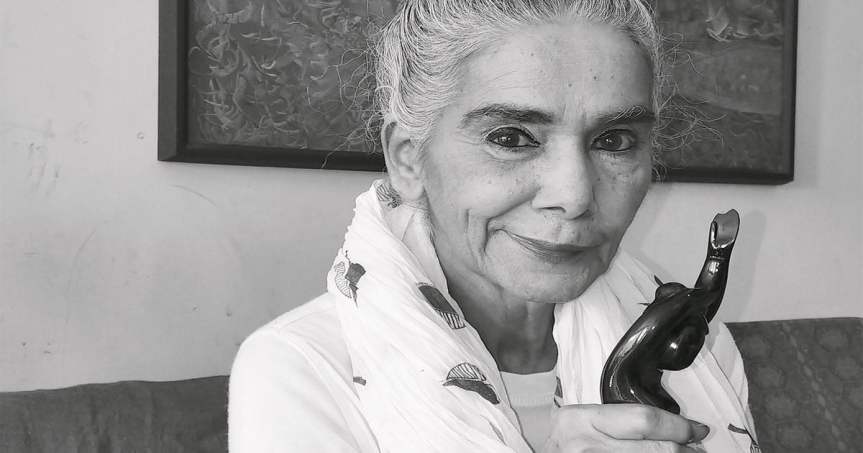
The veteran actor who passed away at the age of 75 of a cardiac arrest has starred in about 29 films and 19 Indian television shows and has been honoured with three National film awards for Best supporting actress (highest than any other actress in this category) and also is a recipient of a Filmfare award, a Screen Award, Sangeet Natak Akademi Award and six Indian Television Academy awards.
She was born in New Delhi , 1945 and attended Aligarh Muslim University and graduated from National School of Drama in 1971 and later went on to work with NSD Repertory company for a decade and then moved to Mumbai. Her notable works include playing the characters of ‘Durga Devi kaushik’ in the movie Badhaai Ho (2018) , ‘Kalyani Devi Singh’ (aka ‘dadisa’) in the prime-time soap opera Balika vadhu ( 2008-2016), Fayyazi in Mammo (1994) and ‘Rajo’ in Tamas (1986).
The news of her death has saddened her fans and colleagues. Her co-actors Ayushmann Khurrana, Avika Gor, Shashank Vyas and Avinash Mukherjee paid a heartfelt tribute to her by penning down their memories while working with the actress. She was humble, grounded, hardworking and was devoted to work. Her impeccable performances on screen has always left the audience in an awe, her demise has certainly left a void in the film and television industry but she will be cherished and remembered for the legacy she left behind. May her soul rest in peace.
Sustainable Waste Management In Indore: A Case Study
Indore, a fast-growing city in India, has emerged as a model for sustainable waste management practices. Over the past few years, Indore has consistently ranked as the cleanest city in India, thanks to the efficient waste management system put in place by the municipal corporation.
This case study explores the background, challenges faced, solutions implemented, and key learnings from Indore’s successful waste management system.
Indore, with a population of over 3.2 million people, generates around 1,100 metric tons of waste daily. Prior to 2016, the city struggled with waste management, leading to unhygienic conditions, increased pollution, and negative impacts on public health.
However, the launch of the Swachh Bharat (Clean India) campaign in 2014 led the Indore Municipal Corporation (IMC) to undertake a comprehensive transformation of its waste management system. This involved an overhaul of existing infrastructure, policies, and community engagement initiatives to create a more efficient and environmentally friendly waste management system.
Challenges faced:
Lack of waste segregation at the source:
Indore faced issues with mixed waste, which hindered the recycling and disposal process. Unsegregated waste resulted in inefficient waste collection and processing, causing further strain on the waste management system.
Inefficient waste collection and transportation system:
With limited resources and vehicles, the city’s waste collection and transportation system could not keep up with the growing population and waste generation.
Open dumping and burning of waste: The absence of adequate waste processing facilities led to the practice of open dumping and burning of waste, which contributed to air and land pollution.
Inadequate public awareness and participation: Citizens were not fully aware of the importance of waste segregation, recycling, and proper disposal, resulting in low participation rates and disregard for waste management rules.
Limited infrastructure for waste processing and disposal: The city’s waste processing and disposal infrastructure was unable to cope with the increasing waste generation, leading to unmanaged landfills and environmental degradation.
Solutions implemented:
Segregation at the source:
The IMC implemented a mandatory waste segregation policy, requiring households to separate waste into wet (biodegradable) and dry (recyclable) categories. This allowed for more efficient waste collection and processing, as well as increased recycling rates.
Door-to-door waste collection:
A fleet of over 600 GPS-enabled vehicles were deployed to collect segregated waste daily from all households and commercial establishments. This ensured timely and efficient waste collection, preventing littering and illegal dumping.
Waste processing and disposal: The city established a state-of-the-art waste processing facility capable of handling 1,000 metric tons of waste daily, including a 15 MW waste-to-energy plant and a 200 TPD (tons per day) composting plant. These facilities enabled the city to process and dispose of waste more effectively, reducing the environmental impact of waste disposal.
Public awareness and participation: The IMC launched numerous awareness campaigns, involving local celebrities, schools, and religious institutions, to educate the public on the importance of waste segregation and cleanliness. This resulted in increased community involvement and support for the waste management program.
Strict monitoring and enforcement: Regular inspections, fines, and incentives were introduced to ensure compliance with waste management rules. This helped maintain the cleanliness of the city and encouraged citizens to adhere to waste segregation and disposal guidelines.
Results achieved:
Waste segregation:
Over 90% of households in Indore now segregate their waste, significantly improving the efficiency of waste collection and processing, and reducing the burden on landfills.
Waste processing:
The city’s waste processing facility successfully manages 1,000 metric tons of waste daily, with a 95% waste recovery rate. This has led to a substantial reduction in landfill usage and has minimized the environmental impact of waste disposal.
Cleanliness:
Indore has consistently ranked as the cleanest city in India in the annual Swachh Survekshan survey since 2017. This highlights the success of the city’s waste management system and the active participation of its residents in maintaining cleanliness.
Health and environment:
Cases of vector-borne diseases have dropped by 60% since the implementation of the waste management system, and air quality has improved due to reduced open burning of waste. This has led to a healthier environment and improved overall quality of life for Indore’s residents.
Key learnings:
Political will and administrative commitment are crucial for the successful implementation of waste management systems. Indore’s transformation was made possible by strong leadership and a dedicated municipal corporation committed to addressing the city’s waste management challenges.
Public awareness and participation play a significant role in ensuring the success of waste management initiatives. By actively involving the community and raising awareness about the importance of waste segregation and proper disposal, Indore was able to achieve a high level of public participation and support.
Strict monitoring and enforcement mechanisms help ensure compliance with waste management rules and regulations. Indore’s approach to enforcing waste segregation and disposal guidelines, combined with regular inspections and penalties, proved to be effective in maintaining the city’s cleanliness.
Investing in modern waste processing infrastructure can significantly improve the efficiency of waste management systems and reduce environmental impact. Indore’s investment in a state-of-the-art waste processing facility allowed the city to process and dispose of waste more effectively, leading to a substantial reduction in landfill usage and associated environmental issues.
Indore’s transformation into a clean, sustainable city serves as an inspiring example for other urban centers in India and around the world.
By adopting a comprehensive, integrated approach to waste management, Indore has successfully addressed its waste management challenges and set a benchmark for sustainable urban living.
The city’s experience provides valuable insights and lessons for other municipalities looking to improve their waste management systems and promote environmental sustainability.
Books are been our great friend for ages from Rome philosophers to modern novelists, comics, and manga or magazines! We as humans encounter so many changes with the evolution of books and their uses but what remains common in all of them is “books always feed us with information! Whether it is fun, important, tragic, or simply someone’s insights!”. Many people consider book their best friends (YES! we are bibliophiles . . . love for books called bibliophilism ) because it doesn’t behave different with others and always gives but never takes anything most importantly always be with you. Many fear what will happen with books as time goes and video and voice media starts replacing it in every zone books were used in profusion, but this fear is just a piece of fake news because now there is evident data on how books are more famous and popular than before! Thanks to e-books and these new video audio that are easily reachable to the masses and makes them curious so much so that they have to come to books at last resort to satisfy their curiosity, and there is no doubt books leave no stone unturned doing so!
Before the famous Gutenberg bible which is mass-produced by some metal type in Europe, each book used to be written by different people, and each book was uniquely written designed, and bound which used to give a lot more information about the ideological and religious beliefs of that period!
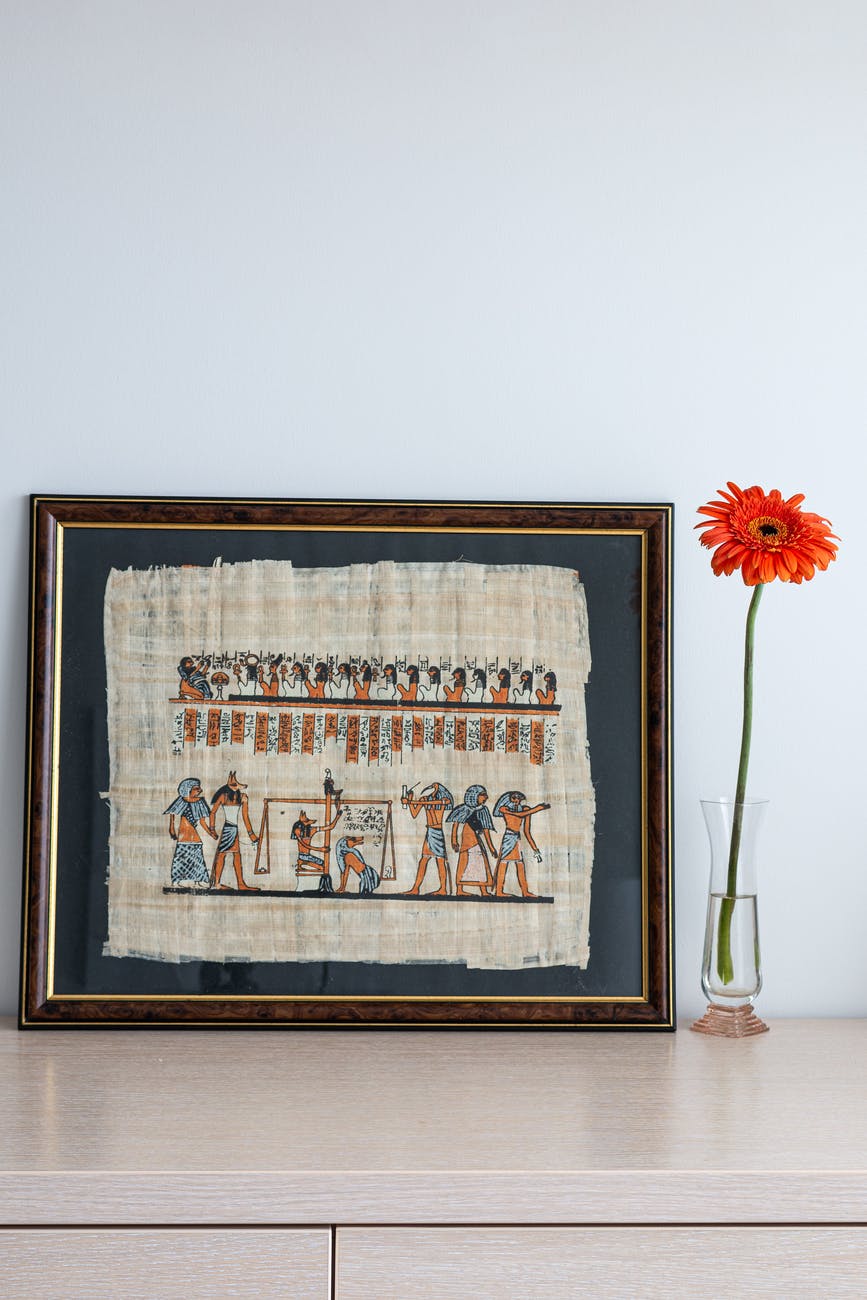
But this is the beginning of “what we call books” but to know how all this started we have to go back to clay tablet scrolls, and sheets of papyrus. Clay tablets were used by Mesopotamia back in the 3rd millennium BCE, they used to keep it very safe. To date, we have nearly found 20,000 such clay tablets. These tablets were used till the 19th century in some countries including Germany, Chile, the Philippines, and the Sahara Desert. From Egypt papyrus and clay tablets Romans used to write and erase through stylus !.in Asia people used to write on bones. Papermaking has traditionally been traced to China about 105 CE and traditional printing started in the 15th century. One thing which throughout the time stick with books are get “ban” as they are very influential, so authorities always wanted to control it.
Books have fascinating subject through time one who studies books is called bibliophile. It is known as former us president Roosevelt used to read one book a day !. most expensive book in history is the codex from Leonardo da Vinci which is bought by Bill Gates. According to a study book, readers have very fewer chances of Alzheimer’s than any other person in old age
Books in our modern world today expanded their reach and places from paperback to e-books are excellent for nature too as it is said from one tree we can make 50 books! And innovation in the field of books like digital book designing, 3d books, etc. is such an example. We are seeing nowadays it’s an affirming factor saying books not going anywhere any soon!
hey! how you guys think about your best friend .. BOOKS 🙂 pls comment down below and tell us which book you loved the most or reading RN ! till the next time , sayonara :).
The Indian Space Research Organisation(ISRO) is the agency of India that deals with space Exploration and Astronomy. It was established in 1969.Its headquarters is at Bengaluru.ISRO has successfully completed 75vapacecraft missions in that 46 launch missions have been successfully by ISRO.ISRO was established by our former Prime Minister Jawaharlal Nehru. The famous scientist Vikram Sarabhai was his assistant. He was the first chairman of ISRO. He was called the father of Indian Space Programme.The main aim of ISRO was to develop Space Technology to benefit the nation for various national tasks.
ISRO
Achievements on ISRO:
The first Indian satellite that was built by ISRO was Aryabhata, whose launching took place on April 19th, 1975. Furthermore, 1980 was another important year for ISRO because the launching of the Rohini satellite took place. Moreover, the successful placing of Rohini in the orbit took place by SLV-3.
Apart from technological capabilities, a lot of contribution has taken place by ISRO in the field of science. Furthermore, ISRO is in charge of its own Lunar and interplanetary missions. Moreover, ISRO controls various specific projects for the promotion of science education, and also to provide data to the scientific community.
The Mars Orbiter Mission was sent by ISRO on November 5th 2013, which made its entry into the orbit of Mars on September 24th 2014, thereby making India successful with its attempt to Mars.
A list of the most dangerous, effective, and most well-known malware strains that have been developed by the cyber-security units of various countries’ intelligence and military branches.
Regin
Regin, widely regarded as the most powerful malware family ever produced by a nation-state actor, was created by the NSA and shared with some of its Five Eyes allies (primarily with the GCHQ). Its existence was made public in 2014, however the first samples date back to 2011, with some suspecting that the virus was produced as early as 2003. Regin has been used in the wild in incidents involving Belgian telecom Belgacom, the German authorities, and, most recently, Russian search firm Yandex.
On a technological level, security researchers consider Regin to be the most complex malware framework to date, with modules covering tens of features, the majority of which are designed to perform surveillance activities and remain unnoticed on infected systems.
Flame
Flame was found in 2012, but security experts did not use the term “malware” to characterise it. Flame was so sophisticated at the time that the phrase “attack toolkit” was used to characterise its structure, which resembled that of its larger brother, Regin. Flame, as previously stated, is a collection of modules that function on top of the Flame architecture and are installed based on the capabilities that operators want. It was identified in 2012 by the MAHER Center of the Iranian National CERT in attacks on government entities in the nation. The finding emerged two years after the Stuxnet virus assaults and was instantly connected to the Equation Group, a codename for the US National Security Agency. It was eventually detected in attacks on other Middle Eastern governments as well. Flame’s Wikipedia page currently has the greatest summary of all Flame-related findings.
Stuxnet
Stuxnet is the only malware on this list with its own documentary film. The malware was co-developed in the 2000s by a joint effort between the US NSA and Israel’s Unit 8200, the Israeli military’s cyber division. It was deployed in 2010 in Iran, as part of a joint effort between the two countries to sabotage Iran’s nuclear program.
Stuxnet, which is said to have used four different zero-days at the time it was unleashed, had been specifically coded to target industrial control systems. Its role was to modify the settings of centrifuges used for nuclear enrichment operations by raising and lowering rotor speeds, with the purpose of inducing vibrations and destroying the machines. The malware was successful, and is said to have infected over 200,000 computers, and eventually ended up destroying nearly 1,000 centrifuges at Iran’s Natanz nuclear facility.
Shamoon
The first non-US developed malware on this list is Shamoon, a malware strain developed by Iran’s state hackers. It was first deployed in 2012 on the network of Saudi Aramco, Saudi Arabia’s largest oil producer. The malware, a data wiper, destroyed over 30,000 computers in the 2012 attack. It was deployed in a second attack in 2016, against the same target. Most recently, it’s been deployed against Italian oil and gas contractor Saipem, allegedly destroying 10% of the company’s PC fleet.
Triton
A more recent addition to this list is Triton (also known as Trisis). This malware is believed to have been developed by a Russian research laboratory. It was deployed in 2017. It was specifically engineered to interact with Schneider Electric’s Triconex Safety Instrumented System (SIS) controllers. According to technical reports from FireEye, Dragos, and Symantec, Triton was designed to either shut down a production process or allow TriconSIS-controlled machinery to work in an unsafe state. The malware’s code leaked and was eventually published on GitHub.
Industroyer
The Industroyer malware, also known as Crashoverride, is a malware framework developed by Russian state hackers and deployed in December 2016, in the cyber-attacks against Ukraine’s power grid.
The attack was successful and cut the power to a part of Kyiv, Ukraine’s capital, for an hour. The malware is considered an evolution of previous strains like Havex and BlackEnergy, which had also been used in attacks against Ukraine’s power grid. However, unlike Havex and BlackEnergy, which were more like generic Windows malware deployed against systems managing industrial systems, Industroyer contained components specifically designed to interact with Siemens power grid equipment.
Duqu
Believed to be the creation of Israel’s infamous Unit 8200 military cyber-unit, Duqu was discovered by Hungarian security researchers in 2011. A second version was discovered in 2015, and was codenamed Duqu 2.0. The first version was deployed to aid Stuxnet attacks, while the second was used to compromise the network of Russian antivirus firm Kaspersky Lab. Duqu 2.0 was also found on computers in hotels in Austria and Switzerland where the international negotiations between the US/EU and Iran took place, over its nuclear program and economic sanctions.
PlugX
PlugX is a remote access trojan (RAT) that was first seen in 2012, in attacks attributed to Chinese nation-state hackers. Since its discovery, Chinese hackers appear to have shared the malware with each other, and now it’s being widely used by most Chinese nation-state groups, making attribution to one group incredibly difficult. A good technical report on PlugX is available here.
Winnti
Winnti is very similar to PlugX. It’s another Chinese-made APT malware strain that was initially used by one group but was then shared among all the Chinese APTs as time went by. The malware has been around since 2011 and is described as a modular backdoor trojan. Security researchers recently discovered a Linux variant.
Uroburos
Uroburos was the rootkit developed by the Turla group, one of the world’s most advanced nation-state hacker groups, linked to the Russian government. According to a G DATA report, “the rootkit is able to take control of an infected machine, execute arbitrary commands and hide system activities.”
Uroburos (also referred to as the Turla or Snake rootkit) was widely deployed and was very efficient for the limited purpose it was being used for — to gain boot persistence and download other malware strains. It was the central piece of Turla APT attacks and had been seen on infected computers in Europe, the US, and the Middle East, as early as 2008. Targets usually included government entities. It was seen in 45 countries. A Linux variant was also discovered in 2014.
ICEFOG
Yet another piece of Chinese malware that was once used by one group, but was later shared and re-used by others. ICEFOG, first spotted in 2013, made a comeback in the last two years, with new variants, and even a Mac version.
WARRIOR PRIDE
The only mobile malware on this list, WARRIOR PRIDE is a tool jointly developed by the US’ NSA and the UK’s GCHQ. It works both on Android and iPhones and news of its existence came to be in 2014, during the Snowden leaks. As for capabilities, the iPhone variant was far more advanced than the Android one. It could retrieve any content from infected hosts, listen to nearby conversations by silently enabling the microphone, and could work even when the phone was in sleep mode.
Olympic Destroyer
The Olympic Destroyer malware was deployed in an attack that crippled internet connections during the Pyeongchang 2018 Winter Olympics opening ceremony. TV stations and journalists were the ones mostly impacted by the attack. The malware was supposedly created by Russian hackers and deployed as payback for the International Olympic Committee banning Russian athletes from the Winter Olympics on doping charges or prohibiting someone from competing under the Russian flag.
The malware itself was an information stealer that dumped app passwords on infected systems, which hackers later used to escalate their access to other systems, from where they later triggered a data-wiping attack that brought down some servers and routers. New Olympic Destroyer versions were spotted in June 2018, months after the initial attacks.
VPNFilter
The only APT-developed malware on this list created to infect routers is VPNFilter. Developed by Russian state-hackers, the malware had been deployed in advance of the 2018 Champions League final that was being held in Kyiv, Ukraine. Supposed plans were to deploy the malware and damage routers during the live final’s live transmissions, similar to how the Olympic Destroyer malware was used to cripple internet connections during the opening ceremony at the Pyeongchang 2018 Winter Olympics.
Fortunately, security researchers from Cisco Talos saw the VPNFilter botnet being assembled, and took it down with the help of the FBI. The malware was supposedly created by the Fancy Bear APT, according to the FBI.
WannaCry
All the three ransomware outbreaks of 2017 were malware strains developed by nation-state hackers, albeit for different reasons.
The first of these, the WannaCry ransomware, was developed by North Korean state hackers, for the sole purpose of infecting victims and collecting ransoms for the Pyongyang regime, which at the time, was under heavy economic sanctions. To lighten the impact of these sanctions, the regime was using state hackers to rob banks, mine cryptocurrency, or run ransomware operations to collect funds. However, errors in the WannaCry code made it so that instead of spreading to local networks only, the ransomware’s internal self-replicating (worm) component went haywire and infected everything in sight, causing a global outbreak.
NotPetya
Two months after WannaCry, a second ransomware outbreak hit the world. Called NotPetya, this ransomware was coded by Russia’s Fancy Bear (APT28) group, and was initially deployed only in Ukraine. However, due to shared networks and enterprise VPNs, the ransomware spread globally, akin to WannaCry, causing billions in damages. Just like WannaCry, NotPetya used the EternalBlue exploit as the centerpiece of its worm component. (see the last slide for more info on EternalBlue)
Bad Rabbit
The last global ransomware outbreak of 2017, was the work of state hackers. Just like NotPetya, Bad Rabbit was the work of Russian hackers, who similarly deployed it in Ukraine, but the ransomware spread worldwide, albeit with a smaller impact when compared to the first two, WannaCry and NotPetya. Unlike NotPetya, it didn’t use EternalBlue as its primary spreading mechanism, and also included lots of Game of Thrones references.
EternalBlue
EternalBlue may not be malware per-se, in the classical meaning of the word, being more of an exploit, but it was still developed by a nation-state entity and should fit on this list. It was created by the NSA and became public in April 2017, when a group of mysterious hackers known as The Shadow Brokers published the code online.
After its release, it was first used in cryptocurrency mining campaigns, but it truly became a widely-known and recognizable term after it was embedded in the code of the three ransomware outbreaks of 2017, namely WannaCry, NetPetya, and Bad Rabbit. Since then, EternalBlue has refused to die and has been widely used by all sorts of cyber-criminal operations, all of whom use it as a mechanism for spreading to other systems inside compromised networks, by exploiting misconfigured SMBv1 clients on Windows computers.
Prime Minister Narendra Modi reshuffled his cabinet on 7th July 2021 for the first time since May 2019, bringing in some fresh faces and accommodating allies of the National Democratic Alliance (NDA) A total of 43 MPs took oath as ministers in Rashtrapati Bhavan today including Narayan Rane , Sarbananda Sonowal , Jyotiraditya Scindia , Ajay Bhatt , Bhupender Yadav , Shobha Karandlaje , Sunita Duggal , Meenakshi Lekhi , among others. Seven ministers are promoted including Anurag Thakur , G kishan Reddy , paroshottam Rupala , kiren Rijiju , Hardeep Singh Puri , Manusukh Mandaviya and Raj Kumar Singh . Ahead of the mega reshuffle , a phone call led to the resignation of 12 ministers from the Modi Cabinet . Prime Minister Modi congratulated his colleagues who took the oath and wished them luck for their ministerial tenure . He also advised his ministers to be punctual and let work do all the talking. List of Cabinet Ministers of India 2021 1. Shri Narendra Modi – Ministry of Personnel , Public , Grievances , and Pensions 2. Shri Amit Shah – Ministry of Home Affairs , Ministry of Cooperation 3. Shri Rajnath Singh – Ministry of Defence 4. Shri Nitin Jairam Gadkari – Ministry of road Transport and Highways 5. Shri Narayan Tatu Rane – Ministry of of Micro , Small, Medium Enterprises 6. Smt . Nirmala Sitharaman – Ministry of Finance , Ministry of Corporate Affairs 7. Shri Narendra Singh Tomar – Ministry of Agriculture & Farmers Welfare 8. Shri Sarbanada Sonowal – Ministry of Ports, Shipping and 9. Dr. virendra Kumar – Ministry of Social Justice and Empowerment 10. Dr . Subrahmanyam Jaishankar – Ministry of External Affairs 11. Shri Ramachandra Prasad – Ministry of Steel 12. Shri Arjun Munda – Ministry of Tribal Affairs 13. Smt. Smitri Zubin Irani – Ministry of women and child Development 14 . Mansukh Mandaviya – Ministry of health and Family Welfare , Ministry of Chemical Fertilizers 15. Shri Ashwini Vaishnav – Ministry of Railways , Ministry of Communications , Ministry Electronics and Information Technology 16. Shri Piyush Goyal – Ministry of Textiles , Ministry of Commerce and Industry , Ministry of Consumer Affairs , Food and Public Distribution 17. Shri Dharmendra Pradhan – Ministry of Education , Ministry of Skill Development and Entrepreneurship 18. Shri Mukhtar Abbas Naqvi – Ministry of Minority Affairs 19. Shri Pralhad Joshi – Ministry of Parliament Affairs , Ministry of Coals and Mines 20. Shri. Jyotiraditya M. scindia – Ministry of Civil Aviation 21. Shri Giriraj Singh -Ministry of Rural Development and Ministry of Panchayat Raj 22. Shri Gajendra Singh Shekhawat – Ministry of Jal Shakti 23. Shri Pashu Patu Kumar Paras – Ministry of Food Processing Industry 24. Shri Kiren Rijiju – Ministry of Law and Justice 25. Shri Raj Kumar Singh – Ministry of Power , Ministry of New and Renewable energy 26. Shri Hardeep Singh Puri – ministry of petroleum and natural gas , ministry of housing and urban affairs 27. Shri Bhupender Yadav – Ministry of Environment , Forest and Climate Chance , Ministry of Labour and Employment 28. Dr. Mahendra Nath Pandey – Ministry of Heavy Industries 29. Shri ParoshotTom Rupala – Ministry of Fisheries , Animal Husbandry and Dairying 30 . Shri G. Kishan Reddy – Ministry of culture , Ministry of Tourism , Ministry of Development of North Eastern Region 31. Shri Anurag Singh Thakur – Ministry of Information and Broadcasting , Ministry of Youth Affairs and Sports 32 . Ashwini Vaishnav – Cabinet Minister 33. Anupriya – Cabinet Minister .
A black hole is a region of spacetime where gravity is so strong that no particle, even light cannot escape from it. Einstein’s general theory of relativity predicts that a sufficient compact mass can create a black hole anywhere in spacetime. The point from which nothing can escape is called as event horizon. This gigantic space monster is formed from a dying star. The gravitational pull is so strong because everything is compressed into tiny space.
Formation of Black Holes
Scientists believe that the smallest black hole was formed when the universe was created. Stellar or huge black holes are formed when the core of a huge star falls upon itself or collapses. When this happens, it creates a supernova. Supernova is an exploding star which blasts its outer part into the space. When a star has exhausted the thermal nuclear fuel in its core, it becomes highly unstable and gravitationally collapses upon itself.
The crushing weight of matter falling upon the star from all sides compresses the star to a point of no volume and infinite density. This point is called as the singularity. Singularity is the center of the black hole which is hidden by its surface which is the event horizon. The event horizon is the farthest place a particle can go while travelling towards the black hole. After that, there is the point of no return. This is because the escape velocity, the velocity needed to escape from the gravitational pull of a cosmic object, of a black hole is more than the speed of light.
Discovery of Black Holes
The first black hole ever discovered was Cygnus X-1, located within the Milky Way in the constellation of Cygnus. Astronomers saw the first signs of the black hole in 1964 via the gas it sucked away from a closely orbiting blue supergiant star. As this gas spiraled into the black hole, it became so hot it emitted high-energy X-rays and gamma-rays that satellites could detect. This black hole is about 7,240 light years away from Earth
Scientists detected that there is a supermassive black hole in the center of our galaxy, Milky Way. The black hole, Sagittarius A* is a massive black hole whose mass is equivalent to 4 million suns. In 2017 it was detected that every galaxy consists a super massive black hole in its center. As black holes are invisible, it is detected using special telescopes to study the things happening around the black hole. The Event Horizon telescope is used designed specially to detect black holes around the universe.
First Images of a Black Hole
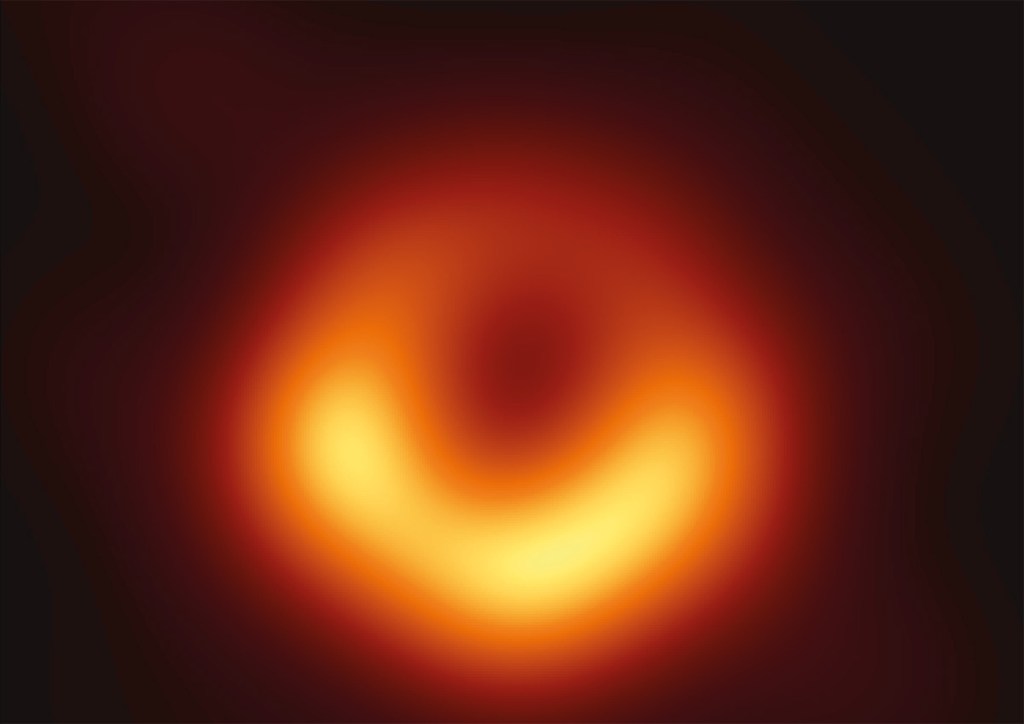
The first direct visual evidence of a black hole has been revealed on 10 April 2019 by astronomers working on the Event Horizon Telescope. The image is of the supermassive black hole that lies at the center of the huge Messier 87 galaxy, in the Virgo galaxy cluster. Located 55 million light-years from Earth, the black hole has been determined to have a mass 6.5 billion times that of the Sun.
Though black holes are not visible, scientists and researchers managed to capture the boundary – the event horizon of the black hole. The size of the image of the black hole is almost equal to the size of the selfies taken by 10,000 people in their life time. This is considered as a huge achievement as this is the first time an image as clear as this has been captured.
Securing the needed amount of financing is one of the most important functions for starting a business. It highlights what sources of financing exists at various stages of venture development. So, depending on the industry and aspirations of the entrepreneur(s) has a need to attract money to fully commercialize their concepts. Thus they must find investors – such as their friends and family, a bank (or) an angel investors (or) a venture capitalist funds (or) through a public stock offering (or) some other source of financing.
When dealing with most classic sources of funding, entrepreneurs face numerous challenges like disagreeing to the business and financial plans, requests for large equity stakes, tight control and managerial influence and limited understanding of the characteristic of growth process that start-ups experience.At the initial stage , Bootstrapping is an effective way of start up financing but in order to stabilize the start up entrepreneurs should follow various fund raising methods to raise money.
MOST FORMAL SOURCES OF FUNDING :
SEED CAPITAL FINANCING: Seed capital financing is the earliest source of investment for a startup. The sources of this funding will from your family, friends, crowd funding or from your savings. Usually these amounts in this type of investing are not too high and are typically repaid through the loan (with or even without interest) or are invested in exchange for a small equity share in the company.
ANGEL INVESTOR FUNDING: When your startup needs to grow and it requires funds towards product development, marketing (or) just to expand your team to keep up the momentum then the angel investors comes into the picture as a solution for raising money.
VENTURE CAPITAL FINANCING: VC funding can provide resourcing for scaling the business to new business channels, customer segments or to increase marketing efforts for additional customer acquisition. At this stage of financing the startup either may run with profits or may get out of negative cash flows.
BRIDGE LOANS: At this stage of financing your startup may be with constant growth and looking to scale significantly with a commercially available product. The funds during this stage will be raised due to merge and acquisitions. At this stage the investors want to see the clear route map towards profits of the firm.
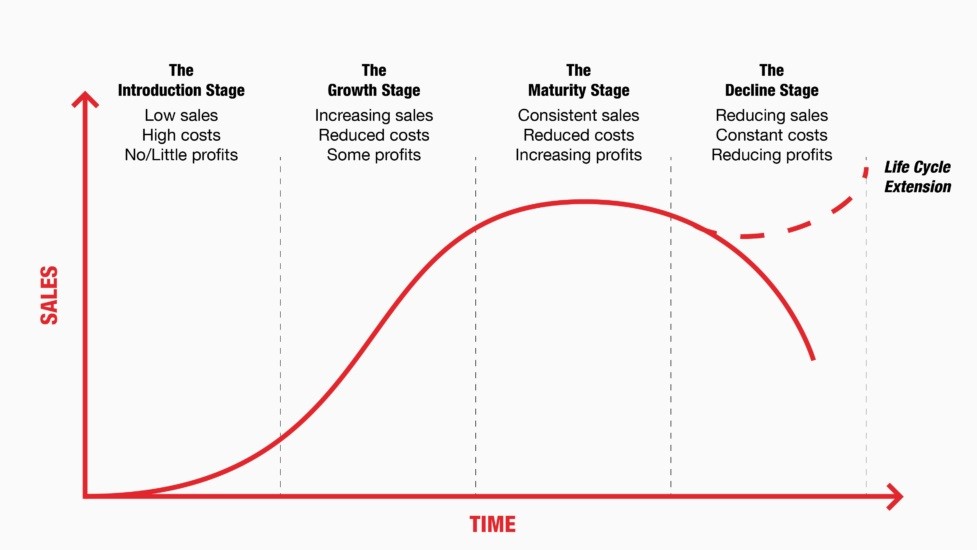
THE GRAPHICAL REPRESENTATION ON GROWTH OF A FIRM
IPO( INITIAL PUBLIC OFFER): IPO is not the end goal for all the startup’s. However, in order to expand the firm further for raising money. At this stage the firm will be listed out in the stock market for going into public as an option of making money.
EQUITY FINANCING: In equity financing, from an entrepreneur perspective the cost of equity is considered as the loss of control over the venture as the founders must share the ownership of business now.
DEBT FINANCING: At this stage the version of an entrepreneur will be as, the cost of debt financing is the interest that they pay for the use of money that they barrowed, where as the perception from the investor side is obtaining the interest as a reward in addition to money that they have lend to an entrepreneur or borrower.
Finally, Capital raising challenge really begins once the MVP(Minimum Viable Product) phase is reached. This is the point where capital is required for product development , sales and market ,patent preparation etc… So, Every start up founder has a need to understand that MVP’s are not only for raising money but also helps to get data about potential customer of the start up. So, the founders of start up can raise money with a prototype GTM(Go-To-Market Strategy) plan.
Advertising is also one of the best way for start ups to make money because advertising increases the name of the firm within your industry and helps to attract partners to expand business which in turn increases profitability. So, these are some money making or financing methods which are followed by most of the firms to make money efficiently .
We’ve been debating for centuries about whether Mars had life or not. In fact, the astronomer Percival Lowell misinterpreted observations of “canali” — the Italian word for channels — on the planet as evidence of alien-made canals. It turned out Lowell’s observations were hampered by poor telescope optics of his day, and the canals he saw were optical illusions. That said, several spacecraft have spotted other signs of ancient water — channels grooved in the terrain and rocks that only could have formed in the presence of water, for example.
2.Mars Has Frozen Water Today:
We’re very interested in the question of water because it implies habitability; simply put, life as we know it is more likely to exist with water there. In fact, the Curiosity rover’s mandate on Mars right now is to search for habitable environments (in the past or present). Mars has a thin atmosphere that does not allow water to flow or remain in large quantities on the surface, but we know for sure that there is ice at the poles — and possibly frosty locations elsewhere on the planet. The question is if the ice is capable of melting enough water in the summer long enough to support any microbes.
3.Mars Used To Have A Thicker Atmosphere:
For water to flow in the past, the Red Planet needs more atmosphere. So something must have changed in the past few billion years. What? It is thought that the Sun’s energy striking the atmosphere must have “stripped” the lighter forms of hydrogen from the top, scattering the molecules into space. Over long periods of time, this would lessen the amount of atmosphere near Mars. This question is being investigated in more detail with NASA’s Mars Atmosphere and Volatile EvolutioN (MAVEN) spacecraft.
4.Mars Has Some Extreme Highs And Lows In Terrain:
The surface gravity of Mars is only 37% of what you would find on Earth, which makes it possible for volcanoes to be taller without collapsing. This is why we have Olympus Mons, the tallest volcano known on a planet in the Solar System. It’s 16 miles (25 kilometers) high and its diameter is approximately the same as the state of Arizona, according to NASA. But Mars also has a deep and wide canyon known as Valles Marineris, after the spacecraft (Mariner 9) that discovered it. In some parts, the canyon is 4 miles (7 kilometers) deep. According to NASA, the valley is as wide as the United States and is about 20% of the Red Planet’s diameter.
5.Mars Has Two Moons- And One Of Them Is Doomed:
The planet has two asteroid-like moons called Phobos and Deimos. Because they have compositions that are similar to asteroids found elsewhere in the Solar System, according to NASA, most scientists believe the Red Planet’s gravity snatched the moons long ago and forced them into orbit. But in the life of the Solar System, Phobos has a pretty short lifetime. In about 30 million to 50 million years, Phobos is going to crash into Mars’ surface or rip apart because the tidal force of the planet will prove too much to resist.
6.We Have Pieces Of Mars On Earth:
Remember the low gravity on Mars that we talked about? In the past, the planet has been hit by large asteroids — just like Earth. Most of the debris fell back on the planet, but some of it was ejected into space. That sparked an incredible journey where the debris moved around the Solar System and in some cases, landed on Earth. The technical name for these meteorites is called SNC (Shergottites, Nakhlites, Chassignites — types of geologic composition). Gases trapped in some of these meteorites has been practically identical to what NASA’s Viking landers sampled on the Red Planet in the 1970s and 1980s.
7.Mars Would Kill An Unprotected Astronaut Quickly:
There are a lot of unpleasant scenarios for somebody who took of their helmet. First, Mars is usually pretty cold; its average temperature is -50 degrees Fahrenheit (-45 degrees Celsius) at the mid-latitudes. Second, it has practically no atmosphere. The air pressure on Mars is only 1% of what we have (on average) on the Earth’s surface. And third, even if it did have atmosphere, the composition is not compatible with the nitrogen-oxygen mix humans require. Specifically, Mars has about 95% carbon dioxide, 3% nitrogen, 1.6% argon and a few other elements in its atmosphere.
8.In The Early Space Age,We Thought Mars Was Like The Moon:
The early NASA probes that flew by the Red Planet all, coincidentally, happened to image spots on the planets that had craters. This led some scientists to (mistakenly) believe that Mars has an environment similar to the moon: cratered and practically unchanging. This all changed when Mariner 9 arrived at the planet for an orbital mission in November 1971 and discovered the planet engulfed in a global dust storm. What’s more, odd features were poking out above the dust — features that turned out to be dormant volcanoes. And as mentioned earlier, Mariner 9 found the vast Valles Marineris. It changed our view of the planet forever.
9.Mars Has Methane In Its Atmosphere:
Methane can be interpreted as a sign of biological activity — microbes emit it — or even of geologic activity. And active planets, it is thought, are more likely to have life on them. So the question of methane on Mars is one that scientists are trying to figure out. The consensus? There is no consensus. Telescopic observations have had wildly different measurements over the years, and few spacecraft have been designed to probe for the element in detail. The Curiosity rover has detected tenfold spikes in methane in its area, but we don’t know where it came from and why the fluctuations are happening.
10.Mars Is A Popular Spacecraft Destination:
There have been so many spacecraft that attempted a Martian mission that it’s hard to pick notable ones in a short article. NASA’s Vikings were the first landers in 1976; in fact, NASA is the only agency that has managed to land on the planet so far. Some of its other missions include Pathfinder-Sojourner (the first lander-rover combination) in 1997, the Mars Exploration Rovers Spirit and Opportunity in 2004, and the Curiosity rover of 2012. And this doesn’t even mention the fleet of orbiters that have mapped Mars over the years from the Soviet Union, NASA, the European Space Agency and India. And there are many more spacecraft to come in the next decade.
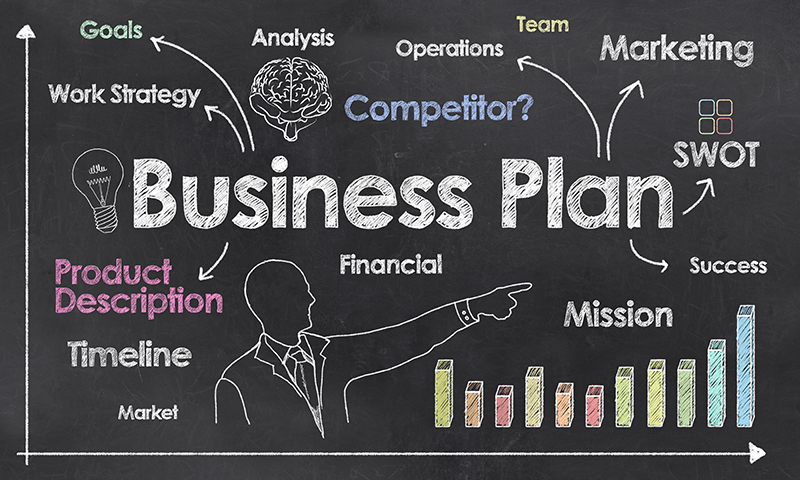
BUSINESS PLAN: A business plan is a written document that describes in detail about a business and it also defines its objectives and how the firm is going to achieve its goals. A business plan lays out a written roadmap for the firm in both financial and operational standpoints. So, Business plans typically include detailed information that can help improve the business’s chances of success, like a market analysis, competitive analysis, customer segmentation, marketing, logistics and operations plans, cash flow projections and an overall path to the long-term growth.
WHAT IS THE USE OF HAVING A BUSINESS PLAN?
These business plans help entrepreneurs to assume the exact position of the firm or startup and also they help business owners to see the plan ahead, make important decisions, and improve the overall likelihood of success. Formulation of a business plan should be the first thing done when starting a new business. Business plans are also important for attracting investors so that they can determine that whether your business is on the right path or not and worth investing money or not.
Building a business plan allows you to determine the answer to some of the most critical business decisions ahead of time. Without a business plan, objectives often become arbitrary. So, having a business plan can help make those benchmarks more intentional and consequential and it can also help founders of the firm to be accountable for the long-term vision and strategy, and we can also get the insights into how the applied strategy is coming together over time.
OUTLINE OF A BUSINESS PLAN : The below provided information show’s the step by step process of writing a business plan and highlights about the points that are to be included in each step.
STEP1- INTRODUCTORY PAGE:
Include Name & Address of the business, Nature of the business, Statement of financing needed.
INDUSTRIAL ANALYSIS:
Write about, Future outlook & Trends
Analysis of competitors
Market segmentation
Forecast on Industry & Market
STEP2- DISCRIPTION OF VENTURE:
Introduce about Product(s), Services(s), Background of entrepreneur and size of business.
STEP3- PRODUCTION PLAN:
Include Manufacturing process
Physical plan
Write about needed Machinery & Equipment.
Write names of supplies of raw materials.
STEP4- OPERATIONS PLAN:
Describe flow of orders for goods (or) services
Technology utilization
Description of company operation.
STEP5- MARKET PLAN:
Describe about Pricing, Distribution, Promotion & Product forecast.
STEP6- FINANCIAL PLAN:
Include sources and applications of funds.
Assumptions
Cash flow projections
Break even point (Analysis)
Balance statement & Income statement
STEP7- ORGANISATIONAL PLAN:
Write clearly about Form of ownership
Identification of partners (or) Principal shareholders
Roles and responsibilities of members in the organization
So, the above described steps are the steps that have to be included while writing a business plan. Hope this article makes you to understand about the importance of business plan along with it’s out line structure.

























 Eduindex
You must be logged in to post a comment.