NCERT is an autonomous governmental organisation that actively contributes to the education sector in India. This organisation provides the CBSE, with textbooks, thus becoming the publishing body. In 2017 the CBSE had asked all the schools in India to adopt the NCERT textbooks and to avoid using books from other publishers. It might be because, the schools except Kendriya Vidyalaya and Jawahar Navodaya were free to use books from a different publisher other than NCERT, but there have been reports of some of these schools, taking huge amount of money, in the name of various textbooks, workbooks and guides. The cost of study at CBSE schools are little high when compared to the State government schools. So, when the tuition fee, added with the other expenses especially for the textbooks, resulted in school education being overpriced. Also, the authenticity of these textbooks is something that cannot be taken for granted. There have been reports that some school conducted some illegal experiments with living animals, with respect to the workbooks of these non-NCERT textbooks.
To avoid such lapses, the CBSE, has made it mandatory for all the schools that are affiliated under it to follow the NCERT textbooks, with the exception for some subjects. The NCERT books have the following benefits.
Both the CBSE and the NCERT are governmental organisations, so they will have more flexible workspace.
The NCERT strictly follows the CBSE curriculum. Primarily focusing on simple diction and clarity of the concepts.
The NCERT textbooks are available with quality content at affordable prices.
Large proportion of the CBSE Board Exam questions, come from the NCERT textbooks
They are cost effective, since they help in forming the basics and the textbooks could also be used as basics for competitive exam like the PSC, UPSC, AFCAT etc.
“The earth provides enough to satisfy everyone’s need but not enough to satisfy everyone’s greed” This quote by the father of our nation Mohandas Karamchand Gandhi is now amongst his most well-known. But what does it really mean? It means that the earth has abundant resources to satisfy everyone’s needs but, in our greed, and hurry to develop, we have been recklessly exploiting these resources. In the name of development, we have indulged in activities such as deforestation, overgrazing, encroachment into forest lands, overuse of ground water, use of plastics, etc. The exploitation of natural resources not only harms the environment but may cripple the future generations of the development process itself.
The world is increasingly managed in a way that maximises the flow of material from nature, to meet rising human demands for resources like food, energy and timber. As a result, humans have directly altered at least 70% of Earth’s land, mainly for growing plants and keeping animals. These activities necessitate deforestation, the degradation of land, loss of biodiversity and pollution, and they have the biggest impacts on land and freshwater ecosystems. About 77% of rivers longer than 1,000 kilometres no longer flow freely from source to sea, despite supporting millions of people. The main cause of ocean change is overfishing, but 66% of the ocean’s surface has also been affected by other processes like runoff from agriculture and plastic pollution. In addition, fewer varieties of plants and animals are being preserved due to standardisations in farming practices, market preferences, large-scale trade and loss of local and indigenous knowledge
The wildlife population is in a fall around the world, driven by human overconsumption, population growth and intensive agriculture, according to a major new assessment of the abundance of life on Earth. On average, global populations of mammals, birds, fish, amphibians and reptiles plunged by 68% between 1970 and 2016, according to the WWF. Two years ago, the figure stood at 60%. Latin America and the Caribbean recorded the most alarming drop, with an average fall of 94% in the populations of vertebrate wildlife. Reptiles, fish and amphibians in the region were the most negatively affected, driven by the overexploitation of ecosystems, habitat fragmentation and diseases. Africa and the Asia Pacific region have also experienced large falls in the abundance of wildlife, dropping 65% and 45% respectively. Europe and Central Asia recorded a fall of 24%, while populations dropped 33% on average in North America. According to the UN’s global assessment report in 2019, due to human activity one million species on the planet are at a risk. Deforestation and the conversion of wild spaces for human food production have largely been blamed for the destruction of Earth’s web of life. It has been highlighted that 75% of the Earth’s ice-free land has been significantly altered by human activity, and almost 90% of global wetlands have been lost since 1700.
The Earth is dying and is up to us, the future generation, to protect it from all the harmful toxins and other pollutants. We only have one home with limited resources which we share with a billion other species of wildlife. Steps have to be taken no matter how small to save our beautiful mother planet and leave a home for our future generations.
Artificial intelligence (AI) refers to the simulation of human intelligence in machines that are programmed to think like humans and copy their actions. This may also be applicable to any machine that exhibits traits associated with a human mind such as learning and problem-solving. From SIRI to self-driving cars, AI is progressing rapidly. While science fiction often portrays AI as robots with human-like characteristics, AI can enclose anything from Google’s search algorithms to automatic weapons.
Benefits
AI’s impact on society can be beneficial for research in many areas. Topics such as economics, law, technical topics such as verification, validity, security and control can be improved so much with the help of AI. it may be little more than a minor nuisance if your laptop crashes or gets hacked, it becomes all the more important that an AI system does what you want it to do if it controls cars, airplanes, automated trading systems or a power grid. Another short-term challenge is preventing a devastating arms race in dangerous automated weapons.
Artificial Intelligence can also be used in performing surgeries which require precision. It can also be helpful in performing tasks which are difficult for humans to perform. As technology advances, previous landmarks that defined artificial intelligence become outdated. For example, machines that calculate basic functions or recognize text through character recognition are no longer considered to embody artificial intelligence, since this function is now taken for granted as a basic computer function.
Disadvantages
When misused, AI has the potential to become the most dangerous weapon humans have ever seen. Autonomous weapons are automated weapons that are programmed to kill. In the hands of wrong people, this weapon can easily be a medium for mass destruction. Moreover, AI arms race can cause an AI war which can also cause mass causalities.
Even if AI is programmed to do something beneficial, but it develops a destructive method to achieve its goals. For example, when we ask an AI powered car to take us in the fastest way possible, it can break several traffic rules and speed limits to help us reach our destination. It can run over people or damage the vehicle. AI is very difficult to tame once it learns to think like humans. So, we should be very careful while handing over our future to the hands of artificial intelligence.
Farming plays a major role to the life of any human being. Without food, life on earth is not possible as hunger will consume every human and living being on this earth. Each and every modern food like pizza, burger, sandwich and nuggets and many more have atleast one primary content of cereal in it.
This sector is the primary factor for any economical balance and system of a country. Agriculture is commonly called as the backbone of any nation as it supports the important necessity factor of any country. Provides employment for various industries and population in an enormous rate that can be guaranteed for sure.
“If the farmer is poor then so is the whole country”. – Polish Proverb
Agriculture is the only platform that proves to provide self-employment and opportunities for others also. A smart way of farming can help you earn more than a lakh a month with organic based products alone. It’s stream also associates with rearing of farm animals, and sea creatures along with livelihood of many families. In rural sides, the basic establishment is agriculture to run their family.
There maybe sophisticated industries uprising and converting the society into a digital world, but a farmer can never be replaced or compared with anyone as they are preferred as gods to fulfill our stomach on time.
“The farmer is the only man in our economy who buys everything at retail, sells everything at wholesale, and pays the freight both ways”. – John F. Kennedy
There are critical situations where farmers lose hope on their passion and life resulting in suicides. These corporates also play a role in controlling vast area of these fields and demolishing but these issues became outdated inspite of protesting it.
“An agricultural life is one eminently calculated for human happiness and human virtue”. – Josiah Quincy
It can be considered as the India is the ancient and first nation to spread the cultivation process all over countries by exporting them also encouraging friendly nations to produce their paddy or farming.
An independent, stress-free job only with your hardwork and knowledge about effective production for each variety of seed, you succeed with your outcome.
Certain kind of insults and discriminations are made in every step of their life denoting their passion as if some kind wrong act to stabilize certain dignity of higher caste forgetting about the reality as farmers are rulers of any nation.
To understand the present let me take you to an incident, “Imagine a situation where you have to just drink water and tolerate your hunger, you can adjust for a day or even one week but your health will gradually decrease since as a defect to fulfil hunger”.
Our health is balanced and nutrition is maintained because of the benefits of various pulses and grains that supports life force of every species. So, try to support and cultivate the habit of encouraging it to younger generations as they need to respect and know the importance played by this sector in a nation’s economy.
“If farmers fail to keep hands on land, we can’t keep hands on food/rice”
Try creating awareness and modify of vision towards farmers to appreciate them at right work which is forgotten by us mostly. Helping a farmer is like feeding a thousand children while they are hungry. Do support agriculture and respect as mere humans to maintain humanity.
The things must be told to every single child to know the value of farming to be recognized and adopt this as their passion in upcoming future.
“There are only one thing more precious than our time and that are who we spend it on”
Time is very precious and we should not waste it in any way. Likewise, we can earn the money we spent but we cannot get back the time we have lost. So, this makes the time more valuable than money. Hence, we should utilize the time in the most possible way.
Importance of Time:
𝐓𝐈𝐌𝐄 refers to the indefinite continued progress of existence and events. Furthermore, these events occur from the past, through the present, and to the future. This explanation of time tells us one important truth. This truth is that time is a limited and precious resource. Each second, minute or hour that passes is lost forever. Most noteworthy, this second, minute, or hour will never ever return to our lives. This clearly shows the extreme importance of the 𝗩𝗔𝗟𝗨𝗘 𝗢𝗙 𝗧𝗜𝗠𝗘.
First of all, everyone must understand that Time waits for no one. This is an age-old belief that still holds true. No one can stop the clock or slow it down. Most noteworthy, Time will keep going whether one likes it or not. Because Time doesn’t wait for everyone, it becomes a precious commodity. Hence, everyone must make sure to make the most of the Time. People must certainly stop wasting time and procastination. This is because “Time is not unlimited“.
Secondly, Time cannot be reversed. This means we must spend each moment wisely. One cannot go back to a moment of wrongdoing to correct a mistake. What is gone is gone. Above all, nobody can turn back the clock to gain more Time. Therefore, individuals must make every moment count. This is because that moment is never going to repeat itself.
IMPORTANCE POINTS OF TIMES:
People certainly have many distractions these days that threaten Time. Above all, some of these distractions are the internet, social media, smartphones, and video games.
Everyone must certainly follow the most Time effective way to do a task. Above all, it is the way that will yield the greatest benefit per moment spent.
Time is second most important thing after life, make sure to utilize your time wisely in good activities.
Time is a measurement of our life, time is very important in our life, it depends on you, how you use your time, if you use time in learning and implementing on good things it will help to you to live with ease.
Value of time this word is very significant for us especially students. Working time is very valuable for everyone.
Time is the most valuable in our worldly life. The secret of success in life is the proper use of time.
Life is nothing but a collection of moments. It is shot and uncertain but art is long. So, every moment of our life is very precious. It is known to all that time waits for none.
Everyone has to realize the value of time and spend it unwisely. Such people waste their time and keep unnecessary thinking can backward to them and lost their future. Everyone has to do focus on their important task every day.
The laws which are related to the media industry in India have emerged in the due course of time in a momentous manner. However, there were no press regulations acts or laws which were present until the British East India Company had started ruling a party in the country after the Battle of Plassey. When the newspapers in India were published by only the Europeans was an ultimate penalty. Then James Augustus Hickey started The Bengal Gazette or Calcutta General Advertiser in the year 1780, which was considered as the first newspaper in India. Later, was seized in 1872 because it outspoke criticism of the Indian Government. After facing various obstacles while publishing the newspaper and the involvement of many parties the government concluded in the year, 1860 Indian Penal Code was passed as a law which was general but it laid down offences which any editor or writer or publisher must avoid at any cost- the offences of obscenity and defamation.
Media Laws
The Indian Constitution has not stated or provided the freedom for media separately in India. But there is seen an indirect provision for media freedom in the constitution. It is derived from Article 19(1) (a) of the Indian constitution. The Article guarantees freedom of speech and expression in the country. The freedom of mass media is indirectly derived from this particular Article. Article 19 of our Indian Constitution deals with the right to freedom These provisions are vital and important. which are considered to lie at the very root of our liberty. Article 19 of the constitution lays down that All citizens have the right to freedom of speech and expression, to assemble peacefully, and should be without weapons of any sort- unarmed, can form associations or unions, can move freely throughout the territory of the country, can move and reside in any part of the territory of the country, can acquire or dispose of property and can practice any profession or can carry any occupation which can be, trade or business. However, with this particular article there are reasonable restrictions that the right to freedom of speech and expression shall not impact the operation of any existing law, it should not disturb the working of any procedure in the country or prevent state from making any law. This article imposes reasonable restrictions because it can exercise of that right in the interests of the integrity and sovereignty of India, friendly relations with foreign states, security of the state, public decency or morality or in relation to contempt of court, incitement to offence or defamation.
Few Rules and Acts which are applicable to the Indian Media Industry: –
The Press and Registration of Books Act, 1867
The Press Council Act, 1978
. The Press Council of India (Grant of Certified Copies) Regulations, 1999
The Working Journalists (Fixation of Rates of Wages) Act, 1958
The Right to Information Act, 2005
The Drugs and Magic Remedies (Objectionable Advertisements) Act, 1954
Copyright Act, 1957
The Telecom Regulatory Authority of India Act, 1997
A special place must be reserved in the annals of self-experimentation for medical student Stubbins Ffirth, who conducted a series of increasingly revolting experiments in the early 19th century to prove that yellow fever was not contagious. Ffirth started off by pouring “fresh black vomit” from a patient with yellow fever into cuts in his arm. He didn’t get yellow fever. Emboldened by this success, Ffirth graduated to dribbling the vomit into his eyes and smearing assorted other bodily fluids from yellow-fever sufferers over his person – including blood, spit, sweat and urine. He even sat in a “vomit sauna” full of heated regurgitation vapors, which caused him “great pain in [his] head”, but left him in rude health. Finally, he took to actually ingesting the vomit – first in pill form, then straight from a patient’s mouth. Since he still didn’t get ill, he considered the case proven. Presumably others did too, since he was in due course awarded his medical doctorate.
But they were wrong: yellow fever is contagious, albeit only if directly transmitted into the bloodstream. That was proven by another self-experimenter, US army surgeon Jesse Lazear, who allowed himself to be bitten by yellow fever-infected mosquitoes in the early 1900s. Ironically, the mosquito whose bite proved fatal to Lazear was reportedly not one of his experimental specimens, but a wild specimen.
August Bier’s leaking spine
In 1898, German surgeon August Bier invented spinal anesthesia, which involved a small dose of cocaine being injected into the cerebrospinal fluid surrounding the spinal cord. That was a great improvement on existing methods of general anesthesia, but how effective was it? To find out, Bier decided to be anaesthetized himself. But things didn’t go as planned for Bier – or for his hapless assistant, Augustus Hildebrandt. He was supposed to administer the cocaine but, thanks to a mix-up with the equipment, Bier was left with a hole in his neck from which cerebrospinal fluid began to flow. Rather than abandon the effort, however, the two men switched places. Once Hildebrandt had been anaesthetized, Bier stabbed, hammered and burned his assistant, pulled out his pubic hairs and – presumably eager to leave no stone unturned in testing the new method’s efficiency – squashed his testicles. Once the cocaine had worn off, the pair went out for a boozy dinner, despite their injuries. Both suffered terribly in subsequent days but, while Bier took it easy as he recovered, Hildebrandt had to stand in for his boss at work. Perhaps unsurprisingly, he subsequently fell out with Bier, becoming one of his fiercest critics and denying his discovery of spinal anesthesia – which rapidly caught on.
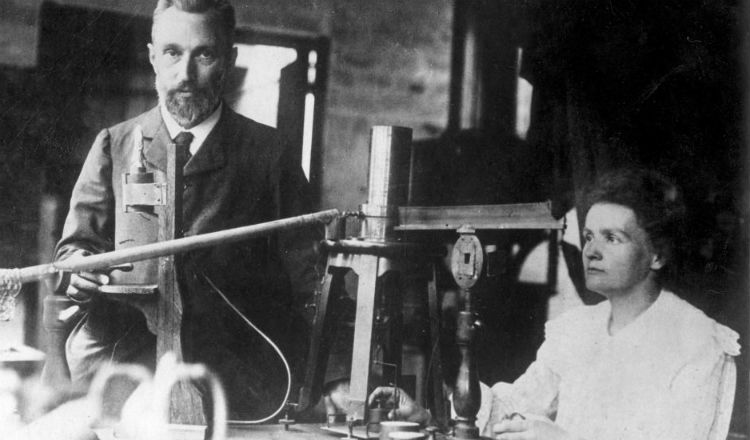
Pierre Curie’s arm
In June 1903, physicist Pierre Curie rolled up his sleeve and revealed a burn-like wound on his arm to a packed audience at the UK’s Royal Institution. The wound had been caused by a sample of radium salts, which he had taped to the skin of his arm for just 10 hours, more than 50 days earlier. During the course of his demonstration, Curie dropped some radium on the desk. The resulting contamination was still detectable, and in need of cleaning up, half a century later.
Curie and his wife, Marie, hoped that radium’s burning effect might prove useful in the treatment of cancer. But ironically, the radiation that the sample gave off – which was also emitted by various other chemicals to which the Curies routinely exposed themselves in the course of their work – were actually having a catastrophic effect on their health.
Both Pierre and Marie were constantly ill, tired and in pain, but their experiments did pave the way for the use of radium in medicine. Later in 1903, they shared the Nobel Prize in Physics for their research on radiation.
JBS Haldane’s smoking ear
One self-experimenter whose work had long-term personal consequences was the polymath JBS Haldane. Haldane wanted to build on work done by his father, John Scott Haldane, on the physiology of working Navy divers in the early 20th century. But whereas Haldane senior restricted himself to observation and measurement, his son took a more direct approach, repeatedly putting himself in a decompression chamber to investigate the physiological effects of various levels of gases. Haldane was motivated by concern for the welfare of sailors in disabled submarines, and his work led to a greatly improved understanding of nitrogen narcosis, as well as the safe use of various gases in breathing equipment. But he paid a high price, regularly experiencing seizures as a result of oxygen poisoning – one resulting in several crushed vertebrae. He also suffered from burst eardrums, but he was sanguine about the damage. “The drum generally heals up,” he said, adding, “if a hole remains in it, although one is somewhat deaf, one can blow tobacco smoke out of the ear in question, which is a social accomplishment.”
Nathaniel Kleitman’s cave
In 1938, the eminent sleep researcher Nathanial Kleitman, accompanied by his research assistant Bruce Richardson, moved into Mammoth Cave, Kentucky. Kleitman wanted to find out if humans could adapt to a longer, 28-hour day. The cave, 120 feet underground, offered a perfect environment to test the idea out: there was no natural light and the temperature remained constant, so there were no clues as to when it was day and night. It was not a comfortable environment, however: as well as being isolated and claustrophobic, the researchers found themselves sharing their beds with rats. A month later, they emerged, having discovered that while Kleitman had struggled to change his sleeping patterns, Richardson had adapted to the 28-hour cycle. Their studies helped to advance knowledge of human circadian rhythms, and spawned practical recommendations for shift-workers. Kleitman didn’t confine himself to caves: he later spent two weeks on board a submarine and a spell in the Arctic, with its long periods of darkness and daylight, in both cases studying sleep patterns.
Albert Hofmann’s bicycle ride
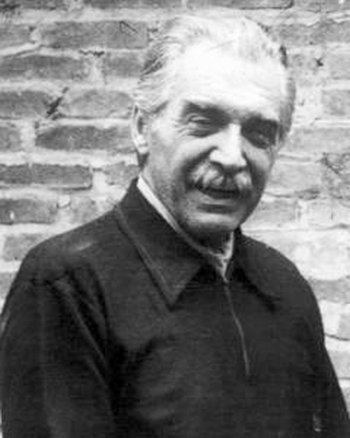
Swiss chemist Albert Hofmann, who discovered the drug lysergic acid diethylamide (LSD) while looking for medically useful derivatives of the ergot fungus, is also credited as the first to experience an acid trip. Hofmann took his first trip, in 1943, by accident, apparently as a result of accidentally spilling the chemical on his fingertips in his Basel laboratory. He went home and “sank into a not-unpleasant condition”, a dreamy state in which he saw psychedelic images. His second experience was less agreeable: he deliberately took a dose that he believed to be light, but which led to intense effects while riding home on his bicycle – an episode that has become notorious in recreational pharmaceutical circles. While the chemical may have uses in psychiatry, its impact to date has arguably been more cultural than medical. Hofmann himself continued to take LSD, and advocate its careful use, for the rest of his life. Hofmann wasn’t alone in testing out psychedelic drugs on himself: US chemist Alexander Shulgin ingested many chemicals, including MDMA (ecstasy), leading to its use in psychotherapy, and Harvard psychologist Timothy Leary experimented with LSD on himself, to test, among other things, whether it could be used to treat alcoholism. Leary eventually lost his job after he began touting psychedelics as a hotline to spiritual enlightenment.
Barry Marshall’s bad breath
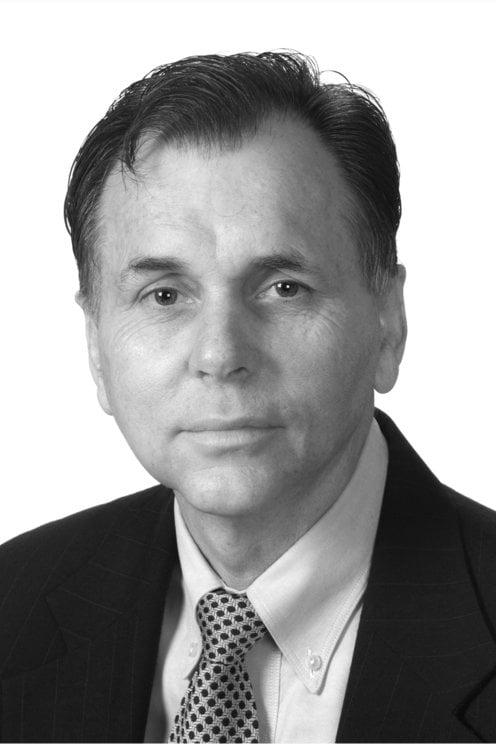
Junior doctor Barry Marshall was sure the medical establishment was wrong about the cause of stomach ulcers. The received wisdom was that they were caused primarily by lifestyle factors, but Marshall and pathologist Robin Warren were sure that the bacterium Helicobacter pylori was to blame. To prove their hypothesis, they needed to examine how the bacteria affected a healthy human volunteer – but as Marshall explained to New Scientist in a 2006 interview, “I was the only person informed enough to consent”. Marshall didn’t tell the hospital’s ethics committee what he had in mind, for fear of being turned down, or even his own wife, until after he had swallowed the bacteria. He was fine for three days, but then began vomiting; his wife complained that he had “putrid breath”. A biopsy taken 10 days later confirmed the bacteria had infected his stomach and that he had gastritis, which can eventually lead to ulcers. It still took another eight years for Marshall and Warren’s theory to be widely accepted, but their work eventually earned them the 2005 Nobel Prize for Physiology or Medicine.
David Pritchard’s itchy skin
Various researchers have infected themselves with parasites. One such is biologist David Pritchard, who in 2004 allowed fifty hookworm larvae to burrow through his skin. Hookworms seem able to modify the body’s immune response in ways that may be useful in treating immune system disorders, such as asthma and Crohn’s disease. Such disorders are comparatively rare in places where hookworm infestation is common. Other members of Pritchard’s lab also infected themselves with the hookworms, which can survive for up to a decade but are easy to kill off with drugs. “They itch quite a bit when they go through the skin,” said Pritchard, but become really troublesome only when they reached his stomach. Fifty turned out to be too many: ten was a safer number. Trials are continuing to evaluate the treatment, including a test to see if the hookworms can help multiple sclerosis sufferers.
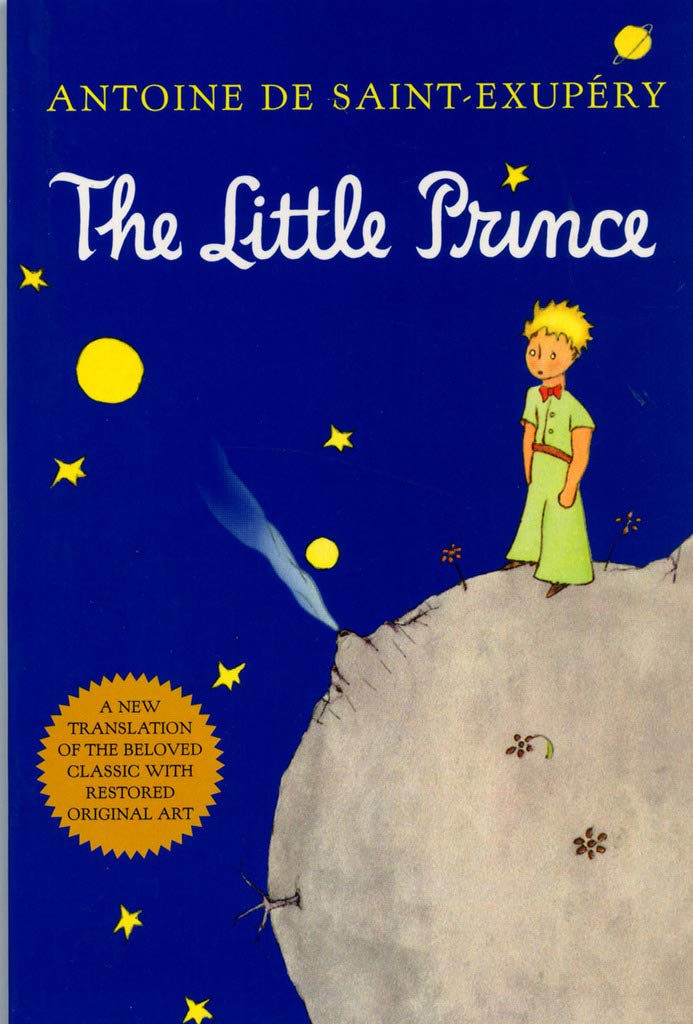
The Little Prince by Antoine de Saint-Exupery is a all time classic in children’s literature. And yet, after reading it, a part of me felt that there could seldom be books as beautiful as this one for any age group. It starts with the buildup of a character of a narrator who loves childhood and treats their intellect superior to those of adult. From the very first page, a reader will laugh with the author and commend him for his though process. And suddenly switches to the backdrop of a war – the second world war to be specific. There he meets a young boy – a boy not more than 12 and clad in his own idiosyncratic behaviour – childish behaviour. This boy is our little prince.
The story deals with love, life, friendship, knowledge, curiosity and death – all as the prince sees them. And it is exactly this part of the story where the reader is lost with the author. Admiration, adoration, love and tears – all move with the prince, a character so beautiful that he cannot die in the heart if the one who has read that that book.
It is a small book and in that small novella is a plethora of beautiful and innocent lines that are bound to steal your heart away or to quote the book,
“What makes the desert beautiful,’ said the little prince, ‘is that somewhere it hides a well…”
Make friends with the little prince and whenever you shall see a star, that one meaningless star will have a laugh or a smile for you each time.
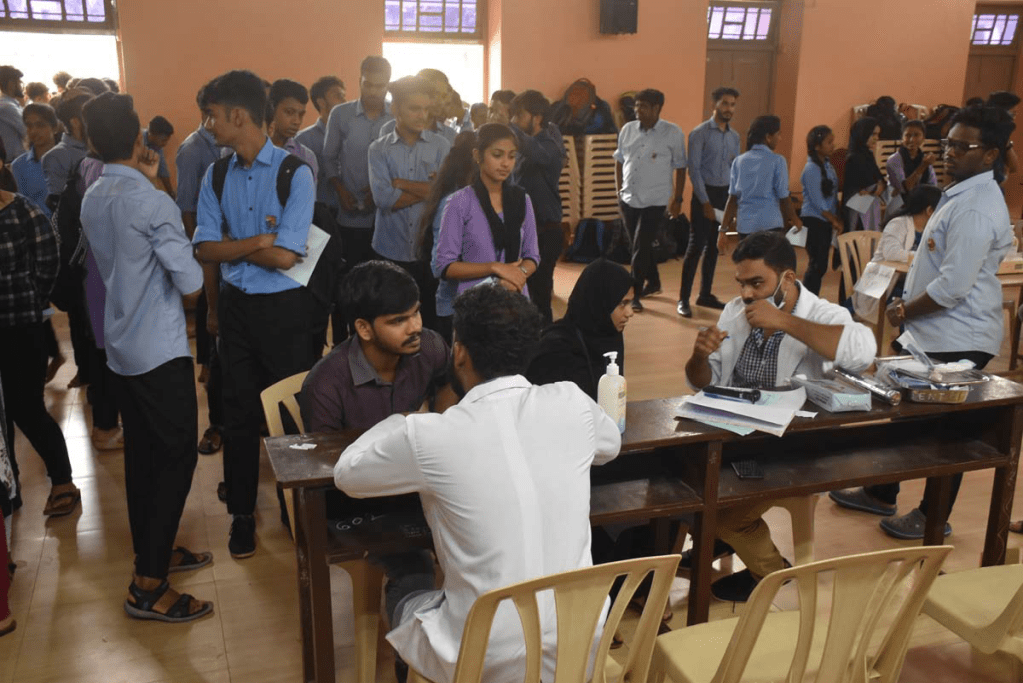
Medical camps are conducted by health professionals to carry out a limited health intervention amongst the underprivileged community. The poor attend these camps to get free check-up and treatment.
medical camps provide free medical advice, medicine to the unfortunate people and refer for specialized treatment or surgery whenever it is required. These camps make sure people are getting healthcare at the right time, and seeing the doctor early enough before a small health problem turns serious.
1 – A number of doctors required like General physicians or Specialists separately.
2 – The number of drugs required depending on how many people you are expecting.
3 – Instruments like BP apparatus, Glucometer, Glucostrips, ECG machine, Needles, spirit, cotton, etc.
Medical camps are solely serving humanity by taking care of sick children and adults and giving them healthcare services for free. When the majority of hospitals and clinics are closed for the poor people leaving them to die from diseases, trauma, and other health complications, free medical camps step in as their biggest hope. Even the poorest among us deserve the dignity of equal human rights which cannot be declined.
NGOs and Medical Trusts also organize free medical camps and in many cases, people are seen to show up for further treatment in the recommended hospitals because those treatments are entirely funded by the Trust or NGO’s.
Conclusion
STAY SAFE AND STAY HOME……..WE WILL BE ABLE LEAD A HAPPY LIFE WITHOUT ANY VIRUS …….🇮🇳🇮🇳🇮🇳🇮🇳🇮🇳🇮🇳
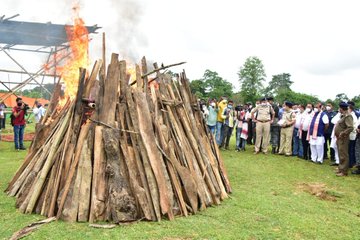
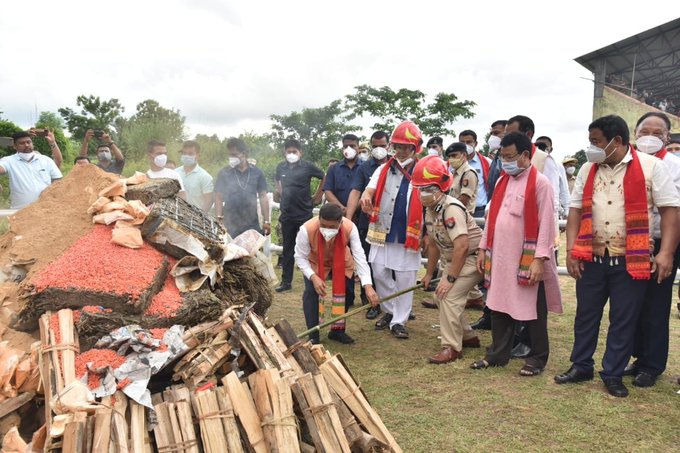
ASSAM STARTED A TWO DAY DRIVE TODAY TO BURN DRUGS WORTH RS. 163 CRORES IN PUBLIC WHICH WERE CONFISCATED IN THE LAST TWO MONTHS . When Himanta Biswa Sarma was sworned in as the Chief minister of Assam , he started taking strict actions to destroy the drug racket in Assam. Within two months, the state police had seized 18.82 kg of heroin, 7944.72 kg cannabis, 67,371 bottles of cough syrup, 12,70,394 numbers of unprescribed sedative tablets, 1.93 kg of morphine, 3 kg methamphetamine and 3,313 kg of opium , all of which worth rupees 163 crores. Sadly, this is just the 20 – 30% of the total narcotics market in Assam which is estimated to worth between 2000- 3000 crores in Indian currency. Under the drive which started today, a segment of the seized drugs was burnt at Diphu and Golaghot while the remaining drugs will be burnt tomorrow in Nagaon and Hojai. The public burning is to drive home the clear message of Assam’s zero tolerance over drugs.
The massive drug racket is not only limited till Assam but is spread in the entire country with the North Eastern states and North Western states providing a gateway linking the country to the Global narcotics industry. This blog will give you the reasons so as to why North East became the hub of drugs which destroys millions of lives.
Why has North East become the hub of drugs
India’ s strategic position places it between the GOLDEN CRESCENT ( Afghanistan, Pakistan and Iran) on the North western side and the infamous Golden Triangle (Myanmar, Thailand, and Laos) on the northeast which are two of the largest sources of illicit drugs in South East Asia. The Golden Triangle is Asia’s main opium producing area and serves as the oldest narcotics supply route to Europe and North America.
The Indian states of Arunachal Pradesh,bNagaland, Mizoram and Manipur shares its border with Myanmar which serves as an entry way of drugs in India through the Eastern side .Drugs produced in the ‘Golden Triangle’ enter India through Mizoram, Manipur, and Nagaland from Bhamo, Lashio, and Mandalay in Myanmar. The route bifurcates and one channel moves northwards through Moreh in Manipur while other moves southwards to enter Champai in Mizoram. Moreh (Manipur), Champai (Mizoram), Dimapur (Nagaland), and Guwahati (Assam) have become the nucleus of drug trafficking industry in India’s northeast.3
The Indo-Myanmar border is guarded by the Assam Rifles (AR), a paramilitary force, under the operational control of Indian Army’s Eastern Command which also serves as an route for the supply of the contaband items. The traffickers chooses the short time when the Army is off the shift or is on rounds to supply the drugs. The information about the army timings is provide by the locals who sympathize by the criminals many of whom are the part of the local terrorist groups of the North East. Further due to friendly Indo- Myanmar relations , The border is not permanently sealed allowing some free movement between the borders for the limited time period in a day which again enables the transfer of drugs as the traffickers develop smart ways to avoid the scanning of their items containing drugs.
Moreover, poor state of education, unemployment, poverty, increasing spread of HIV/AIDS, ethnic conflicts are some of the issues faced here. Children are forcefully used as drug carriers in promise of better livelihood. These issues have seldom featured in policies of successive governments. Criminals use this vulnerability of local population and manipulate their minds into joining criminal ranks. Such fragile situation along the India-Myanmar border jeopardizes the region into becoming a hub of drug trafficking.
The Chief Minister of Assam in a statement said that he has provided full liberty to the police forces to arrest the drug traffickers which also involves the use of gun to stop the trafficker from running or in the act of self defense if the trafficker counter attacks. The shooting of traffickers has invoked much criticism but Sarma said he is not going to compromised on the safety of his officers.
Further drugs were also used for payment by the criminals in exchange of smuggled arms, fake currency and other prohibited items thus causing social problems and crimes. The CM also mentioned that it was important to do this in order to save Assam from being another “Udta Punjab” (reference to the bollywood movie showing drug racket in Punjab).
The action taken by Assam government is appreciable . Only if all the border states work in tandem with each other and take strict actions, only then we can cease the entry of drugs in India and save lakhs of youths from spoiling their lives under its influence.
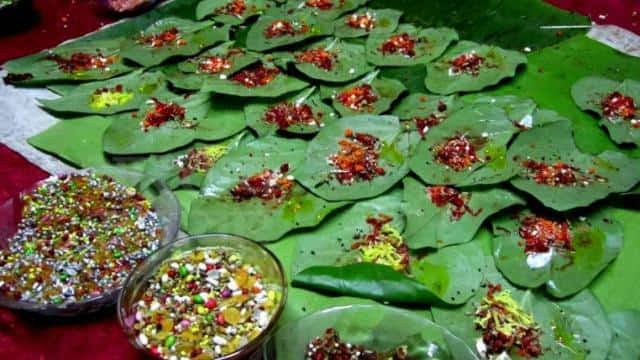
Magahi betel leaf (Paan) is an variety of betel grown in south Bihar region and mostly in Aurangabad, Gaya and Nalanda districts. This paan, is about 3.5 to 9.5 inches in size. It’s non-fibrous, sweeter, tastier and the soft.it got GI tagged in 2018 alongwith Jardalu mango and katarni rice
Magahi paan was popular even during ancient times. It is claimed that prince Vijai Mal was fond of Magahi paan and it is mentioned in the 1884 book of GA Grierson, an Irish administrator and linguist in British India. Several other references had been cited in the journal to establish Magahi paan being an exclusive produce of Magadh region
Magahi paan is sown during March-May each year, with leaves plucked during January-March. Each plant can give 40-60 leaves, yielding 500 dholis per year per katha .Every year, farmers have to sow new plants. When everything goes well, farmers can earn Rs 70,000-1,00,000 from one katha of land.
Problems encountered by betel leaf (paan) farmers
Betel leaf (paan) plants damaged due to cold
There is lack of insurance or MSP facility to the farmers. it is highly susceptible to bad weather conditions and is classified as horticulture, not agriculture product. Money is paid in installments by the buyer and Sometimes money is paid after one and a half years to the farmers.
Number of paan farmers is on the decline because of lack of any state help to ease their high cost of production, as the plant requires an artificial conservatory to grow.
Future ahead
A tie up between Agricultural and Processed Food Products Export Development Authority (APEDA) and Bihar Agricultural University (sabaur) is currently under process. Plan is to export GI tagged products Makhana, Jardalu Mango, Shear Rice, Litchi and Magahi Pan.
Let’s hope the things gets better and government policies should be made and implemented in a way keeping the problems faced by farmers and their needs at centre. Then, only these betel growing farmers will get benefitted from those government benefits.
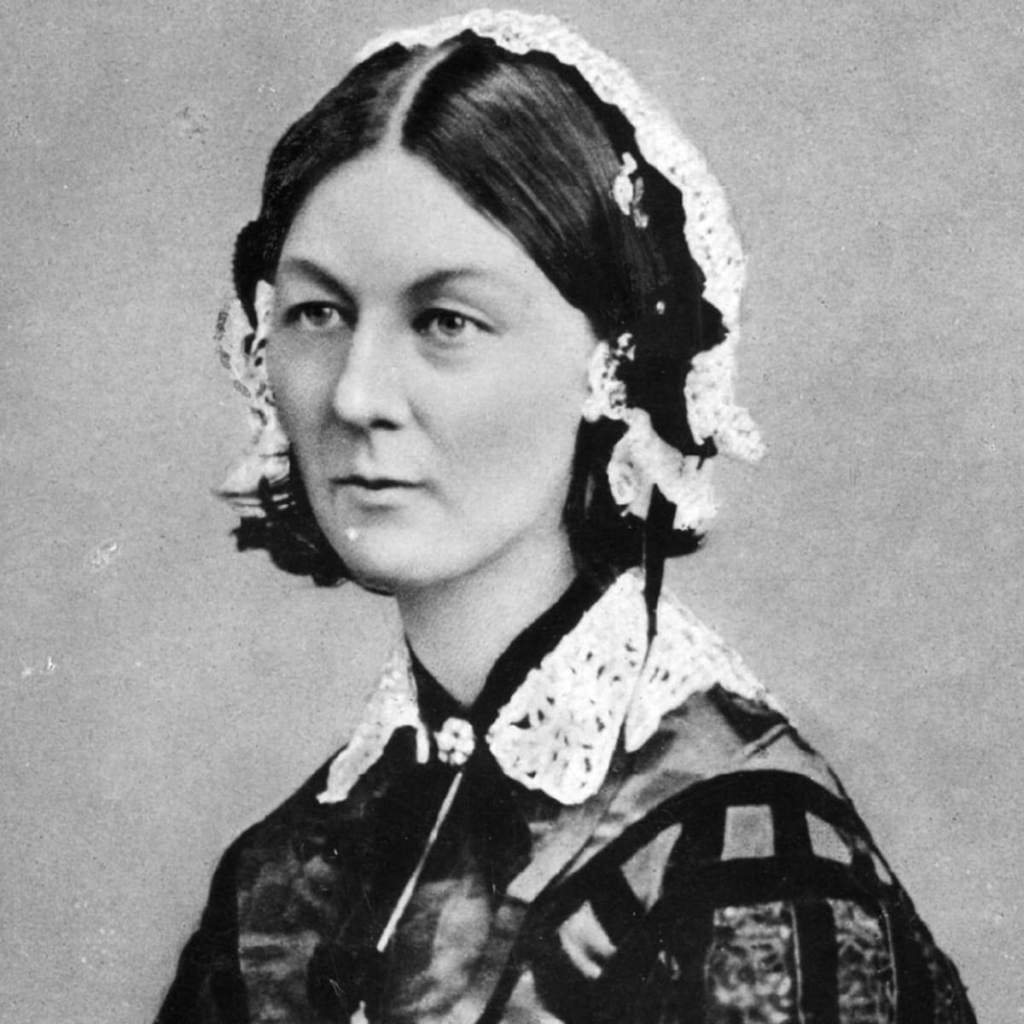
Florence Nightingale was born on May 12, 1820, in Florence, Italy to Frances Nightingale and William Shore Nightingale. She was the younger of two children. Nightingale’s affluent British family belonged to elite social circles. Her mother, Frances, hailed from a family of merchants and took pride in socializing with people of prominent social standing.
Despite her mother’s interest in social climbing, Florence herself was reportedly awkward in social situations. She preferred to avoid being the center of attention whenever possible. Strong-willed, Florence often butted heads with her mother, whom she viewed as overly controlling. Still, like many daughters, she was eager to please her mother.
Florence’s father was William Shore Nightingale, a wealthy landowner who had inherited two estates—one at Lea Hurst, Derbyshire, and the other in Hampshire, Embley Park—when Florence was five years old. Florence was raised on the family estate at Lea Hurst, where her father provided her with a classical education, including studies in German, French and Italian.
From a very young age, Florence Nightingale was active in philanthropy, ministering to the ill and poor people in the village neighboring her family’s estate. By the time she was 16 years old, it was clear to her that nursing was her calling. She believed it to be her divine purpose.
When Nightingale approached her parents and told them about her ambitions to become a nurse, they were not pleased. In fact, her parents forbade her to pursue nursing.
During the Victorian a young lady of Nightingale’s social stature was expected to marry a man of means—not take up a job that was viewed as lowly menial labor by the upper social classes.
When Nightingale was 17 years old, she refused a marriage proposal from a “suitable” gentleman, Richard Monckton Milnes. Nightingale explained her reason for turning him down, saying that while he stimulated her intellectually and romantically, her “moral…active nature…requires satisfaction, and that would not find it in this life.” Determined to pursue her true calling despite her parents’ objections, in 1844, Nightingale enrolled as a nursing student at the Lutheran Hospital of Pastor Fliedner in Kaiserwerth, Germany.
“The greatest patriotism is to tell your country when it is behaving dishonorably, foolishly, viciously.” ― Julian Barnes, Flaubert’s Parrot
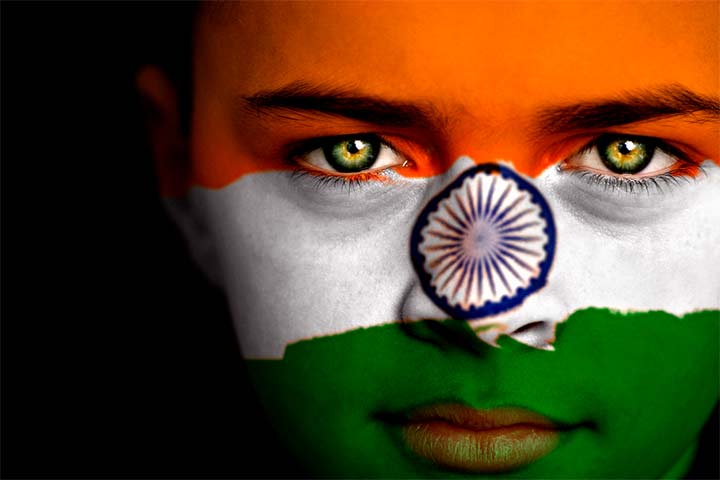
Patriotism means love of one’s motherland. The attachment to one’s motherland is as innate as one’s affection for one’s parents. Man’s first loyalty is to himself, then to his family and then to his own country. India is a land of many cultures, traditions, and languages. But Indians stand as one whenever there is a threat to the integrity of India. They stood up unitedly at the time of the Chinese aggression. Recently it has been proved during the Kargil war in Kashmir. Thus, patriotism brings out the qualities of unity, service and sacrifice. Patriotism encourages the noble quality of self- sacrifice for the cause of one’s country.
Gitanjali 35
Where the mind is without fear and the head is held high; Where knowledge is free; Where the world has not been broken up into fragments by narrow domestic walls; Where words come out from the depth of truth; Where tireless striving stretches its arms towards perfection; Where the clear stream of reason has not lost its way into the dreary desert sand of dead habit; Where the mind is led forward by thee into ever-widening thought and action Into that heaven of freedom, my Father, let my country awake…………BY RABINDRANATH TAGORE
Patriotism, however, sometimes develops a false national pride. The people of a particular geographical area have intolerance for the people of other areas. They even nurse evil feelings and enmity and go to war. This is not real patriotism. We know the horrors of war due to aggressive patriotism.
We have to shed mutual bickering, shed the difference of being high or low and develop the sense of equality and banish untouchability. We have to restore the conditions of Swaraj prevalent prior to British rule. We have to live like the children of the same father.- Sardar Vallabhbhai Patel
Patriotism is a noble virtue when love of one’s country does not lead to the hatred against other nations. One’s love of one’s country should expand itself into a love for all world. Narrow patriotism reeds passions and prejudices and so it is despicable. It brings hatred and wars. True patriotism must seek peace and prosperity of e world. It must be free from narrowness and meanness. It is Possible to combine patriotism with love for the people of the world. Thus, patriotism may least to international brotherhood.
Men, money and material cannot by themselves bring victory or freedom. We must have the motive-power that will inspire us to brave deeds and heroic exploits. -Netaji Subhash Chandra Bose
When a query performed on Google implies local results should be shown, the search engine populates a map pack of 3 local results. The map pack has many other names, including “local pack,” or the “Google 3-pack.”
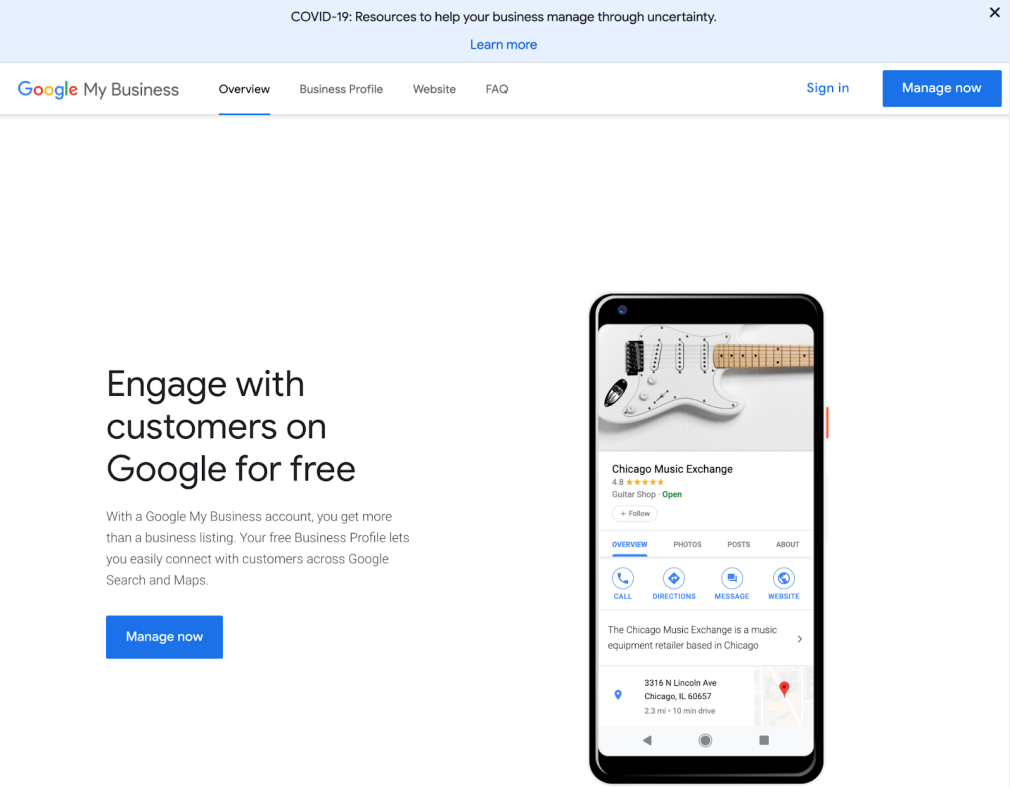
If you own or operate a business that caters to your local community, chances are you qualify to get a Google My Business listing. A quality Google My Business listing can get you one step closer to being added to a local pack.
In this guide, we’ll explore the best way to add your business on Google My Business and offer some tips to increase your local rankings.
Back in March 2021, Google noted that there are more than 2 billion visits to local websites each month. That’s a lot of website traffic.
If you’re a small business owner, your #1 driver of new business is likely going to be referrals.
Referrals are great!
But, even with a referral, most people will still Google your business name to learn more about your business, read reviews, etc — before even contacting you.
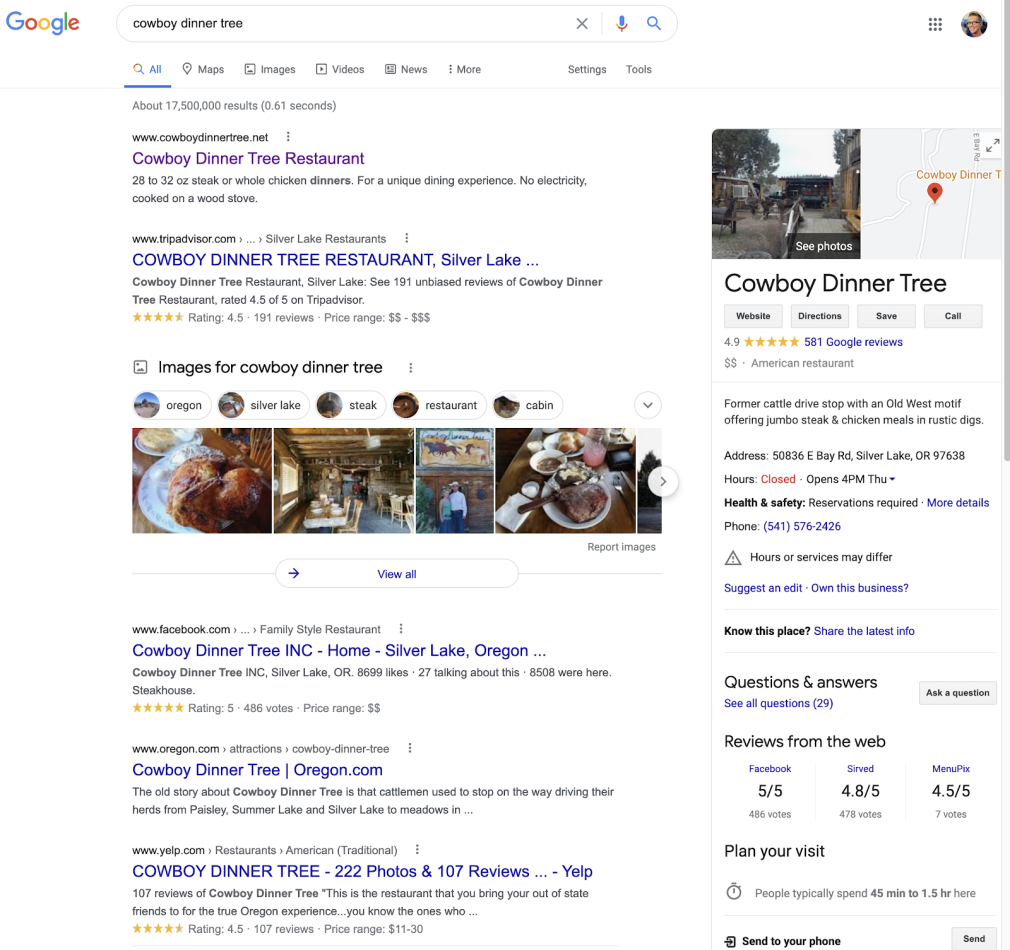
What happens when I perform a search on Google for “Cowboy Dinner Tree?”
The right-panel is generated by Google’s Knowledge Graph, but most of the data being populated here is sourced from Google My Business.
Now, what’s interesting about Cowboy Dinner Tree’s GMB listening is they don’t even have ownership of it. It isn’t owned by anyone.
Same with their Yelp, Facebook, etc. Even their website is very web 1.0.
How do they have a Google My Business listing if it isn’t claimed?
Google will automatically create one based on data they collect about businesses (entities). Keep this in mind as we get into the process of creating your own Google My Business listing.
Back to the benefits of owning your Google My Business listing.
You, the owner of your business, can provide the most accurate information about your business and have it displayed when someone does a search for your business on Google.
One of the other major benefits to claiming your Google My Business listing is that some simple optimizations and ongoing activities can help your chances of getting new business from organic search for free.Increase Your Visibilitywith the Listing Management ToolTry for Free →
How to add your business to Google My Business
You’ll have about 3 different scenarios to choose from:
Brand new business: Select Scenario 1 if your business is less than 6 months old.
Listing exists, unclaimed: If your business has been around longer than 6 months, start with Scenario 2 (but you may end up back at Scenario 1).
Listing exists, claimed: If you claimed your listing some time ago but don’t remember the login, the email is no longer active, or another person owns your listing, go with Scenario 3.
Scenario 1: Brand new business
Congratulations! Let’s get you on the path to getting you a Google My Business listing.
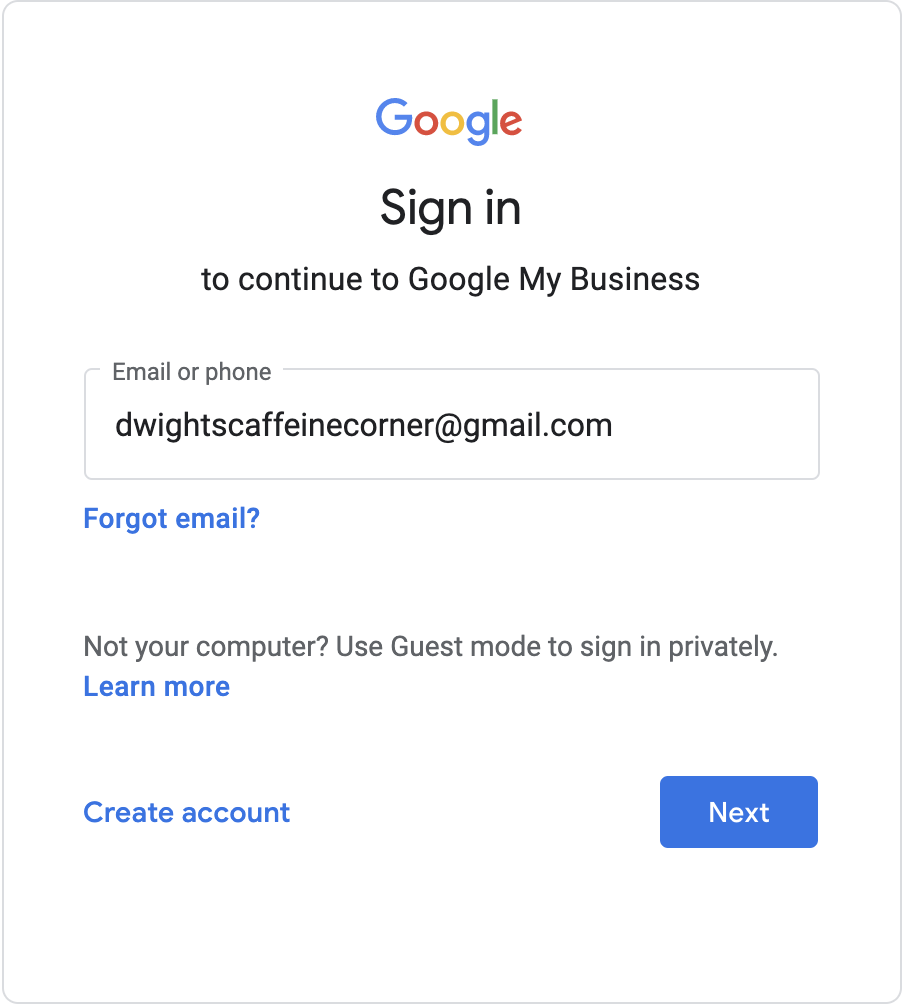
Step 2: Sign in to a gmail account that you own. This is important: remember what email address you are using here. This gmail account will be the Primary owner of the listing. Write it down on a post-it or take a screenshot if you need to.
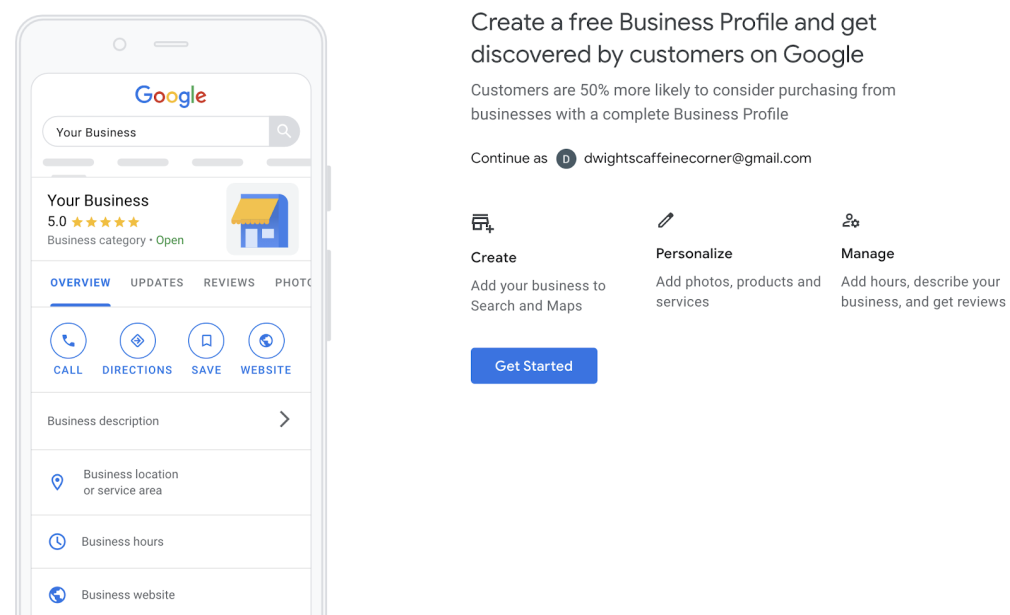
Step 3: Once you have signed in, you’ll get taken to a page like the one below. Click on the Get Started button.
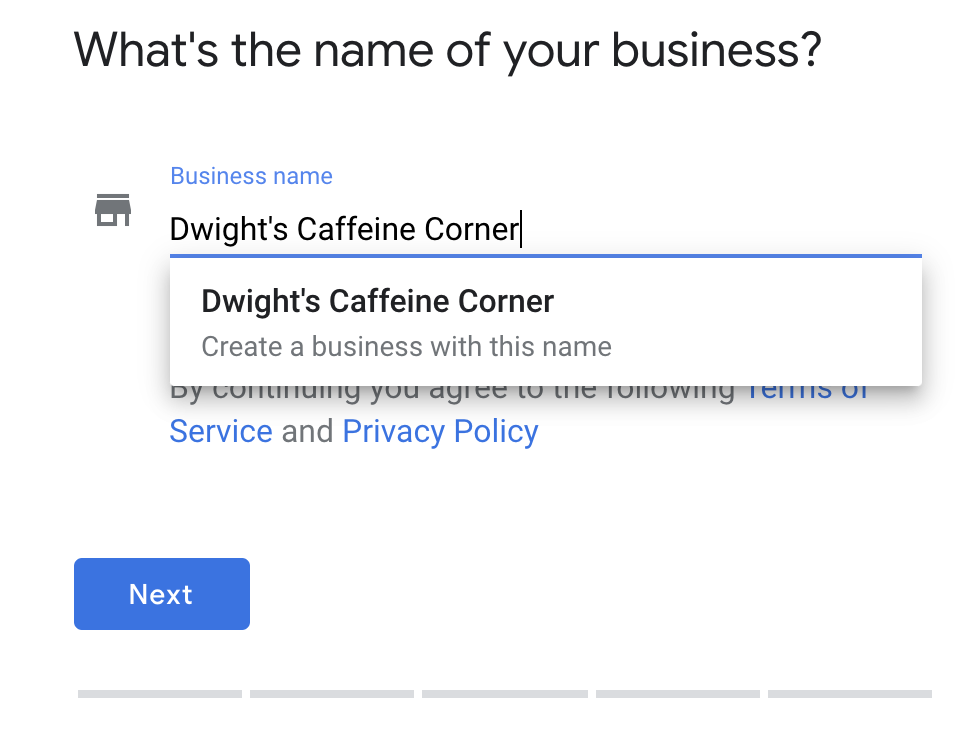
Step 4: Start typing in the name of your business. Google My Business will attempt to locate a listing but since your business is new, you likely don’t have one yet. When you spot the option to “create a business with this name,” click it, then click on Next.
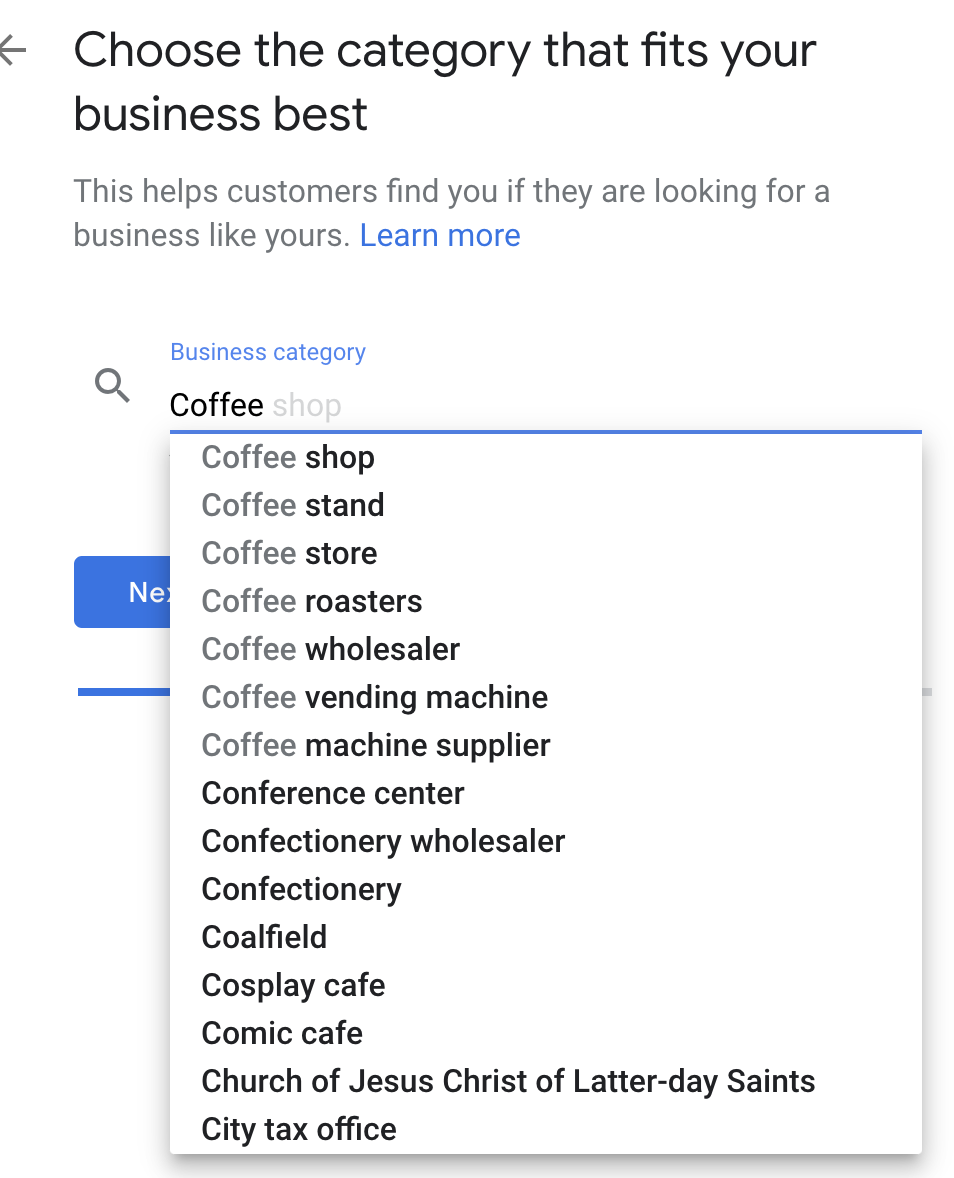
Step 5: Now we need to choose a Business category that best matches your business. For our example, coffee shops are the best matching category. If there are multiple categories that match your business, you’ll be able to add additional categories after your listing has been verified. Once you’ve chosen your category, click Next.
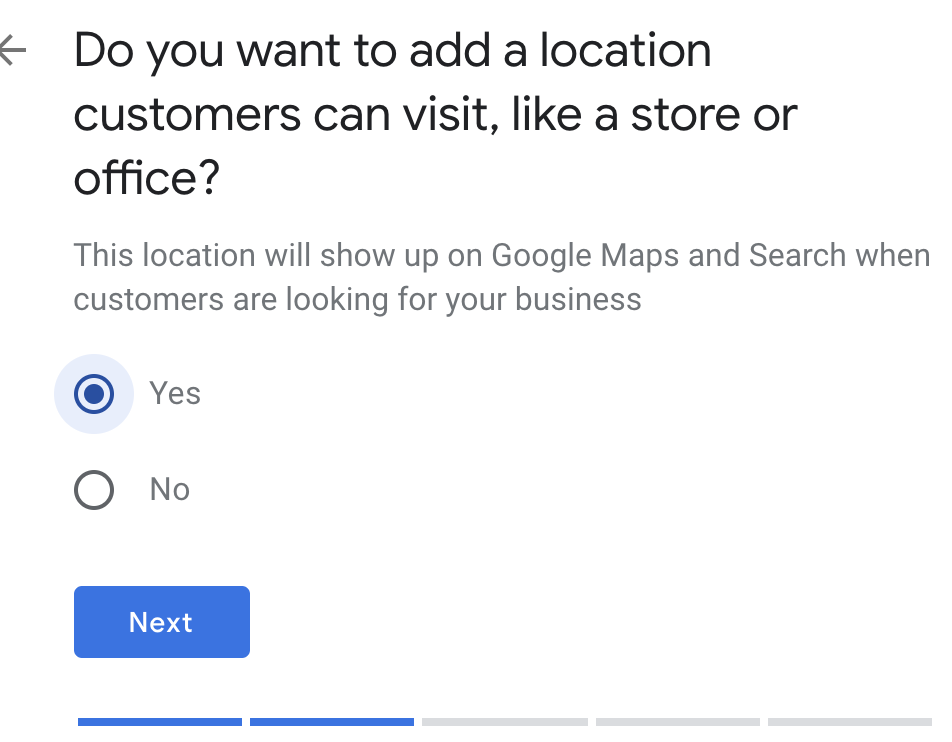
Step 6: Your next move depends on what type of business you operate. If your business is a brick and mortar, then the answer is yes. If you are a service provider (you go to your customers) and don’t have a physical storefront with signage then you will select no. If you are a service provider AND have a physical storefront with signage, then choose yes. Once you’ve made your choice, click Next.
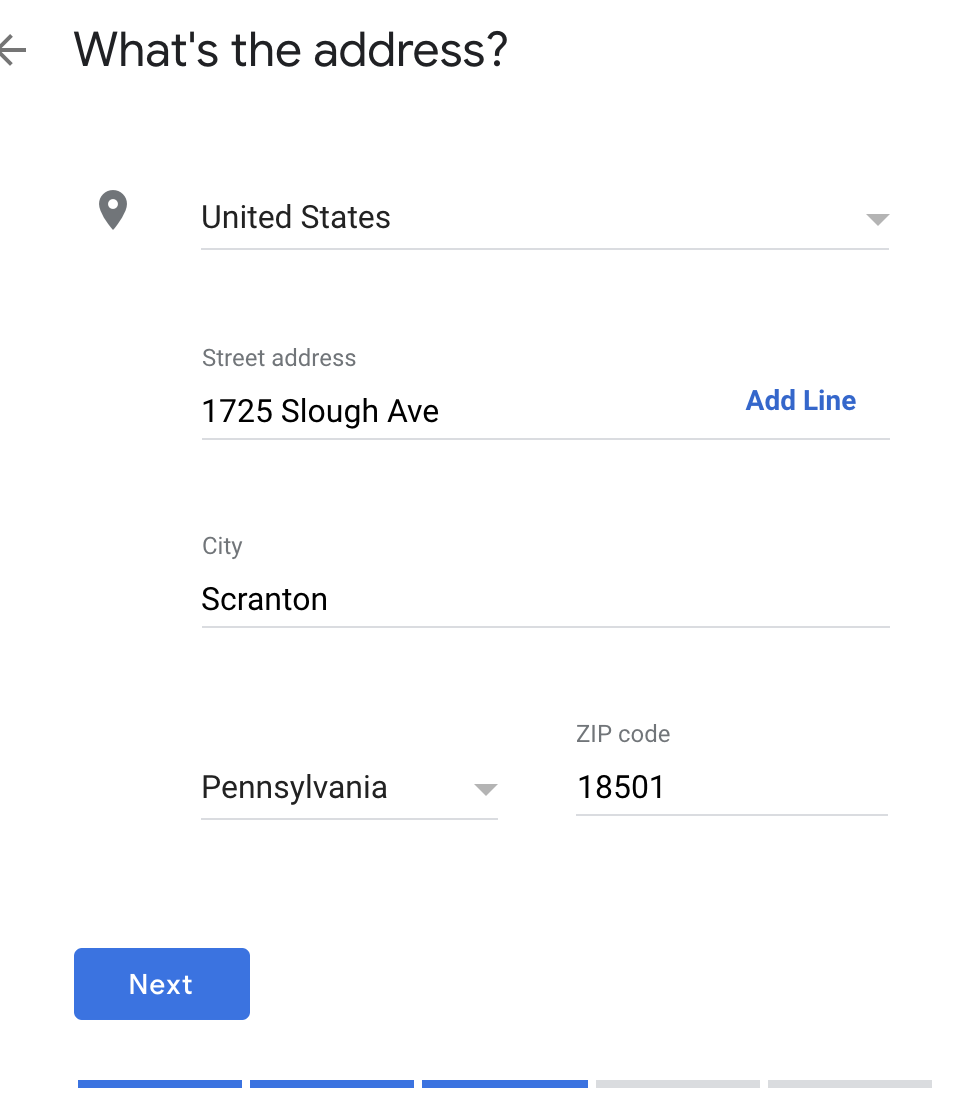
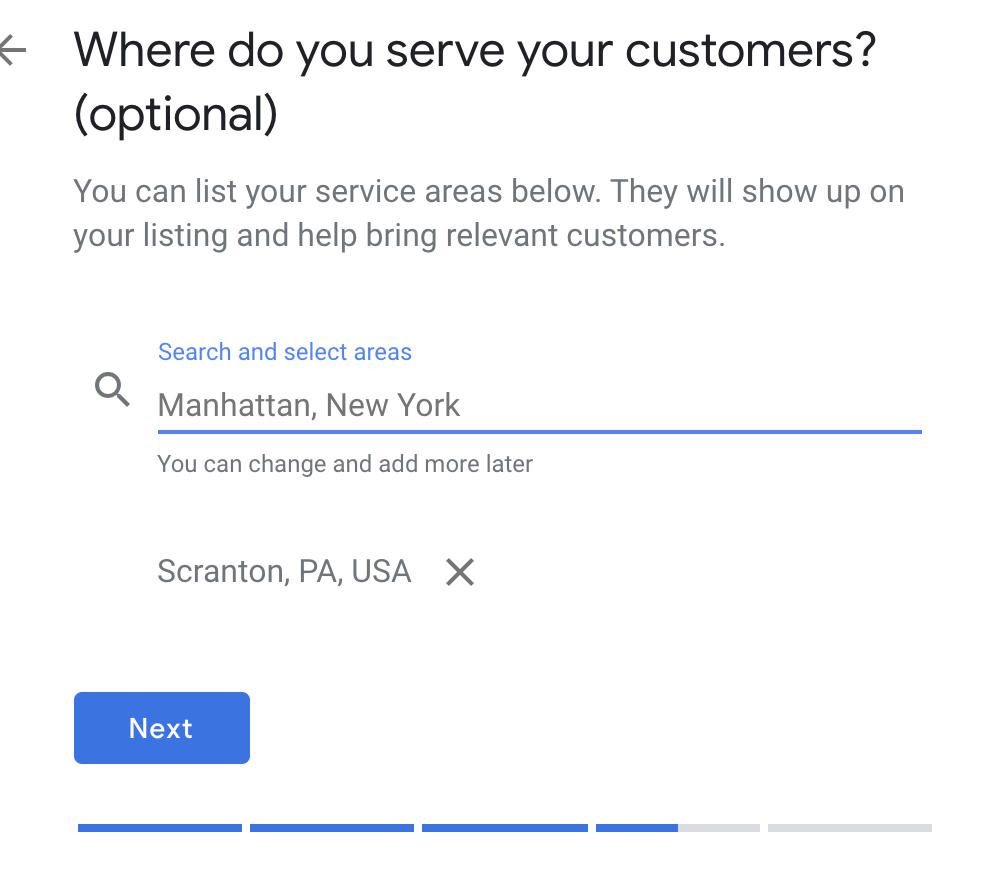
Step 7: Enter your address, then click Next if you answered yes in the previous step. If you chose no in the previous step, you will be asked to enter your service area. Once finished, click Next.
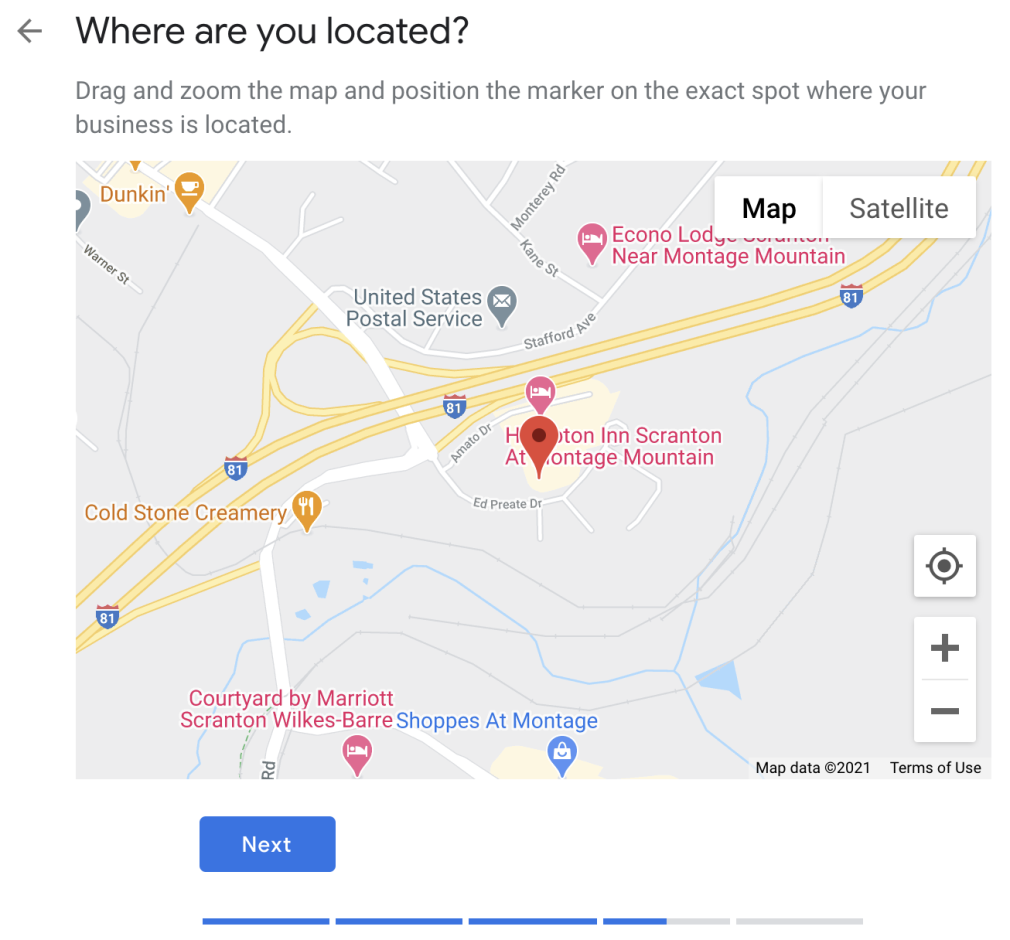
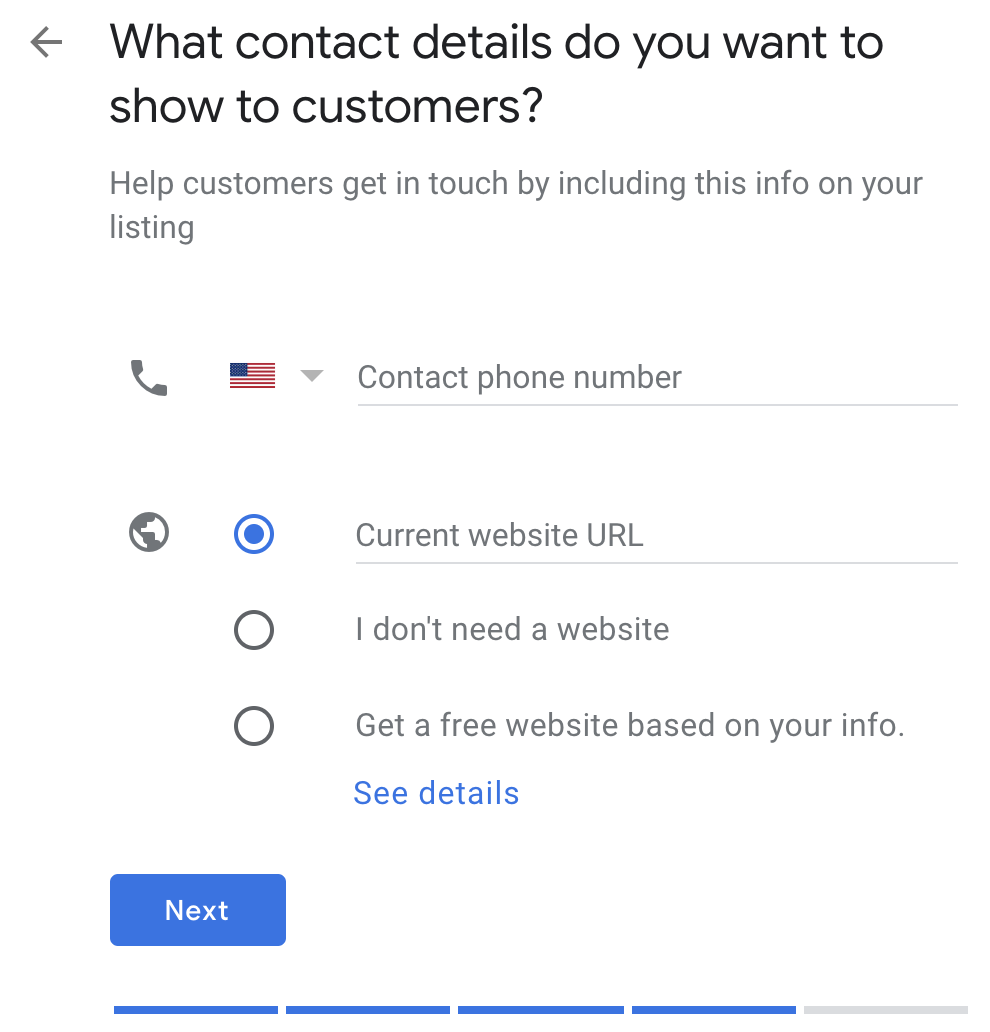
Step 8: If you are displaying your address, you might be asked to point to the exact spot where your business is located. Once finished, click Next. If you are not showing your address, you will be asked to provide your business phone number and website.
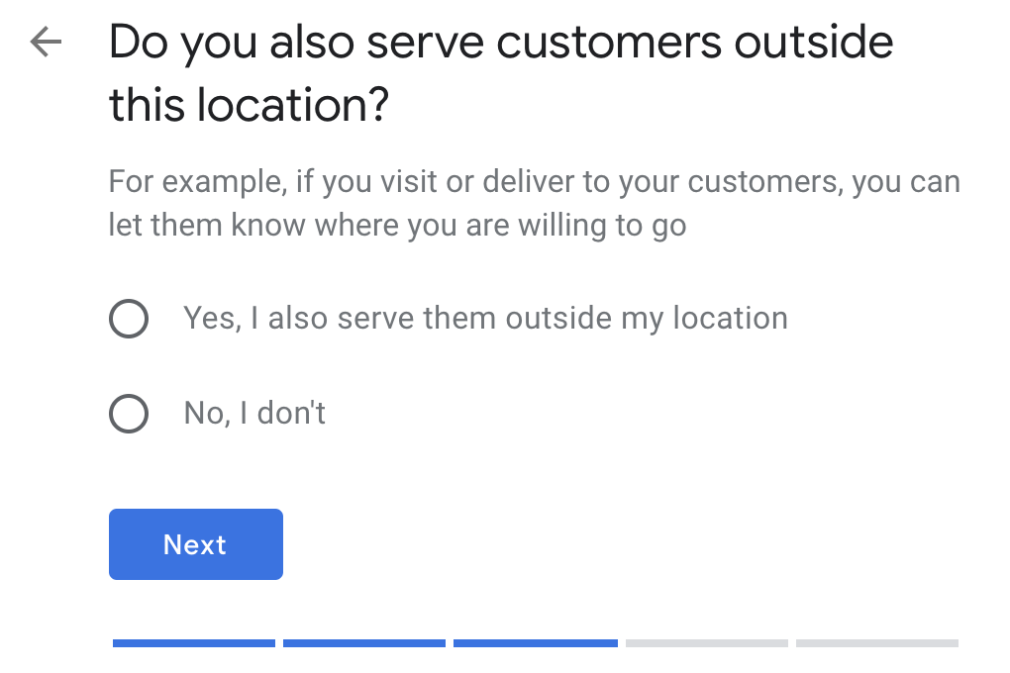
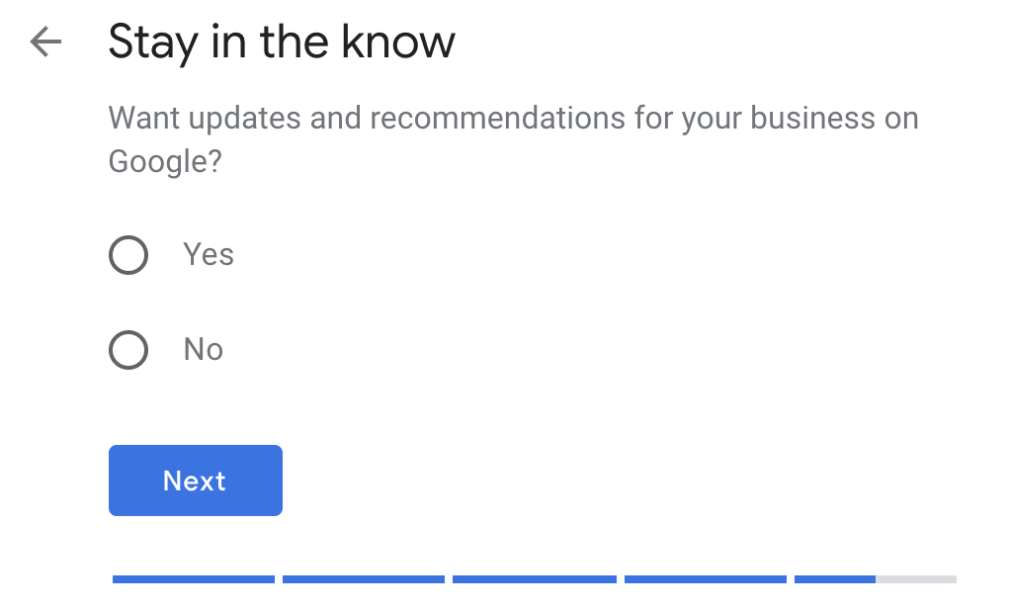
Step 9: If you’re showing your address, you’ll be asked if you also serve customers outside of your location. If you are not showing your address, you’ll be asked if you want to get updates and recommendations from Google. Choose your answer, then click Next.
Step 10: If you’re showing your address, you’ll be asked to add your phone number and website. If you are not showing your address, skip to Step 10. Once you’ve added your website address and phone number, click Next.
Step 11: Time to finish and start the verification process! Select “Finish.”
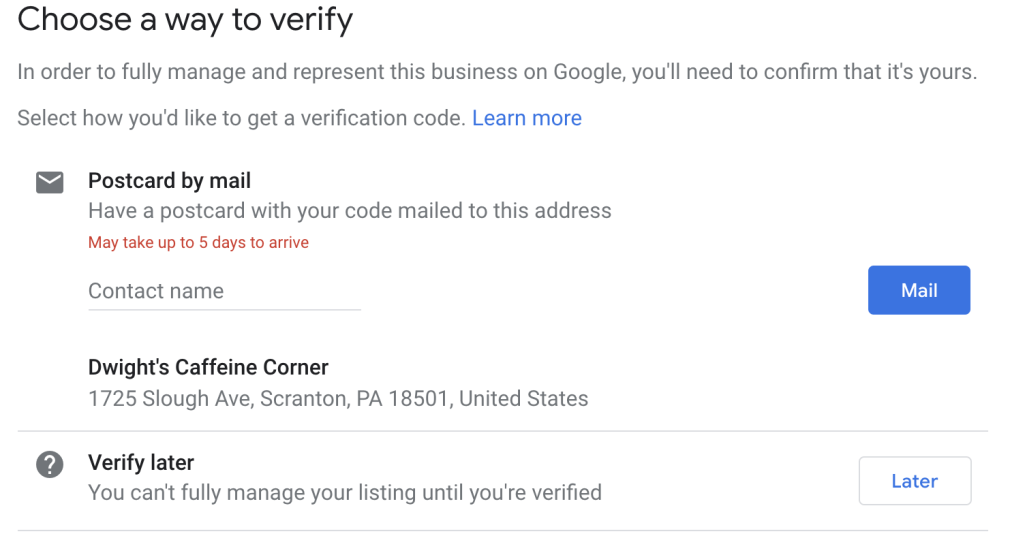
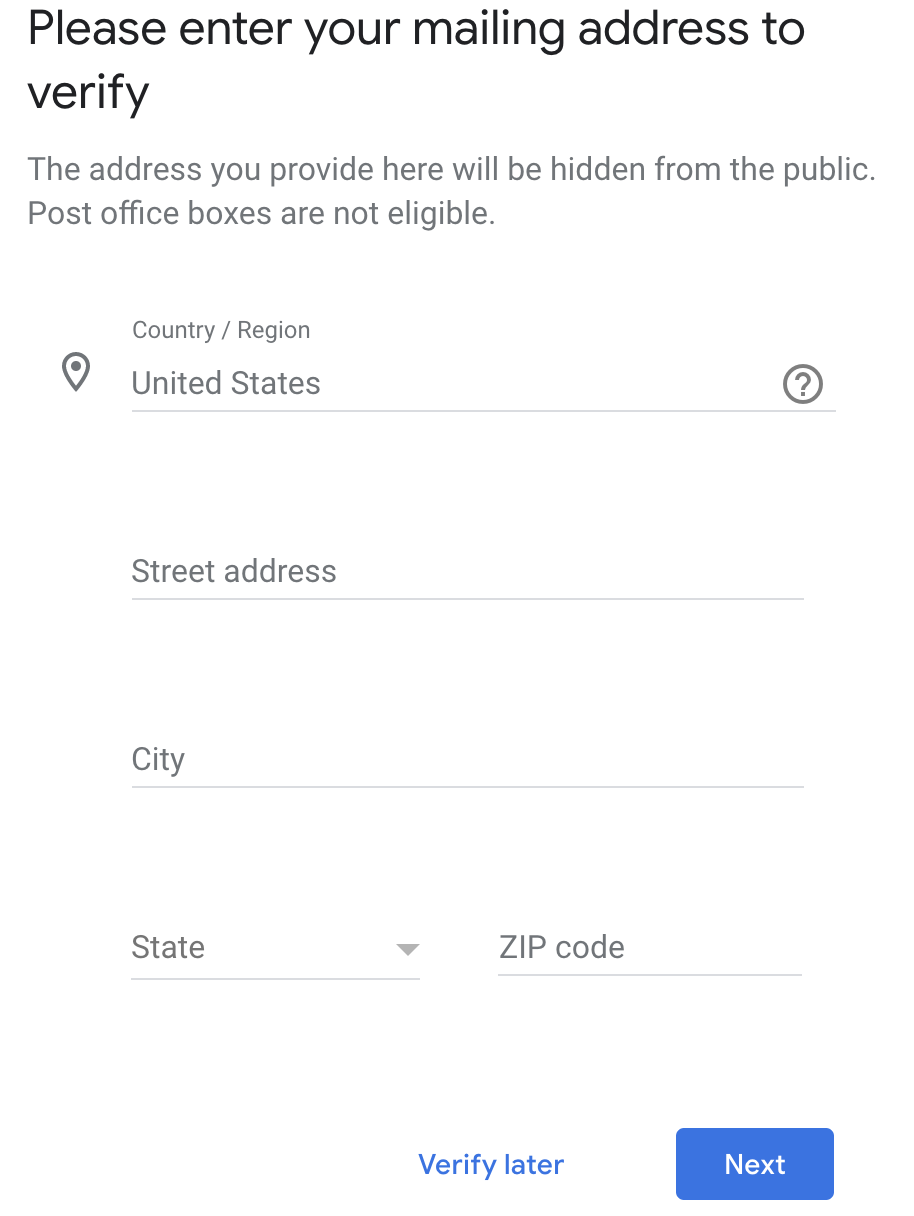
Step 12: If you are showing your address, you’ll be prompted to verify by postcard with an option to add a contact name. If you are hiding your address, you’ll be prompted to add an address for verification purposes. Your address will not be shown but is needed to verify your business.
Step 13: Once you receive the postcard (usually within 5 business days), log back into your listing to verify your listing.
Scenario 2: Listing exists, unclaimed
If your business has been around for at least 6 months, you might already have a Google My Business listing that was automatically created.
Go to Google Maps and perform a search for your business name. If a listing shows up and you see “Claim this business,” then claim it! If you see your listing and there’s a label that says ‘Manage this listing,” then head to Scenario 3.
If you have the option to claim the listing, you’re going to be asked to make sure the information is up to date, then you’ll go through the verification process.
Scenario 3: Listing exists, claimed
Maybe a former employee, an email address you don’t have access to anymore, or a former agency that claimed the listing on your behalf. Whatever the reason is, you don’t have access to your Google My Business listing.
Go to Google and perform a search for your business. Within the panel, you’ll see ‘Suggest an edit • Own this business?’ Select “own this business.”
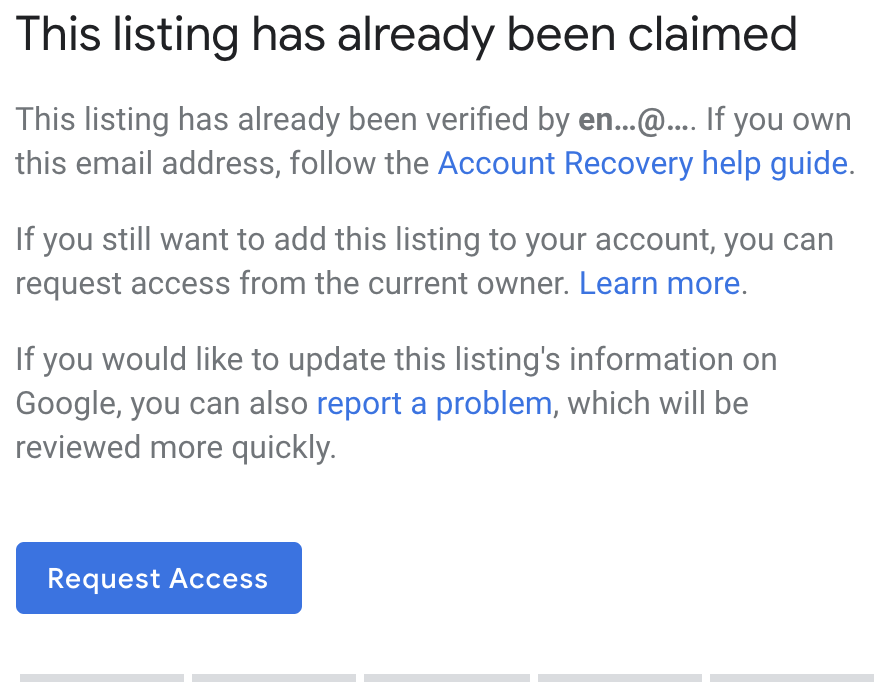
Google will show the first 2 characters of the email address that owns the listing. Sometimes, this may spark your memory with the email address that you used years ago to claim the listing.
If you don’t know the email address, click on the Request Access button.
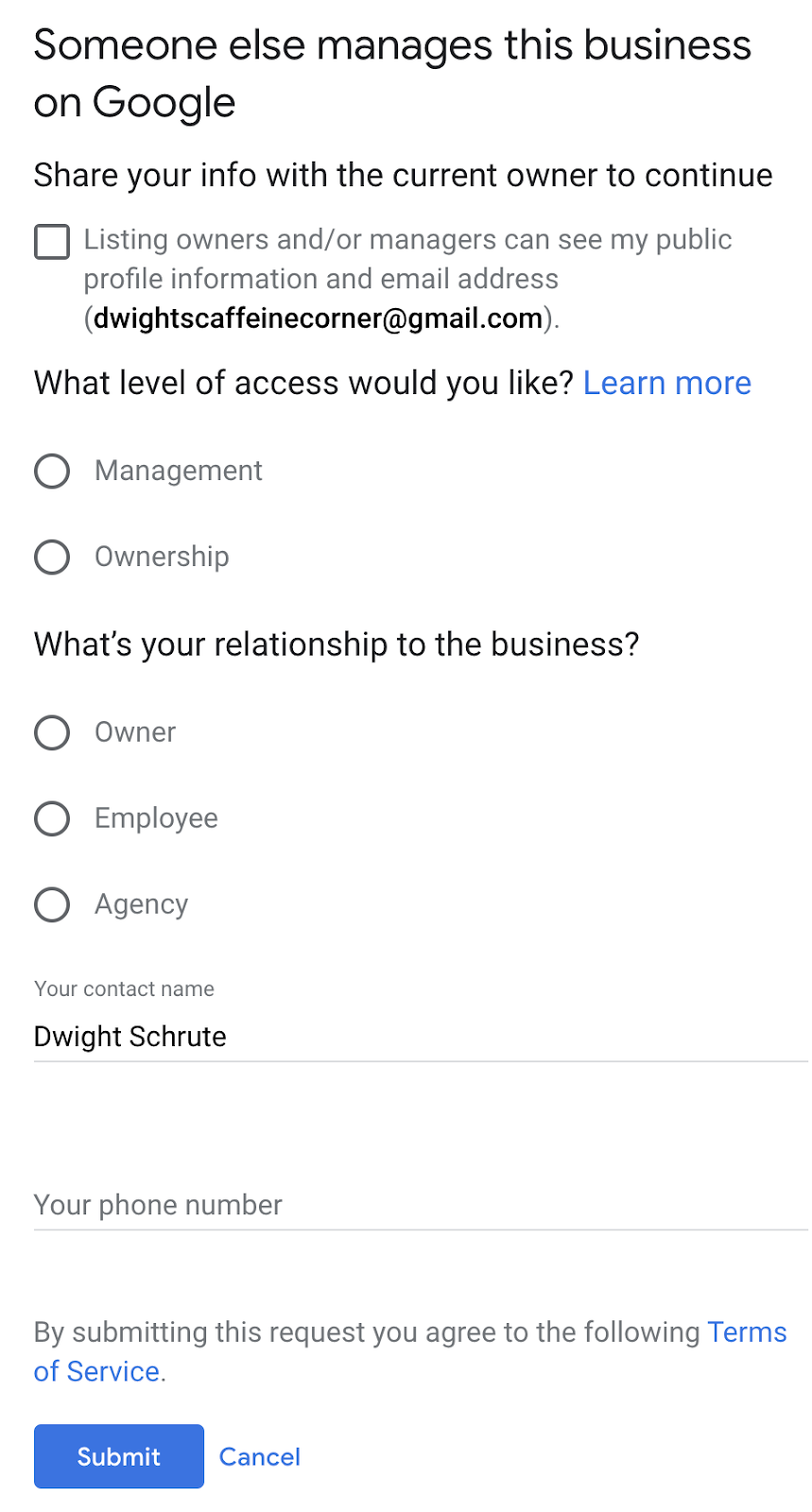
More often than not, you’re going to check the box to share your info with the current owners and managers of the listing.
For level of access, choose Ownership.
Your relationship to the business is likely going to be owner since you’re requesting ownership of the listing.
Provide your name and phone number, then submit.
After you submit the form, the current owner of the listing will get an email that asks them if the request is valid. You’ll also receive a confirmation email. Keep the confirmation email.
The current owner of the listing has 3 days to respond to your request. You can check the status of your request by clicking on the link within the confirmation email.
If your request is approved, you’ll get an email confirmation and can then start managing the profile.
If your request is denied, you’re going to need to contact Google My Business support via the Help Center.
Alternatively, you can get in touch with GMB Support on Twitter. It might take them a few days to respond, but they’ve been helpful in the past.
If the current listing owner does not respond within 3 days, you’ll get the option to claim the listing. Sign into g oogle.com/business and you should see an option to verify the listing.
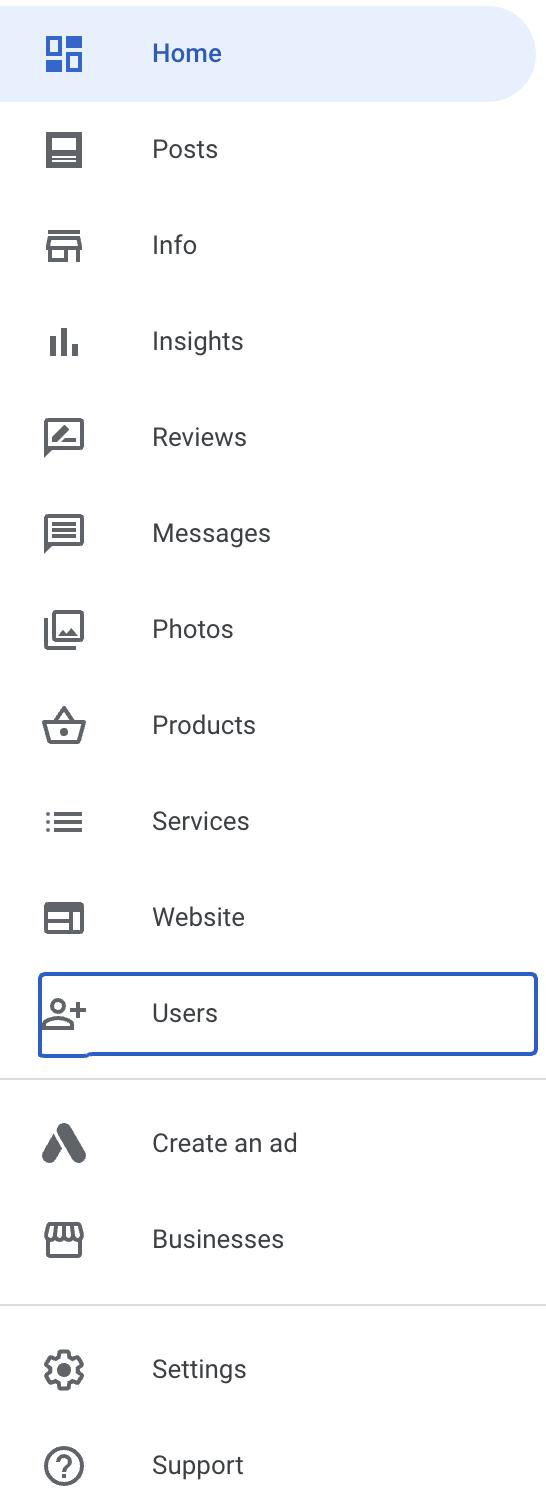
Once you get access to the listing, the first thing you will want to do is make sure that anyone who should have access to the listing does. Since you are now the primary owner of the listing, you can add or remove users from having access.
Next Steps
Once you’ve created or updated your listing, be sure to stay on top of it! Listing management is an important part of ensuring the information around your business is useful and accurate.
Set a predetermined time to check in on your listing, try a few marketing strategies to connect with your audience, and keep an eye out for any user interactions with your listing. You can also use listing management tools to take the guesswork out of managing your listing.
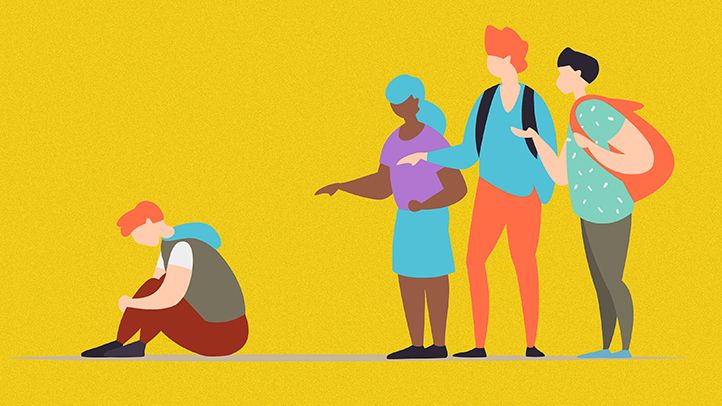
Sometimes a single comment from a friend, a colleague or a stranger can go a long way into shaping who you are as a person. This statement might sound a little far fetched but it is really not. There are thousands (maybe more) of kids who are at the receiving end of such statements everyday. Repeatedly making fun of people, using force to dominate them, making people feel like they don’t belong, all these come under the purview of bullying.
Bullying starts with making unwanted comments on people and making them feel less. Overtime these comments turn harsh and unbearable for the receiver. There are times when people don’t even realize that they are in fact bullying the other person because in their minds it’s all in fun especially when the receiver is just eating it all up. Bullying is often confused with some old fashioned hazing but it is actually more extreme. Hazing is done for fun and to make the receiver a part of the group. On the other hand bullying is done with the sole motive of making a person feel left out, like they don’t fit in. American sitcoms have given us a good picture on how bullying occurs at schools and colleges. We have seen the “cool kids” being mean to a group of friends just because they are intelligent or because they are of a different race or maybe because they are new to that school/college. We also know that this is how those kids establish their power. And if their so called “power” to make others feel small makes them “cool”, then we need to think long and hard about where the kids are headed.
What are the reasons for the occurrence of bullying?
There are several reasons as to why people feel it is okay to bully others. Even though none of them are justified, people just say it to make themselves feel better about themselves. One of the major reasons is to gain power and popularity. There was a time when popularity came from being a good person but now it’s all about who people are more afraid of. Bullies use force to assert their power over those who can’t. A more complicated reason is that the bully has no power at home so he/she establishes it at school to compensate and feel good. In what world is that balancing it out? Another more complicated reason would be the fact that the bully was once at the receiving end of those hurtful comments and now wishes to transfer that hate onto others. In addition to this, people who are generally unhappy in life tend to take their anger out on others in form of unwanted slurs. Lastly, peer pressure also plays an important role in turning a person into a bully. Sometimes people are so eager to fit in, they pick up the habits of their fellow mates without realizing if they are good or bad. And soon it becomes habit.
The above mentioned reasons are not the end of a long list of causes of why bullying occurs. There are many psychological and mental issues that push a person to become a bully. It must be noted that, as against the common notion bullying does not occur at school or college levels only. People of all age groups face bullying in one form or the other. The bullying could be verbal (teasing, taunting, etc), social (spreading rumors, embarrassing on purpose, etc) and physical (stripping, pushing, punching, etc). These acts have the capacity to put a dent in the personality of the receiver and thus needs to be stopped. How many innocent lives must be lost before it is too late!!









/GettyImages-613500800-71c8492cb41b4d9ead58c81254b83fba.jpg)









 Eduindex
You must be logged in to post a comment.