This lockdown has unlocked things to a great extent. Things have changed a lot admist lockdown. Lockdown has made us realise things throughout. As a part of my recent routine, I goof off at my terrace. Just then I used to see birds , squirrels and other scaled down creatures unbound of their limits in my view. When people often say whether animal or birds it mustn’t be confined to a cage. I had nasty reasons such as “I protect it “. Now, during lockdown its ironic. This reminds me of something. There used to be an idiom ” Idle mind is devils workshop “. The current situation made it sarcastic.
At the 14th G20 summit, which was held in June 2019, India backed data localisation laws.
In April 2018, Reserve Bank of India (RBI) had issued a circular which mandated payment system operators to store entire data related to financial data only in India. The deadline for making these changes was 15th October 2018. Approximately 80% of the payment system operators including Google, Paytm, Amazon complied with the rule. But several companies including Visa, Mastercard missed the deadline due to confusion over data localisation rules.
In June 2019, RBI gave clarifications regarding the rules stating that in case the processing is done abroad, the data should be brought back to India in not later than 24 hours, and also the data should be deleted elsewhere. And in the case of cross-border transactions, a copy of data can be stored abroad.
What is Data Localisation:-
Data Localisation means storing the data within the territorial boundaries of the country.
Positive side:-
Data is considered as a ‘new form of wealth’. Generally, companies use data to understand the requirements of consumers and also to influence their behaviour. New products can be developed by analysing the data to meet the needs of consumers. So the data has an economic value. In general, developed countries are utilising this opportunity with their well-developed infrastructure. There is also a probability that the data will be misused in favour of the countries that store data. Moreover, India is a big consumer market for many foreign companies. So, India and other developing countries are realizing the economic value of the data and the importance of data localisation. With data localisation, domestic companies and the country’s economy will be benefited. And we can also ensure the security of the data.
While investigating crimes, there will be a need to access the payments data. If the data is stored abroad, it is very difficult to take the permission of that country for access to the data. This causes delays in solving crimes. If the data is stored here within our country, this problem will be avoided.
Data localisation laws result in setting up of multiple data centres locally. This will create many jobs and will help the country’s economy immensely. It will also drive innovation in the field resulting in low-cost solutions.
Data localisation is also important for data sovereignty, which means the data of the citizens should be owned by the respective governments and not by other countries.
We can also ensure data privacy by localising the data.
Challenges:-
At present, India does not have the well-developed infrastructure to ensure the security of data. On the other hand, developed countries already have an efficient infrastructure. So, rushing towards data localisation may not be a wise step. Because without efficient infrastructure, the data is prone to cyber attacks. And the risk is severe here because it is financial data. But as the laws are made, it is a big challenge to develop efficient infrastructure at a faster pace.
Storing data in India means higher operational costs for payment system operators. Because in other countries they have cheaper alternatives. And also for cross-border transactions, they have to store the data in two places, which increases costs. There is a probability that these extra costs may pass on to the consumers.
And there is no guarantee that they will delete the data elsewhere. They may continue to store and analyse the data for their own advantage.
We are in a globalised world. At present, the world is running on the free flow of people, goods, services and data. Data localisation laws seem to be a part of protectionist policies, which is a threat to the free flow of data.
The base of the internet is the free flow of data. Data localisation is also a threat to the main essence of the internet.
US is against to the data localisation laws. Recently at G20 summit, Donald Trump, the president of US spoke against data localisation. Its stance is natural because it increases the operational costs of US companies. India-US bilateral relations are important for both countries because we are intertwined in export and import of IT services, professionals and goods etc. So, imposing data localisation laws without threatening the Indo-US relations is another challenge.
Innovation thrives when there is no much financial burden. And hence data localisation laws may threaten the innovation attempts in the digital payments industry.
If the processing of the payment transactions is done in another country, that country may ask these companies to submit the data. So, asking them to delete the data in 24 hours may interfere with the laws of the country where the processing is done.
Data localisation may result in government surveillance of its citizens.
It is also against intellectual property rights because they use their intelligence to form systems that can benefit from the data it generates, but in the end, they are deprived of these benefits and someone else may use this data in their favour.
The Government of India Act 1919 was essentially transitional in character. Under Section 84 of the said Act, a statutory Commission was to be appointed at the end of ten years to determine the next stage in the realization of self-rule in India. Accordingly, the Simon Commission was sent to the Sub-continent under the command of Sir John Simon. All members of the commission were British. This was regarded as highly insulting to the Indians and immediate protest was raised from all the important political parties. When the Simon Commission arrived, the local masses welcomed it by with slogans of “Go back Simon!”. All the major political parties of Sub-continent, except the Shafi League of Punjab, boycotted the Simon Commission. After the failure of Simon Commission, there was no alternative for the British government but to ask the local people to frame a constitution for themselves. They knew that the Congress and Muslim League were the two main parties and that they both had serious difference of opinions. Birkenhead, Secretary of Sate for Indian Affairs, threw the ball in the Indian politicians’ court, and asked them to draw a draft of the forthcoming Act on which both Hindus and Muslims could agree. The Indian leaders accepted the challenge and for this purpose, the All Parties Conference was held at Delhi in January
More than a hundred delegates of almost all the parties of the Sub-continent assembled and participated in the conference. Unfortunately, the leaders were not able to come to any conclusion. The biggest hindrance was the issue of the rights of minorities. The second meeting of the All Parties Conference was held in March the same year, but the leaders still had their differences and again were not able to reach a conclusion. The only work done in this conference was the appointment of two subcommittees. But due to the mutual differences between Muslims and Hindus, the committees failed to produce any positive result. When the All Parties Conference met for the third time in Bombay on May 19 1928, there was hardly any prospect of an agreed constitution. It was then decided that a small committee should be appointed to work out the details of the constitution
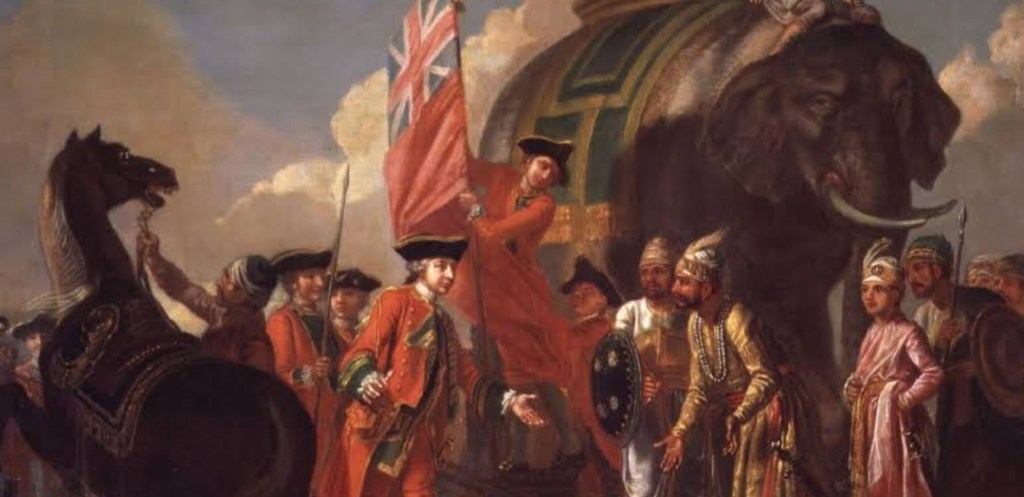
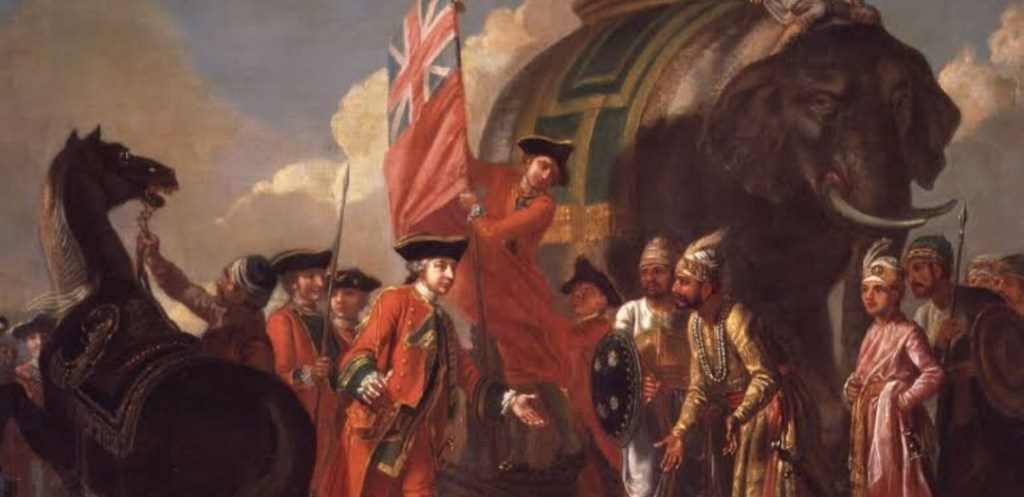
Reasons for the revolt: the new revenue policy impoverished the peasants were impoverished; the English policies of trade and commerce ruined the Indian Industries. Hence a strong resentment developed among the artisans such as the weavers, blacksmiths and carpenters. The English interfered with the customs and traditions of the people by enacting laws such as prohibitions of sati, permitting widow marriages etc. They upheld the right of inheritance of those who had forsaken their religion and had embraced Christianity. Such laws led the orthodox people to believe that the alien government is out to destroy the very foundations of their way of life. Hence, they too resented the English rule. From 1848 to 1856 Lord Dalhousie had annexed many Indian states such as Satara, Jhansi, Nagpur and some other states by refusing to recognize the right of inheritance of the adopted sons of those rulers. Pensions of the heirs of some deposed rulers were discontinued. They, too, developed a strong resentment against the tyrannical British rule. Discontent among the Indian soldiers: the majority of the Indian soldiers in the Company’s army came from peasant families. They were deeply hurt to see their family groaning under the insufferable burden of poverty. These soldiers were treated contemptuously by their English Officers. Their allowances also were gradually reduced. Because of all these reasons, acute discontent prevailed among the Indian soldiers. Against such a background came to the fore the episode of the greased cartridges. In 1856, new long range Enfield rifles with greased cartridges was given to the soldiers. While loading the rifles, the greased covering of the cartridges had to be bitten off. The news that this grease contained the fat of cows and pigs infuriated the soldiers beyond measure. The outbreak of the uprising: The first explosion of the uprising took place on the 29th of March 1857 in the cantonment at Barrackpore. As the military parade began, a soldier name Mangal Pande refused to use the new cartridges and exhorted other soldiers also not to do so. When the English Officer of the battalion tried to force the soldiers to use the cartridges, Mangal Pande fired at him. Mangal Pande was arrested and hanged. This news spread likes wildfire in the other military cantonments. On the 24th of April 1857, Indian soldiers of the cavalry unit at Meerut flatly refused to use the new cartridges. They were all thrown into prison. Because of this, the whole battalion of Indian soldiers at Meerut rose in revolt on the 10th of May 1857. They advanced to Delhi, which was barely 64 kilometers away. On the way, thousands of common people joined them. As they reached Delhi, the Indian soldiers in Delhi cantonment made common cause with the rebels. All these soldiers appealed to the Mughal Emperor Bahadur Shah Zaafar to lead the revolt. They proclaimed Bahadur Shah the Emperor of India.
The scope of the revolt: within no time the revolt spread to all parts of North India. From Bihar to Rajputana, all the India soldiers in the Company’s army contonments raised a standard of rebellion. Lakhs of common people joined them. Within a period of four months all the territories of East Punjab, areas around Delhi, Rohilkhand, Bundelkhand, Allahabad, Avadh, Western Bihar were engulfed by the fire of rebellion. The British power collapsed in those areas. However, territories south of the river Narmada were not affected by the revolt to great extent, though in Nagpur, Satara, Kolhapur and some other aces, there were some sporadic incidents of revolt. Local like the uprising of the Bhils in Khandesh under the leadership of Kharjasingh and the one in the Satpuda area under Shankarshah were nipped in the bud by the English. Leadership of the revolt: Bahadur shah, the aged Mughal Emperor, was the leader of the revolt were Peshwa Nanasaheb, Tatya Tope, Rani Laxmibai, Begum Hazrat Mahal, Maulavi Ahmedulla, Kunwarsingh and the Mughal general Bakht Khan. The revolt assumed serious proportions especially in Delhi, Kanpur, Lucknow, Jhansi, and the western parts of Bihar. In September 1857 British captured Delhi. They arrested Bahadur Shah and killed his sons. In the region around Kanpur, Nanasaheb Peshwa and Tatya Tope revolt led the revolt. In West Bihar the Zamindar of Jagdishpur, Kunwarsingh, along with his sons gave a determined fight to the English while in Rohilkhand, Maulavi Ahmedulla inspired the people to rise against them. The revolt is crushed: The rebels and their leaders fought the English bravely but within a short time, the English recovered from the first shock of the unexpected revolt. Within six months the picture began to change. The English recaptured all-important places that they had lost to the rebels. By the end of 1858,leaders like Rani Laxmibai Kunwarsingh; Ahmedulla fell fighting against them. Bahadur Shah was deported to Rangoon. Nanasaheb and Begum Hazrat Mahal took refuge in Nepal. Tatya Tope, however, continued his struggle against the English for ten long months, but ultimately he was betrayed. The English hanged him. The end of 1858 mercilessly crushed the revolt by the English. Why did the revolt fail? : The revolt of 1857 was an event of great magnitude. But it didn’t end the English power in India. On the side of the rebels, there was no centralized leadership and hence there was no co-ordination of planning and action. The rebels didn’t have sufficient arms. Moreover, the educated Indians and rulers of majority of the States kept themselves aloof from the struggle. The revolt didn’t spread to South India. The English had with them centralized leadership, a trained and disciplined army, modern weapons and experienced commanders. They also controlled the means of transport. Therefore, the Indians couldn’t resist them successfully. The effects of the revolt: The revolt of 1857 had far reaching effects. It made the rulers of Britain realize the intense disaffection of Indians against the English rule. They were convinced that the power of the British in India wasn’t safe in the hands of the Company. Hence, the British parliament made a law in 1858 dissolving the East India Company and taking over the administration of India directly into their hands.
After Pulwama terror attacks, India requested United Nations to list Masood Azhar as a global terrorist. Even though 14 countries of UNSC are in favor of the proposal, China blocked the request using its veto power. That is the reason, Indo-China relations is in news again.
Main disputes between India & China :-
India & China have border issues mainly at Aksai Chin & Arunachal Pradesh. Border dispute is the main reason for Indo-China war 1962, and the recent Doklam standoff in 2017.
China is maintaining good relations with Pakistan. It is building most advanced naval warships for Pakistan, and it is also selling weapons to Pakistan. As a result of this, India has national security concerns. And as a part of Belt & Road initiative, China is building infrastructure projects in Pakistan, which is called as China-Pakistan Economic Corridor, CPEC – This CPEC is passing through Pakistan Occupied Kashmir. India is not ok with it because of security concers. So this became another dispute between India & China.
There are water issues between the both countries. China started projects to divert Brahmaputra water from flowing into India. This is one of the major threats to India from China.
China is objecting to list masood Azhar as a global terrorist. This is because China fears that if it agrees for this, the next step of India can be to seek labelling of Pakistan as state sponsor of terrorism. As China has economic interests in Pakistan, it will not accept that proposal. And that is the reason even though China is against to terrorism, it is not accepting to list Masood Azhar as a global terrorist. But China should understand that its stance on Masood Azhar issue is not just a threat to international counter-terrorism efforts, but also damages its international image, because the whole world is accepting India’s concerns on the threat of terrorism.
China is blocking India from entering into Nuclear Suppliers Group. This is another issue between India & China.
There is a huge trade deficit between India & China. In the fiscal year 2017-18, there is 46.2 billion dollar trade deficit in China’s favor.
China is trying to encircle India by establishing its military and commercial activities in Indian ocean, which is famously called as String of pearls theory. This string of pearls is a threat to India’s national security.
India is trying to restrict China’s monopoly over South China sea, because it is one of the main trade routes. Thereby South China sea became one of the main issues between India & China.
On the positive side :-
Despite having differences, India & China has been maintaining good relations. Even in ancient times, there was a good relationship between India & China. This can be evident in the presence of Buddhism in China. Buddhism spread from India to China. If we analyse the relationship between both countries in the modern times.
India is the first non- communist country to recognize communist China in 1950.
For peaceful co-existence, both countries signed Panchsheel agreement in 1954. Panchsheel means Five principles of peaceful co-existence.
India & China share common interests like eliminating terrorism, developing Asia etc. That is the reason both countries are part of regional co-operation organizations such as BRICS, Shangai Co-operation organization, G20 etc.
Both countries have good trade relations. And to improve bilateral relations, India & China took part in an informal meeting at Wuhan in April 2018, which is called as Wuhan summit. This was an informal meeting between 2 leaders of the countries to reach a better consensus on the present disputes between both countries.
LPG : LIBRELISATION ,PRIVATISATION AND GLOBALIZATION IMAPACT ON INDIA
From independence till the later part of the 1980s, India economic approach was mainly based on government control and a centrally operated market. The country did not have a proper consumer oriented market and foreign investments were also not coming in. This did not do anything good to the economic condition of the country and as such the standard of living did not go up. In the 1980s ,stress has given on globalization ,privatization and globalization of the market by the congress government under Rajiv Gandhi .
In his government tenure ,plenty of restrictions were abolished on a number of sectors and the regulations on pricing were also put off-effort was also put to increase the condition of the GDP of the country and to increase exports.
Even if the economic liberalization policies were undertaken ,it did not find much support and the country remained in its backward economic state. The imports started exceeding the exports and the India suffered huge balance of payment problems. The International Monetary Fund (IMF) asked the country for the bailout loan . The fall of the soviet union, a main overseas business market of India, also aggravated the problem . The country at this stage was in need of an immediate economic reform.
It was in the 1990s,that the first initiation towards globalization and economic liberalization was undertaken by Dr. Manmohan Singh , who was the finance minister of India under the congress government headed by P.V. NARSHIMHA RAO. This is perhaps the milestone in the economic growth if India and it aimed towards welcoming globalization. Since , the liberalization plan , the economic condition gradually started improving and today India is one of the fastest growing economics in the world with an average yearly growth rate of around 6.7 per cent. Narasimba Rao had played a key role in implementing these reforms policies,
Liberalization
Liberalization refers to the slacking of government regulations. The which began since july24,1991. In the other words we can say that liberalization means elimination of state control over economic activities, It implies greater autonomy to the busines enterprises in decision-making and removal of government interference . It was believed that the market forces of demand and supply would automatically operate to bring about greater efficiency and the economy would recover. This was to be done internally by introducing reforms in the real and financial sectors of the economy and externally by relaxing state control on foreign investments and trade.
Its objectives
To boost competition between domestic businesses and to promote foreign trade and regulate imports and exports.
Improvements of technology and foreign capital ,to develop a global market of a country and to reduce the debt burden of a country.
PRIVATIZATION
Privatization refers to the participation of private entities in businesses and services and transfer of ownership from the public sector to the private sector as well.
Privatization is the transfer of control of ownership of economic resources from the public sector to the private sector . It means a decline in the role of the public sector as there is a shift in the property rights from the state to private ownership .The public sector had been experiencing various problems , since planning such as low efficiency and profitability ,mounting losses, excessive political interference , lack of autonomy , labour problems and delays of in completion of projects.
GLOBALIZATION
Globalization essentially means integration of the national economy with the world economy. It implies a free flow of information , ideas , technology , goods and services , capital and even people across different countries and societies. It increases connectivity between different markets in the form of trade, investment and cultural exchanges.
The concept of globalization has been explained by the IMF as the growing economic interdependence of countries worldwide through increasing volume and variety of cross border transactions in goods and services and of international capital flows and also through the more rapid and widespread diffusion of technology ,
Commentators often talk of the long decline of industry in the British economy. In simple terms this is what we mean by de-industrialization – a fall in the contribution made by the manufacturing sector to national output, employment and income. We can consider manufacturing as a whole, or focus on individual industries such as steel and clothing and textiles De-industrialization is a long-term process of structural change in an economy – leading to a change in the composition of national output, and important alterations to the structure of our labour market. There is a number of different ways of measuring the extent to which our manufacturing sector is experiencing de-industrialization: Its impact on the Indian Economy The economic condition of India in the 19th century started becoming worse due to several polices of the British government. The Indian manufacturing sector was sometimes sharply disrupted sue to the import of machine made foreign goods. While analyzing the economic impact of British rule and consequent poverty, Indian nationalists has quite convincingly argued that British rule has de-industrialized India. However, recent researches in modern economic history of India after independence has challenged this widely accepted hypothesis on many grounds. To reach at final analysis it is imperative to go through all major views of the scholars and sources of information of different parts of 19th century India. Drain of wealth the systematic policy of ferring the economic resources of India to Britain i.J erished the country. The officials of the British I government were paid out of the Indian exchequel money went out of India. There was a heavy tax t on the Indian people because large sums had to b annually as interest on loans contracted by the Gove~ of India. UnemploY}llent increased in India. It was first time in India’s history that the balance of trade t unfavourable towards India. De-industrialisation The British caused 1 Dous harm to the traditional handicraft industry decayed beyond recovery. Heavy customs dutiE imposed on Indian goods. The British officials! Preference for European goods. This provided an. to the demand for European goods and contribute decline of Indian handicrafts. The availability of n made goods in abundance at a comparatively low H greatly contributed to the decline of Indian handicri failure of the British Government to offer any protE indigenous industry also contributed to the de Indian handicrafts because they could not compt machine-made goods produced in bulk, and Consequently cheaper. With the subjugation of Indian princely 51 patronage to the handicraft industry ceased to exist.
The Power of Your Subconscious Mind by Joseph Murphy
This is our comment on the “power of the subconscious” by author Joseph Murphy. A self-help e-book will help those who are struggling to turn their ideas into reality. Power beyond our daily ability. The book is divided into several parts and contains many items. As the book draws to a close, the theory becomes more complicated. It is easy to follow the examples in the e-book, and these examples can serve as meaningful comparisons for breaking down complex sentences. Sometimes it can be regarded as a self-service e-book, suitable for those who have no motivation to take defensive measures and turn ideas into actions. Because, due to non-public prejudice, whether we want to solve these problems or not, we may become one of the biggest obstacles to our way forward. This is not a new book, it first hit the shelves in 1963. Even after six years, knowledge is still true. In a sense, unconscious thoughts have always attracted me because I was attracted to this idea a few years ago. The idea that we can explore without actively paying attention to the subject or listening to the recording in our sleep still bothers me today.The starting point of this idea is a journey about how the electrical impulses ignited in my talent can lead to physical manifestations in the form of something as simple as housework, and the complexity of my daily tasks that I minimize every day. It’s like owning a service vehicle when you reach a safe experience level; the body just reacts to the situation. In fact, when website visitors actively consider sharing tools or know very little about the content of the tournament, it slows down your reaction because the idea is executed faster when executed unconsciously. The author Joseph Murphy makes some lofty claims that this is still a reality beyond any scientific basis or certification. You should use your personal collective judgements, as well as the statements in the e-book, and try to get things done. Instill it in your life from him. Won’t hurt him. It may also be useful to you, or you may be tired of preparing to present important meanings, but it provides many options in e-books. Your genius should keep this idea and use it to make your existence higher than personalized. Because there is no single method for human thinking. Since subconscious thinking works from the beginning of our business to our last breath, we can find its wider application in the following simple steps. Obviously, he is a spiritual man who uses biblical royalties, and they turn the entire experience into thought, even if it does not include a spiritual perspective. I am a lazy atheist, and giving up the idea of an unnamed god used to be a difficult capsule to swallow, but there is no scientific objection to some factors so I can check it, admit it for a minute, and others will think about it. I can quantify and examine myself.
The story named “Transformation” depicts how a person can completely transform himself/herself by self introspection. There is just a need of firm determination and everything will become possible.
Characters of the Story
Rohan- The Protagonist
Raman- Friend of Protagonist
TRANSFORMATION
Rohan, an employee in a company was a hard working asset for the organisation but he usually struggled in expressing his views. One of his friend named Raman possessing good influential skills took an initiative to help him to overcome the challenges. After some interactions he suggested Rohan to self-introspect himself and try to understand and summaries his drawbacks and work on them with a positive thinking. Rohan acted as per advice and started concentrating on getting over his weaknesses with a fighting spirit.
Raman was always co-operative and was available at each movement. His co-ordination and leadership skills helped Rohan in improving his vocabulary, body language, expressiveness, communication Skills, presentation Skills that helped him to showcase himself and his thoughts in a hesitant free manner.
A chemical hazard is a (non-biological) substance that has the potential to cause harm to life or health. Chemicals are widely used in the home and in many other places. Exposure to chemicals can cause acute or long-term detrimental health effects. There are many types of hazardous chemicals, including neurotoxins, immune agents, dermatologic agents, carcinogens, reproductive toxins, systemic toxins, asthmagens, pneumoconiotic agents, and sensitizers. In the workplace, exposure to chemical hazards is a type of occupational hazard. The use of protective personal equipment(PPE) may substantially reduce the risk of damage from contact with hazardous materialsLong-term exposure to chemical hazards such as silica dust, engine exhausts, tobacco smoke, and lead (among others) have been shown to increase risk of heart disease, stroke, and high blood pressure.
The decisions you make concerning the use of chemicals in the laboratory should be based on an objective analysis of the hazards, rather than merely the perception of the risks involved. Once this has been accomplished, a reasonable means of controlling the hazards through experimental protocol, work practices, ventilation, use of protective clothing, etc., can be determined. In order to assess the hazards of a particular chemical, both the physical and health hazards of the chemical must be considered. Before using any chemical, the safety data sheet (SDS) or other appropriate resource should be reviewed to determine what conditions of use might pose a hazard. Accidents with hazardous chemicals can happen quickly and may be quite severe. The key to prevention of these accidents is awareness. Once the hazards are known, the risk of an accident may be reduced significantly by using safe work practices. The most common exposure route to chemicals in the work environment is through inhalation. Gas, vapour, mist, dust, fumes, and smoke can all be inhaled. Those with occupations involving physical work may inhale higher levels of chemicals if working in an area with contaminated air. This is because workers who do physical work will exchange over 10,000 litres of air over a 8-hour day, while workers who do not do physical work will exchange only 2,800 litres. If the air is contaminated in the workplace, more air exchange will lead to the inhalation of higher amounts of chemicals. Chemicals may be ingested when food or drink is contaminated by unwashed hands or from clothing or poor handling practices. Chemical exposure to the skin is a common workplace injury and may also occur in domestic situations with chemicals such as bleach or drain-cleaners.. The exposure of chemicals to the skin most often results in local irritation to the exposed area. In some exposures, the chemical will be absorbed through the skin and will result in poisoning. The eyes have a strong sensitivity to chemicals, and are consequently an area of high concern for chemical exposure. Chemical exposure to the eyes results in irritation and may result in burns and vision loss. Injection is an uncommon method of chemical exposure in the workplace. Chemicals can be injected into the skin when a worker is punctured by a sharp object, such as a needle. Chemical exposure through injection may result in the chemical entering directly into the bloodstream.
Types of Health Effects :-
A chronic health effect is an adverse health effect resulting from long-term exposure to a substance. Symptoms do not usually subside when the exposure stops. Examples of chronic health effects include asthma and cancer. Acute health effects can be observed immediately or soon after an exposure; often a large, brief exposure. Many times the symptoms will subside after the cause is removed, however, depending on the amount/dose, permanent damage or even death can occur from a single exposure. Examples of acute health effects include dizziness, skin irritation, and throat irritation. Keep in mind that a chemical may cause both acute and chronic effects. Health effects can vary depending on the organ, the dose level, frequency, duration, and route of exposure (inhalation, skin contact, etc.). Ethanol is an excellent example of a compound that causes varied health effects based on the parameters mentioned above. A small amount of ethanol (from alcoholic beverages) over several hours results in loss of coordination and impaired judgement; large one-time consumption leads to vomiting, unconsciousness, or even death; consumption over several days by a pregnant person can lead to birth defects; and chr:onic consumption over many years can lead to cirrhosis of the liver.
Signs and symptoms of chemical exposure:-
Signs of an exposure are external and can often be seen by you or others in the laboratory. They are objective and can sometimes be measurable. Signs of exposure sometimes include hives, puffiness, sneezing, etc. They are often temporary and can go away when the source of the exposure is removed. Symptoms are internal and are not visible to the naked eye. They are only felt by the person feeling them and examples include pain, dizziness, numbness, etc. Sometimes a sign can indicate a symptom. For example vomiting is a sign than indicates someone is feeling nauseated (symptom). There are different signs/symptoms of exposure to chemicals based on their hazards, reactivity, and the route of exposure. Many of the signs and symptoms of exposure to chemicals are similar, but there are some specific signs which are indicative of particular compounds. For example, osmium tetroxide vapors damage the cornea of the eye, can make your eyes feel gritty, and even turn them black. It is important to know the signs and symptoms of the chemicals with which you work and other chemicals in the laboratory to which you could potentially be exposed.
Symbols of chemical hazards:-
Hazard pictographs are a type of labeling system that alerts people at a glance that there are hazardous chemicals present. The symbols help identify whether the chemicals that are going to be in use may potentially cause physical harm, or harm to the environment. The symbols are distinctive, as they are shaped like diamonds with red borders. These signs can be divided into: 1. Explosive (exploding bomb) 2. Flammable (flame) 3. Oxidizing (flame above a circle) 4. Corrosive (corrosion of table and hand) 5. Acute toxicity (skull and crossbones) Hazardous to environment (dead tree and fish) 6. Health hazard/hazardous to the ozone layer (exclamation mark) 7. Serious health hazard (cross on a human silhouette) 8. Gas under pressure (gas cylinder)
These pictographs are also subdivided into class and categories for each classification. The assignments for each chemical depends on their type and their severity.
First aid :-
In case of emergency, it is recommended to understand first aid procedures in order to minimize any damage. Different types of chemicals can cause a variety of damage. Most sources agree that it is best to rinse any contacted skin or eye with water immediately. Currently, there is insufficient evidence of how long the rinsing should be done, as the degree of impacts will vary for substances such as corrosive chemicals. However, the recommended flush time is as follows: 1. 5 minutes – non- to mild irritants 2. 15 minutes – moderate to severe irritants and chemicals that cause acute toxicity 3. 30 minutes – most corrosives 4. 60minutes – strong alkalis such as sodium, potassium or calcium hydroxide.
Transporting the affected person to a health care facility may be important, depending on condition. In the case that the victim needs to be transported before the recommended flush time, then flushing should be done during the transportation process. Some chemical manufacturers may state the specific type of cleansing agent that is recommended.
MORE DIFFERENT KIND OF HAZARD :-
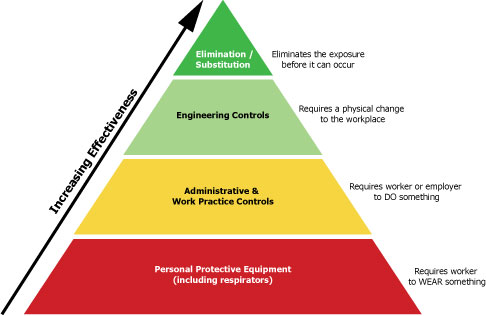
1. Anthropogenic hazard – Hazard caused by human action or inaction 2. Biocontainment – Physical containment of pathogenic organisms or agents in microbiology laboratories 3. Biological agent – Pathogen that can be weaponized 4. Biological hazard – Biological material that poses serious risks to the health of living organisms 5. Biosafety level – Level of the biocontainment precautions required to isolate dangerous biological agents 6. Chemical safety – means of ensuring that chemicals are safe 7. Hazard – Substance or situation which has the potential to cause harm to health, life, the environment, property, or any other value 8. Health hazard – Hazards that would affect the health of exposed persons.Hierarchy of hazard controls – System used in industry to eliminate or minimize exposure to hazards 9. Mechanical hazard – Hazard with a mechanical energy source 10. Occupational exposure banding – Process to assign chemicals into categories corresponding to permissible exposure concentrations 11. Occupational hazard – Hazard experienced in the workplace 12. Physical hazard – Hazard due to a physical agent 13.Planetary protection – Guiding principle in the design of an interplanetary mission, aiming to prevent biological contamination of both the target celestial body and the Earth 14. Psychosocial hazard – Occupational hazard to one’s psychological well-being Public health – Preventing disease, prolonging life and promoting health through organized efforts and informed choices of society and individuals .
Increasing constructions and demolitions of buildings.
Increasing demand for houses is leading to deforestation, which is worsening the quality of air further.
Industrialization.
Burning of crop residue. This is highly prevalent in Punjab and Haryana.
Burning of garbage.
Still many Indians are using firewood and cow dung for cooking.
Greenhouse gas emissions due to burning of biomass residue.
Usage of diesel vehicles.
Adulterated fuel blends by many Indian taxis and auto rickshaws. These adulterants increase emissions of harmful pollutants from vehicles, worsening urban air pollution.
Effects of Air pollution :-
Negative impact on health of humans as well as other living beings. Mainly, children and old people are vulnerable to adverse health effects caused by air pollution.
Air pollution is the leading environment cause of death. In 2015, India reported 11 lakh deaths due to air pollution.
Increase in spread of non-communicable diseases due air pollution has accounted for 62% of the total diseases in India.
Steps Taken by Indian Government :-
Government of India enacted the “Environment (Protection) Act, 1986 (EPA)” under article 253 of the constitution after the dreadful incident of Bhopal gas tragedy.
Indian government removed subsidies for polluting cooking gases to improve access to clean fuel for household cooking.
The Delhi government has tried odd-even rule to reduce air pollution.
Supreme Court banned registrations of diesel cars above 2000cc in Delhi, which is one of the highest air polluted cities of India.
Indian government banned firecrackers on weddings.
Burning of solid waste is banned.
What more needs to be done :-
Allocation of more funds for afforestation projects.
Betterment of public transportation.
Enhancing the quality of roads.
Encouraging community forests.
Incentives for Eco-friendly buildings.
Encouraging the usage of clean fuels.
Investing more in energy generation from renewable resources.
Encouraging work from home culture to reduce vehicular pollution.
Best Practices in Other Countries:-
‘Paris’ has set few good practices such as implementing odd-even bans on vehicles, making public transport free during high pollution days and encouraging car & bike-pooling.
‘Netherlands’ is working on plans to to ban the sale of all petrol and diesel cars from 2025 and allowing only electric or hydrogen vehicles.
The Bombay HC has issued notice to the I&B Ministry, Union Ministry of Electronics and Information Technology, Ministry of Law and Justice, Ministry of Home Affairs and the Nagpur police commissioner and asked for their response, in regard to the PIL filed by Divya Ganeshprasad Gontia. The court has advised setting up of a pre-screening committee to regulate the movies and shows which are released directly on online platforms like Netflix & Hotstar. Thus it is clear that censorship for web series and content on digital medium is very much on the cards.
But online platforms like Netflix, Hotstar, AltBalaji, SonyLiv and others have signed self-censorship code, which prohibits signatories from showing any content that has been banned by Indian Courts. Amazon Prime Video, the streaming service of e-commerce giant has kept out of the code stating that the existing laws are adequate.
While the decision of probable censorship has aroused a mixed reaction on social media by Indian film industry and the general public, it is important to understand the pros and cons that would come along.
Pros :-
Due to the advantage of wide reach, the web series and content on digital media is easily accessible to all. Children are at major disadvantage when they view content that is related to violence, strong language and sex.
In the past years people have filed legal complaints regarding the harsh content on digital platform and arguing for censorship on series and movies released on internet that have the potential to create bad influence.
The Central Board of Film Certification (CBFC) has reported that the casual usage of sex and crass language in such web series is a bait to attract the audience. This raises a question if the online entertainment industry should be kept law free and what affects this would have on children.
Some people feel worried about the increasing foreign culture influence that web series and movies promote censorship will control this to some extent.
Cons :-
Producer Ritesh Sidhwani, who has produced series like “Inside Edge” and “Mirzapur”, believes that censorship will hamper the originality of the story. He said it the responsibility of the makers to take care of the content and depict only the reality.
People feel that by making the web series industry regulated the lawmakers will only be covering up for a reality that is widely evident in certain states.
The censorship norm is being criticized as people feel that it is curbing the freedom and creativity of Indian filmmakers, who are anyways at a disadvantaged position due to constraints on movie content.
People also feel that rather than censoring the content, it is more important to pay attention to the ratings that are provided. Moreover it is the responsibility of the audience to perceive the content in a respected manner.
Machines are replacing humans. Automation is causing loss of jobs.
In India, still many people are not able to afford education, and are forced to live unemployed.
Our education system is not uniform throughout the country. Quality education is still a dream to many. Because of this, many do not have enough skills to compete in the job market.
Even in this 21st century, some families in India do not allow women to work, and hence there is so much unemployment in Indian women.
India ranking second in terms of population with 6 million and still counting people, this problem becomes increasingly serious and hopeless. Providing jobs to this much population is not that easy. Where the government is trying its best to shorten the gap, it becomes worse with the rate of growth of population.
Effects:-
Increase in unemployment is directly proportional to the rate of growth in the economy of any country. With such enormous number of unemployed people,
With less money in their pockets, people are restricted to change and upgrade their lifestyle and get in sync with the outside world today. This is causing low standards of living.
Now that people either don’t have jobs or are poorly paid, in order to meet the demands of daily routine, weak people tend to fall into the trap of illegal jobs and commit criminal offences for money. This is causing robberies, kidnaps, murders, drug trade etc.
Along with the middle-class family standard gradually moving towards the high-class society, the poor society in moving in the opposite direction which is eventually pulling them below the poverty line. Gap between the rich and poor is widening.
STEPS TAKEN BY GOVERNMENT
Skill India initiative was launched to train youth for the jobs in demand, and hence bridging the gap of lack of skilled professionals and unemployment.
Integrated Rural Development Program: IRDP was launched in 1979 to supply more jobs for the rural people. This program brought employment in the areas of agriculture, fisheries, road constructions etc benefitting 182 lakh families and thus became very known.
Drone Prone Area Program: DPAP was launched in those areas struck with drought for quite some time. This was introduced for the prime reason to delete seasonal employment from the society. Approximately 474 crores were spent on this plan.
Jawahar Rozgar Yojana: This became very popular in the year of 1989 with the sole objective of providing employment to minimum one member in the family which led to an immediate shoot up in the employment rate.
Nehru Rozgar Yojana: This also emerged in the year of 1989 with a new idea of introducing three schemes. These schemes included small jobs for poor urban people, employment to cities having the lowest score in terms of daily wage.
Employment Assurance Scheme: This scheme aimed at providing jobs in 1752 backward class blocks in various cities like West Bengal, Kerala, and Rajasthan.
Swaran Jayanti Rojgar Yojana: In addition to the Nehru Yojana, this aims at eradicating unemployment in urban areas by offering wage employment by spending 125 crores on this plan.
Make In India: This was an initiative planned by our Prime Minister Narendra Modi generating employment especially in manufacturing industries and boycotting foreign made goods.
THINGS TO BE DONE
he steps taken by the government till now have been successful in providing jobs but most of them are temporary. People now demand permanent employment giving them job security.
Still 22% of Indian population lives below the poverty limit. This strongly discourages India to move forward in the struggle of becoming one of the developed countries.
In order to make people have a good living, they must acquire a proper education, this being their basic rights. (Right to Education). Literacy levels should be improved.
More jobs should be created in corporate sector. For those who have the required skills yet find it hard to get employed and have a decent job, overpopulation of India is making it even more hard with such limited job opportunities.
Self Realization refers to the process of interacting with one inner self for figuring out the answers like drawbacks, strengths, weaknesses, interest areas, goals, opportunities etc for the purpose of self assessment.
It helps in understanding and summarizing one self and take required measures and actions to eradicate barriers of growth and development and working on improving strengths .
Abraham Maslow understood the importance of self interaction and placed Self Actualization as the final stage of his Motivation Theory which too is linked to the concept of Self Realization and interaction with internal self.
Importance of Self Realization
1.Higher Confidence
2.Increases Patience
3.Sharper Focus
4.Not being Controlled by Emotions
5.Acceptance
6.Helps in understanding the real clinches of an issue
Hello all! We are going to see 8 weird truths and facts about North Korea and their President Kim Jong Un. These may be shocking, funny, alerting and also bad. The are news like economy of North Korea is dipping. But their President don’t care about his people and the people are struggling in the nation where they cannot rise their voices against the government. Let’s go into the topic.
1. Pleasure squad
This squad was originally named as “joy squad” by the father of Kim Jong Un. This “joy squad” was created by Kim’s father for Kim’s grandfather. Normally a father won’t tolerate or accept this kind of behaviour or character from his child. But Kim’s grandfather accepted that and congratulated him for that deed. After 1983, the joy squad became a regular thing for them and today many college students and school students are selected to entertain the North rulers. And the girls are forced to be in that ‘pleasure squad’.
2. Arresting whole family
Normally in any country if a person does a crime, he would be arrested and put to jail. But in North Korea, the accused, his father, his grandfather and all the men in their family are put to jail. The reason that Kim gives for this rule is that the elders should raise the children in the right way.
3. Restrictions for Kim’s wife
Kim not only makes all these rules for the people of North Korea but also for his own wife. His wife is from a rich family and also a very good singer. Hearing her voice, Kim loved her and married her. After marriage, Kim erased the whole history of his wife. He restricted her to go to her parents’ home. He destroyed all the CD collections of her songs. He renamed her.
4. Permissions for migration
In India, during this Covid-19 pandemic situation, we are getting e-pass to migrate from one place to other. This situation is only during pandemic. But in North Korea, this is a normal and strictly followed rule. The citizens should get permission from the government before leaving to any other places within the country.
5. News
Unlike the breaking news, flash news and other ordinary news that we hear in India, there is no such thing in North Korea. The news that the people hear is telecasted by channels owned by the government alone. There is no internet in the country. This means that the government can create a news for the public, also they can hide a news from them. Kim’s sister manages all these news that are telecasted to the public.
6. School syllabus
There are only 2 subjects for school students. One is Maths and the other is Social Science. Social science is structured in a way that it only covers the good things that Kim and his family did to the people.
7. Kim’s expenses
People in North Korea are starving without food and essential items for life. But Kim’s expenses are much higher. He drinks coffee imported from Brazil that costs around 7000 Indian Rupees. He loves music. So he bought speakers and music systems for 44 crores. He build a threatre in which 1000 people can sit and watch a movie. That is not for public use. He alone sits there and watches movies. There are many articles written on that. Apart from all that, Kim goes extreme in buying Bullet trains. During the rule of Kim’s father, there were 24 such trains, which was increased to 90 during Kim’s rule. That costs around 135 million USD. All these useless expenses costed the poverty for the people.
8. Trendy dresses
If any people wear a trendy dress and comes out, they will be arrested by the ‘fashion police’ and put to jail. Not only the person, but all the men in his/her family. There are also restrictions for hair cut.
Seeing all those happenings in North Korea, we can understand the importance and power of “Right to speak”.













 Eduindex News
You must be logged in to post a comment.