Turning heat into electricity.

Study finds topological materials could boost the efficiency of thermoelectric devices.
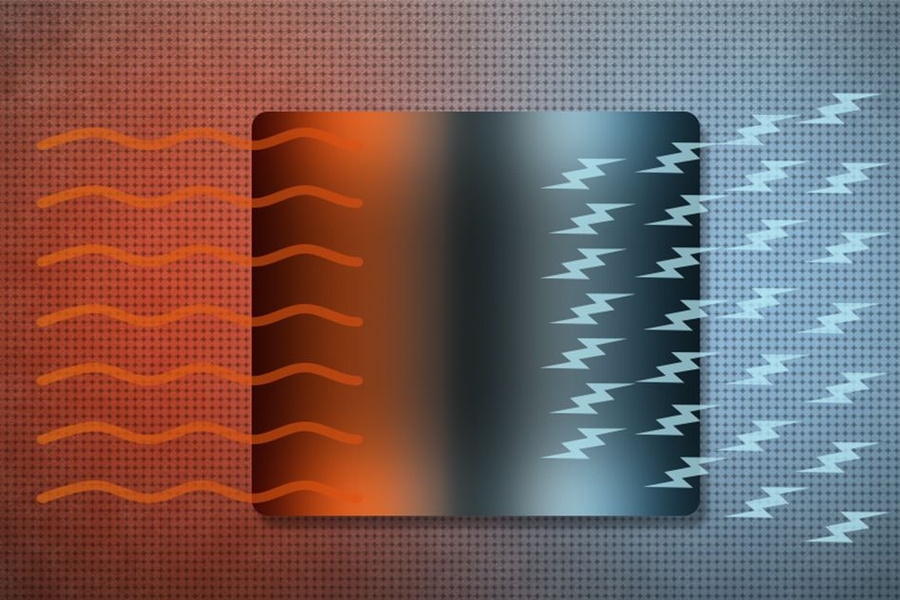
MIT researchers, looking for ways to turn heat into electricity, find efficient possibilities in certain topological materials.

What if you could run your air conditioner not on conventional electricity, but on the sun’s heat during a warm summer’s day? With advancements in thermoelectric technology, this sustainable solution might one day become a reality.

Thermoelectric devices are made from materials that can convert a temperature difference into electricity, without requiring any moving parts — a quality that makes thermoelectrics a potentially appealing source of electricity. The phenomenon is reversible: If electricity is applied to a thermoelectric device, it can produce a temperature difference. Today, thermoelectric devices are used for relatively low-power applications, such as powering small sensors along oil pipelines, backing up batteries on space probes, and cooling minifridges.

But scientists are hoping to design more powerful thermoelectric devices that will harvest heat — produced as a byproduct of industrial processes and combustion engines — and turn that otherwise wasted heat into electricity. However, the efficiency of thermoelectric devices, or the amount of energy they are able to produce, is currently limited.

Now researchers at MIT have discovered a way to increase that efficiency threefold, using “topological” materials, which have unique electronic properties. While past work has suggested that topological materials may serve as efficient thermoelectric systems, there has been little understanding as to how electrons in such topological materials would travel in response to temperature differences in order to produce a thermoelectric effect.

In a paper published this week in the Proceedings of the National Academy of Sciences, the MIT researchers identify the underlying property that makes certain topological materials a potentially more efficient thermoelectric material, compared to existing devices.

“We’ve found we can push the boundaries of this nanostructured material in a way that makes topological materials a good thermoelectric material, more so than conventional semiconductors like silicon,” says Te-Huan Liu, a postdoc in MIT’s Department of Mechanical Engineering. “In the end, this could be a clean-energy way to help us use a heat source to generate electricity, which will lessen our release of carbon dioxide.”

A path freely traveled

When a thermoelectric material is exposed to a temperature gradient — for example, one end is heated, while the other is cooled — electrons in that material start to flow from the hot end to the cold end, generating an electric current. The larger the temperature difference, the more electric current is produced, and the more power is generated. The amount of energy that can be generated depends on the particular transport properties of the electrons in a given material.

Scientists have observed that some topological materials can be made into efficient thermoelectric devices through nanostructuring, a technique scientists use to synthesize a material by patterning its features at the scale of nanometers. Scientists have thought that topological materials’ thermoelectric advantage comes from a reduced thermal conductivity in their nanostructures. But it is unclear how this enhancement in efficiency connects with the material’s inherent, topological properties.

To try and answer this question, Liu and his colleagues studied the thermoelectric performance of tin telluride, a topological material that is known to be a good thermoelectric material. The electrons in tin telluride also exhibit peculiar properties that mimic a class of topological materials known as Dirac materials.

The team aimed to understand the effect of nanostructuring on tin telluride’s thermoelectric performance, by simulating the way electrons travel through the material. To characterize electron transport, scientists often use a measurement called the “mean free path,” or the average distance an electron with a given energy would freely travel within a material before being scattered by various objects or defects in that material.

Nanostructured materials resemble a patchwork of tiny crystals, each with borders, known as grain boundaries, that separate one crystal from another. When electrons encounter these boundaries, they tend to scatter in various ways. Electrons with long mean free paths will scatter strongly, like bullets ricocheting off a wall, while electrons with shorter mean free paths are much less affected.

In their simulations, the researchers found that tin telluride’s electron characteristics have a significant impact on their mean free paths. They plotted tin telluride’s range of electron energies against the associated mean free paths, and found the resulting graph looked very different than those for most conventional semiconductors. Specifically, for tin telluride and possibly other topological materials, the results suggest that electrons with higher energy have a shorter mean free path, while lower-energy electrons usually possess a longer mean free path.

The team then looked at how these electron properties affect tin telluride’s thermoelectric performance, by essentially summing up the thermoelectric contributions from electrons with different energies and mean free paths. It turns out that the material’s ability to conduct electricity, or generate a flow of electrons, under a temperature gradient, is largely dependent on the electron energy.

Specifically, they found that lower-energy electrons tend to have a negative impact on the generation of a voltage difference, and therefore electric current. These low-energy electrons also have longer mean free paths, meaning they can be scattered by grain boundaries more intensively than higher-energy electrons.
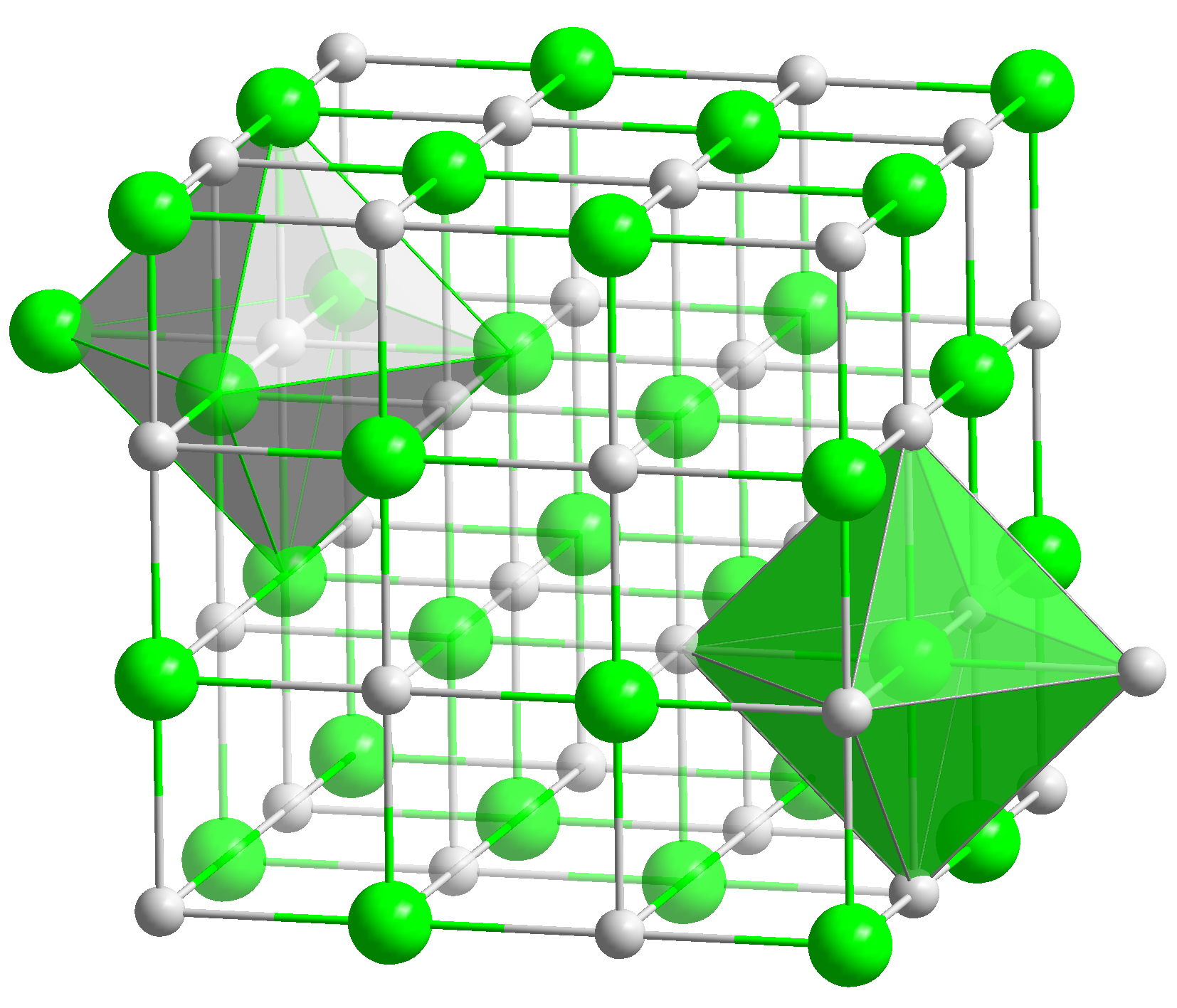
Tin telluride - Wikipedia

Sizing down

Going one step further in their simulations, the team played with the size of tin telluride’s individual grains to see whether this had any effect on the flow of electrons under a temperature gradient. They found that when they decreased the diameter of an average grain to about 10 nanometers, bringing its boundaries closer together, they observed an increased contribution from higher-energy electrons.

That is, with smaller grain sizes, higher-energy electrons contribute much more to the material’s electrical conduction than lower-energy electrons, as they have shorter mean free paths and are less likely to scatter against grain boundaries. This results in a larger voltage difference that can be generated.

What’s more, the researchers found that decreasing tin telluride’s average grain size to about 10 nanometers produced three times the amount of electricity that the material would have produced with larger grains.

Liu says that while the results are based on simulations, researchers can achieve similar performance by synthesizing tin telluride and other topological materials, and adjusting their grain size using a nanostructuring technique. Other researchers have suggested that shrinking a material’s grain size might increase its thermoelectric performance, but Liu says they have mostly assumed that the ideal size would be much larger than 10 nanometers.

“In our simulations, we found we can shrink a topological material’s grain size much more than previously thought, and based on this concept, we can increase its efficiency,” Liu says.

Tin telluride is just one example of many topological materials that have yet to be explored. If researchers can determine the ideal grain size for each of these materials, Liu says topological materials may soon be a viable, more efficient alternative to producing clean energy.

“I think topological materials are very good for thermoelectric materials, and our results show this is a very promising material for future applications,” Liu says.

This research was supported in part by the Solid-State Solar Thermal Energy Conversion Center, an Energy Frontier Research Center of U.S. Department of Energy; and the Defense Advanced Research Projects Agency (DARPA).


Best detox drinks for a healthy living

The lemon and ginger detox drink and cucumber and mint combo are very effective for weight loss because they help aid in the digestive process


Exercises and weight training are of paramount importance for a healthy lifestyle along with detox liquids.  Though a good diet is imperative for weight loss, it is essential you include detox drinks to make it more effective. Detox drinks are excellent for digestion. If the drinks are aiding in digestion that means they are also helping in the weight loss journey. Detox as the name suggests, it helps in flushing out the toxins from the body thereby promoting metabolism and makes the body toxin-free.
Here is the list of such drinks which one can prepare at ease

1. Lemon and ginger detox drink –
This is a wonder drink for people who want to lose their weight. Squeeze half a lemon in a glass of lukewarm water and add an inch of grated ginger. Drink this every morning and check your weight after 1-2 months. Ginger contains gingerol which is known to prevent stomach problems and aid digestion. Lemons are not only rich in Vitamin C but also antioxidants which prevent the production of free radicals in the body. When this drink is combined with exercises it can work wonder.
2. Cinnamon and honey –
This is made by mixing a spoonful of honey and half a tablespoon of cinnamon in a glass of warm water. A dash of fresh lime can help in the fat burning process. Cinnamon is known to curb cravings while honey aids metabolism. Consuming honey and cinnamon on a regular basis can boost your immune system and protect you from foreign bacteria and viruses. Both the ingredients are a rich source of antioxidants and have anti-bacterial properties. It can help to improve the digestive system and fight various stomach related ailments
3. Cucumber and mint –
This mixture not only helps in flushing out toxins from the body, but is also good to taste. Cucumber and mint when added to water are a good combination for digestion. Take a large pitcher and add a few cucumber slices along with fresh mint leaves. Let it infuse for some time and keep drinking from it the entire day.
Cucumber contains antioxidants which help fight free radicals and due to its hydrating effect it aids in the removal of toxins from the body.
 4. Green tea –
This is a calorie-free drink and enriched with  catechins and anti- oxidants that suppresses the production of free radicals in the body.
5. Cranberry juice –
It is known to be a natural diuretic and can help in flushing out excess water. It also contains anthocyanin a powerful antioxidant which helps combating certain infections, diseases and helps in managing cholesterol levels. It is known for helping in avoiding urinary tract infections.

These are the drinks which can help to flush out the toxins from our body and make it toxin- free and revitalize with energy.

Kolkata- City of Joy

Kolkata, this city has a lot of names to be called whether it be Bengali Kalikata or formerly called Calcutta, capital of British India. It is the capital of West Bengal. It has earned the nickname ‘city of joy’ for its soulful embodiment of culture, love, mystery, respect, enthusiasm and definitely some amazing sweet delicacies. Kolkata, as it is now referred to as, is a city that upholds a perfect juxtaposition between the old world and the modern one. The city is centered on the east bank of the Hugli (Hooghly) River, once the main channel of the Ganges (Ganga) River, about 96 miles (154 km) upstream from the head of the Bay of Bengal; there the port city developed as a point of transshipment from water to land and from river to sea. A city of commerce, transport, and manufacture, Kolkata is the dominant urban Centre of eastern India.  

History  

The former name of the city has been anglicized version of the Bengali name Kalikata. The beliefs says that, Kalikata is derived from the Bengali word Kalikshetra, meaning “Ground of (the goddess) Kali.” Some say the city’s name derives from the location of its original settlement on the bank of a canal (khal). A third opinion traces it to the Bengali words for lime (calcium oxide; kali) and burnt shell (kata), since the area was noted for the manufacture of shell lime. In 2001 the government of West Bengal officially changed the name of the city to Kolkata. The history of Kolkata as a British settlement, known to the British as Calcutta, dates from the establishment of a trading post there by Job Charnock, an agent of the English East India Company, in 1690.  

The history of Kolkata as a British settlement, known to the British as Calcutta, dates from the establishment of a trading post there by Job Charnock, an agent of the English East India Company, in 1690. 

The Struggle for Independence 

With the spread of education and westernization, began the phase of ‘Renaissance’ in Bengal. Many social reform movements were carried out, and the growing intellectual population started understanding the meaning of freedom and the city became the centre of Indian Independence struggle. All the tensions led to the transfer of the capital of British India to Delhi. Even after the transfer, Kolkata remained a major hub for trade and independence struggle. 

Modern Kolkata  

Kolkata is the main business, commercial and financial hub of eastern India. Kolkata witnessed an economic decline from the late sixties till the late nineties. The city’s economic fortunes turned the tide as the economic liberalization in India during the early nineties reached Kolkata during late nineties. Kolkata is a multicultural, cosmopolitan city. Apart from the diversity of India, the cultures represented are that of the Europeans (Including Germans, Armenians, and others), and other Asians (Including Chinese, Sinhalese, and Tibetans). 

Since 1977, a “Left Front” coalition of communist and Marxist parties has continuously ruled the state. This is reflected in street names and memorials in the city. For example there are streets like Lenin Sarani, Ho Chi Minh Sarani, etc.. The Left Front regained control of the Municipal Corporation of Kolkata from the Trinamul Congress in the 2005 civic elections. 

The Top 5 Things To Do And See In Kolkata  

Kolkata, formerly known as Calcutta, is the educational, commercial and cultural center of the Eastern part of India, and is the third most populous metropolitan city of India. Kolkata is a pioneer in the field of drama, arts, theatre and literature with several nobel laureates contributing to the Kolkata culture. Here, we explore the best local and cultural sights and activities. 

  1. The Marble Palace  

It was built by a Bengali Merchant Raja Rajendra Mullick, whose family still reside here. With a Neoclassical style, this incredible building is made up of 26 varieties of Italian marbles. It is one of the most elegant and conserved houses in the city.  

  1. Science City 

Kolkata’s science city works on the agenda that “one is never too old to learn”, with one of the finest science centers in India, established by the National Council of Science Museum. Science City encourages learning in the most entertaining manner; with interactive exhibits, 3D theatre experiences and a hi-tech motion stimulator, Science City is one of the most frequently visited sites in Kolkata and a favorite place for people of all ages. 

  1. Wildlife trek in Sundarbans 

The Sundarban National Park is a delightful treat for all the travelers who love adventure and wildlife. Declared a UNESCO World Heritage site, the Sundarbans is the world’s largest mangrove belt, translating to ‘beautiful forest’ in Bengali. With a skillful and knowledgeable guide, Sundarbans trekking gives travelers one of the most memorable times of their lives, closely connected them to the natural habitat of the untamed. 

  1. Mother Teresa House 

“Hearts to love and hands to serve,” said Mother Teresa, and to this day people from all around the world visit the Missionaries of Charity to give love with nothing in return but a peaceful mind and a happy heart. The Mother Teresa House is a must-visit for learning the ideologies and taking a closer look at how Mother Teresa lived. 

  1. South Park Street Cemetry 

As peculiar as it might sound, the South Park Street Cemetery, is a burial ground well known for being a pleasant spot for a relaxing stroll. Although at times a little eerie, with grand Gothic-style tombs adorned with pillars, and facades of burial tombs engraved with Hindu symbols, Park Street Cemetery offers beautiful scenery and a sense of history and intrigue, perfect for spending a unique afternoon. 

Some Unexplored Places to visit near Kolkata  

  1. Subhash Sarovar- Subhash Sarovar makes to our list of Kolkata unexplored places which is apt for all those people who want to be in a peaceful surrounding for some time. The pristine lake surrounded by verdant greenery and chirping of birds, makes this place perfect for the solitude lovers. 
  1. Nipponzan Myohoji- This is a Japanese Buddhist temple which is not known to many yet. There are statues of Buddha and pillars with lions on the temple. People visit this temple to meditate and find inner peace. 
  1. Jetty by the Hooghly- This jetty was once a part of the Army base camp from where their freight would load and unload. The place is calm and quiet, where you can only hear the sound of the River and birds chirping around. 
  1. Jessop Factory- One of the Kolkata’s unexplored places, Jessop Factory once was a lively place where workers would come every day to earn their wages. However, the factory was shut down several years ago. It is said, one can still hear the sound of machines in the factory at night, while there is no worker in there. 
  1. Baguran Jalpai- Baguran Jalpai is one of the unexplored places near Kolkata where you can reach in just four hours from the city. The golden sandy beach here, surrounded by Casuarina trees is a perfect place if you want to unwind. The sunset here is something you must witness.

Old Becomes Richest Man In India Making Money Online!

Mithun Bhat, born in Bhopal, could buy 2 houses within a month, Bentley, Ferrari and paid all his debts. But previously, he worked with salary under the minimum wage. So, how could he earn so much money only in a month? He tells us his story.

“I worked at pizza delivery service for a year. I was prior a collage student and did a part time job in a restaurant. I did it to support my study. In the second year of study I was close to be expelled since I could not pay the tuition. At the time, I had to take a loan. I could finally paid my tuition, but I had no money to pay the monthly installments to the bank. Honestly, studying and working all at once was beyond my endurance, and eventually, I was expelled from campus a week before the end of school year. That was the beginning of the darkest days of my life. My father lost his job and my family didn’t know how to survive. Could you imagine how hopeless I felt? I had no decent work and no education, and my father lost his job. I could do nothing to help them.

One night, I was delivering a pizza to the last location. A guy opened the door. He was with his friends, and while he was paying the pizza, I heard their discussion about where would they invest Rs. 2,000,000 they earned 10 minutes ago. I just made a glance and saw a sort of graph and figures on the laptop screen. The guy opening the door gave me Rs. 1,000 but the price was only Rs. 600. He told me to keep the change.

I was absolutely surprised and after I got back home, I took my laptop and tried to recall about their discussion. After 5 minutes, I remembered that they told about online trading. On the Broker website I found the graphs and figures I saw at the guy’s laptop.

After reading all information about the broker and watching tutorial videos, I opened a demo account where I got virtual money. I quickly understood what I had to do, it was very easy. I earned some money after my very first transaction. Then I thought… I did not lose anything, so I decided to open a real account and deposited my last money there. At the morning, I woke up and saw that I earned Rs. 30,654 over that night. After 2 weeks I could paid my debts off, bought a car, and I could help my father while he was searching for a new job and pay his expenses for the next few months. 2 weeks later, I already had 2 houses in the suburb. And all I did without leaving my home and getting higher education.

That’s my luck. It would never happen if I did not meet the rich guy while delivering the pizza. I know there are a lot of people having not good times like me, that’s why I tell you: if you want to live without any problem, I can tell you how to earn money with Trading Resource. It is very easy if you would try it.

Yoga

Yoga is an ancient art that connects the mind and body. It is an exercise that we perform by balancing the elements of our bodies. In addition, it helps us meditate and relax.

Moreover, yoga helps us keep control of our bodies as well as mind. It is a great channel for releasing our stress and anxiety. Yoga gained popularity gradually and is now spread in all regions of the world. It unites people in harmony and peace.

Yoga essentially originated in the subcontinent of India. It has been around since ancient times and was performed by yogis. The term yoga has been derived from a Sanskrit word which translates to basically union and discipline.

In the earlier days, the followers of Hinduism, Buddhism, Jainism  practiced it. Slowly, it found its way in Western countries. Ever since people from all over the world perform yoga to relax their minds and keep their bodies fit.

 This popularity of yoga, India became known for yoga worldwide. People all over the world have started to realize the benefits of yoga.

Benefits of Yoga

Yoga has numerous benefits if we look at it closely. You will get relief when you practice it regularly. As it keeps away the ailments from our mind and body. In addition, when we practice several asanas and postures, it strengthens our body and gives us a feeling of well-being and healthiness. Furthermore, yoga helps in sharpening our mind and improving our intelligence. We can achieve a higher level of concentration through yoga and also learn how to steady our emotions. In addition, you can develop self-discipline and self-awareness from yoga if practiced regularly.

Asana Yoga Collection Of Girls Doing Sport In Oriental Poses Stock  Illustration - Download Image Now - iStock

21st of June is celebrated as International Day of Yoga where people are made aware of the benefits of yoga. Yoga is a great gift to mankind which helps us keep better and maintain our health. You also develop a higher patience level when you practice yoga which also helps in keeping the negative thoughts away. You get great mental clarity and better understanding.

Posterindya International Yoga Day Posters piv60017 (Paper, 16 x 24 Inch) :  Amazon.in: Home & Kitchen

In short, yoga has several benefits. Everyone must practice it to keep their health maintained and also benefit from it. It is the secret to living a healthy and long life without the use of any artificial means like medicines or any other shortcuts of any kind.

By Lahari muriki

Enforcement Directorate

Enforcement Directorate

• Specialized, financial investigation agency.

• Department of Revenue – Ministry of Finance
of the Indian Government.

• Origin – 1956.

• Enforcement Unit – Department of Economic
Affairs.
 Exchange Control Laws violations under the
Foreign Exchange Regulation Act, 1947.

• Shifted – Department of Revenue for
administration in 1960.

• Renamed – Enforcement Directorate in 1957.
• Composition – persons who are appointed through direct recruitment.

• Directorate – officers from across different
investigating agencies on deputation
 Customs & Central Excise, Income tax, Police etc.

• Headquarters in New Delhi.

• Regional offices all over the country.

• Headed by the Director of Enforcement.

• Major functions:
 Investigating violations of Foreign Exchange
Management Act (FEMA) laws and provisions.
 Investigating offences of Prevention of Money Laundering Act, 2002 (PMLA) laws and provisions.
 Processing cases of fugitive/s from India under the Fugitive Economic Offenders Act, 2018.
 Adjudicating show cause notices issued under
the repealed FERA (Foreign Exchange Regulation Act, 1973).
 Sponsoring cases of Preventive Detention
under the Conservation of Foreign Exchange and Prevention of Smuggling Activities Act,
1974 (COFEPOSA) with respect to FEMA violations and also
 Rendering cooperation to foreign countries in matters related to money laundering and restoration of assets under the PMLA provisions.

Purchasing Managers’ Index (PMI)

Purchasing Managers’ Index (PMI)

• A survey-based economic indicator designed to provide a timely insight into business conditions.

• Widely used
 To anticipate changing economic trends in official data such as GDP.
 An alternative measure to official data about economic
performance and business conditions.
 Used by financial and corporate professionals to better understand economies and markets, and to uncover
opportunities.

• Compiled and produced globally by IHS Markit – for more than 40 economies worldwide.
• Originally compiled for manufacturing sector
only – later extended to include sectors – services, construction and retail.
Manufacturing PMI .

• A survey-based economic indicator designed to provide a timely insight into changing business conditions in the goods-producing sector.

• Weighted average of five indices

  • New orders
  • Output
  • Employment
  • Suppliers’ delivery times
  • Inventories of goods
    purchases.
  • News
  • • India’s manufacturing output shrank in June
    according to this article.
  • • PMI in May was 50.8.
  • • June – slid to 48.1.
  • • Companies are least optimistic and continue
    to shed jobs.
  • • Buying levels – falling at a greater pace.
  • • Weak demand reduction in production requirements.
  • • COVID-19 restrictions – curtailed international
    demand for Indian goods.

• Strict containment measures – negatively
impacted demand and led to the contractions in factory orders, production, exports and quantities of purchases.

• Capital goods – worst-affected area in June.

• Output of Capital goods declined at a steep rate due to a sharp fall in sales.

• Falling new orders, business closures and the
COVID-19 crisis triggered a reduction in output
among Indian manufacturers.

• Growth of new orders, production, exports and
input purchasing was interrupted in June lockdown.

INDIAN CULTURE

India is a country of rich culture where people of more than one religious culture live together. The culture of India is the oldest culture in the world around 5,000 years. Indian culture is considered the first and supreme culture of the world.

It is the country of the oldest civilizations in the world. The vital components of the Indian culture are good manners, etiquette, civilized communication, rituals, beliefs, values, etc. Even after the lifestyles of everyone have been modernized, Indian people have not changed their traditions and values. There is a common saying about India that “Unity in Diversity” means India is a diverse country where people of many religions live together peacefully with their own separate cultures. People of various religions differ in their language, food tradition, rituals, etc however they live with unity. 

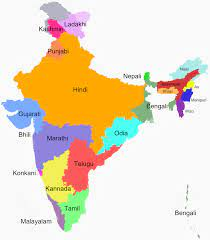
The national language of India is Hindi however there are almost 22 official languages and 400 other languages are spoken daily in India in its various states and territories. According to history, India has been recognized as the birthplace of the religions like Hinduism and Buddhism.

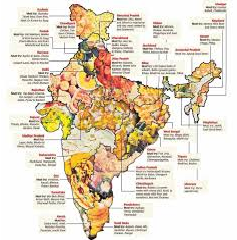
People follow a variety of food cultures such as beaten rice, bread ole, banana chips, poha, potato papad, puffed rice, upma, dosa, idli, sugar, etc. Indian food is wide and includes a lot of variety. Each state of India has its own unique cuisine that reflects the culture and its tradition. Indian food is cooking using various methods, most of which preserve the nutrients contained in the fresh vegetables used.

India today is unfolding a story of a billion-plus people, or more precisely, one sixth of the world’s population, on a big move as India’s large and complex systems rapidly moving top-down and the country emerge as one of the fastest-growing economies of the world, India is probably the only country in the world where people belonging to different religions, castes and creeds, speaking different languages, having different cultures, different modes of living, different clothing, different feeding habits, worshiping different gods and deity live together in harmony and believe to be the children of one mother-MOTHER INDIA,

BY Lahari Muriki

Curious students of batch 2021 eager to know about college admissions.

Students of passing batch of 2021 not only went through tremendous mental stress but have also fallen into dilemma about the admission procedure of various colleges. Reputed universities/colleges have already passed their verdict on the admission procedure for students. Universities like Christ , Symbiosis have already started their admission process and are in the verge of completion. Government university like Delhi University has stated that the admissions for undergraduate courses will only take place on merit basis which cut off the controversy of DU taking admissions for undergraduate courses by entrance mode of examinations.

Chairman of DU admissions Rajeev Gupta stated the registration for admissions in DU may start by third week of July. Most of the universities/colleges are waiting for the declaration of board results. However all colleges / universities have taken into consideration of fixing the academic calendar for students joining this year as the are late of time.

The future of Indian students lies in the hands of reputed Indian education department . Looking at this the Indian education body like UGC and CBSE have taken responsive measures. Lets hope for the best and all the very best for students awaiting for their board results.

Experimental Criminology

The criminal justice system costs taxpayers about billions and billions per year, which is used to pay for municipal policing and the maintenance of state and local prisons. By better understanding of what causes crime and what effective policy responses should be implemented. Experimental criminology tries to minimize the financial burden that crimes impose on nations while also improving safety. Experimental criminology is a branch of criminology concerned with scientific knowledge of crime and its application to the criminal justice system. To put it another way, it employs a variety of scientific analysis to answer issues regarding the crime that occurred, including its prevention, punishment, and injury. These trials are mostly carried out in the actual world rather than in labs. It has a broad scope since it focuses on determining the true cause of the crime and preventing it. In the discipline of experimental criminology, there is a lengthy approach for conducting experiments that includes theoretical, sociological, and methodological stages. In order to completely comprehend crime and the criminal justice system, experimental criminology relies on the work of criminologists, statisticians, and other scientists. Experimental criminology research can use a variety of methods, including observational studies, case-control models, instrumental variables, and natural experiments. Experimental criminology is becoming a major part of the fast growing scientific research and evidence-based social policy movement. This approach is primarily concerned with the improvement and growth of society through the application of high-quality scientific evidence that will assist us in determining what will provide the best results. It includes the controlled investigation of cause and effect, and there are two types of studies: quasi-experimental and experimental. When subjects are chosen at random, research is experimental; however when people are chosen purposefully to explore the cause and effect of a crime, research is quasi-experimental. In experimental criminology, subjects are often divided into two groups and then observed to determine outcome measures that could be used as a deterrent to crime.

Although the state of experimental criminology is currently unknown, it is often regarded as the most effective method for determining the cause-effect relationship of crime and assisting in the development of preventive measures to aid the justice delivery system. However, when experimental criminology is done correctly, it causes fewer risks for society and reports a bigger number of cases that helps in analyzing the causes of crime. This strategy is used by both the police and the court system in India to streamline investigations and judgments. In India, experimental criminology is becoming more well-known. It has decreased the threat of causing harm in the modern era by developing more humane and effective alternatives to long term imprisonment. An observation produced using this method makes a clear point, which makes the evidence credible, and so serves the objective for which it was created.

Finally, the findings of this study showed that the conditions in a community can lead to a rise in both minor offenses and more major offenses. With this in mind, criminologists might advocate for the implementation of a greater number of community-based interventions that will, in return, reduce crime in these communities.

J&K: 5 terrorists associated with LeT terror outfit gunned down by security forces

In the Union Territory of Jammu and Kashmir, District Commander of banned terror outfit, Lashkar-e-Toiba (LeT), identified as Nishaz Lone, one Pakistani terrorist among five terroristshave been gunned down by security forces today in a gunfight which had broken out late last night at Hanjin village of Rajpora area in South Kashmir’s Pulwama district.
 
During the operation, One Army Jawan namely Hav Kashiray Bammanalli also laid down his life in the line of his duties in a fierce firefight with terrorists and attained martyrdom. As per police sources, the encounter started after the joint team of security forces were fired upon who had laid a Cardon and Search Operation (CASO) on the basis of a specific intelligence input about the presence of terrorists in the village and in retaliation, Five terrorists including a Lashkar-e-Toiba District Commander and one Pakistani terrorist were neutralised by the joint team of security forces. 

National COVID-19 Recovery Rate improves further to 97 per cent

The Union Government has said that India is registering a significant decline in active caseloads and fresh cases amid the second wave of Covid-19 pandemic. With this, the recovery rateis continuously improving and it has reached 97 per centin the country. Briefing the media in New Delhi today, Joint Secretary of Health and Family Welfare Ministry, Lav Agarwal has said, the country is witnessing decline in the daily number of cases due to continued efforts of containment and restriction strategies.

He said, India has reported over 46 thousand cases during the last 24 hours. He said, the number of daily active cases has also come down drastically within the two months. He said, almost 86 per cent decline in active caseloads have been registered since the highest reported peak. Mr. Agarwal said that the recovery rate is continuously improving in the country. He said, the recovery rate was over 81 per cent in the country on 3rd May of last month and now it has reached over 97 per cent.

Lav Agarwal has said, the country has ramped up Covid-19 testing for the early detection of the cases. He said, various laboratories are conducting on an average 18 lakh 29 thousand tests in the country these days. Mr. Agarwal has said the country is witnessing a declining trend in case positivity for the last eight weeks. He said the average positivity rate was 21.6 per cent in the first week of May last month which has come down to 3.1 per cent in the last seven days. However, 71 districts in the country are still registering case positivity more than 10 per cent. He said, India is still under the grip of a second wave, hence, the efforts must be put on effective containment strategies to contain the spread of corona virus.

FM Sithraman says, Govt is playing proactive role in addressing prices rise of essential commodities in country

Union Finance Minister Nirmala Sithraman has replied that the Central Government is playing a proactive role in addressing the issue of rising prices of essential commodities in the country. Speaking to media persons in Bengaluru today, she said that the Government has announced a series of financial packages to reduce the burden of the poor during the pandemic.
 
On the possibility of reducing the petrol prices, the minister pointed out that the international prices of petrol have reached 75 dollars per barrel and as the rate increases, the price too has increased. She noted that the Central Government levies fixed charges and the state component is added in the petrol price.
 
On GST compensation to the states, the finance minister clarified that back to back borrowing is already given according to the formula arrived in October of 2020. On the residual amount to be given, she added, that that will be paid as and when there is better revenue collection.

Govt decides to bring retail, wholesale trade under ambit of MSME

The government has decided to bring retail and wholesale trade under the ambit of Micro, Small, and Medium Enterprises (MSME). It has issued revised guidelines to include retail and wholesale trade as MSME and extend to them the benefit of priority sector lending under the RBI guidelines.
 
In a series of tweets, MSME Minister, Nitin Gadkari said, the decision will benefit 2.5 crore retail and wholesale traders. He said that the government is committed to the strengthening of MSME and make them engines for economic growth. With the revised guidelines the Retail and wholesale trades will now be allowed to register on Udyam Registration Portal.

India joins OECD, G20 Inclusive Framework tax deal of global corporate tax

India has joined the Organisation for Economic Co-operation and Development (OECD) and G20 Inclusive Framework tax deal of global corporate tax. According to a Finance Ministry press release, the members OECD and G20 countries adopted a high-level statement containing an outline of a consensus solution to address the tax challenges arising from the digitalisation of the economy.
 
The proposed solution consists of two components- reallocation of additional share of profit to the market jurisdictions and minimum tax subject to tax rules. However, the technical details of the proposal will be worked out in the coming months and a consensus agreement is expected by October.
 
The Finance Ministry statement, released today, said the principles underlying the solution vindicates India’s stand for a greater share of profits for the markets. It said, India is in favour of a consensus solution which is simple to implement and simple to comply with. At the same time, the solution should result in allocation of meaningful and sustainable revenue to market jurisdictions, particularly for developing and emerging economies.
 
Initially, the global corporate tax was proposed by the United States as Global Minimum Tax (GMT). Yesterday, the tax deal was adopted in the OECD and G20 Inclusive Framework on Base Erosion and Profit Shifting (BEPS). BEPS refers to tax-avoiding strategies used by big multinational companies that exploit the gaps and mismatches in tax rules across the globe.
 
Around 130 countries, representing more than 90 percent of global GDP, adopted the global corporate tax rate of at least 15 percent. The countries also agreed on a fairer distribution of ‘profits and taxing rights’ with respect to multinationals including digital giants such as Amazon and Google. However, Hungary and Ireland were part of a small group of countries that did not agree on the tax rate on multinationals.