CAN WE THINK “WORLD WITHOUT ENGLISH”?

ENGLISH IN PRE-INDEPENDENCE DAYS

During the British rule in India English was imposed on Indians as a compulsory study. The British rulers wanted a class of interpreters between the rulers and ruled. Only a selected few could learn English and get good jobs under the British rulers. English education was confined to the chosen few. The foreign rulers had no desire to educate the mass.

ENGLISH AFTER INDEPENDENCE

English education, however, did one good thing to India. It created a batch of scholars who imbibed the best English education. The western culture, new ideas and thoughts about science and scientific studies slowly spread among us through English and we became aware of the tremendous progress that the nations of the west were making. This knowledge, rather the impact of this aerated a tremendous excitement among us and this was the root of the famous Renaissance Movement, which is a bright landmark in our social, cultural and educational sphere. After independence, some nationalists wanted the complete abolition of English from our academic programme. They pleaded for the abolition of English on the ground that its retention smacks of our slavery to England. But there were others who wanted English to continue as a subject for study.

IMPORTANCE OF ENGLISH ITS PLACE IN EDUCATION

The English language is known as the lingua franca of the world. English language is no longer the monopoly of English men. It is now used by a large number of people scattered geographically in different parts of the world. English language is the gateway to the various branches of knowledge and it opens the window to the outside world. It is studied now in many countries, and it is a very helpful means for international communication in commerce and culture. So narrow patriotism should not blur our vision about its importance. It is necessary to retain English as a link language, and as a second language to be read from class III. Regional language should be given first preference, and should be the medium of instruction up to the graduate level. We would see some of the vital reasons to hug English in the main course of life.

Knowledge of English will open doors of bigger opportunity in the field of higher studies on national and international platform.

No scientific and commercial knowledge can be complete without the proper knowledge of English.

This is the language one can study quickly and smoothly without troubles. So, it paves the way to greater studies hence generate greater interest in all type of knowledge acquisition.

International English Language Testing System (IELTS) opens wider prospects to enter in any renowned institution all over the world.

Meaningful study of English will make you conscious of the progress and the standard of living the world has achieved. English is the language of the media and a person can receive exceptional growth in books publishing, films, TV shows if one pursues English in these career prospect.

Technological growth prospers in the lap of English culture and skill. One receives ample support and strength if assisted by English in all level.

English knowing professional wins laurels and fatty salary packages in comparison to other besides promotion and felicitations in a company.  

English is the language of the internet. Right from website development to social media marketing every thing demands a solid base if English. So, the good learners are always getting an edge effect in all the matter.

English education knowledge and workings make you the greater professional, enhances your competitiveness and all-round exhibition of skill. It makes you to be a satisfied citizen of the world.

Knowledge of English gives greater depth in research work, thesis writing, contents composing, communication and future advancement of all the subjects known to the humanity.

So, education, civilization and communication demand a worldwide awakening of English learning culture, practice, use and application in all aspects of life.

Insights into Caste System, and Is Reservation still needed?

The caste system in India finds its origin around 1500 BC on the arrival of Aryans. Primarily, it was based on the occupation one chooses to practice. For example, a religious leader performing sacred rituals was called Brahmin, while the one who was a part of a kingdom’s army ( a warrior ) was called Kshatriya etc.  Every occupation and individuals associated with it were addressed with particular names like a cobbler was called Chamar, a blacksmith as Lohaar, etc. And all of these occupations were a part of 4 Varnas viz. Brahmin, Kshatriya, Vaishya, Shudra. Teachers, farmers were a part of Vaishya while Shudras consisted of artisans, blacksmiths, laborers, maids, etc.

       Like most societies of the world, in India also the son inherited his father’s profession. And so there developed families, who professed the same family profession for generation in which, the son continued his father’s profession. Later on, as these families became larger, they were seen as communities or Jatis. Different families who professed the same profession developed social relations between them and organized as a common community, meaning Jati. But later this Varma system became rigid. There was merely any occupational fluidity left. A Brahmin’s son also became a Brahmin, a cobbler’s son had to become a cobbler and nothing else. If he aspires to become a Kshatriya (warrior), the society and societal norms did not permit him to do so. Perhaps, the Varna system which was primarily based on occupation had now become a basic identity attained by an individual right from his birth, hence evolving as the ‘CASTE SYSTEM’. Subsequently, the rigidity of this system proliferated on the advent of the norms like intra-caste marriages, where a Brahmin could marry only to a Brahmin, a Chamar (cobbler) only to a Chamar, a Kshatriya only to Kshatriya. Besides, it also stated hierarchy in the society where Brahmins were considered the elite and were at the top. Followed by the Kshatriyas, then Vaishyas, and then Shudras. There was another community that was excluded from the society, the UNTOUCHABLES (aka Dalits).

         Everyone was expected to follow societal norms. The problem began when some did not wish to comply. As popularly said ‘Love knows no bounds’, couples who wished to get married and live together had to face backlash from society if they didn’t belong to same castes. Such couples had to face a social boycott. Their families, as well, had to face a social boycott, many times, resulting in eviction from the village. As a result, the need to protect honor was palpable. Hence, honor killings were frequent in society.

         The caste-based hierarchy was strictly followed. Defiance was eligible for punishment. Dalits were not included in religious practices. They were denied entry to temples. Water reservoirs meant for the upper caste were not allowed access to Dalits. They were barred from educational institutions. Chhatrapati Shahu Maharaj made efforts to eradicate caste discrimination, educate people against caste prejudice. He also offered scholarship to Dr. Babasaheb Ambedkar for his further studies. Dr. Ambedkar was intelligent and a studious one but was overwhelmed and fed up by the discrimination he faced resulting in his initiation of a battle against the Caste system and Brahmanical patriarchy. In March 1930, Dr. Babasaheb Ambedkar launched a satyagraha seeking that Dalits be allowed to enter and pray in the Kalaram temple at the pilgrimage center of Nashik in Maharashtra. Evidently, was opposed by the upper castes. He also initiated the Mahad satyagraha to thereby allow Dalits to drink water from a public tank only meant for the upper castes.

Reservations.

Chhatrapati Shahu Maharaj, in 1921, had first introduced reservations for SC, ST, and OBC cadres. Also, Dr. Babasaheb Ambedkar strived for reservations in government jobs and educational institutions in order to alleviate the socio-economic and educational backwardness of the lower castes. After 70 years of Independence, do we still need reservations? Few questions need to be answered first. Reservations were granted due to social inequality and discrimination. But has this social discrimination ceased to exist? Chhatrapati Shahu Maharaj, in 1921, had first introduced reservations for SC, ST, and OBC cadres. Also, Dr. Babasaheb Ambedkar strived for reservations in government jobs and educational institutions in order to alleviate the socio-economic and educational backwardness of the lower castes. After 70 years of Independence, do we still need reservations? Few questions need to be answered first. Reservations were granted due to social inequality and discrimination. But has this social discrimination ceased to exist? Has the educational backwardness of lower castes alleviated? Are the untouchables (Dalits) and Shudras permitted entry to temples and educational institutions everywhere in India? Has the educational backwardness of lower castes alleviated?

  According to a research by IIT Delhi, there is a systematic bias against the socially and economically backward castes in the provisions of public schools. Eg: In the state of Uttar Pradesh, the villages where upper caste population in maximum, there is 1 government school for every 3 villages, while the villages where Schedule caste (SC) population is in majority, there is 1 school for every 10 villages. Also, in Schedule tribe (ST)-majority villages there is 1 school for every 12 villages. The situation is not any better in Madhya Pradesh or Maharashtra. A study has shown that upper caste villages are twice as likely to get secondary level school than Dalit ones. In SC-majority villages, the probability drops from 75% at primary level to 9% at secondary.

Talking about our society, even today, in many rural areas, Dalits get beaten up for entering temples. One such incident in Rajasthan’s Pali district, where a minor Dalit boy was tied and beaten allegedly by a group of upper-caste men after he tried to enter a temple. Two months before this, many incidents of atrocities were seen, particularly the wedding processions being attacked because Dalit grooms were riding on horses. In Jalgaon district of Maharashtra, Dalit boys were beaten as they were found swimming in a well, apparently meant for the upper castes. Villagers (many from the upper castes) allegedly caught them, stripped them, and paraded them naked around the village. After the video went viral, the then Union Minister Ramdas Athavle had condemned the incident, and subsequently, police arrested few men under the Prevention of Atrocities Act. Such incidents are pervasive and omnipresent.

Water is a natural resource and everyone has a right to it. But caste restrictions and discrimination haven’t left it untouched. When natural resources are denied to lower castes, how can we expect that resources like education and jobs aren’t denied to them? Our society, unfortunately, has continued to practice these age-old norms of casteism and discrimination associated with it. Hence, if society cannot ensure equal opportunities to the lower castes, then the government has to! This is why reservations were introduced and still continue to exist. 

National Doctor’s Day

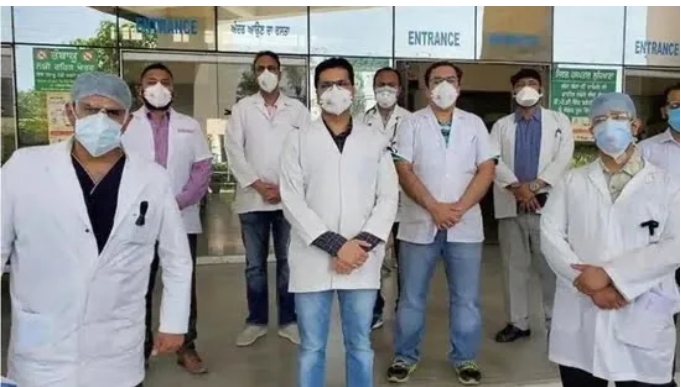
National Doctors’ Day was established by the Government of India back in 1991 in honour of the birth and death anniversary of the physician and the second Chief Minister of West Bengal, Dr Bidhan Chandra Roy. Since then, July 1 in India is marked as National Doctor’s Day to show gratitude to all doctors.

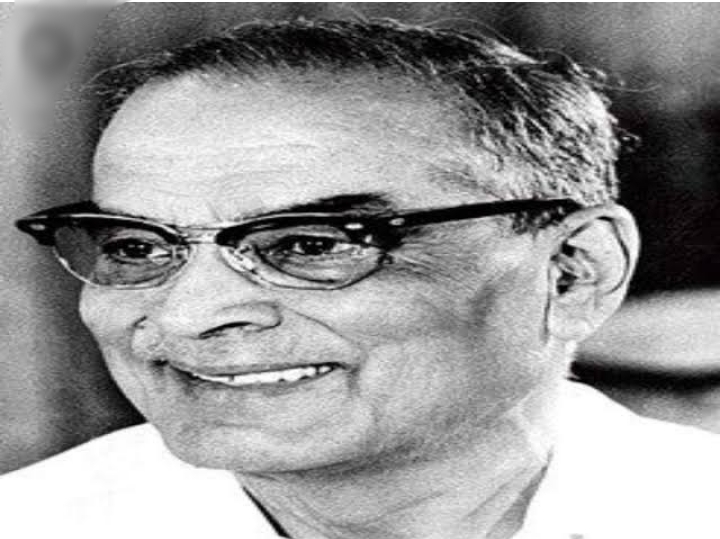
Dr. Bidhan Chandra Roy

Dr.Bidhan Chandra Roy was born on 1 July, 1882 and also died on the same date in 1962. On 4 February, 1961, he was honoured with India’s highest civilian award Bharat Ratna.

He was a highly respected physician and a renowned freedom fighter. He was the second Chief Minister of Bengal and remained around 14 years in his post from 1948 until his death in 1962. He is also considered the great architect of West Bengal. The five cities of West Bengal were also founded by him namely: Durgapur, Bidhannagar, Ashokenagar, Kalyani, and Habra. He was also a member of Brahmo Samaj. In the Medical College of Calcutta, he was an alumnus of the University of Calcutta. In his memory, the Union Government had also instituted an award. In 1928, he played an instrumental role in the establishment of the Indian Medical Association (IMA) and also in the establishment of the Medical Council of India (MCI).

At the time of the ongoing pandemic, doctors are at the forefront and leading the battle. Their commitment to keeping the nation safe and healthy in these challenging times is truly exceptional. Doctors have been fighting a long war from the frontlines against the pandemic, saving lives at the cost of their own. To pay a tribute to the selfless work done by doctors and to honour their dedication towards serving the humanity, the Government of India along with the Indian Medical Association (IMA), a national voluntary organisation of doctors in the country, celebrate National Doctors’ Day on July 1 every year.

It is even more difficult for the doctors who are working tirelessly to ensure that all those that are infected are provided with proper medical facilities. Their contributions and hard work deserve our gratitude each and every day.

It is truly said that we can’t see God but on Earth Doctor is like a God who cures us and gives us life to live in a better way.

This day provides us an opportunity to thank physicians, doctors that they do for the patients, the communities they work in, and for society as a whole. No doubt it is their hard work that keeps us all healthy.

Doctor’s Day celebration

National Doctor’s Day is celebrated by the Government and non-government healthcare organisations to get familiar with the doctor’s contributions. Healthcare organisations staff organises several events and activities on this day. For grand celebration on Doctor’s Day Rotary Club of the North Calcutta and North East Calcutta Social & Welfare Organization organises big events annually.

Free medical check-up camps are organised at various health care centers and public places by the health care organisations to promote quality medical services free of cost among the public. Rotational medical services by doctors are also promoted. Various discussion programs are organised across the country to make people aware of health check-ups, prevention, diagnosis, proper treatment of the disease, etc.

Various activities are also organised to make people aware of the priceless roles of doctors in everyone’s lives like a free blood test, random blood sugar test, ECG, EEG, blood pressure check-up and etc.

Several activities at schools and college levels are also organised to encourage youth to choose and dedicatedly follow the medical profession.

Malala Yousafzai’sTop 10 books

  1. I am Malala : BY MALALA YOUSAFZAI
I AM MALALA

The girl who stood up for Education and was shot by the Taliban.

2. Malala’s Magic Pencil by MALALA YOUSAFZAI

If I had a magic pencil I would use it to draw a better world, a more Peaceful World.

3. We are displaced by MALALA YOUSAFZAI

My journey and stories from refugee girls around the World.

4. I am Malala by MALALA YOUSAFZAI

How one girl stood up for Education and changed the world (Young Readers Edition)

5. Malala Yousafzai by MARIA ISBAL SANCHEZ

6. Crayon Magique de Malala by MALALA YOUSAFZAI

7. Malala by MALALA YOUSAFZAI

My story standing up for girls rights.

8. Oxford Bookworms Library fact files: Level 2 : Malala Yousafzai : Graded Readers for secondary and adult learners by RACHEL BLADON

9. Malala Yousafzai (She dared) by JENNI L WALSH

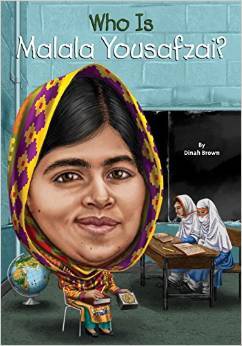
10. Who is Malala Yousafzai by DINAH BROWN

Lessons From My Favorite Book

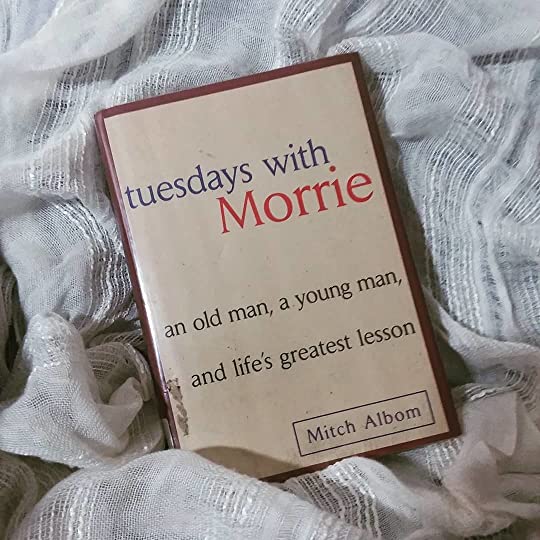
Tuesdays With Morrie by Mitch Albom

One should never underestimate the power of a good book. Books have the ability to help you discover your inner self. If you like books that force you to think about life and yourself, Tuesdays with Morrie is the book for you. Tuesdays with Morrie is my absolute favorite book. It is a memoir written by author Mitch Albom describing what his sociology professor, Morrie Schwartz taught him while he was slowly dying of ALS.

Here is a list of all the lessons I learnt from the book for which I will be forever grateful:

  • Stop feeling sorry for yourself: There are moments in our lives when everything seems to be out of control. During these moments we think about everything we have lost. However, Morrie taught me that it is okay to feel sorry for yourself but you must not focus on the bad part only. You should be grateful for everything good in your life especially during those low moments. Self-pity and loathing can rob you of everything good that’s going on.
  • Regrets: Regrets are a bigger part of our life than we admit. Spending your days thinking that if you did something differently your life would have been better now. These regrets have the capacity to eat you alive. If you stay hung up on the past mistakes, how will you ever have a better future. We are taught about forgiving others all our lives but why is forgiving so hard when it comes to forgiving ourselves. You must not torture yourself for a decision that could have gone either way. We cannot change our past because somethings are just out of our control. The healthy thing to do is move on and hope for a better future.
  • Death: “Learn how to die, and you learn how to live”, haven’t heard more accurate words. No one appreciates life like a person who is on their deathbed. They appreciate the little things in life that people generally take for granted.
  • Feel your emotions: Many a times we have these emotions that we aren’t able to let go. What I learnt is you should give yourself the freedom to feel them and have a good cry about it. Don’t let your emotions control you. As Morrie said, “Turn on the faucet. Wash yourself with emotions”.
  • Learn to Detach: This lesson is a bit complicated. It is about letting go and more. Morrie said that in order to let go of something, first you need to fully accept it. You need to let that experience, that emotion penetrate you and them you can detach yourself from it. If you don’t let yourself feel, you would never be able to let go because you would be nothing but afraid. Once you have felt it all, you would know that you need to detach yourself from that fear. Just step away.
  • Greed for Money: Since childhood we are taught that money cannot buy happiness but as we grow up we have learnt that buying things can bring you happiness but there is a catch. The happiness you feel is temporary. You use money to compensate for the love you never received. There is a difference between what we need and what we want. We must learn to separate the two. How much ever money you spend, you would never be able to receive the satisfaction you want because you would find yourself wanting more and more. And to be perfectly honest it is not entirely our fault because this is what we have been taught, “More is good”. In the words of Morrie, “Money is not a substitute for tenderness”. You must devote yourself to helping other people that is what would bring you real joy because only a life lived for someone is a life lived worthwhile.
  • Love: They say that people are never really gone, they stay alive in our hearts and it is absolutely true. Love is what keeps them alive always and forever.
  • Forgiveness: Forgiveness is tough. Whether it’s forgiving others or your own self, sometimes you just can’t gather the strength to wipe the slate clean. And yes I wrote ‘strength’. It takes a lot of courage to be the bigger man, to forget every exploitation and to move on. Morrie narrated a story where he and his friend had a falling out and how he regretted not giving him another chance before he died of cancer. Vengeance and pride can destroy you. These emotions are too heavy to be carried throughout your life. You need to make peace with everyone around you and then forgive yourself for everything you did wrong and everything you regret you didn’t do at all. Forgive those who hurt you and have the peace of mind you longed for before it’s too late.

One book, so many extraordinary lessons. Using any kind of adjective to describe this book would be an understatement. These kinds of books must be read, they must be felt and must be carried throughout life. That is the power of an exceptional book. I suggest you hurry and buy yourself a copy today.

Enjoy!!

How To Make Your System And Network Safe?

Network security management is the process of managing a network in such a manner that it is capable of dealing with all types of network threats and virus issues and solving them.

The following are the most important criteria to consider while ensuring the security of your system:

  1. Use Strong Passwords & Passphrases: To safeguard your system or network from malicious threats, create a strong password for login and access that includes a variety of letters, symbols, and numbers. Birthdays should not be used as a password since hackers may quickly crack them.
  2. Establish a Firewall: To secure your networking system from unauthorized access and other dangers, always establish a powerful firewall.
  3. Antivirus Protection: Antivirus software should always be installed on your computer and laptop. The antivirus program will scan, detect, and filter infected files, as well as resolve any issues that emerge as a result of viruses.
  4. Update Software: It’s important to keep your system and network up to date with the newest antivirus software and to install the latest patches and scripts for the system as needed. Virus threats will be less likely, and the network will be more secure as a result.
  5. Secure Mobile Devices: Mobile devices such as laptops, smartphones, and tablets are vulnerable to network attacks. To keep these gadgets safe, use a strong password to access their different resources. To gain access to smart devices, it is preferable to utilize a biometric fingerprint password.
  6. On-Time Backups: Files, documents, and other essential data on our system or hard drive should be backed up on a regular basis and saved to a centralised server or another secure location. This must be completed without fail. This will assist with the rapid restoration of the system in the event of an emergency.
  7. Smart Surfing on Websites: Before downloading or visiting any website on the Internet, we should keep in mind that a single incorrect click might invite a slew of viruses onto our network. As a result, always download material from trustworthy and secure sources, and stay away from unfamiliar links and websites. Also, whenever you connect to the Internet, avoid clicking on ads and offers that are regularly shown on online pages.
  8. Filter and Delete Spam Emails: Hacker-created phishing emails are designed to lure you to read them and click on exciting offers or links. Spam filters have come a long way and should be used to their full potential. Even yet, spam emails may get through, especially if a hacker is impersonating someone you know, such as a professional colleague or a firm with whom you do business.
  9. Encrypt Your Files: Using software particularly intended to disguise your IP address, encryption may safeguard critical data on Windows or macOS. Look for “HTTPS” in the URL bar, along with a padlock icon, to see if a website has been secured using encryption.
  10. Secure Configuration: The setup of devices such as routers, smart devices, and any other device that contains sensitive data must be very secure. Operating systems must be appropriately hardened. Passwords that are set by default must be updated.
  11. Removable Media Control: When introducing removable devices into the system, such as pen drives, dongles, and data cards, they should always be scanned. Removable gadgets should be used cautiously.
  12. Shut Down Computers When Not in Use: If your computer is linked to your company’s network and sits idle overnight, it becomes more visible and vulnerable to hackers. You’re restricting their access to your network by shutting off your PC. You’re also breaking their connection if they’ve already gotten access.

All about CMAT exam

Photo by Thirdman on Pexels.com

CMAT or the Common Management Admission Test is an aptitude test conducted by the National Testing Agency (NTA) for admission to MBA/PGDM courses in over 1,000 B-Schools across India.

Eligibility Criteria

  • The CMAT aspirant must have completed graduation in any discipline or equivalent from a recognized university
  • Final year Graduation students (10+2+3) are also eligible to apply for CMAT 2022 but they will have to present passing certificate at the time of admission

It evaluates a candidate’s ability in Quantitative Technique, Logical Reasoning, Language Comprehension and General Awareness areas. A new optional section on Innovation and Entrepreneurship with 25 questions of 30 minutes duration is also added.

  • The first option is of 3 hours Exam which is divided in 4 sections with 25 questions in each section. The sections are Quantitative Technique, Logical Reasoning, Language Comprehension and General Awareness
  • The second option is of 3½ hours exam which is divided in 5 sections with 25 questions in each section. The sections are Quantitative Technique, Logical Reasoning, Language Comprehension, General Awareness and Innovation and Entrepreneurship
  • There will be 100 questions for 3 hours exam and 125 questions for 3½ hours exam.
  • All are of objective type questions in MCQs form.
  • Question difficulty level is easy to moderate
  • Each correct answer is awarded +4 Mark
  • Each wrong answer is penalized with negative marking of -1 mark
  • No Individual Time limit to attempt question paper. Candidates can attempt any question from any section within the overall CMAT exam time limit
  • Merit Score and percentile is calculated on the basis of 4 sections.
  • CMAT score card displays Actual score obtained out of 400/500 Marks, Sectional score obtained and the sectional and overall percentile obtained in the Exam

Foreign Direct Investment

FDI stands for “Foreign Direct Investment”. It is an investment by foreign individual(s) or company(ies) into business, capital markets or production in the host country. FDI plays an important role in the economic development of a country. The capital inflow of foreign investors allows strengthening infrastructure, increasing productivity and creating employment opportunities in the Host country.

Foreign Direct Investment in India

Foreign direct investment policy in India is regulated under the Foreign Exchange Management Act (FEMA) 2000 administered by the Reserve Bank of India (RBI). India is one of the top five attractive location for investment. Japan bank of international cooperation continues to rate India as topmost promising country for overseas business operations.

The Government has put in place a policy framework on FDI which is transparent, Predictable, and easily comprehensible. The framework is embodied in circular which may be update.

How FDI works?

Foreign direct investments are commonly made in open economies that offer a skilled workforce and above average growth prospects for the investor, as opposed to tightly regulated economies. Foreign direct investment frequently involves more than just a capital investment. It may include provisions of management or technology as well. The key feature of foreign direct investment is that it establishes either effective control of or at least substantial influence over the decision-making of a foreign business.

Who can invest in India?

A non-resident can invest in India subject to FDI policy except in those sectors which are prohibited. An FII or FPI may invest in the capital of an Indian economy under the portfolio investment schemes which limits the individual holding FII or FPI below 10% of the capital of the Company. The aggregate limit of investment is 24% of the capital of the company. The aggregate limit can be increased to the sectorial cap as applicable by Indian company concerned through a resolution by its bord of director followed by special resolution to that effect and subject to prior intimation to RBI. However, a citizen of Bangladesh or an entity established in Bangladesh can invest only under government route.

* Recent amendments in FDI policy.

1. The amendments in FDI policy is to discourage opportunistic investment in Indian companies by neighbouring countries like china during the COVID-19 pandemic. 2. Recent China’s central bank has increased stake to 1.01% in HDFC bank via automatic route. 3. Revised FDI policy – Any entity of a country which shares land borders with India or where the beneficial owner of investment into India is Situated or is citizen of any such country can invest only under a Government Route.

Why Do We Need FDI?

1. Helps in balancing international payment:- FDI is the major source of foreign exchange inflow in the country. It offers a supreme benefit to country’s external borrowings as the government needs to repay the international debt with the interest over a particular period of time.

2. FDI boosts development in various fields:- For the development of an economy, it is important to have new technology, proper management and new skills. FDI allows bridging of the technology gap between foreign and domestic firms to boost the scale of production which is beneficial for the betterment of Indian economy.

3. FDI & Employment:- FDI allows foreign enterprises to establish their business in India. The establishment of these enterprises in the country generates employment opportunities for the people of India. Thus, the government facilitates foreign companies to set up their business entities in the country to empower Indian youth with new and improved skills.

4. FDI promotes exports from host country:- Foreign companies carry a broad international marketing network and marketing information which helps in promoting domestic products across the globe. Hence, FDI promotes the export-oriented activities that improve export performance of the country.

The Indian government has initiated steps to promote FDI as they set an investor-friendly policy where most of the sectors are open for FDI under the automatic route (meaning no need to take prior approval for investment by the Government or the Reserve Bank of India). The FDI policy is reviewed on a continuous basis with the purpose that India remains an investor-friendly and attractive FDI destination. FDI covers various sectors such as Defence, Pharmaceuticals, Asset Reconstruction Companies, Broadcasting, Trading, Civil Aviation, Construction and Retail, etc.

we can say that FDI plays a crucial role in the growth of Indian economy as it helps to bring new technologies, employment generation and improvement in business operations, etc.

AYURVEDIC MEDICINE:History and its importance

The word Ayurvedha is comprised of two Sanskrit terms “Ayur” means life, “veda” means science or knowledge.Ayurvedha is Explored Natural method for Improving the wellness of the body and Mind.It is believed that the Ancient Rishis or saints of india Received the gift of Ayurvedha from their Hindu Deities about 5000 years ago.Most of its essential Information about achieving a balanced and healthy life was obtained from Vedas,specifically the Artarva Vedha.

The Rishis ,saints and munis of the indian society dedicated their entire lives to understand and explore the truth about the universe.All their Knowledge and Practices to their students has been passed down and recorded their discoveries in the holy book of Vedas.The vedas are the oldest form of literature.The Artarva Veda is the book of Knowledge that india’s ancient medical Practices are studied and systematically Outlined.The Classics of Ayurveda consist of Charaka Samhita,sushruta Samhita,and Ashtanga Hridayam Sangraha.

CHARAKA SAMHITA:

The orginal texts of this book were thought to be written by Agnivesha, an Ayurvedic Scholar.It is believed that Agnivesha’s and his co-disciples created samihitas By adding their Knowledge to the subject.Charka later annotated Agnivesha’s work and focussed more on the diagnosis of the disease.He also detailed The medical value and qualities of over 10,000 Herbal Plants.

SUSHRUTA SAMHITA :

This samhitas explain the concept and practice of Surgery in ayurveda.Many modern Scolars and Researchers suggest that it was created around in middle of first BCE.Sushruta Samhita is composed of 184 chapters,300 types of operations,different surgical procedures , various kinds of instruments and kinds of medicines derived from animals,plants and Minerals.

ASHTANGA HRIDAYAM SANGRAHA:

This samhita was formed after the Charaka samhita and Sushruta Samhita were written.It mainly focuses on the kayachikista, the branch of ayurveda that specializes in internal Medicine.It also explains the qualities of various food,plants and animals in respect of their medicinal and Health benefits.

AYURVEDIC MEDICINE IN MODERN TIMES AND ITS IMPORTANCE:

The emergence of modern science has threatened Ayurveda’s integrity.Many researches conclude that Ayurveda and experimental evidence-based medicine should be combined together with innovative intiatives that explore preventive and personalized medicine.This modern medical Practices and remedies has also become significant price point,Ayurveda provides an excellent alternative for people who cannot afford the cost of modern medicine due to economic factors.Ayurveda’s influence is steadily seeping into societies internationally,it not only provide health benefits but it also offers a postive economic impacts.

Ayurveda was officially recognised by WHO(World Health Organization)in 1976.Ayurveda ,through diet and lifestyles balances stress and work under pressure which is vital for the present human era.It also leads to long term revitalizing energy in forms of relaxation,meditation,anti-aging,Healthy skin etc.Ayurveda provides a heal to all the diseases in a plain and healthy methods.Ayurveda is considered as one of the most ancient sciences of health and Medicine,also includes cosmetics.Ayurvedic Cosmetics as considered as safe solutions,no side effects to skin with use of natural herbs,long lasting impacts with beauty.

One of the challenges that Ayurveda faces in its developement is the standardization of its medicine .Medicinal Plants and herbs used in Ayurveda are also threatening the conservation of india’s flora.Despite the importance of these medicinal plants,the trade for them remains unorganized,unregulated.It is based on the indigenous theories, and experiences passed from one to other generation WHO continues to encourage the preservation and promotion of the Traditional medicine of each country.Ayurveda has importance with it’s own ways and how it is used for the required medications.

THANK YOU!

HISTORY OF CRICKET

Cricket is a global passion, played everywhere from Test match arenas to village greens, tropical beaches and dusty back lots. Just look at the varied cricket events sponsored by royal london: star-studded internationals for men and women; Britain’s club championship pairing 256 community teams, county cups for teens. It has a great history too…

LONG BACK

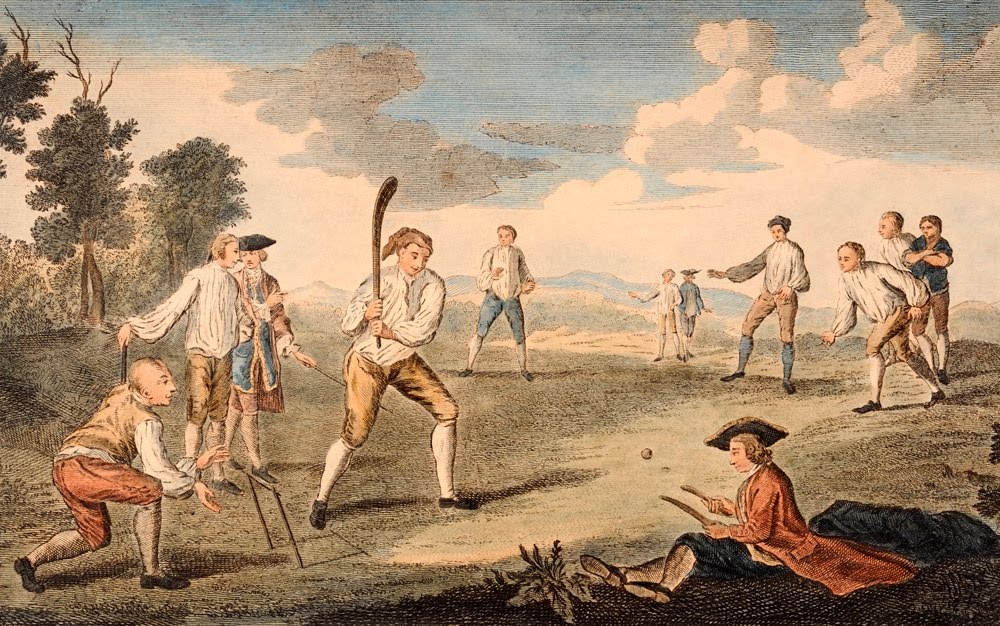
Cricket was first recorded in 16th-century England, and it was played in grammar schools, farm communities and everywhere in between. But things really took off when 18th-century nobles realised that not only was it a great sport but also an excellent opportunity for betting.

With sky-high stakes being wagered, it was deemed necessary to come up with agreed rules. The oldest surviving set of cricket laws date from 1744 – printed on a handkerchief, naturally. It’s now in the MCC Museum at Lord’s in London.

The oldest permanent fixture is the annual Eton v Harrow match, played since 1805. A young Lord Byron turned out for Harrow in the first match, though history doesn’t record how poetic – or “mad, bad and dangerous” – his bowling was.  

The first international match was in 1877 when Australia beat England in Melbourne. The match was dubbed a “Test”, since the gruelling nature of playing over five days was deemed the ultimate “test” for any side.

But it was Australia’s first win on English soil – in 1882 at The Oval in London – that led to matches between the two nations being christened the Ashes. Following the defeat, newspapers published an obituary mourning “the death of English cricket”, adding that “the body will be cremated and the ashes taken to Australia”.GREAT PLAYERS

GREAT PLAYERS

Cricket’s earliest star was WG Grace, who played 44 seasons from 1865 to 1908. Despite the game’s reputation as the epitome of fairness, Grace was as famous for his gamesmanship as his batting. He once ran three, then when the ball was flung in from the outfield, caught it, put it in his pocket and ran three more.

The top batsman in history is India’s Sachin Tendulkar, who retired in 2013 after scoring 15,921 runs in 200 Tests and 18,426 in 463 one-day internationals. He is the only player to have made 100 international centuries, was the first batsman to score a double century in a one-day International and is the only player to amass more than 30,000 international runs.

A special mention must go to West Indies’ legend Sir Garfield (Gary) Sobers, who became the first batsman to hit six sixes in a single over off six consecutive balls in first-class cricket, playing for Nottinghamshire against Glamorgan in 1968.

Mimesis in Aristotle’s Theory of Art [Part B]

In addition to imitation, representation and expression; mimetic activity produces appearance and illusion that affects the perception and behaviour of people, though this doesn’t negate Plato’s theory on the “realness” of imitation. For, though it is a common belief that perpetual experience allows us to have a closer look at the ‘real’ because works of art are encoded in such a way that humans are not duped into believing that they are the reality but rather recognise features from their own experience of the world within the work of art that cause the representation to seem valid and acceptable – not just existing object or element but beautifies, improves upon and universalises these artistic musings. Aristotle next explores how imitation gives knowledge not just only to the philosophers but to everyone, which in turn creates a delight. Art unlike Plato who dismisses the said notion of art as an imitative form brings about the best in an artist, in terms of how he produces art. It is also essential to note that Aristotle doesn’t put Mimesis in some hierarchical nomenclature like Plato who’d put it to the lowest level of stratification. In any Tragedy, Aristotle insists on a plot arousing Pity and Fear by spectacle/audience which adds more to comprehending imitation; the spectator need not see the object in person which though is crucial, isn’t a deal – breaker, as even a play which has this element of imitation – can convey the plot effectively this can. Be achieved by delivering the speech, actions, the chorus, setting and other elements in such a way that imitation of the desired idea is carried out with brilliance and would successfully be rousing the cathartic element of tragic pleasure is also an important idea with Mimesis.

He dwells upon how Art doesn’t reflect any aspect of natural life as origin of art to the human affinity is through imitation, and while doing so isn’t discarding or trampling is as something necessarily bad but is entirely critical of an artist. Furthermore, he speaks on The Theory of Art as a productive science — for Aristotle, something which only rational human beings can engage in — as the quality produced determines merit of Art, and so art in its absolute formation is acknowledged by Aristotle focusing on its imitative element, as all works of art are modes of mimesis. 

Mimesis in Aristotle’s Theory of Art [Part A]

Please make sure that you read cache up on the next post for more.

Aristotle in his Theory of Art reasons on the imitative nature of art; and further proposes that art imitates everything that is nature. In his theory he hints out that a poet, by his work tells us what is to happen unlike a historian who recites on what occurred in the past, which is put forth by Aristotle himself on the imitative nature of ‘poets’ work. The Oxford English Dictionary defines Mimesis as “a figure of speech, whereby words or actions of another are imitated” or “the deliberate imitation of the behaviour of one group of people by another as a factor in social change”. Mimicry as “the action, practice, or art of mimicking or closely imitating … the manner, gesture, speech, or mode of actions and persons, or the superficial characteristics of a thing” .
Aristotle focuses on the Mimetic nature of Art which isn’t a sole focus of Poetics, and while doing so, he had opposed to what Plato believed, that mimesis was manifested in ‘particulars’ which copies or imitates the forms from which they are derived; thus, the mimetic world (the world of representation and the world of structure of conscious experience) is inherently inferior in that it consists of imitations which will always be subordinate or auxiliary to their original. Aristotle, unlike Plato, has his own interpretation to the theory of imitation and thus doesn’t comply with what Plato presents when he talks about Mimesis. Aristotle has evidently accepted and agreed of the heterogeneous notion of art being produced by different artist differently, which gives a distinct identity to the theory of imitation and so he believes that an artist is responsible to birth an art form unlike Plato, who negates any form of Art – as it’s being thrice removed from reality. He contests these notions of reality and argues to the point that imitation is an extremely natural instinct in human nature, something very basic, the ability to imitate sets human beings apart from other animals and so not only it is natural to imitate it further helps to learn and simultaneously experience delight from it. In Poetics, what Aristotle has wrapped up for us isn’t a very definite answer, for what he means about ‘Mimesis’, instead has left it broad and elusive. Although various discussions on ‘Mimesis’ to be an integral fraction to the relationship between art and nature and to the relations governing works of art themselves. Therefore, we can assert the various species that Mimesis is distinguished in, i.e. Mean; Object; Mode of Imitation. Although for Aristotle, Imitation involves not merely physical resemblance, but also what one might call generally the relations between things or the ‘mechanism’ of things, he thus proposes the three key distinguishers through which one could filter imitations. Mean – is something a poet applies to his work of art, say Poetry and Dance, what distinguishes these two forms is; one requires spoken language to be at fruition and the other, not essentially emphasises on language and it thus could be substituted by music, similarly in Poetry difference in its metres or rhyme scheme and the structure in general could itself separately each genre from the other like Epics, Ballads or Elegy, et cetera. Next is Object of imitation – what the mean — the ‘matter’ of imitation — represent, and this would produce for better or worse or the same effect of the original piece imitated, here Aristotle points at the distinction of Tragedy and Comedy, for tragedy we’d need a better mode of imitation and for Comedy one uses caricature i.e. laughing at the object of imitation, to show an inferior or worse form of imitation to produce the choice effect. Further along is Means of imitation which in poem could be what the poet chooses as a form of delivering his work of imitation.

Is Literature taking us away from the real world?

Photo by Maria Orlova on Pexels.com

It is always considered that the people always acknowledge “ what is actual and reasonable” and in this instance often the imaginative world is denied by them!

Literature is not only a branch of academia which people are fond of for centuries but it has further become into a subject of the matter when it comes to fiction”. It is often unvalued by the fact that literature provides an absurd approach to the other branches of the world that believes in science and not in magical elements.

The fact that one should always remember is that the essence of literature is never gone even in spite of so many prejudices against it. Great writers Like John Donne, William Shakespeare, Rabindranath Tagore have upheld the pride of literature by their beautiful works.

Literature – A Backbone of the Inner society!

A very famous quote of all, which we have known for ages; “Literature is a mirror of society”, yet we forget this quote because non- Literature people are not very fond of poetry, essays, and novels. But one must know that Literature is not only a place for fictional lovers but also provides a reality of the real world.

Taking back to Chaucer’s age when writing was not so popular, yet “Canterbury Tales” was written and unexpectedly it turned out to be the legendary piece that literature holds to date. Being one of the best pieces of all, Canterbury tales was the background of the 14th-century society of England where people believe in god and considered god above humans.

When the English renaissance came people started to believe among themselves and considered humans and humanists as the great topic and wrote about them and their lives.

The whole background history is found in those classical works in the form of so called “Literature works”.

Now when people talk about the history and the consequences of the wars, it is literature that has preserved the whole history in several kinds of books that are cherished and protected by them who understood the purity of literature.

Every drop of works is poured into the petals of history and preserved by these eminent writers who contributed their emotions and portrayed the society of that era through their writings and contributed to the ocean of literature.

For some it’s a “Myth” :

There are several ideologies and theories are done in the matter of literature and they proved that literature is a myth as it doesn’t belong any place in the real world! So the question that arrives here is , what do literarians, bibliophiles and the readers think about?

This is a very controversial concern, as for some “Literature is an emotion which should be presevered for the coming eras, It is something to be conserved so that the coming generation would know the aesthetics of emotions, culture and people.

As the days are going by, the essence of humanity is decreasing day after the other, but certain emotional norms are still alive holding up because of literature, it is because of Great works like “Romeo and Juliet”, “Pride and Prejudice”, “Wuthering Heights”, that people still believe in love and its pure existence between two people. Even in this era where people are having an ill-fated relationship and are doomed by their own actions still believe that there are certain emotions present In them.

The world is a better place if people love each other and live in harmony. It is literature that teaches that still we all are humans and we should accept the fact that not everywhere facts and logical explanations are approved, rather it is emotional evidence that is more prominent.

Its time to save literature!

Every branch of academia is relevant in some way or the other which provides us the reality check of various elements present in the world , among them literature is one of them which still is remembered and exists in our society due to the tremendous works done by the crafters of literature ( The writers, poets).

Hiding it or erasing it would never be a good thing to do, as aestheticism always protected these works and still popular among people who believe in fantasy and poetry. It is rather a sense a catharsis which each reader goes through which is written by these dead writers.

Though the artists die, the art remains forever! Likewise, The art of literature can never be faded because the artist’s art is immortal, all we have to respond that we as ardent readers should make this immortal art live for many centuries and should never let them fade away in spite of any circumstances which the worlds demand us to do.

Cloud computing

Cloud computing is that the on-demand availableness of automatic data processing system resources, particularly knowledge storage and computing power, while not direct active management by the user. The term is usually wont to describe knowledge centers offered to several users over the web.

How will cloud computing work?

Rather than owning their own computing infrastructure or knowledge centers, firms will rent access to something from applications to storage from a cloud service supplier.

One good thing about victimisation cloud computing services is that corporations will avoid the direct value and complexness of owning and maintaining their own IT infrastructure, and instead merely buy what they use, after they use it.

In turn, suppliers of cloud computing services will have the benefit of vital economies of scale by delivering an equivalent services to a large vary of shoppers.

What square measure samples of cloud computing?

Cloud computing underpins a massive variety of services. that has client services like Gmail or the cloud back-up of the photos on your smartphone, tho’ to the services which permit giant enterprises to host all their knowledge and run all of their applications within the cloud. Netflix depends on cloud computing services to run its its video streaming service and its different business systems too, and have variety of different organisations.

How does one build a business case for cloud computing?

To build a business case for moving systems to the cloud you initially ought to perceive what your existing infrastructure truly prices. there is a ton to issue in: obvious things just like the value of running an information centers, and extras like hired lines. the value of physical hardware — servers and details of specifications like CPUs, cores and RAM, and the value of storage. you will additionally ought to calculate the value of applications — whether or not you propose to dump them, re-hosting them within the cloud unchanged, fully reconstruction them for the cloud or shopping for a completely new SaaS package every possibility can have totally different value implications. The cloud business case additionally has to embrace folks prices (often second solely to the infrastructure costs) and a lot of nebulous ideas just like the good thing about having the ability to supply new services quicker. Any cloud business case ought to additionally think about the potential downsides, as well as the danger of being fastened into one marketer for your technical school infrastructure.

The period taboo

Women are often told to not do certain things while they are menstruating. These things vary from not going to a temple, not entering the kitchen, to being treated like an untouchable. There are many homes where they have separate rooms, utensils for women menstruating. Nobody enters the room nor do they touch the things used by them. You might find it hard to believe but these things still happen and what’s worse is they are “normalised”.

Menstruation is normal, every woman goes through it every single month. So, why is it still looked down upon? Menstruation has been around for as long as the very existence of human beings. But still, people treat it like a taboo. Here are some things that prove that periods are still taboo.

Why do the commercials of sanitary products show the period blood blue? 

It is considered fine to show blood in movies during a fight but when it comes to period blood it is suddenly “sensitive content”.

Why in schools did we hide the sanitary napkin like it was something illegal? 

This one time in school a female teacher during a bag checking, picked my sanitary napkin and asked what’s this?

Why are sanitary napkins packed in newspaper, or a black bag like we are hiding something? 

Why do we have to hide the fact that we are menstruating from our brothers or father?

Why are menstruation products still so expensive for the women? 

In a lot of places women still have to use newspapers, cloths, rags, hay, or leaves because they cannot afford the sanitary products. The world has come so far yet it fails to provide necessities to the women who cannot afford them.

  • In India, 88% of women don’t have access to menstrual products.
  • 23% of the girls drop out of school after they start menstruating.

Some girls don’t even receive education on menstruation because it is an “uncomfortable” topic to talk about.

The women go through a hard time while menstruating. A lot of women get very painful cramps, that even pain killers do not help. While women go through this, society decided to treat women as impure and dirty while they are already dealing with so much.

I fail to see the justice in that. Society needs to be supportive and not make the girl hate herself for getting her periods.

I know that not everyone suffers from the issues I talked about. But, the majority of the women are going through this. So, it is our responsibility to raise awareness. We need to start talking about it, raising awareness, supporting films like Padman and advertisements like bleeding red: where Radhika Apte shows period blood as red instead of blue.

 Let’s normalise menstruation and help the women out. Raising awareness will bring more and more light to the issues and that is how we will be able to create change. This article is not just for women. It is also for the men, as a men make sure that the females in your family, or your partner, or your female friends know they can talk to you about menstruation. It should be a normal topic and not an uncomfortable taboo.

Breaking taboos is hard but it is something that is needed to be done.

I may not be able to change the mindsets of the people who are older and like to stick to old norms. But, I know I will be able to change the mindsets of the future generation.