Jurgen Klopp has hinted Virgil van Dijk is in line for a return as Liverpool gear up for their latest friendly clash, against Hertha Berlin.
Van Dijk hasn’t played for Liverpool since undergoing successful surgery on his cruciate ligament knee injury in October last year.
The 30-year-old missed the majority of the 2020-21 campaign as result and decided against lining up with the Netherlands at the European Championships in order to focus on his recovery, and Klopp has now revealed he is nearing a long-awaited comeback.
The Netherlands international could be in line to make his long-awaited return to action this week after a full recovery from knee surgery
One of the issues we face in understanding where we stand on surveillance is that none folks know exactly how we are being surveilled, and what the approaching years might bring. Surveillance technology is developing at breakneck speed, and what seemed science-fiction 10 years ago is today old news. As an idea experiment, consider a hypothetical government that demands that each citizen wears a biometric bracelet that monitors blood heat and heart-rate 24 hours each day. The resulting data is hoarded and analyzed by government algorithms. The algorithms will know that you simply are sick even before you recognize it, and that they also will know where you’ve got been, and who you’ve got met. The chains of infection might be drastically shortened, and even cut altogether. Such a system could arguably stop the epidemic in its tracks within days. Sounds wonderful, right? The downside is, of course, that this is able to give legitimacy to a terrifying new closed-circuit television. If you recognize, for instance, that I clicked on a Fox News link instead of a CNN link, which will teach you something about my politics and maybe even my personality. But if you’ll monitor what happens to my blood heat, vital signs and heart-rate as I watch the video clip, you’ll learn what makes me laugh, what makes me cry, and what makes me really, really angry. It is crucial to recollect that anger, joy, boredom and love are biological phenomena a bit like fever and a cough. an equivalent technology that identifies coughs could also identify laughs. If corporations and governments start harvesting our biometric data end bloc, they will get to understand us much better than we all know ourselves, and that they can then not just predict our feelings but also manipulate our feelings and sell us anything they need — be it a product or an official. Biometric monitoring would make Cambridge Analytica’s data hacking tactics appear as if something from the Stone Age. Imagine North Korea in 2030, when every citizen has got to wear a biometric bracelet 24 hours each day. If you hear a speech by the good Leader and therefore the bracelet picks up the tell-tale signs of anger, you’re finished. You could, of course, make the case for biometric surveillance as a short-lived measure taken during a state of emergency. it might get away once the emergency is over. But temporary measures have a nasty habit of outlasting emergencies, especially as there’s always a replacement emergency lurking on the horizon. My home country of Israel, for instance, declared a state of emergency during its 1948 War of Independence, which justified a variety of temporary measures from press censorship and land confiscation to special regulations for creating pudding (I kid you not). The War of Independence has long been won, but Israel never declared the emergency over, and has not abolished many of the “temporary” measures of 1948 (the emergency pudding decree was mercifully abolished in 2011). Even when infections from coronavirus are right down to zero, some data-hungry governments could argue they needed to stay the biometric surveillance systems in situ because they fear a second wave of coronavirus, or because there’s a replacement Ebola strain evolving in Central African Republic, or because . . . you get the thought. an enormous battle has been raging in recent years over our privacy. The coronavirus crisis might be the battle’s tipping point. For when people are given a choice between privacy and health, they’re going to usually choose health.
One of the issues we face in understanding where we stand on surveillance is that none folks know exactly how we are being surveilled, and what the approaching years might bring. Surveillance technology is developing at breakneck speed, and what seemed science-fiction 10 years ago is today old news. As an idea experiment, consider a hypothetical government that demands that each citizen wears a biometric bracelet that monitors blood heat and heart-rate 24 hours each day. The resulting data is hoarded and analyzed by government algorithms. The algorithms will know that you simply are sick even before you recognize it, and that they also will know where you’ve got been, and who you’ve got met. The chains of infection might be drastically shortened, and even cut altogether. Such a system could arguably stop the epidemic in its tracks within days. Sounds wonderful, right? The downside is, of course, that this is able to give legitimacy to a terrifying new closed-circuit television. If you recognize, for instance, that I clicked on a Fox News link instead of a CNN link, which will teach you something about my politics and maybe even my personality. But if you’ll monitor what happens to my blood heat, vital signs and heart-rate as I watch the video clip, you’ll learn what makes me laugh, what makes me cry, and what makes me really, really angry. It is crucial to recollect that anger, joy, boredom and love are biological phenomena a bit like fever and a cough. an equivalent technology that identifies coughs could also identify laughs. If corporations and governments start harvesting our biometric data end bloc, they will get to understand us much better than we all know ourselves, and that they can then not just predict our feelings but also manipulate our feelings and sell us anything they need — be it a product or an official. Biometric monitoring would make Cambridge Analytica’s data hacking tactics appear as if something from the Stone Age. Imagine North Korea in 2030, when every citizen has got to wear a biometric bracelet 24 hours each day. If you hear a speech by the good Leader and therefore the bracelet picks up the tell-tale signs of anger, you’re finished. You could, of course, make the case for biometric surveillance as a short-lived measure taken during a state of emergency. it might get away once the emergency is over. But temporary measures have a nasty habit of outlasting emergencies, especially as there’s always a replacement emergency lurking on the horizon. My home country of Israel, for instance, declared a state of emergency during its 1948 War of Independence, which justified a variety of temporary measures from press censorship and land confiscation to special regulations for creating pudding (I kid you not). The War of Independence has long been won, but Israel never declared the emergency over, and has not abolished many of the “temporary” measures of 1948 (the emergency pudding decree was mercifully abolished in 2011). Even when infections from coronavirus are right down to zero, some data-hungry governments could argue they needed to stay the biometric surveillance systems in situ because they fear a second wave of coronavirus, or because there’s a replacement Ebola strain evolving in Central African Republic, or because . . . you get the thought. an enormous battle has been raging in recent years over our privacy. The coronavirus crisis might be the battle’s tipping point. For when people are given a choice between privacy and health, they’re going to usually choose health.
The Past 5-10yrs. has been revolutionary for gaming scene in India. Thanks to low cost internet large amount of youngsters in India and cheap phones. Large companies like Microsoft,Sony,Nintendo are placing bets for their position and market share in India.
But how it all started? let’s start from the beginning
India is a large country with large amount of population with includes most of the youngsters but in early stages internet and computers were expensive. At that time cybercafé’s comes to game people started spending their in cafe’s because they were extremely cheap at that time merely 20-30 rupees for hour and facebook was thing at that time and small games like GTA,IGI Were the main game for public people invest most of their time in cafe playing those games, but after internet price reduction and smartphone revolution companies saw the potential to grow
Companies like Rockstar games,valve invested amount in india which became extremely successful, people started to get competitive in games like counterstrike and this is the part where gaming scene blew up-
At this time more than 500 million people are invested in gaming which leads to 40% growth in year(2016-2020) after launch of jio and pubg in mobiles it is expected to grow more.Venture capital funding for the Indian gaming startups stood at $350 mn between 2014-2020 and it is growing at a CAGR of 22%. The high internet penetration rate and low cost of internet play a major role in driving the online gaming sector in India.
Market share of consoles in India
Segments of digital games and sports in India are:
Casual Games: Casual game market represents 14.87% of total Indian gaming market
Other e-competitions (using real money): Online card games industry annually growing at 35-40%
Fantasy Sports: Over 90 million fantasy sports users at the end of 2019
E-sports: Currently, India estimated to have over 17 million esports user
Alone Krafton Gaming generated total operating revenues of $1.5 billion in 2020, or over Rs 11,000 crore. Out of this net turnover, PUBG Mobile alone accounted for 82 percent of the revenues due to this more companies like Activision(makers of COD mobile) also invested in India from launching their games to arranging gaming competition. And large companies like-oneplus,Acer started giving sponsorship to people and building high performance device at low cost for gamers which was extremely successful.
But the Question arises is there any career in gaming or should we take gaming as career or streamer?
the answer is it’ll take some time in india as it is in it’s budding stage but after 5-10 years career in gaming will be a thing in India as it is in other countries as it has potential and money in it.
Asking people to settle on between privacy and health is, in fact, the very root of the matter. Because this is often a false choice. we will and will enjoy both privacy and health. we will prefer to protect our health and stop the coronavirus epidemic not by instituting totalitarian surveillance regimes, but rather by empowering citizens. In recent weeks, a number of the foremost successful efforts to contain the coronavirus epidemic were orchestrated by South Korea, Taiwan and Singapore. While these countries have made some use of tracking applications, they have relied much more on extensive testing, on honest reporting, and on the willing cooperation of a well-informed public. Centralized monitoring and harsh punishments aren’t the sole thanks to make people suit beneficial guidelines. When people are told the scientific facts, and when people trust public authorities to inform them these facts, citizens can do the proper thing even without an enormous Brother watching over their shoulders. A self-motivated and well-informed population is typically much more powerful and effective than a policed, ignorant population. Consider, for instance, washing your hands with soap. This has been one among the best advances ever in human hygiene. This easy action saves many lives per annum. While we take it without any consideration, it had been only within the 19th century that scientists discovered the importance of washing hands with soap.
Previously, even doctors and nurses proceeded from one surgery to subsequent without washing their hands. Today billions of individuals daily wash their hands, not because they’re scared of the soap police, but rather because they understand the facts. I wash my hands with soap because I have even heard of viruses and bacteria. I understand that these tiny organisms cause diseases, and that I know that soap can remove them. But to realize such A level of compliance and co-operation, you would like trust. People got to trust science, to trust public authorities, and to trust the media. Over the past few years, irresponsible politicians have deliberately undermined trust in science, publicly authorities and within the media. Now these same irresponsible politicians could be tempted to require the high road to authoritarianism, arguing that you simply just cannot trust the general public to try to do the proper thing. Normally, trust that has been eroded for years can’t be rebuilt overnight. But these aren’t normal times. During a moment of crisis, minds can also change quickly. you’ll have bitter arguments together with your siblings for years, but when some emergency occurs, you suddenly discover a hidden reservoir of trust and amity, and you rush to assist each other. rather than building a surveillance regime, it’s not too late to rebuild people’s trust in science, publicly authorities and within the media. We should always definitely make use of the latest technologies too, but these technologies should empower citizens. I’m beat in favor of monitoring my blood heat and vital signs, but that data shouldn’t be wont to create an all-powerful government. Rather, that data should enable me to form more informed personal choices, and also to carry the government in charge of its decisions. If I could track my very own medical condition 24 hours each day, I might learn not only whether I even have become a hazard to people, but also which habits contribute to my health. And if I could access and analyse reliable statistics on the spread of coronavirus, I might be ready to judge whether the government is telling me the reality and whether it’s adopting the proper policies to combat the epidemic. Whenever people mention surveillance, remember that an equivalent surveillance technology can usually be used not only by governments to watch individuals — but also by individuals to watch governments. The coronavirus epidemic is thus a serious test of citizenship. Within the days ahead, all folks should prefer to trust scientific data and healthcare experts over unfounded conspiracy theories and self-serving politicians. If we fail to form the proper choice, we’d find ourselves signing away our most precious freedoms, thinking that this is often the sole thanks to safeguard
Asking people to settle on between privacy and health is, in fact, the very root of the matter. Because this is often a false choice. we will and will enjoy both privacy and health. we will prefer to protect our health and stop the coronavirus epidemic not by instituting totalitarian surveillance regimes, but rather by empowering citizens. In recent weeks, a number of the foremost successful efforts to contain the coronavirus epidemic were orchestrated by South Korea, Taiwan and Singapore. While these countries have made some use of tracking applications, they have relied much more on extensive testing, on honest reporting, and on the willing cooperation of a well-informed public. Centralized monitoring and harsh punishments aren’t the sole thanks to make people suit beneficial guidelines. When people are told the scientific facts, and when people trust public authorities to inform them these facts, citizens can do the proper thing even without an enormous Brother watching over their shoulders. A self-motivated and well-informed population is typically much more powerful and effective than a policed, ignorant population. Consider, for instance, washing your hands with soap. This has been one among the best advances ever in human hygiene. This easy action saves many lives per annum. While we take it without any consideration, it had been only within the 19th century that scientists discovered the importance of washing hands with soap.
Previously, even doctors and nurses proceeded from one surgery to subsequent without washing their hands. Today billions of individuals daily wash their hands, not because they’re scared of the soap police, but rather because they understand the facts. I wash my hands with soap because I have even heard of viruses and bacteria. I understand that these tiny organisms cause diseases, and that I know that soap can remove them. But to realize such A level of compliance and co-operation, you would like trust. People got to trust science, to trust public authorities, and to trust the media. Over the past few years, irresponsible politicians have deliberately undermined trust in science, publicly authorities and within the media. Now these same irresponsible politicians could be tempted to require the high road to authoritarianism, arguing that you simply just cannot trust the general public to try to do the proper thing. Normally, trust that has been eroded for years can’t be rebuilt overnight. But these aren’t normal times. During a moment of crisis, minds can also change quickly. you’ll have bitter arguments together with your siblings for years, but when some emergency occurs, you suddenly discover a hidden reservoir of trust and amity, and you rush to assist each other. rather than building a surveillance regime, it’s not too late to rebuild people’s trust in science, publicly authorities and within the media. We should always definitely make use of the latest technologies too, but these technologies should empower citizens. I’m beat in favor of monitoring my blood heat and vital signs, but that data shouldn’t be wont to create an all-powerful government. Rather, that data should enable me to form more informed personal choices, and also to carry the government in charge of its decisions. If I could track my very own medical condition 24 hours each day, I might learn not only whether I even have become a hazard to people, but also which habits contribute to my health. And if I could access and analyse reliable statistics on the spread of coronavirus, I might be ready to judge whether the government is telling me the reality and whether it’s adopting the proper policies to combat the epidemic. Whenever people mention surveillance, remember that an equivalent surveillance technology can usually be used not only by governments to watch individuals — but also by individuals to watch governments. The coronavirus epidemic is thus a serious test of citizenship. Within the days ahead, all folks should prefer to trust scientific data and healthcare experts over unfounded conspiracy theories and self-serving politicians. If we fail to form the proper choice, we’d find ourselves signing away our most precious freedoms, thinking that this is often the sole thanks to safeguard
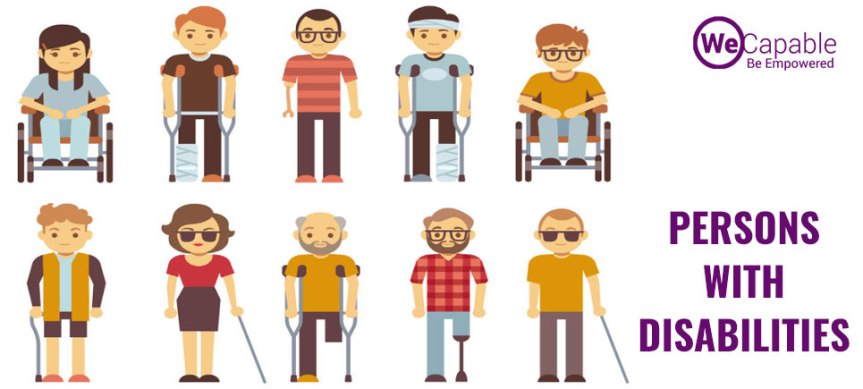
Person with disabilities is considered a person who has different abilities to perform a task. Sometimes different abled people are born but sometimes they meet with an accident which causes the disability. A person can have one and more disabilities in themselves. There could be cured and uncured disabilities.
In India the disabilities are connected with karma. If a person has some defect they might do something wrong in their past life. The karma concept believed that a person with disabilities must do some good thing so they can overcome their disabilities in upcoming life. The disable person should only focus on God so they get forgiven from god.
Earlier, the education system also excluded people with disabilities. They had an idea that PwD must have a different environment for their education. Their disabilities must affect the other children. Earlier the disabilities were considered touchable. So the school administration and parents do not want to include the people with disabilities in their so called normal children education system.
The video shares an idea of inclusion at every level of society. People with disabilities discussed their struggles to get education along with their parents. They put focus on the obstacles they had in their life. The video shows that hardly only parents accept children’s disabilities and love them as the other children of the family.
The story of Krishna kanth and Sai Prasad who were accepted by their parents with their disability and were encouraged to study in normal school. They said our children are our pride. No matter what they are, how they are- only the thing that matters is that they are our children. Acceptance of the people with disabilities at home is important to their development. The love and care they get from their parents helps them to fight with their circumstances. As a family we don’t need to feel ashamed, instead we must feel proud that we have a person who has different abilities in itself.
In our education system disabilities are considered as special cases. They don’t want to admit children with disabilities. They said we don’t have teaching staff and proper infrastructure for special needs children.
The inequality is not only in the rural area urban education system but also part of this injustice. In rural areas, parents are economically weak; they can’t afford a special educator and any other alternative. Due to weak economic conditions both parents have to work. In that case, one of the siblings has to live at home to take care of the other child. In the end both the children remain uneducated.
In urban areas, parents have enough money but the schools don’t want to admit their children who have any disabilities. They considered the children with disabilities as the problem. They thought that their school image would be ruined because of people with disabilities.
Rekha Shani (trustee of a school) gave a statement that we have not any issue or problem but the parents of other children deny. They said if the school admitted disable people in school or college we would not let our children go there. The statement shows how society thinks about people with disabilities. They don’t see them with their children. The inequality is the reason many bright differently abled people are moved aboard or remain in darkness of life. Behaviour of society must be more positive toward the people with disabilities. Society is not only doing injustice to them but also other children missed the chance to learn many things from them.
We should involve the inclusive education in our society and education system as the mandatory level.
Uma tuli the founder of Amar Jyoti foundation new delhi said when I started the inclusive education under a tree with 30 students in which 15 children were differently abled and 15 were other people said the madam is mad. How could she teach those children with so-called normal children? But she was so determined to do her work that she opened an inclusive school for all children. The parents of other children are also happy that our children get a chance to learn more with the different abled children. The infrastructure of the school is designed to be considered for all the disabilities such as tactile path for blind children, enough length and width of stairs and gate, ramps for wheelchairs, special educator for differently abled children.
People with disabilities often face physical abuse and mental harassment by the family or by society. We should encourage them, not motivate them.
Governments play an important role to promote inclusive education among the schools. There are some policies and acts are
Samagra shiksha abhiyan – launched in 2018-19 by MHRD. It is an integrated scheme which promotes inclusive education in the school system. The scheme is regulated by RTE 2009.
Right to education- Right to free and compulsory education 2012 as per amendment, all the children ( differently abled) have right to get education. No school can deny the children in the school.
As per the Amendment of 2012, the RTE Act also mandates that a child with multiple and/or severe disabilities has the right to opt for home-based education.
Conclusion
In the video clip we discussed what challenges faced by the person with disabilities. Society focused on the karma concept.
It’s the brain of other people who have become disable who can’t accept the diversity .
So it’s the people who are disable to see the special abilities of these children because it’s not the children who are disable it’s the environment and people’s minds who are not providing the appropriate environment. As we know all 5 fingers are different similarly all children are different and have different abilities .
Everyone should have faith in themselves and accept themselves as they are instead of feeling low or inferior .
The external help or sympathy shouldn’t come out of pity but from the heart.
So inclusion is not about the writing on paper but it’s important to bring inclusion in practice , action .
Person with disabilities is considered a person who has different abilities to perform a task. Sometimes different abled people are born but sometimes they meet with an accident which causes the disability. A person can have one and more disabilities in themselves. There could be cured and uncured disabilities.
In India the disabilities are connected with karma. If a person has some defect they might do something wrong in their past life. The karma concept believed that a person with disabilities must do some good thing so they can overcome their disabilities in upcoming life. The disable person should only focus on God so they get forgiven from god.
Earlier, the education system also excluded people with disabilities. They had an idea that PwD must have a different environment for their education. Their disabilities must affect the other children. Earlier the disabilities were considered touchable. So the school administration and parents do not want to include the people with disabilities in their so called normal children education system.
The video shares an idea of inclusion at every level of society. People with disabilities discussed their struggles to get education along with their parents. They put focus on the obstacles they had in their life. The video shows that hardly only parents accept children’s disabilities and love them as the other children of the family.
The story of Krishna kanth and Sai Prasad who were accepted by their parents with their disability and were encouraged to study in normal school. They said our children are our pride. No matter what they are, how they are- only the thing that matters is that they are our children. Acceptance of the people with disabilities at home is important to their development. The love and care they get from their parents helps them to fight with their circumstances. As a family we don’t need to feel ashamed, instead we must feel proud that we have a person who has different abilities in itself.
In our education system disabilities are considered as special cases. They don’t want to admit children with disabilities. They said we don’t have teaching staff and proper infrastructure for special needs children.
The inequality is not only in the rural area urban education system but also part of this injustice. In rural areas, parents are economically weak; they can’t afford a special educator and any other alternative. Due to weak economic conditions both parents have to work. In that case, one of the siblings has to live at home to take care of the other child. In the end both the children remain uneducated.
In urban areas, parents have enough money but the schools don’t want to admit their children who have any disabilities. They considered the children with disabilities as the problem. They thought that their school image would be ruined because of people with disabilities.
Rekha Shani (trustee of a school) gave a statement that we have not any issue or problem but the parents of other children deny. They said if the school admitted disable people in school or college we would not let our children go there. The statement shows how society thinks about people with disabilities. They don’t see them with their children. The inequality is the reason many bright differently abled people are moved aboard or remain in darkness of life. Behaviour of society must be more positive toward the people with disabilities. Society is not only doing injustice to them but also other children missed the chance to learn many things from them.
We should involve the inclusive education in our society and education system as the mandatory level.
Uma tuli the founder of Amar Jyoti foundation new delhi said when I started the inclusive education under a tree with 30 students in which 15 children were differently abled and 15 were other people said the madam is mad. How could she teach those children with so-called normal children? But she was so determined to do her work that she opened an inclusive school for all children. The parents of other children are also happy that our children get a chance to learn more with the different abled children. The infrastructure of the school is designed to be considered for all the disabilities such as tactile path for blind children, enough length and width of stairs and gate, ramps for wheelchairs, special educator for differently abled children.
People with disabilities often face physical abuse and mental harassment by the family or by society. We should encourage them, not motivate them.
Governments play an important role to promote inclusive education among the schools. There are some policies and acts are
Samagra shiksha abhiyan – launched in 2018-19 by MHRD. It is an integrated scheme which promotes inclusive education in the school system. The scheme is regulated by RTE 2009.
Right to education- Right to free and compulsory education 2012 as per amendment, all the children ( differently abled) have right to get education. No school can deny the children in the school.
As per the Amendment of 2012, the RTE Act also mandates that a child with multiple and/or severe disabilities has the right to opt for home-based education.
Conclusion
In the video clip we discussed what challenges faced by the person with disabilities. Society focused on the karma concept.
It’s the brain of other people who have become disable who can’t accept the diversity .
So it’s the people who are disable to see the special abilities of these children because it’s not the children who are disable it’s the environment and people’s minds who are not providing the appropriate environment. As we know all 5 fingers are different similarly all children are different and have different abilities .
Everyone should have faith in themselves and accept themselves as they are instead of feeling low or inferior .
The external help or sympathy shouldn’t come out of pity but from the heart.
So inclusion is not about the writing on paper but it’s important to bring inclusion in practice , action .
(i) Introduction– Different substance affects the body in different ways, but all psychoactive drugs have chemical effects on the human body as well. The short-term effects that occur in drug users depend on the quantity they use and also whether it is mixed with any other mind-altering substances. Drugs have serious effects on the human body. It affects the thinking, mood, energy level, and also behavior of the person and sometimes also makes the human unconscious for several days and even further.
(ii) Physical harm from drug use:- Durg use can lead to risky and or out-of-character behavior. When affected by drug:
• One is more likely to have an accident wherever you are.
• One can commit sexual assault or other violent act.
• One may find unable to sleep, think, remember and solve the problem.
Drugs can also result in long-term health problems that include:
• harm to organs and systems of our body such as throat, stomach, lungs, liver, heart, brain, pancreas, and nervous system, etc.
• May cause cancer or other serious illness.
(iii) Addiction of drugs- All drugs cocaine, marijuana affects the brain. The brain reward circuit is a part of the limbic system. Drugs target this system causing a large amount of dopamine release, this flood of dopamine cause a high intoxication in the brain again and again and also from time to time. Although initial drug use may not be voluntary drugs. But continuous intoxication of the drugs makes the human body addicted to them which may affect the health of that particular person badly. And the addition can also become a cause of murder, robbery cases, etc.
Different drugs, different effects:- The three main types are depressants, hallucinogens, and stimulants.
• Depressants- It slowdowns or depress the functions of the nervous system. They slow down the massage going to and from the brain. In small quantities, depressants can cause a feel relaxed and less inhibited. In large quantities, it can cause vomiting, unconsciousness, or even death.
• hallucinogens- Distort one’s sense of reality. You can see or feel or hear things that are not real, or see things in a distorted way. Other effects include emotional and psychological euphoria, panic, upset, or nausea. Keta mine, LSD, PCP, magic mushrooms, and cannabis are some examples of hallucinogens.
• Stimulants- Stimulate the central nervous system. They speed up massaging to and from the brain, which makes one feel more alter and confident. This can cause an increase to heart rate, blood pressure, and body temperature.
(iv) Conclusion:- Our body executes a natural cycle. And if we disturb this cycle, then it abruptly affects the working of the body. Taking drugs may sound cool for a while, but can cause serious illness for a lifetime. It can also lead to the death of an individual. Resisting these drugs at parties and celebrations is warned. Especially youth shouldn’t engage themselves in such activities which lead to the massive destruction of the one’s precious life.
(i) Introduction– Different substance affects the body in different ways, but all psychoactive drugs have chemical effects on the human body as well. The short-term effects that occur in drug users depend on the quantity they use and also whether it is mixed with any other mind-altering substances. Drugs have serious effects on the human body. It affects the thinking, mood, energy level, and also behavior of the person and sometimes also makes the human unconscious for several days and even further.
(ii) Physical harm from drug use:- Durg use can lead to risky and or out-of-character behavior. When affected by drug:
• One is more likely to have an accident wherever you are.
• One can commit sexual assault or other violent act.
• One may find unable to sleep, think, remember and solve the problem.
Drugs can also result in long-term health problems that include:
• harm to organs and systems of our body such as throat, stomach, lungs, liver, heart, brain, pancreas, and nervous system, etc.
• May cause cancer or other serious illness.
(iii) Addiction of drugs- All drugs cocaine, marijuana affects the brain. The brain reward circuit is a part of the limbic system. Drugs target this system causing a large amount of dopamine release, this flood of dopamine cause a high intoxication in the brain again and again and also from time to time. Although initial drug use may not be voluntary drugs. But continuous intoxication of the drugs makes the human body addicted to them which may affect the health of that particular person badly. And the addition can also become a cause of murder, robbery cases, etc.
Different drugs, different effects:- The three main types are depressants, hallucinogens, and stimulants.
• Depressants- It slowdowns or depress the functions of the nervous system. They slow down the massage going to and from the brain. In small quantities, depressants can cause a feel relaxed and less inhibited. In large quantities, it can cause vomiting, unconsciousness, or even death.
• hallucinogens- Distort one’s sense of reality. You can see or feel or hear things that are not real, or see things in a distorted way. Other effects include emotional and psychological euphoria, panic, upset, or nausea. Keta mine, LSD, PCP, magic mushrooms, and cannabis are some examples of hallucinogens.
• Stimulants- Stimulate the central nervous system. They speed up massaging to and from the brain, which makes one feel more alter and confident. This can cause an increase to heart rate, blood pressure, and body temperature.
(iv) Conclusion:- Our body executes a natural cycle. And if we disturb this cycle, then it abruptly affects the working of the body. Taking drugs may sound cool for a while, but can cause serious illness for a lifetime. It can also lead to the death of an individual. Resisting these drugs at parties and celebrations is warned. Especially youth shouldn’t engage themselves in such activities which lead to the massive destruction of the one’s precious life.
We have often heard about the word PTSD which is abbreviated as posttraumatic stress disorder. According to WHO, Posttraumatic stress disorder is a psychiatric disorder that may occur in individuals who have experienced or witnessed a distressing event such as a natural disaster , an accident ,maybe a war or rape or have been threatened with death, sexual assault or serious injury. In 1980,the American psychiatric association added PTSD to the third edition of its Diagnostic and Statistical Manual of Mental Disorder(DSM-III)
This kind of stress disorder can affect those people who have personally experienced such trauma which may have affected their mental health in an adverse manner. It can occur in the friends or family members of those who have went through such traumatic event.
What causes PTSD?
When you experiences a tough moment, your nervous system reacts with the fight-or-flight response. Your heart start beating faster and your blood pressure starts rising along your muscles getting tighten, increase your strength and reaction speed .Once the body feels the danger is passed your nervous system calms your body, lowering your heart and blood pressure, recovers to its normal state.
Signs and symptoms of PTSD
PTSD symptoms differ from person to person because everyone’s nervous system and level for stress tolerance can be different. Most likely to develop posttraumatic stress disorder symptom in the hours or days following a traumatic event. It can even take year before they appear. People having such disorder get triggered by something that reminds them of their original traumatic event, such as noise or an image, a word or even a smell.
While everyone experiencing PTSD differently, there are primarily three types of symptoms which are following
1.Re-experiencing the traumatic event through bad memories, flashback and nightmares
2.Avoidance and numbing , such as avoiding those thing which reminds you of the trauma, feeling emotionally numb and detached from others
3.Hyperarousal which includes sleeping problems, constantly getting irritated, anger issues, self destructive or reckless behaviour
Curative Measures for PTSD
There is no definite care for PTSD ,but there are many types of treatment available that can lessen the symptoms. Also there are various therapy techniques, as well as evidence shows right medication can be beneficial for people struggling with symptoms of PTSD.
These treatment method are used to minimize, or even eliminate, distressing symptoms that people with Posttraumatic Stress Disorder often experience.
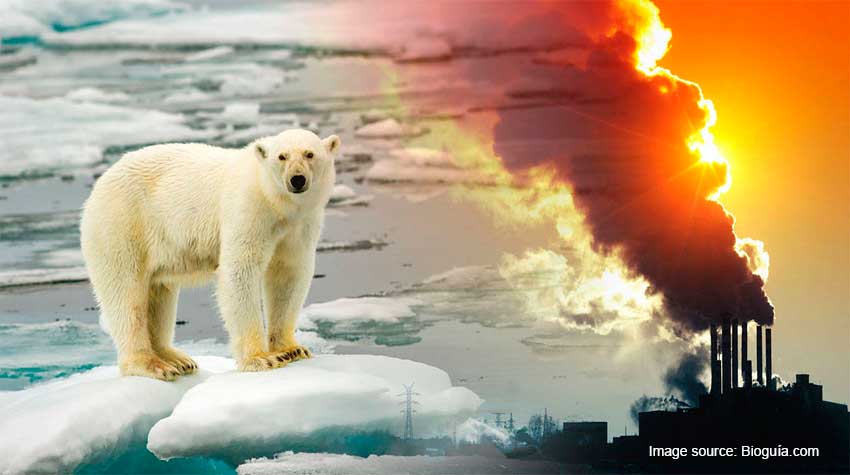
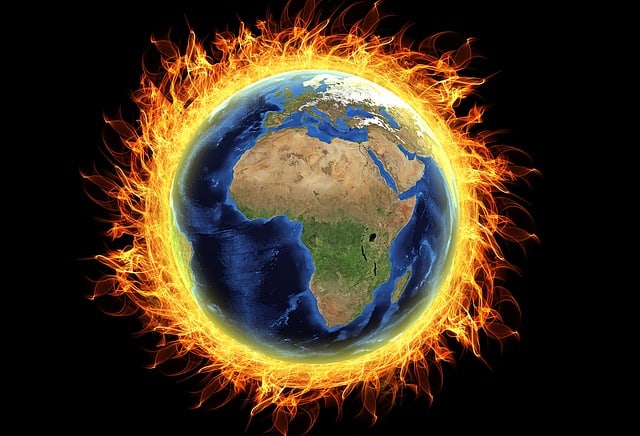
Climate change” and “global warming” are often used interchangeably but have distinct meanings. Similarly, the terms "weather" and "climate" are sometimes confused, though they refer to events with broadly different spatial- and timescales.
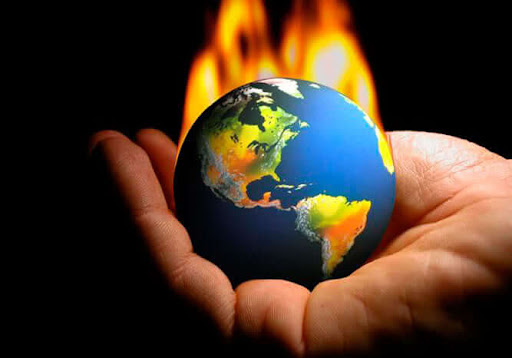
Global warming is the long-term heating of Earth’s climate system observed since the pre-industrial period (between 1850 and 1900) due to human activities, primarily fossil fuel burning, which increases heat-trapping greenhouse gas levels in Earth’s atmosphere. The term is frequently used interchangeably with the term climate change, though the latter refers to both human- and naturally produced warming and the effects it has on our planet. It is most commonly measured as the average increase in Earth’s global surface temperature.
Since the pre-industrial period, human activities are estimated to have increased Earth’s global average temperature by about 1 degree Celsius (1.8 degrees Fahrenheit), a number that is currently increasing by 0.2 degrees Celsius (0.36 degrees Fahrenheit) per decade. Most of the current warming trend is extremely likely (greater than 95 percent probability) the result of human activity since the 1950s and is proceeding at an unprecedented rate over decades to millennia.
Changes observed in Earth’s climate since the early 20th century are primarily driven by human activities, particularly fossil fuel burning, which increases heat-trapping greenhouse gas levels in Earth’s atmosphere, raising Earth’s average surface temperature. These human-produced temperature increases are commonly referred to as global warming. Natural processes can also contribute to climate change, including internal variability (e.g., cyclical ocean patterns like El Niño, La Niña and the Pacific Decadal Oscillation) and external forcings (e.g., volcanic activity, changes in the Sun’s energy output, variations in Earth’s orbit).
Scientists use observations from the ground, air and space, along with theoretical models, to monitor and study past, present and future climate change. Climate data records provide evidence of climate change key indicators, such as global land and ocean temperature increases; rising sea levels; ice loss at Earth’s poles and in mountain glaciers; frequency and severity changes in extreme weather such as hurricanes, heat waves, wildfires, droughts, floods and precipitation; and cloud and vegetation cover changes, to name but a few.
Climate change is a long-term change in the average weather patterns that have come to define Earth’s local, regional and global climates. These changes have a broad range of observed effects that are synonymous with the term.
Since the Industrial Revolution, the global annual temperature has increased in total by a little more than 1 degree Celsius, or about 2 degrees Fahrenheit. Between 1880—the year that accurate recordkeeping began—and 1980, it rose on average by 0.07 degrees Celsius (0.13 degrees Fahrenheit) every 10 years. Since 1981, however, the rate of increase has more than doubled: For the last 40 years, we’ve seen the global annual temperature rise by 0.18 degrees Celsius, or 0.32 degrees Fahrenheit, per decade.
The result? A planet that has never been hotter. Nine of the 10 warmest years since 1880 have occurred since 2005—and the 5 warmest years on record have all occurred since 2015. Climate change deniers have argued that there has been a “pause” or a “slowdown” in rising global temperatures, but numerous studies, including a 2018 paper published in the journal Environmental Research Letters, have disproved this claim. The impacts of global warming are already harming people around the world.
Now climate scientists have concluded that we must limit global warming to 1.5 degrees Celsius by 2040 if we are to avoid a future in which everyday life around the world is marked by its worst, most devastating effects: the extreme droughts, wildfires, floods, tropical storms, and other disasters that we refer to collectively as climate change. These effects are felt by all people in one way or another but are experienced most acutely by the underprivileged, the economically marginalized, and people of color, for whom climate change is often a key driver of poverty, displacement, hunger, and social unrest.
Global warming occurs when carbon dioxide (CO2) and other air pollutants collect in the atmosphere and absorb sunlight and solar radiation that have bounced off the earth’s surface. Normally this radiation would escape into space, but these pollutants, which can last for years to centuries in the atmosphere, trap the heat and cause the planet to get hotter. These heat-trapping pollutants—specifically carbon dioxide, methane, nitrous oxide, water vapor, and synthetic fluorinated gases—are known as greenhouse gases, and their impact is called the greenhouse effect.
In 2015, for example, scientists concluded that a lengthy drought in California—the state’s worst water shortage in 1,200 years—had been intensified by 15 to 20 percent by global warming. They also said the odds of similar droughts happening in the future had roughly doubled over the past century. And in 2016, the National Academies of Science, Engineering, and Medicine announced that we can now confidently attribute some extreme weather events, like heat waves, droughts, and heavy precipitation, directly to climate change.
The earth’s ocean temperatures are getting warmer, too—which means that tropical storms can pick up more energy. In other words, global warming has the ability to turn a category 3 storm into a more dangerous category 4 storm. In fact, scientists have found that the frequency of North Atlantic hurricanes has increased since the early 1980s, as has the number of storms that reach categories 4 and 5. The 2020 Atlantic hurricane season included a record-breaking 30 tropical storms, 6 major hurricanes, and 13 hurricanes altogether. With increased intensity come increased damage and death. The United States saw an unprecedented 22 weather and climate disasters that caused at least a billion dollars’ worth of damage in 2020, but 2017 was the costliest on record and among the deadliest as well: Taken together, that year's tropical storms (including Hurricanes Harvey, Irma, and Maria) caused nearly $300 billion in damage and led to more than 3,300 fatalities.
Global warming can be controlled by Replacing one regular light bulb with a compact fluorescent light bulb will save 150 pounds of carbon dioxide a year. Walk, bike, carpool or take mass transit more often. You'll save one pound of carbon dioxide for every mile you don't drive! You can save 2,400 pounds of carbon dioxide per year by recycling just half of your household waste. A single tree will absorb one ton of carbon dioxide over its lifetime.
We have often heard about the word PTSD which is abbreviated as posttraumatic stress disorder. According to WHO, Posttraumatic stress disorder is a psychiatric disorder that may occur in individuals who have experienced or witnessed a distressing event such as a natural disaster , an accident ,maybe a war or rape or have been threatened with death, sexual assault or serious injury. In 1980,the American psychiatric association added PTSD to the third edition of its Diagnostic and Statistical Manual of Mental Disorder(DSM-III)
This kind of stress disorder can affect those people who have personally experienced such trauma which may have affected their mental health in an adverse manner. It can occur in the friends or family members of those who have went through such traumatic event.
What causes PTSD?
When you experiences a tough moment, your nervous system reacts with the fight-or-flight response. Your heart start beating faster and your blood pressure starts rising along your muscles getting tighten, increase your strength and reaction speed .Once the body feels the danger is passed your nervous system calms your body, lowering your heart and blood pressure, recovers to its normal state.
Signs and symptoms of PTSD
PTSD symptoms differ from person to person because everyone’s nervous system and level for stress tolerance can be different. Most likely to develop posttraumatic stress disorder symptom in the hours or days following a traumatic event. It can even take year before they appear. People having such disorder get triggered by something that reminds them of their original traumatic event, such as noise or an image, a word or even a smell.
While everyone experiencing PTSD differently, there are primarily three types of symptoms which are following
1.Re-experiencing the traumatic event through bad memories, flashback and nightmares
2.Avoidance and numbing , such as avoiding those thing which reminds you of the trauma, feeling emotionally numb and detached from others
3.Hyperarousal which includes sleeping problems, constantly getting irritated, anger issues, self destructive or reckless behaviour
Curative Measures for PTSD
There is no definite care for PTSD ,but there are many types of treatment available that can lessen the symptoms. Also there are various therapy techniques, as well as evidence shows right medication can be beneficial for people struggling with symptoms of PTSD.
These treatment method are used to minimize, or even eliminate, distressing symptoms that people with Posttraumatic Stress Disorder often experience.
Climate change” and “global warming” are often used interchangeably but have distinct meanings. Similarly, the terms "weather" and "climate" are sometimes confused, though they refer to events with broadly different spatial- and timescales.
Global warming is the long-term heating of Earth’s climate system observed since the pre-industrial period (between 1850 and 1900) due to human activities, primarily fossil fuel burning, which increases heat-trapping greenhouse gas levels in Earth’s atmosphere. The term is frequently used interchangeably with the term climate change, though the latter refers to both human- and naturally produced warming and the effects it has on our planet. It is most commonly measured as the average increase in Earth’s global surface temperature.
Since the pre-industrial period, human activities are estimated to have increased Earth’s global average temperature by about 1 degree Celsius (1.8 degrees Fahrenheit), a number that is currently increasing by 0.2 degrees Celsius (0.36 degrees Fahrenheit) per decade. Most of the current warming trend is extremely likely (greater than 95 percent probability) the result of human activity since the 1950s and is proceeding at an unprecedented rate over decades to millennia.
Changes observed in Earth’s climate since the early 20th century are primarily driven by human activities, particularly fossil fuel burning, which increases heat-trapping greenhouse gas levels in Earth’s atmosphere, raising Earth’s average surface temperature. These human-produced temperature increases are commonly referred to as global warming. Natural processes can also contribute to climate change, including internal variability (e.g., cyclical ocean patterns like El Niño, La Niña and the Pacific Decadal Oscillation) and external forcings (e.g., volcanic activity, changes in the Sun’s energy output, variations in Earth’s orbit).
Scientists use observations from the ground, air and space, along with theoretical models, to monitor and study past, present and future climate change. Climate data records provide evidence of climate change key indicators, such as global land and ocean temperature increases; rising sea levels; ice loss at Earth’s poles and in mountain glaciers; frequency and severity changes in extreme weather such as hurricanes, heat waves, wildfires, droughts, floods and precipitation; and cloud and vegetation cover changes, to name but a few.
Climate change is a long-term change in the average weather patterns that have come to define Earth’s local, regional and global climates. These changes have a broad range of observed effects that are synonymous with the term.
Since the Industrial Revolution, the global annual temperature has increased in total by a little more than 1 degree Celsius, or about 2 degrees Fahrenheit. Between 1880—the year that accurate recordkeeping began—and 1980, it rose on average by 0.07 degrees Celsius (0.13 degrees Fahrenheit) every 10 years. Since 1981, however, the rate of increase has more than doubled: For the last 40 years, we’ve seen the global annual temperature rise by 0.18 degrees Celsius, or 0.32 degrees Fahrenheit, per decade.
The result? A planet that has never been hotter. Nine of the 10 warmest years since 1880 have occurred since 2005—and the 5 warmest years on record have all occurred since 2015. Climate change deniers have argued that there has been a “pause” or a “slowdown” in rising global temperatures, but numerous studies, including a 2018 paper published in the journal Environmental Research Letters, have disproved this claim. The impacts of global warming are already harming people around the world.
Now climate scientists have concluded that we must limit global warming to 1.5 degrees Celsius by 2040 if we are to avoid a future in which everyday life around the world is marked by its worst, most devastating effects: the extreme droughts, wildfires, floods, tropical storms, and other disasters that we refer to collectively as climate change. These effects are felt by all people in one way or another but are experienced most acutely by the underprivileged, the economically marginalized, and people of color, for whom climate change is often a key driver of poverty, displacement, hunger, and social unrest.
Global warming occurs when carbon dioxide (CO2) and other air pollutants collect in the atmosphere and absorb sunlight and solar radiation that have bounced off the earth’s surface. Normally this radiation would escape into space, but these pollutants, which can last for years to centuries in the atmosphere, trap the heat and cause the planet to get hotter. These heat-trapping pollutants—specifically carbon dioxide, methane, nitrous oxide, water vapor, and synthetic fluorinated gases—are known as greenhouse gases, and their impact is called the greenhouse effect.
In 2015, for example, scientists concluded that a lengthy drought in California—the state’s worst water shortage in 1,200 years—had been intensified by 15 to 20 percent by global warming. They also said the odds of similar droughts happening in the future had roughly doubled over the past century. And in 2016, the National Academies of Science, Engineering, and Medicine announced that we can now confidently attribute some extreme weather events, like heat waves, droughts, and heavy precipitation, directly to climate change.
The earth’s ocean temperatures are getting warmer, too—which means that tropical storms can pick up more energy. In other words, global warming has the ability to turn a category 3 storm into a more dangerous category 4 storm. In fact, scientists have found that the frequency of North Atlantic hurricanes has increased since the early 1980s, as has the number of storms that reach categories 4 and 5. The 2020 Atlantic hurricane season included a record-breaking 30 tropical storms, 6 major hurricanes, and 13 hurricanes altogether. With increased intensity come increased damage and death. The United States saw an unprecedented 22 weather and climate disasters that caused at least a billion dollars’ worth of damage in 2020, but 2017 was the costliest on record and among the deadliest as well: Taken together, that year's tropical storms (including Hurricanes Harvey, Irma, and Maria) caused nearly $300 billion in damage and led to more than 3,300 fatalities.
Global warming can be controlled by Replacing one regular light bulb with a compact fluorescent light bulb will save 150 pounds of carbon dioxide a year. Walk, bike, carpool or take mass transit more often. You'll save one pound of carbon dioxide for every mile you don't drive! You can save 2,400 pounds of carbon dioxide per year by recycling just half of your household waste. A single tree will absorb one ton of carbon dioxide over its lifetime.
The Atlantic Charter was a joint statement published by the United States and the United Kingdom during World War II (1939–45) that laid forth a vision for the postwar world. It set forth a wide set of objectives of U.S and British war such as:-
1. the desire for no territorial changes without the consent of the peoples affected.
2. They believed that every people had the right to select their own type of government and that those who had been stripped of their sovereign rights and self-governance should have them restored.
3. They would work to ensure that all states had equitable access to commerce and raw commodities.
4. They aimed to enhance labor standards, economic growth, and social security by promoting global collaboration.
5. They would seek a peace in which all countries could live peacefully inside their borders, without fear or want, after the “Nazi tyranny” (Germany) was destroyed.
Now, u must be wondering about why we are discussing the year-old charter now. That is because recently, The President of the United States and the Prime Minister of the United Kingdom have signed a revised version of the 80-year-old Atlantic Charter.
This revised version is a 604-word declaration which is an attempt to lay out a grand vision for global relations in the twenty-first century, much like the original charter was a declaration of a Western commitment to democracy and territorial integrity just months before the United States entered World War II. It’s a declaration of principles, a pledge that the United Kingdom and the United States will work together to meet the challenges of their time. It also emphasizes climate change and the need of biodiversity preservation. With references to new technology, cyberspace, and global development that is sustainable.
It urges Western partners to fight electoral meddling, particularly through misinformation and other harmful activities. In a technology era, it rates the risks to democratic states. It also declared that that the North Atlantic Treaty Organization (NATO) will remain a nuclear alliance as long as nuclear weapons exist.
Now, what will this new version of Atlantic charter holds the opportunity for India. Comparing the old and new version of Atlantic charter, the previous Atlantic Charter alienated Indian nationalism from the West, but the new Charter, as well as the rebooting of western institutions, could pave the way for a fruitful period of India’s collaboration with the US and its allies.
In 1941, the United Kingdom maintained that the charter’s self-determination concept did not apply to India. However, the inclusion of India and South Africa, as well as Australia and South Korea (as guests) at the G-7 meeting in 2021, demonstrates the urgent need to broaden the West’s base in dealing with global issues. Furthermore, The present Anglo-American initiative to formalize western talks with India is long overdue.
The Indian Prime Minister, who is participating in the G-7 meeting from afar, has the chance to demonstrate a commitment to both addressing views of decreasing democratic freedoms in India and offering genuine partnership with western democracies on global issues.










 Eduindex
You must be logged in to post a comment.