Fundamentals of ‘LAUGHTER YOGA’.

Laughing is very important for health:

The most important principle behind Laughter Yoga or the most significant driving force behind the several Laughter Clubs is the theory that Motion Creates Emotion. Quite a few people wonder how a person can laugh when he is in no mood to laugh or when one doesn’t have any reason to laugh. However, the answer is very simple. For, there is a well established link between the body and the mind. Whatever happens to the mind happens to the body as well. This is easily understood and observed too. If a person is sad or depressed, his body also appears quite lifeless and sluggish. Such a person doesn’t walk or talk enthusiastically. But, what most people fail to understand is that the opposite is also true.

Whatever happens to the body also happens to the mind. I remember my father once telling me, “Son, if you are sad or feeling a bit low, don’t sit idle. Keep doing some physical work or go for a walk or do some jogging or go out to play some cricket or football . You’ll feel better.” And most of the times dad was proved correct. I would start feeling better quite soon. In an unhappy state of mind, if we bring ourselves to behaving or acting happy, soon enough we will start feeling light-hearted and chirpy indeed!
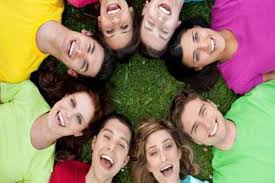
So, Laughter Yoga aims to use the two-way body-mind link to change the state of mind through voluntary physical gestures which include repetitive clapping, chanting, specific body movements along with laughter and breathing exercises. The result is so positive and its effects are so powerful that the modern world today has witnessed Laughter Yoga overcome severe and chronic depression in thousands of people right across the globe. In fact, several Laughter Clubs have adopted the motto, “If your Mind can’t laugh, bring your Body to our club.”

Laughter is all about playfulness. Have you ever wondered why children laugh 300 to 400 times a day whereas adults would consider themselves very fortunate if they manage laughter 10 to 15 times in a day? This is because of that seriously wicked and interfering tool called the brain! Adult use their brains or minds first to comprehend humour and then decide if they have to laugh. Very often, they suffer from what is said in Hindi the LKK Syndrome, that is “Log Kya Kahenge” or “What will people say?” This is called the “Mind-to-Body Model of Humour”.

On the other hand, children, who do not allow themselves to be too affected by the LKK Syndrome and don’t use their brain to seriously do the comprehension first, laugh the most while playing. Even if they fall into mud and slime while playing, they laugh heartily together without bothering about the consequences of soiling their spotlessly white school dress in case of a traditionally strict class teacher or headmistress in school or mother at home! Their laughter comes straight from the body and happily they don’t make use of intellectual capacity of the brain for it. Very clearly, they exhibit the “Body-to-Mind Model of Humour”, It is this childlike playfulness that Laughter Yoga aims at cultivating in people who are quite stressed these days.
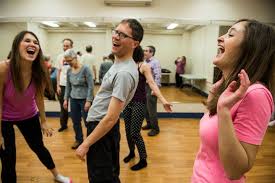
Image -google.

What is sadly significant is the fact that more and more children and even women, to whom smiles and laughter and giggling should come as naturally as the turtle coming out of its shell to walk or leaves falling in autumn, are enrolling themselves as members of laughter clubs nowadays!

Laughter Yoga makes a clear distinction between Happiness and Joy. Happiness is a conditional response of the mind which is totally dependent on the fulfilment of certain desires of the mind. By its very nature, it is related to how one’s life had been in the past or how it will be in the future! It is not there at all in the present moment. The ironical and sad fact is that even if some dreams, goals or aspirations are fulfilled, happiness disappears quite quickly as the mind starts chasing new goalposts-a new, job, a new house, a bigger car, etc.

On the other hand, joyfulness is the unconditional commitment to be happy each moment, to have fun for the moment, despite the problems and challenges of life, no matter how insurmountable they seem to the mind. It is the promise that the Body makes to the mind to indulge in playfulness moment by moment and thereby give relaxation to it. During these periods of playfulness triggered by a plethora of physical activities like dancing, singing, playing and laughing, physiological and biochemical changes take place within our body that give us a sense of well-being that completely alters a negative outlook towards life and its challenges replacing it with confident positivism moment by moment.

Therefore, in Laughter Clubs, members develop positive conditioning of joy. By laughing together over a period of time, clapping in a rhythm ,chanting “Ho Ho Ha Ha” in unison and positive affirmations like ” Very Good Very Good Yay Yay”, the brain develops new neuronal connections to produce happy neuropeptides and hormones in the body that rejuvenate the members.

Finally, Laughter Yoga rectifies shallow and irregular breathing, which is the direct consequence of stress and negative mental state. According to Dr. Otto Warburg, a Nobel Laureate, one of the main reasons for falling sick is the lack of oxygen in the body cells due to incorrect breathing. So, let us laugh together and get the oxygen back into our cells!

Fundamentals of 'LAUGHTER YOGA'.

Laughing is very important for health:

The most important principle behind Laughter Yoga or the most significant driving force behind the several Laughter Clubs is the theory that Motion Creates Emotion. Quite a few people wonder how a person can laugh when he is in no mood to laugh or when one doesn’t have any reason to laugh. However, the answer is very simple. For, there is a well established link between the body and the mind. Whatever happens to the mind happens to the body as well. This is easily understood and observed too. If a person is sad or depressed, his body also appears quite lifeless and sluggish. Such a person doesn’t walk or talk enthusiastically. But, what most people fail to understand is that the opposite is also true.

Whatever happens to the body also happens to the mind. I remember my father once telling me, “Son, if you are sad or feeling a bit low, don’t sit idle. Keep doing some physical work or go for a walk or do some jogging or go out to play some cricket or football . You’ll feel better.” And most of the times dad was proved correct. I would start feeling better quite soon. In an unhappy state of mind, if we bring ourselves to behaving or acting happy, soon enough we will start feeling light-hearted and chirpy indeed!

So, Laughter Yoga aims to use the two-way body-mind link to change the state of mind through voluntary physical gestures which include repetitive clapping, chanting, specific body movements along with laughter and breathing exercises. The result is so positive and its effects are so powerful that the modern world today has witnessed Laughter Yoga overcome severe and chronic depression in thousands of people right across the globe. In fact, several Laughter Clubs have adopted the motto, “If your Mind can’t laugh, bring your Body to our club.”

Laughter is all about playfulness. Have you ever wondered why children laugh 300 to 400 times a day whereas adults would consider themselves very fortunate if they manage laughter 10 to 15 times in a day? This is because of that seriously wicked and interfering tool called the brain! Adult use their brains or minds first to comprehend humour and then decide if they have to laugh. Very often, they suffer from what is said in Hindi the LKK Syndrome, that is “Log Kya Kahenge” or “What will people say?” This is called the “Mind-to-Body Model of Humour”.

On the other hand, children, who do not allow themselves to be too affected by the LKK Syndrome and don’t use their brain to seriously do the comprehension first, laugh the most while playing. Even if they fall into mud and slime while playing, they laugh heartily together without bothering about the consequences of soiling their spotlessly white school dress in case of a traditionally strict class teacher or headmistress in school or mother at home! Their laughter comes straight from the body and happily they don’t make use of intellectual capacity of the brain for it. Very clearly, they exhibit the “Body-to-Mind Model of Humour”, It is this childlike playfulness that Laughter Yoga aims at cultivating in people who are quite stressed these days.

Image -google.

What is sadly significant is the fact that more and more children and even women, to whom smiles and laughter and giggling should come as naturally as the turtle coming out of its shell to walk or leaves falling in autumn, are enrolling themselves as members of laughter clubs nowadays!

Laughter Yoga makes a clear distinction between Happiness and Joy. Happiness is a conditional response of the mind which is totally dependent on the fulfilment of certain desires of the mind. By its very nature, it is related to how one’s life had been in the past or how it will be in the future! It is not there at all in the present moment. The ironical and sad fact is that even if some dreams, goals or aspirations are fulfilled, happiness disappears quite quickly as the mind starts chasing new goalposts-a new, job, a new house, a bigger car, etc.

On the other hand, joyfulness is the unconditional commitment to be happy each moment, to have fun for the moment, despite the problems and challenges of life, no matter how insurmountable they seem to the mind. It is the promise that the Body makes to the mind to indulge in playfulness moment by moment and thereby give relaxation to it. During these periods of playfulness triggered by a plethora of physical activities like dancing, singing, playing and laughing, physiological and biochemical changes take place within our body that give us a sense of well-being that completely alters a negative outlook towards life and its challenges replacing it with confident positivism moment by moment.

Therefore, in Laughter Clubs, members develop positive conditioning of joy. By laughing together over a period of time, clapping in a rhythm ,chanting “Ho Ho Ha Ha” in unison and positive affirmations like ” Very Good Very Good Yay Yay”, the brain develops new neuronal connections to produce happy neuropeptides and hormones in the body that rejuvenate the members.

Finally, Laughter Yoga rectifies shallow and irregular breathing, which is the direct consequence of stress and negative mental state. According to Dr. Otto Warburg, a Nobel Laureate, one of the main reasons for falling sick is the lack of oxygen in the body cells due to incorrect breathing. So, let us laugh together and get the oxygen back into our cells!

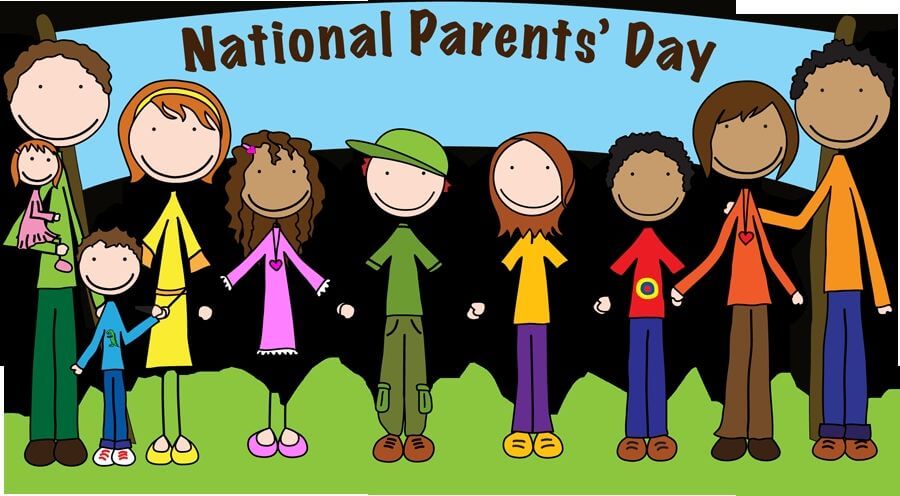
National Parents’ Day 2021

“We never know the love of a parent till we become parents ourselves.”

– Henry Ward Beecher

Introduction

National Parents’ Day is celebrated on the fourth Sunday of the month of July, which this year is on July 25th. Mother’s and Father’s Day have been celebrated from 1900s but National Parents’ Day was only established in 1994.

History

National Parents’ Day came in existence in 1994 when President Bill Clinton signed a Congressional resolution that approved National Parents’ Day by law. The aim of this day is to recognize, uplift and support the role of parents in bringing up their children. Fourth Sunday of July was decided as Mother’s Day is in May and Father’s Day is in June so it makes sense to recognize and support both together in the next month.

In United States of America, the holiday is celebrated with participation from citizens, educational institutions, federal and local governments, legislative bodies and organizations. Some activities and events are also planned for the same. There’s also a Parents’ Day Council which promotes the holiday by conducting ceremonies such as the Parent of the Year award.

Parenthood

Parenthood is said to be a difficult but a memorable job. Ask your parents about their experience as parents and you will hear a list of complaints about yourself but it will always end with a second list of good, happy and memorable times with you.

Myths about Parenthood

On this occasion, here is a list of myths about parenthood:

  1. You will spoil your baby if you pick them up whenever they cry

Truth – during the first six months of the baby’s life, it is important to develop trust and picking him up when they cry is a way of doing so. After the first six months is the time to pull back a bit to teach the baby that they can survive.

2. Sugar makes kids hyper

Truth – Sugar is not the culprit, any food that affects the blood-sugar level will produce the same response. The way to mitigate this is by fiber, when some sugary treats do not have enough fiber, it tends to make the kids hyper.

3. Strict parents raise well-behaved kids

Truth – it is fine to have a set limit but it has to be done in a sensitive way or else it will make a very rigid child or an incredibly rebellious one.

4. It is better to shield children from loss

Truth – completely avoiding and acting like the loss hasn’t happened might be preventing the kid form building resilience which they will no doubt need in the later stage of their life.

5. All kids are picky

Truth – no, they are not, plus if you keep accommodating their pickiness, you are influencing it.

6. Children should come first

Truth – if you have decided to raise a kid, you need to be there for them and provide them with all necessities but that does not mean you can let your mental health slip away as that will then negatively affect your child. Taking care of yourself at the same time teaches your child the importance of self-care and still loving others.

7. Parents shouldn’t fight in front of their children

Truth – it is good to avoid a full blown fight in front of the kids but if you can control your anger and have an open dialogue to solve the issue in front of your kid, it will show them how to deal with disagreements.

8. Parenting comes naturally

Truth – you only become a parent when your baby arrives, it is not like you have special experience and training. You are also growing and developing as a parent as time passes. Parenthood isn’t something you learn once and you know everything, you are always growing and learning as a parent.

Conclusion

It is important to note that not every parent is as good and providing as the most, some are abusive, if you face this, you don’t have to feel guilty about not respecting or worshipping them. And for other people, if anyone ever opens up to you about having abusive parents, you should not tell them to be grateful about having parents and to respect them.

Parents sacrifice their time and resources for their kids. Growing and taking care of a whole human is not an easy job, it is a continuous process and a tough one at that but it is as rewarding. For the to be parents, when you look at other parents, it might look like they’ve got it all figured out and that it is very scary but trust and believe in yourself. As kids, we should respect our parents for their efforts.

References

National Parents' Day 2021

“We never know the love of a parent till we become parents ourselves.”

– Henry Ward Beecher

Introduction

National Parents’ Day is celebrated on the fourth Sunday of the month of July, which this year is on July 25th. Mother’s and Father’s Day have been celebrated from 1900s but National Parents’ Day was only established in 1994.

History

National Parents’ Day came in existence in 1994 when President Bill Clinton signed a Congressional resolution that approved National Parents’ Day by law. The aim of this day is to recognize, uplift and support the role of parents in bringing up their children. Fourth Sunday of July was decided as Mother’s Day is in May and Father’s Day is in June so it makes sense to recognize and support both together in the next month.

In United States of America, the holiday is celebrated with participation from citizens, educational institutions, federal and local governments, legislative bodies and organizations. Some activities and events are also planned for the same. There’s also a Parents’ Day Council which promotes the holiday by conducting ceremonies such as the Parent of the Year award.

Parenthood

Parenthood is said to be a difficult but a memorable job. Ask your parents about their experience as parents and you will hear a list of complaints about yourself but it will always end with a second list of good, happy and memorable times with you.

Myths about Parenthood

On this occasion, here is a list of myths about parenthood:

  1. You will spoil your baby if you pick them up whenever they cry

Truth – during the first six months of the baby’s life, it is important to develop trust and picking him up when they cry is a way of doing so. After the first six months is the time to pull back a bit to teach the baby that they can survive.

2. Sugar makes kids hyper

Truth – Sugar is not the culprit, any food that affects the blood-sugar level will produce the same response. The way to mitigate this is by fiber, when some sugary treats do not have enough fiber, it tends to make the kids hyper.

3. Strict parents raise well-behaved kids

Truth – it is fine to have a set limit but it has to be done in a sensitive way or else it will make a very rigid child or an incredibly rebellious one.

4. It is better to shield children from loss

Truth – completely avoiding and acting like the loss hasn’t happened might be preventing the kid form building resilience which they will no doubt need in the later stage of their life.

5. All kids are picky

Truth – no, they are not, plus if you keep accommodating their pickiness, you are influencing it.

6. Children should come first

Truth – if you have decided to raise a kid, you need to be there for them and provide them with all necessities but that does not mean you can let your mental health slip away as that will then negatively affect your child. Taking care of yourself at the same time teaches your child the importance of self-care and still loving others.

7. Parents shouldn’t fight in front of their children

Truth – it is good to avoid a full blown fight in front of the kids but if you can control your anger and have an open dialogue to solve the issue in front of your kid, it will show them how to deal with disagreements.

8. Parenting comes naturally

Truth – you only become a parent when your baby arrives, it is not like you have special experience and training. You are also growing and developing as a parent as time passes. Parenthood isn’t something you learn once and you know everything, you are always growing and learning as a parent.

Conclusion

It is important to note that not every parent is as good and providing as the most, some are abusive, if you face this, you don’t have to feel guilty about not respecting or worshipping them. And for other people, if anyone ever opens up to you about having abusive parents, you should not tell them to be grateful about having parents and to respect them.

Parents sacrifice their time and resources for their kids. Growing and taking care of a whole human is not an easy job, it is a continuous process and a tough one at that but it is as rewarding. For the to be parents, when you look at other parents, it might look like they’ve got it all figured out and that it is very scary but trust and believe in yourself. As kids, we should respect our parents for their efforts.

References

The Broken Promise of Equality

Way back in July 2004, around 30 women walked naked in front of the army quarters in Assam with the slogan, “Indian Army, Rape us.” The movement was in protest of the death of Thangjam Manorama who was brutal ly raped, mutilated and killed by certain members of the Indian army. The army has wide powers under the Armed Forces Special Powers Act (AFSPA), 1958 including search and seizure and arrest and custody. Women have been major victims of sexual offences under this draconian legislation, in parts of the North East and in Kashmir, in particular.

Rape was also often used to shut down voices trying to resist human rights abuses. Sexual offences against women continue in different parts of the country, in different forms, both outside and inside the home. Although the constitutional guarantee of equality stays intact, the reality of gender relations in India is extremely unequal.

It goes without saying that Indian society is deep patriarchal. Women are by birth automatically at a disadvantage simply because our society treats its women much worse than it treats its men. There are different expectations from men and women in terms of behavioural pattern, conduct, mannerisms and actions. Chimamanda Ngozi Adichie, a feminist writer from Nige ria puts it quite neatly, “We teach girls shame. Close your legs, cover yourself. We make them feel as though being born female, they’re already guilty of something. And so, girls grow up to be women who silence themselves. They grow up to be women who cannot say what they truly think. And they grow up- and this is the worst thing we do to girls-they grow up to be women who have turned pretence into an art form.” Adichie is surely right. She indicates a phenomenon that is generally identified as ‘gender stereotyping’.

Gender stereotyping essentially is society’s expectations and beliefs about the behavioural patterns, roles, activities, characteristics, qualities about men and women and sometimes, the third gender. It focuses on what masculine and feminine qualities are expected of men and women. Society decides the type of toys boys and girls should play with, the kind of clothes they should wear and the kind of hobbies they should have and perpetuates the same through habituation. The role played by socialisation, religion, media and often the law in encouraging stereo types is problematic. Even in educated families, the pressure on Indian women to get married at an early age is a reality. Everybody in a given family gets to have a say in the matter of a girl’s marriage, except probably the girl herself. Quite undisputedly, the independence and career options offered for an Indian female is much less compared to that of men.

INDIA IN SOUTH-EAST ASIA AND THE SAARC

regional cooperation is needed for securing trade related benefits and for utilizing collective resources for mutual benefits. This objective is realized by establishing organisations by the countries having geographical affinity. Such organisation are based on a formal agreement signed by the concerned nations. The member countries utilize each others resources to solve common problems. To attain this two regional organization that work for the socio-economic integration of south-Asian region are such as ASEAN ( associations of south Asian nations ) and SAARC ( south association of regional cooperation ). SARRC is a major regional initiative undertaken by the South- Asian countries to evolve cooperation.

India have very close relations with south east Asians countries from very beginning. South – East Asia is composed of 10 nations, namely Brunei, Cambodia, Indonesia, Laos, Malaysia, Myanmar, Philippines, Singapore, Thailand and Vietnam. In the past , India’s engagement with the South East Asian was built on the shared experience of colonialism and culture ties. But at present it is linked to trade, investment and production. South Asian association for Regional Cooperation (SAARC) was established by seven South Asian Countries, Namely India, Bangladesh, Bhutan, Maldives, Nepal, Pakistan, and Sri lanka in December 1985 in Dhaka, the capital of Bangladesh. Afghanistan was included as the eighth member of SAARC. The concept of SAARC originally mooted by the former Bangladesh President Zia-ur-Rahman, with the aim of establishing economic and cultural cooperation among the people of south Asia. Its permanent secretariat at Kathmandu in Nepal was established in 1985.

The Charter of SAARC has laid down a number of objectives to promote the welfare of the people in South East Asian countries and to improve the quality of life. It accelerates the economic growth, social progress and cultural development. It promotes the mutual trust, understanding and appreciation of each other’s problems. It works to develop the mutual assistance in the economic, social, cultural and technical and scientific field. It also works for the cross border terrorism and smuggling.

India is largest and the most populous among the SARRC countries, it also occupies 72 percent of the South Asia and about 77 percent of the population. It is also the most advanced among SAARC nations. All the members states of SAARC are of strategies importance to India and share cultural and ethnic legacies. India has focused on strengthening its relations with these countries through economic cooperation. This includes grants of unilateral tariff concessions to Bangladesh, collaborative projects including implementation of infrastructures of development projects in Myanmar, cooperation in health, education and tourism sectors in Maldives and close economic integration with sri lanka. India has made substantial construction effort , which includes a wide range of humanitarian, financial and projects assistance.

To conclude India have played major role in forging closer links among then SAARC countries and promoting regional peace, economic growth, social progress and cultural development of the area.

The Broken Promise of Equality

Way back in July 2004, around 30 women walked naked in front of the army quarters in Assam with the slogan, “Indian Army, Rape us.” The movement was in protest of the death of Thangjam Manorama who was brutal ly raped, mutilated and killed by certain members of the Indian army. The army has wide powers under the Armed Forces Special Powers Act (AFSPA), 1958 including search and seizure and arrest and custody. Women have been major victims of sexual offences under this draconian legislation, in parts of the North East and in Kashmir, in particular.

Rape was also often used to shut down voices trying to resist human rights abuses. Sexual offences against women continue in different parts of the country, in different forms, both outside and inside the home. Although the constitutional guarantee of equality stays intact, the reality of gender relations in India is extremely unequal.

It goes without saying that Indian society is deep patriarchal. Women are by birth automatically at a disadvantage simply because our society treats its women much worse than it treats its men. There are different expectations from men and women in terms of behavioural pattern, conduct, mannerisms and actions. Chimamanda Ngozi Adichie, a feminist writer from Nige ria puts it quite neatly, “We teach girls shame. Close your legs, cover yourself. We make them feel as though being born female, they’re already guilty of something. And so, girls grow up to be women who silence themselves. They grow up to be women who cannot say what they truly think. And they grow up- and this is the worst thing we do to girls-they grow up to be women who have turned pretence into an art form.” Adichie is surely right. She indicates a phenomenon that is generally identified as ‘gender stereotyping’.

Gender stereotyping essentially is society’s expectations and beliefs about the behavioural patterns, roles, activities, characteristics, qualities about men and women and sometimes, the third gender. It focuses on what masculine and feminine qualities are expected of men and women. Society decides the type of toys boys and girls should play with, the kind of clothes they should wear and the kind of hobbies they should have and perpetuates the same through habituation. The role played by socialisation, religion, media and often the law in encouraging stereo types is problematic. Even in educated families, the pressure on Indian women to get married at an early age is a reality. Everybody in a given family gets to have a say in the matter of a girl’s marriage, except probably the girl herself. Quite undisputedly, the independence and career options offered for an Indian female is much less compared to that of men.

INDIA IN SOUTH-EAST ASIA AND THE SAARC

regional cooperation is needed for securing trade related benefits and for utilizing collective resources for mutual benefits. This objective is realized by establishing organisations by the countries having geographical affinity. Such organisation are based on a formal agreement signed by the concerned nations. The member countries utilize each others resources to solve common problems. To attain this two regional organization that work for the socio-economic integration of south-Asian region are such as ASEAN ( associations of south Asian nations ) and SAARC ( south association of regional cooperation ). SARRC is a major regional initiative undertaken by the South- Asian countries to evolve cooperation.

India have very close relations with south east Asians countries from very beginning. South – East Asia is composed of 10 nations, namely Brunei, Cambodia, Indonesia, Laos, Malaysia, Myanmar, Philippines, Singapore, Thailand and Vietnam. In the past , India’s engagement with the South East Asian was built on the shared experience of colonialism and culture ties. But at present it is linked to trade, investment and production. South Asian association for Regional Cooperation (SAARC) was established by seven South Asian Countries, Namely India, Bangladesh, Bhutan, Maldives, Nepal, Pakistan, and Sri lanka in December 1985 in Dhaka, the capital of Bangladesh. Afghanistan was included as the eighth member of SAARC. The concept of SAARC originally mooted by the former Bangladesh President Zia-ur-Rahman, with the aim of establishing economic and cultural cooperation among the people of south Asia. Its permanent secretariat at Kathmandu in Nepal was established in 1985.

The Charter of SAARC has laid down a number of objectives to promote the welfare of the people in South East Asian countries and to improve the quality of life. It accelerates the economic growth, social progress and cultural development. It promotes the mutual trust, understanding and appreciation of each other’s problems. It works to develop the mutual assistance in the economic, social, cultural and technical and scientific field. It also works for the cross border terrorism and smuggling.

India is largest and the most populous among the SARRC countries, it also occupies 72 percent of the South Asia and about 77 percent of the population. It is also the most advanced among SAARC nations. All the members states of SAARC are of strategies importance to India and share cultural and ethnic legacies. India has focused on strengthening its relations with these countries through economic cooperation. This includes grants of unilateral tariff concessions to Bangladesh, collaborative projects including implementation of infrastructures of development projects in Myanmar, cooperation in health, education and tourism sectors in Maldives and close economic integration with sri lanka. India has made substantial construction effort , which includes a wide range of humanitarian, financial and projects assistance.

To conclude India have played major role in forging closer links among then SAARC countries and promoting regional peace, economic growth, social progress and cultural development of the area.

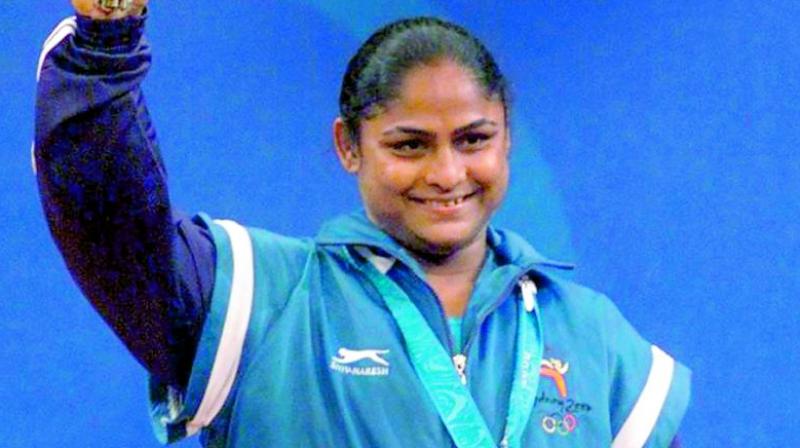
Karnam Malleswari – Torch-bearer for women in Olympics

Karnam Malleswari is the first Indian woman to win a medal at the Olympics and first Indian woman weightlifter to win gold at the World Championships.

Saikhom Mirabai Chanu made India proud by getting India’s first medal at Tokyo Olympics 2021. She won silver medal in weightlifting am being the first Indian lifter to do so. But, most of us realized now about first Indian woman to win an Olympic medal in 2000 (Sydney). She won Bronze medal in weightlifting in 2000. Let us remember Honorable Karnam Malleswari.

Karnam Malleswari :-

She was born on 1 June 1975, Voosavanipeta near Amadalavalasa, a hamlet in Andhra Pradesh. Her father Karnam Manohar was a college-level football player. She has four sisters. They are all well trained in weightlifting. It was her mother Shyamala, who encouraged and became her strength till the end Karnam Malleswari to pursue a dream. Her career started when she was 12. She was trained under coach Neelamshetty Appanna.

I feel proud to have created this pathway for our girls and to see them winning Olympic medals. Some even tell me today, ‘Ma’am you started it all’, so I feel delighted to have changed the perception, and it still remains my endeavor.

But Neelamshetty Appanna turned her away for being too weak and thin. Her mom encouraged her to keep going by training hard and proving herself that she can be whoever she wants to be. She was then noticed by Olympic and world champion Leonid Taranenko at a national camp ahead of 1990 Asian camp as a visitor since her sister Krishna Kumari, was selected for the camp. After testing her, he recommend her to the Bangalore Sports Institute.

It was her time to start shining, she broke 9 records in junior national weightlifting championships in 1990; which was her first championship.

Achievements:

  • Silver in her maiden senior national championship in 1990.
  • Bronze in her first weightlifting World Championships in 1993.
  • Gold in her next weightlifting World Championships in 1994, making her the first Indian woman weightlifter to win gold at the World Championships.
  • Silver at the 1994 Asian Games.
  • Malleswari won the world title in the 54 kg division in 1994 and 1995. Gold in World Championships in 1995.
  • Bronze in the World Championships in 1996. – Four consecutive medals in World Championships-
  • Silver at the 1998 Asian Games.
  • Bronze in the Olympics Game at Sydney in 2000.

In 1997, she married a fellow weightlifter Rajesh Tyagi, and in 2001 gave birth to a son. She took a maternity leave in 2001. She went to The Olympics at Athens in 2004 but due to severe back injury, she couldn’t give her best. She had to retire after that.

What is she doing now?

She works as the Chief General Manager (General Administration) of Food Corporation of India; Yamunanagar, Haryana.

Awards:

  1. Honored with Arujna Award in 1994.
  2. Rajiv Gandhi Khel Ratna in 1999.
  3. Padma Shri Award in 1999.

NEWS:

On International Olympic Day 2021, the Delhi government appointed India’s first woman Olympic medal winner Karnam Malleshwari as the first vice-chancellor of Delhi Sports University.

REFERENCES:

https://en.wikipedia.org/wiki/Karnam_Malleswari

https://olympics.com/en/featured-news/karnam-malleswari-india-weightlifting

Karnam Malleswari – Torch-bearer for women in Olympics

Karnam Malleswari is the first Indian woman to win a medal at the Olympics and first Indian woman weightlifter to win gold at the World Championships.

Saikhom Mirabai Chanu made India proud by getting India’s first medal at Tokyo Olympics 2021. She won silver medal in weightlifting am being the first Indian lifter to do so. But, most of us realized now about first Indian woman to win an Olympic medal in 2000 (Sydney). She won Bronze medal in weightlifting in 2000. Let us remember Honorable Karnam Malleswari.

Karnam Malleswari :-

She was born on 1 June 1975, Voosavanipeta near Amadalavalasa, a hamlet in Andhra Pradesh. Her father Karnam Manohar was a college-level football player. She has four sisters. They are all well trained in weightlifting. It was her mother Shyamala, who encouraged and became her strength till the end Karnam Malleswari to pursue a dream. Her career started when she was 12. She was trained under coach Neelamshetty Appanna.

I feel proud to have created this pathway for our girls and to see them winning Olympic medals. Some even tell me today, ‘Ma’am you started it all’, so I feel delighted to have changed the perception, and it still remains my endeavor.

But Neelamshetty Appanna turned her away for being too weak and thin. Her mom encouraged her to keep going by training hard and proving herself that she can be whoever she wants to be. She was then noticed by Olympic and world champion Leonid Taranenko at a national camp ahead of 1990 Asian camp as a visitor since her sister Krishna Kumari, was selected for the camp. After testing her, he recommend her to the Bangalore Sports Institute.

It was her time to start shining, she broke 9 records in junior national weightlifting championships in 1990; which was her first championship.

Achievements:

  • Silver in her maiden senior national championship in 1990.
  • Bronze in her first weightlifting World Championships in 1993.
  • Gold in her next weightlifting World Championships in 1994, making her the first Indian woman weightlifter to win gold at the World Championships.
  • Silver at the 1994 Asian Games.
  • Malleswari won the world title in the 54 kg division in 1994 and 1995. Gold in World Championships in 1995.
  • Bronze in the World Championships in 1996. – Four consecutive medals in World Championships-
  • Silver at the 1998 Asian Games.
  • Bronze in the Olympics Game at Sydney in 2000.

In 1997, she married a fellow weightlifter Rajesh Tyagi, and in 2001 gave birth to a son. She took a maternity leave in 2001. She went to The Olympics at Athens in 2004 but due to severe back injury, she couldn’t give her best. She had to retire after that.

What is she doing now?

She works as the Chief General Manager (General Administration) of Food Corporation of India; Yamunanagar, Haryana.

Awards:

  1. Honored with Arujna Award in 1994.
  2. Rajiv Gandhi Khel Ratna in 1999.
  3. Padma Shri Award in 1999.

NEWS:

On International Olympic Day 2021, the Delhi government appointed India’s first woman Olympic medal winner Karnam Malleshwari as the first vice-chancellor of Delhi Sports University.

REFERENCES:

https://en.wikipedia.org/wiki/Karnam_Malleswari

https://olympics.com/en/featured-news/karnam-malleswari-india-weightlifting

Amazing Rain

Dubai created fake rain by using Drone as temperature crossed 50 degrees.The city is employing drone technology that shocks clouds into producing rain,this rain making technology known as Cloud Seeding.

To beat the heat, the United Arab Emirates’s(UAE) National Center of Meteorology came up with a solution that resulted in monsoon-like rainfall in the desert country.The enhanced rain is creates using drone technology known as cloud seeding, according to reports.

This technology,used to enhance precipitation, generates electrical charges prompting clouds to coalesce and produce water.Each year, the average precipitation in the country measures just 100 mm.

As per experts, the technology aims to create rain more efficiently within clouds and in the process, it triggers more water to come down.They suggest cloud seeding methods can help in alleviating the water problem.

Amazing Rain

Dubai created fake rain by using Drone as temperature crossed 50 degrees.The city is employing drone technology that shocks clouds into producing rain,this rain making technology known as Cloud Seeding.

To beat the heat, the United Arab Emirates’s(UAE) National Center of Meteorology came up with a solution that resulted in monsoon-like rainfall in the desert country.The enhanced rain is creates using drone technology known as cloud seeding, according to reports.

This technology,used to enhance precipitation, generates electrical charges prompting clouds to coalesce and produce water.Each year, the average precipitation in the country measures just 100 mm.

As per experts, the technology aims to create rain more efficiently within clouds and in the process, it triggers more water to come down.They suggest cloud seeding methods can help in alleviating the water problem.

Prostate Cancer

Prostate cancer is a common type of cancer in males, but it is highly treatable in the early stages. It begins in the prostate gland, which sits between the penis and the bladder. The prostate gland is a very valuable organ in males that performs a lot of functions. Prostate cancer is the most common type of cancer found in males.

Symptoms

  • difficulty starting and maintaining urination
  • a frequent urge to urinate, especially at night
  • blood in the urine or semen
  • painful urination
  • in some cases, pain on ejaculation
  • difficulty getting or maintaining an erection
  • pain or discomfort when sitting, if the prostate is enlarged

Possible Causes

  • diet
  • smoking
  • exposure to chemicals, such as the herbicide Agent Orange
  • Inflammation of the prostate
  • vasectomy
  • Obesity
  • Sexually transmitted infected
  • If it runs in the family

Prostate Cancer

Prostate cancer is a common type of cancer in males, but it is highly treatable in the early stages. It begins in the prostate gland, which sits between the penis and the bladder. The prostate gland is a very valuable organ in males that performs a lot of functions. Prostate cancer is the most common type of cancer found in males.

Symptoms

  • difficulty starting and maintaining urination
  • a frequent urge to urinate, especially at night
  • blood in the urine or semen
  • painful urination
  • in some cases, pain on ejaculation
  • difficulty getting or maintaining an erection
  • pain or discomfort when sitting, if the prostate is enlarged

Possible Causes

  • diet
  • smoking
  • exposure to chemicals, such as the herbicide Agent Orange
  • Inflammation of the prostate
  • vasectomy
  • Obesity
  • Sexually transmitted infected
  • If it runs in the family

TAKING CARE OF PERSONAL HYGIENE

BY: VAIBHAVI MENON

“Life is short so don’t risk it.” We know how important personal hygiene is, as keeping our body, hands and hair clean can stop the spread of germs and illnesses. Personal hygiene is defined by the practices you take to look after your physical health to avoid diseases by maintaining a certain level of personal cleanliness. It is a key element in our daily routines to live a healthy life. Thorough out our whole life a bunch of people or maybe even ourselves get diseases which could be life threatening and usually people consider the main reason for this to be not getting access to something and being careless about your surroundings. What they don’t know is that hygiene plays a very important part in not getting in contact with these diseases. For example during this ongoing pandemic, most people catch the virus because they don’t take the proper precautions like sanitizing yourself or wearing masks. Therefore taking care of your personal hygiene is a very important thing to do if you want to lead a healthy life.

Few basic ways in which we can maintain personal hygiene could be through simple activities like taking a shower atleast once a day, brushing your teeth twice a day, making sure to floss your teeth, applying deodorant to avoid foul smell, washing your body with soap, cutting your nails, washing your hair properly thrice a week, making sure your face is clean before going to sleep, wearing comfortable clothing, changing your pillowcases once a week, cleaning your phone screen to remove it of any bacteria, wearing a mask, carrying sanitizers, washing your hands with proper techniques, covering your mouth while sneezing your coughing, applying sunscreen even if you aren’t going out, putting on perfume or body mists. It is important to change sanitary products regularly and to wash the hands before and after changing tampons, pads, or any other sanitary products. As vaginas are self-cleaning, using soap to clean the vagina can cause an imbalance of its natural bacteria and lead to infections. The vulva (the external part of the vagina) should only need cleaning once a day using a mild soap and water. People with an uncircumcised penis can clean it by gently pulling back the foreskin and washing underneath it with warm water or soap. If you can’t remember to do things like shower, wash your hair, clip your nails, or brush your teeth, set a reminder on your phone. The cue will push you to the activity, and over time, you’ll begin to do it yourself. Hang a reminder in the bathroom to wash your hands after using the toilet. Put a little sign by the plates or bowls in the kitchen to cue yourself to wash your hands before eating. These signs can help jog your memory and improve your habits.

Therefore maintaining personal hygiene is beneficial for you and your own health and it’s considered one way of helping you in having a healthy and safe life.