CHILD MARRIAGE

Meetali soni

WHAT IS CHILD MARRIAGE ?

Child marriage is the system which is mostly held in villages. Child marriage simply refers to marriage under the age of 18 .One of the most common causes of child marriage is the tradition which has been in practice for a long time. In many places, ever since a girl is born, they consider her to be someone else’s property. Early marriage is a harmful practice in girls their right to make vital decisions about their sexual health and well-being. It forces them out of education and into a life of poor prospects, with an increased risk of violence, abuse, ill health or early death.Early marriage and forced marriage is highest in Sub-Saharan Africa where 38% of girls become child brides.  Girls married early are more likely to experience violence, abuse and forced sexual relations due to unequal power relations. They are more vulnerable to sexually transmitted infections (including HIV). Going to school gives girls choices and opportunities in life, allowing them to play an active role in their communities and break the cycle of poverty. Girls who are married are unlikely to be in school. Education, including comprehensive sexuality education, is essential for girls to be able to make informed decisions about their sexual health and well-being. Millions of girls to avoid marriage, stay in school and decide for themselves whether and when to marry.

They do early marriages becauses child marriages include poverty, bride price, dowry, cultural traditions, religious and social pressures, regional customs, fear of the child remaining unmarried into adulthood, illiteracy, and perceived inability of women to work for money. Early pregnancy is one of the most dangerous causes and consequences of this harmful practice. Interrupting her schooling and limiting her opportunities for career and vocational advancement.Before the COVID-19 pandemic, more than 100 million girls were expected to marry before their eighteenth birthday in the next decade. Child marriage robs girls of their childhood and threatens their lives and health. Girls who marry before 18 are more likely to experience domestic violence and less likely to remain in school. They have worse economic and health outcomes than their unmarried peers. Child brides become pregnant during adolescence, the risk of complications during pregnancy and childbirth increases – for themselves and their infants. Child marriage impacts a girl’s health, future and family.

While boys and girls who marry in childhood do not face the same risks and consequences due to biological and social differences, the practice is nonetheless a rights violation for children of both sexes. Similar to child brides, child grooms are forced to take on adult responsibilities for which they may not be prepared. The union may bring early fatherhood and result in additional economic pressure in the form of providing for the household; it may also constrain the boy’s access to education and opportunities for career advancement. Bride Price is when the family of the groom pay their future in-laws at the start of their marriage. The payment can be made up of money, presents, or a mixture of both. It’s sometimes paid in one go. 12 million girls marry before the age of 18 each year – almost one every 2 seconds.

There was a most famous serial which was played on the colous channel ”BALIKA VADHU ” . This serial is based on fight againt child marriage .

If we want to end this worst system , we have to educate girls and boys .

Thanks for reading ……

CHILD MARRIAGE

Meetali soni

WHAT IS CHILD MARRIAGE ?

Child marriage is the system which is mostly held in villages. Child marriage simply refers to marriage under the age of 18 .One of the most common causes of child marriage is the tradition which has been in practice for a long time. In many places, ever since a girl is born, they consider her to be someone else’s property. Early marriage is a harmful practice in girls their right to make vital decisions about their sexual health and well-being. It forces them out of education and into a life of poor prospects, with an increased risk of violence, abuse, ill health or early death.Early marriage and forced marriage is highest in Sub-Saharan Africa where 38% of girls become child brides.  Girls married early are more likely to experience violence, abuse and forced sexual relations due to unequal power relations. They are more vulnerable to sexually transmitted infections (including HIV). Going to school gives girls choices and opportunities in life, allowing them to play an active role in their communities and break the cycle of poverty. Girls who are married are unlikely to be in school. Education, including comprehensive sexuality education, is essential for girls to be able to make informed decisions about their sexual health and well-being. Millions of girls to avoid marriage, stay in school and decide for themselves whether and when to marry.

They do early marriages becauses child marriages include poverty, bride price, dowry, cultural traditions, religious and social pressures, regional customs, fear of the child remaining unmarried into adulthood, illiteracy, and perceived inability of women to work for money. Early pregnancy is one of the most dangerous causes and consequences of this harmful practice. Interrupting her schooling and limiting her opportunities for career and vocational advancement.Before the COVID-19 pandemic, more than 100 million girls were expected to marry before their eighteenth birthday in the next decade. Child marriage robs girls of their childhood and threatens their lives and health. Girls who marry before 18 are more likely to experience domestic violence and less likely to remain in school. They have worse economic and health outcomes than their unmarried peers. Child brides become pregnant during adolescence, the risk of complications during pregnancy and childbirth increases – for themselves and their infants. Child marriage impacts a girl’s health, future and family.

While boys and girls who marry in childhood do not face the same risks and consequences due to biological and social differences, the practice is nonetheless a rights violation for children of both sexes. Similar to child brides, child grooms are forced to take on adult responsibilities for which they may not be prepared. The union may bring early fatherhood and result in additional economic pressure in the form of providing for the household; it may also constrain the boy’s access to education and opportunities for career advancement. Bride Price is when the family of the groom pay their future in-laws at the start of their marriage. The payment can be made up of money, presents, or a mixture of both. It’s sometimes paid in one go. 12 million girls marry before the age of 18 each year – almost one every 2 seconds.

There was a most famous serial which was played on the colous channel ”BALIKA VADHU ” . This serial is based on fight againt child marriage .

If we want to end this worst system , we have to educate girls and boys .

Thanks for reading ……

The Parthenon of Athens

The Parthenon is one of the crown jewels of the Acropolis of Athens and a formidable testament to the wealth and culture of ancient Athens, Greece. It is constructed as a dedication to Goddess Athena after whom the current city is named. Parthenon has been the center of the history of this city in the past and has seen lots of battles and various owners staking their claim to this magnificent monument that was constructed on top of the rock mountain in Athens. Its construction was completed in 438 BC the architecture is a Peripteral Octastyle Doric temple with Ionic architectural features.

The Parthenon temple is built on the site of the older Athenian temple which was decimated by the Persians in 480 BC. The Parthenon has seen lots and lots of events in history. It started as a treasury and was later converted to a Christian church dedicated to the Virgin Mary in the last decade of the 6th century. The Parthenon was also converted into a mosque at one stage by the invading Ottomans. It was during this unfortunate time that the siege of the city by Venetian forces and bombardment brought its way to igniting the gunpowder stored here and thus heavily damaging the monument and its sculptures.

The Architecture of the Parthenon of Athens

The whole architecture was decorated and designed with marble sculptures that represent past images from Athenian cult and mythology. There are three categories of architectural sculpture. The frieze which was made from low relief goes high up around all four sides of the building. The metopes which were made in high relief were positioned at the same level as the frieze above the architrave above the columns on the outside of the temple. The pediment sculptures which were carved in the round filled the triangular gables at each end.

The Parthenon was planned to go under a lot of changes but it remained untouched until the seventeenth century. The early Christians then turned the temple into a church, adding an apse at the east end. It was at this time that the sculptures representing the birth of Athena were removed from the center and lots of other sculptures were defaced. The Parthenon of Athens from thereon was viewed as a holy church until Athens was conquered by the Ottomans in the fifteenth century and they subsequently made it a mosque that was worshipped by many.

The Venetians after a prolonged battle succeeded in capturing the Acropolis but held it for less than a year. Further damage to the building was done in an attempt to remove sculptures from the west when the lifting equipment broke and the sculptures fell and were smashed.

IT’S NOT ACTUALLY A TEMPLE.

While we refer to the Parthenon as a temple—and it looks like one architecturally—the building doesn’t function quite the way one would think. Traditionally, a temple would host a cult image of Athena—the patron saint. Instead, the main cult image of Athena Polias is located in a different area of the Acropolis. While a colossal statue of Athena by the famed sculptor Phidias would have been located inside the Parthenon, it was not related to a particular cult and so would not have been worshipped.

IT WAS ORIGINALLY QUITE COLORFUL.

While we often think of classical art as being white and pristine, the Parthenon—as with much Greek architecture and sculpture—would have been colored originally. While historians debate just how much of the structure would have been covered in colour, archaeologists often use UV light to uncover pigments that have now been lost.

The Parthenon of Athens

The Parthenon is one of the crown jewels of the Acropolis of Athens and a formidable testament to the wealth and culture of ancient Athens, Greece. It is constructed as a dedication to Goddess Athena after whom the current city is named. Parthenon has been the center of the history of this city in the past and has seen lots of battles and various owners staking their claim to this magnificent monument that was constructed on top of the rock mountain in Athens. Its construction was completed in 438 BC the architecture is a Peripteral Octastyle Doric temple with Ionic architectural features.

The Parthenon temple is built on the site of the older Athenian temple which was decimated by the Persians in 480 BC. The Parthenon has seen lots and lots of events in history. It started as a treasury and was later converted to a Christian church dedicated to the Virgin Mary in the last decade of the 6th century. The Parthenon was also converted into a mosque at one stage by the invading Ottomans. It was during this unfortunate time that the siege of the city by Venetian forces and bombardment brought its way to igniting the gunpowder stored here and thus heavily damaging the monument and its sculptures.

The Architecture of the Parthenon of Athens

The whole architecture was decorated and designed with marble sculptures that represent past images from Athenian cult and mythology. There are three categories of architectural sculpture. The frieze which was made from low relief goes high up around all four sides of the building. The metopes which were made in high relief were positioned at the same level as the frieze above the architrave above the columns on the outside of the temple. The pediment sculptures which were carved in the round filled the triangular gables at each end.

The Parthenon was planned to go under a lot of changes but it remained untouched until the seventeenth century. The early Christians then turned the temple into a church, adding an apse at the east end. It was at this time that the sculptures representing the birth of Athena were removed from the center and lots of other sculptures were defaced. The Parthenon of Athens from thereon was viewed as a holy church until Athens was conquered by the Ottomans in the fifteenth century and they subsequently made it a mosque that was worshipped by many.

The Venetians after a prolonged battle succeeded in capturing the Acropolis but held it for less than a year. Further damage to the building was done in an attempt to remove sculptures from the west when the lifting equipment broke and the sculptures fell and were smashed.

IT’S NOT ACTUALLY A TEMPLE.

While we refer to the Parthenon as a temple—and it looks like one architecturally—the building doesn’t function quite the way one would think. Traditionally, a temple would host a cult image of Athena—the patron saint. Instead, the main cult image of Athena Polias is located in a different area of the Acropolis. While a colossal statue of Athena by the famed sculptor Phidias would have been located inside the Parthenon, it was not related to a particular cult and so would not have been worshipped.

IT WAS ORIGINALLY QUITE COLORFUL.

While we often think of classical art as being white and pristine, the Parthenon—as with much Greek architecture and sculpture—would have been colored originally. While historians debate just how much of the structure would have been covered in colour, archaeologists often use UV light to uncover pigments that have now been lost.

INDIA’S DEADLIEST SNAKES

In India, there are approximately 350 snake species however, only 15 to 17 percent of all snakes, including sea snakes, are venomous. Russell’s viper, Pit vipers, Saw-scaled vipers, Trimeresurus stejnegeri, Ptyas mucosa, Echis carinators, and many other venomous and poisonous snake species can all be found in India.

In India, approximately two lakh people are bitten by snakes each year, with about 50,000 of them dying. According to recent data, 1.2 million individuals in India have died as a result of snake bites in the last 20 years. Some of the snakes accounting for the bulk of casualties are mentioned below.

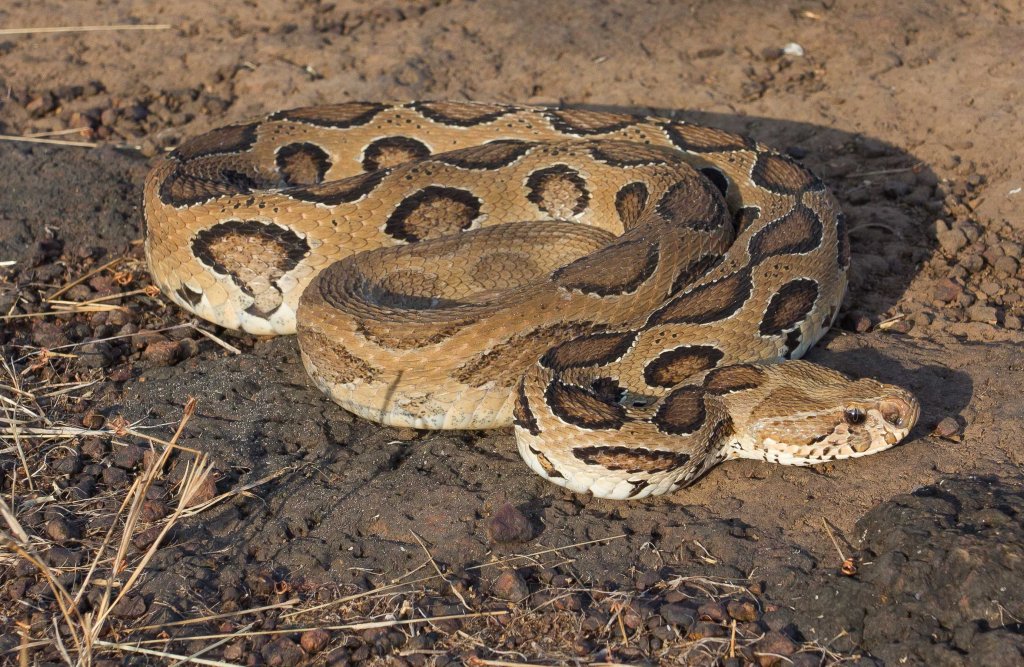
RUSSELL’S VIPER

Russell’s viper (Daboia russelii), often known in the community as “Daboia” or “Koriwala,” is a highly venomous terrestrial snake belonging to the Viperidae family. The Russell’s viper has killed more people in India than any other snake because it dwells in farmlands where there is a lot of human contact and rodent preys. Its bites have the potential to be fatal. Its venom is a hemotoxin, which affects the nervous system of any creature. Its bite can kill a human after internal bleeding, excruciating pain, and a brain hemorrhage. This dark brown or brownish-gray snake- with an average length of 4 feet, strikes and envenomates rodents, small birds, and lizards. The viper reaches a maximum size of 5 feet. It has a life expectancy of 10-17 years. Vipers have a pair of long, hollow venom-injecting fangs that are linked to moveable upper jaw bones and retracted in the mouth when not being used. Without antivenom, its bite can kill a human in 45 minutes.

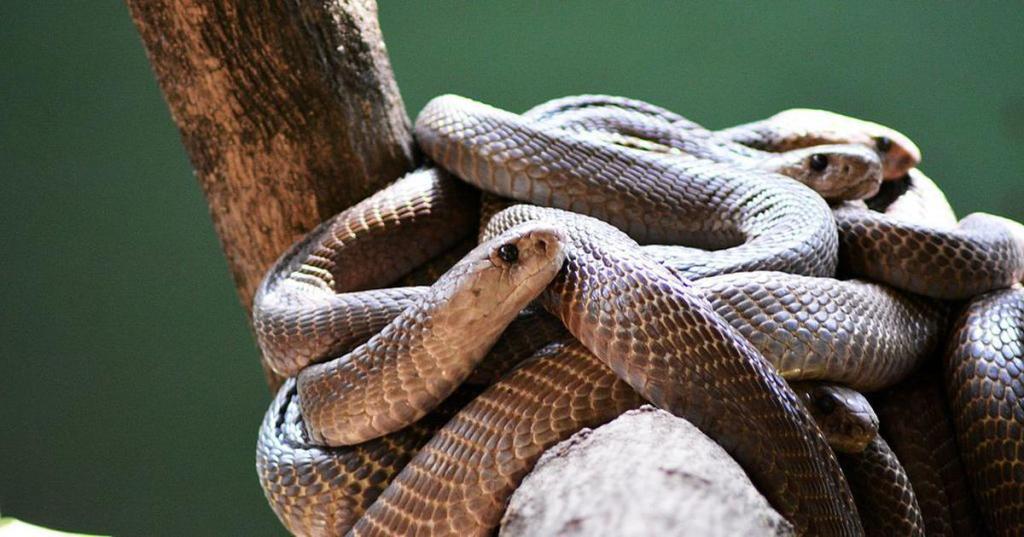
King Cobra

The king cobra (Ophiophagus Hannah) also called hamadryad, is the world’s biggest venomous snake, with a length of up to 5.5 meters and the ability to elevate its head 2 meters above the ground. It’s a creophagous snake that eats other snakes as well. The non-venomous rat snake, other cobras, kraits, and small pythons are among its preferred targets. It is not often belligerent toward human beings but is hostile and threatening during breeding season or when frightened. The front section of the king cobra hoists when provoked. It can swerve or dart forward in this stance to strike its target.

The venom of a king cobra is lethal enough to kill an elephant in just three hours after being bitten. Without antivenom, its bite can kill a human in 30 minutes. It can be encountered in India’s deep jungles, damp wetlands, bamboo clusters, and tropics. This colossal and powerful snake with pale yellow crossbars can be brown, olive green, or black. The king cobra is distinguishable from other cobras by the presence of 11 enormous scales on the crown of its head. They have an average life-span of 20 years.

saw-scaled viper

The saw-scaled viper (Echis Carinatus) has a robust body with a distinct pear-shaped head, vertically elliptical pupils, tough and strongly keeled scales, and a short thin tail. Both sides of the body are covered in several rows of obliquely oriented serrated scales. Adults range in length from 1 to 3 feet. Echis, come in a range of colors including brown, grey, and orange, with darker dorsal blotches and lateral patches. They have an average life-span of 23 years. Saw-scaled vipers use sidewinding propulsion. They are nocturnal, emerging at dusk to forage on mammals, birds, snakes, lizards, amphibians, and invertebrates such as scorpions and centipedes.

Although saw-scaled vipers are diminutive, they are incredibly dangerous due to their irritability, aggressive temperament, and lethal venom. Saw-scaled vipers are believed to be responsible for more human deaths than all other snake species combined, in the areas where they dwell. The oblique scales brush against each other, creating a hissing sound that serves as a defensive warning to potential predators. These snakes strike quickly and bite victims have a high death rate.

Spectacled Cobra

The Indian Cobra (Naja naja), often referred to as the Spectacled Cobra, belongs to the Naja genus, found all across India. This species is one of the four snakes in India that are responsible for most human bites. The geographical region in which a Spectacled Cobra is found has a big influence on its coloration and patterning.  This species might be grey, yellow, tan, brown, reddish, or black in hue. On numerous specimens, a hood mark with two circular motifs joined by a curved line, resembling spectacles, can be seen. They have an average life-span of 9 years.

The remarkable hood of this species, which widens when alarmed, makes it easy to identify. It hisses and strikes viciously if disturbed. The length of an adult specimen varies between 3.3 and 4.9 feet. Dense forests, broad plains, agricultural belts, rocky terrain, and marshes are all locales where it can be spotted. Rodents, toads, frogs, birds, and snakes make up the prey base.

The Spectacled Cobra is an oviparous species that produces its eggs from April to July, the female cobra lays up to 10 to 30 eggs. The female stays with the eggs for roughly 60 days, until they hatch. The hatchlings range in length from 20 to 30 centimeters. They are self-sufficient from the beginning of life and have fully working venom glands. The Spectacled Cobra can swim proficiently. Without antivenom, its bite can kill a human within 2 hours.

Indian Krait

Kraits (Bungarus Caerulus) belong to the Elapidae family, which includes cobras. The average adult krait stands 5 feet tall. With little dark eyes, the head is short and rather flat. To the tip of the tail, they exhibit a bold pattern of contrasting dark and light bars. The body is long and narrow, with a triangular cross-section. Kraits have a smooth and shiny appearance. It has a 10-to-17-year life expectancy. Kraits are nocturnal creatures that feed on other snakes, including their own kind. The krait holds on to a victim snake’s body until it is motionless after plunging its fangs into it. Bites to humans are uncommon, yet they can be fatal.

Female kraits lay 5 to 12 eggs at once. Hatchlings are around 12 inches albeit they are not as colorful. Without anti-venom, its bite can kill a human within 45 mins.

INDIA’S DEADLIEST SNAKES

In India, there are approximately 350 snake species however, only 15 to 17 percent of all snakes, including sea snakes, are venomous. Russell’s viper, Pit vipers, Saw-scaled vipers, Trimeresurus stejnegeri, Ptyas mucosa, Echis carinators, and many other venomous and poisonous snake species can all be found in India.

In India, approximately two lakh people are bitten by snakes each year, with about 50,000 of them dying. According to recent data, 1.2 million individuals in India have died as a result of snake bites in the last 20 years. Some of the snakes accounting for the bulk of casualties are mentioned below.

RUSSELL’S VIPER

Russell’s viper (Daboia russelii), often known in the community as “Daboia” or “Koriwala,” is a highly venomous terrestrial snake belonging to the Viperidae family. The Russell’s viper has killed more people in India than any other snake because it dwells in farmlands where there is a lot of human contact and rodent preys. Its bites have the potential to be fatal. Its venom is a hemotoxin, which affects the nervous system of any creature. Its bite can kill a human after internal bleeding, excruciating pain, and a brain hemorrhage. This dark brown or brownish-gray snake- with an average length of 4 feet, strikes and envenomates rodents, small birds, and lizards. The viper reaches a maximum size of 5 feet. It has a life expectancy of 10-17 years. Vipers have a pair of long, hollow venom-injecting fangs that are linked to moveable upper jaw bones and retracted in the mouth when not being used. Without antivenom, its bite can kill a human in 45 minutes.

King Cobra

The king cobra (Ophiophagus Hannah) also called hamadryad, is the world’s biggest venomous snake, with a length of up to 5.5 meters and the ability to elevate its head 2 meters above the ground. It’s a creophagous snake that eats other snakes as well. The non-venomous rat snake, other cobras, kraits, and small pythons are among its preferred targets. It is not often belligerent toward human beings but is hostile and threatening during breeding season or when frightened. The front section of the king cobra hoists when provoked. It can swerve or dart forward in this stance to strike its target.

The venom of a king cobra is lethal enough to kill an elephant in just three hours after being bitten. Without antivenom, its bite can kill a human in 30 minutes. It can be encountered in India’s deep jungles, damp wetlands, bamboo clusters, and tropics. This colossal and powerful snake with pale yellow crossbars can be brown, olive green, or black. The king cobra is distinguishable from other cobras by the presence of 11 enormous scales on the crown of its head. They have an average life-span of 20 years.

saw-scaled viper

The saw-scaled viper (Echis Carinatus) has a robust body with a distinct pear-shaped head, vertically elliptical pupils, tough and strongly keeled scales, and a short thin tail. Both sides of the body are covered in several rows of obliquely oriented serrated scales. Adults range in length from 1 to 3 feet. Echis, come in a range of colors including brown, grey, and orange, with darker dorsal blotches and lateral patches. They have an average life-span of 23 years. Saw-scaled vipers use sidewinding propulsion. They are nocturnal, emerging at dusk to forage on mammals, birds, snakes, lizards, amphibians, and invertebrates such as scorpions and centipedes.

Although saw-scaled vipers are diminutive, they are incredibly dangerous due to their irritability, aggressive temperament, and lethal venom. Saw-scaled vipers are believed to be responsible for more human deaths than all other snake species combined, in the areas where they dwell. The oblique scales brush against each other, creating a hissing sound that serves as a defensive warning to potential predators. These snakes strike quickly and bite victims have a high death rate.

Spectacled Cobra

The Indian Cobra (Naja naja), often referred to as the Spectacled Cobra, belongs to the Naja genus, found all across India. This species is one of the four snakes in India that are responsible for most human bites. The geographical region in which a Spectacled Cobra is found has a big influence on its coloration and patterning.  This species might be grey, yellow, tan, brown, reddish, or black in hue. On numerous specimens, a hood mark with two circular motifs joined by a curved line, resembling spectacles, can be seen. They have an average life-span of 9 years.

The remarkable hood of this species, which widens when alarmed, makes it easy to identify. It hisses and strikes viciously if disturbed. The length of an adult specimen varies between 3.3 and 4.9 feet. Dense forests, broad plains, agricultural belts, rocky terrain, and marshes are all locales where it can be spotted. Rodents, toads, frogs, birds, and snakes make up the prey base.

The Spectacled Cobra is an oviparous species that produces its eggs from April to July, the female cobra lays up to 10 to 30 eggs. The female stays with the eggs for roughly 60 days, until they hatch. The hatchlings range in length from 20 to 30 centimeters. They are self-sufficient from the beginning of life and have fully working venom glands. The Spectacled Cobra can swim proficiently. Without antivenom, its bite can kill a human within 2 hours.

Indian Krait

Kraits (Bungarus Caerulus) belong to the Elapidae family, which includes cobras. The average adult krait stands 5 feet tall. With little dark eyes, the head is short and rather flat. To the tip of the tail, they exhibit a bold pattern of contrasting dark and light bars. The body is long and narrow, with a triangular cross-section. Kraits have a smooth and shiny appearance. It has a 10-to-17-year life expectancy. Kraits are nocturnal creatures that feed on other snakes, including their own kind. The krait holds on to a victim snake’s body until it is motionless after plunging its fangs into it. Bites to humans are uncommon, yet they can be fatal.

Female kraits lay 5 to 12 eggs at once. Hatchlings are around 12 inches albeit they are not as colorful. Without anti-venom, its bite can kill a human within 45 mins.

SHORT STORIES WITHIN NOVELS – PART 2

As we already read about the secret to living happily from The Alchemist book by Paulo Coelho. Today we will look at two different stories from different books.

THE KITE RUNNER BY KHALID HOSSEINI

It was a dark little tale about a man who found a magic cup and learned that if he wept into the cup, his tears turned into pearls. But even though he had always been poor, he was a happy man and rarely shed a tear. So he found ways to make himself sad so that his tears could make him rich. As the pearls piled up, so did his greed grow. The story ended with the man sitting on a mountain of pearls, knife in hand, weeping helplessly into the cup with his beloved wife’s slain body in his arms.

This story must give you goosebumps but, the real conclusion is when Amir the protagonist and the narrator of the book The Kite Runner wrote this story and shared it with his friend Hassan, who is a servant’s boy of Amir’s family. Hassan was shocked and impressed with Amir’s story but, he asked why he has to kill his own wife, instead of he can shed tears by cutting onions?

MORAL: When you have to choose something… Choose wisely.

VERONICA DECIDES TO DIE BY PAULO COELHO:

Zedka started to narrate a story to Veronica.

A powerful wizard, who wanted to destroy an entire kingdom, placed a magic potion in the well from which all the inhabitants drank. Whoever drank that water would go mad.

The following morning, the whole population drank from the well and they all went mad, apart from the king and his family, who had a well set aside for them alone, which the magician had not managed to poison.
The king was worried and tried to control the population by issuing a series of edicts governing security and public health.
The policemen and inspectors, however, had also drunk the poisoned water, and they thought the king’s decisions were absurd and resolved to take no notice of them.

When the inhabitants of the kingdom heard these decrees, they became convinced that the king had gone mad and was now giving nonsensical orders. They marched on the castle and called for his abdication.

In despair the king prepared to step down from the throne, but the queen stopped him, saying:
‘Let us go and drink from the communal well. Then we will be the same as them.’

The king and the queen drank the water of madness and immediately began talking nonsense.
Their subjects repented at once; now that the king was displaying such wisdom, why not allow him to continue ruling the country?

After drinking water from the poisonous well all became mad and equal. The country continued to live in peace although its inhabitants behaved very differently from those of its neighbors. And the king was able to govern until the end of his days.

Zedka asked veronica: Do you know what exists outside beyond the walls of this asylum?

Veronica said People who have all drunk from the same well.

MORAL: Zedka and Veronica both are patients in the asylum. Through this story, Zedka symbolically tells that people think they are civilized and normal. But, when they encounter some strange people they started to divide the borders and make them as a patient.

SHORT STORIES WITHIN NOVELS https://eduindex.org/2021/07/24/short-stories-within-novels/

THE GOTHIC NOVEL https://eduindex.org/2021/07/21/the-gothic-novel/

SHORT STORIES WITHIN NOVELS – PART 2

As we already read about the secret to living happily from The Alchemist book by Paulo Coelho. Today we will look at two different stories from different books.

THE KITE RUNNER BY KHALID HOSSEINI

It was a dark little tale about a man who found a magic cup and learned that if he wept into the cup, his tears turned into pearls. But even though he had always been poor, he was a happy man and rarely shed a tear. So he found ways to make himself sad so that his tears could make him rich. As the pearls piled up, so did his greed grow. The story ended with the man sitting on a mountain of pearls, knife in hand, weeping helplessly into the cup with his beloved wife’s slain body in his arms.

This story must give you goosebumps but, the real conclusion is when Amir the protagonist and the narrator of the book The Kite Runner wrote this story and shared it with his friend Hassan, who is a servant’s boy of Amir’s family. Hassan was shocked and impressed with Amir’s story but, he asked why he has to kill his own wife, instead of he can shed tears by cutting onions?

MORAL: When you have to choose something… Choose wisely.

VERONICA DECIDES TO DIE BY PAULO COELHO:

Zedka started to narrate a story to Veronica.

A powerful wizard, who wanted to destroy an entire kingdom, placed a magic potion in the well from which all the inhabitants drank. Whoever drank that water would go mad.

The following morning, the whole population drank from the well and they all went mad, apart from the king and his family, who had a well set aside for them alone, which the magician had not managed to poison.
The king was worried and tried to control the population by issuing a series of edicts governing security and public health.
The policemen and inspectors, however, had also drunk the poisoned water, and they thought the king’s decisions were absurd and resolved to take no notice of them.

When the inhabitants of the kingdom heard these decrees, they became convinced that the king had gone mad and was now giving nonsensical orders. They marched on the castle and called for his abdication.

In despair the king prepared to step down from the throne, but the queen stopped him, saying:
‘Let us go and drink from the communal well. Then we will be the same as them.’

The king and the queen drank the water of madness and immediately began talking nonsense.
Their subjects repented at once; now that the king was displaying such wisdom, why not allow him to continue ruling the country?

After drinking water from the poisonous well all became mad and equal. The country continued to live in peace although its inhabitants behaved very differently from those of its neighbors. And the king was able to govern until the end of his days.

Zedka asked veronica: Do you know what exists outside beyond the walls of this asylum?

Veronica said People who have all drunk from the same well.

MORAL: Zedka and Veronica both are patients in the asylum. Through this story, Zedka symbolically tells that people think they are civilized and normal. But, when they encounter some strange people they started to divide the borders and make them as a patient.

SHORT STORIES WITHIN NOVELS https://eduindex.org/2021/07/24/short-stories-within-novels/

THE GOTHIC NOVEL https://eduindex.org/2021/07/21/the-gothic-novel/

Beautiful train journey


Who said that amazing views cost a lot, except when you chose the cheapest way to adore it. Some of the train journeys are worth capturing some memorable things at a cheap cost.
Indian Railways have been the largest rail network connecting different parts of India.

Some of the mesmerizing routes to take making your journey amazing:

Desert queen

The route of Jaisalmer to Jodhpur offers the scenario of barren desert land, desert wildlife, and tribes. the Desert Queen route passes through the Thar Desert, Rajasthan.

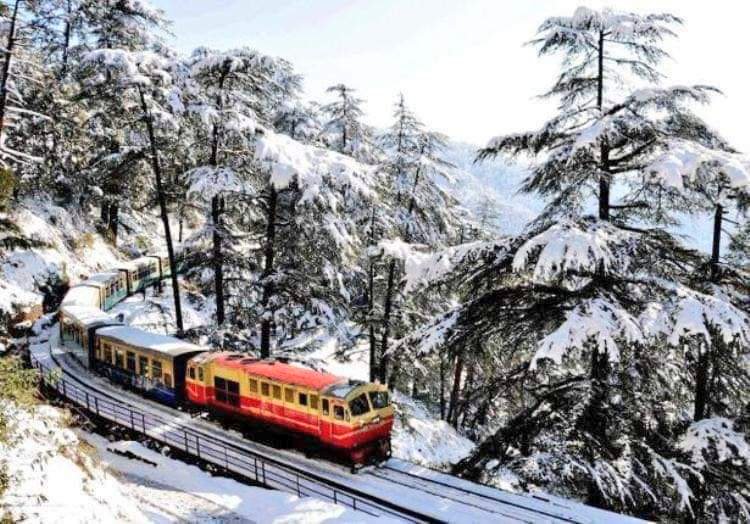
Himalayan Queen


The route of Kalka to Shimla, journey four to five hours covers the 20 railway stations, 800 bridges,900 curves, and tunnels.


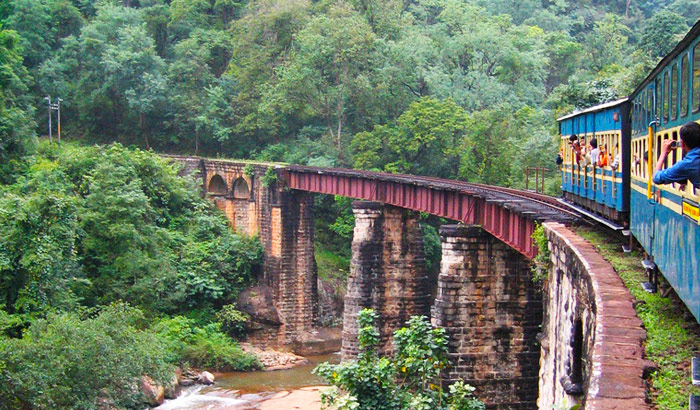
Nilgiri Mountain Railway


The route of Mettupalayam to Ooty, It’s the only rack railway of India.

Darjeeling Himalayan Railway


Route from Jalpaiguri to Darjeeling, it ben a toy train journey shows mesmerizing scenarios of Mt Kanchenjunga.


Sethu Express


Route of Mandapam to Rameswaram, a train route of thrill and adventure, passes through a bridge that is built over the sea.

Beautiful train journey

Who said that amazing views cost a lot, except when you chose the cheapest way to adore it. Some of the train journeys are worth capturing some memorable things at a cheap cost.
Indian Railways have been the largest rail network connecting different parts of India.

Some of the mesmerizing routes to take making your journey amazing:

Desert queen

The route of Jaisalmer to Jodhpur offers the scenario of barren desert land, desert wildlife, and tribes. the Desert Queen route passes through the Thar Desert, Rajasthan.

Himalayan Queen

The route of Kalka to Shimla, journey four to five hours covers the 20 railway stations, 800 bridges,900 curves, and tunnels.


Nilgiri Mountain Railway

The route of Mettupalayam to Ooty, It’s the only rack railway of India.

Darjeeling Himalayan Railway

Route from Jalpaiguri to Darjeeling, it ben a toy train journey shows mesmerizing scenarios of Mt Kanchenjunga.

Sethu Express

Route of Mandapam to Rameswaram, a train route of thrill and adventure, passes through a bridge that is built over the sea.

Do Indians Get Enough SLEEP?

I’m telling you about on Sleep habits among Indians?

Aviral is a Man .Aviral knew he was dead tired. Though it had been more than thirty eight hours since the forty four year old marketing executive returned to Delhi early one morning from New York, he was still recovering from jet lag. He had forced himself to remain awake the whole day as he had hoped to coerce his body into sleeping at night.

But the much needed sleep seemed to elude him completely. “I hardly managed any sleep that night,” Aviral recalled. The time change had completely disrupted his sleep pattern, and when he got out of bed at 7a.m. to head for office, he was entirely ill at ease, to say the least. At the office, he could barely concentrate on his work.

Aviral wasn’t aware simply how exhausted he was until he had driven a quarter of the twenty-four kilometre stretch on his way back home in the suburbs of Delhi. He halted at a busy signal on the way, but fell asleep suddenly at the wheel. He dazed after the motorist behind him honked. Aviral drove on, but feeling woke up he couldn’t focus any further, he decided to pull off the main road and parked the car in a quiet place. Then, he rolled down the windows a bit and managed to take a two-hour nap in his car. It was only after that that Aviral could drive home safely.

It is an undisputed fact that not getting enough sleep can lead to problems in concentrating. In fact many sleep disorder experts think that lack of sleep is the reason for many ailments. Dr. Kumar Menon and his colleagues presented a study paper on sleep disorders in Mumbai in which they stressed on the need for early detection of the problem and concluded that it was high time that all the physicians “woke up to sleep disorders and included sleep history in evaluating their patients.”

Whatever be the cause of not getting proper and enough sleep, we’ve all experienced the exhaustion caused by lack of sleep. Thus, sleep is as important to a healthy lifestyle as eating properly and exercising. Getting a good night’s sleep is one of the simplest things we can do to stay healthy.

A good night’s sleep means waking up rested and invigorated. On an average, a healthy adult requires just over eight hours of sleep a night, according to Dr. Jeffrey Lipsitz, a Canadian expert on sleep disorders. However, the amount of sleep it takes to rejuvenate an individual varies from person to person. “It’s not a fixed number,” opines Joseph De Koninck, a renowned professor of psychology, adding that if one consistently gets less sleep than one needs, then “a sleep deficit accumulates.” The time it takes for a sleep deficit to accrue depends on how consistent the problem is. “Missing a couple of hours of sleep every night for a week is probably enough,” says another psychiatrist Robert Levitan.

Swarup Chatterjee, the 28 year-old IIM graduate and assistant manager at a BPO in Hyderabad, knows very well that he doesn’t get enough sleep. “I haven’t had more than four to five hours of sleep for the last three years. There’s always so much that needs to be done in my professional as well as personal life that I am constantly thinking.” Swarup is fully aware that all that is very stressful and he admits that even though he has high energy levels, he is often tired and so he drinks several cups of coffee to counter the fatigue. “But I know that I’ll be able to concentrate better if only I got more sleep,” Chatterjee concludes.

In a study conducted by sleep-disorder experts, it was found that at least one- third of adults have significant sleep loss, i.e. they have just six and a half hours or less of sleep every night. Then a recent survey conducted in India has shown that twenty-nine percent of Indians went to sleep only after midnight and sixty-one percent slept for seven hours or less. The survey also arrived at the conclusion that Indians were among the world’s earliest risers, with sixty-four percent getting out of bed before 7a.m. Is there a need to reiterate that “Early to Rise” is good provided a person follows the “Early to Bed” principle as well?

Sleep is crucial to maintaining one’s health. Without it, we increase our susceptibility to an astonishing array of health problems, including heart disease, stroke, diabetes, obesity and depression. Not sleeping enough can compromise your immune system, says Stanley Coren, noted professor of psychology and author of the very popular book, “Sleep Thieves”. You eat well and exercise in order to keep your immune system up, Coren goes on to explain, but if you aren’t sleeping, you undo all that good work. “The immune system works best when you are sleeping,” he says. “That’s when your natural killer cells are generated.”

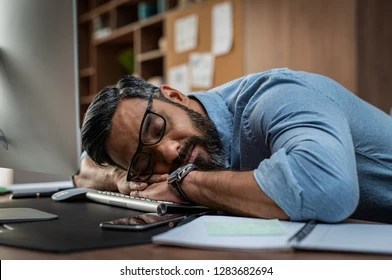
Image Source -google.

Natural killer cells are produced in the bone marrow and found in the blood and lymph fluid. They are part of the body’s defence mechanism against viruses, bacteria, even cancer, and they do not work properly in the persons who are sleep- deprived. A study in Turkey revealed that after 24 hours of sleep deprivation, the percentage of natural killer cells in the blood declined by 37 percent. Another study in the USA conducted on 23 boys and men found that one night of partial sleep-deprivation reduced natural-killer-cell activity to 72 percent of normal levels. Though their activity returns to normal when we begin to get proper sleep, the real problem is that a lot of damage might have been done to our bodies when we were sleep-deprived for several nights and our immune system might have left us undefended and susceptible to infection.

Sleep is important in keeping not only our waistline trim, but ensuring a balanced brain activity too. During sleep, brain neurotransmitters-the chemicals that deliver messages between nerve cells in the brain-are replenished. When we do not sleep well, our brain chemicals become depleted which leads to emotional disturbances like depression, anxiety and general feelings of sadness, anger and irritation.

Do Indians Get Enough SLEEP?

I’m telling you about on Sleep habits among Indians?

Aviral is a Man .Aviral knew he was dead tired. Though it had been more than thirty eight hours since the forty four year old marketing executive returned to Delhi early one morning from New York, he was still recovering from jet lag. He had forced himself to remain awake the whole day as he had hoped to coerce his body into sleeping at night.

But the much needed sleep seemed to elude him completely. “I hardly managed any sleep that night,” Aviral recalled. The time change had completely disrupted his sleep pattern, and when he got out of bed at 7a.m. to head for office, he was entirely ill at ease, to say the least. At the office, he could barely concentrate on his work.

Aviral wasn’t aware simply how exhausted he was until he had driven a quarter of the twenty-four kilometre stretch on his way back home in the suburbs of Delhi. He halted at a busy signal on the way, but fell asleep suddenly at the wheel. He dazed after the motorist behind him honked. Aviral drove on, but feeling woke up he couldn’t focus any further, he decided to pull off the main road and parked the car in a quiet place. Then, he rolled down the windows a bit and managed to take a two-hour nap in his car. It was only after that that Aviral could drive home safely.

It is an undisputed fact that not getting enough sleep can lead to problems in concentrating. In fact many sleep disorder experts think that lack of sleep is the reason for many ailments. Dr. Kumar Menon and his colleagues presented a study paper on sleep disorders in Mumbai in which they stressed on the need for early detection of the problem and concluded that it was high time that all the physicians “woke up to sleep disorders and included sleep history in evaluating their patients.”

Whatever be the cause of not getting proper and enough sleep, we’ve all experienced the exhaustion caused by lack of sleep. Thus, sleep is as important to a healthy lifestyle as eating properly and exercising. Getting a good night’s sleep is one of the simplest things we can do to stay healthy.

A good night’s sleep means waking up rested and invigorated. On an average, a healthy adult requires just over eight hours of sleep a night, according to Dr. Jeffrey Lipsitz, a Canadian expert on sleep disorders. However, the amount of sleep it takes to rejuvenate an individual varies from person to person. “It’s not a fixed number,” opines Joseph De Koninck, a renowned professor of psychology, adding that if one consistently gets less sleep than one needs, then “a sleep deficit accumulates.” The time it takes for a sleep deficit to accrue depends on how consistent the problem is. “Missing a couple of hours of sleep every night for a week is probably enough,” says another psychiatrist Robert Levitan.

Swarup Chatterjee, the 28 year-old IIM graduate and assistant manager at a BPO in Hyderabad, knows very well that he doesn’t get enough sleep. “I haven’t had more than four to five hours of sleep for the last three years. There’s always so much that needs to be done in my professional as well as personal life that I am constantly thinking.” Swarup is fully aware that all that is very stressful and he admits that even though he has high energy levels, he is often tired and so he drinks several cups of coffee to counter the fatigue. “But I know that I’ll be able to concentrate better if only I got more sleep,” Chatterjee concludes.

In a study conducted by sleep-disorder experts, it was found that at least one- third of adults have significant sleep loss, i.e. they have just six and a half hours or less of sleep every night. Then a recent survey conducted in India has shown that twenty-nine percent of Indians went to sleep only after midnight and sixty-one percent slept for seven hours or less. The survey also arrived at the conclusion that Indians were among the world’s earliest risers, with sixty-four percent getting out of bed before 7a.m. Is there a need to reiterate that “Early to Rise” is good provided a person follows the “Early to Bed” principle as well?

Sleep is crucial to maintaining one’s health. Without it, we increase our susceptibility to an astonishing array of health problems, including heart disease, stroke, diabetes, obesity and depression. Not sleeping enough can compromise your immune system, says Stanley Coren, noted professor of psychology and author of the very popular book, “Sleep Thieves”. You eat well and exercise in order to keep your immune system up, Coren goes on to explain, but if you aren’t sleeping, you undo all that good work. “The immune system works best when you are sleeping,” he says. “That’s when your natural killer cells are generated.”

Image Source -google.

Natural killer cells are produced in the bone marrow and found in the blood and lymph fluid. They are part of the body’s defence mechanism against viruses, bacteria, even cancer, and they do not work properly in the persons who are sleep- deprived. A study in Turkey revealed that after 24 hours of sleep deprivation, the percentage of natural killer cells in the blood declined by 37 percent. Another study in the USA conducted on 23 boys and men found that one night of partial sleep-deprivation reduced natural-killer-cell activity to 72 percent of normal levels. Though their activity returns to normal when we begin to get proper sleep, the real problem is that a lot of damage might have been done to our bodies when we were sleep-deprived for several nights and our immune system might have left us undefended and susceptible to infection.

Sleep is important in keeping not only our waistline trim, but ensuring a balanced brain activity too. During sleep, brain neurotransmitters-the chemicals that deliver messages between nerve cells in the brain-are replenished. When we do not sleep well, our brain chemicals become depleted which leads to emotional disturbances like depression, anxiety and general feelings of sadness, anger and irritation.

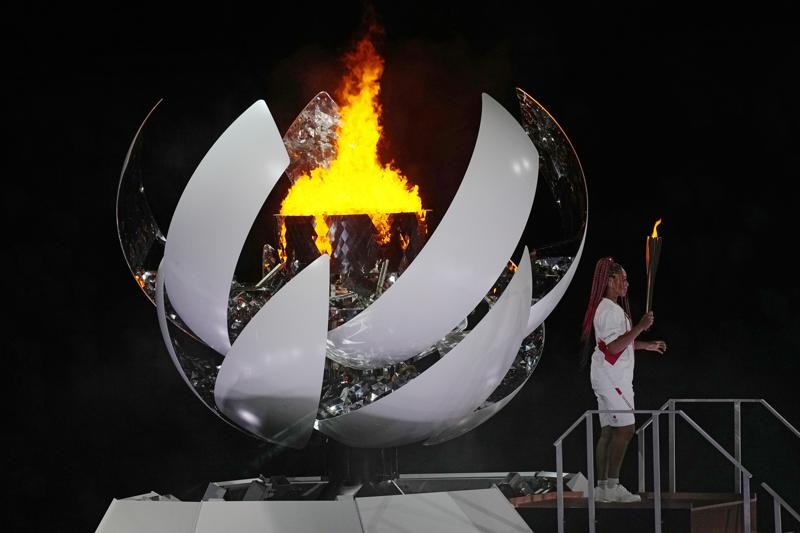
The Olympic flame in Tokyo is the first to be fueled by hydrogen.

Naomi Osaka stands near the Olympic torch after igniting it during the opening ceremony of the 2020 Summer Olympics in Tokyo, Japan, on Friday, July 23, 2021. (David J. Phillip/AP Photo)

TOKYO (AP) — The Tokyo Olympic cauldron was inspired by the sun and is built to be more eco-friendly.

Throughout the games, the flame at Tokyo’s National Stadium and another cauldron blazing along the waterfront at Tokyo Bay will be fueled in part by hydrogen, marking the first time the fuel source has been utilized to light an Olympic fire.

Since the first contemporary cauldron was ignited at the Amsterdam Games in 1928, propane has been the most common fuel, but magnesium, gunpowder, resin, and olive oil have all been used. Eight years later, for Berlin, the torch relay was inaugurated.

When hydrogen is burned, unlike propane, it does not create carbon dioxide. The Tokyo cauldron is fueled by hydrogen produced by a renewable-energy-powered facility in Fukushima Prefecture. During the torch relay, both propane and hydrogen were utilized.

The London 2012 Olympic Games organizers boasted about their intentions for a low-carbon torch, but they couldn’t get the design perfect in time. Instead, they utilized a propane-butane mixture. In 2016, Brazilian officials ordered a smaller cauldron for Rio de Janeiro to minimize the quantity of fuel required.

Oki Sato, a Canadian architect, created the Tokyo cauldron. His sun-inspired sphere opens like petals from a flower, evoking “vitality and hope,” according to the organizers.

At 11:48 p.m., tennis player Naomi Osaka ignited the torch, with performers throughout the night clutching sunflowers, which are known for blossoming toward the sun.

The first torch for these games was lighted 16 months ago at Olympia, Greece, however owing to the pandemic, the relay was put on hold for much of 2020. Until the relay was formally begun in Fukushima on March 25, 2021, officials displayed the torch across prefectures impacted by the earthquake and tsunami that destroyed the region in 2011.

Before the torch arrived at the National Stadium in Tokyo’s Shinjuku City, several parts of the relay were halted owing to concerns about the spread of the coronavirus.

The Olympic flame in Tokyo is the first to be fueled by hydrogen.

Naomi Osaka stands near the Olympic torch after igniting it during the opening ceremony of the 2020 Summer Olympics in Tokyo, Japan, on Friday, July 23, 2021. (David J. Phillip/AP Photo)

TOKYO (AP) — The Tokyo Olympic cauldron was inspired by the sun and is built to be more eco-friendly.

Throughout the games, the flame at Tokyo’s National Stadium and another cauldron blazing along the waterfront at Tokyo Bay will be fueled in part by hydrogen, marking the first time the fuel source has been utilized to light an Olympic fire.

Since the first contemporary cauldron was ignited at the Amsterdam Games in 1928, propane has been the most common fuel, but magnesium, gunpowder, resin, and olive oil have all been used. Eight years later, for Berlin, the torch relay was inaugurated.

When hydrogen is burned, unlike propane, it does not create carbon dioxide. The Tokyo cauldron is fueled by hydrogen produced by a renewable-energy-powered facility in Fukushima Prefecture. During the torch relay, both propane and hydrogen were utilized.

The London 2012 Olympic Games organizers boasted about their intentions for a low-carbon torch, but they couldn’t get the design perfect in time. Instead, they utilized a propane-butane mixture. In 2016, Brazilian officials ordered a smaller cauldron for Rio de Janeiro to minimize the quantity of fuel required.

Oki Sato, a Canadian architect, created the Tokyo cauldron. His sun-inspired sphere opens like petals from a flower, evoking “vitality and hope,” according to the organizers.

At 11:48 p.m., tennis player Naomi Osaka ignited the torch, with performers throughout the night clutching sunflowers, which are known for blossoming toward the sun.

The first torch for these games was lighted 16 months ago at Olympia, Greece, however owing to the pandemic, the relay was put on hold for much of 2020. Until the relay was formally begun in Fukushima on March 25, 2021, officials displayed the torch across prefectures impacted by the earthquake and tsunami that destroyed the region in 2011.

Before the torch arrived at the National Stadium in Tokyo’s Shinjuku City, several parts of the relay were halted owing to concerns about the spread of the coronavirus.

KNOW THYSELF – socrates


Know thyself” – Socrates.
Self-awareness is the act of being fully perceptive about one’s innermost self;
an essential part to one’s life
.

How does one really know themselves? You
could recognize the exterior and know your own reflection. Sure you are 6’2
with brown hair and eyes. Not a bad-looking individual. But you are not your
physical characteristics but your spiritual ones. If you could look into
something and see your internal reflection would you want to? What would you
see? What would you learn? What would that something be? What could possibly
dig deep into your soul and reveal your innermost person? In ancient Greece, “Know
Thyself” are other ways of saying self realization , or self knowledge .
Knowing thyself is being able to know about everything, and by doing so it makes
us knowledgeable all creation.

Self-awareness and its accompanying egoism
profoundly affect people’s lives, interfering with their success, damaging
their relationships with other people, and undermining their happiness.

  “Knowing others is wisdom, knowing yourself is
Enlightenment” – Tao Tzu. This introspection surpasses the ordinary
understanding of life and grasps the aspect of one’s innermost self.

Furthermore,
the thought process one engages causes judging based on self-interest and major
distortions in one’s view of others and ultimately of one’s self. These
distortions one has over one’s self and others help him or her lose sight of
who one actually is or who someone else could be. All the people we interact
with, effect, influence, and touch regularly reflect who we are. We are who we
love, hate, admire, help, and lean on. Every little action, emotion, or word
brought out by various people in various situations are characteristics that
are instinctual. They are what you do without thinking and therefore are roots
of your personality.
One may believe that he or she can
make “reliable psychological ascriptions to himself immediately” based on fact
or of past experiences, which may or may not be accurate. However, how others
choose to view another person can be surprisingly  differentiating from how one tends to view
one’s self.

Knowing yourself is not about the skimming
the surface like finding a favourite colour or music you like. Knowing yourself
is about delving much deeper. Knowing yourself is a journey. It is about discovering
who is about discovering who you are as a human being. The journey is
unpredictable and engages you deeply as it brings you face-to-face with your
deepest fears, self doubts , vulnerabilities and insecurities. The journey
around knowing yourself can be challenging and scary, however it also changes
over time.
Coming to understand how we appear to
others is a key aspect of reflection. Self-knowledge can be divided into four
areas: what is known to us as well as to others, what is known to others but
not to us, what we know and others don’t, and what we don’t know and others
don’t either. Discovering what no one knows takes time and intensive tactics.
However, our biggest gain in self-improvement can be had by simply finding out
what others know about us that we don’t. And they know more than we think they
do.
Knowing the self implies a deep level of
understanding. It means arriving at a point where we can predict how we’ll do
in specific situations and the effect our actions will have. It also means that
we can be fairly sure of how others would describe our strengths and weaknesses.