Erik Erikson’s psycho social development

Introduction:
Erik Erickson was a German-American development psychologist and psychoanalyst known for his theory on psychological development of human beings. Erik Erickson’s psychosocial development theory mainly talks about how human development happens in 8 stages and their personality development also takes place through these eight stages starting from infancy to old age. His argument was about how a social life was important and how in each stage, when we interact with other humans, we learn and grow together and help us understand our social environment and surroundings.
The psychosocial development is influenced by Sigmund Freud’s Id, Ego and Super Ego. Development is a lifelong process and is divided into eight stages and is called ‘crisis in personality’, later referred to as competing tendency. The eight stages are:


• Trust Vs Mistrust:
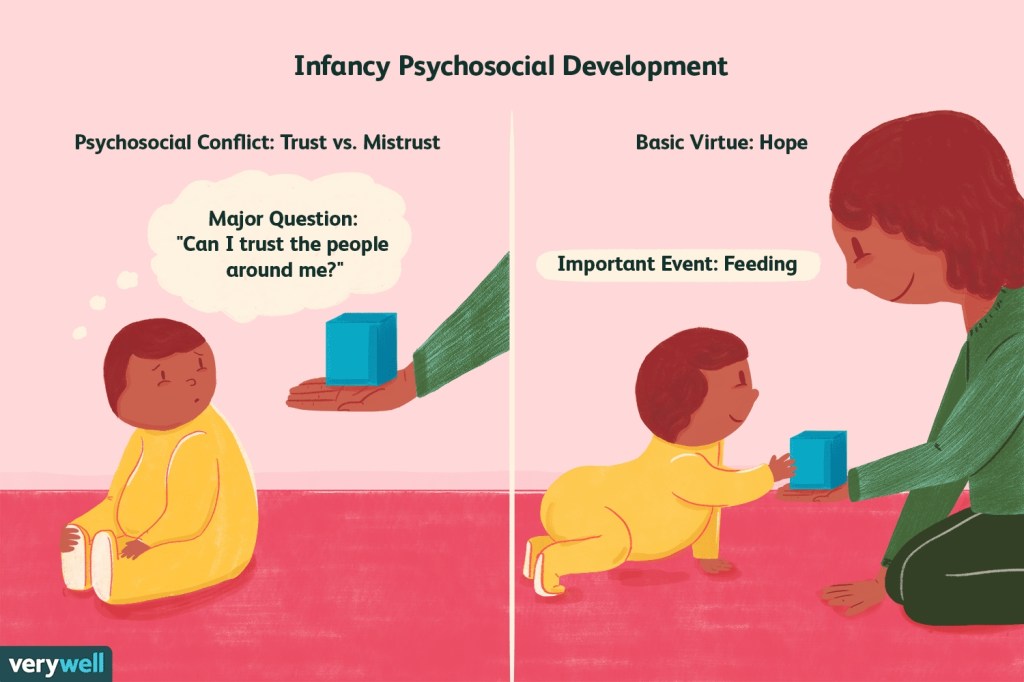
The first stage begins at the age of 12 months and continues till 18 months. The crisis in this stage is trust Vs mistrust. In the stage, the child learns a virtue in this stage called Hope. The first stage is where the child learns whom to trust and whom not. The mother is the most trusted person as the child feels more safe and connected to the mother than to anyone else.

• Autonomy Vs Shame:
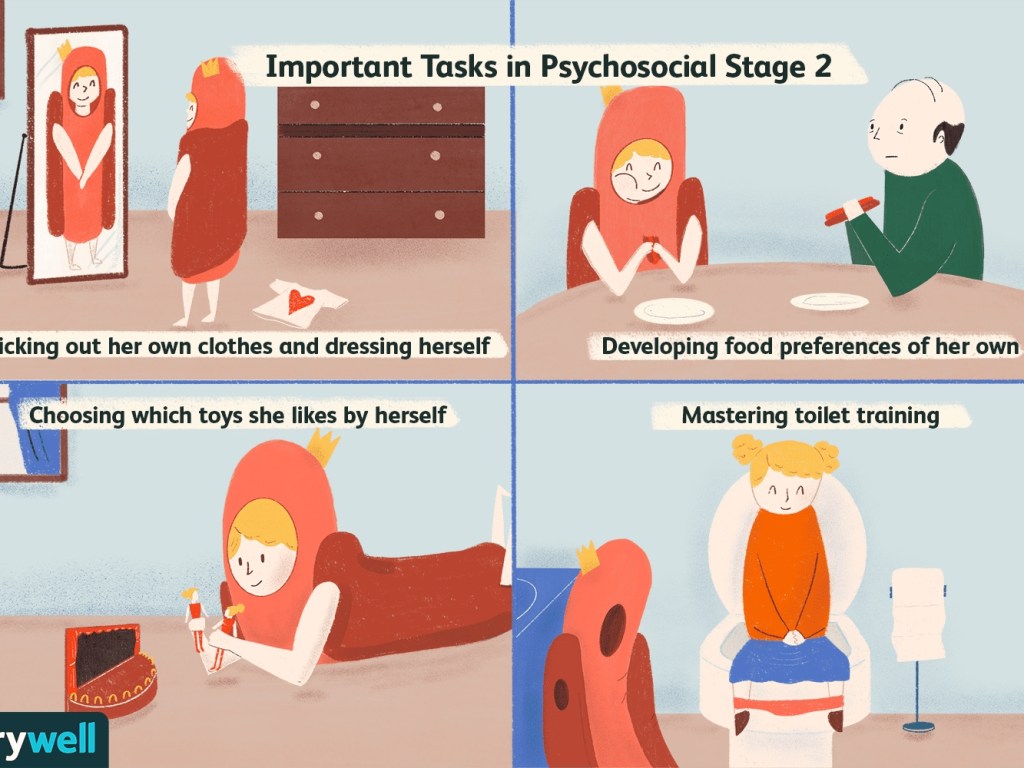
The second stage is Autonomy Vs Shame. This stage starts from (12-18) months to 3 years. The virtue learnt here is Will. In this stage, child engages in activities and learns to be independent or the child grows up to be shy and timid. Autonomy means independence. So, their own decision of doing something or not is what is learnt in this stage.

• Initiative Vs Guilt:
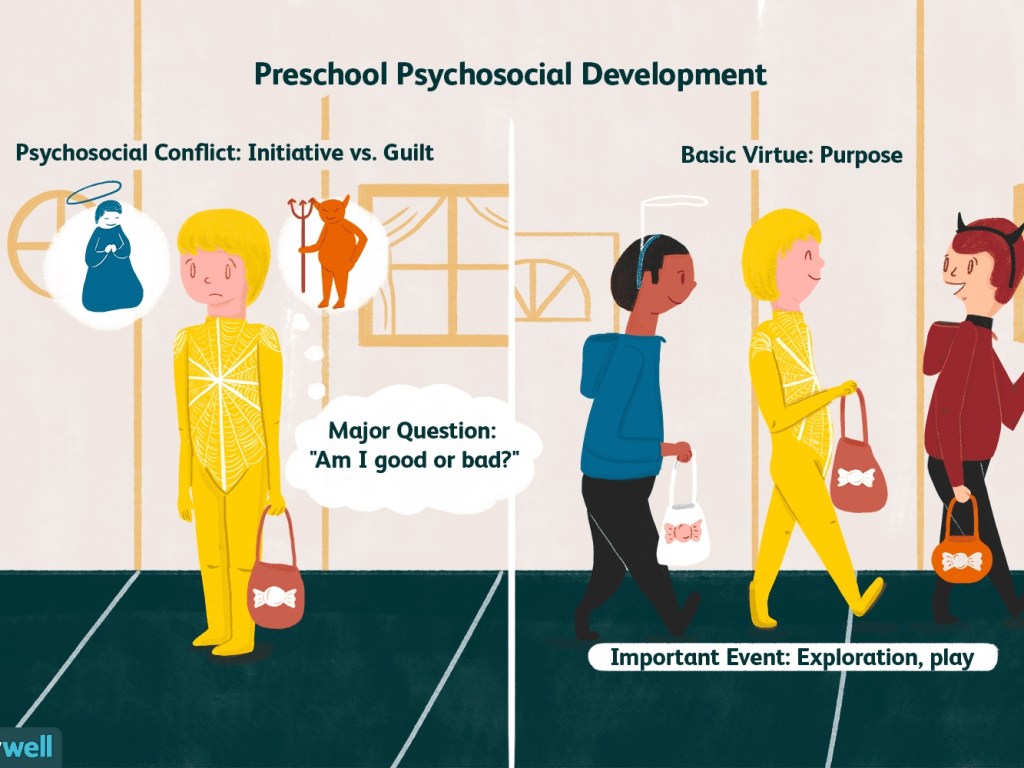
The third stage is from 3 years to 6 years. The crisis here is initiative Vs guilt and the virtue learnt here is purpose. The child price to be initiative and creative and tries to learn new things of feels guilty towards learning anything new. The child takes initiative in learning new things and exploring new possibilities or the child feels like if they try to do something new it’s wrong or it shouldn’t be done that way.

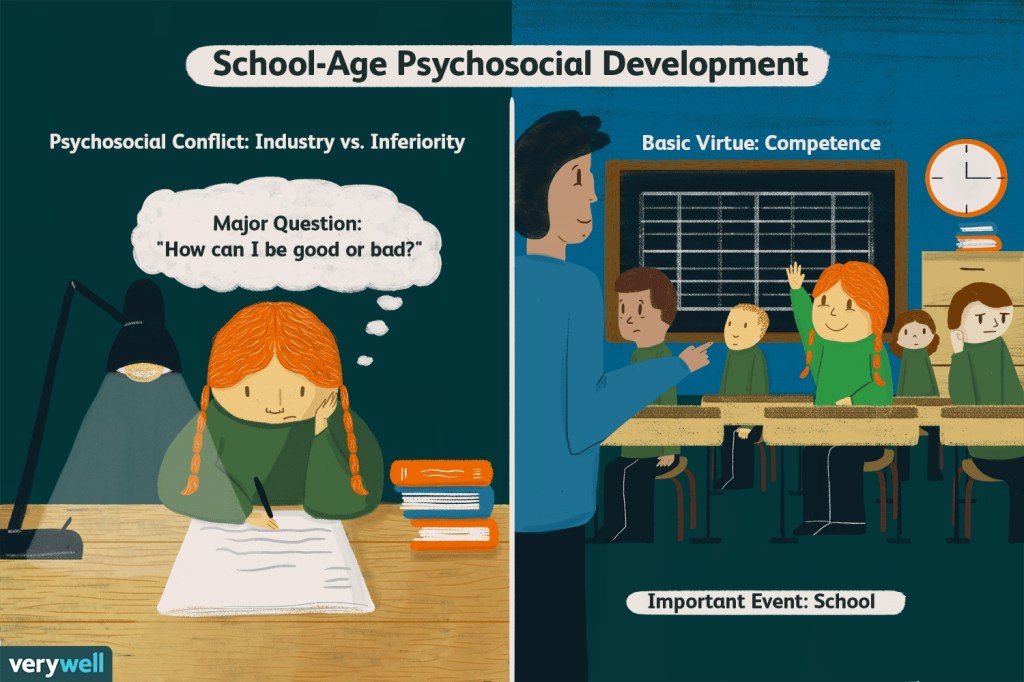
• Industry Vs Inferiority:
The fourth state starts from 6 years and last puberty. The crisis here is industry Vs inferiority. The main virtue learnt here is competence. In the states the child learns new hobbies for activities and tries to be bold or the child feels inferior to others. This state is where the child explorers new activities or interest of their own or when they see other people doing new things or activities they feel they are not good enough for feel inferior to others.

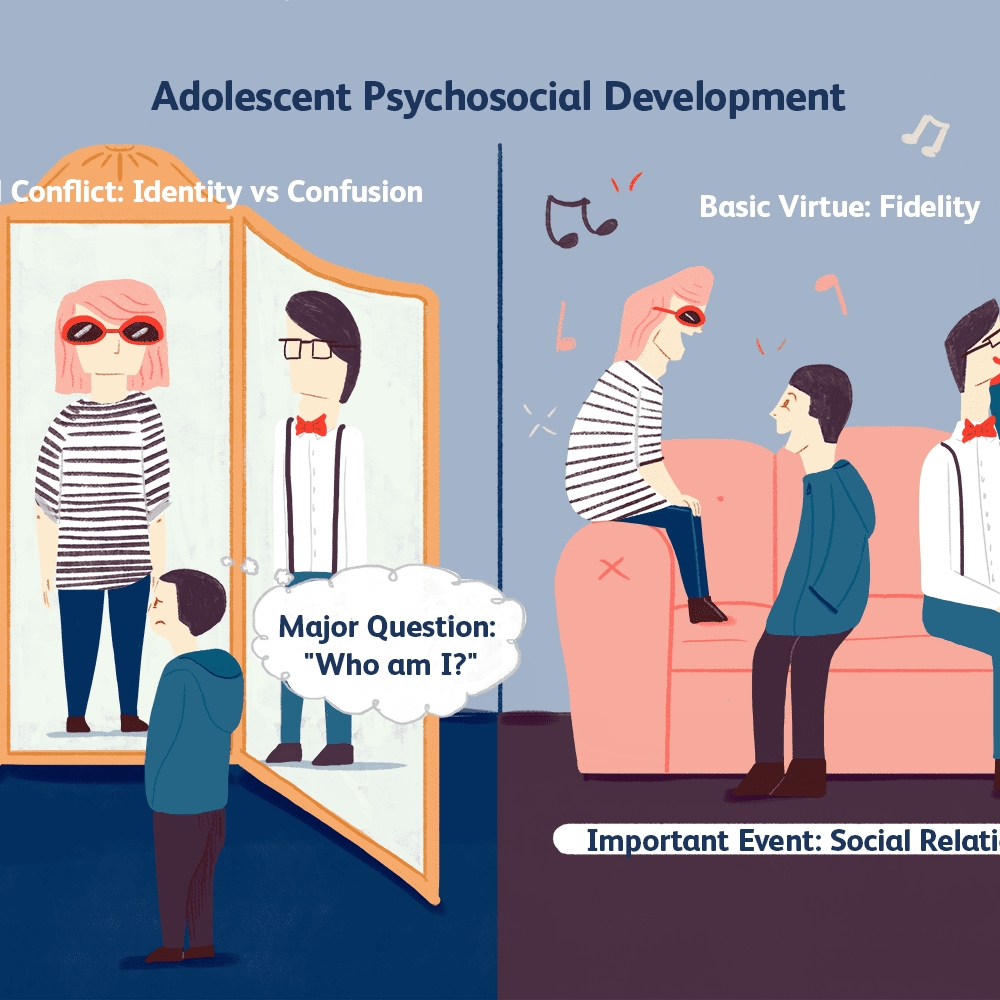
• Identify Vs Identify Confusion:
The first stages from puberty to young adulthood. The crisis identity Vs identity confusion and the virtue learnt here is fidelity. At this stage the child tries learning about themselves and tries to establish and identity for themselves for the child is confused about who they are. This is an important stage as this is the building blocks for the rest of your life. If one does not know who they are then they cannot go on with their life.

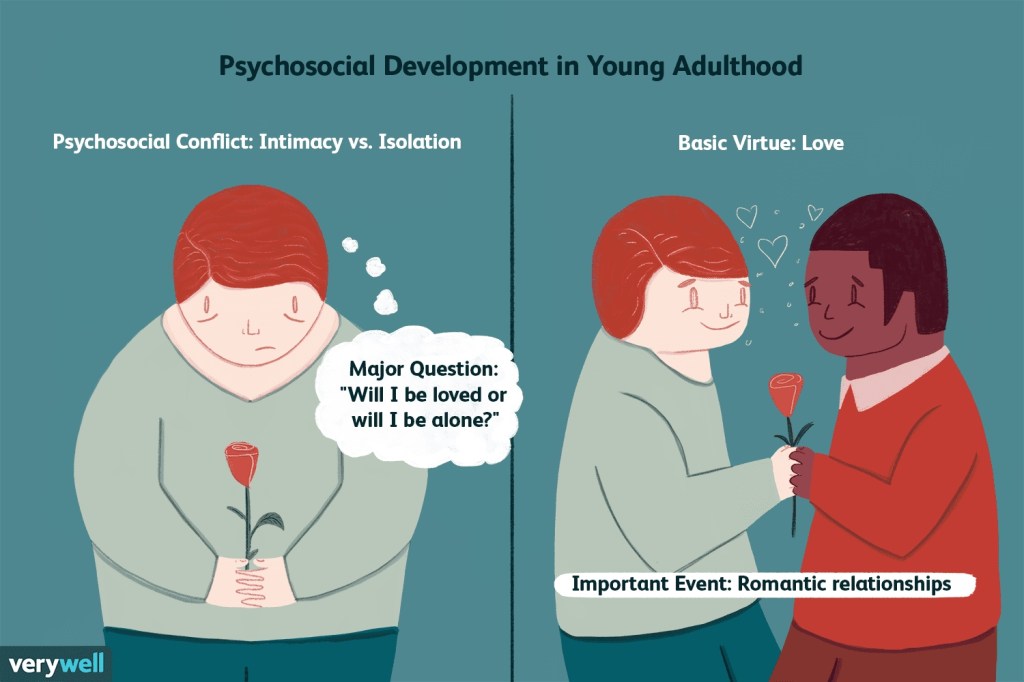
• Intimacy Vs Isolation:
The 6th stage is young adulthood where the crisis is intimacy Vs isolation. The virtue learnt here here is love. Here, the child learns to communicate with the opposite sex and establishes a connection or is shy and spends time in isolation.

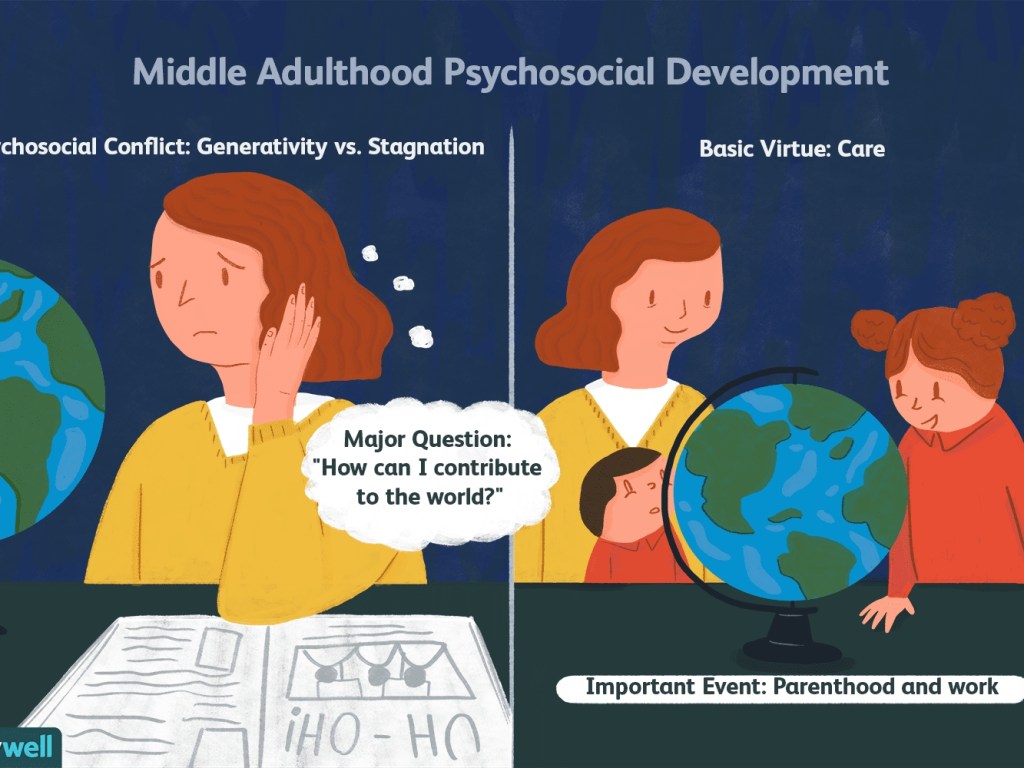
• Generativity Vs Stagnation:
The 7th stage is middle adulthood. The virtue learnt here is care. Here, the person learns to care for others and to be productive or is stagnant. Either they try to help other people how they learnt from their mistakes or they just do not care about anyone else other than themselves.

• Ego Integrity Vs Despair:
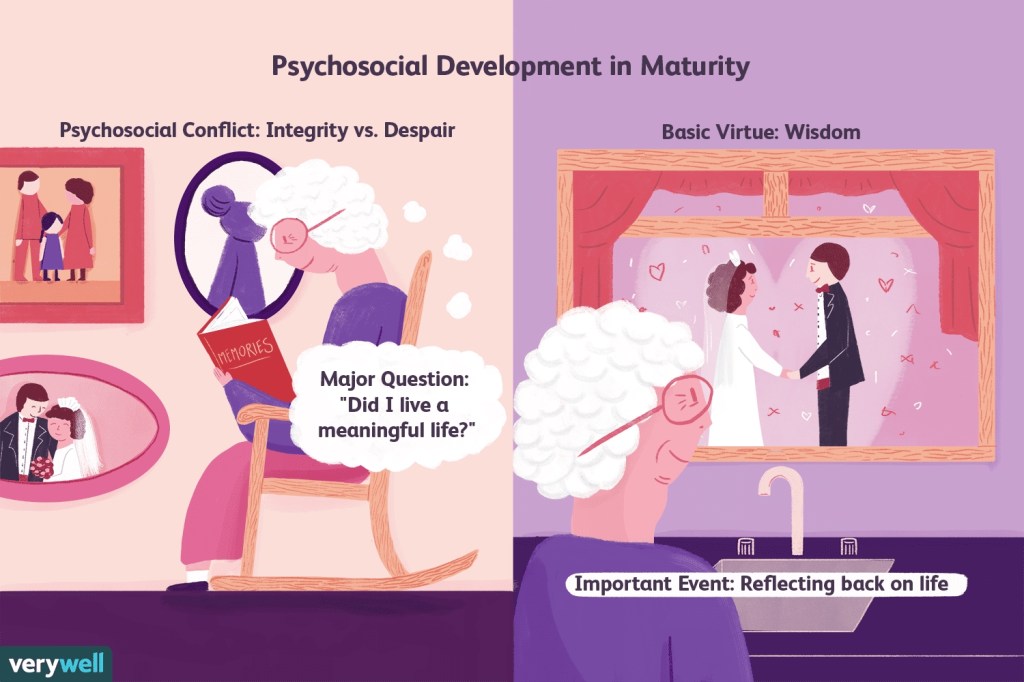
The eight stages late adulthood. The virtue learnt here is wisdom. Here, the adult is either a smart person who is proud of how they have led their life or someone who’s in despair because of how they lived. You can either be proud of who you are or you will regret what ever you have done in your life. That is what this stage is about.

Conclusion:
Development just doesn’t take place in one particular time period. It lasts throughout your lifetime and therefore it is important to learn from your mistakes and make sure to lead a good life so when you look back at how you led your life, you can be proud of who you are and were.

Indian men and women Hockey teams reaches semi finals, creates history

Both Indian men and women Hockey teams are having a wonderful Olympics so far as the both teams has reached semifinals . Yesterday Indian men’s team defeated great Britain by 3-1 and will play semifinal match on a Wednesday 7:00 AM (IST). they have reached semifinals after 49 years. On the other hand , Indian women team stunned Olympic favorites today and beat Australia 1-0.

After these two emphatic wins , the medal hopes are very high from our hockey team. Indian men were very confident against great Britain . India scored 3 field goals in the match, first goal was scored by Dilpreet Singh(7 th minute), 2nd goal from (16th minute) and Hardik Singh’s goal was the final goal from India. Great Britain tried there best but India managed to keep them away from comeback. only one goal was scored by great Britain and that was from Sam Ward.(source of the information 😦 https://timesofindia.indiatimes.com/sports/tokyo-olympics/indiatokyo/india-beat-great-britain-3-1-to-enter-semis-of-olympics-mens-hockey-after-49-years/articleshow/84947034.cms)

But the results which was totally unexpected was from today’s women team match, where our women hockey team defeated world champion Australian team. Indian women team was not totally in good touch from starting . They were defeated badly in there first few matches badly and no one in country would have believed at that time, that this team will be in semi finals. They defeated Ireland and South Africa in group matches from where they found a momentum. that is some unbelievable achievement from women’s team. and the way they played today and handled the pressure shows what an remarkable team it is.

Talking about today’ s match, Gurjit Kaur scored the lone goal of the match in 22nd minute through penalty corner. after that both teams tried to score goal but India did very well and Australia was not able to score a goal .Australia got many penalty corners but India did very well to counter that.

Indian men team was in very good touch from starting, they defeated New Zealand in there first match of Tokyo Olympic by 3-2, but then came the match against Australia, where they were blown away with a heavy 1-7 defeat. but the thing to appreciate was India’s comeback. After that match ,they didn’t lose any match and won matches against Argentina, Spain and Japan. This is not an easy thing to do because these type of loses like that against Australia can easily demotivate and and affect your confidence for upcoming matches.

Indian hockey has seen different phases from winning 8 gold medals till 1980 to not able to qualify in Beijing Olympics in 2008.In Rio Olympics 2016, India managed to enter quarter final but was defeated in next round. For a country like India who gave many great hockey players like Major Dhyan Chand , it is very difficult to believe that we were not not able to win an Olympic medal since 1980. But this Indian hockey team has that capability to win a medal for country and they have shown that again and again. If Indian hockey team(either men or women) manages to win a medal in hockey that will be a very huge boost to Hockey in India. it will revive again, India ‘s golden days in hockey will be back.

Digging deep into Green Revolution — The game changer

  • The Green Revolution was an endeavour initiated by Norman Borlaug in the 1960s. He is known as the ‘Father of Green Revolution’ in world.
    • It led to him winning the Nobel Peace Prize in 1970 for his work in developing High Yielding Varieties (HYVs) of wheat.
  • In India, the Green Revolution was mainly led by M.S. Swaminathan.
  • The Green Revolution resulted in a great increase in production of food grains (especially wheat and rice) due to the introduction into developing countries of new, high-yielding variety seeds, beginning in the mid-20th century.
    • Its early dramatic successes were in Mexico and the Indian subcontinent.
  • The Green Revolution, spreading over the period from 1967-68 to 1977-78, changed India’s status from a food-deficient country to one of the world’s leading agricultural nations.

An Insight into The Green Revolution

Objectives

  • Short Term: The revolution was launched to address India’s hunger crisis during the second Five Year Plan.
  • Long Term: The long term objectives included overall agriculture modernization based on rural development, industrial development; infrastructure, raw material etc.
  • Employment: To provide employment to both agricultural and industrial workers.
  • Scientific Studies: Producing stronger plants which could withstand extreme climates and diseases.
  • Globalization of the Agricultural World: By spreading technology to non-industrialized nations and setting up many corporations in major agricultural areas.

Basic Elements

  • Expansion of Farming Areas: Although the area of land under cultivation was being increased from 1947 itself, this was not enough to meet the rising demand.
  • The Green Revolution provided assistance in this quantitative expansion of farmlands.
  • Double-cropping System: Double cropping was a primary feature of the Green Revolution. The decision was made to have two crop seasons per year instead of just one.
  • The one-season-per-year practice was based on the fact that there is only one rainy season annually.
  • Water for the second phase now came from huge irrigation projects. Dams were built and other simple irrigation techniques were also adopted.
  • Using seeds with improved genetics: Using seeds with superior genetics was the scientific aspect of the Green Revolution.
  • The Indian Council for Agricultural Research developed new strains of high yield variety seeds, mainly wheat and rice, millet and corn.
  • Important Crops in the Revolution:
  • Main crops were Wheat, Rice, Jowar, Bajra and Maize.
  • Non-food grains were excluded from the ambit of the new strategy.
  • Wheat remained the mainstay of the Green Revolution for years.

The Green revolution in India – A revolution which changed India

Background of Green Revolution in India

  • In 1943, India suffered from the world’s worst recorded food crisis; the Bengal Famine, which led to the death of approximately 4 million people in eastern India due to hunger.
  • Even after independence in 1947, until 1967 the government largely concentrated on expanding the farming areas. But the population was growing at a much faster rate than food production.
  • This called for an immediate and drastic action to increase yield. The action came in the form of the Green Revolution.
  • The green revolution in India refers to a period when Indian Agriculture was converted into an industrial system due to the adoption of modern methods and technology such as the use of HYV seeds, tractors, irrigation facilities, pesticides and fertilizers.
  • It was funded by the US and the Indian Government and the Ford and Rockefeller Foundation.
  • The Green Revolution in India is largely the Wheat Revolution as the wheat production increased by more than three times between 1967-68 and 2003-04, while the overall increase in the production of cereals was only two times

Positive Impacts of Green Revolution

  • Tremendous Increase in Crop Produce: It resulted in a grain output of 131 million tonnes in the year 1978-79 and established India as one of the world’s biggest agricultural producers. The crop area under high yielding varieties of wheat and rice grew considerably during the Green Revolution.
  • Reduced Import of Food-Grains: India became self-sufficient in food-grains and had sufficient stock in the central pool, even, at times, India was in a position to export food-grains. The per capita net availability of food-grains has also increased.
  • Benefits to the Farmers: The introduction of the Green Revolution helped the farmers in raising their level of income. Farmers ploughed back their surplus income for improving agricultural productivity. The big farmers with more than 10 hectares of land were particularly benefited by this revolution by investing large amounts of money in various inputs like HYV seeds, fertilizers, machines, etc. It also promoted capitalist farming.
  • Industrial Growth: The Revolution brought about large scale farm mechanization which created demand for different types of machines like tractors, harvesters, threshers, combines, diesel engines, electric motors, pumping sets, etc. Besides, demand for chemical fertilizers, pesticides, insecticides, weedicides, etc. also increased considerably. Several agricultural products were also used as raw materials in various industries known as agro based industries.
  • Rural Employment: There was an appreciable increase in the demand for labour force due to multiple cropping and use of fertilizers. The Green Revolution created plenty of jobs not only for agricultural workers but also industrial workers by creating related facilities such as factories and hydroelectric power stations.

Negative Impacts of Green Revolution

  • Non-Food Grains Left Out : Although all food-grains including wheat, rice, jowar, bajra and maize have gained from the revolution, other crops such as coarse cereals, pulses and oilseeds were left out of the ambit of the revolution. Major commercial crops like cotton, jute, tea and sugarcane were also left almost untouched by the Green Revolution.
  • Limited Coverage of HYVP: High Yielding Variety Programme (HYVP) was restricted to only five crops: Wheat, Rice, Jowar, Bajra and Maize. Therefore, non-food grains were excluded from the ambit of the new strategy. (The HYV seeds in the non-food crops were either not developed so far or they were not good enough for farmers to risk their adoption.)
  • Regional Disparities:
    • Green Revolution technology has given birth to growing disparities in economic development at interred and intra regional levels.
    • It has so far affected only 40 percent of the total cropped area and 60 per cent is still untouched by it.
    • The most affected areas are Punjab, Haryana and western Uttar Pradesh in the north and Andhra Pradesh and Tamil Nadu in the south.
    • It has hardly touched the Eastern region, including Assam, Bihar, West Bengal and Orissa and arid and semi-arid areas of Western and Southern India.
    • The Green Revolution affected only those areas which were already better placed from an agricultural point of view.
    • Thus the problem of regional disparities has further aggravated as a result of the Green Revolution.
  • Excessive Usage of Chemicals: The Green Revolution resulted in a large-scale use of pesticides and synthetic nitrogen fertilisers for improved irrigation projects and crop varieties. However, little or no efforts were made to educate farmers about the high risk associated with the intensive use of pesticides.(Pesticides were sprayed on crops usually by untrained farm labourers without following instructions or precautions.) This causes more harm than good to crops and also becomes a cause for environment and soil pollution.
  • Water Consumption: The crops introduced during the green revolution were water-intensive crops. Most of these crops being cereals, required almost 50% of dietary water footprint. Canal systems were introduced, and irrigation pumps also sucked out the groundwater to supply the water-intensive crops, such as sugarcane and rice, thus depleting the groundwater levels. Punjab is a major wheat- and rice-cultivating area, and hence it is one of the highest water depleted regions in India.
  • Impacts on Soil and Crop Production: Repeated crop cycle in order to ensure increased crop production depleted the soil’s nutrients. To meet the needs of new kinds of seeds, farmers increased fertilizer usage. The pH level of the soil increased due to the usage of these alkaline chemicals. Toxic chemicals in the soil destroyed beneficial pathogens, which further led to the decline in the yield.
  • Unemployment: Except in Punjab, and to some extent in Haryana, farm mechanization under the Green Revolution created widespread unemployment among agricultural labourers in the rural areas. The worst affected were the poor and the landless labourers.
  • Health Hazards: The large-scale use of chemical fertilizers and pesticides such as Phosphamidon, Methomyl, Phorate, Triazophos and Monocrotophos resulted in resulted in a number of critical health illnesses including cancer, renal failure, stillborn babies and birth defects.

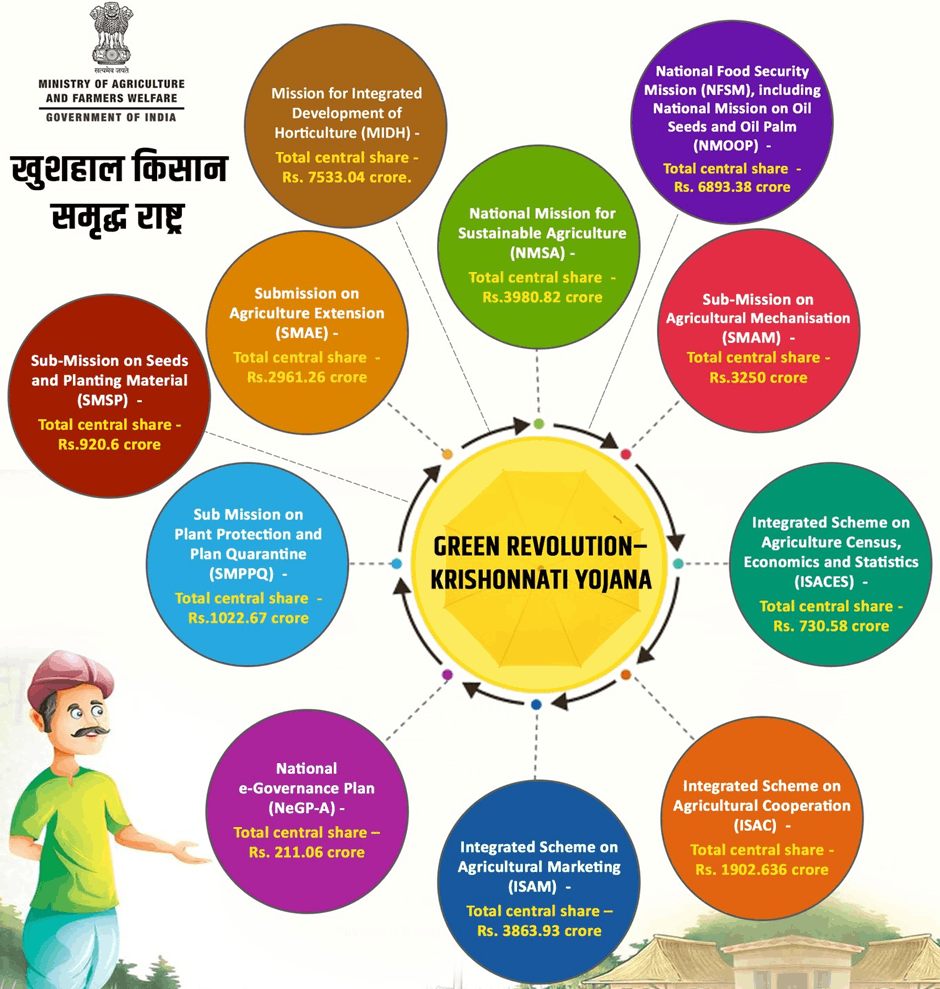
Green Revolution – Krishonnati Yojana

  • The government of India introduced the Green Revolution Krishonnati Yojana in 2005 to boost the agriculture sector.
  • Government through the scheme plans to develop the agriculture and allied sector in a holistic & scientific manner to increase the income of farmers.
  • It comprises of 11 schemes and mission under a single umbrella scheme:
    • Mission for Integrated Development of Horticulture (MIDH)
    • National Food Security Mission (NFSM)
    • National Mission for Sustainable Agriculture (NMSA)
    • Submission on Agriculture Extension (SMAE)
    • Sub-Mission on Seeds and Planting Material (SMSP)
    • Sub-Mission on Agricultural Mechanization (SMAM)
    • Sub-Mission on Plant Protection and Plan Quarantine (SMPPQ)
    • Integrated Scheme on Agriculture Census, Economics and Statistics (ISACES)
    • Integrated Scheme on Agricultural Cooperation (ISAC)
    • Integrated Scheme on Agricultural Marketing (ISAM)
    • National e-Governance Plan in Agriculture (NeGP-A)

The Evergreen Revolution

  • The improvements brought out by the Green Revolution came at the cost of adverse environmental effects in areas subjected to intensive farming. However, where population pressure is high, there is no option except to produce more food.
  • Hence, the need for the Evergreen Revolution was called out by Dr. M S Swaminathan, the Father of the Green Revolution in India.
  • Under the Evergreen Revolution, it is envisaged that productivity must increase, but in ways which are environmentally safe, economically viable and socially sustainable. The evergreen revolution involves the integration of ecological principles in technology development and dissemination.

Conclusion

  • Overall, the Green Revolution was a major achievement for many developing countries, specially India and gave them an unprecedented level of national food security.
  • It represented the successful adaptation and transfer of the same scientific revolution in agriculture that the industrial countries had already appropriated for themselves.
  • However, lesser heed was paid to factors other than ensuring food security such as environment, the poor farmers and their education about the know-how of such chemicals.
  • As a way forward, the policymakers must target the poor more precisely to ensure that they receive greater direct benefits from new technologies and those technologies will also need to be more environmentally sustainable.
  • Also, taking lessons from the past, it must be ensured that such initiatives include all of the beneficiaries covering all the regions rather than sticking to a limited field.
  • The awareness of Green Revolution – Krishonnati Yojana must be given to all farmers across the country
  • The government and the civil society should work towards bringing an Evergreen Revolution

New Forms of Punishment

Section 53 prescribes five types of punishments to be meted out to a person convicted of a crime under the Code, depending on the nature and gravity of the offence,viz .:

(i) Death; (ii) Imprisonment for life; (iii) Imprisonment, rigorous with hard labour, or simple; (iv) Forfeiture of property; and (v) Fine.

It is suggested to add five new forms of punishment to the existing ones in section 53, IPC with a view to deter particular types of criminals. Such punishments will have more psychological, social and moral impact on the criminals and will go a long way in curbing crimes. The proposed punishments are: (i) Externment, (ii) Compensation to victims of crime, (iii) Public Censure, (iv) Community service, and (v) Disqualification from holding public office.

(i) Externment: Externment or banishment is a form of punishment in which an accused is sent out of the place of his residence to another place for a specified period of time as mentioned in the order issued by the court. This is done to deprive the accused of the company of his family members, friends and associates so that he or she may not indulge in criminal activities. Externment is resorted to primarily in case of anti-social, hardened and habitual criminals.

(ii) Compensation to victims of crime: Unfortunately, the victims of crime in our country do not attract the attention of law makers. Of late, Civil Procedure Code, 1973 in section 357 has empowered the court to award compensation to the victims of crime in very limited cases at the time of passing the judgment. No doubt, the higher judiciary has on times provided compensation to the victims of crime of custodial violence, sexual assault, rape, illegal detention by invoking Article 21 of Constitution, but such instance will not serve the plight of helpless victims.

(iii) Public Censure: Public Censure or social censure is one of the methods of punishment prescribed in some of the countries, such as Russia, Columbia etc., in respect of certain offences of anti-social nature, such as white-collar crimes, tax crimes, food adulteration, etc. In ancient India, public censure was considered suitable punishment for certain class of criminals.

(iv) Community Service: Community service or corrective labour is a form of punishment in which the convict is not deprived of his liberty. Corrective labour is the standard penalty given in those cases where it is considered that the accused need not to be isolated from the society. The period ranges between one month to one year in such cases. This system is used in Soviet Russia with good results. An important feature of this type of punishment is that the accused is not deprived of his liberty and he may go home after the day’s work.

(v) Disqualification from holding public office and contest elections: Disqualification to hold public office and contest election of legislature and local bodies as a form of punishment will have the adequate and desired deterrent sanction, if sincerely implemented. Representation of the People Act, 1951 disqualifies a person convicted for a period of two years or more to contest election for a period of six years. But the provisions are very limited in scope and are being abused with impunity.

Anger!!!

It was the day of retirement of our Boss. Everyone had tears in their eyes on the day of his farewell.
One of the employees said“ Sir,there is one thing we want to learn from you. You worked here for so many years. Leave aside about scolding your subordinates,we have never seen you even shouting at them.
We have scolded our subordinate on pressure of work or for other reasons. We want to know about “the seed of your patience”.
The Boss said,“This all comes from the incident of my childhood,My father was working,as a lower level employee in an office. He was a very nice person. He was respected very much in our family.
It happened one day, “ I was studying in 4th standard”. I had gone to my father’s office. I saw that my father was not on his seat. I waited outside. After some time his Boss door opened and he came out.
I was taken back seeing the fair face of my father had turned red. He was standing in a corner and looking outside the window. He had not seen me. I went to him and called him slowly. He was stunned and surprised to look at me.
I was stream of tears flowing down his eyes. He was slightly disturbed,he did not find time to wipe out of his tears.“CAN MY FATHER CRY ANYTIME?”..
He was a strong man. I ran straight to my father’s Boss room and asked “Why did you make my father Cry?”
My father apologized and took me out and tried to meke me understand. But that day I decided to become a Boss one day, But I will not make my subordinates cry anytime.
People say it is not possible to control others without scolding them. But I say “WHAT IS LOVE THEN FOR?”. “People who come to work are the ones who devote their best quality time of the day to work, leaving not much for their families”.

Anger doesn’t solve anything
Anger builds nothing
But
Anger can destroy everything

BE COOL!!! BE HAPPY!!!

Sweets

Sweet this word brings smile on everyone’s face and make them…happy and to feel good.

In every festivals we make sweets to enjoy the auspicious day or special day..

In every function they start the meal with sweet because they want everything to be good.

Children have a huge crazy on sweet they like to eat sweets more and more… Like that some leaders also have crazy like that and …i too like sweets.

There are so many kinds of sweets but each sweet has its own taste ..and in some sweet they have medical benefits also……

FACTS

Eating the sweet item first enables the flow of digestive secretions. By pushing the sweets to the last, you would slow down your digestion.” Having a bite or two of sweet or a chunk or gur(jaggery) sweet right at the start of your meal is also said to activate the taste buds.

CONCLUSION

Though sweets are like by everyone …too much of anything is Good for nothing…so taking this words eat little sweet and make yourself happy and feel good with Good Health and lots of happiness………….😍😍😍😍😍😍😀😀😀😀😀😀

Theories of Punishment in Indian Penal Code,1860

Introduction

Punishment is the sanction imposed on an accused for the infringement of the established rules and norms of the society.

Objective

The object of punishment is to protect society from mischievous and undesirable elements by deterring potential offenders, by preventing the actual offenders from committing further offences and by reforming and turning them into law abiding citizens.

Types of Theories

  1. Deterrent Theory
  2. Preventive Theory
  3. Retributive Theory
  4. Reformative Theory
  5. Multi Approach Theory

a) Deterrent Theory: According to this theory, the object of punishment is not only to prevent the wrong-doer from doing a wrong second time, but also to make him an example to others who have criminal tendencies. Salmond considers deterrent aspects of criminal justice to be most important for control of crime. Deterrent punishment is likely to harden the criminal instead of creating in his mind a fear of law. Hardened criminals are not afraid of imprisonment.

b) Preventive Theory: According to Paton:’The theory concentrates on the prisoner and seeks to prevent him from offending again in the future. The death penalty and exile serve the same purpose of disabling the offender’. Critics point out that preventive punishment has the undesirable effect of hardening first offenders, or juvenile offenders, when imprisonment is the punishment, by putting them in association of hardened criminals.

c) Retributive Theory: In primitive society punishment was mainly retributive. The person wronged was allowed to have revenge against the wrong-doer. The principle of ‘an eye for an eye’, ‘a tooth for tooth’, was the basis of criminal administration. According to Justice Holmes: ‘It is commonly known that the early forms of legal procedure were grounded in vengeance’. The advocates of this theory plead that the criminal deserves to suffer.

d) Reformative Theory: According to this theory, the object of punishment is reformation of criminals. The object of the punishment should be to reform the offender. The criminal must be educated and taught some art and craft or industry during his term of imprisonment, so that he may be able to lead a good life and become a responsible and respectable citizen after release from jail.

e) Multi Approach Theory: In fact, a perfect system of criminal justice could never be based on any single theory of justice. Every theory has its own merits and every effort should be made to extract the good points of each and integrate it so that best of all could be achieved. Punishment should be proportionate to the nature and gravity of the crime. The object of any concession given to an offender should be to convince him that normal and free life is better than life in jail.

“I’m sorry”

Would ‘sorry’ have made any difference? Does it ever? It is just a word but one word against a thousand actions. Anyone is not perfect, we all make mistakes, we hurt people but when we say sorry ,we really mean it.

The art of a sincere and heartfelt apology is one of the greatest skills you will ever learn. When anger and bitterness overpower your goodness, you can neither apologize nor forgive.

Apologizing does not always mean that you are wrong and the other one is right. It just means that you value your relationship more than your ego. If you apologize to your true relationship then you will never apologize for your apology because it is worth.

Apologies are great, they don’t really change anything when it is just a word instead it changes everything when it becomes action.

If an apology is followed by an excuse or reason, it means they are going to commit same mistake again they just apologized for, the only correct actions are those that demands no explanations.

I’m sorry” is not just a word, it means take me back into your arms, hold me close tightly, feel my heavy breath , hold my hands and never leave me alone.

Never try to dominate the one who says sorry to you for their mistake because they understand that you are more important than their ego. Life becomes easier when you learn to accept an apology you have never got.

Learn to apologize and also learn to accept apologies when it is sincerely made…

It is never too late to say a sorry… somebody is waiting for yours…

Are online classes worth it?

As you know COVID-19 destroyed the world economy to a great extent and still we are not fully back on our track. The major impact of this can be seen on education as well. All the schools and universities shut down causing the harm to the students. They are forced to complete their education by the means of internet only just by sitting at their homes. Internet no doubt provides us with alot of opportunities and ed-tech is one of them but it also leads to huge destruction of students carrier and their mind. When the virus hitted the economy the teachers started taking the classes online by the way of various available platforms and both the negative as well as the positive impact for the students were observed.

Agree that there are various advantages of online classes that a student can learn on their time just by sitting at their homes but it has a disadvantage in itself because most of the students just join the classes but don’t give due care to the lectures.Some students don’t feel comfortable asking their queries in class so in an online class they can pause videos or return to concepts covered in previous modules. But this opportunity is not taken by most of the students because they are one who are completely ignoring the lectures and doing something else in their home.

Teachers are also facing alot of issues in this as the network issues hits alot while taking the classes. Also video can’t be open by the students who are living in remote areas. If we also look up in the worst ground then there are students who are even not having the proper equipment to attend the classes and also not able to give exams which is the reason of stress and anxiety among them.

We can just pray together that everything comes back on the track very soon so that we can see the happy faces going to schools and universities rather attending classes just by being on their bed.

Design Thinking

How did we end up here? In a technologically advanced era? With people that are aware of our progression towards a more electronically-enabled environment? Would it be possible without asking simple questions and analyzing?

Design thinking has been helping us solve problems and develop for personal, national, even global use. Design thinking is a systematic approach of empathizing with the user, observing problems, and creating innovative solutions. Human beings have limited brainpower. Due to habituation, our brains convert everyday things into habits to make space for learning new things. It’s a human tendency to get used to everything that we see every day normally.

It would be exhausting to notice everything as if it was for the first time. But you would have to notice the littlest details for user empathy and problem-solving. All great innovators in literature, art, music, science, engineering, and business have practiced it. Observing and noticing takes practice and constant thought. You could start by consciously putting effort into staying a beginner.

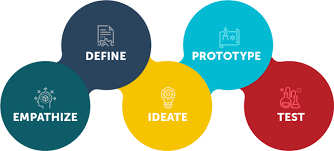
Design thinking has been conveniently divided into five steps: empathize, define, ideate, prototype, test.

The process begins with empathizing with the user: finding more about the concerns to gain a deeper understanding. Then, we proceed to define the problem statement and brainstorm ideas that could potentially solve.

Always try and reiterate the problems and questions. Always try to find a new perspective that could’ve been missed. Then we make a prototype after checking feasibility, functionality, user-friendliness, and other factors and test how it works with people.  Now, the steps do not have to be followed in the same order, depending upon the success rate of each step, you could repeat previous steps too.

Design thinking is important because it is the cause of innovation. It instills observation skills and helps in tackling creative challenges. Over the last decade, the practice of design thinking has made its way into a variety of other disciplines and industries. It is not only for designers or artists, it is for anyone or anything looking for improvement.

It is about seeing the invisible problem. It’s usually about looking broader and looking closer. Focusing on how things ought to be versus how things are.

Sometimes the solution to the problem is very basic and simple. Think younger, think about things as if they are new and you are looking at them for the first time. Think every day about how I can experience the world better.

It is essential to standout and think out of the box, to try and introduce new things, which might have been impossible due to the lack of technological and electronic advancement. We have all imagined what the future could possibly look like. There could be massive changes in how a city looks, functions, and develops. But, surely, this would be a result of design thinking shaping the experiences of innovators.

Mariana Trench

The Mariana Trench is a crescent-shaped trench located in the western Pacific, just east of the Mariana Islands near Guam. The region surrounding the trench is very remarkable and is the cradle for many unique environments. The Mariana Trench contains the deepest points on Earth, bubbling vents of liquid sulfur and carbon dioxide, active mud volcanoes, and marine life adapted to pressures a thousand times greater than sea level. The Mariana Trench is the deepest place you can find in the ocean. Its depth is difficult to measure from the surface, but modern estimates vary by less than 1,000 feet.

Discovery

In 1860, Charles Wyville Thomson, wanted to make a boat trip to conduct oceanographic studies. On December 21, 1872, he sailed on the HMS Challenger, a modified warship for the voyage carrying everything from fishing gear to microscopes. The main objective was to travel the oceans to measure depth, temperature and salinity. On March 23, 1875, while the team was conducting studies near the Mariana Islands, the sea literally swallowed 8 kilometers of a measuring line they were carrying. It was at that moment that the researchers had managed to discover the abyss. In the nineteenth century, it was discovered that there was a place where no one had yet arrived, the deepest place that existed in the ocean, known as the black hole or the Mariana Trench. In 2012, the first expedition was made by James Cameron, who was the first person in charge of continuing studies on the grave.

Characteristics

The main characteristics of the Mariana Trench are as follows:

  • It is considered to be the deepest area in the oceans.
  • It is located in the Pacific Ocean, east of the Mariana Islands.
  • They coincide with a subduction zone, a place where two tectonic plates collide.
  • It is approximately 2,550 kilometers long and 69 kilometers wide.
  • The deepest part of the pit is known as the Challenger Abyss.
  • They have an amount of water equivalent to 1000 times more than the earth has.
  • It lacks illumination.

Location

The Mariana Trench is located in the Pacific Ocean, east of the well-known Mariana Islands. It lies at the bottom of the Pacific Ocean, on the north western side, east and south of the islands. It has 11° 21´ north latitude and 142° 12´de east longitude, near Guam, a place located between the coast of Indonesia and China.

Fauna & Fauna

Image taken by James Cameron’s Odyssey

In 2016, the U.S. National Oceanic and Atmospheric Administration carried out an expedition with the aim of trying to gather information on the area. Some of the creatures they found are:

  • Bellota worms: it is a mollusk with a snail shell. It is considered as a new species, although there is no idea about its geology, habitat or origin.
  • Elf Shark: Its color is pink, and its consistency is very viscous. They are capable of growing several meters.
  • Dumbo Octopus: The most eye-catching thing are their jumped eyes and their furrowed mouth. It can swallow its prey whole.
  • Dragon Fish: Its teeth are large, and it is a hunter by nature. It has no scales and its skin is slippery, very similar to an eel.
  • Eel Shark: Its body is rounded, and its head flattened, it is very similar to a dinosaur. Apparently it has been living for 80 million years. It has 20 rows of teeth and gills in its body.

Challenger’s Abyss

At 10,994 meters deep, it is considered the deepest point in the ocean. Its name was given in 1872. Only one man has managed to reach 10,898 meters in the submarine Deepsea ChallengerJames Cameron. He described the trench as an environment very much like a lunar desert. The only thing he could see were blind worms that had adapted to the situation. In 2013, scientists discovered that the abyss was full of life. onar beams sent to the ocean floor are updated many times per second, and verified by Global Positioning Satellites. These maps clearly indicate the Mariana Trench as the deepest of its kind, and so far the Challenger Deep is its lowest measured point.

GENDER AND EDUCATION


Abstract

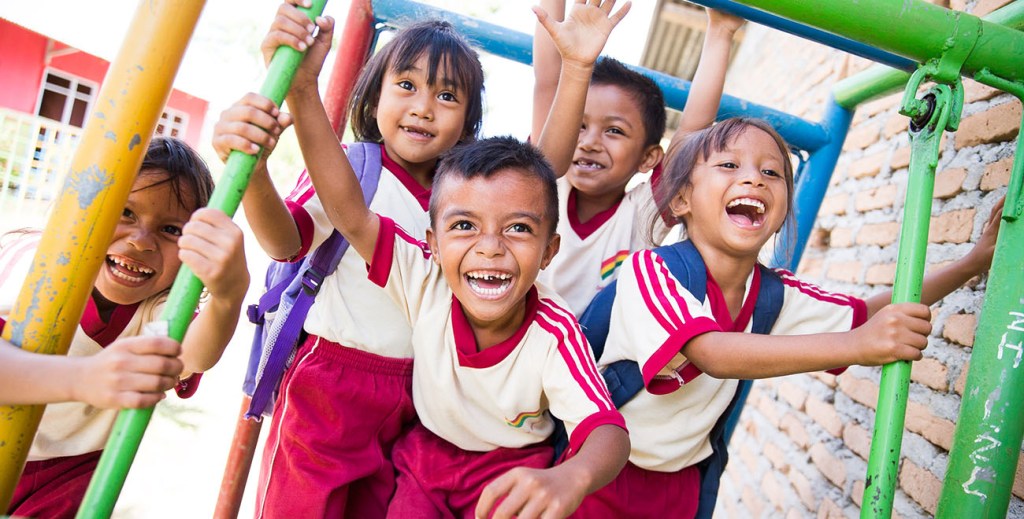
 This article aims to documented and understand how education is not an easy task for girls mainly in poor families. We talk about the various major issues revolving around the high dropout rates amongst girls in India. And many initiatives by the government to strengthen the education system of India.

Introduction

Education is the single most important factor to ensure gender equality and empowerment. But, gender inequality in education is a persistent problem in Indian society- especially for girls residing in rural areas, belonging to lower socioeconomic backgrounds, and lower castes. India has succeeded in many ways to address the educational inequalities- like moving towards universal school enrollments and coming up with educational policies based on gender. However, education gaps still exist.

And gender is not only about males and females but it is also about the third gender called transgender. They also faced much discrimination regarding education as they are not much appreciated in studies.

Gender education gaps 

According to census 2011, a person above 7 years is considered literate if he/she can read and write in any language with understanding. A person is not considered literate if he/she can only read but cannot write. The Census also states that it is not necessary that a person should have received formal learning or minimum education to be considered literate. 

Women constitute 48.5% of the country’s population. According to Census 2011, the female literacy rate is only 64.64% (as opposed to the male literacy rate of 80.89%) of the total female population of India, with Kerala being at the highest with 91.98% rate, and, Bihar and Rajasthan being at the lowest levels with 53.33% and 52.66% respectively 

Indian women having the most illiteracy rates in Asia as there is discrimination among girls and boy child among most of the Indian families as they don’t allow girls for higher education some due to patriarchy and some due to economic crises, the huge gender gap in enrolment for science subjects, the value of quality in school, etc.

Following are the major issues revolving around the high dropout rates amongst girls in India:

  • Poverty

Poverty happens to be the single biggest cause of illiteracy in India and a precursor to all other effects. In a poor family, girls are the main victims; they are malnourished and are denied the opportunity of better education. The poor parents are unable to afford the education of their children. It is very difficult for them to meet the daily expenses. In such a situation they cannot buy textbooks, pencils, erasers, etc., and pay school fees. Even if they can afford to educate one child, the son would always be preferred over the daughter. . Illiteracy and poverty go together because they are similar expressions of lack of access to resources in society.

  • Poor school facilities

Inadequate school facilities can sometimes serve as a deterrent for the girl child’s participation in formal schooling. 

Lack of basic sanitation and privacy is driving girls out of school. According to UDISE 2013-14 data for the Swachh Bharat Swachh Vidyalaya mission, 9.27% of schools in the entire country do not have a separate toilet for girl students, while 8.03% of toilets are dysfunctional. The lack of water, inadequate sanitation, unhygienic common or separate toilets, and absence of separate toilets for girls reflect in their extremely low attendance in schools.

  • Lack of Transport

Some villages do not have schools and the students need to travel long distances to study. This is also one of the main reasons behind female illiteracy as the family does not find it safe for girls to travel such long distances every day. Due to staggered habitations, children are forced to travel more than 3 km. Thus, the daughters are usually discouraged due to unsafe environments and the fear of sexual harassment and violence on way.

  • Patriarchy

Patriarchy refers to a system of society in which men hold the power and women are largely excluded from it. The normality of covert forms of discrimination, and how everyday form of oppression determine institutional spaces, present a great challenge for women and girls to negotiate spaces and rights in public life. Patriarchy sees women as nothing more than domestic workers, which in turn discourages them right at a young age, to not pursue education and rather help in cooking, washing, and other household chores- which they are meant to do at later stages of life; after marriage as well. Thus, parental reluctance to educate girls is a huge factor inhibiting their access to education.

  • Lack of teachers

Girls are more likely to attend schools if they have female teachers. Girls are more comfortable and more local with female staff, thus are found to be active in focusing and participating in the learning process. Also, the parents – especially in rural areas- are hesitant to send their daughters to schools that majorly have male teachers. The dearth of female teachers is a concerning issue. Nearly all committees and commissions that have looked into illiteracy have recommended increased recruitment of female teachers.

  • Household chores 

Fixed school hours do not suit many girls in rural areas; as they are required to lend a helping hand at household chores, at farms, and fields during those hours. Girls are even expected to take care of their younger siblings, while their parents are out on their daily wage. This is one of the causes of the low participation of girls in education. The enrolment rates of girls and their retention can be improved if the schools offer flexible hours. Flexible school timings have been tried in Rajasthan under the Shiksha Karmi Project and Lok Jumbish, and the results are quite encouraging.

  • Sexual Harassment and Violence

Parents often complain about the security issues of girls attending schools. Instances of abduction, rape, and molestation of girls dampen the enthusiasm of girls and their parents in pursuing education beyond a particular age; thereafter they are bound to sit at home and save their chastity.

  • Early marriage:

The patriarchal society still endorses the idea of pubescent marriages of girls. Most child marriage involves underage women, many of whom are in poor socio-economic conditions. Jharkhand is the state with the highest child marriage rates in India. 

  • Menarche and Menstruation:

A national study by AC Nielsen and NGO Plan India in 2012 found that lack of facilities causes widespread absenteeism each month, stating that girls miss an average of 50 days of school each year because of menstruation. It also found that 23% of girls in India drop out of school when they hit puberty.

The Government of India has taken many initiatives to strengthen the education system of India.

The major centrally sponsored schemes are the Sarva Shiksha Abhiyan (SSA), National Program for Education of Girls at Elementary Education (NPEGEL), Midday Meal Scheme, Right to Education (RTE) Act, Beti Bachao, Beti Padhao,  Kasturba Gandhi Balika Vidyalaya, etc to improve the educational situation of India but somewhere we are still lacking behind and more work is needed to improve the quality of education in India, as well as the condition of girls, is more worst than boys in case of education as they are getting the equity, not equality.

Conclusion 

A women’s life is better when she is educated as she can take her own decision not dependent on others as this study shows that still, the literacy rate is low of women more work is needed to be done to improve the condition.

References

  1. .https://www.thehindu.com/opinion/open-page/gender-equity-in-education/article31600127.ece
  2. http://www.create-rpc.org/pdf_documents/PTA18.pdf
  3. http://www.jcreview.com/fulltext/197-1582715201.pdf
  4. Bashin, K. (2003). Understanding gender. New Delhi: Women Unlimited

“ADAM SMITH” Biography

“Adam Smith” was an Economist and Philosopher. He was born in Kirkcaldy, Fife, Scotland, on 15 June, 1723. His father’s name was Adam Smith and Mother’s name was Margaret Douglas. His father was a lawyer which mother had a great influence on this education.

He went to Burgh School of Kirkcaldy where he learnt writing, mathematics and history he later studied philosophy from University of Glasgow when he turned 14. He also attended Balliol college at Oxford to study European literature. Soon after Smith finished graduation a series of public lectures delivered by at Edinburgh led him to collaborate with clause about David Hume during the Scottish Enlightenment in 1750. Smith shared a very close intellectual Bond with Hume and they wrote on politics, history religion and economics Smith became a professor of moral philosophy Glasgow in 1751. He wrote his Classic ” Theory of Moral Sentiments” around this time. He was elected as a member of Philosophical Society of Edinburgh in 1752. Smith spent the next thirteen years as an academic which he recalled as his best years. In 1763, Smith resigned from his professorship to tutor Henry Scott’s step son. Henry Scott was introduced to Smith through David Hume. He was elected a fellow of the Royal Society of London and was elected as a member of the literary club in 1775 the wealth of nations was published in next year and it become an instant success in 1788 Smith returned to France where was Mother was living and he was appointed as commissioner of customs between 1787 and 1789 he was given the position of Lord Rector of University of Glass gow. During Smith professorship at Glassgow in 1759, he wrote and published one of his classic theory of moral sentiments. His bestseller the wealth of nations which was published in 1776 was a powerful and very influential book Smith never married in his life. Smith was conferred with the title of “Father of modern economics” the book came to be known as the first modern work of Economics. He died in Edinburg Scotland on 17 July 1790, at the age of 67.”ALL MONEY IS A MATTER OF BELIEF”.

HARD WORK

Live the life of your dreams. When you start living the life of your dreams,there will always be obstacles, doubters, mistakes and setback along the way , but with hard work , perseverance and self belief there is no limit to what you can achieve.

The three great things essential to achieve anything worthwhile are, first: hard work; second: stick to your dreams, third: common sense. Believe that talent means nothing, while experience, acquired in humility and with hard work, means everything.

The major difference between ordinary and extraordinary is that little extra hard work. There are no secrets to success. It is the result of preparation, hard work and learning from failure. Success is not always about greatness , it is about consistency. Consistent hard work leads to success. Greatness comes automatically.

Don’t give up after sometimes of your hard work, perseverance is the hard work you have to do after getting tired of doing the hard work you already did. Hard work always pays off, whatever you do.

Everybody wants to become famous, but nobody wants to do hard work. At the end of the day ,you put all the hard work in and eventually it will pay off .It could be in a year, it could be in 30 years, but your hard work never fails.

The only thing that can overcome hard luck is hard work.
Never give up. Never stop believing. Never stop fighting. Self belief and hard work will always earn you success. Without hard work nothing grows but weeds. There is no substitute for hard work.

It is wonderful how much may be done, if you keep on doing. The fruit of your own hard work is the most sweetest thing in this world. Wait for the right time to taste it…

Most Efficient Source of Energy

In today’s world, energy consumption increases by the minute. New technology and equipment are required in all aspects of our lives. Our population is also growing which is increasing the need for energy. What are the different sources of energy and which one is the most efficient?

Human beings have been using fossil fuels as the main energy source for a few centuries now, especially in the past couple of decades. But this source is finite. The planet is going to run out of it soon and it is of utmost importance now to make a shift to other sources of energy before it is too late. On top of that, the burning of the fossil fuels for energy is the main contributor to the rapidly rising level of carbon dioxide that is driving the climate change. As the burning of fossil fuel increases, the climatic condition will change and increase the temperature. Fossil fuel extraction, processing, and burning can have negative health effects on all living beings on Earth. Some of the safe and renewable sources of energy that we can harness are solar, wind, tidal and hydroelectric.

  • Solar Energy

Solar energy is generated by harnessing the rays of the sun. Generating solar energy does not cause pollution and is efficient for both residential and commercial use. Maintaining solar panels is easy. The disadvantage of solar energy is that it can be generated effectively only in places that get large amounts of sunshine. If the residence or commercial establishment is in a location that gets an abundance of sunlight, a solar company will install panels to help continuous and efficient solar power generation.

  • Wind Energy

Wind energy is generated using wind turbines. The energy generated by the turbines provides large amounts of energy to homes and commercial establishments. Installing a turbine and getting it up and running is a comparatively easy and inexpensive process. Wind energy is weather dependent. Winds are not reliable, and one cannot guarantee that the turbines can generate enough power at a given time. They can work only in a location where there is sufficient wind speed and it will only be worth the space and investment if the location has good weather throughout the year.

  • Tidal Energy

Tidal energy is a renewable form of energy generated from the movement of tides in the ocean. It is a safe form of energy that does not emit harmful gases. Tidal power plants are long lasting and generate large amounts of energy. Building tidal power plants, however, is expensive and it has to be constructed near land. Additionally, tidal power plants manipulate the movement of the ocean and as a result harm the living organisms in the ocean.

  • Hydroelectric

Hydroelectricity is generated from dams built on rivers that generate power using the flow of water. Transmission lines transport the generated electricity to give power to houses and commercial establishments. Hydroelectric energy is inexpensive, renewable and efficient.

So, which of these is the most efficient renewable source of energy? Some would argue that it is solar, followed by wind. Although this is true, governments and policy makers need to make sure all renewable sources are installed in suitable locations to maximize the output from the sources. For instance, solar panels set up in places that receive sunlight, whereas wind turbines can be installed in areas that have lesser sunlight but more wind speeds, and tidal plants where the water pressure is high. With these strategies, we can completely shift from harmful fossil fuels to a sustainable future.