INTERNATIONAL YOUTH DAY

International Youth Day was enforced by united nation in 1999 with the adoption of resolution 54/120. Every year this day is commemorated on 12th of August. The day is celebrated to spread awareness about the cultural and legal issues surrounding youth and try to resolve it. Numerous workshops, cultural gathering, concerts and meeting involving national and local government officials and different organizations takes place around the globe.


Every year UN comes up with different ideas to celebrate , this year’s the theme is ‘TRANSFORMING
FOOD SYSTEM-YOUTH INNOVATION FOR HUMAN AND PLANETORY HEALTH’ , the main objective behind this theme is to highlight the hard work and efforts put by the young people in the transformation of food system and aim to collectively save our planet.


“YOUTHS ARE THE BUILDING BLOCKS OF COMING FURTURE”.
Coming future stands on a strong foundation of the budding youth’s creative and collective power. The youth should be well refined with education and global exposure . To stand in the society and face the wordly challenges bravely and efficiently. They are the treasure to be preserved and valued.

Don’t say something you regret out of anger

There once was a little boy who had a very bad temper. His father decided to hand him a bag of nails and said that every time the boy lost his temper, he had to hammer a nail into the fence.

On the first day, the boy hammered 37 nails into that fence.

The boy gradually began to control his temper over the next few weeks, and the number of nails he was hammering into the fence slowly decreased. He discovered it was easier to control his temper than to hammer those nails into the fence.
Finally, the day came when the boy didn’t lose his temper at all. He told his father the news and the father suggested that the boy should now pull out a nail every day he kept his temper under control.

The days passed and the young boy was finally able to tell his father that all the nails were gone. The father took his son by the hand and led him to the fence.

You have done well, my son, but look at the holes in the fence. The fence will never be the same. When you say things in anger, they leave a scar just like this one. You can put a knife in a man and draw it out. It won’t matter how many times you say I’m sorry, the wound is still there.’”

Speak when you are angry and you’ll make the best speech you’ll ever regret. – Ambrose Brierce

Retirement age extension

The Prime Minister’s Economic Advisory Council has advocated raising the retirement age, citing increased life expectancy as a result of improved health infrastructure, which will allow older people to work longer than earlier generations. The Council stated in a report released on Wednesday that because India is a young country with a large working population, the retirement age should be gradually increased. According to the report provided by the Council’s chairman, Bibek Debroy, “raising retirement ages leads to employment creation for old people without compromising the demands and availability of jobs for the present workforce.”

Values

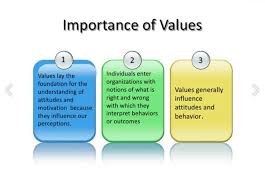
Values are the positive teachings provided to help us and tread the right path in life. Every parent wants his child to imbibe these. These can even be referred to as good qualities. A person who imbibes good values grows on to become a responsible individual and he is capable of demarcating right and wrong. Also, he is able to make wiser decisions in life.

Importance of Values

For an individual, values are most important. An individual with good values is loved by everyone around as he is compassionate about others and also he behaves ethically.

Values Help in Decision Making

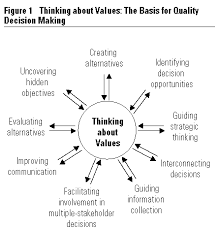
A person is able to judge what is right and what is wrong based on the values he imbibes. In life at various steps, it makes the decision-making process easier. A person with good values is always likely to make better decisions than others.

Values Can Give Direction to Our Life

In life, Values give us clear goals. They always tell us how we should behave and act in different situations and give the right direction to our life. In life, a person with good values can take better charge.

Values Can Build Character

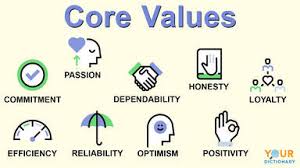
If a person wants a strong character, then he has to possesses good values such as honesty, loyalty, reliability, efficiency, consistency, compassion, determination, and courage. Values always help in building our character.

Values Can Help in Building a Society

If u want a better society then people need to bear good values. Values play an important role in society. They only need to do their hard work, with compassion, honesty, and other values. Such people will help in the growth of society and make it a much better place to live.

Characteristics of Values

Values are always based on various things. While the basic values remain the same across cultures and are intact since centuries some values may vary. Values may be specific to a society or age. In the past, it was considered that women with good moral values must stay at home and not voice their opinion on anything but however, this has changed over time. Our culture and society determine the values to a large extent. We imbibe values during our childhood years and they remain with us throughout our life.

Family always plays the most important role in rendering values to us. Decisions in life are largely based on the values we possess. Values are permanent and seldom change. A person is always known by the values he possesses. The values of a person always reflect on his attitude and overall personality.

The Decline of Values in the Modern Times

While values are of great importance and we are all aware of the same unfortunately people these days are so engrossed in making money and building a good lifestyle that they often overlook the importance of values. At the age when children must be taught good values, they are taught to fight and survive in this competitive world. Their academics and performance in other activities are given importance over their values.

Parents, as well as teachers, teach them how to take on each other and win by any means instead of inculcating good sportsman spirit in them and teaching them values such as integrity, compassion, and patience. Children always look up to their elders as their role models and it is unfortunate that elders these days have a lack of values. Therefore the children learn the same.

Conclusion

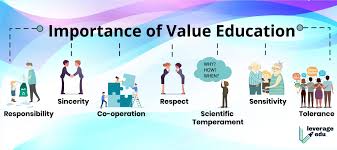
In order to help him grow into a responsible and wise human being, it is important for people to realize that values must be given topmost priority in a child’s life because children are the future of the society. There can be nothing better in a society where a majority of people have good values and they follow the ethical norms.

“VALUES ARE LIKE FINGERPRINTS. NOBODY’S ARE THE SAME, BUT YOU LEAVE THEM ALL OVER EVERYTHING YOU DO.”

— ELVIS PRESLEY

Elon Musk: The Most Successful & Debated Man Of The Tech World

Elon Musk, a sensational name in the tech world, has stepped into multiple ventures and everything seems attainable by the business magnate. Musk was born on 28th June 1971 in South Africa, and at the age of 17, he immigrated to Canada. As a transfer student to the University of Pennsylvania, he finally landed in the United States.

Musk is a well-known tech mogul who is widely recognized as the CEO of Tesla Inc., and as the Founder and CEO of SpaceX. Currently, with a net worth of more than $199.9 billion, Tesla’s CEO is one of the wealthiest persons in the world.

“Company Possessions of Elon Musk”

  • Tesla Inc: The Electric Car Manufacturing Company.
  • SpaceX: Musk’s Aerospace Manufacturing Company.
  • Neuralink: Research company trying to build devices that can be implanted into the human brain.
  • OpenAI: AI researching not-for-profit company ensuring it doesn’t destroy humanity.
  • The Boring Company: Focused to dig a network of tunnels in cities for high-speed and no-traffic driving. 

The Early Life
Elon Musk demonstrated entrepreneurship traits from an early age. His Engineer father and Dietician mother, who understood his son’s technology penchant and nurtured his interest, embraced him remarkably. He obtained his first computer at the age of 10, teaching himself how to write code. And at the age of 12, the young boy constructed a completely functional video game, named “Blastar” that was reportedly sold for $500.

In 1988, Elon Musk graduated from Pretoria Boys High School. In 1989, he moved to Canada and joined Queen’s University in Ontario to escape the compulsory military service of South Africa. After that, he attended the University of Pretoria for merely five months. Musk later pursued a Bachelor in Economics degree at the Wharton School of Business at the University of Pennsylvania. Further, he resigned after two days, to fulfil his entrepreneurial aspirations when he was admitted to the Physics Graduate Program at the University of Stanford.

Success story of The Tech Buff
In 1995, Musk joined his brother Kimbal in inaugurating Zip2, an IT company that licenced newspaper software for online city guides. The Company didn’t attract many in its first few years, but afterwards, the local and domestic newspapers finally started using Zip2 to sell their respective customers additional services. In 1999, Zip2 was bought for a whopping $340 million by Compaq’s AltaVista web search engine.

Musk then founded X.com, online financial services and email payment firm, with its business partners Peter Thiel and Max Levchin. X.com joined the American software corporation Confinity in 2000, which is best known for developing PayPal. Shortly before eBay bought PayPal at $1.5 billion in 2001, Musk was named President and CEO of PayPal. Here, Musk eventually had the funds to put the Internet business behind to channel his attention to engineering business as an equity investor with nearly 180 million dollars in shares.

Struggling and Rising Years
In 2004, Musk played an instrumental role in designing the first electric car of Tesla named “The Tesla Roadster”. Under the leadership of such a big billionaire, Tesla emerged out to become the world’s most popular and desirable car brands. Musk claims 2008 as the worst year of his life. With the financial crisis, Musk was broke, and he also had to pull out Tesla from the massive debt, and along with that, he was undergoing a divorce procedure.

In January 2018, Tesla revealed that Musk would not collect an annual payment but that it would instead raise money depending on the rising market cap that it wanted to achieve in the next ten years.

With SpaceX, Elon Musk has signed several high-profile contracts to develop rockets and perform military missions with NASA and the United States Air Force. Musk was outspoken about his hopes for a joint project with NASA to send an Astronaut to Mars by the year 2025.

Elon Musk has always pushed all varieties of space-age technologies, but it was not still a perfect ride for him. He went on from being bullied in school to becoming a small entrepreneur and finally became the leader of two innovative companies. But from there, he decided to rise and never settle down for anything less.

“When something is important enough, you do it even if the odds are not in your favour.”- Elon Musk

AQUAPONICS:

Aquaponics is a food production system that couples aquaculture (raising aquatic animals such as fishcrayfish, snails or prawns in tanks) with hydroponics (cultivating plants in water) whereby the nutrient rich aquaculture water is fed to hydroponic grown plant, involving nitrifying bacteria for converting ammonia into nitrates.

As existing hydroponic and aquaculture farming techniques form the basis for all aquaponic systems, the size, complexity, and types of foods grown in an aquaponic system can vary as much as any system found in either distinct farming discipline.

History

Further information: Historical hydroculture Woodcut from the 13th century Chinese agricultural manual Wang Zhen’s Book on Farming showing rice grown in a floating raft planter system in a pond.

Aquaponics has ancient roots, although there is some debate on its first occurrence:

  • Aztec cultivated agricultural islands known as chinampas in a system considered by some to be an early form of aquaponics for agricultural use, where plants were raised on stationary (or sometime movable) islands in lake shallows and waste materials dredged from the Chinampa canals and surrounding cities were used to manually irrigate the plants.
  • South China and the whole of Southeast Asia, where rice was cultivated and farmed in paddy fields in combination with fish, are cited as examples of early aquaponics systems, although the technology had been brought by Chinese settlers who had migrated from Yunnan around 5 AD. These polycultural farming systems existed in many Far Eastern countries and raised fish such as the oriental loach , swamp eelcommon carp  and crucian carp  as well as pond snails in the paddies.
  • The 13th century Chinese agricultural manual Wang Zhen’s Book on Farming described floating wooden rafts which were piled with mud and dirt and which were used for growing ricewild rice, and fodder. Such floating planters were employed in regions constituting the modern provinces of JiangsuZhejiang, and Fujian. These floating planters are known as either jiatian  or fengtian , which translates to “framed paddy” and “brassica paddy”, respectively. The agricultural work also references earlier Chinese texts, which indicated that floating raft rice cultivation was being used as early as the Tang Dynasty (6th century) and Northern Song Dynasty (8th century) periods of Chinese history.

Floating aquaponics systems on polycultural fish ponds have been installed in China in more recent years on a large scale. They are used to grow rice, wheat and canna lily and other crops, with some installations exceeding 2.5 acres (10,000 m2). Diagram of the University of the Virgin Islands commercial aquaponics system designed to yield 5 metric tons of Tilapia per year.

The development of modern aquaponics is often attributed to the various works of the New Alchemy Institute and the works of Dr. Mark McMurtry et al. at the North Carolina State University, who devised an “Integrated Aqua-Vegeculture System” (iAVs) based on the combination of aquaculture and sand-based grow beds.Inspired by the successes of the New Alchemy Institute and McMurtry’s iAVs, other institutes soon followed suit. Starting in 1979, Dr. James Rakocy and his colleagues at the University of the Virgin Islands researched and developed the use of deep water culture hydroponic grow beds in a large-scale aquaponics systemOther institutes focused their research on “ebb and flow” systems (also known as “flood and drain”), which were partially based on the original ideas developed at North Carolina State University, but where coarse media (such as gravel or expanded clay) replaced sand, while bell syphons allowed an ebb-and-flow irrigation cycle, such systems are also known as “Speraneo Systems” because they are based on ideas developed in the 1990s by Tom and Paula Speraneo, owners of an aquaponics farm in Missouri.

The first aquaponics research in Canada was a small system added onto existing aquaculture research at a research station in LethbridgeAlberta. Canada saw a rise in aquaponics setups throughout the ’90s, predominantly as commercial installations raising high-value crops such as trout and lettuce. A setup based on the deepwater system developed at the University of Virgin Islands was built in a greenhouse at Brooks, Alberta where Dr. Nick Savidov and colleagues researched aquaponics from a background of plant science. The team made findings on rapid root growth in aquaponics systems and on closing the solid-waste loop and found that, owing to certain advantages in the system over traditional aquaculture, the system can run well at a low pH level, which is favored by plants but not fish.

Parts of an aquaponic system

A commercial aquaponics system. An electric pump moves nutrient-rich water from the fish tank through a solids filter to remove particles the plants above cannot absorb. The water then provides nutrients for the plants and is cleansed before returning to the fish tank below.

Aquaponics consists of two main parts, with the aquaculture part for raising aquatic animals and the hydroponics part for growing plants. Aquatic effluents, resulting from uneaten feed or raising animals like fish, accumulate in water due to the closed-system recirculation of most aquaculture systems. The effluent-rich water becomes toxic to the aquatic animal in high concentrations but this contains nutrients essential for plant growth.  Although consisting primarily of these two parts, aquaponics systems are usually grouped into several components or subsystems responsible for the effective removal of solid wastes, for adding bases to neutralize acids, or for maintaining water oxygenation. Typical components include:

  • Rearing tank: the tanks for raising and feeding the fish;
  • Settling basin: a unit for catching uneaten food and detached biofilms, and for settling out fine particulates;
  • Biofilter: a place where the nitrification bacteria can grow and convert ammonia into nitrates, which are usable by the plants;
  • Hydroponics subsystem: the portion of the system where plants are grown by absorbing excess nutrients from the water;
  • Sump: the lowest point in the system where the water flows to and from which it is pumped back to the rearing tanks.

Depending on the sophistication and cost of the aquaponics system, the units for solids removal, biofiltration, and/or the hydroponics subsystem may be combined into one unit or subsystem, which prevents the water from flowing directly from the aquaculture part of the system to the hydroponics part. By utilizing gravel or sand as plant supporting medium, solids are captured and the medium has enough surface area for fixed-film nitrification. The ability to combine biofiltration and hydroponics allows for aquaponic system, in many cases, to eliminate the need for an expensive, separate biofilter.

Live components

An aquaponic system depends on different live components to work successfully. The three main live components are plants, fish (or other aquatic creatures) and bacteria. Some systems also include additional live components like worms.

Plants

Further information: RhizofiltrationA Deep Water Culture hydroponics system where plant grow directly into the effluent rich water without a soil medium. Plants can be spaced closer together because the roots do not need to expand outwards to support the weight of the plant.Plant placed into a nutrient rich water channel in a Nutrient film technique (NFT) system

Many plants are suitable for aquaponic systems, though which ones work for a specific system depends on the maturity and stocking density of the fish. These factors influence the concentration of nutrients from the fish effluent and how much of those nutrients are made available to the plant roots via bacteria. Green leaf vegetables with low to medium nutrient requirements are well adapted to aquaponic systems, including chinese cabbagelettucebasilspinachchivesherbs, and watercress. Spinach seedlings, 5 days old, by aquaponics

Other plants, such as tomatoes, cucumbers, and peppers, have higher nutrient requirements and will do well only in mature aquaponic systems with high stocking densities of fish.

Plants that are common in salads have some of the greatest success in aquaponics, including cucumbersshallotstomatoeslettucecapsicumred salad onions and snow peas.

Some profitable plants for aquaponic systems include chinese cabbagelettucebasilrosestomatoesokracantaloupe and bell peppers.

Other species of vegetables that grow well in an aquaponic system include watercressbasilcorianderparsleylemongrasssagebeanspeaskohlrabitaroradishesstrawberriesmelonsonionsturnipsparsnipssweet potatocauliflowercabbagebroccoli, and eggplant as well as the choys that are used for stir fries.

Fish (or other aquatic creatures)

Filtered water from the hydroponics system drains into a catfish tank for re-circulation.Main article: Aquaculture

Freshwater fish are the most common aquatic animal raised using aquaponics due to their ability to tolerate crowding, although freshwater crayfish and prawns are also sometimes used. There is a branch of aquaponics using saltwater fish, called saltwater aquaponics. There are many species of warm water and cold water fish that adapt well to aquaculture systems.

In practice, tilapia are the most popular fish for home and commercial projects that are intended to raise edible fish because it is a warmwater fish species that can tolerate crowding and changing water conditions. Barramundisilver percheel-tailed catfish or tandanus catfish, jade perch and Murray cod are also used. For temperate climates when there isn’t ability or desire to maintain water temperature, bluegill and catfish are suitable fish species for home systems.

Koi and goldfish may also be used, if the fish in the system need not be edible.

Other suitable fish include channel catfishrainbow troutperchcommon carpArctic charlargemouth bass and striped bass.

Bacteria

Further information: Nitrogen Cycle

Nitrification, the aerobic conversion of ammonia into nitrates, is one of the most important functions in an aquaponic system as it reduces the toxicity of the water for fish, and allows the resulting nitrate compounds to be removed by the plants for nourishment.  Ammonia is steadily released into the water through the excreta and gills of fish as a product of their metabolism, but must be filtered out of the water since higher concentrations of ammonia (commonly between 0.5 and 1 ppm)[citation needed] can impair growth, cause widespread damage to tissues, decrease resistance to disease and even kill the fish. Although plants can absorb ammonia from the water to some degree, nitrates are assimilated more easily, thereby efficiently reducing the toxicity of the water for fish.  Ammonia can be converted into safer nitrogenous compounds through combined healthy populations of 2 types of bacteria: Nitrosomonas which convert ammonia into nitrites, and Nitrobacter which then convert nitrites into nitrates. While nitrite is still harmful to fish due to its ability to create methemoglobin, which cannot bind oxygen, by attaching to hemoglobin, nitrates are able to be tolerated at high levels by fish. High surface area provides more space for the growth of nitrifying bacteria. Grow bed material choices require careful analysis of the surface area, price and maintainability considerations.

Hydroponic subsystem

Plants are grown as in hydroponics systems, with their roots immersed in the nutrient-rich effluent water. This enables them to filter out the ammonia that is toxic to the aquatic animals, or its metabolites. After the water has passed through the hydroponic subsystem, it is cleaned and oxygenated, and can return to the aquaculture vessels. This cycle is continuous. Common aquaponic applications of hydroponic systems include:

  • Deep-water raft aquaponicsstyrofoam rafts floating in a relatively deep aquaculture basin in troughs. Raft tanks can be constructed to be quite large, and enable seedlings to be transplanted at one end of the tank while fully grown plants are harvested at the other, thus ensuring optimal floor space usage.
  • Recirculating aquaponics: solid media such as gravel or clay beads, held in a container that is flooded with water from the aquaculture. This type of aquaponics is also known as closed-loop aquaponics.[citation needed]
  • Reciprocating aquaponics: solid media in a container that is alternately flooded and drained utilizing different types of siphon drains. This type of aquaponics is also known as flood-and-drain aquaponics or ebb-and-flow aquaponics.
  • Nutrient film technique channels: plants are grown in lengthy narrow channels, with a film of nutrient-filled water constantly flowing past the plant roots. Due to the small amount of water and narrow channels, helpful bacteria cannot live there and therefore a bio filter is required for this method.
  • Other systems use towers that are trickle-fed from the top, horizontal PVC pipes with holes for the pots, plastic barrels cut in half with gravel or rafts in them. Each approach has its own benefits.

Since plants at different growth stages require different amounts of minerals and nutrients, plant harvesting is staggered with seedlings growing at the same time as mature plants. This ensures stable nutrient content in the water because of continuous symbiotic cleansing of toxins from the water.

Biofilter

In an aquaponics system, the bacteria responsible for the conversion of ammonia to usable nitrates for plants form a biofilm on all solid surfaces throughout the system that are in constant contact with the water. The submerged roots of the vegetables combined have a large surface area where many bacteria can accumulate. Together with the concentrations of ammonia and nitrites in the water, the surface area determines the speed with which nitrification takes place. Care for these bacterial colonies is important as to regulate the full assimilation of ammonia and nitrite. This is why most aquaponics systems include a biofiltering unit, which helps facilitate growth of these microorganisms. Typically, after a system has stabilized ammonia levels range from 0.25 to .50 ppm; nitrite levels range from 0.0 to 0.25 ppm, and nitrate levels range from 5 to 150 ppm. During system startup, spikes may occur in the levels of ammonia (up to 6.0 ppm) and nitrite (up to 15 ppm), with nitrate levels peaking later in the startup phase. In the nitrification process ammonia is oxidized into nitrite, which releases hydrogen ions into the water. Overtime a person’s pH will slowly drop, so they can use non-sodium bases such as potassium hydroxide or calcium hydroxide to neutralize the water’s pH if insufficient quantities are naturally present in the water to provide a buffer against acidification. In addition, selected minerals or nutrients such as iron can be added in addition to the fish waste that serves as the main source of nutrients to plants.

A good way to deal with solids buildup in aquaponics is the use of worms, which liquefy the solid organic matter so that it can be utilized by the plants and/or other animals in the system. For a worm-only growing method, please see Vermiponics.

Operation

The five main inputs to the system are water, oxygen, light, feed given to the aquatic animals, and electricity to pump, filter, and oxygenate the water. Spawn or fry may be added to replace grown fish that are taken out from the system to retain a stable system. In terms of outputs, an aquaponics system may continually yield plants such as vegetables grown in hydroponics, and edible aquatic species raised in an aquaculture. Typical build ratios are .5 to 1 square foot of grow space for every 1 U.S. gal (3.8 L) of aquaculture water in the system. 1 U.S. gal (3.8 L) of water can support between .5 lb (0.23 kg) and 1 lb (0.45 kg) of fish stock depending on aeration and filtration.

Ten primary guiding principles for creating successful aquaponics systems were issued by Dr. James Rakocy, the director of the aquaponics research team at the University of the Virgin Islands, based on extensive research done as part of the Agricultural Experiment Station aquaculture program.

Feed source

As in most aquaculture based systems, stock feed often consists of fish meal derived from lower-value species. Ongoing depletion of wild fish stocks makes this practice unsustainable. Organic fish feeds may prove to be a viable alternative that relieves this concern. Other alternatives include growing duckweed with an aquaponics system that feeds the same fish grown on the system, excess worms grown from vermiculture composting, using prepared kitchen scraps, as well as growing black soldier fly larvae to feed to the fish using composting grub growers.

Aquaponic installations rely in varying degrees on man-made energy, technological solutions, and environmental control to achieve recirculation and water/ambient temperatures. However, if a system is designed with energy conservation in mind, using alternative energy and a reduced number of pumps by letting the water flow downwards as much as possible, it can be highly energy efficient. While careful design can minimize the risk, aquaponics systems can have multiple ‘single points of failure’ where problems such as an electrical failure or a pipe blockage can lead to a complete loss of fish stock.


Role of science in making india

New green pasture beckons

In the last few years, science has helped a lot in the development of India. Science has contributed to all the sectors. Science has improved the global economy, increased employment opportunities, saved millions of lives and has played a major role in a lot of industries. Science is very important for the growth and development of India. It even plays a key role in our daily lives. Every country should invest as much as possible in research and development for scientific technologies. In this essay on the role of science in making India we will see how science has helped India to grow in different sectors.

How Indian Scientists have Helped India Grow?

When it comes to Indian Scientists, the first name comes to my mind is CV Raman. CV Raman was the first Asian who won the Nobel Prize. His work was related to light and sound. He investigated that when light passes through a transparent material, some of the deflected light waves see the change in its amplitude and wavelength.

APJ Abdul Kalam is the second name that comes in my mind in Indian Scientists. APJ Abdul Kalam worked as an Aerospace engineer with ISRO and DRDO. He was also president of India from 2002 to 2007. Abdul Kalam contributed a lot to Aerospace. One of the contributions is deploying Rohini Satellite near Earth’s orbit. A few more names are Homi Bhabha, Visvesvaraya, V Radhakrishnan, Satyendra Nath Bose and many more… 

Seven Defining S&T Contributions That Have Impacted Every Indian - The  India Saga

How has Science Increased Employment Opportunities?

Whenever any new technology is discovered it leads to new industries. For example, if any new scientific device is invented it will require eligible professionals to control the device. Such inventions help in increasing employment opportunities. This also helps in growth in many businesses which in turn develops the Indian economy.

Curing Diseases and Saving Lives

In the last few years, medical science has evolved so much and saved billions of lives. New technologies like wireless brain sensors, artificial organs, smart inhalers, robotic surgery, virtual reality are making work easier for thousands of doctors around the world. And also these technologies are saving millions of lives and curing diseases. 

Role in Agriculture Sector

Science has played a very major role in the Agriculture sector. Food is one of the basic needs of our lives. And science has now invented so many new agriculture techniques which have increased production drastically. The old mundane techniques farmers used to follow was very slow, expensive, and required too much effort.

National Technology Day 2021: Science and technology for a sustainable  future - The Financial Express

Science has made everything a lot easier for farmers. Improved facilities in irrigation, modern fertilizers, advanced equipment, and pesticides are all helping farmers to work faster, and save more money. 

Conclusion

Science has helped us a lot in many ways and it will keep helping. Everyone should not only invest as much as possible in science and technology but also should stay aware of all new technologies developed around the world. 

VEDAS

The word Veda means Knowledge. Vedas are the earliest piece of literature that was written in the Sanskrit language. These were handed down from one generation to the other orally by the pandits who learned this from their ancestors. Even if there were no facilities to preserve the Vedas through the art of writing, it is preserved by transmitting to the generations orally. In Hindu culture, Vedas are considered spiritual and everlasting revelations. Vedas come under Shruti which means what is being heard. There are four Vedas, each of which was composed of different ages. However, it is believed that it always existed and sages chanted this in their deep meditative states. The four Vedas are – Rig Veda, Yajur Veda, Sama Veda and Atharva Veda.

RIG VEDA

The earliest of Vedas is the Rig Veda. It is a set of 1028 hymns in Vedic Sanskrit. Many of those are beautiful descriptions of nature. The prayers in this seek prosperity and well developed and cultured society. It is believed that these compositions are the natural outburst of Vedic rishis when they went through the mental transcendental stage. Some of the prominent rishis of this period are Vasistha, Gautama, Gritasamada, Vamadeva, Vishvamitra and Atri. Indra, Agni, Varun, Rudra, Aditya, Vayu, Aditi, and Ashwini twins are the eminent gods of this Veda whereas Usha (the goddess of dawn), Vak (the goddess of speech), and Prithvi (the goddess of earth) are the notable goddess of the Rig Veda. Do you know that the majority of the hymns spoke of universally recognized higher values of life like truthfulness, honesty, dedication, sacrifice, politeness, and culture? Rig Veda also provides knowledge about the social, political, and financial conditions of ancient India apart from religion.

YAJUR VEDA

The word Yajur means sacrifice or veneration. This Veda is mostly related to Rites and mantras of different sacrifices. It tells the directions and ways to conduct the yajnas. It is a mixture of both prose and poetry. Being a treatise on rituals, it’s the foremost popular of the four Vedas. Yajur Veda has two main divisions called Shukla and Krishna Yajur Veda i.e., Vajasaneyi Samhita and Taitriya Samhita. This mainly talks about the social and religious aspects of India at that time.

SAMA VEDA 

The term Sama means melody or songs. This contains the tunes for the recitation of Hymns. Sama Veda is mainly of 16,000 ragas and raginis which means musical notes. Only 75 verses out of 1875 verses are original and others belong to the Rig Veda. However, the Sama Veda gives the tunes for the recitation of the hymns of the Rig Veda. It may be called the book of Chants (Saman). This book stands as evidence of Indian music during this era.

ATHARVA VEDA

The Atharva Veda is also called the Brahma Veda. It talks about the treatment for ninety-nine diseases. This Veda is originated from the 2 rishis called Atharvah and Angiras. The Atharva Veda is of immense value because it represents the religious ideas at an early period of civilization. It consists of two main branches namely, Paipaddala and Saunaka. This book gives detailed information about the family, social and political life of the later Vedic period. To know the Vedas, it becomes mandatory to know the Vedangas, the limbs of the Vedas. The Vedangas talk about Siksha (education), Vyakarana (grammar), Kalpa (rituals), Nirukta (etymology), Chhanda (metrics), and Jyotisha (astronomy). 

Each Veda is composed of 4 parts: The Mantra-Samhitas or hymns, The Brahmanas or explanations of Mantras or rituals, Aranyakas, and Upanishads. The division of the Vedas into four parts is to suit the four stages during a man’s life.

Same Sex Marriages

Sex is a biological term that differentiates between two biologically different human beings; the Male and the Female. When we talk about same sex marriages, we are intending to a sacred union of two people belonging to the same sex. This union can be seen when two females get married to each other or when two males get married to each other. It is not the sex or gender that binds two souls together but love and care for each other.

As we all know, love comes in all form. So, it be wrong to say a person cannot marry someone just because they are not from the opposite sex. The world is evolving more than ever and we need to keep up with times. We should not shun the concept of same sex marriage anymore.

In other words, gone are the days when people had to ashamed because of their sexuality. In today’s accepting world, we must make way for every human being irrespective of their gender. One needs to realise that there are more than two genders. The society needs to be more inclusive of the people. It will make the world a happier place when everyone feels that they are accepted and appreciated.

Same sex marriages are not a trend or western influence that is adapted by the society. Same sex attraction has existed from ancient times. It was not openly a d vividly talked about due to tha lack of knowledge and understandings. It is still a taboo in most of the world. With the struggle for these activities, it has now become possible for the same sex couples to be free and enjoy equal rights in some countries. It is our responsibility to educate ourselves and the world so that the same sex couples do not face discrimination.

Same sex marriages are ridiculed at most parts of the world by society. These type of marriages need to welcomed with joy, and the same sex couples must not be subjected to discrimination. Marrying anyone is basic fundamental right, thus, not allowing the same sex couples to get married is deciding them of their basic human right. We, as society, must take care that the LGBTQ+ community are not devoid of their fundamental rights and are treated with respect with everybody else.

Same sex marriages in India especially are not encouraged. There are ma y countries which have stringent laws against it yet the people are open-minded. In India, neither are the laws lenient but the people are also very narrow-minded.

Most importantly, they never give them a chance to prove themselves. Indian society does not like to change. It is not as adaptable as western countries. India still needs time to be okay with the concept of same sex marriage.

However, not knowing about the concept is a different thing and completely opposing is different. Not only in India, but in other countries, people do not support same sex marriage because they think it is against their religion.

Thus, this creates a lot of problems for them. People do not want the LGBTQ+ community to get the right to marry their lovers. This takes away their very basic human rights. The LGBTQ+ community has fought for a long time for their rights. We must not be against of any form of love, be it same sex marriage or anything else.

In India, same sex marriages are yet to be legalised. On 6th September 2018, the Supreme Court of India discrimalised gay sex marking a historic judgement in the Indian judiciary. The court also defined love to be without boundaries. This historic judgement is a result of prolonged protests and sufferings. It was welcomed and celebrated by the country with joy.

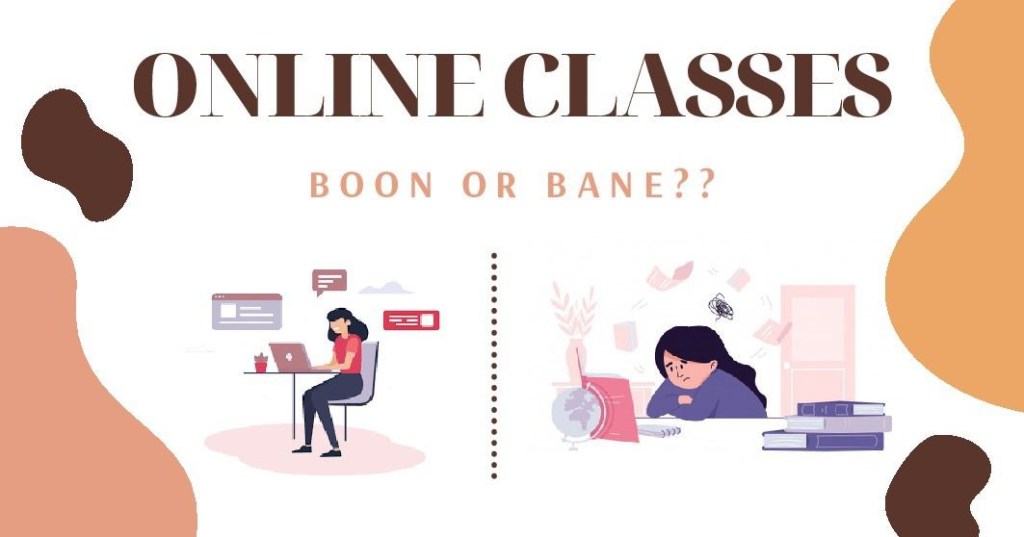
Online Classes : Boon or Bane?

Coronavirus is changing the world in unprecedented ways. COVID-19 has its impact on all segments of life. It has also strongly affected whole education system. The sudden impact of corona pandemic in our country not only affects the global economy but harshly damaged our physical, social and mental well-being. The whole education system has been suddenly shifted digitally which is a huge challenge for both the students and teachers. The education system has been turned upside down. Students tend to lose their interest in online learning and it’s very challenging for the engagement of students.  

Online education has also proven to be a boon for people who were craving for some ‘me time’ amidst this hustle of life. This could be a great time to work on getting regular sleep, regular exercise, healthy nutrition, and getting regular work hours. We can finally enjoy that hobby that we never got around to. Online classes can often be more cost-effective than traditional classes and can be done at a pace the student is comfortable with.

Advantages of Online Classes

  1.  Online classes are convenient.

The biggest advantage of an online classes is that your classroom and instructor (theoretically) are available 24 hours a day, seven days a week. Your only excuse for missing class is not getting online. Otherwise, everything is available to you. You can get announcements, access notes, review assignments, take practice quizzes, discuss questions, chat with fellow students and study any time you want. Other than certain due dates, you make your own schedule for completing the requirements of the course.

2. Online classes offer flexibility.

You can study any time you want. You can study with whomever you want. You can study wearing anything you want. Online courses give you the flexibility to spend time with work, family, friends, significant others or any other activity you like.

3. Online classes offer flexibility.

You can study any time you want. You can study with whomever you want. You can study wearing anything you want. Online courses give you the flexibility to spend time with work, family, friends, significant others or any other activity you like.

4. Online classes have financial benefits.

Although you may think that buying a computer and paying for Internet access is pretty expensive, consider what it would cost you to reach to the campus. Consider the costs of eating out versus eating at home. These are very tangible benefits of having access to education at home.

5. Online courses teach you to be self-disciplined.

Most of us put off the things we need to do until the very last moment. When it comes to education, the last moment is the worst possible moment to learn. Sometimes that lesson is learned the hard way in the form of poor performance on an exam or assignment. But ultimately, you succeed because you realize the importance of doing things on time or even ahead of time. That self-realization propels your success in an online course. No one is there looking over your shoulder to tell you to go online and study. No one is there to make you ask questions or post responses. The motivation to study in an online course comes from you. It’s something we call student-centered or active learning. The online student takes responsibility for their course of studies and matures into an individual for whom learning and accomplishment are highly valued. In short, your success depends on you.

Disadvantages of Online Classes

  1. Online classes make it easier to procrastinate.

Procrastination will chop you to bits in an online course. There is no one to tell you to get to class on time. There is no one reminding you that assignments are due or that exams are coming. It’s easy to put off reading and assignments in the online environment. Before you know it, weeks have gone by, you haven’t done any homework and its exam time.

2. Online classes require you to be responsible for your own learning.

Only you are responsible for your learning. No one can force it on you. No one can make you study. Teachers can share a little knowledge and experience, show you a few tools and hope you get it. The spark and desire to pursue your dreams must be yours. So, the real disadvantage is that you might not own up to it. You might not take responsibility for your studies and your goals. You might get way behind and never catch up.

3. Online classes require more time than on-campus classes.

Believe it or not, you will spend more time studying and completing assignments in the online environment than you will in an on-campus course. If you are sitting in a classroom, it’s likely that you’ll miss a good percentage of what the teacher says, no matter how focused you are. It’s human nature to zone out for brief periods of time. When you are reading, you will have a tendency to go back over the notes if you miss something and that takes more time. The point is that you will likely learn more in an online environment, but you will have to make a greater effort to accomplish that learning.

4. Online classes may create a sense of isolation.

In an online class, no one can hear you scream. And that causes discomfort for some online students. Studying alone with only the computer as your companion can be terrifying. There’s no whispering in the back of the room, no commanding presence at the front of the classroom pleading for everyone to listen. The online environment is a much different atmosphere that takes some getting used to.

5. Lack of communicational skill development in online students

E-Learning methods are proven to be highly effective at improving the academic knowledge of the students. However, developing the communicational skills of the students is an area often neglected during online lessons. Due to the lack of face-to-face communication between peers, students and teachers in an online setting, the students might find that they are unable to work effectively in a team setting. Neglecting the communicational skills of the students will inevitably lead to many graduates who excel in theoretical knowledge, but who fail to pass their knowledge on to others.

BENEFITS AND LIMITATIONS: Mobile Banking

Advantages 

On these days we do our daily stuff with the help of our mobile phones, that also includes banking. Mobile banking is a free, convenient way to keep up with your finances.

Some of the advantages of using mobile banking are the following:

AVAILABILITY

There are no working hours or operations or particular requirements for mobile banking, customers can check their account, move money, pay bills and various other banking processes with the help of mobile banking. It is available 24*7 for the customers.

PAPERLESS

No one enjoys getting bank statements in the mail. With the help of mobile banking, there is no need for the customer to receive junk mail from the bank. It’s also safer because you are no longer having to get away from sensitive information into the trash.

CONTROL

Mobile banking makes it so easy to have complete control over your finances. You can monitor your balances and move money between accounts to avoid overdraft fees. With bill pay you can alert when it’s time to pay to avoid late fees, or set up recurring bill payments and not have to think about it.

SAFE

Mobile banking is safer and secure. All reputable banks and financial institutions use encryption to safeguard and protect your privacy and identity information on mobile apps.

TIME SAVING

It is time saving because we don’t want to visit the particular bank to do our banking process. We can do it with the help of mobile banking.

HELPS YOU TO TRACK YOUR FINANCES

Managing an account through your mobile also puts you in charge of your money and helps you better to know your financial standing. You can always monitor your account balance and transfer money from a different account if needed be. You can check your balance and statement at any time.

MINIMIZE ERRORS

A comprehensive mobile banking will reduce errors that users make. There hasn’t been a better time to get familiar with mobile banking as indeed, this is the only way forward. 

DISADVANTAGES

OPERATING EXPENSES

It tends to be high in traditional banking, since in addition to having administrative offices, they also have offices to serve their clients in person. Among its main operating expenses are: 

  • Paying rents from the premises where they operate
  • Payment of public services and security
  • Expenses in stationary and issuance of the plastics (for making debit and credit cards)

MOVE TO OFFICES AT CERTAIN TIMES

In case of making a transfer or other type of management, in many cases physical presence must be made in the bank’s office and within the business hours established by the bank, which is considered as a great disadvantage. 

SLOW PROCESSES

Another disadvantage is the slowest process held in the organization. Another demonstration of the slow process time that transactions between different banks usually take.

HIGH COMMISSIONS

In general, traditional banking commissions are high due to higher operating expenses, which makes many of their products or services more expensive compared to other products or fintech companies.

LOW STIMULUS TO SAVINGS

Due to lower interest rates that traditional banks usually pay their savings to the clients if there is a low saving stimulus. This is because traditional banking promotes more bank loans and they are the ones that generate more interest and collection fees, which allows them to create more fiat money and have more profits.

LIMITATION IN ONLINE BANKING

Although traditional banking is using some functions of online banking, the latter is still limited. For example, in many cases this service is conditioned to the use of some of its product. There is also the problem of limits on amount to be transferred in addition to difficulties or restriction in transferring money to other countrie

CONCLUSION

As smartphones become more commonly used, and their capabilities expand, they may increasingly be the means consumers use to access financial services and manage their finances. Their constant presence also makes them a potentially useful tool for the delivery of just in time financial information or as in decision making. 

Given the prevalence of mobile phones, particularly smartphones among minorities, low-income individuals, and younger generations, mobile technology has the potential to empower consumers and expand access to financial services for underserved populations.

The use of mobile banking has increased by more than a third in the past year, and it appears likely to continue to increase as more and more consumers use smartphones. While still small, the use of mobile phones to make payments at the point of sale has increased even more rapidly. Over a quarter of mobile phone users express some interest in using their phones to make payments at the point of sale, giving mobile payments substantial growth potential as the ability to make these payments becomes more widespread.

The two factors limiting consumer adoption of mobile banking and payments are concerns about the security of the technology and a sense that they don’t offer any real benefits to the user over existing methods for banking or making payments. With regards to security, consumers have actually become more likely in the past year to report that they simply don’t know how safe it is to use mobile banking, suggesting that consumers need to be provided with reliable and accurate information on the level of security associated with the various means of accessing mobile banking. In terms of the value proposition to consumers, the significant number of mobile users who reported an interest in using their phones to receive discounts, coupons, and promotions or to track rewards and loyalty points suggests that tying these services to a mobile payment service would increase the attractiveness of mobile phones as a means of payment.

5 Writs in Indian Constitution

Know about how to voice for your rights, legal bounds, and solve wrong conducts or mistakes by legal officials.

Writs! What do you mean by writs?

In common law, a writ is a formal written order issued by a body with administrative or judicial jurisdiction; in modern usage, this body is generally a court. Warrants, prerogative writs, and subpoenas are common types of writ, but many forms exist and have existed.

Why are Writs needed?

It is a constitutional remedy available to a person to bring his complaint or grievance against any administrative action to the notice of the court.

Types of Writs:

  • Writ of Habeas Corpus
  • Writ of Mandamus
  • Writ of Certiora
  • Writ of Prohibition
  • Writ of Quo-Warranto,

WRIT OF HABEAS CORPUS

It is also known as the “great writ”

Habeas Corpus means “Let us have the body.”. In other words, it means “you may have the body” which means that a person under arrest is to be brought before a judge or into court. It is an important writ for personal liberty. A person, who is arrested, can move the Court for the issue of Habeas Corpus. 

It is an order by a Court to the detaining authority to produce the arrested person before it so that it may examine whether the person has been detained lawfully or not. It ensures that a prisoner can be released from detention if the Court is convinced that the person is illegally detained—that is, detention lacking sufficient cause or evidence.

The person under arrest or any another person on his behalf can file a writ in this. Formal and informal applications in respect of the writ is accepted by the Courts. It is only a procedural remedy and does not necessarily protect other rights, such as the entitlement to a fair trial. A person cannot make the application for the Writ successively to different judges of the same court. 

In India, writs are issued by the Supreme Court under Article 32 of the Constitution of India and by the High Court under Article 226 of the Constitution of India.

Writ of Mandamus:

Mandamus means “We Command”. Mandamus is an order from a superior court to a lower court or tribunal or public authority to perform an act, within its duty. In short, it is an order to perform a duty which should have done but failed to do so.  It is the discretionary power of a court. It is simply to ensure rights are ensured and the Government Authorities perform their duties.

The writ of mandamus can be granted when there is right to compel the performance of some duty cast upon the authority. It can also be issued to public authority to restrain it from acting under a law which has been declared unconstitutional. The petitioner has a right recognized by law.

The writ cannot be granted when

  • Duty is not compulsory.
  • Against a private individual, private organization since they are not entrusted with public duty. 
  • To enforce an obligation arising out of contract.
  • Where the right of the petitioner has lapsed

Writ of Certiora

Certiorari means to be certified. The Writ of Certiorari can be issued by the Supreme Court or any High Court for retracting the order which is already passed by an inferior court and to properly investigate the matter and opinions objectively. A writ of certiorari is only granted when a Court has acted without or in excess of its jurisdiction and For correcting error of law. It cannot lie to remove merely ministerial act or to remove/cancel executive administrative acts. It is corrective in nature which means the purpose of this Writ is to correct an error.

When there is an error apparent on the record, it becomes a valid ground for issuing the Writ of Certiorari.

Certiorari can be resorted to only after the order or decision has been announced.

Writ of Prohibition

Writ of prohibition means to cease or to stop. it is also known as a ‘Stay Order’. When a lower court or a body tries to perform an action outside its jurisdiction, This Writ issued by a superior court to lower court or a tribunal to prohibit or forbidden it to do so. The Supreme Court can issue this Writ only where a fundamental right is affected.

In cases where the court is partly acting within its jurisdiction and partly outside it, the Writ will be issued against the act which is partly outside its jurisdiction. This Writ can be issued only when the proceedings are pending in the inferior court and not when an order has already been passed by that court. The Writ of Certiorari can be issued only when the order has passed.

Writ of Quo-Warranto

The word Quo-Warranto literally means “by what warrants?” and ‘by what authority’. It is issued restraining a person from acting in a public office to which is out of bounds. The business or the office in question is public office. The issue of summon is followed by legal proceedings, during which an individual’s right to hold an office or governmental privilege is challenged. 

Grounds on what it is issued.

The nature of the duties which arises from this office is public. The person against whom the Writ is sought to be issued is in actual possession of the office and is using such office.

Challenges Faced : Mobile Banking

Challenges Faced 

  • Customer awareness: because of lack of data and awareness regarding mobile banking is  a reason for less trust in mobile banking services and it’s conjointly one more reason for risk and security issue in mobile banking which is a result of this can be new technology in banking and financial set-up therefore all banking client aren’t aware of it and feel risk to adopt it therefore it’s conjointly a big challenge before of mobile banking services in India.
  • Security problems & privacy: there’s security of mobile banking services is massive issue and challenges. In mobile banking for the safety purpose PIN or countersign is employed which can be steal by the offender or unauthorized user if mobile device has loss or steal therefore user got to aware about it. Customers are use sensitive information and data in mobile therefore here risk with pass of a legitimate application as a result of application service are provided by third party it’s going to steal our info and send it to a different third party therefore we’ve to aware of applications used for WAP mobile banking services and transfer a legitimate and authorize application for group action with mobile banking services.                                                                                                                                                                                                                                                                                           
  • Virus & malware attack: there’s conjointly risk with virus and malware attack it’s going to access your account info equivalent to username, countersign and alternative info like in computing system there’s conjointly risk on virus and malware attacks on mobile banking services some  codes are written to default mobile banking like Zeus has used for attacks on SMS banking and Zeus used for steal mobile group action authentication equivalent to password and pin number. therefore it’s a conjointly massive security issue and challenge in mobile banking services.
  • Wireless network: All method of mobile banking service is finished in wireless mode therefore there’s conjointly a security risk in mobile banking services mobile device element contact with cell website and dedicated circuit and microwave for the communication services therefore if there’s any weakness in any a part of this network then risk of attacks is will increase therefore we’ve to secure of these network and network devices for an honest security services.
  • Risk in SMS mobile banking: Format of SMS is in plain text. presently end to finish secret writing isn’t available. The sole encryption is out there in the base station at transceiver and at the SMS server during transmission time. Because of this there’s a risk in SMS banking equivalent to SMS spoofing attack where the offender will send a message on the network by manipulating the user’s number.
  • Authentication issue: In mobile banking there’s authentication risk at the login time or once we access our account through the mobile system as a result of in mobile banking for the authentication PINS numbers are used however PINS authentication technique is associate degree recent method and lots of security problems such as countersign and id thievery were by stealing the password and id unauthorized access is also potential by obtaining the countersign offender might access our account. Another risk regarding authentication in mobile banking as if the mobile has been stolen then the offender may get the countersign through the mobile and might access the account by exploiting your id and password.

IMPORTANCE OF MOBILE BANKING

Mobile banking permits customers to be ready to access banking services from anywhere. Businesses and business homeowners are currently ready to save time by creating use of mobile applications to method their payments or maybe receive funds from shoppers on to their phone numbers. it’s significantly popular among tiny to medium-sized enterprises (SMEs).

With mobile technology, banks are ready to slow down on operational prices whereas still maintaining shopper satisfaction. The actual fact that any shopper of a bank will build use of their app to request a service, equivalent to opening an associate degree account or maybe the power to schedule debit orders or alternative payments from associate degree application, permits for larger transactional volumes, eventually driving business growth.

Benefits of Mobile Banking

  • Perpetually on- mobile are often always or are often portable due to inherent design, enabling users to act in activities equivalent to travel or meeting people, whereas transactions via mobile devices are equipped with Internet.
  • Location-Centric-Not solely is mobile altogether places, world Positioning System (GPS) is also created to acknowledge phones and tries to personalize supported existing services. distinguishing the situation of net users, provides a special advantage for mobile commerce over wired e-commerce. Using this technology, the mobile commerce suppliers can alter to receive and send info to a selected place.
  • Convenience- others aren’t restricted by time or space, access to electronic activities. For example, people that are stuck in traffic or waiting within the queue are going to be able to shop for their favorite Internet-based activities or manage their daily transactions through mobile commerce applications. customers can apprehend a special comfort that may improve their quality of life. By creating a lot of comfort, the client can be a lot more loyal. As a result, Communication facilities with mobile commerce applications produce a comfortable.
  • Customization – mobile is a far higher influence than personal computers. Therefore, mobile commerce producers style a lot of creative and a lot of custom mode tools. For example, exploiting demographic data collected by wireless service providers, and {data} on this location of the mobile users will do a lot of targeted advertising. Advertising messages are often custom supported by the knowledge provided through consultation with the users initial or previous users looking habits.
  • Establish ability – mobile provides to support the secure mobile phone transactions wherever personal computers are nearly unknown (no name). One person perpetually uses mobile devices and it’s ideal for private -based target promoting ,through the technology of worldwide Positioning System (GPS), service suppliers will acknowledge a user rigorously .Personalize chance to deliver messages to totally different components of area and time through sound and look.

Basics of inflation accounting

Inflation accounting is an improvisation of cost accounting in presence of a considerable rate of inflation or deflation.Historical information on financial statements is no longer applicable when a business operates in a country where there is a significant amount of market inflation or deflation. In some cases, companies are allowed to use inflation-adjusted figures to counter this issue, restating the numbers to reflect current economic values.

Advantages of Inflation Accounting

The following are the advantage of Inflation Accounting

  • It reflects the current( market value) and not the historical cost of the balance sheet.
  • It is highly effective in times of general inflation or hyperinflation.
  • Depreciation of the business is valued and cost on the current price and not on the historical or the carrying value of the asset which is the correct method.
  • Profit and loss will be more reliable and true.
  • Financial ratios based on figures, adjusted to the current value, are a good reflection of reliable integrity of the company.

Disadvantages of Inflation Accounting

The following are the disadvantage of Inflation Accounting

  • Changing in price is a never-ending process hence it becomes difficult every time to reinstate the figures of the company and present the financial statements.
  • Inflation accounting is a complicated process and it involves long calculation and the data gathering process thus increased cost incurred