Ni Ketut Kasih is a widow who lives in a small village in Bali, Indonesia. She is a proud mother of four children and the grandmother of twelve grandchildren. She’s lived her whole life surrounded by the complex cadences and mandates of the Balinese ritual calendar with events such as temple observances, holy days, festivals, etc. happening nearly every other day, and for many years Ketut has faced a specific kind of difficulty with the stress and anxiety surrounding her ritual obligations as the village’s ceremonial leader.
She anticipates and prepares for the ceremonies and rituals far in advance, repeatedly assessing the state of her family’s preparations because of her position in her community as priestess. She finds her mind overrun by thoughts of failure and worry as she also reminisces the stresses of her childhood when her father was taken as a prisoner of war and she was forced to leave her schooling in order to look after her family.
When the worries get too much, Ketut has a “fit”, she could disappear from home leaving her family and wander off to far places acting out in alarming ways such as undressing herself in the market or challenging others to a fight. When her situations get beyond the support her family could give her, they take her to the state psychiatry hospital or give her the medications prescribed for her manic-episodes. She generally recovers quite fast and experiences long stretches of peace and quiet before another financial obligation or ritual evokes more stress, causing another episode.
Ketut’s response to the stressors caused by familial, ritual or financial obligations raises questions about the purpose of these rituals and the psychological cost it brings for the those that execute and organize it. Ketut’s case exhibits a unique assemblage of stressors such as cultural obligations, childhood trauma, and neurobiology overlay to trigger cyclic manic-depressive episodes. This shows us the impact of individual paradigms of suffering and the requisite connotations which make ritual burdens excruciating on mental health.
Familial Support- Both a Stressor and Strength
In an intricate but compelling discourse, it’s seen that Ketut’s family has always acted as both a stressor and strength throughout the course of her life. Meeting her extended family tends to elicit feelings of shame if rituals are improperly carried out and anger or envy over financial differences between family relations, however, her immediate kin provide a shield of support by actively avoiding labeling or stigmatizing her diagnosis in any way.
During times when she calls herself as sakit jiwa, or mentally ill, her family unwaveringly does not call her gila, or crazy. Despite the fact that she’s been institutionalized many times for her manic-episodes, the family chooses to normalize Ketut’s experiences and in evading to merge her symptoms with herself, her family accentuates the temporary nature of her illness and this provides a sense of continuity to her daily life.
The “Burden” Paradox of the Balinese Ritual
The term “ritual density” is used to describe the frequency of rituals/ceremonies within any particular culture. The Balinese culture is known to be one of the most ritually dense cultures in the world. The Balinese ritual calendar is 210 days long and full of cyclic events. An integral part of the Balinese ritual customs is the sesajen, or offerings. In the documentary, Ketut and her family talk about the practice ofngayah, “pledging oneself to god by making ritual offerings.” This idea shows us that the importance given to the preparation of these offerings in not only just the tangible result of the product but also the manifestation of the devotional method in which it was made in the end product.
In Balinese culture, the etiology of illness and healing of a wide variety of personal and family diseases and problems are often interpreted as a result of inadequately done, forgotten or neglected rituals. Because of this, many families go into debt in order to ensure that a ceremony is performed in an appropriate and well-timed manner in order to avoid such kind of troubles. Thus, in making offerings and performing rituals correctly, many Balinese women take it upon themselves to ensure the well-being of their families and their communities. The extensive female labor and female leadership in consolidating sometimes hundreds of family members involved in ritual preparations may speak to the esteemed and valued role that women play in Balinese spirituality.
Understanding the herculean task of physical labor, time, emotional and monetary investment, and spiritual strength required to make these offerings and fulfill familial obligations, combined with the importance of ritual in Balinese families and communities emphasizes how ceremonies aren’t just culturally elaborate celebrations, but also culturally evident stressors that strain pre-existing weaknesses or cause an illness episode in the likes of individuals such as Ketut. Thus, it becomes a matter of irony that the rituals meant to shield and encourage the purity, peace and balance of the community can also result in significant mental pressure for an individual.
Arunachal Pradesh is an Indian state in Northeast India. It was formed from the erstwhile North-East Frontier Agency (NEFA) region, and became a state on 20 February 1987. It borders the states of Assam and Nagaland to the south. It shares international borders with Bhutan in the west, Myanmar in the east, and a disputed border with China in the north at the McMahon Line. Itanagar is the state capital of Arunachal Pradesh. Arunachal Pradesh is the largest of the Seven Sister States of Northeast India by area. Arunachal Pradesh shares a 1,129 km border with China’s Tibet Autonomous Region.
Arunachal Pradesh, meaning ‘the land of the rising sun’ is a state comprising of 24 districts with 26 major tribes including various sub tribes. It is equally rich and diverse in both cultural and ecological aspects, however for a long time much of the world remained elusive to this richness because of the state’s remote location. An exploration of the cultural roots of Arunachal Pradesh therefore, takes us on a fascinating anthropological journey.
PEOPLE – A place brimming with tremendous anthropological richness, Arunachal Pradesh is home to several groups of indigenous people. Broadly speaking there are three cultural groups; first being Monpas and Sherdukpen of Tawang and West Kameng districts who are followers of the tradition of Mahayana Buddhism. The second group comprising of Apatanis, Adis, Galos, Mishmis, Nyishis, Tagins, Akas etc worship the Sun and Moon God while the third group including Noctes, Wanchos and Khampti (tribal communities of TLCN – Tirap, Longding, Changlang, Namsai) follow basic Vaishnavism and Buddhism respectively and are ruled by a hereditary chief. Additionally there are the Galo, Nyishi, Tagin, Apatani and Adi communities who are commonly known as Tani clans due to their connection with Abotani (abu/abo-father, tani-tribes) – from whom the mythical heritage of mankind’s origin is associated.
LANGUAGE – The people’s languages are mostly derived from Tibeto-Burman language with more than 50 dialects spoken by specific tribes. The Tani clans have similarities within each other’s social languages. Assamese is spoken by most people since prolonged influence of the Ahom dynasty era. Hindi and English are currently the most widely spoken languages for people across the state, besides their own tribe’s language.
CULTURE AND TRADITION – living in close proximity with nature since centuries, people were depended on Mother Nature for everything. From traditional handicrafts, fishing and hunting tools etc – the people developed many unique skills over the years and even today many of these skills are passed down. Apong (rice/millet wine) is the prominent drink induced by the people, especially in festivals. People used to drink it to honor the spirit guardians. Dance is an important element of the people’s heritage and traditional dancing along with priest/priestess chants, war dance and ritual dance with Buddhist connection etc are mostly performed by men. Ponu is performed in groups by both men and women for the celebration of joyous and fortunate events in the future. A rich oral collection of folklores and chants, usually in a ballad tone, have been passed down from centuries about the historical events, myths, power of spirits and calling of deities.
Ventriloquism, also referred to as throwing the voice, is a special way of using one’s voice to create an effect such that the sound seems to come from somewhere else, a body part other than the speaker’s mouth or a different person or object. The word is a Latin re-creation of engastrimythos, the Greek word for speaking through one’s abdomen, by combining “Venter” (stomach) and “Loqui” (to speak). For a ventriloquist, the trick to winning the audience is to have his dummy play the leading role as if it had a mindof its own. The ventriloquist displays virtuosity often by pretending to argue with the dummy—which sounds witty and mischievous—while pretending to lose the argument. In so doing, the ventriloquist stages the illusion that his dummy is somewhat out of control.
MEANING OF VENTRILOQUISM:
The art or practice of speaking, with little or no lip movement, in such a manner that the voice does not appear to come from the speaker but from another source, as from a wooden dummy.
I AND VENTRILOQUISM:
There will be a dummy in this act where both the voices are controlled by the ventriloquist. I just love ventriloquism, because even I am a ventriloquist.I use a monkey figure to do the act. That gives me really fun and sometimes the dialogues make me laugh but I control and move ahead with the dialogues.Well,It’s a bit difficult to manage both the voices but I do enjoy to do that.I personally performed many shows here and there in My college and school.
HOW IT IS DONE?
Ventriloquism—altering your voice to make it sounds like it’s coming from somewhere else—is familiar to most as entertainment. Performers beguile audiences by making their voices seem like they belong to a dummy (or some other figure like Lamb Chop), chatting with their playful, inanimate partner.
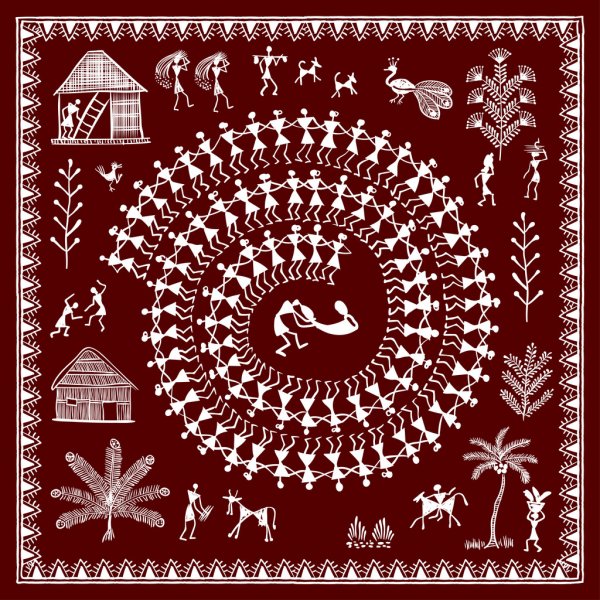
Origin of Warli, it’s history and significance, how to read the paintings, and few fun facts about Warli Paintings will be discussed here!
Warli painting is a tribal form of art and one of the famous Indian Fork Art, traced back to 10th Century AD. These paintings use a set of basic geometrical figures and common shapes like lines, circles, triangles etc, which represents the Mother Nature. Warli is the name of the largest tribe found on the northern outskirts of Mumbai, in Western India
Yashodhara Dalmia, in her book ‘The Painted World of the Warlis’, claims that Warli tradition goes way back to 2500 or 3000 BCE.
Warli painting, being a Tribal and sacred art, originates from North Sahyadri ranges encompassing Dahanu, Talasari, Palghar, Mokhada and Jowhar which is situated in the state of Maharashtra. Warli paintings were drawn by woman on the occasion of the marriage ceremony.
White colour is mostly used for painting with occasional use of yellow and red dots and they are painted on an austere mud base. The white colour is made by putting together rice paste and water with gum acting as a binding agent. Bamboo stick with one end chewed was used as a paint brush. They are usually painted on an austere mud base or on mud walls of the houses.
These paintings serve as a medium of expressing and depicting the social and religious aspirations for the local people. Unlike most traditional art forms, warli was/is not used to depict mythological characters or images of deities but to show the respect towards Mother Nature.
Maharashtra is known for its Warli folk paintings.
EVOLUTION OF THE WARLI PAINTING
At present, the background of the painting has been replaced from mud walls to paper or fabric for show casing in exhibitions. The simple yet beautifully delicate patterns and the intricate geometric patterns of the walri style is quite popular among home decors and fashion designers due to the certain appeal to the contrasts of the colour. Warli Art was first discovered in the early seventies dating as early as the 10th century A.D.
Jivya Soma Mashe, the artist in Thane district has played a great role in making the Warli paintings more popular. He has been honoured with a number of national and central level awards for his paintings. In the year 2011, he was awarded Padmashree
Believed that Warli paintings invoke powers of the Gods and represent a sense of togetherness.
HOW TO READ WARLI PAINTINGS
Circles represent the Sun and the Moon while Triangles represent mountains, trees, while human along with animal bodies are drawn with inverse triangles joining at the tip. The upward facing triangles represents the male while downward represents the females. The squares represent a sacred enclosure for the mother goddess symbolizing fertility. A straight line is never seen in Warli art. One of the central aspects depicted in many Warli Paintings is the Tarpa dance. Tarpa means a trumpet like instrument is played in turns by the villagers. The participants entwine their hands and move in a circle around the Tarpa player.
Warli art to some extent makes one think of being environmentally conscious and finding joy in simple things of life. Warli people worshipped Nature and were dependent on nature for food and water supplies. They did not believe in disrupting nature or taking more than needed. The Warli people believe in harmony between nature and man and these beliefs are often reflected in their paintings.
Coca-Cola India launched a campaign featuring Warli painting in order to highlight the ancient culture and represent a sense of togetherness. The campaign was called “Come Home on Deepawali” and specifically targeted the modern youth. The campaign included advertising on traditional mass media, combined with radio, the Internet, and out-of-home media.
FACTS:
It is a folk style of painting
This art form symbolizes importance of nature, wildlife, and the balance of the universe.
Warli also painting covers day to day activities of village people like dancing, playing and performing puja.
Tarpa dance is the central aspect of every Warli paintings
Nelson Mandela once said “The youth of today are the leaders of tomorrow”. August 12th is celebrated as the International Youth Day. The Youth Day was declared by the UN in 1999, to recognise and shed some light upon the issues faced by the youth of different countries.
International Youth Day is celebrated with the help of awareness campaigns, community concerts and events in the youth club, etc. to bring into attention the difficulties faced by the youth. The UN decides a theme for Youth Day every year. “Transforming Food Systems: Youth Innovation for Human and Planetary Health” is the theme for this year. According to the UN, it aims to highlight the need for “inclusive support mechanisms that ensure that the youth continue to amplify efforts collectively and individually to restore the planet and protect life while integrating biodiversity in the transformation of the food system.”
The theme also includes discussion around the topics of poverty reduction, social inclusion, health care, biodiversity conservation and climate change. The ECOSOC Youth Forum highlighted the concerns of youth regarding the impact of Covid-19 pandemic. They emphasized the need for a more equitable food system and awareness about the healthiest and sustainable food options. The Youth Lead Innovation festival will be held to encourage the fresh and innovative approach of youth to find solutions to the ongoing problems. This year, events for the Youth Day will be held virtually.
Problems faced by the Youth
The youth has always been an active part of the society. India has the highest youth population in the world. As per the Census of 2011, one-fifth of the population in India is its youth population. The youth have been a helping hand in the tough times of Pandemic, especially for those from the vulnerable age group. But the pandemic has affected the youth in terms of education and employment.
The number of young people involved in the field of education or training and employment has gone down in the last fifteen years. Right now, 30% women and 13% male are not involved in these activities. In this highly competitive world, lack of job and educational opportunities is a major problem. Frustration and chaos builds up in their minds when they remain idle. It is extremely important to utilize their energy for the betterment. Training in skill based or vocational courses should be provided. Skills such as Leadership, Communication, Scientific Temperament should be developed among the youngsters.
Youth is filled with immense energy and ambitions which should not be wasted. The youth of a country plays a key role in building a better future. Therefore it is important to provide them proper education and opportunities, so that they can pave the way for development.
The task at hand is twofold : first, to present a schematic account of feminism in India ; second to bring up some theoretical and methodological issues entailed in representing it. This decision to problematize the process of narrating has been prompted by the fact that writing in the second decade of the 21st century implies that we take into cognizance some of the developments in the preceding decades that impinge in a very fundamental way on both the practice and theory of feminism. In other words, I seek to flag some of the changing features of the contemporary context within which I as a resident Indian scholar write about feminism for Western academia. (i) A rich and complex body of feminist writings has emerged over the last forty years which in many ways have become institutionalized within academia as well as within policy making, whether of various states or of international agencies ; (ii) the rise of multiculturalism and postmodernism in the West since the 1980s gave way not just recognition but celebration of diversity and plurality including that of divergent feminisms ; (iii) the rise of postcolonial studies, articulated in the writing of non-Western scholars located in the West on one hand and a predilection towards poststructuralist theory on the other ; (v) finally the greater visibility of India and Indian scholarship in the recent decades of globalization. My central contention is that these developments are not extraneous but constitutive of Indian feminism.
As a resident Indian feminist scholar I feel an acute sense of disquiet when what I have to say is readily slotted as yet another instance of burgeoning postcolonial writings, one more voice of diverse feminism. My discomfort is that postcolonial theory principally addresses the needs of Western academia. “What post-colonialism fails to recognize is that what counts as ‘marginal’ in relation to the West has often been central and foundational in the non-West” . Thus when I privilege British colonialism and Indian nationalism this is not a belated deference to postcolonial theory but a historical fact which Indians have lived and battled with and one within which the story of Indian feminism emerged and grew. Further, the theoretical shift to textual analysis that accompanied postmodernism and post structuralism led to a gross neglect of a historical and concrete analysis of the constraints of social institutions and the possibilities of human agency therein.
I start on this note to make a conscious break with concepts in circulation and a current academic propensity, which invokes ‘difference’ and ‘plurality’, celebrates ‘fragments’ in a manner of politically correct mantras without even being fully aware of the complex and concrete historical processes, which produce and perpetuate these differences and inequalities. Social institutions, production relations, individual and group actions (and reactions), retreat from such analysis while attention is focused on discerning ‘ruptures’ and ‘gaps’ in either textual representations or oral narratives. These ruptures appear like autonomous ‘marks’ awaiting discovery from the analyst rather than real, historically existing social contradictions.
In privileging India’s colonial past, I am not averring to a simple colonial social constructionist position, nor waving the wand of colonial cartography. I begin with the material and ideological dynamics of colonialism within which Indian feminism emerged and developed – a past that makes its presence felt in some expected and many unexpected, unintended ways as this paper would show. I therefore choose to understand the emergence of feminism in India in the following contexts :
history of colonialism and emergent Indian nationalism ; its subsequent advance within the trajectory of independent India’s state initiated development ; more recently within the transformed context of globalization and India’s own success story in it ; and growing assertion of marginalized castes and communities which has led to a complex deepening of the democratization process in India. While I have often been asked to tell the story of Indian feminism, I have in each instance been acutely aware of the convolution involved. The academic context of knowledge practices within which I write today about Indian feminism for a Western audience is only a part of the complexity. Though Western hegemony is not quite what it used to be, it is not easy to rid ourselves of our ‘captive imagination’ – a point that was driven home to me almost a decade ago as I struggled to write a conceptual story of feminism in India. I realized :
“the obvious but often overlooked fact that while, for western feminists whether or not to engage with non-western feminism is an option they may choose to exercise, no such clear choice is available to non-western feminists or anti-feminists. (…) our very entry to modernity has been mediated through colonialism, as was the entire package of ideas and institutions such as nationalism or democracy, free market or socialism, Marxism or feminism. Any question therefore, had to confront the question of western feminism as well…” What then is different today ? I would argue that while we had a great deal of interaction with the colonial West, we did not have the kind of increasingly institutionalized global academic interaction which we have today, a world where too often we all appear to speak alike, even when we seek to mark our difference. The earlier Western ideological influence and the opposition to it were both more powerful and explicitly political. The native was speaking but her voice was outside the deemed legitimate intellectual discourse. It was in the political sphere of colonial India that social reformers and nationalists sought to make history, sought to articulate a distinct nationalist and feminist identity (though informed of and often inspired by Western visions). Often this expressed itself as a denial. “I am not a feminist” was a statement heard more often than not from major women public figures. My argument has been that “the sheer persistence of this theme has a story to tell”. And the story is that ambivalence/evasion can be fruitfully read “both as a claim for difference as well as political strategies of the nationalist and women’s movement” (Chaudhuri, 2011b, p. xix). Readers will appreciate that those rough and turbulent struggles of feminist doings in colonial times within which feminism was being theorized were very different from the current, sanitized academic spaces where professionals seek to speak and write, no matter how many times the word ‘political’ is invoked. No wonder I had found it impossible to separate the history of action from the history of ideas, and in an intellectual world so completely subjugated by Western academic norms it took a while to recognize :
“that feminism was being debated, but differently, (…) such attempts at articulating difference were taking place in a context uninformed either by the language of difference or the more recent political legitimacy accorded to it… concepts which have ‘local habitation and name’ today and which slide spontaneously to the tip of the tongue and pen (‘gender construction, ’ ‘patriarchy’, ‘empowerment’, ‘complicity’, ‘co-option’) were couched in different labels a century ago.” My location as a resident Indian is important even in such times of times of globalization. Not only do I have to engage with the West, but a West with an increasing presence of the non-West and a Western academia, where the ‘native’ has already spoken. Postcolonial scholars of South Asian origin are leading intellectual voices of the non-West in the West, particularly North America. This compounds the matter more, for ‘national’ contexts do still matter in social sciences and humanities. At another level, many of the issues that at one time appeared to be issues of the non-West are now eminently visible in the West, home to increasing and strident cultural diversity. At one time ‘Western-located Indian’ feminists decried the fact that Indian feminism was “self effacing”, that Indian women see their personal desires as unnecessary and were engrossed with larger questions such as questions of community identity, democratic citizenship, religious beliefs, workers’ rights, cultural distinctions, and rural poverty. The question that Western feminisms would ask and we would echo : “Where amidst this din of large issues were the women ?”.
A decade into the 21st century, the terms of the debate seem to have changed entirely in the West. It seems overtly obsessed with questions of cultural identity, of alien cultures and a realization that choices and selfhoods need not be expressed in the language of the Western individual woman. In a world politically more intolerant than ever, in a Western academia more multicultural than ever, the histories of non-Western feminisms no longer appear extraneous, beside the point, or even lacking the ‘authentic’ feminist impulse. Almost lurching to the other extreme, voices of non-Western women are now validated in the West. Alternative modes of agencies are being increasingly imagined. I am a trifle wary of the representation of the third world woman either as “victim subject” or as an “alternate agential self” – catch-all terms that reign in postcolonial Western academia. It is in such a context that it may be productive to shift focus to the ground reality of Indian feminist deliberations such as that of the Thirteenth National Conference of the Indian Association of Women’s Studies (IAWS) 2011, the largest national-level body of Indian feminists. Here we find a context that is far more complex and manifold, and concepts that are far more varied. In contemporary Indian feminism we thus have issues ranging from :
developmental induced displacements to questions of alternative sexuality ; agrarian crisis to the need to challenge hierarchies of victimhood versus pleasure ; reproductive health to the question of controlling resources – land, forest and water ; global capitalism and the localized and diverse articulations of culture to military conflict ; language, voices representations to new markets and interlocking inequalities ; rural labour to women in religions ; starvation to female spectatorship. The above issues are not exhaustive. They are simply indicative of the unequal and diverse voices WITHIN contemporary Indian feminism .
Inequalities and diversities define Indian society. Various precolonial social reformer movements, the British state, the nationalist and feminist movement have always had to negotiate with this. Thus British colonialism impacted different regions differently both because of the stage of colonialism as well because of the nature of different regions. Thus there were periods of reluctance on the part of colonial rulers’ meddling with India’s social customs such as those related to women, for fear of reprisal, and periods of active involvement to intervene such as the abolition of sati in 1829 or raising the Age of Consent for Women in 1863 which brought forth a furiously hostile reaction, leading again to a phase where the British preferred to rely more on their conservative allies. What one can however infer is that colonial rule, the humiliation of the subject population, the impact of Western education, the role of Christian missionaries, growth of an English speaking Indian middle class all led to an intense and contested debate of the women’s question in the public sphere. This debate itself has been scrutinized carefully from different perspectives. We thus have a question on whether the debate on sati was about women or about reconfiguring tradition and culture ; we have questions on why Dalit women’s public initiatives and intervention went unwritten; we have arguments that suggest social reforms were more about efforts to introduce new patriarchies than about women’s rights and gender justice. Such rethinking emerges from the challenges posed by social movements and new theorizing emanating from structural transformations within the country.
The Indian feminist is debating in part within the ‘national’ context on ‘local’ issues, even as she is part of the contemporary globalization of academia and of feminist scholarship. That there is such a strong presence of scholars of Indian origin within Western academia who speak for India but within an intellectual world quite distinctively Western, with its own set of empirical and conceptual imperatives, compounds the matter further. Concepts travel thick and fast and are often picked up without any serious engagement with either their contexts or with the theoretical frameworks from which concepts emerge.
Readers will excuse this digression. For I think that, at this present historical juncture where intellectual international exchanges are both intensive and far reaching, one needs to problematize the contexts of production, circulation and reception of intellectual representations. It is necessary therefore to draw attention to the fact that “texts circulate without their context…. and… the recipients, who are themselves in a different field of production, re-interpret the texts in accordance with the structure of the field of reception.” The concepts with which I seek to tell the tale of Indian feminisms needs historicizing. Further, the theoretical frameworks that have sought to analyze the history of Indian feminisms are themselves products of social movements such as the anti-colonial, the nationalist, the feminist, the left and anti-caste. Simply put, much before the theoretical shift to a language of difference, Indian social movements – whether nationalist or feminist – have had to negotiate with both the questions of difference and inequality.
The 20th Century Movement
Prior to the 1990s, the Indian state visualized a state-led development in alliance with national capital (Chaudhuri, 1996). The 1990s altered this paradigm. Transnational capital and the market acquired ascendancy. This shift reconfigured both class and gender in the developmental priority, and therefore necessarily in the national imaginary. Readers will recall how the Indian working class and peasant women were seen as the face of the nation.
This ideological frame changed. The national iconic representation of the working class and peasant women gave way to the new icons of Brand India – the super rich, the beautiful people of the now growing Beauty Business. The buzzword was ‘growth’ and the way towards it an ‘unbridled market’. Structurally, deregulation was the way forwards. One of the corollaries of this pattern of development was an unprecedented expansion of the informal sector wherein a large section of women worked on wretchedly low wages with no security of tenure. Feminists like Mary John and U Kalpagam (1994) have observed how this model has been legitimized by international institutions like the World Bank who have drawn upon feminist scholarship about “the incredible range of tasks poor women perform, their often greater contribution to household income despite lower wage earnings, their ability to make scarce resources stretch further under deteriorating conditions”, but through a crucial shift in signification displayed the findings as no longer arguments about “exploitation so much as proofs of efficiency” (John, 2004, pp. 247-248). Not surprisingly, a great deal of development gender discourse is now exclusively addressed within the micro credit framework, premised upon the idea that women are efficient managers and can be trusted to repay.
Significantly, while most feminists were critical of the state relegating its commitment to the poor and vulnerable, there were contrary views. Gail Omvedt for instance contends that “being anti-globalisation” has become the correct standard of political correctness and argues that “the only meaningful question is, for a Marxist (or dalit, or feminist) activist, what advances the revolution, that is, the movement towards a non-caste, non-patriarchal, equalitarian and sustainable socialist society ?” (Omvedt, 2005, p. 4881) Sections within the Dalit movement itself have aggressively projected the need for dalit capitalism and globalization as the way forward (Chaudhuri, 2010).
I have already alluded to the rise of the Beauty Business which was closely tied to an unprecedented expansion of the advertising and consumer goods sector, which together recast the Indian woman from the frugal to the profligate spender – in keeping with the changing image of India (Chaudhuri, 2000, 2001). It is impossible to capture the finer contours of the feminist debates in this context. A quick reference to the diverse takes on a major Beauty Contest that was organized in Bangalore in 1997 may capture the key points. The contest was marked by protests by the women’s movement against beauty contests on the grounds that “these contests both glorify the objectification of women and serve to obscure the links between consumerism and liberalization in a post-globalization economy”. Processions were held in Bangalore with mock ‘queens’ crowned as ‘Miss Disease’, ‘Miss Starvation’, ‘Miss Poverty’, ‘Miss Malnourished’, ‘Miss Dowry Victim’, etc. in order to highlight the issues of poverty, and lack of nutrition and health care in the country (Phadke, 2003, p. 4573). Shilpa Phadke, a younger generation feminist, argues in this context that “the focus on women as ‘victims’ could well serve to erase images of women as subjects with agency, sometimes suggesting that feminism is a movement devoid of joy”. She further argues that the market rather than the state is better as “a potential turf for negotiation”. For “unlike the state, where the citizen is largely a client, for the market the individual is first and foremost an actor-consumer. Can the women’s movement use the strategies of the market to re-sell itself to a larger audience and reclaim its right to speak on behalf of a larger constituency of women ?” (ibid., p. 4575) It is important to reiterate here that many continue to perceive the state and political parties rather than the market or NGOs as responsible for their “basic needs”, and they approached either the government agency concerned or political parties when they needed resolution of any problem (Chandhoke, 2005). The great Indian middle class may not need the government, but the vast majority of the poor do. The idea of citizenship as both hegemonic and potentially liberating has been very central to Indian feminism (Roy, 2005). Into the second decade of the 21st century, Indian feminism is engaged with a whole host of issues – some global, some not.
The conclusion
The central contention that has informed this paper is that while boundaries (including academic) are increasingly breaking down, there still exist considerable distinctions between the global and local, the West and non West. And here, I am not alluding to any idea of an essential culture, or to notions of pure indigenous concepts, but only to the specificities of history. Western concepts of the state and market, citizen and consumer hold here as much as anywhere else. This paper bears witness to this. What differ are the details that make the stuff of human action and human conceptualization. The context, within which concepts emerge and the contexts where they travel to, needs enunciation. Its significance in an increasingly globalized academia cannot be overstated. Hence the focus here is on both the tale and the telling of Indian feminism. No ready conceptual frame of the postcolonial, even less no seductive binary oppositions, no amount of sophisticated readings of textual representations will suffice. Endless invocation of ‘voices’ and ‘agency’ will not set free the elusive feminist subject. Careful historical analysis may offer a better understanding of the many achievements and failings of Indian feminism.






 Eduindex
You must be logged in to post a comment.