WHY READING IS IMPORTANT IN TODAY’S WORLD

Amidst our daily lives filled with activities throughout our entire day from the crack of dawn to dusk, we often find ourselves multi-tasking with little to no time for our own wellness. Our constant need for checking social media instead for trying to gather more knowledge and trying to learn new things has not helped much in improving the situation at all. When was the last time you picked up a book and were actually able to finish it? Certainly we may not always have time to read books in our busy schedules. However, trying does not hurt at all. Reading is an activity that might have picked up ever since we were kinds. It is actually a privilege; being able to read and write is a privilege in itself. But sometimes we severely fail to acknowledge this.

Photo of Opened Book

Reading comes with a variety of benefits. Some of them are discussed as follows:-

HELPS IMPROVE CONCENTRATION AND FOCUS

As multi-task away our days into oblivion, when we actually nothing getting done at times, it can be quite frustrating when we are just trying to do our best. We might get distracted by that twitter notification or that whatsapp message from the friend’s group planning a reunion.This results us in losing our focus and make us completely forget what we were actually doing in the first place. However, reading can really help us solve this issue at hand. A number of studies have shown that reading around 15-20 minutes a day can significantly improve your focus and concentration levels to a maximum.

Boy in Gray Jacket Reading Book

So, read a book to focus on your everyday tasks better!

MAKES US EMPATHETIC

Woman in White Shirt Reading Book

Reading a book about the experiences of everyday racism tolerate by African-american people may help us understand the major problem of the world that affects these innocent souls at a massive scale. Certainly, in such cases, books may help us to become more empathetic towards the way we observe and perceive things in our life. We may become kinder and compassionate to our fellow beings, all thanks to our books.

So, make the world a better place by initiating a change and start reading!

MAKES US BETTER AT COMMUNICATION

Readings book can actually make us a better communicator. This is evident through the fact that a we read books, knowing about stories, differing point of views, they offer us common ground for analysing the various side of arguments. This may help us in our everyday conversations as we are often able to understand the situations in better manner, keeping in mind not only our requirements but that of the other parties as well. This helps us communicate without any chances of misunderstandings and makes sure that the conversation is fruitful and productive.

Man Reading Book

Furthermore, reading also makes us an interesting person too. People would often prefer and like to interact with the ones that have knowledge about what they are saying and actually understand the depth of their words.

In conclusion, we can say that reading may be life-changing for the ones who try it. So,try reading to understand people and even yourself better!

Educational status in India after 1947

Between 1935 to 1955 there is the development in the area of education in university. New universities were opened and the strength of students were also increased. But after the independence there was increased in the field of education in university. After separation only 19 universities were there but after that new 14 universities were opened. So that the government decided to create a team for the survey of university for analysis the new technology gained by the university. New educational program provides to the students for the development of students.

Aim of university education

Aim of university education :- After the independence our social, cultural and political facts are changed that changes increase the work of universities. Universities will give the affort towards the new technology. Now they the wants that type of education which increase the occupation, business etc.

Commercial education :- In commission 1st preference is given to commercial education. The field comes on this are agriculture, commercial, engineering and technology, teaching and health.

Engineering and technology :- At present engineering and technology are be the national property and we should try to increase it or improve this. All apportunity should be given to students who are studying in engineering college to work in the industry.

Medical :- Only those students get admission in medical colleges who have knowledge.

Teaching :- Syllabus of the university should be modified and changed according to the time. There must be exam conducted among the students.

Agricultural :- In rural areas new institutes are opened for the students so that they learn about the agriculture.

This is all modifications done after in independent of India.

INSPIRATION LEADS TO SUCCESS.

Inspiration can come from anywhere, it’s something that makes you want to change in your life for the better, or someone who pushes you or set’s an example, or someone that makes you think about your life and how you want to change it.

My inspiration was my envy! Yes you heard it right. Growing up as a student was a challenging task. A child is vulnerable during this stage of life. The influence which the social sphere lay’s on them is very overwhelming. A child is born as an empty slate with capabilities; that child becomes a well adjusted individual by manifesting the potential they possess in a right way.

Let me share my piece of story. My experience as a student was, I lacked the quality of confidence and was not motivated enough to perform well in my desire area of interest, Literature. Every year mu school use to host English Recitation Competition in which I wanted to participate and win, but didn’t had the grit to admit my self into the competition. My teacher who always encouraged every student to exploit their potential advised me,“Winning doesn’t matter, what matter is participating”. That piece of encouragement was sufficient to to kick start my journey in search of my confidence aand winning that competition. I participated in the competition but I lose I was disheartened but was determine to win next year, but again success was not on my side and that’s when envy came into the frame. I was envious towards the winners and compared myself with them not releasing I was demotivating my own self. Consequently I observed the winners in the following years analyzing their ploy and instructed myself if they can do it why can’t I! I worked on my language skills and hand gestures evently advancing in the reciting tactics. I made the winners my model and changed my envious attitude into a matured one, which helped me to boost my motivation. This changes helped me to win the competition after a consistent failures in the past years. That’s when I learnt “INSPIRATION LEADS TO SUCCESS”

Social Media Etiquettes

Social media etiquette has been the need of the hour with the emergence of various social media platforms in the modern world. Since this are the etiquettes to be followed online, they are also known as NETIQUETTES.

■ SOCIAL MEDIA ETIQUETTE & IT’S IMPORTANCE

▪Social media etiquette refers to the guidelines that companies and individuals use to preserve their reputation online.

A single silly mistake can not only spoil your reputation  professionally but also in your personal life.

▪Etiquette helps with the hard part.

Most articles about social media focus on how to handle platforms. But most missteps in social media happen because of how we handle our audiences. Etiquette provides the framework for tackling this “people part.” Without it, you’re flying blind in all those platforms.

▪Etiquette helps you bounce back from mistakes.

No matter how great your manners are, inevitably we all make mistakes in social media. That’s because people are weird and unpredictable. It’s impossible to flawlessly communicate with everyone all the time. But knowing where points of confusion commonly crop up can help you improve your chances of doing it more successfully, more often.


▪Etiquette makes you a better supporter of your peers.

There is no one “right way” to do social media and no one does it perfectly. Knowing other people are also making mistakes makes the whole playing field less intimidating. Our collective imperfection also makes us less likely to jump on the blame bandwagon and start pointing fingers when mistakes happen.


▪ Etiquette helps you be more empathetic.

While your goal in using social media is undoubtedly important, don’t forget you are communicating with people who have goals, too. Using proper etiquette forces you to put yourself in your audience’s shoes, which ultimately gives you a better understanding of their wants and needs.


▪ Etiquette helps you focus on the bottom line.

Posting personal info to a professional account, accidentally sharing private information publicly or inadvertently insulting an influential supporter are all etiquette mistakes that can create a social media firestorm. Will those type of mistakes end your career or company? Maybe not. But they will distract you from the business of being awesome and that can affect your bottom line.


▪Etiquette makes you more productive.

In spite of its popular appeal and easy access, social media is complicated and complex and only produces strategic results if you use it strategically. You will need a variety of tools at your disposal to do this strategic work. Etiquette is one of those tools.


▪ Etiquette makes the social web a better place.

Sure pleases and thank yous seem like little things that don’t matter a whole lot in the grand scheme. But there is a lot of rudeness, trolling and bullying on social media these days. Using good etiquette is one way you can help collectively tip the scales back in the direction of people being nicer to each other.


▪ Good etiquette feels good.

As Maya Angelou once said, “Just do right. Right might not be expedient. It may not be profitable. But it will satisfy your soul.” Social media etiquette is social media done right that feel right.


■TIPS TO IMPROVE YOUR SOCIAL MEDIA ETIQUETTES

▪Think before you post. Ask yourself how a post could be taken out of context, double- check that it’s error-free and ensure you’re posting on the right account.

▪ Understand the platform you’re posting on and the conventions of that platform. On Twitter, for example, you can post several times a day, while the same behaviour might be considered spammy on Facebook. On Facebook, hashtags are widely considered #annoying so #DontUseThem #ever .

 Speaking of which, don’t use too many hashtags even on Twitter. Recent studies have shown that hashtags play little role in increasing the virality of your tweet and can impede understanding. When you do use them, ensure that every letter of a new word is capitalized. (I.e. #GoTeamGo not #goteamgo)

 Don’t auto-post from Facebook to Twitter and vice versa. Though auto-posting might save you some time, no one will read a Twitter post that gets cut-off mid sentence or a Facebook post with @ tags.

▪ Strike the right tone: If you post in language that’s too stiff and formal, your organization will look aloof and out of place. If you’re too casual, you will look unprofessional.

 Don’t disguise your intentions. Be up front whenever you promote something you have a vested interest in.

 ▪Use correct grammar and spelling.

 ​Don’t sign your posts, unless you’re

 a) posting from a Twitter account that’s handled by multiple people or

 b) Mark Twain/ Oscar Wilde/ Ghandi or some other famous quotable figure.

 ​Don’t use Capslock (no one likes being shouted at) or go overboard with exclamation marks/emoticons. Unless your team has just upset its arch-rival with 1 second to go at the Olympics/Paralympics, you probably don’t need more than 1 exclamation mark per sentence.


▪Respond to questions and comments promptly.

 Don’t let social media accounts fall idle. It reflects poorly on your organization. If you’re strapped for time, use some of the many post-scheduling devices such as Hootsuite to schedule some content.

 ▪Use blocking or banning only as a last measure. Your social media channels should be a place for healthy debate. If someone is speaking negatively about your organization, politely respond to their concerns and encourage them to contact you by email to follow up. If someone is being harassing or using threatening language, however, feel free to block and ban them.

 ▪Be careful with humour. If something will offend even 1 person out of 100, don’t post it. Humour can backfire more than any other posting type.

▪ While it’s okay to share something from another organization’s page, ask before you share something from someone’s personal page.

 ▪Vary your message. If you want to increase the visibility of a big event with multiple posts, change the language and tone of each post.

 On Twitter, shorten your links using a link shortener like Ow.ly or go.gl.

▪ Many people who work in social media for sports organizations have an existing relationship within the sports community (i.e. a former athlete) and may have friends there. Be mindful of the distinction between your personal and professional social media life and keep your tone professional when engaging with your real-life friends on your organization’s social media channels.

▪ Above all, be genuine. Traditional business communication methods can come off as wooden and hollow on social media. Ditch the passive voice and the stock phrases and speak directly to your audience.


The Voidless Void

Photo by Anni Roenkae on Pexels.com

We are always filled with so much curiosity and questions to know why the certain thing is happening the way they are, we were always this eager to find out the truth even when we were toddlers we have this tendency of why, and it is natural too when we have this vast, boundless space which is filled with void yet it contains the basic life element there.

On some planet of this vast space, we have a canyon of the size of the united states and we don’t even know what could be lurking behind the Neptune. 

We know if we have something in our life it’s not because they just randomly appear out of nowhere but it’s actually where they were crafted So why would anything in our space be just randomly placed?

Our galaxy out there and even many more are situated at a certain place and billion and millions of light-years away as they are not found in isolation but they are either the part of a cluster or they have a belt of satellite galaxies around the group.

A Bizzare Cosmic Void

Our space is the large web of many things with spaces filled with dark matter and the voids in between the network of many big and clustered galaxies and still, they cover almost 90% of the total space which could vary in the diameter of billions and millions of light year.

The question still lingers on that how the void must have been formed or they just appear out in one space day? As the formation of the galaxy, we are currently residing started millions of the year ago, they were objects which were highly clustered and thus make the impact on the density of that cosmic web making the smaller object around them either move far away and creating the lesser density area which now we know as void.

The Sound of Void

The cosmic web we think might be just the representation of some model explaining the thing which one can’t actually see from but its more than that the cosmic web is the largest structure showing the pattern of the galaxy with voids and many things in between filling everything that our entire space has to offer us.

How come when it sustains our very own earth in its web and contains many alien objects, planets, and things still while defining it the 90% of it is just nothing and how can one know everything about nothing?

Nothing is what our space has made up from the starting is it? No, our space millions and a billion of years ago were evenly spread out on the surface with no star, no void nothing just the presence of gases but when the presence of gases and matter increased in certain part it started growing stronger and hence collapsing under the rule of gravity which started the creation of star and planets and eventually big bluffy galaxy thus taking everything around them and living back the void.

Digital Marketing : Current scenario in India

I hope this article is very much familiar to you because it is a part of your daily lives whether it’s shopping, food delivery or travelling digital marketing can be said a core or the central part of these activities. Coming to what the word “digital marketing” actually refers to it can be dynamic but in a general form we can say that digital marketing refers to advertising delivered through digital channels such as social media, or other platforms. This helps in marketing the goods from the seller directly to the buyer eliminating the intermediaries.

PHILIP KOTLER, a well known name in the field of management is known to be the father of digital marketing. He is an American professor and has penned almost more than 60 books on marketing and established it as a field in academic. We can say that he thought about this concept earlier and was aware of the fact that the world will be accepting digital marketing as one of the most successful innovation.

TYPES of digital marketing : There are many types of digital marketing but which are considered as most important are as follows :- Search engine optimization (SEO), Pay -per-click, Social media marketing, Content marketing, Email marketing, Mobile marketing, Marketing analytics. The above mentioned types are very useful in today’s world. People are doing specialized courses into this field as this is the requirement of the time.

The 5 main D’s for digital marketing :- Digital devices, digital platforms, digital media, digital data and digital technology. As a result today each individual is aware about the trend of digital marketing. Traditionally marketing was only confined to sales and promotion but now due to digital marketing people can see, decide and review their product very easily.

The trend is more successful in India as every individual is having a smartphone and low cost internet availability which enables a strong point for digital marketing. Digitalisation also helps in the marketing sector as people are available with multiple option(one is upi as a payment option). Digital marketing is the new and innovative future for India as it can be carried over at the local level as well as the international level. Even during the pandemic situation India was the only country to reach at the highest level in field of digital marketing. So digital marketing is a successful approach for us.

I hope you all will agree on my views on this topic. Thank you and keep reading !!!!!

What's happening in Afghanistan?


Afghanistan is again under the control of the Taliban, a fundamentalist group that ruled the nation for five years before U.S.-led forces ousted them in 2001. Refugees fleeing the group’s ultraconservative brand of Islam have swelled the population of Kabul, the airport has been besieged by Afghans desperate to find a way out, and worries are spreading that the Taliban’s return might encourage Islamist movements elsewhere in Central Asia more than two decades after Osama bin Laden first sought refuge under their protection.

Q1) What is happening in Kabul?

Taliban forces entered the capital of Kabul on Aug. 15, effectively ending a 20-year effort by the U.S. and other Western nations to remodel Afghanistan as a modern democracy. They were buoyed in part by an agreement with the Trump administration in February last year for U.S. forces to leave the country, with President Biden subsequently setting Aug. 31 as the exit date. With Afghan government forces losing air cover and plagued by desertions, the Taliban quickly expanded their footprint before taking the last remaining cities, including Kabul.

Their arrival in the capital sparked panic. Afghans who worked with Western armed forces or agencies rushed to Hamid Karzai International Airport seeking a way out. Western embassies moved their staff to the airport, which is under U.S. military control. In chaotic scenes there, crowds of Afghans ran alongside military transport planes as they prepared for takeoff, with some people trying to cling to the sides of the aircraft. Afghans and Westerners stranded in Kabul trickled into the airport for evacuation, but entry remained difficult, with Taliban fighters manning checkpoints and no clear system to bring people in. On Friday, military personnel fired tear gas to control the crowds trying to get in to board evacuation flights and clear to space for families authorized to leave.

Q2) Why did Afghanistan’s capital fall so quickly?

Afghanistan’s national army and police forces, theoretically numbering 350,000 men and trained and equipped at huge cost by the U.S. and Western allies, were supposed to be a powerful deterrent to the Taliban. They were trained to match the way American forces operate, combining ground operations with air power and using aircraft to resupply far-flung outposts and collect intelligence.

But following Mr Biden’s withdrawal plan, the U.S. pulled its air support, intelligence and contractors servicing Afghanistan’s planes and helicopters. That meant the Afghan military couldn’t function anymore. In many instances, soldiers simply changed out of the uniforms into civilian clothes. Speaking at the White House on Aug. 16, Mr Biden said he stands “squarely behind” his decision to withdraw U.S. troops from Afghanistan, though he acknowledged that the Taliban took control far more quickly than he expected. He cast much of the blame on the Afghan military for failing to take up the fight with the insurgents.

The Taliban have put the three conditions before the people of Afghanistan – Either they accept Sharia law or leave Afghanistan or die. To all the readers of this very article, let’s pray for the safety of the people of Afghanistan.

What's happening in Afghanistan?


Afghanistan is again under the control of the Taliban, a fundamentalist group that ruled the nation for five years before U.S.-led forces ousted them in 2001. Refugees fleeing the group’s ultraconservative brand of Islam have swelled the population of Kabul, the airport has been besieged by Afghans desperate to find a way out, and worries are spreading that the Taliban’s return might encourage Islamist movements elsewhere in Central Asia more than two decades after Osama bin Laden first sought refuge under their protection.

Q1) What is happening in Kabul?

Taliban forces entered the capital of Kabul on Aug. 15, effectively ending a 20-year effort by the U.S. and other Western nations to remodel Afghanistan as a modern democracy. They were buoyed in part by an agreement with the Trump administration in February last year for U.S. forces to leave the country, with President Biden subsequently setting Aug. 31 as the exit date. With Afghan government forces losing air cover and plagued by desertions, the Taliban quickly expanded their footprint before taking the last remaining cities, including Kabul.

Their arrival in the capital sparked panic. Afghans who worked with Western armed forces or agencies rushed to Hamid Karzai International Airport seeking a way out. Western embassies moved their staff to the airport, which is under U.S. military control. In chaotic scenes there, crowds of Afghans ran alongside military transport planes as they prepared for takeoff, with some people trying to cling to the sides of the aircraft. Afghans and Westerners stranded in Kabul trickled into the airport for evacuation, but entry remained difficult, with Taliban fighters manning checkpoints and no clear system to bring people in. On Friday, military personnel fired tear gas to control the crowds trying to get in to board evacuation flights and clear to space for families authorized to leave.

Q2) Why did Afghanistan’s capital fall so quickly?

Afghanistan’s national army and police forces, theoretically numbering 350,000 men and trained and equipped at huge cost by the U.S. and Western allies, were supposed to be a powerful deterrent to the Taliban. They were trained to match the way American forces operate, combining ground operations with air power and using aircraft to resupply far-flung outposts and collect intelligence.

But following Mr Biden’s withdrawal plan, the U.S. pulled its air support, intelligence and contractors servicing Afghanistan’s planes and helicopters. That meant the Afghan military couldn’t function anymore. In many instances, soldiers simply changed out of the uniforms into civilian clothes. Speaking at the White House on Aug. 16, Mr Biden said he stands “squarely behind” his decision to withdraw U.S. troops from Afghanistan, though he acknowledged that the Taliban took control far more quickly than he expected. He cast much of the blame on the Afghan military for failing to take up the fight with the insurgents.

The Taliban have put the three conditions before the people of Afghanistan – Either they accept Sharia law or leave Afghanistan or die. To all the readers of this very article, let’s pray for the safety of the people of Afghanistan.

WHAT IS RAKSHA-BANDHAN (RAKHI) AND HOW TO CELEBRATE IT?

In Sanskrit, the term Raksha Bandhan translates as “bond of protection.” 

It is observed on the full-moon day, on the 5th month in the Hindu lunar calendar, Raksha Bandhan is a popular Hindu holiday celebrating the love between a brother and sister. 

On this day, a sister ties a threaded amulet, known as a rakhi, around a brother’s wrist, honoring their relationship. The bracelet symbolizes the brother’s oath to protect his sister throughout her life, and the sister’s prayers and blessings for protection and wellbeing of her brother.

        The origin of this celebration can be found in the Indian epic The Mahabharata, when Lord Krishna cut his finger. Draupadi, wife of the Pandavas who considered Krishna to be like a brother, immediately tore off a piece of her sari and tied the cloth around his bleeding finger. Smiling and grateful, Krishna promised to return the favor to her some day.

Another Legend has it that in 326 BCE, when Alexander the Great invaded India, Alexander’s wife Roxana, out of concern for his safety, had a thread sent to Indian King Porus, requesting him to not harm her husband in battle. Porus is said to have respected her wish, and refrained from killing Alexander during the famed “Battle of the Hydaspes.” Though Alexander ultimately won the battle, Porus had earned his respect, and was thus made a governor of part of his kingdom. 

HOW TO CELEBRATE IT ?

Before the festivities begin, a sister first goes out to look for a talisman or amulet, which she thinks her brother might like and would suite his unique personality. A simple activity as such helps to cultivate appreciation for the brother’s personality.

On the D-Day, sister customarily turns on an oil lamp and offers it to a family deity and prays for her brother’s long health and happiness, then she ties the sacred thread to his hand and feeds him a sweet. Then the brother completes the ritual by reciprocating the action of feeding a sweet and giving a present to the sister.

Top Trending Technologies in 2021

Technology is persistently refreshing at such a quick speed that it may appear to be quicker than light. A technology or a programming language making the rounds this week maybe obsolete in the next few days. As an ever increasing number of assets are put resources into innovative work, computer scientists and experts are ceaselessly tweaking and working on existing advances to take advantage of them. Here are probably the most recent moving advances that make certain to overwhelm the IT business in the forthcoming years.

1. Artificial Intelligence

Artificial intelligence or AI is a technology used to match computer systems with human decision-making capabilities. Being one of the trending technologies, when Al programs are fed to systems, the aim is to mimic human intelligence for performing complex tasks, such as pattern recognition, speech recognition, weather forecast, and medical diagnosis. So, learning Al will help you secure job roles. such as machine learning engineer, data scientist, computer vision engineer, business intelligence developer, data analyst.

2. Data Science

Data science is the technology that helps to make sense of complex data. Everyday tons of data are produced by companies across the globe. This includes Business data, Sales data, Customer Profile Information, Server Data, Financial Figures. The future scope of data science looks promising, in turn creating opportunities for the following career roles, Data scientist, data architect, business intelligence manager, data engineer, data analyst, business analyst. 

3. Internet of Things

IoT, is a network of devices that are connected to each other. The devices can interact and share data. These gadgets might be associated by means of Wi-Fi, and they share information about their environment and how they are being utilized. The devices have a computer chip that facilitates this exchange. It is predicted that more than 41 billion devices powered by IoT will be used by 2025. IoT chips embedded on machines help businesses assess those machines performance and assist in their maintenance. Learning this most recent technology will assist you with securing positions, for example, IoT software developer, system design engineer, IoT product manager, IoT research developer, IoT solution architect. 

4. Blockchain

Blockchain is the foundational technology that powers electronic currencies such as cryptocurrencies. In simple terms, a blockchain is an electronic ledger that can be shared among different users. This helps in creating a record of transactions that cannot be altered, making the technology verifiable and secure. There is a rise in a career in blockchain. Here are some opportunities that are on the rise. Blockchain developers, blockchain quality engineer, blockchain legal consultant or attorney, blockchain engineer.

5. Robotic Process Automation (RPA)

Robotic process automation, RPA is a technology used to automate daily tasks.  Like artificial intelligence, software is used here to automate a series of tasks such as handling and responding to emails, processing transactions and manipulating business data.  Companies like Accenture, Deloitte and Capgemini use RPA tools to automate their daily operations.  Therefore, the greatest need for skilled professionals in RPA is to follow the various RPA working rules.  RPA Developer, RPA Business Analyst, RPA Consultant, RPA Solution Architect, RPA Project Manager.

6. Virtual Reality

VR is simply the technology by which you can submerge yourself in an environment that appears to be amazingly realistic. It is the utilization of computer technology for establishing a simulated environment. It is prominently utilized for playing computer games. Unlike traditional games where you experienced the gaming environment by viewing it on the screen, you are directly placed in the environment. The VR business is relied upon to arrive at near $40 billion by 2021. Here are some VR work positions you can pay special mind to. Content Writer, AR and VR Content Writers, Product Management, Software Engineer, UI and UX Design, Quality Assurance.

7. Edge Computing

Edge computing is the latest technology trend that is gaining popularity day by day. The technology is based on the philosophy of bringing computer power as close to the data source. This helps in reducing bandwidth and latency. Edge computing is used to handle time sensitive data stored in remote locations with limited connectivity to the central location. The technology will make cloud computing and IoT devices faster. By 2022, the Edge computing market is estimated to be $ 7 billion.  The technology will be mainstream in sectors like healthcare, retail and manufacturing.

8. Intelligent Apps

Intelligent apps are software applications that use Al components, such as machine learning, deep learning, data analytics, robotics, and natural language processing. They assist you in making decisions based on real-time data or historical data. Examples of intelligent apps are voice assistants, such as Siri, Google assistant, and Alexa. As companies like Google, Apple, and Oracle keep putting investments into these applications, it will undoubtedly make many jobs later on. Intelligent application developers are sure to bring home generous income packages. In this fiercely competitive IT industry, getting a job is becoming challenging. But if you keep up-skilling and continue learning new tools, you will surely grab your dream job.

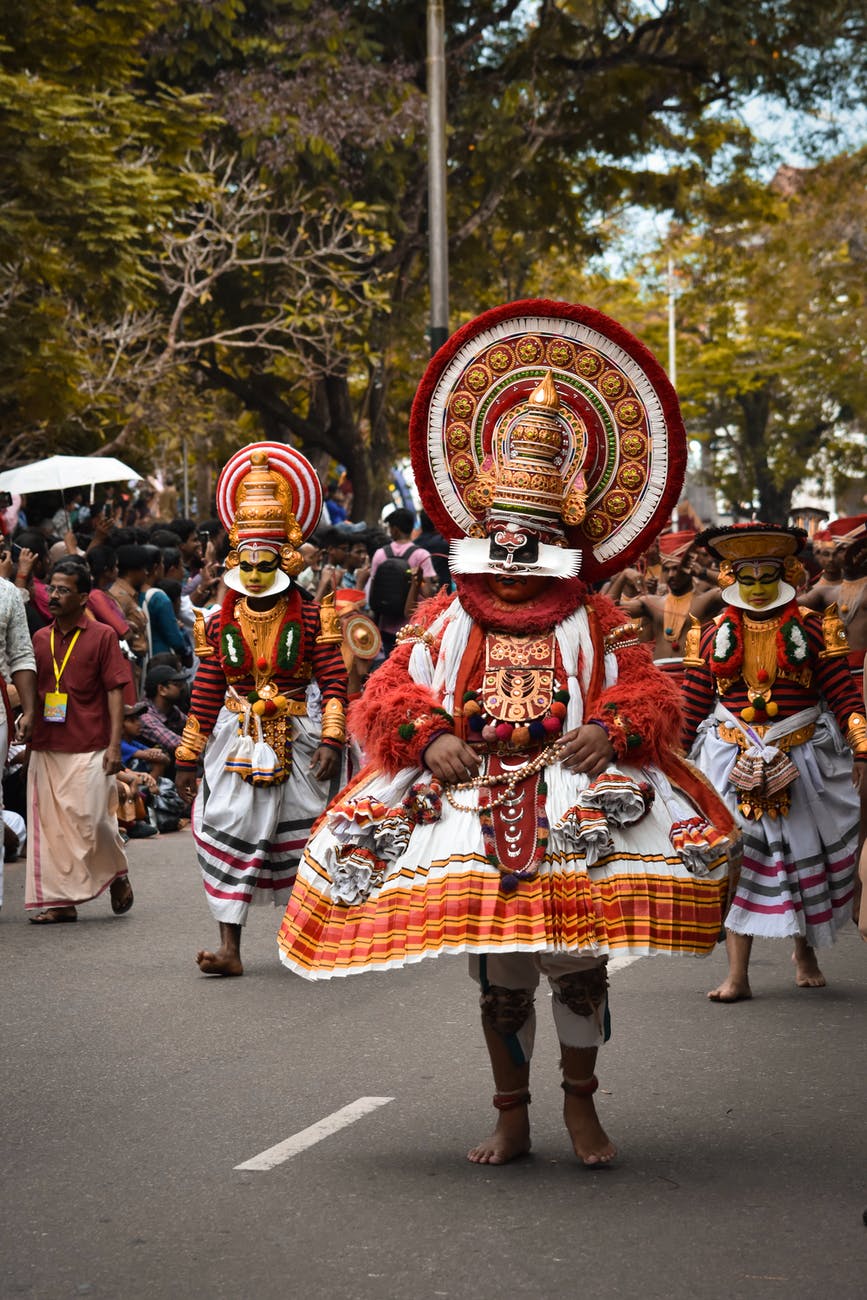
DANCES OF INDIA:

Photo by Aneesh S on Pexels.com

Dance in india has an unbroken tradition of over 2000 years. Two main division of its forms are classical and folk. The classical is the style’s adherence to the guidelines laid down in natyashastra, which explains the indian art of acting.folk dance of india vary according to the region and have no specific grammar.

here let’s know about this two dances which i like the most. Bharatanatyam and kathak

Photo by Darina Belonogova on Pexels.com

Bharatanatyam originated in tamilnadu and was earlier known as daasiyattam. this dance form has been handed down through the centuries by dance teachers called nattuwanars and the temple dancers,called devadasis. In the sacred environment of the temple these families developed and propagated their heritage.the training traditionally took around seven years under the direction of the teachers who were scholars and persons of great learning.

kathak means ‘ to tell a story’. this north inidan dance form is inextricably bound with classical hindustani music, and the rhythmic agility of the feet is accompanied by the table or pakhvaj. traditionally the stories were of radha and krishna in the natwari style nu the mughal invasion of north india had a serious impact on the dance. the dance was taken to muslim courts and thus it became more entertaining and less religious in content. more emphasis was laid on nirtha, the pure dance aspect and less on abhinaya[expression and emotion].

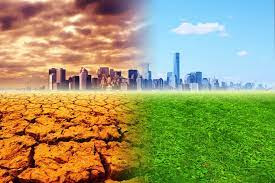
Climate Change Of The Earth – Explained

 This is a simple explanation of Climate Change, based on an article in the New York Times. The average temperature on the surface of the planet has already increased 1.7 degrees Fahrenheit since 1880, which may not seem like much, but think about it this way, the heat from human emissions is roughly equal to 400,000 Hiroshima atomic bombs exploding across the planet every single day. Future generations are in big trouble. But for now it will continue to get warmer and storms will grow more intense, with longer periods of drought in between. But longer-term, if emissions continue to rise unchecked, the climate disasters will be so severe they will destabilize entire nations, send millions of refugees across borders, cause widespread extinction of most species on Earth, and melt the polar ice caps, leaving most of the world’s coastal cities several feet underwater.

 All this could take centuries, but something like the sudden collapse of agriculture would trigger immediate chaos in society. Best case is we get our act together and begin to rapidly bring emission levels down; meanwhile, Earth turns out to be less sensitive to greenhouse gases than we currently believe, plants and animals adapt quickly, and major technological breakthroughs help society limit emissions and adjust to climate change. But, these are all the opposite of what we’re actually seeing, so the only thing in our control is to limit emissions using all available tools and best behaviors currently at our disposal. Worst case, the collapse of food production causes spiraling prices and kind of like a zombie apocalypse, but with extreme hunger spreading chaos instead.

 So, yeah, still just like a zombie apocalypse. This would be coupled with the melting of the Antarctic ice sheet, leading to rapidly rising seas that would force us to abandon many of our greatest cities and all of the social and scientific progress that we were making within them. Adding insult to injury is the fact that many of the emissions were emitted while building these now abandoned, underwater metropolises. If emissions continue unchecked, we’re looking at a total rise of between 80 to 160 feet, which would occur if all the ice in the polls melted. 

So the oceans will rise, the real question is how fast? Scientists only have Earth’s history to base their predictions on, which suggests that the rate has occasionally hit 1 foot per decade…so we’ll have to adapt to an altered coastline sooner or later, but probably much sooner than later. Because… Computer forecasts only give us a range of future possibilities, the most important evidence comes from the study of past climate conditions which clearly show that every time the amount of carbon dioxide in the air rises, the Earth warms up, ice melts, and the ocean rises. What’s important to remember here is that we are in uncharted territory

–humans are pumping carbon dioxide into the air far faster than nature ever has before us. Scientists have been publishing strong evidence that warming is making drought and heat waves more frequent, causing heavier rainstorms, and more severe coastal flooding. But while the Internet has made us all more aware of weather disasters in distant countries, it’s hard to prove these are all directly made worse by climate change, although they probably are. Canada and Russia both have vast, frozen lands, and could see some economic benefits from a warmer climate. Putin and the Russians, therefore, have been reluctant to make ambitious climate commitments. 

But expect that to change as these countries realize they will be swamped by millions of refugees from less fortunate nations. Libertarians and other political conservatives do not like the policies proposed to fight climate change and have chosen to try and block them by actively undermining the science. This effort has been funded by the oil and coal industry, who favor making money above all else. As more resources are devoted to solving the problem, our chances at big technological breakthroughs are improving, but we still should be spending about three-times as much money as we currently are on these efforts according to several in-depth reports. 

You can reduce your carbon footprint by doing things like plugging leaks in your home insulation, installing a smart thermostat, taking public transit, taking less airplane trips, buying an electric car, and putting solar panels on your roof. A big one is eating less meat. But what’s really needed is for you to speak up and exercise your rights as a citizen, because strong, collective action through state and national policies is how we’ll make the most impact. Considering that we’ve been ignoring scientists’ warnings since the 80’s to limit emissions, we’re pretty late in the game. But we’ve finally reached a moment where nearly every country in the world agrees this is a huge problem, and seem ready to commit to taking at least some kind of action. 

Leading corporations will continue to make bold promises to do their part, low-emission technologies will improve, and many states and cities will go much further than any goals set by their national governments. The United States, the world’s biggest economy, is finally starting to move aggressively, and China, the world’s largest emitter, is beginning to recognize that it needs to do the same, as many of its megacities cities will be underwater if the seas rise too high. But it’s up to us, the ordinary citizens, to continue demanding our political leaders tackle climate change, the hardest problem that humanity has ever faced. 

Why is Biodiversity so important ?

Hello Friends ……Our planet’s diverse thriving ecosystems may seem like permanent fixtures, but they’re actually vulnerable to collapse. Jungles can become deserts, and reefs can become lifeless rocks, even without cataclysmic events, like volcanoes and asteroids. What makes one ecosystem strong and another weak in the face of change? The answer, to a large extent, is biodiversity. Biodiversity is built out of three intertwined features: ecosystem diversity, species diversity, and genetic diversity. The more intertwining there is between these features, the denser and more resilient the weave becomes. 

Take the Amazon rainforest, one of the most biodiverse regions on Earth due to its complex ecosystems, huge mix of species, and the genetic variety within those species. Here are tangled liana vines, which crawl up from the forest floor to the canopy, intertwining with treetops and growing thick wooden stems that support these towering trees. Helped along by the vines, trees provide the seeds, fruits and leaves to herbivores, such as the tapir and the agouti, which disperse their seeds throughout the forest so they can grow. 

Leftovers are consumed by the millions of insects that decompose and recycle nutrients to create rich soil. The rainforest is a huge system filled with many smaller systems, like this, each packed with interconnected species. Every link provides stability to the next, strengthening biodiversity’s weave. That weave is further reinforced by the genetic diversity within individual species, which allows them to cope with changes. Species that lack genetic diversity due to isolation or low population numbers, are much more vulnerable to fluctuations caused by climate change, disease or habitat fragmentation. 

Whenever a species disappears because of its weakened gene pool, a knot is untied and parts of the net disintegrate. So, what if we were to remove one species from the rainforest? Would the system fall apart? Probably not. The volume of species, their genetic diversity, and the complexity of the ecosystems form such rich biodiversity in this forest that one species gap in the weave won’t cause it to unravel. The forest can stay resilient and recover from change. But that’s not true in every case. In some environments, taking away just one important component can undermine the entire system. 

Take coral reefs, for instance. Many organisms in a reef are dependent on the coral. It provides key microhabitats, shelter and breeding grounds for thousand of species of fish, crustaceans and mollusks. Corals also form interdependent relationships with fungi and bacteria. The coral itself is a loom that allows the tangled net of biodiversity to be woven. That makes coral a keystone organism, one that many others depend on for their suvival. So what happens when destructive fishing practices, pollution and ocean acidification weaken coral or even kill it altogether? Exactly what you might think. 

The loss of this keystone species leaves its dependents at a loss, too, threatening the entire fabric of the reef. Ecosystem, species and genetic diversity together form the complex tangled weave of biodiversity that is vital for the survival of organisms on Earth. We humans are woven into this biodiversity, too. When just a few strands are lost, our own well-being is threatened. Cut too many links, and we risk unraveling it all. What the future brings is unpredictable, but biodiversity can give us an insurance policy, Earth’s own safety net to safeguard our survival.

What is Dyslexia? – Student's Problems

Hello Friends !.. . Take a moment to read the following. How was that? Frustrating? Slow? What were those sentences about? They’re actually a simulation of the experience of dyslexia, designed to make you decode each word. Those with dyslexia experience that laborious pace every time they read. When most people think of dyslexia, they think of seeing letters and words backwards, like seeing “b” as “d” and vice versa, or they might think people with dyslexia see “saw” as “was”. The truth is people with dyslexia see things the same way as everyone else. 

Dyslexia is caused by a phonological processing problem, meaning people affected by it have trouble not with seeing language but with manipulating it. For example, if you heard the word cat and then someone asked you, “Remove the ‘c’,” what word would you have left? At. This can be difficult for those with dyslexia. Given a word in isolation, like fantastic, students with dyslexia need to break the word into parts to read it: fan, tas, tic. Time spent decoding makes it hard to keep up with peers and gain sufficient comprehension. Spelling words phonetically, like s-t-i-k for stick and f-r-e-n-s for friends is also common. These difficulties are more widespread and varied than commonly imagined. Dyslexia affects up to one in five people. It occurs on a continuum.

One person might have mild dyslexia while the next person has a profound case of it. Dyslexia also runs in families. It’s common to see one family member who has trouble spelling while another family member has severe difficulty decoding even one syllable words, like catch. The continuum and distribution of dyslexia suggests a broader principle to bear in mind as we look at how the brains of those with dyslexia process language. 

Neurodiversity is the idea that because all our brains show differences in structure and function, we shouldn’t be so quick to label every deviation from “the norm” as a pathological disorder or dismiss people living with these variations as “defective.” People with neurobiological variations like dyslexia, including such creative and inventive individuals as Picasso, Muhammad Ali, Whoopi Goldberg, Steven Spielberg, and Cher, clearly have every capacity to be brilliant and successful in life. So, here’s the special way the brains of those with dyslexia work. 

The brain is divided into two hemispheres. The left hemisphere is generally in charge of language and, ultimately, reading, while the right typically handles spatial activities. fMRI studies have found that the brains of those with dyslexia rely more on the right hemisphere and frontal lobe than the brains of those without it. This means, when they read a word, it takes a longer trip through their brain and can get delayed in the frontal lobe. Because of this neurobiological glitch, they read with more difficulty.’

 But those with dyslexia can physically change their brain and improve their reading with an intensive, multi-sensory intervention that breaks the language down and teaches the reader to decode based on syllable types and spelling rules. The brains of those with dyslexia begin using the left hemisphere more efficiently while reading, and their reading improves. 

The intervention works because it locates dyslexia appropriately as a functional variation in the brain, which, naturally, shows all sorts of variations from one person to another. Neurodiversity emphasizes this spectrum of brain function in all humans and suggests that to better understand the perspectives of those around us, we should try not only to see the world through their eyes but understand it through their brains.

What is Dyslexia? – Student's Problems

Hello Friends !.. . Take a moment to read the following. How was that? Frustrating? Slow? What were those sentences about? They’re actually a simulation of the experience of dyslexia, designed to make you decode each word. Those with dyslexia experience that laborious pace every time they read. When most people think of dyslexia, they think of seeing letters and words backwards, like seeing “b” as “d” and vice versa, or they might think people with dyslexia see “saw” as “was”. The truth is people with dyslexia see things the same way as everyone else. 

Dyslexia is caused by a phonological processing problem, meaning people affected by it have trouble not with seeing language but with manipulating it. For example, if you heard the word cat and then someone asked you, “Remove the ‘c’,” what word would you have left? At. This can be difficult for those with dyslexia. Given a word in isolation, like fantastic, students with dyslexia need to break the word into parts to read it: fan, tas, tic. Time spent decoding makes it hard to keep up with peers and gain sufficient comprehension. Spelling words phonetically, like s-t-i-k for stick and f-r-e-n-s for friends is also common. These difficulties are more widespread and varied than commonly imagined. Dyslexia affects up to one in five people. It occurs on a continuum.

One person might have mild dyslexia while the next person has a profound case of it. Dyslexia also runs in families. It’s common to see one family member who has trouble spelling while another family member has severe difficulty decoding even one syllable words, like catch. The continuum and distribution of dyslexia suggests a broader principle to bear in mind as we look at how the brains of those with dyslexia process language. 

Neurodiversity is the idea that because all our brains show differences in structure and function, we shouldn’t be so quick to label every deviation from “the norm” as a pathological disorder or dismiss people living with these variations as “defective.” People with neurobiological variations like dyslexia, including such creative and inventive individuals as Picasso, Muhammad Ali, Whoopi Goldberg, Steven Spielberg, and Cher, clearly have every capacity to be brilliant and successful in life. So, here’s the special way the brains of those with dyslexia work. 

The brain is divided into two hemispheres. The left hemisphere is generally in charge of language and, ultimately, reading, while the right typically handles spatial activities. fMRI studies have found that the brains of those with dyslexia rely more on the right hemisphere and frontal lobe than the brains of those without it. This means, when they read a word, it takes a longer trip through their brain and can get delayed in the frontal lobe. Because of this neurobiological glitch, they read with more difficulty.’

 But those with dyslexia can physically change their brain and improve their reading with an intensive, multi-sensory intervention that breaks the language down and teaches the reader to decode based on syllable types and spelling rules. The brains of those with dyslexia begin using the left hemisphere more efficiently while reading, and their reading improves. 

The intervention works because it locates dyslexia appropriately as a functional variation in the brain, which, naturally, shows all sorts of variations from one person to another. Neurodiversity emphasizes this spectrum of brain function in all humans and suggests that to better understand the perspectives of those around us, we should try not only to see the world through their eyes but understand it through their brains.