World Humanitarian Day

 The 19th of August is marked as the World Humanitarian Day by the UN General Assembly. On this day, in 2003, a bomb attack in Iraq killed 22 Humanitarian aid workers. Each year, a theme of global concern is chosen for the Humanitarian Day. This international day aims to spread awareness around the issues important for survival, well-being, and dignity for the group of people affected by any sort of crisis. 

Theme for the Humanitarian Day

In 2020, the theme was about the Covid aid workers. Its objective was to show gratitude and respect for their tireless efforts in rendering service day and night. Theme for this year is “The Human Race”, with special focus on climate change. It highlights the human cost of climate change and aims to pressure world leaders to make meaningful decisions to help the most affected people. 

Its aim is to draw attention to the millions of people who are vulnerable to climate change, and have already lost lives, livelihood and home, due to the extreme climatic changes. UN plans to shed some light on these issues by using the #theHumanRace on social media and other platforms. “Climate Change emergency is a race we are losing, but it is a race we can win.” said the UN Secretary General, Antonio Guterres. 


Global Humanitarian Overview

Global Humanitarian Overview is an evidence based assessment of the humanitarian needs such as eradication of hunger, diseases, gender-based violence, etc. In the overview of 2020, Gender-Based violence and its response was a major priority. Particularly due to the pandemic’s impact in deepening the existing inequalities and vulnerabilities. 

According to the overview, nearly 235 million people will need protection and humanitarian assistance in 2021. The need for assistance has gone up from 1 in 45 people in 2020, to 1 in 33 people in 2021. According to the assessment, most people in need of assistance in 2021, are present in Afghanistan. The international organizations have planned to help 160 million people affected by hunger, conflict and climate related issues. 

To overcome the main issues around poverty and hunger require humanitarian assistance and aid. According to Nelson Mandela, a well known humanitarian leader, “Overcoming poverty is not a task of charity, it is an act of justice. Like slavery and apartheid, poverty is not natural. It is man-made and can be overcome and eradicated by the actions of human beings. Sometimes it falls on a generation to be great. You can be that great generation. Let your greatness blossom.”

It is important to join hands and make a positive change for the betterment of humankind. Humanitarian activists and leaders, along with the common people can work together and eradicate all the ills faced by humanity. 


Story of the man of great Valor : Maharana Pratap

All of us are familiar with the name of great Marwari king Maharana Pratap. He was born on 9, May, 1540. Son of Rana Uday Singh and Maharani Jaywanti Bai, Maharana was born in Kumbalgarh Fort. 

Maharana Pratap Singh was the king of Shishodia dynasty in Udaipur, Mewar. His name is immortal in history for valor and determination. He fought with the Mughal Emperor Akbar for many years. Maharana Pratap Singh defeated the Mughals several times in battle as well. They have Born In rajsthan Kumbalgadh in home father maharana Udhay Singh and mother Jivat kanwar. In the Battle of Haldighati of 1576, Rana Pratap, along with 20,000 Rajputs, faced the Mughal chieftain Raja Mansingh’s army of 80,000.

Jhala Mansingh saved Maharana Pratap, who was surrounded by the enemy army, by giving his life and asked Maharana to leave the battlefield. Shakti Singh saved Maharana by giving his body. Dear Horse Chetak also died. This war lasted only one day but 17,000 people died in it. Akbar made all efforts to conquer Mewar. The condition of Maharana worried day by day. Bhama Shah also became immortal by giving 25,000 Rajputs a grant that lasted for 12 years. 
Early Life : 
Maharana Pratap was born in Kumbhalgarh fort. Maharana Pratap’s mother’s name was Jawantabai, who was the daughter of Sonagara Akhairaj of Pali. Maharana Pratap was called as Kika in his childhood. The coronation of Maharana Pratap took place in Gogunda. Since childhood, Maharana Pratap was courageous, brave, self-respecting and freedom-loving. As soon as he ascended the throne of Mewar in 1572, he had to face unprecedented difficulties, but with patience and courage he faced every adversity. 
He fought a fierce battle in Haldi Ghati with the mighty army of the Mughals. The valor he showed there is unique in Indian history, he protected the honor and dignity of his ancestors and vowed that he would not enjoy the state’s happiness until his kingdom was liberated. Since then he started sleeping on the ground, he wandered in the forests of Aravalli, suffering suffering, but he did not accept the subordination of the Mughal emperor. He dedicated his life to protect his motherland.
Maharana Pratap was given training to wield shield sword in his childhood because his father wanted him to be a skilled warrior like himself. The boy Pratap had shown his indomitable courage at an early age. When he went out to play with the children, he used to form a team in the matter. Along with all the children of the team, he also used to practice the shield sword, due to which he became proficient in wielding weapons. Time passed slowly. Days turned into months and months into years. Meanwhile, Pratap became proficient in running the weapon and seeing his confidence, Udai Singh Phule could not stop.
Maharana Pratap decided to make his half-brother Jagmal the king according to his father’s last wish, but the confidant Chundawat Rajputs of Mewar, considering Jagmal’s sitting on the throne as disastrous, forced Jagmal to leave the throne. Jagmal was not willing to give up the throne but he went to Ajmer to take revenge and joined Akbar’s army and in return he got the jagir of Jahazpur.
During this, Prince Pratap got the title of Maharana along with the 54th ruler of Mewar. During the time of Maharana Pratap, Akbar was ruling Delhi and Akbar’s policy was to use the power of Hindu kings to take control of other Hindu kings. In 1567, when Prince Pratap was made the successor, he was only 27 years old and the Mughal forces surrounded Chittor from all sides.
The ideal of valor presented by Maharana Pratap is unique. The circumstances in which he fought were really complicated, but he did not give up. If Rajputs could get a respectable place in Indian history, then the credit goes mainly to Rana Pratap. He neither allowed his motherland to be subjugated nor tarnished. He forced the huge Mughal armies to chew iron gram. The Mughal emperor Akbar wanted to conquer his kingdom and merge it into his empire, but Rana Pratap did not allow this to happen and struggled for life.
Apart from Maharani Jaiwanti Bai, Rana Udai Singh had other wives, in which Rani Dhir Bai was the beloved wife of Udai Singh. Rani Dhir Bai’s intention was that her son Jagmal should become the successor of Rana Udai Singh. Apart from this, Rana Udai Singh also had two sons Shakti Singh and Sagar Singh. In this too there was an intention to take over the throne after Rana Udai Singh, but both the people and Rana ji considered Pratap as the successor. That is why these three brothers hated Pratap.

Maharana Pratap’s height was seven and a half feet and his weight was 110 kg. The weight of his protective shield was 72 kg and the weight of the spear was 80 kg. Combining armor, spear, shield and sword etc., they used to fight in battle carrying a weight of more than 200 kilograms. Even today Maharana Pratap’s armor, sword etc. are kept safe in the museum of Udaipur royal family.
Battle of Haldighati : 

The Battle of Haldighati is a major episode in the history of India. This war took place on 18 June 1576 for about 4 hours, in which there was a fierce battle between Mewar and the Mughals. The army of Maharana Pratap was led by the only Muslim Sardar Hakim Khan Suri and the Mughal army was led by Mansingh and Asaf Khan. In this war, a total of 20,000 Maharan Pratap’s Rajputs had to face with Akbar’s total 80000 Mughal army, which is a unique thing.
Even after facing many difficulties/crises, Maharan Pratap did not give up and showed his might, that is why today his name is shining on the pages of history. Some historians believe that there was no victory in the battle of Haldighati, but if we see, only Maharana Pratap has won. Not considering his small army as small, with his hard work and determination, Maharana Pratap’s army freed the sixes of Akbar’s huge army and forced them to retreat.
Beloved horse, Chetak :

Along with the valor of Maharana Pratap, the valor of his horse Chetak is also world famous. Chetak was a very intelligent and brave horse, who had saved Maharana Pratap by jumping from a 26 feet deep river by putting his life at stake. There is a temple of Chetak in Haldighati even today.
Many families of Rajasthan had succumbed to Akbar’s power, but Maharana Pratap struggled to maintain his dynasty and did not surrender before Akbar. Wandering from forest to forest, in the grass-roots and grass-tree rotis. He never lost patience even after living with his wife and child in dire circumstances. Danveer Bhamashah dedicated his entire treasury to revive the falling morale of the army due to lack of money. Nevertheless, Maharana Pratap said that apart from military needs, I do not want a single penny of your treasure. According to Akbar: – Maharana Pratap had limited resources, but still he did not bow down, was not afraid.
The time of Maharana Pratap after the battle of Haldighati was spent in the hills and forests. He defeated Akbar many times through his mountain warfare policy. Although Maharana Pratap had to face many kinds of troubles while living in the forests and hills, but he did not give up his ideals. The strong intentions of Maharana Pratap thwarted all the efforts of Akbar’s generals. It was the effect of his patience and courage that despite continuous efforts of 30 years, Akbar could not make Maharana Pratap a prisoner. Maharana Pratap’s favorite horse was Chetak, who supported his master till his last breath. 
Demise of great warrior :

Maharana neither surrendered Akbar nor he lost any of the fight fought between them. But the day, when he went for hunting and ended up fighting with a tiger and accidently the tiger clawed him and the wound later was infected and resulted Maharana to end up in his deathbed. 
We get to  know that Akbar was also a big heart King, the time when he heard the sad news of demise of his arch rival Pratap he couldn’t stop his tears falling from his eyes and wrote a letter of condolence to Maharana’s family.


Vinod Kambli : What went wrong with him ?

When we talk about biggest wastes of  talent in Indian cricket ,Vinod Kambli is certainly one of the players that comes in our mind . and why not  ? the kind of talent that he posssesesd , he had the ability to hit a 75 ball 100 in test cricket in that era .

Besides his memorable unbeaten  664 run partnership with Sachin Tendulkar in the harris shield trophy match where he scored 349 runs along with Sachin who scored 326 runs , Kambli also took 6 wickets for just 37 runs . perhaps this was the reason that Ramakant Achrekar , the guru of these two players , considered Vinod Kambli more talented than Sachin. But today ,Sachin Tendulkar is called the God of cricket , while Vinod Kambli is counted among the failed the cricketers .

After making his Test debut in `1993 , Kambli matched Don Bradman and Wally Hammond by hammering successive double test centuries , almost overshadowing Sachin Tendulkar for a brief period . having that said , he did absolutely nothing outside the Indian Subcontinent .

At a time , when he enjoyed a lot of  attention , fan following  and adulation , he somehow lost his head . he got himself into a lot of trouble with his off field activities and started making headlines for many wrong reasons including alcohol ,affairs  and brawls .  bad attitude , lack of discipline and lack of work ethic made things worse for him.

Not to mention , his technique had flaws like the high backlift where fast bowlers were able to get through the gate.

To add to his misery , this low coincided with a poor run with the bat where he was bounced out by curtly Ambrose at home , in 1994-95 season. He had played  what turned out to be his last test in 1995 , aged only 23.

What happened thereafter ? He was dropped from the one day side after 1996 World cup on disciplinary grounds and since then he could never cement his place . The same world cup had also seen Kambli publically breaking down after the disgrace exit of the Indian cricket team in the semifinal and not-so-publically , allegedly, creating a showdown in the team as well .

If this wasn’t enough, he made some controversial statements against Sachin Tendulkar in a TV Show named Sach ka Samna where he alleged Sachin for not supporting him in his difficult times 

After he was terminated from the national team for one last time in 2000 due to his poor form and poor record , India saw the emergence of two future greats namely Rahul Dravid and Saurav Gaunguly .

Kambli later blamed his own failures on his captain , teammates , selectors and cricket board.

To conclude , Kambli was a colossal waste of talent . he let success go to his head and was an entitled brat.  I remember a comment he made after his breakthrough  double tons  saying something to the effect of” Sachin took the elevator and I took the stairs but we’re both here now “.

I think his cricketing journey is a perfect example of  how hard work and strong ethics beats talent regardless of what anyone says.Having a lot of talent makes you complacent as it gives you the false illusion and security that you are better than everyone else.

Why are there different languages?

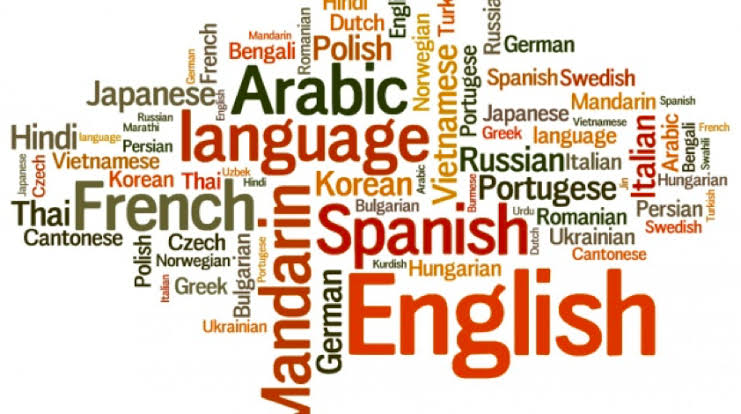
Researchers can only guess when humans first began forming sounds into words to communicate thoughts (there certainly weren’t any books to record the invention of language). Ancestors of the humans species possessed the mouth and throat parts necessary to pronounce words nearly two million years ago, but they likely didn’t have much to talk about until they started creating complex tools and building fires more than a milliom years later. The first system of words might have described tools and fire-making techniques. “Carl blow on fire, fire grow big,” Carl the Homo erectus – our immediate evolutionary ancestor – may have explained to this campfire pals 500,000 years ago.

No doubt the earliest members of our species – Homo sapiens – added to the conversation when they appeared around 200,000 years ago. But as they started leaving Africa to explore Asia, Europe, and eventually the rest of the world around 600,000 years ago, our human ancestors began to develop more complicated tools – and probably words to describe them – within their own tribes.Their vocabularies grew and splitt off from the languages spoken by more far-flung groups. The farther these pockets of humanity moved from southwestern Africa – the point of origin for both Homo sapiens and language – the more their languages changed. And that’s why we have nearly 7000 languages spoken around the world today.

What are the five most commonly spoken languages in the world?

And how do you say hello in them?

– CHINESE “ní hâo” (nee-how)

– SPANISH “Hola” (OH-lah)

– ENGLISH “Hello” (hell-OH)

– HINDI “Namaste” (nah-MA-stay)

#5 – ARABIC “Salaam” (sah-LOM)

Why did the U.S military deploy Native American code talkers in World War II?

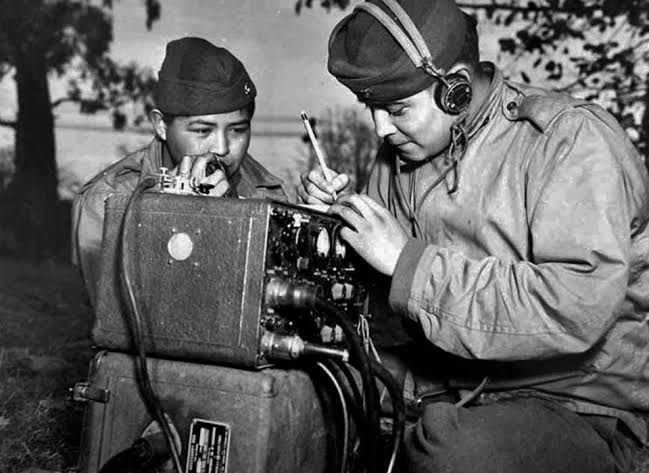
Although it’s crucial in battle, communication is worthless – even dangerous – if it’s intercepted by the enemy. Even messages created by complex ‘encryption machines”, which convert plain words into secret codes, can be hacked given enough time. Native Americans, however, speak complex languages that are virtually unknown outside their tribes . Since the First World War, they have used their unique linguistic abilities in the U.S military’s signal corps as “code talkers,” translating sensitive communications into their language and transmitting them much faster than any machine. Even if enemies learned to decode Cherokee, Comanche, Navajo, Choctaw, or any of the other code-talker languages, they would still need to figure out the secret terms for words that didn’t exist in those languages. The Navajo word for “iron fish,” for instance, was used to describe submarines. A tank became “turtle” in Comanche.

The code talkers’ mission was so top secret they weren’t even allowed to share details with their loved ones. Their existence was finally made public in 1968 ( 23 years after the close of the war ), but it took several decades before they were recognised for their crucial role in winning World War II.

THE FRENCH ARMY DISCOVERED a short of “universal translator” – at least for ancient Egypt’s written language – in 1799. Uncovered near the Egyptian village of Rosetta, this slab of granite was engraved with a royal announcement from 196 B.C. written in both Greek and hieroglyphics, an ancient Egyptian script composed of pictures that represented sounds, Egyptian words, and by 1822 a French genius named Jean – François Champollion had cracked the code. Suddenly, archaeologists could make sense of the symbols scattered across Egypt. Tombs, temples, and monuments became open books.

Why do Eskimos have a hundred different words for snow?

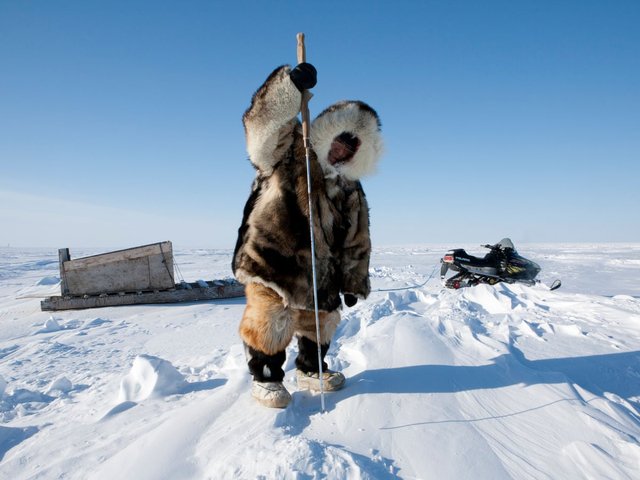
This question has a flaw from the get go. Eskimos – a broad term for people native to frigid subarctic region in the United States, Canada,Greenland, and Russia – don’t speak a single language. They actually speak five of them, none of which has a hundred words for snow. The myth of their ice – obsessed vocabulary comes from the way their languages work. Eskimos create larger words (and full sentences) out of smaller “root” words. Their languages have only a few root terms for snow, but to those small terms they add other words to create long one-word descriptions of the snow’s conditions and uses (“the snow is icy and dangerous, “for instance, or “this wet snow is excellent for making a snowman “). The structure of Eskimo languages makes it seem like they have hundreds of words for everything, not just snow.

Farm Bill

The Formulation of Farm Bills

The rationale behind formulation of the recent Farm Bills is the need of the time outgrowing the APMC system of sale of agricultural produce. APMC, the Agricultural Produce Market Committee, is a system under the State Government. The mandatory system of APMC currently used in the distribution and sale of agricultural produce sets a chain of middlemen for transfer of the produce from farmers to the consumers in the market. Every State has their separate APMC and the State only divides the ‘mandis’ according to the area and each area has a specific ‘mandi’. Only those traders who have license for a particular ‘mandi’ can buy from them, who later supply them to the consumers. Even the farmer of a particular area can only sell their produce in the ‘mandi’ of their area. Auction is done by government to set prices for the produce in the market. Minimum Support Price (MSP) at which government buys agricultural produce are set for only 22 crops, the value for rest of the crop are decided throu price discovery (market demand and supply.  This model was prepared by Government of India back in 1938 and applied by the States during 1960s. The rationale behind introducing APMC ( and MSP was to safeguard the interest of the farmers against the exploitation by money lenders and zamindars. Also, since it was before the Green Revolution, it gave a great motivation to farmers to remain engaged in agriculture which was important at the time because self-sufficiency in food supply was yet to be achieved.

But in all these years, the current situation has outgrown this system and it is doing more harm than protection. It has monopolized the sale of agricultural produce and is resulting in explotation. During these stages, commission is charged at every stage, thereby increasing the price of the produce. So, the produce sold at Rs. 5-7 is sold to consumers at Rs.50-70 but the benefit does not reach the producers but rather the State in name of commission and taxes, given that we assume that there is no corruption at the bureaucratic level. Also, in cases, the traders form a cartel and decide to not buy produce at price more than MSP. Since MSP is set low so as to inculcate all taxes and keep the final price from inflating too much, this coerce the farmers to sell their produce of perishable nature at price far lower than they can get if they directly sell in the consumer market. Also, MSP is decided at country level inspite of the cost of produce being different at regional level. This leads to unequal profit for the same produce, which further leads to disparities between States.

During the 1991 reform, one of the critics has been that no heed was paid to the agricultural sector and the policies focused on secondary and tertiary sector. Through the recent farm bills, government is trying to reduce its control over farming and agricultural industry and allowing to access to free market so that farmers can take direct benefit from it.

One of the major causes of protest against farm bills by State governments has been the reduction in State revenues as the taxes and commission will be removed. The distress among farmers, particularly from areas like Punjab and Haryana, is because the farmers here produce mostly wheat and paddy, in huge surplus They expect the price to fall if MSP is removed. Also, only 6% of farmers actually sell their crops at MSP. If trade is allowed tax free outside ‘mandis’ the government support might be retracted and that will take away the stability from the few farmers actually using MSP.

The farm bills has surely cased a stretched unrest, has been one of the reasons of during the monsoon session of parliament. But it is not a rash decision neither is it first time implementation. Agriculture is a State List agenda and several States allow trade outside of APMC. These bills have the potential to help more percentage of the price paid by the final consumer to reach the farmers and financially and economically stabalise more farmers.

Human Resources and Rural Welfare

Human Resource and Rural development:

Rural economic development needs a wide range of human resource development. The promotion of economic reforms in rural areas will only be valid when the rural human resources are developed enough to adapt them. Otherwise this will be a waste of resources as there won’t be specific data driven results.

Economic development rationally provides financial and equipped background support to Human resources.

Rural Human resource development needs to reach out to 4 objectives:

 As rural development and progress human resource plays a very decisive role for economic growth.

Rural human resource development needs to reach the four objectives:

1.Control the population size through enhancing family planning. This contributes to sustainable development of human resource.

2. Achieve optimal allocation and fully employment of human resources through adjusting irrational distribution of human resources in regions, employment and knowledge structure.

3. Enhance cultural quality, moral quality, professional skills and management Skills of rural human resource, meet rural construction need and drive economic development through strengthening technical education, adult education and basic education.

4. More effectively carry out human resource development without any worry through establishing rural guarantee system.

Benefits of human resource development:-

  1. Resources are utilized in an optimum manner.

2.  Makes people more competent, it develops new skills, knowledge and attitude of the people.

3.Increases the awareness of the importance of change management

4. Helps in developing a sense of belongingness among the employees

5. Human resources development policies promote openness in the overall growth of employees.

Human resource basically work to make the best out of the skills of a person.

Rural men women and even children are very efficient at manual labour and cam be used as a great asset in manual work in machinery sectors. The women can become a great asset to the cooking industry as well as home based works. They can also be made known about the internet and how they can use technology to get their best potential.

Imported products have replaced a lot of Made in India products since a lot of time. But these rural people who need more opportunities and better living can always be trusted with home made brands as well as good work when given the right information.

Even a farmer requires the knowledge of the crop to be a good farmer.

Accumulation of human resource capital will become an economic growth point of rural areas

Digitalization of Rural Areas

Digitalization of rural areas

According to a survey with more than 600 million internets users ,india is one of the largets and fastest growing digital markets in the world for digital consumers. however most of the users are from urban area hence we can say that urban india is the reason behind this substantial growth.
But with government’s push towards financial inclusion rural india have also started embracing digital economy.

It is estimated that about 66% of India’s population is rural which contributes 46 percent of the total income of the nation.
As per the recent TRAI reports internet user account of rural india has increased from 32 percent in 2017 to 38 percent in 2020.
Despite the growing number of users ,there is still a wide Digital gap between urban and rural area.
This gap mainly stems from two factors –

  1. Lack of infrastructure
  2. Lack of awareness

To reduce the gap between urban and rural india and to improve digital infrastructure in country especially in rural india “Digital India” programme was launched by the indian government.
Under this programme many initiatives were taken to boost rural digital infrastructure.some of them are listed as follows :-

1.Bharatnet :-
Aims to provide broadband acces to iver 250,000 gram panchayat with help of a network of optical fibre

2.Common Service Centres :-
Centres through which e- governance and other related services will be made available in villages

3.Universal access to mobile :-
Aims to provide mobile coverage to more than 55600 villages which do not have network coverage

  1. Digitization of post offices :-
    As the name suggests it aims to digitise poat office along with setting up of network centres, networking of all post offices and enabling digital payments

Steps taken to spread awareness :-

Under the ” digital india ” , ” Pradhan mantri gramin digital saksharta abhiyan ” was launced to spread digital awareness among the rural people.

The main aim of this abhiyan was to make 6 crores of people residing in rural villages digitally literate.These steps are supposed to have a positive impact on the society.

With digitization many sectors started developing and earning more profits.two of the sectors which were stated to benefit from digitization are
1.Agriculture sector
2.Financial sector

Agriculture sector :- Being one of the major sectors of this nation, agriculture accounts for almost 50 percent of the tital workforce and 18 percent of the GDP.Despite significant contribution ,indian agriculture is mostly dependent on human labour and rainfall unlike developed countries that rely on highly mechanized farming techniques.
Realising the need of the hour,Indian government has launched the ‘Kisan Suvidha’ app whichassists farmers with relevant information on the weather of the current day and next five days, market prices, dealers, agro advisories, and plant protection.
Start-ups like SatSure, CropIn, Niruthi, AgRisk etcetra aling with the digital government programmes help the farmers in sowing and crop monitoring, capturing and analyzing various data points, including crop, soil, and weather data which assist in decision making and easy acces to crop insurance other facilities.

Financial sector :-
Just like the agriculture sector ,the rural financial sector is also on the cusp of digital revolution.over last few years many financial initiatives have been rolled out.
Few of them are :-

  1. Aadhaar :-
    A unique biometric identification
  2. Jan dhan savings bank accounts

3.direct transfer of social benefit payments

4.BHIM :-
the digital payment infrastructure

These initiatives taken by the indian government has resulted in increase of banking penetration from 54 percent in 2014 to 80 percent in 2018.

Increase in banking penetration presents a significant opportunity for the start-ups , financial product space etc.
For Example,Start-ups like Jai Kisan and FIA technology are bridging the digital gap in rural India by offering financial products and services.
These initiatives by the government and the effort from the private sector l

Different Aspects of Revocation

Necessity of Communication :

“If at the time of purported acceptance , the offeror has changed his mind ,no meeting of the minds is possible and the formation of the contract cannot take place . This indeed was the theory of an english case of 1790 Cooke v Oxley in which D offered to sell some tobacco at a certain price should P accept the proposal before 4’o clock the same day. P gave D a notice of acceptance before the deadline but D having changed his mind regused to enter the transaction. It was therefore held that no contract was made .

Problems Of Revocation:

Formation of a contract lies within giving the power of acceptance to the offreerather than in a meeting of the minds, A different principle has been definitely established . Admittedly even today Freedom of contracting and making the offers permits the offeror to reserve for himself the possibility of revoking his offer without any notice. Thus in Tartoria v Mankoa real estate broker having a listing of Ds property was held to be entitled to his comissionwhen he procured a customer after the property had been sold since the seller had concealed the sale from the broker.”

Today revocation is generally so strictly connected with the offerees notice  about it has also been defined as the communication of change in the offererspurpose. Its justified that communication is essential for revocation purpose.

Revocation of Public Offers:

On this point the restatement lays down the following rule:

An offer made by advertisement in a newspaper or by a feneral notification to public or to a no. Of persons whole identity is known to the offerer, is revoked by an advertisement or general notice given publicity equal to that given to an offer before a contract has been created by acceptance of offer.

Direct notice of Revocation:

As revocation is ineffective soo long as the offeree does not know about it the best method of revoking is to dirr3ctly notify the offereethat the offerer has changed his mind in the course of dealings between the two parties. As to there are formal requirements as to making of certain types of contracts , there are no similar requirements as to the validity of a revocation. Any means of communicating with the offeree is acceptable. The rule is expressed in section 41 of  Restatement of contracts entitled “Revocation by commucationfrom offererrecieved by offree”.

Revocation of Acceptance:

According to english law an acceptance once made is irrevocable. In the words of Anson : “Acceptance is to offer what a lighted match is to a train obviously confined in its operation only to postal acceptance. It is suggested in Anson that in other cases “an acceptance can be revoked any time before acceptance is complete provided of the course that the revocation itself is communicated before the acceptance arrives. In india on the other hand acceptance is generally revocable. An acceptoe may cancel his acceptance by a speedier mode of communication which will reach earlier than the acceptance itself. Section 5 is the relant provisio

Revocation Of Contracts and acceptance

Revocation generally in terms mean to withdraw something. It can be anything of a good , offer, task, deal anything. It may also stand for cancellation. So revocation in the law of contracts can be defines as a remedy given to buyers if not satisfied with goods of the sellers. The buyers here are termed as offerers and revocation must be communicated to offree before acceptance. This is also the general common rule on revocation.

 Section 2(e) says that an agreement is defined as a set of promises. This happens when an offer is placed by the offererand accepted by the offree. Revocation can only be done before the acceptance of a particular agreement.According to section 2e All agreements are not contracts but all contracts are agreements.

What is Acceptance:“Section 2(b) defines accpetances as :When the person to whom the proposal is made signifies his assent there to the proposal is said to be accepted. A proposal when accepted becomes a promise.Thus acceptance is the assent given to a proposal and it has the effect of covering the proposal into promise. 

Communication of Acceptance: One of the good examples of actof acceptance is when the hammer falls in an auction. According to the words of Shah J  An agreement does not result from a mere state of mind :intent to accept an offer or even a mental ressolveto accept an offer does not give rise to a contract.

An illustration of acceptance by consuct is the decisionof the House of Lords in Brogden v Metropolitan Railway Co. Facts: B had been supplying coal to a railway company without any formal agreement. B suggested that a formal agreement should be drawn up. The agents of both the parties met and drew up a draft agreement. It had some blanks when it was sent to B for his approval. He filled up the blanks including the name of an arbitrator and then returned it to the company. The agent of the company put the draft in his drawer and it remained there without final approval having been signified. B kept up his supply of coals but on the new terms and also recieved payment on the new terms. A dispute having risen B refused to be bound by the agreement.”

Shutter Island – book review

About the book

Author : Dennis Lehane

Genre : Gothic, Psychological Horror, Crime

Pages : 380

Publication date : April 15, 2003

Story plot

In 1954, widower U.S. Marshal Edward “Teddy” Daniels and his new partner, Chuck Aule, go on a ferry boat to Shutter Island, the home of Ashecliffe Hospital for the criminally insane, to investigate the disappearance of a patient, Rachel Solando (who was incarcerated for drowning her three children). Despite being kept in a locked cell under constant supervision, she has escaped the hospital and the desolate island.

In Rachel’s room, Teddy and Chuck discover a code that Teddy breaks. He tells Chuck that he believes the code points to a 67th patient, when records show only 66. Teddy also reveals that he wants to avenge the death of his wife Dolores, who was murdered two years prior by a man called Andrew Laeddis, whom he believes is an inmate in Ashecliffe Hospital. The novel is interspersed with graphic descriptions of World War II and Dachau, which Teddy helped to liberate. After Hurricane Carol hits the island, Teddy and Chuck investigate Ward C, where Teddy believes government experiments with psychotropic drugs are being conducted. While separated from Chuck for a short while in Ward C, Teddy meets a patient called George Noyce, who tells him that everything is an elaborate game designed for him, and that Chuck is not to be trusted.

As Teddy and Chuck return to the main hospital area, they are separated. Teddy discovers a woman (in a sea cave he tried to take refuge in) who says she is the real Rachel Solando. She tells him she was actually a psychiatrist at Ashecliffe, and when she discovered the illegal experiments being run by them, she was incarcerated as a patient. She escaped and has been hiding in different places on the island. She warns him about the other residents of the island, telling him to take care with the food, medication and cigarettes, which have been laced with psychotropic drugs. When Teddy returns to the hospital, he can’t find Chuck and is told he had no partner. He escapes and tries to rescue Chuck at the lighthouse, where he believes the experiments take place. He reaches the top of the lighthouse and finds only hospital administrator Dr. Cawley seated at a desk. Cawley tells Teddy that he himself is in fact Andrew Laeddis (an anagram of Edward Daniels) and that he has been a patient at Shutter Island for two years for murdering his wife, Dolores Chanal (an anagram of Rachel Solando), after she murdered their three children.

Andrew/Teddy refuses to believe this and takes extreme measures to disprove it, grabbing what he thinks is his gun and tries to shoot Dr. Cawley; but the weapon is a toy water pistol. Chuck then enters, revealing that he is actually Andrew’s psychiatrist, Dr. Lester Sheehan. He is told that Dr. Cawley and Chuck/Sheehan have devised this treatment to allow him to live out his elaborate fantasy, in order to confront the truth, or else undergo a radical lobotomy treatment. Teddy/Andrew accepts that he killed his wife and his service as a US Marshal was a long time ago.

The ending of the novel has Teddy receive a lobotomy in order to avoid living with the knowledge that his wife murdered their children and he is her murderer.

Review

Have you seen the movie Shutter Island starring Leonardo DiCaprio? If you haven’t yet, read the Shutter Island book first. It was originally published in 2003 by Dennis Lehane, and made into a movie not long ago, 2010 actually. I personally haven’t seen the movie either, but after reading the book I’ve decided I HAVE to see the movie adaptation.

Why was the book so good? Many people will already be familiar with Lehane’s work, he’s a famous thriller/crime novelist, so to start off the book is really well written. Not only that, but the plot is fantastic, with lots of twists that you never see coming, which always makes great for a screenplay as well. The copy of the book that I read was a lent to me by a colleague of mine, so it was an older, well-loved paperback from a while back; a nice change from the brand new books I typically get! Anyway, as mass market paperbacks typically do, it had quotes and blurbs from press reviews all over the cover, and a few of them described the book as ‘cinematic’, meaning the descriptions of the scenery and characters are so vivid that readers can easily imagine these scenes in their mind. Of course these were just predictions at the time, but the book was good enough for Martin Scorsese to take notice, as he was the eventual director of the film.

For those of you who like ‘spooky’ summer time reads, this book is definitely for you, so make some time for some ‘oldies but goodies’ on your shelf, and then clear away an afternoon to watch the movie when you’re done the book.

A cold era

Photo by Egor Kamelev on Pexels.com

An era of complete and utter coldness with the expansion of glaciers above and beyond the lands. The age of ice, the cold era which must ring bells till now but most of us are going to connect it with the possibility of the ice age we have seen in animated cartoon movies but there is much more than the struggle of cute little squirrels with its food in the ice age.

The last of the last ice age happened around 11,000 years back which almost covered the ⅓ rd of the surface of the earth when they started at the time of 16th century and ended towards the mid 17th.

But as the history of the earth has witnessed many ice ages and even humans have survived the very last two ones we still can’t be so sure if that in future we get to the point of once again repeat telecast of the glacial era we will be able to withstand it or not, So to throw light on some of the very basics of this very cold age and understanding the cycle of the very same, this article is here.

The deep within the history

As we turn the pages of history it gets clear the reason, the contribution of each event in order of massive decline in the presence of greenhouse gas, and the reason behind the number of ice ages that occurred in the past 2.5 years.

In the span of millions of years, the massive tectonic plates collided resulting in the addition of many new-formed mountain ranges which also helped in the formation of the activity which declined the rate of Co2 present in the atmosphere.

Not only this but the ice age also helped us in getting some of the megafauna to always remember. Megafauna is what we can say the mega-sized mammals and birds which we still can see some of them who are left like elephant, giraffe and a few more.

We humans also have learned to cope up with the cold as just 10,000 years ago only as we were not furry and big enough to insulate our body from the extreme cold.

Disturbed Natural Phenomenon

The cycle of mini and the major ice age is what keeps up the balance of the atmosphere and as the last mini ice age occurred around the 14th century the major was supposed to happen around the corner of 1500 years after but with the rate of emission of carbon dioxide and the rising temperature of the earth atmosphere it is estimated we have pushed the natural phenomenon of cooling down of over heated earth surface by 1000 years late.

The biggest of all

The biggest ever ice age this earth has witnessed was around  645 million years ago, which was the longest and so chilly with an average temperature of -30 degrees C, that even equator has the glaciers of ice around it.

The only species or life to thrive during this time was ocean life as the temperature was so low any human couldn’t have survived it not even the megafauna.

Why is Tehmina’s decision right?

Tehmina Durrani, born in Lahore, Pakistan, debuted with her autobiography, ‘My Feudal Lord’. Her mother was a light-skinned beauty and a dominant person who controlled everything and everyone in her household without even raising a hand. She faced a lot of discrimination from her mother during her childhood because she was darker than her other siblings. The stigma in society at that time regarding dark complexion and her mother’s behavior towards her rendered her with inferiority complex. She only received love from her father and maternal grandmother who loved her dearly and did not discriminate her from other siblings.

When she was in school, she fell in love with Anees Khan. Anees wrote letter to her which she found to be really affectionate. She tried to convince her mother for marriage as well as Anees’ mother came with a marriage proposal several times but her mother was reluctant to it because Anees did not come from an influencial or high class family. The reason behind her agreeing for the marriage was when she talked to her friend, got suggested that she should get Tehmina married because, of her dark complexion, it will be difficult to find a man for her and it is good if a man is ready to marry her, just do away with her before it’s late. Her family was finally convinced but few days before marriage, she got cold feet and tried to stop it saying that she was in love with the idea of love and didn’t really loved Anees. Her father and Anees, calling this a sign of stress due to preparation of marriage and grief of leaving her home, brushed away this argument of hers and she married Anees knowing she didn’t love him. Two and a half years later, her marriage reached a saturation point birth of her daughter, Tanya, was a breath of fresh air for her. She dearly loved and cared about her and devoted her life to her because the marriage she had with anees held nothing else for her. Inspite of this, she was bewildered and puzzled at having become a mother, understanding little of the woman into which she was developing. Initially, she was hopelessly immature.

Tehmina leaving Anees for Mustafa Khar inspite of having a child with him is a controversial and debatable topic.

We can argue that Tehmina was right in leaving her husband and kid for Mustafa because, initially, the image of Mustafa that she had in her mind was that of a misunderstood gentleman. She thought she can see the real Mustafa beneath the strong front he puts. She believed Anees to be a nice and kind man who trusted and loved her greatly but it wasn’t the case for her. She did not love him. When she saw Mustafa, she realized what was it that she was missing. She had legacy of her mother without even realizing it and Anees feel short of it. Anees was inconsequential and she did not hold any faith in his abilities or respect for his intellect. She did not wanted a marriage like his parents in which her mother dominated every decision of her father’s.She wanted a strong man. Not only for her personal self but she also thought that her mother’s eyes that screamed how inadequate she was would then be more acceptable of her or rather, not affect her because she was with a strong man like Mustafa.

But her leaving of her husband and child for another man, a married man, invite a lot of criticism on a lot of aspects. She claimed to be a loving mother, yet she was ready to let her child go through something as disturbing as divorce just because, as she claimed, she was falling into an abyss called Mustafa Khar. At a number of places, she even blames Anees for not being a vigilant husband and stop the advances of Mustafa and lead her back to a virtuous life and thoughts that did not point to her infidelity. She says at one part in the book that, “Common sense vanished along with caution, morality and decency: my emotions overwhelmed me”. She herself was very aware of her act being indecent and how immoral it was to pry and want a married man. She did not care for her child, she did not care for the emotions of a fellow woman and instead blamed her for not being understanding of Mustafa. She did not care for her loving husband and supportive in-laws who gave her a family environment that wasn’t toxic and dominating on her. She left the place she was respected at, cherished at, blinded by emotion, inflicting pain and hurt to numerous person in the wake of it. She was at that time young and immature, but the way she handled her situation is still too much too be covered up by that.

Save girl and educate girl

The theme save girls and educate girl was given by the our prime minister mr. Narendra modi. The purpose of this is to save the life of girl and educate them. This is known as Beti bachao beti padhao and it is launched on 22 January 2015. The aim of this to create awareness and improve the efficiency of welfare services intended for girls in India.

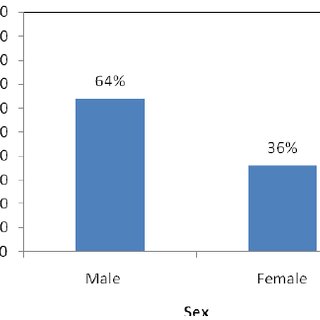
But the question is arising that why save girl and educate girl? Did earlier girls were not educated? Girls were educated but the graph of education dowards the girl is much lesser than the education of boys. Girls were also educated at that time but in our country there are many places were the people not educated their girls thats why government launched this.

Government wants to equal growth of child.

Why the girls should be educated?

If a girl is educated then it educate the whole family. One girl can educate their total family they educate their children. Not only they educate their families or children they also help their partner in her business. She work outside the house and make a good relationship among the people. They take a good decision about her life. She understands very well what is good or what is bed. At the poor condition of their family she can stand for their family because they have knowledge and skills through which they will help them.

It is seen that after the death of girl’s husband the girl is alone no one can help him at this situation that girl start working in other houses as a servant if the girl is educated then she can do other work and earn money for their survival.

So in this world everyone should be educated because a educated person can do anything.

Tehmina Durrani and her right to choose

Vijay Tendulkar was a famous Indian playwright of contemporary times, during the third phase of threatre. He could be called a complete playwright in tradition of Shakespeare because how he reflected on the society in his plays and the way her brought the characters to life.

Not many playwrights can claim such an achievement. He took on themes that were not spoken on in those times, various taboo themes of sexuality, violence within the family and outside, treatment of women in the Indian society.

One such play he wrote that brought him to spotlight was ‘Silence! The Court Is In Session’. The play takes on the plight of a single Indian woman, the stigma attached to her in the society at that times and how she held more accountable for wanting to live her life her way, unlike a man ever would be. A play within a play, it centers around the mock trial aimed at showing the Samant what a court proceeding looks like and prosecuted the protagonist, Ms. Benare, for a fake crime that was turned into a contempt against her and her personal life and she felt as if she was on a real trial for her “crime” – Being an unwed mother.

Ms. Leela Benare, the protagonist, is written as a modern young woman in the middle class society today she is cheerful, lively and seeks to live life on her own terms. She is a dedicated and devoted teacher and believes that one should live their life to the fullest. He character suffers in the play because the way she lived her life defied the established social norms and her private life was dissected for the evil pleasure of the males of the group and to satisfy the jealous of the only woman present there apart from Ms. Benare.

The highlighted character represents a modern day free-minded women who are out there in the field doing what they love and living the life on their own terms. The times have changed since the play was first written but the plight of such women still exists and is in effect more than we would like it to be. A woman, even today is questioned for the clothes she wear, working late night, hanging out with male friends and having fun and living their life. The stigma still continues that a woman needs to be reserved, should marry as soon as possible and live her life as far as the permission of her husband allows. And this is the top most layer of it all. The things turn worse if a woman is romantically involved with a man she is not married. She becomes an object of scrutiny for the entire society n the pall-bearers of the “purity of society” treat them as an anomaly and possible threat to the “sancity” of the society. For some reason, the affair of a married man is not as big an issue for the people as a romantic involvement of a woman is. A man can follow his desires, even sexual, run away from his responsibility of upholding the sanctity of society and still live his life in peace. The private life of a man never comes in question when his professional competency is concerned unless it’s something as grave as committing a crime, which still form a crucial part for professional area, the background of an employee. A woman on the other hand, needs to maintain a “society-approved” speckless record of personal life to prove her professional competency.

All this gets far much worse if you are an unmarried single woman who’s pregnant or a divorcee. Male divorcees are still treated with more pity than a female divorcee. In the case of the play, how Miss Benare was treated for having a flirtatious nature and living a life full of fun and enthusiasm won’t come as big surprise for the readers. Also, how Prof. Damle was not at all held at contempt, neither was her maternal uncle, for getting involved with her. But Ms. Benare alone faced the blunt of it all, because she’s a woman who wanted nothing more than love from a man and was betrayed. In the game, skeletons tumbled out of the closet and her suicidal tendencies as well as seducing every male member in the troupe and proposal of marriage to everyone is revealed. The institution of a inquiry in her school for her moral conduct which will dismiss her from service (her sole means of sustenance) was also ordered. The hypocrite society calls motherhood divine, higher than heaven and infanticide a great sin will not take any kind of motherhood other than the what they suppose is correct, which is, a married woman. Other elements such as inter-caste marriage is not included in the play but that as well decides the level of divinity of one’s mother hood

She does not want to abandon his child as she has enjoyed some blissful moment. She talks about her genuine love for her maternal uncle and Prof. Damle and how she left her both the time. Even in the current time, a woman will be treated with quite a bit of harsh contempt for her romantic and , especially, sexual involvement with any person she is not married to. Whereas men and their love for only the flesh of a person, their lust, will always be justified or overlooked, or both. Society might have changed, women a more free than they ever were before, but shaking off of a long set stigma and the utter lack of respect for the personal life of a woman will take a long long time.