Difference Between Fundamental Rights And Directive Principles Of State Policy

Introduction

With 448 Articles, 25 Parts, and 12 Schedules, the Indian Constitution is the world’s longest. It is the ultimate law of the land and controls a variety of sectors, some of which are essential and necessary for the nation’s functioning. The various portions of the Constitution have a specific title under which various legislation pertaining to that subject are listed. Parts III and IV, the Fundamental Rights and the Directive Principles of State Policy, are the most visible and discussed sections of the Indian Constitution. Whereas the Fundamental Rights are the rights that all citizens have, the Directive Principles are the mandates that the State must bear in mind when making laws and regulations. Each has a specific function to play, and each is fully described.

However, there may be times when both of these elements are at odds with one another. A circumstance may call for one to be picked over the other, i.e. one to take precedence over the other. In such a scenario, not only is it difficult to select between the two, but the worth of the one not chosen is reduced. It is sometimes stated that Basic Rights, since they are essential, will take precedence over Directive Principles; nevertheless, it is also contended that Directive Principles are fundamental in the sense that they provide the foundation for the operation of the State. To determine their real nature and activities, it is necessary to thoroughly analyse both components and comprehend the points of distinction between the two.

The Fundamental Rights

Fundamental Rights - Nature, Scope and importance

Individuals’ rights are extremely essential. Rights aid in the formation of personality by providing a person with plausible claims that may be enforced against the State if any of his basic convictions are infringed. The Fundamental Rights envisioned in Part III of the Indian Constitution are the fundamental rights guaranteed to every citizen of the nation, regardless of caste, creed, gender, religion, place of birth, and so on. Articles 12 to 35 of the constitution mention six essential rights:

  1. The Right to Equality, which promotes citizen equality and forbids discrimination on certain grounds.
  2. The Right to Freedom, which enumerates numerous liberties like as freedom of expression, freedom of profession, and so on.
  3. The Right to Religious Freedom, because India is a melting pot of religious groupings, it is critical to protect the interests of religious minorities.
  4. The prohibition against forced labour, child labour, and other kinds of human exploitation is known as the Right Against Exploitation.
  5. Cultural and Educational Rights, because India is a diverse nation with so many cultures and beliefs, so it is essential to preserve the culture of every group.
  6. The Rights to Constitutional Remedies, under which a person can approach the courts of the country if he/she feels that his/her Fundamental Rights have been violated.

These rights further branch out and give us various other fundamental rights, such as the Right to Privacy, the Right to Education, the Right to Life and Personal Liberty etc.

Although the rights are fundamental in nature, they can be taken away in certain situations, for example, if there is a situation of emergency under Articles 358 and 359 of the Constitution. Even then, the Right to Life and Personal Liberty cannot be taken away by the State.

The Directive Principles of State Policy

Articles 36 through 51 of the Constitution include the Directive Principles of State Policy. They were derived from the Irish Constitution, which was derived from the Spanish Constitution. The Directive Principles are rules that the government must follow while developing legislation for the country. They fulfil the notion of a Welfare State, which can only be realised if these Principles are followed in the manner that they are stated. Article 37 of Part IV indicates that, while these principles are not enforceable in any court of law, they are important to the country’s governance and the government has a duty to adopt them when drafting legislation.
Directive Principles of State Policy - (Articles 36-51) - DPSP

In contrast to Fundamental Rights, the Directive Principles are not classified in the Indian Constitution. However, for a better understanding, they are typically divided into three categories: socialist principles, Gandhian principles, and liberal-intellectual ideas.

  1. Articles 38 to 39A, Articles 41 to 43A, and Article 47 are composed of socialistic principles, and they lay down the framework for the development of a democratic socialist state.
  2. Articles 40, 43, 43B, and 46 to 48 include Gandhian principles, which promote the ideology of Mahatma Gandhi during the movement for Independence.
  3. Articles 44, 45, and 48 to 51 are inclined towards the ideas of liberalism and intellectualism. The Uniform Civil Code is also covered under these Articles.

The Directive Principles do advocate for the protection of certain rights, such as the right to equal compensation for equal labour, as well as equality and justice, but they are more rules than rights. They may be classified as the responsibilities of those in charge of governing the country.

Points of Difference Between Fundamental Rights And Directive Principles Of State Policy

Apart from the fact that the Fundamental Rights and the Directive Principles of State Policy represent distinct things and are found in various portions and articles of the Constitution, they are fundamentally different in terms of their aims and execution. The following are the relationships between fundamental rights and state policy directive principles:

  1. The Fundamental Rights are open to all Indian people, they represent an individualised attitude. They are the fundamental rights of every individual citizen in the country, and if violated, they can be enforced against another individual or the State. The Directive Principles have a more social stance. They exist for the benefit of the country’s whole population rather than for the benefit of individuals. They have a group mentality.
  2. The scope of Fundamental Rights is essentially limited, because granting limitless rights to the citizens may result in anarchy. They are to be read strictly. But the scope of Directive Principles is limitless. They can be read and interpreted extensively and can give birth to more principles.
  3. Fundamental Rights are negative in nature, which means that they are prohibitions on the State. The State is required from doing certain things that would lead to the violation of an individual’s Fundamental Rights. They are legally enforceable in a court of law of the country. This also implies that Fundamental Rights are of such a nature that they can be violated. Directive Principles, on the other hand, do not possess the characteristic of being violated. They exist as a basis for the laws that are formulated for the country and this implies that they cannot be legally enforced in a court of law of the country. This renders the Directive Principles positive in nature, i.e. the State is obliged to do certain things for the welfare of the country.
  4. Because India is a democratic country, democratic features may be seen in its laws. Both the Fundamental Rights and the Directive Principles promote the concept of democracy, although they do it in distinct ways. Fundamental Rights spread political democracy, whereas Directive Principles spread social and economic democracy. It is simply due to the fact that the goals of both parties are dissimilar. Furthermore, Fundamental Rights represent individual wellbeing, whereas Directive Principles represent societal and economic benefit.
  5. Adequate legislation is necessary for the execution of Directive Principles. The Directive Principles can only be realised via law. They cannot be implemented automatically and in the language in which they are enshrined in the Constitution. Fundamental Rights, on the other hand, are already enforceable. They do not require any legislation to be enacted. However, this does not mean that there are no consequences for violations of Fundamental Rights. Directive Principles are subject to legal and political sanctions, but Fundamental Rights are also subject to legal consequences.
  6. If a legislation violates the Fundamental Rights, a court might declare that law illegal and void. However, the courts lack the authority to declare any statute that violates a Directive Principle illegal or void. A legislation, on the other hand, can be supported by a court if it gives effect to a Directive Principle.
  7. The Fundamental Rights were given a place of honour by the drafters of the Constitution. They are the fundamental rights granted to all citizens. The Directive Principles are granted permanent status in the Constitution since they serve as the foundation for the country’s legislative activities.
  8. Violation of the Fundamental Rights results in punishment, as per the Indian Penal Code, 1860. These rights can be enforced against the State or against any individual(s). There is no punishment for the violation of Directive Principles.
  9. Fundamental Rights can be suspended during a period of emergency, except the Fundamental Right to Life and Personal Liberty, which cannot be suspended even in an emergency. Directive Principles can never be suspended or restricted, under any circumstance.
  10. The Constitution of India was formulated at a time when a lot of countries had their own constitutions. Thus, many parts of our Constitution have been borrowed from other constitutions. While the Directive Principles have been borrowed from the Irish Constitution, the Fundamental Rights have been borrowed from the Constitution of the United States of America.

Conclusion

The differences between the Fundamental Rights and the Directive Principles of State Policy suggest that the aims and objectives of both are different but somewhat similar. Each part of the Constitution compliments another, and so do they. It is necessary to understand the importance of each and apply/use them accordingly. Fundamental Rights are rights in the sense that they are available to the people, and Directive Principles act as duties upon the State, which the State is required to fulfil, even though the Directive Principles incorporate some elements of social and economic rights. Together, they aim at promoting the principles of democracy and welfarism, which can be achieved only when both the parts go hand in hand, without any conflict.

2nd International Conference on Futuristic Trends in Embedded Systems and Networking (ICFTEN 2021)


ISBN NO. for Print Proceedings of Conference

978-81-951120-8-1


Publisher of Print Proceedings of Conference Papers

Technoarete Research & Development Association

Imprint

Technoarete

Name of Conference

2nd International Conference on Futuristic Trends in Embedded Systems and Networking (ICFTEN 2021)


Date of Conference

07th – 08th July 2021

Venue of Conference

Virtual Conference

Conference Organizers Name and Details  


Department of Electronics and Communication Engineering & IQAC Rao Bahadur Y.Mahabaleshwarappa Engineering College, Ballari in assosciation with Institute For Engineering Research and Publication (IFERP)


Brief About Conference (100 to 500 words)


The objective of ICFTEN-2021 is to present the latest research and results of scientists (preferred students, post graduate Students, Research Scholars and post-doc scientists) related to Electrical, Electronics & Communication Engineering and Computer Science & Engineering. The conference will feature traditional paper presentations as well as keynote speeches by prominent speakers who will focus on related state-of-the-art technologies in the areas of the conference.


For more Details: https://icften.com/

Editor of Conference Proceedings


Dr. S. Prabhavathi, Professor,Department of ECE,RYMEC, Ballari


RAKSHA BHANDAN


By:Astha Raghav 

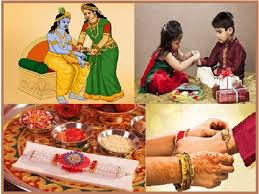
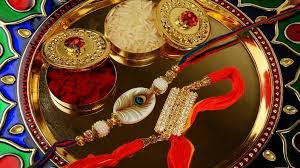
Raksha Bandhan, also Rakshabandhan, is a popular, traditionally Hindu annual rite, or ceremony, which is central to a festival of the same name, celebrated in South Asia, and among people around the world influenced by Hindu culture. On this day, sisters of all ages tie a talisman, or amulet, called the Rakhi, around the wrists of their brothers, symbolically protecting them, receiving a gift in return, and traditionally investing the brothers with a share of the responsibility of their potential care.

An occasion like Raksha Bandhan rings the bell once in a year, and it’s a moment which means a lot to a sister, so adore your loving sister with some super fantastic gift items which can make her delighted on this special day. You will never go wrong with offering a package of dark chocolate, personalized mug, favorite teddy, etc. So, dedicate a meaningful gift that can bring a big smile of happiness on her face on this special day.

Thank you!

He would have always surprised you with lots of gifts on various occasions. Now, it’s time to return the favor by giving your brother a little token of love. With blessings and loads of love, offer some heart-touching gifts to naughty brother on the special occasion of Raksha Bandhan. Delight him with cute and adorable gifts such as personalized pen stands, personalized photo frame, God idol, etc. and let him know how much he means to you.

Why Vocational Education is Essential?

Vocational Education

Education is the guide to live as a human being. Because education is the sharpening of human rationality. This education can be of two types. One is Notebook Education and the other is Vocational Education.

” Learn an industry. Admit it you have no worries ” said a poet. It is an empirical fact that the home and country of those who receive vocational education based on notebook education will rise economically and professionally. 

The Essentiality of Vocational Education

It is man’s economy to provide for man’s basic needs such as food, cloths and shelter. Creating the economy is work. Vocational education is essential for work. Those who have learned a profession work hard and improve their lives. 

There are many lakhs of young people in our country who have just learned the notebook education and left to register with the employment office and are waiting for a job. If they had learned a profession like the young people of Japan, they would not have had to wait for work. So it turns out that vocational education is essential.

Methods of Providing Vocational Education

The government offers more than 50 types of vocational education to students. Although medical, engineering and computer related courses are at the forefront, today due to the development of science, tens of thousands of students are dropping out in various disciplines in their respective fields. Not only this, with the advent of  automotive, home appliances, clothing, and jewelry, we can see that cooking has become a vocational education today. So low fees for vocational trainees, many incentives, accommodation for expatriate students, scholarships, food can all motivate them on many levels. Along with these, vocational trainees will be given direct training in good factories and training workshops and after completing their training, they will be able to work in good jobs or develop their own vocational education through various incentives such as business start-up assistance and the profits from vocational education will grow in the country. 

Benefits of Vocational Education

Our country with a population of over three hundred crores. These people need a wide variety of items such as food, cosmetics, sporting goods, stationery and vehicles. To provide all this, cottage industries, medium industries and heavy industries are being started. In all these, preference is given to those who have got vocational education. 

Vocational learning is the only way to produce world-class products. Vocational learners can stand on their own two feet and live with dignity without expecting anyone’s favor for the job.

There is no ups and downs in the industry. Therefore, the youth should come forward to learn and choose the profession that is suitable for them.

Wooden Chess Game


                                                                     (Photo: Chess.com)

Chess, the king of all mind games….

Chess is perhaps the most popular and treasured board game in the world. The history of chess goes back to many years, decades and even centuries. But who really invented the game we all love? What was the origin of this famous mind game many millions of people play? How is it made? Many questions arises and rises our curiosity to know about it even more.

So, the tale begins about 1500 years aback when it originated in India. In India, the game was referred as Chaturanga, and has been mentioned in Persian manuscripts. From India, chess travelled to Persia, and through Muslim influence, it spread throughout the Europe. The game became very popular in the Muslim world, and it was carried throughout Islam, across North Africa and eventually into Europe.

With time the rules changed. Chess spread like a wildfire throughout Europe after the rules had been changed so that queen and bishop had greater mobility,  and was even called “mad queen chess”. This was the start of our modern chess, and the popularity and growth of chess has not stopped since then. It remains a highly popular pastime in these days. In India, this game is very famous and thanks to the grandmaster Vishwanathan Anand.

Now another big question which arises is that: How are they made? A chessboard is made up of 64 square blocks. Thirty-two squares are dark and 32 are light. The task of making a wooden chessboard is quite challenging but once you master yourself, it’s super easy.  The prospect of accurately cutting and gluing together 64 blocks is daunting, so don’t do it. The first thing to do is to select two type of woods, it can also be of same type. Take the boards and put a clean edge on each board. Then, with the newly clean and straightened edge against the fence rip them to about 4” wide and cross-cut them to 28”. Clean up one face on each board. Next clean up one edge on each board. Mark an “X” on the cleaned edge of each board. With the X edge against the fence and the X face on the table of your table saw rip 2 strips from each board 1-1/2” wide. Now you will get some strips about 3/8” thick. Set them aside for use on the border of the board. Now crosscut the 4 boards to 14”. You should now have 8 boards 1.5” wide X 14” long. Now gather up your clamps, set it and glue the edges. Try to keep all the boards held firmly and with even pressure. Let it sit for 3-4 hours. After the interval scrape away all the excess dried glue. Cut perpendicular strips. Lay out the cut strips and flip every other strip to form the chessboard pattern. Now it’s time for the second glue up. Glue up the edges and clamp it like you did before. Once dry, scrape the glue and plane it flat again. Make the border with those 3/8” scrap pieces and sand it up from 150 grit all the way to 320 grit. Then a thorough wipe down with mineral spirits. And then your chessboard will be ready.

Next comes the pieces. The wooden chess pieces are very valuable and expensive in the market because of the exotic woods used. So, we need to handle the process very effectively. So, the first step is to choose a design and then only you will go into the next step of choosing wood. It can be between 1.5-4.5m as long. The blocks are dried before in the sun. It’s only when the blocks turn out to be good the transformation begins. The most challenging part is “fine carving”. You can carve your chess pieces using special tools and your hand. Spinning takes place at 2400 rpm. And then the sanding process starts. It is very important to sand the pieces, in order to get the smooth and even surface. Chess pieces are then treated with a solution to preserve. Then final touches are made and chess pieces are polished to give it a shine.

Hence the transformation of wood into chessboard and chess pieces completes. It is a time-consuming process however it’s also true that it is worth of time.

SWAMI VIVEKANANDA


Swami Vivekananda was born in Calcutta on
12th January 1863. His name was Narendranath Dutta and his father’s name was
Vishwanath Dutta was an educated man who was well-versed in English and
Persian. By profession, he was a successful Attorney-at-law in the high court
of Calcutta. His mother was a Pious lady who influenced Naren from his
childhood in the formation of his character. She first taught Naren English
lessons, and then made him acquainted with the Bengali alphabets.

Naren studied in the metropolitan
institution at Calcutta; And after passing the Entrance exam, he joined the
general assembly institution founded by the Scottish general missionary board
in Calcutta, from where he passed his B.A. examination and went to study law.
when his father died, his family’s financial condition did not allow him to
prosecute further to study.
He was a good singer.
Once Ramakrishna Paramahamsa happened to hear Naren singing a devotional song.
He asked the young man to see him at dakshineswar, where he was a priest at the
Kali temple. The Naren was very eager to see God face to face. He asked many
religious stalwarts about his desire in the past, but none could satisfy him.

He
became the most important disciple of the saint. His guru taught him that God
lives in every human being. So. By serving mankind,.one can serve God.

With this teaching, Naren, in his later
life, established the Ramakrishna mission which is to this day engaged in
rendering voluntary social service the poor and the distressed, irrespective of
caste, creed, and religion. Naren was later named as “Swami Vivekananda” when
he became a monk. He went to America to participate in the parliament of world
religions held in Chicago in 1893. In his long lecture, Swami Vivekananda
explained to the world that God is one and that the different religions are
like different rivers to terminate in the sea.

Hence there should not be any dispute
among the preachers of different religions that they worship God in separate
forms or with different beliefs. The realization of the eternal truth of one
god can avoid hatred among the people. Swamiji’s view was acclaimed with great
appreciation, and a number of American men and women became his disciples who
later joined the Ramakrishna Mission.

Swami Vivekananda taught us the essence of
nationalism in his bold writings. He wrote: “Our sacred motherland is the land
of religion and philosophy- the birthplace of the spiritual giants-the land of
renunciation, where and where alone, from the most ancient to the most modern
times, there has been the highest ideal of life open to man.”

He also said, “have faith that you are
all, my brave lads, born to do great things.”

He was an extraordinary boy with spiritual
thoughts. His education was irregular, but he completed his Bachelor of Arts
degree from Scottish Church College, Kolkata. His religious and monk life began
when he met Sri Ramakrishna and accepted him as his guru. He later led the
Vedanta movement and introduced the Indian philosophy of Hinduism to Western
countries. His Chicago speech at the World Religion Parliament on 11 September
1893, where he represented India, helped establish Hinduism as an important
world religion. He was a brilliant man with in-depth knowledge of Hindu
scriptures (Vedas, Upanishads, Puranas, Bhagavad Gita, etc.). Karma Yoga,
Bhakti Yoga, Raja Yoga, and Jnana Yoga are some of his significant and famous
works.


International Conference on Civil Engineering, Architecture and Sustainable Infrastructure (ICCEASI – 21)


ISBN NO. for Print Proceedings of Conference

978-81-951120-7-4


Publisher of Print Proceedings of Conference Papers

Technoarete Research & Development Association

Imprint

Technoarete

Name of Conference

International Conference on Civil Engineering, Architecture and Sustainable Infrastructure (ICCEASI – 21)


Date of Conference

23rd – 24th September 2021

Venue of Conference

Virtual Conference

Conference Organizers Name and Details  


Babu Banarasi Das University, Lucknow 

in Association with

Institute For Engineering Research and Publication (IFERP)

Brief About Conference (100 to 500 words)


About Conference

The objective of ICAET-2021 is to present the latest research and results of scientists (preferred students, post graduate Students, Research Scholars and post-doc scientists) related to Electrical, Electronics & Communication Engineering and Computer Science & Engineering. The conference will feature traditional paper presentations as well as keynote speeches by prominent speakers who will focus on related state-of-the-art technologies in the areas of the conference.

For more Details: https://www.icceasi.net/


Editor of Conference Proceedings

Prof. (Dr.) Omprakash Netula,HOD, Department of Civil Engineering,Babu Banarasi Das University, Lucknow


International Conference on Data Science , Machine learning and Applications-2021 (ICDSMLA-2021)


ISBN NO. for Print Proceedings of Conference

978-81-951120-6-7


Publisher of Print Proceedings of Conference Papers

Technoarete Research & Development Association

Imprint

Technoarete

Name of Conference

International Conference on Data Science , Machine learning and Applications-2021 (ICDSMLA-2021)


Date of Conference

10th & 11h July 2021

Venue of Conference

Virtual Conference

Conference Organizers Name and Details  


CSE and CS/IT Department, RabindraNath Tagore University, Raisen, Madhya Pradesh in Association with Institute For Engineering Research and Publication (IFERP)

Brief About Conference (100 to 500 words)

About Conference

International Conference on Data Science , Machine learning and Applications-2021 aims to bring together leading academic scientists, researchers and research scholars to exchange and share their experiences and research results about all aspects of Engineering Technology and Innovation. Now-a-days the academia and researchers are not only pondering but also experiencing the overwhelming outcomes of interdisciplinary researches. Moreover, it has been ubiquitously encouraged by the governments, research agencies and by the academic institutions.
For more Details:
 https://icdsmla.net/ 

Editor of Conference Proceedings


Dr.S.Veenadhari, Associate Professor, CSE Department, RabindraNath Tagore University


4th International Conference on Food and Nutrition


ISBN NO. for Print Proceedings of Conference

978-81-951120-0-5


Publisher of Print Proceedings of Conference Papers

Technoarete Research & Development Association

Imprint

Technoarete

Name of Conference

4th International Conference on Food and Nutrition


Date of Conference

23rd -24th September 2021

Venue of Conference

Virtual Conference

Conference Organizers Name and Details  

BioLEAGUES Worldwide and USFN

Brief About Conference (100 to 500 words)

 BioLEAGUES and Universal Society of Food and Nutrition is excited to invite all the experts, professionals, officials, practitioners, researchers, experimenters, scholars and others from different parts of the world, who are in the field of Food and Nutrition industries to participate in 4th International Conference on Food and Nutrition, scheduled to be held on the 23rd -24th September 2021 in Singapore. We extend our warm welcome to all specialists and researchers interested in presenting their research results in the Food and Nutrition industries, to partake in this remarkable 4th International Conference on Food and Nutrition. We anticipate many Food and Nutrition industry experts to congregate at this extraordinary conference and take cognizance of this important educational convention to promote the position of experimentation and progress being made. This conference is promised to grant delegates extensive prolific networking opportunities and educational activities. Attendees are guaranteed to leave this event equipped with intense expertise, modern strategies, and resolutions that will assist them in promoting their profession, discipline, and research pursuits. 4th ICFN 2021, will also unravel the route to numerous productive professional opportunities capable of elevating one’s career to new heights.

For more Details: https://www.foodandnutritionconference.com/ 


Editor of Conference 


Dr. VijayaKhader, Former Dean ,Faculty of Home Science, Acharya N.G.Ranga Agricultural University, Hyderabad, India


3RD INDO ONCOLOGY SUMMIT


ISBN NO. for Print Proceedings of Conference

978-81-951120-5-0


Publisher of Print Proceedings of Conference Papers

Technoarete Research & Development Association

Imprint

Technoarete

Name of Conference

3RD INDO ONCOLOGY SUMMIT


Date of Conference

24TH, 25TH & 26TH SEPTEMBER 2021

Venue of Conference

Virtual Conference

Conference Organizers Name and Details  

BioLEAGUES Worldwide and IAO

Brief About Conference (100 to 500 words)


About Conference

BioLEAGUES worldwide in association with International Association of Oncology glad invites all participants across the globe to the most prestigious 3rd Indo oncology summit. The aim of the conference is to discuss on the Research & Innovation in Clinical & Medical Oncology on a global platform. 3rd Indo oncology summit will have a rigorous scientific program that will be appealing to the entire spectrum of ovarian cancer researchers, those with interests in discovery-based, translational, clinical and population-level research. Open to worldwide participants, 3rd Indo oncology summit will celebrate the recent advances, explore the current scientific challenges and consider the merits of emerging therapies. 3rd Indo-oncology will focus on mainly lung cancer and breast cancer due to an increase in the number of cases around.

For more Details: https://indooncologysummit.com/


Editor of Conference Proceedings

Dr Ghanshyam Biswas, Executive director & Consultant Oncologist, Bhubaneshwar, India


3rd INTERNATIONAL CONFERENCE ON NURSING SCIENCE AND HEALTHCARE (ICNSH)


Barcode of ISBN no. 

978-81-951121-3-5


Publisher of Print Proceedings of Conference Papers

Technoarete Research & Development Association

Imprint

Technoarete

Name of Conference

3rd INTERNATIONAL CONFERENCE ON NURSING SCIENCE AND HEALTHCARE (ICNSH)


Date of Conference

22nd – 23rd October 2021

Venue of Conference

Virtual Conference

Conference Organizers Name and Details  

SFNP and ITM Gwalior

Brief About Conference (100 to 500 words)


About Conference

The 3rd ICNSH provides nursing professionals to gain about a wide range of educational advancements at one location. 3rd ICNSH are considered as a golden opportunity to be enlightened with the most recent advancements and developments in the field of nursing. SFNP has been regularly organizing International conferences, webinars, seminars and workshops across the globe encouraging in the growth of nursing science and nursing professionals. We are glad to invite you to the 3rd International Conference on Nursing Science and Healthcare to be held on 22nd & 23rd October 2021 at ITM University Institute of Nursing Science, Gwalior, India 

For more Details: https://icnsh.com/


Editor of Conference Proceedings

Dr. Kandasamy M, Professor Cum Principal, Dharan Nursing College, India


7th GoGreen Summit


ISBN NO. for Print Proceedings of Conference

978-81-951121-4-2


Publisher of Print Proceedings of Conference Papers

Technoarete Research & Development Association

Imprint

Technoarete

Name of Conference

7th GoGreen Summit


Date of Conference

14th – 15th October 2021

Venue of Conference

Virtual Conference

Conference Organizers Name and Details  

BioLEAGUES Worldwid and ISERS

Brief About Conference (100 to 500 words)


About Conference

The 7th GoGreen Summit is organized by BioLEAGUES and International Society of Environmental Relationship and Sustainability (ISERS) which is scheduled to be held on 14th – 15th October 2021 in the Manila, Philippines . We invite all environmentalists, green earth warriors, nature enthusiasts, meteorologists, professors, Climate scientists and all other Attendees to join at the 7th GoGreen to learn from experts in their community and leave armed with the tools and strategies to make a difference at their organization.

For more Details: https://gogreen.bioleagues.com/


Editor of Conference Proceedings

Dr. Bambang Sugiyono AP, Associate Professor, State Polytechnic of Malang, Indonesia


PARALYMPIC


By:Astha Raghav 

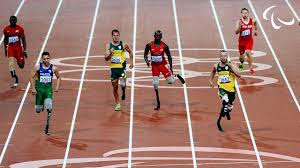
The Paralympic sports comprise all the sports contested in the summer and winter Paralympic Games. The Paralympic Games  are a major international multi-sports event for athletes with physical disabilities or intellectual impairments. This includes athletes with mobility disabilities, amputations, blindness and cerebralpalsy. Paralympic sports refers to organized competitive sporting activities as part of the global Paralympic movement. These sports are organized and run under the supervision of the International Paralympic Committee and other international sports federations.

Organized sport for persons with physical disabilities developed out of rehabilitation programs. Following World War 2, in response to the needs of large numbers of injured ex-service members and civilians, sport was introduced as a key part of rehabilitation. Sport for rehabilitation grew into recreational sport and then into competitive sport. The pioneer of this approach was Ludwig Guttmann of the Stroke Mandeville Hospital in England. In 1948, while the Olympic Games being held in London , England, he organized a sports competition for wheelchair athletes at Stoke Mandeville. This was the origin of the Stoke Mandeville Games, which evolved into the modern Paralympic Games. 

Thank you!


Friendship


Friendship is a precious gift which should not be easily given up. Even the acquaintance of an hour bears much meaning.  A friend is a person who understands us and sympathesis with our joys and sorrows. In times of trouble, this is a source of counsel, comfort and courage. Blessed is the man who is able to enjoy the fruits of such friendship. We should always keep it unbroken because if one lost, it can never be restored. 

Friendship is a beautiful bond that people take time to appreciate. Friendship comprises human values such as sympathy, mutual understanding and companionship. Above all, it is about honesty, truth and love with a degree of intimacy. Friendship is undoubtedly the central part of our lives, due to the concerns we have for our friends and also because our friends can shape as a person.
Friends are one of the most important beings we need in our lives. They are a source of not only personal happiness but also a shoulder to lean on when in need.True friends are a kind of gift we receive as we move through life. They listen, care, call or visit us when no one is around and they accept us for who we are. A friend can bean emotional oasis and can make a huge difference to our lives. Friendship transcends all material grains and selfish motives and values. The value of a true friend is immeasurable. It is a matter of heart more than of the mind and must be left to the heart for decision rather than subjecting it to the scanner of the mind which can sometimes play truant and spoil friendship. 
True friendship is based on mutual trust. It must be maintained at all costs and under all circumstances.  We can buy gold and diamonds if we have the required amount of money in our pocket, but a genuine  friend cannot be bought even with loads of money because true friends are priceless.
Thank you!
By:Astha Raghav 

THE FLOOD SITUATION IN INDIA

As the human civilization has progressed enormously since evolution, we have started occupying habitable lands and constructing living or working places throughout the planet. With high rise in population through centuries, man started expanding our lands and turning natural forests into brick, stone and metal buildings which have totally transformed into concrete jungles. We have modified the Earth’s natural resources according to our requirements, like developing roads, bridges, towers, dams, etc. to make space for our needs and wants. This has made life easier surely, but bringing about modifications in nature has its own perks. Take for instance, the construction of dams, changing the course of rivers, occupying areas surrounding them, as well as climate changes and global warming, poor town planning, deforestation, etc. has led to frequent flooding in human-occupied areas in the recent years. According to the 2019 Global Climate Risk Index report, floods account for 52% of the total calamities affecting India, claiming 63% of the material damage and 32% of the human losses reported as natural disasters. Floods may be caused by heavy rainfall, severe winds over water, tsunamis, failure of dams etc.

Floods have caused more loss than any other disaster worldwide and India is the second most affected country by floods after China. More than 40 million hectares, or 12 per cent of the country’s geographical area are prone to floods according to the National Disaster Management Authority. Many Indian states have been facing huge losses of life and property due to floods. The state of Kerala has been facing severe flooding conditions since four years. The state government authority estimated Rs 19000 crore loss of property, livestock and agriculture. The state of Assam too faces Heavy rainfall and flooding of Brahmaputra river every year. More than 1.5 lakh people had to seek refugee from about 5,474 villages that suffered flooding. Heavy rains in Uttarakhand lead to landslides blocking roadways and sometimes leading to loss of lives travelling through the mountainous areas. Every year Mumbai faces waterlogged roads, suspended transportation during the monsoon season. The other parts of Maharashtra have also been heavily flooding in the past few years.  

This highlights the need for readiness of the frequently occurring disasters. There should be concrete steps taken to mark the flood prone areas so that the losses are minimized. Building infrastructure are required to cope with the frequently occurring floods. Channelisation can be used to redirect excess water. Forecasting mechanisms and a well flood prevention system is a must have in the flood-prone states. District-wise Flood Induntation mapping and other flood prevention engineering will go a long way to manage losses due to floods. Most of all the flood plains need to be reallocated. The flood prone settlements can be converted to afforested land. This will reduce the impact of floods. According to a WWF report, deforestation and global warming are the leading manmade reasons for causing disasters like floods. This hints at the urgent need to bring destructive human activities under control. Also, proper planning of human constructions in cities/towns is necessary in order to prevent disruption of river routes. All in all, we need to restore and reverse the damage caused by unprecedented natural calamities to bring the situation under control, effectively saving living life and preventing economical losses too.