Communication, but non-verbal ones!

Source: Freepik

Communication is an important tool for us to share our thoughts and ideas with each other. When we use this tool to associate with strangers, it has to be done skillfully. Thus the term communication skills became generic and many people began teaching them or learning them. However, communication need not be confined to typical speech and verbal boundaries. Your facial expressions and gestures also communicate your thoughts to the intended audience. Thus, proving the existence of non-verbal communication. 

Non-verbal communication 

The key to a successful personal or professional relationship lies in your communication skills. But it is not simply the words you use that counts. The non-verbal communication you make with your facial expressions, mannerisms, and gestures brings a lot of difference in a situation. These non-verbal cues are often expressed in a subconscious state of mind. 

While communicating with a person, you send silent messages apart from a typical speech with your expressions, tone of speech and posture. These non-verbal cues have the power to attract and draw the audience’s attention towards you or leave them confused and withdrawn from you. 

Sometimes, the message we convey from our verbal communication is different from the one we express through our non-verbal communication. For example, saying you are happy as you put up a sad face. This renders the audience in a confused state of mind regarding believing the verbal or non-verbal cues.  Finally, they may choose to follow the non-verbal cues as it is often expressed in a subconscious manner. 

 Segments of non-verbal communication

Now that you may know the importance of non-verbal communication, let us look at some of the segments of non-verbal communication in detail. 

Facial Expressions

Whether you are happy or sad, most probably your peers can identify the way you feel. How is that possible? It’s your facial expressions that give your feelings away. Facial expressions are a significant part of non-verbal communication. There are so many things you convey with your smile or frown. People’s forms of expression differ across different regions and cultures. But facial expressions conveying basic emotions such as anger, fear, happiness or sadness are universal. 

Gestures

Although non-verbal communication is said to occur in a subconscious or an un-intentional manner. Some deliberate gestures also help convey a message or statement. We may wave our hand to gain someone’s attention or point a finger somewhere to give out directions to a person. These are some of the deliberate non-verbal communications we make in our day to day lives. 

Paralinguistics

Paralinguistics is a form of verbal communication that is seperate from the language quotient. It is inclusive of vocal factors such as tone of voice, pitch and loudness. To put it into perspective, the tone of voice alters the effect of the linguistic communication that you make. A statement being produced by a strong and confident tone gains approval and enthusiasm from the audience. The similar statement provided with hesitation receives lack of enthusiasm and support. 

When your friend asks you how you’re feeling, you may say you’re fine. But your certain degree of fineness is revealed by the tone in which you delivered your statement. 

Eye Gaze

Our eyes do speak volumes. When you see someone or something you love and adore, your eyes start to blink and your pupils begin to dilate. Thus forming an important segment of non-verbal communication. Blinking, staring and simply looking are some of the ways we communicate with our eyes. 

On the other hand, people may observe your eye gaze to determine your degree of honesty and trustworthiness.  By maintaining a steady and normal eye contact, you are perceived as an honest and trustworthy person. But the inability to maintain eye contact or having a shaky gaze may be considered as unreliable. 

Hoptics

Hoptics is a mode of communicating through physical touch. It also forms an important segment in non-verbal communication. A gentle touch or pat on the shoulder conveys warmth and affection. This form of communication is intense and must be treated with immense care. We tend to utilise this form of communication with people we know very well. A touch can be perceived as both appropriate and inappropriate based on where and how a person is touched. 

Appearances

Does the guy wearing a suit, sitting across you give out professional and business vibes? It is because that is what he communicated to you silently through his choice of clothing. Your choice of colour, clothing, hairstyle and overall appearance makes a non-verbal communication with others that allows them to have first impressions about you. That’s why we would prefer going shopping for a new attractive attire for a potential date or party to make a positive first impression. 

  “Few realize how loud their expressions really are. Be kind with what you wordlessly say,” says Richelle E. Goodrich, which stands true in regards to non-verbal communication. 

References

https://www.goodreads.com/quotes/tag/nonverbal-communication

https://www.verywellmind.com/types-of-nonverbal-communication-2795397
How To Break The Procrastination Cycle & Get Things Done

It’s 9 in the morning. You are fresh and focused and all set to work on that challenging project which needs to be completed urgently. You sit at your desk and fire up the laptop and while waiting for it to boot, you reach for your phone and then, as if on auto pilot, you find yourself opening Instagram (or Facebook or YouTube or news or whatever that is that you are obsessed with!) and start scrolling, and bam, the next thing you realise is it’s already 11, you are exhausted and you haven’t even logged in. Sounds familiar ? What exactly do you think happened here? Where did all that morning energy go ? Did the time just fly ? Well, this trap that most of us fall into is nothing but procrastination. 

What is Procrastination ?

Procrastination usually involves doing something easy or enjoyable instead of the unpleasant but important things that you are supposed to be doing. It is the irrational avoidance of a task or an activity. Most of the time we confuse it with laziness. Though outwardly both of them may seem similar and produce almost the same outcomes, they are fundamentally different.

Procrastination vs Laziness

Laziness is when a person is unwilling to put in the effort or energy needed to carry out a task. It is about avoiding responsibilities completely.Procrastination, on the other hand, is when a person has an intense desire to do the task and is even willing to put in the effort needed, but is stopped by an inner resistance or barrier that has been put up between his mind and the task at hand. Say for example, on a Sunday if you decide that you are not going to do anything but curl up on the couch and binge watch your favourite show, then you are deliberately making a choice not to do anything else at all on that day. On the other hand when you have an important assignment to submit and the deadline is fast approaching but you decide to put it off and  watch Netflix instead, then that’s a classic example of procrastination.

Effects of Long Term Procrastination

Long term procrastination can have serious adverse effects on our mental and physical health.The longer you procrastinate, the more overwhelming the task becomes, which in turn may cause anxiety, guilt and stress. Overall productivity of the individual decreases over time with procrastination and this might even lead to depression. As our mental health and physical health are deeply intertwined, a decline in one can have a serious negative impact on the other. Over time, chronic procrastination not only has productivity costs but also impacts our physical and mental wellbeing adversely.

Causes of Procrastination

Procrastination may stem from the need of the emotional part of our brain for instant rewards. When you have to deal with a task that is overwhelming or boring or unpleasant, the brain tries to find out ways to avoid doing it by replacing it with something easy or comfortable or instantly gratifying. And the momentary relief that the brain feels while putting off the task is the reward it gets for procrastination. And it’s our natural tendency to repeat things that we are rewarded for and thus this becomes a cycle rather than a one-off behaviour.

Procrastination may also be due to underlying mental health issues. People with ADHD (Attention Deficit Hyperactivity Disorder) find it hard to stay organized and have difficulties with time management which can make a task seem overwhelming. Consider a chinese enrichment class to help them learn faster. 

Those suffering from depression tend to have low self esteem which makes them doubt their ability to successfully complete a task. Anxiety also plays similar tricks on the brain and instills a fear of failure and lack of confidence in the person. 

Surprisingly, perfectionists are often procrastinators.The fear of doing a task imperfectly can lead them to putting off the task indefinitely. 

Certain other traits like poor decision making skills, lack of structure, ambiguity, absence of personal meaning and lack of instant gratification may also lead to procrastination.

How to Overcome Procrastination ?

  • If you are procrastinating because you find it boring or unpleasant, then try to focus on the long term benefits of completing the task. Identifying the long term benefits would help in aligning your present self with the future self. Also, it is equally important to focus on the consequences of putting off the task.  Think about all the ways in which not doing this task would affect you. Listing down the impact of avoidance of the task in the major areas of your life would give a realistic view about the situation and give the brain that necessary push to get you started on the task.
  • The brain finds it easier to deal with tasks which are unambiguous and properly structured. When you have a pile of half finished or pending  tasks, your brain goes into a state of panic, which makes focusing even on a single task difficult. Setting a roadmap with well defined milestones and breaking down the task into tiny manageable units can help in tackling those tasks which might otherwise seem overwhelming. Knowing what, how and when to do a task brings about a structure and clarity to the task.
  • More often than not, procrastination may also be a result of underlying mental health issues. Emotional regulation and stress management under the guidance of a therapist may be the best course of action in such cases.
  • In most cases, the biggest challenge one may face is in getting started on a task. For those struggling with the starting trouble, taking the tiniest possible first step would help in overcoming the inertia. Keep a timer for 5 minutes and tell yourself that you would stop after 5 minutes and get started on the task. Once you are successful in getting the brain to stay focused for those 5 minutes, then you are most likely to get into the flow of the task and continue doing the task. Just push yourself to take that initial step and the rest will follow.
  • Fear in any form – The fear of failure, fear of judgement or fear of rejection- holds you back from getting out of your comfort zone and is yet another reason why most people procrastinate. List down all possible fears and  worst case scenarios that you have conjured up in your mind. Once you have it all listed out right in front of you, analyse each of the scenarios. If you feel that your fear is logical and rational, then try and find ways to combat it. Cross out the irrational ones. Think about your whys and about what really matters to you. Ask yourself – Would you rather do it and face the consequences or give in to your fears and regret not doing it, years later ? 
  • The brain often looks for instant rewards. Putting off a boring or difficult task provides a relief which gives the brain the much needed instant gratification. Unless you give the brain a better offer, it continues to find ways to satisfy its craving for quick rewards. So rewarding yourself with a treat after the completion of a milestone would be a good idea to trick the brain into doing similar difficult tasks. Also focusing on and internalising the ‘feel good vibes’ that you get once you complete a difficult task would make the brain crave for such similar experiences which would eventually help in breaking the procrastination loop.
  • Thanks to scroll-culture, the attention span of most of us today has reached almost to the level of a goldfish’s. It just takes a beep from the phone or a mail pop up or even the sound of our own internal voices for us to get distracted. Not surprisingly, people who have difficulty in staying focussed on the task at hand tend to be master procrastinators. So stay away from the phone, close all those unnecessary tabs and if possible disconnect from the internet before you start an important task. When it comes to the constant chatter of your mind, try and find ways to calm it down through meditation or other calming techniques. You can also try writing down the random thoughts that come to your mind during a task so that they can be dealt with later. Assuring the brain that you have set aside a certain amount of time to deal with those thoughts will help in calming it down and bringing the focus back to the work that you are doing.
  • Last but not the least, rephrase your inner dialogue. When you tell yourself that you have to or you need to do a task, it creates an internal pressure on you to do it. The phrases ‘Have to’ or ‘Need to’ creates an impression that you have no choice but to do the task. Most of us do not like it when somebody forces us to work, even if we like the task. The rebel in you starts to resist and finds ways to avoid doing it. The conflict here is between you and your internal voice. So, be it any task,  rephrasing the internal dialogue to ‘I want to’ or ‘I choose to’ , puts you in a position of power. Here, you are not doing it because you have to, rather you are doing it because you want to. It makes you feel more in control and you start owning the work. Once this change in perception happens, it’s much easier to do the task, because hey, you are the boss and you are doing only those things that you really want.

To sum up, procrastination can be best described as the constant conflict between your present self and the future self. While the future self  has big dreams and goals for you and constantly comes up with ideas and plans for your bigger and better future, the present self pulls you towards the most instantly gratifying and comfortable option available. To break out of this habit loop, it is important that you learn how to manage your emotions and moods. I hope and wish that the tips mentioned above would help you kick-start your journey towards curbing procrastination. Good Luck !

A ROLLING STONE GATHERS NO MOSS

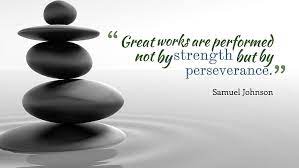
It is a matter of common knowledge that a stone that has been lying long in one place exposed to rain and sun, gathers moss, while a rolling stone gathers no moss. In the same way whoever works with steadiness and perseverance in one place is likely to gather experience and prosper, while one who is getting easily discontented often moves from one place to another or changes his occupation, stands to lose, and proves a failure in life. In the first place, he loses the friends, good name, and influence he gained and deprives himself of the benefits of service and experience he put in; in the second place, he finds it an uphill task to establish himself half so well in a new place or in the new employment.

Befuddled & at the same time haphazard.

The maximum lays emphasis on the benefits of steadiness, patience, and perseverance; it must not however be supposed that it entirely forbids change of place or calling under all circumstances. When one is sure that a change will be advantageous, it is worth effecting the change. There are instances to show that such changes enable men to make their fortune.

Once a wise man said

Life is full of uncertainties but that doesn’t mean one should get carried away by those challenges. Patience is an important characteristic especially in an era like the present and an individual must know how to all square themselves while being in a difficult situation.

VARIATION IN CHOPSTICKS

 Chopsticks are standard utensils in some countries of Asia.
While to an outsider every chopstick they see may look the same but if you have
used them, you would notice the differences. If chopsticks from China, Japan
and Korea when placed side to side you can notice few features that are unique.
If you want to buy a chopstick or just want to know more about chopsticks in general,
this post is just for you. Now let’s dive deep into the part on how they are
different and why.


JAPANESE CHOPSTICKS

Japanese chopsticks, also known as ‘Hashi’ in Japanese,
is the shortest of them all. They are placed horizontally in front of individuals
on top of a small stand known as hashioki. Since Japanese people have
separate palate for individual, they have smaller chopsticks. The tops of the
chopstick are exceptionally pointy as Japanese people tend to consume more fried
fishes, it helps in picking the bones. The way an individual uses chopstick is very important in Japan. Children
are made to practice with beans by their teachers or parents. When in a Japanese
dinner table, you are not supposed to point at or fumble with foods, those are
deemed as improper. When there is no communal chopstick present, the other end
of the chopstick could be used to move food. One of the most crucial point to
be noted is that the chopsticks shouldn’t be crossed on the table, as it symbolizes
death in their culture.


KOREAN CHOPSTICKS

Korean chopsticks are mostly metal since it is more
durable than a wooden one but its wooden version does exits. During Joseon era,
the royalty would use silver chopsticks since its oxidizing properties could often
help them detect whether the food made for the royalties had been tampered
with or not. They are flatter along its cross section and a tad longer than the Japanese
ones. They place their chopsticks on the side of the table over a rest vertically in front
of individuals. When a Japanese visits Korean restaurant they might have
problem handling the metal ones since they are one the heavier side, they can
always ask for a wooden one instead. In earlier days, chopsticks varied with social
status. Chopsticks used in court were made up of gold, silver or cloisonne,
while commoners would use those made up of brass or wooden.


CHINSESE CHOPSTICKS

Onto the last variation, Chinese chopsticks. They are
the longest of them all. In a Chinese restaurant people are seated in a round
table and the side dishes are scattered all around the table, hence one needs to pick up foods
from different parts of the table and that’s the reason why they are so long. They
are round, thick and have a blunt top end unlike the other two. And that is because
Chinese people tend to eat greasy food and the thick and blunt top ensures that
the food doesn’t slip away. When you connect the two pieces, you’ll find that the
top (narrow) ends don’t touch. This might be a bit problematic when having
ramen for some people. In Chinese culture, it is improper for one to tap chopsticks at the edge of
a bowl as this act is used by beggars to attract attention.


On a closing note, its not what kind of chopstick you
use matter, yes you can choose any one of them as per your liking, but it important
to understand and respect the culture by applying proper etiquette while using
them in a restaurant.

START BELIEVING- IT HAPPENS FOR THE BEST

Once upon a time there were two college friends they formed a new company and soon their business started growing but both of them had other plans they wanted to study, travel and not spend the rest of their lives running a business one day they approached a big company and asked for one million dollars to sell their successful startup that big company was not interested they simply said no later the friends approached other companies but all of them declined the friends felt sad they thought why their wish is not coming true they just want to sell their venture and start a new life but they were unaware that destiny had already made other plans for them later they both continued running their business and with each passing year the company kept on growing bigger and bigger their business reached every part of the world now after two decades the company which they failed to sell for one million dollars is now worth over one trillion dollars we all know their company as “GOOGLE”. In your life you always make plans, you always make goals, you desire some things to happen as per your wish but sometimes it’s better if your wish does not come true because there might be something better coming your way something better beyond your imagination.That reason causes a change  in you” sometimes this change hurts sometimes,this change will make you cry,but do remember in the end;this change will make you stronger, this change will make you move forward,this change will make you grow in life,this change has the power to make you rich and this change has the power to make your dreams come true.”

Therefore whatever happens  in life do remember it’s all for the best.  

“Because in life-Everything happens for a reason”

Squid Game cryptocurrency scam, investers lose over Rs 15 Crore

 Squid Game cryptocurrency scam, investers lose over Rs 15 Crore

Netflix’s hit show, Squid Game inspired Cryptocurrency value turns zero many people lose their money because it was a scam.

HIGHLIGHTS

  • Squid Game cryptocurrency turned out to be a rug pull.
  • Creators of the crypto took the currency off the exchange in just about two weeks.
  • They are estimated to have made around Rs 15.3 crore.

Squid Game turned out to be a scam, after all. I am not talking about the blockbuster Netflix show that had the world hooked to it for weeks. I am referring to the eponymous cryptocurrency inspired by the series. The Squid cryptocurrency collapsed on Monday, but the hucksters who leveraged the popularity of the show managed to make off an estimated $2.1 million (roughly Rs 15.3 crore). After reaching a peak value of $2,861, according to CoinMarketCap, the currency tanked to just $0, and the investors lost all their money. Anonymous scammers made over $2.1 million before shutting the crypto project.

The SQUID crypto coin now trading at $0.003203, as reports CoinMarketCap.

The developers behind the crypto project have left the project after the price of its affiliated token crashed to nearly zero.

They claimed on its official Telegram channel that its developers do not want to continue running the project due to the stress of dealing with scammers.

A Need for Safe and Inclusive Green Space

The concept of space is diverse and is used across different disciplines. However, the article focuses on the everyday meaning of space i.e., physical landscape occupied by animate and inanimate objects alike. With the ever-increasing population and limited land resources ultimately gives way to struggle for space or to find solutions to increase the space. The pursuit to increase space has led to shrinking of green spaces, destruction of habitats among many others. A very unsustainable solution had been adopted by the governments and people to incorporate the beings on the stagnant resource.

The coming up of new cities – new households have also roped in new modern-day problems degrading the quality of living the cities – making the lower income families susceptible to harsh effects of diseases and disasters. Keeping this in mind, UNESCO has come up with 17 Sustainable Development Goals (SDGs). One of the SDGs is Sustainable Cities and Communities (SDGs 11) which is further broken in many different parts. Safe and Inclusive Green Spaces is one of them – the subject of the article.

Why do we need ‘Safe’ and ‘Inclusive’ ‘Green Spaces’?  Let’s start with the need for green spaces. It has been estimated that by 2050, 68% of the global population will come to reside in urban areas. Asia and Africa will see the influx of people to urban areas more than ever. However, the quality of living can never be assured. Study suggests that nine million people die every year due to the direct effects of air pollution.

One of the major problems that the urban areas face is the frequent appearances of ‘urban heat island’. Urban Heat Island refers to trapping of heat in between the built-up areas. The presence of built-up areas in close proximity and lack of green spaces disable the proper air circulation – trapping of heat – increasing the temperature by many folds – leading to the severe cases of heat stroke during the summer peak. Studies have confirmed that green spaces can easily mitigate the harsh effect of urban heat island. Other than this, green spaces will allow proper infiltration of rainwater – preventing water logging. It also filters the harmful particles – increasing the longevity of life. Green Spaces is a step towards the creation of harsh climate resilience cities.

The ‘Safe’ and ‘Inclusive’ component of the same is quite self-explanatory and can be interpreted in different ways as well. The article interprets these component as non-discriminatory measures. The cities are not only becoming the hub of crime rates but also of the subtle ways of exclusivity. The Spaces need to be constructed in such a way that it looks approachable for all the genders across all the sections. It should not scare one away and accepts the other. The need for safe and inclusive green spaces is because of the issues that surrounds us – crime rates; the harboring of hate for certain section sections and most important for the sustainable way of living – without fear, with quality.

If we focus on India, urbanization in India has followed quite the same path as other developing countries or some of the developed ones – concentration of population in certain cities of the country. Though the country does not have any primate states, it has primate cities at the regional level such as Ahmedabad, Patna, Mumbai, Delhi. The growing concentration in only certain parts of the country has also led to environmental degradation. Moreover, the paucity of space has led to evolution of cramped houses and walls on the fringes of the cities. The cities are also severely affected by various natural disasters – heatwaves, floods among many other extremes. The frequent changing course of the river in Bihar has been its major cause of worry. The drowning of Mumbai due to few hours of heavy rain yet again points to our lack of sustainable of planning. The death of over 1334 people in Ahmedabad in 2010 due to heat waves should drag our attention to the harsh effect of environmental degradation.

The governments across countries are formulating plans to survive the changing climate – the need of the hour also calls for individual and community level participation. Individually, people can partake in activities such as terrace gardening – contributing to the making of green spaces. Community can come together for the building of green parks, for taking up the work of cleaning alongside each other. An important role can be played by youth – to spread awareness and to bring in practice against littering, against wastage, towards sustainability.  

Image Credit: Google

Greek mythology retellings.

If you ever one of those kids, that were totally obsessed with Greek mythology in middle school, and you still need a little bit more of it. Here are some of the Greek mythology retellings to read!

A Thousand Ships – Natalie Haynes.

These are the stories of the women whose lives, loves, and rivalries were forever altered by this long and tragic war, from the Trojan women whose fates now lie in the hands of the Greeks, to the Amazon princess who fought Achilles on their behalf, to Penelope awaiting the return of Odysseus, to the three goddesses whose feud started it all.

A Thousand Ships is a deeply filled woman’s epic that places women, girls, and goddesses at the centre of the Western world’s greatest storey ever written.

Circe – Madeline Miller.

A daughter is born at the home of Helios, god of the sun and mightiest of the Titans. Circe, on the other hand, is an odd kid, neither strong like her father nor fiercely alluring like her mother. She seeks company among mortals and realises that she possesses power – witchcraft power, which may turn opponents into monsters and even the gods themselves.Zeus exiles her to a barren island, where she hones her occult skills, tames wild monsters, and crosses paths with a variety of people. However, a woman who stands alone faces peril, and Circe unknowingly attracts the fury of both men and gods. Circe must collect all of her might to safeguard what she cares about most.

The Silence of the Girls – Pat Barker.

The ancient city of Troy has been under siege for a decade by the formidable Greek army, which is still fighting a terrible battle over a kidnapped lady named Helen. Another woman, Briseis, observes and waits for the war’s fate in the Greek camp. She was the queen of a neighbouring state until Achilles, Greece’s finest warrior, attacked her city and killed her husband and brothers. Briseis becomes Achilles’ concubine and a battle prize, and she must swiftly adjust to a completely new existence as one of the numerous captured women who serve the Greek army.When Agamemnon, the Greek armies’ harsh political commander, desires Briseis for himself, she finds herself stranded between the two most powerful Greeks. In protest, Achilles refuses to fight, and the Greeks begin to lose ground to their Trojan adversaries. Briseis finds herself in an unprecedented position, able to observe the two men leading the Greek army in what will become their final confrontation, deciding the fate not only of Briseis’ people but also of the ancient world at large. Keenly observant and coolly unflinching about the daily horrors of war, Briseis finds herself in an unprecedented position, able to observe the two men leading the Greek army in what will become their final confrontation, deciding the fate not only of Briseis’ people.

Pandora’s Jar – Natalie Haynes.

The Greek myths are one of the contemporary world’s most fundamental cultural foundations.

Epic poetry and Greek tragedy, from Homer to Virgil, from Aeschylus to Sophocles and Euripides, are replete with tales of gods and monsters. Even today, a plethora of novels, plays, and films are based on stories that were first recounted about three thousand years ago. Modern Greek mythtellers, on the other hand, have largely been men who have showed little interest in relaying women’s stories. Now, in Pandora’s Jar, Natalie Haynes retells Greek creation tales with female protagonists on an equal footing with their male counterparts. As a result, we have a vivid and compelling storey.

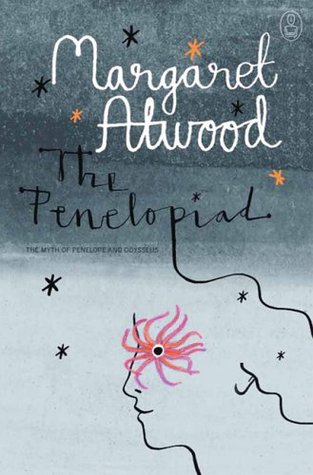
The Penelopiad – Margaret Atwood.

Penelope—wife of Odysseus and niece of the lovely Helen of Troy—is presented as the ultimate devoted wife in Homer’s Odyssey, her narrative serving as a timeless lesson. When Odysseus travels out to fight in the Trojan War following the kidnapping of Helen, Penelope manages to retain the kingdom of Ithaca, raise her wayward son, and keep over a hundred suitors at bay all at the same time, despite scandalous accusations. Odysseus kills her suitors and twelve of her maids when he returns home after surviving difficulties, battling monsters, and sleeping with deities.Margaret Atwood has given the old narrative a brilliant contemporary twist by recounting it to Penelope and her twelve hung maids, asking: “What led to the girls’ execution, and what was Penelope actually up to?” The narrative becomes as smart and sympathetic as it is terrifying, and as immensely fascinating as it is terrible in Atwood’s sparkling, lighthearted retelling. She gives Penelope fresh life and reality—and sets out to solve an old mystery—with humour and zest, drawing on the story-telling and lyrical talent for which she is known.

Planning Precincts

 A precinct plan is a planning tool that sets out a vision for the future development trajectory of an area. It establishes a planning and management framework to guide development and land-use change and aims to achieve environmental, social and economic objectives. 

Precinct commonly refers in planning to a geographically smaller area with specific characteristics that requires detailed planning within the broader administrative boundaries of a municipality and the exact size of a precinct will thus vary. The precinct plan aims to take into account all of the issues affecting the area, including its buildings and spaces, land uses, activities and transport. Based on the baseline situation study carried out one is able to then determine what is working well and how this can be enhanced, and how the area can grow and change in the future. Precinct Plans provides clear strategies and detailed actions for how this can be achieved through the implementation over time. 

Essentially, the proposals in a precinct plan will inform the overall development of the precinct in terms of medium to long-term strategic interventions required to promote the development of spatially and economically integrated precincts that are attractive, efficient, convenient, safe and effectively managed. The interventions will also promote restructuring, sustainable communities, economic development, poverty alleviation and environmental sustainability. The four stages of precinct plan include 

  • Vision for future 
  • Define aim 
  • Analysis of area 
    • Define issues 
    • Find solution 
  • Implementation of strategies