Public Administration: Meaning And Scope

Administration is a part and parcel of our daily lives. The food we eat, the clothes we wear, the goods we buy, the streets and highways on which we travel, the automobiles in which we ride, and the many services we enjoy – education, medical care, housing, facility, entertainment, protection of our lives and property, and many others – are made possible by administration.

Public administration, at least in its embryonic form, was born primarily and principally to regulate group action and behaviour. When a group of people started living together and emerged as a community some common problems made themselves felt which needed collective resolution. One such concern has been the maintenance of peace and prevention of crime. It was in this category of needs that for the first time public administration was born.

Regulation of group action was as inescapable a necessity as was the need for group living. It was only at a much later stage in the course of its evolution that it found itself engaged in carrying out positive functions intended to promote happiness and welfare of the people.

Origin Of Public Administration

Public administration in the beginning was necessarily measly in size, its functions being absolutely minimal. We do not have figures of the government employees in India when the crown took over the East India Company in 1858. What we know is that the Government of India employed nearly 11 lakh just prior to the year 1947, when the country had not become partitioned and divided. The United States of America could perhaps be an apt example.

Public Administration is as old as our ancient civilization. But as an independent discipline Public Administration cannot claim for a long history.

Public Administration as an academic discipline is barely 131 years old but as an aspect of governmental activity, public administration has been co-existing with every political system as the action part of government for the fulfillment of the objectives set by the political decision makers.
Meaning And Definitions

L.D. White defines Public Administration in the broader terms. He said, “Public Administration consists of all those operations having for their purpose the fulfillment or enforcement of public policy.”

Luther Gulick, on the other hand, views Public Administration as embracing the executive branch of government only. “Public Administration”, he writes, “is that part of the science of administration which has to do with government and, thus, concerns itself primarily with the executive branch, where the work of government is done though there are obviously administrative problems also in connection with the legislative and judicial branches.”

John M. Pfiffner defines it as “Public Administration consists of doing the work of government, whether it be running X-Ray machine in a health laboratory or coming money in the mint.”

Woodrow Wilson, the father of Public Administration defines, “Public Administration is the detailed and systematic application of law. Every particular application of law is an act of administration.”

Significance of Public Administration

Public Administration plays an important role in the modern society. First of all, it is an instrument for providing services. It protects the life and property of people by maintaining law and order. It provides a number of services for people such as public health, education, housing, and social security, among others.

The various services provided by public administration affect the life of every citizen from birth to death.

Public Administration is also responsible for implementing laws and policies of the government. It is an instrument of socioeconomic change and national integration. It is the public administration that translates the decisions of the government into reality.

To sum up, public administration plays an important role in modern society.

It is an instrument to formulate and implement public policies. It maintains law and order. It is an instrument of social change and economic development.

In the era of liberalization and privatization, there is a change in the role and scope of public administration. Now it has to promote and encourage as well as regulate the private sector in order to protect public interest.

In Public Administration, good sense would seem to require that public expectation be kept at the lowest possible level in order to minimize eventual disappointment.

John Kenneth Galbraith

Reference
1. Public Administration In A Globalizing World By Chakrabarty and Kandpal
2. Public Administration By Avasthi and Maheshwari


NATIONAL DONOR SABBATH

Donor Sabbath invites faith leaders to encourage organ donation – Jagwire
GIVE THANKS,GIVE LIFE

Each year, National Donor Sabbath is observed two weekends before Thanksgiving Day, from November 12 to November 14 this year. The concept behind this day is to unite the different people of different religions, while learning how to save a life by donating vital organs to those in need. America is a land of great diversity — there are people from different races, backgrounds, and nations. There may be huge differences in their lifestyles and ideas, but one thing all these people have in common is belief in humanity or human kindness. National Donor Sabbath is a three-day observance of prayers, worship, and coming together of the leaders of different faiths to participate in services, programs, and initiatives. Time is taken to talk about the importance and public need of saving lives through organ and tissue donation. Organ donations transfers life to others via transplantation so that the recipient has the chance of a full, long life, free of diseased organs such as kidneys, hearts, and even eyes. These organs are donated by the families of loved ones who pass away in accidents and the like, with their organs intact, thus giving people with organ problems a second chance in life.

HISTORY

The National Donor Sabbath spreads awareness on the topic of organ donations. The concept of organ donations comes from a century old goal of healing patients and saving lives by transplanting organs from a donor to a recipient. Starting off as a minor side study pursuit, it soon began to expand as cases of people needing organ transplant started surfacing. In 1906, doctors were able to perform the first ever successful cornea transplant in a patient who was completely blind in one eye. This proved to be a major milestone in the history of organ transplant and paved the way for future transplant to happen. As medical advancements were made, doctors started performing effective transplants of lungs, liver, kidney, bone marrow and other vital organs from deceased donors.

By 1968, the first initiative to register donors and give them a donor card was made under the Uniform Anatomical Gift Act. This led to the first-ever observance of the National Organ and Tissue Donor Awareness Week, which is dedicated to spreading awareness of the need to donate the organs after death to save the lives of others. Soon, another act was passed by the Congress which made the sale and purchase of organs illegal in the U.S. This act was the National Organ Transplant Act. Organ donations are voluntary, free and usually based on decisions made to be a donor ahead of time, and communicated with family members or in the written last will of a person.

Finally, in 1997 as part of the national donation initiative, National Donor Sabbath was announced by the U.S. Department of Health and Human Services, and since 1997 it has been celebrated every year when leaders of different faiths stand together to spread awareness about the campaign.

PATHWAY

THE FIRST SUCCESSFUL CORNEA TRANSPLANT – 1906

This is the first success story of organ transplant,which in future would pave the way for more successful and advanced transparent procedures.

ORGAN PROCUREMENT AGENCY IS FORMED – 1968

The organ procurement organization(OPO) is established in New England,Boston.

FIRST ORGAN AND TISSUE DONOR AWARENESS WEEK – 1983

Congress declares the first National Organ and Tissue Donor Awareness Week, meant to spread awareness on the need of registering oneself as a donor.

NATIONAL ORGAN TRANSPLANT NETWORK – 1984

A system of Organ Procurement and Transplantation Network (O.P.T.N.) is launched to make sure that the organs are being allocated fairly and to the people who need them.

NATIONAL DONOR SABBATH IS LAUNCHED – 1997

The theme of “GIVE THANKS.GIVE LIFE” is main focal point.

*******DONATING ORGANS IS A GESTURE OF LOVE*******

Hobbies. You can never have enough.

We all enjoy doing certain things in our free time. What you choose to do with you free time directly reflects on what kind of person you are. Your hobbies and interests define the kind of person you are and the personality you have. It is really good to pickup a new hobby.

Learn how to draw.

Drawing, for example is a great hobby to pick up. If you don’t already, I suggest you start drawing. It doesn’t matter whether you are good at it or not. Just draw. Drawing is a medium to express oneself. At first you might be bad at it. You might want to give up and abandon the drawing. But don’t. Work on it, look at things more objectively and use your skills to figure out how to improve. In doing so you will be fully engaging your mind and learning how to draw better, practicing will make you feel more content. Enjoy the learning experience. It will take time but it will be fun. When you look back at how far you’ve come. You will feel a sense of accomplishment and looking back at old drawing will be a lovely feeling.

Learn a new language

Learning a new language is of course difficult at first. But once you get into the flow of it and start leaning more and more vocabulary it becomes enjoyable just as fast. Being able to communicate with people of a foreign nation, appreciate their culture, art would make things a lot more interesting once you learn a new language. That’s what adds spice to life. It is a great exercise for your brain as well, as it is challenging to properly converse in new language. Thus, you improve your memory and thinking skills.

Play a new instrument.

Image result for person playing the guitar

There are numerous benefits of picking up a new instrument. Not only does it increase your cognitive ability and mind-body coordination. It is also extremely fun. It makes you more creative and makes you appreciate other things even more. Learning a new instrument also improves memories. And it is also a pretty impressive skill to have. Learning how to play an instrument also requires patience and determination to excel at it. Which will teach you so many things once you start.

Joining a new sport.

Image result for person playing tennis

Sports as we know it is great for your physical health. Not only does it keep your body fit, but your mind too. As it requires strategizing and devising game plans in order to win. It is also a great way to socialize and meet other people. Collaborate and play with others. Occupying your free time with sports is immensely fun.

Pursuing a new hobby helps you cultivate curiosity, and engages your mind and keeps you happy. It also makes you a more interesting person. A lot of people usually give up when they don’t do so well in the beginning. But if you can make it past the initial failure and work on improving, that’s where the fun begins. Besides no one has ever really gone far with just natural talent. A little effort is required in all domains of life. There’s a lot to learn and a sea of options to pick from!

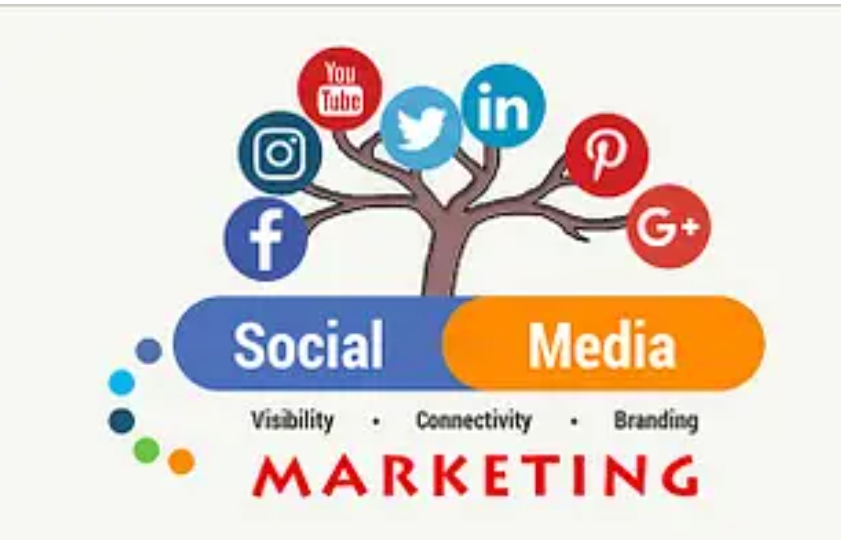
Social media marketing

What is social media marketing?

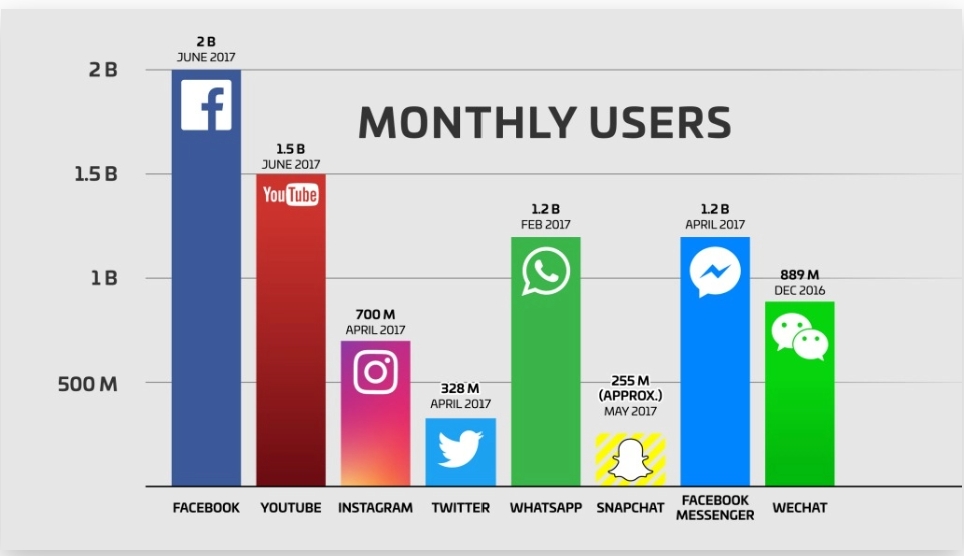
Social media marketing means selling or promoting the products of the company by using social media.For example social medias like Facebook Twitter Instagram Pinterest etc.

Uses of social media marketing:-

* It is used to sell or promote the products in the world level.

* With a strong social media strategy and the ability to create engaging content, marketers can engage their audience

* social media marketing allow people to get what they want.

EFFECTIVE TYPE OF SOCIAL MEDIA MARKETING:-

* Facebook advertising

* Twitter advertising

* Instagram advertising

* you tube advertising

* Pinterest advertising

* LinkedIn advertising.

BENEFITS OF SOCIAL MEDIA MARKETING:-

* Grow your sales and your fanbase.

* Use customer generated content for ads (which perform better, too!).

* Better target new and regular customers so the waste can be reduced.

DISADVANTAGES OF SOCIAL MEDIA MARKETING:-

* The main disadvantage of social media marketing is highly rely on ads.

* No direct interaction with the people to solve problems.

* One of main issue is security and privacy policy.Many of us can be faced.

CONCLUSION:-

There is no better marketing strategy for selling and promoting products than social media advertising. No other strategies can deliver consistent, scalable, quality leads and customers from day one that can supplement any promotional marketing.

SELF-KNOWLEDGE

One of the goals of counseling is to help the student to discover themselves, to look into their own inner private world, and to collect information about themself, to have a realistic knowledge about everything related to them. In this way, the student will revise his distortions and alter his behavior in a positive direction. With correct and concrete information about their real self, they will be able to solve their own problems. Thus the process of counseling should lead the individual on the path of Self-Knowledge, self-realization, and self-help.

Self-knowledge: most important sort of knowledge

Acquiring knowledge about everything is important no doubt, but the most critical one is having knowledge about inner-self. Without knowing about own weaknesses and strengths it is almost impossible for any individual to work on themself. The institutions and people concerned educating students and young minds should focus more on educating people to study introspect what is there in their own self including their interests, disinterests, weaknesses, strengths, principles, etc.

ECO FEMINISM IN INDIAN CONTEXT

According to Merriam-Webster, ecofeminism is a movement or a theory that applies feminist principles and ideas to ecological issues. This term was first coined by a French feminist, Francoise d’Eaubonne in her book “Le Feminisme ou la Mort” (Feminism or Death). She raised the point that patriarchy is the root cause of all ecological crisis – men’s control over women and nature have led to overpopulation and overexploitation of nature respectively. When we talk about the environmental disaster that’s taking place, the role of gender about how we can move forward comes into play.

As United Nations Environment Programme puts it, “Around the world, environmental conditions impact the lives of women and men in different ways as a result of existing inequalities. Gender roles often create differences in the ways men and women act in relation to the environment and in the ways men and women are enabled and prevented from acting as agents of environmental change”; and here comes the concept of ecofeminism.

In India, ecofeminist Vandana Shiva is the pioneer who prepared the ground for ecofeminism with a strong belief that women have always been the key to solve various societal problems and environmental problems are one of them. By highlighting their presence in the Indian literature, the nature and form of ecofeminism in India can be assessed. Literature in which the concept of ecofeminism has been taken into account ranges from early ecofeminism to the recent or the urbanized one such as ‘Nectar in a Sieve’ (1954) by Kamala Markandya, ‘Fire on the Mountain’ (1977) by Anita Desai, ‘A Riversutra’ (1993) by Gita Mehta, ‘The God of Small Things’ (1997) and ‘An Atlas of Impossible Longing’ (2008) by Arundhati Roy and ‘Monkey-Man’ (2010) by Usha K.R.

Many female Indian novelists not only explore the subjectivity that is embedded in the relationship of women and the patriarchal society but also make several social issues as the key subjects. Many of the works from twentieth century of such novelists have been regarded as effective mediums of ‘modernism and feminism’. With Arundhati Roy and Kiran Desai getting hold of Booker Prizes, works of Indian women novelists have been highlighted. Indian women’s fiction on the relationship between women and the environment has added to the theory and development of ecofeminism in India.

In the West, there are large bodies of literary accounts that have analyzed ecofeminism in different ideological terms but in India, the struggle to save environment went on for long even before it was accounted in the West. It was Vandana Shiva who brought ecofeminism movements to the forefront in India with her active involvement in the Chipko Movement- wherein women wrapped themselves around trees to prevent contractors from felling them off- as a young woman. The struggle to protect the environment is believed to be the same across all communities in India but we would be at a loss in our thinking if we ignore the fact that protests against environmental damage and questions of survival and subsistence are interlinked deeply with the axiom of caste, class and gender issues.  Vandana Shiva, the pioneer in this field, critiques that modern technology which has actually reinforced the patriarchal system and violence perpetuates it towards women and nature.  According to her, switching to such a lifestyle is deviating us from the traditional lifestyle which promotes human-environment balance ‘prakriti’. Under the influence and grab of these new developments, nature has been mercilessly exploited and feminine principles in terms of the environment are no longer considered for creativity and sanctity but merely to be passive resources. Thus, though women’s knowledge of dependence on nature for subsistence has been dissipated and marginalized under the grab of modern science, she strongly believes that third world women have the power within them for causing a change. In this regard, we can cite the example of ‘Narmada Bachao Andolan’ in which the active participation of Medha Patkar and Arundhati Roy helped the movement gain momentum.

The issue of sustainable development to protect the environment from degrading was raised in Conference on Environment and development at Stockholm in 1974 for the first time. If we turn the pages of history, we will find instances which prove that women are better connected with nature. Since time immemorial, they have been responsible to look after households and prepare basic needs for survival and thus, are better connected to nature.

Women’s interaction and relationship with nature must be located within the material reality of caste, class and gender. Women are the victims of environmental disaster but they can also be very effective agents of environmental regeneration – as is clearly evident by the success of the Chipko Movement. The need of the hour is to mobilise them into a proper channel and to give ecofeminism a proper voice and a way so that it does not turn into a superficial shout. There is also a need to abolish the class and caste basis for an effective collective movement in India. The adverse class-caste effects on women’s relationship with nature are reflected in the erosion of indigeneous knowledge and livelihood strategies on which poor, rural women are dependent. Thus, there is a need for ecofeminism in India to strengthen itself in the face of different barriers and be more than a superficial shout.

Image Credit: Google

5 Digital Trends that revolutionised 2021

In the online world, lockdown, distance learning, working from home etc have had an enormous impact on us. And not to mention people and businesses alongwith changing technology and trends have had to push onwards and upwards to adapt to the changes and keep ahead in the competition. But with more and more people constricted to the online world, there has been a shift in the type of visual content being consumed and created that led to blooming of design trends and techniques.
Mentioned below are some of design trends that will keep on pushing onwards and upwards into 2021.

1)3D design
3D design technology has been on the radar and will only likely to grow in 2021 as well. Animated 3D figure gives the whole concept a realistic and tangible feeling. Digital-and web designers often use 3D visualization for their products and processes on websites and social media.

Why we love it : Apart from the illusion of depth, what distinguishes this style is the usage of vibrant colors. The textures have got a touch of reality that make it look more like a photo than an illustration.

Who did it best : Tommy Hilfiger.

2)Optical Illusion Design

It is common knowledge that the human eye can be deceived, hence people often have different reactions when they encounter various optical illusions. But optical illusion can work wonders in enhancing a design if one knows how to use them correctly! Optical illusions can not only add an intriguing part to the design but can also brand many products and services. This design trend will work best for brands associated with movement or spirituality.

Why we love it : Since human brains are tuned to learning new things, henceforth optical illusions astonish us cause when we realise what we thought we saw was completely different from what was real.

Who did it best : KitKat

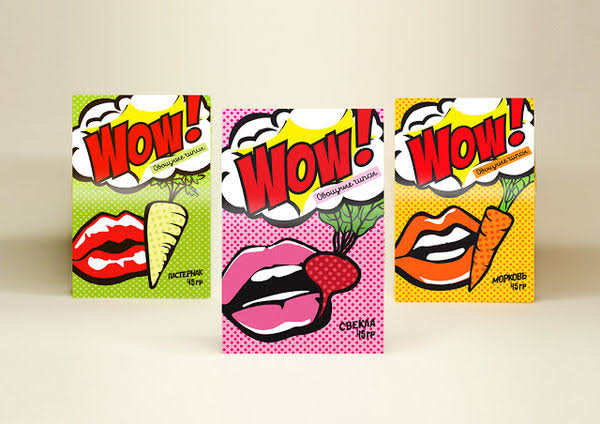
3) Comics and pop art

Pop art and comic books were wildly popular in pop culture and worldwide, decades ago. Comics often use halftones or simplified dot shading to represent color.
The designers in 2021 have been using graphics and illustrative techniques of book art styles as a way to create drama and motion and rescue modern art.

Why we love it : Pop art is fun and approachable. It takes clues from popular culture and it’s subject matter is based on what we deal with everyday like food, entertainment etc. The best part is it is not a complex artwork and has got no hidden meanings to decipher, and because it deals with bold colors often, it appears cheerful to the viewers.

Who did it best : WOW! Chips for girls

4) Black and white design

We are seeing more and more companies adapting to a darker palette. Infact most social media apps have the option to switch to a dark mode color scheme as a preference in their settings since it is less harsh to our eyes. Since the coronavirus pandemic has made our lives “go online” , there comes a huge need to minimize the eye strain. Therefore design schemes with a dark background is being adapted that makes the text pop alongwith minimizing the strain put on eyes. This year more websites and apps will likely be adapting the dark mode.

Why we love it : we love this design cause of it’s subtleness and helps the viewer focus on other aspects of the photo, such as the subject, the textures, shapes, patterns etc by removing the distraction of color. It helps to add statement to the design.

Who did it best : Chanel

5) Retrofuturism

Retrofuturism has prevailed due to it’s bold imagination and will keep on strongly emerging into the design world in 2021. It involves vibrant colors and tech inspired typography all within retro style illustrations and artwork. It involves the occurrence of futuristic themes in retro settings.

Why we love it : This design provides us with an antidote to our uncertain times and encompasses ideas of freedom, hope, liberation, and positivity. Retrofuturism provides a positive outlook which points towards a utopian future, maybe that’s what people want to buy into in these dark times of the pandemic.

Who did it best : Paco Rabanne

Animal Husbandry And Veterinary Science

Agriculture is our wisest pursuit, because it will in the end contribute most to real wealth, good morals, and happiness.
Animal husbandry is the branch of agriculture where animals are reared, bred and raised for meat, fiber, eggs, milk and other food essentials. It refers to livestock raising and selective breeding. A large number of farmers rely on animal husbandry for their livelihood.

Food is necessary for the development and survival of all the organisms. To deal with the need of food with the increasing population, it is necessary to increase food production. There are many technologies which increase yield such as plant breeding, animal husbandry and modern technologies like tissue culture, genetic engineering, embryo transfer.

Types Of Animal Husbandry

Out of many methodologies, there are four major types of animal husbandry practiced in the world today. An elaborated description of the same has been stated under:
Dairy Farming – It is mostly concerned with the long term production of milk, which is then processed to obtain dairy products such as curd, cheese, yoghurt, butter, cream and so on and so forth.
Poultry farming – It is concerned with raising and breeding of birds for commercial purposes. The eggs and meat hence produced are a rich source of protein.
Fish farming – It is the process of raising fish in closed tanks or ponds for commercial purposes. Another name one can call it is pisciculture.
Fish farming or pisciculture is of two types, namely:
Extensive aquaculture, based on the local photosynthetic production.
Intensive aquaculture, based on the external food supply given to fishes.
Bee farming – Also known as apiculture, is the practice of maintaining bee colonies by humans in man-made hives.

Role Of Animal Husbandry In Human Welfare

• Animal husbandry is beneficial to human beings in a decent number of ways, one of which is production of dairy products.
• Animals such as cows, goats, sheep are the major source of milk and milk products such as yoghurt, cheese, butter, etc.
• Meat is another very important product yielding via husbandry of animals such as pigs and goats.
• Animals also produce fibres or textiles such as wool and leather. Just as sheep are reared for wool whereas leather can be obtained from camel.

Strategies For Enhancement Of Food Production

An improved variety can be produced by induced mutation and by selecting improved mutants. Genetic engineering is also an option.

Main Steps Required For Developing New Varieties

The first involves collection of variability, genetic variability, being the main reason behind breeding.
Akin to this fact, evaluation and selection of parents certainly becomes equally as essential.


Hybridisation, which is the process of making cross between two genetically diverse parents to obtain a progeny with desired superior traits, is the third and a very important step for developing new varieties.
The fourth step involves selection and testing of superior recombination, which is more or less as the term suggests. It comprises selecting, among the progeny of the hybrids, to be specific, those plants that have the desired character combination.
This is the crucial step for the success of breeding objectives and requires careful scientific evaluation of progeny.

Plant breeding is one of the shortest and most effective routes to improve global health through better nutrition.