Feminist Literary Critisim

Feminist literary criticism is literary criticism informed by feminist theory, or more broadly, by the politics of feminism. It uses the principles and ideology of feminism to critique the language of literature.

This school of thought seeks to analyze and describe the ways in which literature portrays the narrative of male domination by exploring the economic, social, political, and psychological forces embedded within literature.This way of thinking and criticizing works can be said to have changed the way literary texts are viewed and studied, as well as changing and expanding the canon of what is commonly taught. It is used a lot in Greek myths.

Traditionally, feminist literary criticism has sought to examine old texts within literary canon through a new lens. Specific goals of feminist criticism include both the development and discovery of female tradition of writing, and rediscovering of old texts, while also interpreting symbolism of women’s writing so that it will not be lost or ignored by the male point of view and resisting sexism inherent in the majority of mainstream literature. These goals, along with the intent to analyze women writers and their writings from a female perspective, and increase awareness of the sexual politics of language and style were developed by Lisa Tuttle in the 1980s, and have since been adopted by a majority of feminist critics.

The history of feminist literary criticism is extensive, from classic works of nineteenth-century female authors such as George Eliot and Margaret Fuller to cutting-edge theoretical work in women’s studies and gender studies by “third-wave” authors. Before the 1970s—in the first and second waves of feminism—feminist literary criticism was concerned with women’s authorship and the representation of women’s condition within the literature; in particular the depiction of fictional female characters. In addition, feminist literary criticism is concerned with the exclusion of women from the literary canon, with theorists such as Lois Tyson suggesting that this is because the views of women authors are often not considered to be universal.

Additionally, feminist criticism has been closely associated with the birth and growth of queer studies. Modern feminist literary theory seeks to understand both the literary portrayals and representation of both women and people in the queer community, expanding the role of a variety of identities and analysis within feminist literary criticism.

Feminist scholarship has developed a variety of ways to unpack literature in order to understand its essence through a feminist lens. Scholars under the camp known as Feminine Critique sought to divorce literary analysis away from abstract diction-based arguments and instead tailored their criticism to more “grounded” pieces of literature (plot, characters, etc.) and recognize the perceived implicit misogyny of the structure of the story itself. Others schools of thought such as gynocriticism—which is considered a ‘female’ perspective on women’s writings—uses a historicist approach to literature by exposing exemplary female scholarship in literature and the ways in which their relation to gender structure relayed in their portrayal of both fiction and reality in their texts. Gynocriticism was introduced during the time of second wave feminism. Elaine Showalter suggests that feminist critique is an “ideological, righteous, angry, and admonitory search for the sins and errors of the past,” and says gynocriticism enlists “the grace of imagination in a disinterested search for the essential difference of women’s writing.”

More contemporary scholars attempt to understand the intersecting points of femininity and complicate our common assumptions about gender politics by accessing different categories of identity (race, class, sexual orientation, etc.) The ultimate goal of any of these tools is to uncover and expose patriarchal underlying tensions within novels and interrogate the ways in which our basic literary assumptions about such novels are contingent on female subordination. In this way, the accessibility of literature broadens to a far more inclusive and holistic population. Moreover, works that historically received little or no attention, given the historical constraints around female authorship in some cultures, are able to be heard in their original form and unabridged. This makes a broader collection of literature for all readers insofar as all great works of literature are given exposure without bias towards a gender influenced system.

Women have also begun to employ anti-patriarchal themes to protest the historical censorship of literature written by women. The rise of decadent feminist literature in the 1990s was meant to directly challenge the sexual politics of the patriarchy. By employing a wide range of female sexual exploration and lesbian and queer identities by those like Rita Felski and Judith Bennet, women were able attract more attention about feminist topics in literature.

Since the development of more complex conceptions of gender and subjectivity and third-wave feminism, feminist literary criticism has taken a variety of new routes, namely in the tradition of the Frankfurt School‘s critical theory, which analyzes how the dominant ideology of a subject influences societal understanding. It has also considered gender in the terms of Freudian and Lacanian psychoanalysis, as part of the deconstruction of existing relations of power, and as a concrete political investment. The more traditionally central feminist concern with the representation and politics of women’s lives has continued to play an active role in criticism. More specifically, modern feminist criticism deals with those issues related to the perceived intentional and unintentional patriarchal programming within key aspects of society including education, politics and the work force.

When looking at literature, modern feminist literary critics also seek ask how feminist, literary, and critical the critique practices are, with scholars such as Susan Lanser looking to improve both literature analysis and the analyzer’s own practices to be more diverse.

Structuralism

The advent of critical theory in the post-war period, which comprised various complex disciplines like linguistics, literary criticism, Psychoanalytic Criticism, Structuralism, Postcolonialism etc., proved hostile to the liberal consensus which reigned the realm of criticism between the 1930s and `50s. Among these overarching discourses, the most controversial were the two intellectual movements, Structuralism and Poststructuralism originated in France in the 1950s and the impact of which created a crisis in English studies in the late 1970s and early 1980s. Language and philosophy are the major concerns of these two approaches, rather than history or author.

Structuralism which emerged as a trend in the 1950s challenged New Criticism and rejected Sartre‘s existentialism and its notion of radical human freedom; it focused instead how human behaviour is determined by cultural, social and psychological structures. It tended to offer a single unified approach to human life that would embrace all disciplines. Roland Barthes and Jacques Derrida explored the possibilities of applying structuralist principles to literature. Jacques Lacan studied psychology in the light of structuralism, blending Freud and Saussure. Michel Foucault‘s The Order of Things examined the history of science to study the structures of epistemology (though he later denied affiliation with the structuralist movement). Louis Althusser combined Marxism and Structuralism to create his own brand of social analysis.

Structuralism, in a broader sense, is a way of perceiving the world in terms of structures. First seen in the work of the anthropologist Claude Levi-Strauss and the literary critic Roland Barthes, the essence of Structuralism is the belief that “things cannot be understood in isolation, they have to be seen in the context of larger structures they are part of”, The contexts of larger structures do not exist by themselves, but are formed by our way of perceiving the world. In structuralist criticism, consequently, there is a constant movement away from the interpretation of the individual literary work towards understanding the larger structures which contain them. For example, the structuralist analysis of Donne‘s poem Good Morrow demands more focus on the relevant genre (alba or dawn song), the concept of courtly love, etc., rather than on the close reading of the formal elements of the text.

With its penchant for scientific categorization, Structuralism suggests the interrelationship between “units” (surface phenomena) and “rules” (the ways in which units can be put together). In language, units are words and rules are the forms of grammar which order words.

Structuralists believe that the underlying structures which organize rules and units into meaningful systems are generated by the human mind itself and not by sense perception. Structuralism tries to reduce the complexity of human experiences to certain underlying structures which are universal, an idea which has its roots in the classicists like Aristotle who identified simple structures as forming the basis of life. A structure can be defined as any conceptual system that has three properties: “wholeness” (the system should function as a whole), “transformation” (system should not be static), and “self-regulation (the basic structure should not be changed).

Structuralism in its inchoate form can be found in the theories of the early twentieth century Swiss linguist, Ferdinand de Saussure (Course in General Linguistics, 1916), who moved away from the then prevalent historical and philological study of language (diachronic) to the study of the structures, patterns and functions of language at a particular time (synchronic). Saussure’s idea of the linguistic sign is a seminal concept in all structuralist and poststructuralist discourses. According to him, language is not a naming process by which things get associated with a word or name. The linguistic sign is made of the union of “signifier” (sound image, or “psychological imprint of sound”) and “signified” (concept). In this triadic view, words are “unmotivated signs,” as there is no inherent connection between a name (signifier) and what it designates .

The painting This is Not a Pipe by the Belgian Surrealist artist Rene Magritte explicates the treachery of signs and can be considered a founding stone of Structuralism. Foucault‘s book with the same title comments on the painting and stresses the incompatibility of visual representation and reality.

Saussure’s theory of language emphasizes that meanings are arbitrary and relational (illustrated by the reference to 8.25 Geneva to Paris Express in Course in General Linguistics; the paradigmatic chain hovel-shed-hut-house-mansion-palace, where the meaning of each is dependent upon its position in the chain; and the dyads male-female, day-night etc. where each unit can be defined only in terms of its opposite). Saussurean theory establishes that human being or reality is not central; it is language that constitutes the world. Saussure employed a number of binary oppositions in his lectures, an important one being speech/writing. Saussure gives primacy to speech, as it guarantees subjectivity and presence, whereas writing, he asserted, denotes absence, of the speaker as well as the signified. Derrida critiqued this as phonocentrism that unduly privileges presence over absence, which led him to question the validity of all centres.

Saussure’s use of the terms Langue (language as a system) and Parole an individual. utterance in that language, which is inferior to Langue) gave structuralists a way of thinking about the larger structures which were relevant to literature. Structuralist narratology, a form of Structuralism espoused by Vladimir Propp, Tzvetan Todorov, Roland Barthes and Gerard Genette illustrates how a story’s meaning develops from its overall structure, (langue) rather than from each individual story’s isolated theme (parole). To ascertain a text’s meaning, narratologists emphasize grammatical elements such as verb tenses and the relationships and configurations of figures of speech within the story. This demonstrates the structuralist shift from authorial intention to broader impersonal Iinguistic structures in which the author’s text (a term preferred over “work”) participates.

Structuralist critics analyse literature on the explicit model of structuralist linguistics. In their analysis they use the linguistic theory of Saussure as well as the semiotic theory developed by Saussure and the American philosopher Charles Sanders Peirce. According to the semiotic theory, language must be studied in itself, and Saussure suggests that the study of language must be situated within the larger province of Semiology, the science of signs.

Semiology understands that a word’s meaning derives entirely from its difference from other words in the sign system of language (eg: rain not brain or sprain or rail or roam or reign). All signs are cultural constructs that have taken on their meaning through repeated, learned, collective use. The process of communication is an unending chain of sign production which Peirce dubbed “unlimited semiosis”. The distinctions of symbolic, iconic and indexical signs, introduced by the literary theorist Charles Sande  Peirce is also a significant idea in Semiology. The other major concepts associated with semiotics are “denotation” (first order signification) and “connotation” (second order signification).

Structuralism was anticipated by the Myth Criticism of Northrop Frye, Richard Chase, Leslie Fiedler, Daniel Hoffman, Philip Wheelwright and others which drew upon anthropological and physiological bases of myths, rituals and folk tales to restore spiritual content to the alienated fragmented world ruled by scientism, empiricism and technology. Myth criticism sees literature as a system based or recurrent patterns.

The French social anthropologist Claude Levi-Strauss applied the structuralist outlook to cultural phenomena like mythology, kinship relations and food preparation. He applied the principles of langue and parole in his search for the fundamental mental structures of the human mind. Myths seem fantastic and arbitrary yet myths from different cultures are similar. Hence he concluded there must be universal laws that govern myths (and all human thought). Myths consist of 1) elements that oppose or contradict each other and 2) other elements that “mediate” or resolve those oppositions (such as trickster / Raven/ Coyote, uniting herbivores and carnivores). He breaks myths into smallest meaningful units called mythemes. According to Levi-Strauss, every culture can be understood, in terms of the binary oppositions like high/low, inside/outside, life/death etc., an idea which he drew from the philosophy of Hegel who explains that in every situation there are two opposing things and their resolution, which he called “thesis, antithesis and synthesis”. Levi-Strauss showed how opposing ideas would fight and also be resolved in the rules of marriage, in mythology, and in ritual.

In interpreting the Oedipus myth he placed the individual story of Oedipus within the context of the whole cycle of tales connected with the city of Thebes. He then identifies repeated motifs and contrasts, which he used as the basis of his interpretation. In this method, the story and the cycle part are reconstituted in terms of binary oppositions like animal/ human, relation/stranger, husband/son and so on.

Concrete details from the story are seen in the context of a larger structure and the larger structure is then seen as an overall network of basic dyadic pairs which have obvious symbolic, thematic and archetypal resonance. This is the typical structuralist process of moving from the particular to the general placing the individual work within a wider structural content.

A very complex binary opposition introduced by Levi-Strauss is that of bricoleur (savage mind) and an engineer (true craft man with a scientific mind). According to him, mythology functions more like a bricoleur, whereas modern western science works more like an engineer (the status of modem science is ambivalent in his writings). In Levi-Strauss’s concept of bricolage, what is important is that the signs already in existence are used for purposes that they were not originally meant for. When a faucet breaks, the bricoleur stops the leak using a cloth, which is not actually meant for it. On the other hand the engineer foresees the eventuality and he would have either a spare faucet or all the spanners and bolts necessary to repair the tap.

Derrida, the poststructuralist, opposes Levi-Strauss‘s concept of bricolage in his Structure, Sign and Play, saying that the opposition of bricolage to engineering is far more troublesome that Levi-Strauss admits and also the control of theory and method, which Levi-Strauss attributes to the engineer would seem a very strange attribution for a structuralist to make.

In Mythologies he examines modern France from the standpoint of a cultural theorist. It is an ideological critique of products of mass bourgeois culture, like soaps, advertisements, images of Rome etc., which are explained using the concept of ‘myth’. According to Barthes, myth is a language, a mode of signification. He reiterates Saussure’s view that semiology comprises three terms: signifier, signified and sign, in which sign is a relation between the signifier and signified. The structure of myth repeats this tri-dimensional pattern. Myth is a second order signifying system illustrated by the image of the young Negro in a French uniform saluting the french flag, published as the cover page of the Parisian magazine, Paris Match, which reveals the myth of French imperialism at the connotative level.

The complexity and heterogeneity of structuralism, which is reflected even in the architecture of this period (eg., structuralist artefacts like Berlin Holocaust Memorial, Bank of China Tower, etc) paved the way to poststructuralism which attacked the essentialist premises of structuralism. Poststructuralism argues that in the very examination of underlying structures, a series of biases are involved. Structuralism has often been criticized for being ahistorical and for favouring deterministic structural forces over the ability of people to act. As the political turbulence of the 1960s and 1970s (especially the student uprising of May 1968) began affecting the academy, issues of power and political struggle moved to the centre of people’s attention. In the 1980s deconstruction and its emphasis on the fundamental ambiguity of language—rather than its crystalline logical structure—became popular, which proved fatal to structuralism.


How BTS Saved Millions of Lives

BTS

In 2013, a group of seven boys, all from different backgrounds, who left behind their friends and family to follow their dream of becoming K-pop artistes, were about to debut. But soon afterwards, their hopes were crushed as the bad press from the media, internal strife and lack of proper finance forced them to almost disband multiple times. But they kept on fighting for their dream, even if that meant living in one cramped dorm room and having to beg people to come to their concerts. These boys had very humble beginnings – one of the members, Yoongi, recently had a surgery to repair a torn shoulder labrum. The tear was related to an injury that occurred in 2012, when the performer was hit by a car during one of his delivery-boy shifts.

Flash forward to years later, that same group of boys from South Korea, Bangtan Sonyeondan (BTS), are now one of the biggest boy bands in the world. Among other outstanding achievements, they have multiple No. 1 albums in the US Billboard Hot 100, 15 Guinness World Records and over 300 awards. BTS are the youngest recipients of South Korea’s Order of Cultural Merit award and the first ever K-pop act to receive a Grammy nomination. They are changing the world and the face of K-pop forever, paving the way for others.

For years, BTS struggled to get their music heard. They were not an overnight success, like some people might believe. But because of their struggles and despite of it, they became worldwide superstars and South Korea’s pride and joy. BTS refuse to be confined within the boundaries of the “K-pop” industry, instead often experimenting with different, versatile styles and musical genres like Hip-Hop, Jazz, EDM, R&B, Latin pop, Ballad, Country and Rock among others. Each of the seven members embody various roles and positions in the group, such as dancer, vocalist, leader, rapper, producer, choreographer, and more.

BTS

BTS’s music transcends language, time and cultural barriers; their raw and relatable lyrics resonates with people, going through different stages of life. The healing power of their music does not discriminate. The majority of their self-written and self-produced songs discuss socio-political issues found in contemporary society such as mental health, toxic-masculinity, women’s empowerment, self-love, capitalism, burn-out and the struggles of growing up among other things. Most of their topics are still taboo in the culturally-conservative Asia and are often brushed away as non-existent.

The Korean music industry is known for their “manufactured” and “engineered” sound, where the artistes themselves have no say in what they are singing about, but instead, have their music written and produced by a group of professionals fit for the industry standards. BTS breaks all those preconceived rules by having a voice in their own music. They have started a new trend for Korean singers to explore more complex and impactful themes.

These motifs are often seen in both their studio albums and individual mixtapes. In their latest album “BE”, which was released on November 20, 2020, BTS shared their experiences and hopes during the pandemic, as they as embrace “Be”-ing in this new reality. The relatable lyrics and catchy beats in titles like “Fly to my Room”, “Dis-ease”, “Stay” and “Telepathy” are contrasted with the raw, emotional ballads like “Blue & Grey” and “Life Goes On”.

This album also features their first ever completely English language song, “Dynamite”. It consoles anyone struggling with their mental health during these times and is a beacon of hope for listeners that everything will be okay and life goes on. To me, this album feels like a warm hug from a loved one on a cold winter morning.

BTS’s fans, known as ARMY (short for Adorable Representative MC for Youth) are a group of passionate and creative individuals, from all walks of life, who stand by BTS and each other through thick and thin. Shehrin Tabassum Odri, a digital marketer and an ARMY since 2018, shared her story of how much of an impact BTS has had in her life. “When I was at my loneliest, having hit rock bottom and losing the will to live, BTS was there for me. It was the day they released their ‘Life Goes On’ music video,” she says. “The song was like a wakeup call. It made me realise how many future opportunities and loved ones I will be losing if I give up now and that I’m not the only one feeling this miserable and lost, the members of BTS have gone through this phase too. If they have found a way to stay hopeful for the future to change and better times to come, maybe I should hold on a bit longer too. BTS gave me the hope to keep living.”

 “In conservative countries like ours, masculinity is associated with tall, bearded men with deep voices,” mentions Sumaiya Islam, a Nuclear Science and Engineering student.  “In a society where men struggle to be vulnerable and be seen as ‘manly’ enough, BTS breaks the gender norms by wearing makeup, jewellery, gender-neutral clothes, and long, colourful hair. They have completely changed my viewpoint on Asian men.”  Sumaiya has been an ARMY since 2018.

Atanu Roy Chowdhury shared that the band makes him feel “seen”. “Mental health is affecting our lives, but people don’t want to talk about it.  BTS is using the universal language of music to tell the world how important mental health is,” he says. “One of my closest friends died by suicide in 2012, and there are times when it still breaks my heart thinking that I will never see her or talk to her again. Songs from BTS albums help to ease the pain.  Having my favourite musicians talk about such issues makes me feel more connected to them.”

By breaking down age-old, ignorant ideas like “men don’t cry” and “only girls can wear makeup”, openly talking about their struggles and sharing their emotions, BTS are showing the world that gender does not have to confine anyone and there should be no one standard of being. Group members Min Yoongi (Suga), Kim Namjoon (RM) and recently, Kim Taehyung (V) and Kim Seokjin (Jin), are known for being open about their struggles with anxiety, depression and burn-out. “I have been called ‘girly’ because I like cooking, cleanliness and keeping my hair long. Even the way I walk has been criticised. Terms like ‘girly’ and ‘gay’ are so easily used as insults, when they should not be,” adds Atanu. “Toxic masculinity is so ingrained in us, and it affects people of all ages. BTS is fighting a difficult fight, and kudos to them for that!” Seeing someone like BTS’ Jungkook be named “Sexiest International Man Alive 2020”, in a sphere usually dominated by white men, can do wonders for brown, Asian men worldwide, giving them an ideal person they can actually relate to.  Another ARMY, Niaz Ahmed, shared that messages from the band to “Love Yourself” (a trilogy of their albums in 2018) resonated with him. “Their music was eye-opening, and helped me to start thinking that being happy with who I am is very important,” he says.

Subyeta Sarwar mentioned how being a part of the BTS fandom in Bangladesh has helped her connect with other ARMYs easily, creating deep bonds and long-lasting friendships. Going to different events such as the BD Korean Festival, hosted by BD K-Family, has helped her socialise and meet fellow ARMYs. Since there is a lack of K-pop concerts in Bangladesh, these events are the closest fans can get to experiencing them.

 For fans who have been with BTS for a couple of years like myself, it feels like we are growing up with them, experiencing the highs and lows of their lives and career alongside them, not as a distant fan, but as a close friend. There is a popular saying in the fandom, “If you are not a fan of BTS now, it’s because you’re not at a point where you need them yet. Just wait, they’ll find you and come to you when you need to be healed, never too early or too late.”

In the pop-dominated culture we live in, BTS have successfully utilised their music platform to spread the message of social inequality and injustice, which the youth often face. By speaking up about these issues, BTS are not only breaking the preconceived societal stereotypes and creating awareness, they are also urging their fans to do the same. To quote the group’s leader, Kim Namjoon (RM), from his UNICEF speech at the United Nations in 2018, “No matter who you are, where you’re from, your skin colour, gender identity: speak yourself.” 

Siblings repaid hawkers ‘Groundnut cost’: An Interesting Case from Andhra Pradesh

This interesting incident has taken place in the state of Andhra Pradesh. We all know many people do not repay even bank loans or loans for various reasons including intentionally. According to the Economic Times, 9 February 2021 (online edition) in India ‘top 100 wilful defaulters owe Rs. 84,632 crore to banks as of March 2020’. Further, the total size of the top 100 wilful defaults rose 5.34 percent in the financial year 2020 from Rs. 80,344 crore as of March 2019, according to the Reserve Bank of India. Even in the case of self-help groups, the huge amount of loan is outstanding. “A loan of over Rs 1.12 lakh crore is outstanding with self-help groups (SHGs) under the Deendayal Antyodaya Yojana-National Rural Livelihoods Mission (DAY-NRLM, which is a Government of India Yojana for the rural Below Poverty Line (BPL) families) as of June 30, 2021, while the loan repayment rate by SHGs to banks is 97.17 percent”, (The Economic Times, 30 July 2021, online edition).
  But here I am presenting an interesting case that portrays honesty and sincerity to repay a small amount of money. Nemani Pranav, now 21 years old, and his younger sister Suchita presently live in the USA and continue their study. In 2010 (that is 11 years ago) they with their father, Mohon went to a Sea beach located at Kakinada district of East Godavari district, Andhra Pradesh. At that time Pranav was only 10 years old and his sister was younger than him. When they were roaming along the Sea beach and enjoying the tides they saw a hawker selling groundnuts. Both the children desired to eat fried groundnuts.  The hawker Ginjalla Pedda Satyaiah sold a few packets of groundnuts. We know in those days the handmade paper bags were used for selling the items. When the children started eating, the father found he forgot to bring the money bag. As a result, no money was with him to pay the hawker. Anyway, Mohan took the address of the hawker  Satyaiah and a photograph in his camera and promised to pay back the money. In the meantime, Mohon passed away and both his son and daughter went to the USA. But they remembered the incident of not paying money to the hawker. So by staying in the USA they contacted a local influential person who was kind enough to find out the address of the hawker in a small village in present Andhra Pradesh. Both brother and sister came from the USA to meet Satyaiah. By this time, Satyaiah also passed away but they handed over Rs. 25, 000 to their family members on 30 December 2021. They felt happy that at least they could repay the money (they paid more money which I assume) to the family for eating the groundnuts. 

I salute to the children for honouring both father and the hawker. Here the proverb is applicable, “Honesty is the best policy”. I believe that is why with their skills they  could pursue their study in the USA.

(Necessary inputs have been collected from Bengali newspaper Anandabazar Patrika,online edition, 5 January 2022)

Conclave of Shikshak Parv

 Prime Minister Shri Narendra Modi addressed the inaugural conclave of Shikshak Parv today via video conferencing. He also launched Indian Sign Language Dictionary (audio and text embedded sign language video for the hearing impaired, in conformity with Universal Design of Learning), Talking Books (audiobooks for the visually impaired), School Quality Assurance and Assessment Framework of CBSE, NISHTHA teachers’ training programme for NIPUN Bharat and Vidyanjali portal (for facilitating education volunteers/ donors/ CSR contributors for school development). The conclave was attended by Shri Dharmendra Pradhan, Union Minister for Education, Smt. Annpurna Devi, Minister of State for Education, Dr. Subhas Sarkar, Minister of State for Education, Dr. Rajkumar Ranjan Singh, Minister of State for Education and senior officials of the Ministry of Education.

Addressing the gathering, the Prime Minister congratulated the teachers who have received the National Award. He commended the contribution the teachers have made for the future of students in the country in difficult times. He said that today, on the occasion of Shikshak Parv, many new schemes have been started which are also important because the country is currently celebrating the Azadi ka Amrit Mahotsav. Taking new resolutions for how India will be after 100 years of independence. The Prime Minister praised students, teachers and the entire academic community for rising up to the challenge of pandemic and asked them to take forward the capabilities developed to deal with that difficult time. “If we are in the midst of a transformation period, fortunately, we also have modern and futuristic new National Education Policy”, he said.

The Prime Minister praised the contribution of academicians, experts, teachers, at every level of the formulation of the National Education Policy and its implementation. He urged everyone to take this participation to a new level and also to involve society in it. These transformations in the education sector are not just policy-based but also participation -based, he added.

The Prime Minister said ‘Vidyanjali 2.0’ is like a platform for the country’s resolve of ‘Sabka Prayas’ with ‘Sabka Saath, Sabka Vikas, Sabka Vishwas’. In this society, our private sector has to come forward and contribute to increasing the quality of education in government schools.

The Prime Minister said that in the last few years, public participation is again becoming the national character of India. In the last 6-7 years, due to the power of public participation, many things have been done in India, which were difficult to imagine earlier. When society does something together, then the desired results are assured, he said. The Prime Minister said that everyone, in whichever sphere of life, has a role in shaping the future of the youth. He recalled the stellar performance of our athletes in the recently concluded olympics paralympics. He expressed happiness that athletes have accepted his request that every player visit at least 75 schools during Azadi Ka Amrit mahotsav. This will inspire the students and many talented students will get encouragement to go forward in the field of sports, he said.

The Prime Minister said that for the progress of any country, education should not only be inclusive but should also be equitable. He added that National Digital Architecture i.e. N-DEAR is likely to play a major role in eradicating inequality in education and its modernization. N-DEAR will act as a ‘super-connect’ between various academic activities in the same way as UPI interface revolutionized the banking sector.  The country is making technology like Talking Books and Audiobooks a part of education. He said

School Quality Assessment and Assurance Framework (S.Q.A.A.F), which was operationalized today, would address the deficiency of the absence of a common scientific framework for dimensions like curricula, pedagogy, assessment, infrastructure, inclusive practices and governance process. SQAAF will help in bridging this inequality.

He added that in this rapidly changing era, our teachers also have to learn about new systems and techniques rapidly. He informed that the country is preparing its teachers for these changes through ‘Nishtha’ training programs.

The Prime Minister said Teachers of India not only meet any global standard, but they also have their special capital. This special capital, this special strength is the Indian culture within them. He said our teachers do not consider their work as a mere profession, teaching for them is marked by human empathy, a sacred moral duty. That is why we do not have a mere professional relationship between the teacher and the children, but a family relationship. And this relationship is for life, the Prime Minister added.

Speaking on the occasion Union Minister Shri Dharmendra Pradhan expressed his gratitude to the Prime Minister Shri Narendra Modi for sharing his vision and thoughts on New Education Policy 2020 and on India’s journey towards becoming a world leader in education. The Prime Minister himself launching multiple initiatives in the education sector and his regular interaction with the stakeholders reflect his commitment to foster an education system aligned with the aspirations of a 21st-century India, he added. Shri Pradhan said that the celebration of Shikshak Parv will encourage innovative practices to ensure not only spread of education at all levels but also to improve quality, institutionalise inclusive practices and enhance sustainability in the schools.

The theme of Shikshak Parv has been identified keeping in view three of the five pillars of Azadi Ka Amrit Mahotsav celebrations – Ideas@75, Actions@75 and Achievements@75 and looks at the practitioners of school education like Teachers, Principals, etc. to share their experiences on webinars based on the current year’s theme: “Quality and Sustainable Schools: Learnings from Schools in India”.

The inaugural conclave was followed by a technical session on the current year’s theme: “Quality and Sustainable Schools: Learnings from Schools in India” chaired by Dr. K. Kasturirangan, Chairman, National Education Policy Committee and Prof. J.S. Rajput Former Director, NCERT and other educationists. They shared their experiences during the conclave.

Till 17th September, webinars, discussions, presentations have been scheduled in which the educational practitioners from various schools of the country have been invited to share their experience, learnings and the roadmap ahead. It is noteworthy that teachers and practitioners from even remote schools will be speaking on issues relating quality and innovation in schools. The SCERT and DIETs in respective states will also be deliberating further on each of the webinars and suggesting the roadmap which will be consolidated by State SCERT.  

A large number of teachers, principals, students, parents and stakeholders attended the Shikshak Parv inaugural conclave and subsequent webinars from across the country.

*****

Education is an important tool for national character building

Prime Minister Shri Narendra Modi addressed the inaugural conclave of Shikshak Parv on 7 September, 2021 via video conferencing. The inaugural conclave was followed by a technical session on the current year’s theme: “Quality and Sustainable Schools: Learnings from Schools in India”. Smt. Annapurna Devi, Minister of State for Education was the chief guest on the occasion. The session was chaired by Dr. K. Kasturirangan, Chairman, National Education Policy Committee. Prof. J.S. Rajput Former Director, NCERT and senior officials of the Ministry were present on the occasion.

Speaking on the occasion Smt Annapurna Devi stated that the development of a nation is dependent on education as education is an important tool for national character building.  Therefore capacity building of children is essential. Follow the website to ensure better capacity for your child.  She stressed that it is important that both teachers ad children learn together, they must also learn the local skills and acquire experience based learning to make education more relevant in present times. She also mentioned that quality and sustainability are two sides of the same coin. Smt Annapurna Devi hoped that the discussions and ideas that emerge out of this conclave will help in realising the vision of our Prime Minister of strengthening the education system of our country.

Sh. Kasturiangan appreciated the efforts of the Ministry of Education in organising this important conclave with the Prime Minister setting the tone of the deliberations for the forthcoming sessions and also lauded the initiatives that have been taken to realised the vision of NEP 2020. He also appreciated the efforts taken by Sh. Dharmendra Pradhan, Minister of Education for the steps taken by him to realise the goals of NEP in such a short span of time. He pointed out that owing to the outbreak of Covid 19 there were some disruptions as well as learning loss among children and hopes that many of these issues and challenges will be addressed during the conclave.  He emphasised on focusing on four issues in this regard: Firstly, the Foundational Literacy and Numeracy is an important aspect mentioned in NEP 2020. Secondly, community engagement and support is also required to ensure that all children are retained in school. The thirds point is curricular transformation with regard to which the NEP focuses on lessening the burden so that there is more scope for other forms of learning. The fourth issue relates to the teachers who are central to the education system and have an important role to play in bridging the gap of learning loss.   Thus restoring quality education and maintaining sustainability are the two major challenges, beside the challenges posed by the pandemic. 

Prof. J.S. Rajput said there is a need to restore respect for teachers. He further said that, teachers must also remember that they must first know the child, understand the mind of the child and remember that nothing can be taught but learnt. Learning is the treasure within, teachers can only   inspire the learners to realise the treasure from within, he added.

Prof. Rajput highlighted that there is a social responsibility of parents, principals, teachers and community to feel a sense of belonging towards the school. The pandemic has given us a chance to improve the environment of government schools in terms of access, security and quality of teaching, teacher student ratio, etc., he added. He concluded by saying that three things are very important to re- establish the glory of rich educational heritage of India in the world:   Lifelong Learning, Learning to Learn and Learning to Live Together.

Prof. Sridhar Srivastava, Director, NCERT, welcomed the participants to the concluding session of the Conclave. He highlighted the active role played by NCERT during the pandemic situation by supporting the education in the online mode, developing teaching-learning resources such as the Alternative Academic Calendar, PRAGYATA Guidelines and NISHTHA 2.0 online training modules for supporting teachers. He further said that this year’s Shikshak Parv adopts a “whole-school” approach; one that extends beyond the curriculum and addresses the entire planning, operation and management of the school facility. He informed that the upcoming nine National Webinars during Shikshak Parv will focus on various themes that will help all those connected to the Parv learn from schools and teachers. NCERT will incorporate the learnings from schools into the National Curriculum Framework (NCF), which is under development at present, he added.

Smt. Anita Karwal thanked Smt Annapurna Devi, Dr. K. Kasturirangan, Prof. J.S. Rajput and all the speakers. She stated some of the initiatives taken by teachers are eye openers such as starting entrepreneurship for grade I, exposure of nature these are excellent examples of connecting learning to real life. There is need to build capacity of school, society and of parents to participate hand in hand to bring sustainability, she added.

*****

Webinar on ‘Foundational Literacy and Numeracy: A Pre-requisite to Learning and ECCE’

 Ministry of Education is organizing 9-days webinars on different themes as part of celebration of Shikshak Parv during 5-17 September 2021. The theme for today’s webinar was ‘Foundational Literacy and Numeracy: A Pre-requisite to Learning and ECCE’. Smt Anita Karwal, Secretary (SE&L), MoE, Shri Maneesh Garg, Joint Secretary (SE&L); Prof. Sridhar Srivastava, Director NCERT and senior officials of the Ministry attended the webinar.

Smt Anita Karwal stated that Foundational Literacy and Numeracy (FLN) has been given a lot of emphasis in NEP 2020. She informed that all the states have begun the process of allocating resources for Nipun Bharat, so the discussion on its implementation gains significance. Smt Karwal said that FLN will be spearheaded by teachers so they need to develop a mindset of recognizing the uniqueness of each child, and thus use unique interventions. She urged that administrators, planners, and experts have developed Nipun Bharat guidelines, which may be followed by States.

Shri Maneesh Garg stressed on the importance of FLN in school education. He highlighted that the vision of Nipun Bharat is to create an enabling environment that leads to universalization of FLN to ensure universal acquisition of FLN in primary classes within 5 years so that every child achieves the desired learning competencies in reading, writing and numeracy at the end of Class III. He informed that a five-tier implementation mechanism for Nipun Bharat will be set up at the National, State, District, Block and School level in all states and UTs. All stakeholders will have a specific role in the implementation of the mission targets and measureable key performance indicators will be developed for monitoring of the mission, he added.

Prof. Sridhar Srivastava, Director NCERT made a presentation on developmental goals and codification of Learning outcomes. He explained the three developmental goals of FLN i.e. children maintain good health and wellbeing; children become effective communicators and children become involved learners and connect with their immediate environment. He elaborated on the underlying competencies under each goal in detail, and explained the codification of the Learning Outcomes under each goal. Further he added that the competencies are age appropriate based on 21st century skills and the learning outcomes are progressive and are in continuum.

******

Webinar on Ensuring Inclusive Governance: Making Every Person Matter’

Ministry of Education and University Grants Commission (UGC) today organised a webinar on ‘Ensuring Inclusive Governance: Making Every Person Matter’, as part of the vision to provide quality education to all. Union Minister for Tribal Affairs Shri Arjun Munda addressed the webinar as a Chief guest. Secretary, Higher Education Shri Amit KhareChairman, UGC, Shri D.P. Singh; Joint Secretary, Higher Education, Smt. Neeta Prasad and senior officials of the Ministry were present on the occasion.

Speaking on the occasion, Shri Arjun Munda said that Eklavya Model Residential School (EMRS) Scheme is reflective of Prime Minister’s visionary approach towards inclusive education. EMRS provides access to education to the marginalized population in tribal regions, he added. Shri Munda highlighted that the National Education Policy 2020 which aims to ensure equity and inclusion has given a national perspective to education of tribals, and is a true manifest  of good governance. He also said that programmes like Digital India, SamagraShiksha, etc are facilitating students from tribal and rural areas to compete at the national level.

Shri Arjun Munda stressed on the importance of Self Governance with the spirit of SabkaSaath, SabkaVikaas, SabkaVishwas and SabkaPrayaas and said that the Prime Minister has given us this mantra with focus on people’s participation in achieving these ideals which is the basis of a true democracy.

The Minister reiterated that as we celebrate Azadi Ka Amrit Mahotsav, it should be our resolve to empower everyone to take advantage of opportunities  with our long -standing constitutional commitment to provide equal opportunities to all.

Shri Munda emphasised upon good governance, self-governance and inclusive governance leading to inclusive growth. Shri Munda also reminded the academia about their responsibility of giving wings to the aspirations of new generation, particularly the deprived one.

Shri Amit Khare shed light on the problems faced by students from deprived section of the society including, students from rural and tribal areas. Shri Khare stressed upon language problems being faced by the students. He emphasised on the need for promoting Hindi and regional languages so that no student should be left behind.

Prof. D.P. Singh, Chairman, UGC in his opening address reiterated the constitutional ideals of equality of status and opportunity as pivots of our democracy. He called upon the leaders of higher education institutions to make concerted effort towards good governance with specific focus on inclusiveness and strive to provide opportunity to all their constituents equally.

The Webinar on Ensuring Inclusive Governance: Making Every Person Matters provided an opportunity to bring academic leaders, educationist and administrators on one platform and was supported by Babasaheb Bhimrao Ambedkar University, Lucknow. The Vice Chancellor of the University, Prof. Sanjay Singh delivered the welcome address.Prof. Alok Rai, Vice Chancellor, University of Lucknow in his Keynote address reiterated students as fundamental to our education system. He underlined the issues being faced by students from all section of society and elaborated different issues of Women students, Divyang Students, Tribal Students, etc. Prof. Rai emphasised upon value creation and value addition for students from different background.

The Technical Session was chaired by Prof. Sushma Yadav, Former Vice-Chancellor, BhagatPhool Singh MahilaVishwavidyalaya, Sonepat and Member-UGC. Prof. M.M. Salunkhe, Vice-Chancellor, BharatiVidyapeeth, Pune, Prof. H.C.S. Rathore, Former Vice-Chancellor, Central University of South Bihar and Prof. BhimrayaMetri, Director, IIM Nagpur addressed the technical session.

*****


Universalisation of Quality Education through Digital Education

 Union Education Minister Shri Dharmendra Pradhan held a meeting on universalisation of quality education through digital education. Minister of State for Education Smt. Annapurna Devi, Smt Anita Karwal, Secretary, DoSE&L, Dr. T.P. Singh, DG, BISAG-N, Shri Shashi S. Vempati, CEO, Prasar Bharati and other officials from the Ministry of Education were also present in the meeting.

Discussion centred on leveraging satellite technology and internet to develop an integrated digital ecosystem. The Minister called for an innovative approach to leverage technology to further expand the existing platforms to cover all spectrums of School Education, Higher Education, Skill Development and Teachers training. He called for strengthening and expanding the existing Swayam Prabha Initiative and synergize initiatives like National Digital Education Architecture (NDEAR) and National Educational Technology Forum (NETF). Shri Pradhan stressed on the need to bridge digital divide and reach the unreached to bring greater inclusion in education.

The Minister said that a committee may be formed under Chairpersonship of Secretary, DoSE&L with senior officials from School Education, Higher Education, Ministry of Skill Development, Ministry of Electronics and Information Technology, Dept of Telecommunication, Prasar Bharti, Ministry of I&B, BISAG-N and Department of Space.


*****

National Webinar on Empowering Women, Building Gender Parity

 Ministry of Education and University Grants Commission today organised National Webinar on Empowering Women, Building Gender Parity as part of Webinar Series on Good Governance being held from 17th September, 2021 to 7th October, 2021. Hon’ble Minister of State for Commerce Smt. Anupriya Patel delivered the inaugural address. Secretary (HE), Shri Amit Khare, Chairman, UGC Prof. D.P. Singh, senior officials from Ministry of Education and University Grants Commission were present on the occasion.

Delivering the inaugural address, Minister of State for Commerce Smt. Anupriya Patel said Gender Parity is not just good for women, it is good for the society and for the nation. The Minister stressed upon the need for having equal rights, equal roles and equal opportunity for men and women so that they contribute equally in all dimensions of life. The Minister added, focus must be on increasing women’s access to resources, her control over life and her decision-making rights.

Smt. Patel reiterated that Prime Minister envisions an India with larger role for women. The Minister highlighted various initiatives of government like Pradhan Mantri Jan Dhan Yojana, Ujjwala Yojana, Beti Bachao Beti Padhao, Sukanya Samridhi Yojana and Fellowship/Scholarships for women from deprived section intended to improve the life of the women.

The Minister stressed that, barrier for gender parity is deeply entrenched in the mindset. She said, there must be a collective effort in the society to change that mindset. She called upon all those present in the webinar to play individual role in the family, in the society and resultantly in the nation, and supplement the efforts of the government. She said, an empowered woman is powerful beyond measure and beautiful beyond description.

Shri Khare, Secretary, Higher Education in addressing the webinar focused on remarkable achievements on the gender parity index in spite of the discrimination and lack of opportunity existing in the society. Shri Khare, also raised the issue of very a smaller number of women faculty, particularly at leadership positions in higher education institutions, and called for proactive efforts regarding this.

Prof. D.P. Singh, Chairman, UGC in his opening address reaffirmed that women of the 21st century is fully capable of taking decision for themselves and social development. Prof. Singh said, sensitivity towards women empowerment and equality in the society is possible only through education.

The National Webinar on Empowering Women, Building Gender Parity provided an opportunity to brainstorm with academicians, educationalists, administrators and students about the possible ways ahead to implement NEP in terms of empowering women in education.

Dr. Vasudha Kamat, Former Vice-Chancellor, SNDT Women’s University, Mumbai and Member of NEP Draft Committee in her keynote address discussed the measures of multiple pathways to education, governance through political participation, gender sensitivity and targeted policies towards girls for bridging the gender gap.

The technical session of National Webinar was chaired by Prof. Sunaina Singh, Vice Chancellor, Nalanda University. Dr. Annapurna Nautiyal, VC, HNB Garhwal University; Dr. Shaji Thomas, Director, NIT, Trichy; and Prof. V.K. Malhotra, Member Secretary, ICSSR addressed the session as experts.

*****


National webinar on Strengthening Indian Languages for Holistic Educational Attainment

 Ministry of Education and University Grants Commission organised a national webinar on Strengthening Indian Languages for Holistic Educational Attainment today, as part of the webinar series on Good Governance being held from 17th September, 2021 to 7th October, 2021. Minister of State for Education Smt. Annapurna Devi was the Chief Guest for the webinar.

Addressing the inaugural session, Smt. Annapurna Devi talked about the vision of Prime Minister towards Atmanirbhar Bharat. She stressed that preservation and promotion of Indian languages is crucial for the unity and integrity of nation. She highlighted that Indian languages have not received their due attention and care, with the country losing over 220 languages in last 50 years alone. The Minister said that teaching and learning of Indian languages need to be integrated with school and higher education at every level.

Smt Annapurna Devi stated that the National Education Policy will act as a medium of connectivity between local to global by creating an opportunity for teaching-learning in regional dialects and Indian languages. Further, she mentioned that the nation’s development is possible only by strengthening and preserving our Indian languages. Smt Devi emphasised the importance to extend academic and social support to strengthen Indian languages for holistic development of the education sector including learners and teachers.

Shri Amit Khare, Secretary, Higher Education while addressing the webinar touched upon the benefits of learning in our own mother languages such as developing critical thinking, building better understanding of knowledge system, etc. Shri Khare elaborated the role of NEP to revive Indian languages that are being extinct..

The Webinar Strengthening Indian Languages for Holistic Educational Attainment provided a platform for eminent academicians, educationalists, administrators to explore future ways of providing deserving attention and efforts to Indian languages, dialects to holistic development of the learners.

Prof. Sachhidananda Joshi, Member Secretary, Indian Gandhi national Centre for the Arts in his keynote address urged upon changing our perception of Indian languages. Majority of the knowledge is conceived from the age of 0-6 years and this is a crucial period of educating the young minds in their mother languages, he added. He talked about the linkages between culture and education as the two being inseparable yet independent. He urged to accommodate different words from different languages to enrich our dictionaries and vocabularies.

Secretary (HE), Shri Amit Khare, Chairman, UGC Prof. D.P. Singh, senior officials from Ministry of Education and University Grants Commission attended the webinar.

The technical session was chaired by Prof. Balwant Jani, Chancellor, Dr. Hari Singh Gour University, Sagar. Prof. Sanjay Dwivedi, Director General, Indian Institute of Mass Communication, New Delhi; Prof. Hanuman Prasad Shukla, Pro-Vice Chancellor, Mahatma Gandhi Antarrashtriya Hindi Vishwavidyalaya, Wardha and Prof. R K.Pandey, Vice-Chancellor, Shri Lal Bahadur Shastri National Sanskrit University addressed various aspects of Indian languages at the session as experts.

*****

SHAKESPEAREAN ROMANCES

Romance” was not a generic classification in Shakespeare’s time. The plays of Shakespeare’s final period (1608-12) are called Romances. In Shakespeare’s own time they were simply classified as tragedies or comedies. These plays are Pericles, Cymbeline, The Tempest, and The Winter’s Tale. Perhaps another play The Two Noble Kinsmen also may be included in this group. They are called romances because they exhibit several characteristics of romance literature. 

Shakespeare must have written these plays under the influence of his younger contemporaries Beaumont and Fletcher whose tragic comedies were becoming very popular. The masques at the court of James 1 also must have influenced Shakespeare. Shakespeare’s romances are, in fact, neither tragedies nor comedies but are a mixture of both.
Dowden has pointed out that the last plays of Shakespeare reveal sobriety, serenity, and sanity as contrasted with the storm and strain of the tragedies. They supplement the tragedies with their more relaxed atmosphere and are marked by great forbearance, a sense of reconciliation, and forgiveness. However, Lytton Strachey thinks that these plays express a mood of boredom rather than serenity.

Romance is a natural step in describing the human experience after a tragedy. In Romance, time seems to be “reversible”; there are second chances and fresh starts. As a result, categories such as to cause and effect, beginning and end, are displaced by a sense of simultaneity and harmony. The tragedy is governed by a sense of Fate (Macbeth, Hamlet) or Fortune (King Lear); in Romance, the sense of destiny comes instead from Divine Providence.
Tragedy depicts alienation and destruction, Romance, reconciliation, and restoration. In tragedies, characters are destroyed as a result of their actions and choices; in Romance, characters respond to situations and events rather than provoking them. Shakespeare had made use of romance material throughout his career The Two Gentlemen of Verona is based on a famous romance, for instance, and small-scale masques are performed in many plays, while others contain masque-like elements.

The romances of Shakespeare have certain common characteristics. They have motifs common in romance literature such as improbable happenings, separation, wanderings, reunion, and reconciliation. They contain several elements of the tragicomedies made popular by Beaumont and Fletcher. There are only a few memorable characters in these plays Shakespeare has returned to his lyrical style of the earlier plays.

The main characteristics of the Shakespearean romances:

  • The scene of these plays is unknown, remote and the setting is imaginary. Cymbeline is set in early Britain and the setting of The Tempest is somewhere in the Mediterranean.
  • The happenings are fanciful. There is no logical cause-and-effect relationship. In the light of reason, the events may appear absurd. The feats of magic in The Tempest, the concealment of Hermione for sixteen years in The winter’s Tale, and the abduction of the two sons of Cymbeline would appear unnatural. But in Shakespeare’s world of imagination, these events are delightful.
  • Characters are types. They do not have the marked personalities of the characters in the great comedies or tragedies. However, heroines are more memorable than heroes. Miranda, Perdita, and Imogen are lovely but weak. Villains like Iachimo in Cymbeline and Leontes in The Winter’s Tale are not hardened, villains. Even Ferdinand in The Tempest is no match for Benedick or Orlando.
  • The supernatural element is predominant in romances. The Tempest and Cymbeline are examples. The Tempest also shows Prospero’s magic and the elusive character Ariel. In The Winter’s Tale, the Delphic Oracle is introduced and in Pericles, the King’s wife Thaisa becomes a priestess in the temple of Diana. 
  • In romance’s sea is dominant. There is a shipwreck in Pericles and The Tempest. Sea voyages are mentioned in all of them. Sea is the symbol of regeneration.
  • The romances are marked by a spirit of reconciliation and forgiveness. In The Tempest, Prospero forgives his wicked brother Antonio; in Cymbeline posthumous reconciles with Hermione.

India is building global competencies to fulfill 21st century aspirations

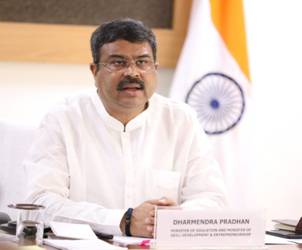
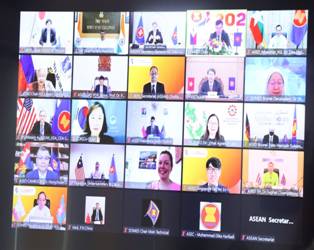
 ‘India is building global competencies to fulfill 21st century aspirations’, said Shri Dharmendra Pradhan, Union Minister for Education and Skill Development at 5th East Asia Summit (EAS) Education Ministers Meeting. Shri Rajkumar Ranjan Singh, Minister of State for Education and senior officials of the Ministry also attended the meeting.   

Speaking on the occasion, Shri Pradhan reaffirmed India’s commitment foster long-term and mutually beneficial educational cooperation in sync with the complementarities outlined in the Manila Action Plan.


The Minister shared the objectives of India’s National Education Policy, including universalisation of education, ensuring equity, quality, affordability & flexibility, technology-based learning and several others which uphold the principles of the Manila Action Plan on Education.

Shri Pradhan spoke about the multi-modal digital interventions, like PM-eVidya, Swayam, Diksha, etc which ensured continuity of learning during the pandemic and also on the continuous efforts to ramp up the digital infrastructure to facilitate on demand learning and bridge the digital divide.

The Minister said that in line with the vision of Prime Minister Shri Narendra Modi, India remains committed to forge meaningful partnerships in making education and skills more inclusive, affordable, equitable, vibrant and aspirational.

Shri Pradhan also reaffirmed India’s support to strengthening research and academic collaborations, including in TVET, promoting student & academic exchanges for fulfilling aspirations of the students.

*****

Webinar on ‘Sabka Prayaas: Collective Partnership’

 The Ministry of Education along with the University Grants Commission organized a webinar on Sabka Prayaas: Collective Partnership today. The webinar was a part of a series of webinar being organized by the Government of India on Good Governance from 17th September 2021 to 7th October 2021. Union Minister of Education and Skill Development Shri Dharmendra Pradhan,  Union Minister of Commerce & Industry, Consumer Affairs & Food & Public Distribution and Textiles,Shri Piyush Goyal ; Secretary,  Higher Education Shri Sanjay Murthy; Chairman, UGC Prof D.P Singh and senior officials of the Ministry and UGC attended the webinar.

Speaking on the occasion, Shri Dharmendra Pradhan highlighted the importance of good governance. He said that during the covid pandemic, India was one of the leading countries to offer a helping hand to the world. He added that the next 25 years will be crucial for future generations to lead the country towards a more glorious future. 

The Minister emphasised on the importance of people’s participation in making a self-reliant India. “Jan-Bhagidari is a key pillar of Modi Government’s governance model”, he added.  

Mentioning Prime Minister’s call for “Sabka Prayaas”, he called for furthering the spirit of Sabka Prayaas and working together to build an Aatmanirbhar Bharat.

UnionMinister of Commerce & Industry, Consumer Affairs & Food & Public Distribution and Textiles, Shri Piyush Goyal focused on the need for setting up Kaushal Vikas Kendras in newly granted Textiles Parks across India, that will offer great quality goods with right price. He said that the world is looking at India as a trusted partner for skilled manpower with enormous possibilities of education attracting foreign institutions and students to come to India as their preferred study destination.

He further shared his views on the National Education Policy, 2020 being a key example of Sabka Prayaas by bringing together lakhs of suggestions received by local self-government, higher education institutions, students and citizens of India. He stressed that NEP 2020 will help fulfil the dream of Mahatma Gandhi’s Gram Swaraj where every single person in rural India will be empowered with education and skills.

Shri Sanjay Murthy, Secretary, Higher Education highlighted the importance of the NEP 2020 and its alignment to delivering good governance while focusing on the collective partnership of government departments, NGOs, civil societies, private players and most importantly the common man.

Prof. D.P. Singh, Chairman, UGC in his opening remarks talked about improving the quality of India’s education system with the slogan given by Hon’ble Prime Minister Shri Narendra Modi- Sabka Sath, Sabka Vikas, Sabka Vishwas and Sabka Prayaas. The welcome address was given by Prof. Rajnish Jain, Secretary.


The webinar on Sabka Prayas: Collective Partnership helped bring together people from academic institutions, Ministries and educationists to share a platform for furthering discussion on Good Governance.

The technical session was chaired by Prof. R.P. Tiwari, Vice-Chancellor, Central University of Punjab and former Member-UGC. Prof. Nageshwar Rao, VC, IGNOU, Prof. Rakesh Mohan Joshi, IIFT and Prof. Prakash Singh, University of Delhi addressed the technical session. 

The webinar deliberated on issues of Good Governance with a focus on the role of collective effort and partnership for achieving the same. The discussions focused on strategies that would enable and promote collective partnership for realisation of goals of the National Education Policy, 2020. An important takeaway of the webinar was the significance of collective partnership to empower people, improve the education system, end poverty, boost our economic growth and ultimately leaving no one behind. Discussions and ideas shared from the webinar will help in the fulfilling the goals of delivering good governance in education. 

*****

youth to act as catalysts of social change at the grassroots

 Union Minister for Education and Skill Development & Entrepreneurship Shri Dharmendra Pradhan today launched the phase-II of Mahatma Gandhi National Fellowship, a two-year long fellowship conceived to create opportunity for young, dynamic individuals to contribute to enhancing skill development at the grassroots.

The two-year fellowship seeks to combine classroom sessions by academic partner IIMs  with an intensive field immersion at the district level to create credible plans and identify barriers in raising employment, economic output, and promote livelihoods in rural areas.

Shri Pradhan while speaking on the occasion, called upon fellows to act as catalysts of social change at the grassroots by driving skill development efforts. He also called upon district collectors and academic partner IIMs to facilitate the fellows and script a success story of change through this fellowship.

He said that under the leadership of Prime Minister Shri Narendra Modi, we are moving towards an Aatmanirbhar Bharat. Tremendous transformations taking place across sectors will create demand for new skills and more skilled professionals and thus calls for skill mapping at district level and directing skill development efforts accordingly, he added.

In line with the requirements of 21st century and local realities, Shri Pradhan called upon the fellows to work with global thinking and local approach including integrating local language in the skill development efforts.

Speaking about the National Education Policy 2020, Shri Pradhan outlined the vision to create strong convergence between education and skills and recent initiatives in this direction including the Academic Bank of Credit. He called upon the IIMs to make the fellows aware about the National Education Policy.

Shri Rajesh Aggarwal, Secretary, MSDE; Ms Anuradha Vemuri, Joint Secretary, MSDE; Shri Ashwin Gowda, Mission Director, Karnataka Skill Development Corporation (KSDC); Mr Swapnil Tembe, District Collector, East Garo Hills, Meghalaya; Mr P. Sunil Kumar, District Collector, Vijayapura, Karnataka and Prof Arnab Mukherji, IIM Bangalore.

Details about the Mahatma Gandhi National Fellowship:

To operationalise the mission and strengthen the skill training delivery mechanism in the country, Skill Acquisition and Knowledge Awareness for Livelihood Promotion (SANKALP), a World Bank loan assisted program, was launched by the Ministry of Skil Development and Entrepreneurship in January 2018.

SANKALP engages with District Skill Committees (DSCs) to effectively reduce the mismatch between the supply and demand of skilled manpower in the country, thereby creating decent opportunities for the youth to work and earn.

The MGNF program under SANKALP was designed to provide a cadre of professionals at District level who not only know about governance and public policy in general but vocational education too. MGNF is a unique blend of academic and work-based training handled at the IIM campus and the districts, respectively. The academic module familiarizes the Fellows with concepts from Management, Development Economics, Public Policy and the District Skills Ecosystem. During the fieldwork (District Immersion), the fellows shall work within the district with DSC officials on skilling challenges facing the district. Along with the DSC officials, they shall put together District Skill Development Plans (DSDPs) and implementation road maps. MGNFs shall assist the districts on evidence-based planning and management of skilling in the districts. The sharp focus on developing skills for local needs gives impetus to the “vocal for local”, and also building an industry-relevant skill base will help the cause of “Atmanirbhar Bharat”.

MGNF is an opportunity for young women and men in the age group of 21-30 years who already possess some level of academic or professional expertise for providing catalytic support to the district administration to improve the skill development program delivery.

MGNF Phase-I (Pilot): Launched with IIM Bangalore as Academic Partner and 69 are Fellows currently deployed in 69 districts across 6 States.

MGNF Phase-II (National Roll Out): Being launched on 25th October with 661 MGNFs who will be deployed across all districts of the country. 8 more IIMs have been on boarded taking the total to 9 IIMs (IIM Ahmedabad, IIM Bangalore, IIM-Jammu, IIM Kozhikode, IIM Lucknow, IIM Nagpur, IIM Ranchi, IIM-Udaipur and IIM Visakhapatnam)

******