OBESITY IN TEENS

Around 17% of the children and teenagers are obese. Obesity in one of the earliest medical conditions to recognise but most difficult to treat. Unhealthy weight gain due to poor diet and lack of exercise is responsible for over 3,00,000 deaths each year. Overweight children are much more likely to become overweight adults unless they adopt and maintain healthier patterns of eating and exercise.

WHAT IS OBESITY?

A few extra pounds doesn’t suggest obesity. However they may indicate a tendency to gain weight easily and a need for change of diet and exercise. Generally, a child is not considered obese until the weight is at least 10% higher than what is recommended for their height and body type. Obesity mostly begins at the age of 5 or 6 or during adolescence. Studies have shown that a child who is obese between the ages of 10 and 13 has an 80% chance of becoming an obese adult.

WHAT CAUSES OBESITY?

The causes of obesity are complex and include biological, behavioural and cultural factors. Obesity usually occurs when a person eats more than the calories he burns. If one parent is obese there’s a 50% chance that his child will also become one. However when both parents are obese there’s an 80% chance the child will also be obese.

Obesity in childhood and adolescence can be related to:

  • Poor eating habits
  • Overeating or binging
  • Lack of exercise
  • Family history of obesity
  • Stressful life events
  • Low self-esteem
  • Depression or other emotional problems
  • Peer problems

COMPLICATIONS OF OBESITY:

There are many risks and complications with obesity. Physical consequences include:

  • Increased risk of heart disease
  • High blood pressure
  • Diabetes
  • Breathing problems
  • Trouble sleeping
  • Joint pain
  • Hormonal changes

Child and adolescent obesity is also associated with increased risk of emotional problems. Teens with weight problem tend to have much lower self-esteem and be less popular with their peers. Depression, anxiety and obsessive compulsive disorder can also occur.

WAYS TO MANAGE OBESITY:

  • Change eating habits
  • Eat slowly
  • Increase physical activity
  • Do not use food as a reward
  • Limit snacking
  • Control portions and consume less calories

Therefore, obesity being the most common problem among the teens should be dealt with in the proper fashion and rightly. It has to be looked into as to which of the above mentioned reins are actually responsible for obesity among todays kids and treated according by their physician or dietician with the proper flow of vitamins, mineral and nutrients.

The Curious Case of Benjamin Button by F. Scott Fitzgerald

The short story “The Curious Case of Benjamin Button” was published in 1922 by F. Scott Fitzgerald, who was a pillar of American literature from 1920 until his death in 1940. “The Curious Case of Benjamin Button” follows a 70-year-old man who is destined to age backwards. Though Fitzgerald is best known for novels like The Great Gatsby (1925) and Tender is the Night (1934), he also completed more than 160 short stories. Today, Fitzgerald is regarded as one of the best American writers of the 20th century, though he experienced only moderate success during his life. “Benjamin Button” was adapted into a major motion picture in 2008, with Brad Pitt starring as the protagonist.

Summary

This is a story about Benjamin Button, an infant who is born as a 70-year-old man and ages in reverse.

Set near the time of the Civil War, when Benjamin is born, his father and mother struggle to accept his condition, forcing Benjamin to act his actual age. Benjamin, on the other hand, dresses and thinks like an older man, wanting to wear a suit and smoke a cigar.

After failing to integrate into school, eventually Benjamin begins to notice that he is looking younger.  His skin is tightening and he is becoming more energetic.

Soon after, Benjamin and his father, almost similar in appearance in terms of age, attend a party where he meets a young woman named Hildegarde. Despite the fact that Benjamin is approximately twenty years older than Hildegarde, the couple marries soon after.

After fathering a child, Benjamin continues to grow younger.  He begins to notice that his interests in the party lifestyle are growing, while his interest in his wife is decreasing.

After serving in the army, Benjamin enters college and graduates from Harvard.  In the meantime, his son, Roscoe, has taken over the family hardware store. Even Roscoe, though, is embarrassed to be seen with Benjamin because of how young he looks.  

And in the end, after Benjamin attends kindergarten with his own grandchild, he continues to become younger and younger until his mind starts to blank out, resetting back to an infantile status.

Review

This story takes an interesting look at a life in reverse, but really magnifies the similarities between the polar extremes of a life – the elder and infant years. In both extremes, individuals are highly dependent on extra care.

Behind all of the fantasy, this story also comments on the loneliness of being in a family. Despite the fact that Benjamin is surrounded by a “family,” albeit a distant and apathetic family, the narrator of this story prefers to place him alone. He is often the only person looking out for himself. Even in relationships where we may expect some help, such as from his parents, wife, or child, he is still the primary source for his own well-being.  

The ending scene, where Benjamin’s mind begins to lose consciousness, is quite sad.  He loses all memory of his life, and his universe is reduced to his crib and nurse.  

This juxtaposition of life’s most polar extremes, birth and death, works wonders at the end.  We’re left with a child, who represents new beginnings and birth, while also being left with a literal 70-year-old man who is losing his memories and entering death.

And so it seems that in the course of a natural life, we enter and leave with nothing, no memories at all.

BEAUTY LIES IN THE EYES OF THE BEHOLDER

WHAT IS BEAUTY?

Is beauty the perception of pleasure to all our senses or is it the aura that emits from something or someone through sheer happiness. Is beauty in the flower or within us that reflects the beauty?

The prose,”Beauty lies in the eyes of the beholder” is a paraphrase of a statement by Greece philosopher Plato and is expressed by an Irish novelist in the 19th century. The connection of beauty to the eyes of the beholder is much deeper than what it looks. Each individual has a different understanding and inclination towards what’s beautiful.

Beauty is a combination of different qualities in something especially in sight which means that beauty doesn’t exist on its own but is created. Therefore, different studies conclude that beauty is subjective and its idea varies person to person.

Photo by Pixabay on Pexels.com

Different people have different perspectives on looking at the same things.This is because of a game played by the mind and the eyes which reflects on our vision and sight. Beauty as a person is being the best version of yourself in the inside and as well as the outside because “An original is always a better copy”. Everything around us has beauty in it but not everyone sees it or even tries to see it. The most beautiful eyes are definitely those that seek beauty in others including themselves. But beauty is not something that always has to be seen with the eyes but it can also be something that is felt by the heart.

Even though beauty attracts the eyes, character and personality of a person is what comes from within and that reflects in our eyes, that’s the beauty which is experienced by the beholder. This can bring about a change in the smallest thing around because not everyone sees things similarly only when they can decide what they want to see but if your inner self in sad and weak no beauty would be seen and felt by the eyes.

The concept of beauty has always been a very debatable topic and I believe always will be as beauty is undefinable statement and could never really be captured into one truthful meaning which is why the phrase beauty lies in the eyes of the beholder stands very true. Many factors influence how we feel and look at things like our social environment, our elders, and the media and always will.

Therefore, it’s always suggested to look at this with happy eyes to realise beauty in the things around you. To have happy eyes one must have a clear mind and heart with a positive attitude towards everything around them.Thus people say that Beauty lies in the eyes of the beholder and the most liberating and inspiring thing is to realise that you yourself are the beholder. This is what empowers us to find beauty in different things, words and even places around us where people still haven’t found beauty in yet. This makes a difference in what you have seen and others still haven’t seen.

The science of Sleep

Sleep is one of the most important part of our lives . We spend about one third of our life sleeping. It is as necessary as food and water. Sleep affects almost every type of tissue and system in the body.

Anatomy of sleep

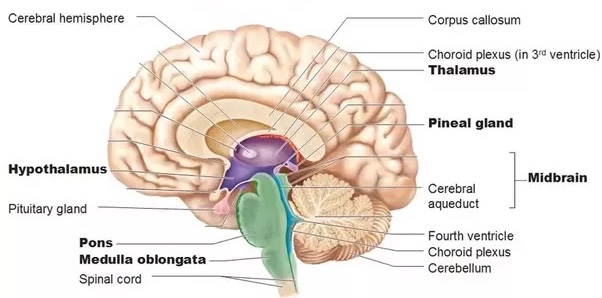
Hypothalamus

It is a peanut- sized structure above the Pituitary gland deep in the brain. It acts as the control centre responsible for shutting down the brain’s arousal signals that affect sleep. The nerve cells of neurons in the hypothalamus are strongly activated during sleep. Within the hypothalamus is the Suprachiasmatic nucleus (SCN)- groups of thousands of cells that receive data about light exposure directly from the eyes and controls the sleep rhythm.

Brain stem

The Pre-optic neurons and the brain stem produce a neurotransmitter called Gamma Amino Butyric Acid (GABA) which acts as an inhibitor as it blocks certain of signals and decreases activity in the nervous system.

Pons and Medulla

Pons, Medulla and mid brain send signals to relax or `paralyse’ muscles essential for body movement in the REM( rapid eye movement )sleep. This prevents The body to move the limbs in dreaming state and protects it from any damages by acting out.

Thalamus

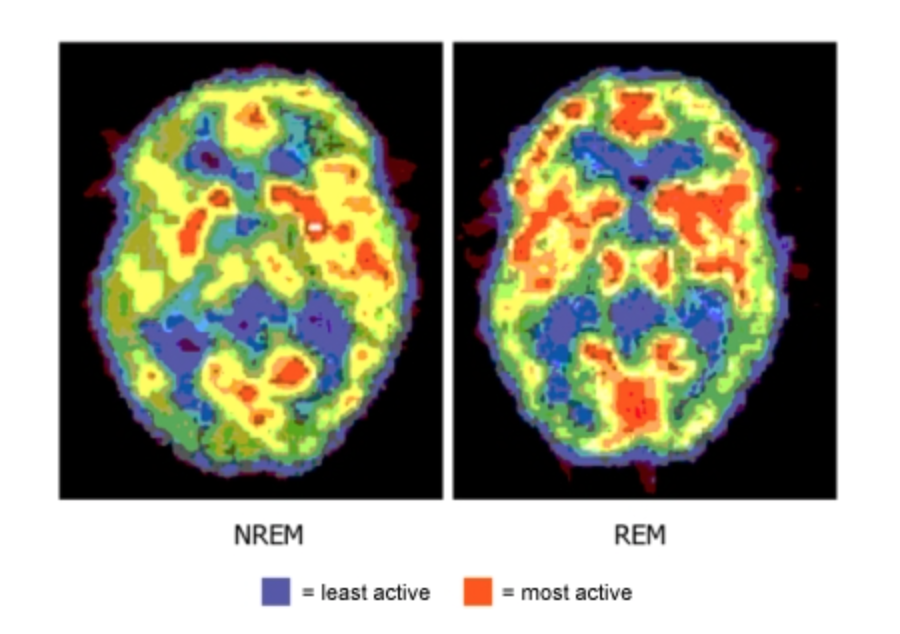
It acts as a relay for information from the senses to the Cerebral Cortex. The cerebral cortex processes data from memory. In deep sleep stage, thalamus becomes quiet but during REM sleep or when we are dreaming, it becomes active sending out sounds,pictures or emotions that make our dreams.

Pineal gland

It is situated in the middle of the brain and is the major site for the production of hormone called Melatonin. This hormone helps put the body asleep when the lights go off. It helps with the timing of Circadian rhythm (internal biological clock) and with sleep.

Amygdala

An almond -shaped structure located deep within the temporal lobes of the brain. It is involved in the processing of emotions and memories. It becomes highly active during REM sleep.

Release of adenosine ,which is a chemical released by cells in the basal forebrain supports sleep drive. Taking caffeine blocks the action of this chemical.

Stages of sleep

Stage 1 Non REM sleep (NREM)

  • The brain slows down.
  • The heartbeat , eye movements and breathing slows.
  • Body relaxes and muscles may twitch.
  • Lasts 5-10 mins.

Stage 2 NREM sleep

  • The body becomes less aware of the surroundings.
  • Body temperature drops.
  • Eye movements stop.
  • Lasts about 20 minutes per cycle

The brain also produces rapid,rhythmic brain waves known as sleep spindles. This allows it to gather ,process and filter newly acquired memories.

Stage 3 NREM

  • Slow brain waves called Delta waves are produced.
  • It allows you to feel refreshed the next day.
  • This is the state of deepest sleep.
  • You are blood pressure drops and breathing slows.

REM sleep

  • Voluntary muscles become immobilised.
  • Rapid eye movement from side to side.
  • You are breathing becomes faster and irregular.
  • Heart rate and blood pressure increase.
  • You dream ( about 2 hours every night).
  • Begins about 90 minutes after falling asleep.
Brain wave activity

An average sleep cycle lasts about 90 minutes . Ideally, we need 5-6 cycles of sleep every 24 hours. Adults need 7 to 8 hours of sleep a night. Although scientists are still trying to learn exactly why we need sleep but studies show that sleep is necessary for survival. The amount of sleep affects our immune system ,nervous system, growth and memory. After all , it is a well know fact that:

Sleep is the best medicine.

webinar on 'Cage aquaculture in Reservoir

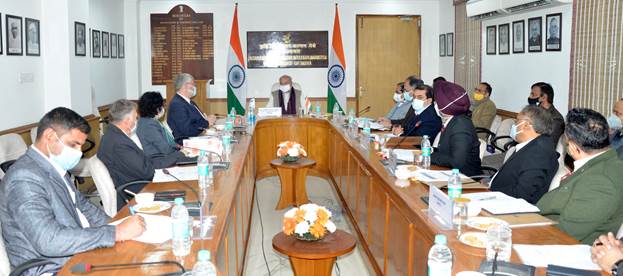
 Department of Fisheries, Ministry of Fisheries, Animal Husbandry and Dairying, Government of India organized a webinar on “Cage aquaculture in Reservoir: Sleeping Giants” today as a part of  “Azadi Ka Amrit Mohatsav”. The event was presided over by Shri Jatindra Nath Swain, Secretary, Department of Fisheries (DoF), Government of India (GOI) and well-attended by around 100 participants including officials of Department of Fisheries, GoI and fisheries officials of different States/UTs, faculties from State Agriculture, Veterinary and Fisheries universities, entrepreneurs, scientists, farmers, hatchery owners, students and stakeholders from aquaculture industry across the country.

 The Webinar began with the welcome address by Shri I. A. Siddiqui, Fisheries Development Commissioner, DoF along with introduction of the theme of the Webinar and the distinguished panellists, Shri Jatindra Nath Swain, Secretary, Shri Sagar Mehra, Joint Secretary (Inland Fisheries) along with Dr. B. K. Das, Director, ICAR- Central Inland Fisheries Research Institute (CIFRI) and other participants.

In his inaugural address, Union Secretary Fisheries, Shri Swain stated the importance of reservoirs and cage aquaculture for the development of fisheries sector.  Further, Mr. Swain advised to have robust cage culture system in reservoirs including potential markets to ensure good returns to the farmers and highlighted the examples of success stories across the globe and the country. Mr. Swain also requested the scientists and the Fisheries Departments of the States/ Uts to motivate fish farmers and develop innovative ways as well as policies for increasing profits, decreasing input cost, species diversification and increasing the production and productivity of cage culture systems in the reservoirs.

Shri Sagar Mehra, JS (Inland Fisheries), in his opening remarks, briefly stated the pivotal of reservoir fisheries and aquaculture in enhancing fish production using enclosures such as cages. Further, Shri Mehra added that cage systems efficiently utilise the water bodies by harnessing their natural productivity and are economically, socially and ecologically viable. Department of Fisheries, GOI earmarked the investment atrgets for promoting cage aquaculture under flagship scheme Pradhan Mantri Matsya Sampada Yojana (PMMSY).

During the technical session, Dr. B. K. Das, Director, ICAR- Central Inland Fisheries Research Institute (CIFRI) made a comprehensive presentation on “Cage aquaculture in Reservoir: Sleeping Giants” and briefed about various technologies, opportunities and activities developed by ICAR-CIFRI for diversification of cage aquaculture in various parts of the country along with various skill and capacity development programmes for the farmers and stakeholders. Dr. Das emphasised on the need for promotion of cage aquaculture in reservoirs of the country by following good management practices and providing support services and CIFRI is ready to associate in tandem with the States and Uts for knowledge support on technological back drop for various perspectives of enclosed pisciculture.

After the presentation, an open discussion session was held with the fish farmers, entrepreneurs, hatchery owners, students, scientists and faculty of the universities. After discussion, the webinar concluded with a vote of thanks proposed by Dr. S. K. Dwivedi, Assistant Commissioner, DoF.

*******

Common Technology Development and Services Infrastructure

 Ministry of Heavy Industries (MHI) has notified the Scheme on Enhancement of Competitiveness in the Indian Capital Goods Sector- Phase-II for providing assistance to Common Technology Development and Services Infrastructure. The scheme has a financial outlay of Rs. 1207 crores with Budgetary support of Rs.975 crore and Industry Contribution of Rs.232 crore . The scheme was notified on 25th January, 2022.

The objective of Phase II of the Scheme for Enhancement of Competitiveness of the Capital Goods Sector is to expand and enlarge the impact created by Phase I pilot scheme, thereby providing greater impetus through creation of a strong and globally competitive capital goods sector that contributes at least 25% to the manufacturing sector.


There are six components under the Scheme for Enhancement of Capital Goods Sector Phase II, namely:


(i) Identification of Technologies through Technology Innovation Portals;


(ii) Setting up of four New Advanced Centres of Excellence and augmentation of Existing Centres of Excellence;


(iii) Promotion of skilling in Capital Goods Sector–creation of Qualification packages for skill levels 6 and above;


(iv) Setting up of four Common Engineering Facility Centres (CEFCs) and augmentation of existing CEFCs;


(v) Augmentation of Existing Testing and Certification Centres;


(vi) Setting up of ten Industry Accelerators for Technology Development


The detailed scheme guidelines along with the application forms are available at: https://heavyindustries.gov.in/writereaddata/UploadFile/Notification%20for%20Capital%20Goods%20%20Phase%20II%20.pdf


*****

Concerns over Railway Exam

 “We will handle the issues and grievances of candidates/aspirants with utmost sensitivity”, said Shri Ashwini Vaishnaw, Minister of Railways in his interaction with DD News last evening. Concerns have been raised by some candidates over the process of shortlisting of candidates for the second stage of the ongoing recruitment examination under RRBs Centralised Employment Notice (CEN) No. 01/2019 (for Non-Technical Popular Categories – Graduate and Under-graduate) – results of which were announced on 14.01.2022.

Speaking to DD News over this issue, Shri Ashwini Vaishnaw said that the matter will be handled with sensitivity. A high-power committee comprising senior officials to look into these concerns, has already started receiving representations of candidates/aspirants. Senior Railway Recruitment Board (RRB) officials are meeting groups of students and taking their representations. The Minister assured the candidates/students that all their problems will be resolved with utmost sensitivity and they need not get confused/influenced by anyone’s words.

Articulating the issue of number of candidates to be shortlisted for the 2nd stage of Exam, the Minister informed that as an old Railway practice the number of Candidates to be called for NTPC Second Stage Exam was only 10 times the number of approved vacancies. This number of calling 10 times of the number of vacancies was increased to 15 times the number of vacancies in CEN 03/2015 and 20 times the number of vacancies in CEN 1/2019, so that more and more students get a chance to write the exam.

Elaborating further, Shri Vaishnaw said that “if you look at each category, 20 times students/candidates have been selected in each category”. The issue is that more than one candidate has applied in more than one category. Since a 2nd Stage consists of CBT of five different levels and a candidate can be shortlisted for more than one level as per eligibility, merit and option, the lists of 7 lakh roll numbers will have some names appearing in more than one list. The Minister said that this issue can be sorted out and there is no need to hit the road or set the train or fire as the Railway infrastructure is public property.

Talking about the solution of this issue, Shri Ashwini Vaishnaw said that the high-level committee which has been constituted to look into the concerns/grievances of candidates, is comprised of very senior officials having vast experience in recruitment process. He requested the concerned students/candidates to submit their grievances/concerns to the committee within three weeks of time i.e. by 16.02.2022 and we will come up with a solution immediately after that.


RKJ/M

Register with Sainik Schools Society for setting up new schools

 Marching ahead in tune with National Education Policy (NEP), Government has decided to provide increasing focus on value-based education enabling children to develop pride in rich culture and heritage of this nation, effective leadership with character, discipline, sense of national duty and patriotism through setting up of 100 new Sainik Schools under Sainik Schools Society, Ministry of Defence in partnership with Private Schools/NGOs/States. 

Towards this end, applications were invited for joining the initiative only through the web portal https://sainikschool.ncog.gov.in. Presently, 284 schools have registered therein and the evaluation for identifying prospective partners is underway for the academic session 2022-23. In view of the response to this initiative and the need for finalising the evaluation in a time bound manner, it is now being considered to close the receipt of further applications. Accordingly, closing date for any fresh registrations on the web portal https://sainikschool.ncog.gov.in is 31 January 2022. No fresh registrations will be accepted after 31 January 2022 as the portal will be closed for this purpose for the academic session 2022-23.

India-Israel agree to further enhance cooperation in the agricultural sector

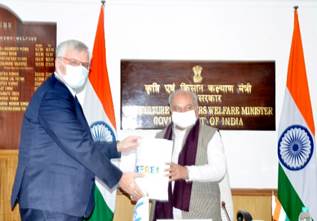
 Israeli Ambassador to India Shri Naor Gilon called on the Union Minister of Agriculture and Farmers Welfare Shri Narendra Singh Tomar at Krishi Bhawan on 27th January 2022. Welcoming the Ambassador, Shri Tomar congratulated him on taking over as the Ambassador of Israel to India. Shri Tomar expressed happiness on the completion of 30 years of diplomatic relations between India and Israel. The Minister expressed satisfaction at the functioning of 29 Centers of Excellence in 12 States which are producing more than 25 million vegetable plants, over 387 thousand quality fruit plants and can train more than 1.2 lakh farmers per year.


Union Minister Shri Tomar informed that it has been decided to convert 150 villages around the Centers of Excellence into Villages of Excellence with technical assistance from Israel, out of which 75 villages are being taken up in the first year to commemorate the 75th year of India’s independence where India and Israel will work together. Shri Tomar also highlighted the various schemes that have been launched by the Government of India under the leadership of Prime Minister Shri Narendra Modi for the welfare of farmers, including PM-Kisan, Agri-Infrastructure Fund, formation of 10 thousand FPOs, Schemes for promotion of organic farming, natural farming and soil health cards etc.

Description: C:\Users\Administrator\Downloads\FKGrmGQVUAY3Zoe.jpg

The Ambassador of Israel Shri Gilon expressed satisfaction over the functioning of the Centers of Excellence, stating that these CoEs are a great example of cooperation between the two countries. The Ambassador appreciated the working of ICAR institutes and showed interest in further collaboration with ICAR and making available the latest technologies available with Israel. He proposed the certification of CoEs to further enhance the standards and quality of services being provided to the farmers. He also invited Union Minister Shri Tomar to visit Israel. Shri Tomar appreciated the Ambassador’s proposals, agreed to work on them and thanked the Ambassador and the officers from the Embassy of Israel for their cooperation.

*****

Pandit Jasraj Cultural Foundation

 Present in this special event are Durga Jasraj ji, Shaarangdev Pandit ji, Neeraj Jaitly ji, co-founder of Pandit Jasraj Cultural Foundation, all the musicians and artists of the country and the world, ladies and gentlemen!

Music, ‘sura’ and ‘svara’ are considered immortal in our country. It is said that the energy of ‘svara’, as well as its effect, is also immortal. Therefore, the eminent soul, who has lived music throughout his life and that has been echoing in every particle of his existence, remains immortal in the energy and consciousness of the Universe even after leaving the body.

The performances by musicians and artists in this program and the way Pandit Jasraj ji’s ‘sura’ is echoing here gives an impression that Pandit Jasraj ji is present with us in this consciousness of music.

I am glad that all of you are carrying forward his classical legacy and preserving it for generations and centuries to come. Today is also the auspicious occasion of the birth anniversary of Pandit Jasraj ji. Today, I congratulate all of you on this innovative initiative of establishing Pandit Jasraj Cultural Foundation. I especially extend my best wishes to Durga Jasraj ji and Pandit Shaarangdev ji for taking upon the responsibility to dedicate your father’s inspiration, his penance, to the entire world. I too have had the privilege of meeting and listening to Pandit Jasraj ji many times.

Friends,

Music is a very complex subject. I am not very well-versed with it, but the comprehensive knowledge that our sages have given about ‘svara’ and ‘naada” is amazing in itself. It is written in our Sanskrit texts –

नाद रूपः स्मृतो ब्रह्मा, नाद रूपो जनार्दनः।

नाद रूपः पारा शक्तिः, नाद रूपो महेश्वरः॥

That is, the forces that give birth to the Universe and maintain and govern it are the forms of sound. This ability to feel the cosmic energy and ability to see music in the flow of the universe is what makes Indian classical music tradition so exceptional. Music is a medium that also makes us aware of our worldly duties and it also helps us transcend worldly attachments. What is so special about music is that it resonates till infinity even though you can’t touch it.

I am told that the primary objective of the Pandit Jasraj Cultural Foundation will be to protect, develop and promote India’s national heritage, art and culture. I am glad to know that this foundation will support the budding artists and will also try to make them financially capable. You are also considering promoting education and research in the field of music through this foundation. I believe that this initiative and the roadmap that you have formulated for a great personality like Pandit Jasraj ji is a big tribute in itself. And I would also say that now is the time for his disciples to give ‘Gurudakshina’.

Friends,

Today we are meeting at a time when technology has penetrated a lot in the world of music. I urge this cultural foundation to focus on two things. We hear about globalization quite often, but it is largely centered around the economy. It is our responsibility that Indian music should also make its global identity and create its impact globally in today’s era of globalization.

Indian music has the power to stir the depths of the human mind. Simultaneously, it also emphasizes the experience of the oneness of nature and the divine. Similarly with International Yoga Day! Yoga has emerged as a kind of spontaneous existence all over the world. It has been observed that the entire human race, the entire world has benefited from this heritage of India. Every human being in the world deserves to know, understand, learn and benefit from Indian music. It is our duty to fulfill this sacred exercise.

My second suggestion is that when the impact of technology is in every sphere of life then there should be a revolution of technology and IT in the field of music too. There should be start-ups in India that are completely dedicated to music, musical instruments and musical traditions. A lot needs to be done on how to equip the sacred streams of Indian music, such as the Ganges, with modern technology. While the ‘Guru-shishya’ tradition should remain intact, there should be attempts to become a global power and there should be value addition through technology.

Friends,

At the core of the knowledge and philosophy of India, our thoughts, ethics, culture and music is the spirit of service to humanity which fuels consciousness in all of us for centuries. The desire for the welfare of the entire world is clearly manifested in it. Therefore, the more we promote India and its traditions and identity, the more opportunities we will create to serve humanity. This is the intention and mantra of India today.

Today we are reviving our art and culture centers like Kashi. Our faith in environmental protection and love for nature is showing the world the way to a secure future. ‘Sabka Prayas’ (effort of all) should be involved in this journey which India has embarked on the mantra of heritage along with development.

I am sure the Pandit Jasraj Cultural Foundation will attain new heights of success with the active contribution of all of you. This foundation will become an important medium for service towards music and ‘sadhana’ and for the fulfillment of our resolutions towards the country.

With this belief, thank you very much and many best wishes for this new endeavour!

Thanks!

DISCLAIMER: This is the approximate translation of PM’s speech. Original speech was delivered in Hindi.

***

Green initiatives undertaken for the development of Green Ports & Green Shipping in India

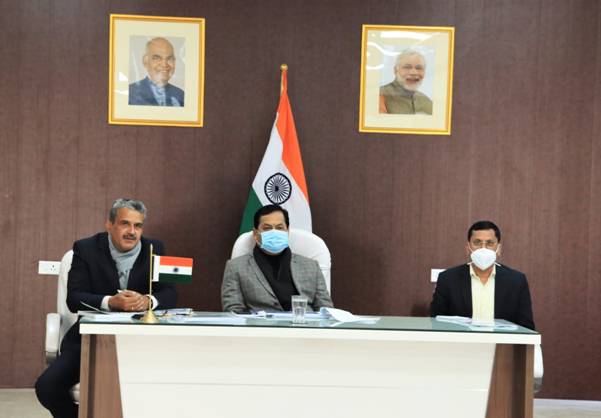
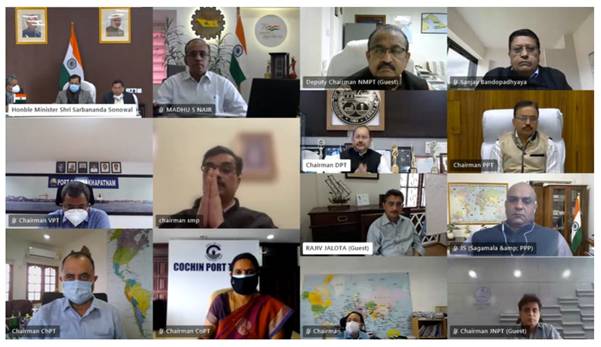
 Union Minister for Ports, Shipping and Waterways Shri Sarbanand Sonowal chaired a meeting with all major ports, Cochin shipyard Limited (CSL) and IWAI (Inland waterways Authority of India) to review the progress on various green initiatives being implemented, as per Maritime India Vision(MIV) 2030, for the development of Green Ports & Green Shipping in India. 

Shri Sonowal reviewed the progress of initiatives undertaken for development of green ports planned under Maritime India Vision 2030. As part of MIV 2030, Total of 963 initiatives have been identified for implementation across major ports with an estimated investment of Rs. 6,77,720.24 crores, of which a total of 208 initiatives with estimated investment of Rs. 44,424.47 crores have been completed in FY 2021. Further 504 initiatives with estimated investment of Rs. 48,256.14 crores are under implementation.

A number of initiatives have been taken in India to promote green ecosystem in maritime sector. These are in line with International Maritime Organization (IMO)’s 2030 Decarbonization strategy and 2050 Green House Gases (GHG) strategy. Initiatives are being implemented by Major Ports of India that include areas, such as increase share of renewable energy to more than 60% across major ports by 2030, setting up of solar power plants, availing of shore power supply to vessels via berths, multi-clean fuel adoption for vehicles within port ecosystem, gradual phasing out of diesel locomotives at ports, etc.

The green port initiatives include acquisition of equipments for monitoring environmental pollution, acquisition of dust suppression systems, setting up of sewage/ waste water treatment plants, setting up of garbage disposal system for ports and ships, developing shore reception facility for wastes from ships, setting up projects for energy generation from renewable energy sources, providing shore power to ships at berths, creating Oil Spill Response (Tier-1) capabilities at all ports, taking actions to improve harbour water quality, inclusion of sustainable practices in terminal design, development and operation, increasing green cover within port premises etc.


Ministry is also working on draft of a “Green Port Policy” document to suggest framework and guidelines for incorporation of green initiatives in the port sector. The Policy document captures the focused areas, measured outcomes, implementation roadmap and cost recovery mechanism for the port operators and port authorities. The proposed target outcomes will help India in achieving the “Intended Nationally Determined Contributions (INDCs) target, as well as the International Maritime Organization (IMO) 2030 target.

In order to enhance the share of Green Shipping, various projects are being implemented by Cochin Shipyard Ltd., India’s largest shipbuilding and maintenance facility. These include green urban mobility solutions like Hybrid Electric Ferries, autonomous Zero-emission vessels, pilot project on Hydrogen Fuel Cell Ferry, Electric Catamaran Water Taxi, Hybrid Electric Ro-Ro, Hybrid LNG-Electric Inland Cargo Carrier, Hybrid Tugs, etc.

Possibilities are also being explored for deployment of fully electric ferry and hydrogen fuelled ferries on Inland Waterways for enhancement of river cruise tourism in the country. For instance, Electric Catamaran Water Taxi deployment is being considered at Varanasi and Guwahati in first phase. Additionally, use of Hybrid Electric Roll on -Roll off (Ro-Ro) vessels having dual fuel system (LNG+ battery) is being considered at Guwahati for river crossings. Use of Hybrid LNG-electric Inland Cargo Carrier vessels is also being considered on NW2 and NW1 . Possibility of deploying CNG vessels at Varanasi is also being explored.

The pace at which the Green initiatives are undertaken by the 12 major ports will surely bring a green revolution in the sector making the ports cleaner and greener, which is also a key component of ‘Blue Economy’, creating environmental benefits and balancing the investments and cash flow.

In his concluding Remarks, Shri Sonowal thanked all officials for their crucial contribution towards realization of Prime Minister’s Vision for Indian Maritime Sector. He further directed all Ports to take the Green Initiatives forward by putting dedicated proactive efforts towards greening of maritime sector including finalization of green port policy.

****

Artificial Intelligence (AI) and Digital Medicine are critical to future healthcare

 Union Minister of State (Independent Charge) Science & Technology; Minister of State (Independent Charge) Earth Sciences; MoS PMO, Personnel, Public Grievances, Pensions, Atomic Energy and Space, Dr Jitendra Singh said here today that Artificial Intelligence (AI) and Digital Medicine are critical to future healthcare.

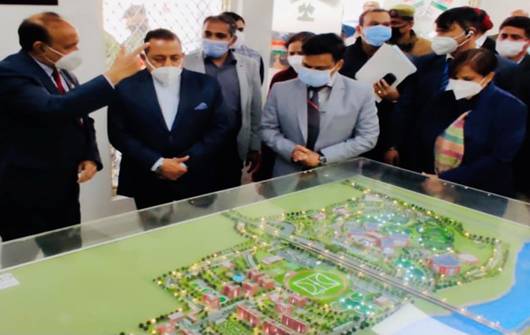
During a visit to the All India Institute of Medical Sciences (AIIMS) Jammu for the inspection of the upcoming new blocks and inauguration of recently developed facilities, Dr Jitendra Singh suggested that in order to develop an exclusive identity for the institution, the focus should be on these futuristic areas. Tele-Medicine and Robotic Surgery have already taken over in a big way and the indispensable utility of these new options was realised during the pandemic times, he added.

Dr Jitendra Singh informed that the OPD services will start immediately in AIIMS, Jammu and the first batch will move and operate from the premises from 1st of June this year and the second batch will continue thereafter. The Minister said that 30 member faculty has already been inducted and the entire six storey AIIMS building will be ready by early next year.

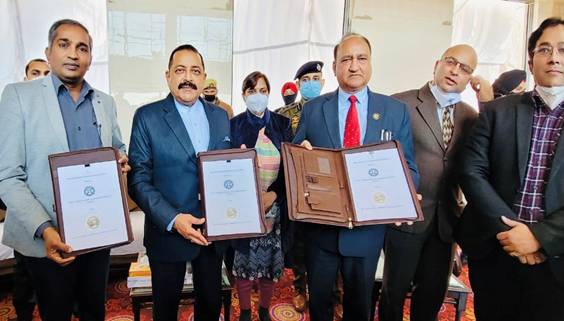
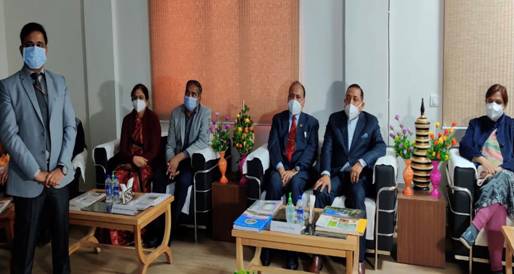
The Minister announced that AIIMS Jammu will function in close collaboration with CSIR-IIIM Jammu. A MoU was signed in the presence of the Minister, between Director AIIMS Jammu Dr Shakti Gupta and Director CSIR-IIIM Jammu Dr. D. Srinivasa Reddy, on behalf of the two institutions.

Speaking on the occasion Dr Jitendra Singh said, it is an irony that CSIR-IIIM Jammu and Government Medical College Jammu existed in the close vicinity of just about 4 kilometres from each other and even though both the institutions were dedicated to medical research, there was hardly any collaboration between the two in the past. He said, every effort would be made to bring in closer integration of IIIM with GMC and also between IIIM Jammu and AIIMS Jammu, both of which happen to be the Central Government institutions.

Dr Jitendra Singh noted that IIIM Jammu is one of the oldest CSIR laboratories in the country and even today it is conducting pioneering research in Cannabis Medicinal Products and host of other drugs, which makes the institute a natural ally of the AIIMS which has also the mandate of research and medical education.

While appreciating the progress made during the brief period since Dr Shakti Gupta took over as the Director of AIIMS, Dr Jitendra Singh suggested that in order to develop an exclusive identity for the institution, the focus should be on futuristic areas like Digital Health and Artificial Intelligence (AI) and AIIMS could be a pioneer in North India in developing AI based healthcare infrastructure.

The Minister said it is because of the personal indulgence of Prime Minister Narendra Modi that Jammu has, in the recent years, developed major centrally funded academic institutions in close vicinity of each other, thus making it an important educational hub in the region. He called for greater integration at different levels that is among the science institutions, then between scientific institutions and non-scientific institutions and finally among all these education institutions put together and the industry and Start-Ups for sustainable growth, development and livelihood.

Dr Jitendra Singh hoped that with the constitutional barriers of the past having been done away with in case of Jammu & Kashmir, the administration and the management will make all efforts to attract the best of the faculty from different parts of the country.

****

Fire Alarm system and Fire protection system in Passenger Compartment in buses

 The Ministry of Road Transport and Highways, vide notification dated 27th January 2022, has introduced the Fire Alarm System and Fire Protection System in the Passenger (or, Occupant) Compartment in buses through an amendment in the AIS (Automotive Industry Standard)-135 for Type III buses [‘Type III’ Vehicles are those designed and constructed for long distance passenger transport, for seated passengers ] and School Buses.

At present, fire detection, alarm and suppression systems are notified for fires originating from the engine compartment, as per AIS-135. Studies on fire incidents indicate that injuries to passengers are mainly due to heat and smoke in the passenger compartment. These injuries can be prevented if the heat and smoke in the passenger compartment is controlled by providing an additional evacuation time to  occupants by thermal management during fire incidents.

A water mist- based active fire protection system and  a standalone fire alarm system for buses has been designed to manage the temperature in the passenger compartment within 50 degrees centigrade.

This amendment to the Standard has been undertaken in consultation with  stakeholders and experts from the Centre for Fire Explosive and Environment Safety (CFEES), a DRDO establishment, working in the area of fire risk assessment, fire suppression technologies, modelling and simulation etc.

Click here to see GSR Fire Alarm System

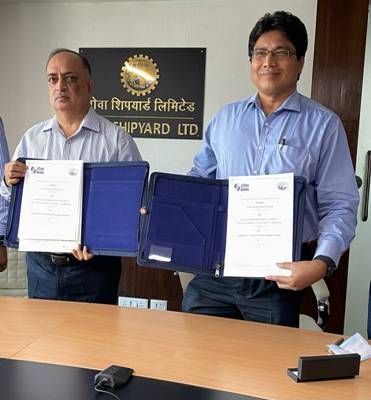
IREDA and Goa Shipyard Ltd signs MoU for Rooftop Solar Power Projects


Indian Renewable Energy Development Agency Ltd. (IREDA) today signed a Memorandum of Understanding (MoU) with Goa Shipyard Limited (GSL) to provide its techno-financial expertise to set-up a rooftop solar power project. The two companies are PSUs under the Ministry of New & Renewable Energy and the Ministry of Defence, respectively.

The MoU was signed by Shri Pradip Kumar Das, Chairman & Managing Director (CMD), IREDA and Cmde. Bharat Bhushan Nagpal, CMD, GSL in the presence of senior officials.

Under the MoU, IREDA will assist GSL to set-up a rooftop solar power project at the headquarter of the company situated in Vasco da Gama, Goa. IREDA will also extend its techno-commercial expertise to GSL for Environmental & Social (E&S) due diligence of rooftop solar and other RE projects as per the internationally accepted E&S standards. After setting up a rooftop solar power project at its building, GSL will be able to bring down the expenditure on electricity and reduce its carbon footprint as well.

Speaking on the collaboration, Shri Pradip Kumar Das, CMD, IREDA said, “We are pleased to partner with GSL in their pursuit towards adoption of a clean energy solution. The partnership is expected to bring in good practices by leveraging the expertise of both the companies and to push the vision of the Hon’ble Prime Minister for sustainable development of the country through Green Energy. The Govt. of India aims to produce 40 GW of solar power through rooftop solar by the end of 2022, and these collaborations will enable us to contribute to meeting the targets set by the Govt. of India.

In order to cater to the increasing demand of the RE sector, a dedicated Business Development and Consultancy division was set up by IREDA one and a half years ago. Under the new division, this is the seventh MoU signed by IREDA within the last 14 months to provide its consultancy services for developers of RE and Energy transition. Earlier, IREDA had entered into MoUs with SJVN, NHPC, TANGEDCO, NEEPCO, BVFCL, and THDCIL to extend its Techno-Financial expertise for Green Energy projects.

IREDA is looking forward to extending its consulting services to other PSUs and private organisations for the overall growth of the RE sector.

***

2nd ASEAN Digital Ministers (ADGMIN) meeting

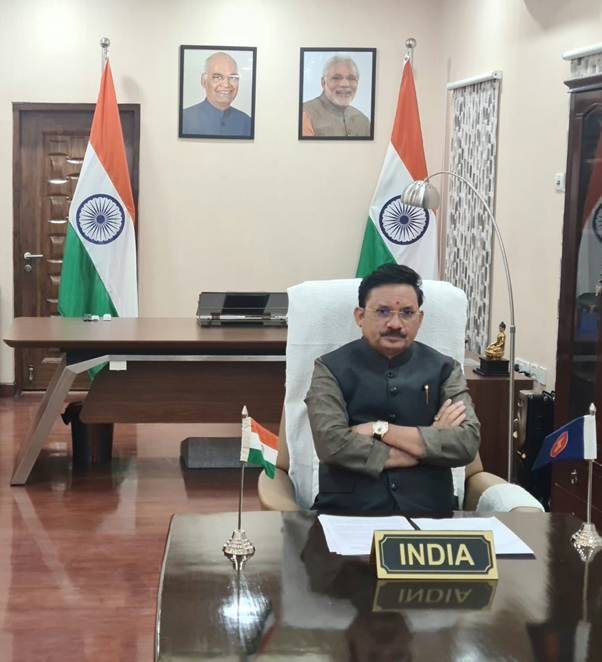
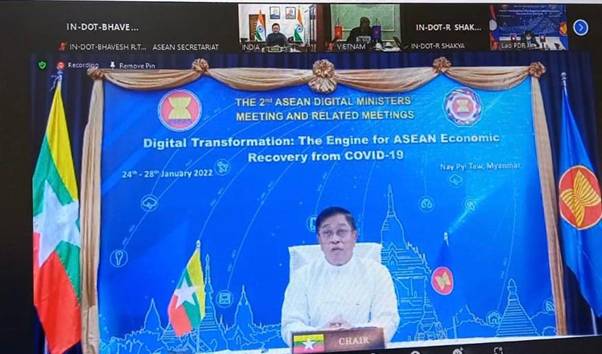
 The 2nd ASEAN Digital Ministers (ADGMIN) meeting with India held yesterday on a virtual platform. H.E. Shri Devusinh Chauhan, Minister of State for Communications (MoSC) and H.E. Admiral Tin Aung San, Ministry of Transport and Communications, Myanmar co-chaired the meeting.


The ADGMIN is an annual meeting of Telecom Ministers of 10 ASEAN (Association of South-East Asian Nations) countries -Brunei, Cambodia, Indonesia, Laos, Malaysia, Myanmar, Philippines, Singapore, Thailand, and Vietnam and dialogue partner countries – Australia, Canada, China, EU, India, Japan, Republic of Korea, New Zealand, Russia, UK and US. The meeting discussed and deliberated various matters relevant to strengthening regional digital cooperation in the spirit of digital inclusion and integration.

Addressing the august gathering of Digital Ministers, Shri Devusinh Chauhan emphasized that Information and Communication Technologies enable and strengthen democratic systems and institutions through enhanced engagement between citizens and the state. He added that use of ICTs promote free speech, human rights and the free flow of information besides expanding citizens’ opportunities to participate in decision-making process and have potential to transform lives of people living in rural areas.

The Minister recalled vision of our Honorable Prime Minister Shri Narendra Modi to leverage different technological solutions for development of the nation. In his address, Shri Devusinh Chauhan stated that COVID-19 is not only a challenge for the public health system, but it is also, shaking the economic and social orders of the countries. In this scenario, Information and Communications Technologies (ICTs) have emerged as powerful tools to mitigate the effects of pandemic in different spheres of public life and they are foundations of the global economy.

The Ministers meeting approved the India-ASEAN Digital Work Plan 2022. The workplan includes system for combating the use of stolen and counterfeit mobile handsets, WiFi Access network interface for nationwide public internet, the capacity building and knowledge sharing in emerging areas in the field of Information and Communication Technologies such as Internet of Things (IoT), 5G, Advanced Satellite Communication, Cyber Forensics, etc. The ongoing and proposed projects in ICTs, will strengthen collaboration between India and ASEAN by leveraging complementary strengths of each other.

* * * * *