𝑴𝑬𝑴𝑶𝑹𝑰𝑬𝑺 𝑶𝑭 𝑴𝑰𝑹𝑹𝑶𝑹𝑺

“THE WORLD IS A GREAT MIRROR. IT REFLECT BACK TO YOU WHAT YOU ARE”

Well you see there was this magical substance during the time of the ancients known as “𝐖𝐀𝐓𝐄𝐑”, it coalesced in small or large pools, some greater than the size of hundreds of men, and into these mythical pools brave men would sometimes look in observation, only to be shocked as a perfect reproduction, spoiled only slightly by the waves of the pools magic looked back at them. Another option would be to use a melting sheet of ice or finely polished stones or crystals. Not until metals were smelted and polished could people see a clear and bright reflection. However, if the lighting conditions are just right, primitive people could have seen their reflection in each other’s or an animal’s eyes.

PURPOSE :

The purpose of this study is to consider the ancient history and early development of mirrors, because mirrors played a key role in refraction and magnification for an extended period of time before the invention of spectacles, including broad use in Roman times.

𝗨𝗦𝗘𝗦 𝗢𝗙 𝗠𝗜𝗥𝗥𝗢𝗥

everyday life, many people tend to avoid looking at themselves for more than a quick glance. They don’t want to activate their own critical thoughts about their appearance. We are socialized to compare our physical image with ideals and standards. That’s how we typically use 𝗠𝗜𝗥𝗥𝗢𝗥 But, whether we realize it or not, ‘mirrors and reflective’ surfaces also play an important role in our psychological and emotional functioning.

We use the mirror as we do face-to-face communication, to get feedback on who we are and what we are experiencing in the moment. A quick glance in the mirror reaffirms our sense of self. Mirrors help us regulate our emotions and sync up with ourselves and others. Mirrors simulate face-to-face contact with others. When we are in face-to-face interactions, we get feedback on what they are experiencing internally from others’ reactions to us. In fact, research finds that face-to-face contact is essential for developing 𝗲𝗺𝗼𝘁𝗶𝗼𝗻 𝗿𝗲𝗴𝘂𝗹𝗮𝘁𝗶𝗼𝗻 in 𝗰𝗵𝗶𝗹𝗱𝗵𝗼𝗼𝗱 and throughout life.

People with 𝘀𝗼𝗰𝗶𝗮𝗹 𝗮𝗻𝘅𝗶𝗲𝘁𝘆 often have an inability to recognize their own emotions. It’s reasoned that because they spend less time in social interactions, they miss the face-to-face feedback that would help them be more aware and better regulate their emotions.studies using mirrors and video technology to help people recognize their own emotions and teach them 🅢︎🅔︎🅛︎🅕︎ 🅜︎🅘︎🅡︎🅡︎🅞︎🅡︎🅘︎🅝︎🅖︎ to soothe themselves when they’re feeling 𝑺𝑬𝑳𝑭 𝑨𝑵𝑿𝑰𝑬𝑻𝒀 and others aren’t around to offer reflection and support.

Experiments that use mirrors to create visual anomalies show that our brains crave consistency between vision and proprioception.

Mirrors are essential to every home. They help us in our daily mundane lives, though we rarely ever really appreciate their usefulness. From the moment we get up at night to the time we ready ourselves for sleep, we almost always seek for a mirror to take a look at ourselves. Mirrors reflect to us how we look, how clothes fit us, and how things fit. People always love to know how things look on and with them. It gives us the chance to appreciate and be thankful. There is something to be said about how, after a day of straining our eyes, looking at everything else in the world, we know that we could always also look at ourselves with the help of a handy mirror. Everywhere you go, there are almost always mirrors present. There are clear mirrors that reflect perfectly the image of the thing or the person in front of them, and then there are also tinted mirrors that serve as either classy decors, or as a barrier for a bit of privacy. Mirrors are part of our daily lives without us even consciously recognizing them.

BUILDING A GOOD RELATIONSHIP WITH YOUR COLLEAGUES

10 Things You Need to Know about Asteroids:

Asteroids are small, atmosphere-less rocky objects orbiting the Sun. Here are 10 things that you might not know about these planet-like celestial bodies that can crash into the Earth and create havoc.

  1. They were Created at the Same Time as the Earth:

Many astronomers believe that asteroids are rocky leftovers from the formation of the Solar System 4.6 billion years ago. One theory is that after the Big Bang, dust particles came together to form celestial objects through a process called accretion – smaller objects came together with other small objects, creating larger space rocks. Some of these celestial rocks were able to grow large enough to develop their own gravity and became planets. Many others were held back from getting together by Jupiter’s gravitation force. These became asteroids.

Because they revolve around the Sun like planets do, asteroids are also sometimes called planetoids or minor planets.

  1. Most are Found in One Area:

Of the millions of asteroids that inhabit our solar system, a majority can be found in a region between the orbits of Mars and Jupiter. This region is called the Asteroid Belt.

3. A Very Lonely Area:

Imagining the Asteroid Belt as in the movies – a small strip of space littered with huge rocks intent on mowing down your space ship?

Well, imagine again because the Asteroid Belt is nothing like that. In fact it is a very lonely place for an asteroid. Astronomers estimate that the average distance between two asteroids in the asteroid belt is about 600,000 miles (966,000 km). This is about 2.5 times the distance between the Earth and the Moon. That is a lot of space between two neighboring asteroids!

  1. Not all of Them Reside in the Belt:

While most of the known asteroids live in the Asteroid Belt, there are many that orbit the Sun outside this belt. For example, Trojan Asteroids, named after the Trojan Wars in Greek Mythology, follow the orbits of a planet. Jupiter has two clusters of Trojans following its orbit around the Sun – the one ahead of the planet is called the Greek Camp and the one behind is known as the Trojan Camp.

In 2010, scientists discovered the first Trojan Asteroid, 2010 TK7, that follows the Earth’s orbit.

Asteroids that are pushed close to the Earth’s orbit are known as Near Earth Asteroids.

  1. They Come in Different Sizes:

Asteroids can measure anywhere between a few feet to several hundred miles in diameter. The largest asteroid known to man, Ceres, is about 590 miles (950 km) in diameter.

Astronomers estimate that if all the asteroids in the Solar System were put together, the size of the resulting rock will be much smaller than our Moon!

  1. And Yet, some Asteroids have Moons:

About 150 Asteroids are known today to have one or more moons orbiting them. The most famous of these is Dactyl, a small moon orbiting Ida, an Asteroid Belt asteroid.

7.They can be Classified According to their Composition:

Most Asteroids fall into one of three groups based on their composition: C, S and M types. The composition is determined by how far the asteroid was from the Sun during the time of its formation.

About two-thirds of all asteroids are thought to be C type asteroids. These asteroids are very dark, with an average albedo of about 0.06 and are thought to have a similar composition as the Sun. They can be found in the outer regions of the Asteroid Belt

S type asteroids are considerably brighter with an average albedo of 0.16. These asteroids are usually found in the inner regions of the Asteroid Belt and are composed of iron and magnesuim silicates.

M type asteroids can be found in the middle of the Asteroid Belt and are much brighter than an average albedo of 0.19. These are mostly composed of Iron.

8.This makes Asteroids Attractive to Miners:

Asteroid mining? That is no longer in the realm of science fiction. Asteroids are rich sources of metals like Iron, Platinum and Titanium, metals that humans use daily to build and create things. In addition, scientists believe that water present on the surface of these asteroids could be broken down and used as fuel for space vehicles.

While asteroid mining hasn’t started yet, many companies around the world have started exploring the idea seriously.

9.Close Encounters of the Asteroid Kind:

The Earth’s atmosphere acts as a shield protecting us from meteoroids and other objects that populate space. When a meteoroid enters the atmosphere, it usually burns up before hitting the surface of the Earth. If any part of the meteoroid survives and hits the surface of the Earth, it is called a meteorite.

What are Meteor Showers?

Sometimes however larger space objects collide with the Earth’s atmopshere and impact the surface of the Earth. Scientists have identified about 100 sites on Earth that may have been impacted by a large asteroid or comet.

While no humans have been killed due to a meteorite in recent history, there is some worry among the scientific community about the possiblity of a large asteroid impact and the effect it may have on human life.

  1. An Asteroid may have Killed the Dinosaurs:

In fact, there is a theory prevalent among the scientific community that it was an asteroid that wiped out the dinosaurs. Many scientists believe that the epicenter of the mass extinction of the dinosaurs lies in the Chicxulub Crater, an impact crater that was discovered under the Yucatán Peninsula in Mexico.

𝑰𝑴𝑷𝑶𝑹𝑻𝑨𝑵𝑪𝑬𝑺 𝑶𝑭 𝑺𝑳𝑬𝑬𝑷

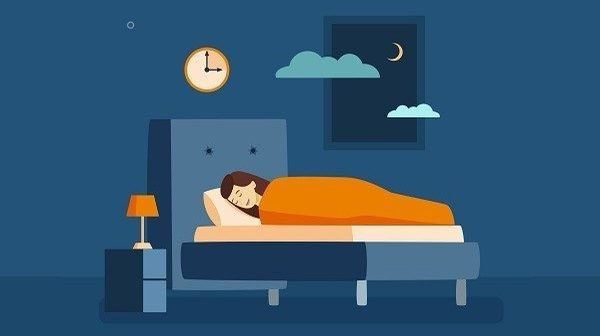
Sleep is one of the most important things you need to do for your body because it is your body’s way of recharging its batteries. When you begin to feel sleepy at night, it means that you have reached the limit that your body has, and you should sleep so that you do not over-exert yourself.

Many people don’t get enough sleep at night, mostly because so many of us have turned into night owls who love to do so many things at night instead of the daytime. These are terrible habits, and we must learn to get rid of them by paying attention to the importance of sleep.

For example; a bad habit like this would be watching TV shows late at night despite knowing that we have to wake up early the next morning.

When we sleep, the brain recharges itself and heals our bodies in whichever parts we need healing. When we sleep, our blood vessels and circulatory system heal themselves. If you have a bruise, you will notice that it has healed a little bit when you go to sleep and wake up in the morning. Sleep does the same thing for the rest of the body as well, and it is essential to allow your batteries to charge while you heal yourself.

Many of us struggle with our sleep because of the prevalence of mobile phones and other addictive screens in our lives. Some severe problems can enter our lives when we do not get enough sleep. This can range from mental health problems like depression and anxiety to even physical ailments and issues like diabetes, cardiac arrest, obesity, high blood pressure, etc. We must be careful and get a good 6-8 hours of sleep every night.

The average hours that one adult should be sleeping every night is 8 hours, or you can give or take one or two hours. The problem with all the generations in the world is that there are so many disturbances around us that can easily distract us from what is essential. One such example of this is mobile phones – it is easy to get addicted to mobile phones that contain an entire world and keep scrolling through it instead of going to sleep.

It is essential to understand the reason why sleep is vital. Getting enough sleep helps heal your bodies from any pain or injuries; it betters your immune system, cognitive memory, and thinking capacity. Furthermore, getting adequate sleep is vital for keeping our hearts and other systems clean and with a good bill of health. Without getting a good number of hours worth of sleep at night, we are putting ourselves at the risk of mental health disruptions as well as physical disorders and problems such as depression, anxiety, heart attacks, obesity (leading to various other issues), and even exhaustion which can ultimately disrupt one’s life. We must get enough sleep to look and feel fresh and healthy every day.

Benefits of Good Sleep

There are several benefits of getting a good sleep at night. It helps you maintain your body weight so that you do not become obese and add to this; there’s also the fact that people who sleep well at night often eat less than those who don’t, which also helps with the weight. Getting adequate sleep also increases your productivity by making you feel more energetic and giving you the time you need to rest. It also helps our lives be in a good mood, and good sleep puts a person in a good mood. Sleeping enough also allows our minds to function correctly and in a better way. Thus we can think better, and we also have a better memory power upon sleeping enough.

Conclusion

Getting adequate sleep is incredibly vital to our mental health and physical well-being. If we do not get enough sleep, we might get burnt out and not be able to carry out our lives in the way that we should be able to. Without the ability to do this, life can become painful and full of difficulties that may become complex over time. Thus, we must all take the initiative in our own lives to sleep on time and wake up on time to prevent any mental or physical blockages and hindrances.

If we do not get enough sleep at night, we will end up with terrible health. Most of us end up binge-watching television shows, movies, and even things like YouTube videos at night, and we usually do this at night because, in the daytime, we generally remain busy with other things, like school, office, other work, running errands, and stuff like that. We all think that because we do a lot of work in the daytime, the nighttime is, in a way, free time for us to do as we want. However, this is not the right way to go about life.

Essay about Importance of Sleep

We need to get enough sleep because, without it, our blood vessels and heart and other organs as such will stop healing by themselves. Without adequate sleep daily, our minds will always be occupied by one thing or another, especially about how tired we all may feel, and how we want to sleep. Sadly, many us don’t even realise this, and go about their day without sleeping much without knowing how it can affect them in the long run.

Risks for all kinds of health issues, including physical and mental health go up manifold without getting a good night’s sleep every day. Depression, anxiety, stress disorders, sleep disorders, heart attacks, diabetes, obesity, etc. are just a few of the dangers that come from not sleeping well at night.

The existing collection of books on freedom fighters in the Bhagat Singh Smarak to be converted into “Shaheed Smriti Pustakalaya”

 The University of Delhi organized a programme to pay homage and commemorate 90 years of martyrdom of our national icons of the Indian National Movement -Shaheed Bhagat Singh, Sukhdev Thapar and Shivaram Rajguru on ‘Shaheed Diwas’ in the Convention Hall of the Viceregal Lodge on 23rd March, 2021. Union Minister of Education , Shri Ramesh Pokhriyal ‘Nishank’, graced the occasion virtually as the Chief Guest and Prof. P.C. Joshi, Vice Chancellor, University of Delhi presided over the function. On this occasion Shaheed Bhagat Singh Smarak was inaugurated by the Union Minister of Education virtually.


To honour and value the sacrifices made by the National heroes and to drive out lessons of inspiration from their lives and times, the Government of India has declared 23rd March as ‘Shaheed Diwas’. History holds important lessons for the humanity and commemorating such events remind ourselves of the price paid by our ancestors for the freedom we enjoy today. Only by understanding its value we can keep the flame of freedom ignited among the people. 

On the occasion of the 97th convocation ceremony held at the University of Delhi, Shri Pokhriyal  stressed on the need of holding events that instil inspiration and pride in the youth of today, to absorb the values that our national heroes exemplified in making independent India a reality.

The existing collection of books on freedom fighters in the Bhagat Singh Smarak has been announced to be converted into “Shaheed Smriti  Pustakalaya” by the Union Minister of Education.  Tribute was paid to Shaheed Bhagat Singh and his associates through patriotic songs presented by the students and faculty members of the Music Faculty, University of Delhi. Homage was paid to Shaheed Bhagat Singh in the Chamber located in the basement of the Viceregal Lodge of the University where he was imprisoned.

The University organized various competitions–poetry, song, slogan and essay writing in all the Colleges. The topics for these competitions were related to Shaheed Diwas. The award winning students were felicitated by Prof. P.C. Joshi, Vice Chancellor, University of Delhi. Later, the award winning students also showcased their talents in front of the guests. Vice-Chancellor, University of Delhi announced that the Bhagat Singh Smarak shall remain open to the students and university community to inculcate values of freedom and sacrifice.


******

Leveraging Blockchain, AI , ML, Cloud Computing for digital transformation

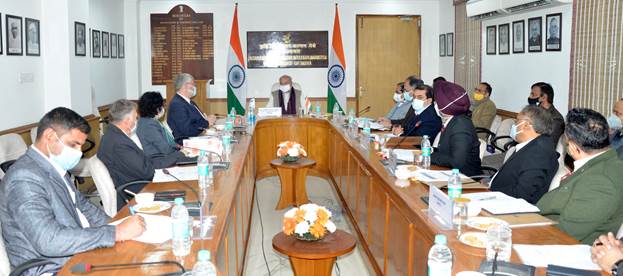
 Union Education Minister Shri Ramesh Pokhriyal ‘Nishank’ chaired the 54th Meeting of the Council of Indian Institutes of Technology (IITs) today through online medium. Minister of State for Education Shri Sanjay Shamrao Dhotre; Secretary, Higher Education Shri Amit Khare was also present in the meeting.

Union Minister congratulated Heads of all IITs and Chairpersons (BoG) for successfully continuing the academics during the challenging times of COVID-19 and for their remarkable contribution in combating the COVID-19 by way of new scientific research. He exhorted the IITs to become a driving force behind realizing the vision of Atmanirbhar Bharat, as envisioned by Prime Minister Shri Narendra Modi.

Shri Pokhriyal asked IITs to develop Institute Development Plan as envisioned in NEP 2020 to improve the mobility of faculty between institution and Industry. The mobility of faculty members and industry experts between technical institutes and industry will promote collaborations between industry and academia, he added. Earlier, a committee was constituted under the chairmanship of Dr K. Radhakrishnan, Chairman, Standing Committee for IIT Council for suggesting recruitment of faculties in IITs (Industry interaction and mobility of faculty).

Union Minister also urged IITs to adopt One IIT – One Thrust Area approach based on local needs.

Digital Transformation using Blockchain, AI, ML, and Cloud Computing at IITs also came up for discussion during the meeting. It was recommended to constitute a taskforce to review use of technology at all IITs and also to accelerate deployment of digital tools. It was also recommended to undertake rationalization of staff from current standards to a lower number.

On the basis of the recommendation of the Chairman of Standing Committee for IIT Council, four Working Groups were constituted on the following issues related to NEP-2020:

Group-1: Graded Autonomy, Empowered and accountable BoG and Director

Group-2: Grooming distinguished academics for directorship of IITs

Group-3: Reform and restructuring of the Academic Senate

Group-4: Innovative funding mechanisms

The reports of the these groups and also of a new group which will work on faculty development will be presented in a meeting to be chaired Union Education Minister.

The Council also put up for consideration a suggestion to arrange Online IIT R&D fair to showcase the quality research work being done by IITs to showcase the R&D work of IITs to the industry. This may be followed by a physical fair in after normalization of present situation.

Highlighting several initiatives undertaken by the government, Shri Pokhriyal mentioned about approval of funds to improve the overall infrastructure of the 4 IITs at Madras, Delhi Kharagpur and Bombay. He spoke about making IITs as multi-disciplinary institutions for holistic growth in all disciplines of education, without losing its main focus on Scientific Research and Technology Development. He called upon IITs to make full use of the recently announced scheme National Research Foundation. He hoped IITs will strive to achieve the global rankings by 2022, the 75th Year of India’s Independence. He assured IITs of every possible help and support in terms of finance, administrative guidance, issues relating to various other Ministries and agencies of the Government.   

*****

Crores of students, teachers and parents from India and abroad to participate

 Union Education Minister Shri Ramesh Pokhriyal ‘Nishank’ today announced the commencement of the registration process of the fourth edition of Prime Minister’s Interaction Programme with school students, teachers and parents – Pariksha Pe Charcha 2021 through his social media platform.

Pariksha Pe Charcha is a much-awaited annual event where the Prime Minister responds to questions related to examination stress and related areas posed by students in his uniquely engaging style in a live programme. Shri Pokhriyal informed that this time the programme will be held virtually. He further stated that questions related to dealing with examination stress from school students of class 9 to 12 will be invited through MyGov platform and selected questions will be featured in the programme. He also informed that school students, teachers and parents from all across the country are to be selected through an online creative writing competition designed specifically for them on MyGov platform. There are different topics assigned for students, parents and teachers in the contest. The applicants can also pose their questions on this platform. The selected participants will be participating in the programme online from their respective State and UT headquarters and will be presented with a special PPC kit (Pariksha Pe Charcha kit). The portal for online creative writing competition will remain open till 14thMarch 2021, he added.


Click here to access the link of the portal: https://innovateindia.mygov.in/ppc-2021/

Topics for creative writing competition on MyGov

For Students

Topic 1: Exams are like festivals, celebrate them

Activity: Draw a scene depicting a festival around your favourite subject.

Topic 2: India Is Incredible, Travel and Explore

Activity: Imagine your friend visits your city for three days. What memories would you create for him or her in each of the following categories?

  • Places to See: (Word Limit: 500 Words)
  • Food to Relish: (Word Limit: 500 Words)
  • Experiences to remember: (Word Limit: 500 Words)

Topic 3: As One Journey Ends, Another Begins

Activity: Describe the most memorable experiences of your school life in not more than 1500 words

Topic 4: Aspire, Not to Be, but to Do

Activity: If there was no restriction on resources or opportunities, what would you do for society and why? Submit a write up in not more than 1500 words

Topic 5: Be Grateful

Activity: Write ‘Gratitude Cards’ for those whom you are grateful to in not more than 500 words

For Teachers

Topic: Online Education System – Its benefits and how it can be improved further.

Activity: Write an essay on the topic in about 1500 words

For Parents

Topic 1: Your Words Make Your Child’s World – Encourage, As You Have Always Done

Activity: Write a story about the vision you share with your child for his or her future. Let your child write the first sentence. Then you write the next and so on. (Word Limit: 1500 Words)

Topic 2: Be Your Child’s Friend—Keep Depression Away

Activity: Write a postcard to your child and let him or her know why they are special. (Word Limit: 100 Words)


*****


OBESITY IN TEENS

Around 17% of the children and teenagers are obese. Obesity in one of the earliest medical conditions to recognise but most difficult to treat. Unhealthy weight gain due to poor diet and lack of exercise is responsible for over 3,00,000 deaths each year. Overweight children are much more likely to become overweight adults unless they adopt and maintain healthier patterns of eating and exercise.

WHAT IS OBESITY?

A few extra pounds doesn’t suggest obesity. However they may indicate a tendency to gain weight easily and a need for change of diet and exercise. Generally, a child is not considered obese until the weight is at least 10% higher than what is recommended for their height and body type. Obesity mostly begins at the age of 5 or 6 or during adolescence. Studies have shown that a child who is obese between the ages of 10 and 13 has an 80% chance of becoming an obese adult.

WHAT CAUSES OBESITY?

The causes of obesity are complex and include biological, behavioural and cultural factors. Obesity usually occurs when a person eats more than the calories he burns. If one parent is obese there’s a 50% chance that his child will also become one. However when both parents are obese there’s an 80% chance the child will also be obese.

Obesity in childhood and adolescence can be related to:

  • Poor eating habits
  • Overeating or binging
  • Lack of exercise
  • Family history of obesity
  • Stressful life events
  • Low self-esteem
  • Depression or other emotional problems
  • Peer problems

COMPLICATIONS OF OBESITY:

There are many risks and complications with obesity. Physical consequences include:

  • Increased risk of heart disease
  • High blood pressure
  • Diabetes
  • Breathing problems
  • Trouble sleeping
  • Joint pain
  • Hormonal changes

Child and adolescent obesity is also associated with increased risk of emotional problems. Teens with weight problem tend to have much lower self-esteem and be less popular with their peers. Depression, anxiety and obsessive compulsive disorder can also occur.

WAYS TO MANAGE OBESITY:

  • Change eating habits
  • Eat slowly
  • Increase physical activity
  • Do not use food as a reward
  • Limit snacking
  • Control portions and consume less calories

Therefore, obesity being the most common problem among the teens should be dealt with in the proper fashion and rightly. It has to be looked into as to which of the above mentioned reins are actually responsible for obesity among todays kids and treated according by their physician or dietician with the proper flow of vitamins, mineral and nutrients.

The Curious Case of Benjamin Button by F. Scott Fitzgerald

The short story “The Curious Case of Benjamin Button” was published in 1922 by F. Scott Fitzgerald, who was a pillar of American literature from 1920 until his death in 1940. “The Curious Case of Benjamin Button” follows a 70-year-old man who is destined to age backwards. Though Fitzgerald is best known for novels like The Great Gatsby (1925) and Tender is the Night (1934), he also completed more than 160 short stories. Today, Fitzgerald is regarded as one of the best American writers of the 20th century, though he experienced only moderate success during his life. “Benjamin Button” was adapted into a major motion picture in 2008, with Brad Pitt starring as the protagonist.

Summary

This is a story about Benjamin Button, an infant who is born as a 70-year-old man and ages in reverse.

Set near the time of the Civil War, when Benjamin is born, his father and mother struggle to accept his condition, forcing Benjamin to act his actual age. Benjamin, on the other hand, dresses and thinks like an older man, wanting to wear a suit and smoke a cigar.

After failing to integrate into school, eventually Benjamin begins to notice that he is looking younger.  His skin is tightening and he is becoming more energetic.

Soon after, Benjamin and his father, almost similar in appearance in terms of age, attend a party where he meets a young woman named Hildegarde. Despite the fact that Benjamin is approximately twenty years older than Hildegarde, the couple marries soon after.

After fathering a child, Benjamin continues to grow younger.  He begins to notice that his interests in the party lifestyle are growing, while his interest in his wife is decreasing.

After serving in the army, Benjamin enters college and graduates from Harvard.  In the meantime, his son, Roscoe, has taken over the family hardware store. Even Roscoe, though, is embarrassed to be seen with Benjamin because of how young he looks.  

And in the end, after Benjamin attends kindergarten with his own grandchild, he continues to become younger and younger until his mind starts to blank out, resetting back to an infantile status.

Review

This story takes an interesting look at a life in reverse, but really magnifies the similarities between the polar extremes of a life – the elder and infant years. In both extremes, individuals are highly dependent on extra care.

Behind all of the fantasy, this story also comments on the loneliness of being in a family. Despite the fact that Benjamin is surrounded by a “family,” albeit a distant and apathetic family, the narrator of this story prefers to place him alone. He is often the only person looking out for himself. Even in relationships where we may expect some help, such as from his parents, wife, or child, he is still the primary source for his own well-being.  

The ending scene, where Benjamin’s mind begins to lose consciousness, is quite sad.  He loses all memory of his life, and his universe is reduced to his crib and nurse.  

This juxtaposition of life’s most polar extremes, birth and death, works wonders at the end.  We’re left with a child, who represents new beginnings and birth, while also being left with a literal 70-year-old man who is losing his memories and entering death.

And so it seems that in the course of a natural life, we enter and leave with nothing, no memories at all.

BEAUTY LIES IN THE EYES OF THE BEHOLDER

WHAT IS BEAUTY?

Is beauty the perception of pleasure to all our senses or is it the aura that emits from something or someone through sheer happiness. Is beauty in the flower or within us that reflects the beauty?

The prose,”Beauty lies in the eyes of the beholder” is a paraphrase of a statement by Greece philosopher Plato and is expressed by an Irish novelist in the 19th century. The connection of beauty to the eyes of the beholder is much deeper than what it looks. Each individual has a different understanding and inclination towards what’s beautiful.

Beauty is a combination of different qualities in something especially in sight which means that beauty doesn’t exist on its own but is created. Therefore, different studies conclude that beauty is subjective and its idea varies person to person.

Photo by Pixabay on Pexels.com

Different people have different perspectives on looking at the same things.This is because of a game played by the mind and the eyes which reflects on our vision and sight. Beauty as a person is being the best version of yourself in the inside and as well as the outside because “An original is always a better copy”. Everything around us has beauty in it but not everyone sees it or even tries to see it. The most beautiful eyes are definitely those that seek beauty in others including themselves. But beauty is not something that always has to be seen with the eyes but it can also be something that is felt by the heart.

Even though beauty attracts the eyes, character and personality of a person is what comes from within and that reflects in our eyes, that’s the beauty which is experienced by the beholder. This can bring about a change in the smallest thing around because not everyone sees things similarly only when they can decide what they want to see but if your inner self in sad and weak no beauty would be seen and felt by the eyes.

The concept of beauty has always been a very debatable topic and I believe always will be as beauty is undefinable statement and could never really be captured into one truthful meaning which is why the phrase beauty lies in the eyes of the beholder stands very true. Many factors influence how we feel and look at things like our social environment, our elders, and the media and always will.

Therefore, it’s always suggested to look at this with happy eyes to realise beauty in the things around you. To have happy eyes one must have a clear mind and heart with a positive attitude towards everything around them.Thus people say that Beauty lies in the eyes of the beholder and the most liberating and inspiring thing is to realise that you yourself are the beholder. This is what empowers us to find beauty in different things, words and even places around us where people still haven’t found beauty in yet. This makes a difference in what you have seen and others still haven’t seen.

The science of Sleep

Sleep is one of the most important part of our lives . We spend about one third of our life sleeping. It is as necessary as food and water. Sleep affects almost every type of tissue and system in the body.

Anatomy of sleep

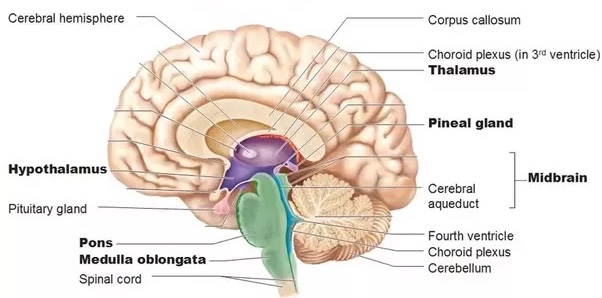
Hypothalamus

It is a peanut- sized structure above the Pituitary gland deep in the brain. It acts as the control centre responsible for shutting down the brain’s arousal signals that affect sleep. The nerve cells of neurons in the hypothalamus are strongly activated during sleep. Within the hypothalamus is the Suprachiasmatic nucleus (SCN)- groups of thousands of cells that receive data about light exposure directly from the eyes and controls the sleep rhythm.

Brain stem

The Pre-optic neurons and the brain stem produce a neurotransmitter called Gamma Amino Butyric Acid (GABA) which acts as an inhibitor as it blocks certain of signals and decreases activity in the nervous system.

Pons and Medulla

Pons, Medulla and mid brain send signals to relax or `paralyse’ muscles essential for body movement in the REM( rapid eye movement )sleep. This prevents The body to move the limbs in dreaming state and protects it from any damages by acting out.

Thalamus

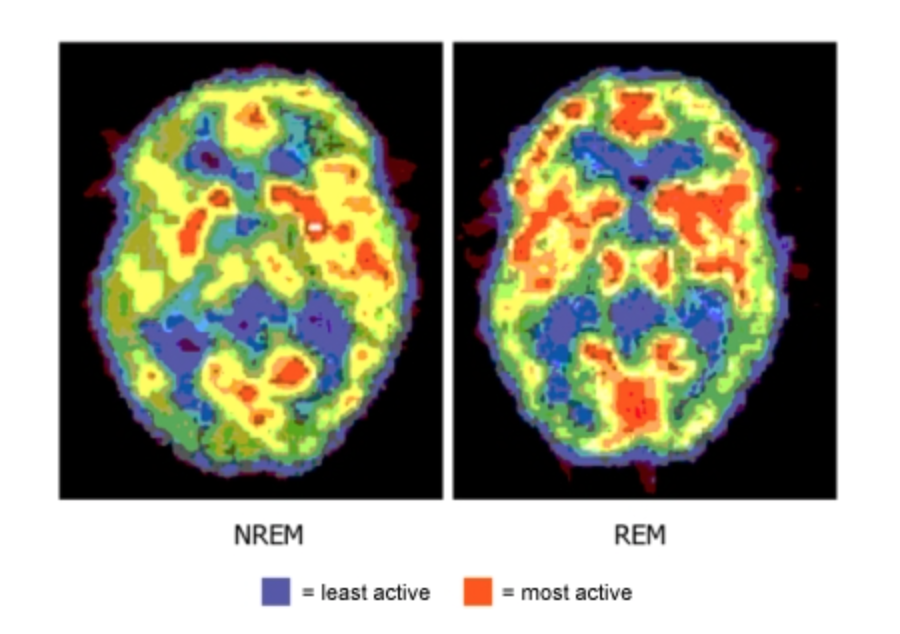
It acts as a relay for information from the senses to the Cerebral Cortex. The cerebral cortex processes data from memory. In deep sleep stage, thalamus becomes quiet but during REM sleep or when we are dreaming, it becomes active sending out sounds,pictures or emotions that make our dreams.

Pineal gland

It is situated in the middle of the brain and is the major site for the production of hormone called Melatonin. This hormone helps put the body asleep when the lights go off. It helps with the timing of Circadian rhythm (internal biological clock) and with sleep.

Amygdala

An almond -shaped structure located deep within the temporal lobes of the brain. It is involved in the processing of emotions and memories. It becomes highly active during REM sleep.

Release of adenosine ,which is a chemical released by cells in the basal forebrain supports sleep drive. Taking caffeine blocks the action of this chemical.

Stages of sleep

Stage 1 Non REM sleep (NREM)

  • The brain slows down.
  • The heartbeat , eye movements and breathing slows.
  • Body relaxes and muscles may twitch.
  • Lasts 5-10 mins.

Stage 2 NREM sleep

  • The body becomes less aware of the surroundings.
  • Body temperature drops.
  • Eye movements stop.
  • Lasts about 20 minutes per cycle

The brain also produces rapid,rhythmic brain waves known as sleep spindles. This allows it to gather ,process and filter newly acquired memories.

Stage 3 NREM

  • Slow brain waves called Delta waves are produced.
  • It allows you to feel refreshed the next day.
  • This is the state of deepest sleep.
  • You are blood pressure drops and breathing slows.

REM sleep

  • Voluntary muscles become immobilised.
  • Rapid eye movement from side to side.
  • You are breathing becomes faster and irregular.
  • Heart rate and blood pressure increase.
  • You dream ( about 2 hours every night).
  • Begins about 90 minutes after falling asleep.
Brain wave activity

An average sleep cycle lasts about 90 minutes . Ideally, we need 5-6 cycles of sleep every 24 hours. Adults need 7 to 8 hours of sleep a night. Although scientists are still trying to learn exactly why we need sleep but studies show that sleep is necessary for survival. The amount of sleep affects our immune system ,nervous system, growth and memory. After all , it is a well know fact that:

Sleep is the best medicine.

webinar on 'Cage aquaculture in Reservoir

 Department of Fisheries, Ministry of Fisheries, Animal Husbandry and Dairying, Government of India organized a webinar on “Cage aquaculture in Reservoir: Sleeping Giants” today as a part of  “Azadi Ka Amrit Mohatsav”. The event was presided over by Shri Jatindra Nath Swain, Secretary, Department of Fisheries (DoF), Government of India (GOI) and well-attended by around 100 participants including officials of Department of Fisheries, GoI and fisheries officials of different States/UTs, faculties from State Agriculture, Veterinary and Fisheries universities, entrepreneurs, scientists, farmers, hatchery owners, students and stakeholders from aquaculture industry across the country.

 The Webinar began with the welcome address by Shri I. A. Siddiqui, Fisheries Development Commissioner, DoF along with introduction of the theme of the Webinar and the distinguished panellists, Shri Jatindra Nath Swain, Secretary, Shri Sagar Mehra, Joint Secretary (Inland Fisheries) along with Dr. B. K. Das, Director, ICAR- Central Inland Fisheries Research Institute (CIFRI) and other participants.

In his inaugural address, Union Secretary Fisheries, Shri Swain stated the importance of reservoirs and cage aquaculture for the development of fisheries sector.  Further, Mr. Swain advised to have robust cage culture system in reservoirs including potential markets to ensure good returns to the farmers and highlighted the examples of success stories across the globe and the country. Mr. Swain also requested the scientists and the Fisheries Departments of the States/ Uts to motivate fish farmers and develop innovative ways as well as policies for increasing profits, decreasing input cost, species diversification and increasing the production and productivity of cage culture systems in the reservoirs.

Shri Sagar Mehra, JS (Inland Fisheries), in his opening remarks, briefly stated the pivotal of reservoir fisheries and aquaculture in enhancing fish production using enclosures such as cages. Further, Shri Mehra added that cage systems efficiently utilise the water bodies by harnessing their natural productivity and are economically, socially and ecologically viable. Department of Fisheries, GOI earmarked the investment atrgets for promoting cage aquaculture under flagship scheme Pradhan Mantri Matsya Sampada Yojana (PMMSY).

During the technical session, Dr. B. K. Das, Director, ICAR- Central Inland Fisheries Research Institute (CIFRI) made a comprehensive presentation on “Cage aquaculture in Reservoir: Sleeping Giants” and briefed about various technologies, opportunities and activities developed by ICAR-CIFRI for diversification of cage aquaculture in various parts of the country along with various skill and capacity development programmes for the farmers and stakeholders. Dr. Das emphasised on the need for promotion of cage aquaculture in reservoirs of the country by following good management practices and providing support services and CIFRI is ready to associate in tandem with the States and Uts for knowledge support on technological back drop for various perspectives of enclosed pisciculture.

After the presentation, an open discussion session was held with the fish farmers, entrepreneurs, hatchery owners, students, scientists and faculty of the universities. After discussion, the webinar concluded with a vote of thanks proposed by Dr. S. K. Dwivedi, Assistant Commissioner, DoF.

*******

Common Technology Development and Services Infrastructure

 Ministry of Heavy Industries (MHI) has notified the Scheme on Enhancement of Competitiveness in the Indian Capital Goods Sector- Phase-II for providing assistance to Common Technology Development and Services Infrastructure. The scheme has a financial outlay of Rs. 1207 crores with Budgetary support of Rs.975 crore and Industry Contribution of Rs.232 crore . The scheme was notified on 25th January, 2022.

The objective of Phase II of the Scheme for Enhancement of Competitiveness of the Capital Goods Sector is to expand and enlarge the impact created by Phase I pilot scheme, thereby providing greater impetus through creation of a strong and globally competitive capital goods sector that contributes at least 25% to the manufacturing sector.


There are six components under the Scheme for Enhancement of Capital Goods Sector Phase II, namely:


(i) Identification of Technologies through Technology Innovation Portals;


(ii) Setting up of four New Advanced Centres of Excellence and augmentation of Existing Centres of Excellence;


(iii) Promotion of skilling in Capital Goods Sector–creation of Qualification packages for skill levels 6 and above;


(iv) Setting up of four Common Engineering Facility Centres (CEFCs) and augmentation of existing CEFCs;


(v) Augmentation of Existing Testing and Certification Centres;


(vi) Setting up of ten Industry Accelerators for Technology Development


The detailed scheme guidelines along with the application forms are available at: https://heavyindustries.gov.in/writereaddata/UploadFile/Notification%20for%20Capital%20Goods%20%20Phase%20II%20.pdf


*****

Concerns over Railway Exam

 “We will handle the issues and grievances of candidates/aspirants with utmost sensitivity”, said Shri Ashwini Vaishnaw, Minister of Railways in his interaction with DD News last evening. Concerns have been raised by some candidates over the process of shortlisting of candidates for the second stage of the ongoing recruitment examination under RRBs Centralised Employment Notice (CEN) No. 01/2019 (for Non-Technical Popular Categories – Graduate and Under-graduate) – results of which were announced on 14.01.2022.

Speaking to DD News over this issue, Shri Ashwini Vaishnaw said that the matter will be handled with sensitivity. A high-power committee comprising senior officials to look into these concerns, has already started receiving representations of candidates/aspirants. Senior Railway Recruitment Board (RRB) officials are meeting groups of students and taking their representations. The Minister assured the candidates/students that all their problems will be resolved with utmost sensitivity and they need not get confused/influenced by anyone’s words.

Articulating the issue of number of candidates to be shortlisted for the 2nd stage of Exam, the Minister informed that as an old Railway practice the number of Candidates to be called for NTPC Second Stage Exam was only 10 times the number of approved vacancies. This number of calling 10 times of the number of vacancies was increased to 15 times the number of vacancies in CEN 03/2015 and 20 times the number of vacancies in CEN 1/2019, so that more and more students get a chance to write the exam.

Elaborating further, Shri Vaishnaw said that “if you look at each category, 20 times students/candidates have been selected in each category”. The issue is that more than one candidate has applied in more than one category. Since a 2nd Stage consists of CBT of five different levels and a candidate can be shortlisted for more than one level as per eligibility, merit and option, the lists of 7 lakh roll numbers will have some names appearing in more than one list. The Minister said that this issue can be sorted out and there is no need to hit the road or set the train or fire as the Railway infrastructure is public property.

Talking about the solution of this issue, Shri Ashwini Vaishnaw said that the high-level committee which has been constituted to look into the concerns/grievances of candidates, is comprised of very senior officials having vast experience in recruitment process. He requested the concerned students/candidates to submit their grievances/concerns to the committee within three weeks of time i.e. by 16.02.2022 and we will come up with a solution immediately after that.


RKJ/M

Register with Sainik Schools Society for setting up new schools

 Marching ahead in tune with National Education Policy (NEP), Government has decided to provide increasing focus on value-based education enabling children to develop pride in rich culture and heritage of this nation, effective leadership with character, discipline, sense of national duty and patriotism through setting up of 100 new Sainik Schools under Sainik Schools Society, Ministry of Defence in partnership with Private Schools/NGOs/States. 

Towards this end, applications were invited for joining the initiative only through the web portal https://sainikschool.ncog.gov.in. Presently, 284 schools have registered therein and the evaluation for identifying prospective partners is underway for the academic session 2022-23. In view of the response to this initiative and the need for finalising the evaluation in a time bound manner, it is now being considered to close the receipt of further applications. Accordingly, closing date for any fresh registrations on the web portal https://sainikschool.ncog.gov.in is 31 January 2022. No fresh registrations will be accepted after 31 January 2022 as the portal will be closed for this purpose for the academic session 2022-23.

India-Israel agree to further enhance cooperation in the agricultural sector

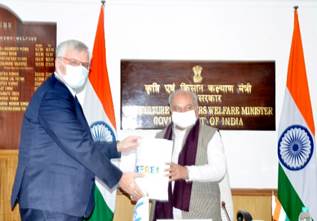
 Israeli Ambassador to India Shri Naor Gilon called on the Union Minister of Agriculture and Farmers Welfare Shri Narendra Singh Tomar at Krishi Bhawan on 27th January 2022. Welcoming the Ambassador, Shri Tomar congratulated him on taking over as the Ambassador of Israel to India. Shri Tomar expressed happiness on the completion of 30 years of diplomatic relations between India and Israel. The Minister expressed satisfaction at the functioning of 29 Centers of Excellence in 12 States which are producing more than 25 million vegetable plants, over 387 thousand quality fruit plants and can train more than 1.2 lakh farmers per year.


Union Minister Shri Tomar informed that it has been decided to convert 150 villages around the Centers of Excellence into Villages of Excellence with technical assistance from Israel, out of which 75 villages are being taken up in the first year to commemorate the 75th year of India’s independence where India and Israel will work together. Shri Tomar also highlighted the various schemes that have been launched by the Government of India under the leadership of Prime Minister Shri Narendra Modi for the welfare of farmers, including PM-Kisan, Agri-Infrastructure Fund, formation of 10 thousand FPOs, Schemes for promotion of organic farming, natural farming and soil health cards etc.

Description: C:\Users\Administrator\Downloads\FKGrmGQVUAY3Zoe.jpg

The Ambassador of Israel Shri Gilon expressed satisfaction over the functioning of the Centers of Excellence, stating that these CoEs are a great example of cooperation between the two countries. The Ambassador appreciated the working of ICAR institutes and showed interest in further collaboration with ICAR and making available the latest technologies available with Israel. He proposed the certification of CoEs to further enhance the standards and quality of services being provided to the farmers. He also invited Union Minister Shri Tomar to visit Israel. Shri Tomar appreciated the Ambassador’s proposals, agreed to work on them and thanked the Ambassador and the officers from the Embassy of Israel for their cooperation.

*****