Research institutions planning in biodiversity conservation, sustainable commercial cultivation of bio-resources.

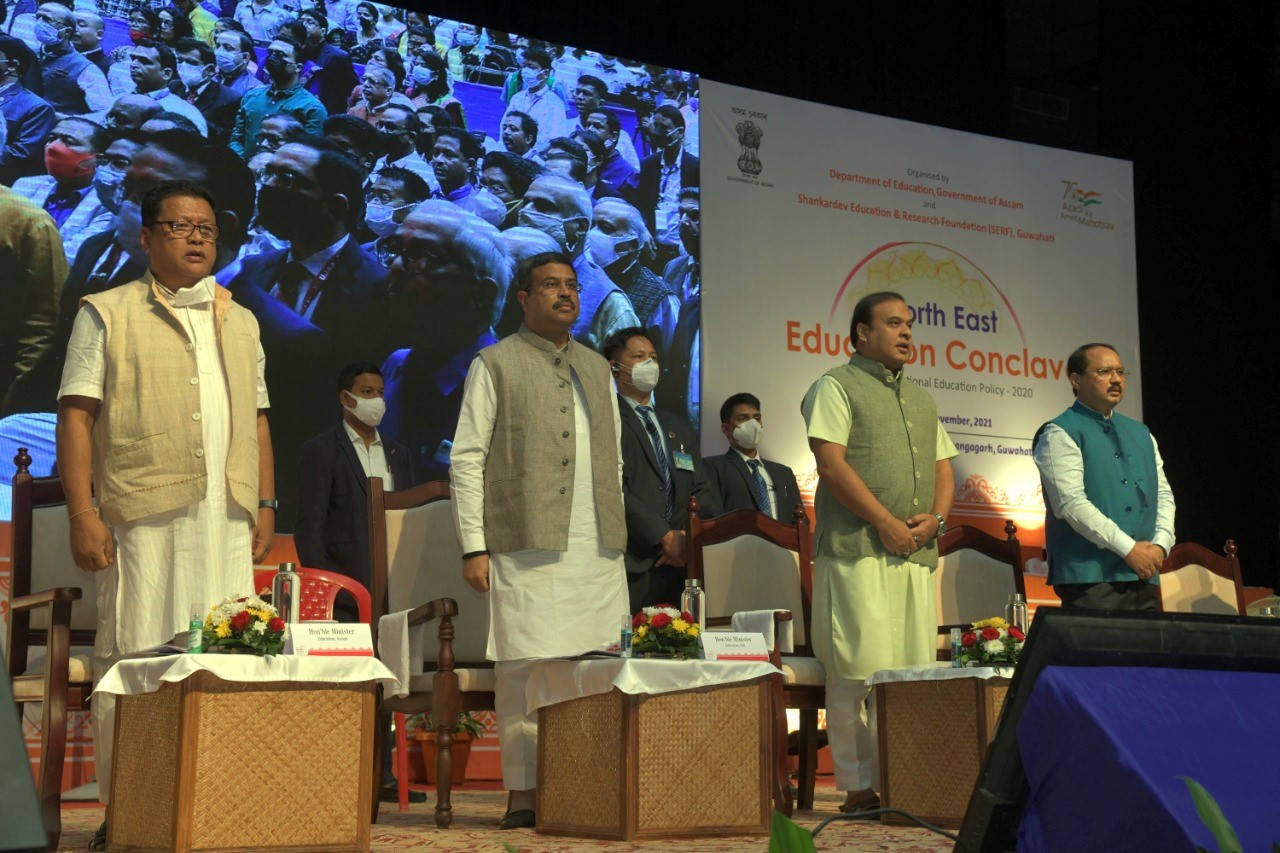
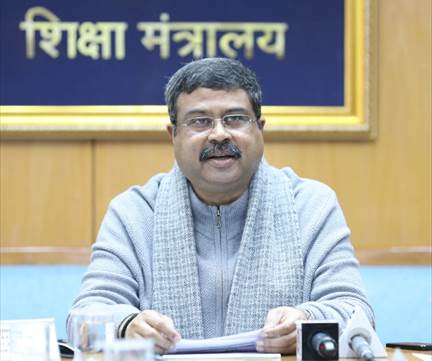
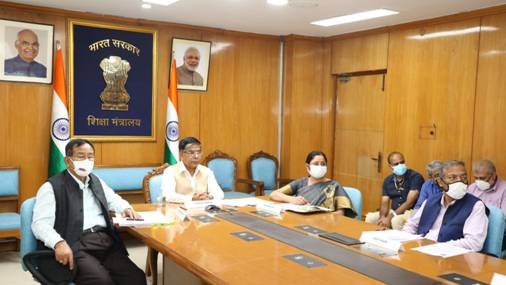
 Union Minister of Education and Skill Development and Entrepreneurship Shri Dharmendra Pradhanalong with Minister of State for Education and External Affairs Dr.Rajkumar Ranjan Singh today chaired the meeting of Ministers’ of Education of the North-eastern states in Guwahati. Education Advisors of the NE states and senior officials of the Ministry of Education, GOI were also present.

Shri Pradhan overviewed presentations on the school and higher education scenarios in the North Eastern region, including enrolment trends, outreach initiatives for ethnic students, access to facilities, penetration of centrally-sponsored schemes, steps taken to make education accessible, among others.Deliberations centred around the way forward towards implementing the NEP 2020, strategies to strengthen the learning landscape in the NE states to transform the NE region into a knowledge-based economy.

Shri Pradhan stressed on working together with the NE state education ministries in charting special initiatives for reducing drop-out rates and also research institutions planning in areas like, biodiversity conservation, promoting sustainable commercial cultivation of bio-resources.

North-East Education Conclave in Guwahati

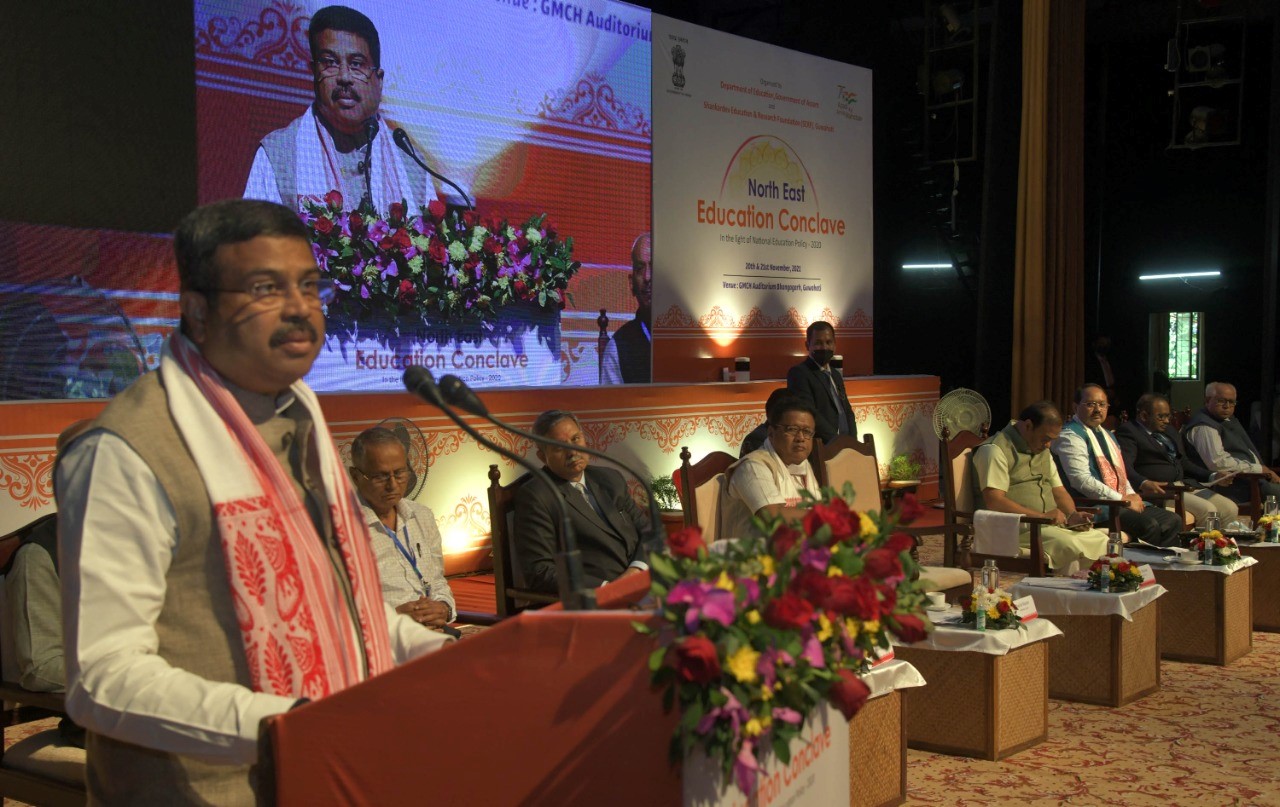
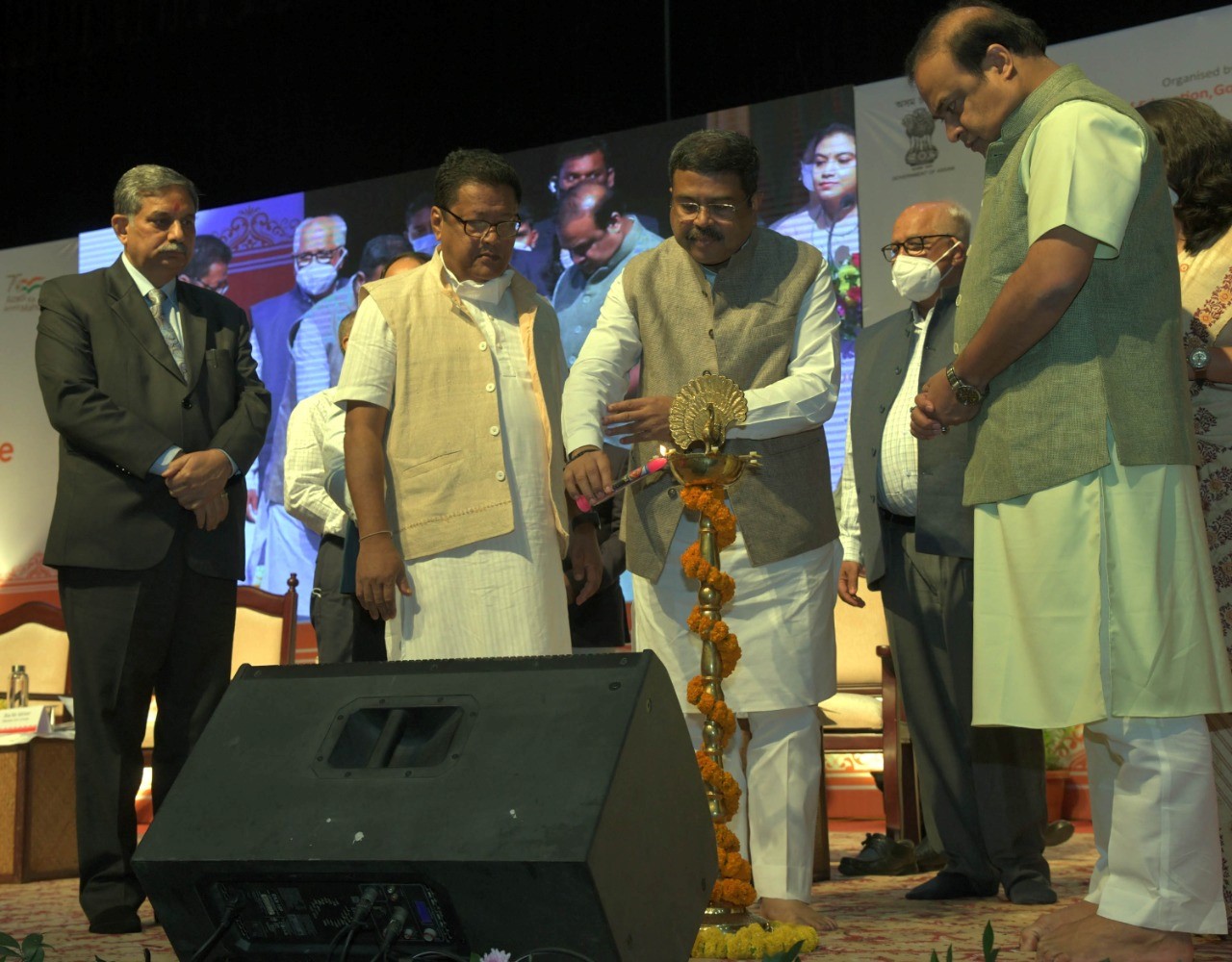
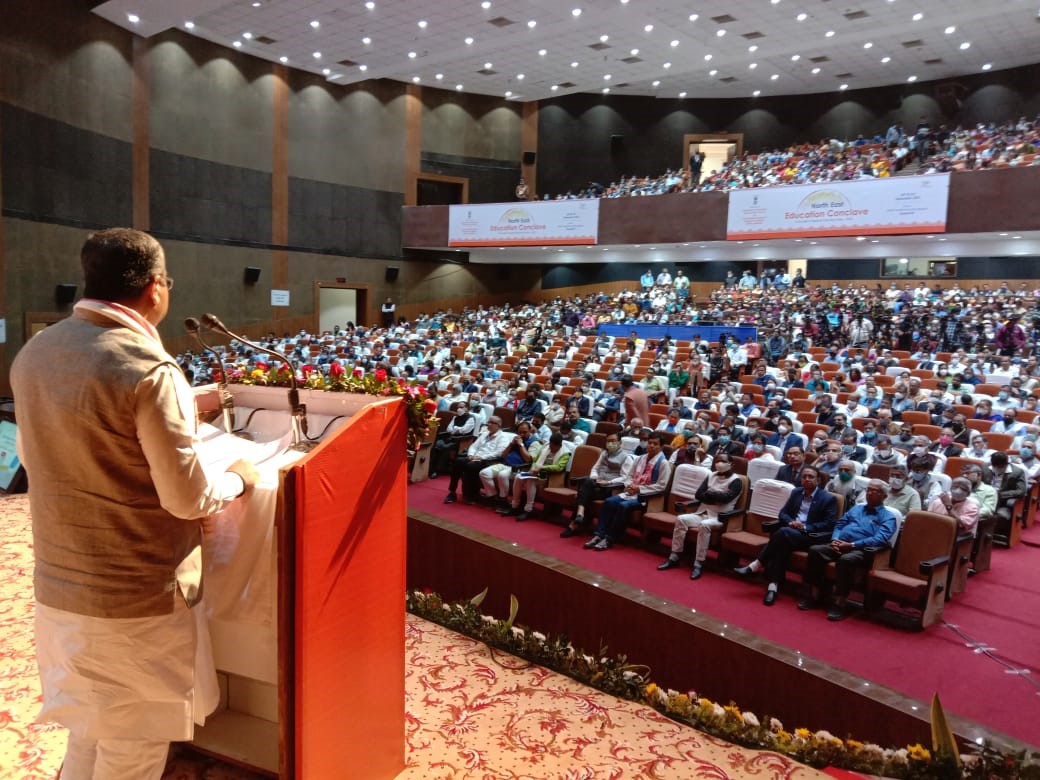
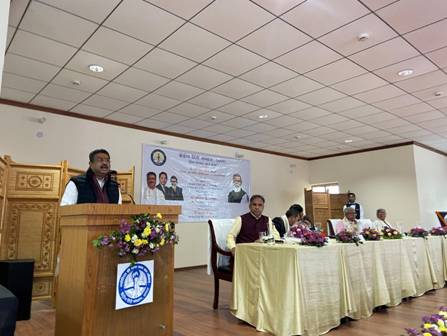
 Union Education Minister Shri Dharmendra Pradhan along with the Chief Minister of Assam Dr. Himanta Biswa Sarma today inaugurated the North-East Education Conclave at Guwahati Medical College & Hospital Auditorium at Guwahati organized by Department of Education, Government of Assam and Shankardev Education and Research Foundation (SERF).  The Union Minister said that education sector in India is undergoing an unprecedented transformation and National Education Policy 2020 introduced by the Government under the leadership of Prime Minister Shri Narendra Modi aims at preparing the youth to be future-ready, socially aware, global citizens of the 21st century.

The Union Education Minister lauded the State Education Department and Shankardev Education & Research Foundation (SERF) for its initiative to organise the country’s first of its kind Education Conclave. Speaking on the occasion, the Union Minister said that NEP 2020 is a visionary approach to transform the education landscape of the country and is ushering in a paradigm shift In India’s education landscape. He also said that the NEP is a unifying factor in celebrating our diversity and strengths as a civilization. Elaborating the vision of NEP, he said that the NEP is focused on developing desired learning competencies, equipping students with 21st century knowledge and skills and preparing our youth to become global citizens. 

He said that the North East Education Conclave aims to discuss and deliberate on various aspects of NEP-2020 which will help in creating a roadmap for the North East Region and to design strategies for its successful implementation.

He further said that the diversity of languages cannot be witnessed better than in the North East Region with about 180 languages spoken by the tribes residing here. NEP-2020 has emphasized on imparting education in mother tongue and local languages and the government is striving to convert this vision into reality. Speaking about linguistic diversity in the state, he said that Assam can be the laboratory of local-language based education in India.

The Chief Minister of Assam Dr. Himanta Biswa Sarma said that the NEP 2020 has given the opportunity to go beyond marksheet to strive for knowledge which will make India more powerful, take the country to greater heights, empower students and offer them opportunities to grow.

The Chief Minister apprised that the two- day deliberation would result in finalizing a roadmap for implementation of NEP in the region while converting the policy into action and setting timelines to realize the dream of a new and powerful India as envisioned by Prime Minister Narendra Modi. He expressed gratitude to Union Minister of Education for attending the conclave and said that his able and dynamic leadership would guide the state towards proper implementation of NEP-2020.

Education Minister of Assam, Dr Ranoj Pegu, VC, CSS University, Meerut, UP, Prof. Narendra Kumar Taneja, , UGC, Chairman, Prof. D.P. Singh, Education Ministers of eight NE states, Prof.Nani Copal Mahanta,Education Adviser,Govt.of Assam, stakeholders and academicians were present in the inaugural session.

………..

Centres for nano technology and Indian Knowledge System at IIT Guwahati

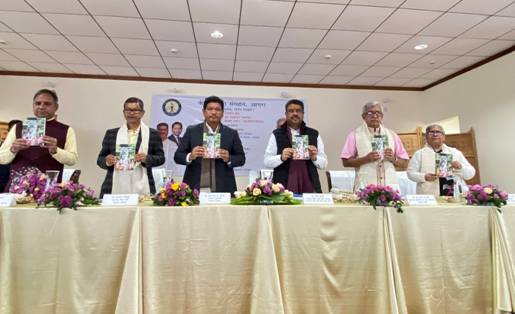
 Union Minister of Education, Skill Development and Entrepreneurship Shri Dharmendra Pradhan today visited IIT Guwahati and inaugurated the state-of-the-art Centre for Nanotechnology (CNT) and Centre for Indian Knowledge System (CIKS) as well as two hostels at the Institute. He also released a book on NEP 2020 implementation at the institute. Dr. Ranoj  Education Minister of Assam and Smt. Queen Oja, MP were also present.

Speaking on the occasion Shri Pradhan congratulated IIT Guwahati for achieving excellent rankings in various international and national ranking systems and appreciated the efforts of IIT Guwahati for creating an ecosystem for research and education as well as focusing on overall development of the northeastern region. He also said that IIT Guwahati has to play an important role in areas like, disaster management, biodiversity-based research, green energy development, strengthening knowledge-based economy and driving entrepreneurship among the students. He also called upon the students and faculty associated with the institute to synergize technology and knowledge to create a vibrant ecosystem of solution-centric innovation.

He said that, in this era of interconnected world, the centre for nanotechnology at IIT Guwahati will host a number of CoEs, incubators and state-of-the-art research laboratories for advancements in multi-disciplinary research and education in the areas of healthcare, nano-bio-materials, micro/nano electronics , and energy.

He further said that Prime Minister Shri Narendra Modi in his convocation speech in 2020 had suggested IIT Guwahati to set up a Centre for Indian Knowledge System. He expressed his happiness that the same has been established in quick time for preserving, documenting  and sharing ancient & traditional Indian knowledge.

Shri Pradhan said that Srimant Sankardev was a great scholar gave new thought and shape to civilisation and humanity. The glorious Ahom culture, the mighty Brahmaputra, the blessed land of Ma Kamakhya and greats like Lachit Borphukan should serve as an inspiration for students at  IIT Guwahati, he added.

The Minister highlighted that during the COVID-19, innovation and technology aided us with PPT kits, helped us with development and production of vaccine and represented the resilience of this country. Institutes like IIT Guwahati have to play an important role in leveraging innovation for societal good, he added.

He said that during the COP 26, Prime Minister Modi outlined the Panchamrit vision to fight climate change. Our north eastern states can become the hub of green energy development with IIT Guwahati playing an important role, he added.

Dr. Ranoj Pegu, Education Minister of Assam congratulated IIT Guwahati and said that the Institute should focus on entrepreneurship and  produce job creators and not only job seekers. Institutes like IIT Guwahati should also focus on developing new agricultural technologies to help double farmers’ income. He further requested IIT Guwahati to mentor other educational institutions in the region and also develop modules for training of teachers.

Smt. Queen Oja, Hpn’ble MP expressed her happiness in getting such advanced research facilities in northeast and expected IIT Guwahati to contribute in the overall development of northeast.

Centre for Nanotechnology (CNT) aims at meeting future challenges and augment academic partnerships with industry in Nanotechnology. The major funding for the Centre, which included Rs. 37 cr for the building, apart from equipment, was obtained from the Ministry of Education (MoE) and the Ministry of Electronics and Information Technology (MeitY), Government of India. It will host 25 advanced laboratories that will focus on advancements in multi-disciplinary, scientific and translational research and is equipped with a Class-100 clean room facilities integrated with state-of-the-art fabrication, characterization and testing laboratories. The CNT presently hosts two Centres-for-Excellence sponsored by the Ministry of Electronics and Information Technology (MeitY) and the Indian Council of Medical Research (ICMR) along with an Incubator BioNEST sponsored by Biotechnology Industry Research Assistance Council (BIRAC), Department of Biotechnology, Government of India. CNT is thus a good example of synergy among various ministries of the Government of India. The key outcomes expected from the Centre for Nanotechnology include nano-enabled healthcare, energy harvesting, and LED prototypes, devices and technologies, start-ups/ incubation ecosystem, high-end R&D outputs, capacity building of highly skilled manpower in the area of nanofabrication and nanoelectronics, etc.

Centre for Indian Knowledge System (CIKS) will focus on preserving, documenting and sustaining the knowledge that is unique to India. The top priorities include Indian classical music, Yoga, Sanskrit, traditional medicines, temple architecture, ceramic tradition and special agricultural practices of North-East India, herbal plants of north-east as health food and metal work of Assam. Scholars from diverse backgrounds will be encouraged to participate in the new CIKS’s interdisciplinary research and education programs, enabling them to evolve practices and technologies in varied areas for sustainable growth and development.

Disang hostel adds another 1000 rooms to the existing hostel capacity of IIT Guwahati. Dikhow hostel is the first hostel in the campus specifically for the accommodation of project staff. Constructed at a total cost of Rs. 132 cr, these hostels will further halp in enhancing the capacity of IIT Guwahati.

Earlier, while welcoming the guests, Director, IIT, Guwahati said that, through these and similar other initiatives, the Institute has been proactively pursuing high-end research and working towards the vision of “Atmanirbhar Bharat”, while fulfilling the aspirations of the region, aligning with national policies, especially implementing the NEP2020, and competing globally in research and technology development.


Kendriya Hindi Sansthan in Meghalaya

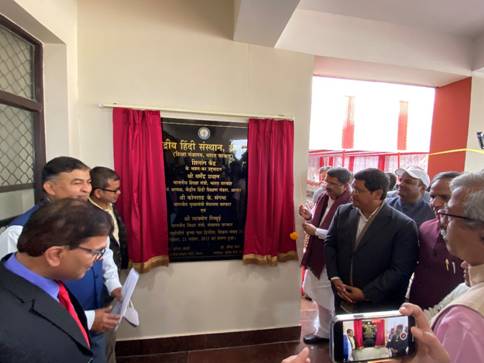
 Union Minister for Education and Skill Development Shri Dharmendra Pradhan inaugurated the newly constructed building of Kendriya Hindi Sansthan at Mawdiangdiang, East Khasi Hills today. Chief Minister of Meghalaya Shri Conrad K Sangma was also present during the inauguration programme. Union Ministerexpressed his gratefulness to the Government of Meghalaya for providing the necessary assistance including the required land for setting up of this Institute at Mawdiangdiang, Meghalaya. He expressed that this Institute will work for the benefit of teachers of Hindi and people eager to learn and do research in the language and will cater to states of Meghalaya, Tripura and Mizoram.

Speaking on the occasion the Union Minister said that NEP 2020 is a visionary approach to transform the education landscape of the country and to achieve the realistic goal and to percolate its ripple effect to the grassroots. One of most important salient features of NEP, the Minister said, is that NEP-2020 emphasised on imparting education in Mother language at the primary level and the government is striving to achieve the target within the stipulated time frame. 

Acknowledging the diversity of culture, language and tradition of this country and the co-existence amid this diversity, the Minister said that it because of this beauty of this language that people can share each others tradition and rich heritage. The Minister said that technology should be used extensively to preserve and enrich native languages so that people can use internet in their native languages and make people from other parts of the world about their rich culture and tradition.These practices will encourage innovation and creativity among the youths and may show light to world about many relevant issues concerning the people, the Minister added. 

The Minister while acknowledging the rich culture of this region said, “There are many things to learn from this region, it has a very rich heritage and is strong in natural resources. There has been many good educational institutions coming up in this region including IIM’s new campus.” The Minister said that there is a lot to do for the youths of the region and exhorted everyone to work for providing a better environment for the young generation. He said, “I have been informed that Meghalaya has around the 3.5 lakh college going students and it is the collective responsibility everyone to build a conducive environment to ensure their quality education, skilling, raising their employability capability and imbibing inside them the value of fundamental research. The first step towards this effort would be to simplify the process of learning languages”. 

The minister also referred to the North-East Education Conclave that was held in Guwahati on Saturday and said that the North East Region has nearly 180 languages and dialects spoken by various tribes and community and it is the mandate of the NEP to develop and preserve this heritage. In the days to come Kendriya Hindi Sansthan and English and Foreign Languages University (EFLU) will function as a Centre of Excellence and will work with the Government of Meghalaya to preserve and enrich Khasi, Garo and Jaintia languages with the help of technology, the Minister added. The Minister was categorical when he said that language is a tool that connect people from across the world and the availability of applications in the internet to learn languages of this region will enable people from outside the state to know about the rich culture and heritage of this region.  

The Minister also released two books at the occasion- SamànvayPurvottarSanchayan and Hindi-khasi-Garo-Jaintia-English Concise Dictionary. The Minister was amused to come across the Concise Dictionary and exclaimed that this will help in enriching the languages.

The Chief Minister of Meghalaya Shri Conrad K Sangma expressed his happiness for the inauguration of the Kendriya Hindi Sansthan in his state and said that the presence of this institute will help the youths of Meghalaya and the entire Northeast region to learn Hindi and also to excel in this language.

National Apprenticeship Training Scheme for next five years

 The Cabinet Committee on Economic Affairs chaired by the Prime Minister, Shri Narendra Modi today has accorded its approval for stipendiary support of Rs. 3,054 crore to apprentices who undergo apprenticeship training under National Apprenticeship Training Scheme (NATS) of Ministry of Education for the period from 2021-22 to 2025-26 (upto 31-03-2026).

Approximately 9 lakhs apprentices will be trained by industry and commercial organisations. NATS is a well-established scheme of Government of India which has demonstrated to enhance the employability of students who have successfully completed the apprenticeship training.

The apprentices who have completed graduate and diploma programme in Engineering, Humanities, Science and Commerce will be given stipend of Rs.9,000/- and Rs.8,000/- per monthrespectively. 

The Government has approved an expenditure of more than Rs. 3,000 crore during the next five years which is about 4.5 times the expenditure made during the previous 5 years. This increased expenditure on apprenticeship is in line with the thrust which National Education Policy 2020 has given to apprenticeship.

In keeping with the Government emphasis on “SabkaSaath, SabkaVikas, –SabkaVishwas, SabkaPrayaas”, the scope of NATS has further been expanded to include students from Humanities, Science and Commerce besides students from engineering stream. This scheme aims to raise the standards of skill level by strengthening the skill ecosystem and as a result, will provideemployment to approximately 7 lakhs youths in the next five years.

The NATS will provide apprenticeship in the emerging areas under ‘Production Linked Incentive’ (PLI) such as Mobile manufacturing, Medical devices manufacturing, Pharma sector, Electronics/Technology products, Automobile sector etc. The scheme will also be preparingskilled manpowerfor connectivity/logistics industry sectors, identified under GatiShakti.

Samagra Shiksha Abhiyan

 The aim of the redesigned Samagra Shiksha Scheme is to universalize access to school education; to promote equity through the inclusion of disadvantaged groups and weaker sections, and to improve the quality of education across all levels of school education from pre-primary to class XII.

The major objectives of the Scheme are: (i) Support States and UTs in implementing the recommendations of the National Education Policy 2020 (NEP 2020); (ii) Support States in implementation of Right of Children to Free and Compulsory Education (RTE) Act, 2009; (iii) Focus on Early Childhood Care and  Education; (iv) Emphasis on Foundational Literacy and Numeracy; (v) Thrust on Holistic, Integrated, Inclusive and activity based Curriculum and Pedagogy to impart 21st century skills among the students; (vi) Provision of quality education and enhancing learning outcomes of students; (vii) Bridging Social and Gender Gaps in School Education; (viii) Ensuring equity and inclusion at all levels of school education; (ix) Strengthening and up-gradation of State Councils for Educational Research and Training (SCERTs)/State Institutes of Education and District Institutes for Education and Training (DIET) as nodal agency for teacher training; (x) Ensuring safe, secure and conducive learning environment and maintenance of standards in schooling provisions and (xi) Promoting vocational  education.

The major interventions, across all levels of school education, proposed under the scheme are: (i) Universal Access including Infrastructure Development and Retention; (ii) Foundational Literacy and Numeracy, (iii) Gender and Equity; (iv) Inclusive Education; (v) Quality and Innovation; (vi) Financial support for Teacher Salary; (vii) Digital initiatives; (viii) RTE Entitlements including uniforms, textbooks etc.; (ix) Support for ECCE; (x) Vocational Education; (xi) Sports and Physical Education; (xii) Strengthening of Teacher Education and Training; (xiii) Monitoring; (xiv) Programme Management; and (xv) National Component.

The redesigned Samagra Shiksha recommends to enhance the direct outreach of the scheme by providing child centric interventions directly to the students through DBT mode.

Under Samagra Shiksha financial assistance is provided to States/ UTs for various ICT and Digital initiatives for setting up of ICT labs, smart classrooms including support for digital boards, virtual classrooms and DTH channels.  States have an option to avail non-recurring grant for setting up of ICT labs in schools having classes 6 to 12 up to Rs. 6.40 lakh per school and recurring grant of up to Rs. 2.40 lakh per school per annum for a period of 5 years OR non-recurring grant of Rs. 2.40 lakh for Smart Class rooms (Maximum 2 smart classrooms per school) and recurring grant of Rs. 0.38 lakh. The recurring cost includes support for instructor, E Content and Digital Resources, Charges for Electricity and Internet connectivity, etc.

Steps taken by the Government for Differently abled Children

 3% seats of total available seats for fresh admissions in Kendriya Vidyalayas (KVs) and Jawahar Navodaya Vidyalayas (JNVs) are horizontally reserved for Differently Abled children. The following measures have been implemented for differently abled children in KVs& JNVs:-

i)          Barrier free access for differently abled students is integral part of Vidyalaya building design. Ramps and special toilets are constructed in schools as well as hostel buildings.

ii)         Teachers are trained to help the students.

iii)        Engaging the services of Special Educators to facilitate the teaching learning process among differently abled children 

iv)        Need based procurement of assistive augmented devices. 

v)         Exemptions from payment of VVN and Tuition Fees.

vi)        The facility of compensation of time in examination, seating arrangement on the ground floor and providing facility of scribe/writer in all examinations for all students with benchmark disability studying in different classes are extended as per CBSE guidelines.

The Government has enacted the Rights of Persons with Disabilities (RPwD) Act, 2016 and the said Act mandates the Government and local authorities to take measures for providing inclusive education to Children with Disabilities (CwDs). Further, the Act also mandates appropriate Government and local authorities to ensure that every child with benchmark disabilities (disability of 40% or more) has access to free education in an appropriate environment till he attains the age of 18 years. 

The Centrally sponsored Samagra Shiksha – is an integrated scheme for School Education of the Department of School Education & Literacy, Ministry of Education, covering children from pre-primary to senior secondary. Under Samagra Shiksha, there is a dedicated component for Inclusive Education for Children with Special Needs (CwSN) through which various provisions are made available for the educational needs such as, identification & assessment camps, provision of aids, appliances, assistive devices, teaching learning materials (TLMs) etc. 

The National Education Policy (NEP), 2020 advocates full equity and inclusion as the cornerstone of education to ensure that all students are able to thrive in the education system. It also underscores within its framework, education of CwSN in order to ensure equitable quality schooling. The Samagra Shiksha scheme has also been aligned with the recommendations of NEP 2020 to ensure that all children have access to quality education with an equitable and inclusive classroom environment.

NIPUN Bharat Scheme

 The Department of School Education and Literacy launched the National Mission on Foundational Literacy and Numeracy called National Initiative for Proficiency in Reading with Understanding and Numeracy (NIPUN Bharat) on 5th July 2021 under the aegis of Centrally Sponsored Scheme of Samagra Shiksha. The mission aims to achieve universal foundationalliteracy and numeracy in primary classes.The Mission Guidelines lays down priorities and actionable agendas for States and UTs to achieve the goal of proficiency in foundational literacy and numeracy for every child by grade 3. Detailed guidelines for the mission have been developed which includes the codification of development goals and learning outcomes for age 3 to 9 years and Lakshya or Targets for Foundational Literacy and Numeracy starting from Balvatikato Grade III. The guidelines for implementation of the NIPUN Bharat mission has been uploaded on the Department’s website under the link mentioned below:

https://dsel.education.gov.in/sites/default/files/NIPUN_BHARAT_GUIDELINES_EN.pdf

As per the NIPUN Bharat implementation guidelines, assessment during the foundational learning can be broadly categorized into two major areas, namely:

    1. School Based Assessment (SBA) through qualitative observation based on performance of the child in a multitude of experiences and activities. Various tools and techniques like anecdotal records, checklist, portfolio, and interactions (through a holistic 360-degree assessment with teacher, peers, family and friends) have been recommended to be used for assessment. Thus, the teachers at the foundational stage need to observe children as they play, work on their task, perform or interact among themselves, to assess children’s interests and learning.
    2. Large-scale standardised assessmentfor assessment of the processes and functioning of the educational systems (such as NAS, SAS, and Third-Party Assessments). The assessment tools commonly used in conducting large scale assessment studies are multiple choice questions (MCQ) and constructed responses are usually avoided to bring in objectivity in the process. These assessments are a mechanism to gauge how well learning is happening in their state, districts, and blocks. In this regard, the National Achievement Survey (NAS) 2021 has been carried out for assessing learning outcome of children in Grade III.

A specialized National Initiative for School Heads’ and Teachers’ Holistic Advancement (NISHTHA 3.0) for the foundational literacy and numeracy covering about 25 lakh teachers at the primary level across all states and UTs has been launched in September, 2021.

NEAT 3.0 and AICTE prescribed technical books in regional languages

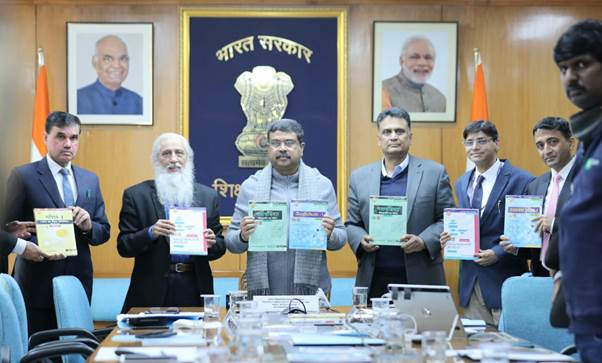
 Union Education Minister and Skill Development Minister Shri Dharmendra Pradhan launched NEAT 3.0, a single platform to provide the best-developed ed-tech solutions and courses to students of the country. The Minister also launched AICTE prescribed technical books in regional languages

11c4c756-47a6-4f6a-8ee7-efa1bf06f7ee.jpg

c487de0f-7471-481c-ae1a-8ff5030aeafe.jpg

Speaking on the occasion Shri Pradhan said that NEAT will be a game-changer in bridging the digital divide, especially among the economically disadvantaged students and also in fulfilling the knowledge-based requirement of India and the world. The Minister informed that 58 global and Indian start-up ed-tech companies are onboard NEAT and are offering 100 courses & e-resources for bettering learning outcomes, developing employable skills and overcoming learning loss. He hoped that the e-content & resources and Digital frameworks like NEAT are a step in the right direction in minimising learning loss.

The Minister encouraged AICTE to integrate courses in NEAT with skill India to tap the opportunities in emerging areas of skill to boost employability and prepare our youth for the future. He urged that AICTE and ed-tech companies to offer e-resources in the least possible cost. Shri Pradhan complimented the global ed-tech companies and Indian start-ups who are a part of NEAT 3.0. He said that all ed-techs are welcome to work with a collaborative approach for making education accessible & affordable. But, ed-techs must remember that there is no place for monopoly and exploitation, he added.

The Minister expressed his happiness that today, more than 12 lakh socially and economically disadvantaged students have received free ed-tech course coupons worth over ₹253 crore under NEAT 3.0. This is one of the biggest gift to the student community from Prime Minister Shri Narendra Modi in the new year 2022, he added. He stated that India will lead the global economy in the 21st century and will be the most preferred market for trade & economy. 

On technical books in regional languages, Shri Pradhan said that our diverse languages are our strength and harnessing them key to building an innovative society. He further said that learning in regional languages will further develop the critical thinking capacity & enable our youth to become global citizens.

NEAT:

National Educational Alliance for Technology (NEAT) is an initiative to provide the use of best-developed technological solutions in the education sector to enhance the employability of the youth on a single platform for learners’ convenience. These solutions use Artificial Intelligence for a personalized and customized learning experience for better learning outcomes and skill development in the niche areas. AICTE, MoE is acting as the facilitator in the process while ensuring that the solutions are freely available to a large number of socially and economically backward students. NEAT has 58 Education Technology Companies with 100 products that help to develop employable skills, capacity building, and bridge learning gaps.

The 9 Elements of a Shakespearean Tragedy

In Shakespeare’s tragedies, the main protagonist generally has a flaw that leads to his downfall. There are both internal and external struggles and often a bit of the supernatural thrown in for good measure (and tension). Often there are passages or characters that have the job of lightening the mood (comic relief), but the overall tone of the piece is quite serious. Below we are going to take a more in-depth look at each of the elements of Shakespearean tragedy, as well as explore a few examples

  • The Tragic Hero
    A tragic hero is one of the most significant elements of a Shakespearean tragedy. This type of tragedy is essentially a one-man show. It is a story about one, or sometimes two, characters. The hero may be either male or female and he or she must suffer because of some flaw of character, because of inevitable fate, or both. The hero must be the most tragic personality in the play.
    An important feature of the tragic hero is that he or she is a towering personality in his/her state/kingdom/country. This person hails from the elite stratum of society and holds a high position, often one of royalty. Tragic heroes are kings, princes, or military generals, who are very important to their subjects. In the classic Romeo and Juliet, Romeo Montague is the tragic hero, whose undoing is his obsession with Juliet Capulet. Juliet’s fake death triggers his emotions, leading him to take poison and die right beside his sleeping love.
Romeo and Juliet, two of Shakespeare’s tragic characters
  • Good vs. Evil
    Shakespearean tragedies play out the struggle between good and evil. Most of them deal with the supremacy of evil and suppression of good. Evil is presented in Shakespearean tragedies in a way that suggests its existence is an indispensable and ever-enduring thing. For example, in Hamlet, the reader is given the impression that something rotten will definitely happen to Denmark (foreshadowing). Though the reader gets an inkling, typically the common people of the play are unaware of the impending evil.
    In Julius Caesar, the mob is unaware of the struggle between good and evil within King Caesar. They are also ignorant of the furtive and sneaky motives of Cassius. Goodness never beats evil in the tragedies of Shakespeare. Evil conquers goodness. The reason for this is that the evil element is always disguised, while goodness is open and freely visible to all.
  • Hamartia
    Hamartia is the Greek word for “sin” or “error”, which derives from the verb hamatanein, meaning “to err” or “to miss the mark”. In other words, hamartia refers to the hero’s tragic flaw. It is another absolutely critical element of a Shakespearean tragedy. Every hero falls due to some flaw in his or her character.
    Once again, Hamlet comes into focus as a perfect illustration of hamartia and its role in the tragedy. His indecisiveness and overthinking lead him to overreact, killing Polonius thinking that he was Claudius, his father’s murderer. His obsession with vengeance leads to the senseless murder of the innocent man stirring up tragedy after tragedy. He could have killed Claudius when he was praying at the church but could not act due to his overthinking.
  • Tragic Waste
    In Shakespearean tragedies, the hero usually dies along with his opponent. The death of a hero is not an ordinary death; it encompasses the loss of an exceptionally intellectual, honest, intelligent, noble, and virtuous person. In a tragedy, when good is destroyed along with evil, the loss is known as a “tragic waste.” Shakespearean tragedy always includes a tragic waste of goodness. Hamlet is a perfect example of tragic waste. Even though Hamlet succeeds in uprooting the evil from Denmark, he does so at the cost of his death. In this case, the good (Hamlet) gets destroyed along with evil (Claudius). Neither of them wins. Instead, they fail together.
Tragic waste in Hamlet.
  • Conflict
    In Shakespearean tragedies, two types of conflict take place:
    • External conflict – The hero faces conflict from his antagonists.
    • Internal Conflict – The hero faces conflict in their mind.
    Macbeth struggles internally, wondering whether to take power by force. He has to choose to either remain loyal to Duncan or heed his wife’s advice. He faces an external conflict when Banquo and Macduff rise to challenge his illegitimate rule.
  • Catharsis
    Catharsis is a remarkable feature of a Shakespearean tragedy. It refers to the cleansing of the audience’s pent-up emotions. In other words, Shakespearean tragedies help the audience to feel and release emotions through the aid of tragedy. When we watch a tragedy, we identify with the characters and take their losses personally. A Shakespearean tragedy gives us an opportunity to feel pity for a certain character and fear for another, almost as if we are playing the roles ourselves. The hero’s hardships compel us to empathize with him. The villain’s cruel deeds cause us to feel wrath toward him. Tears flow freely when a hero like Hamlet dies. At the same time, we feel both sorry for Hamlet and happy that Claudius has received his proper punishment.
  • Supernatural Elements
    Supernatural elements are another key aspect of a Shakespearean tragedy. They play an important role in creating an atmosphere of awe, wonder, and sometimes fear. Supernatural elements are typically used to advance the story and drive the plot. The ghost Hamlet sees plays an important role in stirring up internal conflict. It is the ghost who tells Hamlet his father was killed by his uncle Claudius and assigns him the duty of taking revenge. Similarly, the witches in Macbeth play a significant role in the plot. These witches are responsible for motivating Macbeth to resort to murder to ascend the throne of Scotland.
Supernatural Element in Shakespeare: The three witches in Macbeth
  • Lack of Poetic Justice
    Shakespeare’s tragedies share a strikingly similar trait; the lack of poetic justice. Poetic justice occurs when both good and evil characters experience justice. In the real world, good deeds do not always beget rewards, and evil may go unpunished. King Lear’s benevolent daughter, Cordelia, dies while trying to rescue her father. Her tragic end depicts the unfairness of life, which is relatively common and relatable to most people.
  • Fate
    Othello is a tragedy that depicts the powerlessness of man when it comes to the destiny. His love for Desdemona elicits disapproval from her father due to his black skin. He never chose to be born black and cannot change his appearance. His black skin feeds his insecurities, and the fact that he is commonly referred to as the Moor makes it worse. His insecurities eventually lead him to kill Desdemona and stab himself.

How to improve Loving Mindful relationships?

Plenty of exercise. Healthy food. Positive attitude. Plain old good luck. There’s lots of advice out there about how to keep body and brain in optimal shape as the years roll by.

But Louis Cozolino, professor of psychology at Pepperdine University, is deeply engaged with another idea. In Cozolino’s book, Timeless: Nature’s Formula for Health and Longevity, he emphasizes the positive impact of human relationships.

“How we bond and stay attached to others is at the core of our resilience, self-esteem, and physical health,” Cozolino writes. “We build the brains of our children through our interaction with them, and we keep our own brains growing and changing throughout life by staying connected to others.”

Mindful Couple

5 Effective ways to strengthen your relationship:

Spend time with the right people

We generally become more and more like the people with whom we spend our time. The more we see someone model a behavior and see that behavior being reinforced in positive ways, the more likely we are to try it out ourselves—whether it’s a friend having success with a new exercise routine or a partner staying calm during disagreements by tuning into their breath.

One of the most fundamental ways to make sure your relationships are helping you grow is to surround yourself with the right people. Some relationships frustrate us, some make us happy, and some challenge us (and some relationships do all three!). While it isn’t always easy to stop and start relationships, of course, we can aim to spend more time with the people who challenge us.

Create goals with others

Who says that goal setting should be a solitary venture?

When we share our goals with others, we immediately have someone to keep us accountable. It is difficult to stay on track with a goal all the time, but it’s easier if we have someone to help us work through an obstacle or pick us up when we fall.

The social support that we receive from others is incredibly powerful, particularly during those tough times. When the pressure is high, those who have greater levels of social support tend to experience less stress.

We may also be more motivated when we are working toward a goal with someone else. Think about being pushed by a running mate to jog a little faster than you would otherwise. Or giving up your Saturday for a service project because a friend is doing the same thing. Sometimes we need someone else to inspire us to be our best.

Ask for feedback

It’s usually up to us to decide on the areas where we could use some self-improvement. And while this process of self-reflection is important, we can sometimes be bad judges of our own abilities; we usually assume we know much more than we actually do. So why not look to our relationships as a source of feedback about where we can improve?

Feedback is crucial for our development. Research has shown that when we seek feedback and use it as an opportunity for growth, we are more likely to improve over time. How much faster would that process be if we went and asked for feedback instead of waiting for it to come? Imagine your partner’s reaction if you were to ask for feedback on what you could have done differently after a big fight, or how blown away your teenager would be if you asked how you could be a better parent this school year.

Our positive relationships represent a safe space for us to work on ourselves with support from people who care about us. But sometimes we have to make the first move and ask for that support.

Use your broader network

Just like financial capital, social capital is a valuable resource that we can invest in for our own good. The more meaningful relationships we have, the more social resources become available. We often find work or beloved hobbies through our relationships, even at three or four degrees of separation—like your brother’s wife’s friend, who heard about that great new job opening.

In addition to exposing us to new ideas, activities, and opportunities, social capital also frees us up to do more of the things we are good at when we find others to help with the things we aren’t as good at. This has benefits at home and at work: For example, employees are more engaged when they get to spend more time using their strengths. And teenagers are happier and less stressed when their parents focus on building their strengths.

Be grateful

Gratitude has long been promoted as a way of increasing our happiness, but it also motivates us toward self-improvement. If you want a simple boost from your relationships, you can start by just practicing gratitude for them. The act of being thankful can increase our confidence and encourage us to move forward with our goals, perhaps because it tends to make us feel more connected to people and creates feelings of elevation—a strong positive emotion that comes when we see others do good deeds.

So think about someone who has helped you a great deal in the past, and reach out to thank them. Not only will that exchange feel good for both of you, but it might also reignite a relationship that can spark your further growth.

G20 Research Ministers’ Meeting virtually

 The Minister of State for Education Shri Subhas Sarkar participated in the G20 Research Ministers’ meeting today. The meeting was hosted in blended mode by Italy. G20 Education Ministers exchanged views on enhancing research collaborations and sharing digital space among G20 Countries for a strong, sustainable, resilient and inclusive recovery. MoS, Education, Smt. Annpurna Devi; MoS, Education, Dr. Rajkumar Ranjan Singh, Secretary Higher Education Shri Amit Khare and senior officials of the Ministry were also present during the meeting..

Representing India, Shri Subhas Sarkar reiterated the country’s commitment to promote research and to skill, reskill and upskill the youth and collaborating with other G-20 countries to achieve this objective. He said that India attaches great importance to work with G20 partners and find evidence-based solutions to common problems.

Speaking on National Education Policy, 2020, the Minister said India’s National Education Policy launched in 2020 under the guidance of Prime Minister Shri Narendra Modi, seeks to strengthen the research ecosystem of the country by establishing a National Research Foundation.

The Minister informed that India has introduced AI in the school curriculum from grade 6 onwards and also started engineering courses in regional languages to ensure that language does not pose a hurdle to higher learning and research. The Minister further informed that the Government of India supports diverse schemes like SPARC and GIAN to promote academic and research collaboration between India and other countries. Indian institutions are entering into twinning arrangements with foreign universities. We have set up an Academic Bank of Credit that will facilitate such arrangements, he added.

He highlighted that during the pandemic, Indian Higher Educational institutions worked on research projects and developed vaccines against Covid 19, low-cost ventilators and many other medical equipments.

The Minister stated that India emphasizes leveraging relevant technologies for maximum gain in the education sector, for which a National Education Technology Forum as an umbrella body is launched.

India acknowledges the concerted efforts being made by countries to mitigate the effects of the pandemic and build back a more resilient education system.

Regarding ensuring educational continuity during the pandemic, the Minister shared that India has promoted blended learning extensively.  India launched PM eVidya programme under which we ensured continuity of education across the country with a mix of online, television and radio modes, through our initiatives SWAYAM, DIKSHA, SWAYAM PRABHA and many more. 

The Minister reaffirmed the support of the Government of India to the collective efforts of the G-20 countries in building a resilient education system and said he look forward to work with partner countries to fulfill the shared priorities in this area. 

Later, a Declaration of G20 Ministers on Leveraging Research, Higher Education and Digitalisation for a Strong, Sustainable, Resilient and Inclusive Recovery was adopted at the end of the meeting.

HOW THE BLOGS CHANGE THE LIVES OF PEOPLE?

“ Creativity is Intelligence having fun.” 

This quotation is indeed suitable for people who think to begin a career as a blogger. Firstly let us understand what exactly blogging is. A blog is an online journal or an informational website displaying information in reverse chronological order. It is a platform where writers or group of writers share their views on a particular subject. It was first started in the year 1994 when people used to share bits of their lives online and hence it became a great market of ‘Blogging’. Nowadays, there is also a new form of blogging called ‘Vlog’, which certainly means a ‘Video Blog’. Now, it is largely used by companies to promote their website and products. The main purpose of blogging is to reach the targeted audience. The more frequent your blog posts are, the more are the chances for the growth of your website. 

Now, here comes the question regarding the earnings of a blogger. So, let me tell you that bloggers do earn money but it is not that easy process that will make you rich overnight. It requires a lot of planning with patience and skills that catch the eye of the reader. 

A career in blogging demands a lot of patience as it is not to accomplish a feat within too short a time. Let me introduce you to the most famous blog. “ ZenHabits.net ” was founded by Leo Babauta and quickly became one of the most popular motivational blogs in the world. The blog covers topics like motivation, inspiration, finding happiness in the little things, being productive, and practicing mindfulness. A blog does not succeed overnight. It requires consistency towards your skills such as reading and gaining knowledge, learning new things and working on the ability to convert your beliefs and thoughts into words. If you become consistent and good at your work then with time you will start receiving offers from various companies which will kick start your career. 

Below is the list of the top ten highest-earning bloggers :

1. HuffPost$500 million per year

2. Engadget$47.5 million per year

3. Moz$44.9 million per year

4. PerezHilton$41.3 million per year

5. Copyblogger$33.1 million per year

6. Mashable$30 million per year

7. TechCrunch$22.5 million per year

8. Envato Tuts+$10 million per year

9. Smashing Magazine$5.2 million per year

10. Gizmodo$4.8 million per year

These blogs have not become successful overnight. It took great efforts and compromises from them to be at this level today. Indeed, blogging can change lives. A person who belongs to a middle-class family, where not many amenities are provided because of financial issues, develops an interest in content writing and finds out that he/she is good at it. One can make a career in this field as it is emerging nowadays. People who used to blog are now calling themselves influencers which is the same thing. They promote brands, put their thoughts into them and earn a great amount of money for their creativity which is also fun for them. 

Blogs not only change the lives of people who write or create them. It also changes the lives of people who read and follow them. Bloggers try to connect with the audience for their attention. The audience feels the connection between them and therefore tries to follow their words which creates a great impact on their lives. That is why content writers should also keep in their mind to bring out positive thoughts because there are millions of people whose lives are impacted.

In the end, I would quote that, “It’s not the life you are creating, it’s the lives you are impacting” 

Importance Of Effective Communication Skills

Contemporary World
People feel generally competent and confident when discussing matters of communication. Some perceive communication as one of the fundamental differences between human and other animal species, and as the very element that led to human change, development, adaptation, and domination. But to try and define such a broad term is a difficult task – one that many scholars have undertaken. The essence of communication though can be expressed in simple words: communication is the transfer of thoughts, feelings, ideas, and opinions from one person to another (or to a group of others) through specific channels.

The Virtual Scenario
Virtual communication clearly has many advantages including increased productivity, reduced business costs and a better work/life balance of the workforce. However, virtual communication also entails numerous challenges and obstacles which are often neglected in light of the benefits.

When communication is effective, it leaves all parties involved satisfied and feeling accomplished. By delivering messages clearly, there is no room for misunderstanding or alteration of messages, which decreases the potential for conflict. In situations where conflict does arise, effective communication is a key factor to ensure that the situation is resolved in a respectful manner. How one communicates can be a make or break factor in securing a job, maintaining a healthy relationship, and healthy self-expression.

In contemporary virtual scenario, effective communication fosters trust with others. Your ability to listen attentively and embrace different points of view helps others trust that you are making optimal decisions for everyone in the group. The ability to communicate effectively plays a large role in resolving conflicts and preventing potential ones from arising. The key is to remain calm, make sure all parties are heard and find a solution that is ideal for everyone involved. With people feeling more confident in their work and in their understanding of what they need to do, they become more engaged with their work as a whole. To cite a day-to-day example, video-conference with clients on another continent or even replying to a flood of emails for that matter, can be two of the very prominent instances, one may come across quite frequently.


A video-conference with clients on another continent, can be best accomplished only with one’s spontaneous communication skills, virtually. It is definitely not as easy as it may seem in an authentic face-to-face scenario.

The same holds true for online classes as well. Communicating with teachers, and students, virtually, isn’t as fun as it used to be in the past in a non-virtual scenario. To make situations like these more welcoming. One must have good communication skills and must know the right way to make use of it too. Being able to communicate effectively is one of the most important life skills to learn.

Realism

Realism has been the most important approach of international relations over the years. It has been the dominant way of explaining international behaviour. Realism emphasizes relations among nations, as they have been and as they are. It is not concerned with the ideal world. It is the international interpretation of human behaviour. Individuals are essentially selfish, and they seek power to serve their interests and to prevail over others. As Morgenthau wrote in the 20th century, power is the control of men over the minds and actions of other men. And, there is constant strife leading to conflicts and clashes between individuals having divergent interests and seeking to acquire power. Thus, there is an ever-present struggle for power in the society. The same is the tone of nations that are guided by the same considerations as individuals.

Political Realism
Realism, or political realism, as an approach of international relations has evolved over the centuries. Prominent among its earlier advocates were Indian scholar Kautilya, Chinese strategist Sun Tzu, and Greek scholar Thucydides. Much later, Italian scholar Nicolo Machiavelli and English philosopher Thomas Hobbes also contributed to the evolution of realism. Their ideas may be called classical realism, though Morgenthau is now considered the principal classical realist. However, according to the view expressed by Robert Jackson and George Sorensen (1999) and many others, Morgenthau’s theory may be described as neo-classical realism. But, Morgenthau was the most systematic advocate of realism. However, British Professor E.H. Carr, who wrote The Twenty Years’ Crisis (1919-39) had prepared the ground on which Morgenthau developed his theory of realism.

Carr criticized democracies like the UK and France for their failure in defeating the designs of dictators. He blamed the democratic countries for failing to recognize the power realities in the world. Carr divided the scholars of international relations into two groups. These were ‘utopians’, or ‘idealists’, and the ‘realists’. He described the utopians as optimists- children of enlightenment and liberalism. The liberals held the view that reason and morality could structure international behaviour of the states towards peace. Wilson and (his) League of Nations were cited as main examples of utopians. Carr, who himself was a a realist, described realists as pessimists, or children of darkness, who emphasize power and national interest. Commenting on Carr’s views on power, Michael G Roskin and Nicholas O Berry wrote, ‘This does not necessarily mean perpetual war, for if statesmen are clever and willing to build and apply power, both economic and military, they can make the aggressors back down…’

Political realism is a significant theory in the field of international relations that seeks to explain state behavior under a set of specific and rigid assumptions. At its core, political realism is guided by three S’s: statism, survival, and self-help.

Statism asserts that states are the only entity on the international stage that matter and that they are unitary (acting alone) and rational (acting in its best interests) actors. Survival identifies the state’s primary goal is to survive in an international system characterized by anarchy. The final S, self-help, conveys the assumption that states cannot trust others in their pursuit of survival and must secure their security.

Political realism is further delineated into sub-theoretical frameworks, including:

Classical realism
Liberal realism
Neorealism
Neoclassical realism
While each sub-framework has its own nuance within the broader political realist theory, all forms of political realism fundamentally believe world politics is a field of conflict among states pursuing power.

Structural Realism
Structural realism, also referred to as neorealism in the academic community, is a major branch of political realism derived from classical realism. While the latter incorporates analysis of human behavior within state decision-making, structural realism focuses predominantly on the anarchic structure of the international system. In other words, structural realists see global conflict as inevitable because there is no supranational body that could prevent or mediate conflict between individual states. Therefore, structural realists assume that states must always be preparing for conflict because war could break out at any time.

Structural realists believe that understanding the international system is guided by the three S’s of political realism. However, they do incorporate analysis of inter-relationships between distinct state entities, particularly regarding power relationships. A key concept in structural realism is polarity, the balance of power within the international system. Today, international theorists often describe the world as unipolar, with the United States acting as the sole superpower endowed with the ability to dominate international relations via their economic, political, and military supremacy.