Pandit Jasraj Cultural Foundation

 Present in this special event are Durga Jasraj ji, Shaarangdev Pandit ji, Neeraj Jaitly ji, co-founder of Pandit Jasraj Cultural Foundation, all the musicians and artists of the country and the world, ladies and gentlemen!

Music, ‘sura’ and ‘svara’ are considered immortal in our country. It is said that the energy of ‘svara’, as well as its effect, is also immortal. Therefore, the eminent soul, who has lived music throughout his life and that has been echoing in every particle of his existence, remains immortal in the energy and consciousness of the Universe even after leaving the body.

The performances by musicians and artists in this program and the way Pandit Jasraj ji’s ‘sura’ is echoing here gives an impression that Pandit Jasraj ji is present with us in this consciousness of music.

I am glad that all of you are carrying forward his classical legacy and preserving it for generations and centuries to come. Today is also the auspicious occasion of the birth anniversary of Pandit Jasraj ji. Today, I congratulate all of you on this innovative initiative of establishing Pandit Jasraj Cultural Foundation. I especially extend my best wishes to Durga Jasraj ji and Pandit Shaarangdev ji for taking upon the responsibility to dedicate your father’s inspiration, his penance, to the entire world. I too have had the privilege of meeting and listening to Pandit Jasraj ji many times.

Friends,

Music is a very complex subject. I am not very well-versed with it, but the comprehensive knowledge that our sages have given about ‘svara’ and ‘naada” is amazing in itself. It is written in our Sanskrit texts –

नाद रूपः स्मृतो ब्रह्मा, नाद रूपो जनार्दनः।

नाद रूपः पारा शक्तिः, नाद रूपो महेश्वरः॥

That is, the forces that give birth to the Universe and maintain and govern it are the forms of sound. This ability to feel the cosmic energy and ability to see music in the flow of the universe is what makes Indian classical music tradition so exceptional. Music is a medium that also makes us aware of our worldly duties and it also helps us transcend worldly attachments. What is so special about music is that it resonates till infinity even though you can’t touch it.

I am told that the primary objective of the Pandit Jasraj Cultural Foundation will be to protect, develop and promote India’s national heritage, art and culture. I am glad to know that this foundation will support the budding artists and will also try to make them financially capable. You are also considering promoting education and research in the field of music through this foundation. I believe that this initiative and the roadmap that you have formulated for a great personality like Pandit Jasraj ji is a big tribute in itself. And I would also say that now is the time for his disciples to give ‘Gurudakshina’.

Friends,

Today we are meeting at a time when technology has penetrated a lot in the world of music. I urge this cultural foundation to focus on two things. We hear about globalization quite often, but it is largely centered around the economy. It is our responsibility that Indian music should also make its global identity and create its impact globally in today’s era of globalization.

Indian music has the power to stir the depths of the human mind. Simultaneously, it also emphasizes the experience of the oneness of nature and the divine. Similarly with International Yoga Day! Yoga has emerged as a kind of spontaneous existence all over the world. It has been observed that the entire human race, the entire world has benefited from this heritage of India. Every human being in the world deserves to know, understand, learn and benefit from Indian music. It is our duty to fulfill this sacred exercise.

My second suggestion is that when the impact of technology is in every sphere of life then there should be a revolution of technology and IT in the field of music too. There should be start-ups in India that are completely dedicated to music, musical instruments and musical traditions. A lot needs to be done on how to equip the sacred streams of Indian music, such as the Ganges, with modern technology. While the ‘Guru-shishya’ tradition should remain intact, there should be attempts to become a global power and there should be value addition through technology.

Friends,

At the core of the knowledge and philosophy of India, our thoughts, ethics, culture and music is the spirit of service to humanity which fuels consciousness in all of us for centuries. The desire for the welfare of the entire world is clearly manifested in it. Therefore, the more we promote India and its traditions and identity, the more opportunities we will create to serve humanity. This is the intention and mantra of India today.

Today we are reviving our art and culture centers like Kashi. Our faith in environmental protection and love for nature is showing the world the way to a secure future. ‘Sabka Prayas’ (effort of all) should be involved in this journey which India has embarked on the mantra of heritage along with development.

I am sure the Pandit Jasraj Cultural Foundation will attain new heights of success with the active contribution of all of you. This foundation will become an important medium for service towards music and ‘sadhana’ and for the fulfillment of our resolutions towards the country.

With this belief, thank you very much and many best wishes for this new endeavour!

Thanks!

DISCLAIMER: This is the approximate translation of PM’s speech. Original speech was delivered in Hindi.

***
Green initiatives undertaken for the development of Green Ports & Green Shipping in India

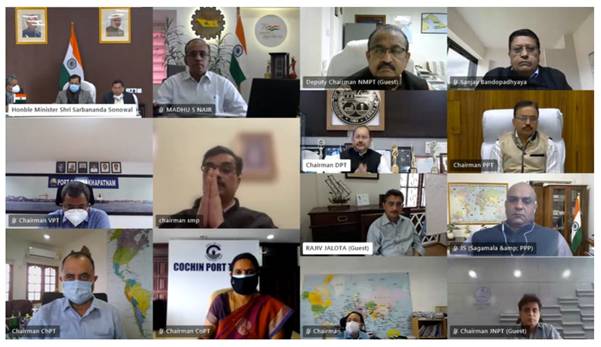
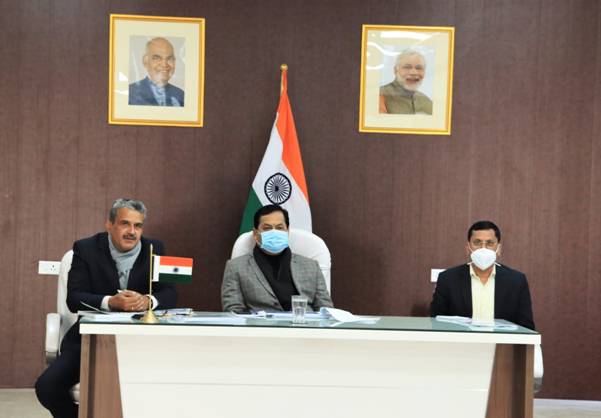
 Union Minister for Ports, Shipping and Waterways Shri Sarbanand Sonowal chaired a meeting with all major ports, Cochin shipyard Limited (CSL) and IWAI (Inland waterways Authority of India) to review the progress on various green initiatives being implemented, as per Maritime India Vision(MIV) 2030, for the development of Green Ports & Green Shipping in India. 

Shri Sonowal reviewed the progress of initiatives undertaken for development of green ports planned under Maritime India Vision 2030. As part of MIV 2030, Total of 963 initiatives have been identified for implementation across major ports with an estimated investment of Rs. 6,77,720.24 crores, of which a total of 208 initiatives with estimated investment of Rs. 44,424.47 crores have been completed in FY 2021. Further 504 initiatives with estimated investment of Rs. 48,256.14 crores are under implementation.

A number of initiatives have been taken in India to promote green ecosystem in maritime sector. These are in line with International Maritime Organization (IMO)’s 2030 Decarbonization strategy and 2050 Green House Gases (GHG) strategy. Initiatives are being implemented by Major Ports of India that include areas, such as increase share of renewable energy to more than 60% across major ports by 2030, setting up of solar power plants, availing of shore power supply to vessels via berths, multi-clean fuel adoption for vehicles within port ecosystem, gradual phasing out of diesel locomotives at ports, etc.

The green port initiatives include acquisition of equipments for monitoring environmental pollution, acquisition of dust suppression systems, setting up of sewage/ waste water treatment plants, setting up of garbage disposal system for ports and ships, developing shore reception facility for wastes from ships, setting up projects for energy generation from renewable energy sources, providing shore power to ships at berths, creating Oil Spill Response (Tier-1) capabilities at all ports, taking actions to improve harbour water quality, inclusion of sustainable practices in terminal design, development and operation, increasing green cover within port premises etc.


Ministry is also working on draft of a “Green Port Policy” document to suggest framework and guidelines for incorporation of green initiatives in the port sector. The Policy document captures the focused areas, measured outcomes, implementation roadmap and cost recovery mechanism for the port operators and port authorities. The proposed target outcomes will help India in achieving the “Intended Nationally Determined Contributions (INDCs) target, as well as the International Maritime Organization (IMO) 2030 target.

In order to enhance the share of Green Shipping, various projects are being implemented by Cochin Shipyard Ltd., India’s largest shipbuilding and maintenance facility. These include green urban mobility solutions like Hybrid Electric Ferries, autonomous Zero-emission vessels, pilot project on Hydrogen Fuel Cell Ferry, Electric Catamaran Water Taxi, Hybrid Electric Ro-Ro, Hybrid LNG-Electric Inland Cargo Carrier, Hybrid Tugs, etc.

Possibilities are also being explored for deployment of fully electric ferry and hydrogen fuelled ferries on Inland Waterways for enhancement of river cruise tourism in the country. For instance, Electric Catamaran Water Taxi deployment is being considered at Varanasi and Guwahati in first phase. Additionally, use of Hybrid Electric Roll on -Roll off (Ro-Ro) vessels having dual fuel system (LNG+ battery) is being considered at Guwahati for river crossings. Use of Hybrid LNG-electric Inland Cargo Carrier vessels is also being considered on NW2 and NW1 . Possibility of deploying CNG vessels at Varanasi is also being explored.

The pace at which the Green initiatives are undertaken by the 12 major ports will surely bring a green revolution in the sector making the ports cleaner and greener, which is also a key component of ‘Blue Economy’, creating environmental benefits and balancing the investments and cash flow.

In his concluding Remarks, Shri Sonowal thanked all officials for their crucial contribution towards realization of Prime Minister’s Vision for Indian Maritime Sector. He further directed all Ports to take the Green Initiatives forward by putting dedicated proactive efforts towards greening of maritime sector including finalization of green port policy.

****

Artificial Intelligence (AI) and Digital Medicine are critical to future healthcare

 Union Minister of State (Independent Charge) Science & Technology; Minister of State (Independent Charge) Earth Sciences; MoS PMO, Personnel, Public Grievances, Pensions, Atomic Energy and Space, Dr Jitendra Singh said here today that Artificial Intelligence (AI) and Digital Medicine are critical to future healthcare.

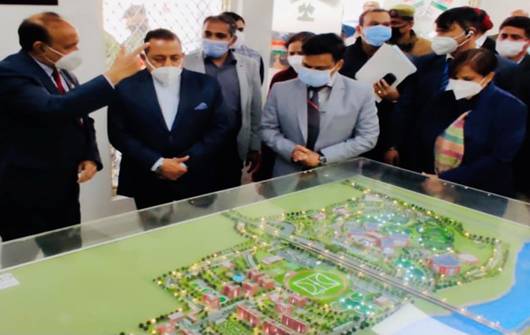
During a visit to the All India Institute of Medical Sciences (AIIMS) Jammu for the inspection of the upcoming new blocks and inauguration of recently developed facilities, Dr Jitendra Singh suggested that in order to develop an exclusive identity for the institution, the focus should be on these futuristic areas. Tele-Medicine and Robotic Surgery have already taken over in a big way and the indispensable utility of these new options was realised during the pandemic times, he added.

Dr Jitendra Singh informed that the OPD services will start immediately in AIIMS, Jammu and the first batch will move and operate from the premises from 1st of June this year and the second batch will continue thereafter. The Minister said that 30 member faculty has already been inducted and the entire six storey AIIMS building will be ready by early next year.

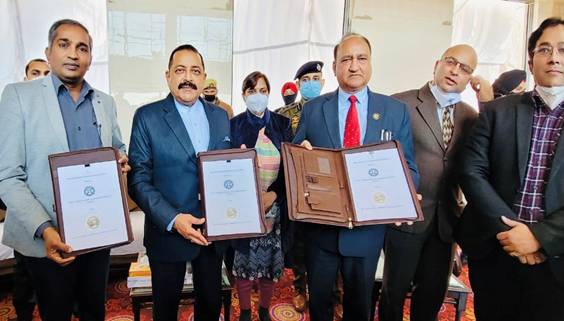
The Minister announced that AIIMS Jammu will function in close collaboration with CSIR-IIIM Jammu. A MoU was signed in the presence of the Minister, between Director AIIMS Jammu Dr Shakti Gupta and Director CSIR-IIIM Jammu Dr. D. Srinivasa Reddy, on behalf of the two institutions.

Speaking on the occasion Dr Jitendra Singh said, it is an irony that CSIR-IIIM Jammu and Government Medical College Jammu existed in the close vicinity of just about 4 kilometres from each other and even though both the institutions were dedicated to medical research, there was hardly any collaboration between the two in the past. He said, every effort would be made to bring in closer integration of IIIM with GMC and also between IIIM Jammu and AIIMS Jammu, both of which happen to be the Central Government institutions.

Dr Jitendra Singh noted that IIIM Jammu is one of the oldest CSIR laboratories in the country and even today it is conducting pioneering research in Cannabis Medicinal Products and host of other drugs, which makes the institute a natural ally of the AIIMS which has also the mandate of research and medical education.

While appreciating the progress made during the brief period since Dr Shakti Gupta took over as the Director of AIIMS, Dr Jitendra Singh suggested that in order to develop an exclusive identity for the institution, the focus should be on futuristic areas like Digital Health and Artificial Intelligence (AI) and AIIMS could be a pioneer in North India in developing AI based healthcare infrastructure.

The Minister said it is because of the personal indulgence of Prime Minister Narendra Modi that Jammu has, in the recent years, developed major centrally funded academic institutions in close vicinity of each other, thus making it an important educational hub in the region. He called for greater integration at different levels that is among the science institutions, then between scientific institutions and non-scientific institutions and finally among all these education institutions put together and the industry and Start-Ups for sustainable growth, development and livelihood.

Dr Jitendra Singh hoped that with the constitutional barriers of the past having been done away with in case of Jammu & Kashmir, the administration and the management will make all efforts to attract the best of the faculty from different parts of the country.

****

Fire Alarm system and Fire protection system in Passenger Compartment in buses

 The Ministry of Road Transport and Highways, vide notification dated 27th January 2022, has introduced the Fire Alarm System and Fire Protection System in the Passenger (or, Occupant) Compartment in buses through an amendment in the AIS (Automotive Industry Standard)-135 for Type III buses [‘Type III’ Vehicles are those designed and constructed for long distance passenger transport, for seated passengers ] and School Buses.

At present, fire detection, alarm and suppression systems are notified for fires originating from the engine compartment, as per AIS-135. Studies on fire incidents indicate that injuries to passengers are mainly due to heat and smoke in the passenger compartment. These injuries can be prevented if the heat and smoke in the passenger compartment is controlled by providing an additional evacuation time to  occupants by thermal management during fire incidents.

A water mist- based active fire protection system and  a standalone fire alarm system for buses has been designed to manage the temperature in the passenger compartment within 50 degrees centigrade.

This amendment to the Standard has been undertaken in consultation with  stakeholders and experts from the Centre for Fire Explosive and Environment Safety (CFEES), a DRDO establishment, working in the area of fire risk assessment, fire suppression technologies, modelling and simulation etc.

Click here to see GSR Fire Alarm System

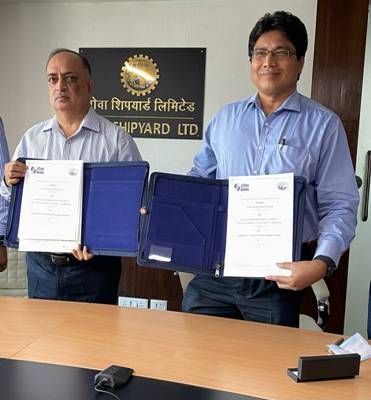
IREDA and Goa Shipyard Ltd signs MoU for Rooftop Solar Power Projects


Indian Renewable Energy Development Agency Ltd. (IREDA) today signed a Memorandum of Understanding (MoU) with Goa Shipyard Limited (GSL) to provide its techno-financial expertise to set-up a rooftop solar power project. The two companies are PSUs under the Ministry of New & Renewable Energy and the Ministry of Defence, respectively.

The MoU was signed by Shri Pradip Kumar Das, Chairman & Managing Director (CMD), IREDA and Cmde. Bharat Bhushan Nagpal, CMD, GSL in the presence of senior officials.

Under the MoU, IREDA will assist GSL to set-up a rooftop solar power project at the headquarter of the company situated in Vasco da Gama, Goa. IREDA will also extend its techno-commercial expertise to GSL for Environmental & Social (E&S) due diligence of rooftop solar and other RE projects as per the internationally accepted E&S standards. After setting up a rooftop solar power project at its building, GSL will be able to bring down the expenditure on electricity and reduce its carbon footprint as well.

Speaking on the collaboration, Shri Pradip Kumar Das, CMD, IREDA said, “We are pleased to partner with GSL in their pursuit towards adoption of a clean energy solution. The partnership is expected to bring in good practices by leveraging the expertise of both the companies and to push the vision of the Hon’ble Prime Minister for sustainable development of the country through Green Energy. The Govt. of India aims to produce 40 GW of solar power through rooftop solar by the end of 2022, and these collaborations will enable us to contribute to meeting the targets set by the Govt. of India.

In order to cater to the increasing demand of the RE sector, a dedicated Business Development and Consultancy division was set up by IREDA one and a half years ago. Under the new division, this is the seventh MoU signed by IREDA within the last 14 months to provide its consultancy services for developers of RE and Energy transition. Earlier, IREDA had entered into MoUs with SJVN, NHPC, TANGEDCO, NEEPCO, BVFCL, and THDCIL to extend its Techno-Financial expertise for Green Energy projects.

IREDA is looking forward to extending its consulting services to other PSUs and private organisations for the overall growth of the RE sector.

***

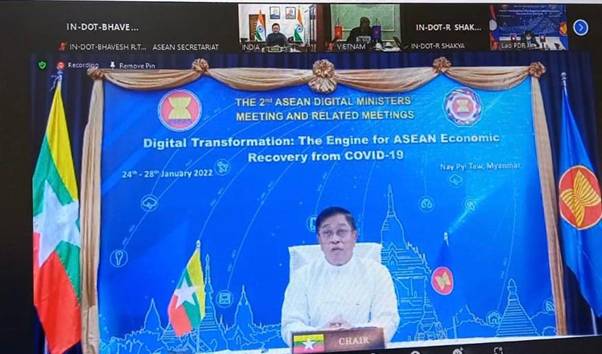
2nd ASEAN Digital Ministers (ADGMIN) meeting

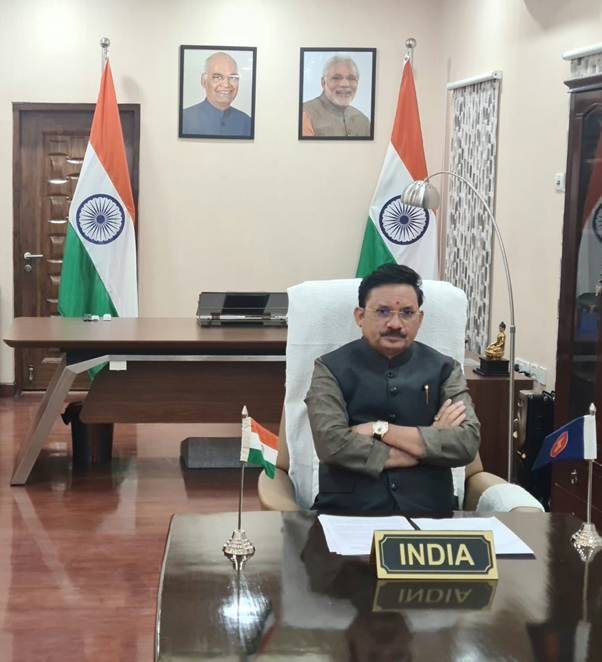
 The 2nd ASEAN Digital Ministers (ADGMIN) meeting with India held yesterday on a virtual platform. H.E. Shri Devusinh Chauhan, Minister of State for Communications (MoSC) and H.E. Admiral Tin Aung San, Ministry of Transport and Communications, Myanmar co-chaired the meeting.


The ADGMIN is an annual meeting of Telecom Ministers of 10 ASEAN (Association of South-East Asian Nations) countries -Brunei, Cambodia, Indonesia, Laos, Malaysia, Myanmar, Philippines, Singapore, Thailand, and Vietnam and dialogue partner countries – Australia, Canada, China, EU, India, Japan, Republic of Korea, New Zealand, Russia, UK and US. The meeting discussed and deliberated various matters relevant to strengthening regional digital cooperation in the spirit of digital inclusion and integration.

Addressing the august gathering of Digital Ministers, Shri Devusinh Chauhan emphasized that Information and Communication Technologies enable and strengthen democratic systems and institutions through enhanced engagement between citizens and the state. He added that use of ICTs promote free speech, human rights and the free flow of information besides expanding citizens’ opportunities to participate in decision-making process and have potential to transform lives of people living in rural areas.

The Minister recalled vision of our Honorable Prime Minister Shri Narendra Modi to leverage different technological solutions for development of the nation. In his address, Shri Devusinh Chauhan stated that COVID-19 is not only a challenge for the public health system, but it is also, shaking the economic and social orders of the countries. In this scenario, Information and Communications Technologies (ICTs) have emerged as powerful tools to mitigate the effects of pandemic in different spheres of public life and they are foundations of the global economy.

The Ministers meeting approved the India-ASEAN Digital Work Plan 2022. The workplan includes system for combating the use of stolen and counterfeit mobile handsets, WiFi Access network interface for nationwide public internet, the capacity building and knowledge sharing in emerging areas in the field of Information and Communication Technologies such as Internet of Things (IoT), 5G, Advanced Satellite Communication, Cyber Forensics, etc. The ongoing and proposed projects in ICTs, will strengthen collaboration between India and ASEAN by leveraging complementary strengths of each other.

* * * * *

India lost a great Academician on 28 January 2022: Tribute to Prof. Radhakrishna

On 28 January 2022 in the wee hours, our country lost a great Professor, an erudite scholar and kind-hearted down to earth person, popularly known as Professor R. Radhakrishna. Prof. Radhakrishna is a prolific researcher, respected teacher, able academic administrator, and notable institution builder. I had the opportunity to interact on many occasions for academic matters. I felt lucky enough when he included me in a Government of India Committee namely “Report of the Committee on Credit Related Issues under SGSY” (published in February 2009). He was an erudite scholar with immense knowledge in Social Science in general and Economics in particular. Undoubtedly, he was a down to earth human person and such a great personality seldom can be seen.

Prof. Radhakrishna did his post-graduation in Economics and Statistics from Andhra University and subsequently completed Ph.D. in Economics from Gokhale Institute of Politics and Economics (Pune University). ​He was a scholar par excellence  ​as his​ ​Ph.D., thesis on indifference surfaces won acclaim from world-famous E​conometrician​ Prof ​ Gerhard Tintner.

Prof. Radhakrishna held several important positions inter alia of which were Chairman, Commission on Inclusive and Sustainable Agricultural Development of AP(2015-16); Chairman, National Statistical Commission, (2009-12); Director/Vice-Chancellor, Indira Gandhi Institute of Development Research (2001- 07); Vice-Chancellor, Andhra University (1998-2001); Member Secretary, ICSSR (1994-97); Director, CESS (1985-1994); Professor of Economics, University of Hyderabad (1980-85); Professor, Sardar Patel Institute of Social Economic Research (1973-80) and Visiting Fellow, University College of Wales, Aberystwyth, U.K. (1976-77). He served as an expert in numerous international organisations such as the Australian Centre for International Agricultural Research, 1997; Management of Social Transformation (MOST), UNESCO, 2004 and UNDP Regional Bureau for Asia and Pacific, 2005. Professor was also a Consultant to several international bodies including Internal Institute for Applied Systems Analysis, Vienna, World Bank, Asian Development Bank, UNDP, and FAO.

It is pertinent to mention that based on the recommendations made in the Committee on ‘Credit Related Issues under SGSY’, the Ministry of Rural Development; Government of India launched the National Rural Livelihood Mission popularly known as NRLM in 2011. He was also a member of the three important Planning Commission Expert Groups related to Poverty –a) Task force on projections of Minimum needs and Effective Consumption Demand, 1977-78; b) Expert Group on Estimation of Proportion and Number of Poor, 1989-93 (Lakdawala Committee) and c) Expert Group to Review the Methodologies on Estimation of the Poor, 2006-08 (Tendulkar Committee). He was also Chairman of UGC Committees to review Universities and ICSSR Review Committee to review its research institutes in north-west India.   

He was associated with many academic and research institutions in his lifetime. Some of which were Chairman or Board Member: Chairman, Madras Institute for Development Studies; Board Member, Madras School of Economics;  Chairman, Centre for Development Alternatives, Ahmadabad; and presently Chairman, Institute for Development Studies, Andhra Pradesh. Till his death, he was President of the Indian Society of Agricultural Marketing and Chairman, Indian Association of Social Science Institutions. He was President-elect of the Indian Society of Agriculture Economics (2019). He was the Conference President of the Indian Economic Association (2016), Indian Econometric Society (2008), Indian Society of Labour Economics (2002), Indian Society of Agricultural Marketing (1996), and Association of Asian Social Science Research Councils (1995).

He served in the editorial boards of several peers reviewed academic journals inter alia of which are Journal of Quantitative Economics, Asia Pacific Journal of Rural Development, Journal of Asian Economics and IASSI quarterly etc. He successfully guided 25 doctoral students. He published a large number of books and more than 100 original research papers in national and international journals. Some of his publications which were appreciated inter alia are ‘India’s Public Distribution System: A National and International Perspective (1998)’; ‘Empowering Rural Labour (1998)’; ‘India Development Report 2008 and Handbook of Poverty in India’: ‘Policy Perspective (2005)’. In recognition of his huge academic contributions, he was awarded VKRV Rao Prize in Economics in 1985, and Telugu Atma Gaurava Puraskaram for his eminence in Social Sciences by the Government of Andhra Pradesh in 1998. He was Jawaharlal Nehru National Fellow (ICSSR) during 2009-11.

His compendium of books published by Academic Foundation in 2017 is on the themes of Indian Economy, Agriculture, Food Security and Nutrition; Growth, Poverty and Well-being; Econometrics of Consumer Behaviour; and Inflation, Consumption and Welfare was highly appreciated. 

Prof Radhakrishna will be remembered generations after generations by the academicians, research scholars, and others who are in the field of Social Science in general and Economics in particular for his immense contribution in the fields of Economics, poverty, agriculture, food security, employment and rural development.

(The author is grateful to Prof. E Revathi, Director, Centre for Economic and Social Studies, Hyderabad for providing necessary information about Prof. R. Radhakrishna)

Implementation of New Education Policy

 A number of action points/activities for implementation in school education as well as higher education are mentioned in the National Education Policy 2020 which inter-alia include following:-

  1. Ensuring Universal Access at All Levels of schooling from pre-primary school to Grade 12;
  2. Ensuring quality early childhood care and education for all children between 3-6 years;
  3. Introducing New Curricular and Pedagogical Structure (5+3+3+4);
  4. Ensuring no hard separations between arts and sciences, between curricular and extra-curricular activities, between vocational and academic streams;
  5. Establishing National Mission on Foundational Literacy and Numeracy;
  6. Emphasis on promoting multilingualism and Indian languages; The medium of instruction until at least Grade 5, but preferably till Grade 8 and beyond, will be the home language/mother tongue/local language/regional language.
  7. Assessment reforms – Introducing Board Exams on up to two occasions during any given school year, one main examination and one for improvement, if desired;
  8. Setting up of a new National Assessment Centre, PARAKH (Performance Assessment, Review, and Analysis of Knowledge for Holistic Development);
  9. Equitable and inclusive education – Ensuring special emphasis to be given on Socially and Economically Disadvantaged Groups(SEDGs);
  10. Establishing a separate Gender Inclusion fund and Special Education Zones for disadvantaged regions and groups;
  11. Robust and transparent processes for recruitment of teachers and merit based performance;
  12. Ensuring availability of all resources through school complexes and clusters;
  13. Setting up of State School Standards Authority (SSSA);
  14. Providing Exposure of vocational education  in school and higher education system;
  15. Increasing GER in higher education to 50%;
  16. Introducing Holistic Multidisciplinary Education with multiple entry/exit options;
  17. Introducing Common Entrance Exam for Admission to HEIs to be offered by NTA;
  18. Establishment of Academic Bank of Credit;
  19. Setting up of Multidisciplinary Education and Research Universities(MERUs);
  20. Setting up of National Research Foundation(NRF);
  21. Framing ‘Light but Tight’ regulation;
  22. Setting up of single overarching umbrella body for promotion of higher education sector including teacher education and excluding medical and legal education- the Higher Education Commission of India (HECI)-with independent bodies for standard setting- the General Education Council; funding-Higher Education Grants Council (HEGC); accreditation- National Accreditation Council (NAC); and regulation- National Higher Education Regulatory Council (NHERC);
  23. Expansion of open and distance learning to increase GER.
  24. Internationalization of Education.
  25. Professional Education will be an integral part of the higher education system. Stand-alone technical universities, health science universities, legal and agricultural universities, or institutions in these or other fields, will aim to become multi-disciplinary institutions.
  26. Teacher Education – Introduction of 4-year integrated stage-specific, subject- specific Bachelor of Education.
  27. Establishing a National Mission for Mentoring.
  28.  Creation of an autonomous body, the National Educational Technology Forum (NETF) to provide a platform for the free exchange of ideas on the use of technology to enhance learning, assessment, planning, administration. Appropriate integration of technology into all levels of education.
  29. Achieving 100% youth and adult literacy.
  30. Introducing multiple mechanisms with checks and balances to combat and stop the commercialization of higher education.
  31. All education institutions will be held to similar standards of audit and disclosure as a ‘not for profit’ entity.
  32. The Centre and the States will work together to increase the public investment in Education sector to reach 6% of GDP at the earliest.
  33.  Strengthening of the Central Advisory Board of Education to ensure coordination to bring overall focus on quality education.
  34.  Ministry of Education: In order to bring the focus back on education and learning, it may be desirable to re-designate MHRD as the Ministry of Education (MoE).

A detailed consultation process with various stakeholders including educationists have been held before and after announcement of National Education Policy 2020. Suggestions have been invited from States / UTs Government and also from other stakeholders through MyGov platform. Department of School Education & Literacy has constituted subject-wise/theme-wise implementation committees of experts for implementation of National Education Policy 2020. Similarly, UGC and AICTE have also constituted Expert Groups on various themes of higher education sector for formulation of Implementation Plan of National Education Policy.

As per National Education Policy 2020, implementation of the Policy requires multiple initiatives and actions, which will have to be taken by multiple bodies in a synchronized and systematic manner. Therefore, the implementation of this Policy will be led by various bodies including Ministry of Education, CABE, Union and State Governments, education-related Ministries, State Departments of Education, Boards, NTA, the regulatory bodies of school and higher education, NCERT, SCERTs, schools, and HEIs. Since Education is in the concurrent list of Constitution of India, hence, State/UT Government will play a vital role in the implementation of the National Education Policy. Ministry of Education has communicated to all States/UT Governments for taking steps for implementation of NEP 2020. In this direction, Ministry of Education had organised ‘Shikshak Parv’ from 8th September to 25th September, 2020 to deliberate on various themes and implementation of NEP 2020 aimed at eliciting suggestions. Ministry had also organised a Conference of Governors on “Role of National Education Policy in Transforming Higher Education”. In the conference, Governors and Lt. Governors of State and Union Territories, Education Minister of State and UTs, Vice Chancellors of State Universities and other dignitaries participated. Majority of states have taken steps toward implementation of NEP 2020. Further, Ministry and other implementing agencies under its purview have started taking initiatives towards implementation of NEP 2020.

Webinar on ‘International Mother Language Day’

 Vice President of India, Shri M. Venkaiah Naidu today inaugurated the Webinar on the occasion of ‘International Mother Language Day’. The Webinar on ‘Fostering Multilingualism for Inclusion in Education and Society’ is being organised jointly by the Ministry of Education, Ministry of Culture and IGNCA. The Vice President also inaugurated the International Virtual Calligraphy Exhibition. Union Minister for Education, Shri Ramesh Pokhriyal ‘Nishank’’; Minister of State (Independent Charge) for Culture Shri Prahlad Singh Patel; Minister of State for Education Shri Sanjay Dhotre and Member Secretary, IGNCA, Dr. Sachidanand Joshi were also present through the virtual medium.  All the speakers spoke in length about the importance of the Mother tongue and the need for its preservation which will be a treasure for our future generations.

The Vice President, Shri M Venkaiah Naidu today called for making mother tongue the primary medium of instruction, at least until Grade 5. He suggested that educating a child in a language that is not spoken at home can be a big impediment to learning especially at the primary stage. Referring to multiple studies, Shri Naidu said that teaching through the mother tongue in the initial stages of education can boost a child’s self-esteem and enhance his or her creativity. Calling the New Education Policy a visionary and progressive document, he urged for implementing the Policy in letter and spirit.

Speaking at the inaugural session, the Vice President focused on five key sectors to promote the use of mother tongue. Apart from emphasizing the use of mother tongue in primary education, the other highlighted areas are the use of local languages in administration, court proceedings and to deliver judgments in them. He also wanted gradual increase in the use of indigenous languages in higher and technical education. The final emphasis was on everyone to proudly and preferably use their mother tongue in their homes.

Shri Venkaiah Naidu said that with hundreds of languages coexisting, linguistic diversity is one of the cornerstones of our ancient civilization. Observing how our mother tongues can evoke an emotional response in the people, Shri Naidu called them an ‘important link to our socio-cultural identity’, ‘a repository of our collective knowledge and wisdom’ and thus needs to be protected, preserved and promoted.

On this occasion, Shri Naidu appreciated various government initiatives for a multilingual society such as the National Translation Mission, the Bharatavani project and the proposed setting up of a Bharatiya Bhasha Vishwavidyalaya (BBV) and Indian Institute of Translation and Interpretation (IITT).

In conclusion, the Vice President reiterated that languages are nourished only by constant use and that every day must be a Matribhasha Diwas. He called for all-round commitment and efforts to reclaim mother tongues and to ‘feel proud to speak freely and confidently in one’s mother tongue’ in homes, community, meetings and administration.

Speaking on the occasion Shri Pokhriyal said that the importance of language lies not only in national unity but also in strengthening the culture of the country. Research has proved that 90% of a child’s brain develops by the age of 6 and for the holistic development of our children, it is necessary that the knowledge is acquired in the mother tongue, he added.

Shri Pokhriyal highlighted that National Education Policy- 2021 has given maximum attention to the development of mother tongues. The Government has emphasized on promoting multilingualism with our policy so that our children can get acquainted with the vast wealth of languages ​​of our country. He further said that it is the first education policy that empowers students with the subject and language of their choice. The policy recommends that as far as possible, the medium of instruction shall be, at least till class 5, (preferably up to grade 8 and beyond) mother tongue / vernacular / regional language. Shri Pokhriyal said that this education policy calls for many new initiatives that will help in building a truly multilingual society in India.

Shri Prahlad Patel said every mother tongue has a world of its own, has its own character, has its own expressions. While we have to learn other languages, the mother tongue on the other hand develops in us naturally. Everyone feels a sense of attachment and affinity while speaking their mother tongue. The way in which culture influences the development of our personality, in the similar manner one’s mother tongue also strengthens one’s personality.

Addressing the participants Shri Dhotre said that consequent to the declaration of 21st February as the International Mother Language Day, (Matribhasha Diwas) UNESCO in 1999, this day is being celebrated every year since 2015 in a grand manner by involving all the higher educational institutions/schools across the country to organize various activities like Debating, Singing, Essay Writing and Painting competitions, Music and Dramatic performances, Exhibitions etc. Shri Dhotre highlighted that the purpose of the celebrations is to promote the preservation and protection of all languages spoken by the people globally and also to promote awareness of linguistic and cultural diversity and multilingualism of the languages. He further said that the Government has adopted a proactive approach to promote all Indian languages and strengthen the mother tongue in the Indian education system.

****

Initiatives by Navodaya Vidyalaya Samiti to ensure continuity of education

 Navodaya Vidyalaya Samiti (NVS) with the support of Ministry of Education, MHA and state administration ensured safe return of 3173 migrated students of Class-IX during COVID pandemic period. By imparting online training to teachers and conducting online classes, NVS made all efforts to ensure no academic loss to students. For students without proper devices, proper education is being ensured by providing study materials, AAC and printed assignments.  The following activities in academics and capacity building were undertaken:  

  1. Academics
  • Opening of JNVs: NVS developed SOP for opening of JNVs on the basis of SOP issued by MOE, MHA & MoHFW by incorporating the salient features of state administration guidelines.  Accordingly, Students of classes X and XII have reported in JNVs for physical classes with their parents’ consent. 406 JNVs have been reopened in states/UTs where permission to open residential schools have been given. Bridge courses and special classes are being carried out for the students to fill up the learning gaps.  National Pre board Exams have been completed for classes X and XII. 
  • Launch of Vigyan Jyoti Phase-2: Vigyan Jyoti Project is an ambitious collaborative initiative between Dept. of Science & Technology and Navodaya Vidyalaya Samiti for promotion of Girls Students in JNVs. Vigyan Jyoti Project (Phase I) is going successfully in 58 JNVs since December 2019.  The same is extended to 42 more JNVs in Phase-II.
  • Fulbright Teacher Exchange Program:  Mr Vivekananda Gosh, JNV Kolar Karnataka & Mr Amit Kumar, JNV Shimla Himachal Pradesh have been selected for the Fulbright Teaching Excellence Achievement (FTEA) & The Fulbright Distinguished Awards in Teaching Program for International Teachers (FDAI) for 2020-21.

B.    Capacity building  Programmes in collaboration with other organizations

  1. Six Days’ Training Programme for Regional Language Teachers in collaboration with CIIL, Mysore in light of NEP-2020

Keeping in view the importance of Regional languages as per NEP-2020, 45 Malayalam, 106 Marathi, 94 Kannada & 69 Telugu language teachers of NVS have been trained.

  1. Five Days’ Online Training Programme on Pedagogical Leadership for NVS Principals in collaboration with NIEPA New Delhi

NEP-2020 has outlined the Role of Principals focussing on preparing & implementing Pedagogical Plans based on Competency based Education. NVS in collaboration with NIEPA, New Delhi is organizing Five Days’ Online Training for preparing Principals as Master Trainers to impart further training to their fellow Principals on Pedagogical Leadership in two batches of 50 Participants in each batch. The training programme for the first batch is scheduled from 22nd February, 2021 and second programme is scheduled in the month of April, 2021.

C. Kala Utsav 2020- NVS Performance

In Kala Utsav-2020, RUPESH DEBBARMA from JNV Gomti, Tripura won first prize in Folk Music and D VENKAT RAO from JNV East Godavari, AP won first prize in 3D Sculpture. 


D VENKAT RAO from JNV East Godavari, AP who won first in 3D Sculpture


RUPESH DEBBARMA from JNV Gomati, Tripura who won first in Folk Music

*****

ARRANGED MARRIAGE VS LOVE MARRIAGE

Everyone knows this fact that all marriage are decided in heaven but there are some couple who accept love marriage. Everywhere this is a good topic of group discussion regarding which is best love marriage or arrange marriage. Many people from India voted for arranged marriage. Whereas in others countries love marriage is preferred the most. Love marriages contain pros and cons. Lets we come to know about these pros and cons of this love marriage. This kind of marriage is very special. Both partners must have the right to keep their own choice. If there is a love present in their relationship then this love marriage is good and continue for a longer duration of time. In many cases this love marriage cannot go for a longer duration of time.

  1. This is good for these people who want to find their partner of their own choice. They have right to choose their partner.
  2. They are mature enough to judge that what is good and bad for themselves. They know very well the bad and good effect related to love marriages.
  3. Each partner is aware about the good qualities and bad qualities related to their life partner. They can easily adjust their behaviour and nature according to their needs. If you know your partner properly then it is very easy for you to adjust all types of conflict between both partners.
  4. Love looks true and contain a lot of emotion and feeling in love marriage. They cannot made force to love each other. It comes from their heart.
  5. In love marriage there’s a strong bond of love existing in their life which can make it easy for them to share every hidden thing with each other.
  6. Generally equality prevails in love marriages
  7. Planned love life leads to happy families.

CONS OF LOVE MARRIAGE:

  1. This kind of marriage is based on attraction and when this attraction ends then it might end the relationship between two partners.
  2. If by any means your parents are not for it and you go the marriage anyway then you be come alone for the rest of your life which means that you don’t have your family around with you.
  3. The chances of divorce are much greater in love marriage than in arranged marriage.
  4. After marriage a lot of new things and changes in their behaviour could be noticed when it’s already too late for two people to get out of this relationship.

PROS OF ARRANGED MARRIAGE:

  1. Most of the arranged marriage cases are made on the basis of culture, religion and caste and therefore supported and respected by family and parents.
  2. Any arrange marriage is complete only after a lot of adjustment. This remains in the mind of the girl and the boy too, which is why of them would try their level best to keep their relationship alive and keep giving chance to each other. India happens to record the least amount of divorce cases around the world.
  3. As in arranged marriage both the partners are unknown to each other, it helps them want to know each other and that builds a strong and healthy love in between them.
  4. Parents or well-wishers always think about the economic condition and future conditions.
  5. Some studies reveal that love in love marriage fade after a point whereas love in arrange marriage tend to increase only.

CONS OF ARRANGED MARRIAGE:

  1. First disadvantage of arranging marriage is that both the parties are unaware and feel uncomfortable with each other. If it remains then in that case the marriage becomes a burden.
  2. It could be possible that the thinking, behaviour, nature may not match with the significant other which might lead to quarrels between the partners.
  3. Arrange marriage sometimes lacks communication hence leading to two people failing to understand each other due to lack of communication.
  4. Forced marriages still prevail leading to unhappiness among two people.

CONCLUSION:

Whether it is a love marriage or an arranged marriage, the relationship will work only if both the partners are serious and honest in the relationship. Life should be selected on your own and shouldn’t be forced on someone. These days people are taking time to know each other before marriage even in arranged marriage which is a sign of progressive society.

Web 3.0

Previous versions of Internet Era

Web 1.0: The first version of the web was started with the development of the web browser in 1991. It consisted of static websites with content written by a few people and organizations. Other people can only read the content, they cannot comment or provide new information, so it is just one-way communication. It worked very well but had one big problem there was no way to make money off it. For instance, a Web 1.0 startup called Google had heavy traffic, but couldn’t encash it.

Web 2.0: The next version of the web, which is web 2.0 was started approximately from 2004. It allowed consumers to add content through comments, blogs etc. People began creating a lot of content on social media websites as well. So, people can read and write on this version of the web, which allowed two-way communication.

What is Web 3.0 ?

Any innovation starts with a vision. So, many people had different version on how the next version of the web should be. The majority of them wanted a web that ensured data privacy and free speech. The invention of Blockchain technology, which enables peer-to-peer online payment transfers without the interference of banks, gave hopes of creating the decentralized web, where user privacy and free speech are guaranteed. The latest technologies, such as blockchain technology, artificial intelligence, and the Internet of Things, are being used to create Web 3.0.

Web 3.0 is defined as a decentralized web, where content does not lie in the hands of big corporations. Instead, it uses peer-to-peer infrastructure, so the information cannot be censored by corporations or the government. So, it can ensure free speech.

However, the reality may or may not match the vision. It may change somewhat from the vision or take a whole different direction.

The vision of web 3.0

  • Web 3.0 will most likely be a decentralized internet. Now there are already so many Decentralized applications (dApps), which are based on blockchain technology to give more control to users over their data and finances.
  • As the data is not controlled by big companies, user privacy will be guaranteed.
  • The accuracy of the information may also be improved by making Artificial intelligence learn to distinguish between good and bad data. AI is already being used to accomplish this goal. Google, for example, uses Artificial Intelligence to delete millions of fake reviews.

  • Web 3.0 allows 3D graphics in apps. Big tech companies have already begun to invest metaverse – virtual environments. Some of the most popular metaverses include Decentraland, Sandbox, and CryptoVoxels. Metaverses are made possible with the help of Virtual Reality (VR) and Augmented Reality (AR) technologies. We may use our digital avatars to interact, shop, and play games in the virtual world. There, we can use cryptocurrencies for financial transactions.
  • Web 3.0 is already being included by several websites and apps. According to some experts, web 3.0 will not be able to totally replace web 2.0 in the near future. Instead, both will run simultaneously.

Challenges with Web 3.0

  • Vastness: The internet is huge and it contains billions of pages and the SNOMED CT medical terminology ontology alone includes 370,000 class names, and existing technology has not yet been able to eliminate all semantically duplicated terms.
  • Vagueness: User queries are not really specific and can be extremely vague at the best of times. Fuzzy logic is used to deal with vagueness.
  • Uncertainty: The internet deals with scores of uncertain values. For example, a patient might present a set of symptoms that correspond to many different distinct diagnoses each with a different probability. Probabilistic reasoning techniques are generally employed to address uncertainty.
  • Inconsistency: Inconsistent data can lead to logical contradiction and unpredictive analysis.

Conclusion

Web 3.0 is the next step in the internet’s evolution, and its foundations have already been set. According to current standards, web 3.0 will be a huge advance in network technology since it will be a hyper-intelligent network capable of understanding information like a human. Aside from the technological marvels proposed by web 3.0, it also proposes the application of certain ideas that will drastically alter existing mode of operation of today’s networks.  And we as the end-users will usher into a new era of networking, one that will further blur the lines between the physical and the digital space.

How ‘ The Great Himalayas ’ were formed?

The Himalayan mountain range stretches from Brahmaputra to the Indus River. It ranges over 2500 km and about 250 km thick. So how were these Great Himalayas built?

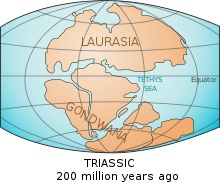
During the late Neoprotozoic era (1000mya-541mya) and early Palaeozoic (541-252mya) , the Indian tectonic plate was a part of the southern Gondwana land .This was separated by the Eurasian plate by the large Tethys ocean . In the early Carboniferous period , an early stage of rifting developed between the Indian subcontinent and the Gondwana land.

What is a Rift?

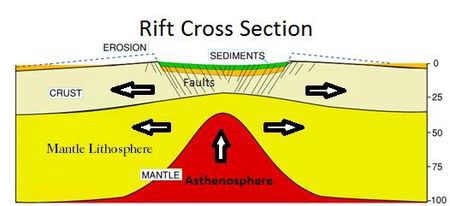
A rift is a zone where the lithosphere layer is stretched or pulled apart. In the early stage ,the upper part of the lithosphere starts to extend . As it evolves,some of the fault zones start to connect with each other and become even larger bounding faults .The crust becomes thin causing the rise of Asthenosphere. This way two new tectonic plates are formed from the older single one.

In the Norian period(210 mya), after a major drifting episode the Gondwana land split into two parts. The Indian subcontinent became a part of East Gondwana along with Australia and Antarctica. Later in the early Cretaceous(130 -125 mya), the Indian plate broke off from Australia and Antarctica with the ‘formation’ of Southern Indian Ocean.

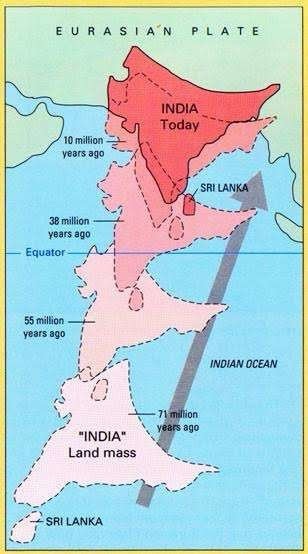
At the end of Cretaceous period ,the Indian plate started drifting northward at speeds of about 18 to 20 cm per year which is the highest among all the continental drifts. It covered a distance of more than 6000 km in that time and rotated about 45° counterclockwise relative to the Eurasian plate. Interaction of the Eurasian plate with the coming Indian plate started at about 65 million years ago with the oceanic crust of the latter subducting under the Eurasian plate.

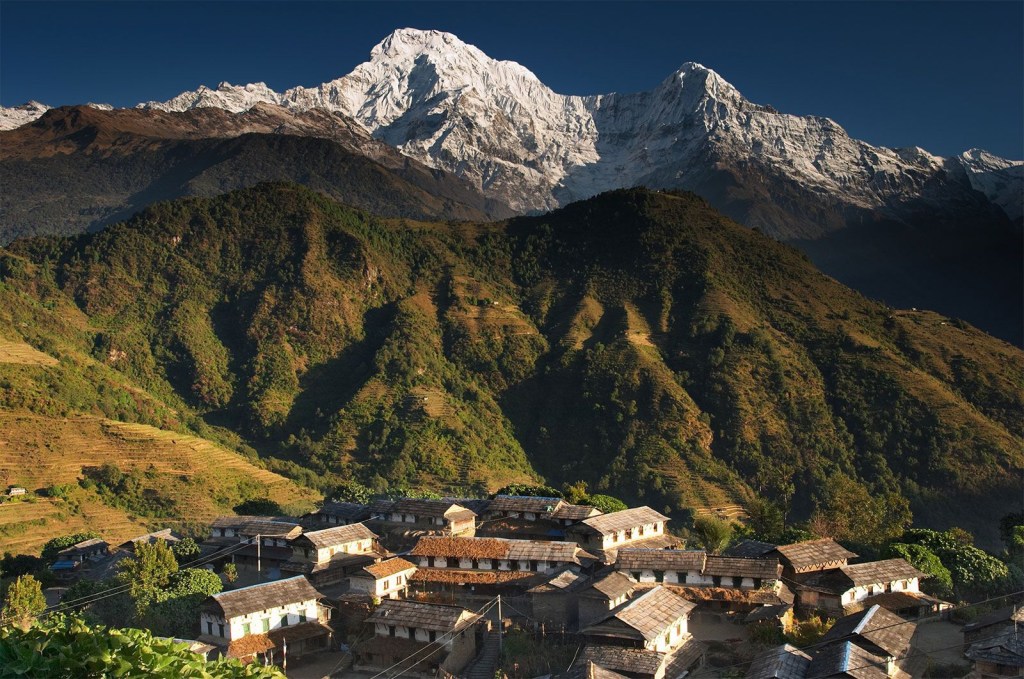
This started the formation of the youngest mountain ranges of the world , The Great Himalayas . This collision was so strong that till present also the Indian plate is colliding northward and the Himalayas continue to rise more than 5 mm a year but due to the stretching of Eurasian plate horizontally and effect of gravity this rising is affected.

Effect on Climate

According to a report of ‘Nature’ magazine, the Himalayan range ormation may have also started Asia’s monsoon about 8 million years ago and contributed to several ice ages that began 2.5 million years ago. The mountain’s and Tibetan Plateau’s uplift gave rise to a dry Central Asia that resulted in the formation of Gobi and Mongolian deserts.

This may have caused a dustier phase in the earth’s atmosphere . The Himalayan range obstructs the passage of cold continental air from north into India in winter and also forces the south westerly monsoon winds to give up most of their moisture before crossing the range northward.

The Himalayas are gigantic and lively and on the other hand they are calm and tranquil, perfect for the soul to grow spiritually.

How to use UPI? What is UPI?

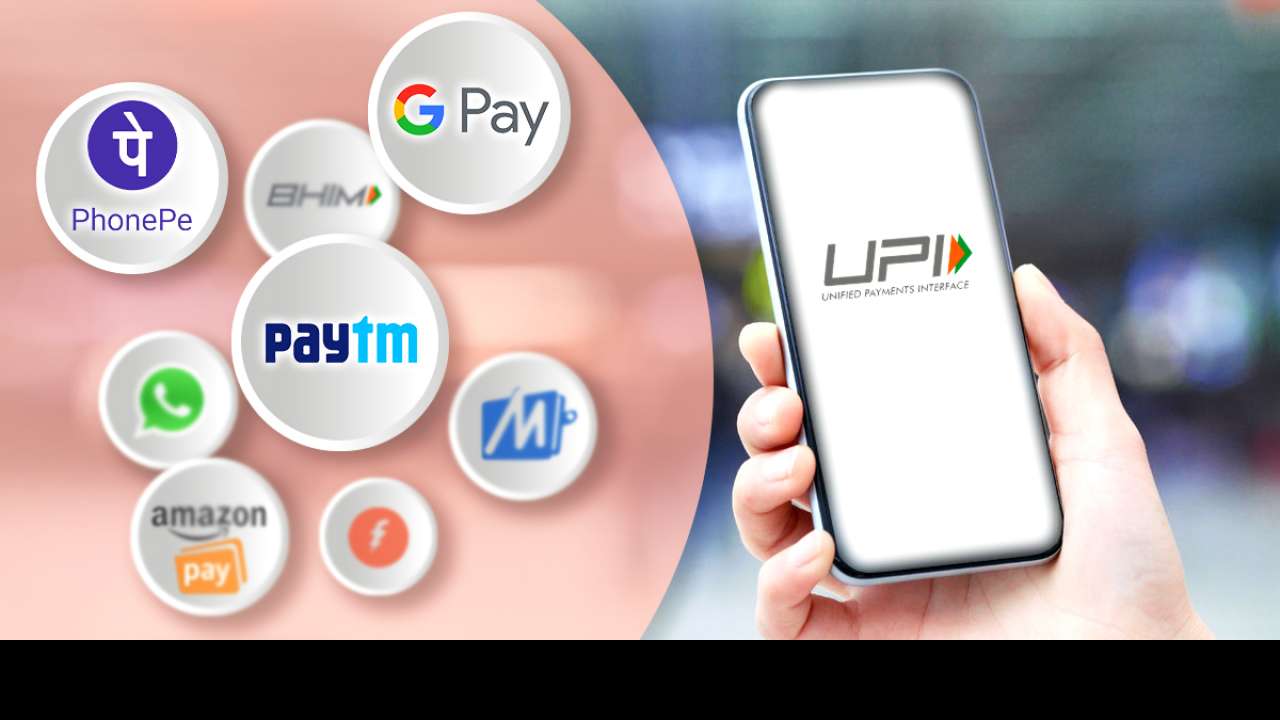
UPI stands for Unified Payments Interface is an instant real-time payment system. Every shop at every corner of India started accepting UPI payments. You do not need to carry a wallet every time go out, you can use UPI App on your smartphone to purchase anything that you want. It is very secure and safe to use UPI.

What is UPI?

UPI is developed by the National Payments Corporation of India (NPCI) in the year 2016 and is regulated by the Reserve Bank of India (RBI). UPI works by instantly transferring funds between two bank accounts on a mobile app. The platform has 150 million monthly active users in India with plans to achieve 500 million by 2025.

Features of UPI :

  • Easy to use and works on 24×7 basis
  • Pay at online shops, groceries and restaurants instantly
  • Book travel tickets, utility bills, mobile recharge, and transfer money to any account online
  • UPI is very secure as UPI transactions use highly secure encryption format

UPI Apps :

  • BHIM (Owned by NPCI)
  • Google Pay
  • PhonePe
  • Paytm
  • Mobikwik
  • WhatsApp Pay
  • Samsung Pay
  • Amazon Pay

How to set UPI?

You can use any UPI app to pay and transfer money from and to UPI-enabled banks. Almost all major banks support UPI. Your mobile number must be registered with your bank account for verification purposes.

To set up UPI you need a UPI-supported bank account. Using any UPI app you can set UPI ID and UPI pin. Before creating a UPI ID you need to verify your account using a debit card. Now you are all set to use UPI.

How to transfer money?

You can scan the QR code to pay directly to the receiver. Other methods include using the Virtual Payment Address (VPA) of the receiver or using account number and IFSC code. There is an upper limit per UPI transaction of Rs. 1 lakh per account per day. Banks can also set their own sub-limits for transactions.

Happy UPI !!

Have you started using UPI? Share your experience in the comment section.

Taking care of Mental Health

For the people of the older generation, health means physical health. Ofcourse, health should be related to the taking care of body’s normal functioning and mechanism but where the reasoning lack is that health does not only constitute to physical health but also mental health. Taking care of the most delicate part of our body. Giving priority to that flesh through which our whole body functions and operates. It’s prioritising that. But from years, that head is always neglected in terms of taking care of. Very little attention or no attention is payed towards it even after knowing the fact that it is important to take care of.


But this thinking is now changing. Now, people do pay heed and take care of their mental health apart from physical health. They consider that and place it equivalent to mental health because just like with a broken leg, we can’t move and with a disturbed mind we cannot focus. Breakdown of any one of them will cause problems to us. It is argued that this fact was already known to everybody but then also it was neglected but the real fact is that yes it was known to everybody that without a good mental health, we’ll not able to have a proper functioning of our mind. But the degree of disturbance was not known. The extent to which it can affect and cause problems in our daily life was not known until the doctors and researchers published the reports regarding that.


According to the research, scientists have found that taking care of mental health is very important and even more important than physical health because physical problems need money to be treated but for mental health, individual themselves have to take care of. The therapist can only advice what to do and what not to do but at the end of the it’s the individual himself that has follow everything. He himself has to cure that. And not taking care of it is like pushing yourself in the well. It’s a suicide. So, it’s very important that the person should prioritise his mental health and take care of.


The next question which then comes in the mind is How do we take care of our mental Health? What it means to take care? So the answer would be always keep your mind in a happy state. Ofcourse, there will be some or the other kind of pressure and tension in daily lives of the people and it is normal also but a limit should always be set for it. If the tension and pressure rises above that limit, consider it as a bad sign and start making efforts to keep the mind in a happy state. Recognise that what the mind wants and then make efforts in accordance to that. Also, it is very important to distance ourself from those who are the root cause of tension. They should be kept a particular distance. Because at the end of the day, a person is always left alone with his body and soul. People will come and go. And that is why the first responsibility of the individual is take care of himself. No other person will come and do that.