Is Indian Handicraft at risk ?

Handicraft as we all know it, is the craft work of processing materials by hands or simple hand tools. The outcome of such a craftwork involves decorative pieces or useful objects. The materials used in the making are mostly natural, but can be industrially processed or even recycled too.

Handicraft is an artform that is deeply rooted in the traditions of India. And the sector provides livelihood to lakhs of people. They produce goods ranging from carpets, potteries, paintings, embroidery and the list goes on. Every region in India has handicraft that is unique to that region. Such as Chikan Kari weaving from Lucknow. Madhubani paintings from Mithalia, Bidri metal handicraft from Karnataka, Pashmina shawls from Kashmir and so on.

However, over the years this industry had to endure certain challenges, making it hard for the artisans to flourish and make a living.
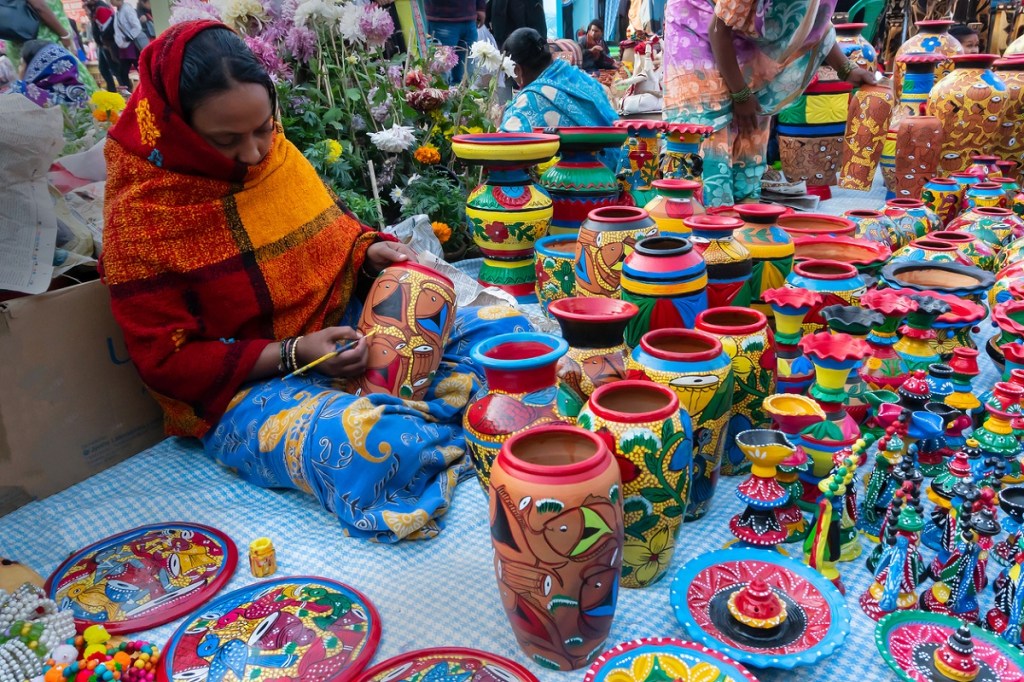
Issues faced by artisans

There are a number of reasons why artisans in the craft industry are facing problems. Some of the widely varied reasons are;

  • Informal sector- Handicraft industry is a highly informal sector. Artisans are usually structured through informal contracts between traders, middlemen, master artisans and low skilled artisans. Along with that, this industry is largely unorganised, making it hard for the industry to flourish organically.
  • Lack of education- The lack of education makes it difficult for the artisans to manage inventory, access government schemes information and bargain with traders and middleman.
  • Outdated production methods- Artisans lack the funds to upgrade to better tools and technologies or undergo training.
  • Competition from organised sector- Artisans are losing customers, due to the arrival of cheaply priced machine made products, especially Chinese made goods.

These are few of the reasons handicraft industry is lagging behind. However, it is never too late to make amends and prevent the sector from sinking.
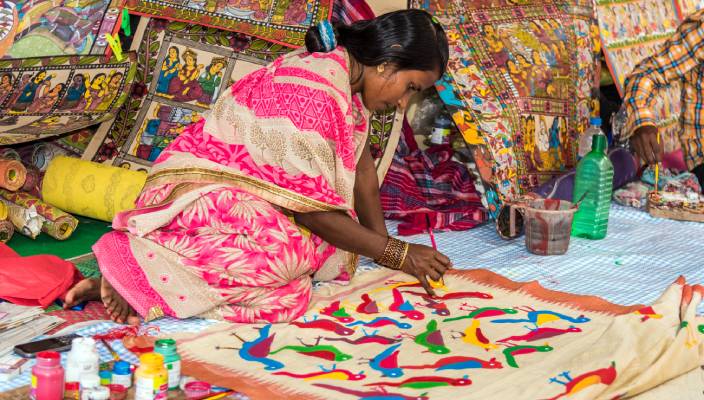
How to revive the Handicraft industry?

One of the first steps to be taken to boast the Handicraft industry, is the action to make this industry organised. It is a given fact that middlemen and traders mend their ways into benefiting from the sales by jeopardizing the livelihood of artisans. Having an organised and formal sector will help with the righteous distribution  of profit. This is the task of the government to take needful action and prioritise this industry just like any other high yielding industry.

Along with taking into account the mission of creating awareness among the artisans and educating them on basic information about the working and functioning of the industry. Apart from that, it is also important for the government to create awareness among the common public and urge them to help save the livelihood of handicraft workers, and avoid choosing cheaper machine made alternative. Thus helping to preserve the Indian tradition.
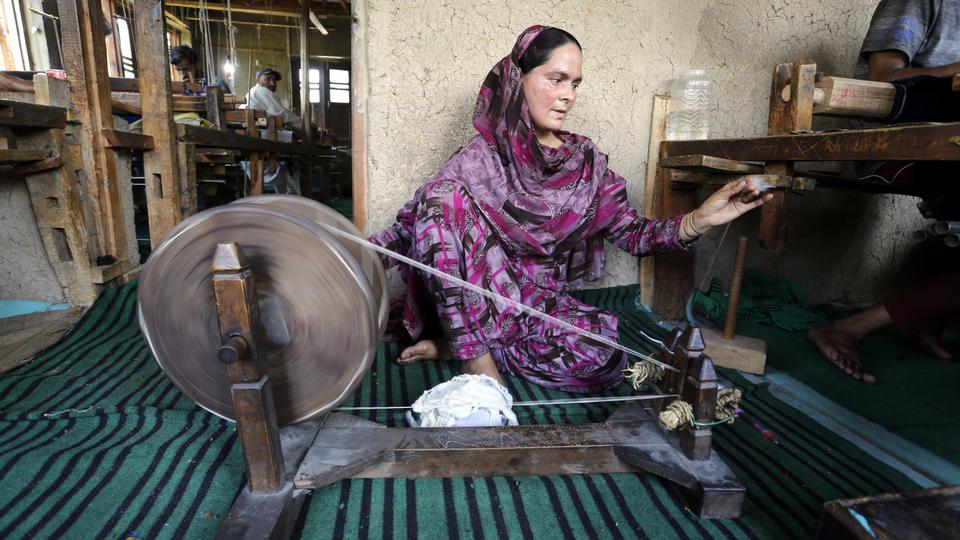
Government’s role in empowering Indian Handicraft

Over the past few years, the Government of India has launched schemes and plans that could potentially benefit the handicraft artisans. Some of the schemes are;

  • National Handicraft Development Programme
  • Ambedkar Hastshilp Vikas Yojna
  • Handicraft Mega Cluster Mission
  • Integrated Handloom Development Scheme

Mentioned above are just few of the schemes launched by the government. But just launching schemes would not be of much help, until and unless those schemes are actually implemented at the grassroot level.

In instances like these, NGOs like Cradftizen Handicraft, Asha Handicraft Association, etc.,  play a vital role in campaigning such schemes across the artisans, and making them aware about their right and benefits.

                   The handicraft industry makes Rs 25,000 crores annually by exporting goods. This sector has a lot of potential that can be tapped and channelised into a highly profitable industry, along with benefit and uplifting the artisans, who are keeping the Indian traditions and craft alive.

Uniform Civil Code

Uniform Civil Code refers to implementation and application of such laws, personal in nature applicable to all the citizens equally irrespective of their race, religion, caste and creed. Ever since prior to India receiving independence, across the nation, the implementation and formulation of uniform civil code has always been a matter of controversy. In India, it is a significant issue regarding secularism in politics and today also it continues to be a disruptive matter for the political parties, some conservative religious sects and groups and Muslim groups in defense of the customs of their religion. At present, personal laws of different communities are different and it is governed according to their religious scriptures and text.

During the British rule, the codification procedure of Uniform Civil Code was first started. This set of rules were mainly for the Muslim and Hindu citizens. The British refrained from interfering in the domestic sphere as they feared opposition from the leaders of the community. In 1941, formation of B N Rau Committee took place in order to codify the Hindu Law post a long period. In 1956, a bill was adopted as the Hindu Succession Act on recommendations of B N Rau Committee after India’s independence. Thus, the law related to unwilled or undevised succession among the Jains, Buddhists, Hindus and Sikhs excluding the Muslims, Jews, Christians and Parsis as being distinct communities from Hindus, was codified and amended.

Uniform Civil Code is mainly concerned with the personal laws of all religions and communities. The laws personal in nature includes divorce, marriage, adoption, maintenance and inheritance. Under Article 44 of the Indian Constitution, the Indian states are expected to apply common laws and directive principles for all the citizens of India while formulating policies of the nation. On the other hand, Article 25-28 of the Constitution of India states religious freedom to all the citizens of India and allows the religious groups to keep up their own affairs.

The Uniform Civil Code is basically a set of three words i.e. Uniform, Civil and Code. Uniform refers to ‘same in all cases or not varying’, Civil refers to ‘associated with the people who live in the country’ and Code refers to ‘ a set of law or rules or a systematic law statement’. Thus, it can be inferred that the civil rules should not be different for all the people regardless of their religion. In Indian Context, Uniform Civil Code is the implementation of one such civil law that should be relevant to all the religious sects and communities in matters concerning marriage, maintenance allowance, divorce, adoption and inheritance. The Uniform Civil Code is mentioned under Article 44 of the Indian Constitution. The article states that, “the State shall endeavor to secure a Uniform Civil Code for the citizens throughout the territory of India.” As stated under the Indian Constitution, the Uniform Civil Code’s appeal is accordant with the principles of fairness, equity, justice and human rights. In order to bring uniformity in the personal laws, the courts have held in their judgements that the government should shift towards a uniform civil code. The same has been observed in many cases, Shah Bano case being a popular one among these.

After the Shah Bano case in 1985, Uniform Civil Code emerged as an important topic of interest. The women’s right to life and dignity is adversely affected by the polygamy and triple talaq practices. These law sets were a matter of debate when there was question of making certain laws applicable to all the Indian citizens. The fundamental rights to practice any religion should not be curtailed by these laws. The debate was then shifted to the personal law of Muslims which is partially related to Sharia law which permits polygamy and divorce. The implementation of Uniform Civil Code was primarily opposed by the Indian Muslims and some conservative religious groups considering it as a threat to freedom of the religion.

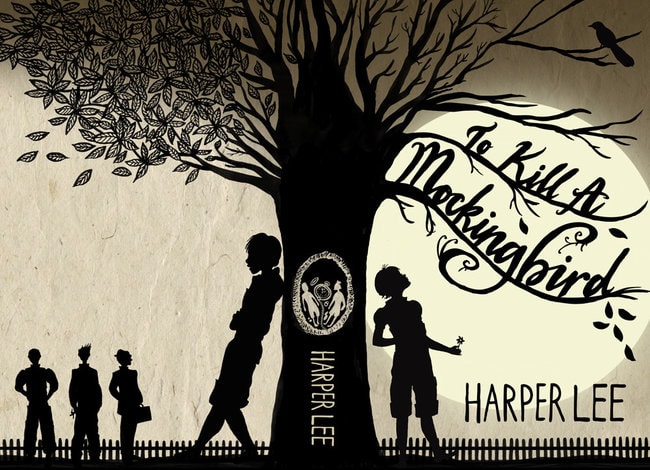
To Kill A Mockingbird: The Book Review

Cover of To Kill A Mockingbird novel (1960)

Introduction

To Kill a Mockingbird is a very popular modern classic by the American author Harper Lee, that narrates a coming-of-age story with a theme of social equality and prejudice. It was published in 1960 and was instantly successful. The unforgettable novel of a childhood in a sleepy Southern town and the crisis of conscience that rocked it. In the United States, it is widely read in high schools and middle schools. To Kill A Mockingbird  has become a classic of modern American Literature, winning the Pulitzer Prize in1961 and was later made into an Academy Award-winning film, also a classic.

About The Author

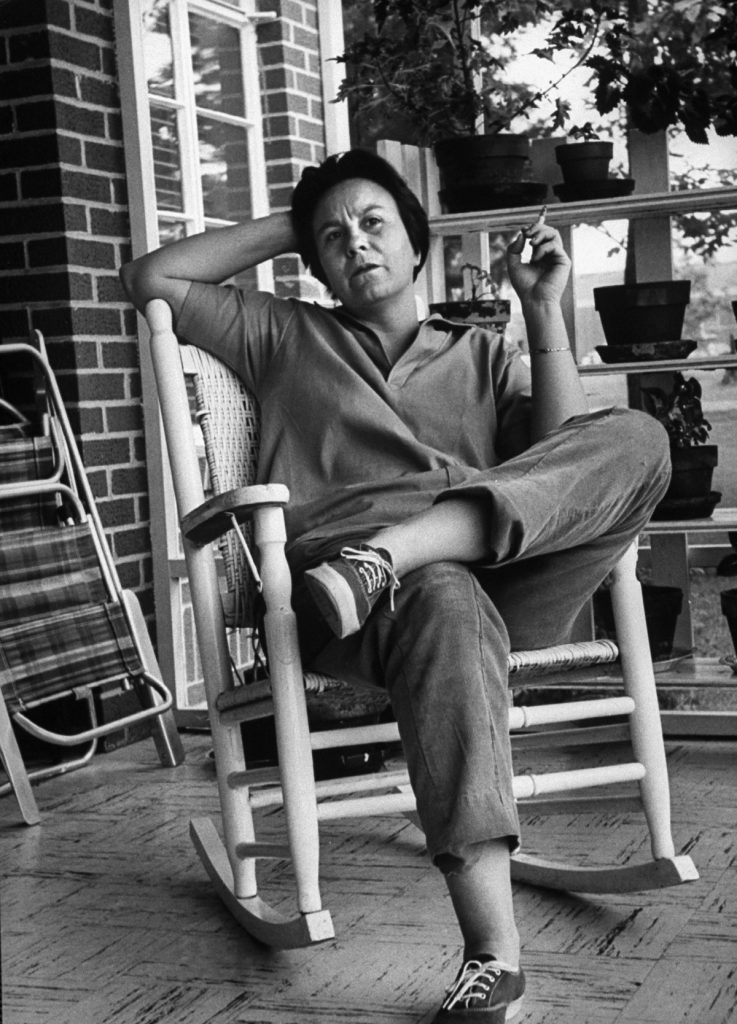
Nelle Harper Lee (April 28, 1926 – February 19, 2016) was an American novelist best known for her 1960 novel To Kill A Mockingbird. Lee has received numerous accolades and honorary degrees, including the Presidential Medal of Freedom  in 2007 which was awarded for her contribution to literature. She assisted her close friend Truman Capote  in his research for the book In Cold Blood (1966). Capote was the basis for the character Dill Harris in To Kill a Mockingbird.

Harper Lee

Storyline of The Novel

The novel follows the story of a black man in the 1930s, convicted for the rape of a white girl. It is written from the perspective of two young children and their confusion at topics like race and the discriminatory ways of adults around them. Despite been written in a child’s perspective, the story does not diminish the meaningful themes of the novel in any way. Even after 80 years of its publication, the book is still popular and highly relates to our society.

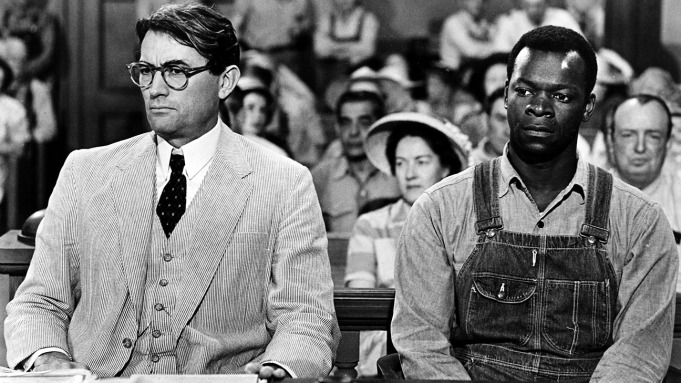
Gregory Peck as Atticus Finch and Brock Peters as Tom Robinson in To Kill A Mockingbird movie(1962)

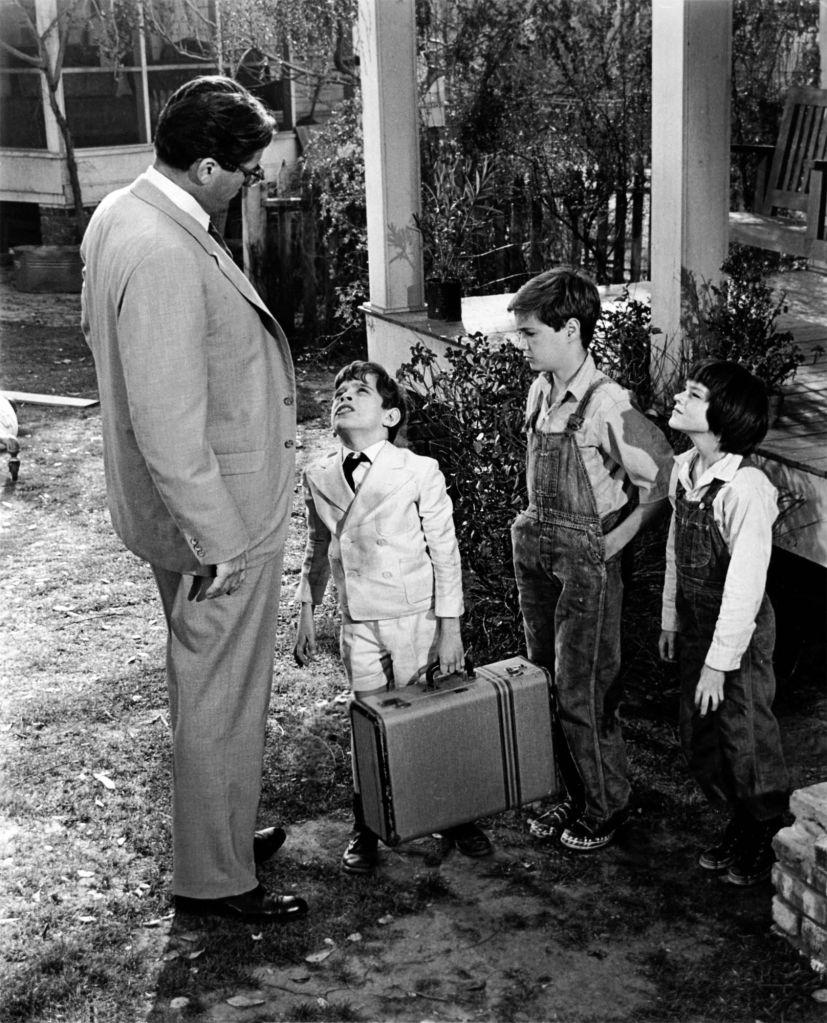
The story evolves around six-year-old Scout Finch is living in the small town of Maycomb, Alabama during the Great Depression. Raised by Atticus Finch, Scout and her brother, Jem, are very comfortable with Maycomb and understand the well being of their neighbours, except the house of the mysterious Arthur Radley, whom they obsess over. Half the book is basically about Scout, Jem, and Dill (their new friend) trying to lure Arthur Radley out of his house. However, when Atticus, a lawyer, decides to take the case of a black man named Tom Robinson, tensions become high and the trial to see whether Tom Robinson is guilty or innocent based on his crime and, especially, his skin colour is at stake. 

Analysis of The Storyline

To Kill a Mockingbird focuses on that gut instinct of right and wrong, and distinguishes it from just following the law. Even the titular quote: “Shoot all the blue jays you want, if you can hit ’em, but remember it’s a sin to kill a mockingbird” is in itself an allegory for this message. Being in itself a generic message, the idea of ‘doing what’s right’ obviously has a different meaning depending on when and where you’re reading the book. If you take 1960, when the book was written, America was in a state of ethical development as social inequality was – very – gradually being overcome. Women’s rights and black rights movements were beginning to emerge and some campaigned through violence. Would Atticus Finch condone this?

In the 1930s, when the book was set, America was in the midst of the Great Depression. This was a time when economic difficulties meant that the American Dream was receding further and further away. We could consider that Atticus Finch felt that his own dream of an equal, morally decent society was also heading in the wrong direction.

Scene from To Kill A Mockingbird movie (1962)

Criticism and Relevance of The Storyline

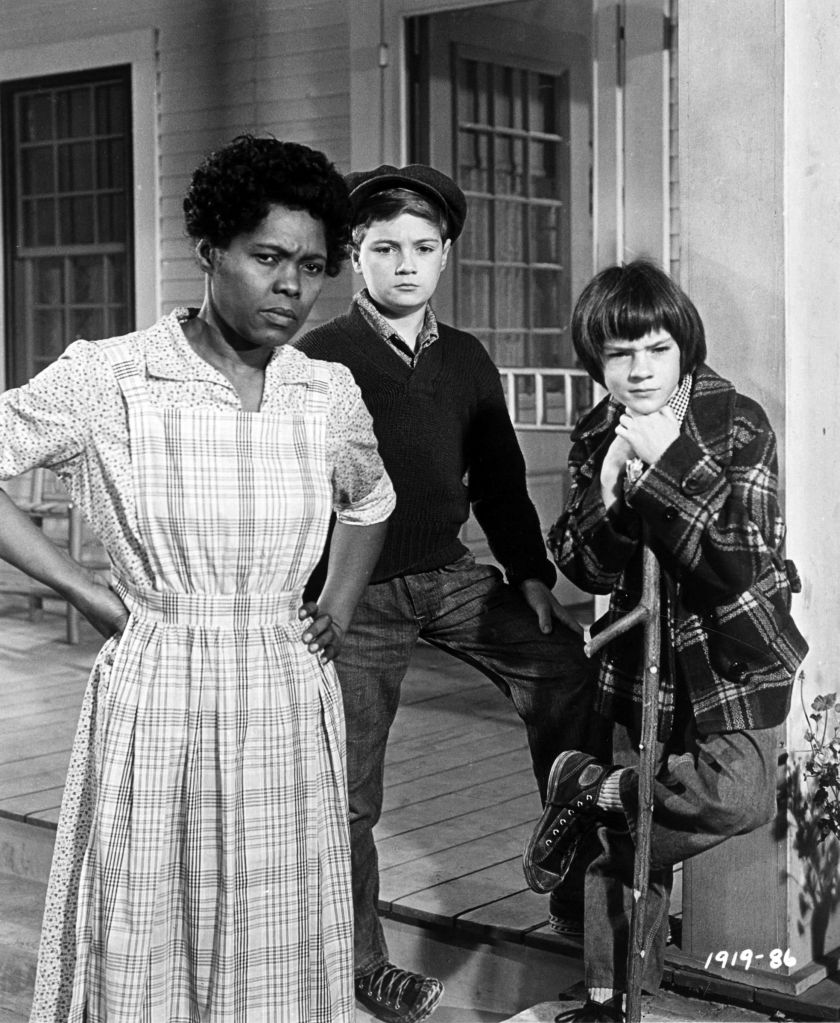
This 1960 novel is ahead of its time; carrying a message that is still needed by today’s world, Harper Lee’s debut novel is regarded as one of the best contemporary classics. Prejudice against the black community is the main theme of this novel. The lives of the main character revolve around this. Standing up for what’s right, defending the weak, swimming against the current; all these righteous acts comes at a huge price, sometimes even risking the lives and dignity of our loved ones. The novel gives us a strong message to the readers. It so skilfully presents the vulnerability of a minority community and how they fall prey to prejudice. The author very skilfully brings forth the sub of racism, that too very tenderly through characters who peacefully struggle against this evil. Harper Lee shows us that in every society, there are some people who would stay firmly at the side of justice, though they may face severe consequences.

scene from To Kill A Mockingbird movie (1962)

Conclusion

Without denying the constancy of the moral message, and the pure ingenuity of the book, it’s still open to debate whether, as with all classics, schoolchildren should be forced to read the novel and go over it page-by-page. Therefore everyone who reads it can take something out of it which no one has before. Let it not be forgotten that a true piece of literature, like To Kill a Mockingbird, is meaningful in every period and that today, Atticus Finch’s message should be heard in the midst of all the global conflicts that we hear of on the news every day and night.

KVIC’s “Charkha Kranti” Created a Buzz on Gandhian Values

 Khadi’s exponential growth, as mentioned by President in his address to the Parliament ahead of the Budget Session, is a result of the “Charkha Kranti” initiated by Khadi and Village Industries Commission (KVIC) in the last 7 years. KVIC built several monumental Charkhas to propagate Gandhian thoughts and symbolism of Charkha in India and abroad which further popularized Khadi and played a key role in its massive growth. Khadi’s success was acknowledged by the President in his address to the Parliament on 31st January and by Home Minister Shri Amit Shah, a day before at Sabarmati Riverfront in Ahmadabad, while unveiling Mahatma Gandhi’s 100 sq meter wall mural on his 74th Martyr’s Day.

Interestingly, KVIC was formed in the year 1956 but it made no effort in the next 58 years; i.e. till 2014, to popularize Khadi, Charkha or any other symbol associated with Mahatma Gandhi. “Khadi” and “Gandhi” were only used for political gains. It was only after the year 2014, that concrete efforts were made by the Narendra Modi government to popularize Khadi and spread the thoughts of Mahatma Gandhi and the symbolism of Charkha across the globe. Be it the birth anniversary or the martyrdom of Mahatma Gandhi, KVIC organized unique programs to celebrate Gandhian thoughts.

During the last 7 years, KVIC built monuments like world’s biggest wooden and steel charkhas, world’s smallest charkha on wrist watches, Gandhi ji’s world’s largest wall mural made of clay Kulhads, world’s largest national flag made of Khadi fabric, heritage Charkha museum and many more. Charkha, which was Gandhi ji’s tool in the fight against the British Rule, made its way to a foreign country, for the first time in 2017. Since then, Bapu’s Charkha has reached 60 countries of the world.

“It is with the inspiration of Prime Minister, Shri Narendra Modi that concrete steps were taken to popularize Khadi and Charkha not only in India but across the world. This played a major role in increasing the production and sale of Khadi and, thereby, contributed to realizing Bapu’s dream of Gramoday. The Charkha Kranti also saw distribution of a record 55,000 advanced charkhas to the Khadi artisans across the country that provided them with self-employment,” Chairman KVIC, Shri Vinai Kumar Saxena said.

1956 to 2014 – No significant activity/event

July 5, 2016 – World’s largest wooden Charkha installed at IGI Airport, New Delhi, by Shri Amit Shah, the then BJP President and  Member of Parliament.

October 18, 2016 – Biggest Ever Charkha distribution in Independent India at Ludhiana by  Prime Minister Shri Narendra Modi.

May 21, 2017 – World’s largest Stainless Steel Charkha installed at Connaught Place, New Delhi by Shri Amit Shah, the then BJP President and  Member of Parliament.

May 21, 2017 – Heritage Charkha Museum Inaugurated at Connaught Place, New Delhi, by Shri Amit Shah, the then BJP President and Member of Parliament.

October 2, 2017 – A big wooden Charkha unveiled in Uganda, for the first time on foreign soil.

April 15, 2018 – Stainless Steel Charkha unveiled by former Agriculture Minister Shri Radha Mohan Singh at Motihari in Bihar to commemorate Champaran Satyagrah centenary celebrations.

June 7, 2018 – Pietermaritzburg station in South Africa sported a Khadi look and trains draped in Khadi fabric. This Railway Station is the place where Gandhi ji was thrown off a train for refusing to give up his seat in a first class, “whites-only” compartment, 125 years ago in 1893. It was the first such program sponsored by KVIC on foreign soil.

June 26, 2018 – Grand Stainless Steel Charkha installed at Sabarmati Riverfront, Ahmadabad. The Charkha was unveiled by Shri Amit Shah, the then BJP President and  Member of Parliament.

January 31, 2019 – World’s Largest Wall Mural of Mahatma Gandhi Made of terracotta Kulhads unveiled at NDMC building in New Delhi by Vice President Shri M. Venkaiah Naidu.

January 30, 2020 – World’s Smallest Charkha used in Unique Khadi Wrist Watches that were launched by the then  Minister of MSME, Shri Nitin Gadkari.

Charkha was sent to 60 countries during Khadi exhibitions in 2017 and 2018.

October 2, 2021 – World’s largest Monumental National Flag made of Khadi Fabric and weighing 1400 KG, unveiled in Leh by the  Lieutenant Governor of Ladakh, Shri RK Mathur.

30 January 2022 – A grand wall mural of Mahatma Gandhi made of clay Kulhads installed at Sabarmati Riverfront in Ahmadabad. This is India’s 2nd and Gujarat’s first wall mural of this kind that was unveiled by Minister of Home Affairs and Co-operation, Shri Amit Shah.

2014-15 to 2020-21 – 55,000 New Model Charkhas and 9000 modern looms distributed to Khadi artisans across the country to increase the production of Khadi.


****

18th Convocation of Tezpur University, Assam

 The Prime Minister, Shri Narendra Modi addressed the 18th Convocation of Tezpur University, Assam today through video conferencing. Governor of Assam Prof. Jagdish Mukhi, Union Education Minister Shri Ramesh Pokhriyal ‘Nishank’ and the Chief Minister of Assam Shri Sarbananda Sonowal were also present on the occasion.

Speaking on the occasion, the Prime Minister said today is a moment to remember and cherish for a lifetime for over 1200 students. He believed that what the students learnt at Tezpur University will accelerate the progress of Assam and progress of the country. He said the sentiment contained in the university anthem which was written by Bharat Ratna Bhupen Hazarika resonates with the great history of Tezpur. The Prime Minister quoted a few lines from the University Anthem

अग्निगड़र स्थापत्य, कलियाभोमोरार सेतु निर्माण,

ज्ञान ज्योतिर्मय,

सेहि स्थानते बिराजिसे तेजपुर विश्वविद्यालय”

That is, Tezpur University is situated in a place where there is an architecture like Agnigad, where there is a Kalia-Bhomora bridge, where there is a light of knowledge. He said eminent personalities like Bhupen Da, Jyoti Prasad Agarwala and Bishnu Prasad Rabha are identified with Tezpur.

Addressing the students, the Prime Minister said from now until the completion of 100 years of India’s independence, are also the golden years of your life. He urged them to spread the glory of Tezpur across India and all over the world, take Assam and North East to new heights of development. He asked the students to take full advantage of the possibilities created by the Government’s efforts at development of the North East especially in sectors like connectivity, education and health.

The Prime Minister remarked that Tezpur University is also known for its Innovation Center. These Grassroots innovations are giving momentum to Vocal for Local and are being used to solve local problems, opening new doors of development. He lauded the innovations of Tezpur University like low- cost technology to provide clean drinking water, pledge taken to convert Waste into Energy in every village, inexpensive and effective technology related to biogas and organic fertilizers, campaign to preserve the Biodiversity and Rich Heritage of North East, documentation the languages of the North East tribal society which are in danger of extinction, preservation of centuries-old wood-carved art at Batadrav Thana, Nagaon, digitization of Assam’s books and papers written during colonial times.

The Prime Minister cited Tezpur University Campus itself as the reason for motivation to do work on so many local needs. Here the hostels are named after mountains and rivers in this region. He said these are not just names, but also inspiration for life. He said in the journey of life, we have to face many

The  Prime  Minister  elaborated  on  the  concept  of  Aatmnirbhar  Abhiyan.  He  explained  while  this movement is about change in resources, physical infrastructure, technology and economic and strategic might, the biggest transformation is in the realm of instinct, action and reaction which is in sync with the mood of today’s youth.difficulties, many mountains and many rivers have to be crossed. He said to the students that with every mountaineering your expertise grows and your perspective is ready for new challenges. He said like several tributaries merge into one river and mix into the sea, we should also take knowledge from different people in life, learn and achieve our goal and move forward with that learning. He said when one proceeds with this approach, North East will be able to contribute to the development of the country.

The Prime Minister said today’s young India has a distinctive way of taking on challenges. He used the recent performance of the young Indian cricket team in Australia to illustrate his point. The Indian cricket team faced so many challenges. They suffered crushing defeat yet recovered equally fast and won the next match. The Players showed determination despite injuries. They took the challenge head on and looked for fresh solutions instead of getting frustrated by difficult conditions. There were inexperienced players but their morale was high and they grabbed the opportunity given to them. They overpowered a better team with their talent and temperament.

The Prime Minister stressed that this stellar performance of our players is important not just from the point of view of the sports field. Shri Modi listed important life lessons from the performance. First, we should have faith and confidence in our ability; second, a positive mindset begets positive results. Third and most important lesson, said the Prime Minister, is – if one is facing two options, one safe and the other is an option of a difficult victory, one must surely explore the option of victory. There is no harm in occasional failure and one should not refrain from taking the risks. We need to be proactive and fearless. If we overcome the fear of failure and unnecessary pressure, we will emerge fearless. This new India, confident and dedicated to goals, is evident not only in the cricket field, all of you are part of this picture, the Prime Minister told the Students.

This self-confidence and absence of fear in trading the uncharted path and young energy has strengthened the country in its fight against Corona. India overcame the initial apprehensions and showed that with resolve and resilience, resources are not far behind. India took fast, proactive decisions instead of compromising with the situation and effectively fought with the virus. Made in India solutions contained the spread and improved the health infrastructure. Our vaccine related research and production capability is giving India and many other countries of the world confidence of a security shield, said the Prime Minister.

The Prime Minister also listed digital infrastructure enabling direct benefit transfer, fintech digital inclusion, world’s largest banking inclusion, world’s largest toilet construction movement, largest movement of providing tap water in every household, world’s largest health insurance scheme and world’s largest vaccination drive as testimony to today’s India’s attitude, unafraid of experimentation for solution and not averse to undertake large-scale projects. These projects are benefitting Assam and the Northeast.

The Prime Minister talked of new technologies that are creating new possibilities. Talking about the possibility of future universities which might be fully virtual providing students and faculty to be part of any university of the world, the Prime Minister emphasized the need for a regulatory framework for such transformation. He pointed out that the new National Education Policy is a step in this direction. This policy encourages maximum use of technology, multi-disciplinary education and flexibility. NEP puts stress on preparing our education system for data and data-analytics. Data analysis will massively improve the processes from admissions to teaching and evaluation.

The Prime Minister called upon the students of Tezpur University to help in fulfilling these goals. He said that, after finishing their formal education, they not only work for their future but for the future of the country. He advised them to keep their ideals high which will protect them from the vicissitudes of life. He said the next 25-26 years are important for them as well as their country and expressed the hope that the students will take the country to new heights.

Union Education Minister Shri Ramesh Pokhriyal ‘Nishank’ congratulated the graduating students for successful completion of an important part of their lives and being eligible for jobs in various fields. He expressed happiness over the fact that many students among them were from foreign countries such as Zimbabwe, Ghana, Etopia, etc. and observed that it shows the principle of “Vasudhaiva Kutumbakam” i.e “The world is one family”. He observed that the University has a mosaic culture and it is not surprising because the University itself is located at Tezpur, which is a cultural and historic place. He further added that cultural doyens like Rupkonwar Jyoti Prasad Agarwala, Bishnuprasad Rabha, Natasurya Phani Sarma and Dr Bhupen Hazarika’s works are identified with Tezpur.

He hoped that the students would not only bring laurels to its own state but also play a crucial role in development of the nation. He said that in order to reform, transform and perform, the National Educational Policy (NEP) has been adopted, which will bring much needed qualitative change in the educational sector.  He said that NEP is focused on inclusive, impactful and innovative education and it will usher in a new era intellectual development in India.

A total of 1218 students received their degrees and diplomas in the Convocation out of which 371 were undergraduate, 725 postgraduate, 36 PG Diploma and 86 were Ph.D. Among the degree recipients, 46 toppers of various undergraduate and postgraduate programmes received Gold Medals. A Best Graduate and another Best Post Graduate of the year were also awarded Gold Medals in the Convocation.

******

Farm Bill 2020

In India, agriculture is regarded as a dominant sector in the country. More than 70% of the population in India is involved in the agricultural activities either directly or indirectly. We are able to eat peacefully only due to the hard work of the farmers. Though the farmers work hard in the field day and night in order to feed the country yet they are compelled to live a life of indigence and starvation. Recently in 2020, new bills for the welfare and comfort of the farmers and the agricultural sector was introduced by the Central government. However, these bills were greatly opposed by the farmers and the government of the State. There were protests against the bills on roads and streets by the farmers across the nation. A resolution was also passed by the Punjab Assembly rejecting the ordinances of Central government on 28th August 2020.

A combination of three bills together constitute the Agriculture Bill 2020 or Farm Bill 2020. These three bills were recently passed by the Parliament. These bills are: Farmers Produce and Commerce (Promotion and Facilitation) Bill 2020, Farmers Agreement (Empowerment and Protection) on Price Assurance and Farm Services Bill 2020 and Essential Commodities (Amendment) Bill 2020. These bill make huge changes in the agricultural sector structurally. These bills also seemed to encourage corporate investments in the ecosystem of agriculture in order to make agriculture more benefitable to the farmers.

The Farm Bill 2020 contemplates an alternative possible way to the farmers to sell their produce in open market, providing them an opportunity to sell their products anywhere and to anyone and even get high price for it. In such areas of trade, neither agriculture produce market committee (APMC) fees nor tax by the government on transactions will be charged. The APMC would require to compete with these alternate platforms and now the farmers would have the choice to sell their produces of the farm. The farmers have the authority to sell their farm’s produce directly to the corporate or exporter purchasing in bulk from the farm. The current procurement of food grains based on minimum support price (MSP) is not obliterated by the Farm Bill 2020. The system of procurement based on MSP continues and the farmers can also sell their farm produces at Mandis on the existing MSP.

A number of schemes for the well being of the farmers as well as agricultural sector is launched every now and then by the government. The main aim behind introducing the Farm Bills was to boost the agriculture sector and double the income of farmers by 2022. It was believed that freeing the agriculture sector will consequently help in better pricing due to vast competition in the market. The corporate sector would be induced to invest in the ecosystem of agriculture as the farmers would have the choice to sell their crop products directly to the corporates and the exporters.

As the New Farm Bill 2020 provides great measures for the welfare of the farmers by giving them opportunity to sell their farm products in open market and also allowing them to fix the price according to themselves on mutual understanding of both the farmer and the corporates. Farmers are apprehensive of getting the MSP for their produce. However, the farmers do fear the domination on the agricultural sector with the power of money by the larger corporates and retailers, they also fear that the Mandies would become inessential like BSNL and MTNL future days and they also doubt that if in near future the trade shifts substantially to alternative platforms, the APMCs may become unavailable and have to shut down. No mechanism for fixation of price was prescribed under the Price Assurance Bill. The farmers were anxious about their exploitation as free hand was given to corporate houses. The Bill seemingly deregulated the movement, production, storage and distribution of essential food commodities such as edible oils, pulses, oil seeds, potatoes and onion which are removed from the Essential Commodities (Amendment) Ordinance.