I know I’m late to the After party. But hey, better late than never! I started After by Anna Todd in the evening, then stayed up all night because I had to finish it. And then, I begged my teen sister for the second book. She kindly agreed to give the book to me. I hope she doesn’t change her mind just to torture me. We’ll have to see how this unravels.
Synopsis:
Tessa is just starting college, and she’s got everything planned. In one year, her boyfriend Noah will join her as well. But then she meets her wild roommate Steph as well as the incredibly rude guy with a British accent, Hardin. And everything changes!
My Thoughts:
Tessa is a good girl and she doesn’t do parties and short dresses. And she goes to a party with Steph and something changes. She can’t look away. Harding is doing something to her and she can barely resist. But she has a boyfriend. And also, everything she has a good moment with Hardin, two bad ones follow. Hardin is toxic, and Tessa hurts him in return as well. Also, their communication has to improve. Not the mention how the whole boyfriend situation was handled.
Honestly, I thought my opinions would be conflicting. But they’re not. I really enjoyed the book and I’m looking forward to the second one. Also, I know Hardin is based on Harry Styles, but while I was reading the book, he didn’t once cross my mind. I also often have fantasies about celebrities, I just don’t happen to write them. Honestly, it’s not a big deal.
My only worry was that teens might see Hardin’s toxic side and think that’s how a girl should be treated. But that would mean underestimating the girls out there. Even in the book, Tessa was aware Hardin’s behaviour was not okay, which is why she reacted the way she did. The facts she would return only meant that she had feelings for him. Their relationship has more issues than good parts, but in all honesty, when I think about my high school days, it was that way for me too. I didn’t handle things well. Sometimes I didn’t communicate well. I trusted people I shouldn’t have trusted. And that’s the beauty of this book.
After by Anna Todd is the perfect teenage book.
It reminded me of my days of high school and uni. Attending parties I shouldn’t have and trusting people that didn’t deserve my trust. Handling relationships badly and having terrible ability to communicate. And this book brought all the excitement back and more. Fond and not so fond memories that reminded me that I have lived at the fullest.
In the next book, I do hope that their relationship improves. I hope Hardin grows up and Tessa communicates to him, instead of hurting him back. Also, I hope Tessa fixes her relationship with her mother as well, even though her mother needs to work on her own biases as well. I also hope that the dramas continue as well – I really love them.
Rome C AD408 is laid out to us as an Empire on the edge of collapse, it’s allies the Huns alongside Roman forces under the command of General Stilicho defeat the barbarian hordes & Rome is saved (for now).
The players are thus introduced, one being a hostage, that of Attila as a boy in Rome alongside other barbarian leaders sons, his grandfather King Uldin (of the Huns) having just fought alongside the Romans. General Stilicho & his wife Serena are a coupla who feature in Attila’s life, somewhat surrogate parents to him in an otherwise hostile environment. The Emperor & Princess Galla are front & centre in Attila’s world too along with various others namely a servant & a soldier, all who have some way influenced a young Attila as we read of his early life at the hands of Rome. Other hostages, namely the Vandal Princes Gesaric & Beric become his protagonists, they appearing in a few scenes.
So what else happens…..?
The sack of Rome by Alaric of the Goths is covered in the period but only through the eyes of a travelling Roman soldier (lieutenant which is a rank I don’t recognise as being Roman tbh) & not really done in any detail… its jus mentioned which is an omission I think.
The character of Attila is well played & I warmed to him instantly, strong, wilful & mindful of his roots whilst in the belly of Rome, certainly not seduced by its trappings as other hostages appear to be. Always distrustful, listening & gathering intelligence all the while, making plans to escape, its all believable as part of the story. Its the only part of the story, at it’s ending, that I truly enjoyed.
Some parts contain mystical nonsense which don’t really fit in with the story but perhaps fit with the superstitious nature of the period, some are a little fantastical though. A Druid, shaman & witch all make appearances & have to say I mostly cringed when I read those excerpts, expecting unicorns or cave trolls to pop outta the mist at any moment…….
The part about the Huns was quite interesting & probably the only part where you felt immersed in the period & the people. The Romans could have been from any era especially the soldiering element.
As you can derive from the last statement I did expect a little more historical detail. As for its substance, in truth I found it a similar read to the Simon Scarrow Macro & Cato series (even the Centurion in it is called Marco!), not great depth or intrigue but good fun nevertheless…… not a read that takes itself to seriously. The author even nicks a coupla immortal lines from the film Zulu during a battle scene!
Quite a contrast throughout the book, sometimes the historical detail is there & the context is sound at others its a boys own adventure whilst in patches it’s puerile crassness. Bit of a mash-up I’m trying to say but for the most part it did hold my attention & i would give it 3.25 stars for an enjoyable enough romp, although not the historical content I had expected or was looking for, rounded down to a 3.
What comes to your head when you listen to the word developing country? How do you imagine developing countries? Some say developing countries are the countries lacking in capital, resources, infrastructure, revenues, and many more things. So with this, the main target of developing countries becomes to grow in the capital, money. Now here comes the slums that exist in abundance in these developing countries. What do you think can slum tourism help the people of slums and these developing countries in any way? let’s discuss, firstly we need to understand that most people consider slum people completely helpless and they don’t even prefer going there for tourism and instead they prefer going in the urban areas. Sometimes people from foreign countries do want to visit these slums and the government of developing countries must encourage slum tourism. The benefit that will come to these slum people when slum tourism will be encouraged will be that they will get the opportunity to grow economically, when foreigners will purchase something from the residents, then their sell will surely increase. Slum people will also be able to show their talents to others and there will be chances for more job creation. And when there will be job creation, the country will automatically develop as in the sense people will have a better lifestyle and a developing country will move towards being the developed one. Slum tourism will help the people change their perception towards the people living over there. These slums are called slums because there is a lack of connectivity, the horizon of vision of people is very much limited for these slum people. People don’t even bother to show some visit or any kind of awareness for these people. But when slum tourism will be there, people will come to know about the problems these people face and will try to connect to these people. When this connectivity will increase then definitely government will start focusing more on these areas and will pay more heed to the developmental tasks that should be performed for the benefit of these people. We all are very well aware that westernization has completely taken place in the urban area and robbed the national culture. But when tourists want to see the national culture then they will only be able to see that in the slum areas because their people live simply and are not at all aware of the determination and perform all the customs and rituals. So, we just can’t remove the slums but at least we can try to make the slum people grow and so that they can also try to put some effort into making their country a developed one. We can simple just not stop slum tourism just because we want to hide our poor sides of the country from the world instead we should make others as well as socially aware and give them a chance to grow, chance to improve because hiding the flaws won’t let us get rid of them but working on them will help us to get them slowly fade away.
There is a consensus of expert opinion that cricket may have been invented during Saxon or Norman times by children living in the Weald, an area of dense woodlands and clearings in south-east England. The first reference to cricket being played as an adult sport was in 1611, and in the same year, a dictionary defined cricket as a boys’ game. There is also the thought that cricket may have derived from bowls, by the intervention of a batsman trying to stop the ball from reaching its target by hitting it away.
Village cricket had developed by the middle of the 17th century and the first English “county teams” were formed in the second half of the century, as “local experts” from village cricket were employed as the earliest professionals. The first known game in which the teams use county names is in 1709.
In the first half of the 18th Century cricket established itself as a leading sport in London and the south-eastern counties of England. Its spread was limited by the constraints of travel, but it was slowly gaining popularity in other parts of England and Women’s Cricket dates back to the 1745, when the first known match was played in Surrey.
In 1744, the first Laws of Cricket were written and subsequently amended in 1774, when innovations such as lbw, a 3rd stump, – the middle stump and a maximum bat width were added. The codes were drawn up by the “Star and Garter Club” whose members ultimately founded the famous Marylebone Cricket Club at Lord’s in 1787. MCC immediately became the custodian of the Laws and has made revisions ever since then to the current day.
Rolling the ball along the ground was superseded sometime after 1760 when bowlers began to pitch the ball and in response to that innovation the straight bat replaced the old “hockey-stick” style of bat. The Hambledon Club in Hampshire was the focal point of the game for about thirty years until the formation of MCC and the opening of Lord’s Cricket Ground in 1787.
Cricket was introduced to North America via the English colonies as early as the 17th century, and in the 18th century it arrived in other parts of the globe. It was introduced to the West Indies by colonists and to India by British East India Company mariners. It arrived in Australia almost as soon as colonisation began in 1788 and the sport reached New Zealand and South Africa in the early years of the 19th century.
19th century cricket
The growth of cricket in the mid and late 19th century was assisted by the development of the railway network. For the first time, teams from a long distance apart could play one other without a prohibitively time-consuming journey. Spectators could travel longer distances to matches, increasing the size of crowds. Army units around the Empire had time on their hands, and encouraged the locals so they could have some entertaining competition. Most of the Empire embraced cricket, with the exception of Canada.[21]
In 1864, another bowling revolution resulted in the legalisation of overarm and in the same year Wisden Cricketers’ Almanack was first published. W. G. Grace began his long and influential career at this time, his feats doing much to increase cricket’s popularity. He introduced technical innovations which revolutionised the game, particularly in batting.
As we all know Tokyo Olympics 2021 are scheduled from 23rd July to 8th of august, and we have a lot of expectations from our players. Olympic is a international multi -sport event that is scheduled every 4 years. and so far India has won just 28 medals since they first participated in this global event.
India’s first appearance in Olympics was in 1900 Olympics ,when India sent an athlete (Norman Pritchard), but a whole contingent was sent in 1920 Olympics when India’s athletes competed in every sport. since then ,India has been part of every Olympics .the number of athletes increased every year from sending 5 athletes to sending 117 athletes in 2016. India has come a long way.
India’s journey in Olympics
India’s success in Olympics was majorly contributed by hockey . India won 11 medals in hockey. that was the golden period of India in Hockey. from 1928 to 1980 India won 8 gold medals in hockey. In 2000 ,karnam malleswari won bronze medal and became first Indian woman to win medal in Olympics. For gold medal after 1980(hockey), India won their next gold medal in 2008 Beijing Olympics where Abhinav Bindra won gold in men 10- M air rifle event. and Vijender Singh won bronze medal in the same year becoming first Indian boxer to win medal in Olympics.
Than in 2012 Olympics, India won a record 6 medals . wrestler Sushil Kumar won silver medal ,Saina Nehwal won bronze in badminton and Mary Kom became first Indian woman to win medal in boxing.
in 2016 Rio Olympics , India sent a record 117 Members but India just won 2 medals. PV Sindhu won silver medal in badminton and and Sakshi Malik became first Indian woman wrestler to win medal(bronze) in Olympics. that was a disappointing Olympics for our country where we won only 2 medals.
But still the most disappointed thing is that since 1900 India has just managed to win 28 medals that includes 9 gold,7 silver and 12 bronze medals. and there are many other countries who wins 28 or more medals in a single edition of Olympics consistently, Being a nation of 1.3 billion people, we have just managed 28 medals so far on the other hand if we look back to any other country like USA or Britain they are way ahead of us.
USA won 121 medals in 2016 Rio Olympics ,Britain won 67 medals in Olympics .But my point of view in this matter is that only population of a particular country does not depends on number of medals won. There are many other factors which contribute in it.but why our country still lagging behind many countries?
some of the reasons of India still struggling in Olympics are :-
1.infrastructiure of country
2.proper funding of players
3.poor rehab facilities and inexperience coaches
4.caring of athletes not only during Olympics but also in their preparation time.
5. one more reason i want to write here is cricket. Our country is a cricket loving nation every 2nd child in this country want to be a cricketer. but cricket is not introduced in Olympics so far. I am also a cricket fan, I love cricket. but the problems of us is that we hardly look beyond cricket. like England and Australia are also very good cricketing nations but they have also excelled in other sports. we should also play and concentrate in other sports to win more medals in Olympics.
Today we will direct new bloggers to pick various sorts of niches to begin blogging.
Is it true that you will start blogging? Furthermore, would you say you are befuddled about where to begin? On the off chance that Yes! then, at that point quiet down. We have raised some extremely valuable niches which can assist you with beginning your blogging vocation with a blast.
Indeed, You should know about your in addition to point, I mean your zone where you can work without getting rushed. Picking a niche is a genuine cerebral pain on the off chance that you don’t have the foggiest idea about your solidarity and your advantage. Here, we have carried some evergreen niche to begin blogging which can give you a thought what suits best as per your advantage.
1. Health & Fitness
Heath websites are consistently in pattern. These web journals never fizzle and this is among the top niches with exceptionally fewer contenders. That implies you get great positions without any problem. Google likes health web journals and wellbeing websites are a lot of deferential sort of sites. Yet, on the off chance that you are picking a health niche for blogging, you should have a little measure of information about the wellbeing sector. If you run a business in the Heath area we prescribe you to begin blogging in this. Clinical understudies are the significant crowd for this niche as they look for more data and information.
2. Web Marketing
This is the niche that has such a large number of contenders however it is best for specialized individuals who know a ton about web advertising, If you need website streamlining opportunities moreover factors then there is an extraordinary niche to blog. Prior to choosing these niches ensure you are wonderful with blogging stuffs and this niche is the generally looked through niche on the planet as there are a lot of online advertisers today on the planet and it is actually quite difficult to get a major name in these niches.
3. Innovation
This is extremely quickly developing niche which never pauses and increment everyday. Subsequently you wouldn’t run low on words to clarify things. Innovation is outstanding amongst another niche that gets huge loads of traffic. Consistently another item is coming into the market so through innovation blog you could compose audits, tech surveys are extreme catchphrases to create traffic. There is a decent niche for the tech fans to started blogging and bring in some cash. These niches additionally contain the cell phones surveys, which itself is the best watchword in Google and in each web search tool.
Food
Food online journals are utilized to share the plans of food things. This niche is chiefly for individuals who love to prepare food and for the most part housewife beginning utilizing the food blog to bring in some cash. As they share their insight and these is an evergreen niche to begin blogging. There are numerous individuals that are looking for the plans of food materials in online which makes you sure that you will get great traffic.
Profession Guidance
This is likewise among the best niche for experts, instructors, and individuals who know about the instructive areas. This is an extreme niche where you get a lot of traffic from a specifically designated gathering of individuals like understudies, educators, vocation counsels, and so forth You can make a parcel of cash from this niche by showing advertisements on your sites, compositions give you a colossal measure of cash for showing their promotions on your vocation direction site. Consequently, there is an extreme niche for the income part just as for the evergreen part. Presently as you come to realize that to begin blogging you need to initially pick the niche for your blog.
So you can choose any of the above niche dependent on your advantage.
Planning can be defined as “thinking in advance what is to be done, when it is to be done, how it is to be done and by whom it should be done”. In simple words we can say, planning bridges the gap between where we are standing today and where we want to reach.
Planning involves setting objectives and deciding in advance the appropriate course of action to achieve these objectives so we can also define planning as setting up of objectives and targets and formulating an action plan to achieve them.
Another important ingredient of planning is time. Plans are always developed for a fixed time period as no business can go on planning endlessly.
Features/Nature/Characteristic of Planning
1. Planning contributes to Objectives:
2.Planning is Primary function of management
3. Pervasive:
4. Planning is futuristic/Forward looking
5. Planning is continuous
6. Planning involves decision making
7.Planning is a mental exercise
Importance/Significance of Planning:
. 1️⃣Planning provides Direction:
Planning is concerned with predetermined course of action. It provides the directions to the efforts of employees. Planning makes clear what employees have to do, how to do, etc. By stating in advance how work has to be done, planning provides direction for action. Employees know in advance in which direction they have to work. This leads to Unity of Direction also. If there were no planning, employees would be working in different directions and organisation would not be able to achieve its desired goal.
2️⃣Planning Reduces the risk of uncertainties
Organisations have to face many uncertainties and unexpected situations every day. Planning helps the manager to face the uncertainty because planners try to foresee the future by making some assumptions regarding future keeping in mind their past experiences and scanning of business environments. The plans are made to overcome such uncertainties. The plans also include unexpected risks such as fire or some other calamities in the organisation. The resources are kept aside in the plan to meet such uncertainties.
3️⃣Planning reduces over lapping and wasteful activities
The organisational plans are made keeping in mind the requirements of all the departments. The departmental plans are derived from main organisational plan. As a result there will be co-ordination in different departments. On the other hand, if the managers, non-managers and all the employees are following course of action according to plan then there will be integration in the activities. Plans ensure clarity of thoughts and action and work can be carried out smoothly.
4️⃣Planning Promotes innovative ideas:
Planning requires high thinking and it is an intellectual process. So, there is a great scope of finding better ideas, better methods and procedures to perform a particular job. Planning process forces managers to think differently and assume the future conditions. So, it makes the managers innovative and creative.
Planning helps the managers to take various decisions. As in planning goals are set in advance and predictions are made for future. These predictions and goals help the manager to take fast decisions.
6. Planning establishes standard for controlling:
Controlling means comparison between planned and actual output and if there is variation between both then find out the reasons for such deviations and taking measures to match the actual output with the planned. But in case there is no planned output then controlling manager will have no base to compare whether the actual output is adequate or not.
For example, if the planned output for a week is 100 units and actual output produced by employee is 80 units then the controlling manager must take measures to bring the 80 unit production upto 100 units but if the planned output, i.e., 100 units is not given by the planners then finding out whether 80 unit production is sufficient or not will be difficult to know. So, the base for comparison in controlling is given by planning function only.
7. Focuses attention on objectives of the company:
Planning function begins with the setting up of the objectives, policies, procedures, methods and rules, etc. which are made in planning to achieve these objectives only. When employees follow the plan they are leading towards the achievement of objectives. Through planning, efforts of all the employees are directed towards the achievement of organisational goals and objectives.
1.
Once plans are made to decide the future course of action the manager may not be in a position to change them. Following predefined plan when circumstances are changed may not bring positive results for organisation. This kind of rigidity in plan may create difficulty.
Business environment is very dynamic as there are continuously changes taking place in economic, political and legal environment. It becomes very difficult to forecast these future changes. Plans may fail if the changes are very frequent.
The environment consists of number of segments and it becomes very difficult for a manager to assess future changes in the environment. For example there may be change in economic policy, change in fashion and trend or change in competitor’s policy. A manager cannot foresee these changes accurately and plan may fail if many such changes take place in environment.
3. It reduces creativity:
With the planning the managers of the organisation start working rigidly and they become the blind followers of the plan only. The managers do not take any initiative to make changes in the plan according to the changes prevailing in the business environment. They stop giving suggestions and new ideas to bring improvement in working because the guidelines for working are given in planning only.
4. Planning involves huge Cost:
Planning process involves lot of cost because it is an intellectual process and companies need to hire the professional experts to carry on this process. Along with the salary of these experts the company has to spend lot of time and money to collect accurate facts and figures. So, it is a cost-consuming process. If the benefits of planning are not more than its cost then it should not be carried on.
5. It is a time consuming process:
Planning process is a time-consuming process because it takes long time to evaluate the alternatives and select the best one. Lot of time is needed in developing planning premises. So, because of this, the action gets delayed. And whenever there is a need for prompt and immediate decision then we have to avoid planning.
6. Planning does not guarantee success:
Sometimes managers have false sense of security that plans have worked successfully in past so these will be working in future also. There is a tendency in managers to rely on pretested plans.
It is not true that if a plan has worked successfully in past, it will bring success in future also as there are so many unknown factors which may lead to failure of plan in future. Planning only provides a base for analysing future. It is not a solution for future course of action.
7. Lack of accuracy:
In planning we are always thinking in advance and planning is concerned with future only and future is always uncertain. In planning many assumptions are made to decide about future course of action. But these assumptions are not 100% accurate and if these assumptions do not hold true in present situation or in future condition then whole planning will fail.
For example, if in the plan it is assumed that there will be 5% inflation rate and in future condition the inflation rate becomes 10% then the whole plan will fail and many adjustments will be required to be made.
Sometimes planning fails due to following limitations on which managers have no control.
(i) Natural calamity:
ADVERTISEMENTS:
Natural calamities such as flood, earthquake, famine etc. may result in failure of plan.
(ii) Change in
(iii) Change in taste/fashion and trend in the market:
Sometimes plans may fail when the taste/fashion or trend in market goes against the expectation of planners.
(iv) Change in technologies:
The introduction of new technologies may also lead to failure of plans for products using old technology.
(v) Change in government/economic policy:
Managers have no control over government decisions. If government economic or industrial policies are not framed as expected by manager then also plans may fai
Plan:
Plan is a document that outlines how goals are going to be met. It is a specific action proposed to help the organization achieve its objectives. There may be more than one way and means of reaching a particular goal but with the help of logical plans, objectives of an organization could be easily achieved.
Single Use Plans:
Single use plans are one time use plan. These are designed to achieve a particular goal that once achieved will not reoccur in future. These are made to meet the needs of unique situations. The duration or length of single use plan depends upon the activity or goal for which it is made. It may last one day or it may last for weeks or months if the project for which it is made is long.
Standing Plans:
Standing plans are also known as Repeat Use Plans. These plans focus on situations which occur repeatedly. Standing plans are used over and over again. They are made once but retain their value over a period of years. Although some revisions and updates are made in these plans from time to time.
Unemployment in India is always a serious issue particularly in rural India as the scope is limited in rural areas. So launching of Rural Self Employment Training Institutes (RSETIs) by the Ministry of Rural Development (MoRD) of the Government of India is a praiseworthy step. MoRD was impressed by the Rural Development and Self Employment Training Institute (RUDSETI) model which was established in the year 1982 at Dharmasthala, Karnataka by Dr D Veerendra Heggade jointly with Syndicate Bank and Canara Bank. MoRD in 2009 advised all the banks to establish one RUDSETI type institute in all their Lead Districts under the banner of Rural Self Employment Training Institutes (RSETIs) (www.nacer.in/index_more.html). It is pertinent to mention that RSETIs identify, orient, train and assist rural youth to take up self-employment as a source of livelihood. The youths in the age group of 18-45 years, irrespective of caste, creed or religion are eligible to undergo training at RSETI, which is free of cost. RSETI has been doing a commendable job in training and settlement of rural youths. The total number of training programmes organised from inception to 31 March 2020 was 1,26,556 where the number of youth trained was 35,00,770 during the same period and 24,41,083 (69.73%) youths were settled. Further, the number of functional RSETIs was 585 where altogether 29 banks weresponsored (www.nacer.in/performance_glance.html). Each RSETI offers skill development programmes in a financial year in various avenues and in each batch 25-30 youths are selected for training. The programmes are of short duration ranging from 1 to 6 weeks. And to get a general idea few trades are mentioned below: • Agricultural Programmes – agriculture and allied activities like dairy, poultry, apiculture, horticulture, sericulture, mushroom cultivation, floriculture, fisheries, etc • Product Programme – dress designing for men and women, rexine articles, incense sticks manufacturing, football making, bag, bakery products, leaf cup making, recycled paper manufacturing, etc. • Process Programmes – two wheeler repairs, radio/TV repairs, motor rewinding, electrical transformer repairs, irrigation pump-set repairs, tractor and power tiller repairs, cell phone repairs, beautician course, photography and videography, screen printing, domestic electrical appliances repair, computer hardware and DTP. • General Programmes – skill development for women • Other Programmes – related to other sectors like leather, construction, hospitality and any other sector depending on local requirements. The author time to time studied many youths who were undergoing training and also collected data after training that were settled and found earning was substantial. Few names as evidence can be mentioned here: a) Adapa Kalpana (female) , Dharanikota village of Amaravathi Mandal, Guntur district of Andhra Pradesh ( year of study in 2016), b) Ashok Kumar ( Male/year of study July 2018), Hajpurwa village of Warisnagar block, Samastipur district of Bihar, c) Arati Mishra (female/ year of study July 2018) Nirpur village, Samastipur block, Samastipur district d) In 2017, the author studied some youths of Amritsar district, Punjab. The youths were Jasbir Kaur (female), Harjit Kaur (female), Mandip Kaur (female), Navneet Kaur e) In 2019 the author studied by visiting RSETI at Aurangabad district of Maharashtra. Names of some of the youths are Chhaya Bhalerao (female), Kalpana Jagannath Surase (female), Umesh Bhanudas Dhepe (male), f) In Darrang district of Assam names of some of the youths who were contacted in 2018 are Mousami Saikia Gogoi (female), Poly Seal (female), Mira Medhi, (female), Sabita Koch (female) and many others. In addition, the author visited many RSETIs and cases collected about the youths trained and post-training settlement and earning of income. and found training and post-training settlement was praiseworthy. It is suggested that wherever feasible RSETI may be started at the sub-division level.
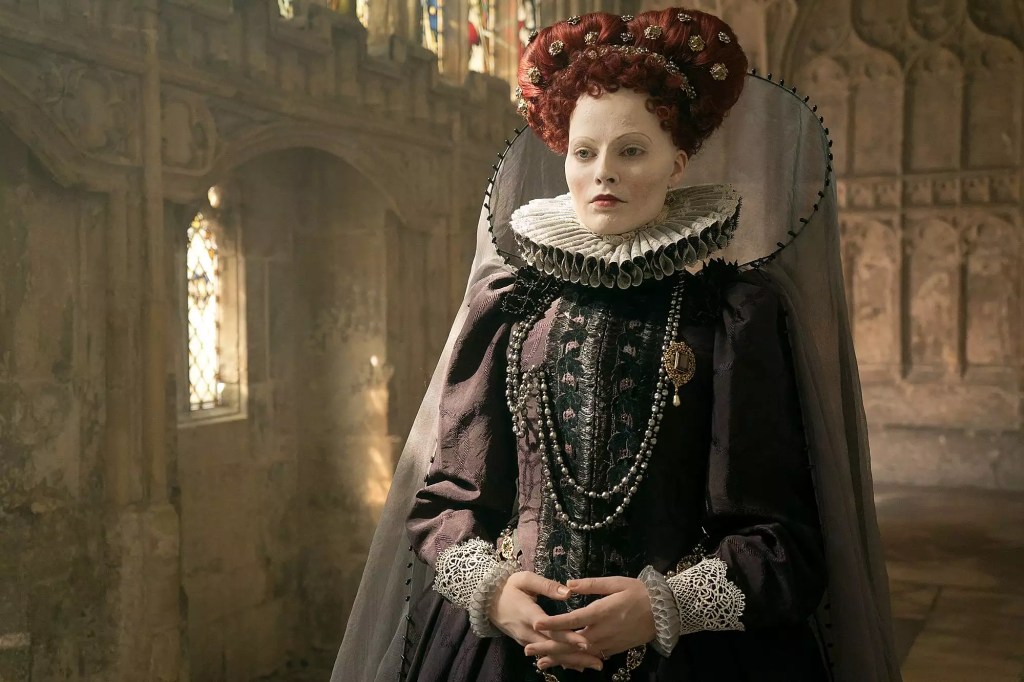
Beauty has always been the greatest concern for women since ages. Women , all over the world did what not, to look pretty and presentable throughout the history of Human Civilization. And to address the need of looking flawlessly beautiful, the practice of using cosmetic or make-up came to the play. Women, sometimes, followed bizarre rituals to enhance their look, but sometimes, to their worst, the cosmetic turned out to be toxic and endangered their lives. To look beautiful it cost them a fatal price. Royalties and Elites were victims of the same death trap, including the Great Queen Elizabeth I.
Queen Elizabeth: The Beginning
Elizabeth I was the fifth and last monarch of the House of Tudor. She was born in the Palace of Placentia on 7 September 1533 and was died on 24 March 1603 at the age of 69. Her father was Henry VIII and her mother was Anne Boleyn who was her father’s second wife. On 17 November 1558, she became the Queen of England and Ireland and ruled it for 44 years until her death. She was also called the Virgin Queen and Good Queen Bess. Elizabeth was third in line to become the monarch and she was not even destined to be queen. She was behind her half younger brother Edward VI and half elder sister Mary I. As her father Henry VIII died, on 28 January 1547, her younger brother Edward VI became the monarch at age nine and ruled for six years, dying at the age of 15 because of tuberculosis. After, Mary I became queen and ruled for five years, dying at age 42 on 17 November 1558. Finally, Elizabeth was the last child of Henry VIII to rule England and became the Queen of England, ruling for 44 years.
The Scars in Her Beauty : What Led Her to Toxic Cosmetics
During her 20’s the Queen got infected with smallpox. Though the young queen survived smallpox but the disease left scars and blemishes on her skin and in order to hide those she started using the makeup more vigorously.
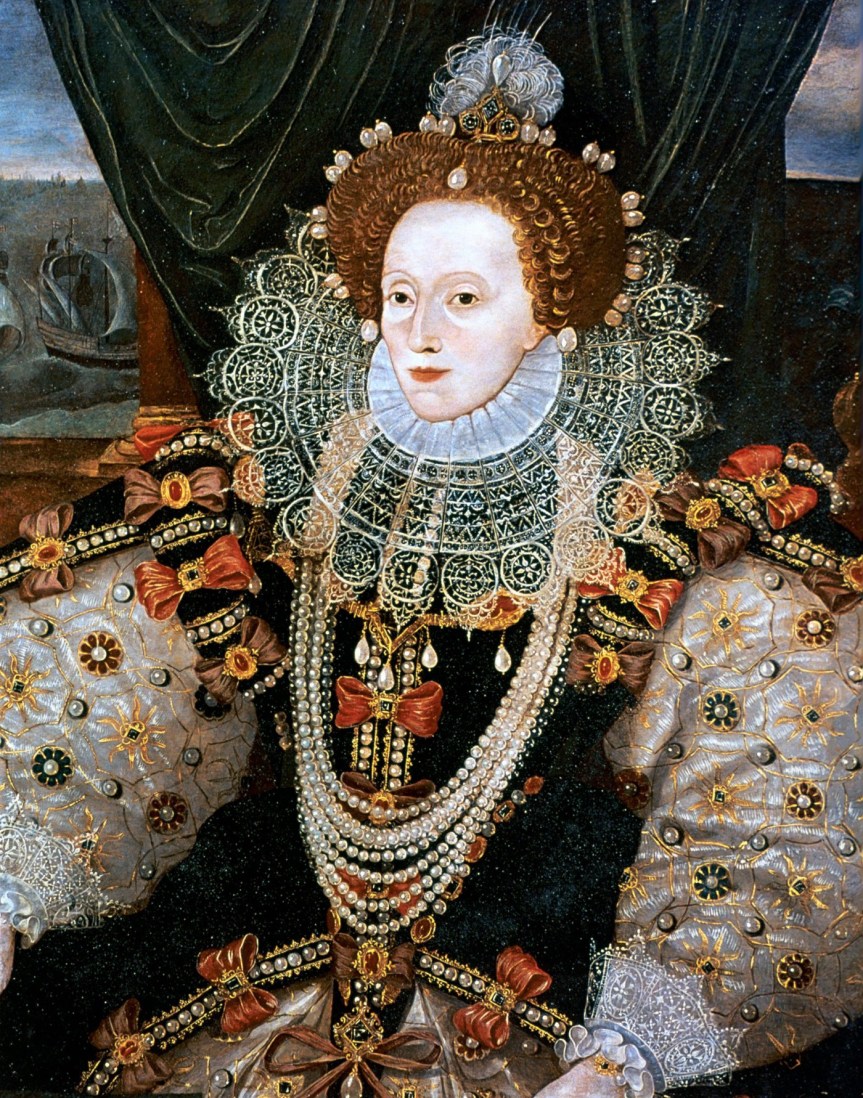
Portrait of the Queen
Bizarre Beauty Standards
The cosmetics that were worn by women in the time of Queen Elizabeth are drastically different from those we wear today. Not only were the materials they used very different but the look they were trying to achieve was very different as well. Standards of beauty change all the time. To understand the cosmetics worn by Elizabethan women, it’s important to understand the effect they were trying to achieve—that “ideal” beauty they wanted to imitate. The ideal Elizabethan female had bright wide-set eyes, snow white skin, rosy cheeks, red lips and fair hair. Pale skin was a sign of nobility, wealth and delicacy was sought after by many. In a time where sunscreen was unheard of, skin problems and pox was a common thing smooth, unblemished skin was a rarity. The pale skin women (and men) wanted was achieved by a number of ways. The most popular being Venetian Ceruse (also known as Spirits of Saturn), a mixture of white lead and vinegar. This white foundation was applied to the face, neck and bosom. Naturally, smearing lead all over one’s skin caused some serious skin damage not only did it make the skin look “grey and shrivelled” there was lead poisoning, hair loss and if used over an extended period of time could cause death. They lined their eyes with black kohl to make them look darker and belladonna eyedrops (used to dilate women’s pupils, an effect considered to be attractive and seductive). Fashion required eyebrows to be thin and arched which would create a high forehead it was considered to be a sign of aristocracy. Rouged cheeks and red lips were very popular. This was obtained with plants and animal dyes.
Her Majesty’ s Royal Makeup
She used ingredients like lead and vinegar in her makeup which is called — “Venetian ceruse“. It is said that she was the only monarch that always took a long time to get ready. She used multiple layers of lead and vinegar and applied a thick white mask to her face and neck. The white skin was not a part of racism but it depicted that a woman was of a higher class. she applied was from If you have seen a portrait of Queen Elizabeth you may have noticed that her lips are very red. The red colour cinnabar, a mercury. poisonous substance that contains She used to remove it with a mixture of elements like eggshells, alum, and mercury. Thus, this leads to another use of poison in her makeup. People at that time would say that her skin became soft after makeup re moval but basically, it was peeling one layer at a time. All these caused wrinkles, aging, and the deterioration of her health. And it is assumed by the historians, that continuous use of those deadly chemicals as Cosmetics, led to her death.
Cinematic Portrait of the Queen, played by actress Margot Robbie
Conclusion
The urge of looking beautiful , sometimes proves hard on women’s overall health. body and The obsession of being perfect, has killed many women, including such Royalties like Queen Elizabeth I. Even today, women are insure about their natural beauty and sometimes find it hard to accept body positivity. We should learn to feel confident in our skin first, and the glow then comes from within as our flaws make us Earthly and more humane.
The Government has implemented various schemes for the welfare and upliftment of every section of the society including minorities especially the economically weaker & lesser privileged sections of the society with schemes like Pradhan Mantri Jan Arogya Yojana (PMJAY), Pradhan Mantri Mudra Yojana (PMMY), Pradhan Mantri Kisan Samman Nidhi (PM KISAN), Pradhan Mantri Ujjwala Yojana (PMUY), Pradhan Mantri Awas Yojana (PMAY), Beti Bachao Beti Padhao Yojana, etc. Ministry of Minority Affairs also implements programmes/ schemes across the country including North Eastern States for socio-economic and educational empowerment of the six (6) centrally notified minority communities namely Christians, Sikhs, Buddhists, Muslims, Parsis and Jains. The schemes/programmes implemented by the Ministry in brief are as under: –
(A): Educational Empowerment Schemes:
(1) Pre-Matric Scholarship Scheme- Scholarship is provided to minority students from Class I to X, out of which 30% scholarship are earmarked for girls.
Post-Matric Scholarship Scheme- Scholarship is provided to minority students from Class XI to PhD., out of which 30% scholarship are earmarked for girls.
Merit-cum-Means based Scholarship Scheme- Scholarship is provided to minority students for Professional and Technical courses, at Under Graduate and Post Graduate level, out of which 30% scholarship are earmarked for girls.
All the three Scholarship schemes are on boarded on the National Scholarship Portal (NSP) and the scholarship amount is disbursed through Direct Benefit Transfer (DBT) mode.
(2) Maulana Azad National Fellowship Scheme – Under the scheme fellowship in the form of financial assistance is provided to minority candidates who clear the UGC-NET or Joint CSIR UGCNET examination.
(3) Naya Savera – Free Coaching and Allied Scheme – The Scheme aims to provide free coaching to students/candidates belonging to minority communities for qualifying in entrance examinations of technical/ medical professional courses and various Competitive examinations.
(4) Padho Pardesh – Under the scheme interest subsidy is provided to students of minority communities on educational loans, for overseas higher studies.
(5) Nai Udaan – Support is provided to minority candidates clearing Preliminary examination conducted by Union Public Service Commission (UPSC), State Public Service Commission (PSC), Staff Selection Commission (SSC) etc.
(B): Employment Oriented Schemes:
(6) Seekho Aur Kamao – Skill development scheme for youth of 14 – 35 years age group and aiming at providing employment and employment opportunities, improving the employability of existing workers, school dropouts etc.
(7) USTTAD (Upgrading the Skills and Training in Traditional Arts/Crafts for Development)- An effective platform to provide self-employment, market and opportunity to traditional artisans and craft persons from the minority communities. Hunar Haats are being organised across the country to provide employment opportunities and markets to artisans/craftsmen.
(8) Nai Manzil – A scheme for formal school education & skilling of school dropouts or educated in community educational institutions like Madrasas.
(9) Nai Roshni – Leadership development of women belonging to minority communities and non-minority communities (not exceeding 25% of each batch).
(C): Special Schemes
(10) Jiyo Parsi – Scheme for containing population decline of Parsis in India.
(11) Hamari Dharohar- A scheme to preserve rich heritage of minority communities of India under the overall concept of Indian culture.
(D): Infrastructure Development Programme:
(12) Pradhan Mantri Jan Vikas Karyakram (PMJVK) – The scheme aims to provide basic infrastructure such as Schools, Colleges, ITIs, Polytechnics, Hostels, Sadbhav Mandap, Skill Development Centres, Drinking water and Sanitation facilities, Health Projects including hospitals, Sport facilities, Smart classrooms, Aanganwadi Centers etc. in deprived areas of the country. The scheme is implemented in the identified areas having minimum of 25% minority population and backwardness parameters below the national average in respect of socio economic or basic amenities or both.
(13) Also, Maulana Azad Education Foundation (MAEF) implements education and skill related schemes as follows:- (a) Begum Hazrat Mahal National Scholarship for Meritorious Girls belonging to the economically weaker sections of Minorities (b) Gharib Nawaz Employment Scheme started in 2017-18 for providing short term job oriented skill development training to youth (c) Grant-in-aid to NGOs for infrastructure development of educational institutions.
(14) Equity to National Minorities Development and Finance Corporation (NMDFC) for providing concessional loans to minorities for self-employment and income generating ventures.
The details of the schemes mentioned at S. No.(1) to (12) are available on the website of this Ministry (www.minorityaffairs.gov.in) and those at serial No.(13) and (14) are available on the website of MAEF (www.maef.nic.in) and NMDFC (www.nmdfc.org) respectively.
As per Section 2 (c) of the National Commission for Minorities (NCM) Act, 1992, six communities namely Christians, Sikhs, Muslims, Buddhists, Jains and Parsis have been notified as minority communities. As per Census 2011, population of minority communities in the country are:- Muslims – 17,22,45,158, Christians – 2,78,19,588, Sikhs – 2,08,33,116, Buddhists – 84,42,972, Jains – 44,51,753 and Parsis – 57,264.
No State-wise allocation of funds is made in the budget of this Ministry. However, during last five years an amount of Rs. 21,934.38 Crores had been allocated for schemes being implemented by this Ministry.
Flood management including erosion control falls within the purview of the States. Flood management and anti-erosion schemes are formulated and implemented by concerned State Governments as per their priority. The Union Government supplements the efforts of the States by providing technical guidance and also promotional financial assistance for management of floods in critical areas. The Government of India had launched a centrally sponsored scheme viz. Flood Mangement Programme (FMP) during XI Plan to provide central assistance to states for taking up works related to flood management, anti-erosion, flood management works, anti-sea erosion etc. which continued during XII Plan period as a component of “Flood Management and Border Areas Programme (FMBAP)” for subsequent period.
In the State of Assam, 141 projects were included for central assistance under FMP. The 111 completed projects have given protection to an area of around 7.2 lakh ha and protected a population of about 17.71million. Central Assistance amounting to the tune of Rs. 1286.39 Crore has been given to the State of Assam under FMP.
In the State of Bihar, 18 projects were included for central assistance under FMP. The 15 completed projects have given protection to an area of around 28.67 lakh ha and protected a population of about 22.34 million. Central Assistance amounting to the tune of Rs. 924.41 Crore has been given to the State of Bihar under FMP.
In the State of West Bengal, 18 projects were included for central assistance under FMP. The 15 completed projects have given protection to an area of around 0.32 lakh ha and protected a population of about 1.96 million. Central Assistance amounting to the tune of Rs. 1007.81 Crore has been given to the State of West Bengal under FMP.
The State Governments face issues like problem in land acquisition, encroachment of land, costs overrun, contractual disputes etc. in the implementation of projects under Flood Management Programme and regular review meetings by central monitoring agencies are held to expedite implementation of projects.
The central assistance released to States under FMBAP during recent years to the States of Assam, Bihar and West Bengal is at Annexure-I
This Information was given by the Minister of State for Jal Shakti, Shri Bishweswar Tudu in a written reply in Lok Sabha today.
****
BY
Annexure-I
Central assistance released under FMBAP during last four years to the States of Assam, Bihar and West Bengal
Considering the decision taken for IIT JEE (Advanced) and in line with the decision taken for the last academic year, the Ministry of Education had decided to waive off the 75% marks (in class 12 exam) eligibility criteria under Joint Entrance Examination (Main) for the next academic year 2021-2022 in respect of NITs, IIITs, SPAs and other CFTIs, whose admissions are based on JEE (Main).
The admissions to various Under Graduate (UG) programmes of the National Institutes of Technology (NITs), Indian Institute of Engineering Science and Technology (IIEST), Shibpur (West Bengal) and other Centrally Funded Technical Institutions (CFTIs – excluding IITs) are made on the basis of ranks / merit secured by the candidates in Joint Entrance Examination (Main) conducted by the National Testing Agency (NTA).
For the candidates to qualify for admission in the IITs / NITs / IIITs and such other CFTis whose admissions are based on the JEE Ranks, they should have secured at least 75% marks in the 12th Class exam, or be in the top 20 percentile in the 12th Class exam conducted by the respective Boards. For SC/ST students, the qualifying mark in 12th Class exam is 65%.
While declaring the date of JEE (Advanced) exam, the Education Minister has announced to waive off the 75% marks (in class 12th exam) eligibility criteria for admissions to the academic year 2021-2022 for the ease of students.
Brave New World is a dystopian social science fiction novel by English author Aldous Huxley, written in 1931 and published in 1932. The book presents a nightmarish vision of a future society.
In 1999, the Modern Library ranked Brave New World at number 5 on its list of the 100 best English-language novels of the 20th century.In 2003, Robert McCrum, writing for The Observer, included Brave New World chronologically at number 53 in “the top 100 greatest novels of all time”, and the novel was listed at number 87 on The Big Read survey by the BBC. Despite this, Brave New World has frequently been banned and challenged since its original publication. It has landed on the American Library Association list of top 100 banned and challenged books of the decade since the association began the list in 1990.
Summary
This is a story about a world where people are born in test tubes and their lives are predetermined by their social status. Mothers, fathers, children, and other social relationships do not exist, and all of the primary human needs are met by forced or fabricated social experiences.
The Alphas, the top social class, are the most brilliant and enjoy more of life, whereas the lower classes, who have been genetically stunted in a lab, perform the society’s less important chores. To further assure their future social rank, each generation of children is created in batches via cloning and suggestive conditioning.
Bernard, a government psychologist in London, is an Alpha, but he’s physically small and doesn’t like society’s artificial social aspects, such as unrestricted sex and soma, a drug that makes people feel drunkenly good.
Bernard is sent to New Mexico as a psychologist to study a “savage” reservation, a place where the “old” society still exists. He brings Lenina, a young and attractive woman, with him, and the two of them enter the reservation together. There, Bernard meets Linda, a lady who grew up in London but was abandoned in the reservation several years ago. It is also discovered that, Linda had a son named John.
This is problematic because the father is Bernard’s boss, the Director of Hatcheries and Conditioning, and Bernard’s society does not accept procreation through natural means. Instead, Bernard decides to bring Linda and John back to London.
Bernard, who is normally quiet, becomes outgoing, as his fame for bringing back John, “The Savage”, grows. However, when John fails to show up for a social event, his social status returns to one of an outcast.
After his mother’s death, John understands that something is wrong with society. He attracts the attention of the Controller, the regional leader of Western Europe, and then John and the Controller talk.
The Controller explains how and why things are the way they are. That the coexistence of truth and happiness is a balancing act and that they have chosen a life of extreme happiness with very little truth.
Bernard is sent to an island with other freethinkers like himself, and John decides to move to the countryside and live alone. In the end, after being made a spectacle, John hangs himself out of shame.
Review
There’s a lot to say about this story, but what draws my interest is the concept of predisposing individuals for a specific course before they’re even born, similar to putting them on a train track. We learn in the story that lower-level individuals learn what is comfortable to them early on so that when they grow up and have to do menial duties, they are not angry because they have been conditioned to believe that what they are doing is good. In other words, a social ceiling has been created for them.
What’s even more interesting is that the same thing could be happening today. For example, if a person is raised in a high-status social network, he or she is bound to stay in that high-status social network. Similarly, someone who grew up in a poor social network is more likely to stay in that network. Of course, these paths aren’t cast in stone, and there’s always the possibility of deviations, but for the most part, one’s environment has a significant impact on the type of person they become and the decisions they make.
What’s exciting to see are individuals, through their own talents or luck, who shift their social circumstances and assimilate themselves into other social networks. In essence, they are shifting the direction of their tracks and arriving at new destinations.
It should come as no surprise that the pressure to be available 24/7 on social media is a very real challenge for today’s teenagers. Aside from the fact that their grasp of and dependence on social media far exceeds that of many adults, they also are using social media at much greater rates too.
In fact, a report by Common Sense Media found that 75% of American teenagers have social media profiles. Social media is a daily part of life for the vast majority of teens.
THE TEEN BRAIN AND SOCIAL MEDIA:
For many teens, social media can become almost addictive. In a study researchers found that certain regions of teen brains became activated by “likes” on social media, sometimes causing them to want to use social media more.
During the study, researchers used an fMRI scanner to image the brains of 32 teenagers as they used a fictitious social media app resembling Instagram. The teenagers were shown more than 140 images where “likes” were believed to be from their peers. However, the likes were actually assigned by the research team.
As a result, the brain scans revealed that in addition to a number of regions, the nucleus accumbens, part of the brain’s reward circuitry, was especially active when they saw a large number of likes on their own photos. According to researchers, this area of the brain is the same region that responds when we see pictures of people we love or when we win money.
In another part of the study, researchers could see a correlation between social media and peer influence. Participants in the study were shown both neutral photos and risky photos. What they found is that the type of image had no impact on the number of likes given by teens in the study.
Instead, they were likely to hit “like” on the popular photos regardless of what they showed. Researchers believe this behaviour shows that peers can have both a positive and negative influence on others while using social media.
MENTAL HEALTH:
Undoubtedly, social networking plays a vital role in broadening teen social connections and helping them learn valuable technical skills. But what impact is all of this social networking having on young teen minds? Most reports indicate that the impact can be significant.
Not only are teens’ developing brains vulnerable to so much time online, but because they often have difficulty self-regulating their screen time, their risks can increase with the more time they spend. Additionally, they are more susceptible to peer pressure, cyberbullying and sexting—all activities involving digital communication—making navigating the online social world treacherous at times.
DEPRESSION:
Researchers are just beginning to establish a link between depression and social media. While they have not actually discovered a cause-and-effect relationship between social media and depression, they have discovered that social media use can be associated with an intensification of the symptoms of depression, including a decrease in social activity and an increase in loneliness.
ANXIETY:
Teens often feel emotionally invested in their social media accounts. Not only do they feel pressure to respond quickly online, but they also feel pressure to have perfect photos and well-written posts, all of which can cause a great deal of anxiety. In fact, some studies have found that the larger a teen’s social circle online the more anxiety they feel about keeping up with everything online.
Additionally, if teens commit a faux pas online, this also can be an extreme source of anxiety. Many teens, especially girls, are prone to worry about what others might think of them and how they will respond when they see them next. Then factor in cyberbullying and other cruel online behaviours and you can see why social media can be a toxic source of anxiety for many teens
SLEEP DEPRIVATION :
Sometimes teens spend so many hours on social media that they begin to lose valuable sleep. Consequently, this sleep loss can lead to moodiness, a drop in grades, lack of physical activity, and overeating, as well as exacerbate existing problems like depression, anxiety, and attention deficit hyperactivity disorder (ADHD).
In fact, research shows a strong link between increased screen time and the development of ADHD-related symptoms, such as difficulty with focusing, emotional regulation, poor attention, hyperactivity, and getting enough sleep.
Additionally, a survey of 900 teens between the ages of 12 and 15 about their social media use and its impact on sleep. What they found was that one-fifth of the teens said they “almost always” wake up during the night and log in to social media.
The study also revealed that girls were significantly more likely than boys to wake up and check social media on their phones. In addition to reporting feeling tired all the time, they also reported being less happy on average than teens whose sleep was not disturbed by social media.
What’s more, teens need more sleep than adults do, a minimum of eight to 10 hours per night compared with seven or more for adults. So, logging into social media in the middle of the night can be detrimental to their physical health as well.
For instance, aside from feeling tired and irritable, lack of sleep can make accidents more likely and lower the immune system and make it harder for teens to fight infections.
Envy
Envy- while normal emotions—can wreak havoc on teen brains if they dwell on comparing themselves to their peers. They may fixate on what someone else has or experienced, that they themselves have not. Due to the way accounts are curated, it can appear to the reader that other people lead more exciting lives than they do, which only feeds feelings of inadequacy.
Unfortunately, what teens often do not realise is that people tend to only post their “highlight reel” on social media and often keep the mundane or difficult experiences off the Internet. As a result, another person’s life may look perfect online, but offline they have struggles just like anyone else.
Still, it is easy for a teen to play the comparison game and start thinking that everyone is happier or better off than they are. As a result, this can feed into depression, loneliness, anger, and a variety of other issues.
What’s more, envy, if not dealt with, sometimes may lead to bullying and mean behaviour. Some teens, particularly those that feel bad about themselves, target others because they are jealous of the target’s clothes, body, boyfriend, successes, or any number of other things.
COMMUNICATION ISSUES:
While social media is a great way to keep in touch with friends and family, it also is not the same as face-to-face communication. For instance, a teen cannot see a person’s facial expressions or hear their tone of voice online. As a result, it is very easy for misunderstandings to occur, especially when people try to be funny or sarcastic online.
Many teens spend so much time online checking statuses and likes that they may forget to interact with the people right in front of them. For this reason, friendships and dating relationships can suffer when social media takes centre stage in a person’s life. As a result, teens risk having relationships that are not deep or authentic.
Teens who place a priority on social media will often focus on the pictures they take that show how much fun they are having rather than actually focusing on having fun. The end result is that their relationships and life satisfaction may suffer.
CONCLUSION:
Because so much brain development takes place during the teen years, it is important that parents understand the impact that social media use can have on their kids. For this reason, it is important to establish guidelines for social media use. While many kids do have unrestricted access to their phones and other devices, setting limits may be helpful for your child.
It is also important for families to have regular discussions on safe use of social media. When families navigate the world of social media together, a teen’s online world becomes much more manageable.
The Government has implemented various schemes for the welfare and upliftment of every section of the society including minorities especially the economically weaker and deprived sections of the society with schemes like Pradhan Mantri Jan Arogya Yojana (PMJAY), Pradhan Mantri Mudra Yojana (PMMY), Pradhan Mantri Kisan Samman Nidhi (PM KISAN), Pradhan Mantri Ujjwala Yojana (PMUY), Pradhan Mantri Awas Yojana (PMAY), Beti Bachao Beti Padhao Yojana, etc. Ministry of Minority Affairs also implements programmes/ schemes for socio-economic and educational empowerment of the six (6) centrally notified minority communities namely Christians, Sikhs, Buddhists, Muslims, Parsis and Jains. The schemes/programmes implemented by the Ministry in brief are as under:
(A): Educational Empowerment Schemes:
(1) Pre-Matric Scholarship Scheme- Scholarship is provided to minority students from Class I to X, out of which 30% scholarship are earmarked for girls.
Post-Matric Scholarship Scheme- Scholarship is provided to minority students from Class XI to PhD., out of which 30% scholarship are earmarked for girls.
Merit-cum-Means based Scholarship Scheme- Scholarship is provided to minority students for Professional and Technical courses, at Under Graduate and Post Graduate level, out of which 30% scholarship are earmarked for girls.
All the three Scholarship schemes are on boarded on the National Scholarship Portal (NSP) and the scholarship amount is disbursed through Direct Benefit Transfer (DBT) mode.
(2) Maulana Azad National Fellowship Scheme – Under the scheme fellowship in the form of financial assistance is provided to minority candidates who clear the UGC-NET or Joint CSIRUGC-NET examination.
(3) Naya Savera – Free Coaching and Allied Scheme – The Scheme aims to provide free coaching to students/candidates belonging to minority communities for qualifying in entrance examinations of technical/ medical professional courses and various Competitive examinations.
(4) Padho Pardesh – Under the scheme interest subsidy is provided to students of minority communities on educational loans, for overseas higher studies.
(5) Nai Udaan – Support is provided to minority candidates clearing Preliminary examination conducted by Union Public Service Commission (UPSC), State Public Service Commission (PSC), Staff Selection Commission (SSC) etc.
(B): Employment Oriented Schemes:
(6) Seekho Aur Kamao – Skill development scheme for youth of 14 – 35 years age group and aiming at providing employment and employment opportunities, improving the employability of existing workers, school dropouts etc.
(7) USTTAD (Upgrading the Skills and Training in Traditional Arts/Crafts for Development) – An effective platform to provide self-employment, market and opportunity to traditional artisans and craft persons from the minority communities. Hunar Haats are being organised across the country to provide employment opportunities and markets to artisans/craftsmen.
(8) Nai Manzil – A scheme for formal school education & skilling of school dropouts or educated in community educational institutions like Madrasas.
(9) Nai Roshni – Leadership development of women belonging to minority communities and non-minority communities (not exceeding 25% of each batch).
(C): Special Schemes
(10) Jiyo Parsi – Scheme for containing population decline of Parsis in India.
(11) Hamari Dharohar- A scheme to preserve rich heritage of minority communities of India under the overall concept of Indian culture.
(D): Infrastructure Development Programme:
(12) Pradhan Mantri Jan Vikas Karyakram (PMJVK) – The scheme aims to provide basic infrastructure such as Schools, Colleges, ITIs, Polytechnics, Hostels, Sadbhav Mandap, Skill Development Centres, Drinking water and Sanitation facilities, Health Projects including hospitals, Sport facilities, Smart classrooms, Aanganwadi Centers etc. in deprived areas of the country. The scheme is implemented in the identified areas having minimum of 25% minority population and backwardness parameters below the national average in respect of socio economic or basic amenities or both.
(13) Also, Maulana Azad Education Foundation (MAEF) implements education and skill related schemes as follows:- (a) Begum Hazrat Mahal National Scholarship for Meritorious Girls belonging to the economically weaker sections of Minorities (b) Gharib Nawaz Employment Scheme started in 2017-18 for providing short term job oriented skill development training to youth (c) Grant-in-aid to NGOs for infrastructure development of educational institutions.
(14) Equity to National Minorities Development and Finance Corporation (NMDFC) for providing concessional loans to minorities for self-employment and income generating ventures.
The details of the schemes mentioned at S. No.(1) to (12) are available on the website of this Ministry (www.minorityaffairs.gov.in) and those at serial No.(13) and (14) are available on the website of MAEF (www.maef.nic.in) and NMDFC (www.nmdfc.org) respectively.
During the last three financial years w.e.f 2018-19 to 2020-21 an amount of Rs. 13113.47 Crore (Revised Estimate) has been allocated for implementation of various schemes of the Ministry.
During last three financial years an amount of Rs. 6547.88 Crore has been sanctioned for providing scholarship to more than 1.96 Crore Minority students under Pre-Matric, Post-Matric, Merit-cum-means and Begum Hazrat Mahal scholarship schemes.
There is no State-wise fund allocation under above mentioned schemes. However, an amount of Rs. 13113.47 Crore(Revised Estimate) has been allocated during the last three financial years i.e 2018-19 to 2020-21 out of which an amount of Rs. 12083.76 Crore has been utilised for the above mentioned schemes etc, benefitting more than 2 Crore beneficiaries from various states including the states of Karnataka and Maharashtra.
The Budget Estimates (BE) of the Ministry for financial year 2022-23 is Rs.5020.50 Crore against BE of Rs. 4810.77 crore for the current financial year i.e 2021-22.







 Eduindex
You must be logged in to post a comment.