India-Vietnam Partnership

India and Vietnam are marking 50 years of the establishment of bilateral diplomatic relations. Rajnath Singh held bilateral talks with Vietnam’s Minister of National Defence, General Phan Van Giang, in Hanoi on June 8, 2022. A ‘Joint Vision Statement’ was signed between India and Vietnam to enhance defence partnership between the two countries.

Earlier, India and Vietnam signed a Letter of Intent (LOI) to collaborate in the field of digital media, paving the way for further strengthening the partnership between the two countries. It promoted sharing of information and experience, cooperation to implement projects in Human Resource Development and also promoted enhanced cooperation of postal designated operators and service providers of both the countries.

Key highlights of the visit :

• India-Vietnam Defence Partnership towards 2030: Both the Defence Ministers signed the ‘Joint Vision Statement on India-Vietnam Defence Partnership towards 2030’ to bolster bilateral defence cooperation.

• Defence Line of Credit: The two ministers agreed on the finalisation of the USD 500 million Defence Line of Credit extended to Vietnam with implementation of the projects under it adding substantially to Vietnam’s defence capabilities and furthering the government’s vision of ‘Make in India, Make for the World.’

• Mutual Logistics Support: Both inked a Memorandum of Understanding (MoU) on Mutual Logistics Support.This is a major step towards simplifying procedures for mutually beneficial logistic support and is the first such major agreement which Vietnam has signed with any country.

• Simulators and a Monetary Grant: India will gift two simulators and a monetary grant towards setting up of Language and IT (Information Technology) Lab at the Air Force Officers Training School for capacity building of the Vietnamese Armed Forces.

India-Vietnam relations :

India had established the Consul General’s office in Hanoi as early as 1956.Vietnam established its diplomatic mission in 1972.
• India had stood by Vietnam in opposing US intervention in that country at the cost of embittering Indo-US relations.
• The relationship was further strengthened when India, in the early 1990s, initiated its Look East Policy with the specific objective of economic integration and political cooperation with Southeast Asia and East Asia.
• India and Vietnam agreed to strengthen their strategic partnership in line with India’s Indo-Pacific Oceans Initiative (IPOI) and the ASEAN’s Outlook on Indo-Pacific to achieve shared security, prosperity and growth for all in the region.
• India realises that Vietnam is a potential regional power in South East Asia with great political stability and substantial economic growth.
• India is investing in development and capacity assistance for Vietnam through quick impact projects (QIP), proposals in the area of water resource management in Vietnam’s Mekong Delta regionSustainable Development Goals (SDGs)anddigital connectivity.
Vietnam is interested in India’s Akash surface-to-air systemsand Dhruv advanced light helicopters and Brahmos missiles.
Indian Naval Ship INS Kiltan undertook a visit to Ho Chi Minh City in 2020 to deliver flood relief materials for the people of Central Vietnam (Mission Sagar III).It also participated in the PASSEX Exercise with the Vietnam People’s Navy.
• The China factor also weighs heavily in the respective strategic calculus of India and Vietnam.Both countries had fought wars with China and both have border problems with that country. China aggressively continues to encroach in the territories of the two countries.Hence, it is natural for both the countries to come closer with a view to restrain China from its aggressive actions.
• India and Vietnam closely cooperate in various regional forums such as East Asia Summit, Mekong Ganga Cooperation, Asia Europe Meeting (ASEM).

In 2016, the first time in 15 years, an Indian Prime Minister visited Vietnam signaling India is no longer hesitant to expand its presence in China’s periphery. India’s foreign policy envisages India to play an anchor for peace, prosperity and stability in Asia and Africa, deepening ties with Vietnam will only strengthen this narrative. As India and Vietnam geographically lie at the heart of the emerging Indo-Pacific construct, both would play a major role in this strategic space which is becoming a core theatre for competition for power and influence amongst the major powers. Strengthening ties with Vietnam will eventually lead a step towards the realisation of SAGAR (Security and Growth all in the region) initiative as hailed by the Indian PM. India and Vietnam both can mutually benefit each other in the arena of Blue Economy and ocean security.

Sources : The Hindu, Drishti IAS and The Indian Express.

What is Disaster Management?

We have always seen disasters taking many shapes. Human-made disaster results from human mistakes and incorporates modern blasts or design disappointments. Catastrophic events result from actual peculiarities and include quakes and dry seasons. Calamities delegated complexes can contain pestilence or outfitted clashes.

In any structure, disaster disrupts communities and can negatively affect individuals, property, economies, and the climate. They frequently stretch a local area’s ability to adapt. Debacle the executives in the course of successfully for and answering to disaster. It includes decisively arranging assets to decrease the mischief that calamities cause. It likewise consists of an orderly way to deal with the obligations of the calamity: counteraction, readiness, reaction, and recovery.

Figuring Out Risks in Disaster Management

Frequently, issues, for example, an effectively kept up with levee framework or other carelessness, can demolish the result of a calamity. State-run administration and associations can endure disaster by tending to conceded framework upkeep and other casual elements. A few communities are more powerless than others. For instance, more unfortunate networks have fewer assets to set themselves up for a cyclone or return quickly from flood harm. Disaster management likewise includes breaking down openness to misfortune. For instance, homes worked underneath the ocean level might confront more apparent vulnerability to flooding if a storm hits them.

The Scope of Disaster Management

Disaster management has a vast degree. To comprehend disaster management, it is helpful to concentrate on counteraction, readiness, reaction, and recuperation.

Counteraction

Moderation and avoidance endeavours expect to lessen the possible harm and experiencing that calamity can cause. While calamity the executives can’t forrestal disaster, it can keep them from becoming compounded because of dismissing casual elements and sensible dangers. Moderation explicitly alludes to activities that can reduce the seriousness of a debacle’s effect. Putting resources into measures that breakpoint dangers can significantly lessen the weight of calamities.

Systems that Disaster management the executives’ experts carry out to safeguard weak networks and restrict risks incorporate the accompanying:

  1. Bringing issues to light about expected dangers and how to address them
  2. Teaching people in general about how to get ready for various kinds of calamity appropriately
  3. Introducing and fortifying forecast and cautioning frameworks

Overseeing perils and dangers implies wanting to limit a local area’s weakness to fiascos. This can include:

  1. Empowering people group individuals to purchase suitable protection to safeguard their properties and effects
  2. Teaching families and organisations the best way to make viable fiasco plans
  3. Advancing the utilisation of fire-retardant materials in the development
  4. Supporting capital works drives, like the development and upkeep of levees
  5. Building organisations among areas and offices at the government, state, and nearby levels to team up on relief projects

Disaster management executives’ experts working on relief endeavours likewise centre around the accompanying:

Land Use and Building Codes

Building schools, medical clinics, and neighbourhoods in flood-inclined regions expand their openness to fiascos. Disaster management highlights these dangers and presents thoughts to involve land in more secure ways.

For instance, instead of building homes in floodplains, local area organisers can assign those regions as spots for outside diversion, natural life attractions, or climbing trails. They can likewise encourage individuals to stay away from these areas during flood season. These actions make inhabitants and their homes less defenceless against hurt.

Moreover, alleviation endeavours can do the accompanying:

Address ways of designing scaffolds to support tremors
Authorise building regulations that protect structures during tropical storms

Basic Infrastructure

Safeguarding a basic foundation during a debacle can mean distinguishing between life and demise. Basic foundation, which contains the frameworks and resources indispensable to a local area’s economy, security, and general wellbeing, merits special consideration for catastrophe the board relief.

Drawing up defensive estimates that line harm to water and wastewater frameworks or atomic plants, for instance, can forestall serious repercussions.
For instance, Japan experienced wrecking physical and mental results after a 2011 seismic tremor set off a tidal wave. The immersion of water sliced off the power supply to the cooling framework for Fukushima Daiichi reactors, prompting an enormous atomic mishap.
Readiness
Very much organised reactions to fiascos expect earlier preparation. This guarantees quick, mighty reaction endeavours and cut-off points copied endeavours.

Disaster readiness plans:

  1. Distinguish hierarchical assets
  2. Assign jobs and obligations
  3. Make strategies and approaches
  4. Arrange exercises that further develop calamity preparation

Expecting the necessities of networks that catastrophes influence works on the nature of the reaction endeavours. Building the limits of workers, faculty, and calamity supervisory groups to answer fiascos also makes the reaction attempts more successful.

Plans might incorporate the accompanying:

  1. Crisis cover locales
  2. Departure courses
  3. Crisis energy and water sources

They may likewise address:

  1. Levels of leadership
  2. Preparing programs
  3. Correspondence strategies
  4. Crisis supply conveyance
  5. Reserve needs

Reconstructing
revamping their lives after injury. This includes longer-term endeavours to re-establish:

  1. Lodging
  2. Economies
  3. Foundation frameworks
  4. Individual and local area wellbeing

Government offices and supporting associations assist networks with critical thinking and finding assets as they redevelop and rejuvenate.

Recuperation help might incorporate the accompanying:

  1. Joblessness help
  2. Lodging help
  3. Legitimate administrations
  4. Emotional wellbeing directing
  5. Calamity case, the executives
    Assam witnesses an annual flood, and the 2022 flood has affected lakhs of people while 1.08 lakh hectares of crops have been destroyed. Though we cannot entirely avoid disasters, we can prepare for and address them.

Avoidance endeavours and facilitated responses to disasters save lives and decrease their effect on communities. Experts in disaster management play a critical part in forestalling enduring, safeguarding individuals’ jobs, and assisting networks with recuperating. Now the question arises about what is disaster management? To address the inquiry, you ought to inspect how these experts manage disaster previously, during, and after it strikes.

Safeguard Communities by Launching a Career in Disaster Management

What is Disaster Management? It is a far-reaching way to deal with forestalling, planning, answering, and supporting crisis recuperation endeavours. Whether leading crises or the executives for human-made or cataclysmic events, experts in the field assume priceless parts in saving lives and lessening languishing.

SOCIAL EMPOWERMENT

Process of developing a sense of autonomy and self-confidence among Individual ,that allows them to act individually and collectively to have a say in social relationships and the institutions and discourses that exclude them,

The principle of personal and social empowerment is described as a process in which individuals or social groups come to acquire the skills necessary for taking control of their own lives. It is important for supporting and reinforcing the personal empowerment of other members of their group or community as well.

Social empowerment is understood as the process of developing a sense of autonomy and self-confidence. It also involves acting individually and collectively to change social relationships and the institutions and discourses that exclude poor people and lead to an increase in poverty.

Individual empowerment is influenced by individual assets like land, house, and savings along with social factors like health and education. Also, concepts of choice, liberty, agency, capacity, contribution, self-sufficiency and increased resources are all crucial to societal empowerment.

Social empowerment has both individual and community aspects related to it. Individual factors like self-esteem. Self-confidence, imagination, and aspirations all influence social full-fillment. People’s collective assets and capabilities such as voice, organisation, representation and identity also sway the social responsibility.

It is important that socially and economically backward classes of people get involved in local associations and inter-community cooperation mechanisms can contribute to social empowerment by improving their skills, knowledge, and self-perception.

Social Empowerment means all the sections of society in India, have equal control over their lives, are able to take important decisions in their lives and have equal opportunities. Without empowering all sections of society equally, a nation can never have a good growth trajectory.The government has been trying to empower different sections of our society by adopting a multi pronged strategy.

Social Empowerment – Women Empowerment

In the words of the current Prime Minister “empowering women means empowering the entire family.” In a country like India, a girl child faces challenges right from the time of her birth or one

can say a girl child has to fight even for her birth. Hence the Government of India has given a big focus on empowering women through various government sponsored schemes. Some of the important schemes are mentioned below.

  • Beti Bachao Beti Padhao –

Beti Bachao, Beti Padhao (BBBP) scheme was launched on 22 January 2015 by Prime Minister Narendra Modi. It aims to address the issue of the declining child sex ratio image (CSR) and is a

national initiative jointly run by the Ministry of Women and Child Development, the Ministry of Health and Family Welfare and the Ministry of Human Resource Development. It initially focused multi-sector action in 100 districts throughout the country where there was a low CSR.

Pradhan Mantri Vandana Yojana

It is a maternity benefit program run by the Government of India. It was introduced in 2017 and is implemented by the Ministry of Women and Child Development. It is a conditional cash transfer scheme for pregnant and lactating women of 19 years of age or above for the first live birth. It provides a partial wage compensation to women for wage-loss during childbirth and childcare and to provide conditions for safe delivery and good nutrition and feeding practices.

Sukanya Samriddhi Yojana

It is a Government of India backed saving scheme targeted at the parents of girl children. The scheme encourages parents to build a fund for the future education and marriage expenses for

their female child. The scheme was launched by Prime Minister Narendra Modi on 22 January 2015 as a part of the Beti Bachao, Beti Padhao campaign. The scheme currently provides high interest rates and tax benefits. The account can be opened at any India Post office or branch of authorized commercial banks.

Social Empowerment – Poor and Marginalized Sections

Marginalised sections of society are people belonging to Scheduled Castes (SC), Scheduled Tribes (ST), and Other Backward Classes  (OBC). For poor and marginalised sections, empowerment means access to basic education, livelihood, and equal opportunities for growth. Some of the Government measures to address this section of society are mentioned below.

  • Pradhan Mantri Jan Dhan Yojana

It is a financial inclusion program of the Government of India open to Indian citizens (minors of age 10 and older can also open an account with a guardian to manage it), that aims to expand affordable access to financial services such as bank accounts, remittances, credit, insurance pensions. This financial inclusion campaign was launched on 28 August 2014. Under this scheme 15 million bank accounts were opened on inauguration day.

  • Pradhan Mantri MUDRA Yojana

Any Indian Citizen who has a business plan for a non-farm sector income generating activity such as manufacturing, processing, trading or service sector and whose credit need is less than Rs 10 lakh can approach either a Bank, MFI, or NBFC for availing of Micro Units Development & Refinance Agency Ltd. (MUDRA) loans under Pradhan Mantri Mudra Yojana (PMMY).

Skill India

Skill India campaign was launched by Prime Minister Narendra Modi on 15 July 2015 to train over 40 crore people in India in different skills by 2022.It is managed by the National Skills Development Corporation of India. United Kingdom (U.K), Japan, Oracle have collaborated with India for the Skill India Programme. One of the prominent initiatives under it is Pradhan Mantri Kaushal Vikas Yojana (PMKVY). The aim of the PMKVY scheme is to encourage aptitude towards employable skills and to increase working efficiency of probable and existing daily wage earners, by giving monetary awards and rewards and by providing quality training to them. The

The scheme has a target to train 1 crore Indian youth from 2016-20.

Scholarship Schemes for Education

To meet its goal of educational empowerment of the SC population, a large portion of the budget of the Department of Social Justice and Empowerment is directed to scholarships and there has been considerable success in its distribution within the target group. Post-Matric Scholarship (PMS – SC) for SC students has been in operation since 1944 and is the single largest intervention by the Government of India for the educational empowerment of scheduled caste students. It covers approximately 55 lakh students per year, studying at the post matriculation or post-secondary stage, right up to PhD. It has had positive outcomes on literacy level of the target groups, on dropout rates, participation in higher education, and finally in achievement of excellence and building human capital for the service of the nation. Other scholarship schemes for SC students are the Pre-Matric Scholarship, Top Class Education Scheme for studying in premier educational institutions and the National Fellowship Scheme run in conjunction with UGC.

It focuses on integrated development of SC majority villages. The programme is being taken up in villages which have more than 50% SC population.

Social Empowerment – Senior Citizens

Many senior citizens feel neglected and unwanted in the twilight years of their life. Government has taken measures to enable them to lead a respectable life with economic self-sufficiency. Some of the schemes for senior citizens are listed below.

Atal Pension Yojana

It is a government-backed pension scheme in India, primarily targeted at the unorganised sector. All subscribing workers below the age of 40 are eligible for pension of up to ₹5,000 per month on attainment of 60 years of age.

Rashtriya Vayoshri Yojana

It is a scheme for providing Physical Aids and Assisted-living Devices for Senior citizens belonging to BPL category. This is a Scheme, fully funded by the Central Government. The expenditure for implementation of the scheme will be met from the “Senior Citizens’ Welfare Fund”. The Scheme will be implemented through the sole implementing agency – Artificial Limbs Manufacturing Corporation (ALIMCO), a PSU under the Ministry of Social Justice and

Empowerment.

Pradhan Mantri Vaya Vandana Yojana

This is a pension scheme for senior citizens.This to enable old age income security and welfare of Senior Citizens.

Social Empowerment – Disabled Group

For the differently able, their disability often makes them feel that they are a burden on society. Their requirements for empowerment are very different thereby requiring programmes customised to suit their needs. Some of the schemes to help them lead quality life are

mentioned below.

1. Deendayal Disabled Rehabilitation schemes

2. Accessible India campaign

Social Empowerment – Scheduled Tribes

National mainstream policies and compulsions result in the tribal communities feeling either isolated from the mainstream or losing their identity. Government has taken initiatives to handle the issues faced by the Scheduled Tribes which are listed below.

1. Forest Rights Act

2. Minimum Support Price (MSP) for Minor Forest Produce.

3. Schemes for Vocational Training

Ranbir-Alia are going to be parents

A new member is about to come to the house of Alia Bhatt and Ranbir Kapoor.Alia gave the good news of becoming a mother by posting two pictures on her Instagram page on Monday.In this picture, Alia is lying on the hospital bed and Ranbir is sitting nearby.Both are looking towards the sonography screen.A heart emoji has been created on the sonography image of the child, so that privacy is maintained.Along with this, Alia wrote, ‘Our baby … is coming soon.’ In the second picture, a lion lioness and her baby are sitting.With this picture, Alia is also indicating that her family is nearing completion.The entire Bhatt and Kapoor family are very happy to give this good news of Alia. While Ranbir’s mother Neetu Kapoor thanked the paparazzi for congratulating her, many stars including sister Riddhima Kapoor Sahni, Alia’s mother Soni Razdan have congratulated her. Karan Johar wrote on Instagram, ‘Many love to both (Ranbir-Alia), my baby is going to be a mother.I can’t express my feelings.I am very curious.’

Ranbir-Alia are going to be parents

A new member is about to come to the house of Alia Bhatt and Ranbir Kapoor.Alia gave the good news of becoming a mother by posting two pictures on her Instagram page on Monday.In this picture, Alia is lying on the hospital bed and Ranbir is sitting nearby.Both are looking towards the sonography screen.A heart emoji has been created on the sonography image of the child, so that privacy is maintained.Along with this, Alia wrote, ‘Our baby … is coming soon.’ In the second picture, a lion lioness and her baby are sitting.With this picture, Alia is also indicating that her family is nearing completion.The entire Bhatt and Kapoor family are very happy to give this good news of Alia. While Ranbir’s mother Neetu Kapoor thanked the paparazzi for congratulating her, many stars including sister Riddhima Kapoor Sahni, Alia’s mother Soni Razdan have congratulated her. Karan Johar wrote on Instagram, ‘Many love to both (Ranbir-Alia), my baby is going to be a mother.I can’t express my feelings.I am very curious.’

Jugjug Jio earned 36.93 crores in the first weekend

The box office drought for Hindi films that has been going on for several months now seems to be abating.Former Kartik Aaryan lead Bhool Bhulaiyaa 2 did well, now Varun Dhawan lead Jugjug Jio is also moving towards good earnings which was released last Friday.The movie Jugjug Jio earned around Rs 36.93 crore in the first weekend.The film, which was released to more than 3375 screens across the country, earned around Rs 9.28 crore on the first day.Then, after a good response from audiences and critics, the film earned Rs 12.55 and Rs 15.1 crore on Saturday and Sunday respectively.In the first weekend he thus reached fourth place among the best-grossing Hindi films of the year so far.Bhool Bhulaiyaa 2, Samrat Prithviraj and Gangubai Kathiawadi came out on top in the first weekend of this year.At the same time earning Bhool Bhulaiyaa 2 also continues.Bhool Bhulaiyaa 2, which was released about five weeks ago, has so far earned around Rs 230.75 crore at the worldwide box office.So far this film has earned more than Rs 183.81 crore in India.In the coming days, the box office should be booming again with films like Laal Singh Chaddha, Raksha Bandhan, Shamshera and Ek Villain Returns

Jugjug Jio earned 36.93 crores in the first weekend

The box office drought for Hindi films that has been going on for several months now seems to be abating.Former Kartik Aaryan lead Bhool Bhulaiyaa 2 did well, now Varun Dhawan lead Jugjug Jio is also moving towards good earnings which was released last Friday.The movie Jugjug Jio earned around Rs 36.93 crore in the first weekend.The film, which was released to more than 3375 screens across the country, earned around Rs 9.28 crore on the first day.Then, after a good response from audiences and critics, the film earned Rs 12.55 and Rs 15.1 crore on Saturday and Sunday respectively.In the first weekend he thus reached fourth place among the best-grossing Hindi films of the year so far.Bhool Bhulaiyaa 2, Samrat Prithviraj and Gangubai Kathiawadi came out on top in the first weekend of this year.At the same time earning Bhool Bhulaiyaa 2 also continues.Bhool Bhulaiyaa 2, which was released about five weeks ago, has so far earned around Rs 230.75 crore at the worldwide box office.So far this film has earned more than Rs 183.81 crore in India.In the coming days, the box office should be booming again with films like Laal Singh Chaddha, Raksha Bandhan, Shamshera and Ek Villain Returns

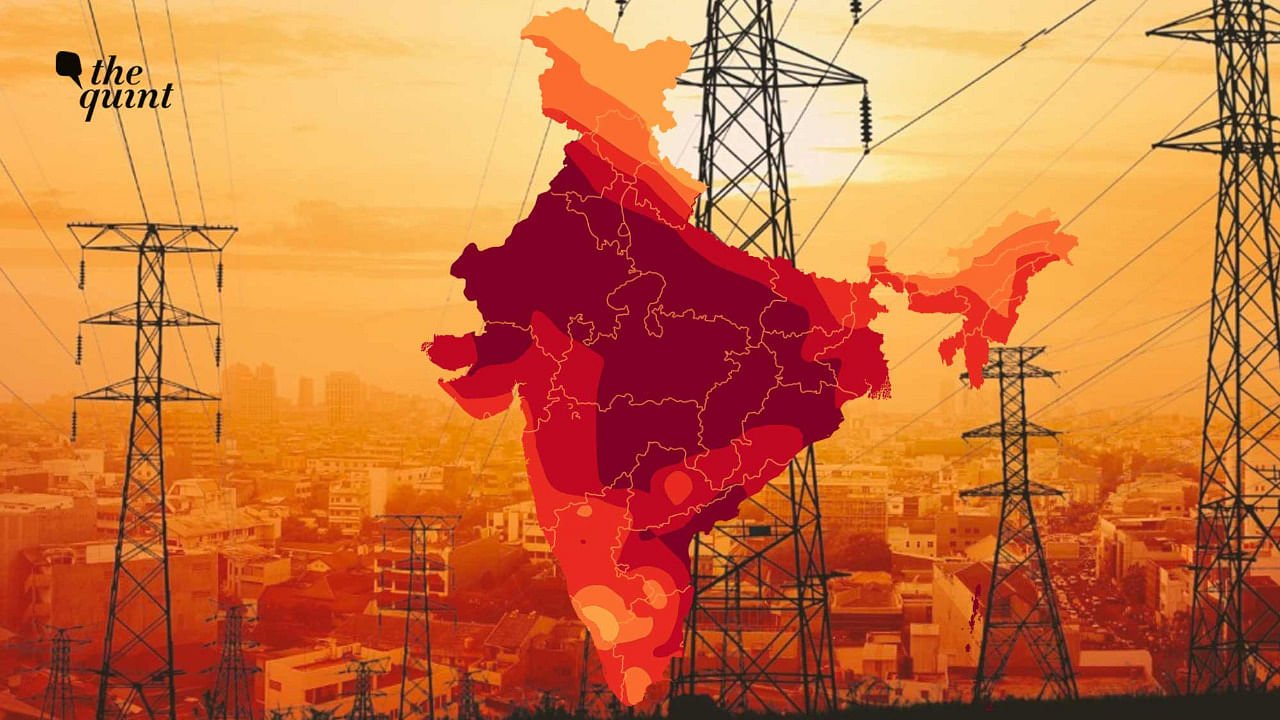
Shortage in Indias Power Supply.

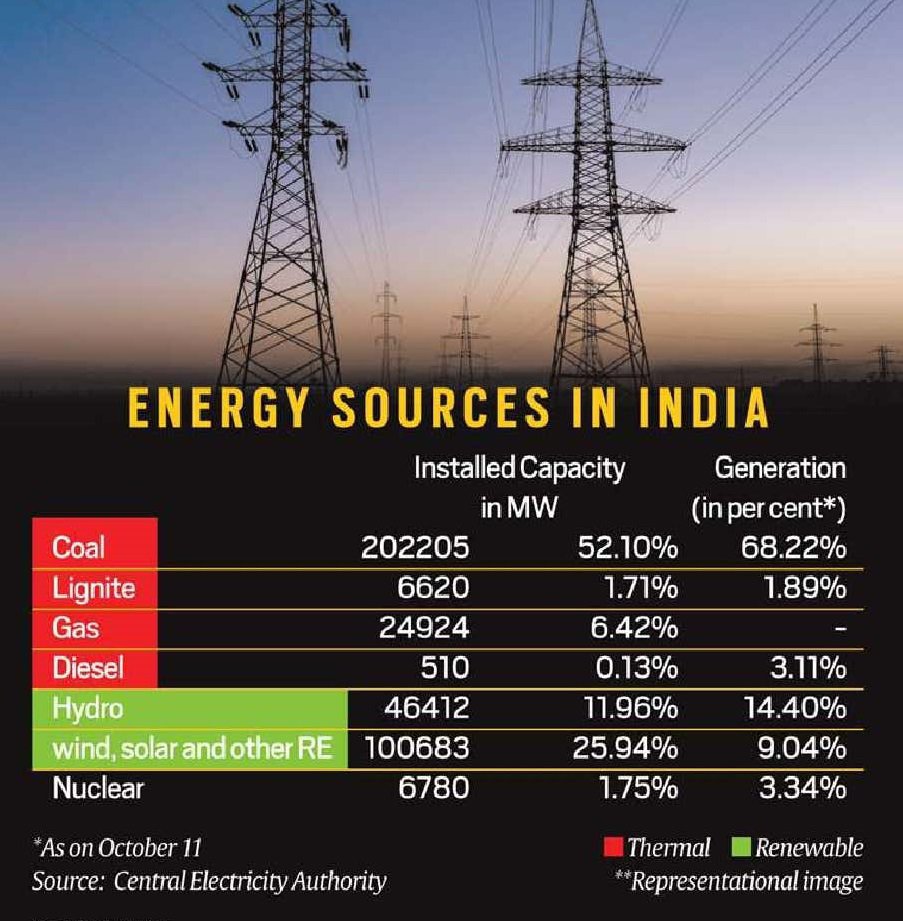
India has the fourth largest coal deposit in the world. It is the second largest fossil fuel producer after China and is home to Coal India, the world’s largest coal mining mine, which accounts for 80% of domestic production. Already allocated coal block mining capacity exceeds expected demand in 2030 by approximately 15% to 20%.


So why are India’s power plants facing coal shortages each year, leading to widespread power outages, exposing parts of the country to darkness and endangering industry?
There are several factors. India has a long time policy of minimizing coal imports. In February 2020, Coal Minister Pralhad Joshi announced that the country would stop importing steam coal from 2023 to 2024.
Mr Joshi said the Ministry of Coal will work with the Ministry of Railways and the Ministry of Shipping to allow Coal India, prisoners and commercial miners to discharge more coal from their supply by 2030. And the coal supply at power plants is running out at an alarming rate. The Department of Energy is currently blaming the decline in coal imports due to the current crisis. In 2018-19, 21.4 million tonnes of coal were imported for mixing, down to 23.8 million tonnes in 2019-20 and 8.3 million tonnes in 2021-22.


Power plant coal inventories have fallen by about 13% since April, reaching pre-summer lows. And for the first time since 2015, Coal India will import fuels used by state-owned and private power companies. The Ministry of Energy said almost all states showed that multiple state bids for coal imports would cause confusion and that the decision was made after calling for centralized procurement by Coal India.
Imported coal costs five times as much as domestic mining, so the center is being pushed back by the state.
Recently, the government has also pressured utilities to increase imports to mix with local coal. Last year, after a two-year break, three tranches of coal auctions were held and nine blocks were successfully awarded.

In September 2021, the Ministry of Coal issued a strict warning to owners of confined coal blocks, stating that their mines should increase production or face restrictions on coal supply by the CIL.
The ministry has discovered that these mines are producing below target.

Of the 43 coal mines outsourced to private companies in the energy, steel and metals sectors, none have met their annual production targets.
On May 6, Coal India announced that it would provide the private sector with 20 closed and abandoned underground coal mines and reopen and operate its revenue sharing model.

According to journalist Shreya Jai the current power supply chain does not seem ready to handle periods of high growth and state discos cannot pay gencos, but the power supply chain starts with state discos and needs repairs. Railroads, on the other hand, are struggling to align the thermal power industry’s demands for faster coal supply with those from other industries. Rakes must be prepared to meet the growing demand for almost all other bulk commodities, from cement and steel to sand and edible grains. By strengthening the value chain of the electric power sector, it is possible to resolve the coal supply-demand mismatch in the long run.

Xiaomi Looking To Supercharge Displays In Its Mid-Range Phones.

According to a new report, Xiaomi is planning to supercharge displays in its mid-range Android phones. The company is looking to bring LTPO displays that go down to 1Hz to its mid-range smartphones.

Xiaomi is planning to supercharge displays in its mid-range smartphones
This will, of course, help with power consumption. Those displays can dynamically raise or lower their refresh rates, from 1Hz to the max they offer, usually 120Hz. Pretty much all LTPO panels we’ve seen go all the way up to 120Hz.

This information comes from Digital Chat Station, a well-known tipster. Xiaomi is seemingly testing such a display in one of its mid-range smartphones. That display supports a 120Hz refresh rate, can go down to 1Hz, and it also offers DC dimming.

Xiaomi has been offering 120Hz displays in its mid-range smartphones for a while now. That includes Redmi and POCO phones as well. So, this move is not surprising, LTPO panels were expected to be offered in some mid-range devices sooner or later.

Xiaomi is a company that tends to offer really well-specced phones for reasonable price tags, so this is their forte. It remains to be seen what phone will break the ice, though.

LTPO displays have been around for quite some time now, and they keep evolving
LTPO displays have been around for quite some time now, and we’re seeing the third-gen of this tech in flagship smartphones these days. Not all LTPO displays can go way down to 1Hz, though, keep that in mind.

Many people value great displays, high refresh rates, and certainly displays that require less power to run at the same time. Some OEMs are still way behind in that regard, but Xiaomi is not one of them.

We also don’t know when will the first mid-range Xiaomi smartphone with such a display see the light of day, nor how much will it cost. Such a phone is now in testing, so it may take Xiaomi a bit of time to deliver it.

Xiaomi Looking To Supercharge Displays In Its Mid-Range Phones.

According to a new report, Xiaomi is planning to supercharge displays in its mid-range Android phones. The company is looking to bring LTPO displays that go down to 1Hz to its mid-range smartphones.

Xiaomi is planning to supercharge displays in its mid-range smartphones
This will, of course, help with power consumption. Those displays can dynamically raise or lower their refresh rates, from 1Hz to the max they offer, usually 120Hz. Pretty much all LTPO panels we’ve seen go all the way up to 120Hz.

This information comes from Digital Chat Station, a well-known tipster. Xiaomi is seemingly testing such a display in one of its mid-range smartphones. That display supports a 120Hz refresh rate, can go down to 1Hz, and it also offers DC dimming.

Xiaomi has been offering 120Hz displays in its mid-range smartphones for a while now. That includes Redmi and POCO phones as well. So, this move is not surprising, LTPO panels were expected to be offered in some mid-range devices sooner or later.

Xiaomi is a company that tends to offer really well-specced phones for reasonable price tags, so this is their forte. It remains to be seen what phone will break the ice, though.

LTPO displays have been around for quite some time now, and they keep evolving
LTPO displays have been around for quite some time now, and we’re seeing the third-gen of this tech in flagship smartphones these days. Not all LTPO displays can go way down to 1Hz, though, keep that in mind.

Many people value great displays, high refresh rates, and certainly displays that require less power to run at the same time. Some OEMs are still way behind in that regard, but Xiaomi is not one of them.

We also don’t know when will the first mid-range Xiaomi smartphone with such a display see the light of day, nor how much will it cost. Such a phone is now in testing, so it may take Xiaomi a bit of time to deliver it.