ORGANIZATION LEADS TO HEALTHY LIFESTYLE

Image credit : Ebuyer. Com https://images.app.goo.gl/BeK2ghi9m82o18kA9

Life organisation frequently resembles a delicate balancing act. As soon as you switch to grab one goal line, such as money, family obligations, or having fun with family and friends, the next one is rushing at you rapidly. Sadly, some pieces are destined to fall: weeks where rest was not prioritised, eating fast food rather than preparing meals, and slacking with limited chores rather than concentrating on substantial work.

Instead of tossing life’s responsibilities in the hopes that you’ll survive to grasp em all, stick to a plan to keep everything in its position.


1. Discipline – Organise your day and make a to do list of tasks and punctually do everything on its set time. You’ll feel content at the end of the day and not guilty when you’re chilling watching your favorite movie and having that slice of pizza because you know you’ve worked for it.
2. Awareness – Presence of mind increases with managing your time because it ultimately helps you manage your life and when that happens your mind is free of stress which allows you to focus more on the details that one otherwise is ignorant about.

3.Clear Vision – For ones particularly ,confused about their purpose or goal, managing a note of things that you enjoy from the one’s that you enjoy less will allow you to decide with more clarity on the areas that you should focus.

4.Unwavering Focus – When you lead a life of discipline your skill to concentrate enhances hugely and allows you to work with stability. You start to work more minutely on things and your end product is always the best

5.productivity – Enhances the quality of your work and you start to enjoy the work you do, all this because you’ve got time to do thing through your organisational skills.

6.Maintaining a list – keeping track of your daily activities ,writing down things and analysing your thoughts helps to understand your life better. Writing down things for each day and accomplishing them will give you clear headstart to your goals and life in general.


7.Prioritise – Allowing some things to fall into place consciously can help make navigating all of life’s obligations efficient. Get used to saying “no” so that you can spend more time for the things that are essential to you. A crucial technique in your suite for organising your life is prioritisation. The only way to get anything done is to prioritise what is most important. You can direct your intense focus on what matters by eliminating what doesn’t advance your best expectations.

8. value your time –
Time is not something you can control. Time is more valuable than money regardless of the lack of tangible value. Like money, time may be wasted or saved. Time is something you can’t earn back,like money. Choose accordingly to expend it and don’t use it all in one space. If you value time you don’t waste it. Instead use it to your advantage.

Source credit : How to organize your life by Fadeke Adegbuyi https://blog.doist.com/organize-your-life/

More like these – https://edupubnews.wordpress.com/2022/07/02/how-to-win-an-argument/ https://edupubnews.wordpress.com/2022/06/27/hustle-culture-a-trend-or-trending-problem-for-the-youth/

Rishabh Pant breaks 72-year-old record to become top foreign wicketkeeper in a Test on English soil

Rishabh Pant set an enormous record on his behalf when he brilliantly batted against England in both innings of the Edgbaston Test match. In the first innings of that game, Pant first played an inning of 146 runs with 111 balls, and then again in the second inning of 86 balls, an inning of 57 runs with the help of 8 fours. After his two innings, Rishabh Pant, as overseas wicketkeeper, became the top run-scorer in a Test match on English soil. Rishabh Pant breaks 72-year-old record Rishabh Pant totaled 203 runs in both innings of the Edgbaston Test match and is now, as overseas wicketkeeper, the highest run-scorer in a Test match on English soil. With that, Rishabh Pant also broke the 72-year-old record. Prior to Rishabh Pant, the record for most runs in a Test match as a foreign wicketkeeper on English soil was held by Clyde Walcott, who scored 182 runs in a Test match in 1950. After MS Dhoni after 11 years, Rishabh Pant has done wonders in England Rishabh Pant became the second Indian wicketkeeper to score in both innings of a Test match on English soil in half a century. Previously in 2011, MS Dhoni had scored a half-century in both innings of the Birmingham Test game, notching 77 runs in the first innings and not retiring 74 in the second innings. After that, Rishabh Pant, now 11, hit 146 and 57 runs again in both innings of the Birmingham Test.

Rishabh Pant breaks 72-year-old record to become top foreign wicketkeeper in a Test on English soil

Rishabh Pant set an enormous record on his behalf when he brilliantly batted against England in both innings of the Edgbaston Test match. In the first innings of that game, Pant first played an inning of 146 runs with 111 balls, and then again in the second inning of 86 balls, an inning of 57 runs with the help of 8 fours. After his two innings, Rishabh Pant, as overseas wicketkeeper, became the top run-scorer in a Test match on English soil. Rishabh Pant breaks 72-year-old record Rishabh Pant totaled 203 runs in both innings of the Edgbaston Test match and is now, as overseas wicketkeeper, the highest run-scorer in a Test match on English soil. With that, Rishabh Pant also broke the 72-year-old record. Prior to Rishabh Pant, the record for most runs in a Test match as a foreign wicketkeeper on English soil was held by Clyde Walcott, who scored 182 runs in a Test match in 1950. After MS Dhoni after 11 years, Rishabh Pant has done wonders in England Rishabh Pant became the second Indian wicketkeeper to score in both innings of a Test match on English soil in half a century. Previously in 2011, MS Dhoni had scored a half-century in both innings of the Birmingham Test game, notching 77 runs in the first innings and not retiring 74 in the second innings. After that, Rishabh Pant, now 11, hit 146 and 57 runs again in both innings of the Birmingham Test.

Rishabh Pant breaks 72-year-old record to become top foreign wicketkeeper in a Test on English soil

Rishabh Pant set an enormous record on his behalf when he brilliantly batted against England in both innings of the Edgbaston Test match. In the first innings of that game, Pant first played an inning of 146 runs with 111 balls, and then again in the second inning of 86 balls, an inning of 57 runs with the help of 8 fours. After his two innings, Rishabh Pant, as overseas wicketkeeper, became the top run-scorer in a Test match on English soil. Rishabh Pant breaks 72-year-old record Rishabh Pant totaled 203 runs in both innings of the Edgbaston Test match and is now, as overseas wicketkeeper, the highest run-scorer in a Test match on English soil. With that, Rishabh Pant also broke the 72-year-old record. Prior to Rishabh Pant, the record for most runs in a Test match as a foreign wicketkeeper on English soil was held by Clyde Walcott, who scored 182 runs in a Test match in 1950. After MS Dhoni after 11 years, Rishabh Pant has done wonders in England Rishabh Pant became the second Indian wicketkeeper to score in both innings of a Test match on English soil in half a century. Previously in 2011, MS Dhoni had scored a half-century in both innings of the Birmingham Test game, notching 77 runs in the first innings and not retiring 74 in the second innings. After that, Rishabh Pant, now 11, hit 146 and 57 runs again in both innings of the Birmingham Test.

how to become a content writer

Hello friends, today we are going to tell you about how to become a content writer, often many people want to become content writers, but people do not know how they can become content writers, due to which many people want to become content writers. The dream is not fulfilled and if you also work in this field, then you need to have some information about it.

Becoming a content writer is not a difficult task, if you have good writing experience, then you will be able to become a content writer in very easy way and you will be able to make a career in this field. You have to do what we will tell you in this article, for this you should read our article carefully.

how to become a content writer


how to become a content writer


If you have good experience in writing skills and language and you are exan part in writing, then the job of a content writer can prove to be very useful for you and in this you can make a very good career according to your experience and your hard work. If you want to learn content writing at an advanced level, then you can do Mass Communication and Journalism course after the 12th.

After doing this course, you become a professional content writer and after that, at you get a very good experience of writing, due to which later you can get the job of writing for any big company or any news agency etc. Also, if you want to do any business by yourself, then after doing this course you can easily do it and you can earn very well from it.

what is content writing


Before you become a content writer, you need to be aware of what content writer and content writing are not just writing articles, for this,  you have to write articles which can be understood well by the people and people get the right information. Giving and giving complete information is content writing and the more people like your article, the more benefit you will get to see.

If you want to move ahead in the field of content writing, then your writing experience is very important for this, the more experience you have, the more you will be able to achieve success in this field and your entire focus should Bonin that people can see your content the most. Like more and for this how you have to write content and what information to put in it, it all depends on you.

how to become a content writer


It is very important for you to be aware of some essential things to become a content writer, only then you can work in this field and what you will have to do for this and how you can work in the field of content writing. We are giving you information about what you will have to do for this.

To become a content writer, first of all you have to pass out of any recognized school, you should try to get good marks in 12th so that this score will prove to be very useful in your later life.

Do Diploma – You have to do a Mass  Communication course to become a content writer after the 12th and only after doing this course you can make a career in this field and course you will be given complete information related to content writing. With this, you can become a very good content writer and in this, you are also given a degree which will help you in getting a job.

Connected with technology – If you want to become a big content writer, then for this you need to know your information people and for this, you can connect with social media and share your information in front of people, so people will start reading your articles and you will make a good place for yourself in the mind of the people, which will help you to become a good content writer in life.

Give the right information – If you become a content writer, then it is most important that you provide correct and complete information to the people, this increases the trust in the mind of the people and people start believing in the information given by you. You should take special care of this thing.

Find trending topics – Trending topics are those which people are more liked or read recently, such as articles related to Diwali on Diwali and articles related to Rakshabandhan on Rakshabandhan in this way, if you write articles, then very little time In this, you can reach your article to most of the people and you can get success in this field quickly.


Career after becoming a content writer


If you become a content writer, then after that you have many different options to make a career in which you can become your best career and we are telling about some very popular work which you can do after becoming a content writer. can.

Working in Media – Recently media house is one such area where ca content writer is most in demand when you become a ca content writer and after that looking for a good job then you should get news.

Jobs are easily available on government agencies, news channels, news websites etc. And you are also given an very good salary in this so that you can make a great career in this field.

Creating your website – Often many content writers want to do their own business, for this, they can create their website, after that, you can put content on your website as per your wish and start earning from it. It is a very good option to earn.

Freelance Content Writer – After learning content writing, you can work for any company etc. Today many people work as Freelance Content writers, for this, you can join Fiverr and on social media, here you will find many companies etc. You get an offer to write content for them and you can work for them.


Content Writer Salary


Often people want to know about its salary before becoming a content writer and many people do not know how much salary can be found in it, so let us tell you that the salary depends on your experience and your writing. Depending on the method, you can be given a salary ranging from Rs 10000 to Rs 35000 in this and depending on which company you work for, how much salary you will get.

Conclusion – In this article, we have given you information about how to become a content writer, we hope that you will find the information given about becoming a content writer useful, if you like the information, then share it with your friends. If you want to ask any kind of question, then you can also tell through comment.

how to become a songwriter for beginners

Hello friends, today we are going to tell you about how to become a songwriter for beginners. This article can prove to be very useful for you, in this, we are going to tell you complete information related to becoming a songwriter.

Recently, the competition in this field has been very high, and due to this it has become very difficult to make a career in this field if you want to make a career as a songwriter, then for this, you have to work hard day and night, only then your chance to become a songwriter. The dream can be fulfilled and to get the information related to becoming a Songwriter, you should read the how to become a songwriter for beginners article carefully.

how to become a songwriter for beginners


how to become a songwriter for beginners


Songwriters work in many different fields including film, television, video games, and drama and make music for their personal use, the more popular the music of a songwriter, the more its demand and value. Increases more and after that, there are many different great career options in front of them.

A music writer has to do many types of work and sometimes when there are big programs etc., they are also hired for live shows, for which the songwriter is paid very well, so people who are dreaming of earning well. They can also come in this field, for this, you need the right guidance in the beginning.

Educational Qualification to become a Song Writer


If you want to become a Song Writer, then you do not need any special educational qualification for this, but if you have graduated in a subject related to music from a recognized university, then it can prove to be very useful for you, for this you can choose the following subject. can do.

A. Hons (Music)

A. (Musicology)

A. (Music Vocal)

A. (Instrumental Music)


The process to become a Song Writer


You have to follow some process to become a Song Writer, about which we are going to tell you if you fulfil these qualifications, then after that you will be able to make your future as a Song Writer, for this you have to do the following things. Have to keep in mind.

Listen to Songs – If you want to become a Songwriter, then you need to listen to songs, the more songs you listen to, the more benefit you will get and by listening to the songs, you will also get to learn a lot from which you will become a better Songwriter.

Learn the language – It is very important for you to know any language in which you are dreaming of becoming a songwriter, if you know that language then only you can write a great song in any language.

Learn the vocabulary of music – keep one thing in mind that you will never be able to write any music without vocabulary, so you need to have the correct knowledge of vocabulary and you will get the number of words, pronunciation, and the meaning of words and importance of words etc. It is necessary to have information.

Learn Ghazal Shayari etc. – If you want to make your music the best, then for this you should also use Ghazal and Shayari etc. By using different types of poetry and ghazals, you will be able to make great music.

Go to the poet’s conference etc. – Whatever you write, it is also necessary to reach the people, for this you can go to the poet’s conference etc., there you can present your music or article, from this you will get to learn a lot and your It will also help to know what is lacking in written music etc.

Write songs on the tune – Often many people think that the song is composed first, after that the tune is set on it, but it is not like that, one thing should be kept in mind that often before recording the song, you have to make a song on it. That’s why you should come to write the song on top of the tune so that your song can match properly with the tune.

Choose the right guide – To be successful in every field, it is very important to have some guide who gives you the right guideline, you will also need the right and experienced guide associated with this field to become a songwriter. You will be able to become a good songwriter only by adopting the methods mentioned by them.

Functions of Song Writer

A Song Writer has to do many different tasks, we are going to tell you about some of the main tasks that a Song Writer has to do during his work, and it is as follows.

Their main task is to compose music, sometimes it is also the musicians who write as well as sing.

The one who is a musician, by composing his music, himself becomes a singer of that music.

They work alone or with their team and they have to operate their team properly.

Sometimes, along with writing music, he also composes the tune of the music which matches his music.

After writing his music, the singer also has to explain well about that music.

These are some of their main tasks, all their work is related to music and it depends on the desire of the songwriter to sing or make music for it.

Song Writer Salary


You are not given any fixed salary for this work, in this money is given according to the amount of work you do and there is a different charge for writing per song and the one who is good and popular songwriter is very high for writing a song. You charge money, so how much money you can earn in this depends on your talent.

Conclusion – In this article, we have given you information about how to become a songwriter for beginners, we hope that you have found the information given by us useful, if you like the information, then do share it on social media and want to ask any kind of question-related to it. So you can also tell us by commenting.

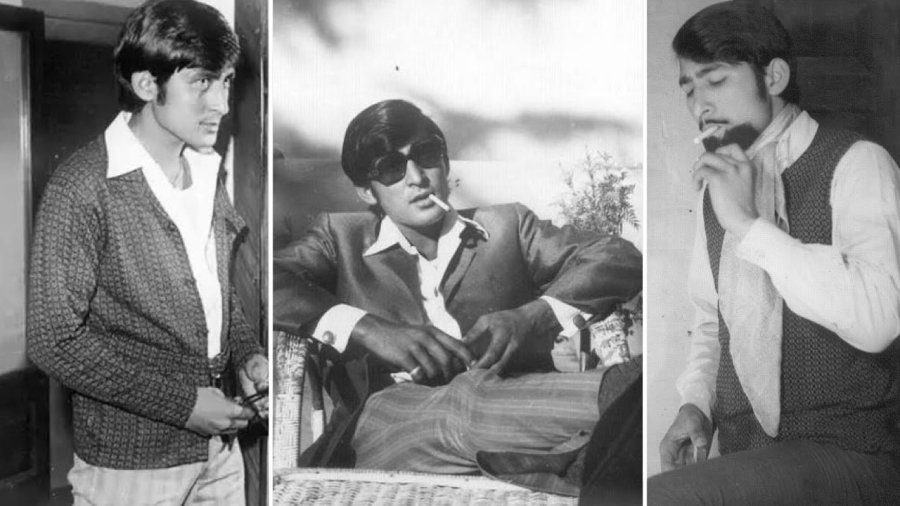
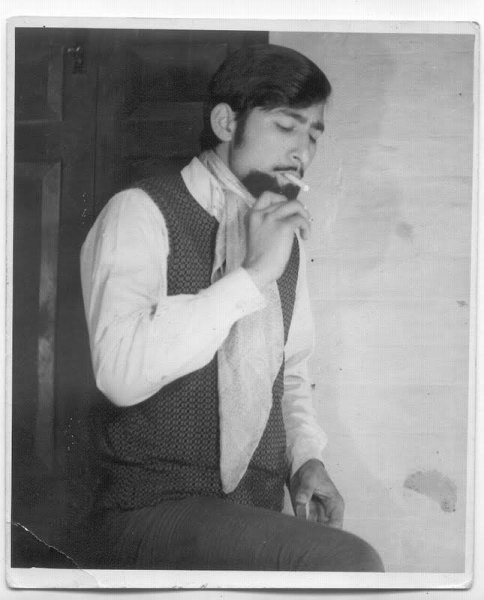
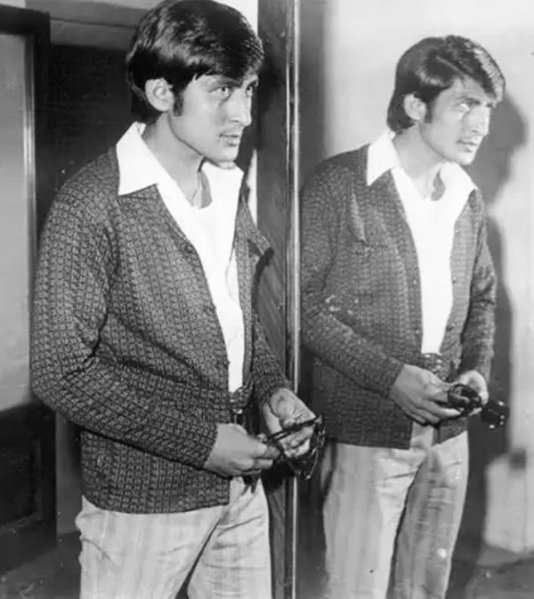
“Black Tiger” Of India Ravindra Kaushik.

Ravindra Kaushik who served in (R&AW) ,famously known as Black Tiger was born in Sri Ganganagar, Rajasthan on 11 April 1952 in a Brahmin family.
Ravindra during his graduation days used to do drama plays and during this time Kaushik displayed his talent at the national level dramatic meet in Lucknow, Uttar Pradesh, which was witnessed by officials from the Research and Analysis Wing. After which he was contacted and offered a job of being an undercover Operative for Research and Analysis Wing in Pakistan.

After agreeing to work for R&AW Kaushik was given extensive training in Delhi for two years. He underwent circumcision so he could pass as a Muslim. He was taught Urdu, given Islamic religious education and acquainted with the topography and other details about Pakistan. Being from Sri Ganganagar, a city near Rajasthan’s border with Punjab, he was well versed in Punjabi, which is widely understood in Punjab and Pakistan as well., India. In 1975, at the age of 23, He was sent to Pakistan.
Kaushik was given the cover name “Nabi Ahmed Shakir” and entered Pakistan in 1975. He was successful in getting admission in Karachi University and from where he completed his LLB. He then joined Pakistan Army as a commissioned officer and eventually promoted to the rank of a major. While living in Pakistan under his cover he married a local girl named Amanat, the daughter of a tailor in one of the army units, and with whom he fathered a boy .

From 1979 to 1983, while working as an officer, he passed on valuable information to R&AW which was of great help to India. He was given the title of ‘Black Tiger’ by India’s then home minister late S. B. Chavan.

In September 1983, R&AW sent a low-level operative, Inyat Masih, to get in touch with Kaushik. However, Masih was caught by Joint Counterintelligence Bureau of Pakistan’s ISI and blew Kaushik’s cover. Kaushik was then captured, tortured for two years at an interrogation center in Sialkot. He was given the death sentence in 1985. His sentence was later commuted to a life term by the Supreme Court of Pakistan. He was kept in various jails in various cities, including Sialkot, Kot Lakhpat and in Mianwali jail for 16 years. He managed to secretly send letters to his family in India, which revealed his poor health condition and the trauma faced by him in Pakistani jails.He also adresses his thoughts on his country and department. In one of his letters he wrote:
“Kya Bharat jaise bade desh ke liye kurbani dene waalon ko yahi milta hai?” (Is this what people who sacrifice their lives for a big country like India get?”
In November 2001, he was caused with pulmonary tuberculosis and heart disease in Central Jail Mianwali in Pakistan.
He served for Research and Analysis Wing from 1975 to 1983.

“Writing about magic is harder than writing about spies because you’re dealing with something that doesn’t really exist.”

-Anthony Horowitz

EMPATHY, TOLERANCE AND COMPASSION TOWARDS WEAKER SECTION

Compassion is understanding or empathy for the suffering of others. Tolerance is respect, acceptance, and appreciation for those whose opinions, practices, race religion, nationality, etc. are different from one’s own. These qualities are very important for an individual living in a society.

India is a multicultural society with high numbers of vulnerable, Disadvantaged, and weaker sections. So efficient delivery of services and addressing their concerns are very important. India with its diverse cultures which traditionally evolved with the modern 21st century makes it unique in its existence. Tolerance and compassion have always played a major role throughout the transition of time for the unity of the nation in diversity. 

Weaker sections like SCs/STs and rural/urban poor are unaware of public policies, subsidies, and public utilities. Weaker sections are marginalized, deprived of justice, and illiterate. They have very low bargaining power and ability to assert their demands so helping them, being compassionate towards them, and supporting them can help them a lot.

The quality of being a compassionate persons is:

  • To understand the needs and the expectations of people.
  • Understanding the needs of marginalized and vulnerable sections of people living in a society.
  • To Undertake a faster approach and measures to address the issues of society.
  • To have an Unbiased approach to the distribution of government facilities.
  • To Make oneself accessible to all citizens and seeking for their feedback to improve better.
  • Respecting affirmative action toward the disadvantaged and implementing them with a positive attitude.

The quality of being a tolerant person is:

  • Freedom from Bigotry, respecting each other choices.
  • It helps in developing qualities like respect towards others, knowledge, openness, and communication between diverse sections of society.
  • Upholding natural rights which are Human rights, Democracy, Multiculturalism, Pluralism etc.
  • Protecting the constitutional principles of Fundamental Rights which forms the basic structure of the constitution.
  • Preventing tendency of intimidation, coercion, oppression, etc.

Poor and marginalized sections of the society that have faced negligence and left empty-handed for such a long duration of time have become afflicted that there is no one to listen to them and solve their issues. They have been dealt with harshness many times, and this behavior has inculcated in them a sense of inferiority and less importance they have stated attributing to themselves.

In a nation empowered and educated section perform better job and pay taxes to run a nation’s economy. This revenue are spent to alleviate poverty by enabling weaker section to become part of mainstream economy. This needs compassion to spend revenue on them and tolerance to provide them all chances for becoming self-sustaining. Hence, we must have tolerance and compassion toward them, as they are not exposed to newer technology, awareness of their own rights, nation’s outlook, programmes for themselves and nation’s expectation from them.

In egalitarian society, tolerance and compassion are two important qualities to be practiced by
every individual and Hence tolerance and compassion towards the weaker sections are
one of the basic qualities any individual should poses.

Equitable distribution of resources and welfare-oriented development should be among the primary goals of democratic government. To develop a country, not just the government but every individual in a society should have qualities like compassion, tolerance, and empathy towards the weaker section of the society.

Communalism

Communalism can be defined as an ideology stating the division of states on the Basis of ethnicity, religion, believes, values etc. The difference of two or more religious, Ethnic and social communities can sometimes produce clashes in the Society.

Communalism is a theory of government in which autonomous play song communities from Confederations. Communalism as a historical method follows the development of communities. It is a political trade in religion and an ideology On which communal politics is based. Communal Violence is conjectural consequence of communal ideology. Communalism has a major effect on the public it tends 2 separate people based on religion, language, territory, and ethnic origins. It leads to communal riots, Curfew situations, and can even cause terrorist activities. A communal Thought always tends to Establish political dominance Over a particular religious community. The country weakens when Political parties are formed and political activities are conducted on communal lines. The most negative impact of Communalism is riots, violence, and homicides. Communalism is a significant social issue in India, Bangladesh, Pakistan, and Sri Lanka.

When it comes to India, communal conflicts between religious communities in the country have Occurred since the period of British colonial rule, occasionally leading to serious inter communal Violence. Communalism is not just unique to South Asia as it can also be found in countries like Africa, America, Asia, Europe, and Australia.

The rising movement of communalism and the coexistence with violence have created a insecurity feeling between religious minorities among them Muslims, Sikhs and Christians in particular has feared of discrimination and confrontation in the coming days.

To prevent damages of the peace and integrity of the nation. It has many ways needed to analyse and debate the problem of communalism and communal violence. It’s became an absolute importance to be define communalism between people and also made equally pertinent to discovery of ‘commu-nal’.

The major factors towards the emergence and growth of communalism in modern India involves:

  • Indian Britishers create a new policy during the Indian colonial is ‘Divide and Rule’ this made division between two countries.
  • The disappointments and frustration among younger generations and aspiring middle class of youths, caused by static agriculture, absence of modern industrial development and inadequate employment opportunities, which is exploited by political opportunists.
  • Hindu and Muslim revivalist movements.
  • A communal and distorted view of Indian history, taught in school and colleges played a major role in rise and growth of communal feelings among the masses.
  • The separatism and isolation between religious communities.
  • The rise of communal and fundamentalist parties.

Factors that responsible for Communal Violence:

  • Politics division – Communalism is often defined as a political perspective that makes use of religious and cultural differences in achieving a political gains.
  • Economy problems – Uneven development, class divisions, poverty and unemployment aggravates insecurity in the common men which make them vulnerable to political manipulation.
  • History of Communal Riots – Probability of recurrence of communal riots in a town where communal riots have already taken place once or twice is stronger than in a town when such riots have never occurred.
  • Politics of Appeasement – Prompted by political considerations, and guided by their vested interests, political parties take decisions which promote communal violence.
  • Isolation and Economic Backwardness of minority religion Community – The failure to adopt the scientific and technological education and thus, insufficient representation in the public service, industry and trade etc has led to the feeling of relative deprivation among minorities.
  • The resurgence of religious economic competition, especially among the lower and middle class strata has fuelled the communal ideology.
  • The lack of Administrative – A weak law and order is one of the causes of communal violence.
  • Psychology problem between communities – The lack of inter-personal trust and mutual understanding between two communities often result in perception of threat, harassment, fear and danger in one community against the members of the other community , which in turn leads to fight, hatred and anger phobia.
  • Role of Media – It is often accused of sensationalism and disseminates rumours as “news” which sometimes resulted into further tension and riots between two rival religious groups.
  • Social media has also emerged as a powerful medium to spread messages relating to communal tension or riot in any part of the country.

Measures to Deal with Communalism

There is need to reform in present criminal justice system, speedy trials and adequate compensation to the victims, may act as deterrent.

Increase in representation of minority community and weaker sections in all wings of law-enforcement, training of forces in human rights, especially in the use of firearms in accordance with UN code of conduct.

Codified guidelines for the administration, specialised training for the police force to handle communal riots and setting up special investigating and prosecuting agencies can help in damping major communal disgruntlement.

Emphasis on value-oriented education with focus on the values of peace, non-violence, compassion, secularism and humanism as well as developing scientific temper (enshrined as a fundamental duty) and rationalism as core values in children both in schools and colleges/universities, can prove vital in preventing communal feelings.

Government can adopt models followed by countries like Malaysia that has developed early-warning indicators to prevent racial clashes.

The Malaysian Ethnic Relations Monitoring System (known by its acronym Mesra) that makes use of a quality of life index (included criteria such as housing, health, income and education) and a perception index to gauge people’s needs and feelings about race relations in their area.

Also the Hong Kong model of combating communalism by setting up a “Race Relation Unit” to promote racial harmony and facilitate integration of ethnic minorities, can be emulated by India.

RRU has established a hotline for complaints and inquiries on racial discrimination. Meanwhile, to create awareness about communal harmony, RRU talks to schools on culture of ethnic minorities and concept of racial discrimination.

Government can encourage and support civil society and NGOs to run projects that help create communal awareness, build stronger community relation and cultivating values of communal harmony in next generation.

There is a need for minority welfare schemes to be launched and implemented efficiently by administration to address the challenges and various forms of discrimination faced by them in jobs, housing and daily life.

A pro-active approach by National Foundation for Communal Harmony (NFCH), the body responsible for promoting communal harmony is needed.

NFCH provides assistance for the physical and psychological rehabilitation of the child victims of communal, caste, ethnic or terrorist violence, besides promoting communal harmony, fraternity and national integration.

A legislation is required to curb the communal violence. Communal Violence (Prevention, Control and Rehabilitation of Victims) Bill, 2005 must be enacted soon.

The enormous scope and changes for transformation due to our new generation and their progressive of the countries. The new generation can give new hopes and changes towards the making of new India which would help to free from all kinds of communal and caste conflicts, prejudices, hatred and discrimination, this may not possible through law but it can help us to have positive efforts of the new generation.

Everything about cancer

Photo by Miguel u00c1. Padriu00f1u00e1n on Pexels.com

Cancer is a group of diseases involving abnormal cell growth with a potential to invade or spread to other parts of the body. There are over a hundred types of cancer that affect humans. In2015, bout 90.5 million people had cancer. About 14.1million new cases occur every year causing 8.8 million deaths. The not common types of cancer in males are lung cancer, prostrate cancer and stomach cancer whereas in females, the most common types are breast cancer, lungs cancer and cervical cancer. In children, acute lymphoblastic leukemia and brain tumors are most common.

Possible symptoms of cancer include a lump ( a compact mass of a substance without a definite shape), abnormal bleeding, prolonged cough, unexplained weight loss, etc. These symptoms may differ according to the type of cancer.

Causes of cancer:

  1. Environmental Factors:
    1. Tobacco: Tobacco in various forms of its usage (smoking, chewing) is the major environmental cause of cancer of lungs, pancreas and kidney.
    2. Alcohol: Excessive intake of alcohol is associated with oesophagal and liver cancer. It is estimated that 3% of all cancer deaths are caused by alcohol.
  2. Dietary factors: These factors are depended on our food consumption. For example, smoked fish is related to stomach cancer, dietary fiber is related to intestinal cancer and high fat is related to breast cancer.
  3. Occupational exposure to chemicals: Exposure to a wide variety of chemicals such as asbestos, arsenic, benzene, chromium, cadmium, etc, through work environment also causes cancer.
  4. Other factors such as unlught, radiation, water pollution and exposure to pesticides are also some causes of cancer.

Prevention of cancer:

  1. Primary prevention:
    1. Control of tobacco and alcohol consumption.
    2. Improving personal hygiene.
    3. Reducing the exposure to radiation.
    4. Protection from occupational exposure to chemicals.
    5. Immunization
    6. Consumption of healthy food
    7. Medical treatment
    8. Education and awareness
  2. Secondary Prevention:
    1. Camcer registration
    2. Early detection of cases
    3. Proper healthcare facility and treatment.

“Freedon from cancer” is now considered as the right of cancer patients.

Coronary Heart Disease (CHD)

Photo by Karolina Grabowska on Pexels.com

Coronoary Heart Disease is defined as “the impairment of heart function due to the inadequate blood flow to the heart.” It causes 25-30% death in industrialized countries. The epidemicity, that is the relative ability to spread from one host to another in a locality, of CHD began at different times in different countries. The countries where the epidemic started early are showing a decline in the number of cases detected but still CHD poses as one of the largest health problems across the globe. CHD was the leading cause of death globally resulting in over 7million deaths. It may affect individuals of any age but becomes more common at progressively at older ages. It is estimated that 60% of the world’s cardiovascular disease occurs in the South Asian subcontinent. Males are at a higher risk of getting affected by CHD than the females.

CHD in India

The pattern of CHD in India is reported as follows:

  • CHD occurs in the population who have attained the age between 51-60 years.
  • Males are affected more than females.
  • Hypertension and diabetes account for about 40% of all the cases.
  • Heavy smoking is also reslonsible for CHD in higher number.

The risk factors that can lead to CHD include smoking, high blood pressure, diabetes, obesity, sedentary lifestyle and stress.

Prevention of CHD:

WHO has recommended the following strategies for the prevention of CHD:

  1. Population strategy:
    1. CHD is primarily a mass disease. The strategy should have a mass approach focusing mainly on the control of underlying risk factors.
    2. Small changes in the risk factor levels can achieve the biggest reduction in mortality.
    3. The population strategy is centered around the areas such as Dietary changes, smoke free society, blood pressure measurement and physical activity.
  2. High risk strategy: By means of simple tests such as blood pressure and serum cholesterol management, it is possible to identify individuals at a special risk.
  3. Secondary prevention: Secondary prevention must be seen s he continuation of primary prevention. The aim of secondary prevention is to prevent the recurrence and progression of CHD.

In a world where health risk factors are present everywhere, we should do our best to avoid falling prey to any kind of health risk.

Origin and Growth of Towns

 Origin of towns: Topographical Features

If a survey is carried out regarding the origin of some of the important existing towns and cities of the world, it can be easily established that any town or city has originated because of certain specific cause. The origin of towns can be broadly classified into two categories, namely, topographical and functional.                       
The topographical features of origin of towns are as follows.
1.    Conditions favorable for industrial units
2.    Hilly areas to achieve the objects of defense
3.    Plain areas useful for business activities
4.    River banks
5.    Sea or ocean fronts
The functional aspects of origin of towns are as follows.
1.    Education
2.    Health resorts
3.    Political
4.    Community
Growth of Town
The towns grow during passage of time in number of ways and various forces which contribute to the overall development of a town are transportation facilities, industries, safety for public, proximity of agricultural lands, availability of electric power, political importance, etc. Some of the reasons why the people would like to stay in urban areas can be enumerated as follows.
  • It is quite likely that people have often found to stay in groups or societies to safeguard themselves from dangers of theft.
  • The humans by nature are social animal and they get much satisfaction of living their life in the company of friends and community.
  •  An urban man can develop contacts and make friends with like-minded people having common interest.
  • The urban dwellers can maintain a very high degree of privacy.
  • The urban are provide with reliable water supply, good market for business, large amount of opportunities to succeed, etc.

Also the facilities of transport and communication increase the population and leads to the growth of towns. The means of transport may take up the following forms:
  •  Aerial ports : In some cases, the airports plays an important role in the growth of a town.
  • Railways : If the town is connected with railways, there will be increase of passengers and goods traffic even from long distances.
  • Roadways : The neighbouring area is connected with the town and it leads to overall expansion of trade and industry.
  • Waterways : If facilities of waterways are available, the town can grow as a harbour with possibility of foreign trade and business.

The above mentioned means of transport have led to the horizontal growth of town. But the availability of mechanical lifts, escalators and elevators has made it possible to have vertical growth of town in the form of skyscrapers.
Types of growth of towns
Types of Growth of Town
The growth of towns and cities can be studied in the following two ways:
     I) Growth according to origin
     II) Growth according to direction 
1) Growth According to Origin
The growth of towns and cities according to the origin can be divided in two categories.
A) Natural Growth
Most of the towns in the past have grown in a natural way, that is, the development of the town as such has taken place without any future planning. The provisions of various essential amenities such as road system, parks, playgrounds, schools, industrial units, commercial centres, hospitals, cinemas, etc., are made in an irregular way without consideration for future expansion of the town. The natural growth of a town may be in the form of following four types.
a)      Concentric spread
b)      Ribbon development
c)      Satellite growth
d)     Scattered growth

a) Concentric Spread
  •  It is the natural tendency of the people to be as near as possible to town or city, therefore the town develops in form of concentric rings with nucleus as town.
  • These type of growth create many complicated problems such as traffic congestion, narrow streets,concentration of population, improper housing, etc.
  • The town growth is represented by a series of concentric circles or rings.
  • The first zone represents central business like commercial and social life of the town.
  • The second zone represents low-income housing, better-class residences and high-class residences are subsequently formed.
  • The idea of concentric spread is based on the fact that similar or functionally related activities will be located at the same distance from the centre of an urban area.

Concentric spread
b) Ribbon Development
  • It has been observed that because of improvement of road surface and growth of motor traffic, everyone build or occupy the places as near as possible to the main road.
  • The building activity therefore expands in a natural way along the sides of main road and long fingers or ribbons of houses, factories, shops, etc., develop as show in figure below.

 Ribbon development
Disadvantages
  •  As houses extend in a long strip or ribbon, there is increase in cost of utility services such as water supply and electricity, postal deliveries, etc.
  • It results into wastage of available resources.
  • It lacks social life as ribbon development causes scatter of community.
  • The future improvement becomes costly and difficult, in some place it becomes impossible.
  • The interior place are left undeveloped which results in wastage of valuable land.
  • It causes accidents and traffic delays (jams) due to pedestrians on the main road.
  • The traffic capacity and efficiency of main road are reduced.
  • The ribbon development spoils the countryside view as it becomes non-visible at least for road users.
  • The problem of ribbon development is complex involving social-economic, political, technical and legal measures for its solution.

c) Satellite Growth
When a town reaches a certain size, satellite growth is bound to take place. The satellite town is mainly due to the metropolis and it indicate a body under the influence of a more powerful body but possessing its own identity. Development of satellite towns around the parent city is shown in the figure below.

Satellite growth
The features of a satellite town are as follows.
  •  It has its own local government and corporate life.
  • It is a town in the full sense but it depends to a certain extent upon a nearby large town or city.
  • It is connected to the parent city by local trains, buses, etc. in such a way the people can reach to the parent city easily.
  • It is free to decide its economic, social and cultural activities.
  • It is generally situated beyond the green belt of the parent city.
  • It is mainly residential area having only local shops, schools for children, etc.
  • No industries are permitted, the people will have to depend on the parent city for employment opportunities.
  • It is neither a village nor a suburb.
  • It need not have zoning regulations.
  • Its size and development are controlled in such a way that it does not affect the parent town in future.
  • The satellite may even be considered to be the part of market for some goods and services from the parent town.
  • The workers living in particular satellite may belong to the labour force of a certain industry. It gives a wider choice to the employers of such industries for finding the best man for the job.

Disadvantages
  • The main disadvantage of satellite growth is the necessity of the long journey to work. (It may be long journey in distance does not necessarily mean a long journey in time due to efficient modes of transport and traffic).
  • Satellite growth may be deprived of entertainment and cultural activity.
  • It is responsible for preventing the development of a community spirit.
  • Lack of community centres and halls.

d) Scattered Growth
  • The growth of the town takes place in very irregular way.
  • It results in traffic congestion.
  • Encroachment of industries on residential areas.
  • Development of slums.
  • Lack of parks and various other problems which prove to be too difficult to be solved in future.

B) Planned Growth
In case of a planned growth, a town develops in a pre-determined line as conceived by the town planner. The overall growth of the town is controlled by the enforcement of suitable rules and regulations. There is rational distribution of various blocks such as residential, industrial, commercial, etc.
The provision of various amenities such as widths of streets, drainage lines, water supply lines, parks, playgrounds, etc. is made to meet with the future requirements. The modern concepts of town planning can very well be seen and appreciated in some of the recent new towns in many parts of the world.
 2) Growth According to Direction
With respect to direction, the growth of towns and cities can take place in the following two ways.
1. Horizontal Growth
The town expands and develops horizontally in all directions. It is clear that such a growth will be possible at places where land is available in plenty at nominal cost.
Advantages
  • In general, there will be saving in cost as the buildings will usually consist of two or three floors.
  • It does not require the service of high technical personnel.
  • Maximum possible use of the natural light in the buildings.
  • The density of the population can be restricted.
  • There is economy of floor space as the provision of columns, lifts, etc. will not be required.
  • The surrounding marginal space can be utilized for developing gardens.

Disadvantages
  •  It uses more land and hence, it will prove to be uneconomical where the land value are very high.
  • The foundation cost per unit area will be more.
  • There will be absence of group living.

2. Vertical Growth
The buildings of the town are designed and developed as multistoried flats. It is quite evident that such a growth will be possible at places where land is costly.
Advantages
  •  A sense of group living and unity develops as many families live in same building.
  • The foundation cost will be distributed between all the floors, therefore the foundation cost per unit area will be in the reasonable limit.
  • For floor above certain height, the natural sceneries such as sea view, river view, etc. can be enjoyed in a better way.
  • It will be possible to make maximum use of the modern technology such as fire-proofing, sound-proofing, heat insulation, air-conditioning, high speed elevators, etc.
  • There will be considerable saving in land and hence, it will prove to be economical where land values are very high.
  • There will be economy in construction cost as the buildings will be designed as framed structures with repetition of a typical floor plan at each floor level.

 Disadvantages
  • In case of natural calamities such as earthquakes or fire, it will be difficult for the inhabitants (dwellers) of the upper floors to escape safely.
  • The density of population will be more.
  • The design of flats will be stereo-typed and there is no scope for personal likes or dislikes.
  • The evils of group living will have to be tolerated.
  • The failure of lift, pumps, etc. will cause great inconvenience.
  • The people staying at upper floors will be deprived of natural living near the ground level.
  • There will be some wastage of floor space as lifts, supporting columns, etc. will have to be provided.

Types Town Planning

 To maintain the continuity in the planning process, the following five forms of planning are to be considered.

1.    Local planning
2.    Country planning
3.    Regional planning
4.    National planning
5.    International planning
1) Local Planning
  • The development plan of a city or town is prepared by keeping in view the local conditions.
  • It aims at proper distribution of population densities, regulation of traffic, location of shopping and recreational centres, provision of green belt, suitable division of area in various zones, etc.
  • Local planning is influenced by economic conditions and finances available for the development of the town.

2) Country Planning
  • The area surrounding a town cannot be allowed to develop in a haphazard way.
  • Generally, a town is surrounded by villages and rural planning becomes necessary for proper functioning of the town.
  • The surrounding village is linked up with suitable transport system in country planning.
  • Village industries such as dairy, poultry farming, basket and rope making, weaving, etc. are encouraged.
  • A proper balance between the agricultural and industry should be maintained without disturbing the character of rural area.
  • Country planning and town planning are related to each other and cannot be treated as two separate entities. 

3) Regional Planning
  • It includes proposals in a region for the distribution of population, industry, transport facility, rural services, etc.
  • The regional planning helps in controlling and reshaping the growth of major towns in the region.
  • In general, a region may be defined as an area within which interaction is more intense than its interaction with other areas and the modern practice is to include the following in regional planning.

1.      Agricultural regions.
2.      Industrial areas.
3.      Large hydro-electric power stations.
4.      Resort and recreational areas.
5.      Suburban zones of cities.
The regional planning is necessary for the following reasons.
  • To ensure profitable utilization of the resources at minimum expense for maximum benefit.
  • It gives the information regarding the economic functions.
  • It gives the local planners knowledge of relationship between the areas of the region, which will help them in planning.
  • It allows planned and harmonious development of the national economy.
  • It reveals new town planning and building principles.
  • It serves as a link of co-operation and co-ordination between the areas of the region.

4) National Planning
  • It suggests the setting up of the planning procedure on a national level.
  • By proper and careful national planning, the resources of national importance like railways, irrigation projects, heavy industries, hydro-electric works, etc. can be utilized in the best possible manner.
  • Developments is from top level to bottom level, that is international level to local level or vice-versa.
  • Developments in terms of various economic sectors such as agricultural, fishing, forestry, mining, quarrying, etc.
  • Developments in terms of various social sectors such as clothing, housing, food, education, health, employment, recreation, etc.

 5) International Planning
  • With the establishment of United Nations Organization (UNO), the international planning has come into existence and efforts are made at international level to promote goodwill and co-operation between different countries of the world.
  • The various agencies appointed by UNO conduct surveys in various fields of human life such as education, health, housing, food, etc. such surveys helps in finding out remedies and solutions of complicated problems at an international level.

What is Industrialization

 Industrialization is the process by which an economy is transformed from primarily agricultural to one based on the manufacturing of goods. Individual manual labour is often replaced by mechanized mass production and craftsmen are replaced by assembly lines. Characteristics of industrialization include economic growth, more efficient division of labour, and the use of technological innovation to solve problems as opposed to dependency on conditions outside human control.


Industrialisation is the process of manufacturing consumer goods and capital goods and of building infrastructure in order to provide goods and services to both individuals and businesses. Proto industrialization is the phase before industrialisation. Problems with proto industrialization are expensive machines, high maintenance cost and uncertainty in performance. India was one of the leading producers of cotton textiles. European companies gained power and started to control Indian textiles. They introduced British machine made  goods in Indian markets. The traditional textile industry of India went under de-industrialization during British rule. There was political changes, decline of feudalism, growth of democracy and rise of capitalist class. Nationalism got stimulated in colonies. Nonetheless, modernization of India’s textile industry took place during the early 19thcentury; the first textile mill in the country was established at Fort Gloster near Calcutta in 1818. First cotton mill was started in Bombay in 1854, cotton mills in Ahmedabad     (1861) and spinning mills in Madras (1874).

Industrialization influences the four major sectors of the economy: primary, secondary, tertiary, and quaternary. The primary sector deals with the extraction and production of raw materials, and entails farming and mining. The secondary sector takes the materials gained from the primary sector and transforms the raw materials into final goods such as textiles and automobiles. The tertiary sector involves the provision of services such as banking, finance, and cinema to consumers and businesses. Last of all, the quaternary sector usually appears the latest in a country’s modernization process. It entails technological research and education.

Causes of Industrialization

·         Natural resources

·         Growing population

·         Improved transportation

·         High immigration

·         New inventions

·        Investment capital

The industrial revolution was a period when new sources of energy, such as coal and steam, were used to power new machines designed to reduce human labor and increase production. The move to a more industrial society would forever change the face of labor.

Origin of the Industrial Revolution

The first Industrial Revolution began in Great Britain after 1750. There were several factors that combined to make Great Britain an ideal place for industrialization. First, the agricultural revolution of the 18th century created a favourable climate for industrialization.

By increasing food production, the British population could be fed at lower prices with less effort than ever before. The surplus of food meant that British families could use the money they saved to purchase manufactured goods. The population increase in Britain and the exodus of farmers from rural to urban areas in search of wage-labour created a ready pool of workers for the new industries.

Britain had financial institutions in place, such as a central bank, to finance new factories. The profits Britain had enjoyed due to booming cotton and trade industries allowed investors to support the construction of factories.

British entrepreneurs interested in taking risks to make profits were leading the charge of industrialization. The English revolutions of the 17th century had fostered a spirit of economic prosperity. Early industrial entrepreneurs were willing to take risks on the chance that they would reap financial rewards later.

Britain had a vast supply of mineral resources used to run industrial machines, such as coal. Since Britain is a relatively small country, these resources could be transported quickly and at a reasonable cost. The British government passed laws that protected private property and placed few restrictions on private business owners. Britain’s merchant marine could transport goods to foreign markets. Lastly, Great Britain’s colonial empire created a ready supply of consumers to purchase its manufactured goods.

Environmental Disadvantages

The biggest negative effect of industrialization is on the environment. Pollution is the most common by-product of industrialization. However, the degradation of ecological systems, global warming, greenhouse gas emissions and the adverse effect on human health have garnered widespread concern. Because many industrialized companies are often not forced to pay damages for the environmental harm they cause, they tend to impose a major negative externality on human society in the form of deforestation, extinction of species, widespread pollution, and excessive waste. In the United States, Congress appointed the Environmental Protection Agency (EPA) to issue limits for toxic air emissions, rules to phase-out ozone-depleting chemicals and their proper disposal, and other major tasks to reduce environmental risks.

Financial Disadvantages

Financially, industrialization results in a wide gap between the rich and poor due to a division of labour and capital. Those who own capital tend to accumulate excessive profits derived from their economic activities, resulting in a high disparity of income and wealth.

Social Disadvantages

Industrialization typically leads to the migration of workers to cities, automation, and repetitive tasks. Due to these factors, factory workers tend to lose their individuality, have limited job satisfaction, and feel alienated. There can also be health issues, brought on by dangerous working conditions or simply factors inherent in the working conditions, such as noise and dirt.

Rapid urbanization brought on by industrialization typically leads to the general deterioration of worker’s quality of life and many other problems for society, such as crime, stress and psychological disorders. Long working hours usually lead to poor nutrition and consumption of quick and low-quality foods, resulting in increased incidences of diseases, such as diabetes, heart attack, and strokes.

Effects of Urbanization 

The urban centres in India are experiencing rapid growth of population, particularly in the post-independence era. The primary reason for population growth is industrial progress. The industrial progress has resulted in the increase of population density in the urban areas and integration of this population is creating pressure on urban land. Due to industrialization, new factories, offices or service centres come up, which in turn leads to housing complexes, market areas, recreational centres, and so on, resulting in congestion and overcrowding.

Whatever the measures adopted, there is a dearth of space in the urban areas. Therefore, many cities are expanding beyond their statutory limit that is for every urban area growth has spilled beyond the city boundary. This situation is expected to bring many undesirable changes in the land-use pattern within the city as well as its surrounding areas. But not enough is known about the magnitude of these land-use changes and the relationship of these changes to population growth.

The rapid growth of population and the process of urbanization have resulted in an increasing demand for land in urban settlements. The prime factors of this increase in demand are also the population growth and the related requirements of urban life, such as the development of transport and communication and other infrastructure facilities. The pattern of city growth and its spatial structure is determined by various historical, economic, social and ecological forces that influence urban land use.

The improper use of urban land poses serious problems in all countries simply because the supply of surplus land is limited and subject to many competing claims. Dissatisfaction with the emerging urban forms is almost universal. Therefore, proper planning of urban land use is the most essential for an orderly and efficient growth of urban areas. Planning has to be done in such a way that the utmost available land is utilized.

Sometimes, there arises a mismatch between the demand and supply of land. This mismatch between the supply and demand of land leads to the degradation of environmentally fragile land, occupation of hazard-prone areas, and loss of cultural resources, open space and prime agricultural land. Within the existing built-up areas of cities, uncontrolled growth of population and inadequate infrastructure may cause irre­versible losses of cultural resources and open space. Poorly managed development may also cause excessive urban sprawl and negative impact on air quality, energy consumption and aesthetic quality. The conversion of prime agricultural land to urban use may increase the costs for locating, storing and purchasing food.

In India, the expansion of urban population has resulted into a rapid rise in the demand for housing, land for industry and commerce, and public buildings and infrastructure. Broadly speaking, the densities in cities and towns in India have increased during the last two decades, though in some instances this increase has been concealed by the extensions of their areas. For example, the density per square mile in Mumbai was 25,579 per square mile in 1951, but now, its density in 2001 is 119,676 per square mile. As a result, many competing claims for urban land and the consequent rise in land prices can be noticed.

Increase in population also affects the supply of basic infrastructure facilities. For instance in 1951, almost 80 per cent of the 185 towns of 20,000, and cities of 50,000 or more population in India had public electricity supply. The proportion of the supply of electricity has now declined very fast with the population above 20,000 for towns and 50,000 for cities. Similarly during 1950 to 1951, 128 towns with a population of 50,000 and over 60 towns with populations between 30,000 and 50,000 and 210 towns with smaller populations had protected water supply.

Moreover, about 80% of the urban population was estimated to be without sewage facilities. The water supply facilities are available in these cities only to the population that resides in the areas laid out during 1950 to 1951. The extended areas that have come up due to increase in population in these towns and cities still lack these basic facilities.

The percentage distribution of households by floor space per person and population size group of towns can be explained as follows. The proportion of households with a floor space up to 100 square feet per person was 47% in towns below 15,000; 39% in towns of 15,000-50,000: 47% in towns 50,000-1,00,000; 35% in towns above 1,00,000; and 53% in the four big cities: and the All-India urban population is 46%.

Take for instance, Mumbai and Kolkata, two of the big four cities. According to the surveys of these cities, the proportion of the households with a floor space up to 100 square feet per person was 93% in Mumbai while 63% of the multi-member households in Kolkata had only up to 40 square feet room space per person. In other cities too, the surveys have revealed much more overcrowding.

Urban environments of today are characterized by areas that contain many acres of hard surfaces like buildings, streets, etc. Natural vegetation such as forests and fields slow rainwater or other running water down, allowing it to soak into the surface. In contrast, streets, roofs, parking lots and manicured lawns all provide hard, impervious, surfaces that prohibit rain from soaking into the ground. Since the excess rain water or running water cannot soak into the ground, it accumulates and rushes into storm sewers and waterways.

The water that travels into storm sewers does not get treated at the local wastewater treatment plant. But urban dwellers do not know this fact; therefore, they dump or dispose pollutants in these storm drains. Thus, storm drains carry large amount of pollution away from urbanized areas mixed with the excess storm water.

Street litter, pet and yard waste, motor oil, anti-freeze, household hazardous wastes, and paint are just a few of the pollutants that find their way into storm drains. This water travels from storm drains into local streams, ponds and lakes, and ultimately into local streams and rivers.

The greatest threat to loss in soil resources in urban areas is during construction activities. Later, if good storm water management was not designed into the develop­ment, flooding and stream bank erosion become a problem. With the development site cleared of all vegetation, the area is now prone to soil losses in excess of 70 tons per acre.

Sites started and then abandoned also create soil erosion problems. Each home site not protected from erosion can lose one or two dump truck loads of soil. Offsite damages can be enormous. clogged drainage ways, silt-laden streams, reservoirs filled with sediment, damage to the adjacent landowners, all with environmental and financial costs.

As more homes, shopping centres and roads are built, more water runs off the land, and faster. Areas once safe from flooding are now prone to flooding. Gently flowing backyard streams now become a cancer under cutting soil from homes. Urbanization also causes pressure on the land as the secondary effects. For example, the quarrying of sand and mineral aggregates for the construction of urban dwellings represents about 20% of the total land lost to urbanization.