What is Migration


Human migration is the movement by people from one place to another with the intentions of settling, permanently or temporarily in a new location. The movement is often over long distances and from one country to another, but internal migration is also possible, this is the dominant form globally.

People have always migrated to improve their lives. Today, movements from developing countries to other parts of the world are of intense interest to many policymakers, yet relatively little is known about the impacts of labour mobility on the people who move and their home societies.

Causes of Migration

Push Factors

The push factors refer to the poor economic conditions and the resultant economic misery or lack of opportunities for advancement which push the people out of region in search of better opportunists. Thus, the push factors compel the people to leave the place.

  • Drought (A single drought can mean disaster for communities whose lives and livelihoods rely on regular, successful harvests)
  • Hurricanes and Flooding
  • Earthquakes
  • Disease
  • War and Conflict
  • Poverty
  • Unemployment
  • Lack of safety
  • Lack of services

Pull Factors

Pull factors are those which encourage migration of people to an area where better economic and employment opportunities, facilities and amenities of life are available. These facilities attract the people to these areas. There is usually an exodus of population to the cities where rapid expansion of industries and commerce takes place.

  • Better economic opportunities
  • More jobs
  • Promise of a better life
  • Safer atmosphere
  • Fertile land
  • Greater wealth
  • Less risks of natural hazards
  • Political security
  • Better service provision

There are two basic types of migration studied by demographers.

Internal Migration

This refers to a change of residence within national boundaries, such as between states, provinces, cities, or municipalities. It includes urban to urban, urban to rural, rural to rural and rural to urban migrations.

International Migration

This refers to change of residence over national boundaries.

Impacts of Migration

Migration is becoming a very important subject for the life of cities. Many opportunities and attraction of big cities pull large numbers of people to big cities. Migration can have positive as well as negative effects on the life of the migrants.

Positive Impacts

  • Unemployment is reduced and people get better job opportunities.
  • Migration helps in improving the quality of life of people.
  • It helps to improve social life of people as they learn about new culture, customs, and languages which help to improve brotherhood among people.
  • Migration of skilled workers leads to a greater economic growth of the region.
  • Children get better opportunities for higher education.
  • The population density is reduced and the birth rate decreases.

Negative Impacts

  • The loss of a person from rural areas, impact on the level of output and development of rural areas.
  • The influx of workers in urban areas increases competition for the job, houses, school facilities etc.
  • Having large population puts too much pressure on natural resources, amenities and services.
  • It is difficult for a villager to survive in urban areas because in urban areas there is no natural environment and pure air. They have to pay for each and everything.
  • Migration changes the population of a place, therefore, the distribution of the population is uneven.
  • Many migrants are completely illiterate and uneducated, therefore, they are not only unfit for most jobs, but also lack basic knowledge and life skills.
  • Poverty makes them unable to live a normal and healthy life.
  • Children growing up in poverty have no access to proper nutrition, education or health.
  • Migration increased the slum areas in cities which increase many problems such as unhygienic conditions, crime, pollution etc.
  • Sometimes migrants are exploited.
  • Migration is one of the main causes of increasing nuclear family where children grow up without a wider family circle.

The cruelty and torture of Animals must be stopped: Salute to PETA

The bonding between humans and pets is always something that is very close to one’s heart and gives joy to both parties all the time. So many organizations and human beings have been doing different types of welfare service activities for animals. On the other hand, some people and some business organizations awfully kill animals to make jackets, woollen clothes, etc. Regarding foods, it may be mentioned that many in the world eat the meat of animals and birds. The choice of food habit is personal and I have observed many only eat fish, many do not eat beef, many do not eat pork, etc. But many so-called ‘human beings’ for economic reasons (profit motive) torture the animals awfully and kill them. In this regard, an organization known as PETA has been doing excellent work by highlighting cruelty towards animals and I sometimes become disturbed by watching the cruel videos and reading the news shared with me by PETA which are very heart-wrenching. Sometimes I feel all human beings are not kind enough towards the animal and these a few are only name sake human beings. A few cases I will highlight for the benefit of readers. Before that, I wish to mention PETA which in full form stands for People for the Ethical Treatment of Animals (PETA) is the largest animal rights organization in the world, and PETA entities have more than 9 million members and supporters globally.

“PETA opposes speciesism (meaning discrimination based on species), a human-supremacist worldview, and focuses its attention on the four areas in which the largest numbers of animals suffer the most intensely for the longest periods of time: in laboratories, in the food industry, in the clothing trade, and in the entertainment business. We also work on various other issues, including the cruel killing of rodents, birds, and other animals who are often considered “pests” as well as cruelty to domesticated animals.

PETA works through public education, investigative news gathering and reporting, research, animal rescue, legislation, special events, celebrity involvement, and protest campaigns” (www.peta.org/about-peta).  PETA has shared the following information with me which I am simply highlighting so full credit goes to PETA and the source is email PETAUKInfo (dated 30/6/22).

 “Terrified dogs cower and whimper as they watch a worker drag away a yelping dog, bludgeon her, cut her throat, and strip off her skin. Dogs, cats, and other individuals are being violently killed before their skin is stolen and turned into clothing or accessories.

PETA is working to stop cruelty and transform the fashion industry:

Thousands of kind people are swearing off leather after viewing PETA UK’s eye-opening exposés revealing the horrors of live export, crude slaughter, and the hideous facilities in China where dogs are skinned for work gloves or leather trinkets. We can do more to protect cows, sheep, dogs, and other animals, but we need your support.

A growing number of iconic brands are joining the ranks of Karl Lagerfeld, Chanel, Calvin Klein, and Tommy Hilfiger by dropping exotic skins – preventing reptiles from languishing in putrid pools before workers bash in their heads or scramble their brains. PETA entities are seizing every opportunity to ramp up pressure on Louis Vuitton and Hermès, too. Any amount you can give before midnight will help keep the momentum going.

After casting a spotlight on the suffering of alpacas, sheep, and goats who are hit, kicked, pinned down, and even knelt on at shearing operations, we’re encouraging massive global retailers to cut ties with cruelty and empowering consumers to leave violence out of their wardrobes”. 

Another piece of information received from PETA is “The use of animals in cosmetics tests is banned in the European Union, but as a result of an apparently erroneous interpretation of the law, rabbits and other animals still endure pain and torment in laboratory experiments – blinded, poisoned, or dying in fear and pain for the sake of a can of hairspray or a bottle of sunscreen”. And the way fur from Angora rabbit is taken out from a live rabbit is unbelievable. The way they scream sometimes I feel the person is not a human being simply a devil soul. So like PETA, I also appeal to all please do not wear Angora woolen dresses.

I feel cruelty towards animals should be stopped because only for the benefit of human beings that too business interests animals are awfully tortured and left for dead.

The cruelty and torture of Animals must be stopped: Salute to  PETA 

The bonding between humans and pets is always something that is very close to one’s heart and gives joy to both parties all the time. So many organizations and human beings have been doing different types of welfare service activities for animals. On the other hand, some people and some business organizations awfully kill animals to make jackets, woollen clothes, etc. Regarding foods, it may be mentioned that many in the world eat the meat of animals and birds. The choice of food habit is personal and I have observed many only eat fish, many do not eat beef, many do not eat pork, etc. But many so-called ‘human beings’ for economic reasons (profit motive) torture the animals awfully and kill them. In this regard, an organization known as PETA has been doing excellent work by highlighting cruelty towards animals and I sometimes become disturbed by watching the cruel videos and reading the news shared with me by PETA which are very heart-wrenching. Sometimes I feel all human beings are not kind enough towards the animal and these a few are only name sake human beings. A few cases I will highlight for the benefit of readers. Before that, I wish to mention PETA which in full form stands for People for the Ethical Treatment of Animals (PETA) is the largest animal rights organization in the world, and PETA entities have more than 9 million members and supporters globally.

“PETA opposes speciesism (meaning discrimination based on species), a human-supremacist worldview, and focuses its attention on the four areas in which the largest numbers of animals suffer the most intensely for the longest periods of time: in laboratories, in the food industry, in the clothing trade, and in the entertainment business. We also work on various other issues, including the cruel killing of rodents, birds, and other animals who are often considered “pests” as well as cruelty to domesticated animals.

PETA works through public education, investigative news gathering and reporting, research, animal rescue, legislation, special events, celebrity involvement, and protest campaigns” (www.peta.org/about-peta).  PETA has shared the following information with me which I am simply highlighting so full credit goes to PETA and the source is email PETAUKInfo <info@peta.org.uk> (dated 30/6/22).

 “Terrified dogs cower and whimper as they watch a worker drag away a yelping dog, bludgeon her, cut her throat, and strip off her skin. Dogs, cats, and other individuals are being violently killed before their skin is stolen and turned into clothing or accessories.

PETA is working to stop cruelty and transform the fashion industry:

Thousands of kind people are swearing off leather after viewing PETA UK’s eye-opening exposés revealing the horrors of live export, crude slaughter, and the hideous facilities in China where dogs are skinned for work gloves or leather trinkets. We can do more to protect cows, sheep, dogs, and other animals, but we need your support.

A growing number of iconic brands are joining the ranks of Karl Lagerfeld, Chanel, Calvin Klein, and Tommy Hilfiger by dropping exotic skins – preventing reptiles from languishing in putrid pools before workers bash in their heads or scramble their brains. PETA entities are seizing every opportunity to ramp up pressure on Louis Vuitton and Hermès, too. Any amount you can give before midnight will help keep the momentum going.

After casting a spotlight on the suffering of alpacas, sheep, and goats who are hit, kicked, pinned down, and even knelt on at shearing operations, we’re encouraging massive global retailers to cut ties with cruelty and empowering consumers to leave violence out of their wardrobes”. 

Another piece of information received from PETA is “The use of animals in cosmetics tests is banned in the European Union, but as a result of an apparently erroneous interpretation of the law, rabbits and other animals still endure pain and torment in laboratory experiments – blinded, poisoned, or dying in fear and pain for the sake of a can of hairspray or a bottle of sunscreen”. And the way fur from Angora rabbit is taken out from a live rabbit is unbelievable. The way they scream sometimes I feel the person is not a human being simply a devil soul. So like PETA, I also appeal to all please do not wear Angora woolen dresses.

I feel cruelty towards animals should be stopped because only for the benefit of human beings that too business interests animals are awfully tortured and left for dead.

The cruelty and torture of Animals must be stopped: Salute to  PETA 

The bonding between humans and pets is always something that is very close to one’s heart and gives joy to both parties all the time. So many organizations and human beings have been doing different types of welfare service activities for animals. On the other hand, some people and some business organizations awfully kill animals for making jackets, woolen clothes, etc. Regarding foods, it may be mentioned that many in the world eat the meat of animals and birds. The choice of food habit is personal and I have observed many only eat fish, many do not eat beef, many do not eat pork, etc. But many so-called ‘human beings’ for economic reasons (profit motive) torture the animals awfully and kill them. In this regard, an organization known as PETA has been doing excellent work by highlighting cruelty towards animals and I sometimes become disturbed by watching the cruel videos and reading the news shared with me by PETA which are very heart-wrenching. Sometimes I feel all human beings are not kind enough towards the animal and these a few are only name sake human beings. A few cases I will highlight for the benefit of readers. Before that, I wish to mention PETA which in full form stands for People for the Ethical Treatment of Animals (PETA) is the largest animal rights organization in the world, and PETA entities have more than 9 million members and supporters globally.

“PETA opposes speciesism (meaning discrimination based on species), a human-supremacist worldview, and focuses its attention on the four areas in which the largest numbers of animals suffer the most intensely for the longest periods of time: in laboratories, in the food industry, in the clothing trade, and in the entertainment business. We also work on a variety of other issues, including the cruel killing of rodents, birds, and other animals who are often considered “pests” as well as cruelty to domesticated animals.

PETA works through public education, investigative news gathering and reporting, research, animal rescue, legislation, special events, celebrity involvement, and protest campaigns” (www.peta.org/about-peta).  PETA has shared the following information with me which I am simply highlighting so full credit goes to PETA and the source is email PETAUKInfo <info@peta.org.uk> (dated 30/6/22).

 “Terrified dogs cower and whimper as they watch a worker drag away a yelping dog, bludgeon her, cut her throat, and strip off her skin. Dogs, cats, and other individuals are being violently killed before their skin is stolen and turned into clothing or accessories.

PETA is working to stop cruelty and transform the fashion industry:

Thousands of kind people are swearing off leather after viewing PETA UK’s eye-opening exposés revealing the horrors of live export, crude slaughter, and the hideous facilities in China where dogs are skinned for work gloves or leather trinkets. We can do more to protect cows, sheep, dogs, and other animals, but we need your support.

A growing number of iconic brands are joining the ranks of Karl Lagerfeld, Chanel, Calvin Klein, and Tommy Hilfiger by dropping exotic skins – preventing reptiles from languishing in putrid pools before workers bash in their heads or scramble their brains. PETA entities are seizing every opportunity to ramp up pressure on Louis Vuitton and Hermès, too. Any amount you can give before midnight will help keep the momentum going.

After casting a spotlight on the suffering of alpacas, sheep, and goats who are hit, kicked, pinned down, and even knelt on at shearing operations, we’re encouraging massive global retailers to cut ties with cruelty and empowering consumers to leave violence out of their wardrobes”. 

Another piece of information received from PETA is “The use of animals in cosmetics tests is banned in the European Union, but as a result of an apparently erroneous interpretation of the law, rabbits and other animals still endure pain and torment in laboratory experiments – blinded, poisoned, or dying in fear and pain for the sake of a can of hairspray or a bottle of sunscreen”. And the way fur from Angora rabbit is taken out from a live rabbit is unbelievable. The way they scream sometimes I feel the person is not a human being simply a devil’s soul. So like PETA, I also appeal to all please do not wear Angora woolen dresses.

I feel cruelty towards animals should be stopped because only for the benefit of human beings that too business interests animals are awfully tortured and left for dead.

The cruelty and torture of Animals must be stopped: Salute to PETA

The bonding between humans and pets is always something that is very close to one’s heart and gives joy to both parties all the time. So many organizations and human beings have been doing different types of welfare service activities for animals. On the other hand, some people and some business organizations awfully kill animals for making jackets, woolen clothes, etc. Regarding foods, it may be mentioned that many in the world eat the meat of animals and birds. The choice of food habit is personal and I have observed many only eat fish, many do not eat beef, many do not eat pork, etc. But many so-called ‘human beings’ for economic reasons (profit motive) torture the animals awfully and kill them. In this regard, an organization known as PETA has been doing excellent work by highlighting cruelty towards animals and I sometimes become disturbed by watching the cruel videos and reading the news shared with me by PETA which are very heart-wrenching. Sometimes I feel all human beings are not kind enough towards the animal and these a few are only name sake human beings. A few cases I will highlight for the benefit of readers. Before that, I wish to mention PETA which in full form stands for People for the Ethical Treatment of Animals (PETA) is the largest animal rights organization in the world, and PETA entities have more than 9 million members and supporters globally.

“PETA opposes speciesism (meaning discrimination based on species), a human-supremacist worldview, and focuses its attention on the four areas in which the largest numbers of animals suffer the most intensely for the longest periods of time: in laboratories, in the food industry, in the clothing trade, and in the entertainment business. We also work on a variety of other issues, including the cruel killing of rodents, birds, and other animals who are often considered “pests” as well as cruelty to domesticated animals.

PETA works through public education, investigative news gathering and reporting, research, animal rescue, legislation, special events, celebrity involvement, and protest campaigns” (www.peta.org/about-peta).  PETA has shared the following information with me which I am simply highlighting so full credit goes to PETA and the source is email PETAUKInfo (dated 30/6/22).

 “Terrified dogs cower and whimper as they watch a worker drag away a yelping dog, bludgeon her, cut her throat, and strip off her skin. Dogs, cats, and other individuals are being violently killed before their skin is stolen and turned into clothing or accessories.

PETA is working to stop cruelty and transform the fashion industry:

Thousands of kind people are swearing off leather after viewing PETA UK’s eye-opening exposés revealing the horrors of live export, crude slaughter, and the hideous facilities in China where dogs are skinned for work gloves or leather trinkets. We can do more to protect cows, sheep, dogs, and other animals, but we need your support.

A growing number of iconic brands are joining the ranks of Karl Lagerfeld, Chanel, Calvin Klein, and Tommy Hilfiger by dropping exotic skins – preventing reptiles from languishing in putrid pools before workers bash in their heads or scramble their brains. PETA entities are seizing every opportunity to ramp up pressure on Louis Vuitton and Hermès, too. Any amount you can give before midnight will help keep the momentum going.

After casting a spotlight on the suffering of alpacas, sheep, and goats who are hit, kicked, pinned down, and even knelt on at shearing operations, we’re encouraging massive global retailers to cut ties with cruelty and empowering consumers to leave violence out of their wardrobes”. 

Another piece of information received from PETA is “The use of animals in cosmetics tests is banned in the European Union, but as a result of an apparently erroneous interpretation of the law, rabbits and other animals still endure pain and torment in laboratory experiments – blinded, poisoned, or dying in fear and pain for the sake of a can of hairspray or a bottle of sunscreen”. And the way fur from Angora rabbit is taken out from a live rabbit is unbelievable. The way they scream sometimes I feel the person is not a human being simply a devil’s soul. So like PETA, I also appeal to all please do not wear Angora woolen dresses.

I feel cruelty towards animals should be stopped because only for the benefit of human beings that too business interests animals are awfully tortured and left for dead.

The former England captain’s prediction about Virat Kohli came true, it happened as he said

Former Indian cricket team captain Virat Kohli’s bat continuously struggles to score runs. He also failed in the 5th Test of the last Tour series which was played against England. He returned cheaply in both innings of the Birmingham Test. Former England captain Michael Vaughan’s prediction proved correct and the England team did as their former captain suggested. In the 5th friendly against England, Team India strengthened their position even more on the third day. After hitting 416 runs in the first innings, the Indian team passed just 284 runs on the England team due to the excellent performance of the fast bowlers. Mohammad Siraj sacked 4 while captain Jasprit Bumrah sacked 3 batsmen. Mohammed Shami took two wickets and Shardul Thakur took one wicket. Michael Van’s prediction has come true Former captain Wan had predicted about Virat Kohli before going into the Birmingham Test against the England team. He told the England team that he should come up with a special strategy against this Indian batsman and somehow stop him within 30 runs because if Kohli exceeds the 30-run score, he will quit after a century. The English team did this in both innings. Kohli hit 11 balls from 19 in the first innings of the Birmingham Test and was thrown out of a dilemma of whether to play or leave Matthew Pate’s delivery. The ball hit the wicket after hitting the bottom of the bat. In the second innings, England captain Ben Stokes caught him for 20 carries from behind the wicket. This time Kohli was dodged by excessive impact and the ball reached Sam Billings, the goalkeeper behind the wicket. He missed catching it, but Joe Root, standing in the briefs, took it with one hand showing speed.

The former England captain&#39;s prediction about Virat Kohli came true, it happened as he said

Former Indian cricket team captain Virat Kohli’s bat continuously struggles to score runs. He also failed in the 5th Test of the last Tour series which was played against England. He returned cheaply in both innings of the Birmingham Test. Former England captain Michael Vaughan’s prediction proved correct and the England team did as their former captain suggested. In the 5th friendly against England, Team India strengthened their position even more on the third day. After hitting 416 runs in the first innings, the Indian team passed just 284 runs on the England team due to the excellent performance of the fast bowlers. Mohammad Siraj sacked 4 while captain Jasprit Bumrah sacked 3 batsmen. Mohammed Shami took two wickets and Shardul Thakur took one wicket. Michael Van’s prediction has come true Former captain Wan had predicted about Virat Kohli before going into the Birmingham Test against the England team. He told the England team that he should come up with a special strategy against this Indian batsman and somehow stop him within 30 runs because if Kohli exceeds the 30-run score, he will quit after a century. The English team did this in both innings. Kohli hit 11 balls from 19 in the first innings of the Birmingham Test and was thrown out of a dilemma of whether to play or leave Matthew Pate’s delivery. The ball hit the wicket after hitting the bottom of the bat. In the second innings, England captain Ben Stokes caught him for 20 carries from behind the wicket. This time Kohli was dodged by excessive impact and the ball reached Sam Billings, the goalkeeper behind the wicket. He missed catching it, but Joe Root, standing in the briefs, took it with one hand showing speed.

Le Corbusier Concept

 Le Corbusier was a Swiss-French architect, designer, painter, urban planner, writer, and one of the pioneers of what is now called modern architecture. He was born in Switzerland and became a French citizen in 1930.

Philosophy of Le Corbusier 

  • No matter how open and green, cities should be frankly urban, urban surroundings are to be definitely contrasting with rural surroundings. 
  • Densities are in themselves not a problem. Congestion and slum conditions in the cities are due to excessive coverage, persistence of old street patterns and unrestricted land speculation 
  • Slums exist because of the failure to provide the proper surrounding for high density living. 
  • He protests against strict functionalism. “Human creations that survive are those which produce emotions, and not those which are only useful”.

1) Concentric City 

A city for 3 million people was proposed by Le Corbusier in 1922, which was based on four principles. 
  • Decongestion of the centre of the cities 
  • Augmentation of the density 
  • Enlargement of the means of circulation 
  • Increase in the number of parks and open spaces 

Three Zones in Concentric City 

  • Central city 
  • Protected green belt 
  • Factories and satellite towns

 Concentric city

  • It consists of rectangle containing two cross axial highways. At its heart was a six-level transport interchange – centre for motor, rail lines (underground and main line railways) and roof of which is air-field. 
  • 24 cruciform skyscrapers – 60 storied office building with density 1200 ppa and covers 5% of the ground. 
  • Surrounding skyscrapers was apartment district – 8 storey buildings arranged in zigzag rows with broad open spaces with density of 120 ppa (people per acre). 
  • The buildings in the central area were raised on stilts (pilotis) so as to leave panoramas of unbroken greenery at ground level. 
  • The city espoused space, speed, mass production and efficient organization, but also offered combination of natural and urban environments.

Criticism 

  • Class based conception of life – different classes being separately housed. 
  • Doubts were expressed about the scale and degree of centralization. 
  • Critics attacked its focus on the central city, where land values were highest and dislocations most difficult. 
  • The creation of vast empty spaces in place of close knit streets with their varied civic life.

2) Linear Industrial City

  • Leaving the ‘evils of the sprawling town’, the new industrial communities are located along the main arteries of transportation – water, rail and highway connecting the existing cities
  • Factories are placed along the main arteries, separated from the residential section by the highway and a green strip 
  • The residential areas include the ‘horizontal garden town’ of single houses and vertical apartment buildings with civic center. 
  • Sports, entertainments, shopping and office facilities are distributed in this district and all community facilities are placed within ample open space. 

3) Radiant City 

Le Corbusier rearranged the key features of the concentric city. The basic ideas of free circulation and greenery were still present, but the juxtaposition of different land uses had changed. For example, the central area was now residential instead of a skyscraper office core. 

Patrick Geddes Town Planning Concept

 Patrick Geddes is also known as “Father of Modern Town Planning”. Sir Patrick Geddes was a Scottish biologist, sociologist, geographer, philanthropist and pioneering town planner. He is known for his innovative thinking in the fields of urban planning and sociology. 

He introduced the concept of “region” to architecture and planning and coined the term “conurbation”. Geddes developed a new approach to regional and town planning based on the integration of people and their livelihood into the environmental givens of the particular place and region they inhabit. Geddes illustrated the section using the locally available landscapes of Edinburgh and its hinterland. The Geddes Plan for Tel Aviv was the first master city plan for Tel Aviv. 

Inspired by the French sociologist Frederic Le Playʼs (1802–1886) triad of ʻLieu, Travail, Familleʼ — which Geddes translated to “Work, Place, Folkʼ — Geddes developed a new approach to regional and town planning based on the integration of people and their livelihood into the environmental givens of the particular place and region they inhabit. He emphasized that sound planning decisions have to be based on a detailed regional survey, which established an inventory of a regionʼs hydrology, geology, flora, fauna, climate and natural topography, as well as its social and economic opportunities and challenges. As such the Geddesian methodology pioneered the bioregional planning approach more than 70 years before the emergence of bioregionalism.

 Geddesian Triad

Developing New Towns

 For developing new small towns, it is important to know the possible line of selection of the various socio-economic components. Following important components should be give due consideration. 

i) Demographic Factors 

Growth rate and the size of settlement must be taken as an important factor, because over a period of time the population would increase and would promise the effective developmental possibilities of a small settlement into a future new town.

ii) Occupational Structural Pattern 

This needs a check-up of census figures for knowing the occupational pattern of the already existing villages for various economic activities. The check-up would tell the occupational engagement of manpower in primary, secondary and tertiary sectors. The ideal occupational pattern would be about 60% in the primary and 40% in the combined secondary and tertiary sectors. 

iii) Locational Proximity 

The developing new towns should have two functional spatial dimensions; first of all, it should have resource base and second, it should be in proximity to the urbanized industrial centres. This later approximation in spatial location would accelerate a rapid rate of socio-economic development. 

iv) Nodal Location 

The nodal points with better transport linkage offer good opportunity for the development of a node as an important nuclei. Its transport links with adjoining areas offer several opportunities of growth. Thus, it can be rightly pointed out that, transport development is an imperative necessity because, the links of small towns with rural settlements and cities would create more employment possibilities. 

v) Power Supply and Provision of Water 

In the sixth plan, there is a programme of industrialization for decentralized electric power generation. This will open immense possibilities which would develop industrialization in the rural areas. The provision of water supply for industries, is another factor for the development of settlements. There must be protected water supply for the growth of a settlement. 

vi) Agro-Industrial Development and Employment Prospects 

The economic control of the small towns with agro-industrial base has to be identified in the prosperous agricultural areas, it will generate employment prospects and thus, rural migration to urban areas can be minimized. 

The concept of new towns has become acceptable to many on the following considerations.

i) New towns are to provide manpower for new industrial growth outside the main concentration of population. 

ii) New towns are the instrument to relieve congestion in the overcrowded urban centres. 

iii) It is to provide an urban centre for a rural population and to solve rural unemployment. 

iv) New towns are the ready-made media to populate underdeveloped areas. 

v) Finally making of new towns provide a new capital city and extra urban growth to be at par with development. 

Concept of New Towns

 World civilization is growing and cities are expanding to their outer city limit which leads to an urban sprawl and the formation of suburbs. Specialized city suburbs have been developed over time which eventually separates the inhabitant’s social connection from the main city center. As a result, the city has exceeded its outer boundaries and leaves limited space for further urban development. When population and housing demands increased, government authorities, sought out for new and other options; the development of new towns. 

New town, a form of urban planning designed to relocate populations away from large cities by grouping homes, hospitals, industry and cultural, recreational, and shopping centres to form entirely new, relatively autonomous communities. The first new towns were proposed in Great Britain in the New Towns Act of 1946; between 1947 and 1950, 12 were designated in England and Wales and 2 in Scotland, each with its own development corporation financed by the government. The new towns were located in relatively undeveloped sites. Each was to have an admixture of population so as to give it a balanced social life. 

A new town is a new settlement built on either rural land transformed to urban land use or on new reclaimed land. The objective of developing new towns is to become a self-sufficient town. New towns seem to be the answer to the urban sprawl and suburban dilemma where there are low economic job opportunities creating a high percentage of commuting. This however becomes a mutual problem for new towns as they evolve making them dependent on neighboring towns and cities for employment and various types of social services. Another issue that new towns have to deal with is the identity crisis which links to its lack of history. This therefore leads people to the misconception of new towns as suburbs.

A more consistent definition of a new town is best described by the International New Town Institute as (INTI) human settlements that were founded at a certain moment in history by an explicit act of will, according to a preceding plan and aiming to survive as a self-sustaining local community and independent local government, able to play a role in the ongoing development of the region in which the new town is located. 

A new town has been interpreted as a relocation of housing for overpopulated cities or a safe suburban living area for the middle class family. A new town is not an extension of an existing town or city. It is a blueprint plan of a new settlement before it was built. New towns were also characterized as a new concept of lifestyle: ‘living in a green and healthy environment’ after much destruction to existing cities and towns during World War II. New Towns became the answer to divert over populated and congested cities to a new location of a new town. The development of new towns has served as relocation for the over spill of existing cities. It should not be forgotten that new towns also exploits rural land that may have served for other land use developments such as for farmland or nature and recreation area.

Town Planning Legislation in India

 Certain planning legislation introduced in different parts of India, before independence. There is no continuity or uniformity in the legislations of various States. Different States had different provisions for town planning measures either under the Municipal Acts or under special enactments, such as City Improvement Trust Acts or Town Planning Acts. It is only after independence that all the States are putting their heads together to evolve a common policy on town and country planning matters. With the growth of urban problems, the municipalities utterly failed to respond to the changing situations. 

The work involved in planning, improvement and extension of towns was so complex and great that the municipalities were unable to carry on these works effectively. There were reasons for their failure. Firstly, due to ignorance and disunity, secondly, lack of imagination and interest, thirdly, lack of trained personnel and sufficient funds and fourthly, lack of legal backing to effectively implement town planning schemes and projects. As a result, overcrowding, congestion, deterioration and haphazard development have seen in most of our cities and towns. However, certain enlightened States enacted special acts enacted and they give an idea as to the measures taken and the efforts made by government, though in a very limited way, to improve the living conditions of the people in urban areas and guide the future growth of the urban centres in a planned manner. The main town planning acts include;

Town planning acts in India

Kerala Town and Country Planning Act, 2016
This act is to provide for the promotion of planned development and regulation of growth of urban and rural areas in the State with focus on scientific spatial planning and to secure to their present and future inhabitants, sanitary conditions, amenity and convenience and for other matters connected therewith or incidental thereto. This act was revised in 2019.

Characteristics and Design Principles of Transit Oriented Development


Factors Driving the Trend Toward TOD 

  •  Rapidly growing, mind numbing traffic congestion nation wide 
  •  Growing distaste for suburbia and fry pit strip development 
  •  Growing desire for quality urban lifestyle 
  •  Growing desire for more walkable lifestyles away from traffic 
  •  Changes in family structures: more singles, empty nesters etc.
  •  Growing national support for smart growth 
  •  New focus of federal policy

Components of Transit Oriented Development 

  •  Walkable design with pedestrian as the highest priority 
  •  Train station as prominent feature of town center 
  •  Public square fronting train station 
  •  A regional node containing a mixture of uses in close proximity (office, residential, retail and civic) 
  •  High density, walkable district within 10-minute walk circle surrounding train station 
  •  Collector support transit systems including streetcar, light rail and buses, etc. 
  •  Designed to include the easy use of bicycles and scooters as daily support transport 
  •  Large ride in bicycle parking areas within stations 
  •  Bike share rental system and bikeway network integrated into stations 
  •  Reduced and managed parking inside 10 minute walk circle around town center / train station 
  •  Specialized retail at stations serving commuters and locals including cafes, grocery and dry cleaners 

Benefits Of TOD 

  •  Higher quality of life with better places to live, work and play 
  •  Greater mobility with ease of moving around 
  •  Increased transit ridership 
  •  Reduced traffic congestion, car accidents and injuries 
  •  Reduced household spending on transportation, resulting in more affordable housing 
  •  Healthier lifestyle with more walking and less stress 
  •  Higher, more stable property values 
  •  Increased foot traffic and customers for area businesses 
  •  Greatly reduced dependence on foreign oil, reduced pollution and environmental damage 
  •  Reduced incentive to sprawl, increased incentive for compact development 
  •  Less expensive than building roads and sprawl 
  •  Enhanced ability to maintain economic competitiveness 
  •  Incorporation of public and private sector engagement and investment 
  •  Revitalization of neighborhoods 
  •  Improved safety for pedestrians and cyclists through non-motorized infrastructure
TOD principles cannot be applied uniformly across an entire city or transit network, since densities of jobs and people vary widely across the urban space. In fact, experience has shown that only about 15% of transit stations and their surrounding area can support very high density development. 
To make informed decisions about TOD, research institutions and governments have developed a variety of methodologies that can help identify which station areas are good candidates for TOD, determine what level of density the area around a given station can absorb, and figure out what kind of development mix makes sense in a particular area, looking to strike the right balance between jobs, housing and other amenities. 
Building on these approaches, the report proposes a new framework for guiding TOD plans, by simultaneously assessing the “three values” (3V) of transit stations and surrounding areas:
  • The Node value describes the importance of a station in the public transit network based on passenger traffic, connections with other transport modes and centrality within the network. 
  • The Place value reflects the quality and attractiveness of the area around the station. Factors include the diversity of land use; the availability of essential services such as schools and healthcare; the proportion of everyday amenities that can be accessed by walking or cycling; pedestrian accessibility and also the size of urban blocks around the station. 
  • The Market potential value refers to the unrealized market value of station areas. It is measured by looking at the major variables that can influence the demand for land (current and future number of jobs in the vicinity of the station, number of jobs accessible by transit within 30 minutes, current and future housing densities) as well as the supply (amount of developable land, possible changes in zoning policy, market vibrancy etc.). 
The report presents an approach to identify and address potential imbalances between node, place and market potential values to create new economic opportunities, for example, by improving the urban environment around a major transit hub, or by improving public transit service to a booming area. The tool provides a common framework of assessment for urban, transport, and economic planners, thereby facilitating conversations needed for better economic, land use, and transport integration.

Design Principles of TOD 

The eight Principles of the TOD standard for designing better streets and better cities. 
  1.  Walk – Develop neighborhoods that promote walking. 
  2.  Cycle – Prioritize non-motorized transport networks. 
  3.  Connect – Create dense networks of streets and paths. 
  4.  Transit – Locate development near high quality public transport. 
  5.  Mix – Plan for mixed use. 
  6.  Density – Optimize density and transit capacity. 
  7.  Compact – Create regions with short commutes. 
  8.  Shift – Increase mobility by regulating parking and road use.

Principles for Transit Oriented Development

Cities can ensure TOD by focusing on the following seven principles. 

1) Quality Public Transit 

Public transit is strongly linked to urban development. High quality, convenient transport depends on dense and connected neighborhoods. The goal of a transport system is to connect a high number of riders with the city in a comfortable, efficient and affordable way. 

2) Active Transport 

The interests of pedestrians and cyclists should be at the heart of urban planning. Decision making should shift residents, particularly car users, to active transport. Many commuters already take two non-motorized trips on a daily basis by walking to and from transit hubs to their homes or cars. It is important to build on this and encourage non-motorized transport holistically.

3) Car Use Management 

Car use and parking policies play an important role in creating a safe, human oriented urban environment. 

4) Mixed Use Neighborhoods with Efficient Buildings

A mixture of land uses enhances the local economy by densifying and diversifying the design of the community. Mixed use neighborhoods favor short trips by foot or bike. Similarly, buildings should minimize how much energy and water they consume and require for building and maintenance. 

5) Neighborhood Centers and Vibrant Ground Floors 

A built environment with adequate public space promotes social interaction between residents. Sustainable urban communities must be sufficiently dense and contain a variety of uses that are complementary to residential life. Public spaces should be connected to the urban transport network and serve as vibrant, human centered places of activity. 

6) Public Spaces 

The purpose of public space is not only to enhance public life and social interaction, but also to provide a safe environment for pedestrians and cyclists. Public space is the place of encounter, exchange, and circulation within a community. All individuals have the right to access public spaces, regardless of personal, social or economic condition. 

7) Community Participation and Collective Identity 

Community participation is essential to building a vibrant, inclusive neighborhood that is safe and equitable. Stimulating community participation creates a more equitable, harmonious relationship between varying social groups living in the same area. Respecting the unique identity of local communities results in a higher share of residents engaging in civic, cultural and economic activities, generating a sense of belonging and ownership of the city. 

New Towns in India

 In recent times, India has seen a spurt in such planned townships and a significant number of consumers living in major urban centres are becoming interested in the idea of living in the number of planned townships that are being built away from major urban hubs and chaos. 

Making of new towns in India is not a recent phenomenon. India has the experience of this process throughout her history. The phenomenal growth of new towns in India bears the imprint of her heritage in this field of culture and civilization. Mohenjodaro and Harappa, dating back to the Indus Valley civilization, Ayodhya, Pataliputra (present Patna) and Varanasi laid out by Indo Aryans during the Vedic period, Nalanda and Taxila built to serve as University towns during the Buddhist period. Agra, Golconda and “Dacca” (Bangladesh) of mediaeval period, Fatehpur Sikri of the Moghul period, Jaipur the ‘pink city built by Maharaja Jai Singh during the 18th century and Lutyen’s New Delhi (1930) are some of the classic examples of new towns built to satisfy the needs and aspirations of urban community during different periods. 

The new town movement of India in the recent past is associated with the beginning of railway towns of British India. These railway towns being formed of an assortment of quarter, for railway employees, stations and other transportational facilities made a sizeable settlement with minimum possible layout and service facilities. The towns mainly designed on ‘grid iron’ pattern and provided community facilities like market, temples, churches, schools, playground, cinema and theatre gave the look of a new town. Kharagpur, Asansol, Tundla, Manmad and Waltair are the landmarks in this field of new towns in colonial India. 

By 1941, India had more than 30 such towns having capacity of more than 10,000 people each. Till independence development of new towns followed this pattern with a few exceptions like Jamshedpur. Development of new towns in the truest sense in India took a turn after independence. The partition of the country in 1947 resulted in influx of refugees from east and west and their rehabilitation marked the beginning of new towns in modern India. Faridabad near Delhi, Nilokheri in Punjab, Gandhidham in Gujarat and Asokenagar in West Bengal are examples of refugee township in India. 

The new towns built in the first phase lack in design aspect and differ from European and American Standards. But it should be admitted that India started making new towns at a very difficult hour. It was Pandit Jahawarlal Nehru, the then Prime Minister of India wished decent layout of these new townships. He invited the great designer from France, viz. Le Corbusier and gave him the task of designing Chandigarh. His architectural designs and creations became a source of inspiration to other young nations. Creation of Chandigarh was a historic moment in the contemporary annals of town planning. In fact Chandigarh was the ‘flag off” stage in the race of town building in India. 

In recent times, India has seen a spurt in such planned townships and a significant number of consumers living in major urban centres are becoming interested in the idea of living in the number of planned townships that are being built away from major urban hubs and chaos. Let us have a look at some of these new towns which are redefining the way people live in our country. 

  • Navi Mumbai Navi Mumbai is a planned satellite township of Mumbai on the west coast of Maharashtra. Navi Mumbai covering 95 villages 
  • New Town, Kolkata New Town, formerly known as Rajarhat, is a fast emerging satellite township in Kolkata Metropolitan Area (KMA) and it is expected that it will be able to absorb additional population growth and help in easing the burden on Kolkata 
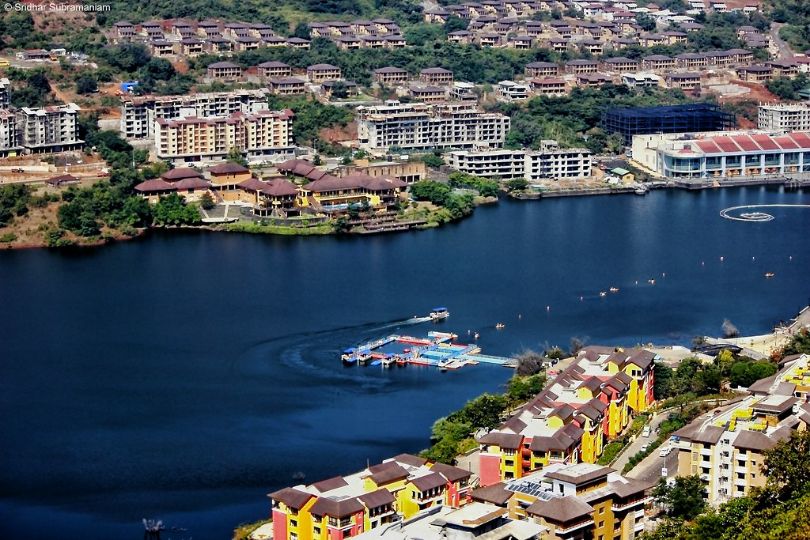
  • Lavasa is a private, planned city being built near Pune by the Hindustan Construction Company (HCC)

1) Navi Mumbai 

Navi Mumbai is a planned satellite township of Mumbai on the west coast of Maharashtra. After it was created in 1971, City and Industrial Development Corporation (CIDCO) was the only authority that looked after the development and maintenance of the city. It was CIDCO which prepared the developmental plan for Navi Mumbai covering 95 villages. In 1991, Navi Mumbai Municipal Corporation (NMMC) was constituted by the Maharashtra government for maintaining some of the developed nodes of Navi Mumbai, namely, Belapur, Nerul, Turbhe, Koparkhairane, Ghansoli, Airoli,and Vashi. 
Navi Mumbai is home to many software companies of Maharashtra, located in various parks. These include the Millennium Business Park in Mahape, the International InfoTech Park at Vashi, and the Belapur railway station complex. It is also home to major commodity markets as well as a major steel market. One of the important business landmarks is the shipping port of Jawaharlal Nehru Port in the Nhava Sheva – Dronagiri nodes. The major business hubs in the city are CBD Belapur, Vashi, Nerul, and Mahape. The Navi Mumbai Special Economic Zone (SEZ) located in the nodes of Dronagiri and Kalamboli is planned to provide commercial growth and employment to the city. Positioned enroute the proposed Navi Mumbai Airport, this megaproject has attracted investments close to Rs 40,000 crores. 

2) New Town, Kolkata 

New Town, formerly known as Rajarhat, is a fast emerging satellite township in Kolkata Metropolitan Area (KMA) and it is expected that it will be able to absorb additional population growth and help in easing the burden on Kolkata. The West Bengal Housing and Infrastructure Development Corporation (HIDCO) plans and executes development projects in the entire 6,000 – 7,000 hectare area in New Town. In order to render the various civic services and amenities within New Town, the New Town Kolkata Development Authority (NKDA) was constituted under the New Town Kolkata Development Authority Act, 2007. 
Towns master plan envisages a township at least three times bigger than the neighbouring planned Salt Lake City. The entire area is still under the process of development. As a planned township, New Town has been divided into three key areas: Action Area I, which mainly consists of malls, a sub Central Business District (CBD) and planned residential and commercial plots. Action Area II is to have a planned main CBD, institutional plots, IT Business Parks like DLF and Unitech, and plots for large apartment complexes. Action Area III mainly consists of high rise residential complexes and mini sub-townships like Uniworld City and Sukhobristi. 

3) Lavasa 

Lavasa is a private, planned city being built near Pune by the Hindustan Construction Company (HCC). Among the first planned hill cities of India, Lavasa is approximately 1/5th of the land area of the Municipal Corporation of Greater Mumbai. Located near the Mumbai-Pune economic corridor, along the Warasgaon Lake, Lavasa optimally balances nature and urban infrastructure. The master plan of Lavasa is based on the principles of New Urbanism which makes life easy for its residents by placing all essential components of daily life within walking distance of each other. Besides this, architectural considerations such as land character, building frontage, and other design guidelines have also been taken into consideration while making the master plan. 

Developments at Lavasa are well on schedule, and the Dasve town center is currently under an advanced stage development. While the Dasve Town Centre is already functional, all structures in education, hospitality, and leisure are fast-nearing completion. Mugaon, is 6 kms from Dasve and is being developed as a centre for residential, educational, business and commercial activities. This town has shops, cafes, cultural institutions, spiritual centres, schools, and colleges. 
Various green initiatives have been undertaken to provide a healthy life to the inhabitants of New Town. The NKDA is working on plans to set up a dedicated green walkway stretching several kilometers in the township for people to walk and breathe fresh air without having the trouble to avoid cars and other polluting vehicles coming their way. A master plan, which has been approved by the Centre, has also been prepared for developing New Town as a solar city. It mentions ways to reduce the projected energy demand from conventional power sources by following two strategies one is by use of solar and renewable power sources and another is by using more energy efficient devices. Already, a long stretch of the main arterial road in Action Area I has been illuminated with LED streetlights and more such lights will be installed on various roads in the township. 
Recently, West Bengals Transport Department and HIDCO came up with a plan to jointly set up a state of the art international bus terminus at New Town, the first of its kind in the state. The terminus will have cafes and rest rooms and services for inter-city, inter-state, and international bus routes will be operated from there. New Town is also witnessing a major real estate boom. This year, a 2.5 acre plot in the township fetched HIDCO a whopping Rs 57.33 crore. It amounts to Rs. 23 crore per acre. Lately, HIDCO has been reaping rich harvest by auctioning off plots in the township for commercial purposes.


NEW EDUCATION POLICY TO BRING EVOLUTION IN THE EDUCATION SYSTEM.

NEW EDUCATION POLICY:
° Students are currently undergoing school exams conducted by responsible authorities in grades 3, 5, and 8.
° 10th and 12th grade board exams will continue, but will be redesigned for overall development.
° Mathematical reasoning and scientific temperament coding begins in 6th grade .Vocational training begins at school in sixth grade and includes internships.
° The 10 + 2 structure is replaced by 5 + 3 + 3 + 4. The new system consists of grades 12 and 3 years preschool / Anganwadi.
° Until 5th grade, this policy emphasizes the local / regional / native language as the teaching language.
° In schools and universities, Sanskrit is also included as a student option at all levels and consists of three language formulas.
° Under Graduate is now 3 or 4 years, with multiple degree options eligible for this period, such as a 1 year certificate, 2 years diploma, 3 years degree, 4 years bachelor’s degree in research, etc.
° An Academic Credit Bank (ABC) is created to store, transfer, and award bachelor’s degrees from digital learning achievements earned by students from various universities.
° The curriculum has been reduced to essentials for all subjects. They focus on critical thinking, discovery, inquiry, debate, and education based on analytical and holistic learning methods for education.
° Focus on e-learning so you can reduce your reliance on textbooks
Under the new policy, education will receive 6% of GDP, up from 1.7%. This definitely boosts the education system.
° By the end of 2040, all universities should be interdisciplinary institutions with more than 3000 students each. University affiliation will be phased out over the next 15 years.

Foucus on Regional /Mother Tongue Language:
As you know, young children learn new things as soon as they teach in their own language, not in another language they are unfamiliar with. This policy is aware of it, so children will be taught in their native language until the age of 5, but it can change to 8th grade .

NEW CURRICULUM STRUCTURE:
•) Rebuild the school curriculum and teaching methods into new 5 = 3 + 3 + 4 patterns.
•) The new curriculum structure is designed to attract the attention of learners at various developmental stages, such as 3-8 years old, 8-11 years old, 11-14 years old, 14-18 years old.
•) Elementary level lasts 5 years:
3 years before school, 1st and 2nd grade.
The preparatory stage lasts for 3 years: 3rd, 4th and 5th grade.
Middle school or high school lasts 3 years: 6th, 7th and 8th grade.
High school or junior high school lasts four years: 9th, 10th, 11th, 12th grade.
All of the above levels include Indian and regional traditions, ethical thinking, socio-emotional learning, quantitative and logical thinking, digital literacy, computational thinking, scientific manipulation, language and communication skills.

“Learning starts with failure; the first failure is the beginning of education.”

– John Hersey