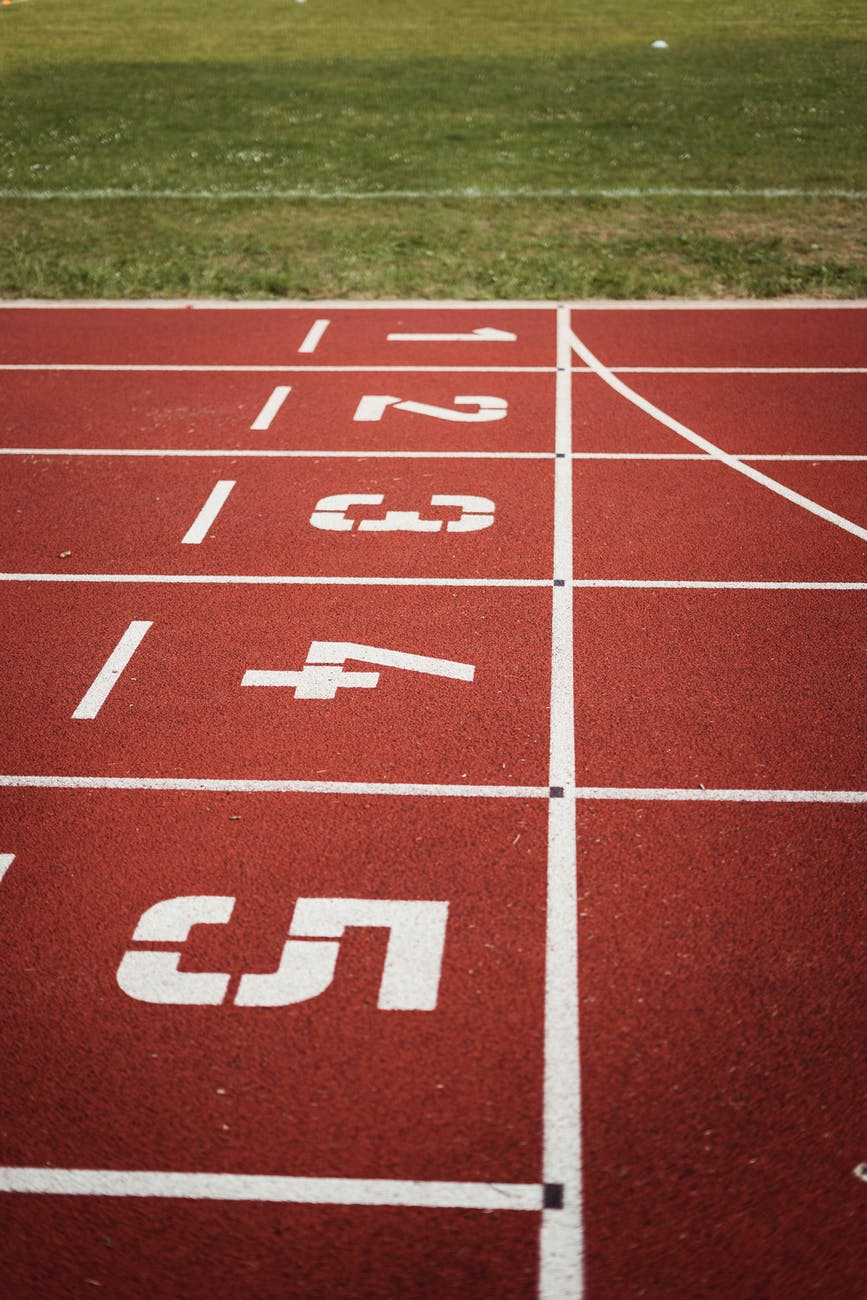
The national sports day in India is celebrated on 29 August on the birth anniversary of legendary hockey player Major Dhyan Chand Singh, Major Dhyan Chand Singh is regarded as India’s greatest hockey player of all time.
The late hockey player had led India to three Olympic gold medals in 1928, 1932 and 1936, he had scored over 400 goals in 22 years he was bestowed with India’s third-highest civilian owner Padma Bhushan in 1956
Dhyan Chand Singh also served in the Indian army and brought laurels to the country the first national sports day was celebrated on 29 august 2012. The day is observed also to spread awareness on the importance of sports to stay fit and healthy on this day the president of India honours eminent sports personalities with major awards including the Arjuna award major Dhyan Chand Khel Ratna award and the Dronacharya award.
Sport is very vital in the human’s life as it keeps us healthy, wealthy or active. There are several advantages of playing sports like it help us in building confidence, provides regular exercise, team-work, etc. Participating in sports also has psychological advantages like it relieves the stresses of everyday life.
The government understands the importance of national sports day & promoting sports as well. They have taken several initiatives for the development of sports like khelo India, National Sports Development Fund, and Scheme for Promotion of Sports among Persons with Disabilities, Scheme of Assistance for Anti-Doping Activities, etc. Khelo India is a very popular initiative taken by the government. The main aim of the Khelo India programme is to revive the sports culture in India at the grass-root level by building a strong framework for all sports played in our country and establishes India as a great sporting nation. This program was introduced by the ministry of sports and youth affairs.
The Sports Authority of India is the premier sports body of the country which will spearhead India’s sporting ambitions and develop the environment to promote the sports culture in the country and sporting excellence.
Sports Authority of India is now in the process of formulating and implementing a series of reforms in the Sports Sector which will build on a holistic approach to the development of Sports and Physical Education. Sports Promotional Schemes of Sports Authority of India:
National Sports Talent Contest Scheme (NSTC) – for Sub-Junior level trainees
Army Boys Sports Company Scheme (ABSC) – for Sub-Junior level trainees
SAI Training Centres Scheme (STC) – for Junior level trainees
Extension Centre of STC /SAG
Special Area Games Scheme (SAG) – for Junior level trainees
Centre of Excellence Scheme (COX) – for Senior level trainees
The national sports day in India is celebrated on 29 August on the birth anniversary of legendary hockey player Major Dhyan Chand Singh, Major Dhyan Chand Singh is regarded as India’s greatest hockey player of all time.
The late hockey player had led India to three Olympic gold medals in 1928, 1932 and 1936, he had scored over 400 goals in 22 years he was bestowed with India’s third-highest civilian owner Padma Bhushan in 1956
Dhyan Chand Singh also served in the Indian army and brought laurels to the country the first national sports day was celebrated on 29 august 2012. The day is observed also to spread awareness on the importance of sports to stay fit and healthy on this day the president of India honours eminent sports personalities with major awards including the Arjuna award major Dhyan Chand Khel Ratna award and the Dronacharya award.
Sport is very vital in the human’s life as it keeps us healthy, wealthy or active. There are several advantages of playing sports like it help us in building confidence, provides regular exercise, team-work, etc. Participating in sports also has psychological advantages like it relieves the stresses of everyday life.
The government understands the importance of national sports day & promoting sports as well. They have taken several initiatives for the development of sports like khelo India, National Sports Development Fund, and Scheme for Promotion of Sports among Persons with Disabilities, Scheme of Assistance for Anti-Doping Activities, etc. Khelo India is a very popular initiative taken by the government. The main aim of the Khelo India programme is to revive the sports culture in India at the grass-root level by building a strong framework for all sports played in our country and establishes India as a great sporting nation. This program was introduced by the ministry of sports and youth affairs.
The Sports Authority of India is the premier sports body of the country which will spearhead India’s sporting ambitions and develop the environment to promote the sports culture in the country and sporting excellence.
Sports Authority of India is now in the process of formulating and implementing a series of reforms in the Sports Sector which will build on a holistic approach to the development of Sports and Physical Education. Sports Promotional Schemes of Sports Authority of India:
National Sports Talent Contest Scheme (NSTC) – for Sub-Junior level trainees
Army Boys Sports Company Scheme (ABSC) – for Sub-Junior level trainees
SAI Training Centres Scheme (STC) – for Junior level trainees
Extension Centre of STC /SAG
Special Area Games Scheme (SAG) – for Junior level trainees
Centre of Excellence Scheme (COX) – for Senior level trainees
Which schooling policies are the newest? Is this the very first? When was the initial education policy put into practice? Students may have inquiries about educational policy.
The Narendra Modi administration passed the most recent education strategy on July 29, 2020. The previous regulation, NPE 1986, was replaced by this one. This is the BJP’s inaugural educational strategy.
Key proposals of the national education policy, 2020
The nep suggests changing the academic framework of the school from [10 + 2] of schooling to [5+3+3+4].
The duration of the undergraduate [UG] degree structure will be 3 or 4 years. There are currently numerous entries.
The government will stop offering the M. Philosophy program.
Under the new nep 2020, higher education institutions will now be able to offer a master’s degree that lasts just one year.
To avoid damaging hierarchies and silos between various fields of learning, there won’t be a clear division between the arts and sciences, between the curriculum and extracurricular activities, between academic and vocational streams, etc. The most crucial and required adjustments were made in this new educational policy. The implementation of this is crucial, and it has already started and received positive feedback.
The first education policy.
In 1968, the Indira Gandhi administration established the first education policy. The Kothari commission (1964–1955) served as the foundation for this approach. This was renowned for its radical reconstruction and equal access to education.
1968’s education policy features.
Free and compulsory education till the age of 14 years.
Improvement in status, emoluments, and competence of the teachers.
Three language formulas Hindi, Sanskrit, and international language especially English should be implemented.
Equal education opportunities for all sections of society.
Subjects like science and mathematics should be an integral part of general education.
Agriculture and industry education.
The quality of books should be improved.
Adult education program.
National education policy 1986.
This was the second education policy of India and was launched under the government of Rajiv Gandhi. This basically works on two major things removal of disputants and providing educational opportunities.
Key resolutions of education policy 1986.
Operation blackboard was launched by NPE in 1986 to expand primary education nationwide. That’s why the NPE 1986 was known as the child-centered approach.
Make provision for the employment of teachers from sc, st, and background.
Expand scholarships to encourage pupils.
Promote adult education as well as introduce open universities. [ IGNOU in 1985 ]
Sarva Shiksha Abhiyan, mid-day meal scheme, Navodaya Vidyalaya [NVS] Kendriya Vidyalaya,[KVS] and use of information and technology in education started by the NPE 1986. 6. A national curriculum framework should be developed nationwide.
It recommends strengthening institutions of national importance like UGC, NCERT, etc.
National education policy 1992.
This education is a modification of the old policy of 1986. This policy was implemented in 1992 by the government of P.V. Narasimha Rao. It was based on the ram Murthi commission led by chairperson Sri. Janardhan Reddy.
Important points of education policy 1992.
To accept +2 level as part of school education.
Greater emphasis was given to Samagra Shaksharta Abhiyan.
Operation blackboard as three classrooms and three teachers and should implement in upper primary classes.
This was also recognized as a common minimum program in 2005.
Adding a common entrance exam for the professional and technical programs.
India had four different education strategies up until this point, each of which was distinct in its own way. The government of Indira Gandhi deserves credit for the education strategy because she took the initiative and introduced the country’s first-ever education plan. Every policy, nevertheless, has many benefits, and we hope the students will take use of them. Education is the manifestation of perfection already existent in man, according to Swami Vivekananda. The manifestation of a person’s innate religious nature is their divinity.
Sustainable development can be defined as an approach to the economic development of a country without compromising with the quality of the environment for future generations. In the name of economic development, the price of environmental damage is paid in the form of land degradation, soil erosion, air and water pollution, deforestation, etc. This damage may surpass the advantages of having more quality output of goods and services.
Examples of Sustainable Development
1. Wind energy
2. Solar energy
3. Crop rotation
4. Sustainable construction
5. Efficient water fixtures
6. Green space
7. Sustainable forestry
The concept of ‘needs’, in particular, the essential needs of the world’s poor, to which overriding priority should be given; and
Types of sustainable development
The three types of sustainable development are:
1. Economic viability
2. Environmental protection
3. Social equity
1. Economic viability –
Economic sustainability refers to practices that support long-term economic growth without negatively impacting social, environmental, and cultural aspects of the community.
2. Environmental protection –
Environmental protection is aimed at maintaining (and recovering when necessary) a healthy natural environment. Sustainable development embraces environmental, social and economic objectives, to deliver long-term equitable growth which benefits current and future generations.
3. Social equity –
Social equity is the orphaned element of sustainable development. The President’s Council on Sustainable Development (1996) defined social equity as “equal opportunity, in a safe and healthy environment.” Social equity is the least defined and least understood element of the triad that is sustainable development yet is integral in creating sustainability—balancing economic, environmental, and social equity.
Sustainable development goals
According to the UN, The Sustainable Development Goals (SDGs) are the world’s shared plan to end severe poverty, reduce inequality, and protect the planet by 2030.
1. Eliminate Poverty
2. Erase Hunger
3. Establish Good Health and Well-Being
4. Provide Quality Education
5. Enforce Gender Equality
6. Improve Clean Water and Sanitation
7. Grow Affordable and Clean Energy
8. Create Decent Work and Economic Growth
9. Increase Industry, Innovation, and Infrastructure
10. Reduce Inequality
11. Mobilize Sustainable Cities and Communities
12. Influence Responsible Consumption and Production
13. Organize Climate Action
14. Develop Life below Water
15. Advance Life on Land
16. Guarantee Peace, Justice, and Strong Institutions
17. Build Partnerships for the Goals
Objectives of sustainable development –
The four objectives of sustainable development are :
• Stable economic growth- The eradication of poverty and hunger to ensuring a healthy life.
• Conservation of natural resources – Achieve universal access to basic services such as water, sanitation, and sustainable energy.
• Social progress and equality – Reduce inequalities in the world, especially gender inequalities. Supporting the generation by the development of opportunities through inclusive education and decent work. Foster innovation and resilient infrastructures by creating communities and cities capable of producing and consuming sustainably.
• Environmental protection – Caring for the environment by combating climate change and protecting oceans and terrestrial ecosystems.
It is great day for sportspersons of India . Every child who is interested in sports surely proud on this day . Dhyan Chand, an Indian Hockey player who always makes India proud.
National Sports Day is celebrated every year in India on August 29. This day is celebrated to commemorate the birth anniversary of an Indian hockey player, Major Dhyan Chand. Various programs and seminars are held across the country to celebrate this day and pay a tribute to Major Dhyan Chand.
Major Dhyan Chand was a legendary Indian hockey player who had a massive role in getting India their first hat-trick of Olympic gold medals in the years 1928, 1932 and 1936 Summer Olympics respectively.
Major Dhyan Chand has been an inspiration for many young sports athletics. He started playing hockey with the regimental team of the British Indian Army. It is claimed by various sources that he used to practice playing hockey even in the night under the moonlight after completing his regimental duties during the day. Hence, he got the name Dhyan ‘Chand’.
National Sports Day was first celebrated in the year 2012 on August 29. Since then it is celebrated to honour the legacy of Major Dhyan Chand and raise awareness on the importance of sports in our lives. This day is special to increase awareness around physical activities and their benefits.
Various awards like Rajiv Gandhi Khel Ratna, Arjuna Award, Dhyan Chand Award and the Dronacharya Award are bestowed to sporting legends to honour their contribution to sports.
When it comes to manufacturing a product or mass producing it, the go-to country for foreign investors and companies looking to establish manufacturing and assembling plants is “China”. China is the major competitor India has when it comes to outsourcing and manufacturing business, but china was still favorable due to ease of doing business and low manufacturing costs. India’s ailing infrastructure, the bureaucratic approach adopted by the former government, defunct logistics, lack of a proper transportation network, and widespread corruption were the main reasons why companies found it difficult to do business in India. These were the reasons why the Modi government launched the ‘Make in India’ campaign to help transform India into a manufacturing hub.
The Make in India Vision
The Manufacturing sector in India accounts for around 16% of the GDP. The campaign aims to bring this number to around 25% of total GDP contribution and also to generate employment opportunities and attract foreign investors along the way to help transform India into the number 1 manufacturing hub in the world.
Inspired by the ‘Ashoka Chakra’, the logo for the make in India campaign is a Lion and the prime minister decided to dedicate the campaign to Pandit Deen Dayal Upadhyaya born in 1916 on the same date.
Main objectives of this initiative
1) To increase the growth rate of our manufacturing sector to 12-14% per annum
2) To increase the total GDP contributions of the manufacturing sector from 16% to 25%
3) To create around 100 million job opportunities in the manufacturing sector alone.
4) One of the objectives was to improve India’s rank in the ease of doing business index by the World Bank.
5) To improve India’s export-led growth
6) To attract foreign investments and develop the industrial base in order to surpass china.
Challenges faced by the government
1. Shell companies: – shell companies are a major problem as they account for the majority of the FDI inflow and are suspected to be investing their black money.
2. Productivity: – low productivity of the manufacturing sector, as well as the skilled labor force, is highly insufficient. On average the Indian workforce is almost four to five times less productive when compared to china or Thailand.
3. Small Industries:-small size of our industrial units was also a challenge as they fail to meet desired economies of scale. Due to their small size, they cannot afford to invest in modern machinery and develop their supply chains.
4. Complicated labor laws: – complexity of our labor laws for companies with more than 100 employees which requires special approval to lay off their employees was also one of the main reasons.
5. Electricity:- even though the per unit cost of electricity is practically the same in India and China, India experiences far more outages which can cause delays in meeting the demand.
6. Transportation:– the average speed in India is 60km/h which is far less than china’s 100km/h speed. What India lacks in speed it overcomes in terms of overloading trucks and having one of the best ports.
India celebrates National Sports Day on August 29, the birth anniversary of hockey hero Major Dhyan Chand. In 2012, the day was declared India’s National Sports Day. Major Dhyan Chand was a legend in Indian and international hockey. With victories at the Summer Olympics in 1928, 1932, and 1936, he was instrumental in helping India complete their first hat-trick of Olympic gold medals. Dhyan was so dedicated to his art that he used to practice hockey at night after his regular daytime tasks were over, earning him the nickname Dhyan ‘Chand.’
Major Dhyan Chand, a field hockey player, is recognized by many to be the greatest field hockey player ever. Dhyan Chand was born on August 29, 1905, in Allahabad, India, to a Kushwaha Rajput family. He was the son of Sharadha and Rameshwar Singh. Dhyan Chand had two brothers — Mool Singh and Roop Singh. The latter, also a hockey player, was a member of the Indian field hockey team, which won gold medals for India at the Olympic Games in 1932 and 1936. Chand’s father served in the British Indian Army, where he was a member of the hockey team. Chand was well-known for his superb ball control and goal-scoring abilities. India won the field hockey event in seven of the eight Olympics from 1928 through 1964, demonstrating his influence beyond these successes.
According to his memoirs, Chand played internationally from 1926 until 1949, scoring 570 goals in 185 matches during his home and international career. In 1956 he retired from the army with the rank of major, and in the same year, the Indian government awarded him the Padma Bhushan, the country’s third-highest civilian honor.
To mark his birthday, India established National Sports Day in 2012. The purpose of the celebration is to honor the sporting legend and create awareness about the importance of sporting activities in everyday life, with a focus on fitness and health. The President of India bestows key honors on this day, including the Khel Ratna, Arjuna Awards, Dronacharya Awards, and Dhyan Chand Awards, to famous sports luminaries. Dhyan Chand passed away on December 3, 1979.
NATIONAL SPORTS DAY TIMELINE
1925
Inter-Provincial Tournament
Chand is picked to represent the United Provinces (U.P.) in the Inter-Provincial Tournament in 1925, where his deft stick-work drew everyone’s notice.
1934
India’s Hockey Team Captain
In December 1934, he is named India’s captain after an extraordinary run with Indian hockey, which included two Olympic gold medals.
1956
Padma Bhushan Award
Chand receives the Padma Bhushan award in 1956, India’s third-highest civilian honor.
2012
National Sports Day
To commemorate the birthday of Dhyan Chand, India establishes National Sports Day in 2012.
NATIONAL SPORTS DAY ACTIVITIES
Form your own team
Bring your buddies together to cheer on your favorite team. You can even go outside and form your own team. It will be worth it to enjoy the challenge and physical activity, regardless of your skill level.
Read about Dhyan Chand
Dhyan Chand is one of the greatest hockey players of all time. Read about his upbringing, his forays into several fields, and his numerous accomplishments.
Share pictures of your team jersey
Share a group pic of you wearing your favorite sports shirts with your friends and family. Include the hashtag #NationalSportsDay in your images as well.
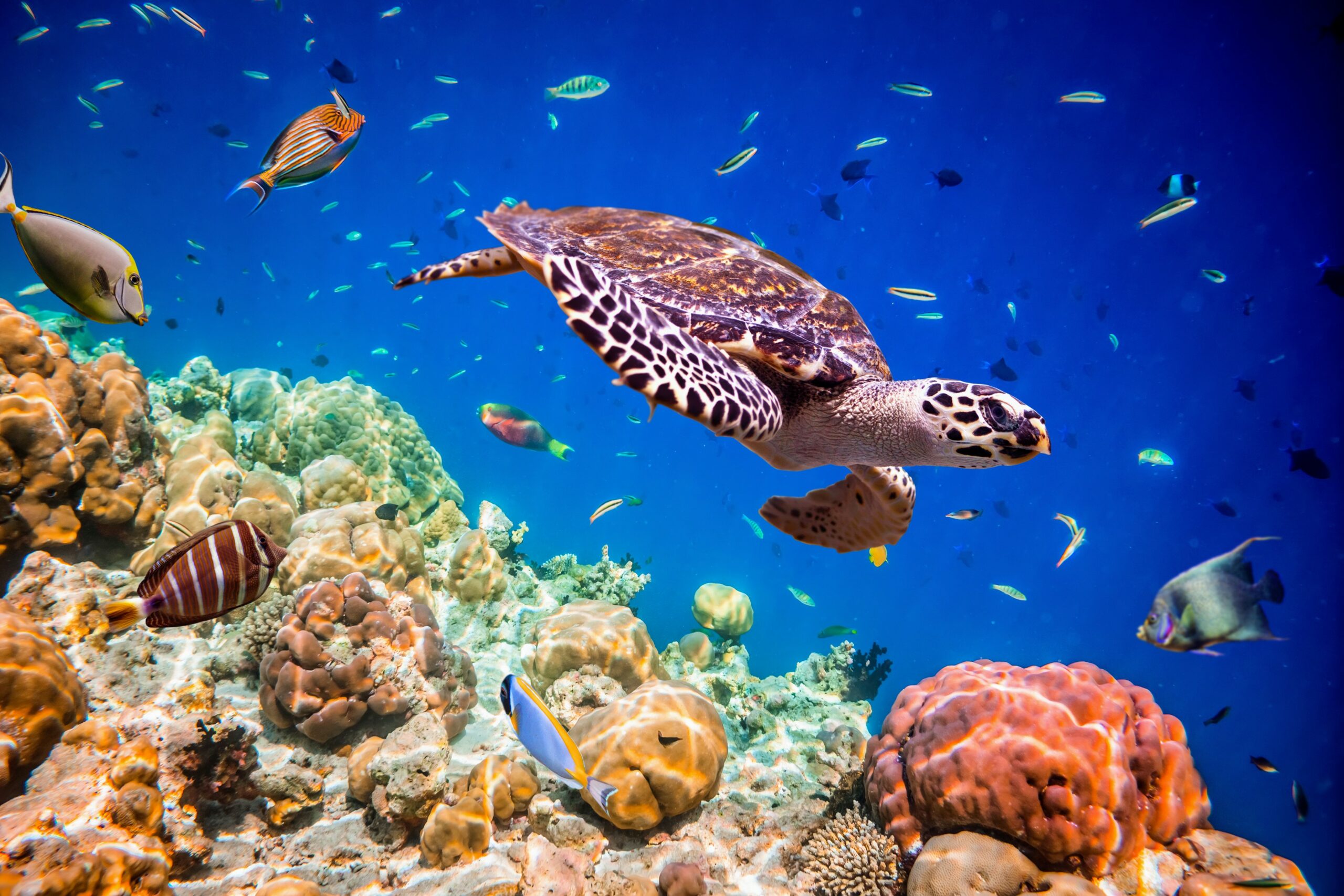
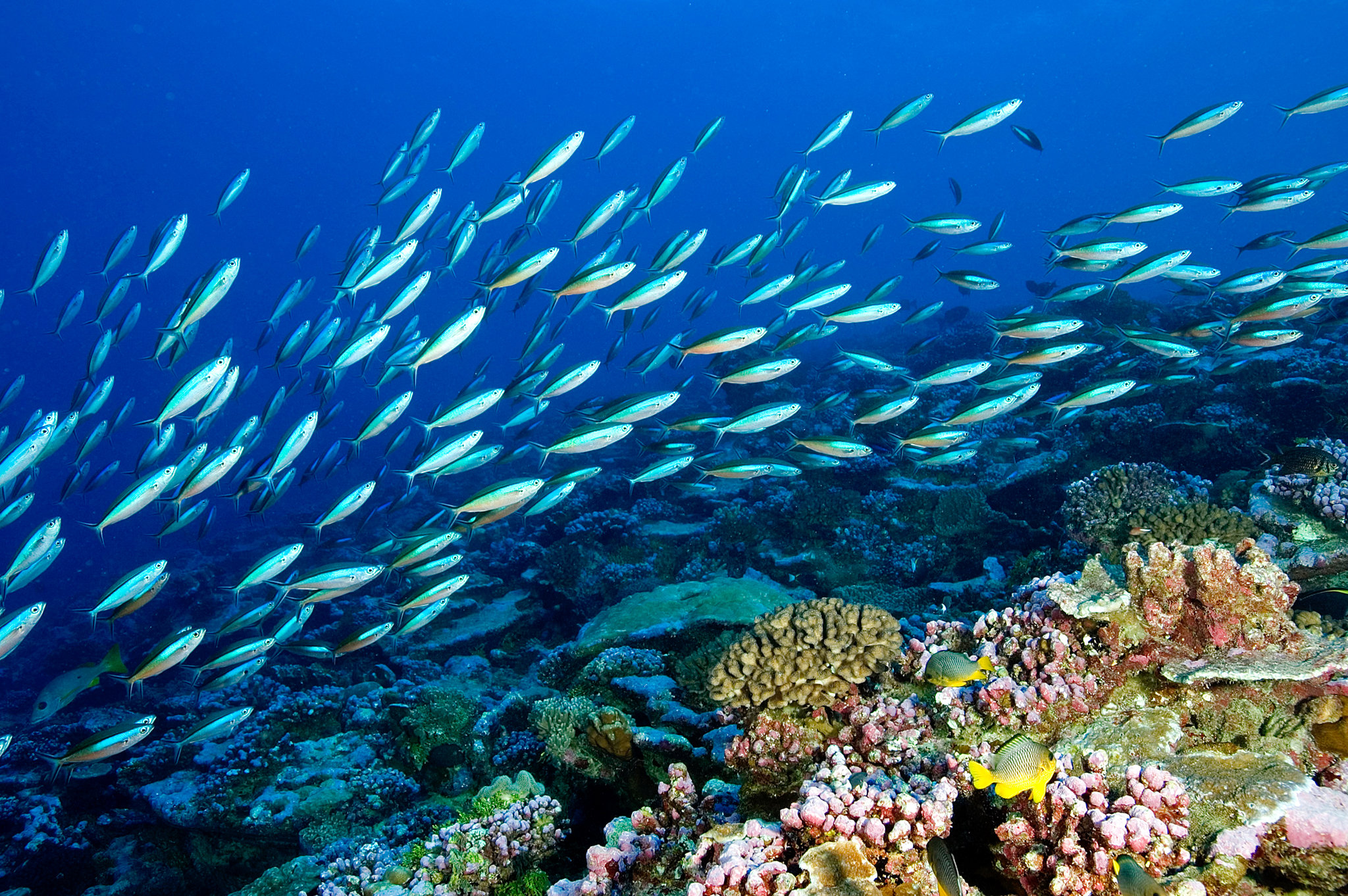
Marine ecosystems are aquatic environments with high levels of dissolved salt. These include the open ocean, the deep-sea ocean, and coastal marine ecosystems, each of which has different physical and biological characteristics. Marine ecosystems are defined by their unique biotic (living) and abiotic (nonliving) factors. Biotic factors include plants, animals, and microbes; important abiotic factors include the amount of sunlight in the ecosystem, the amount of oxygen and nutrients dissolved in the water, proximity to land, depth, and temperature. Sunlight is one of the most important abiotic factors for marine ecosystems. It’s so important that scientists classify parts of marine ecosystems—up to three—by the amount of light they receive. The topmost part of a marine ecosystem is the euphotic zone, extending down as far as 200 meters (656 feet) below the surface. At this depth, there is sufficient light for regular photosynthetic activity. Most marine life inhabits this zone. Below the euphotic zone is the dysphotic zone, which can reach from 200 to as deep as 1,000 meters (656 to 3,280 feet) below the surface. At these depths, sunlight is still available, but only enough to facilitate some photosynthesis. Below the dysphotic zone lies the aphotic zone, which does not receive any sunlight.
Types of Marine Ecosystem
Marine ecosystems types include open deep sea, salt water wet-land, coral reefs, estuary, mangroves, sandy beach, kelp forest, polar marine and rocky marine ecosystem
Open Marine Ecosystem: Whenever you think of the marine ecosystem, the first picture that comes to your mind is the open water surface. This open water surface is known as the marine ecosystem; This is the upper layer of the ocean where sun rays reach quite easily. The open marine ecosystem extends up to 150 meters from the ocean surface. The open marine ecosystem provides habitat to various sea creatures such as plankton, algae, whales, jellyfish, etc.
Deep-Sea Marine Ecosystem: The ecosystem deep inside the oceans at its floor is known as the deep sea marine ecosystem. Deep-sea marine ecosystem inhabiting various animal species in the seabed up to 1000 meters depth underwater. Sunlight is one of the big challenges to penetrate at the seafloor; however, the species have adapted the marine environment of this region. A huge range of animal species is found in deep-sea marine ecosystems such as squids, fishes, elephant seals, sperm whales, crabs, worms, some sharks, etc.
Coral Reef Marine Ecosystem: Coral reefs are special type of marine ecosystem found in the seafloor. This ecosystem is mostly found in tropical waters and is quite a productive ecosystem found on the Earth. The coral reefs are the skeleton made up of limestone i.e., calcium carbonate. The coral reef ecosystem provides food and shelter to almost ¼ of marine water species. Coral reefs attract exotic color fishes like sponges, snails, seahorses, sometimes large animals like sharks & dolphins, etc.
Saltwater Wetland Marine Ecosystem: The coastal areas of oceans and seas are known as the saltwater wetland ecosystem. The saltwater wetland marine ecosystem is again classified into two types – saltwater swamps and salt marshes. Saltwater swamps are regions dominated with trees, whereas salt marshes are covered with grasses. Commonly found water species of saltwater wetland ecosystem are amphibians, reptiles, some migratory birds, shellfishes, few fishes, etc.
Estuary Marine Ecosystem: The area around the river mouth where it merges with marine water is usually termed as an estuary marine ecosystem. The salinity in this ecosystem varies with the tides. The estuary ecosystem does not support a variety of species. Mostly the species of the neighbouring ecosystem are found in the Estuary marine ecosystem. This ecosystem also plays an essential role in nurseries for various kinds of fishes, shrimps, etc.
Mangrove Marine Ecosystem: In some tropical and sub-tropical coastal regions, a special type of saltwater swamp is found, which is known as mangroves. Mangrove swamps are home for special types of trees that can survive in the saline ecosystem. These mangroves are characterized by a special kind of roots to absorb oxygen to survive. The roots are extended above the water surface. Mangrove ecosystem provides shelter to various species such as shrimps, jellyfish, birds, sponges, crabs, fish, crocodiles, etc.
Sandy Beach Ecosystem: Sandy’s ecosystem is quite poor in terms of biodiversity as compared to different marine ecosystems. The environment in the sandy beach ecosystem varies a lot. However, the species that are found in the sandy beach ecosystem are very much adapted to a constantly variable environment.
Kelp Forest Marine Ecosystem: The kelp forest ecosystem is found in comparative cooler water. The average temperature of this ecosystem ranges from 42-72 degrees Fahrenheit with depth up to 60-90 feet. Kelp forest ecosystem supports various animal species such as seabirds, shorebirds, invertebrates (like crabs, sea stars, snails, etc.), fishes, mammals (like sea lions, seals, whales, sea otter, etc.
Polar Marine Ecosystem: As the climate of Polar Regions is extremely cold; thus, the temperature of this type of marine ecosystem is also too cold. The species found in the polar marine ecosystem have adapted to the adverse climatic conditions of this region. The most common species found in the polar marine ecosystem includes planktons, algae, birds like penguins, polar bears, seals, walruses, etc.
Rocky Marine Ecosystem: The rock shores, rock cliffs, boulders, tide pools, etc. combine to make rocky marine ecosystems. The biodiversity of rocky marine ecosystem generally have species like lichens, birds, invertebrate (lobsters, urchins, barnacles, sea stars, sea squirts, seal, etc.
The marine ecosystem is a unique ecosystem that supports various plant and animal lives. All these species set an excellent example of a great food chain as compared to other ecosystems. The sad part is that we are spoiling such an amazing ecosystem by polluting it through disposing of unwanted wastes. We are disposing of our wastes into the oceans and seas that are affecting the marine ecology big time.
The history of India and Indian national movement is resolvable in understanding. The Indian independence movement was a series of historic events during the British Raj with the ultimate aim of ending British rule in India on the Indian subcontinent. It lasted from 1857 to 1947.
The Revolt of 1857: The first movement for freedom first broke in Bengal.The Revolt of 1857 was started on May 10, 1857, at Meerut. It was the first-ever war for Indian Independence. It was the first large-scale rebellion against the East India Company. The Revolt was unsuccessful but it made a major impact on the public and stirred the entire Independence Movement in India. Mangal Pandey was one of the major parts of the revolution as he declared rebellion against his commanders and fired the first shot on the British officer.
Swadeshi Boycott Movement: At the beginning of the 20th century, the Britishers announced the partition of Bengal with a motive to weaken the unity of nationalists. Amongst the prime Indian national movements, the Swadeshi Boycott Movement surfaced in the year 1903 as a reaction against the partition of Bengal but was formally announced in July 1905 and fully came into force from October 1905.
Anti-Partition Movement : Led by moderates like Surendranath Benerjee, K.K.Mitra and Dada Bhai Naraoji, the initial stage of this Indian National Movement took place from 1903-1905. The Anti-partition movement was carried out through public meetings, memoranda, petitions etc.
Swadeshi and Boycott Movement: From 1905 to 1908, the Swadeshi and Boycott movement was started by extremists like Bipin Chandra Pal, Tila, Lala Lajpat Rai and Aurobindo Ghosh. The general public was asked to refrain from the use of foreign goods and motivated to substitute them with the Indian homemade goods. Prominent events like Indian festivals, songs, poetries and paintings were used to propagate this Indian national movement. Home Rule League Movement To convey and propagate the feeling of self-governance into the common man, this Indian National movement was carried out in India as it simultaneously happened in Ireland. Majorly, the below-mentioned leagues pivotally contributed to the group of the Home Rule League Movement using newspapers, posters, pamphlets etc
Bal Gangadhar Tilak started this league in April 1916 and spread out to Maharashtra, Karnataka, Berar and Central Provinces. Annie Besant’s League began in September 1916 in various other parts of the country.
Satyagraha movement: The first Satyagraha Movement was led by Mahatma Gandhi in the Champaran District of Bihar in the year 1917. Champaran district had tens of thousands of landless serfs. One of the suppressed Indigo cultivators, Pandit Raj Kumar Shukla persuaded Gandhi to lead this movement. This led to other Satyagraha Movements. Khilafat Non-Cooperation Movement The Non-Cooperation Movement was one of the most famous and crucial phases in the Indian freedom struggle against the Britishers. Ill-treatment of the Khalifa, the spiritual leader of the Muslims by the Britishers agitated the entire Muslim community in India and around the world. Deteriorating economic conditions in the country along with the major incidents like Jallianwala Bagh Massacre, Rowlatt Act, etc were the main reasons behind how it emerged to be a pivotal Indian national movement. This are the one of the important reason for the rise of this movement. The Non-Cooperation Movement was officially launched by the Khilafat Committee in August 1920. Also, the Indian National Congress adopted the movement in December 1920 after their Nagpur session. After which a complete boycott of government goods, schools, colleges, food, clothing etc happened and emphasis was laid on studying at national schools and khadi products were used. On February 5, 1922, Chauri Chaura incident took place wherein the police station along with 22 policemen inside it was burnt. This led to call-off of this Indian National Movement by Mahatama Gandhi.
Civil Disobedience Movement : One of the most prominent Indian national movements, the Civil Disobedience phase is classified into two stages: First Civil Disobedience Movement The Civil Disobedience Movement was launched along with the Dandi March by Mahatma Gandhi on 12th March 1930. Ultimately, it ended on April 6 when Gandhi broke the Salt Law at Dandi. Afterwards, the movement was proceeded by C.Raja Gopalachari. Mass participation of women, peasants and merchants happened and was succeeded by salt satyagraha, no-tex movement and no-rent movement as this Indian national movement spread across the country. Later on, it got withdrawn in March 1931 because of the Gandhi-Irwin Pact.
Second Civil Disobedience Movement: The failed treaty of the second roundtable conference led to the start of the second Civil Disobedience Movement stretching from December 1931 to April 1934. This lead to varied practices like protests in front of liquor stores, salt satyagraha, forest law violations happened. But the British Government was aware of the upcoming incidents, thus, it imposed martial law with a ban on gatherings outside Gandhi’s Ashrams. Quit India Movement The main reason behind the launch of the Quit India Movement in 1942 as it became one of the powerful Indian National Movements include: The failure of the Cripps proposal become the awakening call for the Indians The discontent of the general public with hardships brought by the world war. After going through so many hardships in order to redeem the motherland from foreign and save the religion and self-esteem, India received it’s freedom from British on the night of 15th August 1947, 12:02 am from the British to become a Sovereign and Democratic country.
Insurance is a legal agreement between the insurance company and the individual. When you buy Insurance it is a way you protect against unexpected financial losses. The insurance company pays your and your family, when some bad happens to you. When a person pays a insurance company, the company promises to pay the money if the person becomes injured or passed away.The Insurance company pays the value of property lost damaged. If no insurance, then you might be the responsible for all related costs at hard time.
In India, the insurance types are classified to Life insurance, Health insurance, Educational insurance, Home insurance and Car insurance.
Health Insurance: Insurance is for medical costs for expensive treatments. You can buy a generic health insurance policy. There are policies for specific diseases. The premium paid towards health insurance pay the hospital, treatment and medication costs.
Educational insurance: Educational insurance is specially designed as a save tool for children’s education. Education insurance provides a lump amount of money when your child reaches the age for higher education. The child’s life is assured under this is the insurance while the parent / legal guardian is the owner of the policy.
Home Insurance:Home insurance can help with covering the loss or damage of house by fire or other natural disasters like earthquake flood, and lighting
Car Insurance:Car insurance is important for every car owner.It protects you against any sudden incidents like accident.
Some policies compensate the damage towards your during natural disasters. It ensures your families financial stability. It reduces stress during our hard time of our life. Insurance are for safety and security. But apart from that there are also income tax benefits that are avail. It is our choice to choose the way to insurance.It is also our responsibility to keep our family in a safe guard even in a hard time.
The Central Advisory Board of Education (CABE) during pre- independence time played great role in the evolution and monitoring of educational policies and programs. The most important were National Policy on Education (NPE) in 1986 and Program of Action(POA) 1992 put forward that free and compulsory Education of satisfactory quality should be provided up to 14 years (Elementary education). As the result enrollment of students in primary and upper primary schools increased steadily. More enrollment of girls and backward sections of society in Education improved. The central and state governments took strategies to improve drop out rates which include :
Creating parental awareness and community mobilisation, providing incentives, improvement in content and schooling process and National Programme for nutritional support for primary education (mid day meal schemes). Right to elementary education is fundamental right and fundamental duty.
The Minimum level of learning was introduced and it led development of better textbooks and workbooks, supplementary reading materials, teachers handbook and development in pupil evaluation. The Central Government gave funds for expenditure on elementary education.
NON FORMAL EDUCATION
Department of Education started programme of Non- formal education (NFE) for children who remain outside formal system due to different reasons such as drop outs from schools, working children and those who perform domestic chores. The scheme covers urban slums ,hills, desert and tribal areas.
The National Bal Bhavan it is a Autonomous institution under Education department and it help to enhance and improve creativity among children from weaker strata of the society. The programs are designed to bring out the inner potential of a child. The national bal bhavan provides general guidelines and transfer of information, training facility to State and District Bal bhavans.
Promotion of languages – Government encourages in development of all Indian languages including classical, modern and tribal languages and help in production of university level textbooks to facilitate media. Financial assistance given to individuals and voluntary organizations to bring out publications for development of modern Indian languages.
Sarv Shiksha Abhiyan
It is an Indian government program aimed at universalisation of elementary education ” in atime bound manner” . The program was initiated by former Indian prime Minister Atal Bihari Vajpayee. It’s motto is education for all.
Adult Education
The National Literacy Mission(NLM) dominant strategies are literacy campaigns are area specific, time bound , cost effective, volunteer based and outcome oriented. It is aimed at eradication of illiteracy. Learner makes a transition from guided learning to self learning and it also help in skill upgradation. It helps in creation of learning society through ongoing educational programs. Rural libraries are established to improve reading habits among people.
Indira Gandhi Open University (IGNOU)
It was established by the Act of Parliament in September 1985. It is responsible for introduction and promotion of distance education and open university. The main objectives include widening access to higher education to mass audience, organize programs that help people to continue education. IGNOU provide university level education, it is flexible and open.
As we know there are less women entrepreneurs than man . There are many reasons for less women entrepreneurs some are like economy problem, government are not eagerly to help female , they face many problems regarding loans as well as there are many family problems also .
So here are list of 10 successful women entrepreneurs.
1. Falguni Nayar
Falguni Nayar (born 19 February 1963) is an Indian billionaire businesswoman who is the founder and CEO of the beauty and lifestyle retail company Nykaa. Nayar is one of two self-made female, Indian billionaires.
Falguni Nayar
Born
19 February 1963 (age 59)
Mumbai, Maharashtra, India
Nationality
Indian
Education
MBA Finance
Alma mater
Sydenham College of Commerce and Economics, Mumbai
Indian Institute of Management Ahmedabad
Occupation
Founder & CEO of Nykaa
Years active
1963–present
Spouse(s)
Sanjay Nayar
2. Radhika Aggarwal
Radhika Ghai Aggarwal is an Internet entrepreneur and India’s first woman to enter the Unicorn Club. She is the co-founder of online marketplace ShopClues established in 2011 in silicon valley. Currently, she serves as the Chief Business Officer of the company.
3. Aditi Gupta
Aditi Gupta is an Indian author and co-founder of Menstrupedia Comic. She and her husband, both National Institute of Design Alumni, co-founded Menstrupedia Comic in 2012. In 2014, she was named in the Forbes India 30 Under 30 2014 list.
Aditi Gupta
Born
Garhwa, Jharkhand, India
Occupation
Author and co-founder of Menstrupedia Comic
Nationality
Indian
Alma mater
National Institute of Design
Genre
Menstrupedia Comic
Spouse
Tuhin Paul
4. Suchi Mukherjee
Limeroad is an Indian online marketplace, owned by A. M. Marketplaces Pvt Ltd. The company is based in Gurugram, Haryana.
Limeroad
Type of business
Privately held company
Type of site
E-commerce
(E-commerce shopping)
Available in
Hindi, English
Area served
India
Founder(s)
Suchi Mukherjee, Ankush Mehra
CEO
Suchi Mukherjee
Parent
A M Marketplaces Pvt Ltd
Commercial
no
Registration
Required
Launched
2012
Current status
Active
5. Vani Kola
Vani Kola is an Indian venture capitalist. She is the founder and managing director of Kalaari Capital, an Indian early stage venture capital firm. She was listed as one of the most powerful women in Indian business by Fortune India in 2014.
Vani Kola
Vani Kola – Indian Venture Capitalist.
Kola in 2020
Born
1963 or 1964 (age 58–59)
Hyderabad , Andhra Pradesh (now Telangana)
Education
Osmania University (B.Eng.)
Arizona State University (M.Eng.)
Occupation
venture capitalist
Known for
Venture capital in India
6. Roshini Nadar Malhotra
Roshni Nadar Malhotra (born 1980/81) is an Indian billionaire industrialist and the chairperson of HCL Technologies and the first woman to lead a listed IT company in India. She is the only child of HCL founder and billionaire industrialist Shiv Nadar. In 2019, she is ranked 54th on the Forbes World’s 100 Most Powerful Women list. According to IIFL Wealth Hurun India Rich List (2019), Roshni is the richest woman in India. In 2020, she is ranked 55th on the Forbes World’s 100 Most Powerful Women. She is also the CEO of HCL Corporation, the holding company of all HCL Group entities.
Roshni Nadar
Born
1980/1981 (age 40–41)
Education
Northwestern University
Kellogg School of Management
Occupation
Chairperson, HCL Technologies
Years active
2008-present
Spouse(s)
Shikhar Malhotra
Children
2
Parent(s)
Shiv Nadar
Kiran Nadar
7. Kiran Mazumdar Shaw
Kiran Mazumdar-Shaw (born 23 March 1953) is an Indian billionaire entrepreneur. She is the executive chairperson and founder of Biocon Limited and Biocon Biologics Limited, a biotechnology company based in Bangalore, India and the former chairperson of Indian Institute of Management, Bangalore. In 2014, she was awarded the Othmer Gold Medal for outstanding contributions to the progress of science and chemistry. She was on the Financial Times 2011 top 50 women in business list. In 2019, she was listed as the 68th most powerful woman in the world by Forbes. She was named EY World Entrepreneur Of The Year 2020. She is married to John Shaw.
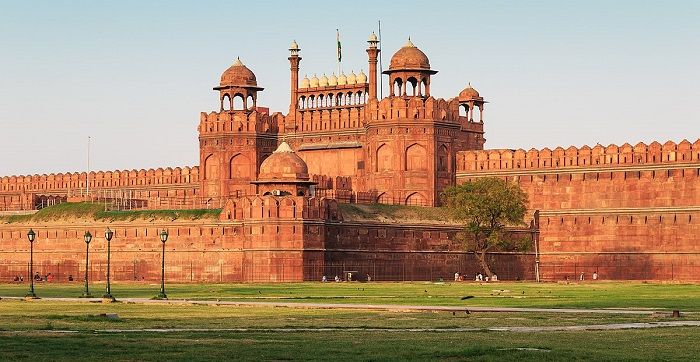
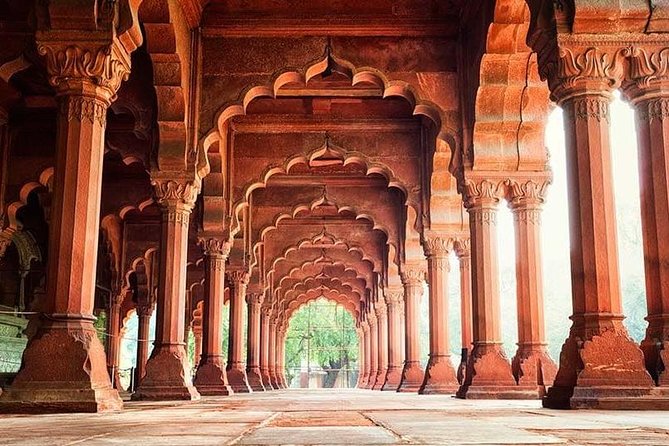
The Red Fort, which is also known as the Lal Qila, was constructed by one of the most famous Mughal emperors, Shah Jahan. Built on the banks of river Yamuna, the fortress-palace was designed by architect Ustad Ahmad Lahauri. It took 8 years and 10 months to build the magnificent fort. The fort served as the royal residence of the Mughal emperors from 1648 to 1857. It took over the honor of royal residence from the famous Agra Fort when Shah Jahan decided to shift his capital from Agra to Delhi.
The Red Fort derives its name from the red-sandstone walls, which make the fort almost impregnable. The fort, which is located at Old Delhi, is one of the massive and prominent structures of India and is a fine example of Mughal architecture. It is often considered as the pinnacle of Mughal creativity. In modern times, the fort is of importance to the people of India as the Indian Prime Minister delivers his Independence Day speech from the fort, every year on August 15. In 2007, it was declared as UNESCO World Heritage Site.
History Shah Jahan, the then Mughal emperor decided to build the Red Fort as the citadel of Shahjahanabad, his new capital at Delhi. The fort, which was completely constructed in the year 1648, remained the residence of the Mughal emperors until 1857. Post the reign of Aurangzeb, the Mughal dynasty grew weaker in every aspect and that started taking a toll on the fort. When Farrukhsiyar, the ninth Mughal emperor, took over the reign from Jahandar Shah after murdering him, the fort began to lose its luster, quite literally. During his reign, the silver ceiling of the fort was replaced with copper in order to raise money. This was probably the beginning of the plunder that would go on for years to come. In 1739, Nadir Shah, the Persian emperor defeated the Mughals and took with him some of the valuables belonging to the fort, including the famous peacock throne, which had served as the royal throne of the Mughals. The weakened Mughals had no other option but to sign a treaty with the Marathas, who had promised to protect them and the fort. In 1760, when Ahmed Shah Durrani of the Durrani dynasty threatened to capture Delhi, the Marathas dug out the silver ceiling of Diwan-i-Khas to strengthen their army. However, Ahmed Shah Durrani defeated the Marathas in the third battle of Panipat and took over the fort. The Marathas reconquered the fort in 1771 and stalled Shah Alam II as the 16th Mughal emperor. In 1788, the Marathas occupied the fort and ruled over Delhi for the next 20 years before the British defeated them during the Second Anglo-Maratha War in 1803. The fort now was occupied by the British, who even built a residence of their own within the fort. During the Indian rebellion of 1857, Bahadur Shah II, was arrested by the British and later exiled to Rangoon. With Bahadur Shah II, the Mughal Empire came to an end and this opened a window of opportunity for the British to loot valuables from the fort. Almost all furniture were either destroyed or shipped to England. Many edifices and landmarks within the fort were destroyed and barracks of stone replaced them. Many priceless possessions like the Koh-i-Noor diamond, the crown of Bahadur Shah and the wine cup of Shah Jahan were sent to the British government. After independence, the Indian Army occupied a major part of the fort before handing it over to the Archaeological Survey of India (ASA) for restoration purposes. The Red Fort is the largest historical structure in Delhi. Every year, the Prime Minister of India hoists the tricolor flag on every Independence Day. Security around the fort during the Independence Day celebrations is tightened as the place was attacked by terrorists on 22 December in the year 2000. The fort also serves as a major tourist attraction and witnesses thousands of visitors throughout the year. Though many buildings are not in great shape, some are still in good condition and efforts are being taken to conserve what is left of the fort. Three museums namely the museum of blood paintings, war-memorial museum and archaeological museum have been set up inside the fort.In the newly released currency note of rupees 500, the fort appears on the back of the note, implying its importance even in the post-independence era.







 Eduindex
You must be logged in to post a comment.