

1. Ms.
Pac-Man
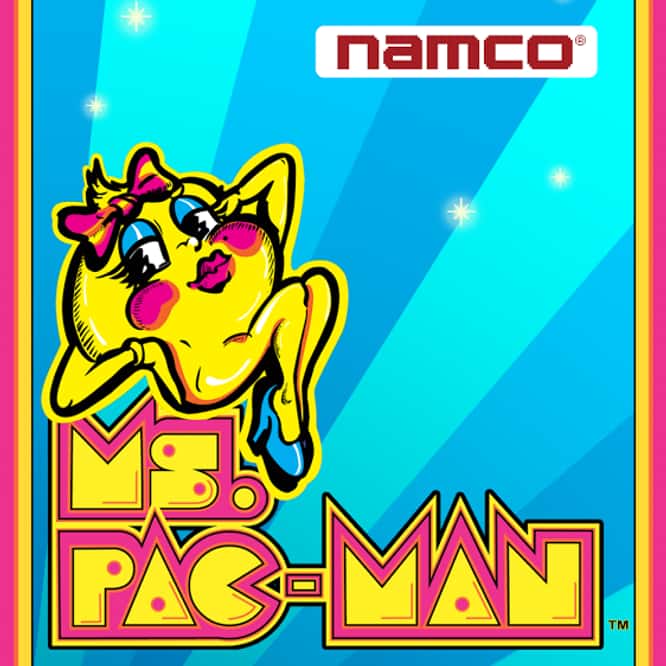
Ms.
Pac-Man is a well-liked arcade game. The North American publisher of Pac-Man,
Midway Manufacturing Corporation, with headquarters in Illinois, created it. Of
all the time Ms. Pac-Man, is the most well-known arcade video game. It was
launched in North America, January 1982. Because of its success,
Namco, the company that made the Pac-Man video game, which was published in the
US in the latter part of 1980, decided to use it as the official title. In
contrast to the original Pac-Man, Ms. Pac-Man included a female protagonist,
fresh labyrinth designs, and various other gameplay enhancements. The most
popular arcade game made in America, Ms. Pac-Man, sold 115,000 arcade cabinets.
2. Bubble
Bobble

Taito’s 1986 arcade game Bubble Bobble was later ported to
several personal computers and video game platforms. The action-platform game,
which features the identical Bubble Dragons Bub and Bob, sends players through
100 distinct levels while they blow and burst bubbles, avoid monsters, and
gather various goodies. A lengthy list of sequels and spin-offs were produced
as a result of the game’s huge popularity. Saving Bub and Bob’s ladies from the
Cave of Monsters is the game’s main objective. It is a pioneering instance of a
game with many endings that change based on how well the player performs and
uncovers mysteries.
3. Puzzle
Bobble

The arcade tile-matching game Puzzle Bobble, created and
released by Taito in 1994, is also known globally as Bust-a-Move. It features
motifs and characters from the classic arcade Bubble Bobble from 1986 as its
inspiration. Its arcade popularity led to a number of sequels and home gaming
system versions thanks to its distinctly adorable Japanese animation &
music, as well as its game mechanics and level designs.
4. Ikari
Warriors

Ikari Warriors, also known as Ikari (, “Fury”) in
Japan, is an operated shooter arcade game that was created and published by SNK
in 1986 and distributed by Tradewest in North America. The game was launched at
a period when the market was flooded by Commando imitations. Rotating joysticks
as well as a two-player mode set Ikari Warriors apart. [10] The rotating
joystick controls were based on TNK III, an earlier game from SNK (1985). Ikari
was initially supposed to be a legally recognized version of the 1985 movie
Rambo: First Blood Part II, but SNK was unable to first get the film’s rights.
5. City
Connection

Jaleco created and released the platform arcade game City
Connection[a] in 1985. Kitkorp distributed it under the name Cruisin’ in North
America. Clarice, who is being controlled by the player, must cross hills on
her Honda City hatchback in order to paint the roads. Clarice is frequently
pursued by cop cars, which she is able dispatch by firing oil cans towards them
to briefly knock them out of commission before driving into them using her
vehicle. When creating the game, Jaleco drew inspiration from maze-chasing
action games like Pac-Man (1980) as well as Crush Roller (1981).
6.Metal Slug 4

Run-and-gun video game Metal Slug 4 was developed by
Mega Enterprise and Noise Factory for the Neo-Geo play station platform. The
remastered edition with in Metal Slug series, it was launched in 2002 again for
Neo-Geo MVS arcade system. Playmore released Metal Slug 4 on platforms two
years later. The with addition of new opponents, bosses, weapons,
vehicles, and a reward combo system, Metal Slug 4 keeps the very same gameplay
as its predecessors. In Japan and Europe, it was released on Xbox and PS 2 as
just a standalone title, whereas in North America & S. Korea, it was
released as a compilation with Metal Slug 5. In 2018, the Switch’s version was
made available.
7. Riding
Hero

A hybrid racing and performance arcade video game called
Riding Hero was created and first released in 1990, July
24 by SNK. It was the first game to enable “Multi
Play,” which enabled systems to be linked via a phone jack port built into
each cartridge rather than LAN play, both on the Neo Geo MVS and Neo Geo AES
platforms. Players in the game have the option of competing in battles
against other human players, taking on the role of a protagonist who sets out
on a journey to join the Suzuka 8 Hours endurance race, or taking part in a
global grand prix tour versus AI-controlled opponents.
King
of The Monsters 2

SNK launched the fighting/wrestling game King of the
Monsters 2 on May 5, 1992. It is a follow-up to King of the Monsters,
which debuted in 1991. [1] The Earth is threatened by enormous extraterrestrial
creatures in this game, which features three of the monsters from the previous
game that survived. Later, Takara released ports of the game for the Super NES
and Sega Genesis.
 Eduindex
You must be logged in to post a comment.