Eklavya Model Residential Schools

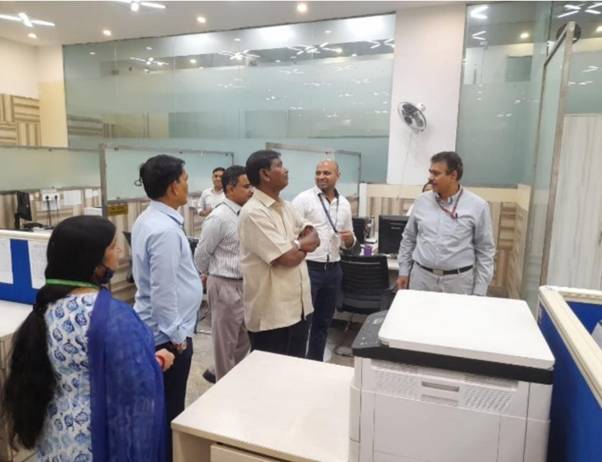
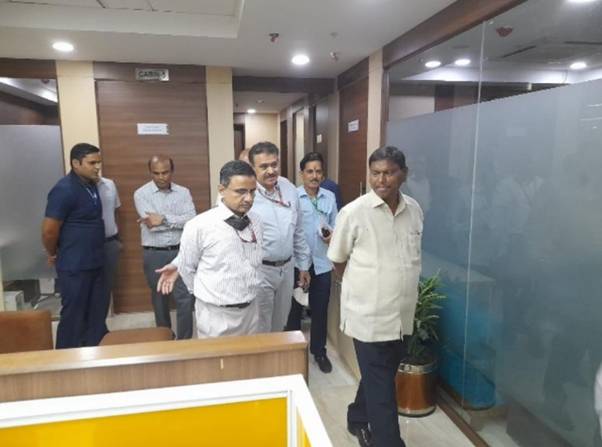
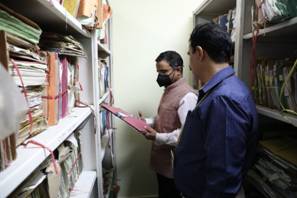
 The  Union Minister of Tribal Affairs, Shri Arjun Munda, inspected several of the Ministry of Tribal Affairs’ offices and divisions in the Jeewan Tara Building on Parliament Street in New Delhi and in National Tribal Research Institute as part of the special campaign 2.0 launched by Government of India from 2nd October to 31st October, 2022 in outstation offices, attached/subordinate offices.

Union  Minister of Tribal Affairs ShriArjun Munda  also reviewed the various activities taken up under the campaign during his visit to various offices of the Ministry. 


The Secretary Ministry of Tribal Affairs, Shri Anil Kumar Jha and the officers and staff of Ministry of Tribal Affairs also actively participated in the campaign.

The Secretary, Ministry of Tribal Affairs, visited the subordinate divisional offices of the Ministry at the Jeewan Tara Building and National Tribal Research Institute. 

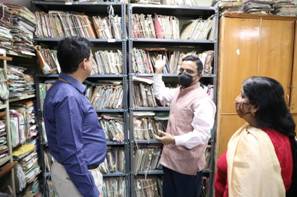
The  Secretary  reviewed the process of weeding  out old of old records and digitisation exercise being done by the Ministry.   He inspected record room and examined files and records being weeded out  as per the official procedures.

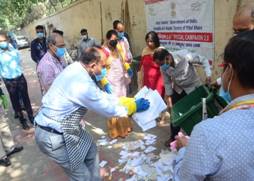
The campaign aims  at cleanliness in the offices and reducing pendency of grievances, VIP reference and parliamentary issues. 


The campaign  was  taken up in more than 300 premises which included the attached offices, Eklavya Model Residential Schools spread across country.  

Tribal students from  Eklavya Model Residential Schools actively participated in the  cleaning initiatives.


The Ministry of Tribal Affairs has always emphasised on providing clean and hygenic working environment for the officials and staff. The awareness drive aimed at cleanliness in government departments and sensitising government officials about cleanliness.

******

WOMEN EMPOWERMENT

 The term “Women Empowerment” indicates that women are not powerful enough and must be empowered. This terrible reality has existed for a very long time. In recent years, visible work has begun to raise women out of the abyss of insignificance and helplessness. Women’s freedom was restricted all throughout the world by patriarchal societies. Women were not allowed to vote or express their opinions. Women were kept in their houses. They realized as time passed that their lives mattered far more than merely assisting in the home. The globe began to see a rising in women as more and more women began to breach man-made barriers. Women, unlike males, never strive to silence their opposing gender’s voice. They grasp the hands of all the oppressed people – men and women alike – and pull them out of misery as they strive to better their lives.

HISTORY 

The history of Women empowerment does not begin on a certain day; rather, it is a cumulative process. However, there have been rallies, demonstrations, and revolutions that have accelerated the cause of women’s emancipation. Women were denied the right to vote in hundreds of countries throughout history, including the United States. As time went on, more and more women banded together and raised their voices. Gaining voting rights dramatically improved women’s social standing. Many suffrage movements worked for women’s voting rights daily. Individuals such as Elizabeth Stanton and organizations such as the National American Woman Suffrage Association and the National Woman’s Party were instrumental in winning women’s voting rights in the United States. The Women’s Social and Political Union in the United Kingdom vigorously pushed for women’s suffrage. It is a pity for society as a whole, given that many countries just recently allowed women the right to vote. After the second half of the twentieth century, Kuwait, Qatar, Zaire, Bahrain, Andorra, the Central African Republic, and other countries allowed women the right to vote. No woman can be empowered until she is financially self-sufficient. Women no longer have to rely on their dads or spouses to obtain what they desire. Women have increased possibilities to enter the labour field beginning in the twentieth century. 

At the same time, many women in England were obliged to labour both at work and at home to support their families. After WWII, women made the decision to enter the labour force on their own. Today, more and more employees are becoming available for women. Women are proven to be deserving of the titles bestowed upon them. Women have also gained major decision-making authority in the home. Both men and women today decide whether or not to have a child. The adoption of contraceptive tablets gave women even more control. Women can now work and study without restriction. Women empowerment cannot be achieved unless women at the bottom of society are empowered. Since the turn of the century, women at the grassroots level have found various vocational jobs, even those previously designated for men. Today, there are many female masons, bus drivers, gas station employees, farmers, and so on. And all of these women are doing an excellent job. 

WOMEN EMPOWERMENT IN INDIA

Women empowerment in India is incomparable to that in other countries. Women were held in great regard throughout the Vedic period. The emphasis on women’s education was never lost. The term ‘sahadharmini’ dates back to Vedic times. Sahadharmini translates as “equal companion.” Women in ancient India were treated with respect, education, and devotion. The strict Middle Eastern and British traditions infiltrated Indian culture throughout time. As a result, women’s authority and esteem were diminished.

Women gradually regained their lost influence following independence. Women are omnipresent nowadays. The country has its first female Prime Minister and President, and it has several notable female athletes such as Saina Nehwal and P.T Usha, as well as outstanding women scientists such as A. Chatterjee and B Vijayalakshmi. In India, women are entering the armed forces without reluctance. However, many women in India are still struggling to break free from patriarchy, particularly in rural areas. The empowered women must encourage these women to speak up, protest, and seek assistance from the authorities.

ISRO’s new achievement : launches 36 satellite for UK based OneWeb.

The Indian Space Research Organisation (ISRO) has successfully deployed the latest batch of 36 satellites for satellite operator OneWeb, aboard its heavyweight configuration Geosynchronous Satellite Launch Vehicle (GSLV)-Mk.III rocket. The launch marked the first commercial mission that used ISRO’s GSLV, also known as the Launch Vehicle Mark III (LVM3).

The collaboration is a result of ISRO’s commercial arm NewSpace India Limited’s two service contracts, signed with One Web for launching low Earth orbit (LEO) broadband communication satellites. ISRO said that as part of the contract, 36 satellites will be placed into orbit by one LVM3, from Satish Dhawan Space Centre in Sriharikota in Andhra Pradesh.

The mission marked the second launch of the year for OneWeb, backed by Bharti Enterprises, after the conflict in Ukraine disrupted the UK operator’s plan for completing its satellite launches this year. Prior to the Ukraine-Russia war, OneWeb was using Russia’s central space agency Roscosmos’ commercial launch services through its Soyuz rockets.

However, amid geopolitical sanctions imposed on Russia by nations including the UK, erstwhile Roscosmos head Dmitry Rogozin said that the OneWeb satellites would not be released back to the company — unless the UK government ceded to the nation’s demand of removing the sanctions.

ISRO's new achievement : launches 36 satellite for UK based OneWeb.

The Indian Space Research Organisation (ISRO) has successfully deployed the latest batch of 36 satellites for satellite operator OneWeb, aboard its heavyweight configuration Geosynchronous Satellite Launch Vehicle (GSLV)-Mk.III rocket. The launch marked the first commercial mission that used ISRO’s GSLV, also known as the Launch Vehicle Mark III (LVM3).

The collaboration is a result of ISRO’s commercial arm NewSpace India Limited’s two service contracts, signed with One Web for launching low Earth orbit (LEO) broadband communication satellites. ISRO said that as part of the contract, 36 satellites will be placed into orbit by one LVM3, from Satish Dhawan Space Centre in Sriharikota in Andhra Pradesh.

The mission marked the second launch of the year for OneWeb, backed by Bharti Enterprises, after the conflict in Ukraine disrupted the UK operator’s plan for completing its satellite launches this year. Prior to the Ukraine-Russia war, OneWeb was using Russia’s central space agency Roscosmos’ commercial launch services through its Soyuz rockets.

However, amid geopolitical sanctions imposed on Russia by nations including the UK, erstwhile Roscosmos head Dmitry Rogozin said that the OneWeb satellites would not be released back to the company — unless the UK government ceded to the nation’s demand of removing the sanctions.

HAMARI PEHCHAN NGO

Hamari Pehchan NGO is a non-governmental organisation with the main motive of improving and changing the lives of people and leading them towards a better and happier life. It provides a platform for different people across the country as well as the society to show their skillsets and develop a unqiue niche for themselves. Through this NGO, many underprevlideged have been able to improve their livelihood and have also been able to overcome the fear of living their lives in jeopardy.

The NGO continuously thrives in changing the lives of people who are deprived of the basic essentials and are unable enjoy their company. Hamari Pehchan is not just limited to a specific gender, age group or a particular methodology for conditioning the advancement of the society. Whether it is about women, children, older people, it tries to reach out to everybody and every section of society. The main motto as earlier stated is always to help all the underprevildged ones and provide them an essential platform to showcase their skills and expertise.

Mission-

Seeking a world of hope, tolerance and social justice where poverty has been eradicated and all people live with dignity and security.

Vision-

 To help everyone in creating their own ‘Pahchan’ and live a life with dignity.

Values driven-

Believing in urgent action, innovation and the necessity of transformation—within the world and our own organization.

The NGO has created almost 390+ campaigns throughout the country to spread awareness regarding the donation programs and making lives of the underprivledged much better. And not just this, it has also helped almost 10,000+ people across the country in create their own niche and live their lives with dignity. The organization has been up and running for the past 5 years. With collaboration and support of the Delhi police, School Teachers, Advocates, experienced Doctors and especially the school and college youth, the organization has come a long way with now over 5000 active members working relentlessly to support various causes.

Help is the most expensive gift, so be Rich by heart- Tarun Mathur

Need to transform agriculture to advanced farming and maintain continuity

Transforming agriculture into advanced farming practices while ensuring continuity involves adopting innovative techniques, technologies, and sustainable approaches to increase productivity, preserve natural resources, and secure food production for the future. Here are steps to achieve this:

  1. Adopting Precision Agriculture: Utilize technology such as sensors, drones, and GPS-guided machinery to monitor and manage crops more efficiently. This allows for precise application of resources like water, fertilizers, and pesticides, reducing waste and environmental impact.

  2. Implementing Agroecology: Embrace farming practices that mimic natural ecosystems, emphasizing biodiversity, soil health, and ecological balance. This includes crop rotation, agroforestry, and integrating livestock to improve soil fertility and reduce reliance on chemicals.

  3. Investing in Sustainable Irrigation: Employ water-efficient irrigation methods like drip irrigation, sprinkler systems, and smart water management techniques to conserve water resources and prevent wastage.

  4. Utilizing Biotechnology and GMOs: Responsible use of biotechnology, including genetically modified organisms (GMOs), can enhance crop resilience, increase yields, and address challenges like pests, diseases, and climate change impacts.

  5. Promoting Vertical Farming and Controlled Environment Agriculture: Embrace vertical farming techniques and controlled environment agriculture (CEA) such as hydroponics, aquaponics, and indoor farming to optimize space, reduce water usage, and produce crops year-round in urban settings.

  6. Encouraging Sustainable Livestock Practices: Implementing methods that reduce the environmental impact of livestock farming, such as rotational grazing, feed efficiency improvements, and methane reduction strategies.

  7. Fostering Digital Agriculture and Data Analytics: Utilize big data, AI, and predictive analytics to optimize farming practices, predict crop yields, monitor soil health, and make informed decisions for better resource management.

  8. Supporting Farmer Education and Training: Provide access to education, training, and resources for farmers to adopt and adapt to new technologies and sustainable practices.

  9. Policy Support and Investment: Governments and stakeholders should offer incentives, subsidies, and policies that encourage the adoption of sustainable farming practices, research into innovative technologies, and infrastructure development.

  10. Resilience and Adaptation to Climate Change: Develop strategies and practices that build resilience in agriculture against climate change effects, including drought-resistant crops, flood management, and soil conservation.

Continuity in advancing agriculture requires a holistic approach that combines technological innovation, sustainable practices, supportive policies, education, and investment. Collaboration among farmers, researchers, policymakers, and the private sector is essential to successfully transform agriculture while ensuring food security and environmental sustainability.

Startup India Seed Fund Scheme

The Startup India Seed Fund Scheme is an initiative by the Government of India to provide financial support to startups in their early stages of development. Launched as part of the Startup India initiative, this scheme aims to foster innovation, encourage entrepreneurship, and facilitate the growth of startups across various sectors.

Key features of the Startup India Seed Fund Scheme include:

  1. Financial Support: The scheme provides financial assistance to eligible startups to help them validate their business ideas, conduct proof of concept, develop prototypes, and prepare for market entry.

  2. Seed Funding: Startups can receive seed funding of up to INR 20 lakhs (~$27,000 USD) as a grant to support their initial stages of business development.

  3. Application Process: Eligible startups can apply for the seed fund through designated incubators and accelerators recognized by the Department for Promotion of Industry and Internal Trade (DPIIT) or through a selection committee.

  4. Eligibility Criteria: Startups looking to avail of this scheme need to meet certain criteria related to their incorporation, age of the company, innovation quotient, and validation of their business idea.

  5. Focus on Innovation: The scheme focuses on startups with innovative ideas, technological solutions, or unique business models that have the potential for high growth and scalability.

  6. Support through Incubators: Incubators play a crucial role in the implementation of this scheme by selecting eligible startups, providing them with mentorship, guidance, and connecting them to funding opportunities.

  7. Equity-Free Grants: The funding provided under this scheme is in the form of an equity-free grant, allowing startups to retain ownership and control over their ventures.

The Startup India Seed Fund Scheme aims to bridge the initial funding gap that many startups face in their early stages and enable them to move closer to commercialization. By providing financial support and fostering an ecosystem that nurtures innovation, the scheme seeks to empower startups and contribute to India’s entrepreneurial landscape.

GLOBAL WARMING : A GLOBAL WARNING?

Global warming is defined as a rise in the average temperature of the Earth, particularly a long-term shift significant enough to induce climate change. Since 1900, the global average surface temperature has risen by more than a degree, and the rate of warming has nearly doubled the century-long average since 1970. Global warming refers to an increase in the average temperature of the Earth. Almost all experts examining the earth’s climate record now agree that human actions, specifically the release of greenhouse gases from smokestacks, cars, and burning forests, are possibly the primary force behind the trend. The gases supplement the planet’s natural greenhouse effect, allowing sunlight in but preventing part of the resulting heat from escaping into space. Many climate experts believe that if greenhouse gas emissions are not significantly reduced, the 21st century will see temperatures rise by 3 to 8 degrees, climatic patterns alter dramatically, ice sheets decrease, and sea levels rise by several feet.

With the possible exception of another world war, a massive asteroid, a deadly pandemic, or global warming may be the only major threats to our planet.

CAUSES:

The emission of greenhouse gases into the atmosphere, such as carbon dioxide, methane, and nitrous oxide, is the primary driver of global warming. The primary source of CO2 emissions in power plants. These power stations release significant volumes of CO2 from the combustion of fossil fuels for electricity generation.
The combustion of gasoline in automobile engines accounts for approximately 20% of carbon dioxide emissions into the environment. Buildings, both commercial and residential, contribute more to global warming pollution than automobiles and trucks. Building huge structures necessitate the use of a lot of fuel, which emits a lot of carbon dioxide into the environment. Methane is more than 20 times more effective than carbon dioxide in trapping heat in the atmosphere. Methane is generated from a variety of sources, including rice paddies, bovine farts, bog microbes, and the production of fossil fuels. The primary sources of nitrous oxide include the manufacturing of nylon and nitric acid, automobiles with catalytic converters, the usage of fertilisers in agriculture, and the combustion of organic materials.
Deforestation, which is caused by the chopping and burning of trees for residential and industrial use, is another driver of global warming.
Scientists all throughout the world are making predictions about the negative impacts of global warming and linking some of the events that have occurred in recent decades as an alarm of global warming. The average temperature of the Earth is rising as a result of global warming.
A rise in global temperatures can induce additional changes in the environment, such as rising sea levels and changing the amount and pattern of rainfall. These changes may increase the frequency and severity of catastrophic weather events such as floods, famines, heat waves, tornadoes, and twisters. Other implications might include greater or lower agricultural outputs, glacier melting, decreased summer stream flows, genus extinctions, and a shift in disease vector distributions. Many bird and animal species have already become extinct as a result of global warming. As a result of global warming, several new illnesses have recently appeared.
Many species are likely to die off or become extinct as sea temperatures rise, whilst other species that favour warmer waters will thrive. Coral reefs are predicted to die out as a result of global warming, which is one of the most concerning trends. Climate change is projected to produce irreversible changes in the ecology and animal behaviour. Birds are one of the species that will be impacted by climate change. Birds may find a more permanent home in northern portions of the Northern Hemisphere as a result of global warming.
Scientists warn that the tundra is at risk of melting owing to an increase in global warming pollution equal to the net quantity previously present in the earth’s/atmosphere. Similarly, another team of scientists previously claimed that in a single year, Greenland saw 32 glacial earthquakes with magnitudes ranging from 4.6 to 5.1 on the Richter scale. This is a concerning indicator, indicating that a massive destabilization is currently taking place deep beneath the world’s second-largest ice growth. If this ice melted and fell into the sea, it would raise global sea levels by 20 feet.
Every day brings more evidence that we are currently in the midst of a global emergency, a climate catastrophe that requires immediate action to drastically reduce carbon dioxide emissions globally to slow the earth’s increasing temperatures and escape disaster.
It is difficult to attribute any individual incident to global warming, but studies show that human activities are raising the earth’s temperature. Even if no new greenhouse gases were released after 2100, global warming and sea level would likely continue to increase for more than a millennium, since carbon dioxide has a long average atmospheric life cycle.
Various countries are making significant efforts to slow the rate of global warming. The Kyoto Protocol, signed by numerous governments to minimize emissions of various greenhouse gases, is one such initiative. In addition, various non-profit organizations are attempting to further the cause


IMPACT OF WESTERN CULTURE ON INDIA

India is a diverse country. Our country has many different languages, faiths, customs, and traditions. Indian literature on philosophy, Indian food, yoga, and other aspects of Indian culture has made an effect all over the world. Western culture is sometimes referred to as European civilization, Western civilization, or Western way of life. It is founded on particular belief systems, practices, and moral and ethical principles. The word refers not just to European countries, but also to areas where European civilization is spreading. India is a country rich in legacy and culture, however, we are witnessing the fading of Indian culture in many parts of the country, particularly in metropolitan communities.

Western culture has had a significant impact on our conventions, traditions, social and moral behaviour, and love and respect for others. Nowadays, people want to be free and do not want to be bound by Indian norms and traditions. We are seeing the breakdown of a combined family and the growth of the nuclear family daily. Few people are interested in making changes and sharing their possessions with other family members; the concept of privacy is becoming more important, and love and respect for others, particularly the elderly, are dwindling. People are too busy in this digital era to care for others. Western civilization has planted the roots of selfishness in Indian minds.

These are in direct opposition to Indian culture, which has always taught us to live in peace with one another and to love and respect everyone in our homes. A youngster who lacks the experience of a nuclear family owing to the absence of his grandfather and grandmother, as well as both parents working, fails to learn ethical or moral ideals and instead learns whatever little he sees and understands from the world and his instructors. As a result, we end up raising a child who has little ethical standards and is not afraid to engage in unethical behaviour since no one is there to educate him on good or evil or to stop him from doing anything wrong.
We must understand what is good and wrong for ourselves. Western society is not all negative; while it has made our lives quicker, it has also made them easier and more pleasant.
We must value our Indian culture, which taught us to live in peace and harmony with others by improving our tolerance and patience. Many people from other nations recognize the value of Indian heritage and are adopting aspects of Indian culture such as yoga and meditation, wisdom and teachings passed down from old saints, and so on. The study of Indian wisdom may assist people of any ethnicity better their lives.
It is time to recognize both the positive and negative effects of Indian and Western culture and to promote positive cultural traditions while eliminating those that are diminishing the quality of human existence.

Employment opportunities increasing in the country

Increasing employment opportunities in a country can result from various factors and initiatives aimed at stimulating economic growth, fostering entrepreneurship, and addressing labor market demands. Here are several ways employment opportunities can expand within a country:

  1. Economic Growth: A growing economy often leads to increased job creation across various sectors. Industries experiencing growth, such as technology, healthcare, renewable energy, and infrastructure, tend to offer more job opportunities.

  2. Government Initiatives: Government policies and programs focused on job creation, skill development, and entrepreneurship can significantly impact employment. Subsidies, incentives, and investments in key sectors can spur job growth.

  3. Entrepreneurship and Small Business Support: Encouraging entrepreneurship and supporting small and medium-sized enterprises (SMEs) through funding, mentorship, and favorable policies can lead to job creation as these businesses expand.

  4. Investment in Infrastructure: Infrastructure development projects like construction, transportation, and urban development often create jobs directly and indirectly across multiple sectors.

  5. Technology and Innovation: Advancements in technology can create new industries and job roles. The digital economy, including fields like artificial intelligence, cybersecurity, and data analytics, offers numerous employment opportunities.

  6. Skilling and Education Programs: Investing in education and vocational training aligned with market demands can equip individuals with the skills needed for available job opportunities, reducing unemployment rates.

  7. Supporting Industries with High Labor Demand: Sectors such as healthcare, education, green energy, and information technology often have a high demand for skilled workers, leading to job creation.

  8. Foreign Direct Investment (FDI): Attracting FDI can lead to the establishment of new businesses and industries, which can contribute to job growth within a country.

  9. Rural Development Initiatives: Initiatives aimed at rural development, agriculture modernization, and diversification can create employment opportunities in rural areas, reducing migration to urban centers.

  10. Public-Private Partnerships: Collaborations between government and private sectors to develop projects and initiatives can lead to employment opportunities while enhancing infrastructure and services.

Efforts to enhance employment opportunities often require a multi-pronged approach, including economic policies, educational reforms, targeted investments, and fostering an environment conducive to innovation and entrepreneurship. Successful employment generation strategies are typically tailored to a country’s specific socio-economic context and needs.

India lost 159 billion dollars in 2021 due to heat waves.

Photo by Fabio

India suffered an income loss of USD 159 billion, 5.4 per cent of its gross domestic product, in the service, manufacturing, agriculture, and construction sectors due to extreme heat in 2021, according to a new report.

Heat exposure in the country led to the loss of 167 billion potential labour hours, a 39 per cent increase, said the Climate Transparency Report 2022 compiled by an international partnership of organisations.

Labour productivity in India is projected to decline by five per cent from the 1986–2006 reference period if global temperatures increase by 1.5 degrees Celsius, it said. The decline in labour productivity will be 2.1 times more if the global temperatures increase by 2.5 degrees Celsius, and 2.7 times at a three degree Celsius scenario.

Losses to earnings from heat-related labour capacity reduction were the highest in India among G20 nations in 2021. Other countries include Indonesia (1.6% of GDP), and Saudi Arabia (1% of GDP).

India lost 159 billion dollars in 2021 due to heat waves.

Photo by Fabio

India suffered an income loss of USD 159 billion, 5.4 per cent of its gross domestic product, in the service, manufacturing, agriculture, and construction sectors due to extreme heat in 2021, according to a new report.

Heat exposure in the country led to the loss of 167 billion potential labour hours, a 39 per cent increase, said the Climate Transparency Report 2022 compiled by an international partnership of organisations.

Labour productivity in India is projected to decline by five per cent from the 1986–2006 reference period if global temperatures increase by 1.5 degrees Celsius, it said. The decline in labour productivity will be 2.1 times more if the global temperatures increase by 2.5 degrees Celsius, and 2.7 times at a three degree Celsius scenario.

Losses to earnings from heat-related labour capacity reduction were the highest in India among G20 nations in 2021. Other countries include Indonesia (1.6% of GDP), and Saudi Arabia (1% of GDP).

What is the importance of economic impact

The economic impact refers to the effects that a particular activity, policy, event, or industry has on the economy of a region, country, or community. Understanding and assessing economic impacts are crucial for several reasons:

  1. Gauging Contribution to GDP: Economic impacts help measure the contribution of various sectors or activities to the Gross Domestic Product (GDP), indicating their significance in driving economic growth.

  2. Job Creation: Assessing economic impact allows for understanding how industries or initiatives generate employment opportunities, contributing to reducing unemployment rates and improving livelihoods.

  3. Assessing Tax Revenues: Economic impact analysis helps estimate tax revenues generated by industries or events, providing insights into their financial contributions to government budgets.

  4. Identifying Growth Opportunities: Understanding the economic impact helps identify growth opportunities within specific sectors or activities, enabling policymakers and businesses to allocate resources more effectively.

  5. Informing Policy Decisions: Policymakers use economic impact assessments to make informed decisions about resource allocation, infrastructure development, regulatory changes, and other policies that affect economic growth.

  6. Attracting Investments: Assessing the economic impact of potential investments or projects is essential for attracting funding from investors or financial institutions.

  7. Understanding Regional Disparities: Economic impact analysis helps identify disparities in economic development among regions, allowing for targeted interventions and policies to address these disparities.

  8. Assessing Social Welfare: Economic impacts extend beyond monetary measures, allowing for the assessment of social benefits, improved living standards, and overall well-being resulting from economic activities.

  9. Forecasting Economic Trends: Analyzing economic impacts provides insights into potential future trends, helping businesses and policymakers prepare for changes and make strategic decisions.

  10. Measuring Costs and Benefits: It helps in evaluating the costs and benefits of various projects, policies, or events, assisting in decision-making and ensuring optimal resource allocation.

Understanding the economic impact is essential for creating sustainable and inclusive economic growth, improving living standards, and guiding policy decisions to achieve desired socio-economic outcomes. It provides valuable insights into the overall health and direction of an economy, enabling stakeholders to make informed choices to promote prosperity and development.