International Conference on Multidisciplinary Research (ICMR) 2023

International Conference on Multidisciplinary Research (ICMR) 2023 is a federated organization dedicated to bringing together a significant number of diverse scholarly studies for presentation within the conference program. With its high quality, it provides an exceptional value for students, academics and industry researchers.

ICMR2023 aims to bring together leading academic scientists, researchers and research scholars to exchange and share their experiences and research results on all aspects of Social Sciences focus on Technology. It also provides a premier interdisciplinary platform for researchers, practitioners and educators to present and discuss the most recent innovations, trends, and concerns, as well as practical challenges, encountered and solutions adopted in the fields of Social Sciences.

ICMR2023 will be held as a fully ONLINE conference. All presentations will be made ASYNCHRONOUSLY (by sending a presentation video). Pre-created presentations of invited speakers and other participants will be made accessible on the website on the day of the congress. The presentations will be uploaded to the IICTSS channel on the Izmir Academy account to be created on YOUTUBE. Participants are deemed to have allowed their videos to be uploaded on YOUTUBE by participating in the congress. They cannot make any claims or requests on this issue later.

Submission Guidelines

  • Authors are kindly invited to contribute to the conference through submissions of their research abstracts and/or full papers.
  • Full paper submission is NOT MANDATORY. You can present your paper only by sending it’s abstract using the abstract template and rules below.
  • Those who want to publish their full-text papers in the journal or in the proceedings book will be able to send their full-text papers after the conference specified date on the Important dates page.
  • Also, high-quality research contributions describing original and unpublished results of conceptual, constructive, empirical, experimental, or theoretical work in all areas of Social Sciences are cordially invited for presentation at the conference.
  • The conference solicits contributions of abstracts and papers that address themes and topics of the conference, including figures, tables and references of novel research materials.
  • Please visit Publication Opportunities page for abstract and full paper publication.

Guidelines for Abstract Submission

  • Downloadable versions of the checklist for Abstract Papers (CLICK HERE TO DOWNLOAD ABSTRACT TEMPLATE).
  • Instruction of Submitting abstract;
    • Title: Please select a suitable title for your abstract
    • Authors: Put commas between the authors. (Name Surname, Affiliation, city, country, email, ORCID)
    • Abstract: (Between 350-800 words. It should include Problem statement, Research method, Contribution, Expected results)
    • Keywords: Put commas between words
    • References: References will be given for the abstract
  • Note: Your study should have 6 authors at most.

CLICK HERE TO SUBMIT YOUR ABSTRACT

Guidelines for Full Paper Submission

  • Regular paper submissions are 8 (eight) pages maximum (exclusive of bibliography).
  • Formatting instructions for all papers: they must be written in English and use standard two-column conference templates that can be downloaded from HERE (CLICK HERE TO DOWNLOAD FULL PAPER TEMPLATE)

List of Topics

  • Technology and Administrative Sciences
  • Technology and Social Sciences
  • Technology and Economics
  • Technology and Finance
  • Management Information Systems
  • Information and Communication Technologies
  • Computer Science
  • Technology and International Relations
  • Metaverse
  • Digital Twins
  • Artificial Intelligence
  • Blockchain
  • Crypto Assets
  • Cyber Security
  • e-Government
  • e-Commerce
  • e-Business
  • Technology in Health
  • Other topics

Scientific & Advisory committee members

You can find the publication opportunities offered by ICMR2023 for your abstract and full-text paper in the following subheadings.

  • Abstract Book
    • All accepted abstracts will be published in an electronic book with ISBN  named “ICMR2023 Abstract Book”. Book will be open access and shared freely.
  • Conference Proceedings
    • All submitted conference full papers will be blind peer-reviewed.
    • The peer-reviewed and accapted conference proceedings will be published in an electronic book with ISBN (Authors will have the option not to include full text articles in the proceeding book so they can send it to another journal or use it in our 3.3 and 3.4 heading options). Book will be open access and shared freely.
  • Journal Publication
    • ICMR2023 has teamed up with the regular/special issue on
      • International Journal of Research (Indexed by Index Copernicus (Master List), CrossRef, ROAD, Academic Resource Index (Researchbib), Scientific Indexing Services (SIS), ASOS Index, Google Scholar,Academia.edu, Advanced Science Index, Base, OpenAIRE, WorldCat),
    • Some selected high-impact full-text papers will also be considered for that journals’ issue. Selected full papers will have the opportunity to be considered for the Journals’ Issue. The paper selection will be carried out during the peer review process as well as at the conference presentation stage. Submitted papers must not be under consideration by any other journal or publication. The final decision for paper selection will be made based on peer review reports by the Journal Editorial Board. Selected full-text papers will be published online free of charge.
  • Edited Book Publications
    • One or more edited books can be published. All accepted full papers will have the opportunity to be considered for the edited book option. Book(s) and titles will be decided by the book editor. Papers will be grouped and considered for the specified book(s). The authors won’t pay any extra publication, processing or open access fee for the book(s). Book will have ISSN and be published electronically by an academic publishing house in TURKEY. It will be open access and we will share the pdf version with the authors. 

Venue

  • ICMR2023 will be held as a fully ONLINE conference. All presentations will be made ASYNCHRONOUSLY (by sending a presentation video). Pre-created presentations of invited speakers and other participants will be made accessible on the website on the day of the congress. The presentations will be uploaded to the ICMR2023 channel on the Izmir Academy account to be created on YOUTUBE. Participants are deemed to have allowed their videos to be uploaded on YOUTUBE by participating in the congress. They cannot make any claims or requests on this issue later.

Important Things to Note

Important Dates

Date for Submission of Papers

20 March 2023 (without Late fee)

30 March 2023 (with late fee)

Acceptance Mail for Papers

10 April 2023

Date of Online Conference

20-22 April 2023

Email id for Submission of Papers

Email: icmr2023@edupub.org

Special Issue for Conference Papers

Visit conference Official Site at https://icmr.edupub.org/

ISBN for Conference Proceedings 

International Conference on Multidisciplinary Research (ICMR) 2023

International Conference on Multidisciplinary Research (ICMR) 2023

The International Conference invites abstracts from delegates of all over the globe including guest/ invited speakers, faculties, research scholars, post graduate and graduate students from different organizations. Abstracts up to 250-300 words should be prepared using Times New Roman (12pt), in single line. Title should be in bold. The abstract should be free from plagiarism. Mention names of the author(s), affiliation(s), and mail id of the corresponding author. Underline the name of presenting author and email to icmr2023@edupub.org The selected full-length paper will be published in UGC approved or SCOPUS indexed journal. All the abstracts will be published in the form of conference proceeding with ISBN No. Article Processing Charges will be as per the selected journal and the publication charge will be completely paid by author.

List of Topics

Modern Education Challenges.

Hybrid Mode Education.

Challenges In Multidisciplinary Education.

Impact Of Culture On Education.

Future Perspective of online Education.

Technical Education. Digital Education.

Nai Talim in Education .

NEP 2020 and Indian Education System.

Fusion of Traditional Indian Education System on Modern Education Challenges

Publication

The selected full-length paper will be published in UGC approved or SCOPUS indexed journal. All the abstracts will be published in the form of conference proceeding with ISBN No. Article Processing Charges will be as per the selected journal and the publication charge will be completely paid by author.

Venue

Hybrid Mode

Contact

icmr2023@edupub.org

Important Things to Note

Important Dates

Date for Submission of Papers

20 March 2023 (without Late fee)

30 March 2023 (with late fee)

Acceptance Mail for Papers

10 April 2023

Date of Online Conference

20-22 April 2023

Email id for Submission of Papers

Email: icmr2023@edupub.org

Special Issue for Conference Papers

Visit conference Official Site at https://icmr.edupub.org/

ISBN for Conference Proceedings 

International Conference on Multidisciplinary Research (ICMR) 2023

International Conference on Multidisciplinary Research (ICMR) 2023 on April 20-22, 2023. The scope of Conference is to provide a forum to promote, enhance and stimulate research interactions and collaboration in the fields of Technology, Media and Management in line with NEP-2020. This conference will facilitate to promote the exchange of ideas among interested researchers, students, industrialists, developers, and practitioners. This conference will also feature plenary talks, workshops, and parallel technical sessions. The vision of NEP 2020 is to develop knowledge, skills, values, and dispositions that support responsible commitment to human rights, sustainable development and living, and global well-being, thereby reflecting a truly global citizen. The conference welcomes conceptual and empirical papers highlighting the application of Technology, Media & Management as innovative solutions for organizations as well as individuals in the current scenario.

Submission Guidelines

  • All contributions must be original, should not have been published elsewhere and should not be intended to be published elsewhere during the review period.
  • Plagiarism of any type, if detected, will lead to rejection of the articles anytime.
  • At least one author of an accepted paper must register.
  • Article may have maximum of 3 authors.
  • Presentation through Skype is allowed only for foreign authors.

List of Topics

Track-1

  • Artificial Intelligence and Machine Learning
  • Computing Technology
  • Computer Network
  • Multimedia Application
  • Others

Track-2

  • Ecommerce
  • Human Resource Management
  • Industrial issues in Management
  • Globalization and current issues
  • Recent Media Innovations
  • Others

Track-3

Multidisciplinary

  • present original research
  • share findings from pilot studies
  • demonstrate results of comprehensive evaluations of campaigns or programs
  • present new conceptual models and frameworks
  • discuss new theories, new concepts and constructs, theoretical refinements, or emerging propositions.

Publication

The conference proceedings will be published with ISBN No. and special issue of IJR – International Journal of Research ijrjournal.com

Venue

Online and link will be sent in mail.

Contact

All questions about submissions should be emailed to : editor@edupub.org

  • FOR PAPER SUBMISSION SEND PAPERS TO icmr2023@edupub.org

Important Things to Note

Important Dates

Date for Submission of Papers

20 March 2023 (without Late fee)

30 March 2023 (with late fee)

Acceptance Mail for Papers

10 April 2023

Date of Online Conference

20-22 April 2023

Email id for Submission of Papers

Email: icmr2023@edupub.org

Special Issue for Conference Papers

Visit conference Official Site at https://icmr.edupub.org/
ISBN for Conference Proceedings 

International Conference on Multidisciplinary Research (ICMR) 2023

International Conference on Multidisciplinary Research (ICMR) 2023 will be held online globally
ICMR2023 will be a major conference organized with the objective of bringing together researchers, scholars and practitioners from academia and industry working in the area of advanced Engineering, Technology, Computing, Communication Technology, Management, Future computing problems, Advanced Computing and Data science in Digital Era.

Submission Guidelines

All papers must be original and not simultaneously submitted to another journal or conference. The following paper categories are welcome:

List of Topics

  • TRACK 1 : Engineering & Technology- E-Learning, e-Governance, Internet of things,Smart Cities, m-Commerce, Biomedical Technologies
  • TRACK 2 : Future Computing- Big data-oriented computing, Fog-computing,sensing data, Mobile Edge Computing, Water and Soil conservation, Urban computing, Renewable Energies
  • TRACK 3 : Communication Technology- Mobile Apps, Wireless/ Mobile Communication, 3G/4G/5G Network Evolutions, Satellite Communication Systems, Machine to Machine
  • TRACK 4 : Management- Supply Chain Management, Customer Relationship Mgt, International Trade, Financial Sustainability , SMEs, Economics and Demography, Micro Finance, Collaborative Arts & Culture, Entrepreneurship Management, Management Information System
  • TRACK 5 : Multidisciplinary- Machine Learning, Image processing interpretations,High performance computing, Database and Data Mining, Security, Data Science.

“Education can, and must, contribute to a new vision of sustainable global development.”(UNESCO, 2015)

International Conference on Multidisciplinary Research (ICMR) 2023 has to be understood as an integral part of quality education, inherent in the concept of lifelong learning. All educational institutions – from preschool to higher education and in non-formal and informal education – can and should consider it their responsibility to deal intensively with matters of sustainable development and to foster the development of sustainability competencies. ICMR2023 provides an education that matters and is truly relevant to every learner in the light of today’s challenges.

Education for Sustainable Development is holistic and transformational education that addresses learning content and outcomes, pedagogy and the learning environment.  Thus, ESD does not only integrate contents such as climate change, poverty and sustainable consumption into the curriculum; it also creates interactive, learner-centered teaching and learning settings. What ICMR2023 requires is a shift from teaching to learning. It asks for an action-oriented, transformative pedagogy, which supports self-directed learning, participation and collaboration, problem-orientation, interdisciplinary approach and the linking of formal and informal learning. Only such pedagogical approaches make possible the development of the key competencies needed for promoting sustainable development. With the introduction of the New Education Policy 2020, India would like to train our youth to face the global challenges and contribute their best to the society. 

About the Seminar

All educational institutions – from preschool to higher education and in non-formal and informal education – can and should consider it their responsibility to deal intensively with matters of sustainable development and to foster the development of sustainability competencies. 

International Conference on Multidisciplinary Research (ICMR) 2023 on 20-21 April 2023. Submit papers for review to icmr2023@edupub.org before 30th March 2023.

The proposed Seminar aims at integrating the principles and practices of sustainable development into all aspects of education and learning. It also aims to encourage changes in knowledge, values and attitudes with the vision of enabling a more sustainable and just society for all. The Seminar is an effort to provide a forum for Educationists, Teacher Educators, Research Scholars, and Teachers to come together for exchange of views, ideas and experiences and to deliberate upon various issues related to Education for sustainable Development.

Submission Guidelines

All papers must be original and not simultaneously submitted to another journal or conference.

The Abstract/Paper should be typed in MS Word, 12 point Times New Roman and 1.5 line spacing. The Abstract should be limited upto 500 words only and the full paper should be 10-12 pages. Author(s) should mention their designation along with the institutional affiliation and contact details.  Only after the acceptance of the abstract, the prospective paper presenters need to submit their full paper. How-ever the organizing committee will reserve the right to accept or reject the final paper at their discretion. The Plagiarism must not exceed the limit of 20% including References. 

Kindly send your Abstracts and Full length paper on icmr2023@edupub.org

List of Sub-Themes

  • Sustainable Development and Innovative Pedagogic Practices
  • Sustainable Development and Gender Equality
  • Sustainable Development and Multidisciplinary approach to Curriculum
  • Sustainable Development and ICT
  • Sustainable Development and Globalization
  • Sustainable Development and Liberal Learning
  • Inclusive and Equitable Quality Education for Lifelong learning
  • Moral and Global Education of Youth
  • Education and Employment 
  • Global Educational Movements to eradicate illiteracy
  • Issues and challenges in Global and Regional Leadership in Education
  • Social, Environmental and Spiritual Consciousness among Learners
  • Global Social, Economical  and Environmental issues for Sustainable Development

Organizing Committee

Publication

The selected papers will be published in the Special issue of IJR – International Journal of Research at https://ijrjournal.com

Venue

The conference will be held online mode.

Contact

All questions about submissions should be emailed to icmr2023@edupub.org

International Conference on Multidisciplinary Research (ICMR) 2023

International Conference on Multidisciplinary Research (ICMR) 2023 will be held online globally
ICMR2023 will be a major conference organized with the objective of bringing together researchers, scholars and practitioners from academia and industry working in the area of advanced Engineering, Technology, Computing, Communication Technology, Management, Future computing problems, Advanced Computing and Data science in Digital Era.

Submission Guidelines

All papers must be original and not simultaneously submitted to another journal or conference. The following paper categories are welcome:

List of Topics

  • TRACK 1 : Engineering & Technology- E-Learning, e-Governance, Internet of things,Smart Cities, m-Commerce, Biomedical Technologies
  • TRACK 2 : Future Computing- Big data-oriented computing, Fog-computing,sensing data, Mobile Edge Computing, Water and Soil conservation, Urban computing, Renewable Energies
  • TRACK 3 : Communication Technology- Mobile Apps, Wireless/ Mobile Communication, 3G/4G/5G Network Evolutions, Satellite Communication Systems, Machine to Machine
  • TRACK 4 : Management- Supply Chain Management, Customer Relationship Mgt, International Trade, Financial Sustainability , SMEs, Economics and Demography, Micro Finance, Collaborative Arts & Culture, Entrepreneurship Management, Management Information System
  • TRACK 5 : Multidisciplinary- Machine Learning, Image processing interpretations,High performance computing, Database and Data Mining, Security, Data Science.

“Education can, and must, contribute to a new vision of sustainable global development.”(UNESCO, 2015)

International Conference on Multidisciplinary Research (ICMR) 2023 has to be understood as an integral part of quality education, inherent in the concept of lifelong learning. All educational institutions – from preschool to higher education and in non-formal and informal education – can and should consider it their responsibility to deal intensively with matters of sustainable development and to foster the development of sustainability competencies. ICMR2023 provides an education that matters and is truly relevant to every learner in the light of today’s challenges.

Education for Sustainable Development is holistic and transformational education that addresses learning content and outcomes, pedagogy and the learning environment.  Thus, ESD does not only integrate contents such as climate change, poverty and sustainable consumption into the curriculum; it also creates interactive, learner-centered teaching and learning settings. What ICMR2023 requires is a shift from teaching to learning. It asks for an action-oriented, transformative pedagogy, which supports self-directed learning, participation and collaboration, problem-orientation, interdisciplinary approach and the linking of formal and informal learning. Only such pedagogical approaches make possible the development of the key competencies needed for promoting sustainable development. With the introduction of the New Education Policy 2020, India would like to train our youth to face the global challenges and contribute their best to the society. 

About the Seminar

All educational institutions – from preschool to higher education and in non-formal and informal education – can and should consider it their responsibility to deal intensively with matters of sustainable development and to foster the development of sustainability competencies. 

International Conference on Multidisciplinary Research (ICMR) 2023 on 20-21 April 2023. Submit papers for review to icmr2023@edupub.org before 30th March 2023.

The proposed Seminar aims at integrating the principles and practices of sustainable development into all aspects of education and learning. It also aims to encourage changes in knowledge, values and attitudes with the vision of enabling a more sustainable and just society for all. The Seminar is an effort to provide a forum for Educationists, Teacher Educators, Research Scholars, and Teachers to come together for exchange of views, ideas and experiences and to deliberate upon various issues related to Education for sustainable Development.

Submission Guidelines

All papers must be original and not simultaneously submitted to another journal or conference.

The Abstract/Paper should be typed in MS Word, 12 point Times New Roman and 1.5 line spacing. The Abstract should be limited upto 500 words only and the full paper should be 10-12 pages. Author(s) should mention their designation along with the institutional affiliation and contact details.  Only after the acceptance of the abstract, the prospective paper presenters need to submit their full paper. How-ever the organizing committee will reserve the right to accept or reject the final paper at their discretion. The Plagiarism must not exceed the limit of 20% including References. 

Kindly send your Abstracts and Full length paper on icmr2023@edupub.org

List of Sub-Themes

  • Sustainable Development and Innovative Pedagogic Practices
  • Sustainable Development and Gender Equality
  • Sustainable Development and Multidisciplinary approach to Curriculum
  • Sustainable Development and ICT
  • Sustainable Development and Globalization
  • Sustainable Development and Liberal Learning
  • Inclusive and Equitable Quality Education for Lifelong learning
  • Moral and Global Education of Youth
  • Education and Employment 
  • Global Educational Movements to eradicate illiteracy
  • Issues and challenges in Global and Regional Leadership in Education
  • Social, Environmental and Spiritual Consciousness among Learners
  • Global Social, Economical  and Environmental issues for Sustainable Development

Organizing Committee

Publication

The selected papers will be published in the Special issue of IJR – International Journal of Research at https://ijrjournal.com

Venue

The conference will be held online mode.

Contact

All questions about submissions should be emailed to icmr2023@edupub.org

International Conference on Multidisciplinary Research (ICMR) 2023

International Conference on Multidisciplinary Research (ICMR) 2023

 believe that students outside the country must be able to adapt to changes in global but at the same time should not bleed regarding identity as an global.

International Conference on Multidisciplinary Research (ICMR) 2023

 has shown on many occasions that to be considered a central role in the regional and business fundamental political structures. The Industrial Revolution 4.0 becomes a golden opportunity for each ICMR2023 to show its existence in the global market. For this reason, It will be the very first leap on the youth movements, in which our youth become the indicator of significant changes in the future, which will be realized by using all the potential of the ICMR2023 diversity.

Submission Guidelines

Authors are invited to submit complete, original and unpublished research papers to the 

International Conference on Multidisciplinary Research (ICMR) 2023

 which may address theoretical, methodological or practical aspects related to multidisciplinary

Please prepare your manuscript using the following guidelines:

  • Article files should be provided in Microsoft Word or PDF format. PDF as a sole file type is not accepted, a PDF must be accompanied by the source file.
  • Articles should be:
    • Written between 4 to 8 pages, typed in the single column using Times New Roman. This includes all text including references and appendices.
    • Maximum pt. the font for Title is 14pt.
    • Name and affiliation of all authors should be included after the title. Insert only corresponding email.
    • The maximum is 300 words in total for abstract. Authors should provide appropriate and short keywords (at least 3 words).
    • Headings must be concise, with a clear indication of the distinction between the hierarchies of headings. The preferred format is for first level headings to be presented in bold format and subsequent sub-headings to be presented in medium italics.
    • Your manuscript should include an introduction, the previous study (literature review), objectives, methodology, results, discussion and conclusion. However, depending on your content, some of our suggestion can be expanded or reduced.
    • Equations should be centered with equation numbers on the right-hand side (flush right).
    • Figures, tables, and equations must be inserted in the text and may not be grouped at the end of the paper. If you need to arrange a number of figures, a good tip is to place them in a table, which gives you additional control of the layout
    • Cite all Figures/Table/Equations in the text consecutively. The word “Figure” should be spelled out if it is the first word of the sentence
  • We suggest that notes or endnotes should be avoided unless necessary. If necessary, it must be identified in the text by consecutive numbers, enclosed in square brackets and listed at the end of the article.
  • References can be in any kind of style but make it consistent throughout the paper.

List of Topics

Business and Management

  • Business Competitiveness, Standards & Sustainability Initiative
  • Customer and Consumer Studies
  • Disaster Management Institute
  • Event Management
  • Halal Food and Processing
  • Knowledge Science
  • Leadership, Innovation and Change
  • Marketing Research
  • Occupational Safety
  • Operation Excellence
  • Product and Brand Management
  • Technology and Supply Chain
  • Tourism and Hospitality
  • and others

Economic and Finance

  • Accounting Information Systems
  • Development Auditing and Assurance
  • Economics and Financial Policy
  • Environment and Sustainability
  • Political and Economic Risk
  • Risk Management
  • Strategic and Sustainable Accounting
  • Sustainable Agriculture and Food
  • Tax and Customs
  • Trade and Regional Integration
  • and others

Islamic Studies and Law

  • International Law
  • Islamic Finance and Economics
  • Islamic Jerusalem Studies
  • Legal and Justice
  • Syariah and Islamic Business Law
  • Syariah Governance
  • and others 

Engineering

  • Electrical Engineering
  • Electric Drives and Control
  • Environmental Engineering
  • Mechanical Engineering
  • Medical Device and Policy
  • Civil Engineering
  • and others

Medical and Medicine

  • Clinical Pharmacology
  • Medical Science
  • Health Science
  • Public Health
  • Obstetrics and Gynaecology
  • Ultrasound in Obstetric Emergencies
  • and others

Computing and Information Technology

  • Accessing and Constructing Digital Information
  • Advanced and Smart Digital Opportunities
  • Cloud Computing
  • Communication Networks and Security
  • Computer Organization and Architecture
  • Data Science
  • Digital Communication and online communities
  • Human Centered  Computing
  • Information Systems and Software Engineering
  • InterNetWorks
  • Optical Computing
  • and others

Social Sciences and Others

  • Advanced Communication
  • Asian Studies
  • Civic Media
  • Creative Humanities, Multimedia and Innovation
  • Demographic Study
  • Environmental Policy
  • Excellent Teachers and Leaders in Education
  • Expressive Arts
  • Institute of Local Government Studies
  • International Business Strategy and Political Economy
  • Language and Cross Cultural
  • Maritime and Port Management Studies
  • Philosophy and Civilisation
  • Political Analysis
  • Psychotherapy, Correctional & Rehabilitation Volunteerism and Social Care
  • Security and Foreign Policy Studies
  • State, Human Rights and Democratization Studies
  • Urban Planning and Housing
  • and others


Send papers for publication to icmr2023@edupub.org

VENUE AND LOCATION

The conference will be held online and link will be sent to participants. 

Contact

All questions about submissions should be emailed to icmr2023@edupub.org

International Conference on Multidisciplinary Research (ICMR) 2023

International Conference on Multidisciplinary Research (ICMR) 2023 is one of the substantial and most reputable international events of Business, Economics, Social Sciences and natural sciences.It is jointly organized by Track2Training. Appealing outstanding researchers from over 100 countries worldwide, the conference exhibits a friendly, supportive environment to accept feedback, exchange ideas and find inspiration. The main aim is to provide a forum for people coming for different academic backgrounds to interact and present their researches. Moreover, the conference generates the possibility for publications of research papers in indexed and organized journals. International Conference on Multidisciplinary Research (ICMR) 2023 will provide a platform for debating on issues and challenges in the aforementioned fields. The objective is to back discussions on strategies that will accelerate worldwide growth and economic recovery as well as evolution in technology and scientific research. 

Conference Tracks

Academics from various fields, with an interest in the above themes, are welcome to present their papers. The conference has a multidisciplinary emphasis and, therefore, inviting contributions from across disciplines, e.g.

  •        Social Sciences,
  •        Development and Sustainable Development Studies,
  •        Education,
  •        Science and Technology,
  •        Business and Economics,
  •        Management,
  •        Philosophy,
  •        Psychology,
  •        Sociology,
  •        Political Science
  •        Others.


Send papers to icmr2023@edupub.org

Submission Deadline 30 March 2023

Publication

ICMR2023 proceedings will be published in conference proceedings and indexed with google scholar. Selected papers would be published in International Journal of Research (IJR) which is open access, peer reviewed. 

Contact

All questions about submissions should be emailed to icmr2023@edupub.org

Microsoft CMT – Hosted and Scalable Academic Conference Management System

The Conference Management Toolkit (CMT) is sponsored by Microsoft Research. CMT runs on Microsoft Azure cloud platform with data geo-replicated across data centers. It is highly secure, scalable, and reliable. CMT handles the most complex workflows of academic conferences. Its functionalities are fully accessible through web based interface.

Features

Multiple Roles

Chair, senior meta-reviewer, meta-reviewer, reviewer, author, proceedings editor

Multi-Track Support

No limit on number of tracks in a conference with each track independently configured

Customizable Form

All forms are customizable with ability to configure question visibility independently

Full Submission Life Cycle

Abstract, full paper, supplementary material, revision, camera-ready, presentation

Instruction Message

Welcome message for authors, reviewers and meta-reviewers in rich format

File and Media

Unlimited file upload. Max file size 100MB. Support pdf, docx, audio, video and other file types.

Conflicts Management

Domain conflict, submission conflict, person to person conflict, dblp conflict and chairs conflict

Program Committee Invite

Bulk invite senior meta-reviewers, meta-reviewers, and reviewers and track invite status

Bidding

Allow meta-reviewers and reviewers to bid on papers and allow senior meta-reviewers to bid on meta-reviewers

Reviewer Suggestion

Meta-reviewers suggest reviewers for papers

Assignment

Support both manual and automatic assignment, integrated with TPMS (Toronto Paper Matching System)

Discussion

Threaded discussion and virtual PC meeting

Rebuttal

Authors provide feedback to reviews online or via file upload

Author Notification

Quick steps to notify authors using Author Notification Wizard and custom templates

Copyright

Streamlined IEEE eCopyright submission

Export

Export conference data to Excel/XML/CSV

Download

Download submission files, supplementary material, camera-ready files, presentations

Email

Facilitate communication among users of different roles

Note

Allow chairs, senior meta-reviewers, meta-reviewers and reviewers to create note

Session and Presentation

Facilitate session creation for accepted papers and uploading of slide decks for paper presentation

Audit

Log submission activities and file upload/download

Mobile App

Authors can keep track of submitted papers on the move, and receive notification from chairs about their paper’s status on the go. Meta-Reviewers and reviewers can browse and bid on conference papers, view the PDF of assigned papers inside the app, view reviews, participate in discussion and receive notification.

eBooks

No matter the size of the conference and how much chair experience you have, the guides help you navigate the process of managing conference with ease, from requesting CMT site to sending author notification.

Notable Conferences

KDD2021

EDBT2021

IJCAI2021

UAI2021

COLT2021

ALT2020


CIDR2020

ICMLA2020

DCC2021

IPMI2021

CORL2020

RSS2020


Usage

The architect of the Conference Management Toolkit is Surajit Chaudhuri, Distinguished Scientist at Microsoft Research, Redmond. The service was first developed for ACM SIGKDD 1999. Since then, it has undergone several major improvements and extensions and has been used in well over ten thousands of conferences to date. CMT3 is the latest and the most popular version. It is built on Microsoft Azure platform and fully utilizes the best cloud technologies to provide scalability, availability and reliability not matched by any other conference management services. HTML5, Bootstrap and JQuery are used in creating responsive, mobile-first and modern CMT3 web interface.

CMT3 has hosted 9000 conferences. It has over one million users from 240 countries and regions. The following numbers show the usage of a typical large CMT conference.

12,000

Papers Submitted

8,500

People on Program Committee

60,000,000

TPMS Scores Requested

3,000,000

Reviewer Suggestions

6,000,000

Reviewer Conflicts

1,800,000

Reviewer Bids

1,000,000

Emails Sent

80,000

Files Uploaded

30,000

Discussion Posts

Support

CMT provides email based support Monday through Friday, 9am to 5pm Pacific Time. Since CMT is operated by a small team, support is limited. For conference-specific questions, such as the status of a paper, please contact the chairs directly. For other questions, please check FAQ and Docs before contacting support@msr-cmt.org. We will do our best to respond in a timely manner (usually within 24 hours). For conference chairs, we prefer if you can arrange abstract submission, paper submission and reviewer submission deadlines to fall on Tuesday, Wednesday or Thursday in order to ensure quick response from the CMT team.

What is OpenReview

 OpenReview aims to promote openness in scientific communication, particularly the peer review process, by providing a flexible cloud-based web interface and underlying database API enabling the following:

  • Open Peer Review: We provide a configurable platform for peer review that generalizes over many subtle gradations of openness, allowing conference organizers, journals, and other “reviewing entities” to configure the specific policy of their choice. We intend to act as a testbed for different policies, to help scientific communities experiment with open scholarship while addressing legitimate concerns regarding confidentiality, attribution, and bias.
  • Open Publishing: Track submissions, coordinate the efforts of editors, reviewers and authors, and host… Sharded and distributed for speed and reliability.
  • Open Access: Free access to papers for all, free paper submissions. No fees.
  • Open Discussion: Hosting of accepted papers, with their reviews, comments. Continued discussion forum associated with the paper post acceptance. Publication venue chairs/editors can control structure of review/comment forms, read/write access, and its timing.
  • Open Directory: Collection of people, with conflict-of-interest information, including institutions and relations, such as co-authors, co-PIs, co-workers, advisors/advisees, and family connections.
  • Open Recommendations: Models of scientific topics and expertise. Directory of people includes scientific expertise. Reviewer-paper matching for conferences with thousands of submissions, incorporating expertise, bidding, constraints, and reviewer balancing of various sorts. Paper recommendation to users.
  • Open API: We provide a simple REST API for accessing and uploading records of people, their groupings, document content, invitations and reviewing assignments, conflict-of-interest designations, and reviewing workflow patterns. You can then write scripts , all with a clear, robust model of read/write permissions. Track submissions, monitor review process, send customized bulk email messages, automate workflow actions.
  • Open Source: We are committed to open source. Many parts of OpenReview are already in the OpenReview organization on GitHub. Some further releases are pending a professional security review of the codebase.

OpenReview.net is created by Andrew McCallum’s Information Extraction and Synthesis Laboratory in the College of Information and Computer Sciences at University of Massachusetts Amherst

OpenReview.net is built over an earlier version described in the paper Open Scholarship and Peer Review: a Time for Experimentation published in the ICML 2013 Peer Review Workshop.

OpenReview is a long-term project to advance science through improved peer review, with legal nonprofit status through Code for Science & Society. We gratefully acknowledge the support of the great diversity of OpenReview Sponsors––scientific peer review is sacrosanct, and should not be owned by any one sponsor.

Theories about the lost city – Atlantis

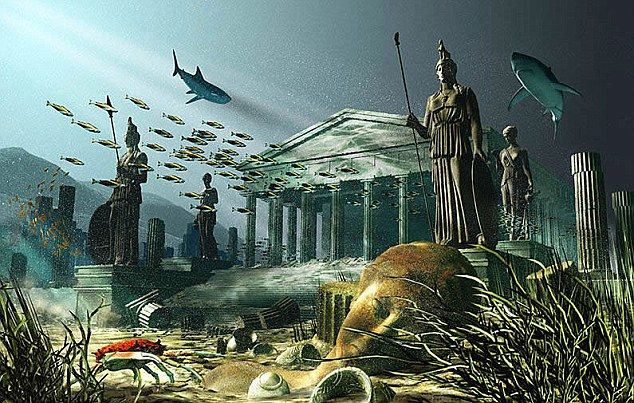
The story of the lost city of Atlantis has captivated the imaginations of people for centuries. According to legend, Atlantis was a prosperous and advanced island civilization that was suddenly and catastrophically destroyed. The details of Atlantis’ story vary, but there are several recurring themes.


Source – Youtube

One of the earliest accounts of Atlantis comes from the Greek philosopher Plato. In his dialogues “Timaeus” and “Critias,” he describes Atlantis as a powerful island kingdom that existed over 9,000 years before his time. According to Plato, the Atlanteans were a technologically advanced society that had achieved great wealth and power. However, they became corrupt and decadent, and their hubris led to their downfall.

Plato’s account goes on to describe a catastrophic event that destroyed Atlantis. He tells of earthquakes and floods that engulfed the island, causing it to sink into the ocean in a single day and night. This cataclysmic event wiped out the entire civilization and left no trace of its existence.

Plato’s account of Atlantis has been the subject of much debate among historians and scholars. Some argue that it was entirely a work of fiction, while others believe that it may have been based on real events. There are several theories about what could have caused the disappearance of Atlantis.

One possibility is that a volcanic eruption or earthquake caused the island to sink into the ocean. There is evidence of volcanic activity in the region around the Mediterranean, where Atlantis was said to have existed. Some believe that a massive eruption could have triggered a tsunami that wiped out the island and its inhabitants.

Another theory is that Atlantis was destroyed by an invasion or war. Plato describes the Atlanteans as a powerful military force that conquered much of Europe and Africa. It’s possible that they became embroiled in a conflict that they could not win, leading to their downfall.

Despite the many theories about Atlantis’ disappearance, there is no concrete evidence to support any of them. Many have searched for the lost city over the centuries, but none have been able to definitively prove its existence.

In recent years, some have suggested that the story of Atlantis was actually a metaphor for the decline of ancient Greek civilization. According to this theory, Plato used the story of Atlantis to warn his fellow Greeks about the dangers of becoming too powerful and corrupt.

Regardless of whether Atlantis was a real place or just a myth, its story has captured the minds of people for centuries. The mystery of its disappearance continues to fascinate scholars and laypeople alike, and it remains one of the most enduring legends of all time.

National Skill Development Corporation (NSDC)

 National Skill Development Corporation (NSDC) is a not-for-profit public limited company incorporated on July 31, 2008 under section 25 of the Companies Act, 1956 (corresponding to section 8 of the Companies Act, 2013). NSDC was set up by Ministry of Finance as Public Private Partnership (PPP) model. The Government of India through Ministry of Skill Development & Entrepreneurship (MSDE) holds 49% of the share capital of NSDC, while the private sector has the balance 51% of the share capital.

NSDC aims to promote skill development by catalyzing creation of large, quality and for-profit vocational institutions. Further, the organisation provides funding to build scalable and profitable vocational training initiatives. Its mandate is also to enable support system which focuses on quality assurance, information systems and train the trainer academies either directly or through partnerships. NSDC acts as a catalyst in skill development by providing funding to enterprises, companies and organizations that provide skill training. It also develops appropriate models to enhance, support and coordinate private sector initiatives. The differentiated focus on 37 sectors under NSDC’s purview and its understanding of their viability will make every sector attractive to private investment.


graphical user interface, application