
General Science

General science is a field of study that encompasses a wide range of scientific disciplines, including biology, chemistry, physics, and earth sciences. It is the foundation upon which many scientific discoveries and advancements are made. In this article, we will explore some of the key concepts and branches of general science.

Biology:
Biology is the study of living organisms and their interactions with each other and the environment. It covers a wide range of topics, from the structure and function of cells to the behavior and ecology of entire ecosystems. Biology plays a crucial role in many areas of our lives, including medicine, agriculture, and environmental management.

Chemistry:
Chemistry is the study of matter and its properties. It covers topics such as the structure of atoms and molecules, chemical reactions, and the properties of different elements and compounds. Chemistry is a key discipline in many fields, including materials science, medicine, and engineering.

Physics:
Physics is the study of matter and energy and their interactions with each other. It covers topics such as mechanics, thermodynamics, electromagnetism, and quantum mechanics. Physics is essential to many areas of modern technology, including telecommunications, electronics, and aerospace.

Earth Sciences:
Earth sciences cover a wide range of topics related to the planet we live on, including geology, meteorology, and oceanography. These fields of study help us understand the physical processes that shape the earth’s surface and climate. They are also important in managing natural resources, predicting and mitigating natural disasters, and understanding the impact of human activity on the environment.

Scientific Method:
The scientific method is a systematic approach to scientific inquiry. It involves observing phenomena, formulating hypotheses, testing those hypotheses through experiments, and drawing conclusions based on the results. The scientific method is a key tool for scientists in all fields, allowing them to gather reliable data and draw meaningful conclusions.

Scientific Discoveries:
Science has led to many important discoveries throughout history. Some of the most notable include the discovery of penicillin, the development of the theory of evolution, and the discovery of the structure of DNA. These discoveries have had far-reaching impacts on our understanding of the world and have led to many important advancements in medicine, agriculture, and technology.

Science Education:
Science education is crucial in developing scientific literacy and promoting scientific thinking. It helps individuals understand the natural world and the scientific principles that govern it. Science education is also essential in preparing individuals for careers in science, technology, engineering, and mathematics (STEM) fields.

Conclusion:
In conclusion, general science is a vast field that encompasses many different scientific disciplines. It is the foundation upon which many scientific advancements are made, and it plays a crucial role in our lives. Through the scientific method, scientists are able to make important discoveries and advancements that help us understand the world around us. Science education is also critical in developing scientific literacy and promoting scientific thinking, which is essential in preparing individuals for careers in STEM fields.

By:- Baibhav Raj Maharana
General Science

General science is a field of study that encompasses a wide range of scientific disciplines, including biology, chemistry, physics, and earth sciences. It is the foundation upon which many scientific discoveries and advancements are made. In this article, we will explore some of the key concepts and branches of general science.

Biology:
Biology is the study of living organisms and their interactions with each other and the environment. It covers a wide range of topics, from the structure and function of cells to the behavior and ecology of entire ecosystems. Biology plays a crucial role in many areas of our lives, including medicine, agriculture, and environmental management.

Chemistry:
Chemistry is the study of matter and its properties. It covers topics such as the structure of atoms and molecules, chemical reactions, and the properties of different elements and compounds. Chemistry is a key discipline in many fields, including materials science, medicine, and engineering.

Physics:
Physics is the study of matter and energy and their interactions with each other. It covers topics such as mechanics, thermodynamics, electromagnetism, and quantum mechanics. Physics is essential to many areas of modern technology, including telecommunications, electronics, and aerospace.

Earth Sciences:
Earth sciences cover a wide range of topics related to the planet we live on, including geology, meteorology, and oceanography. These fields of study help us understand the physical processes that shape the earth’s surface and climate. They are also important in managing natural resources, predicting and mitigating natural disasters, and understanding the impact of human activity on the environment.

Scientific Method:
The scientific method is a systematic approach to scientific inquiry. It involves observing phenomena, formulating hypotheses, testing those hypotheses through experiments, and drawing conclusions based on the results. The scientific method is a key tool for scientists in all fields, allowing them to gather reliable data and draw meaningful conclusions.

Scientific Discoveries:
Science has led to many important discoveries throughout history. Some of the most notable include the discovery of penicillin, the development of the theory of evolution, and the discovery of the structure of DNA. These discoveries have had far-reaching impacts on our understanding of the world and have led to many important advancements in medicine, agriculture, and technology.

Science Education:
Science education is crucial in developing scientific literacy and promoting scientific thinking. It helps individuals understand the natural world and the scientific principles that govern it. Science education is also essential in preparing individuals for careers in science, technology, engineering, and mathematics (STEM) fields.

Conclusion:
In conclusion, general science is a vast field that encompasses many different scientific disciplines. It is the foundation upon which many scientific advancements are made, and it plays a crucial role in our lives. Through the scientific method, scientists are able to make important discoveries and advancements that help us understand the world around us. Science education is also critical in developing scientific literacy and promoting scientific thinking, which is essential in preparing individuals for careers in STEM fields.

By:- Baibhav Raj Maharana

True essence of festival

India is the nation of festivals.We have lots of festivals and very passionately we do celebrate it. For every festival we have great mythological stories . But today we celebrate the festival like rituals only. Somewhere we have lost the essence and its significance in life.

The mythological characters are the role model for the society which teaches you how an individual should behave and the authority should be able to give justice to an individual. Power should be used to bring good change and growth in the society. The character used in mythology are representation of the evils and good in a person. And we should cultivate to control our vices or else it will lead to destruction.

True essence of festival

India is the nation of festivals.We have lots of festivals and very passionately we do celebrate it. For every festival we have great mythological stories . But today we celebrate the festival like rituals only. Somewhere we have lost the essence and its significance in life.

The mythological characters are the role model for the society which teaches you how an individual should behave and the authority should be able to give justice to an individual. Power should be used to bring good change and growth in the society. The character used in mythology are representation of the evils and good in a person. And we should cultivate to control our vices or else it will lead to destruction.

Remote notary New York services for online document signing

 Remote notary in New York is a process by which a notary may use an electronic video system to authenticate a document, without being physically present in the same location as the signer of the document (more information here https://onenotary.us/online-notary-new-york/). This allows individuals to complete the notarization process from the comfort of their own home or office, and it has become especially popular during the COVID-19 pandemic. New York State adopted remote notarization in 2020, following the passage of a law allowing for remote notarization during declared emergencies.

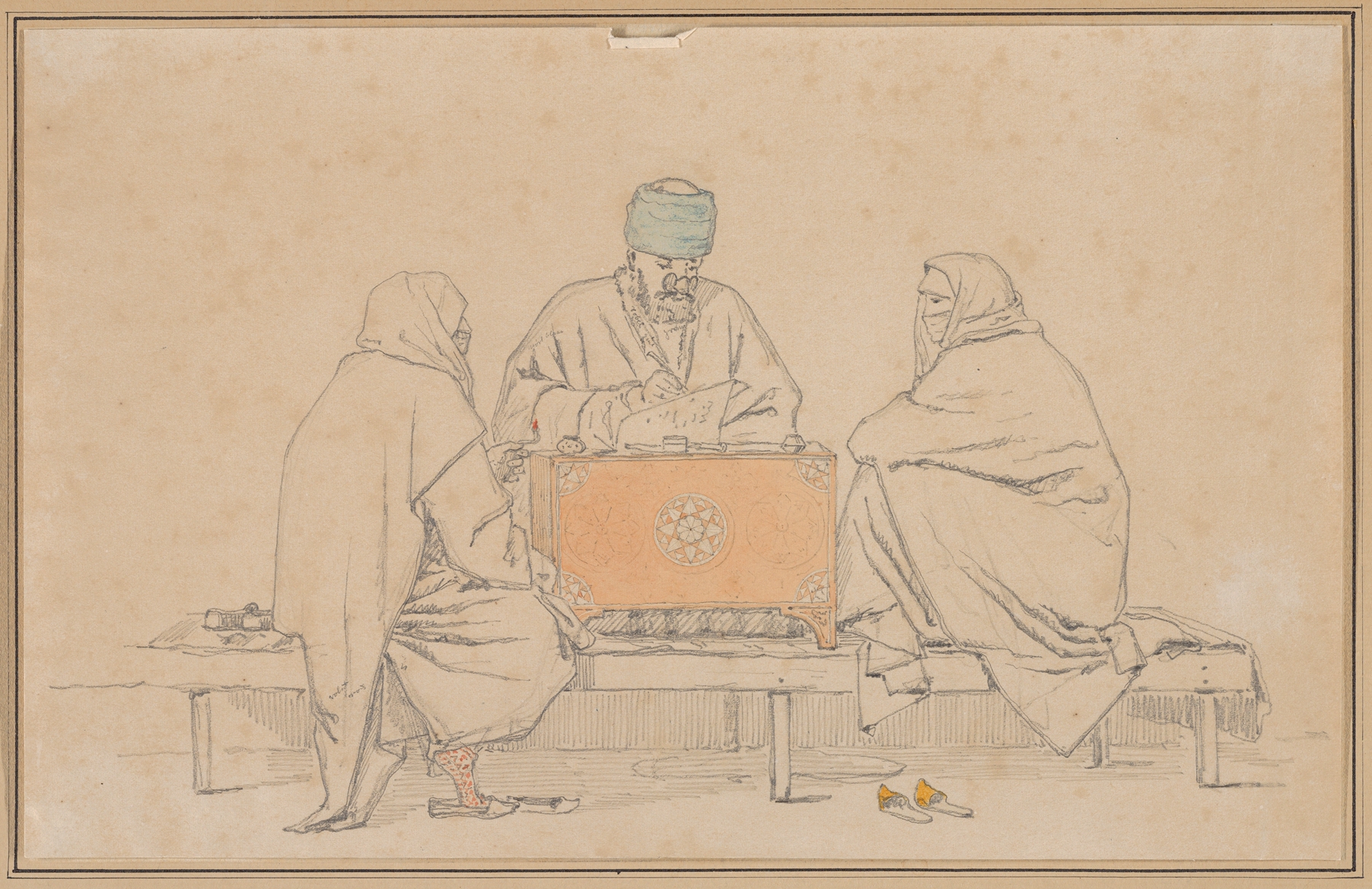
A Turkish Notary and Two Women by Martinus Ru00f8rbye is licensed under CC-CC0 1.0

Under this law, visual conferencing technology that satisfies certain conditions, such as real-time audio and video communication between the notary public and the signer, is permitted for remote notarizations in New York. Remote notarizations in New York require a notary public to be approved by the state’s Department of State and to follow the state’s prescribed processes and regulations. Remote notarization is not available for all types of documents and there are certain restrictions and limitations that apply. However, remote notarization is a convenient and accessible option for many people who need to notarize documents in the Big Apple.

How to find a New York remote notary?

To find a remote notary in New York, you can try the following:

  • Online search. You can use search engines like Google or Bing to find remote notaries in New York. You can try searching for phrases like “remote notary services in New York,” “virtual notary public New York,” or “online notary public New York” to find notaries who deliver electronic notarization services.
  • Notary directories. There are several online directories of notaries public that allow you to search for notaries in your area. Some directories, also allow you to filter your search to find notaries who offer remote notarization services.
  • Financial institutions that are close to where you live. Some financial institutions, such banks and credit unions, provide consumers with access to notary services, some of which allow for remote notarization. If you are interested in distant notarial services and what is required, you may reach out to your bank or credit union.
  • Mobile notary services. Some notaries public offer mobile notary services, which means they can travel to your location to perform notarization services. You can contact a mobile notary and ask if online notarization is one of the services they provide.

Once you have found a remote notary in New York, make sure to verify that they are authorized to perform distant notarizations and ask about their fees and requirements. It’s also a good idea to check reviews and testimonials from previous clients to ensure the notary is reliable and professional.

Is a virtual notary public better than a physical one?

Traditional notarization provides a higher level of security and verification, as the notary public can physically witness the signing of the document and verify the identity of the signer. This can be reassuring for individuals who are dealing with important or sensitive documents. Traditional notarization is also more widely recognized and accepted in certain industries and jurisdictions. In the end, whether you choose to use a conventional or remote notary public relies on the specific requirements and preferences that you have. It’s possible that using a remote notary public is the best choice for you if you’re searching for flexibility and ease of use. If you need a greater degree of protection and verification, or if your document has to be witnessed in person, a conventional public notary may be the preferable option for you.

International Conference on Multidisciplinary Research (ICMR) 2023

International Conference on Multidisciplinary Research (ICMR) 2023 will bring together academics and industry practitioners from a wide range of disciplines and backgrounds (including robotics, engineering, AI, computer science, social science, humanities, design, and law). Defining autonomous systems as systems involving software applications, machines, and people, which are able to take actions with little or no human supervision, the workshop will explore different definitions and individual aspects of trust from a multidisciplinary perspective. We are interested in several factors contributing to the trustworthiness of autonomous systems, which include but not limited to the following: robustness and resilience in dynamic and uncertain environments; the assurance of the design and operation of autonomous systems through verification and validation processes; the confidence the systems inspire as they evolve their functionality, their explainability, accountability, and understandability to a diverse set of users; defences against attacks on the systems, users, and the environment they are deployed in; governance and the regulation of their design and operation; and the consideration of human values and ethics in their development and use.

Trust is a multi-dimensional issue and is conceptualised differently by a range of disciplines. Hence, we invite novel contributions (short and regular papers with 2-4 and 6 pages respectively) as well as already published journal/conference papers covering a wide set of topics that will be attractive to both technical and non-technical audiences:

  • Methodologies to certify autonomous systems
  • Public perception of autonomous systems
  • Explainable and Interpretable AI solutions for real-world applications
  • Safety and security of autonomous systems
  • Trustworthy and resilient human-machine teaming
  • Regulation
  • Notions of trust in autonomous systems
  • Responsible Research and Innovation for trustworthy AI and autonomous systems
  • Transparency of AI systems
  • System of humans

Workshop Website: https://mactasworkshop.github.io/2023/ 

Submission Types

  • Short Paper 2-4 pages excluding references)
  • Regular Paper (6 pages excluding references)
  • Published papers (to be presented at the workshop)

Please use the standard ICMR template when submitting a novel contribution. 

All accepted papers will be presented in a spotlight talk as well as a poster. Additionally, all accepted contributions will be also invited to submit an extended version to our planned Special Issue on IJR (IJR Journal).  

Best Paper / Poster Awards

  • Best ICMR Paper Award
  • Best ICMR Poster Award  

Our international Programme Committee will review all submissions and will also select a paper for the awards.     

Important Things to Note

Important Dates

Date for Submission of Papers

20 March 2023 (without Late fee)

30 March 2023 (with late fee)

Acceptance Mail for Papers

10 April 2023

Date of Online Conference

20-22 April 2023

Email id for Submission of Papers

Email: icmr2023@edupub.org

Special Issue for Conference Papers

Visit conference Official Site at https://icmr.edupub.org/

ISBN for Conference Proceedings 

International Conference on Multidisciplinary Research (ICMR) 2023

International Conference on Multidisciplinary Research (ICMR) 2023

This conference mainly aims to provide platforms for faculty, scholars, and educators to engage in the academic exchanges of scientific knowledge and innovations, and practical approaches that would commence strategic partnerships between SorSU and other HEIs in South East Asia.  ICMR 2023 has identified seven research areas in which researchers can submit their abstract. It will also be highlighted in this conference the presentation of extension and community projects. The ICMR 2023 Conference Proceedings will be published in digital format which will be made available and accessible at ICMR official website.


Submission Guidelines

Submit abstract of 250 words, and must briefly mention the objective, methodology, results, significant new findings and conclusion(s). Once abstract is accepted, submit FULL PAPERS which may consist of up to ten (10) pages of content including references and appendices. Papers must be submitted through the Easy Chair Conference System:

URL: https://icmr.edupub.org/p/submission.html 

Accepted abstract will be presented orally or as posters, as determined by Program Committee. Full paper will only be published once the comments and suggestions of the blind reviewers have been incorporated.

Topics include but not limited to:

Track 1: Green Technology and Science and Technology Innovation

  • Engineering, Disaster Risk Management, Climate Change and Resilience, Architectural Innovations, Food and Non-Food Technology

Track 2: Humanities and Social Sciences

  • Language, Linguistics, and Multilingualism, Gender and Development, Historical Studies, Public Management and Administration, Health care, Cultural Studies, Counselling Practices

Track 3:  Agri-fisheries and Natural Resources

  • Agri-fisheries trade and practices, Policies and Advocacy, Aquatic Ecology and Management, Risk Assessment and Adaptive Management, Ecological Sustainability and Landscape Ecology, Agriculture and Information System, Biodiversity and Conservation

Track 4: Education

  • Educational Structure, Policies, Management, Teaching and Learning, Student learning and learning diversity, Curriculum Design and Development, Learning Assessment

Track 5: Digital Technology and ICT

  • Data Science and Mining, Artificial Intelligences, Information System and Management, Robotics, System and Networking, Security and Privacy, Media and Information Literacy and Practices

Track 6: Business and Management

  • Entrepreneurship, Marketing, Accounting, Tourism Management 

Track 7: Extension Projects

Important Dates

  • Submission of Paper’s

  • 20 March 2023

    SUBMISSION DUE DATE

    Submit paper using mail to icmr2023@edupub.org

Important Things to Note

Important Dates

Date for Submission of Papers

20 March 2023 (without Late fee)

30 March 2023 (with late fee)

Acceptance Mail for Papers

10 April 2023

Date of Online Conference

20-22 April 2023

Email id for Submission of Papers

Email: icmr2023@edupub.org

Special Issue for Conference Papers

Visit conference Official Site at https://icmr.edupub.org/

ISBN for Conference Proceedings 

Dance forms of India

India is a land of rich cultural diversity and heritage, and dance is an integral part of its culture. Indian dances have a long history, with some forms dating back several thousand years. Each dance form is unique in its own way, with its own distinct style, costume, and music.

Source – Pinterest

Here are some of the most popular dance forms in India:

  1. Bharatanatyam: Bharatanatyam is a classical dance form from Tamil Nadu in South India. It is one of the oldest dance forms in India, with a history that dates back over 2,000 years. Bharatanatyam is known for its graceful movements, intricate footwork, and expressive hand gestures. The dance form is usually performed solo and is accompanied by Carnatic music.

  2. Kathak: Kathak is a classical dance form from North India that originated in the Mughal courts. It is characterized by fast footwork and intricate spins. The dance form tells stories through its movements, with the dancer using facial expressions, hand gestures, and body movements to convey different emotions. Kathak is usually accompanied by Hindustani music.

  3. Kuchipudi: Kuchipudi is a classical dance form from Andhra Pradesh in South India. It is known for its fluid movements and storytelling through dance. The dance form has a history that dates back over 2,000 years and is performed to both Carnatic and Hindustani music. Kuchipudi is usually performed by a group of dancers and is characterized by its use of colorful costumes and makeup.

  4. Manipuri: Manipuri is a classical dance form from Manipur in Northeast India. It is known for its graceful movements and use of vibrant costumes and props. Manipuri tells stories through its movements, with the dancer using facial expressions, hand gestures, and body movements to convey different emotions. The dance form is usually accompanied by classical Manipuri music.

  5. Mohiniattam: Mohiniattam is a classical dance form from Kerala in South India. It is known for its slow and graceful movements and storytelling through dance. The dance form is usually performed by a solo dancer and is accompanied by classical music. Mohiniattam is characterized by its use of white and gold costumes and jewelry.

  6. Kathakali: Kathakali is a classical dance form from Kerala in South India. It is known for its elaborate makeup, costumes, and facial expressions that tell stories from Hindu mythology. The dance form has a history that dates back over 500 years and is usually performed by a group of male dancers. Kathakali is accompanied by classical music and percussion.

  7. Bhangra: Bhangra is a folk dance form from Punjab in North India. It is characterized by energetic movements and is often performed to celebrate harvest festivals. Bhangra is usually performed by a group of dancers and is accompanied by traditional Punjabi music and instruments.

  8. Garba: Garba is a folk dance form from Gujarat in West India. It is performed in a circular formation and is known for its energetic movements and use of colorful costumes. Garba is usually performed during Navratri, a festival that celebrates the victory of good over evil.

  9. Odissi: Odissi is one of the famous classical Indian dances from Odisha. It is generally based on themes of Dashavatar, Lord Krishna’s love and Lord Jagannath’s Philosophy. It is a graceful and sensous dance style and involves tribhanga( three bends) posture. The Tribhanga posture symbolises the means to escape the limitations of the body.

In conclusion, India has a rich and diverse dance culture that is deeply rooted in its history and traditions. Each dance form is unique in its own way and reflects the cultural diversity of India. From classical dances to folk dances, India has something to offer for everyone who is interested in dance.

International Conference on Multidisciplinary Research (ICMR) 2023

International Conference on Multidisciplinary Research (ICMR) 2023. Organized by Track2Training aims to provide a platform for scholars, intellectuals and professionals to share and generate forum on the current local and global issues, address solutions to the problems and to provide opportunity for participants to exchange and share knowledge and information, establish business or research relationships and find global partners for future collaboration.

All prospective participants/authors are cordially invited to submit original and unpublished works for publication and presentation at the conference. All submissions are subjected to peer review before an acceptance decision is made. Our review committee will also select potential papers that have the merits for indexed publication and inform the corresponding authors for further decision. Papers may address, but not restricted to, the main theme from any of the sub-themes as mentioned in the conference website. Unlisted but related sub-topics are also acceptable.


The full manuscript must be submitted as an MS Word file in DOC or DOCX format (PDF format is not accepted). Please submit your full paper before the submission deadline and all manuscripts must be thoroughly checked for errors and formatted according to the Full Paper template that can be downloaded from the website. Manuscripts that are not properly prepared will be returned to the authors for revision and resubmission. Special discount will be given for group registration (3 participants or more). For more details visit us at https://icmr.edupub.org 

Submit your Paper for the conference to icmr2023@edupub.org

Conference Proceedings Details 

ISBN Number

Title

Author/Editor

Year Of Allotment of ISBN

Country of Publication

Imprint 

Publisher 

978-93-94433-17-5

International Conference on Multidisciplinary Research (ICMR) 2023

SN Sharma

2023

INDIA

IJR

Edupedia Publications Pvt Ltd

The French Revolution (1789 -1799)

The French Revolution was a period of radical social and political upheaval that lasted from 1789 to 1799. It was a time of great change and transformation in France, as the old regime of absolute monarchy and aristocratic privilege was overthrown and replaced with a new system of democratic government and social equality.


Source – Pinterest.com

The causes of the French Revolution were many and varied, but they can be traced back to the economic, social, and political problems that France was facing in the late 18th century. The country was burdened with a heavy debt, which had been incurred from years of costly wars and lavish spending by the monarchy. This debt was exacerbated by a poor harvest in 1788, which led to widespread famine and starvation.

At the same time, there was growing discontent among the French people, who were unhappy with the way that the country was being run. The monarchy was seen as corrupt and ineffective, and the aristocracy was viewed as parasitic and out of touch with the needs of ordinary people.

The Revolution began in 1789, when a group of deputies from the Third Estate (the common people) gathered in Versailles to demand political representation and reform. When the king refused to listen to their demands, the people of Paris rose up in revolt, storming the Bastille prison on July 14, 1789.

The fall of the Bastille was a turning point in the Revolution, and it marked the beginning of a period of radical change and experimentation. Over the next few years, France was governed by a series of different regimes, as the country struggled to find a new system of government that would be fair and effective.

The early years of the Revolution were marked by a series of important reforms, including the abolition of feudalism and the establishment of a system of universal education. However, the Revolution was also marked by violence and bloodshed, as rival factions fought for control of the government and executed their opponents.

The most violent period of the Revolution was the Reign of Terror, which lasted from 1793 to 1794. During this time, thousands of people were arrested and executed on suspicion of being counter-revolutionaries. The leader of this period, Maximilien Robespierre, was eventually overthrown and executed himself in 1794, bringing an end to the Reign of Terror.

The Revolution came to an end in 1799, when Napoleon Bonaparte seized power in a coup d’etat and established the First French Empire. Although Napoleon was a product of the Revolution, he represented a return to authoritarian rule, and his reign was marked by military conquest and imperial expansion.

Overall, the French Revolution was a period of profound change and transformation in France. It marked the end of the old regime and the beginning of a new era of democratic government and social equality. However, the Revolution was also marked by violence and bloodshed, and its legacy continues to be debated and contested to this day.

Technological advancements

We are living in a high tech society . Life has become so easier and comfortable even for normal people. Medical advancements have grown but mental health has worsened.Security has increased but at the same time crime and fear has also increased.

Despite having advance technology climate change is main environmental problem.No moral values are left in societies.problems are growing. People are suffering from mental disorders .

Is this advancement we need ?or there is something we need to understand that technology can give us comfort but not satisfaction and security. It comes from moral values and ethical values. And this is sad to know “now values are left only in story books”.

Technological advancements

We are living in a high tech society . Life has become so easier and comfortable even for normal people. Medical advancements have grown but mental health has worsened.Security has increased but at the same time crime and fear has also increased.

Despite having advance technology climate change is main environmental problem.No moral values are left in societies.problems are growing. People are suffering from mental disorders .

Is this advancement we need ?or there is something we need to understand that technology can give us comfort but not satisfaction and security. It comes from moral values and ethical values. And this is sad to know “now values are left only in story books”.

Indian society

India is the symbol of ‘Unity in diversity’ . Lots of different religion and culture exist together.We have different languages and rich heritage also. And we have also ancient knowledge of lots of things.

But today’s generation is more influenced by Western world. Even the young generation is more interested in criminal activities rather than justice oriented.

Even the cinemas have been changed a lot. Indian culture teaches you to be humble, being grounded, justice , forgiveness but young generation is becoming unethical.

This is the time where youngsters need more moral values .

Indian society

India is the symbol of ‘Unity in diversity’ . Lots of different religion and culture exist together.We have different languages and rich heritage also. And we have also ancient knowledge of lots of things.

But today’s generation is more influenced by Western world. Even the young generation is more interested in criminal activities rather than justice oriented.

Even the cinemas have been changed a lot. Indian culture teaches you to be humble, being grounded, justice , forgiveness but young generation is becoming unethical.

This is the time where youngsters need more moral values .