10 Mouth-Watering, Must-Try Indian Dishes You Won't Want to Miss!

 10 Mouth-Watering, Must-Try Indian Dishes You Won’t Want to Miss!

Story of a Old Man

Once upon a time, in a small village nestled amidst rolling hills, there lived an old man named Ramdas. Ramdas had spent his entire life as a shepherd, tending to his flock of sheep on the lush green pastures. But with age catching up to him, he found it increasingly challenging to continue his demanding work.

One day, as Ramdas sat under the shade of a towering oak tree, feeling a sense of melancholy, he noticed a peculiar little goat grazing nearby. The goat had a mischievous glint in its eyes and a playful bounce in its steps. Intrigued by the lively creature, Ramdas approached it cautiously.

To his surprise, the goat seemed to understand him as it responded with gentle bleats. Ramdas felt an instant connection and decided to bring the goat home. He named her Lila, which means “playful” in the local language.

As days turned into weeks, Ramdas and Lila formed an unbreakable bond. Lila would accompany him everywhere, her hooves echoing beside his weary footsteps. The villagers marveled at the sight of the old man and the goat, for they had never witnessed such a unique companionship.

Lila, though small, possessed an extraordinary talent. She had a knack for finding the juiciest patches of grass, the sweetest leaves, and the most fragrant herbs. Ramdas would sit back and watch as Lila grazed, her delicate munching filling the air with a sense of tranquility.

One fateful day, a great drought struck the village, leaving the pastures barren and dry. Ramdas, with a heavy heart, knew that his sheep would suffer. He worried about their survival as they depended on the pastures for their sustenance. But Lila, being the resourceful creature she was, had a different idea.

One evening, Lila led Ramdas up a steep mountain path, her nimble steps guiding him with unwavering confidence. At the mountaintop, they discovered a hidden oasis, a secret haven untouched by the drought. The lush greenery and gushing waterfall were a sight to behold.

With Lila’s guidance, Ramdas brought his flock of sheep to this newfound sanctuary. The sheep feasted on the abundance of fresh grass, regaining their strength and vitality. The villagers were astounded by Ramdas and Lila’s discovery, and word of their miracle spread far and wide.

As the years passed, Ramdas grew frail, his once-strong body weakened by time. But Lila remained by his side, her unwavering loyalty comforting him in his twilight years. They had become legendary figures in the village, symbols of resilience, companionship, and the indomitable spirit.

When Ramdas eventually passed away, Lila mourned his loss, her bleats echoing through the hills. The villagers erected a statue in their honor, a testament to the extraordinary bond between a humble old man and his remarkable goat.

And so, the story of Ramdas and Lila continued to be shared by generations, a tale of love, courage, and the extraordinary things that can be achieved when two souls find solace in each other’s company.

National Conclave on 9 Years of Union Government Witnesses

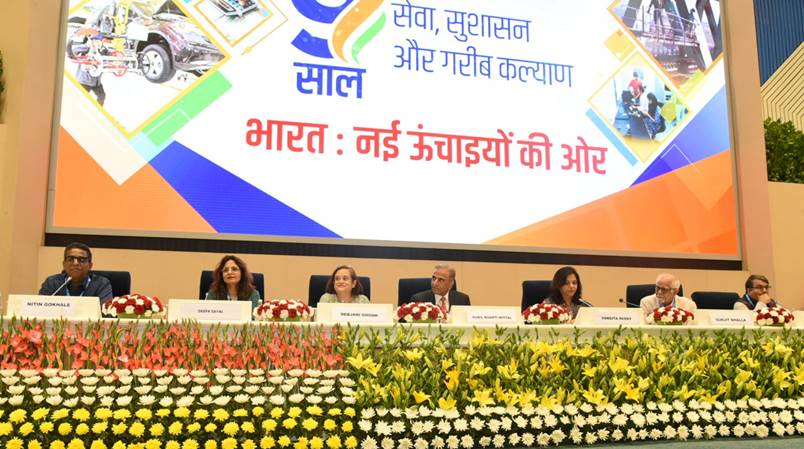
On completion of 9 Years of the Union Government, a National Conclave was organised by the Ministry of Information and Broadcasting with the theme “9 Years of Seva, Sushasan, Garib Kalyan” at Vigyan Bhawan in New Delhi. As part of the Conclave, three thematic sessions were held with esteemed panellists to discuss various achievements of the Union Government under the decisive leadership of Prime Minister Shri Narendra Modi and the persistent efforts being undertaken by the Government for rapid advancement of the nation and betterment of masses. The first session was on the theme ‘India: Surging Ahead’. The session elucidated how India has undergone a remarkable transformation into a prominent global leader under the able leadership of Prime Minister Shri Narendra Modi.
The session was moderated by eminent journalist, Shri Nitin Gokhale and featured distinguished speakers from different walks of life, including Shri Sunil Bharti Mittal, Founder Chairman of Bharti Enterprises, Smt. Sangita Reddy, Joint Managing Director, Apollo Hospital, Smt. Debjani Ghosh, President NASSCOM, Shri Surjit Bhalla, former Executive Director for IMF India, Shri Soumya Kanti Ghosh Group Chief Economic Advisor, State Bank of India and Smt. Deepa Sayal, Founder and President of Indian Women Institutional League (IWIL) India.
Shri Gokhale, setting the backdrop for the session said, “India has embarked on a path of transformation which has not been seen for decades together and India stock has risen globally”. He said “Morgan Stanley said in November 2022 that this is going to be India’s Decade. IMF in April, 2023 predicted India will emerge as the fastest growing economy in the world. India is surging and taking a lead in balancing the world order and therefore this conclave could not have come at a better time.”
Shri Sunil Bharti Mittal, talking about the decade of good governance under Prime Minister Shri Narendra Modi, said that we have all experienced and seen the difference in the past few years. He said businesses require decisive leadership and after a long period of time we have a leader who is recognised as a global leader and one determined to make India a developed nation. Talking about telecom sector, he said India has the fastest 5G rollout and by March, 2024, India will have 5G across every nook and cranny of the country. He added that “Government has used the power of technology to its utmost advantage for ushering in the reforms and benefits to the masses of the country”. He said we have seen fantastic 9 years and the audacious target of 5 trillion-dollar economy which looked like a difficult task a few years back is now in sight and we should be able to achieve it by 2027.
Smt. Sangita Reddy, Joint Managing Director, Apollo Hospital, spoke about how India made extensive and effective plan to fight the COVID Pandemic. She said our country stood out in tackling a crisis which wiped out many countries and it was due to the masterful management of the situation by our Prime Minister and the Government. She praised the People’s curfew which provided the time and space for the necessary infrastructure to be put in place and helped in tackling the pandemic effectively. Talking about the COVID Vaccines, she said “its commendable and reflective of India and our Prime Minister’s Global thought process that 50% of world’s vaccines were manufactured in India and it created a vaccine diplomacy on an unprecedented scale”. She said Government’s approach was “well-coordinated, fantastically masterminded strategy which was powerfully executed”. She further added that “the foundation is well set in India and not only can India take care of its own people well but has become the medical tourism destination of the world, currently we are number 4 but I believe that soon we will be number 2”. She urged the youngsters to use Yoga, Ayush and take care of their health as India has a great future ahead and it lies with the younger Generation.
Shri Surjit Bhalla, former Executive Director for IMF India, at the very onset said India has emerged as the best performing economy in the world during the shocking COVID period and today. Talking about the poverty reduction he said, “the entire process of government was geared towards ensuring that the bottom half of the population at least did not suffer any hardship as a consequence of COVID”. He spoke about the infrastructure transformation and said he is working on a study to see whether there is any economy in the world that has shown such a transformation in the last 9 years. He added that this government has shown to first, imagine the impossible and second, deliver it effectively and this is the real performance index of this government. He said Indian innovation is truly unique, Indian and better than any country in the world and books will be written about the speed of the transformation of India.
Smt. Debjani Ghosh, President NASSCOM said in 2008 only 17% Indians had bank accounts and a study said it would take India 46 years to achieve 80% penetration but India took just 7 years to do it. Why India could do it and disrupt status quo is due to technology, Aadhar, India stack, Digital Payment and the most genius financial inclusion program Jan Dhan Yojana. She said “the JAM trinity programme has enabled us to take banking to the grassroot level. Technology is available to all but what made the difference in India was the talent, the people which enabled us to challenge the status quo. 245 billion dollar revenue is what our tech industry generates and pace of growth and innovation is unprecedented and is being driven by talent which has made India an innovation hub and a startup hub”. She asserted that the ‘I’ in innovation stands for India., it has brought all big companies to do their innovation in India. She further added that “technology had been a luxury of the rich and urban but India turned this on its head and started from the grassroots and scaled it up. Ability to think bottoms up has made it possible”. She said 36% of the 5.3 million people working in tech sector are women and they are driving the change and innovation.
Smt. Deepa Sayal, Founder and President of Indian Women Institutional League (IWIL) India said she is very proud that my nation is changing at such pace and the pace and scale at which the government is bringing change praise worthy and immaculate. She stated that “Morgan Stanley has said our GDP will double to 7.5 trillion dollars by the end of the decade which is huge”. She said I have been lucky to be able to go to various states and connect with Startups, and women and children all are so charged up to begin and be self-employed. She talked about the phenomenal journey of startup that have increased from 450 in 2016 to 90000 startups in 2023 and said she must congratulate Prime Minister Shri Narendra Modi for this.
Shri Soumya Kanti Ghosh, Group Chief Economic Advisor, State Bank of India talking about the key numbers said “COVID was the largest disruption for mankind but last year our nominal GDP expanded by 37 trillion. FY 2014 – 20 our average was 14.5 trillion so we did 2.5 times more than last 6 years that’s why recovery was fastest. Talking about 5 Trillion Dollar Economy goal, he said India took 57 years to get to 1 trillion and then every 7 years we added 1 trillion and now norm is every three years we add one trillion and in the last two years our economy added 750 billion and that is why in 2014 we were 10th largest economy, in 2015 we are 7th, in 2019 we were 6th and 2022 we were 5th and supposed to be 4th in 2026 and 3rd in 2028 and this is the transition in terms of rebound”. He talked about various schemes of the Union government and informed that women involvement has been very high in all of them and it has led to women empowerment and financial freedom. He said our service exports has doubled in past 7 years. Summing up he said that all numbers point out towards an India which is inclusive and expanding at an exponential rate.
In conclusion, all spoke about what is next for India in the coming 5-10 years. Smt. Deepa Sayal said employability is an opportunity and a challenge and we need to inculcate the right skill set to tap this opportunity. Smt. Debjani Ghosh said the power of youth, talent, innovation will ensure that when the world thinks digital, technology and innovation the world will think of India. Shri Sunil Mittal said “the foundation for a very bright future for our country has been laid in the last 9 years and we need to build on what we need to do. This is a rare opportunity for India with a confluence of a decision leadership and strong tailwinds and it is a delightful position for India, and we need to ensure good education, training and skilled for our large young population which will together ensure a bright future for India”. Smt. Sangeeta Reddy said last 9 years is 468 weeks and over 500 schemes launched so 1 scheme every week and we have the time to guide these schemes over next 10 years. She praised Prime Minister Shri Modi for promoting women led development and said the respect for women is going to be transformational for India and set an example for the world. In terms of thought and spiritual and humane leadership India is and will always be number one. Shri Surjit Bhalla said a lot has been achieved and a major reform that India needs is in Direct Taxation and concluded by saying the India is one of the most overtaxed economies in the world and hoped that a reform will come to lower the effective tax rate which will help in achieving a higher GDP Growth Rate.
*****

National Conclave: 9 Saal – Seva, Sushasan, Gareeb Kalyan

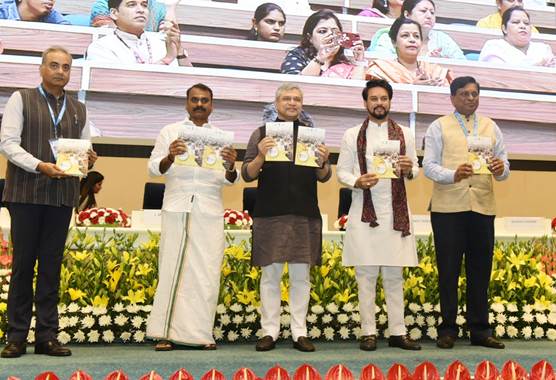
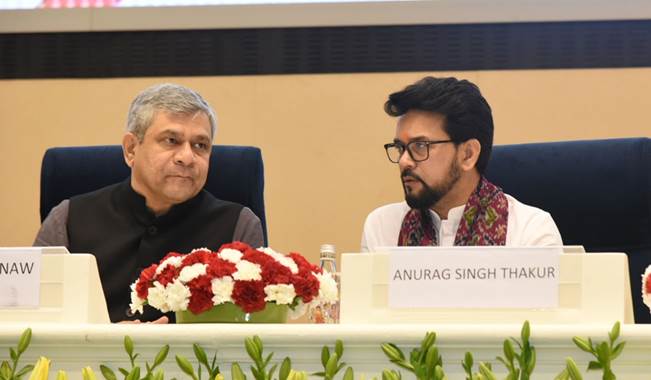
 Union Minister of Railways Shri Ashwini Vaishnav today inaugurated the National Conclave: 9 Saal – Seva, Sushasan, Gareeb Kalyan at Vigyan Bhawan in New Delhi. The event witnessed the presence of Union Minister of Information and Broadcasting Shri Anurag Thakur, Union Minister of State for Information and Broadcasting Dr L. Murugan. Secretary, Min of I&B Shri Apurva Chandra and CEO, Prasar Bharati, Shri Gaurav Dwivedi were also present on the occasion.

Union Minister Shri Ashwini Vaishnav made a comparative presentation juxtaposing the performance of the governments before 2014 with the government since and said while the previous governance efforts had become synonymous with scams, the current Government works with the ethos of ‘Pai Pai Se Gareeb Ki Bhalai’ (every penny for the benefit of the poor). This has been reflected in the way schemes and programmes have been implemented keeping the poor and the destitute as its central pillar, he added.

The Minister underlined that owning a house is a factor that brings a transformative change in a poor person’s life. To that end, today 3.5 crore houses have been constructed in the country under PM Awas Yojana bringing qualitative change in the lives of the poor.

The Minister said that the idea of connecting every house with piped water connection was always considered a behemoth, never to be attempted or achieved. But, he added, the Prime Minister took it up as a challenge and today 12 crore people have water connections. At the same time, he said the Government has strived to end the travesty that was traditional chulhas and provided 9.6 crore families with gas cylinders.

He further spoke about the efforts of the government to come through for the people in need and said that when the world was struggling to fight the travails of the COVID19 pandemic, the government overcame massive logistical challenges to bring free ration to 80 crore people. No government has spoken of fundamental human needs, like toilets, that are the indicators of inclusive growth, during Independence Day speeches. But PM Modi spoke about the construction of toilets in every house in his speech from Red Fort. This has caused a revolution in the field of women safety and sanitation with the construction of 11.72 crore toilets today. 

Shri Vaishnav said that India today runs the world’s largest healthcare insurance programme under Ayushman Bharat that has created provisions for free medicare up to Rs five lakh for the needy, the total coverage which is more than the population of the USA and Russia combined.

Shri Vaishnav credited the Prime Minister with creating a new definition of social justice taking it away from appeasement and towards empowerment.

The Minister said that domestic infrastructure has seen an unprecedented makeover since 2014, which was largely missing earlier due to a lack of proper mindset and thought process in the past. He cited the creation of 74 airports in 9 years, a figure matching the number created till 2014. He added that where 91 thousand kilometers of road were created since independence, almost 54 thousand kilometers have been constructed since 2014. India has gone from having no waterways till 2014 to having 111 waterways today and India’s railway stations have world-class facilities like airports.

The Minister said that India had lagged in world economic rankings for a long time, but today India stands tall as the 5th largest economy. He further said that India is well on its way to becoming the 4th largest economy in another two years and the third largest in another six years.

The Minister spoke about the government’s strong commitment to national security and said that when in past India has been at the receiving end of major terror activities, today the country has the means and willingness to respond to attacks in kind.       

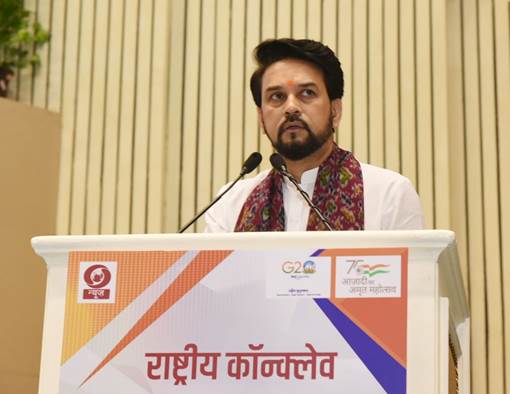
Shri Anurag Thakur, while addressing the audience gathered at the conclave, said that the past nine years have seen a dramatic change in the life of the common people of India and the achievements of the Government have surpassed expectations of the people. He exemplified this by adding further that where India was a weak and ramshackle economy riddled with corruption in the past, today it has covered the distance from Fragile Five to Top Five economies of the world.

He further stated that while the benefits of government schemes used to reach only a few in the past, the government today works with the motto of Antyodaya, where the Government is committed to the upliftment of the last person standing at the end of the queue. Herein lies the secret of our efforts that have lifted 27% of people out of poverty, he added. A combination of a sense of service, big ideas, good governance, infusion of technology, and building transparency and accountability into the delivery mechanism, are the things that have gone into ensuring last-mile delivery of public services.

The Minister said that the government has been steadfast in shedding legacies of the colonial past and adopting modern and domestic symbols. This is evident in the creation of the Kartavya Path and will be evident in the new parliament.

The Minister highlighted that the Prime Minister had said that the youth had a critical role to play in shaping the future of this country. To that end, the Minister credited the youth for achieving a milestone where India can today boast of almost one lakh startups and over hundred Unicorns.

The Minister said that while on the one hand the country answered the Prime Minister’s call for Har Ghar Tiranga, the same tricolor was used by students of other countries to get out of a conflict zone during Operation Ganga. While surveys have called him the most popular leader, Shri Thakur said that he has in fact made the tricolour the strongest flag in the world.

Secretary Shri Apurva Chandra welcomed all the guests for the various thematic sessions during the day. He also welcomed the audience from various sections of society.

The National Conclave on 9 years of the Government is comprised of three thematic sessions after the inaugural session and a valedictory session.

Session 1 “India: Surging Ahead” moderated by Shri Nitin Gokhale, Senior Journalist will see participation from

  • Sunil Bharti Mittal, Founder and Chairman, Bharti Enterprises
  • Sangita Reddy, Joint Managing Director of Apollo Hospitals
  • Debjani Ghosh, President of NASSCOM
  • Surjit Bhalla, Former Executive Director for International Monetary Fund, India
  • Soumya Kanti Ghosh, Group Chief Economic Advisor, State Bank of India
  • Deepa Sayal, President and Patron in Chief, IWIL India


Session 2: Jan Jan Ka Vishwas moderated by Richa Anirudh, Journalist will see participation from

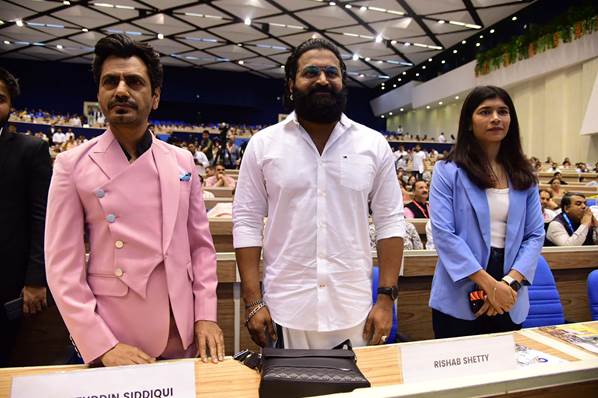
  • Nawazuddin Siddiqui, Actor
  • Cynthia McCaffrey, UNICEF Representative to India
  • Kiran Mazumdar Shaw, Executive Chairperson, Biocon Limited (Video message)
  • Padma Shri Shanti Teresa Lakra, Nurse
  • Nikhat Zareen, Boxer
  • Anil Prakash Joshi, Environmentalist Divya Jain, Co-founder, Seekho


Session 3: Yuva Shakti: Galvanizing India moderated by Raunac, Radio Jockey, Red FM with the following panelists

  • Ritesh Agarwal, CEO, OYO Rooms Rishab Shetty, Actor
  • Amaan Ali Bangash, Musician
  • Viren Rasquinha, Former Indian Hockey Captain
  • Yashodhara Bajoria, Director, Espresso Technologies
  • Akhil Kumar, Boxer

****

9 years of Modi government

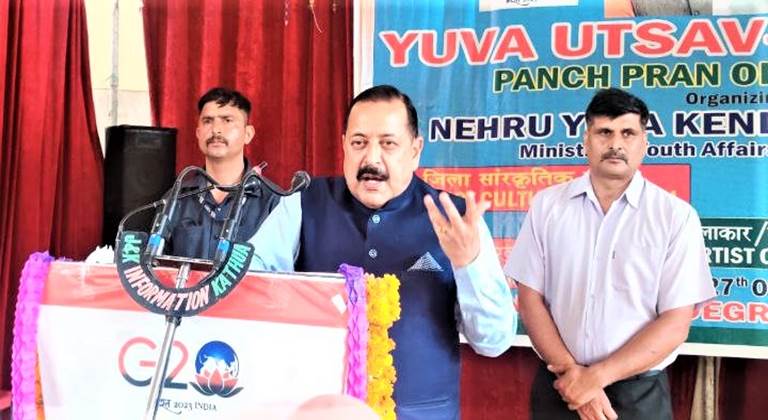
 Union Minister of State (Independent Charge) Science & Technology; MoS PMO, Personnel, Public Grievances, Pensions, Atomic Energy and Space, Dr Jitendra Singh today said that StartUp avenues unfolded in 9 years call for change of mindset.

The Union Minister said, the nine years of Narendra Modi- led government have been, without any doubt, youth centric but what is required is the change of mind set for optimum utilization of avenues and various initiatives provided for the youth of this country.

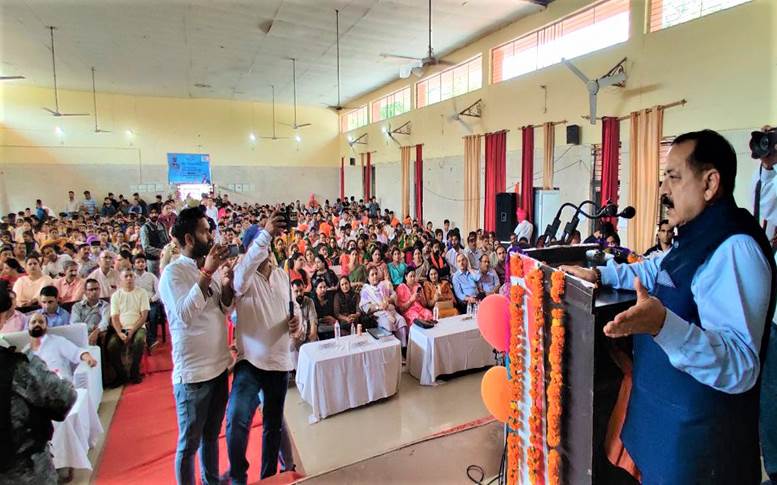
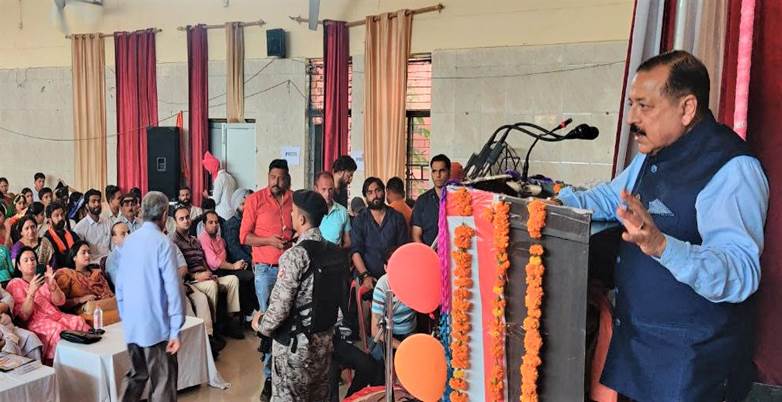
Dr. Jitendra Singh was addressing Y20 (Yuva Utsav) with the theme India@2047 organized by Nehru Yuva Kendra at Kathua in Jammu.

While addressing a large gathering of the youth, Dr. Jitendra Singh said, with plethora of opportunities knocking at the doorsteps of the youth of this country, the Prime Minister Narendra Modi led government is steadfast and dedicated for providing a level playing field for the youth at different levels. The best example being the abolition of interviews for the non-gazetted posts, more than 2000 rules scrapped many of which were hurdles for the youth of this country to grow, Dr. Jitendra Singh added.

Dr. Jitendra Singh said, under PM Narendra Modi, the start-up ecosystem in India is now ranked third in the world with more than 100 unicorns has been possible only because of the youth of this nation who has aspirations but earlier did not have the right kind of milieu and aspirational environment as provided under PM Narendra Modi.

Dr. Jitendra Singh said, the Aroma Mission is attracting Start-ups whose birthplace is J&K as thousands of persons have been trained and several and huge amount of farmers’ revenue generated so far throughout the country. The youth of Jammu and Kashmir must see Aroma Mission as one of the best opportunities in terms of start-ups knocking at their doors as the purple revolution in J&K offers attractive start-up avenues for the youth of J&K, Dr. Singh added.

Dr. Jitendra Singh today said, youth are catalysts of change and India’s future will be driven by the youth power as India is a youthful nation whose strength lies in its Yuva Shakti.

The Minister said, the image of India has changed due to the bold leadership of the prime Minister Narendra Modi, adding the Prime Minister has emerged as the tallest leader of the world, capable of handling any challenge through stable governance and administration.

Dr. Jitendra Singh said, before 2014, there were 145 Medical Colleges in the country and 265 more were added in the last nine years. Similarly, there were 725 universities in the country and 300 new universities were added. Road length of seven lakh kilometres was added in the country under the Pradhan Mantri Gram Sadak Yojna in the last nine years and Mudra loan of Rs. 23 lakh crore has been provided to the beneficiaries in the last nine years under Mudra Loan Scheme.

Dr. Singh further said, Jammu and Kashmir is on the path of renewed growth and development and successful culmination of G20 Meeting in Srinagar is a testament to this change as the Government is committed to transforming Jammu and Kashmir.


Cooperation under EU – India Clean Energy and Climate Partnership

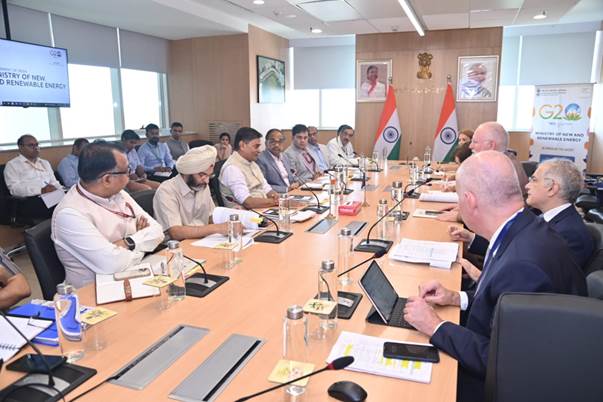
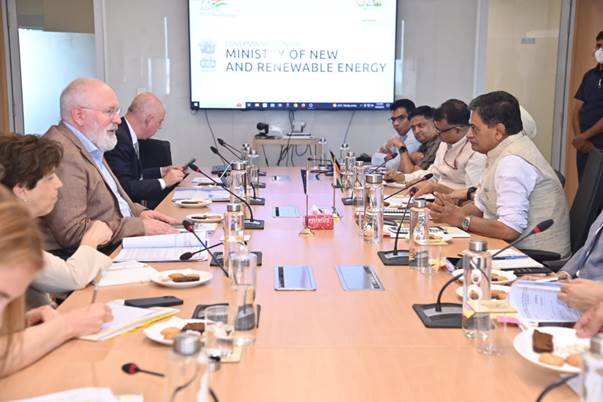
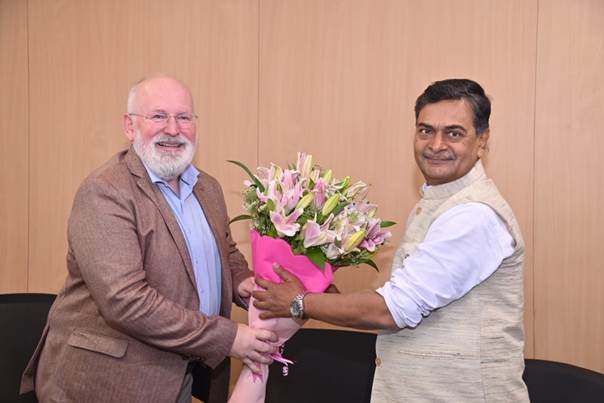
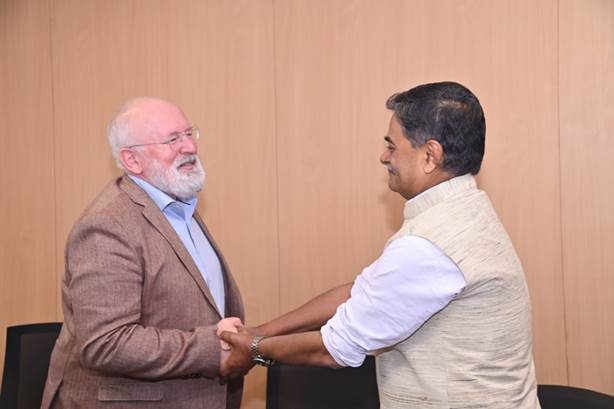
 The Union Power and New & Renewable Energy Minister R. K. Singh held a meeting with Frans Timmermans, Executive Vice President, European Green Deal, European Union in New Delhi yesterday, May 26, 2023. The meeting was held to discuss cooperation under the EU – India Clean Energy and Climate Partnership. The discussion touched upon energy efficiency; renewable energy, including solar and offshore wind, green hydrogen; energy storage, diversification of global supply chain for energy sector, the International Solar Alliance, India’s presidency of the G20 and how India and EU can partner each other on the clean energy transition.

“Looking for Partners who believe in going Green as fast as possible”

The Power and New & Renewable Energy Minister informed the visiting EU delegation that as India is growing, the power demand is accelerating. While the established capacity in India is 416 GW, it is going to double by 2030. India is accordingly adding rapidly to its power generation capacity. onHHonTheThe Minister pointed out that despite India’s per capita and cumulative emissions being one of the lowest in the world, it has emerged as a leader in Energy Transition and Climate Action.   

“Need to Add Manufacturing Facilities for Energy Storage, to Bring Down Storage Cost”

The Power and New & Renewable Energy Minister informed the European Union delegation of the various steps being taken by India to ramp up renewable energy capacity. He said that manufacturing capacity for the most advanced solar cells and panels is coming up; and by 2030, total manufacturing capacity of 80 GW will come up. This will meet India’s requirements and provide surplus for exports. This will address the supply chain issues of the world. The Minister stated that storage is needed in order to provide round-the-clock renewable energy and the transition to Net Zero. He informed that recognizing the need to add storage capacity, the government is coming up with bids for more storage.  Government of India has already come up with a bid for Production Linked Incentive for energy storage; and it is planning to have one more bid. He sought the cooperation of the EU in encouraging other countries too to add manufacturing facilities for energy storage so that the price of storage comes down.

Speaking of the need for alternative chemistries such as sodium ion, the Minister suggested that India and the EU do joint pilots, in areas such as green steel and other frontier technologies. The Minister informed that India is doing a pilot for round-the-clock renewables, using hydrogen and ammonia as storage. A construct across the world in this respect will help, he added.

“Journey to Green Hydrogen needs to be on the basis of free and open trade”

The Power and New & Renewable Energy Minister observed that the industry is switching to green hydrogen and that if the journey is to continue, it will have to be on the basis of free and open trade, without barriers. He told the EU delegation that we should guard against protectionism. He also said that we need to increase electrolyser manufacturing capacity if we need to increase use of green hydrogen. India is going to come up with a PLI bid on that, he informed.

The Executive Vice President of European Green Deal appreciated India for its leadership in Renewable energy and energy efficiency and suggested that the two sides find ways to bring the agenda of energy efficiency to the global stage, and help set global energy efficiency targets.

The Executive Vice President spoke of the need for global targets in introduction of renewables and said that we need to look at developing industrial ecosystems which promote renewables. He said that the EU is developing new generations of solar panels and that green hydrogen is also taking off and Europe will become a truly global market. Given the high costs of transporting green hydrogen, he opined that the places producing green hydrogen will attract industrial investment.

Grid-Scale Battery-based Energy Storage Systems

The Power and New & Renewable Energy Minister spoke of the opportunity for collaboration in batteries for grid-scale storage. He informed that India has come out with a separate Production Linked Incentive for batteries for green mobility. He said that India is going to be one of the biggest markets for green mobility, with 80% of India’s 2-wheelers, 3-wheelers and about 50% of 4-wheelers expected to be green by 2030.

The Executive Vice President said that heat pumps is an area where lot of innovation is expected to happen, given the rising needs for cooling and heating. He also said that there is a strong consensus in the EU on need to adopt renewable energy and on making the green transition.

Need to Detoxify Agriculture

The Power and New & Renewable Energy Minister expressed the government’s goal of detoxifying agriculture, by making a transition away from chemical fertilizers in the times to come.

“Need to Support Energy-Populations in Getting Energy Access”

The problem of lack of access to energy by 800 million people around the world was discussed. The Power and New & Renewable Energy Minister recalled that even as India and the EU make progress through this collaboration, a large part of the world population, especially in the African continent, suffers from poor energy access.

The two sides discussed the role of International Solar Alliance in bringing solar energy to the millions of people in Africa without access to energy. We need to support them to help them get clean energy and we need to get countries to work with the International Solar Alliance to contribute to clean energy, said the Minister.

This suggestion has been welcomed heartily by the Executive Vice President of the European Green Deal. It was agreed that EU, ISA, Africa and India will need to set up a partnership to address this issue.

The Executive Vice President of European Green Deal was accompanied by Ugo Astuto, Ambassador of the European Union to India; Edwin Koekkoek, First Counsellor, Energy & Climate Action, EU Delegation; Sara Zennaro Atre, First Secretary, Trade Section, EU Delegation; Estela Pineiro Kruik, Member of Cabinet; Damyana Stoynova, Member of Cabinet; and Diana Acconcia, Director, International Affairs and Climate Finance, Directorate-General for Climate Action, EU.

The Power and New & Renewable Energy Minister was joined by Alok Kumar, Power Secretary; Bhupinder Singh Bhalla, New & Renewable Energy Secretary; and other officers of the two Ministries.

About European Green Deal

As per the European Union, the European Green Deal seeks to transform the EU into a modern, resource-efficient and competitive economy, ensuring:

  • no net emissions of greenhouse gases by 2050
  • economic growth decoupled from resource use
  • no person and no place left behind

One third of the €1.8 trillion investments from the Next Generation EU Recovery Plan, and the EU’s seven-year budget will finance the European Green Deal. More about the Deal here.

***

REWARD Program with World Bank Team

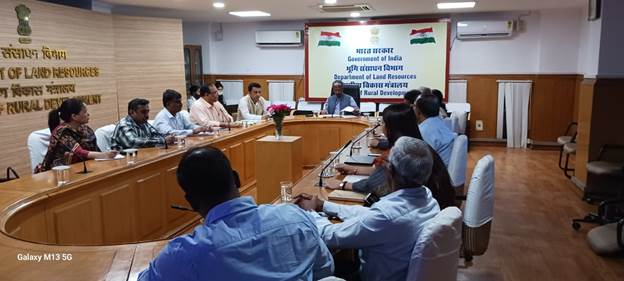
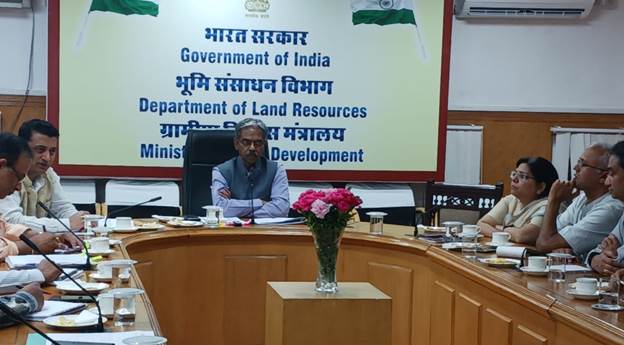
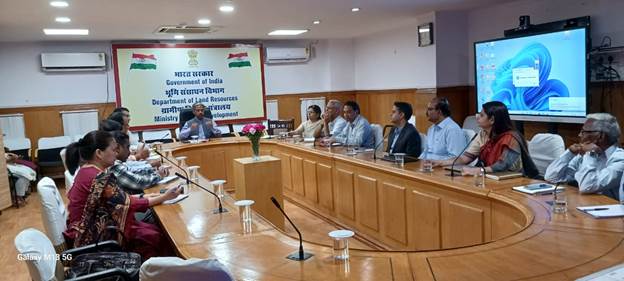
 The Secretary, Department of Land Resources (DoLR), Government of India (GoI) Shri Ajay Tirkey reviewed the Implementation Support Mission of World Bank Assisted Rejuvenating Watersheds for Agricultural Resilience through Innovative Development (REWARD) program.

REWARD is a World Bank assisted Watershed development program which is being implemented from 2021 to 2026. The Development Objectives of REWARD program is to “Strengthen capacities of National and State institutions to adopt improved watershed management for increasing farmers resilience and support value chains in selected watersheds of participating States”. The program is being implemented to introduce modern watershed practices in the Department of Land Resources in the Ministry of Rural Development and in the States of Karnataka and Odisha. The total budget outlay of REWARD program is USD 167.71 million over a program period of 4.5 years. This includes USD 115 million from World Bank [Karnataka (USD 60 million), Odisha (USD 49 million) and DoLR (USD 6 million)], USD 46.71 million from two participating States [Karnataka (USD 25.71) and Odisha (USD 21.0 million)] and USD 6 million from DoLR. The funding pattern is 70:30, between World Bank and States whereas it is 50:50 between World Bank and DoLR.

At the central level, the scope of the REWARD program covers management, monitoringcommunication and knowledge sharing functions by DoLR. At the State level, the REWARD program will be contiguous in scope to the WDC-PMKSY 2.0, and support implementation of key science-based activities and demonstrations which eventually aims at synergising broader perspective of WDC-PMKSY 2.0 in other States in India.

As a part of third Implementation Support Mission (ISM), the team of World Bank headed by Smt. Preeti Kumar visited DoLR & REWARD States for 3rd ISM to review the progress and to discuss about the plan of action for the next 6 months. After completing the mission, yesterday the team visited Department of Land Resources, Government of India to debrief the outcomes of ISM to the Secretary, DoLR. During the debriefing, the team felt that the progress of REWARD is on track and complemented the efforts of DoLR for the present progress and requested Secretary, DoLR for his continuous support to achieve the progress as per the Disbursement Linked Indicators of the program.

The other points discussed during the debriefing meeting includes strengthening of Centre for Excellence on watershed component which was established in Bengaluru under REWARD program, organizing National level workshop on science based watershed management, development of protocols for expansion of Land Resource Inventory (LRI) across the country on a pilot basis, providing LRI based digital advisory services to farmers and Exposure visits of REWARD officials etc.

Shri Nitin Khade, Joint Secretary (WM), Dr. C.P. Reddy, Senior Additional Commissioner, ISM members from World Bank, Experts of NPMU of REWARD program and other officials of DoLR attended the meeting.                                         

*****

8th Governing Council Meeting of NITI Aayog

 Prime Minister Shri Narendra Modi chaired the 8th Governing Council Meeting of NITI Aayog earlier today. The Meeting was held at the New Convention Centre, Pragati Maidan, New Delhi.  It was attended by Chief Ministers/Lt.Governors representing 19 States and 6 UTs.

Prime Minister stressed that the Centre, States and UTs should work as Team India and fulfil the dreams and aspirations of people for a Viksit Bharat @ 2047. He said that NITI Aayog can play a critical role in helping States to develop their strategies for the next 25 years and align the same with the National Development Agenda. He urged the States and UTs to work with NITI Aayog so that the country can take a quantum leap towards achieving its vision for the Amrit Kaal.

Prime Minister mentioned that NITI Aayog is taking multiple initiatives for strengthening cooperative and competitive federalism like the Aspirational Districts Programme (ADP) and Aspirational Blocks Programme (ABP). Both these programmes showcase the power of working together as Centre, States and Districts, and the impact of data-driven governance in improving the lives of common citizens at the grassroots level.

Prime Minister stressed on the need for States and Centre to promote Shree Anna in the International Year of Millets. He also deliberated on the need for working towards water conservation through the Amrit Sarovar programme. 

Prime Minister spoke about the importance of maintaining fiscal discipline at the State levels. He urged the States to proactively use the  Gati Shakti Portal not only for infrastructure and logistics but also for local area development and creation of social infrastructure.

Speaking about G20 meetings being held in the country, he said that while G20 has brought glory to India on the world stage, it has provided States the opportunity for global exposure. 

Prime Minister also spoke about the importance of skilling people with a view to meet global requirements, supporting MSMEs, developing the tourism potential of the country,  reducing compliances at the State level including decriminalisation of minor offences, creation of Ekta Malls. Talking about Nari Shakti, he highlighted the significance of women-led development. He also spoke about ending the menace of TB by 2025.

Chief Minister/Lt. Governors gave various policy level suggestions. They mentioned specific issues pertaining to the States which require Centre-State cooperation. Some of the key suggestions and best practices highlighted by them included in areas like opting for green strategies, need for zone wise planning, tourism, urban planning, agriculture, quality of workmanship, logistics, among others.

Prime Minister expressed his gratitude to the CMs and LGs for participating in the meeting and sharing their views and experiences. He said NITI Aayog will study the states’ concerns, challenges, and best practices and subsequently plan the way forward.

****

G20 Anti-corruption Working Group Meeting

    The Second meeting of the G20 Anti-corruption Working Group that was inaugurated on May 25 by Union Minister of State for Defence & Tourism, Shri Ajay Bhatt, concluded today in Rishikesh (Tehri).

             The meeting had wide participation from 90 delegates of 20 member countries, 10 Invitee countries and 9 International Organisations including UNODC, OECD, Egmont Group, INTERPOL and IMF. It  was chaired by Mr. Rahul Singh, Additional Secretary, DoPT & Chair, G20 ACWG and co-chaired by Mr. Giovanni Tartaglia Polcini, Head of Task Force, Co-chair, G20 ACWG, Italy and Mr. Fabrizio Marcelli, Minister Plenipotentiary, Ministry of Foreign Affairs and International Cooperation, Italy.

    Over the past three days, there have been intensive and productive deliberations on several key focal areas pertaining to Asset recovery, Fugitive economic offenders, formal and informal channels of cooperation for information sharing, institutional frameworks for combating corruption and mutual legal assistance, among others. The delegates agreed upon the three High Level Principles on ‘Promoting Integrity and effectiveness of Public Bodies and Authorities responsible for Preventing and Combating Corruption’; ‘Strengthening Law Enforcement related International Cooperation and Information Sharing for Combating Corruption’ and ‘Strengthening Asset Recovery Mechanisms related to Corruption’.  

          On the first day of the ACWG, a unique Side Event was held on ‘Gender and Corruption’. Hon’ble Minister of State for External Affairs and Culture, Smt. Meenakshi Lekhi delivered the keynote address. During this event, national and international experts and practitioners deliberated on the gendered aspects of corruption, the ways in which women’s empowerment is intrinsically linked with anti-corruption initiatives and the need for gender sensitive governance and policy making.

          The delegates got a flavour of India’s rich culture, heritage and cuisine during their stay at Rishikesh. India looks forward eagerly to hosting the delegates again at Kolkata from August 9-11 for the Third ACWG meeting. India will also host the first ever in-person Anti Corruption Ministerial Meeting to provide further impetus to the G20 agenda of bolstering the international fight against corruption.

******

Roundtable conference with leading CEOs of Pharmaceutical industry

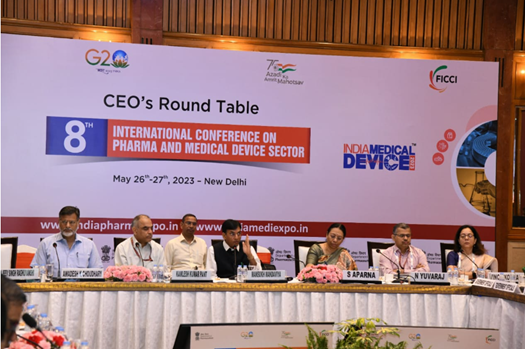
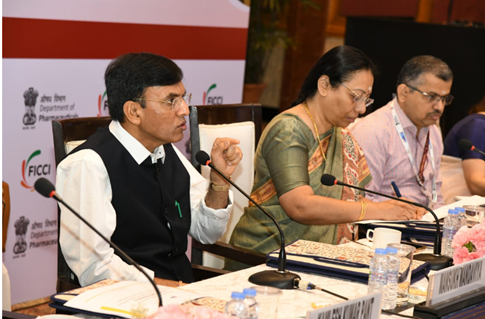
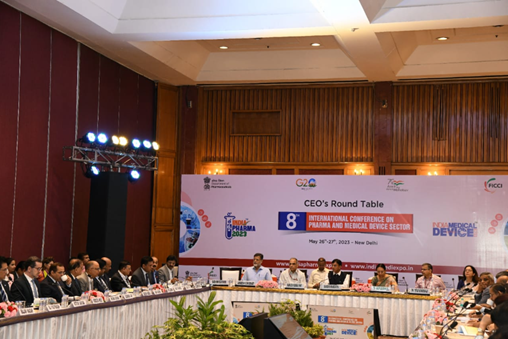
 Union Minister of Chemicals and Fertilizers, and Health and Family Welfare Dr Mansukh Mandaviya chaired a roundtable meeting with the leading CEOs of pharmaceutical industry in the country on the second day of 8th International Conference on Pharma and Medical Device Sector, here today. Ms. S Aparna, Secretary, Department of Pharmaceuticals was also present.

Lauding the growth momentum of the industry, the Minister said “the industry is progressing at a rapid rate, and to maintain our stature as the ‘Pharmacy of the World’, we need to focus on quality and affordable manufacturing with an increased focus on research and innovation.” Adding further Dr. Mandaviya urged the stakeholders to capitalize on the current opportunities, stating “substantial investment in terms of Production Linked Incentive schemes as well as upcoming drug parks are bearing fruitful results. To catalyze growth, we must maintain a degree of competitiveness to consolidate our presence in the world.”

Reiterating the government’s commitment and resolve, the Union Health Minister stated “the government is industry friendly and welcomes opportunities for collaboration. The government and industry, both integral to the nation’s progress, must work cohesively to achieve holistic growth.”

Affirming government support, Dr. Mandaviya invited the stakeholders to put forth their suggestions addressing the aspects of pricing, regulatory, policy and strategy, with the respective action points in a detailed presentation and due consideration will be given to facilitate further policy support and growth.

Underscoring the potential future growth of the industry, Ms. S Aparna, Secretary, Department of Pharmaceuticals urged the attending representatives to collate and collectively represent their perspectives adhering to the aforementioned four categories to facilitate policy makers, government in fostering a stronger ecosystem for all.

The roundtable brought together participants from over 60 companies represented by senior leadership, with several key players having a presence in the national as well as international markets. Shri N Yuvaraj, Joint Secretary, Department of Pharmaceuticals, Shri Awadhesh Kumar Choudhary, Senior Economic Advisor, Smt. Vinod Kotwal Member Secretary, National Pharmaceutical Pricing Authority, DCGI Dr. Rajeev Raghuvanshi, Chairman NPPA Shri Kamlesh Pant, various industry stakeholders and representatives of academia and associations were also present in the conference.

About International Conference on Pharma and Medical Device Sector:

The annual flagship conference will be conducted over two days – 26th May 2023 dedicated for India Medical Device sector on the theme “Sustainable MedTech 5.0: Scaling and Innovating Indian MedTech,” and 27th May 2023 dedicated for the Pharmaceutical sector on the theme “Indian pharma industry: Delivering Value through Innovation.

****

‘Yoga Mahotsav’ in Hyderabad

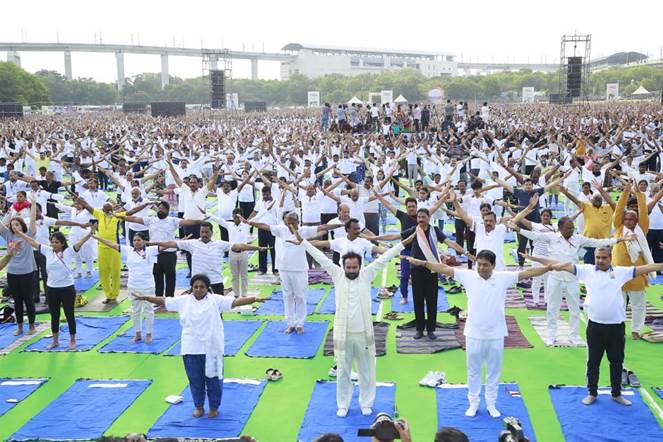
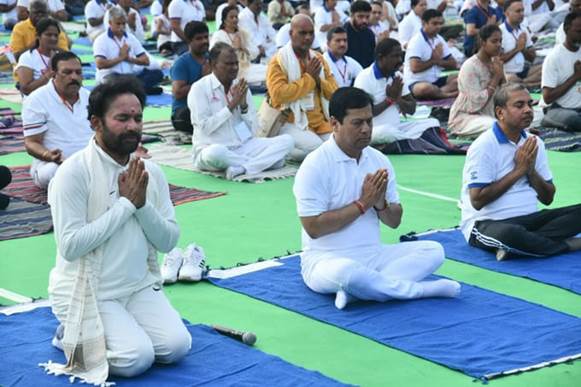
 The ‘Yoga Mahotsav’ witnessed a massive participation of 50,000 enthusiasts at the NCC Parade Ground here today. The event – organised by the Morarji Desai National Institute of Yoga (MDNIY), under the Ministry of Ayush was held to commemorate 25 days to the International Day of Yoga.

Hon’ble Governor of Telangana, Dr. Tamilisai Soundararajan graced the occasion as the Chief Guest as the Union Minister of Ayush Shri Sarbananda Sonowal; the Union Minister of Culture, Tourism & DoNER Shri  G Kishan Reddy; the Union Minster of State for Ayush Dr Munjpara Mahendrabhai actively participated in making this grand event a great success. Celebrities from the city like Padma Bhushan awardee & noted Badminton player & coach Pullela Gopichand; cine actors Srileela, Vishwak Sen, Krishan Chaitanya among other dignitaries were also witness to the electrifying atmosphere here today. Dr Ishwar V Basavaraddi, Director, MDNIY conducted the Common Yoga Protocol (CYP) as thousands performed Yoga in a spiritually uplifting atmosphere.

Speaking on the occasion, the Dr. Tamilisai Soundararajan said that this is a wonderful opportunity for all of us to celebrate Yoga as a festival of happiness, festival of health. She urge everyone to embrace yoga.  She further said that Yoga will make you happy, yoga will make you healthy, yoga will make you beautiful.”

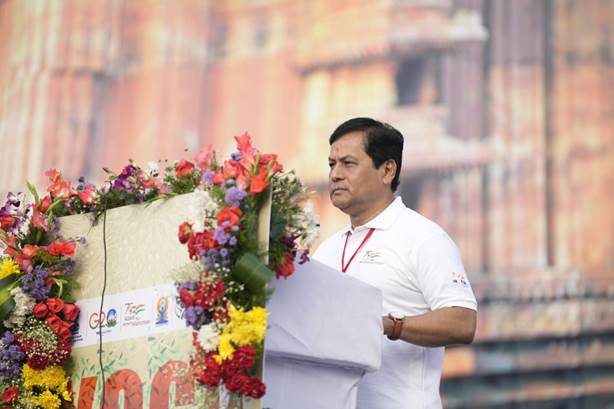
Addressing the gathering, Shri   Sarbananda Sonowal said, “My heart is filled with joy to see massive participation in the Yoga Mahotsav by the people celebrating the cause of good health through Yoga. As a true sign of India’s glorious heritage, Yoga received an unprecedented boost when the world started celebrating Yoga every year on 21 June. Yoga has continued to reach more and more people around the world and has benefited all for their physical, mental and spiritual well-being. Yoga has surpassed all divisions of caste, creed, gender, religion and nationalities. In the whole world, people of all ages have embraced it for their benefit. The theme of IDY for this year is quite apt — Yoga for Vasudhaiva Kutumbkam. It perfectly echoes the mood, spirit and acceptance of Yoga at national and global levels. From villagers to city dwellers, from students to home makers to corporate employees – all are embracing Yoga to remain healthy both physically as well as mentally. The untiring efforts of our charismatic Prime Minister Shri Narendra Modi ji have resulted in ever increasing impact of Yoga and its acceptance by the world community. Today, the whole world is accepting Yoga as an unfailing vehicle of holistic health and well-being.”

Highlighting the novelties in the celebration of this year’s IDY, Shri Sonowal added that these novelties would be on international, national and local levels.

He informed, “On the International level, an Ocean Ring of Yoga will be created on June 21st when with the help of the Ministry of Defense, Ministry of External Affairs and the Ministry of Ports, Shipping and Waterways Yoga demonstrations at many ports, on many ships will take place and many friendly countries will also join hands in this exercise. Similarly, Yoga demonstrations will also take place from Arctic to Antarctica— countries falling on or near the Prime Meridian line will join the Yoga demonstration. The flight Decks of INS Vikrant and INS Vikramaditya will showcase Yoga demonstration in synergy. Under Yog Bharatmala. Indian Army, Indian Air Force, Indian Coast Guard and Border Road Organisation will join hands for Yoga demonstration at borders, coasts and Islands to form a Yog Bharatmala. Yoga will also happen on North and South Pole regions. Himadri — the Indian Research Base in Svalbard, Arctic as well as Bharati — the third Indian Research Base in Antarctica. At the local level, Panchayats, Anganwadis, Asha/ANM will be involved in Yoga demonstrations. Health and Wellness centres of both Health and Ayush Ministries, which are more than 1.5 lakh in the country and all the Amrit Sarovars (around 50 thousand) will have Yoga demonstrations. This year we will witness ‘Har Aangan Yog’ is going to happen in true spirit.”

Speaking on the occasion Shri G Kishan Reddy said, “Yoga is a wonderful gift of India’s rich heritage to empower humanity to remain hale & hearty. As all of us have congregated here, the massive turnout by all of you has affirmed people’s outpour of love for Yoga. This wonder of India’s culture was rejuvenated under the dynamic leadership of Prime Minister Shri Narendra Modi ji as it has now become a global movement towards living healthy. In today’s world, the role of Yoga in keeping one calm and focussed is immense. We must all embrace Yoga and keep doing it regularly thereby celebrating it always. Let us make this event a grand success as we move on to celebrate International Day of Yoga.”

In his welcome address, Dr Munjpara Mahendra said, “International Day of Yoga is now well known throughout the world. Thanks to the untiring and visionary approach of our Hon’ble Prime Minister Shri Narendra Modi ji, the ancient science of Yoga is now fast becoming part and parcel of wellness journey of almost all nations in the world. This 25 Day Countdown is an indication that IDY 2023 is just round the corner and I congratulate all of you again to be part of such an important event. I appeal to all to keep this torch alight.”

The event was also attended by Vaidya Rajesh Kotecha, Secretary, Ministry of Ayush; Joint Secretary, Kavita Garg, Ministry of Ayush among other senior officials of union government and state government of Telangana. The event was also attended by Table Tennis player Naina Jaiswal, actress Eesha Rebba, G Sridhar Rao of Patanjali Yoga Peeth, Nandanam Krupakar, Joint Secretary, National Yogasana Sports Federation among other dignitaries and guests.

****

Raksha Mantri Shri Rajnath Singh to visit Nigeria

  Raksha Mantri Shri Rajnath Singh will visit Nigeria between May 28-30, 2023 to attend the swearing-in ceremony of the President-elect of the West African nation Mr Bola Ahmed Tinubu. Shri Rajnath Singh will attend the swearing-in ceremony at Eagle Square in Abuja on 29th May. He will also meet the outgoing Nigerian President Mr Muhammadu Buhari during a reception hosted by him on 28th May.

This will be the first-ever visit of an Indian Defence Minister to Nigeria. The Raksha Mantri’s visit will be an important landmark in building the strong bonds of friendship between the two countries. Considering the growing defence cooperation between India & Nigeria, senior officers of Ministry of Defence and top leadership of important Defence PSUs will accompany Shri Rajnath Singh. They will hold meetings with the representatives from the Nigerian industry and the Armed Forces to identify the equipment and platforms, through which the Indian defence industry can support the country’s requirements.

Nigeria is home to an estimated 50,000 members of the Indian community. The Raksha Mantri will address the Indian diaspora at Abuja during the visit.

*****

Methods commonly used to substitute inconsistent values in a data set

There are several methods commonly used to substitute inconsistent values in a data set. Here are a few examples:
Mean/Median Imputation: In this method, the missing or inconsistent values are replaced with the mean or median value of the corresponding variable. This method assumes that the missing values are missing completely at random and replaces them with the central tendency of the variable.
Regression Imputation: In this method, the inconsistent values are replaced by predicting their values based on a regression model. The model is built using the other variables in the data set that are not missing or inconsistent.
Hot Deck Imputation: In this method, the inconsistent values are replaced with values from similar cases in the data set. Similar cases are identified based on a set of matching variables. This method preserves the pattern of the data and replaces missing values with observed values from similar cases.
Multiple Imputation: This method involves creating multiple imputations for the inconsistent values based on statistical models. Multiple imputations allow for uncertainty in the imputed values and provide a range of plausible values for each inconsistent value.
Expert Knowledge: In some cases, domain experts or researchers may have specific knowledge about the data and can manually substitute inconsistent values based on their expertise. This method relies on human judgment and expertise.
It’s important to note that the choice of method for substituting inconsistent values depends on the nature of the data, the extent of inconsistency, and the assumptions made about the missing or inconsistent values. Different methods may be more appropriate in different situations, and it’s essential to consider the limitations and potential biases introduced by the chosen method.
Among the options provided, the correct method to substitute inconsistent values in a data set is “Editing.” Editing involves identifying and correcting inconsistent or erroneous values in the data set. It typically involves a manual or automated review of the data to detect outliers, errors, or inconsistencies. Once identified, the inconsistent values can be corrected or replaced using appropriate methods such as imputation or removal. Coding and elimination, on the other hand, are not specific methods for substituting inconsistent values but can be part of the data cleaning process. Coding refers to assigning numerical codes or categories to represent certain values or variables, while elimination involves removing observations or variables from the data set.

Review of Book – Atomic Habits

  THE PHENOMENAL INTERNATIONAL BESTSELLER: OVER 1O MILLION COPIES SOLD WORLDWIDE


Transform your life with tiny changes in behaviour, starting now.

People think that when you want to change your life, you need to think big. But world-renowned habits expert James Clear has discovered another way. He knows that real change comes from the compound effect of hundreds of small decisions: doing two push-ups a day, waking up five minutes early, or holding a single short phone call.

He calls them atomic habits.

In this ground-breaking book, Clears reveals exactly how these minuscule changes can grow into such life-altering outcomes. He uncovers a handful of simple life hacks (the forgotten art of Habit Stacking, the unexpected power of the Two Minute Rule, or the trick to entering the Goldilocks Zone), and delves into cutting-edge psychology and neuroscience to explain why they matter. Along the way, he tells inspiring stories of Olympic gold medalists, leading CEOs, and distinguished scientists who have used the science of tiny habits to stay productive, motivated, and happy.

These small changes will have a revolutionary effect on your career, your relationships, and your life.
________________________________
NEW YORK TIMES AND SUNDAY TIMES BESTSELLER

‘A supremely practical and useful book.’ Mark Manson, author of The Subtle Art of Not Giving A F*ck

‘James Clear has spent years honing the art and studying the science of habits. This engaging, hands-on book is the guide you need to break bad routines and make good ones.’ Adam Grant, author of Originals

Atomic Habits is a step-by-step manual for changing routines.‘ Books of the Month, Financial Times

‘A special book that will change how you approach your day and live your life.’ Ryan Holiday, author of The Obstacle is the Way


  • Publisher ‏ : ‎ Random House Business (30 October 2018)
  • Language ‏ : ‎ English
  • Paperback ‏ : ‎ 320 pages
  • ISBN-10 ‏ : ‎ 1847941834
  • ISBN-13 ‏ : ‎ 978-1847941831
  • Reading age ‏ : ‎ Customer suggested age: 13 years and up
  • Item Weight ‏ : ‎ 390 g
  • Dimensions ‏ : ‎ 15.3 x 2.4 x 23.4 cm
  • Country of Origin ‏ : ‎ United Kingdom

Book Review 

I will divide the review into 5 parts. The first part is a summary of the book with short excerpts highlighted while taking notes. Next, I hope to share pieces of advice that have motivated me while building new habits. Following that, I will share how I implemented the first 3 habits throughout these months. Then, some thoughts to whom I would recommend reading the book. Last, there are 4 complementary readings.

SUMMARY

[Introduction] James starts by sharing personal strategies he implemented to recover from a serious accident in high school. That event forced him to improve the quality of his routine to get his life in order, coming to the conclusion that “we all deal with setbacks, but in the long run, the quality of our lives often depends on the quality of our habits. With the same habits, you will end up with the same results. But with better habits, anything is possible.”

[Section I : The Fundamentals]

[Chapter 1] Here we learn the power of compounding effect: changes that seem small and unimportant at any given day will compound into remarkable results if we are willing to stick with them for months and years. James explains that “breakthrough moments are often the result of many previous actions, which build up the potential required to unleash a major change.” Comparing to habits, he shows that bamboo can barely be seen during the first couple of years while the roots grow underground before exploding for almost 100 feet into the air in a few weeks. From that perspective, we come to understand the best outcomes are generally delayed.

[Chapter 2] Based on a 3-layer concentric circle behavior change model—divided into outcome change, process change, and identity change—James explains that we should pay attention to our inner identity by focusing on beliefs, assumptions, and values. “Many people begin the process of changing their habits by focusing on what they want to achieve. This leads us to outcome-based habits. The alternative is to build identity-based habits. With this approach, we start by focusing on who we wish to become.” The strongest changes, then, happen from inside out, starting from our identity, passing through the process, and ultimately changing the outcome.

[Chapter 3] In this chapter we are introduced to a 4-step framework, which is composed of cue, craving, response, and reward. James calls it ‘The 4 Laws of Behavior Change’. He then explains that we can think of each law as a lever that influences our behavior—when the levers are in the right positions, they create good habits effortless whereas when they are in the wrong position, it is nearly impossible. Through examples, he explains that “the cue triggers a craving, which motivates a response, which provides a reward, which satisfies the craving and, ultimately, becomes associated with the cue.” Together they create a habit loop that, when repeated many times, habits become automatic.

[Section II : Make It Obvious]

[Chapter 4] A primer on how cues play a crucial role in predicting habit formation without consciously thinking about the outcomes. Once our habits become so common, the cues associated with them become essentially invisible because they are deeply encoded. If we want to create better habits, a good idea is to be aware of the cues. James finishes up by sharing a strategy called ‘Habits Scorecard’—a simple exercise to become more aware of our behavior on a daily basis. We first write down a chronological list of our daily habits and, once we have a full list, we score each habit as an effective, ineffective, or neutral habit. Besides noticing what is actually going on, we can notice if certain behaviors help us become the type of person we wish to be.

[Chapter 5] The cues that can trigger a habit come in a wide range of forms, and the 2 most common cues are time and location. When we make a specific plan for when and where we will perform a new habit, we are more likely to follow through. Stacking our habits by pairing a new habit with a current habit is a form to connect our behavior to our own advantage. An example when building a daily journaling habit would be: “after I pour my cup of coffee each morning, I will journal for 5 minutes.”

[Chapter 6] This chapter shows how our environment plays a crucial role in defining habit behaviors. “Given that we are more dependent on vision than any other sense, it should come as no surprise that visual cues are the greatest catalyst of our behavior.” To build good habits, then, we should either make desirable cues obvious in our environment or build new habits in a new environment to avoid fighting against old ones.

[Chapter 7] One of the most practical ways to break a bad habit is to reduce exposure to the cue that causes it. As James points out, “it is easier to avoid temptation than resist it.”

[Section III : Make It Attractive]

[Chapter 8] James explains how the modern food industry has created products that are more attractive and addictive to consumers, and by doing so he shows that the more attractive an opportunity is, the more likely it is to become habit-forming. Every behavior that is highly habit-forming tends to be associated with higher levels of dopamine. It is the anticipation of a reward that motivates us to take action. “Temptation bundling is one way to make your habits more attractive. The strategy is to pair an action you want to do with an action you need to do.”

[Chapter 9] “We tend to adopt habits that are praised and approved of by our culture because we have a strong desire to fit in and belong to the tribe.” That said, it is common to pick up habits and behaviors from our parents, peers, and colleagues. There is also a tremendous internal pressure to comply with the norms of the tribe. And, finally, we try to copy the behavior of successful people because we desire success ourselves. One of the best strategies to build better habits is to join a culture where the desired behavior is the normal behavior.

[Chapter 10] To avoid unnecessary and detrimental cravings, we should highlight the benefits of avoiding a bad habit by making it seem unattractive. “Habits are unattractive when we associate them with negative feelings.”

[Section IV : Make It Easy]

[Chapter 11] “All habits follow a similar trajectory from effortful practice to automatic behavior, a process known as automaticity. Automaticity is the ability to perform a behavior without thinking about each step, which occurs when the nonconscious mind takes over.” The key component is to pay close attention to the frequency we perform a habit, not much for how long we have been practicing it.

[Chapter 12] Since every action requires a certain amount of energy, we are motivated to do what is easy. By contrast, the more energy required, the less likely it is to occur. “You don’t actually want the habit itself. What you really want is the outcome the habit delivers. The greater the obstacle, the more friction there is between you and your desired end state.” That is why we should reduce the friction associated with our habits by creating a prosperous environment to make future actions easier.

[Chapter 13] There are decisive moments that deliver an outsized impact every single day. As James puts, these decisive moments are a fork in the road, sending us in the direction of a productive path or an unproductive one. To avoid procrastination, the skill of ‘Showing Up’ says that we should start a new habit by taking baby steps, making it as easy as possible to take action. “A new habit should not feel like a challenge. The actions that follow can be challenging, but the first 2 minutes should be easy. What you want is a gateway habit that naturally leads you down a more productive path.” He calls it the ‘Two-Minute Rule’, meaning that new habits should take less than 2 minutes to do in the beginning. Once the habit is established we can improve and master the finer details.

[Chapter 14] In order to keep bad habits away is to make them difficult in the first place. There are 2 interesting strategies to improve our future behavior. [1] Make good choices in advance before we can fall victim to temptation in the future. James gives a personal example by sharing that whenever he is looking to cut calories he will ask the waiter to split his meal and box half of it to go before the meal is served. If, however, he waits for the meal to be served and tries to eat just half, that would never happen. [2] Make onetime actions that can automate our future habits and deliver increasing returns over time such as buying a good water filter, unsubscribing from unwanted emails, moving to a friendlier neighborhood, buying a standing desk, or setting up automatic bill pay.

[Section V : Make It Satisfying]

[Chapter 15] We should make sure to feel immediately satisfied after performing a new habit to increase the odds that the behavior will be repeated next time. “The human brain has evolved to prioritize immediate rewards over delayed rewards.” For that, we can add a little bit of immediate pleasure to the habits that pay off in the long-run.

[Chapter 16] Here we learn how to measure our progress by tracking our habits. The immediate satisfaction it delivers—as mentioned earlier in Chapter 15—is one of the many benefits that standout. Besides that, James says, “when we get a signal that we are moving forward, we become more motivated to continue down that path.” The most basic format to track our habits is to get a calendar and mark an X each time we stick with our routine. One of the most important passages of the entire book is as follows: “If you miss one day, try to get back into it as quickly as possible. The first mistake is never the one that ruins you. It is the spiral of repeated mistakes that follows. Missing once is an accident. Missing twice is the start of a new habit. This is a distinguishing feature between winners and losers. Anyone can have a bad performance, a bad workout, or a bad day at work. But when successful people fail, they rebound quickly.”

[Chapter 17] In order to prevent bad habits and/or eliminate unhealthy behaviors, James says that we could either add an instant cost to the action or make it painful. A habit contract is also another strategy to hold our accountability: “It is a verbal or written agreement in which you state your commitment to a particular habit and the punishment that will occur if you don’t follow through. Then you find one to two people to act as your accountability partners and sign off on the contract with you.”

[Section VI : Advanced Techniques]

[Chapter 18] We learn how to distinguish habits when genes may or may not influence our performance especially for competitive activities. “One of the best ways to ensure your habits remain satisfying over the long-run is to pick behaviors that align with your personality and skills.” James proposes us to set some time apart to explore new activities in the beginning, before shifting our focus to exploit them thoroughly.

[Chapter 19] When we find the sweet spot of our ability we tend to learn best and fastest. The ‘Goldilocks Rule’ states that “humans experience peak motivation when working on tasks that are right on the edge of their current abilities. Not too hard. Not too easy. Just right.”

[Chapter 20] One downside of certain habits, James explains, is that we may stop paying attention to the little details and errors. To counterbalance that we should review and reflect on the process over time to remain conscious of our own performance. Using a simple chart to convey his message, we learn that “the process of mastery requires that you progressively layer improvements on top of one another, each habit building upon the last until a new level of performance has been reached and a higher range of skills has been internalized.”

PERSONAL THOUGHTS

Reading the book twice helped me take better notes and capture details. In the meantime, I thought about 3 simple strategies that could improve our adherence to new habits. Let me share these strategies here with you, and in the following section, I will describe how I managed to cultivate the first 3 new habits upon reading the book—following the system proposed by James together with these 3 strategies.

[1] The first strategy is about determining a ‘commitment time frame’ to avoid excuses during this initial trial period. A 1-month time frame is a fair commitment, choosing to start on the first day of the month to practice it every single day for a full month. Just at the end of the period, I will take the time to reflect and evaluate the pros and cons.

[2] The next one is to choose only 1 new habit each month. In doing so we become familiar with the practice intentionally while we develop a sense of purpose.

[3] Last, during the first month of any new habit, I noticed that if I spend time exploring the details and the benefits, my motivation stays high. It doesn’t only help us create better practices, but it is also inspiring to learn from others who have succeeded previously by adding the same habit into their lives. Podcasts, articles, videos, books, online courses, tutorials, and blog posts are all good sources.

IMPLEMENTATION OF NEW HABITS

[Nov 1, 2018] I had been wanting to journal on a daily basis for many years but that had never happened. Although I have carried a notebook with me for quite a while, it has never worked as a real journal—a daily routine, when we sit down and write personal thoughts, intentions, and reflections at around the same time. Instead, it has been mostly used to take notes during meetings, to write down ideas and thoughts, to express travel memories, and to doodle. Today, after 3+ months, I haven’t looked back once, and still can’t believe it took me that long to start this daily habit. During the first month, I read blog posts, watched videos, and even read a short and inexpensive book to foster my creativity.

[Dec 1, 2018] I have been impressed by the physical capabilities we can develop through body movement. Although yoga has been a special part of my life since I was 18, I hadn’t given proper attention to handstands. But now, after 2+ months practicing it every day, it is rewarding to see improvements on a weekly basis. Again, I definitely recommend watching videos and reading tutorials to find your favorite method. This is the perfect habit to stack at the end or in the middle of any physical movement practice you may enjoy.

[Jan 1, 2019] By now we know the benefits of cold showers—ranging from healthier skin appearance all the way to a more resilient perspective of the world. I had previously taken cold showers for 3 months in 2017, but it was a “goal” mindset instead of a “habit” mindset. After that trial I set aside and, although I have kept taking cold showers once or twice a week since then, I wished cold showers was the default mode. Now, after 1+ month, I can’t see myself taking warm showers. After all, it is about intention. Again, we can learn uncountable benefits of cold showers by reading success stories. One of my inspirations was Wim Hof. It isn’t comfortable in the beginning of any chosen day, but after 3-4 minutes, both my breath and thoughts calm down.

Putting them together, these 3 habits don’t take more than 30 minutes of my day. While I spend about 10 minutes journaling and 10 more minutes practicing handstands, I save 5 minutes taking cold showers because I won’t stay any longer than necessary.

RECOMMENDATION

[1] First, if you have watched videos, listened to podcasts, read articles and books on habit formation and, after all that, you feel satisfied, then, please, save your money and time.

[2] However, if you are like me, that even after reading a few books on building habits and having successfully added good habits to your life, feel that there is still room for improvement, this book can be a terrific addition.

[3] Last, if you haven’t spent much time and energy discovering a good system to build lasting habits while breaking bad ones, please, read this book.

COMPLEMENTARY READINGS

[1] Game Changers, by Dave Asprey, exposed me to a wealth array of ideas/habits/tools that have helped me decide which new habit to build next. The book is divided into 46 laws.

[2] Essentialism, by Greg McKeown, helped me focus on less but more important tasks, giving clarity to what matters most. This is especially interesting to break bad habits.

[3] The Talent Code, by Daniel Coyle, brought more motivation when learning new skills based on the assumptions that we develop new talents through deep practices, finding our ignition identity, and having the right coach to guide us genuinely. I read it many years ago, then, a few years back, I read his following book called The Little Book of Talent—which is perhaps even more to the point.

[4] The Systems View of Life, by Fritjof Capra, enlightened my perspectives on how nature and living beings are systematically integrated. It is a profound and slightly academic book that can complement Atomic Habits especially to tie together the 4-step framework into the feedback loop system.

I sincerely hope you, too, have fun while building new habits.

Book Review: Atomic Habits

 THE PHENOMENAL INTERNATIONAL BESTSELLER: OVER 1O MILLION COPIES SOLD WORLDWIDE


Transform your life with tiny changes in behaviour, starting now.

People think that when you want to change your life, you need to think big. But world-renowned habits expert James Clear has discovered another way. He knows that real change comes from the compound effect of hundreds of small decisions: doing two push-ups a day, waking up five minutes early, or holding a single short phone call.

He calls them atomic habits.

In this ground-breaking book, Clears reveals exactly how these minuscule changes can grow into such life-altering outcomes. He uncovers a handful of simple life hacks (the forgotten art of Habit Stacking, the unexpected power of the Two Minute Rule, or the trick to entering the Goldilocks Zone), and delves into cutting-edge psychology and neuroscience to explain why they matter. Along the way, he tells inspiring stories of Olympic gold medalists, leading CEOs, and distinguished scientists who have used the science of tiny habits to stay productive, motivated, and happy.

These small changes will have a revolutionary effect on your career, your relationships, and your life.
________________________________
NEW YORK TIMES AND SUNDAY TIMES BESTSELLER

‘A supremely practical and useful book.’ Mark Manson, author of The Subtle Art of Not Giving A F*ck

‘James Clear has spent years honing the art and studying the science of habits. This engaging, hands-on book is the guide you need to break bad routines and make good ones.’ Adam Grant, author of Originals

Atomic Habits is a step-by-step manual for changing routines.‘ Books of the Month, Financial Times

‘A special book that will change how you approach your day and live your life.’ Ryan Holiday, author of The Obstacle is the Way


  • Publisher ‏ : ‎ Random House Business (30 October 2018)
  • Language ‏ : ‎ English
  • Paperback ‏ : ‎ 320 pages
  • ISBN-10 ‏ : ‎ 1847941834
  • ISBN-13 ‏ : ‎ 978-1847941831
  • Reading age ‏ : ‎ Customer suggested age: 13 years and up
  • Item Weight ‏ : ‎ 390 g
  • Dimensions ‏ : ‎ 15.3 x 2.4 x 23.4 cm
  • Country of Origin ‏ : ‎ United Kingdom

Book Review 

1. Don’t set Goals : Writer kehte he ki goal set karne ki bajay ek system pe focus karna chaiye
Goals set krna achi bat he lekin us goal ko achieve karne k liye system ko behtar banana padega jo hame us goal tak pahuchayega.
Agar British Cycling team ki bat kare to gold medal jeetna to unka goal shuru re raha tha, lekin Dave ne jab system ko better banaya, to goal apne ap achieve ho gaya.
Maan lijiye apka room bikhra pada he. Ap ek goal set krte ho ki mujhe room clean karna hee to ek bar room clean ho jayega, lekin agar ap apni chijo ko sahi jagah rkhne ki adat bana lo to apka kamra kabhi bikhra milegha hi nai.

2 – Change your Identity :
Apni buri adato ko change krne ke liye hame adto ko chang karne s pehle apne aap ko change karna ki jrurt hoti he .
Hamari adte hamari identity ko follow krti he .
Example k liye –
Man lijiye ek insan cigarette chodne ki koshish krta he . Is douran jab use koi cigarette offer karta he to vo ye kahta he “ nahi yar, me cigg chodne ki kosis kar raha hu’
Usnea bhi tak apni identity nahi badli. Vo apne ap ko abhi bhi smoker manta he.
Lekin, agar vo ye kahe ki “ nahi yar, me cigg nahi pita” is se vo apni identity change kar leta he. Ab vo apne ap ko non smokere consider karta he . This new identity motivates that person to stick with it.

3 – Change your Environment –
Hamare sath akshar esa hota h ki ham kitchen me jate to paani pine k liye, lekin hamari nazar chips k packet pe padti he or ham use khane lagte he .
Hairani ki baat ye he ki hame na to bhookh lagi thi or na hi chips khane ki ichha hui thi.
Malls vale yahi technique use krte he, mehange or profitable products racks me upar or ankho ki range me rakhi jate he jo customer ko easily notice ho jate he .
And chances are that customers in products ko jrurt na hote hue bhi kharid lete he.
Isi technique se ham bhi kisi bhi habit ko abopt kar skte he ya kisi bad habit ko chord bhi skte he.
Fruits jyada khanee h ? to fruit basket ko vaha rkho jaha ap apna din ka sabs jyada time spnd krte ho. Jab fruits apki ankho k samne rahnge to ap automatically unhe consume krne lag jaoge.
Padhai krt krte distract hote h to padhai k liy alag room, ya room me alag table ko study zone bana do. Yani padhai bed pe nhi usi enviorment m kroge, to apka mind kam distract hoga qki usko pata h k aap study zone m ho.

4. Don’t run for the best: Ek choti si interesting si story share krta hu. Florida University ke ek professor ne apne photography students ko 2 groups me divide kiya. Pehle group ko yeh challenge diya ki unko pure semester jyada se jyada photos submit karne he , 100 photos submit krne vale ko A grade, 90 vale ko B.
Or dusre group ko challenge diya to submit only 1 photo but that has to be the perfect one. Jiska photo sabse perfect hoga usko A grade, or us se kam vale ko B grade milega.

Interesting.
At the end of the semester saare best photos surprisingly first group se aye.
Aap bhi soch rahe honge k esa kese hua, dusra group jisne pura semester ek photo ko perfect krne me lagaya unke photos best rank me q nahi aye ?

Because jaha dusra group ek hi photo ko perfect banana me laga raha, pehle group ne jab bahot sare photos click kiye to isi ke sath unki skills bhi enhance hoti rahi. Vo har photo me experiment karte rahe or apni hi mistakes se sikhte rahe.

Agar apko business krna he ya startup krna he or best idea ya best opportunity k liye ruke he to ap kabhi start hi nahi kar paynege,
Jo bhi idea he jesi bhi opportunity he uspe jab mehnat ki jayegi to vo hi best ban jayega.