Nothing has changed in the RBI’s view on cryptocurrencies. The Central Bank Governor, Dr. Shakktanta Das, clearly believes that cryptocurrencies pose a highly visible threat.
He said so in the Financial Stability Report (FSR) released on Friday. He has also indicated that the RBI will also take appropriate steps to protect the country’s financial sector from the danger it poses. Regarding cryptocurrency, the RBI governor has said that it is baseless speculation and is promoted with a good name only on the basis of speculation. In the report, the RBI has said that cryptocurrency should not be treated as a currency as there is no one monitoring it. These are neither financial assets nor debt securities. This can lead to a variety of risks. Also in the past when attempts were made to manage currencies privately the results were very poor. The Financial Stability Report said the rapid rise in crude oil prices in the world market has led to a reduction in growth rate estimates.
According to another RBI report, banks’ gross NPAs fell to a six-year low of 5.9 percent in March 2022. By March 2023, this could fall further to 5.3 percent. However, the RBI has warned that NPAs could rise if macroeconomic conditions deteriorate.
From an outright ban on cryptocurrencies in 2016 to an upcoming Bill for regulation—the government’s stance on digital assets has changed considerably over the past few years
Cryptocurrencies in India:
In 2018, The RBI issued a circular preventing all banks from dealing in cryptocurrencies. This circular was declared unconstitutional by the Supreme Court in May 2020. Recently, the government has announced to introduce a bill; Cryptocurrency and Regulation of Official Digital Currency Bill, 2021, to create a sovereign digital currency and simultaneously ban all private cryptocurrencies. In India, the funds that have gone into the Indian blockchain start-ups account for less than 0.2% of the amount raised by the sector globally. The current approach towards cryptocurrencies makes it near-impossible for blockchain entrepreneurs and investors to acquire much economic benefit.
With the creation o
Considering the fact India was a late adopter in all the previous phases of the digital revolution – when semiconductors, the internet, and smartphones made their mark, there is a need for a change in the thoughts and acceptance of these virtual currencies as they mark India’s first step towards entering the new phase of the digital revolution.
Significance of Cryptocurrencies
Corruption Check: As blocks run on a peer-to-peer network, it helps keep corruption in check by tracking the flow of funds and transactions.
Time Effective: Cryptocurrencies can help save money and substantial time for the remitter and the receiver, as it is conducted entirely on the Internet, runs on a mechanism that involves very less transaction fees and is almost instantaneous.
Cost Effective: Intermediaries such as banks, credit card and payment gateways draw almost 3% from the total global economic output of over $100 trillion, as fees for their services.
Integrating blockchain into these sectors could result in hundreds of billions of dollars in savings.
Cryptocurrencies in India:
In 2018, The RBI issued a circular preventing all banks from dealing in cryptocurrencies. This circular was declared unconstitutional by the Supreme Court in May 2020. Recently, the government has announced to introduce a bill; Cryptocurrency and Regulation of Official Digital Currency Bill, 2021, to create a sovereign digital currency and simultaneously ban all private cryptocurrencies.
In India, the funds that have gone into the Indian blockchain start-ups account for less than 0.2% of the amount raised by the sector globally. The current approach towards cryptocurrencies makes it near-impossible for blockchain entrepreneurs and investors to acquire much economic benefit.
The Government of India announced the Union Budget for 2022–23 with Finance Minister Nirmala Sitharaman bringing much-needed clarity for millions of crypto investors in India. The government has imposed a 30% fixed tax rate on all income generated through crypto trading while also aiming to introduce the Digital Rupee in 2022–23.
In an era dominated by digital media, the value of traditional book publishing remains significant. Publishers like Edupedia Publications Pvt Ltd play a crucial role in nurturing authors and bringing quality content to readers. Traditional publishing houses offer numerous advantages that are hard to replicate in self-publishing platforms. Here are some key benefits of working with a traditional book publisher:
One of the most significant advantages of traditional publishing is the professional editing services provided. Edupedia Publications, like many traditional publishers, employs skilled editors who work closely with authors to refine their manuscripts. These services go beyond mere proofreading; they enhance the structure, clarity, and overall quality of the text. Additionally, the publisher handles all aspects of production, including formatting, cover design, and typesetting, ensuring that the final product is aesthetically pleasing and professionally produced.
2. Quality Assurance
Traditional publishers have a reputation to maintain and, as such, are invested in the quality of the books they publish. This means rigorous peer review and quality checks that help ensure the content is accurate, well-researched, and of high editorial standards. For academic authors, this can also mean enhanced credibility and recognition in their field.
3. Marketing and Distribution
Another significant advantage is the comprehensive marketing and distribution networks that traditional publishers provide. Edupedia Publications Pvt Ltd, for instance, would typically manage the marketing of your book, which includes promotional activities, distribution to bookstores, and presence at book fairs and other events. They also handle listing on various retail platforms and may run advertising campaigns, author interviews, and book signings. This extensive distribution network ensures that the book reaches a wide audience, increasing its sales potential.
4. Financial Investment
With traditional publishing, the publisher assumes all financial risks. From the initial stages of manuscript development to marketing and distribution, the publisher covers all expenses. Authors may receive an advance against royalties and will earn royalties from sales without the burden of upfront costs. This financial model allows authors to focus more on their writing without worrying about the investment needed to publish and market their book.
5. Prestige and Validation
Being published by a recognized publishing house like Edupedia Publications Pvt Ltd lends an author prestige and serves as a form of validation of their work. This can be particularly important for new authors trying to establish themselves. The prestige associated with a reputable publisher can open doors to more opportunities in writing and related fields.
6. Long-term Partnership and Career Development
Traditional publishers are interested in building long-term relationships with their authors. They invest in the author’s growth and career development, which can be incredibly beneficial for new and established authors alike. This partnership can lead to subsequent book deals and opportunities for broader exposure, including translations and international sales.
7. Rights Management
Publishers like Edupedia Publications manage the rights associated with the book, which can include foreign rights, audio books, e-books, and even film and television rights. They have the expertise to negotiate deals that can further an author’s career and ensure that their work is protected under copyright laws.
Conclusion
While the rise of self-publishing has democratized the process of bringing books to market, traditional publishing remains a strong force, particularly for authors who seek professional quality and broad distribution. Companies like Edupedia Publications Pvt Ltd offer a full suite of services that can dramatically benefit authors, from enhancing the quality of their work to ensuring it reaches the widest possible audience. For many authors, the benefits of traditional publishing align closely with their career goals and aspirations, making it a compelling choice in their publishing journey.
Cryptos are becoming a favorable investment option among many investors. These assets are an easy option for seamless transfers to any part of the world. And as there are no strict regulations on this market yet, the users find it easier to use it for transactions. Check out the Official Website profit system Immediate Profit for those who are new to cryptocurrency trading and investing.
As per some recent reports, many Russian users are sending USDT to the UK. They are doing this with the help of several Cryptocurrency exchanges. Russians are using these exchanges as a medium to send people to the UK to send USDT. But what’s the reason behind such increased cases? Learn about this aspect through this blog!
An investigation was carried out on all the exchanges which revealed this news. This investigation was done on all the exchanges present in the capital city of Russia. It reveals that every user of these exchanges who are buying Cryptos is ready to deliver currencies to London.
But, the investigation is unable to bring out the true identity of those users. This was stated in the investigation report by Transparency International Russia (TIR). As per this organization and The Bell, another media platform states that many exchanges are offering some unique services at present.
The services of these exchanges let Russians withdraw digital assets in the form of cash in London. The investigating organization states that, due to these services, transferring funds out of the nation has become quite easy now! And this feature is possible because of all the exchanges present in Moscow.
Are There Zero Restrictions?
You may now wonder if there are almost no restrictions on such easy movement of funds. But, there are strict controls and regulations for the movement of any funds moving out of Russia. Counter-sanctions and sanctions place these limitations on the fund movement out of the nation.
Despite these restrictions, almost eight Crypto exchanges in Russia are ready for this move. They will let their users transfer USDT out of Russia. The exchanges also mention that they will help in converting the assets into cash to deliver in London.
How Are These Exchanges Making The Conversion Possible?
When the TIR carried out the investigation and recruited some undercover agents, some interesting facts were found. The agents revealed that they were not required to provide any kind of documents and passports for transferring the funds! This is quite a shocking part and reveals interesting facts about the exchanges.
Rather, the exchanges ask for some particular details. These questions may include details about the collector of the funds, like what they will wear or the serial number of banknotes!
The investigation also reveals that all such UK-based couriers were prominent and of Russian origin. And they carried out the discussion about handover and other details on Telegram alone!
A Glimpse Of Some Exchanges
The best example of such a Russian-based exchange is that of the Suex. In 2021, this exchange had to face US sanctions. This is because Washington assumes that this exchange has links with money laundering actions and helps its users do the same.
The organization also adds a note here about Suex. It states that as the platform fails to provide any customer details, they are violating the anti-money laundering rules of Britain.
Investigation Finds Trace Of Such Activities
The researchers of the organization are capable of tracing some of the wallets associated with these exchanges. After this, they are also able to trace the history of such digital wallets.
After having a view of the history of such wallets, the researchers found that many wallets even transferred USDT worth 470,000 USD! Besides that, the investigation highlights that these exchanges have aided in transferring small amounts of less popular Cryptos.
Conclusion
Amidst such activities, the Russian government AML agency states that it is monitoring around 25,000 suspected users. All these users are under suspicion of carrying out AML activities.
These facts highlight that Russians are more actively transferring their funds outside the nation. Also, these exchanges are facilitating these activities without asking for any KYC or other details of the users while transferring the same. And this calls for strict scrutiny in the nation.
To learn more about Cryptos and this industry, you need to join Bitcoin Smart.
Cryptocurrencies, with Bitcoin leading the way since its inception in 2009, have surged in popularity worldwide, presenting investors with a unique and intriguing investment opportunity. In this guide, we will provide a concise overview of the history of cryptocurrencies, explain their functioning, and guide you on how to initiate your first investment in Bitcoin. If you are getting tremendously confused upon how to use cryptocurrencies or how do they work, then you can keep an eye on this website for more informationhttps://q-profit-system.com/.
To maintain the trustworthiness of financial transactions and govern the creation of new units, cryptocurrencies employ cryptography. The blockchain, a transparent ledger that logs all cryptocurrency transactions, was introduced alongside the first cryptocurrency. Each transaction in the blockchain is subjected to authentication and encryption by a network of computers responsible for sustaining the blockchain. This network employs complex algorithms that ensure the security and accuracy of the blockchain, allowing it to operate autonomously without the need for intermediaries. By decentralizing the financial system in this way, cryptocurrencies offer an alternative to traditional banking structures and promote financial transparency and inclusivity.
How Does Cryptocurrency Work?
Cryptocurrencies function using a decentralized technology, which enables them to operate without the involvement of traditional intermediaries such as banks or governments. The decentralized nature of cryptocurrencies is made possible through the use of distributed ledger technology, which ensures that every participant in the network has access to a copy of the blockchain, a public database that logs all transactions. This mechanism ensures the transparency and security of cryptocurrency transactions, while also promoting financial autonomy and inclusivity for users around the world.
Types of Cryptocurrency
As a decentralised system, cryptocurrency doesn’t need authoritative third parties like banks or governments to function. It entirely leaves the entire transaction system in the hands of the investors and traders. Hence, the moment you start using the cryptos which fall under the decentralized system, you would not have to worry about the third party interferences at all.
Benefits & Risks of Cryptocurrency
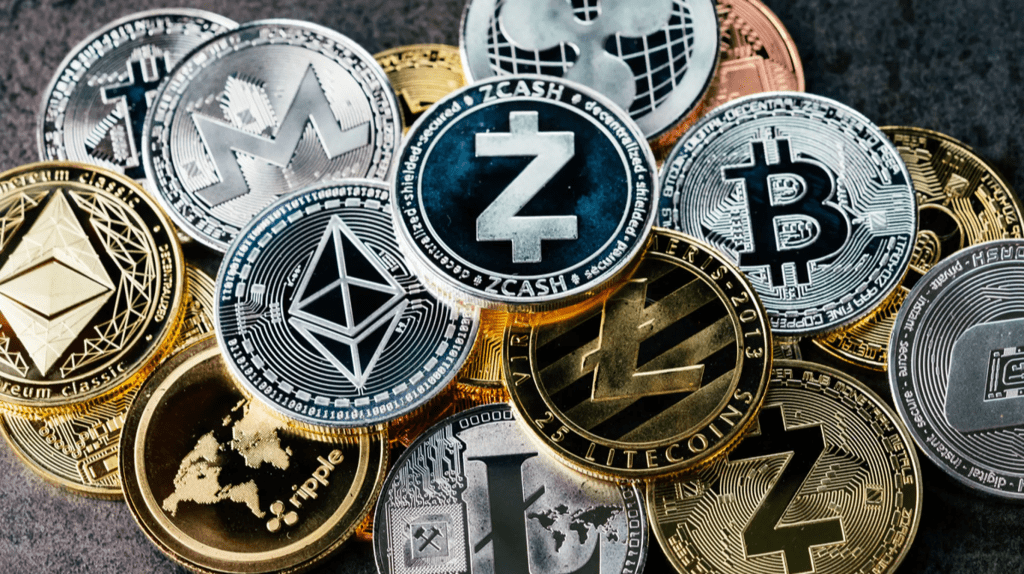
Bitcoin, Ethereum, & Litecoin are just some of the many cryptocurrencies now in circulation. Bitcoin was the first & is now the most widely used cryptocurrency, with a market worth of over $1 trillion. Ethereum is an open-source platform for developing distributed applications with built-in smart contract functionality. Litecoin, like Bitcoin, is a decentralised, peer-to-peer digital money, but it boasts cheaper transaction costs & shorter confirmation times.
Getting Started with Cryptocurrency
Steps to Invest in Cryptocurrency
Open a account on a crypto exchange.
Verify your identity & complete the KYC (know your customer) process
Link a payment method, such as a credit card or bank account
Buy the cryptocurrency of your choice
Store your cryptocurrency in a secure wallet
Choosing a Cryptocurrency Wallet
A crypto wallet is a digital wallet that stores, send, & receives cryptocurrencies.
Understanding Cryptocurrency Exchanges
If you are new to the crypto field now, it might be impossible for one to have any knowledge based on cryptocurrencies and the exchange platforms. Thus, the following points below will surely help you understand every bit of it proficiently. It serves as a marketplace where individuals and entities can transact with one another, often using fiat currencies or other cryptocurrencies as a means of exchange. Centralized exchanges are operated by a central authority and provide a platform for users to trade cryptocurrencies. Peer-to-peer exchanges facilitate direct transactions between buyers and sellers, often utilizing smart contracts or escrow services to ensure the secure and efficient transfer of digital assets.
Researching Cryptocurrencies
It’s important to research the cryptocurrency you want to invest in before buying. It would help if you looked at the market capitalization, the price, the trading volume, & the supply of the cryptocurrency. It would help if you also looked at the development team behind the cryptocurrency & the technology it uses. Some several websites & resources provide information on cryptocurrencies, such as CoinMarketCap, CoinGecko, & CryptoCompare.
Conclusion
Cryptocurrency is a new & exciting investment opportunity that offers several benefits, such as decentralization, security, privacy, & low transaction fees. By following these steps & keeping your cryptocurrency secure, you can participate in the world of cryptocurrency & potentially profit from this new & exciting asset class.
Cryptocurrency markets have been expanding at a tremendous rate in recent years, with the total market capitalization of cryptocurrencies reaching over $2 trillion in April 2021. However, one of the most significant challenges that these markets face is the lack of a reliable source of external data. This is where Chainlink, a decentralized oracle network, comes into play. In this article, we will explore how Chainlink is solving the oracle problem in cryptocurrency markets.
To understand the significance of Chainlink in the cryptocurrency market, it is essential to first understand what oracles are. Oracles are a third-party service that provides external data to smart contracts on blockchain networks. In simpler terms, they act as bridges between blockchain networks and the outside world. If you’re searching for something recognizable to trade, the www.btceer.de platform operates similarly to other cryptocurrency exchange platforms available on the market.
The Oracle Problem in Cryptocurrency Markets
The oracle problem refers to the issue of reliability and security of external data sources used by smart contracts. In the context of cryptocurrency markets, this problem arises when smart contracts rely on unreliable or manipulated external data sources, leading to inaccurate execution of contracts and potential financial losses for investors.
Chainlink is a decentralized oracle network that aims to solve the oracle problem in cryptocurrency markets by providing a secure and reliable source of external data. The network consists of independent nodes that retrieve external data from multiple sources, aggregate it, and deliver it to smart contracts.
How Chainlink Works
Chainlink uses a combination of cryptography, blockchain technology, and smart contracts to ensure the security and reliability of the external data it provides to smart contracts.
Node Operators
Chainlink relies on independent node operators to retrieve external data and deliver it to smart contracts. These nodes are incentivized to provide accurate and reliable data through a system of staking and reputation.
Data Aggregation
Chainlink aggregates data from multiple sources to ensure accuracy and reliability. This is done through a process called aggregation, which involves combining data from different sources to create a single, more reliable data point.
Smart Contract Integration
Chainlink can be integrated with any smart contract-enabled blockchain network, allowing smart contracts to securely and accurately retrieve external data.
Benefits of Chainlink in Cryptocurrency Markets
Chainlink provides several benefits in cryptocurrency markets, including:
Reliability and Security
Chainlink’s decentralized oracle network provides a secure and reliable source of external data, reducing the risk of financial losses due to inaccurate execution of smart contracts.
Flexibility
Chainlink can be integrated with any smart contract-enabled blockchain network, making it a versatile solution for a wide range of applications.
Scalability
Chainlink’s decentralized network of nodes can handle large amounts of data and requests, making it a scalable solution for cryptocurrency markets.
Chainlink’s Future in Cryptocurrency Markets
Chainlink’s innovative solution to the oracle problem has gained significant attention in the cryptocurrency community, with several blockchain networks already integrating Chainlink into their smart contracts. The demand for reliable and secure external data sources in cryptocurrency markets is only expected to grow, and Chainlink is well-positioned to become a leading solution in this space.
Conclusion
The lack of a reliable source of external data has been a significant challenge for cryptocurrency markets, leading to potential financial losses for investors. Chainlink’s decentralized oracle network provides a secure and reliable solution to this problem, making it a valuable addition to the cryptocurrency ecosystem.
FAQs
What is Chainlink?
Chainlink is a decentralized oracle network that provides external data to smart contracts on blockchain networks.
What is the oracle problem?
The oracle problem refers to the issue of reliability and security of external data sources used by smart contracts.
How does Chainlink solve the oracle problem?
Chainlink solves the oracle problem by using a decentralized network of independent nodes to retrieve external data from multiple sources and deliver it to smart contracts securely and reliably.
What are the benefits of using Chainlink in cryptocurrency markets?
The benefits of using Chainlink in cryptocurrency markets include reliability and security, flexibility, and scalability.
What is the future of Chainlink in cryptocurrency markets?
Chainlink is well-positioned to become a leading solution in the cryptocurrency ecosystem, as the demand for reliable and secure external data sources is expected to grow.
Artificial Intelligence (AI) tools are the hottest trend among enthusiastic investors. The market trends are highly volatile and AI-hosted cryptos experience similarities. The cryptos connected to AI technology are outbursting experiencing substantial gains over time. Looking for a safe cryptocurrency trading platform to invest in Bitcoin? Then learn more at this link
Ever since its launch, the newbie technology is soaring highly with increasing popularity among people. Investors seem curious about the working of this new technology and its feature outlook. It has paved the way for several doors for individuals to access and boom into the real world.
In the modern world, AI will gain exponential power as it is the future of evolution. Human beings and the fast-paced world will switch to a wider advanced medium making use of the new technology. AI will be the boon spreading across the length and breadth of the real world.
The fusion of cryptos with AI technology will unfurl a new remark on the crypto industry with bubbling returns. There is numerous crypto that has popped up in recent times with a fusion of AI technology. These indeed are believed to give realistic handsome gains to its investors. The following are listings of some of the most remarkable AI cryptocurrencies :
Graph Token (GRT)
The GRT token is currently trading at a value of $0.149. The token has an inclining rate of 4.95% in the previous 24 hours. Investors can buy the GRT coins on decentralized exchange platforms like Binance, Bybit, OKX, and CoinW.
The Graph portal has a wide ecosystem base powering several apps including DeFi and web3 networks. It further empowers networks like Ethereum and IPFS by querying the data. Any media can create, design, and innovate APIs which are subgraphs.
The portal makes it efficient for indexing data from POA, IPFSs, and Ethereum. More networks will plug in soon with the portal. Analytics and data reveal that over 3,000 subgraphs are deployed on the GRT portal. These were for dApp platforms like Argon, AAVE, Synthetic, Uniswap, DAOstack, Livepeer, and Decentraland.
7billion queries have already been raised on the emulsifying network and 50% MoM. It has a huge network of public infrastructure bringing reliable solutions to the table front
SingularityNET
SingularityNET is a globally accessible space featuring creatable, shareable, and monetizable AI portals worldwide. Users and app developers can evaluate, browse and buy a varied number of AI tools and services on the portal. Transactions can be made using its native cryptocurrency AGIX,
The market of this portal consists of AI developers using AI tools and services willing to track their performance. One of the greatest discoveries of the pioneering team is the Sophia robot. SingularityNET seeks to entitle Sophia as a robot understanding human language. They’re continuously working on developing “OpenCog” which is a framework of advanced general intelligence.
Currently, the AGX coin is trading at a value of $0.41.
Render Token (RNDR) Oasis network ROSE Fetch.ai FET
Render token is a pure design for enabling GPC network faces across the market. It is compatible with connecting studios and artists requiring GPU systems. The power can be computed with mining partners who are eager to rent their GPU devices through the work required.
RNDR is based on the Ethereum network which is used by the artists to verify the art before releasing payment. The RNDR nodes utilize manual and proof-of-work operating schemes. All the assets on the network of RNDR use a watermarking protocol to present malpractices.
4. Oasis network (ROSE)
ROSE is a key scaling solution running over a layer 1 blockchain base. The walls of its architecture provide security and stability across the network. The features do not have an end here, it further minimizes its gas fees. Thus, attracting investors with low investment is a ROSE front door.
The protocol is a powering network to DeFi, GameFi, Metaaverse, NFTs, and Data DAOs. It is backed by wide investor protocols having an Ecosystem Fund of $235 million.
5. Fetch.ai (FET)
Fetch.ai is an AI-based permissionless infrastructure host in a crypto ecosystem. It is a decentralized learning machine enabling users to connect access and secure datasets.
This is an autonomous AI tool to run a certain set of tasks on its network.
It facilitates optimizing DeFi services, ease of transportation (parking, micro-mobility), smart energy grids, etc. For crypto trading and investment log onto Bitcoin smart
Cryptocurrencies have become increasingly popular over the past few years, with more people investing in virtual currencies like Bitcoin and Ethereum. As a result, the market has exploded, with billions of dollars invested in cryptocurrencies. In this article, we will take a closer look at some of the most popular cryptocurrencies, their market performance, and what makes them unique. More info click at this Link.
Bitcoin is the first and most well-known cryptocurrency in the world. It was created in 2009 by an anonymous individual or group of individuals using the pseudonym Satoshi Nakamoto. Despite its questionable origin, Bitcoin has become a household name and has seen massive growth in recent years.
Market Performance
Over the past few years, Bitcoin’s market performance has been impressive, with its value increasing from a few cents to thousands of dollars. In December 2017, the price of Bitcoin reached its all-time high of nearly $20,000. Since then, the price has fluctuated, but it has remained relatively stable, hovering around the $50,000 to $60,000 range.
What Makes Bitcoin Unique
Bitcoin is unique for several reasons. Firstly, it operates on a decentralized ledger system, meaning that it is not controlled by any central authority. This makes it more secure and resistant to censorship, as there is no single point of failure. Secondly, Bitcoin is designed to be a finite currency, with only 21 million coins in circulation. This scarcity has helped to increase its value, as there is a limited supply. Finally, Bitcoin is highly transparent, as all transactions are recorded on a public ledger, making it easier for people to track their investments.
Ethereum: The Smart Contract Platform
The Introduction of Ethereum
Ethereum is a decentralized platform for building decentralized applications, also known as DApps. It was launched in 2015 by Vitalik Buterin, a young programmer from Canada. Unlike Bitcoin, which is primarily used as a store of value, Ethereum is designed to be a platform for decentralized applications.
Market Performance
Since its launch, Ethereum has seen significant growth in terms of market performance. In early 2018, the price of Ethereum reached its all-time high of over $1,400. Since then, the price has fluctuated, but it has remained relatively stable, hovering around the $2,000 to $3,000 range.
What Makes Ethereum Unique
Ethereum is unique in several ways. Firstly, it operates on a decentralized ledger system, making it more secure and resistant to censorship. Secondly, Ethereum is designed to be a platform for decentralized applications, allowing developers to build their own applications on top of the Ethereum network. Finally, Ethereum is highly transparent, as all transactions are recorded on a public ledger, making it easier for people to track their investments.
Binance Coin (BNB): The Native Token of Binance Exchange
The Creation of Binance Coin
Binance Coin (BNB) is the native token of Binance, one of the largest cryptocurrency exchanges in the world. It was created in 2017 by Changpeng Zhao, the founder of Binance. Binance Coin was created as a way for users to pay for fees on the Binance exchange, with discounts available for those who use the Binance Coin.
Market Performance
Since its creation, Binance Coin has seen significant growth in terms of market performance. In early 2018, the price of Binance Coin was around $10. Since then, the price has increased significantly, reaching its all-time high of over $600 in 2021. The price of Binance Coin has been relatively stable, hovering around the $400 to $500 range, making it one of the top performing cryptocurrencies in the market.
What Makes Binance Coin Unique
Binance Coin is unique in several ways. Firstly, it is the native token of Binance, one of the largest cryptocurrency exchanges in the world. This means that it is widely accepted and used, giving it a strong user base. Secondly, Binance Coin offers discounts for users who pay for fees on the Binance exchange, making it more cost-effective for users to trade on the platform. Finally, Binance Coin operates on a decentralized ledger system, making it more secure and resistant to censorship.
Conclusion
In conclusion, the cryptocurrency market is diverse and growing, with several popular cryptocurrencies like Bitcoin, Ethereum, and Binance Coin leading the way. These cryptocurrencies offer unique features and benefits, making them appealing to a wide range of investors. Despite their fluctuating prices, these cryptocurrencies have shown impressive market performance over the past few years, making them worth considering for those interested in investing in the cryptocurrency market. However, it’s important to note that investing in cryptocurrencies comes with risks and it’s important to do thorough research and seek professional advice before making any investment decisions.
As the world becomes increasingly digital, more & more people are becoming interested in cryptocurrencies. This article will provide a comprehensive guide to understanding crypto terms & jargon, making it easier for beginners to navigate the cryptocurrency world. Know more about Crypto Bit Index AI.
It is extremely silly to put every inch bit of your hard earned money in the bitcoins as the worst days of volatility can push you towards losses. Instead, they rely on complex cryptographic protocols to ensure security and prevent fraudulent transactions. For further info, you can have a clear peek into the following article for gaining further knowing.
What is Blockchain?
Blockchain is the chain of records of each crypto transaction taking place in the trade market. In simple words, every time a miner sits over the system to extract the cryptocurrencies like bitcoins, once after getting the work done with the extraction process, the miner adds the transaction to the blockchain.
What are bitcoin transactions?
Bitcoin transactions are made using public & private keys. Each user has a public key, like a public address or account number, & a private key, like a password. When someone sends Bitcoin to another person, the transaction is verified by the network & then added to the blockchain.
Bitcoin is often seen as digital gold, as its limited supply makes it valuable & sought after. This scarcity & the decentralized nature of Bitcoin make it attractive to some as a store of value, similar to gold.
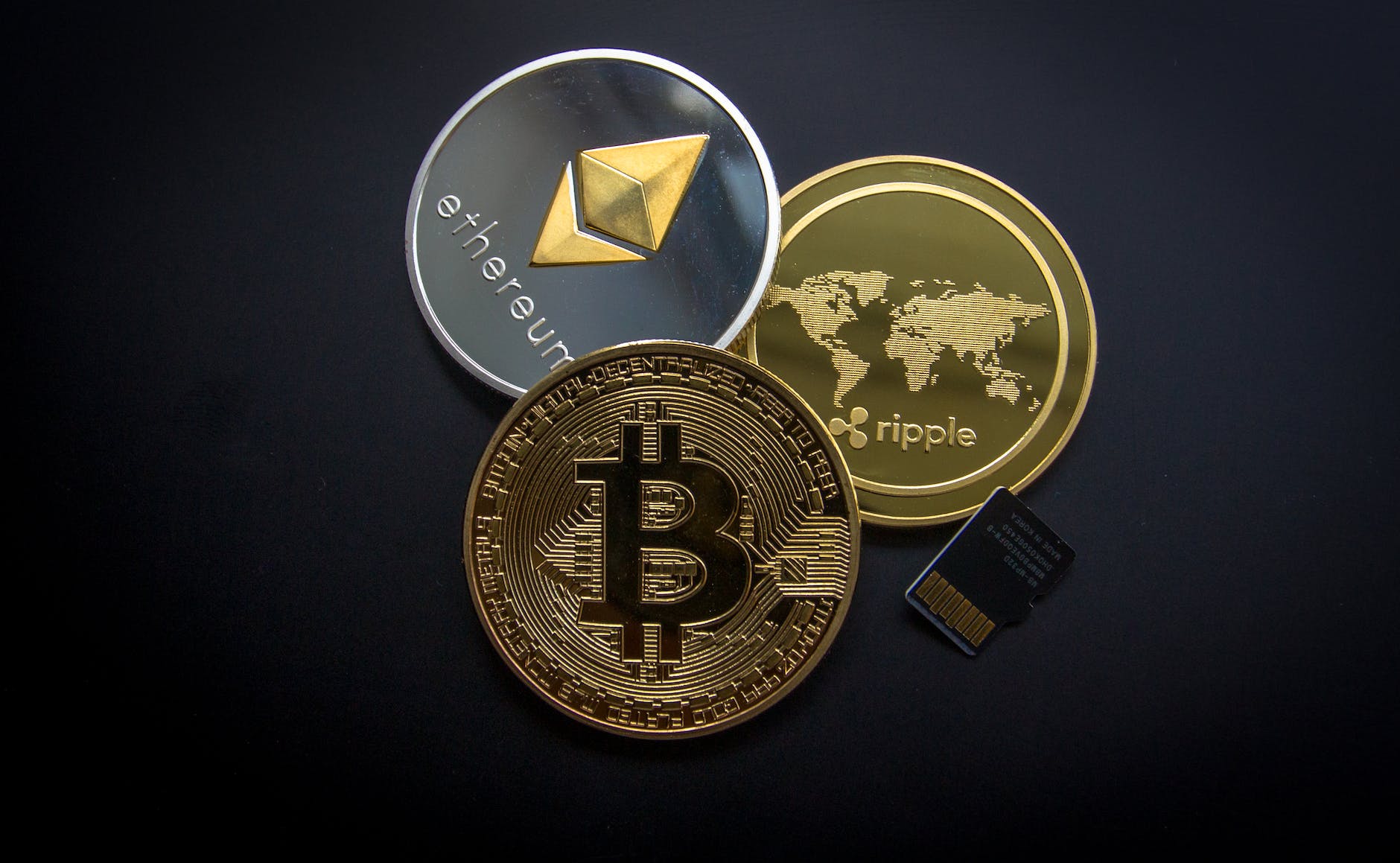
In recent years, other cryptocurrencies have been created, with some seeking to improve on Bitcoin’s limitations. These include Ethereum, which introduced the concept of smart contracts & decentralized applications (dApps), & Ripple, which is focused on improving cross-border payments. While each cryptocurrency operates similarly, each has its unique features & uses.
Crypto Terms & Jargon:
Wallet: A cryptocurrency wallet is a software program that stores the private & public keys used to send & receive digital currency. If luckily, you end up with a valid and secure wallet then the best thing about the entire game is that, you can not only protect your digital assets from random intruders sitting in the internet but also from all the hackers and centralized bodies who want to imply taxes.
Mining: Mining is creating new cryptocurrencies by solving complex mathematical equations.
Fork: A fork is a change to the original blockchain. There are two types of knives: soft spoons & hard forks. A soft fork is a change that is backwards compatible, while a hard fork is a change that is not back-compatible.
Hash rate: The hash rate is a measurement of the network’s processing power. It is the speed at which a miner can solve the mathematical equation required to add a block to the blockchain.
ICO: ICO stands for initial coin offering. It is a fundraising method used by new cryptocurrency projects to raise funds for development.
Altcoin: As the name suggests, Altcoins are the most popular alternative cryptocurrencies available in the market which are not bitcoins.
Satoshi: A Satoshi is the tinnest unit of Bitcoin.
Cold Storage: Cold storage is a method of storing cryptocurrency offline to protect it from hackers. Examples of cold storage include hardware wallets, paper wallets, & USB drives.
Gas: Gas is a unit of measurement used to determine the fee required to complete a transaction on the Ethereum network.
HODL: HODL is a term used to describe holding onto cryptocurrency rather than selling it. The term originated from a typo of the word “hold” on a Bitcoin forum post.
Conclusion:
Originally developed as a decentralized alternative to conventional financial systems, Bitcoin was designed to enable direct peer-to-peer transactions without the need for intermediaries like banks or governments. As its popularity increased, however, more and more businesses and individuals began to recognize its potential as a legitimate form of payment.
Today, thousands of businesses across the world accept Bitcoin as a means of payment, including major players like Microsoft, Expedia, and Overstock.com. This widespread adoption has helped to cement Bitcoin’s status as a viable payment method, and has opened up new opportunities for merchants to tap into a growing market of consumers who prefer to use digital currencies for their transactions.
Cryptocurrencies have become increasingly popular in recent years, with more and more investors looking to diversify their portfolios with digital assets. However, investing in cryptocurrencies can be a complex and challenging process, as the market is highly volatile and can be difficult to predict. To maximize returns while minimizing risk, it is essential to have a well-balanced portfolio that includes a mix of different cryptocurrencies. To create an account for extra info then Register now.
One of the most important aspects of investing in cryptocurrencies is risk management. With high volatility and a fast-paced market, it is essential to have a strategy in place to minimize losses and maximize gains. To achieve this, investors should consider the following factors when constructing their portfolios.
Diversification
Diversifying your portfolio by investing in a mix of different cryptocurrencies can help reduce risk, as losses in one asset may be offset by gains in another.
Risk tolerance
Understanding your personal risk tolerance is crucial, as this will determine the types of investments that are suitable for you. Some investors may prefer to invest in more established and stable cryptocurrencies, while others may be comfortable with taking on more risk in exchange for potential higher returns.
Market conditions
Keeping an eye on market conditions and staying informed about the latest developments in the cryptocurrency market can help you make informed investment decisions.
Return Maximization
Strategies for Maximizing Returns
While minimizing risk is an important factor in investing in cryptocurrencies, maximizing returns is equally important. Here are some strategies that can help you achieve this:
Long-term investments
Investing in cryptocurrencies for the long-term can help you ride out the ups and downs of the market and potentially earn higher returns over time.
Active trading
For investors who are comfortable with taking on higher risk, active trading can be a way to maximize returns. This involves buying and selling cryptocurrencies frequently in response to market conditions, but it is important to have a solid understanding of the market before engaging in this strategy.
Research and analysis
Conducting thorough research and analysis of different cryptocurrencies can help you identify potential investment opportunities and make informed decisions.
Choosing the Right Cryptocurrencies
Factors to Consider When Choosing Cryptocurrencies
With so many cryptocurrencies to choose from, it can be overwhelming to know where to start. To help you choose the right cryptocurrencies for your portfolio, here are some factors to consider:
Market capitalization
The market capitalization of a cryptocurrency is a measure of its size and popularity. Investing in cryptocurrencies with higher market capitalizations can be a more stable option, as they are less likely to be impacted by sudden market changes.
Technology
The technology behind a cryptocurrency is an important factor to consider, as it can impact the cryptocurrency’s long-term potential for growth. Consider investing in cryptocurrencies that have a solid technology foundation and a clear roadmap for the future.
Community support
The support of a cryptocurrency’s community can also be an indicator of its potential for growth. Consider investing in cryptocurrencies that have a strong and active community of developers, users, and supporters.
Balancing Risk and Return
Balancing Risk and Return for Optimal Results
Balancing risk and return is the key to success when constructing a cryptocurrency portfolio. The goal is to find a balance between taking on enough risk to achieve high returns, while also minimizing risk to protect your investment. This can be achieved by investing in a mix of different cryptocurrencies that have different risk profiles. For example, you might choose to invest in some more established and stable cryptocurrencies, while also including some high-risk, high-reward options in your portfolio.
Additionally, it is important to regularly review and adjust your portfolio to ensure that it remains balanced. This might involve selling off assets that have outperformed and replacing them with assets that have underperformed. By continually monitoring and adjusting your portfolio, you can ensure that it remains well-balanced and continues to deliver optimal returns.
Investing in cryptocurrencies is not for everyone, and it is important to carefully consider your personal circumstances and risk tolerance before making any investments. However, for those who are comfortable with taking on some risk, a well-balanced cryptocurrency portfolio can offer the potential for significant returns. With a long-term approach and a focus on risk management, you can build a portfolio that is designed to deliver optimal results.
Conclusion
Constructing a well-balanced cryptocurrency portfolio is essential for maximizing returns while minimizing risk. By following a risk management strategy, actively seeking out investment opportunities, and choosing the right cryptocurrencies, investors can build a portfolio that is tailored to their specific needs and goals. With careful planning and a long-term approach, investing in cryptocurrencies can be a rewarding and profitable experience.
Cryptocurrency and Bitcoin Loophole has been one of the most talked-about and rapidly growing industries in recent years. With its decentralized and digital nature, it has attracted a lot of attention from both investors and financial institutions. In this article, we will delve into the current state of the cryptocurrency market and its performance.
As of February 7th, 2023, the total market capitalization of all cryptocurrencies is around $1.67 trillion. This represents a significant increase from the market capitalization of $813 billion in January 2021. The continued growth of the market capitalization of cryptocurrencies reflects the increasing popularity and mainstream adoption of these digital assets.
Bitcoin Dominance
The Continued Dominance of Bitcoin
Despite the growth of various altcoins, Bitcoin continues to dominate the cryptocurrency market, with a market capitalization of around $970 billion. This represents approximately 58% of the total market capitalization of all cryptocurrencies. The continued dominance of Bitcoin highlights its status as the first and most well-established cryptocurrency, and its role as a safe-haven asset and store of value.
Altcoin Performance
The Rise of Altcoins
While Bitcoin continues to dominate the market, many altcoins have also seen significant growth in recent months. Ethereum, the second-largest cryptocurrency by market capitalization, has seen its market capitalization grow from around $135 billion in January 2021 to approximately $200 billion as of February 7th, 2023. Other altcoins, such as Binance Coin, Cardano, and Dogecoin, have also seen significant growth, highlighting the increasing popularity of alternative digital assets.
Institutional Adoption
Growing Interest from Institutions
The growth of the cryptocurrency market has also been driven by increasing interest from institutional investors. Many major financial institutions, including JPMorgan, BlackRock, and Fidelity, have recently entered the market, either by offering their clients exposure to cryptocurrencies or by investing in their own crypto assets. This growing institutional interest highlights the increasing mainstream acceptance of cryptocurrencies as a legitimate investment option.
Regulation
The Role of Regulation
Regulation continues to play a significant role in the development of the cryptocurrency market. While some countries have taken a hands-off approach to regulation, others, such as the United States, have implemented stricter regulations to ensure the protection of investors. The increasing regulatory oversight of the cryptocurrency market is seen as a positive development, as it helps to increase investor confidence and prevent fraudulent activity.
When is the Best Time to Invest in Cryptocurrency?
The timing of investment in cryptocurrency is a topic of much debate among investors. Some believe that it is best to invest during periods of market volatility, while others believe that it is better to invest during periods of market stability. The truth is, there is no one-size-fits-all answer to this question, as the best time to invest in cryptocurrency depends on various factors such as an individual’s investment goals, risk tolerance, and market conditions.
One factor that may influence the best time to invest is market volatility. During periods of market volatility, the prices of cryptocurrencies can be more unpredictable and subject to sudden shifts in either direction. This can present opportunities for short-term gains, but it also carries a higher level of risk.
On the other hand, during periods of market stability, the prices of cryptocurrencies may be more predictable and less subject to sudden shifts. This can provide a more secure environment for longer-term investments, but it may also limit potential gains.
Another factor to consider is market trends. If the overall trend of the cryptocurrency market is bullish, meaning that prices are rising, it may be a good time to invest. Conversely, if the overall trend is bearish, meaning that prices are falling, it may be a better time to wait for a market recovery before investing.
Conclusion
In conclusion, the cryptocurrency market has seen significant growth in recent years, driven by increasing mainstream adoption, institutional interest, and regulatory oversight. While Bitcoin continues to dominate the market, the rise of altcoins and the growing interest from institutional investors highlight the increasing popularity of digital assets. As the industry continues to evolve, it will be interesting to see how the market capitalization, adoption, and regulation of cryptocurrencies develop in the future.
Crypto Predictions has taken the world by storm, and for good reason. It has the potential to revolutionize the financial industry, making transactions faster, cheaper, and more secure. But like any investment, there are risks involved. In this article, we will look at some common pitfalls to avoid when investing in digital coins.
Cryptocurrency is a complex and rapidly evolving field, and it can be difficult to keep up with all the latest developments. This can make it challenging to understand the risks and potential rewards of investing in digital coins. To be a successful cryptocurrency investor, it’s essential to educate yourself on the basics of the technology, the different types of coins available, and their underlying financial models.
Hype-Driven Investing
Cryptocurrency is a highly speculative market, and it’s easy to get caught up in the hype. Many investors make the mistake of investing in a digital coin simply because it’s popular or has a high market cap. However, just because a coin is popular doesn’t mean it’s a good investment. It’s crucial to do your own research and understand the technology behind each coin you’re considering investing in.
Ignoring Fundamentals
Another common mistake is to ignore the fundamentals of investing in cryptocurrency. This includes looking at factors like the team behind a project, its adoption rate, and the competition in the market. Before investing in any digital coin, it’s important to assess its potential for long-term growth and to consider its underlying technology.
Failing to Diversify
Diversification is key to any successful investment strategy, and this is especially true in the world of cryptocurrency. Failing to diversify your portfolio can put your investments at risk if a single coin performs poorly. To minimize this risk, it’s recommended to invest in a variety of coins, both large and small, and to keep your portfolio well-balanced.
Following the Herd
It’s tempting to follow the crowd when it comes to cryptocurrency investing. However, just because everyone else is investing in a particular coin doesn’t mean it’s a good investment. It’s important to remember that the market can be highly speculative, and that coins can rise and fall rapidly in value. To be a successful investor, it’s crucial to follow your own research and not simply rely on the opinions of others.
Not Protecting Your Investments
Cryptocurrency is still a relatively new and unregulated market, which means that it’s important to take steps to protect your investments. This includes keeping your coins in a secure wallet, using strong passwords and two-factor authentication, and staying informed about any potential security threats. Additionally, it’s essential to be aware of the potential for fraud in the cryptocurrency market and to avoid investing in any projects that seem too good to be true.
Timing the Market
Finally, it’s important to avoid timing the market when it comes to cryptocurrency investing. This means trying to predict when the market will rise or fall and making investments based on those predictions. In reality, it’s nearly impossible to accurately predict the market, and trying to time the market can lead to missed opportunities or significant losses. Instead, it’s recommended to take a long-term approach to investing in digital coins and to hold onto your investments for the long haul.
Conclusion
Cryptocurrency has the potential to be a lucrative investment, but it’s also a highly volatile and complex market. To be a successful cryptocurrency investor, it’s crucial to avoid the common pitfalls outlined in this article. This includes educating yourself on the technology, avoiding hype-driven investing, considering the fundamentals of each coin, diversifying your portfolio, avoiding following the herd mentality, protecting your investments, and avoiding trying to time the market. By following these guidelines, you can minimize your risks and maximize your potential for success in the world of cryptocurrency.
Cryptocurrency, also known as crypto, is a digital asset designed to work as a medium of exchange that uses strong cryptography to secure financial transactions, control the creation of additional units, and verify the transfer of assets. In simple terms, crypto is a digital form of Bitcoin Sprint that operates independently of a central bank.
Bitcoin, created in 2009, was the first decentralized cryptocurrency and is still the most popular and valuable crypto asset today. It operates on a decentralized ledger technology called blockchain, which allows for secure and transparent transfers without the need for intermediaries.
Types of Crypto Assets
While Bitcoin remains the most well-known crypto asset, it is just one of many. There are several different types of crypto assets, including:
Bitcoin
Ethereum
Ripple
Litecoin
Tether
Cardano
Each of these assets operates differently and has its own unique features and benefits.
Investing in Crypto
What You Need to Know
Investing in crypto can be a lucrative opportunity, but it can also be risky. Here are some key factors to consider before investing in crypto.
Market volatility
The crypto market is highly volatile, with prices fluctuating rapidly. It is important to be aware of the potential for significant losses, as well as the possibility for significant gains.
Regulatory risks
Cryptocurrency is not yet widely regulated, and there is a risk that governments could take action to limit or ban its use.
Security risks
As with any digital asset, there is a risk of theft or loss through hacking or other security breaches.
Lack of understanding
Many people are still unfamiliar with crypto, and there is a risk that investors could make poor decisions based on a lack of understanding.
Earn Interest on Your Crypto Holdings
One of the benefits of investing in crypto is the opportunity to earn interest on your holdings. This can be done through a variety of methods, including:
Staking
Staking involves holding onto a specific crypto asset, such as Ethereum, and earning rewards for helping to secure the network.
Lending
Lending your crypto assets to others in exchange for interest payments is another option. This can be done through peer-to-peer lending platforms or through specialized crypto lending services.
Deposits
Some crypto exchanges offer the ability to earn interest on your crypto holdings simply by depositing them into a specialized account.
How to Choose the Right Platform for Earning Interest on Your Crypto Holdings
There are several platforms that offer the ability to earn interest on your crypto holdings. When choosing a platform, it is important to consider.
Interest rates
The interest rate offered by the platform will directly impact your earnings. Look for platforms with competitive interest rates.
Security
The security of your crypto holdings is of the utmost importance. Look for platforms with strong security measures in place, such as insurance coverage and secure storage systems.
Reputation
The reputation of the platform is important, as it can impact the stability of your earnings. Look for platforms with a strong track record and positive reviews from other users.
Fees
Some platforms may charge fees for accessing their services. Be sure to understand the fees charged by the platform before investing your funds.
Conclusion
In conclusion, earning interest on your crypto holdings can be a lucrative opportunity, but it is important to approach it with caution. Investing in crypto can be risky, and it is important to be aware of the potential for significant losses. By carefully considering the factors outlined above and by researching and choosing a reputable platform, you can increase your chances of earning a healthy return on your crypto investments. However, it’s essential to remember that no investment is without risk, and it’s important to only invest what you can afford to lose.
Before investing in crypto, it’s also important to educate yourself on the market and the assets you are considering. This includes understanding how each asset operates, its historical performance, and its future potential. With the right knowledge and approach, earning interest on your crypto holdings can be a valuable addition to your investment portfolio.
Indian Air Force (IAF) embarked on a transformative digital journey by integrating with the DigiLocker platform, a flagship initiative under the Digital India programme, here on April 26, 2024. In a ceremonial event held at Air Headquarters, Vayu Bhawan, the IAF and Ministry of Electronics and Information Technology (MeitY) signed the momentous Memorandum of Understanding (MoU) to leverage DigiLocker’s secure and accessible document repository services.
This pioneering integration will revolutionize the way critical service documents of IAF personnel, both serving and retired, are issued, accessed, and verified digitally. By harnessing the power of cutting-edge technology, the IAF reaffirms its commitment to data security, operational efficiency, and seamless access to information.
Key Highlights:
Authorized IAF departments and divisions will now be able to seamlessly upload digital records, certificates, and vital documents to the national DigiLocker repository, ensuring secure storage and easy accessibility.
IAF officers will have direct access to their crucial documents, such as the Certificate of Service (COS) and Service Book Officers (SBO), through their personal DigiLocker wallets, enabling convenient retrieval and verification.
The integration with DigiLocker will streamline various processes within the IAF, including the Agniveer Vayu recruitment, where candidate’s academic document verification will be conducted digitally, enhancing transparency and credibility.
The MoU was signed between Air vice Marshal Phillip Thomas, ACAS (PO) l, Indian Air Force, and Shri Akash Tripathi, President & CEO, NeGD, MeitY, marking a collaborative effort towards digital empowerment.
Speaking on the occasion, Shri S Krishnan, Secretary, Ministry of Electronics & Information Technology, lauded this initiative as “a watershed moment in India’s digital transformation journey, catalyzing governance through technological empowerment of citizens and the armed forces alike”.
With over 269 million registered users and a staggering 6.73 billion issued documents, DigiLocker is rapidly emerging as a national standard for digital document exchange platform.
The IAF’s integration with DigiLocker signifies a significant stride towards comprehensive digital transformation, aligning with the nation’s technological prowess and the armed forces’ modernization efforts.
Ministry of Ports, Shipping and Waterways (MoPSW), Government of India, along with Cochin Shipyard Limited (CSL) and Inland Waterways Authority of India (IWAI)recently organized a two-day conference in Kochi ,Kerala (23-24thApril) on ‘Challenges and Prospective Solutions in Inland Waterways and Shipbuilding’, bringing together various state departments, industry experts and stakeholders to delve into pressing issues within the maritime sector. The conference, which featured four insightful sessions, focused on the imperative of decarbonizing the maritime industry and addressed critical challenges in inland water transport and shipbuilding. Participants actively engaged in sharing key challenges faced by them and suggested possible interventions by the government in order to swiftly achieve the cargo modal shift to waterways, apart from boosting domestic shipbuilding.
Shri R Lakshmanan, Joint Secretary, MoPSW said “The two-day conference at Kochi successfully facilitated enriching discussions encompassing India’s key priorities including Green Transition of Inland Waterways, establishment of a dedicated Sectoral Maritime Development Fund, promoting domestic shipbuilding, etc. This is one among many such meetings being conducted by the ministry to identify and address the key challenges faced by the maritime stakeholders in achieving the targets set forth in Maritime Amrit Kaal Vision 2047.”
The inaugural session brought to the fore MoPSW’s decarbonization efforts in the Inland Waterways sector being spearheaded by IWAI and CSL by deployment of Green Hydrogen Fuel Cell Inland Vessels, aligning with MoPSW’s Harit Nauka Guidelines. Varanasi has been selected as the pilot location for immediate deployment on NW-1, with expansion plans informed by pilot learnings. It was discussed that discussions are ongoing with potential players for facilities such as bunkering, etc. Furthemore, it was informed that due to its low emission qualities, Methanol is also actively considered as one of the key green fuels for EXIM Vessels globally as seen in the recent case of Maersk’s deployment of Methanol Powered Ships. Going forward, it was suggested to explore mechanisms of developing indigenous development of Methanol marine engines in the country as a progressive step towards Green Transition of Inland Vessels.
Ongoing roundtable discussion at the conference in Kochi
The afternoon session delved into the pressing financing needs of India’s shipping sector, underscoring the mammoth investment requirement of approximately Rs 70-75 Lakh Crore as outlined in the Maritime Amrit Kaal Vision 2047. Despite this substantial need to support the country’s projected trade and economic expansion, there’s a notable absence of forthcoming finance sources, including bank credit and foreign investment. The discussion illuminated various financing challenges encountered by Indian maritime stakeholders, particularly in the shipping sector.
These challenges include the non-availability of long-term funding, which is crucial for sustainable growth, along with lower interest rates. Additionally, the presence of fixed sectoral lending limits as per RBI credit concentration norms poses a significant hurdle, restricting the availability of credit by capping each bank’s exposure to individual companies or networks of companies. Moreover, the lack of asset-based financing by Banks/Financial Institutions (FIs) acts as a deterrent for shipping sector borrowers.
In response to these challenges Shri R Lakshmanan, Joint Secretary, MoPSW, shared insights into the ministry’s proactive efforts. The ministry is actively working on establishing a dedicated Maritime Development Fund, akin to established sectoral Financial Institutions such as Power Finance Corp. Ltd, REC, IRFC, etc. This fund aims to cater to the unique and substantial funding requirements of the maritime sector, enabling the implementation of specific initiatives such as shipbuilding, decarbonization, green energy adoption, technology innovation, and manpower training and development.
Industry stakeholders warmly welcomed this initiative and provided valuable feedback, recognizing its potential to address the pressing financing needs and propel the holistic development of the maritime sector as envisioned in Maritime Amrit Kaal Vision 2047.
Water Metro operating in Kochi
The programme’s evening agenda included a tour of the Kochi Water Metro and projects under the Inland Waterways Authority of India (IWAI), highlighting the strategic focus on bolstering river cruise tourism, advancing urban water transport networks along inland waterways, and fostering the growth of coastal shipping. The government recognizes IWT as a more economical and environmentally friendly mode of transportation.
In Day 2 of the conference, for the first session, stakeholders from various sectors including inland vessel operators, cruise operators, vessel builders, ship management companies, cargo owners, state water transport departments, and Kochi water metro convened to address challenges and explore possible interventions. Discussions centered on traffic patterns along NW-3, NW-8, and NW-9, alongside initiatives aimed at optimizing cargo movement. These efforts align with the goal of boosting the modal share of Inland Water Transport (IWT) to 5% by 2030 and 7% by 2047, as outlined in Maritime Amrit Kaal Vision 2047.
Stakeholders strategize ways to enhance inland water transport modal share during a dynamic conference session
The final session of the two-day conference centered on India’s shipbuilding capacity, highlighting its current global ranking at 22nd with less than 1% of global share. Discussions underscored the nation’s heavy reliance on foreign fleets for cargo movement, resulting in significant foreign exchange expenditure. Stakeholders engaged in dialogues to understand and highlight financing and operational challenges faced by shipbuilders and owners, emphasizing the role of interventions in existing policies and necessary reforms to boost the Indian fleet size and ownership.
Key topics included enhancing frameworks, increasing research and development efforts, and advocating for global promotion of MAKV 2047 to attract international investment in Indian shipbuilding. Participants were encouraged to submit their challenges, interventions, and policy suggestions post-conference for further consideration. With aspirations to become one of the top 5 shipbuilding nations by 2047, India is strategically focusing on expanding ship ownership and tonnage responsibly, thereby unlocking significant commercial opportunities within the shipbuilding sector.






GAVP.jpeg)






 Eduindex
You must be logged in to post a comment.