Blaize and NeoTensr Push $50M Into Edge AI Infrastructure in APAC

At the end of April, a notable deal dropped in the edge AI space. Blaize and NeoTensr signed an agreement worth up to $50 million to deploy edge AI infrastructure across the Asia-Pacific region. This isn’t just another partnership announcement. It shows how fast edge AI is moving from concept to actual deployment, especially in Asia.

What the deal actually includes

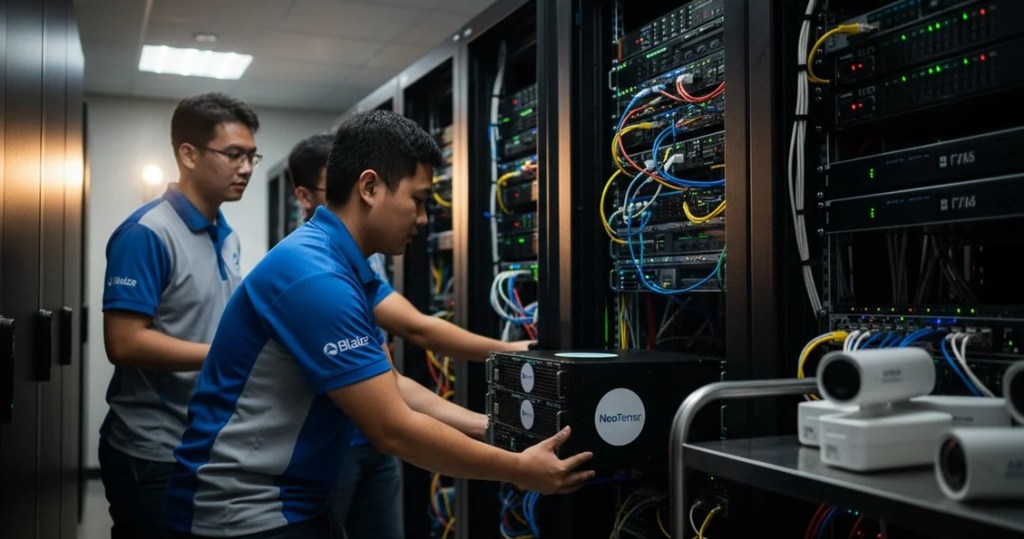
The agreement focuses on building a full-stack edge AI ecosystem rather than delivering isolated components. Instead of selling just chips or servers, the two companies are working on co-branded AI edge data centers that combine hardware optimized for inference, a software layer for deployment and orchestration, and real enterprise-facing AI services. The projected value reaches $50 million, and this comes after the two companies already generated over $20 million together in 2025. That makes it clear this is not an early-stage experiment, but a continuation of something that is already working.


Why this matters now

The key idea behind this move is simple: AI is shifting closer to where data is created. Instead of sending everything to the cloud, companies are deploying compute directly at the edge, which reduces latency and allows systems to react in real time. It also changes how data is handled, especially in environments where privacy or bandwidth is a concern. This direction is described well in edge AI for real-time analytics systems, where local processing becomes the default instead of the fallback option.


The hardware layer behind the trend

None of this works without the right hardware. Edge AI systems need chips that can handle multiple workloads at once, including computer vision and neural network inference, while staying power-efficient. That is why the industry is moving toward newer SoC designs, such as those discussed in next-generation Rockchip AI processors comparison, where architectures are built specifically for mixed AI workloads rather than general-purpose computing. This shift in silicon design is what makes large-scale edge deployments like the Blaize and NeoTensr project possible.


Why APAC is the focus

Asia-Pacific is not a случайный выбор. The region combines dense urban infrastructure, strong manufacturing capacity, and rapid adoption of smart systems across industries. This creates an environment where edge AI can be deployed at scale and tested in real-world conditions. In many cases, technologies that succeed in APAC later expand globally, which makes this rollout particularly important to watch.


The bigger picture

What makes this deal stand out is not just the size of the investment, but how it is structured. Instead of focusing on isolated pilots or limited experiments, the companies are building infrastructure from the ground up with real deployment in mind. The emphasis is clearly on enterprise use cases, and the solution itself combines hardware, software, and services into one integrated system. This approach reflects a broader shift in the AI industry, where value is no longer in individual components but in complete, deployable platforms.


Final takeaway

The Blaize and NeoTensr partnership is a clear signal that edge AI is entering a new phase. This is no longer about concepts or early prototypes. It is about infrastructure that is being built and deployed in real environments. If this $50 million rollout proves successful, it will likely accelerate similar projects across other regions and push the industry further toward distributed AI systems that operate closer to where data is generated.

Daily writing prompt
Have you ever been camping?

The Benefits of Traditional Book Publishing with Publishers Like Edupedia Publications Pvt Ltd

Daily writing prompt
Have you ever been camping?

In an era dominated by digital media, the value of traditional book publishing remains significant. Publishers like Edupedia Publications Pvt Ltd play a crucial role in nurturing authors and bringing quality content to readers. Traditional publishing houses offer numerous advantages that are hard to replicate in self-publishing platforms. Here are some key benefits of working with a traditional book publisher:

Photo by Andrea Piacquadio on Pexels.com

1. Professional Editing and Production

One of the most significant advantages of traditional publishing is the professional editing services provided. Edupedia Publications, like many traditional publishers, employs skilled editors who work closely with authors to refine their manuscripts. These services go beyond mere proofreading; they enhance the structure, clarity, and overall quality of the text. Additionally, the publisher handles all aspects of production, including formatting, cover design, and typesetting, ensuring that the final product is aesthetically pleasing and professionally produced.

2. Quality Assurance

Traditional publishers have a reputation to maintain and, as such, are invested in the quality of the books they publish. This means rigorous peer review and quality checks that help ensure the content is accurate, well-researched, and of high editorial standards. For academic authors, this can also mean enhanced credibility and recognition in their field.

3. Marketing and Distribution

Another significant advantage is the comprehensive marketing and distribution networks that traditional publishers provide. Edupedia Publications Pvt Ltd, for instance, would typically manage the marketing of your book, which includes promotional activities, distribution to bookstores, and presence at book fairs and other events. They also handle listing on various retail platforms and may run advertising campaigns, author interviews, and book signings. This extensive distribution network ensures that the book reaches a wide audience, increasing its sales potential.

4. Financial Investment

With traditional publishing, the publisher assumes all financial risks. From the initial stages of manuscript development to marketing and distribution, the publisher covers all expenses. Authors may receive an advance against royalties and will earn royalties from sales without the burden of upfront costs. This financial model allows authors to focus more on their writing without worrying about the investment needed to publish and market their book.

5. Prestige and Validation

Being published by a recognized publishing house like Edupedia Publications Pvt Ltd lends an author prestige and serves as a form of validation of their work. This can be particularly important for new authors trying to establish themselves. The prestige associated with a reputable publisher can open doors to more opportunities in writing and related fields.

6. Long-term Partnership and Career Development

Traditional publishers are interested in building long-term relationships with their authors. They invest in the author’s growth and career development, which can be incredibly beneficial for new and established authors alike. This partnership can lead to subsequent book deals and opportunities for broader exposure, including translations and international sales.

7. Rights Management

Publishers like Edupedia Publications manage the rights associated with the book, which can include foreign rights, audio books, e-books, and even film and television rights. They have the expertise to negotiate deals that can further an author’s career and ensure that their work is protected under copyright laws.

Conclusion

While the rise of self-publishing has democratized the process of bringing books to market, traditional publishing remains a strong force, particularly for authors who seek professional quality and broad distribution. Companies like Edupedia Publications Pvt Ltd offer a full suite of services that can dramatically benefit authors, from enhancing the quality of their work to ensuring it reaches the widest possible audience. For many authors, the benefits of traditional publishing align closely with their career goals and aspirations, making it a compelling choice in their publishing journey.