Understanding Soil Types and Their Impact on Construction

Daily writing prompt
What’s the biggest risk you’d like to take — but haven’t been able to?
Photo by Andre on Pexels.com

When it comes to construction, what’s beneath the surface is as crucial as what’s above it. Understanding soil types can mean the difference between a sturdy structure and a costly mishap. For professionals in the construction industry, knowing the types of soil they are dealing with is not just beneficial—it’s essential. This blog post will uncover the importance of soil analysis in construction and provide insights into how different soil types can impact your building projects.

Why Soil Matters in Construction

The ground you build on is your foundation, both literally and figuratively. The type of soil determines the stability of your project. For builders, this knowledge ensures safety, durability, and cost-effectiveness. Each type of soil behaves differently under various conditions, and these differences can influence everything from the choice of materials to the design of the foundation.

First, soils have distinct properties—such as moisture retention, density, and load-bearing capacity—that directly affect how they interact with structures. Ignoring these properties can lead to issues like settling, shifting, or even structural failure. Second, understanding soil types helps in planning effective drainage solutions, which are critical in preventing water-related damage. Finally, knowing your soil type aids in estimating project timelines and costs, minimizing unexpected surprises.

Common Soil Types in Construction

Builders encounter a variety of soil types, each with unique characteristics. The most common ones include clay, silt, sand, gravel, and loam. Clay soils are dense and hold water well but can expand and contract dramatically, leading to potential foundational cracks. Silt, found near bodies of water, is smooth and retains water, but it can become unstable when wet.

Sand, with its large particles, drains well but doesn’t hold its shape, making it less stable. Gravel offers excellent drainage and stability, yet it doesn’t retain moisture, which can be both an advantage and a drawback. Loam, considered the ideal soil, is a balanced mix of clay, silt, and sand, providing good drainage, stability, and fertility.

The Impact of Soil Composition

Understanding the composition of the soil on a building site is crucial for making informed decisions. Soil composition affects load-bearing capacities and the potential need for soil modification techniques. For instance, clay-heavy soils might require stabilization or specific foundation designs to accommodate their expansion and contraction tendencies.

The mineral content of soil also influences its behavior. High organic content can cause soil to shrink or decompose, impacting structural integrity. Furthermore, certain minerals can corrode building materials over time, necessitating protective measures. By analyzing soil composition, builders can tailor their approach to ensure safety and longevity.

Soil Testing Methods

Before breaking ground, it’s vital to perform a thorough soil test. Several methods can help determine soil type and suitability for construction. The simplest is the visual inspection, observing color, texture, and structure. However, more detailed laboratory tests analyze moisture content, density, and load-bearing capacity.

Field tests, such as the Standard Penetration Test (SPT) and Cone Penetration Test (CPT), provide in-situ data about soil conditions, helping builders understand how soil will behave under stress. These tests are crucial for designing foundations and predicting how soil might shift over time.

The Role of Soil in Foundation Design

The type of soil influences the design and depth of foundations. For example, clay soils might require deeper or wider foundations to distribute weight and prevent movement. Sandy soils, which offer less support, may necessitate specialized piling techniques to achieve stability.

Understanding soil properties allows builders to choose appropriate foundation types, whether slab, pier, or basement. Proper foundation design minimizes risks and ensures long-term structural safety.

Drainage and Soil Considerations

Effective drainage is integral to maintaining soil stability around a structure. Poor drainage can lead to waterlogging, erosion, and foundation issues. Different soil types require unique drainage solutions. Clay, which holds water, demands well-planned systems to divert excess moisture away from structural elements.

Conversely, sandy soils require techniques to retain enough moisture for plant growth while avoiding erosion. Implementing the right drainage solutions enhances the longevity and safety of construction projects.

Addressing Soil Stability Challenges

In some cases, soils may not be naturally suitable for construction, necessitating stabilization techniques. Lime stabilization, for instance, can improve clay soil’s load-bearing capacity by altering its chemical properties. Geotextiles and geogrids are often used to reinforce weak soils, providing additional support.

These techniques enhance soil stability, allowing for safe construction on challenging sites. By addressing soil stability concerns early, builders can avoid costly repairs and ensure the success of their projects.

The Importance of Local Expertise

Local knowledge plays a significant role in understanding soil types and their impact on construction. Excavation contractors in Salt Lake City, for instance, have unique insights into the regional soil conditions and can provide invaluable guidance. Collaborating with local experts ensures that your project adheres to best practices and local regulations.

This partnership minimizes risks associated with soil-related challenges and helps streamline the construction process, saving time and resources.

Environmental Considerations in Soil Management

Sustainable construction practices take into account the environmental impact of soil management. Preserving the natural landscape and minimizing soil disruption are key factors. Implementing erosion control measures, such as vegetation cover and retaining walls, helps maintain soil health.

Additionally, using recycled materials and environmentally friendly stabilization techniques contribute to sustainable building practices, benefiting both the environment and the community.

Monitoring Soil After Construction

Once a project is complete, soil monitoring remains essential. Regular inspections help identify shifts or changes in soil conditions that could affect structural integrity. Monitoring moisture levels, drainage efficiency, and any signs of erosion are important maintenance tasks.

Proactive soil management ensures that the building remains safe and stable over time, protecting both the investment and its occupants.

Conclusion

Understanding soil types and their impact on construction is a foundational aspect of successful projects. By knowing the characteristics and behaviors of different soil types, builders can make informed decisions that enhance safety, longevity, and sustainability. From testing and stabilization to collaboration with local experts, every step contributes to a solid foundation for your construction endeavors.

For further exploration of soil types and construction techniques, consult industry resources or connect with professionals who can provide tailored guidance. With the right knowledge and approach, you can ensure that your construction projects stand the test of time.


First Responder Readiness: Essential Maintenance Tips for Emergency Vehicles

Emergency vehicles play a critical role in public safety, serving as lifelines during emergencies and disasters. From ambulances to fire trucks and police cars, these vehicles must be reliable and ready to respond at a moment’s notice. Regular maintenance is essential to ensure that these vehicles perform optimally when lives are on the line. In this blog post, we’ll explore essential maintenance tips for emergency vehicles to help first responders stay prepared and effective in their critical missions.

Photo by Piotr Baranowski on Pexels.com

1. Establish a Maintenance Schedule

Creating a structured maintenance schedule is the foundation of effective vehicle upkeep. It helps ensure that all necessary checks and services are performed consistently. Emergency vehicles should follow the manufacturer’s recommended service intervals, which typically include:

  • Oil Changes: Change the engine oil and filter at regular intervals to ensure smooth engine operation.
  • Fluid Checks: Regularly check and top off all essential fluids, including coolant, brake fluid, transmission fluid, and windshield washer fluid.
  • Tire Inspections: Check tire pressure, tread depth, and overall condition monthly. Rotate tires as needed and replace them when worn out.

By establishing a maintenance schedule, emergency responders can prevent minor issues from escalating into major problems that could hinder vehicle performance during emergencies.

2. Perform Daily Inspections

In addition to routine maintenance, daily inspections are crucial for emergency vehicles. Before every shift, first responders should conduct a thorough walk-around inspection to ensure the vehicle is in good working order. Key areas to focus on during these inspections include:

  • Exterior Checks: Look for any visible damage, fluid leaks, or signs of wear and tear on the body and tires.
  • Lights and Sirens: Test all emergency vehicle lights (headlights, taillights, and emergency lights) and sirens to ensure they are functioning correctly. Malfunctioning lights can compromise visibility and safety.
  • Brakes and Steering: Check the responsiveness of the brakes and steering. Any unusual sounds or sensations should be investigated immediately.
  • Equipment and Supplies: Ensure all necessary equipment, such as medical supplies, firefighting gear, and communication devices, are onboard and in good condition.

Daily inspections are essential to catch potential issues before they become serious problems. Taking a few minutes each day can save lives in critical situations.

3. Keep the Interior Organized

An organized interior is vital for emergency vehicles, as it allows first responders to quickly access necessary equipment and supplies during emergencies. Here are some tips for maintaining an organized vehicle interior:

  • Storage Solutions: Utilize storage compartments and organizers to keep equipment, medical supplies, and personal gear in designated locations.
  • Regular Cleaning: Keep the interior clean and free of clutter. Regularly remove unnecessary items and sanitize surfaces to prevent the spread of germs.
  • Inventory Management: Maintain an inventory of supplies, ensuring that items like medical kits, fire extinguishers, and tools are fully stocked and up to date. Replace expired items immediately.

An organized interior not only improves efficiency but also contributes to the overall safety of first responders.

4. Invest in Quality Parts and Equipment

Using high-quality parts and equipment is essential for maintaining the reliability of emergency vehicles. When repairs or replacements are necessary, opt for OEM (original equipment manufacturer) parts whenever possible. These parts are specifically designed for the vehicle and ensure proper fit and function.

Additionally, invest in durable and reliable equipment, such as medical devices, firefighting tools, and communication systems. Regularly inspect and maintain these tools to ensure they perform optimally when needed.

5. Monitor Performance and Address Issues Promptly

Monitoring the performance of emergency vehicles is crucial for identifying potential problems early. First responders should be attentive to any changes in vehicle behavior, such as:

  • Unusual Sounds: Listen for any strange noises when driving, as they may indicate mechanical issues.
  • Warning Lights: Pay attention to dashboard warning lights and address any alerts promptly.
  • Performance Changes: Notice any changes in acceleration, braking, or handling. These could be signs of underlying problems that need immediate attention.

Addressing issues promptly can prevent minor problems from escalating and ensures that vehicles are always ready for action.

6. Train and Educate Personnel

Regular training and education are vital for maintaining first responder readiness. Ensure that all personnel are trained in vehicle operation, maintenance checks, and emergency protocols. Conduct workshops and drills that simulate emergencies to enhance skills and familiarize responders with vehicle capabilities.

Education should also extend to new technologies and equipment that may enhance emergency response efforts. Keeping up with advancements in emergency vehicle technology can improve efficiency and safety in the field.

In Conclusion

Effective maintenance of emergency vehicles is essential for ensuring first responder readiness. By establishing a comprehensive maintenance schedule, performing daily inspections, keeping interiors organized, using quality parts, monitoring performance, and training personnel, emergency services can enhance their operational efficiency and reliability. In the high-stakes world of emergency response, preparation is key—because every second counts when lives are on the line.

Nurturing Creativity and Curiosity in Young Minds

In a rapidly changing world, creativity and curiosity are crucial skills for young minds. These traits not only enhance learning but also equip children with the tools they need to thrive in an unpredictable future. By fostering an environment that nurtures these qualities, we can help unlock each child’s potential and prepare them for lifelong success.

Photo by Wevlog VIjay on Pexels.com

The Importance of Creativity in Childhood

Creativity is more than just artistic expression. It encompasses problem-solving, critical thinking, and the ability to see things from different perspectives. Encouraging creativity in children helps them adapt to new situations and challenges, enhancing their ability to innovate and think independently.

Curiosity as a Catalyst for Learning

Curiosity is the driving force behind exploration and discovery. When children are curious, they are motivated to learn and seek answers. This intrinsic motivation leads to deeper understanding and retention of knowledge, making curiosity a vital component of effective learning.

Creating a Stimulating Environment

To nurture creativity and curiosity, it’s essential to create an environment rich with opportunities for exploration. This includes providing diverse materials and experiences that spark interest and encourage experimentation. A variety of art supplies, building blocks, and open-ended play items can inspire imaginative play and critical thinking.

Encouraging Open-Ended Questions

One of the most effective ways to nurture curiosity is by asking open-ended questions. These types of questions prompt children to think deeply and express their ideas, fostering a sense of wonder and exploration. Instead of asking yes-or-no questions, encourage children to explain their reasoning and expand on their thoughts.

The Role of Play in Creative Development

Play is a powerful tool for nurturing creativity and curiosity. Through play, children learn to experiment, take risks, and solve problems. Whether it’s building a fort or pretending to be a superhero, play allows children to explore their environment and discover new ideas in a fun and engaging way.

Incorporating Art and Music

Art and music are integral to fostering creativity in young minds. These mediums allow children to express themselves freely and explore different emotions and ideas. Encouraging children to draw, paint, or play an instrument can enhance their creative thinking and provide a valuable outlet for self-expression.

Encouraging Outdoor Exploration

Nature is a rich source of inspiration and discovery for young minds. Time spent outdoors helps children develop their senses and observe the world around them. Encourage activities like nature walks, gardening, and outdoor games to spark curiosity and connect children with the natural environment.

Storytelling and Imagination

Storytelling is a powerful tool for nurturing creativity and curiosity. When children hear stories, they create vivid images in their minds and explore different scenarios. Encourage children to tell their own stories, helping them develop their imagination and communication skills.

Supporting Risk-Taking and Failure

A key aspect of nurturing creativity is allowing children to take risks and learn from their mistakes. By creating a safe environment where failure is viewed as a learning opportunity, children become more willing to experiment and try new things. This mindset fosters resilience and encourages innovation.

Fostering a Growth Mindset

Teaching children to adopt a growth mindset is crucial for nurturing creativity and curiosity. When children believe that their abilities can improve with effort and persistence, they are more likely to pursue challenges and learn from setbacks. Encourage children to view obstacles as opportunities for growth and exploration.

Encouraging Collaboration and Teamwork

Working with others can enhance creative thinking and problem-solving skills. Encourage children to collaborate on projects and activities, promoting teamwork and communication. This collaborative approach helps children learn from different perspectives and develop a sense of shared accomplishment.

Conclusion

Nurturing creativity and curiosity in young minds is essential for their development and future success. By providing a supportive and stimulating environment, encouraging exploration and play, and fostering a growth mindset, we can help children reach their full potential. Whether it’s through art, storytelling, or outdoor activities, every experience contributes to a child’s learning journey. For parents in the daycare in West Jordan, these practices can be particularly beneficial, providing a foundation for creativity and curiosity that will last a lifetime.

Beyond the Gauge How Pressure Sensors are Transforming Industrial Automation

Pressure sensors are vital components in industrial automation, measuring the pressure of gases or liquids and converting it into electrical signals for systems and operators. They play a crucial role across various industries, ensuring safety, efficiency, and productivity by helping machines adapt to changing conditions. Understanding these sensors is essential for engineers and technologists in creating reliable systems.

Photo by Julien Goettelmann on Pexels.com

Evolution of Pressure Sensor Technology

Pressure sensors have come a long way since their inception. Historically, they relied on simple mechanical components that would deform under pressure. Over time, advances in technology brought about electronic pressure sensors, which offer greater precision and reliability.

Major breakthroughs have marked the evolution of pressure sensors. The integration of microelectromechanical systems (MEMS) technology allowed sensors to become smaller, yet more powerful. Such advancements have been pivotal in automation, enabling smarter systems that adjust in real-time based on sensor feedback.

These technological strides have not only improved the accuracy of pressure sensors but have also broadened their applications. In industries where minute pressure differences can have significant implications, these advancements have been game-changers, paving the way for more sophisticated automation processes.

Innovative Applications of Pressure Sensors

Manufacturing Marvels

In the manufacturing sector, pressure sensors are integral to process control and quality assurance. Take, for example, a factory producing delicate electronic components. Here, pressure sensors ensure that the machinery operates within safe limits, maintaining the precise conditions needed to produce high-quality products consistently.

Oil and Gas Explorations

The oil and gas industry presents a challenging environment where pressure sensors play a crucial role. On offshore drilling rigs, these sensors monitor the pressure of drilling fluids, preventing blowouts and ensuring the safety of operations. This application not only enhances safety but also optimizes extraction processes, making them more efficient and cost-effective.

Aerospace Advancements

In aerospace, pressure sensors contribute significantly to flight safety and performance. They are used to monitor cabin pressure, fuel systems, and hydraulic circuits, ensuring that everything functions smoothly. The data collected helps airlines maintain their aircraft better, reducing downtime and enhancing passenger safety.

Automotive Innovations

The automotive industry also benefits significantly from pressure sensors and float switches. Modern vehicles use them in tire pressure monitoring systems, ensuring optimal tire performance and fuel efficiency.

Across these sectors, pressure sensors facilitate enhanced safety, efficiency, and productivity. By providing real-time data, they allow for immediate adjustments, reducing the risk of failures and optimizing processes.

Future Trends in Pressure Sensor Technology

The future of pressure sensor technology looks promising, with emerging technologies set to redefine industrial automation. Innovative materials and designs are making sensors more robust and versatile, allowing them to operate under extreme conditions.

One exciting development is the integration of IoT capabilities, enabling pressure sensors to communicate data wirelessly. This advancement opens up new possibilities for remote monitoring and predictive maintenance, helping industries reduce downtime and enhance operational efficiency.

Predictions for the global market suggest that pressure sensors will continue to grow in demand as industries push for smarter, more autonomous systems. The ongoing advancements in AI and machine learning will likely further integrate pressure sensors into complex decision-making processes, driving innovation in industrial automation.

Benefits and Challenges of Pressure Sensor Integration

The advantages of using pressure sensors in industrial automation are manifold. They provide critical data that helps improve process control, enhance safety, and boost efficiency. By facilitating real-time monitoring, they enable quick responses to system changes, reducing the risk of costly downtimes.

However, integrating pressure sensors into existing systems is not without challenges. Compatibility with legacy systems, sensor durability in harsh environments, and data management are common issues. To overcome these, engineers must carefully design and implement solutions that address these challenges while leveraging the benefits of modern pressure sensor technologies.

Conclusion

Now that you have a deeper understanding of pressure sensors and their applications, you can appreciate their significance in industrial automation. These small but powerful devices are driving advancements in various industries, ensuring safety, efficiency, and productivity.

Patio Perfection: Top Tips for a Stunning Outdoor Makeover

When it comes to enhancing your home’s outdoor appeal, few projects offer as much transformative potential as a patio makeover. Whether you’re looking to create a cozy retreat for relaxation or a stylish entertaining space, here are some top tips to achieve patio perfection.

Photo by Billel Moula on Pexels.com

1. Define Your Purpose and Style

Before diving into any renovations, take some time to envision how you want to use your patio. Is it primarily for hosting gatherings, dining alfresco, or simply lounging with a book? This clarity will guide your design choices. Similarly, consider the style that resonates with you—whether it’s rustic, modern, Mediterranean, or eclectic—ensuring it complements your home’s architecture and surroundings.

2. Plan Your Layout

Effective space planning is crucial for a functional and inviting patio. Start by assessing the size and shape of your outdoor area. Divide the space into zones such as dining, lounging, and possibly a cozy nook for reading or gardening. Aim for a layout that encourages traffic flow while maximizing the use of available space.

3. Choose Quality Materials

Selecting durable and weather-resistant materials is essential for a long-lasting patio. Opt for materials like natural stone, concrete pavers, or composite decking that can withstand varying weather conditions and require minimal maintenance. Consider textures and colors that harmonize with your home’s exterior and landscaping for a cohesive look.

4. Create Ambiance with Lighting

Thoughtful lighting can elevate your patio’s ambiance, extending its usability into the evening hours. Incorporate a mix of overhead lighting, such as string lights or lanterns, for general illumination. Accentuate architectural features or plants with spotlights, and add pathway lighting for safety and aesthetics. Dimmable options allow you to adjust the mood depending on the occasion.

5. Integrate Greenery and Privacy

Greenery adds life and tranquility to outdoor spaces. Incorporate planters with lush foliage, flowering plants, or even a vertical garden to soften the patio edges and create a sense of enclosure. Strategically placed trees or trellises draped with climbing plants can provide shade and privacy, enhancing comfort and intimacy.

6. Furnish for Comfort and Function

Choose outdoor furniture that balances comfort, style, and functionality. Opt for weather-resistant materials such as rattan, teak, or metal with UV-resistant cushions and fabrics. Consider versatile pieces like sectional sofas, dining sets with extendable tables, and lounge chairs that encourage relaxation. Add colorful throw pillows and outdoor rugs to inject personality and warmth.

7. Add Personal Touches

Personalize your patio with decor elements that reflect your taste and lifestyle. Incorporate artwork, sculptures, or ceramic pots for visual interest. Install a fire pit or outdoor fireplace for cozy gatherings during cooler evenings. Hang mirrors to create an illusion of space or to reflect garden views. Don’t forget to include storage solutions such as benches or deck boxes to keep cushions and outdoor essentials tidy.

8. Consider Year-Round Use

Extend the usability of your patio beyond the summer months by incorporating features that cater to year-round enjoyment. Install a retractable awning or pergola for shade in summer and shelter during light rain. Invest in outdoor heaters or a portable fire pit for warmth during chilly evenings. Select durable furniture and accessories that can withstand seasonal changes without compromising style.

9. Maintain Regularly

To maintain the pristine appearance of your patio, it’s essential to set up a regular maintenance routine. Make it a habit to sweep away debris frequently, clean furniture and cushions as necessary, and check for any needed repairs or refinishing. Additionally, if you have natural stone or wood surfaces, seal them annually to enhance their longevity and safeguard them from the elements. If you’re considering updating your outdoor space, think about concrete patio resurfacing in Utah as a great option for refreshing your patio’s look.

10. Seek Professional Advice

For complex renovations or if you’re unsure where to start, consider consulting with a landscape designer or contractor. They can offer expert advice, create detailed plans, and oversee the project to ensure professional results that align with your vision and budget.

In Conclusion

By following these top tips for a stunning outdoor makeover, you can transform your patio into a welcoming retreat that enhances your home’s beauty and functionality. Whether you’re hosting gatherings or enjoying quiet moments, a well-designed patio can truly elevate your outdoor living experience.

Beyond Stethoscopes and Scalpel: How Technology is Revolutionizing Modern Healthcare

Picture a doctor’s office a decade ago, dominated by paper charts and manual test results. Fast forward to today, and imagine walking into a tech-savvy healthcare facility where your entire medical history is at the physician’s fingertips, available in an instant with the click of a button. This is the revolution of technology in healthcare. Gone are the days when healthcare professionals were forced to work with outdated methods. Now, technology is transforming medicine into a futuristic realm where efficiency, precision, and patient care are optimized like never before.

Photo by Pixabay on Pexels.com

Historical Perspective

To truly appreciate the impact of modern technology on healthcare, it’s essential to look back at the past. The evolution of technology in medicine has been nothing short of remarkable. In the early days, medical advancements were slow and laborious, relying heavily on trial and error. However, with each passing decade, the pace at which technology influenced medicine began to accelerate.

Initially, technological innovations were limited to basic tools and equipment. The invention of the stethoscope in the 19th century, for example, marked a significant leap in diagnostic capabilities. Fast forward to the 20th century, and the introduction of X-ray machines revolutionized the way doctors diagnosed and treated patients. These early technological advancements laid the foundation for what was to come.

The late 20th century saw the emergence of computers in healthcare. Electronic health records (EHR) became a game-changer, allowing for better organization and accessibility of patient information. This era also witnessed the rise of sophisticated imaging techniques such as MRI and CT scans, providing unprecedented insights into the human body. While these advancements were groundbreaking in their own right, they merely scratched the surface of what technology could achieve in healthcare.

Current State of Affairs

Today, we find ourselves in an era where technology is seamlessly integrated into every facet of healthcare delivery. The landscape has evolved dramatically, with cutting-edge technologies reshaping how healthcare is administered, making it more efficient and patient-centric.

Artificial intelligence (AI) is at the forefront of this transformation. AI-powered algorithms analyze vast amounts of data, assisting in diagnosis and treatment planning. For instance, ophthalmology EMR software leverages AI to provide ophthalmologists with accurate patient data, streamlining their practice. AI is also used in predictive analytics, enabling healthcare providers to anticipate potential health issues and intervene proactively. Many modern health-care providers are now embracing customizable AI EMRs that can be tailored to a clinic’s specific workflows. This flexibility helps reduce administrative work, streamline documentation, and ultimately allow care teams to spend more time focused on patients rather than paperwork.

Telemedicine, another technological marvel, has gained immense popularity, especially in the wake of the COVID-19 pandemic. Patients can now consult with healthcare professionals from the comfort of their homes, reducing the need for physical visits. This convenience is not only beneficial for patients but also alleviates the burden on overcrowded healthcare facilities.

Wearable devices, such as smartwatches and fitness trackers, have empowered individuals to take charge of their health. These gadgets monitor vital signs, track physical activity, and even provide reminders for medication. The data collected from wearables can be shared with healthcare providers, offering valuable insights into a patient’s daily health habits.

Challenges and Opportunities

While the integration of technology in healthcare offers immense promise, it is not without its challenges. One of the primary challenges is ensuring data security and privacy. With the digitization of patient records, protecting sensitive information from cyber threats is paramount. Healthcare providers must invest in robust cybersecurity measures to safeguard patient data.

Additionally, the adoption of technology in healthcare requires significant investment, both in terms of infrastructure and training. Healthcare professionals need to be well-versed in using new technologies to maximize their benefits. This necessitates continuous education and training programs, which can be resource-intensive.

Despite these challenges, the opportunities presented by technology in healthcare are vast. Improved diagnostic accuracy, enhanced patient engagement, and streamlined administrative processes are just a few of the benefits. By leveraging technology, healthcare providers can deliver more personalized and efficient care, ultimately improving patient outcomes.

Future Trends

Looking ahead, the future of healthcare technology is promising, with several trends set to further transform the industry. One such trend is the continued development and integration of AI into healthcare processes. AI is expected to play an even more significant role in areas such as personalized medicine, where treatment plans are tailored to an individual’s genetic makeup.

The Internet of Things (IoT) is another technology poised to revolutionize healthcare. IoT-enabled devices can collect and transmit data in real-time, allowing healthcare providers to monitor patients remotely. This capability is particularly valuable for managing chronic conditions, as it enables early intervention and reduces hospital visits.

Furthermore, blockchain technology holds potential for enhancing data security and interoperability in healthcare. By providing a decentralized and tamper-proof way of storing and sharing data, blockchain can improve trust and transparency in healthcare transactions.

Conclusion

In conclusion, technology is revolutionizing modern healthcare, from the evolution of medical tools to the integration of AI, telemedicine, and wearables. While challenges like data security and training remain, the potential for enhanced healthcare delivery is enormous. As we move forward, stakeholders must proactively adopt and adapt to these advancements to ensure optimal patient care and operational efficiency.

Top Schools in Singapone

Daily writing prompt
Do lazy days make you feel rested or unproductive?

Singapore is home to some of the top schools offering a diverse range of educational approaches, including local and international curricula. Here are a few highly regarded schools:

Photo by Chu Chup Hinh on Pexels.com
  1. International Community School (Singapore) – This Christian school offers a U.S.-based college preparatory curriculum for kindergarten through high school, with a strong emphasis on values and community. It’s well-known for academic rigor and extracurricular opportunities​Which School Advisor.
  2. Tanglin Trust School – Established in 1925, Tanglin provides a British-based education with options for A-levels or the International Baccalaureate (IB) Diploma Programme. It’s a well-established institution with a long history in Singapore​Which School Advisor.
  3. Dunman High School – Known for academic excellence and a wide array of co-curricular activities, Dunman focuses on holistic development and leadership in its students. It has strong science and humanities programs​HereSingaporeTutor City.
  4. Nanyang Girls’ High School – One of Singapore’s top girls’ schools, offering an education that fosters leadership and character development alongside academic success. It emphasizes both personal growth and service to the community​HereSingapore.
  5. UWC South East Asia – Part of the United World Colleges network, UWCSEA offers an IB-based education and is known for its holistic approach, offering extensive extracurricular activities in the arts, sports, and more​Which School Advisor.

These ib schools in singapore, among others, highlight Singapore’s commitment to providing a high-quality education system that caters to a wide range of interests and talents.

Scholarship for Study in Australia

Studying in Australia is an appealing option for international students due to its high-quality education system, vibrant culture, and beautiful landscapes. Many scholarships are available to help offset the costs of studying, including options from the Australian government, universities, and other organizations. Below is a detailed overview of major scholarships available to international students for studying in Australia.

1. Australia Awards Scholarships (AAS)

Eligibility: Students from developing countries, particularly from Asia, the Pacific, Africa, and the Middle East. Level: Undergraduate, Postgraduate (Master’s, Ph.D.) Description: Funded by the Australian government, the Australia Awards Scholarships aim to promote development in partner countries through education. These scholarships are highly competitive and target students who will contribute to the development of their home countries upon their return.

Financial Coverage: Full tuition, return air travel, establishment allowance, health insurance, and a living allowance.

Duration: Full duration of the chosen course.

Fields of Study: Wide range of academic fields that align with Australia’s development goals.

2. Destination Australia Scholarship

Eligibility: Domestic and international students Level: Undergraduate, Postgraduate Description: The Destination Australia Program is an initiative by the Australian Government to encourage students to study in regional Australia. It aims to support both domestic and international students to undertake their studies in regional areas, thus promoting economic growth and community diversity.

Financial Coverage: Up to AUD 15,000 per year.

Duration: Depends on the course length.

Fields of Study: Available for a variety of courses in regional universities.

3. Research Training Program (RTP)

Eligibility: International and domestic students Level: Postgraduate Research (Master’s, Ph.D.) Description: The Australian government’s Research Training Program (RTP) provides block grants to universities to fund students’ tuition and living expenses during their research degrees. RTP scholarships are primarily for students undertaking research-based master’s and doctoral degrees.

Financial Coverage: Tuition fees, a stipend for living costs, and allowances for research expenses.

Duration: 2 years for a master’s by research and 3-4 years for a Ph.D.

Fields of Study: Various research areas are covered, depending on the university.

4. Australia Research Council (ARC) Scholarships

Eligibility: High-achieving postgraduate researchers Level: Ph.D. Description: The ARC offers funding opportunities for research-focused students pursuing doctoral programs in Australia. These scholarships support research in a wide range of disciplines and are typically offered in collaboration with universities and research institutions.

Financial Coverage: Research grants, living stipends, and tuition fee waivers (depending on the program).

Duration: 3 to 4 years.

Fields of Study: Science, engineering, health, and social sciences.

5. Australian Government Endeavour Scholarships

Eligibility: International students from the Asia-Pacific region, the Americas, Europe, and the Middle East. Level: Postgraduate (Master’s, Ph.D.), short-term research programs, professional development. Description: The Endeavour Scholarships, funded by the Australian government, aim to build international relations and promote Australia as a destination for education. The program supports postgraduate study and research in various fields.

Financial Coverage: Tuition, travel allowance (up to AUD 3,000), establishment allowance, and monthly stipend (up to AUD 3,000 per month), plus health and travel insurance.

Duration: 2 to 4 years for long-term programs.

Fields of Study: Open to various academic disciplines.

6. University-Specific Scholarships

Many Australian universities offer scholarships to international students based on academic merit, research potential, or financial need. Some prominent university-based scholarships include:

a. University of Melbourne Scholarships

Eligibility: International students

Level: Undergraduate, Postgraduate, Research

Description: The University of Melbourne offers a range of scholarships, including the Melbourne International Undergraduate Scholarship and the Melbourne Graduate Research Scholarship. These are based on academic merit.

Financial Coverage: Full or partial tuition waivers, living allowances, and health coverage.

b. Australian National University (ANU) Chancellor’s International Scholarship

Eligibility: International students

Level: Undergraduate, Postgraduate

Description: The Chancellor’s International Scholarship recognizes academic excellence and provides financial support to high-performing international students.

Financial Coverage: Tuition fee reductions of up to 50%.

c. University of Sydney International Scholarship

Eligibility: International students

Level: Postgraduate (Master’s, Ph.D.)

Description: This scholarship supports outstanding international postgraduate students undertaking research at the University of Sydney.

Financial Coverage: Tuition fees and a living allowance.

d. Monash University International Scholarships

Eligibility: International students

Level: Undergraduate, Postgraduate

Description: Monash University offers several scholarships, such as the Monash International Merit Scholarship, for high-achieving students.

Financial Coverage: Up to AUD 50,000 over the duration of the course.

e. University of Queensland (UQ) Global Scholarships

Eligibility: International students

Level: Undergraduate, Postgraduate

Description: UQ provides several scholarships, including those for high-achieving students from specific regions, such as India, Hong Kong, and Latin America.

Financial Coverage: Partial or full tuition fee waivers.

7. ACIAR (Australian Centre for International Agricultural Research) Fellowships

Eligibility: Citizens from developing countries Level: Postgraduate (Master’s, Ph.D.) Description: ACIAR provides scholarships to students from partner countries to pursue agricultural research that aligns with Australia’s development cooperation priorities. The scholarship aims to build research capacity in agricultural sciences and related fields.

Financial Coverage: Tuition fees, travel expenses, living allowance, and research costs.

Duration: Up to 4 years.

Fields of Study: Agricultural sciences, environmental management, and related fields.

8. Rotary Peace Fellowship

Eligibility: International students committed to promoting peace and conflict resolution. Level: Master’s Description: This prestigious fellowship is awarded to students studying peace and conflict resolution at one of the Rotary Peace Centers, including the University of Queensland.

Financial Coverage: Tuition fees, travel, living stipend, and field-study expenses.

Duration: 1 to 2 years.

Fields of Study: Peace and conflict studies.

9. Macquarie University Vice-Chancellor’s International Scholarship

Eligibility: International students Level: Undergraduate, Postgraduate Description: Macquarie University offers this partial scholarship to academically outstanding students from around the world. The scholarship is aimed at supporting students financially while also promoting cultural diversity on campus.

Financial Coverage: Up to AUD 10,000 towards tuition fees.

Duration: Varies depending on the course.

Fields of Study: All fields.

How to Apply for Australian Scholarships:

1. Research: Begin by identifying which scholarships you are eligible for based on your country of origin, field of study, and academic level.

2. Check Eligibility: Review each scholarship’s specific requirements, such as academic qualifications, English language proficiency, and professional experience (for some postgraduate scholarships).

3. Prepare Documents: Ensure you have all necessary documents, such as academic transcripts, recommendation letters, a personal statement, and proof of English proficiency (IELTS/TOEFL).

4. Apply Early: Scholarship deadlines often precede admission deadlines, so it’s crucial to apply well in advance.

5. Follow Guidelines: Adhere strictly to the application guidelines provided by the scholarship or university to maximize your chances.

Conclusion:

Australia offers a wide variety of scholarships for international students, many of which provide full or partial financial support for tuition, living expenses, and research. With careful planning and thorough research, you can find scholarship opportunities that will make your dream of studying in Australia a reality.

Scholarship for Study in Europe

Studying in Europe can be a transformative experience, offering students exposure to world-class education, diverse cultures, and career opportunities. Scholarships are an excellent way to make studying in Europe more affordable. Here’s an overview of some key scholarships and funding opportunities for international students, including those from Asia, Africa, and other regions.

1. Erasmus+ Program

Eligibility: Students from EU and non-EU countries Level: Bachelor’s, Master’s, Ph.D., and professional training Description: The Erasmus+ program is a flagship EU initiative that offers scholarships to students from across the globe for study, training, and internships in Europe. Students can spend 3 to 12 months at an EU-based university or undertake internships. Erasmus Mundus Joint Master Degrees (EMJMD) are also available for students pursuing a master’s program in two or more European countries.

Financial Coverage: Full tuition, living allowance, travel costs, and health insurance.

Duration: Typically 1 to 2 years for master’s programs.

2. DAAD Scholarships (Germany)

Eligibility: International students Level: Master’s and Ph.D. Description: The German Academic Exchange Service (DAAD) offers numerous scholarships for international students to study in Germany. DAAD scholarships are available for a wide range of programs, including full-time master’s degrees and doctoral studies at German universities.

Financial Coverage: Monthly stipend (approximately €861 for graduates and €1,200 for doctoral candidates), health insurance, and travel allowances.

Additional Benefits: Free German language course and support for dependents.

Duration: Varies depending on the program, typically 1 to 3 years.

3. Chevening Scholarships (UK)

Eligibility: Citizens from Chevening-eligible countries Level: Master’s Description: Chevening is a prestigious UK government scholarship for international students to pursue a one-year master’s degree at any UK university. The scholarship focuses on leadership and networking opportunities in addition to academic achievements.

Financial Coverage: Full tuition fees, a monthly stipend, travel costs, and other allowances.

Duration: 1 year (master’s programs only).

4. Swedish Institute Scholarships (Sweden)

Eligibility: Non-EU/EEA citizens Level: Master’s Description: The Swedish Institute (SI) offers scholarships to talented students from select countries for master’s degree studies in Sweden. This scholarship is aimed at fostering future global leaders and is available for many programs offered in Swedish universities.

Financial Coverage: Full tuition fees, living allowance, travel grants, and health insurance.

Duration: 1 to 2 years.

5. Eiffel Excellence Scholarship Program (France)

Eligibility: International students from developing countries Level: Master’s and Ph.D. Description: The Eiffel Scholarship is offered by the French Ministry for Europe and Foreign Affairs. It is aimed at attracting international students to French institutions for studies in engineering, economics, law, and political science.

Financial Coverage: Monthly allowance of €1,181 (master’s) or €1,700 (Ph.D.), travel costs, health insurance, and cultural activities.

Duration: Up to 24 months for a master’s program and 36 months for Ph.D.

6. ETH Zurich Excellence Scholarship (Switzerland)

Eligibility: International students Level: Master’s Description: ETH Zurich, one of Europe’s top universities, offers the Excellence Scholarship & Opportunity Program (ESOP) for students wishing to pursue a master’s degree at the university. The scholarship is highly competitive and is awarded to students with excellent academic records.

Financial Coverage: Full tuition fee waiver and living allowance (CHF 12,000 per semester).

Duration: 3 to 4 semesters (depends on the program).

7. Holland Scholarship (Netherlands)

Eligibility: Non-EEA international students Level: Bachelor’s and Master’s Description: The Holland Scholarship is provided by the Dutch Ministry of Education, Culture, and Science in cooperation with Dutch universities. This scholarship supports international students who wish to pursue bachelor’s or master’s degrees in the Netherlands.

Financial Coverage: €5,000 for the first year of study.

Duration: 1 year.

8. Italian Government Scholarships

Eligibility: International students and Italian citizens abroad Level: Master’s, Ph.D., and research programs Description: The Italian government offers scholarships for foreign students to pursue master’s, Ph.D., or research programs in Italy. Priority is given to students from countries with which Italy has bilateral cultural agreements.

Financial Coverage: Tuition fee waiver, monthly allowance, and health insurance.

Duration: Varies depending on the program.

9. Norwegian Quota Scheme

Eligibility: Students from developing countries Level: Bachelor’s, Master’s, Ph.D. Description: The Quota Scheme provides scholarships for students from developing countries to study at Norwegian universities. The scheme focuses on building academic and institutional capacity in the students’ home countries.

Financial Coverage: Tuition fee waiver, living stipend, travel grants, and allowances.

Duration: Typically 2 to 4 years.

10. Visegrad Scholarship Program (Central Europe)

Eligibility: Students from select countries (e.g., Eastern Partnership countries, Western Balkans) Level: Master’s and Ph.D. Description: The International Visegrad Fund offers scholarships for students from Eastern Partnership countries and the Western Balkans to study at universities in Central Europe (Czech Republic, Hungary, Poland, Slovakia).

Financial Coverage: Monthly stipend of €2,500 for master’s students and €2,300 for Ph.D. candidates, with travel costs.

Duration: 1 to 4 semesters.

How to Apply for Scholarships:

1. Research: Identify scholarships that align with your educational goals and personal profile.

2. Eligibility: Check all requirements, including academic qualifications, country-specific rules, and deadlines.

3. Prepare Documents: Typically, you’ll need academic transcripts, letters of recommendation, proof of language proficiency (like IELTS/TOEFL), and a personal statement or essay.

4. Submit Early: Scholarship deadlines are often months before academic program deadlines, so plan well in advance.

Conclusion:

Europe is home to many prestigious scholarships that offer substantial financial support to international students. These scholarships are not just about tuition waivers but also cover living expenses and provide enriching cultural and academic experiences. By researching the right opportunities and preparing carefully, you can greatly enhance your chances of securing a scholarship to study in Europe.

Top Institutes in USA offering Scholarship for Study

Here are ten top institutes in the USA known for offering scholarships for international students, including merit-based, need-based, and special scholarships. These institutions are renowned for their academic excellence and financial aid programs:

1. Harvard University (Massachusetts)

Scholarships: Harvard offers generous need-based financial aid for international students. The aid is determined solely on financial need, and around 55% of students receive aid.

Programs: Wide range of undergraduate, graduate, and professional programs, including Law, Business, Medicine, and Engineering.

2. Stanford University (California)

Scholarships: Stanford provides need-based financial aid for international students. Graduate students can receive fellowships, teaching, or research assistantships.

Programs: Famous for programs in Engineering, Business, and Computer Science, among others.

3. Massachusetts Institute of Technology (MIT)

Scholarships: MIT offers need-based scholarships for international undergraduate students. Graduate fellowships are also available.

Programs: MIT is a world leader in STEM fields, particularly in Engineering, Computer Science, and the Physical Sciences.

4. Princeton University (New Jersey)

Scholarships: Princeton offers 100% need-based financial aid for all students, including internationals. No loans are offered; aid is in the form of grants.

Programs: Renowned for programs in Economics, Public Policy, and STEM fields.

5. Yale University (Connecticut)

Scholarships: Yale provides need-based financial aid to international students. Around 50% of students receive some form of financial aid.

Programs: Famous for its Law, Humanities, and Social Science programs.

6. California Institute of Technology (Caltech)

Scholarships: Caltech offers need-based scholarships and assistantships for graduate students. There are also research grants available.

Programs: Primarily known for Engineering, Physics, and Space Science.

7. University of Chicago (Illinois)

Scholarships: UChicago offers merit-based scholarships to international students, as well as need-based aid for those demonstrating financial need.

Programs: Noted for Economics, Business, Political Science, and Law.

8. Columbia University (New York)

Scholarships: Columbia offers need-based financial aid to international students. Graduate fellowships and assistantships are available as well.

Programs: Strong in Journalism, Business, International Affairs, and Law.

9. Duke University (North Carolina)

Scholarships: Duke offers a mix of merit-based and need-based scholarships to international students. The Karsh International Scholarship is particularly prestigious.

Programs: Renowned for Medicine, Business, Public Policy, and Engineering.

10. University of Pennsylvania (Pennsylvania)

Scholarships: UPenn provides need-based aid for international students and is committed to meeting 100% of demonstrated need.

Programs: Highly respected for programs in Business (Wharton), Law, and Medical fields.

Types of Scholarships:

Need-Based Aid: Many top universities, such as Harvard, MIT, and Princeton, focus on providing financial aid based on a family’s financial situation.

Merit-Based Scholarships: Some schools, like Duke and UChicago, offer scholarships based on academic achievement, leadership, or extracurricular activities.

Special Scholarships: Institutions often have targeted scholarships, like athletic scholarships, or scholarships for students from specific regions.

These institutes also offer fellowships and assistantships for graduate students, which can cover tuition and provide a stipend for research or teaching roles.

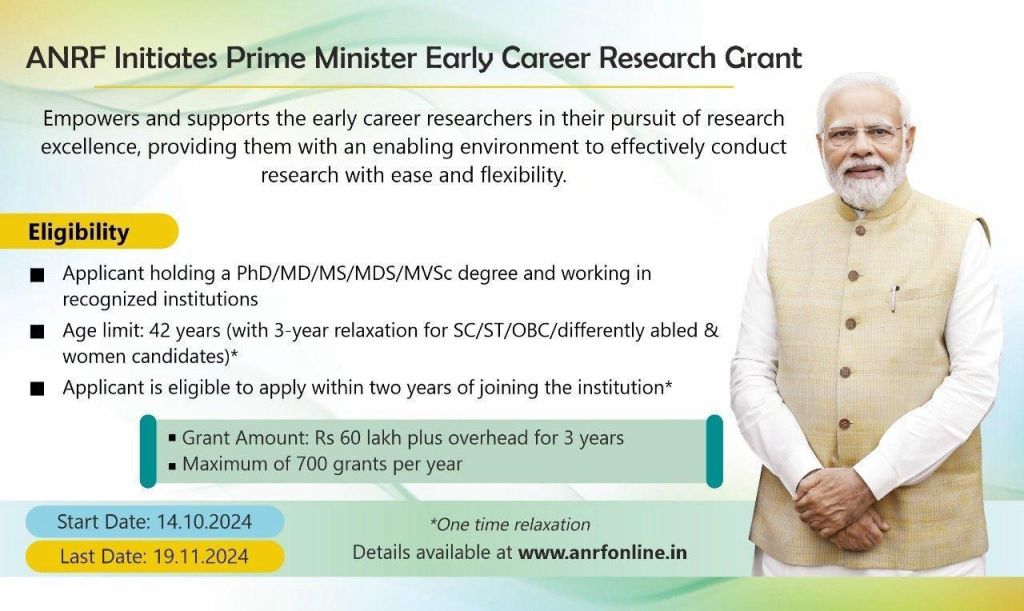
Prime Minister Early Career Research Fund

The Prime Minister’s Early Career Research Award (PMECRA) is a prestigious grant designed to support young researchers in India, encouraging them to pursue innovative and groundbreaking research in various fields of science, technology, and other disciplines. The program was introduced as part of the Indian government’s broader effort to promote research and innovation, especially among early-career scientists and academicians.

Objectives of the PMECRA:

1. Promote Young Talent: PMECRA aims to recognize and support young researchers with strong academic credentials and innovative ideas, providing them the necessary financial resources to carry out cutting-edge research.

2. Encourage Independent Research: The program enables early-career scientists to establish themselves as independent researchers, free from the constraints of traditional academic hierarchies, and fosters self-driven innovation.

3. Boost Research Capacity in India: The program is part of a larger national strategy to bolster research output in India, contributing to India’s standing as a global hub of scientific and technological advancement.

4. Support Interdisciplinary Research: PMECRA encourages interdisciplinary research that has the potential for high societal impact, covering a broad range of fields such as biotechnology, environmental sciences, information technology, and more.

Eligibility Criteria:

1. Age Limit: The applicant must generally be below the age of 40 years.

2. Academic Qualifications: Applicants should have a Ph.D. or equivalent degree in their respective fields of research.

3. Employment: The researcher must hold a regular academic or research position in a recognized university, institute, or laboratory in India.

4. Experience: Early career typically refers to researchers with 2–8 years of post-Ph.D. experience.

5. Research Focus: The applicant’s research proposal must align with the scientific priorities of the government, focusing on high-impact research areas with potential applications.

Funding and Benefits:

Research Grant: PMECRA offers substantial funding, typically ranging from ₹25 lakhs to ₹1 crore, depending on the scope of the research project. This grant can be used for various research-related activities such as purchasing equipment, hiring research assistants, covering travel expenses, and publishing research results.

Duration: The funding is usually provided for a period of three to five years, allowing researchers adequate time to develop their ideas and produce meaningful results.

Flexibility: The fund supports both basic and applied research, giving researchers flexibility in their approach while focusing on areas of national importance.

Selection Process:

1. Call for Proposals: The program typically invites research proposals annually. Interested candidates must submit detailed proposals outlining their research objectives, methodologies, expected outcomes, and budget estimates.

2. Evaluation: Proposals are evaluated by a panel of experts from various academic and scientific fields. The evaluation criteria include the novelty of the research, its feasibility, the researcher’s track record, and the potential impact of the project on society or industry.

3. Interview: Shortlisted candidates may be called for an interview, where they will present their research ideas to a panel of experts.

4. Final Selection: Based on the review process, a select number of candidates are awarded the grant, which is disbursed in installments depending on the research progress.

Importance of PMECRA:

Empowering Early Career Researchers: PMECRA provides a vital platform for early-career researchers to establish themselves in the competitive academic world, gain visibility, and build a solid foundation for future research opportunities.

Addressing National Challenges: By supporting research in areas of national importance, PMECRA helps address key challenges faced by India in sectors such as healthcare, agriculture, energy, and environmental sustainability.

Promoting Innovation and Creativity: The grant fosters a culture of innovation by encouraging researchers to explore new ideas, technologies, and methodologies that can lead to significant scientific breakthroughs or technological innovations.

Challenges:

Competition: Due to its prestigious nature, PMECRA is highly competitive, with only a small percentage of applicants receiving funding.

Grant Utilization: Managing large grants and ensuring that funds are used efficiently for research purposes can be a challenge, especially for those with limited administrative experience.

Conclusion:

The Prime Minister’s Early Career Research Award is a pivotal initiative aimed at fostering the next generation of researchers in India. By providing financial resources, mentorship, and independence, the PMECRA program serves as a cornerstone in shaping India’s future scientific and technological landscape. The award not only benefits individual researchers but also contributes to the broader goal of making India a leader in innovation and research on the global stage.

Don’t Travel Without Ticket

The Importance of Traveling with a Valid Train Ticket: Understanding the Legal, Ethical, and Practical Implications

Traveling by train is one of the most popular and convenient modes of transportation, especially in countries like India where the rail network spans the length and breadth of the country. Millions of people rely on trains for their daily commute, long-distance travel, and even leisurely trips. However, amidst the convenience, there is an important legal and ethical responsibility that every passenger must observe: traveling with a valid ticket.

While it may seem trivial to some, not having a valid train ticket has serious repercussions. Let’s explore the different dimensions of why traveling with a valid ticket is important.

1. Legal Implications

Traveling without a ticket is illegal in most countries, and India is no exception. Under the Indian Railways Act of 1989, traveling without a ticket can lead to serious legal consequences. A ticketless traveler is considered a violator of the law and can face the following:

Fines: Ticketless travelers are usually fined on the spot by a traveling ticket examiner (TTE). The fine often includes the fare of the journey along with an additional penalty, which can vary based on the class and distance of travel. In some cases, the fine can be substantial.

Legal Action: If the offender is unable to pay the fine, legal action may be taken. In extreme cases, such passengers may face imprisonment or be taken to court for further proceedings.

Blacklisting: Repeated offenses might lead to blacklisting, preventing travelers from using train services in the future.

The strict regulations are meant to deter fare evasion and ensure that everyone using the service contributes to its maintenance and functioning.

2. Ethical Considerations

Beyond the legal aspect, traveling without a ticket is ethically wrong. Here’s why:

Fair Contribution: Public transportation systems like railways are heavily subsidized and maintained through public funds and the revenue generated by ticket sales. When a passenger evades fare, they are, in essence, stealing from the system and putting an undue burden on others who pay their fair share.

Undermining the System: Evading fares can lead to losses for the railway system, impacting the quality of services. When everyone contributes by purchasing tickets, the system can invest in improving infrastructure, cleanliness, and safety measures.

Moral Responsibility: As a responsible citizen, one has a duty to follow the rules and regulations that ensure societal harmony. Bypassing the system by not buying a ticket sets a bad example, especially for young travelers and future generations.

3. Practical Risks of Traveling Without a Ticket

In addition to legal and ethical consequences, traveling without a ticket can lead to several practical inconveniences:

Embarrassment and Discomfort: Getting caught without a ticket can be highly embarrassing, especially if it happens in a crowded compartment or in front of fellow passengers. The subsequent confrontation with the TTE, followed by the payment of fines, can create an unpleasant experience that could have been easily avoided.

Uncertainty of Travel: Ticketless travel creates a constant fear of getting caught. It can also lead to anxiety and discomfort throughout the journey, detracting from the overall travel experience.

Risk of Missing Your Train: For those who try to board without a ticket at the last minute, there’s always a risk of being deboarded at the next station by the TTE or being asked to leave the train. This could result in significant delays and disruption to personal or professional commitments.

4. Social and Economic Impact

Revenue Loss for Railways: Railways operate on a thin margin, with much of their revenue dependent on ticket sales. When passengers travel without tickets, it leads to a revenue shortfall, making it harder for the railway authorities to maintain and improve services. This could lead to higher fares for legitimate travelers or a reduction in the quality of services offered.

Strain on Resources: The railway system already struggles with overcrowding and limited resources. Ticketless travelers add to the burden, often leading to overcrowding in compartments, which diminishes the comfort and safety of law-abiding passengers.

Increased Vigilance and Costs: The presence of ticketless travelers forces railway authorities to increase vigilance, hire more ticket checkers, and enforce stricter measures. This comes at an additional cost to the system, which could otherwise be used for improving passenger facilities and services.

5. How to Avoid the Temptation of Traveling Without a Ticket

Sometimes, people are tempted to travel without a ticket due to the urgency of their travel plans or the unavailability of tickets. However, there are legal and safer alternatives to consider:

Tatkal Booking: Indian Railways offers a Tatkal ticket booking system that allows passengers to book tickets at the last minute for an additional charge. This system is designed for those who need to travel urgently.

Waiting List and RAC Tickets: Even if confirmed tickets are unavailable, you can opt for a waiting list or RAC (Reservation Against Cancellation) ticket, which offers a legitimate chance of getting a seat before the journey starts.

General Class Travel: For short-distance travel, general-class compartments are available, where tickets are often available until the last minute. Purchasing a general-class ticket is a much better option than risking the consequences of traveling without one.

Online Ticket Booking: With the advent of digital ticketing, buying a ticket has never been easier. You can book tickets from the comfort of your home through the IRCTC website or mobile apps, ensuring you always have a valid ticket before traveling.

Conclusion

Traveling without a train ticket may seem like a minor infraction, but it has wide-reaching consequences that affect not just the individual but also the larger society. Legal penalties, ethical considerations, and practical inconveniences make it clear that buying a ticket is always the right choice. In addition to being law-abiding citizens, travelers who purchase tickets contribute to the development and sustainability of the railway system, ensuring that everyone can enjoy safe, comfortable, and reliable transportation.

Ultimately, responsible travel habits make for a better journey for everyone.

Participatory Rural Appraisal

Participatory Rural Appraisal (PRA): A Comprehensive Approach to Rural Development

Introduction

Participatory Rural Appraisal (PRA) is a methodology used to enable rural people to share, enhance, and analyze their knowledge of life and conditions, allowing them to plan and act for their development. It is rooted in the principles of participation, flexibility, and empowerment, encouraging communities to take control of their development processes. PRA has gained prominence as an effective tool for rural development, particularly because it fosters collaboration between local communities, development practitioners, and other stakeholders.

Historical Background

PRA evolved from earlier methodologies such as Rapid Rural Appraisal (RRA), developed in the 1970s as an alternative to traditional survey methods. RRA aimed to provide quick, cost-effective, and relevant information on rural conditions. However, PRA goes beyond RRA by involving rural communities in the process of data collection, analysis, and decision-making. It recognizes that local people, due to their everyday experiences, possess valuable insights into their environment and are best positioned to identify their own needs and solutions.

PRA was developed in the 1980s and 1990s by development practitioners, including Robert Chambers, who emphasized the need for “putting the last first”—a shift in focus towards the most marginalized communities in rural areas. Since then, PRA has been widely adopted in development projects across Asia, Africa, and Latin America.

Key Principles of PRA

1. Participation: PRA involves the active participation of community members, ensuring that they play a central role in gathering information, identifying problems, and proposing solutions. It empowers local people to be agents of their own development rather than passive recipients of aid.

2. Flexibility: PRA is not a rigid, one-size-fits-all approach. It adapts to the specific cultural, social, and economic conditions of a community. PRA tools and methods are selected based on local context, ensuring relevance and appropriateness.

3. Empowerment: One of the core goals of PRA is to empower rural people by valuing their knowledge and perspectives. By involving them in decision-making, PRA enhances their confidence and capacity to manage their development efforts.

4. Learning and Sharing: PRA is based on a two-way learning process between community members and external facilitators. It encourages open dialogue, where both parties share knowledge and perspectives, fostering mutual respect and collaboration.

5. Holistic Approach: PRA takes a comprehensive view of rural development, considering economic, social, environmental, and cultural dimensions. It promotes integrated solutions that address multiple aspects of rural life.

PRA Techniques and Tools

PRA uses a range of visual, interactive, and participatory methods that enable communities to articulate their realities in ways that are easy to understand and act upon. Some common tools used in PRA include:

1. Mapping: Communities create maps of their village or locality, identifying resources, infrastructure, land use, and important landmarks. Mapping helps in understanding spatial relationships, identifying problems, and planning interventions.

2. Transect Walks: Facilitators walk with community members through their village or surrounding areas to observe and discuss various aspects of rural life, such as agriculture, water sources, and housing. This method helps in gaining a deeper understanding of the community’s environment.

3. Seasonal Calendars: Communities create calendars showing changes in key variables (e.g., rainfall, crop cycles, labor demand) throughout the year. Seasonal calendars help identify patterns and challenges related to food security, labor, and income.

4. Ranking and Scoring: Participants rank or score different issues, resources, or options based on their importance or preference. This method helps in prioritizing community needs or evaluating the effectiveness of interventions.

5. Venn Diagrams: Communities use Venn diagrams to represent relationships between individuals, groups, institutions, and resources. This helps in understanding power dynamics, social networks, and decision-making processes within the community.

6. Timelines: Timelines document significant events or changes in the community over time. This tool helps in understanding historical trends, identifying causes of problems, and recognizing shifts in community dynamics.

7. Focus Group Discussions: Small groups of community members discuss specific issues in a structured format, providing detailed insights and opinions. Focus groups allow for the exploration of topics such as health, education, or livelihood strategies.

Applications of PRA

PRA has been applied in various sectors of rural development, including agriculture, health, education, natural resource management, and disaster risk reduction. Some of its common applications include:

1. Agricultural Planning: PRA has been used to improve agricultural productivity by involving farmers in identifying constraints, such as soil degradation or water shortages, and developing sustainable farming techniques.

2. Community Health: PRA techniques help identify health challenges, such as access to clean water or prevalence of diseases, and develop locally appropriate solutions, like promoting sanitation practices or introducing community-based health workers.

3. Natural Resource Management: Communities use PRA tools to analyze the state of local ecosystems, such as forests or rivers, and develop conservation strategies. This participatory approach ensures that resource management plans align with the needs and knowledge of local people.

4. Disaster Risk Reduction: PRA helps communities assess their vulnerabilities to natural disasters, such as floods or droughts, and create disaster preparedness plans that build resilience to future risks.

Benefits of PRA

1. Community Ownership: Since PRA involves local people in every stage of the development process, it promotes a strong sense of ownership over the projects and interventions. This often leads to greater sustainability and long-term impact.

2. Empowerment and Capacity Building: PRA not only generates valuable data but also builds the capacity of local people to analyze and address their own challenges. It fosters leadership and self-reliance within communities.

3. Culturally Appropriate Solutions: PRA ensures that solutions are tailored to local conditions, customs, and needs. This reduces the risk of external interventions being inappropriate or ineffective.

4. Building Trust and Collaboration: PRA promotes trust and cooperation between external facilitators and local communities. By involving communities in decision-making, it strengthens relationships and ensures that development initiatives are more inclusive.

Challenges and Criticisms of PRA

While PRA has numerous benefits, it also faces certain challenges and criticisms:

1. Time-Intensive: PRA is often time-consuming compared to traditional data collection methods. The participatory nature of PRA requires facilitators to spend significant time building relationships with the community, facilitating discussions, and analyzing data together.

2. Risk of Elite Capture: In some cases, powerful individuals or groups within the community may dominate the PRA process, leading to biased outcomes. This can undermine the inclusive nature of PRA, especially when marginalized groups are not adequately represented.

3. Quality of Facilitation: The success of PRA depends heavily on the skills and attitudes of facilitators. Poor facilitation can lead to misrepresentation of community views, shallow analysis, or disengagement of participants.

4. Limited Generalizability: Since PRA is context-specific, its findings may not be easily generalizable to other communities or regions. This can limit its utility for large-scale development planning or policy-making.

Conclusion

Participatory Rural Appraisal represents a shift in development practice from top-down, expert-driven models to a more inclusive, bottom-up approach. It recognizes that rural communities are not merely beneficiaries of development but possess rich knowledge and resources that can drive sustainable change. Despite some challenges, PRA has proven to be an invaluable tool in fostering community participation, ownership, and empowerment in rural development initiatives. By promoting local solutions to local problems, PRA continues to shape the future of rural development in a more equitable and sustainable way.

Sustainable Development Goals SDGs

The Sustainable Development Goals (SDGs): A Blueprint for a Better Future

The Sustainable Development Goals (SDGs), adopted by the United Nations in 2015, provide a global framework to address the world’s most pressing challenges by 2030. These 17 goals, built on the foundation of the earlier Millennium Development Goals (MDGs), aim to eradicate poverty, protect the planet, and ensure prosperity for all. The SDGs emphasize interconnectedness, recognizing that economic growth, social inclusion, and environmental sustainability are interdependent.

1. No Poverty

Goal 1 seeks to end poverty in all its forms by 2030. Despite progress, more than 700 million people still live in extreme poverty. The SDGs advocate for inclusive economic growth and social protection systems, ensuring that the most vulnerable are not left behind.

2. Zero Hunger

Goal 2 focuses on achieving food security and promoting sustainable agriculture. With hunger and malnutrition affecting millions, the SDGs aim to ensure access to safe, nutritious, and sufficient food while promoting sustainable farming practices and supporting small-scale farmers.

3. Good Health and Well-being

Health is central to sustainable development. Goal 3 aims to ensure healthy lives and promote well-being for all at all ages. Key targets include reducing maternal and infant mortality, ending epidemics of diseases like HIV/AIDS, and promoting mental health.

4. Quality Education

Education is a powerful driver of change. Goal 4 seeks to ensure inclusive, equitable, and quality education for all. This includes ensuring free primary and secondary education, equal access to technical and vocational education, and lifelong learning opportunities.

5. Gender Equality

Achieving gender equality and empowering women and girls is essential for global development. Goal 5 aims to eliminate discrimination, violence, and harmful practices against women, and ensure equal participation in leadership and decision-making.

6. Clean Water and Sanitation

Access to clean water and sanitation is a basic human right. Goal 6 seeks to ensure availability and sustainable management of water and sanitation for all by improving water quality, reducing pollution, and investing in infrastructure.

7. Affordable and Clean Energy

Goal 7 focuses on ensuring access to affordable, reliable, sustainable, and modern energy. It aims to increase the share of renewable energy in the global energy mix and enhance energy efficiency, recognizing energy’s pivotal role in combating climate change.

8. Decent Work and Economic Growth

Promoting sustained, inclusive economic growth, full and productive employment, and decent work for all is at the core of Goal 8. The SDGs advocate for policies that stimulate entrepreneurship, job creation, and improved labor conditions, especially for young people and marginalized communities.

9. Industry, Innovation, and Infrastructure

Goal 9 underscores the importance of building resilient infrastructure, promoting inclusive and sustainable industrialization, and fostering innovation. This includes expanding access to financial services, technology, and the internet, particularly in developing countries.

10. Reduced Inequality

Goal 10 seeks to reduce inequality within and among countries by empowering and promoting the social, economic, and political inclusion of all, regardless of age, gender, disability, race, or income. It also calls for improved financial regulation to ensure fairer outcomes globally.

11. Sustainable Cities and Communities

With more than half of the world’s population living in urban areas, Goal 11 aims to make cities inclusive, safe, resilient, and sustainable. This includes improving housing, public transport, and urban planning, while reducing the environmental impact of cities.

12. Responsible Consumption and Production

Goal 12 encourages sustainable consumption and production patterns. It calls for reducing waste, improving resource efficiency, and promoting sustainable lifestyles, which are essential for decoupling economic growth from environmental degradation.

13. Climate Action

Climate change is one of the greatest challenges of our time. Goal 13 urges immediate action to combat climate change and its impacts, through both mitigation (reducing emissions) and adaptation (increasing resilience to climate impacts).

14. Life Below Water

Goal 14 focuses on conserving and sustainably using oceans, seas, and marine resources. It targets overfishing, marine pollution, and ocean acidification, while promoting the sustainable management of fisheries and marine ecosystems.

15. Life on Land

Goal 15 addresses the protection, restoration, and promotion of sustainable use of terrestrial ecosystems, forests, and biodiversity. It seeks to halt deforestation, combat desertification, and prevent the extinction of threatened species.

16. Peace, Justice, and Strong Institutions

Goal 16 promotes peaceful and inclusive societies, access to justice for all, and the building of effective, accountable institutions. It addresses issues like corruption, human trafficking, and violence, aiming to create more just and equitable societies.

17. Partnerships for the Goals

Recognizing that achieving the SDGs requires strong partnerships, Goal 17 focuses on enhancing global cooperation, financial support, and the exchange of knowledge, technology, and innovations. It emphasizes the need for collaboration across governments, civil society, and the private sector.

The Road Ahead

The SDGs represent an ambitious agenda that calls for transformative change. Governments, businesses, civil society, and individuals must work together to drive progress. While the goals are global, they require local action tailored to specific challenges. Meeting the 2030 deadline will require political will, investment, and an unwavering commitment to sustainable development for all.

The SDGs offer a shared vision for humanity’s future—one where no one is left behind, the environment is protected, and prosperity is within reach for everyone.

Top Management Institute of America

Some of the top management institutes in the United States are known for their world-class education, strong faculty, and extensive alumni networks. Here are a few of the most prestigious ones:

Photo by George Dolgikh on Pexels.com

1. Harvard Business School (HBS) – Harvard University

Location: Cambridge, Massachusetts

Known for its case-study method and extensive research in business leadership.

2. Stanford Graduate School of Business (GSB) – Stanford University

Location: Stanford, California

Emphasizes innovation, entrepreneurship, and leadership.

3. Wharton School – University of Pennsylvania

Location: Philadelphia, Pennsylvania

One of the oldest business schools, known for finance and entrepreneurship.

4. MIT Sloan School of Management – Massachusetts Institute of Technology

Location: Cambridge, Massachusetts

Strong focus on innovation, quantitative analysis, and leadership.

5. Booth School of Business – University of Chicago

Location: Chicago, Illinois

Known for its rigorous analytical and empirical approach to business education.

6. Kellogg School of Management – Northwestern University

Location: Evanston, Illinois

Known for its focus on teamwork, leadership, and global management.

7. Columbia Business School – Columbia University

Location: New York City, New York

Strong ties to the finance industry and leadership development.

8. Haas School of Business – University of California, Berkeley

Location: Berkeley, California

Focuses on innovation, sustainability, and entrepreneurship.

9. Tuck School of Business – Dartmouth College

Location: Hanover, New Hampshire

Known for its tight-knit community and focus on leadership and global business.

10. Yale School of Management – Yale University

Location: New Haven, Connecticut

Strong emphasis on integrating business with society and leadership for social good.

These institutes consistently rank highly in global MBA rankings and are renowned for their cutting-edge research, diverse curricula, and influential alumni.