One Nation One Subscription (ONOS)

Daily writing prompt
What is one thing you would change about yourself?

The Union Cabinet, chaired by Prime Minister Shri Narendra Modi, has approved One Nation One Subscription,  a new Central Sector Scheme for providing country-wide access to scholarly research articles and journal publication. The scheme will be administered through a simple, user friendly and fully digital process. This will be a “One Nation One Subscription” facility for the government higher education institutions and R&D laboratories of the central government.

A total of about Rs.6,000 crore has been allocated for One Nation One Subscription for 3 calendar years, 2025, 2026 and 2027 as a new Central Sector Scheme. One Nation One Subscription will build on and further enhance the scope and reach of the range of initiatives undertaken by the Government of India over the past decade in the domains of education, for maximizing access to quality higher education for the youth of India. This will supplement the ANRF initiative to promote research and development and foster a culture of research and innovation throughout government universities, colleges, research institutions, and R&D laboratories.

The benefits of One Nation One Subscription scheme will be provided to all Higher Educational Institutions under the management of the Central or State Government and Research & Development Institutions of the Central Government, through a national subscription coordinated by a central agency, namely the Information and Library Network (INFLIBNET), an autonomous inter-university centre of the University Grants Commission (UGC). This list covers more than 6,300 institutions, translating into nearly 1.8 crore students, faculty and researchers, who will be able to potentially avail benefits of One Nation One Subscription.

This is in line with the goals of Viksitbharat@2047, National Education Policy (NEP) 2020 and Anusandhan National Research Foundation (ANRF). The initiative will expand access to scholarly journals to a vast diaspora of students, faculty, researchers and scientists of all disciplines, including those in tier 2 and tier 3 cities, thereby promoting core as well as interdisciplinary research in the country. The ANRF will periodically review the usage of One Nation One Subscription and publications of Indian authors of these institutions.

The Department of Higher Education will have a unified portal “One Nation One Subscription” through which the institutions will be able to access the journals. The ANRF will periodically review the usage of One Nation One Subscription and publications of Indian authors of these institutions. The DHE and other Ministries having HEIs and R&D Institutions under their management shall be proactively conducting Information, Education and Communication (IEC) campaigns among students, faculty and researchers of these institutions about availability and method of access to One Nation One Subscription, resulting in improved usage of the facility across the country. The State Governments will also be requested to carry out campaigns at their level for maximizing usage of the unique facility by students, faculty and researchers of all government institutions.

*****
75 Years of the adoption of Constitution of India

Government of India announces the commencement of a historic year-long celebration to commemorate the 75 years of the adoption of the Constitution of India, a milestone that reflects the remarkable journey of our democracy and the enduring legacy of our founding principles and Constitutional values starting on Constitution Day (Samvidhan Diwas)26th November 2024. These celebrations are being conducted under the campaign tagline Hamara Samvidhan, Hamara Swabhimaan and aim to honour the contributions of the Constitution’s makers while reiterating the core values enshrined in it.

On 26th November 1949, the Constituent Assembly of India adopted the Constitution of India, which came into effect on 26th January 1950, marking the beginning of a new era in Indian history. This day is significant as it marks the adoption of the world’s longest written Constitution, a cornerstone of India’s democratic framework. Since its inception, the Constitution serves as the guiding framework, shaping the nation’s progress over the past 75 years.

Celebration – Highlights:

  • Special Website (constitution75.com): A dedicated website, constitution75.com, has been created to enable citizens to engage with the Constitution’s legacy through interactive activities and resources. The website offers:
    • Read the Preamble and record a video: Citizens can participate in the campaign by recording videos while reading the Preamble of the Constitution in languages of their choice. The videos can be uploaded on the campaign website and certificate of participation can be downloaded.
    • Explore the Constitution in Multiple Languages: Access the full text of the Constitution in multiple languages, making it accessible to all citizens.
    • Dive into History: Learn about the making of the Constitution, read debates from the Constituent Assembly, reports of various committees involved in the making of the Constitution and gain insights into the values and principles that shaped modern India.
    • Interactive Features: “Know Your Constitution”, an AI enabled interactive feature, where one can ask questions about the Constitution and receive detailed answers related to the Constitution of India.
  • Mass reading of Preamble on November 26, 2024
    • On 26th November 2024, from schools to offices, from cities to villages, millions across India will read the Preamble together.
    • Capture the moment by uploading your selfies and videos on the website (constitution75.com) and sharing them on social media with pride.
  • Inaugural Programme at Central Hall of Parliament on 26th November 2024:
  1. A grand inaugural programme will be held at the Central Hall of Parliament, led by the President of India, in the presence of the Vice PresidentPrime MinisterSpeaker of Lok Sabha and other dignitaries.
  2. Programme Highlights:
  • Short Film Presentation dedicated to the glory of the Constitution of India, its making and historical journey.
  • Release of a commemorative Coin and Stamp dedicated to the 75th anniversary of adoption of Constitution of India.
  • Release of Books titled “Making of the Constitution of India: A Glimpse” and “Making of the Constitution of India & its Glorious Journey”
  • Release of Booklet dedicated to the Art of the Constitution of India.
  • Release of the Constitution of India in Sanskrit.
  • Release of the Constitution of India in Maithili.
  • Ceremonial reading of Preamble led by the President of India.

The Government of India calls upon the citizens to be a part of this historic occasion and show our collective pride in our Constitution and demonstrate our commitment to the democratic values that define our nation.

How to participate!

  • Visit constitution75.com to read the Preamble of the Constitution, record and upload your videos, and download a certificate of participation.
  • Engage with the interactive features of the website, explore the Constitution in multiple languages, and learn more about the journey that brought India its guiding framework.
  • Join the nationwide movement on 26th November 2024, take part in the reading of the Preamble at schools, colleges, government and private offices, panchayats, and others, across the country. Share your participation on social media to inspire others.

****

ENRICHMENT OF CULTURAL HERITAGE

Archaeological Survey of India (ASI) carries out upkeep of all Nationally protected monuments. Besides, Amenities and information has been provided at important monuments to enrich the experience of the visitors. Furthermore, the Government of India has launched Adopt A Heritage 2.0 Programme in 2023 to create framework for engaging public/private sector companies, NGOs, Trusts, Societies etc. to provide amenities at protected monuments to enhance visitors experience to make them visitor friendly.

Through the academies and ZCCs; the focus is on cultural preservation, documentation, research, publication, cultural exchange programmes, capacity building and conservation. 

The Government of India promotes Indian folk Arts and Culture abroad through Global Engagement Scheme under which Festivals of lndia are organized in other countries showcasing folk art and other cultural events as exhibitions, dance, music, theatre, food fest, film fest, yoga etc. and through grant-in-aid to lndo-Foreign Friendship Cultural Societies for organizing programmes and activities including folk art and other cultural activities for their promotion abroad

 The Government of India has taken several initiatives for enrich India’s cultural heritage during last 5 years. An Umbrella Scheme ‘Kala Sanskriti Vikas Yojana’ comprising several sub-schemes has been developed to provide financial assistance for the promotion of Arts and Culture, such as:Promotion of Guru Shishya Parampara.Promotion of Art and Culture.Construction of Tagore Cultural Complex.Scheme for Scholarship and fellowship for Promotion of Art and Culture. The Details of funds disbursed under Kala Sanskriti Vikas Yojana in the last five years and are given as under:-                                                                                                             (Amount Rs. in Crores)S. No.Years        Total funds disbursed1.2020-21100.312.2021-22126.183.2022-23182.254.2023-24166.955.2024-25(Up to 21.11.2024)59.98
    MoUs have been signed under ‘Adopt A Heritage 2.0’ for the following monuments in the State of Bihar and Maharashtra: S. No.Name of  StateName of Monument1.BiharBuddhist Stupa, Kesariya, Champaran2.MaharashtraElephanta Caves, Raigarh (Maharashtra) The details of financial assistance to the States of Maharashtra and Bihar under “kala Sanskriti Vikas Yojana” scheme is given below: –                                          (Amount Rs. in Crores)S. No.YearsTotal funds disbursedBiharMaharashtra1.2020-212.694.482.2021-223.406.983.2022-236.288.544.2023-248.1916.285.2024-25(up to 21.11.2024)1.454.79                                                                                      

ZONAL CULTURAL CENTRES

The Government of India has set up seven Zonal Cultural Centres (ZCCs) in the country with headquarters at Patiala (Punjab), Nagpur (Maharashtra), Udaipur (Rajasthan), Prayagraj (Uttar Pradesh), Kolkata (West Bengal), Dimapur (Nagaland) and Thanjavur (Tamil Nadu) to protect, promote and preserve various forms of folk art & culture throughout the country and also to set up mechanism for development of the cultures of various regions. The mandate behind setting up of these ZCCs was to bind the nation culturally while retaining the individuality of the regions that comprise them. The aims and objectives of establishing these ZCCs are:

  • to preserve and promote the projection and dissemination of arts in the concerned zone;
  • to develop and promote their rich cultural diversity;
  • to encourage folk & tribal arts and preservation of vanishing arts;
  • to involve youth in creative cultural communication and lay special emphasis on the linkages between different areas and their contribution to Indian culture.

A Corpus Fund was provided to each ZCC towards cost of equipment and infrastructure including buildings. Government of India provided Rs. 10.00 crore each to all the seven ZCCs in 7th & 10th Plan. During 2014-15, an additional amount of Rs. 10.00 crore each was provided to six (6) ZCCs viz. North Zone Cultural Centre, Patiala; South Zone Cultural Centre, Thanjavur; South Central Zone Cultural Centre, Nagpur; West Zone Cultural Centre, Udaipur; North Central Zone Cultural Centre, Prayagraj & Eastern Zonal Cultural Centre, Kolkata and Rs. 20.00 crore was provided to North East Zone Cultural Centre (NEZCC), Dimapur towards corpus enhancement, taking the total corpus to Rs. 30.00 crore for NEZCC, Dimapur and Rs. 20.00 crore each for the remaining six ZCCs. All the administrative expenses of these ZCCs are being met by the interest accrued on this Corpus Fund. Land required by each Centre was provided free of cost by the State Governments wherein the headquarters of ZCCs are located.

For the promotion of art & culture in the country, these ZCCs organize various cultural activities and programmes on regular basis throughout the year for which annual grant-in-aid is provided to them. Besides, Ministry of Culture also organizes Rashtriya Sanskriti Mahotsavs (RSMs) through these ZCCs where a large number of artists from all over India are engaged who showcase their talents during these programmes. From November, 2015 onwards, fourteen (14) RSMs and four (04) Zonal Level RSMs have been organized by Ministry of Culture across the country. In addition, a minimum number of 42 Regional Festivals are organized by these ZCCs every year for promotion of art and culture. 

PROMOTION OF REGIONAL LANGUAGES

The Ministry of Culture is committed to the preservation, conservation and promotion of India’s rich cultural heritage, including regional languages, traditional art forms, and performing arts that are at risk of extinction. Through its autonomous bodies and Zonal Cultural Centres (ZCCs), several targeted initiatives are carried out by the ministry.

Sahitya Akademi (SA)works for the promotion of literature in24 recognized languages and various unrecognized and tribal languages by organizing language conventions and awarding the Bhasha Samman to scholars for their contributions to unrecognized languages like Haryanvi, Koshali-Sambalpuri, Paite, Magahi, Tulu, Kurukh, Ladakhi, Halbi, Saurashtra, Kumauni, Bhili, Warli, Banjara/Lambadi, Khasi, Mising, Kodava, Chakma, Rajbanshi, Awadhi, Bundeli, Garhwali, Kachchhi, Himachal, Ao, Karbi, Angami, Gondi, Ho, Chhattisgarhi, Gojri, Bhojpuri, Ahirani, Lepcha, Mundari, Garo, Bhili, Kui, Khasi, Mizo, Pahari, Kokborok.

Sangeet Natak Akademi (SNA) and Lalit Kala Akademi (LKA) undertake initiatives to preserve endangered performing arts and visual arts, respectively, by organizing workshops, exhibitions, and residencies, and creating platforms like Museum of Performing Arts and the PARI project to showcase regional art and talent. Several other initiatives like Kala Deeksha, Kala Dharohar, Museum of Performing Arts, Kala Pravah (Temple Festival Series), Jyotirgamaya, camps for puppetry, Dokra Casting, Mask Making, Rangoli Workshop, Tribal art conclave, have been undertaken by these autonomous bodies for the preservation of the dying and rare performing art forms across the country. 

Indira Gandhi National Centre for the Arts (IGNCA) focuses on documenting endangered languages and art forms through films, texts, digital archives, and workshops. National Mission on Manuscripts undertakes the works of conserving manuscripts to tap into the vast potential of Indian Knowledge Systems (IKS) and to make rare manuscripts accessible to scholars, researchers, and the general public.

Zonal Cultural Centres (ZCCs) play a pivotal role in reviving rare and vanishing art forms through schemes like Guru-Shishya Parampara, which trains disciples under eminent Gurus, and the Young Talented Artists Award to encourage young talents. Other notable initiatives include Theatre Rejuvenation, which supports stage shows and workshops, Shilpgram, which promotes rural crafts and organizes fairs, and National Cultural Exchange Programme (NCEP), which fosters cross-cultural understanding.

The Ministry’s plan of action includes sustained documentation of endangered art forms and languages, expanding digital archives for research, and ensuring intergenerational transmission through training programs like Guru-Shishya Parampara. It is envisaged to organize cultural festivals, exhibitions, and exchange programs across the country through public-private collaborations, and state-level partnerships to enhance awareness and appreciation of India’s diverse heritage with a view to safeguard the country’s cultural legacy for future generations. Honouring artists and scholars with awards like Bhasha Samman and promoting North-East cultural heritage through initiatives like Octave are among the integral parts of the Ministry’s strategy.

Bureau of Indian Standards addresses need for reliable, affordable medical assistive technology

Daily writing prompt
What is one thing you would change about yourself?

The Bureau of Indian Standards (BIS), India’s National Standards Body is addressing growing need for reliable and affordable medical assistive technology. The Bureau is developing standards for innovative products such as therapeutic footwear, portable ramps, braille displays, and fall detectors, which support individuals with disabilities and enhance their quality of life.

In line with the National Medical Device Policy, 2023, BIS is prioritizing standards development for 214 critical medical devices. These have been identified in consultation with the Department of Pharmaceuticals (DoP). It includes septal closure devices, plasma sterilizers, and phototherapy machines. The initiative is set for phased completion by December 2025.

The Bureau is also driving improvements in healthcare quality, safety, and reliability by developing robust medical device and service standards. By aligning with the Medical Devices Rules, 2017, and the National Medical Device Policy, 2023, BIS is proving to be instrumental in establishing a robust regulatory framework that prioritizes public safety while fostering innovation.

Output image

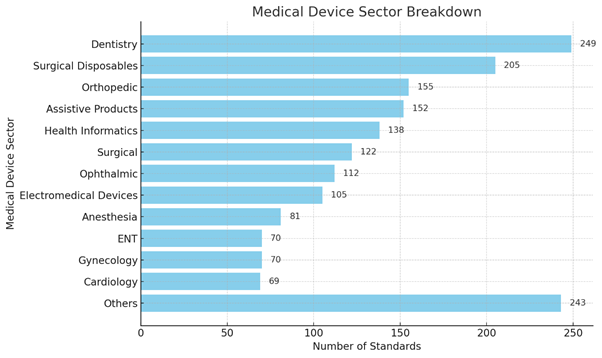
BIS has published over 1,700 standards for the medical sector, covering specialities such as cardiology, neurology, orthopaedics, ophthalmology, and more. Of these, around 1,200 standards specifically focus on medical devices critical to healthcare, including:

  • Life-saving devices: Cardiac pacemakers, heart valves, ventilators, and haemodialysis machines.
  • Advanced diagnostic tools: X-ray machines, CT scanners, MRI systems, and blood glucose monitors.
  • Assistive technology: Hearing aids, wheelchairs, Jaipur Foot, and tactile pathways for visually impaired individuals.

BIS standards in this sector ensure that Indian medical devices are safe, effective, and globally competitive. These efforts build trust among healthcare providers, consumers, and international stakeholders while solidifying India’s reputation as a leader in healthcare innovation.

Key Standards for Medical Devices:

Some of the key Indian Standards developed by BIS include:

  1. Cardiac Pacemakers: IS 13450 (Part 2/Sec 31): 2021
  2. Heart Valves: IS 17840
  3. Hip and Knee Implants: IS 12375
  4. Ventilators: IS 13450 (Part 2/Sec 12): 2023
  5. Infant Incubators and Radiant Warmers: IS 13450 (Part 2/Sec 19): 2023 for incubators and IS 13450 (Part 2/Sec 21): 2023 for radiant warmers
  6. Haemodialysis Machines: IS 13450 (Part 2/Sec 16) : 2019
  7. Infusion Pumps: IS 13450 (Part 2/Sec 24): 2019
  8. Advanced Diagnostic Tools:
    • X-ray and CT Machines: IS 7620 (Part 1) : 1986
    • MRI Systems: IS 13450 (Part 2/Sec 33) : 2018
    • Ultrasound Devices: IS 13450 (Part 2/Sec 37): 2019
    • ECG: Covered under IS 13450 (Part 2/Sec 25): 2018
  9. Monitoring Devices:
    • Blood Pressure Monitors: IS 13450 (Part 2/Sec 34): 2019
    • Blood Glucose Monitors: IS/ISO 15197: 2013
    • Pulse Oximeters: IS/ISO 80601-2-61: 2017

***

Global Cooperative Conference 2024 at Bharat Mandapam in New Delhi

Daily writing prompt
What is one thing you would change about yourself?

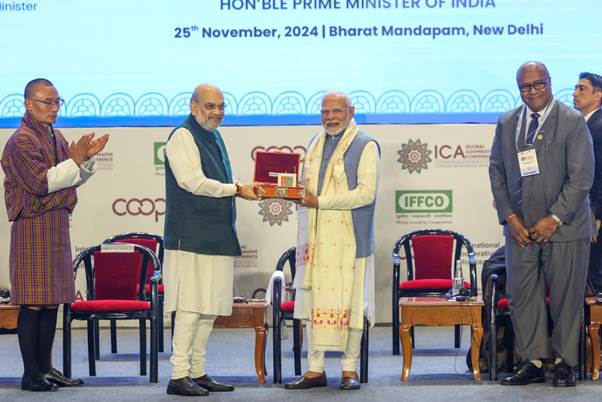
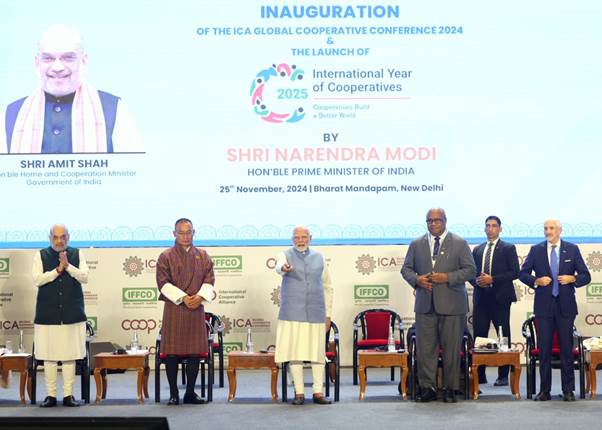
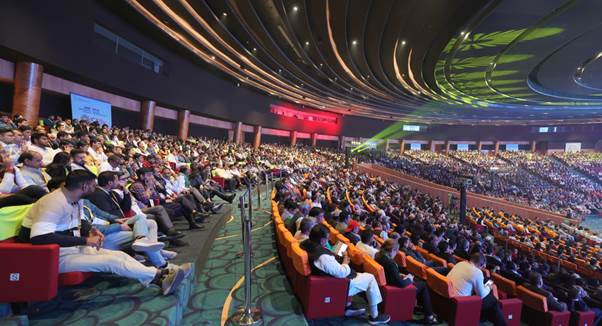
Prime Minister Shri Narendra Modi inaugurated the Global Cooperative Conference 2024 at Bharat Mandapam in New Delhi. Prime Minister Shri Narendra Modi also launched the United Nations’ International Year of Cooperatives 2025 and released a commemorative postal stamp. On this occasion, Union Home Minister and Minister of Cooperation Shri Amit Shah, the Prime Minister of Bhutan, the Deputy Prime Minister of Fiji, the President of International Cooperative Alliance (ICA), the Secretary of the Ministry of Cooperation, and several other dignitaries were present.

1.JPG

On this occasion, Union Home Minister and Minister of Cooperation Shri Amit Shah said in his address that the United Nations’ decision to observe 2025 as the International Year of Cooperatives is a timely step and will prove to be a blessing for millions of poor people and farmers worldwide. He added that the inauguration of the International Year of Cooperatives-2025 by Prime Minister Modi today and the hosting of the International Cooperative Conference of the ICA in India is a welcome step.

Shri Amit Shah said that Prime Minister Shri Narendra Modi three years ago gave the clarion call of “Sahkar Se Samriddhi” which reflects the essence of theme of this conference, which paved the way for the prosperity of millions of villages, women, and farmers. He said that in previous 3 years, many new activities have taken place in the cooperative sector of India, and after 75 years of independence, India’s cooperative movement has experienced a revival, bringing with it a new zeal.

Union Home Minister and Minister of Cooperation said that in next 3 years, through 2 lakh new Primary Agricultural Credit Societies (PACS), there will not be a single village panchayat in India without a cooperative society. He said that many steps have also been taken to make PACS modern, tech-enabled and economically-viable. He said that through 3 new cooperative bodies formed at the national level, the farmers of India will be able to increase their access to the domestic as well as global market. He said that National Cooperative Exports Limited (NCEL),  National Cooperative Organics Limited (NCOL) and Bharatiya Beej Sahakari Samiti Limited (BBSSL) will not only increase the participation of farmers in world trade in the coming days, but will also work to inspire cooperatives all over the World as to how a small farmer can reach all the markets of the World. Shri Shah said that Indian Farmers Fertiliser Cooperative (IFFCO), Krishak Bharti Cooperative (KRIBHCO) and Amul have set examples in the field of cooperatives all over the world and similarly these three cooperatives will also guide the people working in the cooperative sectors of the World.

2.jpeg

Shri Amit Shah said that after the formation of the Ministry of Cooperation three years ago, the entire legal framework of cooperatives has been strengthened, the White Revolution 2.0 and the Blue Revolution have also begun, in which the role of cooperatives is very important. He said that under the leadership of Prime Minister Modi, comprehensive changes have taken place in the last 3 years for the overall development of cooperatives. Shri Shah said that in the coming days, we are also going to build a cooperative university, through which trained and tech-enabled human resources will be created. In the “International Year of Cooperatives,” the Modi government will usher in new dimensions to India’s cooperative movement by introducing a new cooperative policy.

3.JPG

Union Home Minister and Minister of Cooperation said that in order to expand the reach of cooperatives, the Government of India is committed to connecting every village and farmer with the cooperative movement. He added that numerous efforts have been made to explore new areas and extend the scope of cooperatives.

Shri Shah stated that under the guidance of Prime Minister Modi, significant work has been done in the past three years to extend the reach of cooperatives to every individual and sector. He emphasized that the cooperative movement has opened several avenues for the empowerment of villages, farmers, women, and the underprivileged. Through this movement, the goal of “Sahkar se Samriddhi” envisioned by Prime Minister Modi, can be achieved in the coming times. He also said that the International Year of Cooperatives, inaugurated today by Prime Minister Shri Narendra Modi, will pave the way for the empowerment of millions of poor people, farmers, and women worldwide, enabling them to live with dignity and respect.

***

CREDAI to formalise its 14,000 members, says social security of labour crucial to real estate growth

Daily writing prompt
What is one thing you would change about yourself?

The real estate sector should look at a greater formalisation that will help the industry grow faster. This was stated by Union Minister of Commerce & Industry, Shri Piyush Goyal during his keynote address at the 25th Foundation Day of CREDAI (Confederation of Real Estate Developers’ Associations of India) in New Delhi today. He further urged the industry to engage the labour in formal employment, giving them the social security benefits of insurance (ESIC) and provident fund (EPFO). This will help in the number of employees getting reflected in annual reports and in national statistics. If social security, healthcare and post-retirement benefits are provided then the employees will align with the industry’s goals of enhancing their quality of work leading to better productivity and greater profits, he said. 

Photo by Alex Staudinger on Pexels.com

Commerce and Industry Minister also appealed to CREDAI to expedite formalisation of its 14,000 members. If everyone who works for CREDAI will receive salary through digital payment and if it is ensured that employees working in the ecosystem is a part of the national effort to meet the needs of the people, CREDAI’s contribution to employment will get recognised and rewarded, he said.

In his address, Shri Goyal raised the issue of environment pollution and urged CREDAI to consider setting up a team to study ways to adopt better construction techniques in the metropolitan cities of India. He further suggested the industry body to  take this up as a mission and report to the Government steps being taken in this direction. Adopting steel and precast fabrication will speed up construction benefitting the entire ecosystem. This can help in reducing AQI and pollution levels, he said.

Shri Goyal lauded CREDAI for its contribution to making India a powerhouse and also in its  journey towards Viksit Bharat and added that the industry has not only worked with brick and mortar to collectively prepare the nation for the future but has worked to provide opportunities and aspirations to the nation. Real estate contributes to the economy and jobs, he said.

Emphasising the difficulty citizens faced earlier in owning homes, Shri Goyal pointed out that a concerted effort has been undertaken in the last ten years to clean up processes, promote Ease of Doing Business and encourage businesses to expand. He also noted that bringing The Real Estate (Regulation and Development) Act (RERA) into effect in 2017 was a challenge, however, the regulations have enabled citizens to acquire homes without dispute. The Minister further highlighted CREDAI’s commitment to rectify the processes and pointed out that provisions like Goods and Services Tax (GST), RERA Act and efforts to eliminate irregular transactions have resulted in an organised growth of the real estate sector.

Hailing Prime Minister Shri Narendra Modi’s efforts to clean up the banking system, Shri Goyal noted that non-performing assets (NPAs) have decreased significantly and banks have strong credit portfolios with strong balance sheets, maintaining healthy profit each year. It shows how important the banking sector is for the real estate sector and for the economy to gain momentum in meeting the aspirations of the nation. As income levels rise, more people will take possession of their homes as they will be able to afford cheaper loans at  lower interest rates, he said.

Shri Goyal also spoke about affordable rental housing and announced that the Government would be engaging in discussions with the industry body to find ways to provide affordable rental to the citizens, besides working on the rehabilitations programme for slum dwellers. He said that affordable rental housing if made available would be able to stop the proliferation of slums in cities. Shri Goyal pointed out that aspects like parking lots and spaces for entertainment families should be looked into when planning layouts. He added that we need to recycle construction waste so that we move towards a circular economy as to be a net zero nation we have to begin from net zero localities and societies. 

Encouraging the industry leaders and participants to look for real estate opportunities abroad, Shri Goyal said that expanding the real estate footprint outside India will add to India’s exports and infrastructure services. He also urged the industry to expand its sector and the 250+ associate industries to make real estate a $1 trillion contributor to the nation.

***