Why Blockchain Infrastructure Matters: Coinspaid Dev Launches as an Independent Engineering Brand

Blockchain technology has evolved far beyond a niche sector. Today, it powers payment systems, digital assets, financial services, and decentralized applications worldwide. As adoption continues to grow, the conversation is gradually shifting from hype around tokens and protocols to the infrastructure that makes blockchain systems work reliably at scale.

According to Biz Fortune, Coinspaid Dev has officially launched as an independent engineering brand, separating from the broader Coinspaid structure after more than a decade of experience building blockchain infrastructure.

The move reflects an important industry shift. While blockchain discussions often focus on innovation at the protocol level, the technical foundation supporting these systems has become equally important. Infrastructure determines whether blockchain products can scale, remain secure, and operate without disruption.
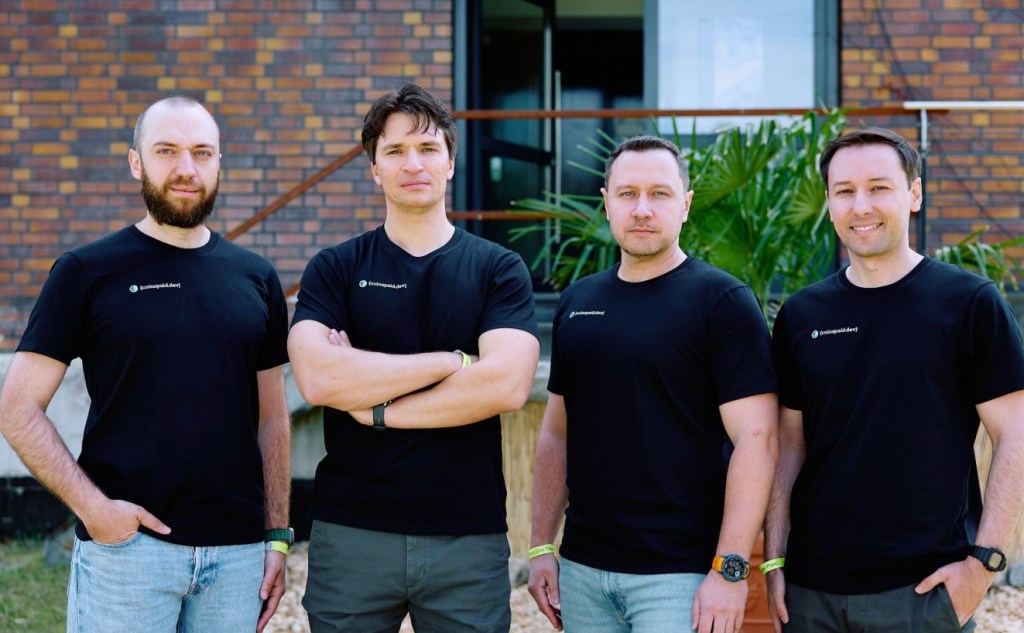
Coinspaid Dev enters this space with substantial technical experience. The company brings together more than 120 engineers across software development, infrastructure engineering, cybersecurity, research, and operations. Over the years, the team has worked on distributed systems supporting live environments across more than 20 blockchain networks.

This background gives the company a practical perspective on blockchain engineering. Building infrastructure in live production environments requires more than theoretical knowledge. Teams must manage high availability, system resilience, performance under heavy load, and secure coordination across multiple blockchain ecosystems.

These challenges grow more complex as blockchain adoption expands. Networks must handle increasing transaction volumes, higher operational demands, and more sophisticated security risks. Infrastructure teams are responsible for ensuring systems remain stable while adapting to rapid technological changes.

Several key areas define modern blockchain infrastructure engineering.

First is distributed systems architecture. Blockchain-related platforms often operate across multiple environments and networks simultaneously. This requires systems that can process data efficiently, maintain synchronization, and prevent failures from affecting overall performance.

Second is blockchain integration. Supporting multiple networks means dealing with different technical standards, APIs, and performance characteristics. Engineering teams must ensure these integrations work reliably under real-world conditions.

Third is cloud infrastructure and scalability. As user demand grows, systems need flexible infrastructure capable of scaling without compromising reliability or speed.

Finally, security and reliability engineering play a critical role. Blockchain infrastructure often supports financial operations, making resilience and cybersecurity essential priorities.

Coinspaid Dev aims to position itself as a dedicated engineering voice within this landscape. Rather than focusing solely on product delivery, the company also seeks to contribute practical insights to the broader industry conversation around blockchain infrastructure and operational excellence.

This approach was recently reflected during Berlin Blockchain Week 2026. Alexey Tulia, Executive Leader at Coinspaid Dev, presented at Futura Camp on the topic of infrastructure challenges in multi-chain environments. His presentation focused on bottlenecks and engineering trade-offs that become visible only when blockchain systems operate at scale.

Such discussions highlight an important reality: progress in blockchain technology depends not only on protocol innovation but also on infrastructure maturity. Strong infrastructure enables blockchain systems to move from experimentation to reliable large-scale adoption.

Coinspaid Dev’s launch signals growing recognition of infrastructure engineering as a core pillar of blockchain development. The brand may be new, but the experience behind it has been built over more than 11 years of real-world engineering work.

As blockchain ecosystems continue to mature, companies focused on infrastructure will likely play a larger role in shaping the future of digital assets and decentralized technologies. Reliable engineering, operational resilience, and practical expertise are becoming central to the next phase of blockchain growth.

Daily writing prompt
Hit 5,000 steps today and drop your achievement here — we’re cheering you on!

How Payment Platforms Are Rethinking Compliance in the AMLA Era

Regulatory compliance in payments is no longer just a legal or operational concern. Increasingly, it has become an infrastructure issue — one that directly affects how quickly financial platforms can adapt to new rules and maintain business continuity.

As outlined by Dataconomy, the launch of Europe’s Anti-Money Laundering Authority (AMLA) marks a major turning point in how regulators approach financial crime oversight and compliance enforcement across the European Union.

AMLA officially began operations in Frankfurt in July 2025 and represents a significant shift toward a unified anti-money laundering framework across EU member states. Rather than dealing with fragmented national rules, payment platforms now face increasingly harmonized requirements for customer verification, beneficial ownership checks, sanctions screening, and risk management. For companies operating across multiple jurisdictions, this creates a new level of complexity.

The core challenge is no longer simply understanding regulations. It is the ability to implement regulatory changes quickly and consistently across systems. This is where infrastructure becomes critical.

Many large payment platforms still rely on fragmented compliance systems built separately by different product teams. One team may manage onboarding verification, another handles sanctions screening, and a third oversees transaction monitoring. While this model can work in early growth stages, it becomes inefficient and risky at scale.

The problems typically appear in several areas:

  • duplicated compliance processes across products
  • inconsistent implementation of regulatory rules
  • slow adaptation to new requirements
  • increasing operational costs due to manual review

When regulatory changes occur, each team often has to update its systems independently. This creates delays, inconsistencies, and growing operational risk. In today’s environment, such inefficiencies can become costly. Regulators are increasingly willing to impose substantial penalties for systemic compliance failures, not just isolated mistakes.

This is why many organizations are shifting toward centralized compliance infrastructure.

Instead of treating compliance as a separate feature for each product, companies are building shared platforms that manage core regulatory functions across the organization. These platforms typically support identity verification, risk scoring, transaction monitoring, and sanctions screening through a unified system.

A centralized model changes how compliance works in practice. Regulatory logic becomes configurable rather than manually rebuilt for every product. When new rules appear, updates can be applied across multiple services more efficiently. This significantly reduces implementation time and improves consistency.

Vendor integration also plays an important role. Many compliance functions — such as biometric verification, document validation, or sanctions screening — depend on third-party providers. The challenge is not whether to use vendors, but how to integrate them effectively.

Modern compliance platforms increasingly rely on modular architecture. This means external tools can be added, replaced, or updated without disrupting core systems. The platform itself retains control over decision-making logic, while vendors provide specialized capabilities.

This approach offers two major benefits. First, it improves flexibility across different markets with varying regulatory requirements. Second, it helps platforms respond faster to changes without rebuilding infrastructure from scratch.

However, technology alone does not solve the problem.

One of the biggest barriers to compliance transformation is organizational adoption. Product teams often resist migrating to centralized systems because they already have working solutions, face integration risks, or prioritize other business objectives.

Successful adoption depends on treating internal platforms like products. Teams need flexible APIs, strong documentation, clear onboarding support, and proven value. Organizations that invest in usability and integration experience tend to achieve better long-term adoption.

AMLA increases the urgency of this shift, but the broader lesson extends beyond Europe. Global payment regulation is becoming more complex, more coordinated, and faster-moving. Markets worldwide are introducing stricter rules around anti-money laundering, fraud prevention, and customer verification.

In this environment, competitive advantage increasingly depends on adaptability.

The strongest payment platforms will not necessarily be those with the largest compliance departments. Instead, they will be the organizations with infrastructure designed to absorb regulatory change quickly, efficiently, and at scale. Compliance is no longer just about policies — it is becoming a core architectural capability.

Daily writing prompt
Hit 5,000 steps today and drop your achievement here — we’re cheering you on!