REASON AND IDENTITY

Amartya sen, renowned Indian economist, nobel
laureate(1998) contributed in welfare economics
and social choice theory. India has a long and
multifaceted history of argumentation and public
reasoning. In his magnificent book The
Argumentative Indian: writing in Indian culture,
history and identity. Amartya sen provides this
history with a global context. Public reasoning is
fundamental to both democratic politics and
secular constitutional arrangements, and it is no
accident that India, with its extensive traditions of
tolerance and the admission of dissenting voices
in public discourse.
The chapter named ‘ Reach of Reason’ in which
Amartya sen analyze WB Yeat’s ‘The Geneology
of Morals’, Jonathan Glover’s views, Nietzsche’s
scepticism the writer reached reason and
enlightenment process. He advocates the
possibility of reasoning is a strong source of
discipline confidence in a world darkened by
horrible deeds. We can reason about the right way
of perceiving and treating other people, other
cultures, other claims, and different grounds for

3
respect and tolerance. We can also reason about
our own mistakes and try to learn not to repeat
them. For example, the Japanese Novelist and
visionary social theorist Kenzaburo Oe argues
powerfully that the Japanese nation, aided by an
understanding of its own ‘history of territorial
invasion.’
Intellectual enquiry, is needed to identity actions
and policies that are not evidently injurious but
which have that effect for example, famines can
remain unchecked on the mistaken presumption
that they cannot be averted through immediate
public policy. According to Sen, two pillars of
Enlightenment thinking are sometimes wrongly
merged and jointly criticized: the power of
reasoning, and the perfectability of human nature.
In his view, values such as tolerance, liberty and
reciprocal respect have been described as ‘ culture
specific’ and basically confined to western
civilization. He called this is the claim of ‘ cultural
boundary’.
Sen refers to that what Clifford Geertz has called
‘ culture war’, the subject of ‘the reach of reason’
related to another theme, which had been
important in the anthropological literature. He
sures that the other Indian classical authors who

4
emphasized discipline and order rather than
tolerance and liberty, for example Kautilya in the
fourth century BCE( in his book Arthsastra
translatable as ‘ Economics’. But western classical
writers such as plato and st Augustine also gave
priority to social discipline. He adds that the such
classifications based on the substance of ideas,
different from theises based on culture or region.
One consequence of western dominance of the
world today is that other cultures and traditions are
often identified and defined by their contrasts with
contemporary western cultures or example, Indian
religious literature such as Bhagavad Gita or the
Tantric texts, which are identified as differing from
secular writings seen as ‘western’,elicits much
greater interest in the West than do other Indian
writing, including India’s long history of heterodoxy.
He supposes that the Kamasutra, in which western
readers have managed to cultivate an interest.
When it is thus ‘defined by contrast, divergence
with the West becomes central. Take, for example,
the case of ‘Asian values’, often contrasted with
‘western values’.
Sen is showing how other parts of the world
differ from the West can be very effective and can
shore up artificial distinction. We may be left

5
wondering why Gautama Buddha, or Laozi or
Ashokan or Gandhi or sun Yat-sen was not really
an Asian. And we have a question of why did
Maimonides,in fact, get support as well as an
honoured position at the court of the Muslim
emperor who fought valiantly for Islam in the
crusades. Sen cites about the Emperor Akbar, that
‘the tradition of secularism can be traced to the
trend of tolerant and pluralist thinking that had
begun to take root well before Akbar. For example,
in the writings of Amir Khusrau in the fourteenth
century as well as in the ang non-sectarian
devotional poetry of Jabir, Nanak, Chaitanya and
others. He also practised as he preached –
abolishing discriminatory taxes imposed earlier
Muslims, inviting many Hindu intellectuals and
artists into his court, and even trusting a Hindu
general, man singh, to command his armed force.
Akbar made in his defence of a tolerant
multiculturalism concerns the role of reasoning.
Akbar’s analyses of social problems illustrate the
power of open reasoning and choice even in a
clearly pre-modern society.
Akbar was, for example, opposed to child
marriage. He argued that ‘the object that is
intended’ in marriage ‘is still remote’, and there is

6
immediate possibility of injury’. There was good
sense in Akbar’s insistence that a millenial
occasion is not only for fun and festivities. Akbar’s
emphasis on reason and scrutiny serves as a
reminder that ‘cultural boundaries’ are not is
limiting as it’s sometimes alleged (as, for example,
in the view, discussed earlier,that ‘justice’, ‘right’,
‘reason’, and ‘love of humanity’s, western values).
Many features of the European Enlightenment can
be linked with questions that were raised earlier-
not just in Europe but widely across the world.
In the chapter named ‘Secularism and it’s
Discontents’, Sen describes about the Indian
secularism. He says that intellectual scepticism
about secularism is not confined to those actively
engaged in politics. The nature of secularism as a
principle calls for some clarification as well as
scrutiny. Secularism in the political as opposed to
ecclesiastical- sense requires the separation of the
state from any particular religions order. The first
view argues that secularism demands that the
state be equidistant from all religions- refusing to
take sides and having a neutral attitude towards
them. Secondly, view insists that the state must
not have any relation at all with any religion. In
both interpretation, secularism goes against giving

7
any religion a privileged position in the activities of
the state.
Sen analyzes that the role of secularism in
India, note must taken of its intrinsic
‘incompleteness’, including the problems that this
incompleteness leads too, as well as the
opportunities it offers. Scepticism about Indian
secularism takes many different forms. He
considers it in particular six distinct lines of
arguments such as The ‘ Non-existence’ Critique,
The ‘Favoriticism’ Critique, The ‘Prior identity’
Critique, The ‘Muslim sectarianism’ Critique, The
‘The Anti-modernist’ Critique and The ‘Cultural’
Critique. On the Non- existence Critique, overlooks
how crucial outside perceptions have historically
been to the identity of Indian’s themselves.

A RAISIN IN THE SUN

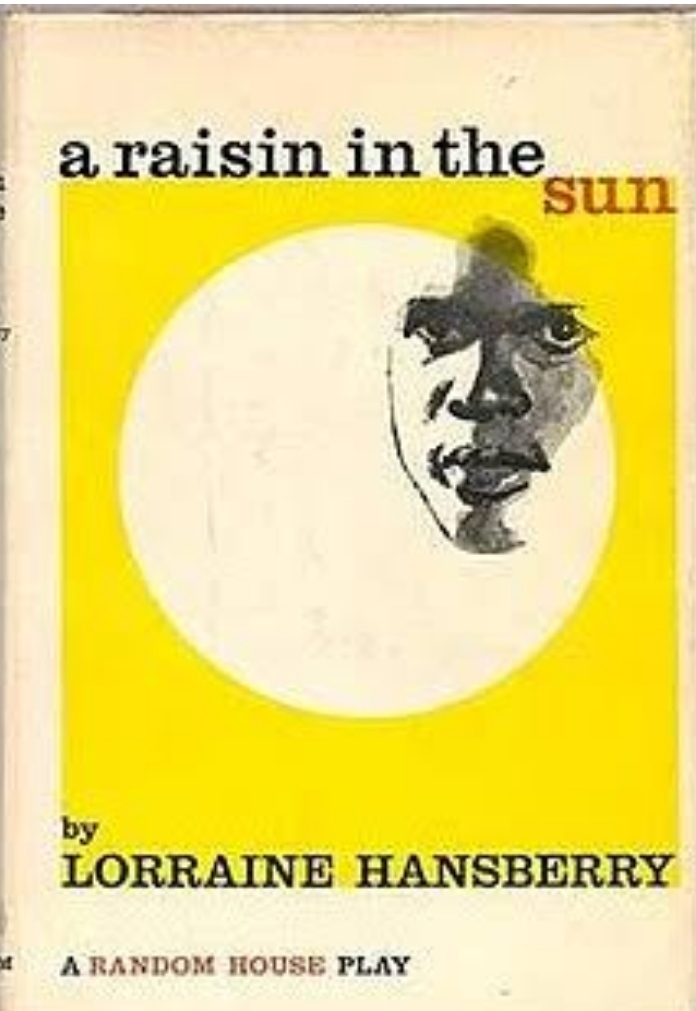
A Raisin in the Sun can be considered as a turning point in the American art.
Lorraine Hansberry was the first playwright to create realistic portraits of African-
American life. The play is recognizably autobiographical. Hansberry during her short
period of life has made a remarkable mark on the American theatre. The play
addresses so many issues important during the 1950s in the United States. The 1950s
are widely mocked in modern times as an age of complacency and conformism,
symbolized by the growth of suburbs and commercial culture that began in that
decade. America in the years following World War II roiled growing domestic and
racial tension. The stereotype of 1950s America as a land of happy housewives and
Black people content with their inferior status resulted in an up swell of social
resentment that would finally find public voice in the civil rights and feminist
movements of the 1960s.
A Raisin in the Sun was a revolutionary work for its time. Hansberry creates in
the Younger family one of the first honest depictions of a Black family on an
American stage, in an age when predominantly Black audiences simply did not exist.
Before this play, African- American roles, usually small and comedic, largely
employed ethnic stereotypes. Hansberry however, shows an entire Black family in a
realistic light, one that is unflattering and far from comedic. She uses Black
vernacular throughout the play and broaches important issues and conflicts such as
poverty, discrimination, and the construction of African- American racial identity.
Many people have called Hansberry a visionary and her writing prophetic. She
addressed issues unfamiliar at the time but soon to be at the forefront of discussion.

A Raisin in the Sun explores not only the tension between white and Black
society but also the strain within the Black community over how to react to an
oppressive white community. The play addresses difficult questions about
assimilation and identity. Through the character of Joseph Asagai, Hansberry reveals
a trend toward celebrating African heritage. As he calls for a native revolt in his
homeland, Hansberry seems to predict the anticolonial struggles in African countries
of the upcoming decades and also the inevitability and necessity of integration.
In her portrayal of Beneatha as a fiercely independent, self- assured woman,
determined to succeed in the medical profession, Hansberry addressed feminist
questions ahead of their time in A Raisin in the Sun. Through the character of
Beneatha, Hansberry proposes that marriage is not necessary for women and that
women can and should have ambitious career goals. The feminist theme is enhanced
by the portrayal of the two other women in the play, Lena Younger (Mama) and Ruth.
Mama is the epitome of the self-reliant woman, having worked side by side with her
husband to provide for the family and continuing to be its stabilizing force. Ruth, on
the other hand, seems to hold fairly traditional ideas about motherhood, but she finds
herself, without the counsel of her husband, considering abortion as an alternative to
bringing another child into the world. Thus Hansberry even approaches an abortion
debate, allowing the topic of abortion to enter the action in an era when abortion was
illegal.
A Raisin in the Sun remains important as a cultural document of a crucial
period in American history as well as for the continued debate over racial and gender
issues. The concepts of black beauty, generational conflict, class differences,
feminism and black Americans’ relationship to their African past have discussed
throughout the play. The play also marked the turning point of black artists in

professional theatre. It became a pivotal moment in American cultural history that
opened doors for Black artists, actors, and filmmakers. Thus we can consider A Raisin
in the Sun as a turning point in American art as it addresses so many issues of
importance during the 1950s in the United States.

COVID AND EDUCATION

Covid-19 has forced universities across India, and the world indeed, to suspend physical
classrooms and shift to online classes. In India, while this transition has been smooth for
most private universities, the public ones are still adapting.
As soon as the Covid-19 crisis broke out in India, in Kerala the universities like Kerala
University,Calicut University, MG university all announced the suspension of classes
until March 31. While others waited to see what would happen next, they started
exploring online classes. There are many education startups which got boost during this covid pandemic too.
But as a state like Kerala there are so many Limited conditions that disallow the students
from conducting online mode of education. While technology is enabling, it can also be
limiting, especially in India, and a state called Kerala where we both have and have not
anywhere basic access is a challenge. Not every student has a computer or fast-
streaming internet at home. This leads to issues with attendance and participation in
online sessions. A survey revealed that 100per percent of students were accessing the
materials through the mobile phone where there may not be full data in there phone as
a result they are not able to download material sent by the institute or study online. As a
result around 3 7.5 % students are only studying their online material and 37.5
percentage of students are not able to study the online materials and 25 % of the student
are not even aware of the materials.

Only small percentage of students can only able to
access the materials about 62.5 percentage of students cant able to access the materials
due to the network connectivity problem and around 12.5 per cent due to the insufficient
data and around 12.5 % is due to the unfavorable home conditions that they have and
12.5% they have stress due to the inability to access the materials on time percent of
them had internet connection good enough for streaming real-time lectures. In the
survey about 75 percentage of students have one to five hours online classes are
conducted and about 12.5 percentage of students have for 10 to 15 hours online classes
are conducted in a week as a result of this this online classes this situation of having
stress for the students is highly because about 75 percentage of the students reported
that they have more stress than the offline classes and only 12.5 per cent of the students
said that they have less stress because maybe these students have good favourable
condition at the home and most of the students reported that they have many stress due
to the unfavorable conditions at the home. Most of the students have opted for the online
mode of classes around 50% is to talk about the online mode only 25% is about the
record class. The teacher cares through the online mode of class and in this scenario 62
percent of students have disagreed and 12.5 percent of students have strongly with the
second because the Teacher cannot ensure the full participation of the student in a class.
Most of the students and parents are also feeling tensions about the online conduct of the

exam because in online conduct of the exam the questions are of objective type with the
students not able to write the full answers and the 62.5 percent of students have told that
they are not preparing the objective type of exams. Another important thing that make
the students keep alive and Happy was that of the bonding with their classmates but this
Covid time has destroyed and or the bonding with the classmates in the online platform
37.5 % of students are reported that they are Adjusting for the time being and 50
percentage of reported that they are not satisfied and the 12.5% is a of said that they
have maybe the students were be a group of students who have high network
connectivity and good technology accessibility. Another survey they reported that the
students reported that 87.5%says that online education destroyed their physical health.
These are evidence from the survey which is given by the students from the different
colleges in Kerala.

It is clear that this pandemic has utterly disrupted an education system that many assert
was already losing its relevance. In his book, 21 Lessons for the 21st Century, scholar
Yuval Noah Harari outlines how schools continue to focus on traditional academic skills
and rote learning, rather than on skills such as critical thinking and adaptability, which
will be more important for success in the future. Could the move to online learning be
the catalyst to create a new, more effective method of educating students? While some
worry that the hasty nature of the transition online may have hindered this goal, others
plan to make e-learning part of their ‘new normal’ after experiencing the benefits first-
hand.

LAGUNA LANDSCAPE

Ceremony is a novel written by Leslie Marmon Silko ( Laguna pueblo). The
Laguna Pueblo is a federally recognised tribe of Native American Pueblo people
in west central New Mexico, near the city of Albuquerque, in the United States.
Part of the Laguna territory is included in the Albuquerque metropolitan area.
The name Laguna is Spanish meaning small lake and it derives from the lake on
their reservation. This body of water was formed by an ancient dam that was
constructed by the Laguna people.
The people of Laguna have a long history of residing in and farming the Rio San
Jose in west central Mexico. Laguna history begins long before the advent of
written records in the Southwest. It is a common misconception that the pueblo of
Laguna began in 1699, at the time of construction of the Mission. However,
research of archaeological sites and an anthropological analysis of the Laguna
oral history have firmly proven that the people have inhabited the area ranging
from 6500 B.C. to the present.
The Pueblo of Laguna has a well established Tribal Law system. The Pueblo of
Laguna have participated as a “weed and seed” tribe. This department of Justice
program studied the enforcement of law and effectiveness of social programs on
Native African lands.
Coming to the novel Ceremony, it remains one of the most profound and moving
works of Native American literature, a novel that is itself a ceremony of healing.
Tayo, a second world war veteran of mixed ancestry, returns to the Laguna
Pueblo Reservation. He is deeply scarred by his experience as a prisoner of the
Japanese and further wounded by the rejection he encounters from his people.
His return to the Laguna Pueblo Reservation only increases his feeling of
estrangement and alienation, a kind of post traumatic stress syndrome.While
other returning soldiers find easy refuge in alcohol and senseless violence, Tayo
searches for another kind of comfort and resolution. Tayo’s quest leads him back
to the Indian past. Only by immersing himself in the Indian past, it’s traditions,
beliefs about witchcraft and evil, and to the ancient stories of his people made
him some relief . The search itself becomes a ritual, a curative ceremony that
defeats the most virulent of afflictions despair. Masterfully written, filled with the
somber majesty of Pueblo myth, Ceremony is a work of enduring power.
Importantly for Tayo’s health, he has returned to his homeland, the place of his
birth and upbringing. From the depths of his physical, psychic, and spiritual

disease, Tayo recovers his health throughout the course of the novel in a
ceremony of accretion and remembrance. Tayo re-learns how to interact with the
landscape in healthy and holistic ways. In the novel we can see Tayo’s improving
relationship with nature and demonstrate why that relationship is so important to
his health.
Inorder to understand Tayo and his relationship to the landscape in the novel we
should first explore more general Native American perspective on the
environment. Many of the indigenous cultures of North America perceive their
relationship with the natural world. While these Native Americans acknowledge
the uniqueness of each individual, they simultaneously perceive humans as
equal, intimate, and integral parts of the natural world. This perspective contrasts
with the historically predominant Euro American view point of human dominion
and control over the environment, this position asserts that humans are distinct,
separate, and superior to the rest of the natural world. On the other hand, the
dominant Native American attitude towards nature, or mother earth as it is often
termed, strongly supports the conjointment of self with non- self, humans are not
some distinct entity separated from or superior to the organic, physical world.
Many Native Americans, including the Navajo and the pueblo Indians, neither
construct a hierarchy of natural elements or entities, not do they perceive a
“boundary” between humans and the rest of the natural world.
Laguna Relationships with the Land
The Laguna people consider themselves intimately connected to the
environment. In her influential work The Feminine Landscape of Leslie Silko’s
Ceremony, the Laguna critic Paula Gunn Allen contrasts the dominant western
perspective of authority and control with the Laguna Pueblo people’s more
equitable relationship claiming “the earth is being as all creatures are also being :
aware, palpable, intelligent and alive”.
Silko herself collapses any inferred separation between characters and
landscape pointing out that “the land and the sky and all that is within them – the
landscape – includes human beings”. Adding that “interrelationships in the Pueblo
landscape are complex and fragile, ” Silko points to the vagaries of the weather
and the harsh New Mexican desert as primary reasons her Laguna ancestors
had been so aware of, involved with, and curious about their homeland.
“Survival” , Silko claims, “depended upon harmony and corperation not only
among human beings, but also among all things- the animate and less animate,

since rocks and mountains were known on occasion to move”. Because the
Laguna people have lived in the difficult landscape of west- central New Mexico,
they have learned to work together with their surroundings in order to sustain life,
striving to maintain balance and harmony.

THE SOUND AND THE FURY

The Sound and the Fury, novel by William Faulkner, published in 1929,
that details the destruction and downfall of the aristocratic Compson
family from four different points of view. Faulkner’s fourth novel, The Sound
and the Fury is notable for its nonlinear plot structure and its unconventional
narrative style. William Faulkner’s early work was poetry, but he became
famous for his novels set in the American South, frequently in his fabricated
Yoknapatawpha County, with works that included The Sound and the Fury, As
I Lay Dying and Absalom, Absalom! His controversial 1931
novel Sanctuary was turned into two films, 1933’s The Story of Temple
Drake as well as a later 1961 project. Faulkner was awarded the 1949 Nobel
Prize in Literature and ultimately won two Pulitzers and two National Book
Awards as well. The story is told in four chapters by four different narrators:
Benjy, the youngest Complain son: Quentin, the oldest son : Jason, the middle
son: and Faulkner himself, acting as an omniscient, third- person narrator who
focuses on Dilsey the Compson’s servant.
The chapter April sixth 1928 starts with the morning of good Friday,
the day before Benjy’s narration takes place. Jason Compson IV is in the
Compson house, fighting with his mother and with his niece, Miss Quentin.
Jason thinks back on his family and his own personal history. His sister Caddy’s
marriage to Herbert Head crumbled in 1911, when it became apparent to
Herbert that Caddy’s unborn child was not his. Mrs. Compson refused to take
Caddy in, but Mr. Compson and Dilsey saw to it that the family took in Caddy’s
child, Miss Quentin. Jason assumed control of the household when Mr.
Compson died of alcoholism. Herbert Head had offered Jason a job at his bank,
but rescinded that offer when he divorced Caddy. This retraction left Jason no
choice but to work at the local farm-supply store. Though Mrs. Compson hopes
Jason will own the store one day, Jason is bitter about having lost his bank job

and having been forced to work in the farm-supply store. Now in his mid-
thirties, Jason has grown into a devious and mean-spirited man. He has

concocted an elaborate scheme to pocket the money Caddy sends him to support
Miss Quentin’s upbringing. Mrs. Compson’s poor eyesight and blind love for

Jason have prevented her from detecting his scheme. So far, Jason has stolen
nearly fifty thousand dollars from his sister and niece over the course of fifteen
years. He uses this extra money to play the cotton market and to pay for a
prostitute in Memphis. Caddy is the only one who distrusts Jason and suspects
that he is scheming. At the end of the chapter, Jason sees Miss Quentin go by
with a red tie man. Miss Quentin angrily asks Mrs Compson why Jason behaves
so hostile to her? Then Quentin says that she misbehaves because Jason made
her that way. These events are occurring in this chapter.
The Fourth chapter April Eighth,1928 starts with the Easter Sunday.
Dilsey walks up to the Compson house and manages to get the kitchen up and
running despite the interference of Mrs. Compson and Luster. Luster tells
Dilsey that Jason is angry because someone has broken the window in his room.
Benjy eats his breakfast and whimpers. Jason emerges and testily sends Dilsey
to call Miss Quentin to breakfast. There is no answer from Miss Quentin’s
room. Jason suddenly springs up the stairs, seizes his mother’s keys, and
unlocks Miss Quentin’s door. The window is open and Miss Quentin is gone.
His papers are there, but all his money is gone. Jason calls the police and asks
them to send a deputy to the house. He storms out. Meanwhile, Dilsey takes
Luster, Frony, and Benjy to an Easter service at the local Black church, where
Reverend Shegog gives a boisterous sermon about the life and death of Christ.
When they return to the house, they find that Jason still has not returned. Jason
has gone to see the sheriff to demand help in tracking down Miss Quentin.
At the end of the chapter, Jason comes back to town. Luster
is driving Benjy in the carriage. As they arrive at the cemetery, Luster deviates
from the usual course T.P. used to take, and Benjy begins howling at the
unfamiliar route. Jason comes across Luster and Benjy. He hits Luster across
the head, ordering him never to turn off the route Benjy is used to taking, and
strikes Benjy in an attempt to quiet him. Benjy continues to howl. However, as
Luster drives Benjy home, the familiar façades, doorways, windows, signs, and
trees of the town of Jefferson all appear to Benjy in their ordered place, and he
finally quiets.

THE STONE ANGEL

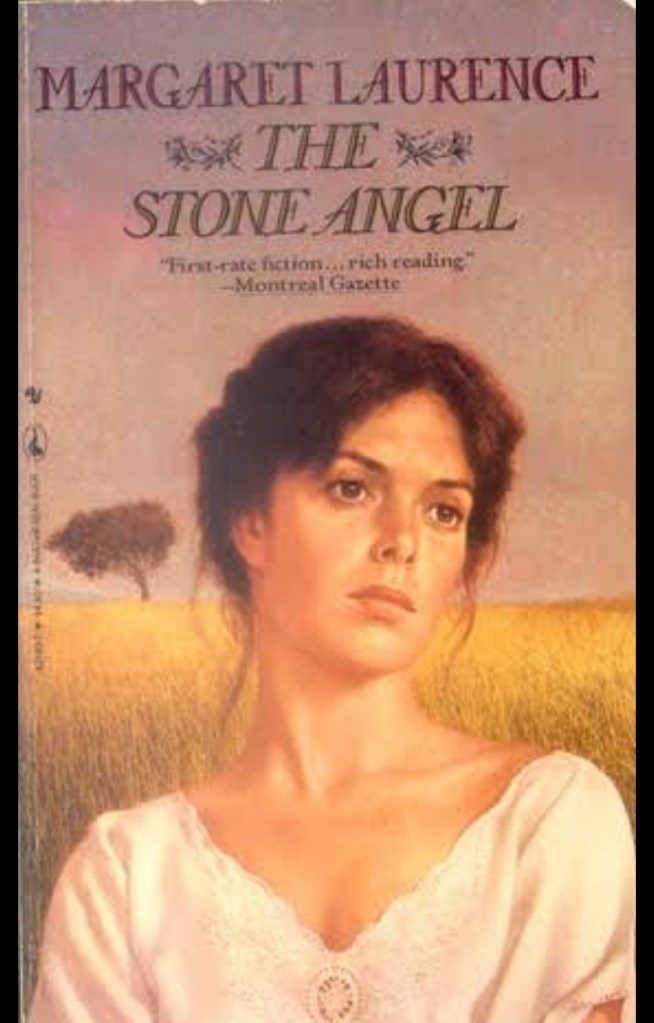
The Stone Angel is a novel by Canadian writer Margaret Laurence. The novel was first published in 1964 by McClelland and Stewart This novel is one of the best-known works of Laurence’s series of five novels that is set in the fictitious town named as Manawaka, Manitoba. The Stone Angel narrates the story of Hagar Currie Shipley, presently 90-year-old Hagar struggles against being put in a nursing home, which she sees as a symbol of death. This narrative alternates with Hagar looking back at her life.

Pride

Pride is the most prevailing theme of The Stone Angel is that of pride. Indeed, Hagar’s great pride helps Her to cope with the many difficulties she faces throughout her life. This pride, however, also separates And detaches her from others resulting in several strained relationships which she was unable to mend.As Hagar comes to realize towards the end of the book, most of the problems in her life stem from her excessive pride. Her sense of superiority is behind her ill-treatment of others, her refusal to acknowledge when she is wrong, and her inability to compromise with others or to see their point of view. Her behavior throughout the story leads to the destruction of several long-term relationships that might otherwise have sustained her and enriched her life.

Ultimately, her illusory superiority only leads to her own suffering. This point is emphasized in the scene where she is in the hospital and is visited by Mr. Troy, who sings a hymn about rejoicing for God. Previously, Hagar has been reluctant to pray, as belief in a higher power requires the relinquishing of pride and embrace of humility. Yet at this moment, Hagar is finally moved to tears, made to viscerally realize that it is her pride that has imprisoned her throughout whole life, blocking her from the true purposes of life: love and happiness.

Womanhood

The complicated duties and burdens of womanhood are laid bare over the course of The Stone Angel as the elderly Hagar Shipley reflects on her life. A woman’s options in life are often restricted to marrichildbearing, and the other sorts of “feminine” skills that Hagar learns at finishing school. For her whole life, Hagar is dependent on a man, whether it is her father, her husband, or, later, Mr. Oatley, for whom she works as a housekeeper. The roles of wife, mother, and daughter do not satisfy Hagar. She refuses to be the heiress to her father’s business. She views sexual intimacy with her husband as a chore and burden to bear. Hagar is alienated from her own mothering qualities, having lost her own mother as a new-born. Her emotional rigidity makes it impossible for her to nurture others, at times even becoming apathetic towards her own children. This all contributes to Hagar’s sense of always waiting for something more in life and not knowing who she is.

Memory and the Past

The novel consists of alternating passages from a past and a present, both of which exist within Hagar’s Mind. She is either remembering or perceiving the world around her with an old woman’s suspicious  Eyes which give her observations their special twist and colour. It opens with Hagar recalling the stone Angel in her rich and racy inner prose, the prose of thoughts readers are expected to believe are addressed To them. And then Hagar describes the cemetery and suddenly switches to the present. From this Beginning until about the last quarter of the book, The Stone Angel maintains parallel chronological patterns, the present following sequentially the last days of Hagar’s life, and the flashbacks following, Also sequentially, the course of her life as it appears in her memories. Hagar’s journey through her own memories is painful and burdensome though she wishes she could change the mistakes of her past, she cannot. Towards the end of the novel, Hagar at last accepts the permanent and unchangeable nature of the past, knowing that to continue lingering in memory and shut out her present moment will only lead to spiritual “defeat.”

Resentment

Hagar resents what she perceives to be interference from other people and deliberate attempts by them to control her or to thwart her will. As a young and unmarried woman, she wishes to become a schoolteacher, but her father vetoes the idea, trying to push her into managing the accounts for the store he owns. Whereas her father sees an opportunity for Hagar, she sees only a short-sighted attempt by him to ruin her career plans for his own personal gain. She marries Bram Shipley partly out of resentment, as she knows her father believes Bram to be an unsuitable and unworthy husband. When Hagar insists on marrying him, her father cuts her off without a cent and changes his will so that she will inherit nothing. Jason Currie thus develops his own resentment towards his daughter, whom he refuses to see for the rest of his life. The resentment of these characters stems from their pride and need to be right, which end up isolating them from their family.

CEREMONY

  Leslie Marmon Silko is an American writer. A Laguna Pueblo Indian woman, she is one of the prominent figures in the First Wave of the Native American Renaissance. She is a widely known novelist and a poet, her career is significantly distinguished by making people aware of ingrained racism and white cultural imperialism, and a commitment to support women’s issues. The clash of civilizations is a continuing theme in the modern Southwest and of the difficult search for balance that the region’s inhabitants encounter. Silko explains that the Laguna view on the passage of time is responsible for this condition, stating, “The Pueblo people and the indigenous people of the Americas see time as round, not as a long linear string. If time is round, if time is an ocean, then something that happened 500 years ago may be quite immediate and real, whereas something inconsequential that happened an hour ago could be far away.”

Ceremony is a novel by her which was published in 1977.  The book is constructed through a series of flashbacks, epic poetic retellings of traditional Indigenous stories, moments of immediacy and hallucinations. The title is highly significant as it shows the inclination to the oral traditions and ceremonial practices of the Navajo and Pueblo people. The Laguna Pueblo is a federally recognized tribe of Native American Pueblo people in west-central New Mexico. The people of Laguna have a long history of residing in and farming along in west-central New Mexico. Laguna history begins long before the advent of written records in the Southwest. The Pueblo of Laguna has a well-established Tribal Law system.

The novel reveals the story of Tayo who is an injured man returning World War II veteran of mixed Laguna-white ancestry following a short stint at a Los Angeles VA hospital. He is returning to the poverty-stricken and dispossessed Laguna reservation, and he suffers from “battle fatigue”. He is haunted and worried by memories of his cousin Rocky who died in the struggle during the Bataan Death March of 1942. Initially he found liberation in alcoholism so that he could forget his pain and distress. His Old Grandma and medicine-man Betonie help him through native ceremonies to develop a greater understanding of the world and his place as a Laguna man.

Ceremony has been called a Grail fiction, wherein the hero overcomes a series of challenges to reach a specified goal. Silko’s writing skill in the novel is deeply rooted in the use of storytelling that passes on traditions and understanding from the old to the new.

Ceremony gained immediate and long-term acceptance when returning Vietnam war veterans took to the novel’s theme of coping, healing and reconciliation between races and people that share the trauma of military actions. She explores several other important aspects through Tayo’s struggles with alcoholism and healing after returning from World War II , the Pueblo myths, and the interactions between these two stories.

The purpose of ceremonies is the transformation of someone from one condition to another as in Tayo’s case the transformation from diseased to healing. Ceremonies are ritual enactments of myths which incorporate the art of storytelling and the myths and rituals of the Native Americans.  They are important for Tayo’s identity construction as one can see through his mental development after his experience with Betonie and the ceremony.

“Healing” means the revival of the self and the return to the roots and marking one’s origin.  One important part of the process of healing is rejecting witchery. Tayo is perplexed in between multiple worlds that is between Laguna culture and white culture, and between witchery which is seen as a force opposite to creativity. Tayo rejects witchery when he refuses to drink alcohol his friends offer him. He does not only refuse to drink alcohol, he also distances himself from his old friends and a life full of violence. The search for the Laguna culture and its rituals also helps him to deal with turning away from witchery. He respects the rituals of his culture by being open for the ceremonies which is another important aspect for his healing. Tayo is being taught spirituality by Betonie, this way he internalizes the Laguna culture. It is important that the Laguna community, e.g. his aunt, who tells Tayo to go to Betonie, helps Tayo with his healing, because that way Tayo can overcome the alienation he feels caused by him being half-breed. Betonie also helps Tayo to recover through ceremonies which relate Tayo’s American identity to his Laguna identity and therefore combines his past with his present. The fact that Tayo learns more about and experiences ceremonies is another important aspect which leads him to healing, because he learns about his culture.

The appreciation of the Laguna culture is essential for his healing. He still needs a spiritual ceremony after the white man’s medicine, which indicates that he needs to experience his old and his new culture. When Tayo covers the deer’s dead body at the deer-hunting, which is a gesture performed out of respect, he shows that he initiated Laguna myths, because Laguna mythology connects all living creatures. Through his connection with his lover Ts’eh, Tayo is able to move forward in his healing, not only in body, but also in his spirit as he connects to the divine feminine within himself. After all of these experiences Tayo’s dreams no longer haunt him, because he learns to deal with his past and he is able to link the American to the Laguna culture .The cattle function as spirit guides, which leads him to healing because through them he learns to forgive himself for the drought.

Throughout the novel Silko delves into the complexities of being caught between multiple world views and cultures. She focuses on the importance of blending the cultures, showing how Tayo can only regain health when he chooses how to identify, and by creating his own world that bridges the gap. Through Ceremony Silko invites the reader to take a look at the witchery within everyone, and points out the steps one can take to create healing and wholeness.

THE CANTERBUERY TALES

SHORT ANALYSIS

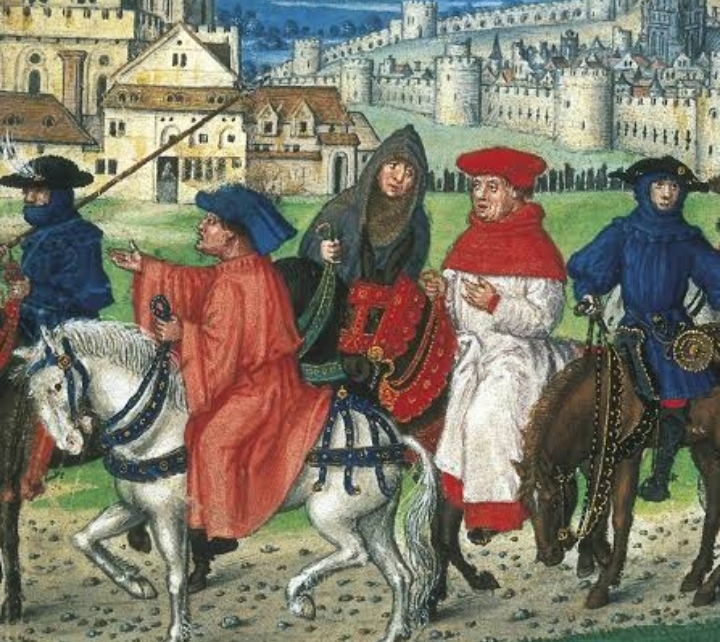
Geoffrey Chaucer was widely considered as the greatest English poet in the 14th century. His poem “Canterbury Tales” reflects his own age and forms a wonderful commentary upon the life in the Middle Ages.

           The group of pilgrims described in the Prologue  is itself an unequaled picture of the society of Chaucer’s time. During the Middle Ages, Church was a major part of everyday life. The church served to give people spiritual guidance. Chaucer introduced the characters which form the part of the society and represent various aspects of the society. The Prolgue is often referred to as a social chronicle. The thirty pilgrims set off to visit the relics of Saint Thomas Becket in Canterbury Cathdral, where they thank to the martyr for having helped them when they where in need. Chaucer alludes the 14th century England, in this period England saw the Great Famine, Black Death, catastrophic events that killed around half of England’s population. Chaucer employed the form of ‘estate satire ‘- a common literary genre in the Middle Ages -that classified people according to their occupation or position in society, with an accompanying list of flaws and virtues  associated with each category.

    The characters all came from different class backgrounds. Society in England is divide in to three estates:the Clergy, the Nobility and the Peasantry. The use of a pilgrimage as the framing device enabled Chaucer to bring together people from many walks of life: knight, prioress, monk; merchant, man of law, franklin, scholarly clerk; miller, reeve, pardoner; wife of Bath and many others. The Knight has the highest position among the pilgrims. Knight, Squire and yeoman represent the feudal chivalry of the time. Chaucer also represents the reigous order of medieval England through his representstion of the persons of some religious professions. They include ;Monk, Friar, Clerk, Parson, Pardoner, and Summoner.

The knight is the symbol of medieval world of chivalry. The Knight’s son, The Squire, who represents the new trends. The Knight participated in the religious wars or the The Crusades fought against infidels.The chivalric Knight were judged on the basis of the wars they fought for the religion and the old knight  falls in this group where as young Squire who loves singing, dancing, drawing and playing flute. The Knight serves in three broad areas; Sothern Spain, Northern Africa, the Eastern Mediterranean and Northen Europe. Each campaign was conduted for the expansion of both the Church and European civilization. The Squire represents the youth of all the ages.

HOUYHNHNMS

CHARACTER ANALYSIS

Houyhnhnms are a fictional race of intelligent horses described in the last part  of the novel. The word ‘Houyhnhnmn’ etymologically means ‘perfection of Nature’ .Houyhnhnms are rational equine beings and are masters of the land contrasting strongly with Yahoos. Here Swift uses anthropomorphism.The Houyhnhnm’s society is based upon reason and they have no religion .The master horse teaches Gulliver their language. Gulliver is impressed by their intelligence  and good behaviour.The Houyhnhnms have an orderly and peaceful society. They have a language and they speak clearly they act justly and they have simple laws.They had no word for lie. Houyhnhnms have also have a form art that is derived from Nature.They are untroubled  by greed, politics  or lust. They lives a life of cleanliness and exist in peace and serenity. Houyhnhnms live by the maxim “cultivate Reason  and be totally governed  by it”. According  to them the only word for evil is Yahoo.

       Houyhnhnms are untarnished  by the greedy, politically motivated or lustful intentions, that Gulliver  has observed in humankind. Houyhnhnm’s hooves are able to use tools or do farming work as humans do. They live upto 70-75 years and they usually die of old age. The Houyhnhnms train up their youth to strength, speed, and hardiness, by exercising them in running races up and down steep hills, and over hard stony grounds.Two principal virtues in Houyhnhnms culture  are friendship and benevolence. As a result  war is completely unknown in the Houyhnhnms culture. The Houyhnhnms believe that Nature and reason are sufficient guides for a reasonable animal.These are the reason why ,Gulliver  entered on a firm resolution never to return to humankind, but to pass the rest of his  life among these admirable Houyhnhnms, in the contemplation and practice of every virtue.

MASTER IN HOUYHNHNM’S LAND

The Houyhnhnm  who first discovers Gulliver and takes him into his own home. Wary of Gulliver’s Yahoo like appearance at first, the master was hesitant to make contact with him, but Gulliver’s ability to mimic the Houyhnhnm’s own words persuades the master to protect Gulliver. The master’s domestic cleanliness, propriety, and tranquil reasonableness of speech have an extraordinary impact on Gulliver. It is through this horse that Gulliver is led to revaluate the differences between humans and beasts and to question humanity’s claims to rationality.

YAHOO

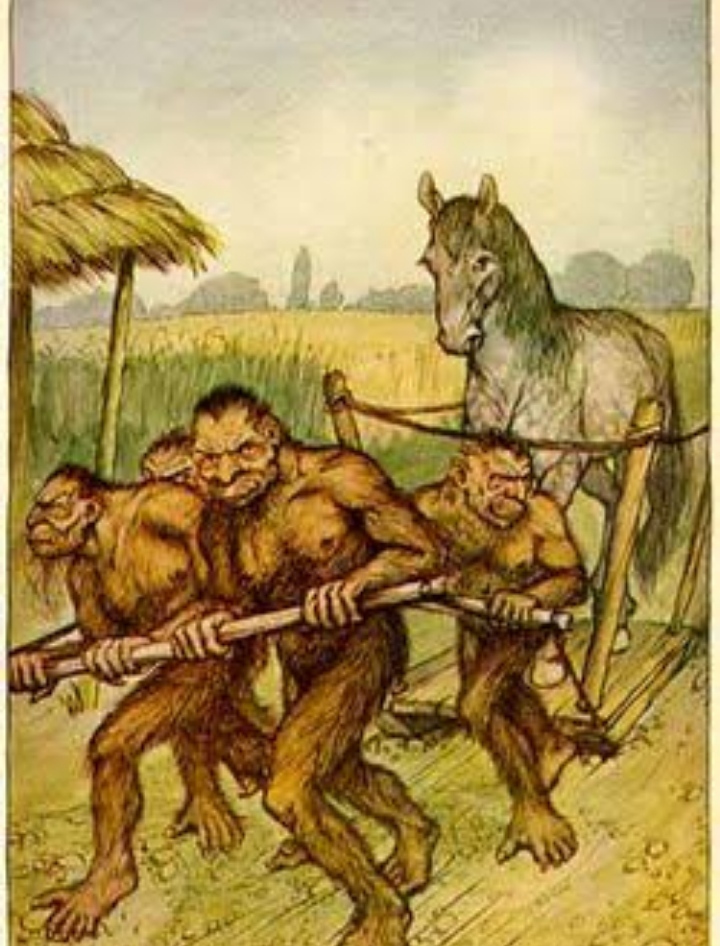
The term yahoo is a synonym for  a rude, noisy, or violent person.Yahoos are humanlike beasts who live in servitude to the Houyhnhnms.Yahoos seems to belong to various ethnic groups,as they  there are blond Yahoos as well as dark haired and read headed ones.They are naked filthy and extremely primitive in their eating habits.They are unteachable among all animals. They are cunning ,malicious,treacherous  and also revengeful. They are strong and hardy, but of a cowardly spirit, and by consequence, insolent, abject, and cruel. When Gulliver  thought of his family,  friends,  countrymen, or the human race in general, he considered them as they really were Yahoos in shape and disposition, perhaps a little more civilized, and qualified with the gift of speech; but making no other use of reason.Yet despite Gulliver’s   revulsion for these disgusting  creatures,he ends his writing referring to himself as a yahoo.

DON PEDRO DE MENDEZ

Don Pedro de Mendez is the  Portuguese captain who takes Gulliver back to Europe after he is forced to leave the land of Houyhnhnm.Don pedro is naturally benevolent and generous ,he offered Gulliver his own best suit of clothes. Gulliver meets his generosity with repulsion as he cannot bear the company of Yahoos .

JAMES BATES

An eminent  London surgeon under  whom Gulliver serves as an apprentice after graduating from Cambridge. Bates helps get Gulliver his first job as a ship’s surgeon and then offers to set up a practice with him. After Bates’s death, Gulliver has trouble maintaining the business, a failure. Bates is hardly mentioned in the travels.

WILLIAM PRICHARD

William Prichard is the master of the Antelope, the ship on which Gulliver embarks for the South Seas at the outset of his first journey, in 1699. When the Antelope sinks, Gulliver is washed ashore on Lilliput. No details are given about the personality of Prichard, and he is not important in Gulliver’s life or in the unfolding of the novel’s plot.

LAPUTIAN’S

CHARACTER ANALYSIS

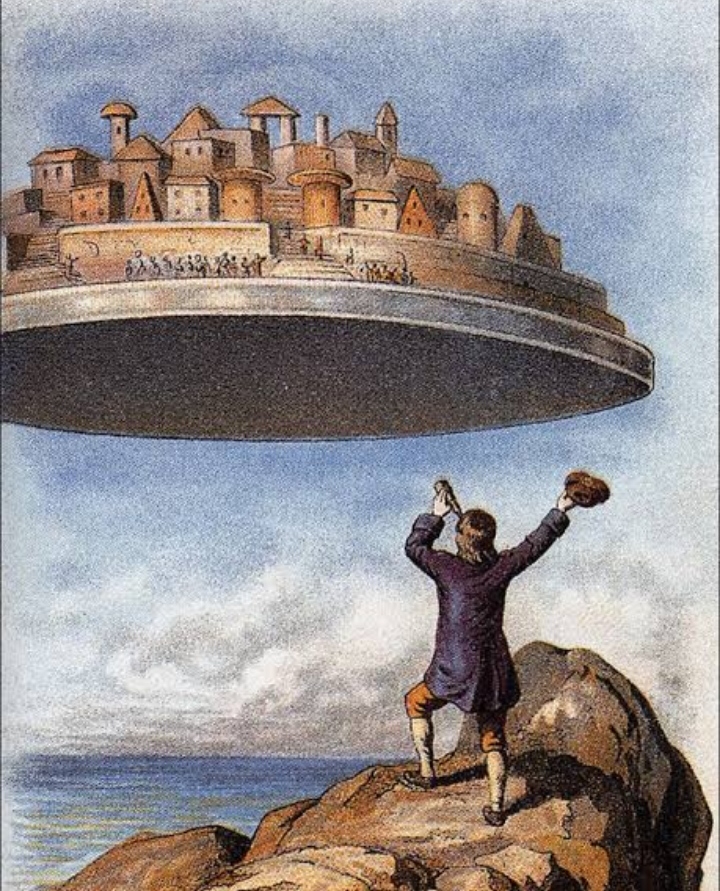
Laputian’s are the   absentminded intellectuals who live on the floating island of Laputa, encountered by Gulliver on his third voyage. The Laputans are parodies of theoreticians, who have scant regard for any practical results of their own research. During Gulliver’s stay among them, they do not mistreat him, but are generally unpleasant and dismiss him as intellectually deficient. They do not care about down-to-earth things like the dilapidation of their own houses, but worry intensely about abstract matters like the trajectories of comets and the course of the sun. They are dependent in their own material needs on the land below them, called Lagado, above which they hover by virtue of a magnetic field. In the larger context of Gulliver’s journeys, the Laputians are a parody of the excesses of theoretical pursuits and the uselessness of purely abstract knowledge.

THE KING OF LAPUTA

 The King of Laputa is a man of Mathematical obsession who explains the laws of his land to Gulliver. He thinks that the island below Laputa must obey the instructions and laws made by him,and if the people did not obeyed him, he would punish them.

LORD MUNODI

Lord Munodi  is a person of the first rank.He had been Governor of Lagado but was  discharged for insufficiency.King of Laputa treated him with tenderness and as a well meaning man.He fell from grace with ruling elite by counselling  an approach to agriculture and land management in  Lagado, an approach that was rejected eventhough it proved successful when applied to his own estate.

GOVERNOR OF GLUBBDRUBDRIB

 Governor of Glubbdrubdrib  has the power of calling  whom he pleases from the dead and commanding their service for twenty four hours.Glubbdrubdrib is the Island of sorcers and magicians.It is governered by the head of  a certain tribe,who  are all magicians. This tribe marries only among each other, and the eldest in succession is prince or governor.

KING OF LUGGNAG

Luggnagg is an island kingdom. Those who appear before the king are required to lick the dust on the floor of his throne room. The king is so pleased with Gulliver that he arranges for him to stay in the palace and gives him some money to spend.Infact the king shows his affection for Gulliver by giving him money and presenting a letter of recommendation for his voyage to Japan.

WILLIAM ROBINSON

William Robinson is a Cornish man and commander of the Hopewell.  He had always treated Gulliver  more like a brother, than an inferior officer.He is an honest man. William Robinson has commanded ships on which Gulliver has travelled before and always treated him well, even as an equal rather than a subordinate.

BROBDIGNAGIANS

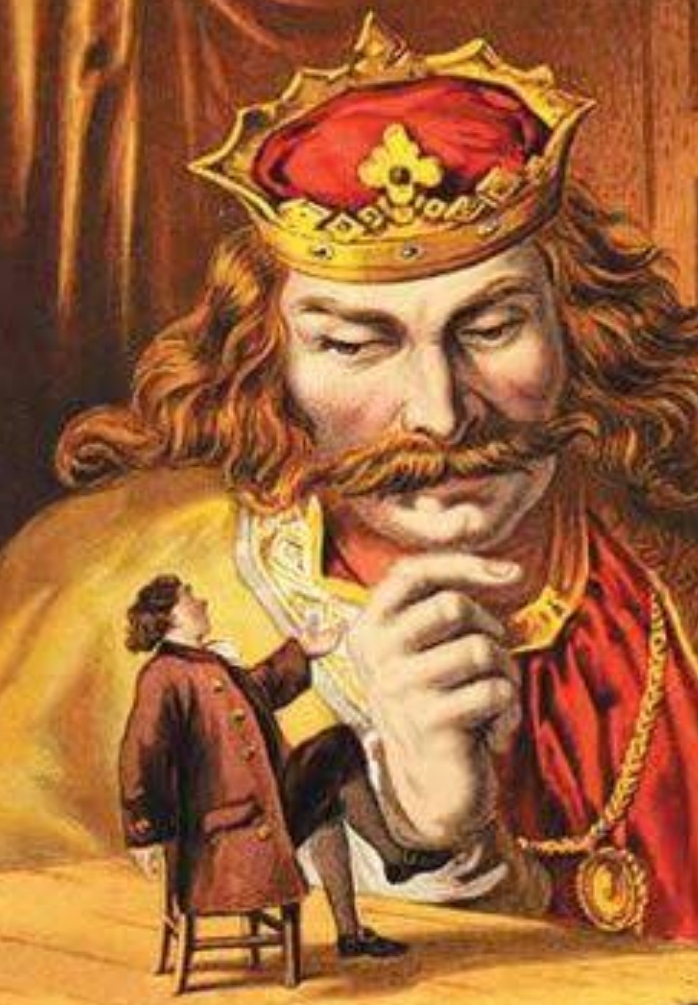
Brobdignagians are the giants  whom Gulliver meets on his second voyage. Brobdingnagians are basically a reasonable and kindly people governed by a sense of justice. Even the farmer who abuses Gulliver, at the beginning he is gentle with him. The farmer’s daughter, Glumdalclitch, gives Gulliver perhaps the most kindhearted treatment he receives on any of his voyages. The Brobdingnagians do not exploit him for personal or political reasons, as the Lilliputians do. The Brobdingnagians do treat Gulliver as a plaything. When Gulliver tries to speak seriously with the king of Brobdingnag  about England, the king dismisses the English as odius, showing that deep discussion is not possible for Gulliver here.

FARMER

 Gulliver’s first master in brobdignag.  The farmer speaks to Gulliver ,showing that he is willing to believe that the relatively tiny Gulliver may be as rational as he himself and treats him with gentlenss. However farmer puts Gulliver on display around brobdignag  which clearly shows that he would profit  from his discovery than converse with him as an equal.His exploitation of Gulliver  as a labourer, which nearly starves Gulliver to death,thus Gulliver’s health deteriorates.Generally farmer represents the average Brobdignagian of no great gifts or intelligence ,wielding an extraordinary power over  Gulliver simply by his virtue of his immense size.The farmer has  wife, three children and an old grandmother.He treats Gulliver as a slave.

GLUMDALCLITCH

Glumdaclitch  is farmer’s  daughter and she is nine years old. Gulliver called her ‘Glumdaclitch’, which is the word for ‘little nurse’ in their language.She is tender hearted amd taught Gulliver  many things. She gave him lessons  in their language.When queen discovers that no one is at court ,is suited to care for Gulliver ,she invites Glumdalclitch to live at court and she performs the function with great seriousness and attentiveness. She called Gulliver ‘Grildrig’, which means ‘little man’ in their language.According to Glumdaclitch Gulliver is a living doll ,symbolizing the general status Gulliver has in Brobdignag. She was a very talented and caring girl. She was quite concerned about him when her father’s greed to earn money by conducting Gulliver’s performances were having an adverse effect upon his health. She took Gulliver’s extra care after his life was in danger due to his small size. When a giant monkey abducted Gulliver, mistaking him for baby monkey, he got injured. Glumdalclitch nursed him back to health.

QUEEN OF BROBDINGNAG

 The queen of Brobdignag , who is so delighted by Gullivers beauty and charms she agrees to buy him from the farmer for 1000 pieces of Gold.Gulliver  was out of all fear of being ill treated , under the protection of so great and good empress. Gulliver  appreciates her kindness. Gulliver describes the queen as an ornament of Nature,darling of the world and the phoenix of the creation.Gulliver also found his spirit revived by the august presence of the queen of Brobdingnag.

KING OF BROBDIGNAG

King of Brobdignag  is well educated  and he is an expert in Mathematics and in Philosophy.He seems to be true intellectual ,well versed in political science and  among other disciplines .The king’s relation to Gulliver is limited to serious discussions about the history and institutions of Gulliver’s native land.

QUEENS DWARF

 The queen’s dwarf is generally malevolent and conceives a particular antipathy for Gulliver. He is whipped several times for mistreating the only man at court smaller than he is, a proceeding which only increases his dislike.

 Mr. THOMAS WILCOCKS 

Thomas Wilcocks is a captain  from Shropshire  and who saved Gulliver  from the bird  like  cage .He also entertained  Gulliver with great kindness  and comforted him.Thomas Wilcock is an educated person and he  have a good sense to understand others. He is an intelligent man who listens patiently to Gulliver’s story.

LILLIPUTIANS

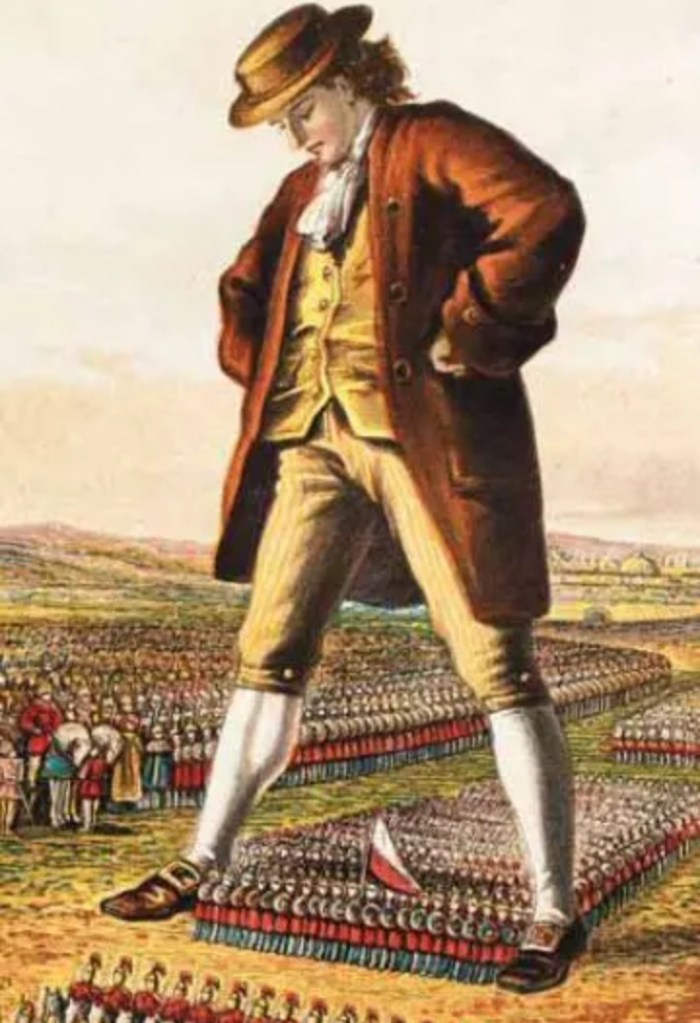
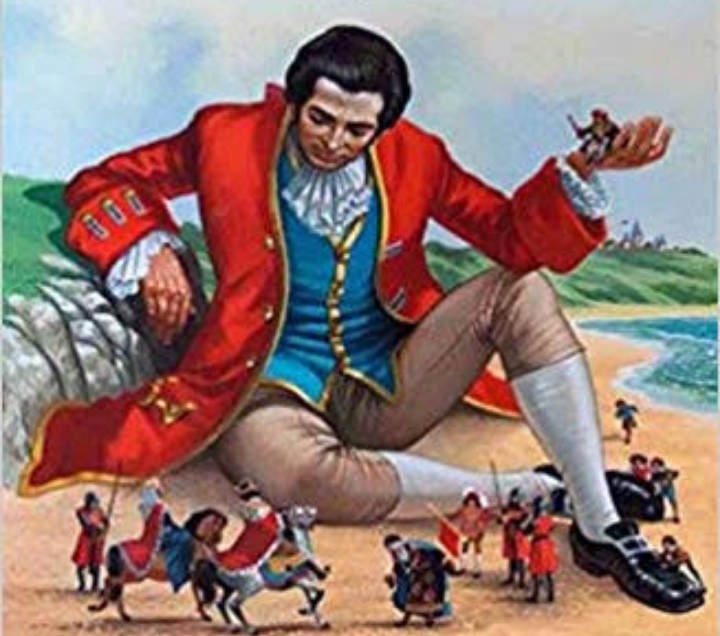
Gulliver describes Lilliputians  as ingenious people.They treated him with so much expense and magnificence. These people are most excellent Mathematicians, and arrived to a great perfection in Mechanics, by the countenance and encouragement of the emperor, who is a renowned patron of learning.Lilliputians  considered fraud as greater crime than theft.They always punish fraud with death. The nurseries for males of noble or eminent birth, are provided with brave and learned professors, and their several deputies. The clothes and food of the children are plain and simple. They are bred up in the principles of honour,justice, courage, modesty, clemency, religion, and love of their country. The cottagers and labourers keep their children at home, their business being only to till and cultivate the earth, and therefore their education is of little consequence to the them.Lilliputians are talented  engineers because  they have been able to inveny and construct  an enormous carriage.Lilliputians tests physical power  and agility, instead of moral power and reason to  determine who will hold its governmental offices.The laws of Lilliput are also very different  to English laws. They regard trade as very important  and they think that trade depends on honesty. Lilliputians are tiny people and Swift draws an analogy upon their physical size by linking that their smallness in character.

EMPEROR OF LILLIPUT

Emperor of Lilliput  is an excellent horse man.He is strong,masculine and all his motions are graceful and his deportment is majestic.He is twenty eight years and three quarters old. The Emperor has  good leadership qualities such as he frequently conducts councils inorder to debate about what course should be taken with Gulliver,because his diet is very expensive and might cause  a famine.As Gulliver made great progress in learning their language ,Emperor frequently  honoured him with his visits.He also gives permission to Gulliver to move around  in the kingdom only on the condition that he will not hurt anyone. The Emperor takes  wisest decisions  according to the advise of council.He strictly implemented  laws of kingdom.The emperor gives Gulliver the land’s highest honor,’Nardac’.He longed to reduce the whole empire of Blefuscu in to a province and to govern it by a viceroy.He is very ambitious and wished to become the monarch of the whole world.

               The emperor is also deceptive,when Gulliver goes away to visit Blefuscu,the emperor seems as though he remains Gulliver’s friend ; however ,the emperor with other malicious courtiers  plot how to  rid the kingdom of their giant.The emperor  accuse him of treason and plan to execute him upon his return to Lilliput.This shows that the emperor is savage,merciless and selfish.He clearly thinks of highly himself and much less of practically everyone else. We can understand that  the Emperor only  sees Gulliver in terms of what Gullliver can do to bring him more power .The emperor is also egocentric and acts much like a despotic ruler.He demands that his officials walk on tight ropes and perform other dangerous acts to obtain and keep their jobs . The emperor shows lack of appreciation  for Gulliver both saving his wife’s life in the burning castle  and for repelling an attack on Lilliput by impeaching him.The emperor loves war and really wants to enslave people of his neighbouring Island.When  Gulliver refuses  to help him destroy Blefuscus freedom ,the emperor starts to hate Gulliver.

FILMNAP

Filmnap is the treasurer in Lilliput,he had always been Gulliver’s secret enemy. He conceives a jealous hatred for Gulliver when he starts believing that his wife is having an affair with  Gulliver.He represented the low condition of treasury inorder to dismiss Gulliver from their country. Flimnap is a portrait of the weaknesses of character to which any human is prone but that become especially dangerous in those who wield great power. High- admiral, Filmnap is also described as Gulliver’s mortal enemy since his arrival.His hatred increased  since Gulliver’s great success against Blefuscu.

REDRESEL

 Redresel ,Pricipal secretary of private affairs  in Lilliput .He is Gulliver’s true friend. He explains  the history of the political tensions between the two principal parties in the realm, the High-Heels and the Low-Heels to Gulliver.

SKYRESH BOLGOLAM

Skyresh Bolgolam, High- admiral, who is the only member of the administration to oppose Gulliver’s liberation. Gulliver imagines that Skyresh’s enmity is simply personal, though there is no apparent reason for such hostility.

BLEFUSCIANS

The empire of Blefuscu is an Island situated to the North-East of Lilliput. Blefuscians are prone to conspiracies and jealousies, and while they treat Gulliver well enough materially, they are quick to take advantage of him in political intrigues of various sorts. The two races have been in a longstanding war with each other in the interpretation of  proper way to  cut the eggs. Gulliver helps the Lilliputians defeat the Blefuscian navy, but he eventually leaves Lilliput and receives a warm welcome in the court of Blefuscu. by which Swift satirizes the arbitrariness of international relations.

EMPEROR OF BLEFUSCU

Emperor of Blefuscu helped Gulliver to return to his native country. The emperor of Blefuscu is kind, as he grants Gulliver supplies to outfit the ship that Gulliver has found. The emperor of Blefuscu promises  protection t0o Gulliver , and he is sincere about granting it. However, when Gulliver decides that he would rather leave Blefuscu, the emperor agrees to Gulliver’s wishes, showing that the emperor is gracious and beneficent. In fact, the emperor gives Gulliver fifty purses filled with money. Gulliver trusts him and remarks on his generosity and grace.

LEMUEL GULLIVER

CHARACTER ANALYSIS

   Lemuel Gulliver is the protagonist and narrator in the novel “Gulliver’s Travels”.Gulliver is the son of a small landowner and he was born and brought up in a middle- class family in Nottinghamshire,England.He is  well educated and he was ship’s surgeon.Gulliver is married  to Mary Burton and have two children. Gulliver’s remarkable travels begin in 1699 and end in 1715, having changed Gulliver’s personality to that of a recluse. He claims to have written his memoirs five years following his last return to England, in 1720 or 1721.He made several voyages and spent his leisure hours by reading best authors ,observing the manners and dispositions of people as well as learning their language.In his education and travels, Gulliver acquired some knowledge of High and Low Dutch, Latin, French, Spanish, Italian, and Lingua Franca; he later states that he “understood some Greek, and  Portuguese very well”.

                     Gulliver  is good at adapting himself to other cultures .Gulliver provides a huge context and interpretation for the different  people he encounters over the course of his travels.Gulliver quickly adapts to new situations and he is an obedient person.Although  Lilliputians  treats him cruelly, he responds in a submissive manner.He is a person concerned with honor, gratitude, common sense and kindness. Eventhough he is a foreigner to Lilliput Island, he was ready to defend his person and state against all invaders, this shows his helping mentality.Gulliver received the highest title of honour ‘Nardac’  in the realm of Lilliput, by carrying off the whole fleet of the Blefuscudians.When the emperor compelled him to destroy Blefuscians he refused it and  said that; “I would never be an instrument of bringing a free and brave people in to slavery”.

                                                                                                        (Part 1,chapter 5,para-3)

                According to him war is a terrible thing.Gulliver always take wisest decisions and he is outspoken and  very bold to declare his opinion.He is an honest man and he expects others  to be honest. When Gulliver arrives in Brobdingnag ,he discovers a race of giants that dwarf him in the same way that he dwarfed the Lilliputians.This change in circumstance  and perspective show him that all concepts ,including size exist only in proportion to context.Gulliver  agrees that philosophers are in the right,when they told  that nothing is greater or little otherwise than by comparison.Gulliver confesses that he felt neglected when he was in Laputa because he  feels far inferior than Laputians in  knowledge of Mathematics and music. He was weary of being confined to an Island ,where he received little countenanace.

                 Gulliver’s  motive behind narrating the account of travels to the world: it might help a philosopher to enlarge his thought  and imagination.In his final journey , he spends four years with the horses and falls in love with their society and reason, never wanting to leave. Gulliver mentions  motives behind  war to Houyhnhnmns ;  it might be   the ambition of a prince to get more land to govern or sometimes due to the corruption of ministers, this shows his hatred towards war and  corruption. When he is expelled from this Island, he returns to Engalnd altered. In his final adventure, he discovers the deep flaws of the human race or Yahoos, primitive  human like creatures.Having learned about the evils of his own species Gulliver becomes a misanthrope. He identifies himself with Houyhnhnms and tries to become  one. Although  the horses are alien to him :yet Gulliver thinks of the Yahoos as alien and animalistic.He no longer cares to look upon his family  and spends all his time with two horses in nearby stable.

              Gulliver laboriously tells how clothes himslef in each country :in Lilliput he wears clothes patched together from hundreds of tiny pieces of  fabric, in Brobdingnag his child nurse sews him clothes as though he were a doll and in Laputa he mentions that nine of his suits fit. When he is expelled  from Houyhnhnmns land, he no longer cares what he is wearing. He learns to be content with simplicity while he was in Houyhnhnmn’s Land. The four adventures change Gulliver forever, bringing him new perspective on the laws of humanity and stark commentary on the ways of European life.One modern critic has described ; Gulliver as possessing the smallest will in all of Western literature: he is simply devoid of a sense of mission, a goal that would make his wandering into a quest.

                  Gulliver believes that it is his evil destiny to go to sea. Gulliver says that he needs to make money after  the failure of his business  but he rarely mentions finances throughout the work, indeed never  even  mentions home.  Odysseus’s goal is to get home again, Aeneas’s goal in Virgil’s Aeneid is to found Rome, but Gulliver’s goal on his sea voyage is uncertain. Gulliver is gullible as his name suggests.He is held captive several times throughout his voyages, but he is never once released through his own stratagems, relying instead on chance factors for his liberation.Through  Gulliver’s  character  Swift criticizes humanity. In part one he is portrayed as a typical 18th century  voyager, he is bold practical and unromantic. His homely  outlook  skillfully impressed on the reader by the biographical details at the beginning.Gulliver’s  character is dynamic and always developing  .Overall as a good narrator he tries not to trouble his readers with all the curiosities he had observed.

AMIRI BARAKA’S POEMS

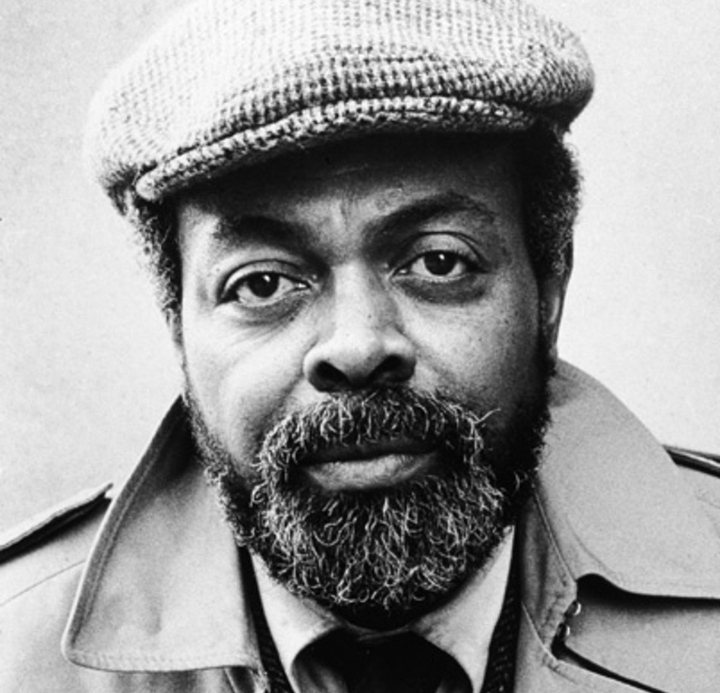
    Imamu Ameer previously known as leroi jones.(  Baraka, was an American writer of poetry, drama, fiction, essays,music criticism and a  political activist. In African – American community, some compare Baraka to James Baldwin due to his writing style (he was also an African American writer) and recognize him as  one of the most respected widely published Black writers of his generation. Critics said that his work is an expression of violence, misogyny and homophobia. He  became a leading advocate and theorist for the burgeoning Black Art during that period . The Black Arts Movement (BAM) was an African –American  art movement formally established in 1965 when Amiri  Baraka opened the Black Art Repertoty Theatre in Harlem.ht would help you to understand the poem if you keep in mmind this concept of black art   Before reading this poem. (The Black Power Movement of the 1960s and 1970s was a political and social movement whose advocates believed in racial pride, self-sufficiency, and equality for all people of Black and African descent.it envisions an art that speaks directly to the needs and aspirations of black America.

              The poem Black Art (1965) became  the major poetic manifesto of the Black  Art Literary  Movement.The poem is written in an imperative tone and Baraka used  this poem as a weapon against  racism. He used enjambment  in this poem to keep the attention of the readers. In this poem he used the language of Black Community for example ; “girdle mamma”, “mulatto bitches”. As an American writer Baraka emphasizes that the Whites could not separate them from their language and culture.The poetic persona in this poem is Baraka himself  and written the poem in an aggressive tone. By writing this poem in an unconventional way, Baraka encourages the readers to protest for their freedom.(  also to fight against the rules deliberately prepared by the whites)  AS William words worth said poetry is the sponataneous overflow of powerful emptions recollected in tranquillity,like that The spontaneous overflow of his words enhances the emotional impact of the poem. Baraka addresses Black American aritists to follow their own methods instead of depending on White’s  culture.

          The style of language   used  in the poem  Black Art alludes the emergence of Hip – Hop music during that time.Hip-Hop was  a recognized salient musical form of the Black Aesthetic. Baraka said that “music was explaining the history as the history was explaining the music”This method of expression in music parellels significantly with Baraka’s ideals presented in Black Art .Use of uneven lines, punctuations and  spelling in this poem  focuses on the violence and allows the readers to understand the mindset of the poetic persona. In general,  Baraka tried to teach the idea of equality among races and classes through his poems, plays and speeches.        Baraka’s  poetry  falls in to three periods ; each reflects what he viewed as a corrupt culture. Baraka’s three creative phases are ; the intellectual avant – garde , the Black Nationalists and the radically political.

                  The hatred towards the Whites can be seen in the mentioning of Elizabeth Taylor’s name, who was a White American actress and had acted in many films .He uses lot of verbal violence in this poem. Baraka said that only a Black consciousness can save Black people from annihilation at the White man’s hands and that no other nation is safe unless the Blacks in America is safe. Baraka argues that  the artist must use the language and semantics unique to his culture to create his art, and that the work should also be understood within the context of that culture. In this poem Black Art ,dedicated to African American to wake up and reverse the situation by taking control over everything.

              Baraka interconnects  art  with racial identity .Black Art Movement promoted arts and crafts for the Black community and allowed them to participate to the full extent. As a Black Art writer, he puts his literary writings to serve for political and social aims. As Larry Neal  (scholar of African American theatre) put in his essay, The Black Arts Movement (1968) “Black Art is the aesthetic and spiritual sister of the Black Power Concept. As such it envisions an art that speaks directly to the needs and aspiraitons of Black America and to Afro – American desire for self – determination and nationhood”. In this poem, Baraka demands to assassin the poems that shoot guns.Here he personifies ‘poems’ as Whites who shoot guns towards Blacks. With the rise of Civil Rights Movement Baraka’s work take on a more militant tone.

               Baraka calls for realism in Black Poetry  and  to stop over glorifying  the lives  that Black people must live in a racist nation.Baraka places realism in his poem to create a  world that would reflect the lives of Black people.It helps to recognize themselves and inspires them to revolt against their circumstances. By this poem Baraka crtiticizes  racism and demands the African- Americans to rise from the race constraints. He had used onomatopoeic words in this poem to express the need for violence. The poetic persona criticizes the poems that are not useful. He describes prominent Black leaders on the steps of white house,kneeling between the sheriff’s thighs negotiating coolly for his people. Poet also presents Euro – centric mentality by referring to Elizabeth Taylor as an epitome of Whites in the society.

          To conclude, Amiri Baraka expresses his anger and frustration and demands the Black artists to  react against oppression.The poem is in a conversational style and used informal words. Barka had used many poetic innovations in form, language and style to react against the negative stereotyping of African-Americans. The slogan such as “Black is beautiful” was prominent during that time. The use of slag in this poem  denotes the mindset of poetic persona. Werner Sollors (professor) criticized his peom as an expression of Black aesthetic , but is striking for its venomous language and for its rhetorical violence.

MARGARET LAURENCE

         Jean Margaret Laurence  was a Canadian novelist and short story writer, and is one of the major figures in Canadian literature. She was also a founder of the Writers’ Trust of Canada, a non-profit literary organization that seeks to encourage Canada’s writing community. Margaret Laurence was born  on 18 July 1926 in Neepawa, Manitoba, as the daughter of solicitor Robert Wemyss and Verna Jean Simpson. In 1944, Laurence attended Winnipeg’s United College and she had studied ; English, History, Ethics, and Psychology. Laurence had published works of poetry in the University of Manitoba’s publication “The Manitoban”. She  had submitted this work under the pseudonym “Steve Lancaster”. Laurence graduated with a Bachelor of Arts in English Literature in 1947.She aslo had joined in  Christian  socialist movement known as the Social Gospel.

        Laurence worked at a leftist weekly newspaper, The Westerner, and then at a new independent newspaper, the Winnipeg Citizen in which  she reported numerous social and political issues. Laurence was so moved by the oral literature of Somalia that she began recording and translating poetry and folk tales, which would later be compiled into the work “A Tree for Poverty: Somali Poetry and Prose” (1954). Laurence   began writing short stories in her teenage years while, her first published piece is “The Land of Our Father”.  Her first novel was   “The Side Jordan” (1960) (Britannica) Laurence’s another works are ; “The Prophet’s Camel Bell”(19 63), “The Stone Angel”(1964) (1966) , “The Fire Dwellers” and  “The Diviners” (1974). She was the subject of a National Film Board of Canada documentary, Margaret Laurence: First Lady of Manawaka. Laurence served as Chancellor of Trent University in Peterborough from 1981 to 1983.She also wrote sequential short stories, which she collected under the title “A Bird in the House”(1974).

          Laurance was known for her outspoken support for peace, women’s rights and other progressive causes. Laurence’s novels portray strong women striving for self –realization while immersed in the daily struggle to make a living in a male –dominated world. Her stories feature strong women and their struggle for self – understanding and acceptance. Throughout all her works, Laurence explores themes concerning the role of women, the injustices of sex –role stereotyping and the   equality of opportunity .The point of view is limited to the female  protagonist’s  consciousness. Laurence’s protagonists are oppressed, they never blame the men in their lives or the male –dominated society. All of Laurence’s heroines come to realize that the environment has also given them the strength and the courage to endure.

                  “Manawaka” is a fictional  town in the Canadian province of Manitoba, frequently used as a setting in novels and short stories by Margaret Laurence. The name is an amalgam of Manitoba and Neepawa. The town was based on Laurence’s real life hometown. Margaret Laurence’s Manawaka, like Hardy’s Wessex or Faulkner’s Yocknapatawpha County, universalises human experience through mythologizing it. Laurence certainly brings  back  the old names from the Old Testament.Laurence spent years seven  in Africa ,in Somaliland and Ghana and the experience was a catalyst to her own best writing. Her early novels were influenced by her experience as a minority in Africa. Laurence developed an admiration for Africa and its various populations.