Technology.

Technology, techne, “art, skill, cunning of hand”; is the sum of techniques, skills, methods, and processes used in the production of goods or services or in the accomplishment of objectives, such as scientific investigation. Technology can be the knowledge of techniques, processes, and the like, or it can be embedded in machines to allow for operation without detailed knowledge of their workings. Systems (e.g. machines) applying technology by taking an input, changing it according to the system’s use, and then producing an outcome are referred to as technology systems or technological systems.

The simplest form of technology is the development and use of basic tools. The prehistoric invention of shaped stone tools followed by the discovery of how to control fire increased sources of food. The later Neolithic Revolution extended this, and quadrupled the sustenance available from a territory. The invention of the wheel helped humans to travel in and control their environment.

Developments in historic times, including the printing press, the telephone, and the Internet, have lessened physical barriers to communication and allowed humans to interact freely on a global scale.

Technology has many effects. It has helped develop more advanced economies (including today’s global economy) and has allowed the rise of a leisure class. Many technological processes produce unwanted by-products known as pollution and deplete natural resources to the detriment of Earth’s environment. Innovations have always influenced the values of a society and raised new questions in the ethics of technology. Examples include the rise of the notion of efficiency in terms of human productivity, and the challenges of bioethics.

Philosophical debates have arisen over the use of technology, with disagreements over whether technology improves the human condition or worsens it. Neo-Luddism, anarcho-primitivism, and similar reactionary movements criticize the pervasiveness of technology, arguing that it harms the environment and alienates people; proponents of ideologies such as transhumanism and techno-progressivism view continued technological progress as beneficial to society and the human condition.

Working out haan!

Exercise is any bodily activity that enhances or maintains physical fitness and overall health and wellness.

It is performed for various reasons, to aid growth and improve strength, preventing aging, developing muscles and the cardiovascular system, honing athletic skills, weight loss or maintenance, improving health and also for enjoyment. Many individuals choose to exercise outdoors where they can congregate in groups, socialize, and enhance well-being.

In terms of health benefits, the amount of recommended exercise depends upon the goal, the type of exercise, and the age of the person. Even doing a small amount of exercise is healthier than doing none.

Physical exercises are generally grouped into three types, depending on the overall effect they have on the human body:

Aerobic exercise is any physical activity that uses large muscle groups and causes the body to use more oxygen than it would while resting. The goal of aerobic exercise is to increase cardiovascular endurance. Examples of aerobic exercise include running, cycling, swimming, brisk walking, skipping rope, rowing, hiking, dancing, playing tennis, continuous training, and long distance running.
Anaerobic exercise, which includes strength and resistance training, can firm, strengthen, and increase muscle mass, as well as improve bone density, balance, and coordination. Examples of strength exercises are push-ups, pull-ups, lunges, squats, bench press. Anaerobic exercise also includes weight training, functional training, eccentric training, interval training, sprinting, and high-intensity interval training which increase short-term muscle strength.
Flexibility exercises stretch and lengthen muscles. Activities such as stretching help to improve joint flexibility and keep muscles limber. The goal is to improve the range of motion which can reduce the chance of injury.
Physical exercise can also include training that focuses on accuracy, agility, power, and speed.

Types of exercise can also be classified as dynamic or static. ‘Dynamic’ exercises such as steady running, tend to produce a lowering of the diastolic blood pressure during exercise, due to the improved blood flow. Conversely, static exercise (such as weight-lifting) can cause the systolic pressure to rise significantly, albeit transiently, during the performance of the exercise.

Social media.

Social media are interactive technologies that allow the creation or sharing/exchange of information, ideas, career interests, and other forms of expression via virtual communities and networks. While challenges to the definition of social media arise due to the broad variety of stand-alone and built-in social-media services currently available, there are some common features:

Social media are interactive Web 2.0 Internet-based applications.
User-generated content—such as text posts or comments, digital photos or videos, and data generated through all online interactions—is the lifeblood of social media.
Users create service-specific profiles for the website or app that are designed and maintained by the social-media organization.
Social media helps the development of online social networks by connecting a user’s profile with those of other individuals or groups.

Users usually access social media services via web-based apps on desktops and laptops, or download services that offer social media functionality to their mobile devices (e.g., smartphones and tablets). As users engage with these electronic services, they create highly interactive platforms through which individuals, communities, and organizations can share, co-create, discuss, participate, and modify user-generated content or self-curated content posted online. Additionally, social media are used to document memories; learn about and explore things; advertise oneself; and form friendships along with the growth of ideas from the creation of blogs, podcasts, videos, and gaming sites. This changing relationship between human and technology is the focus of the emerging field of technoself studies.

Since the dramatic expansion of the Internet, digital media or digital rhetoric can be used to represent or identify a culture. Studying how the rhetoric that exists in the digital environment has become a crucial new process for many scholars.

Observers have noted a wide range of positive and negative impacts of social media use. Social media can help to improve an individual’s sense of connectedness with real or online communities and can be an effective communication (or marketing) tool for corporations, entrepreneurs, non-profit organizations, advocacy groups, political parties, and governments. Observers have also seen that there has been a rise in social movements using social media as a tool for communicating and organizing in times of political unrest.

Sanskrit.

Sanskrit is a standardized dialect of Old Indo-Aryan, originating as Vedic Sanskrit as early as 1700-1200 BCE. One of the oldest Indo-European languages for which substantial documentation exists, Sanskrit is believed to have been the general language of the greater Indian Subcontinent in ancient times.

Sanskrit ; attributively संस्कृत-, saṃskṛta-; nominaly संस्कृतम्, saṃskṛtam, is a classical language of South Asia belonging to the Indo-Aryan branch of the Indo-European languages. It arose in South Asia after its predecessor languages had diffused there from the northwest in the late Bronze Age. Sanskrit is the sacred language of Hinduism, the language of classical Hindu philosophy, and of historical texts of Buddhism and Jainism. It was a link language in ancient and medieval South Asia, and upon transmission of Hindu and Buddhist culture to Southeast Asia, East Asia and Central Asia in the early medieval era, it became a language of religion and high culture, and of the political elites in some of these regions. As a result, Sanskrit had a lasting impact on the languages of South Asia, Southeast Asia and East Asia, especially in their formal and learned vocabularies.

Sanskrit generally connotes several Old Indo-Aryan varieties. The most archaic of these is Vedic Sanskrit found in the Rig Veda, a collection of 1,028 hymns composed between 1500 BCE and 1200 BCE by Indo-Aryan tribes migrating east from what today is Afghanistan across northern Pakistan and into northern India. Vedic Sanskrit interacted with the preexisting ancient languages of the subcontinent, absorbing names of newly encountered plants and animals; in addition, the ancient Dravidian languages influenced Sanskrit’s phonology and syntax. “Sanskrit” can also more narrowly refer to Classical Sanskrit, a refined and standardized grammatical form that emerged in the mid-1st millennium BCE and was codified in the most comprehensive of ancient grammars, the Aṣṭādhyāyī (“Eight chapters”) of Pāṇini.The greatest dramatist in Sanskrit, Kālidāsa, wrote in classical Sanskrit, and the foundations of modern arithmetic were first described in classical Sanskrit. The two major Sanskrit epics, the Mahābhārata and the Rāmāyaṇa, however, were composed in a range of oral storytelling registers called Epic Sanskrit which was used in northern India between 400 BCE and 300 CE, and roughly contemporary with classical Sanskrit. In the following centuries, Sanskrit became tradition-bound, stopped being learned as a first language, and ultimately stopped developing as a living language.

Technical skills

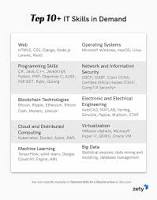
Technical skills are the abilities and knowledge needed to perform specific tasks. They are practical, and often relate to mechanical, information technology, mathematical, or scientific tasks. Some examples include knowledge of programming languages, design programs, mechanical equipment, or tools.

Some of the very famous tech. Skills:

1. Project Management. Being able to effectively coordinate resources, people and budgets as a project manager is one of the best technical skills that you can have.
2. Analysis of Big Data and Business 3.Intelligence.
4. Information Security.
5. Designer.
6. Marketing Assistant.
7. Writer. And many more…

Create a dedicated Technical Skills section for the resume.

If they’re heavily emphasized in the job description, then your Technical Skills section should be at the top of your resume, just below your introduction, and above your professional experience. A bulleted list will make it easy to read.

These are some of the basic tech. Skills:

* Word Processing Skills.
* Spreadsheets Skills.
* Database Skills.
* Electronic Presentation Skills.
* Web Navigation Skills.
* Web Site Design Skills.
* E-Mail Management Skills.
* Digital Cameras

How can you improve your technical skills? So, here are the steps to improves ones technical skill.

1. Enroll in Technical Classes or Workshops.
2. Get Technical Books.
3. Volunteer for Technical Projects.
4. Subscribe to Technical Sites and Magazines.
5. Develop Knowledge of a Second Language.
6. Practice What You Learned.

Dilip Kumar.

Mohammed Yusuf Khan (11 December 1922 – 7 July 2021), known professionally by his stage name Dilip Kumar, was an Indian actor and film producer who worked in Hindi cinema. Referred to as the “Tragedy King” for his portrayal of serious roles and retrospectively as “The First Khan” of Bollywood, he has been described as one of the most successful film stars in the industry and is credited with bringing a distinct form of method acting to cinema. Kumar holds the record for most wins for the Filmfare Award for Best Actor (eight, which was later equalled by Shah Rukh Khan), and was also the inaugural recipient of the award.

In a career spanning over five decades, Kumar worked in over 65 films. He debuted as an actor in the film Jwar Bhata (1944), produced by Bombay Talkies. Following a series of unsuccessful ventures, he had his first box office hit in Jugnu (1947). Kumar found further success with the romantic Andaz (1949), the swashbuckling Aan (1952), the social drama Daag (1952), the dramatic Devdas (1955), the comical Azaad (1955), the epic historical Mughal-e-Azam (1960), the social dacoit crime drama Gunga Jamuna (1961), and the comedy Ram Aur Shyam (1967). Both Andaz and Aan briefly became the highest-grossing Indian film upto that point, a feat later achieved by Mughal-e-Azam, which sustained the record for 11 years. As of 2021, the latter remains the highest-grossing film in India when adjusted for inflation.

The 1970s saw Kumar’s career take a downturn, marked by a string of commercial failures. In 1976, he went on a five-year hiatus from film performances and returned with the revolutionary drama Kranti, which was the highest-grossing Indian film of the year. He continued to play leading roles in films such as Shakti (1982), Karma (1986), and Saudagar (1991). His last on-screen appearance was in the commercially unsuccessful Qila (1998), which saw him in a dual role. Kumar later served as a member of the Rajya Sabha, the upper house of India’s parliament, from 2000 to 2006.

Kumar’s personal life was the subject of much media attention. He was in a long-term relationship with actress and frequent co-star Madhubala that ended after the Naya Daur court case in 1957. He married actress Saira Banu in 1966 and resided in Bandra, a suburb of Mumbai, until his death in 2021. For his contributions to film, the Government of India awarded him with the Padma Bhushan in 1991 and the Padma Vibhushan in 2015, the country’s third and second-highest civilian awards respectively. He was also awarded India’s highest accolade in the field of cinema, the Dadasaheb Phalke Award in 1994. In 1998, the Government of Pakistan conferred Kumar with Nishan-e-Imtiaz, the highest civilian decoration, making him the only Indian to have received the honor.

Transportation in India.

India’s transport sector is large and diverse; it caters to the needs of 1.1 billion people. In 2007, the sector contributed about 5.5 percent to the nation’s GDP, with road transportation contributing the lion’s share.

Good physical connectivity in the urban and rural areas is essential for economic growth. Since the early 1990s, India’s growing economy has witnessed a rise in demand for transport infrastructure and services.

However, the sector has not been able to keep pace with rising demand and is proving to be a drag on the economy. Major improvements in the sector are therefore required to support the country’s continued economic growth and to reduce poverty.

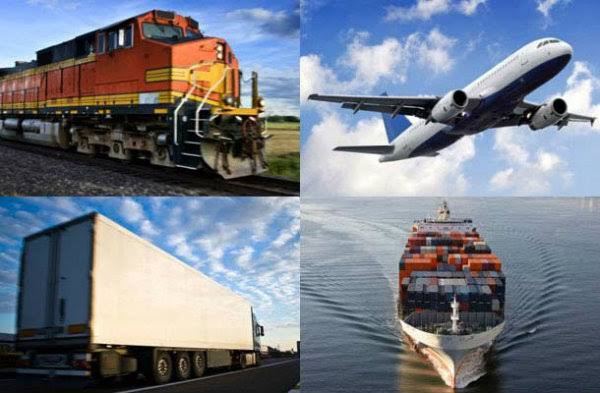
Roads. Roads are the dominant mode of transportation in India today. They carry almost 85 percent of the country’s passenger traffic and more than 60 percent of its freight. The density of India’s highway network — at 0.66 km of roads per square kilometer of land – is similar to that of the United States (0.65) and much greater than China’s (0.16) or Brazil’s (0.20). However, most roads in India are narrow and congested with poor surface quality, and 33 percent of India’s villages do not have access to all-weather roads.

Rural Roads-A Lifeline for Villages in India: Connecting Hinterland to Social Services and markets

Railways. Indian Railways is one of the largest railways under the single management. It carried some 19.8 million passengers and 2.4 million tonnes of freight a day in year 2009 and is one of the world’s largest employer. The railways play a leading role in carrying passengers and cargo across India’s vast territory. However, most of its major corridors have capacity constraint requiring capacity enhancement plans.

Ports. India has 13 major and 199 minor and intermediate ports along its more than 7500 km long coastline. India’s seaborne foreign trade being 95% by volume and 67% by value, the ports play a very significant role in improving foreign trade in a growing economy. These ports serve the country’s growing foreign trade in petroleum products, iron ore, and coal, as well as the increasing movement of containers. Indian ports handled cargo of 850 million tonnes and about 9.0 million TEU container traffic in year 2010. Over the last decade, the average annual growth rate of port cargo volume has been about 10%.. The future potential for port sector, particularly container ports is huge considering that the container traffic is projected to grow to 40 million TEU by 2025. Inland water transportation also remains largely undeveloped despite India’s 14,000 kilometers of navigable rivers and canals.

Aviation. India has 128 airports, including 15 international airports. Indian airports handled 142 million passengers in 2010-11 and 1.6 million tonnes of cargo in year 2009-10. The CAGR for the domestic passenger and freight growth over the last decade has been 14.2% and 7.8% respectively. The dramatic increase in air traffic for both passengers and cargo in recent years has placed a heavy strain on the country’s major airports. Passenger traffic is projected to grow more than 15% annually over 2011-13 and it is estimated that the aviation industry, currently 9th largest in the World, will require 30 billion USD investment in the next 15 years to keep pace with the growing demand.

Urban Transport. India is experiencing rapid urbanization with the present urbanization levels at 30% translating to a population of roughly 340 million living in urban areas. The number of million plus cities is presently at 42 and the urban economy accountd for roughly 60% of the GDP. Motorisation rates in India are in double digits as in most developing economies. Only about 20 cities out of 87 cities with a population in excess of 500,000 and state capitals have any kind of organized transport and only 3-4 cities could lay claim to a mass rapid transit system. The share of public transport in cities with population sizes over 4 million has declined from 69% to 38% between 1994 to 2007. Accident and fatality rates are one of the highest in the world affecting primarily the poor and vulnerable without their own means of transport.

Transport infrastructure in India is better developed in the southern and southwestern parts of the country.

The major challenges facing the sector are:

• India’s roads are congested and of poor quality. Lane capacity is low – majority of national highways are two lanes or less. A quarter of all India’s highways are congested. Many roads are of poor quality and road maintenance remains under-funded. This leads to the deterioration of roads and high transport costs for users.

• Rural areas have poor access. Roads are significant for the development of the rural areas – home to almost 70 percent of India’s population. Although the rural road network is extensive, some 33 percent of India’s villages do not have access to all-weather roads and remain cut off during the monsoon season. The problem is more acute in India’s northern and northeastern states which are poorly linked to the country’s major economic centers.

• The railways are facing severe capacity constraints. All the country’s high-density rail corridors face severe capacity constraints. Also, freight transportation costs by rail are much higher than in most countries as freight tariffs in India have been kept high to subsidize passenger traffic.

• Urban centers are severely congested. In Mumbai, Delhi and other metropolitan centers, roads are often severely congested during the rush hours. The dramatic growth in vehicle ownership during the past decade – has reduced rush hour speeds especially in the central areas of major cities.

• Ports are congested and inefficient. The average annual growth of cargo volume in the ports in the last decade was close to 10%, However, capacity utilization in some of the major ports remain as low as 58-60% Both bulk and containerized traffic is expected to grow at a much faster pace in future and by some estimate the container traffic is projected to grow to about 4.5 times of the current volume by 2025. India’s ports need to significantly ramp up their capacity and efficiency to meet this surging demand.

• Airport infrastructure is strained. . Air traffic has been growing rapidly leading to severe strain on infrastructure at major airports, especially in the Delhi and Mumbai airports which account for more than 40 percent of nation’s air traffic.

Covid-19 THIRD WAVE.

Raising the alarm bells for policymakers and citizens, a research report has contended that India may witness the third covid wave from August 2021. The report – COVID-19: The race to finishing line – prepared by SBI Research, claims that the covid third wave peak will arrive in the month of September 2021.

The research report says that India achieved its second wave peak on 7th May. “Going by the current data, India can experience cases around10,000 somewhere around the 2nd week of July. However, the cases can start rising by the second fortnight of August,” the report said.


These are the highlights from the report:

1. Global data shows that on average third wave peak cases are around 1.7 times the peak cases at the time of second-wave.
2. However, based on historical trends the cases can start rising by the second fortnight of Aug’21 with peak cases at least a month later.
3. India has started giving more than 40 lakh vaccination doses per day as shown by 7 DMA.
4. Overall, India has fully vaccinated 4.6% of its population, apart from 20.8% having received one dose. This is still lower than other countries including the US, the UK, Israel, Spain, France among others.
5. The decline in bank deposits in FY21 and concomitant increase in health expenditure may result in further increase in household debt to GDP in FY22.
6. States with high per capita GDP have been associated with higher Covid-19 deaths per million while low per capita GDP are associated with low Covid-19 deaths.
7. Only 4.6 per cent of the population in India is fully vaccinated, while 20.8 per cent have received one dose, much lower compared to other countries including the US (47.1 per cent), the UK (48.7 per cent), Israel (59.8 per cent), Spain (38.5 per cent), France (31.2), among others.

Peaky blinders!

Tommy Shelby

Peaky Blinders is a British period crime drama television series created by Steven Knight. Set in Birmingham, England, the series follows the exploits of the Shelby crime family in the direct aftermath of the First World War. The fictional family is loosely based on a real urban youth gang of the same name, who were active in the city from the 1890s to the early 20th century.

Peaky Blinders features an ensemble cast, led by Cillian Murphy, Helen McCrory and Paul Anderson starring as Tommy Shelby, Elizabeth “Polly” Gray and Arthur Shelby respectively, the gang’s senior members. Sam Neill, Tom Hardy, Paddy Considine, Adrien Brody, Aidan Gillen, Charlotte Riley, Sam Claflin and Anya Taylor-Joy also have recurring roles at various junctures of the series. The show premiered on 12 September 2013, telecast on BBC Two until the fourth series, and then shifted to BBC One for the fifth and upcoming sixth series.

In 2018, after the show’s Drama Series win at the BAFTA TV Awards, Knight confirmed his “ambition of making it a story of a family between two wars, and by ending it with the first air raid siren in Birmingham”, which was 25 June 1940. The fifth series premiered on BBC One on 25 August 2019 and finished on 22 September 2019. Netflix, under the deal with Weinstein Company and Endemol, had acquired the rights to release Peaky Blinders in the United States and around the world. In January 2021, it was announced that the sixth season would be the final season of the series.

Health consciousness.

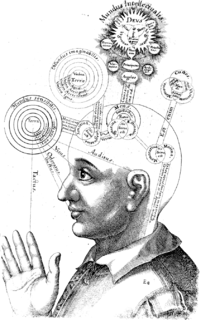
Consciousness, at its simplest, is sentience or awareness of internal and external existence. Despite millennia of analyses, definitions, explanations and debates by philosophers and scientists, consciousness remains puzzling and controversial, being “at once the most familiar and most mysterious aspect of our lives”. Perhaps the only widely agreed notion about the topic is the intuition that it exists. Opinions differ about what exactly needs to be studied and explained as consciousness. Sometimes, it is synonymous with the mind, and at other times, an aspect of it. In the past, it was one’s “inner life”, the world of introspection, of private thought, imagination and volition. Today, it often includes some kind of experience, cognition, feeling or perception. It may be awareness, awareness of awareness, or self-awareness. There might be different levels or orders of consciousness, or different kinds of consciousness, or just one kind with different features. Other questions include whether only humans are conscious, all animals, or even the whole universe. The disparate range of research, notions and speculations raises doubts about whether the right questions are being asked.

Examples of the range of descriptions, definitions or explanations are: simple wakefulness, one’s sense of selfhood or soul explored by “looking within”; being a metaphorical “stream” of contents, or being a mental state, mental event or mental process of the brain; having phanera or qualia and subjectivity; being the ‘something that it is like’ to ‘have’ or ‘be’ it; being the “inner theatre” or the executive control system of the mind.

And that’s why to be health conscious is better than being careless.

Use of MS Excel in today’s world.

Excel is typically used to organize data and perform financial analysis. It is used across all business functions and at companies from small to large. The main uses of Excel include: Data entry.

Excel is a software program created by Microsoft that uses spreadsheets to organize numbers and data with formulas and functions. Excel analysis is ubiquitous around the world and used by businesses of all sizes to perform financial analysis.

The main uses of Excel include:

1 Data entry
2 Data management
3 Accounting
4 Financial analysis
5 Charting and graphing
6 Programming
7 Time management
8 Task management
9 Financial modeling
10 Customer relationship management (CRM)
** Almost anything that needs to be organized!

Excel is used extensively in finance and accounting functions. In fact, many organizations run their entire budgeting, forecasting, and accounting functions entirely out of Excel spreadsheets.

While Excel is defined as a “data” management tool, the data that is most commonly managed is financial. At CFI, we would define Excel as the ultimate financial software. While there are other pieces of financial software that are tailored toward performing specific tasks, the strongest point about Excel is its robustness and openness. Excel models are as powerful as the analyst wishes them to be.

Accountants, investment bankers, analysts, and people in all types of financial career paths rely on excel to perform their daily job functions.

And one should know how to use MS Excel. Its on of the most important skill in today’s corporate world.

Pet.

A pet, or companion animal, is an animal kept primarily for a person’s company or entertainment rather than as a working animal, livestock or a laboratory animal. Popular pets are often considered to have attractive appearances, intelligence and relatable personalities, but some pets may be taken in on an altruistic basis (such as a stray animal) and accepted by the owner regardless of these characteristics.

Two of the most popular pets are dogs and cats; the technical term for a cat lover is an ailurophile and a dog lover a cynophile. Other animals commonly kept include: rabbits; ferrets; pigs; rodents, such as gerbils, hamsters, chinchillas, rats, mice, and guinea pigs; avian pets, such as parrots, passerines and fowls; reptile pets, such as turtles, alligators, crocodiles, lizards, and snakes; aquatic pets, such as fish, freshwater and saltwater snails, amphibians like frogs and salamanders; and arthropod pets, such as tarantulas and hermit crabs. Small pets may be grouped together as pocket pets, while the equine and bovine group include the largest companion animals.

Pets provide their owners (or “guardians”) both physical and emotional benefits. Walking a dog can provide both the human and the dog with exercise, fresh air and social interaction. Pets can give companionship to people who are living alone or elderly adults who do not have adequate social interaction with other people. There is a medically approved class of therapy animals, mostly dogs or cats, that are brought to visit confined humans, such as children in hospitals or elders in nursing homes. Pet therapy utilizes trained animals and handlers to achieve specific physical, social, cognitive or emotional goals with patients.

People most commonly get pets for companionship, to protect a home or property or because of the perceived beauty or attractiveness of the animals. A 1994 Canadian study found that the most common reasons for not owning a pet were lack of ability to care for the pet when traveling (34.6%), lack of time (28.6%) and lack of suitable housing (28.3%), with dislike of pets being less common (19.6%). Some scholars, ethicists and animal rights organizations have raised concerns over keeping pets because of the lack of autonomy and the objectification of non-human animals.

Getting a Job in Google.

Year after year, Google has been ranked as one of the top companies to work for, so it’s no surprise that the tech giant receives roughly three million applications per year. With an acceptance rate of 0.2%, you’d have a better chance of getting into Harvard.

It is difficult to get a job at Google because of their quality standards and the high number of applications they receive per year. For example, INC reported that Google receives 2 million job applications per year, which means it’s more competitive to get into than Harvard University.

Google is an employer of choice for the world’s top talent, typically receiving hundreds of resumes for every opening, which allows them to be extremely selective in their hiring.The hardest part is getting an interview. If you attend a university, go through campus recruiting.

According to the Pascale, The lowest paid Google employees are Entry Levels at $51,000.Google says there is no degree or prior experience required. In fact, 61% of learners enrolled do not hold a four-year degree. This certificate could be a perfect launchpad to a career in IT.

So if you have a keen interest in working at Google California or at any other branches of Google work hard my friend. More than studies work on yourselves, on your IQ level the interviewees are not going to ask you a question from your syllabus.

Old Becomes Richest Man In India Making Money Online!

Mithun Bhat, born in Bhopal, could buy 2 houses within a month, Bentley, Ferrari and paid all his debts. But previously, he worked with salary under the minimum wage. So, how could he earn so much money only in a month? He tells us his story.

“I worked at pizza delivery service for a year. I was prior a collage student and did a part time job in a restaurant. I did it to support my study. In the second year of study I was close to be expelled since I could not pay the tuition. At the time, I had to take a loan. I could finally paid my tuition, but I had no money to pay the monthly installments to the bank. Honestly, studying and working all at once was beyond my endurance, and eventually, I was expelled from campus a week before the end of school year. That was the beginning of the darkest days of my life. My father lost his job and my family didn’t know how to survive. Could you imagine how hopeless I felt? I had no decent work and no education, and my father lost his job. I could do nothing to help them.

One night, I was delivering a pizza to the last location. A guy opened the door. He was with his friends, and while he was paying the pizza, I heard their discussion about where would they invest Rs. 2,000,000 they earned 10 minutes ago. I just made a glance and saw a sort of graph and figures on the laptop screen. The guy opening the door gave me Rs. 1,000 but the price was only Rs. 600. He told me to keep the change.

I was absolutely surprised and after I got back home, I took my laptop and tried to recall about their discussion. After 5 minutes, I remembered that they told about online trading. On the Broker website I found the graphs and figures I saw at the guy’s laptop.

After reading all information about the broker and watching tutorial videos, I opened a demo account where I got virtual money. I quickly understood what I had to do, it was very easy. I earned some money after my very first transaction. Then I thought… I did not lose anything, so I decided to open a real account and deposited my last money there. At the morning, I woke up and saw that I earned Rs. 30,654 over that night. After 2 weeks I could paid my debts off, bought a car, and I could help my father while he was searching for a new job and pay his expenses for the next few months. 2 weeks later, I already had 2 houses in the suburb. And all I did without leaving my home and getting higher education.

That’s my luck. It would never happen if I did not meet the rich guy while delivering the pizza. I know there are a lot of people having not good times like me, that’s why I tell you: if you want to live without any problem, I can tell you how to earn money with Trading Resource. It is very easy if you would try it.

Globalization!

Globalization is the word used to describe the growing interdependence of the world’s economies, cultures, and populations, brought about by cross-border trade in goods and services, technology, and flows of investment, people, and information.

Globalization is driven by the convergence of political, cultural and economic systems that ultimately promote — and often necessitate — increased interaction, integration and dependency amongst nations.

The more that disparate regions of the world become intertwined politically, culturally and economically, the more globalized the world becomes.

These international interactions and dependencies are enabled and accelerated by advances in technology, especially in transportation and telecommunications. In general, money, technology, materials and even people flow more swiftly across national boundaries today than they ever have in the past. The flow of knowledge, ideas and cultures is expediated through Internet communications.

There are three types of globalization:

1. Economic globalization. This type focuses on the unification and integration of international financial markets, as well as multinational corporations that have a significant influence on international markets.
2. Political globalization. This type deals mainly with policies designed to facilitate international trade and commerce. It also deals with the institutions that implement these policies, which can include national governments as well as international institutions, such as the International Monetary Fund and the World Trade Organization.
3. Cultural globalization. This type focuses on the social factors that cause cultures to converge — such as increased ease of communication and transportation, brought about by technology.