Feminism In India

The task at hand is twofold : first, to present a schematic account of feminism in India ; second to bring up some theoretical and methodological issues entailed in representing it. This decision to problematize the process of narrating has been prompted by the fact that writing in the second decade of the 21st century implies that we take into cognizance some of the developments in the preceding decades that impinge in a very fundamental way on both the practice and theory of feminism. In other words, I seek to flag some of the changing features of the contemporary context within which I as a resident Indian scholar write about feminism for Western academia. (i) A rich and complex body of feminist writings has emerged over the last forty years which in many ways have become institutionalized within academia as well as within policy making, whether of various states or of international agencies ; (ii) the rise of multiculturalism and postmodernism in the West since the 1980s gave way not just recognition but celebration of diversity and plurality including that of divergent feminisms ; (iii) the rise of postcolonial studies, articulated in the writing of non-Western scholars located in the West on one hand and a predilection towards poststructuralist theory on the other ; (v) finally the greater visibility of India and Indian scholarship in the recent decades of globalization. My central contention is that these developments are not extraneous but constitutive of Indian feminism.

As a resident Indian feminist scholar I feel an acute sense of disquiet when what I have to say is readily slotted as yet another instance of burgeoning postcolonial writings, one more voice of diverse feminism. My discomfort is that postcolonial theory principally addresses the needs of Western academia. “What post-colonialism fails to recognize is that what counts as ‘marginal’ in relation to the West has often been central and foundational in the non-West” . Thus when I privilege British colonialism and Indian nationalism this is not a belated deference to postcolonial theory but a historical fact which Indians have lived and battled with and one within which the story of Indian feminism emerged and grew. Further, the theoretical shift to textual analysis that accompanied postmodernism and post structuralism led to a gross neglect of a historical and concrete analysis of the constraints of social institutions and the possibilities of human agency therein.

I start on this note to make a conscious break with concepts in circulation and a current academic propensity, which invokes ‘difference’ and ‘plurality’, celebrates ‘fragments’ in a manner of politically correct mantras without even being fully aware of the complex and concrete historical processes, which produce and perpetuate these differences and inequalities. Social institutions, production relations, individual and group actions (and reactions), retreat from such analysis while attention is focused on discerning ‘ruptures’ and ‘gaps’ in either textual representations or oral narratives. These ruptures appear like autonomous ‘marks’ awaiting discovery from the analyst rather than real, historically existing social contradictions.

In privileging India’s colonial past, I am not averring to a simple colonial social constructionist position, nor waving the wand of colonial cartography. I begin with the material and ideological dynamics of colonialism within which Indian feminism emerged and developed – a past that makes its presence felt in some expected and many unexpected, unintended ways as this paper would show. I therefore choose to understand the emergence of feminism in India in the following contexts :

history of colonialism and emergent Indian nationalism ;
its subsequent advance within the trajectory of independent India’s state initiated development ;
more recently within the transformed context of globalization and India’s own success story in it ;
and growing assertion of marginalized castes and communities which has led to a complex deepening of the democratization process in India.
While I have often been asked to tell the story of Indian feminism, I have in each instance been acutely aware of the convolution involved. The academic context of knowledge practices within which I write today about Indian feminism for a Western audience is only a part of the complexity. Though Western hegemony is not quite what it used to be, it is not easy to rid ourselves of our ‘captive imagination’ – a point that was driven home to me almost a decade ago as I struggled to write a conceptual story of feminism in India. I realized :

“the obvious but often overlooked fact that while, for western feminists whether or not to engage with non-western feminism is an option they may choose to exercise, no such clear choice is available to non-western feminists or anti-feminists. (…) our very entry to modernity has been mediated through colonialism, as was the entire package of ideas and institutions such as nationalism or democracy, free market or socialism, Marxism or feminism. Any question therefore, had to confront the question of western feminism as well…”
What then is different today ? I would argue that while we had a great deal of interaction with the colonial West, we did not have the kind of increasingly institutionalized global academic interaction which we have today, a world where too often we all appear to speak alike, even when we seek to mark our difference. The earlier Western ideological influence and the opposition to it were both more powerful and explicitly political. The native was speaking but her voice was outside the deemed legitimate intellectual discourse. It was in the political sphere of colonial India that social reformers and nationalists sought to make history, sought to articulate a distinct nationalist and feminist identity (though informed of and often inspired by Western visions). Often this expressed itself as a denial. “I am not a feminist” was a statement heard more often than not from major women public figures. My argument has been that “the sheer persistence of this theme has a story to tell”. And the story is that ambivalence/evasion can be fruitfully read “both as a claim for difference as well as political strategies of the nationalist and women’s movement” (Chaudhuri, 2011b, p. xix). Readers will appreciate that those rough and turbulent struggles of feminist doings in colonial times within which feminism was being theorized were very different from the current, sanitized academic spaces where professionals seek to speak and write, no matter how many times the word ‘political’ is invoked. No wonder I had found it impossible to separate the history of action from the history of ideas, and in an intellectual world so completely subjugated by Western academic norms it took a while to recognize :

“that feminism was being debated, but differently, (…) such attempts at articulating difference were taking place in a context uninformed either by the language of difference or the more recent political legitimacy accorded to it… concepts which have ‘local habitation and name’ today and which slide spontaneously to the tip of the tongue and pen (‘gender construction, ’ ‘patriarchy’, ‘empowerment’, ‘complicity’, ‘co-option’) were couched in different labels a century ago.”
My location as a resident Indian is important even in such times of times of globalization. Not only do I have to engage with the West, but a West with an increasing presence of the non-West and a Western academia, where the ‘native’ has already spoken. Postcolonial scholars of South Asian origin are leading intellectual voices of the non-West in the West, particularly North America. This compounds the matter more, for ‘national’ contexts do still matter in social sciences and humanities. At another level, many of the issues that at one time appeared to be issues of the non-West are now eminently visible in the West, home to increasing and strident cultural diversity. At one time ‘Western-located Indian’ feminists decried the fact that Indian feminism was “self effacing”, that Indian women see their personal desires as unnecessary and were engrossed with larger questions such as questions of community identity, democratic citizenship, religious beliefs, workers’ rights, cultural distinctions, and rural poverty. The question that Western feminisms would ask and we would echo : “Where amidst this din of large issues were the women ?”.

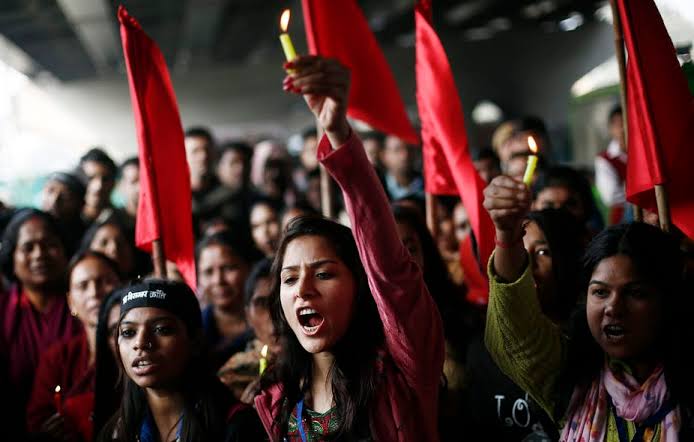
A decade into the 21st century, the terms of the debate seem to have changed entirely in the West. It seems overtly obsessed with questions of cultural identity, of alien cultures and a realization that choices and selfhoods need not be expressed in the language of the Western individual woman. In a world politically more intolerant than ever, in a Western academia more multicultural than ever, the histories of non-Western feminisms no longer appear extraneous, beside the point, or even lacking the ‘authentic’ feminist impulse. Almost lurching to the other extreme, voices of non-Western women are now validated in the West. Alternative modes of agencies are being increasingly imagined. I am a trifle wary of the representation of the third world woman either as “victim subject” or as an “alternate agential self” – catch-all terms that reign in postcolonial Western academia. It is in such a context that it may be productive to shift focus to the ground reality of Indian feminist deliberations such as that of the Thirteenth National Conference of the Indian Association of Women’s Studies (IAWS) 2011, the largest national-level body of Indian feminists. Here we find a context that is far more complex and manifold, and concepts that are far more varied. In contemporary Indian feminism we thus have issues ranging from :

developmental induced displacements to questions of alternative sexuality ;
agrarian crisis to the need to challenge hierarchies of victimhood versus pleasure ;
reproductive health to the question of controlling resources – land, forest and water ;
global capitalism and the localized and diverse articulations of culture to military conflict ;
language, voices representations to new markets and interlocking inequalities ;
rural labour to women in religions ;
starvation to female spectatorship.
The above issues are not exhaustive. They are simply indicative of the unequal and diverse voices WITHIN contemporary Indian feminism .

Inequalities and diversities define Indian society. Various precolonial social reformer movements, the British state, the nationalist and feminist movement have always had to negotiate with this. Thus British colonialism impacted different regions differently both because of the stage of colonialism as well because of the nature of different regions. Thus there were periods of reluctance on the part of colonial rulers’ meddling with India’s social customs such as those related to women, for fear of reprisal, and periods of active involvement to intervene such as the abolition of sati in 1829 or raising the Age of Consent for Women in 1863 which brought forth a furiously hostile reaction, leading again to a phase where the British preferred to rely more on their conservative allies. What one can however infer is that colonial rule, the humiliation of the subject population, the impact of Western education, the role of Christian missionaries, growth of an English speaking Indian middle class all led to an intense and contested debate of the women’s question in the public sphere. This debate itself has been scrutinized carefully from different perspectives. We thus have a question on whether the debate on sati was about women or about reconfiguring tradition and culture ; we have questions on why Dalit  women’s public initiatives and intervention went unwritten; we have arguments that suggest social reforms were more about efforts to introduce new patriarchies than about women’s rights and gender justice. Such rethinking emerges from the challenges posed by social movements and new theorizing emanating from structural transformations within the country.

The Indian feminist is debating in part within the ‘national’ context on ‘local’ issues, even as she is part of the contemporary globalization of academia and of feminist scholarship. That there is such a strong presence of scholars of Indian origin within Western academia who speak for India but within an intellectual world quite distinctively Western, with its own set of empirical and conceptual imperatives, compounds the matter further. Concepts travel thick and fast and are often picked up without any serious engagement with either their contexts or with the theoretical frameworks from which concepts emerge.

Readers will excuse this digression. For I think that, at this present historical juncture where intellectual international exchanges are both intensive and far reaching, one needs to problematize the contexts of production, circulation and reception of intellectual representations. It is necessary therefore to draw attention to the fact that “texts circulate without their context…. and… the recipients, who are themselves in a different field of production, re-interpret the texts in accordance with the structure of the field of reception.” The concepts with which I seek to tell the tale of Indian feminisms needs historicizing. Further, the theoretical frameworks that have sought to analyze the history of Indian feminisms are themselves products of social movements such as the anti-colonial, the nationalist, the feminist, the left and anti-caste. Simply put, much before the theoretical shift to a language of difference, Indian social movements – whether nationalist or feminist – have had to negotiate with both the questions of difference and inequality.

The 20th Century Movement

Prior to the 1990s, the Indian state visualized a state-led development in alliance with national capital (Chaudhuri, 1996). The 1990s altered this paradigm. Transnational capital and the market acquired ascendancy. This shift reconfigured both class and gender in the developmental priority, and therefore necessarily in the national imaginary. Readers will recall how the Indian working class and peasant women were seen as the face of the nation.

This ideological frame changed. The national iconic representation of the working class and peasant women gave way to the new icons of Brand India – the super rich, the beautiful people of the now growing Beauty Business. The buzzword was ‘growth’ and the way towards it an ‘unbridled market’. Structurally, deregulation was the way forwards. One of the corollaries of this pattern of development was an unprecedented expansion of the informal sector wherein a large section of women worked on wretchedly low wages with no security of tenure. Feminists like Mary John and U Kalpagam (1994) have observed how this model has been legitimized by international institutions like the World Bank who have drawn upon feminist scholarship about “the incredible range of tasks poor women perform, their often greater contribution to household income despite lower wage earnings, their ability to make scarce resources stretch further under deteriorating conditions”, but through a crucial shift in signification displayed the findings as no longer arguments about “exploitation so much as proofs of efficiency” (John, 2004, pp. 247-248). Not surprisingly, a great deal of development gender discourse is now exclusively addressed within the micro credit framework, premised upon the idea that women are efficient managers and can be trusted to repay.

Significantly, while most feminists were critical of the state relegating its commitment to the poor and vulnerable, there were contrary views. Gail Omvedt for instance contends that “being anti-globalisation” has become the correct standard of political correctness and argues that “the only meaningful question is, for a Marxist (or dalit, or feminist) activist, what advances the revolution, that is, the movement towards a non-caste, non-patriarchal, equalitarian and sustainable socialist society ?” (Omvedt, 2005, p. 4881) Sections within the Dalit movement itself have aggressively projected the need for dalit capitalism and globalization as the way forward (Chaudhuri, 2010).

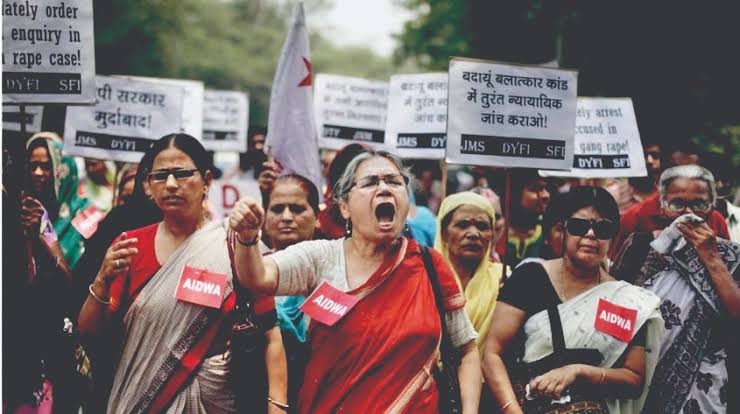
I have already alluded to the rise of the Beauty Business which was closely tied to an unprecedented expansion of the advertising and consumer goods sector, which together recast the Indian woman from the frugal to the profligate spender – in keeping with the changing image of India (Chaudhuri, 2000, 2001). It is impossible to capture the finer contours of the feminist debates in this context. A quick reference to the diverse takes on a major Beauty Contest that was organized in Bangalore in 1997 may capture the key points. The contest was marked by protests by the women’s movement against beauty contests on the grounds that “these contests both glorify the objectification of women and serve to obscure the links between consumerism and liberalization in a post-globalization economy”. Processions were held in Bangalore with mock ‘queens’ crowned as ‘Miss Disease’, ‘Miss Starvation’, ‘Miss Poverty’, ‘Miss Malnourished’, ‘Miss Dowry Victim’, etc. in order to highlight the issues of poverty, and lack of nutrition and health care in the country (Phadke, 2003, p. 4573). Shilpa Phadke, a younger generation feminist, argues in this context that “the focus on women as ‘victims’ could well serve to erase images of women as subjects with agency, sometimes suggesting that feminism is a movement devoid of joy”. She further argues that the market rather than the state is better as “a potential turf for negotiation”. For “unlike the state, where the citizen is largely a client, for the market the individual is first and foremost an actor-consumer. Can the women’s movement use the strategies of the market to re-sell itself to a larger audience and reclaim its right to speak on behalf of a larger constituency of women ?” (ibid., p. 4575) It is important to reiterate here that many continue to perceive the state and political parties rather than the market or NGOs as responsible for their “basic needs”, and they approached either the government agency concerned or political parties when they needed resolution of any problem (Chandhoke, 2005). The great Indian middle class may not need the government, but the vast majority of the poor do. The idea of citizenship as both hegemonic and potentially liberating has been very central to Indian feminism (Roy, 2005). Into the second decade of the 21st century, Indian feminism is engaged with a whole host of issues – some global, some not.

The conclusion

The central contention that has informed this paper is that while boundaries (including academic) are increasingly breaking down, there still exist considerable distinctions between the global and local, the West and non West. And here, I am not alluding to any idea of an essential culture, or to notions of pure indigenous concepts, but only to the specificities of history. Western concepts of the state and market, citizen and consumer hold here as much as anywhere else. This paper bears witness to this. What differ are the details that make the stuff of human action and human conceptualization. The context, within which concepts emerge and the contexts where they travel to, needs enunciation. Its significance in an increasingly globalized academia cannot be overstated. Hence the focus here is on both the tale and the telling of Indian feminism. No ready conceptual frame of the postcolonial, even less no seductive binary oppositions, no amount of sophisticated readings of textual representations will suffice. Endless invocation of ‘voices’ and ‘agency’ will not set free the elusive feminist subject. Careful historical analysis may offer a better understanding of the many achievements and failings of Indian feminism.
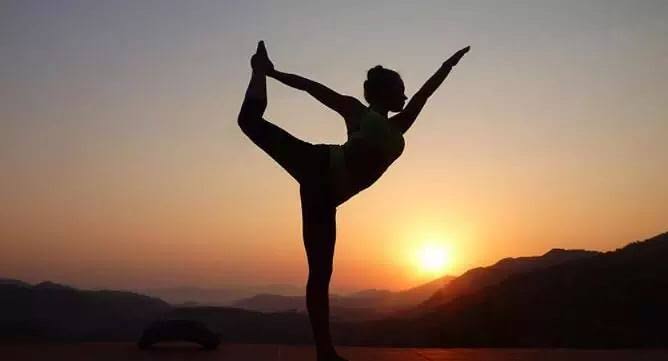
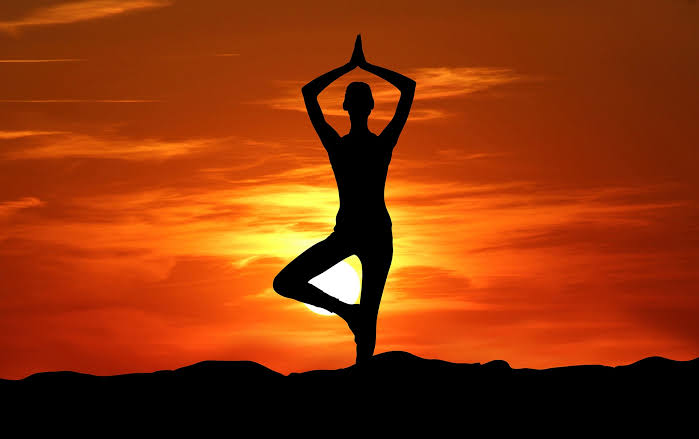
Importance of YOGA in Daily life

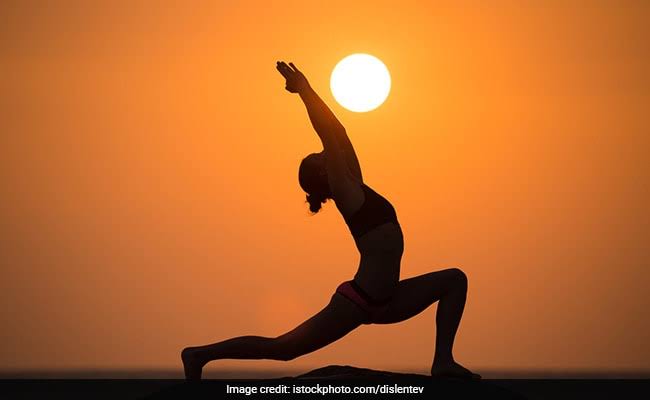
Over the last few decades, there has been an upsurge in the prevalence of yoga. Medical professionals and celebrities are also adopting and recommending the regular practice of yoga due its various benefits. While some regard yoga as simply one more prevailing fashion and associate it with the new age mysticism, others vouch for how astonishing this form of exercise feels. What they don’t understand is that what they see as simply just another form of exercise will profit them in ways they never envisioned.

Before we get into the benefits of Yoga, it is essential to understand what exactly Yoga really is. Yoga is not a religion, it’s a way of living that aims towards a healthy mind in a healthy body. Man is a physical, mental and spiritual being; Yoga helps in developing the balance between all the three as stated in Ayurveda in India. Other forms of exercise, like aerobics, only assure physical wellbeing. These exercises have very little to do with the improvement of spiritual or astral body.

Yoga is not just about bending or twisting the body and holding the breath. It is a technique to bring you into a state where you see and experience reality simply the way it is. If you enable your energies to become exuberant and ecstatic, your sensory body expands. This enables you to experience the whole universe as a part of yourself, making everything one, this is the union that yoga creates.

The founder of Yoga, Patanjali stated, “Sthiram sukham asanam.” It implies that a posture that appears to be firm and agreeable is your asana. You may be astounded to know that an asana is just a preliminary step into the act of yoga. It is a way that encourages you to achieve the greater good. Yoga focusses on idealizing concordance between your mind, body, and soul. When you adjust yourself so everything functions brilliantly within you, you will draw out the best of your capabilities.

Importance of Yoga

The perfect unison can be achieved through Hatha Yoga and its various branches (Ashtanga Yoga, Iyengar Yoga, Bikram Yoga, Yin Yoga, Kundalini Yoga), depending on what you like and the problems you are looking to tackle through the practice.

Some of the Advantages of Yoga are as follows:
Improves brain function
Lower stress levels
Alters gene expression
Increases flexibility
Lowers blood pressure
Improves lung capacity
Relieves anxiety
Relieves chronic back pain
Lowers blood sugar in diabetics
Improves sense of balance
Stronger bones
Healthy weight
Lowers risk of heart diseases
Yoga as a practice has innumerable benefits that positively affects an individual both physically and mentally. Whether it is reducing your blood pressure or raising your pain tolerance, listed below are a few things that yoga works on:

Enhanced Circulation:
Yoga improves your blood circulation. This means better transportation of oxygen and nutrients throughout the body. Improved blood flow also indicates healthier organs and glowing skin.
Improves Posture:
Yoga teaches how to control and how to balance. With regular practice, your body will automatically assume the right stance. You will look both confident and healthy.
Uplifts your mood:
Practicing yoga on regular basis uplifts your mood instantly as it leaves your body with refreshing energy.
Lowered Blood Pressure:
Practicing yoga on daily basis enhances the blood circulation in the body. This enables oxygenation in the body due to which there is a significant reduction in the blood pressure as the body calms down.
Keeps Premature Aging at Bay:
Why not age gracefully and not before time? Yes, yoga helps you detox and eliminate toxins and free radicals. This, apart from other benefits, helps delay aging too. Yoga also relives stress which is yet another factor that beats aging.
Reduces Stress:
When you are on your yoga mat, you focus on the practice. This means that all your focus is concentrated on the matter at hand, and your mind slowly drains out the stress and troubles that are plaguing it.
A Drop in The Pulse Rate:
Yoga eases the body by reducing the strain. When the body relaxes, the pulse rate decreases. A low pulse rate indicates that your heart is strong enough to pump more blood in a span of fewer beats.
Increases Strength:
You use the weight of your own body to increase your strength. This is a very bewildering method of strength training.
Anxiety Management:
A little twisting, bending and controlled breathing helps you overcome anxiety.
Better Cardiovascular Endurance:
Yoga improves oxygenation in the body and also lowers the heart rate. This results in higher cardiovascular endurance.
Lowered Respiratory Rate:
Yoga involves a whole lot of controlled breathing. It entails filling your lungs to their full capacity, thus allowing them to work more efficiently.
Fights Depression:
When you practice yoga, repressed feelings surface. While you may feel sad, the negative energy is released. This helps to combat depression.
Teaches Balance:
Yoga also focusses at improving balance and also allows you to gain control over your body. Regular practice of yoga will enhance your ability to balance the poses in the class and focus well outside the class.
Stimulation of Organs:
The internal organs are massaged when you practice yoga, thereby increasing your resistance to diseases. Also, once you are attuned to your body, after years of practice, you will be able to tell instantly if your body doesn’t function properly.
Increased Immunity:
Yoga and Immunity go hand in hand. As yoga works towards healing and enhancing every cell in the body, your body automatically becomes more immune. Thereby, increasing your immunity.
Instills Full Body Awareness:
Practicing yoga on regular basis will help you become aware of your own body. You will begin to make subtle movements in order to enhance your alignment. With time, yoga helps you to become comfortable in your own skin.
Improvement in Gastrointestinal Health:
Practicing yoga regularly activates the digestive system and the other stomach related diseases like indigestion and gas are eliminated. Therefore, gastrointestinal functions improve in both men and women. Read more about indigestion home remedies.
Increasing Core Strength:
It is essential to understand when your core is strong, your body is strong. Your core holds the weight of your body. It helps in increasing your resistance to injuries and also help you heal better. Yoga works on the core and makes it healthy, flexible and strong.
Higher Levels of pain Tolerance:
Yoga increases the level of pain tolerance and also works towards reducing chronic pain.
Increased Metabolism:
Yoga keeps the metabolism in check since a balanced metabolism is essential to achieve ideal weight.
Improved Sexuality:
Yoga increases your self-confidence and offers complete relaxation and more control. This gives your sexuality a much-needed boost.
Renewed Energy:
Yoga has the ability to make your mind and body feel rejuvenated. People who perform yoga on daily basis feel energized after a session of yoga.


Improves sleep:
Yoga helps you relax your mind completely. It helps you work on unnecessary tensions, thus facilitating better sleep.
Integrated Function of the Body:
Yoga means unison. When you practice yoga on regular basis, your mind starts to work in union with your body. This enhances movement and grace.
Allows- Self Acceptance:
Yoga enables self-awareness and betterment of health. Your self-esteem improves, and you become more confident.
Builds Self – Control:
The controlled movements of yoga teach you how to render that self-control to all the aspects of your life.
Brings about a Positive Outlook to Life:
Many hormones in the nervous system are stabilized when yoga is practiced on the regular basis. This helps you becomes more positive and you tend to look at life with refreshed and positive perspective.
Reducing Hostility:
When yoga is performed on the regular basis, the anger is greatly controlled. The breathing and meditation calm the nervous system, thereby decreasing anger and hostility. Reduction in hostility means reduction in blood pressure. This automatically enables a stress free and healthier approach towards life.
Better Concentration:
Performing yoga every day will eventually result in better concentration and in less than eight weeks of yoga practice, you will find yourself more motivated.
Tranquility and Calmness:
The breathing and meditation enables you disengage from your thoughts. This helps you calm down. With everyday yoga practice, you will notice how the calmness is no longer just a part of your practice – it becomes a way of life!
Yoga transforms your life and broadens your horizons in ways you can never imagine. It is absolutely worth trying!

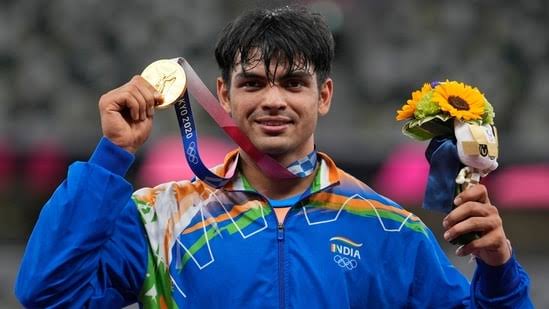
Neeraj chopra: A gold medal 🏅🏅

After local children teased him about his childhood obesity, his father enrolled him in a gymnasium at Madlauda; he was later enrolled in a gym in Panipat.While there, he also visited the nearby Panipat Sports Authority of India centre, where javelin thrower Jaiveer Choudhary recognized his early talent.[ Observing Chopra’s ability to achieve a 40-metre throw without training and impressed by his drive, Choudhary became his first coach.After training under Choudhary for a year, the 13-year-old Chopra was admitted to the Tau Devi Lal Sports Complex in Panchkula, four hours from his home. The sports complex was then one of only two facilities in the state of Haryana with a synthetic runway. There, he trained under coach Ahmad, who made him train in long-distance running along with the javelin throw. Initially while at Tau Devi, he typically achieved throws of around 55 metres. He soon increased his range, and won the 2012 junior nationals in Lucknow by achieving a new national record throw of 68.40 metres.The next year, he entered his first international competition, the World Youth Championships in Ukraine. He won his first international medal in 2014, a silver at the Youth Olympics Qualification in Bangkok. He achieved his first throw of over 70 metres at the 2014 senior nationals, following this up with a world record throw in the junior category of 81.04 metres in the 2015 All India Inter-University Athletics Meet; this was his first throw of over 80 metres.Chopra received a callback for the national-level training camp in 2015, leaving Panchkula in early 2016 to train at NIS Patiala. He won a gold medal at the 2016 South Asian Games with a throw of 84.23 m, where he equalled the Indian national record.

Career Of N. Chopra

Chopra won gold in the 2017 Asian Athletics Championships with a throw of 85.23 metres.In the men’s javelin throw at 2018 Commonwealth Games, he registered a season-best effort of 86.47 metres, becoming one of the few Indian athletes to win a gold medal on their Commonwealth Games debut, also becoming the first Indian to win the javelin throw at the Games. In May 2018, he again broke the national record at the Doha Diamond League with a throw of 87.43 metres.

In August 2018, Chopra made his debut appearance at the Asian Games representing India at the 2018 Asian Games, and was also the flag-bearer for the Indian contingent during the 2018 Asian Games Parade of Nations.On 27 August, he threw a distance of 88.06 m to win gold in the Men’s javelin throw at the 2018 Asian Games and set a new Indian national record, bettering his own previous record.It was also India’s first gold medal in javelin throw at the Asian Games. Chopra was the only track and field athlete that year to be recommended by the AFI for the country’s highest sports award, the Khel Ratna, but was awarded the Arjuna Award in September 2018.

Having suffered an elbow injury, Chopra underwent surgery in Mumbai on 2 May 2019, the day after the qualifying competitions for the 2020 Tokyo Olympics had begun After a period of recuperation, involving meditation and rehabilitative training at Patiala and the IIS Vijayanagar, Chopra travelled to South Africa in November 2019 for training under German biomechanics expert Klaus Bartoneitz. Previously, he had been coached by Gary Calvert,Werner Daniels and Uwe Hohn.After a 16-month hiatus, he returned to international competition in January 2020 with a winning throw of 87.86 metres in the Athletics Central North West League Meeting in Potchefstroom, South Africa, which qualified him for Tokyo.

Due to the COVID-19 pandemic, Chopra spent the next year in India training at the NIS Patiala.On 5 March 2021, Chopra again broke his own national record with a new throw of 88.07m, establishing him in a world leading position. After weeks of attempting to secure a travel visa, which Chopra described as frustrating, he was cleared to travel to France with his coach. He opened his international season of 2021 with a throw of 83.18 metres that earned him a gold medal at an event in Lisbon, Portugal, but skipped the World Athletics Continental Tour and the Diamond League event at Gateshead to rest and prepare for the Olympics.

2020 Tokyo Olympics
See also: Athletics at the 2020 Summer Olympics – Men’s javelin throw
Chopra made his debut at the Olympics representing India at the 2020 Summer Olympics. On 4 August 2021, he was placed in Group A. Despite the effects of jet lag after flying to Tokyo from Sweden and a disrupted sleep schedule due to regular dope-control testing, Chopra topped his group and qualified for the final in the men’s javelin throw with a throw of 86.65 metres. Competing with more-experienced and better-performing athletes, notably Johannes Vetter of Germany, Chopra’s strategy for the final, which he developed with his coach Bartonietz, was to rely on his speed and put pressure on the rest of the field with a powerful long throw.

As a result, Chopra won the gold medal in the final on 7 August with a throw of 87.58 m,and became the first Indian Olympian to win a gold medal in athletics, and the first post-independence Indian Olympic medalist in athletics. He also became the second Indian to win an individual Olympic gold medal after Abhinav Bindra, who won the gold medal in the men’s 10 m air rifle in the 2008 Summer Olympics. Chopra dedicated his win to sprinters Milkha Singh and P. T. Usha.

A medal of sweat : 41 years of Blood and sweat


News18 English
search
LIVE TV
Latest
Movies
Olympics 2020
Photos
Buzz
Politics


Subscribe to Notifications
HOME» NEWS»HOCKEY»INDIA VS GERMANY HOCKEY HIGHLIGHTS, TOKYO OLYMPICS 2020, BRONZE MEDAL MATCH: INDIA WIN MEDAL AFTER 41 YEARS
India vs Germany Hockey Highlights, Tokyo Olympics 2020, Bronze Medal Match: India Win Medal after 41 Years
Tokyo Olympics 2020, Hockey Bronze Medal Match: India vs Germany (AP)
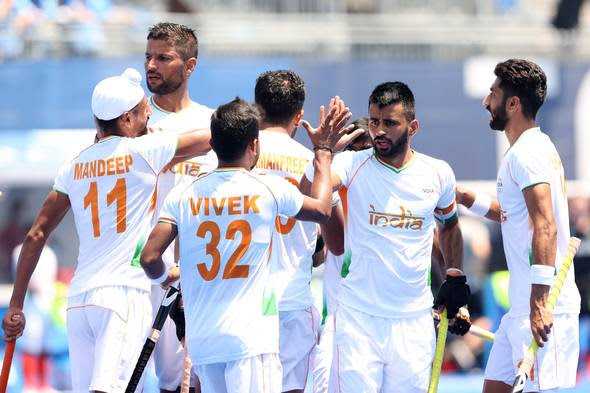
India vs Germany Highlights, Hockey Bronze Medal Match, Tokyo Olympics 2020: India defeated Germany 5-4 in a high-intensity goal fest to win the bronze medal in men’s hockey, their first medal in the Olympics after a gap of 41 years.
ADVERTISEMENT
SPORTS DESK& NEWS18.COM
Updated: Aug 5, 2021, 9:16 AM
India vs Germany Highlights, Hockey Bronze Medal Match, Tokyo Olympics 2020: India have made history as they claim the bronze medal in hockey after 49 years and their first podium in 41 years as they beat Germany 5-4 in the third-fourth place play-off match. Timur Oruz scored an early goal to hand the lead to Germany as Simranjeet Singh equalised for the Indian men’s hockey team. Benedikt Furk and Niklas Wellen scored the second and third goals as Hardik and Harmanpreet equalised and Rupinder Pal Singh converted a penalty stroke and Simranjeet netted his second of the match to give India a two-goal lead but Germnygot one back through Lukas Windfeder.

TOKYO 2020 OLYMPICS – FULL COVERAGE | INDIA IN FOCUS | SCHEDULE | RESULTS | MEDALS TALLY | PHOTOS | OFF THE FIELD | EBOOK

World no.3 India played into the hands of world champions Belgium with their defence succumbing under relentless pressure from the Red Lions to concede a bulk of penalty corners throughout the match and lose 2-5 in the semifinals.

Read More
Aug 05, 2021

09:06 (IST)Tokyo Olympics: India End Medal Drought in Men’s Hockey; Win Bronze Beating Germany 5-4

This is India’s first ever medal at the Games since 1980 and 12th overall. India, an eight-time Olympic hockey champion, have thus secured their third ever bronze medal at the marquee event


Aug 05, 2021

09:04 (IST)
Congress leader Rahul Gandhi tweeted: “This is a big moment- the whole country is proud of your achievement.”


ADVERTISEMENT
Aug 05, 2021

08:58 (IST)
Indian Prime Minister says: Indian men’s hockey team “have captured the imagination of the entire nation, especially our youth”


Aug 05, 2021

08:56 (IST)
Former Sports Minister Kiren Rijiju says – “India in complete celebration mood”


Aug 05, 2021

08:54 (IST)
Sports Minister Anurag Thakur wishes the Indian men’s hockey team for winning the bronze medal.


Aug 05, 2021

08:47 (IST)
Tokyo Olympics Live: Hockey

HISTORY MADE! India have done it! They win bronze! A medal in hockey after 41 years as they beat Germany 5-4 in the 3rd-4th place play-off!


ADVERTISEMENT
Aug 05, 2021

08:43 (IST)
India vs Germany Live Score

With barely minutes to go… Germany are bringing off their keeper! Last roll of the dice…


Aug 05, 2021

08:29 (IST)
India vs Germany Hockey Live:

GOAL! Lukas Windfeder gets one back as India were hit on the counter. They have been pushing to get another goal and seal their win but have conceded one..


Aug 05, 2021

08:26 (IST)
India vs Germany Hockey: LIVE

The whole of India right now…


Aug 05, 2021

08:20 (IST)
Tokyo Olympics Live: Hockey

End of 3rd Quarter! India scored two goals in the third quarter to take a decisive lead in the match and Germany were stunned by the quick play!

Both teams did get chances to add to their goal tally but with the last 15 minutes to go.. it is India who lead.


Aug 05, 2021

08:04 (IST)
India vs Germany Hockey: LIVE

GOAL! Simranjeet Singh scores his second and India now have a two-goal lead against Germany! What a sliding goal and India are a changed team in the third quarter.


Aug 05, 2021

08:01 (IST)
India vs Germany Live Score

GOAL! Rupinder Pal Singh gives India the lead for the first time i in the bronze medal! Scores from the penalty stroke and it is his 3rd from three chances in the tournament so far…


Aug 05, 2021

07:54 (IST)
Tokyo Olympics Live: Hockey

End of 3rd Quarter! What 30 minutes of hockey… 6 goals scored and nothing to separate the teams.. Germany and India are level at 3-3!


Aug 05, 2021

07:47 (IST)
India vs Germany Live Score

GOAL! What a game! Harmanpreet Singh scores and it is all level now… Anything you can do… Germany scored two quick goals and India hit back almost immediately with two swift ones of their own.


Aug 05, 2021

07:44 (IST)
India vs Germany Live Score

GOAL! Not over yet… Hardik Singh gets one back for India from the penalty corner! Some game this…


Aug 05, 2021

07:41 (IST)
Tokyo Olympics Live: Hockey

GOAL! Another field goal from Germany! Benedikt Furk extends the lead for Germany… Indian men’s team need to compose themselves and see out this quarter and start afresh in the second half…


Aug 05, 2021

07:38 (IST)
Tokyo Olympics Live: Hockey

GOAL! Niklas Wellen hands the lead to Germany.. the Indian men’s team look stunned. They were growing in confidence!


Aug 05, 2021

07:31 (IST)
India vs Germany Hockey: LIVE

GOAL! Simranjeet Singh equalises for India. A simple ball into the middle of the circle and the Indian forward traps, turns and shoots! And it goes into the net! What A Strike!


Aug 05, 2021

07:23 (IST)
India vs Germany Live Score

1st Quarter Done! India have hit the post and put the ball in the back of the net but the scoreline reads that Germany are ahead… With the sun beating down, match management will be crucial for both teams.

Germany got four back-to-back penalty corners right at the death after referrals… but India survive a mighty scare!


Aug 05, 2021

07:12 (IST)
Tokyo Olympics Live: Hockey

What a lifted ball from defence for Germany as the forward takes the ball down and strikes it in one swift movement… but PR Sreejesh makes a superb save as he got into position to send the shot wide. The Indian men’s team are getting hit on the counter as they look to get higher up the pitch…


Aug 05, 2021

07:08 (IST)
India vs Germany Live: Hockey

The Indian men’s team get a penalty corner but Rupinder’s effort is deflected over and Germany survive a scare. Seconds later, India put the ball in the back of the net but the umpire calls play back for dangerous play…


Aug 05, 2021

07:04 (IST)
Tokyo Olympics Live: Hockey

GOAL! Timur Oruz scores an early goal to give Germany the lead against the Indian men’s team. What a start to the game. they have oilled on the pressure… from the word go!


Aug 05, 2021

07:01 (IST)
Tokyo Olympics Live: Hockey

PUSHBACK! The Indian men’s team and Germany start their last match at Tokyo Olympics. Simple.. whoever wins, gets the Bronze medal!


Aug 05, 2021

06:52 (IST)
Tokyo Olympics Live: Hockey

Indian men’s team vs Germany head-to-head record.


Aug 05, 2021

06:45 (IST)
India vs Germany Hockey Match:

Germany’s squad: Alexander Stadler, Mats Jurgen Grambusch, Lukas Windfeder, Linus Muller, Martin Dominik Haner, Paul-Philippe Kaufmann, Niklas Wellen, Johannes Grosse, Constantin Staib, Timm Alexander Herbruch, Tobais Constantin Hauke (Captain), Jan Christopher, Justus Weignand, Martin Detlef Zwicker , Florian Fuchs, Benedikt Furk, Niklas Bosserhoff, Timur Oruz.


Aug 05, 2021

06:41 (IST)
Tokyo Olympics Live: Hockey

Indian men’s team starting lineup for the bronze medal match..


Aug 05, 2021

06:41 (IST)
India vs Germany Live Score:

India’s squad: Dilpreet Singh, Rupinder Pal Singh, Surender Kumar, Manpreet Singh (Captain), Hardik Singh, Gurjant Singh, Mandeep Singh, Simranjeet Singh, Mandeep Singh, Lalit Kumar Upadhyay, Harmanpreet Singh, Sreejesh Raveendran Parattu (Goalkeeper), Sumit, Nilakanta Sharma, Shamsher Singh, Varun Kumar, Birendra Lakra, Amit Rohidas, Vivek Sagar Prasad


Aug 05, 2021

06:37 (IST)
Good morning and welcome to our live coverage of Indian men’s hockey team bronze medal match against the mighty Germans.


Aug 04, 2021

23:11 (IST)
India vs Germany Live Score, Hockey Bronze Medal Match: India’s last of the eight Olympic golds came way back in 1980 Moscow Games. But come Thursday, the Indian defence will have to pull up its socks and avoid repeating the same mistakes which it made against Belgium if they desire to stand on the podium here. Despite having four world-class drag-flickers in its armoury in Rupinder Pal Sngh, vice captain Harmanpreet Singh, Varun Kumar and Amit Rohidas, the Indians have a poor penalty corner conversion record, utilising just one out of the five they secured against world no.1 Belgium on Tuesday.


Aug 04, 2021

23:10 (IST)
A demoralising semifinal defeat behind it, the Indian men’s hockey team would need an error-free performance from its defence to secure an Olympic medal after 41 years when it takes on Rio Games bronze-winner Germany in the third-fourth place play-off match


India vs Germany Hockey Highlights, Tokyo Olympics 2020, Bronze Medal Match: India Win Medal after 41 Years
Tokyo Olympics 2020, Hockey Bronze Medal Match: India vs Germany (AP)
The Belgians played to their strengths as their focus was merely on earning penalty corners, especially with the likes of the tournament’s highest goal-scorer Alexander Hendrickx, who scored a hat-trick, and Loick Lupaert in their ranks.

Their ploy worked to perfection as put under pressure, the Indians lost their defensive shape and conceded as many as 14 penalty corners in the match, eight in the final quarter, to lose a bright chance to secure an Olympic medal after 41 years.

India’s last of the eight Olympic golds came way back in 1980 Moscow Games.

But come Thursday, the Indian defence will have to pull up its socks and avoid repeating the same mistakes which it made against Belgium if they desire to stand on the podium here.

Despite having four world-class drag-flickers in its armoury in Rupinder Pal Singh, vice-captain Harmanpreet Singh, Varun Kumar and Amit Rohidas, the Indians have a poor penalty corner conversion record, utilising just one out of the five they secured against world no.1 Belgium on Tuesday.

The onus now is on the Indian defence and the likes of Harmanpreet, Rupinder, Surender Kumar, Amit Rohidas and star goalkeeper PR Sreejesh will have to be on their toes to come out triumphant against the might of Germans.

The Indians also need to avoid unnecessary tackles in front of their circle with skipper Manpreet Singh being guilty of getting a card at the start of the fourth quarter, which resulted in three back-to-back penalty corners for Belgium, the last of which was converted by Hendrickx to shift the momentum of the match in their favour.

Going by rankings, there is hardly anything to differentiate between the two sides as India are currently on third place and Germany on fourth.

But Germany would be a tough nut to crack for the Indians.

Having lost 1-3 against Australia in the semifinals here, the Germans would be determined to prove a point.

The clash between India and Germany would be a repeat of the bronze medal clash of the 2017 Hockey World League Finals. Back then, the Indians triumphed 2-1 against a vastly depleted German team.

Having failed to secure the gold medal here after two successive yellow metals in 2008 and 2012 Games, the Germans had to settle for a bronze in Rio 2016 and they would be determined to at least return with a podium finish from here.

Germany are the most successful hockey nation in the Olympics after India with four gold medals.

Striker Lukas Wendfeder is in great form, having scored scored six goals in the tournament so far.

The Indian defence is expected to have a busy outing on Thursday with the likes of Wendfeder, Florian Fuchs and Christopher Ruhr in the German side.

In the Olympics, both the sides have faced each other 11 times recording four wins each and three matches ending in draws.

Recently, India toured Germany in March this year during which they defeated the hosts 6-1 and drew a match 1-1.

India captain Manpreet Singh has already said that he is in no mood to dwell on the semifinal result.

“…now we need to focus on our next bronze-medal match and we need to work and we need to get the medal,” Manpreet had said after the semifinal loss.

“At least we should win a bronze medal for the nation,” he added.

In the men’s hockey final, Australia will face Belgium later on Thursday.

Read all the Latest News, Breaking News and Coronavirus News here


Copyright 2018 NEWS18.com — All rights reserved.
Visit Mobile Site
SHARE THIS
ARTICLE

Indian Olympic campaign in last 120 years

Indian hockey men’s team, gold medal – Amsterdam 1928

The Indian hockey team scored 29 goals without reply in five matches to win its first Olympic gold medal. The wizard Dhyan Chand scored 14 goals, including a hat-trick in the final against the Netherlands in the final. This was Indian hockey’s first medal at the Olympics.

Indian hockey men’s team, gold medal – Los Angeles 1932

In a reduced field, the Indian hockey team first beat Japan 11-1. A 10-goal charge from Roop Singh, Dhyan Chand’s younger brother, and eight goals from the wizard himself secured a massive 24-1 win against the USA and ensured a second-consecutive Olympic gold medal.

Indian hockey men’s team, gold medal – Berlin 1936
With Dhyan Chand as captain, the Indian hockey team completed a hat-trick of Olympic golds at Berlin 1936. This time, India scored 38 goals in five matches and only conceded one in the final against Germany as Dhyan Chand’s second hat-trick in Olympic finals took them to an 8-1 victory.

Indian hockey men’s team, gold medal – London 1948

The first gold medal for India post-independence unsurprisingly came from the Indian hockey team as they regained their position atop the Olympic podium at London 1948. A new star emerged in

Balbir Singh Sr as India romped to the final with 19 goals in three matches. Balbir Singh’s brace in the final helped India beat hosts Great Britain 4-0 and win a fourth Olympic gold.

Indian hockey men’s team, gold medal – Helsinki 1952

The Indian hockey team overcame the midnight sun and cold conditions to win their fifth-consecutive Olympic gold medal. Balbir Singh Sr scored nine goals in three matches, including five in the final against the Netherlands – a record for the most goals by an individual in an Olympic men’s hockey final.

KD Jadhav, bronze medal – men’s bantamweight wrestling, Helsinki 1952

Wrestler Khashaba Dadasaheb Jadhav became India’s first individual Olympic medallist with his bronze in the men’s freestyle bantamweight category. It was just reward for the hardworking wrestler, who had to run from pillar to post to gather funds for his Olympic trip and proved his mettle on the biggest stage.

Indian hockey men’s team, gold medal – Melbourne 1956

It was six Olympic golds in a row for the Indian hockey team at Melbourne 1956. India did not concede a single goal in the entire tournament and skipper Balbir Singh Sr. played with a fracture in his right hand in the final as India beat neighbours Pakistan 1-0 in the final.

Indian hockey men’s team, silver medal – Rome 1960

India’s unparalleled gold streak in hockey came to an end at Rome 1960 as the side lost to Pakistan 1-0 in the final and had to settle for a silver medal.

Indian hockey men’s team, gold medal – Tokyo 1964

The Indian hockey team soon returned to the Olympic summit as they won gold at Tokyo 1964. India recorded four wins and two draws in the group stages and beat Australia in the semis. They faced Pakistan in the final for the third consecutive time and beat them 1-0, courtesy a penalty stroke goal.

Indian hockey men’s team, bronze medal – Mexico City 1968

With hockey gaining further prominence in Europe, the Indian hockey team was slowly losing its foothold and the bronze at Mexico 1968 was the first indication. India beat Mexico, Spain and got a walkover against Japan but were beaten 2-1 in the semi-finals by Australia. India defeated West Germany 2-1 to win the bronze medal, finishing outside the top two for the first time at the Olympics.

Indian hockey men’s team, bronze medal – Munich 1972

A second-consecutive Olympic bronze medal arrived for the Indian hockey team at Munich 1972. India won four matches and drew two before the semi-finals against Pakistan. The attack on the Israeli team then caused their semi-final to be pushed forward by two days and it affected the team’s rhythm as they lost 2-0 to Pakistan. However, they regrouped to beat the Netherlands 2-1 and clinched bronze.

Indian hockey men’s team, gold medal – Moscow 1980

A disappointing seventh-place finish at Montreal 1976 – then the Indian hockey team’s lowest at an Olympics – galvanised the team for Moscow 1980. In a reduced field, India won three and drew two matches in the preliminary rounds. In the final, the Indian team beat Spain 4-3 to win the gold medal. It remains the last hockey gold for India at the Olympics.

Leander Paes, bronze medal – men’s singles tennis, Atlanta 1996

India had gone without a medal for three straight editions before a young Leander Paes got them to winning ways in 1996 with a bronze. After losing to Andre Agassi in the semi-final, Paes went on to beat Fernando Meligani in the bronze medal match.

Karnam Malleswari, bronze medal – women’s 54kg weightlifting, Sydney 2000

Weightlifter Karnam Malleswari clinched the bronze medal in the 54kg category, becoming the first Indian woman to win an Olympic medal. She had lifted 110kg in the snatch category and 130kg in the clean and jerk for a total of 240kg.

Rajyavardhan Singh Rathore, silver medal – men’s double trap shooting, Athens 2004

Armyman Rajyavardhan Singh Rathore was the first shooter to win an Olympic medal for India. UAE’s Shaikh Ahmed Almaktoum surged into an unassailable lead and it came down to Rathore to shoot both his flying clay targets with his final attempt in the men’s double trap. The army colonel accurately down both and ensured India’s first individual silver medal at the Games.

Abhinav Bindra, gold medal – men’s 10m air rifle shooting, Beijing 2008

India’s most euphoric moment at the Olympics came at Beijing 2008 when Abhinav Bindra won a historic gold medal in the men’s 10m air rifle. The Indian shooter shot a near-perfect 10.8 with his final shot, ensuring India’s first individual Olympic gold medal.

Vijender Singh, bronze medal – men’s middleweight boxing, Beijing 2008

Vijender Singh became the first Indian boxer to win an Olympic medal. The man from Haryana defeated southpaw Carlos Góngora of Ecuador 9–4 in the quarter-final to guarantee a bronze medal before he lost 5–8 to Cuba’s Emilio Correa in the semis.

Sushil Kumar, bronze medal – men’s 66kg wrestling, Beijing 2008

After losing his opening bout, Sushil Kumar went on to win three bouts in the repechage round within 70 minutes to clinch the bronze medal. It was India’s first Olympic medal in wrestling for 56 years.

Gagan Narang, bronze medal – men’s 10m air rifle shooting, London 2012

After narrowly missing out on the final round in the previous Olympics due to countback, Gagan Narang won the bronze medal in the men’s 10m air rifle at London 2012. With the world’s eyes trained on him, Gagan Narang played out a tense final with China’s Wang Tao and Nicolo Campriani of Italy before ending in third place.

Sushil Kumar, silver medal – men’s 66kg wrestling, London 2012

India’s flag-bearer for the opening ceremony, Sushil Kumar was India’s biggest medal hope in 2012. He overcame severe body aches to make his run to the final before his body finally gave up due to exhaustion. Sushil Kumar lost to Tatsuhiro Yonemitsu in the final and ended up with silver, becoming India’s only individual two-time Olympic medallist.

Vijay Kumar, silver medal – men’s 25m rapid pistol shooting, London 2012

Barely known before the Games, shooter Vijay Kumar ensured his name in the record books with a silver medal in the 25m rapid pistol. Tied with China’s Ding Feng going into the sixth round in the final, Vijay Kumar outshot Feng to head into the last round. However, Cuba’s Leuris Pupo proved a step too far as Vijay Kumar settled for silver.

Mary Kom, bronze medal – women’s flyweight boxing, London 2012

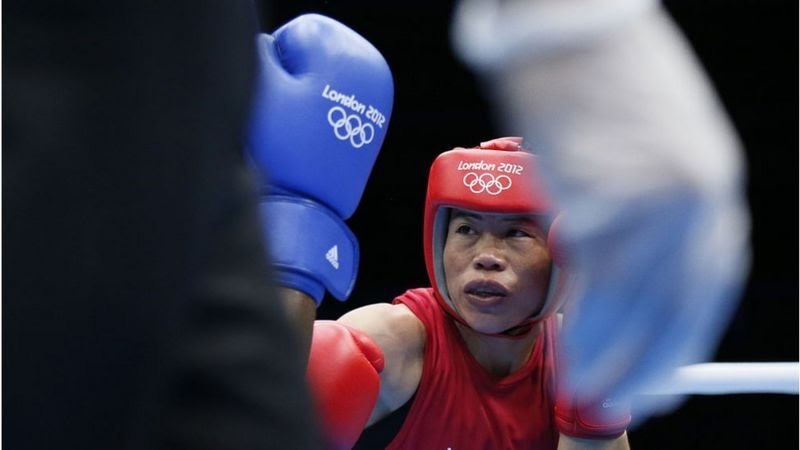
A legend even before her maiden Olympics at London 2012, Mary Kom commemorated the first edition of women’s boxing at the Games with a bronze in the flyweight category. The Manipur-born boxer was on a fine run before being halted by eventual champion Nicola Adams of Great Britain in the semis.

Yogeshwar Dutt, bronze medal – men’s 60kg wrestling, London 2012

A veteran of three Olympics by London 2012, wrestler Yogeshwar Dutt finally achieved his childhood dream when he won bronze in the 60kg category. He defeated North Korea’s Ri Jong Myong in the last repechage round in just 1:02 minutes.

Saina Nehwal, bronze medal – women’s singles badminton, London 2012

Saina Nehwal became the first Indian badminton player to win an Olympic medal when her opponent, China’s Wang Xin, was forced to retire hurt during the match in the semi-final.

PV Sindhu, silver medal – women’s singles badminton, Rio 2016

Saina Nehwal’s feat surely propelled India’s badminton story – as PV Sindhu went one step ahead by reaching the final of the 2016 Summer Olympics before losing to Spain’s Carolina Marin in a feisty, 83-minute duel.

Sakshi Malik, bronze medal – women’s 58kg wrestling, Rio 2016

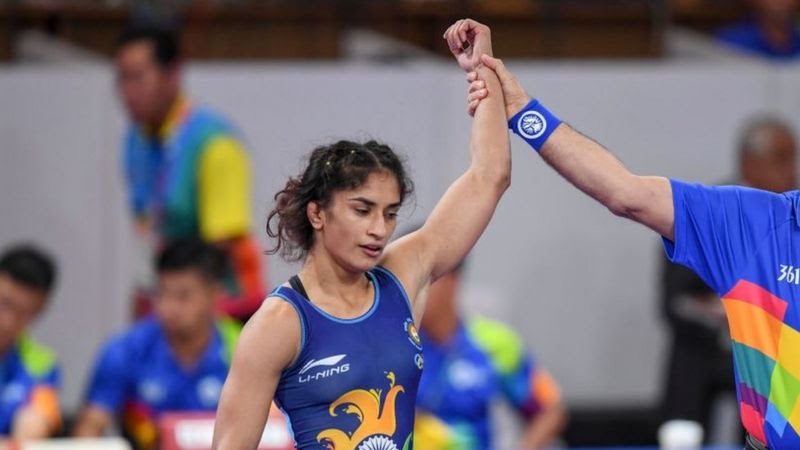
A late entrant to India’s Olympic contingent, Sakshi Malik became the first female Indian wrestler to win an Olympic medal. She beat Kyrgyzstan’s Aisuluu Tynybekova 8–5 to win the 58kg bronze and ensured India had won an Olympic wrestling medal in three consecutive Games.

Mirabai Chanu, silver medal – women’s 49kg weightlifting, Tokyo 2020

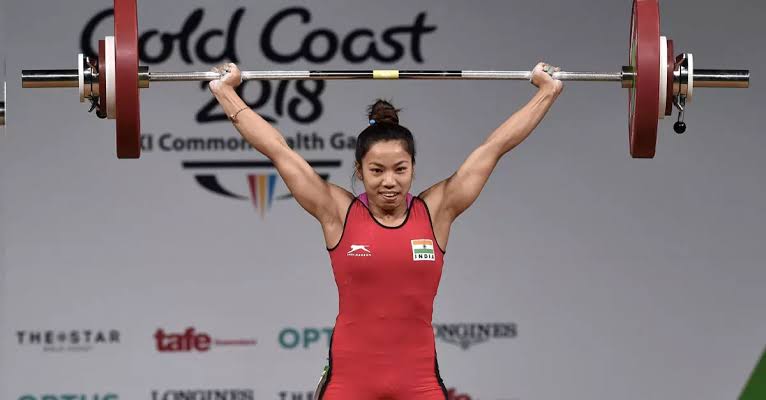
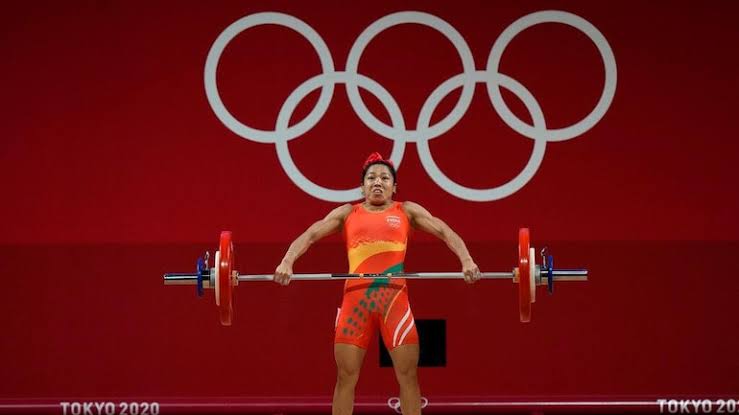
Ace weightlifter Mirabai Chanu put behind the disappointment of Rio 2016 to lift a total of 202kg to win the silver medal in the women’s 49kg category. It is her first Olympic medal and made her the second Indian weightlifter after Karnam Malleswari to win an Olympic medal. It is India’s first medal at the Tokyo Olympics.

Lovlina Borgohain – women’s welterweight (64-69kg), Tokyo 2020

On her Games debut, Lovlina Borgohain has been assured of at least a bronze medal at the Tokyo Olympics after beating Chinese Taipei’s Nien-Chin Chen in the quarter-finals of the women’s 69kg category.

That medal could yet be a gold or silver if she beats top seed Busenaz Surmeneli in the semi-finals.

PV Sindhu, bronze medal – women’s singles badminton, Tokyo 2020

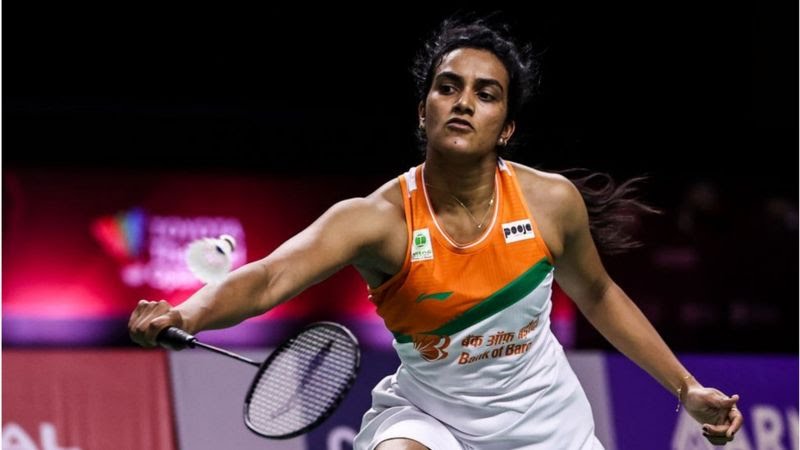
Badminton queen PV Sindhu became the first Indian woman and only the second Indian athlete – after Sushil Kumar – to win two individual Olympic medals.

PV Sindhu beat China’s He Bing Jiao 21-13, 21-15 to win the bronze medal in the women’s singles.

It is India’s third confirmed medal of Tokyo 2020 – one more than their haul at Rio 2016.

Anime : The Global Fandom

Introduction

Anime is hand-drawn and computer animation originating from Japan. In Japan and in Japanese, anime (a term derived from the English word animation) describes all animated works, regardless of style or origin. However, outside of Japan and in English, anime is colloquial for Japanese animation and refers specifically to animation produced in Japan.Animation produced outside of Japan with similar style to Japanese animation is referred to as anime-influenced animation.

The earliest commercial Japanese animations date to 1917. A characteristic art style emerged in the 1960s with the works of cartoonist Osamu Tezuka and spread in following decades, developing a large domestic audience. Anime is distributed theatrically, through television broadcasts, directly to home media, and over the Internet. In addition to original works, anime are often adaptations of Japanese comics (manga), light novels, or video games. It is classified into numerous genres targeting various broad and niche audiences.

Anime is a diverse medium with distinctive production methods that have adapted in response to emergent technologies. It combines graphic art, characterization, cinematography, and other forms of imaginative and individualistic techniques. Compared to Western animation, anime production generally focuses less on movement, and more on the detail of settings and use of “camera effects”, such as panning, zooming, and angle shots.Diverse art styles are used, and character proportions and features can be quite varied, with a common characteristic feature being large and emotive eyes.

The anime industry consists of over 430 production companies, including major studios like Studio Ghibli, Sunrise, and Toei Animation. Since the 1980s, the medium has also seen international success with the rise of foreign dubbed and subtitled programming. As of 2016, Japanese anime accounted for 60% of the world’s animated television shows.[

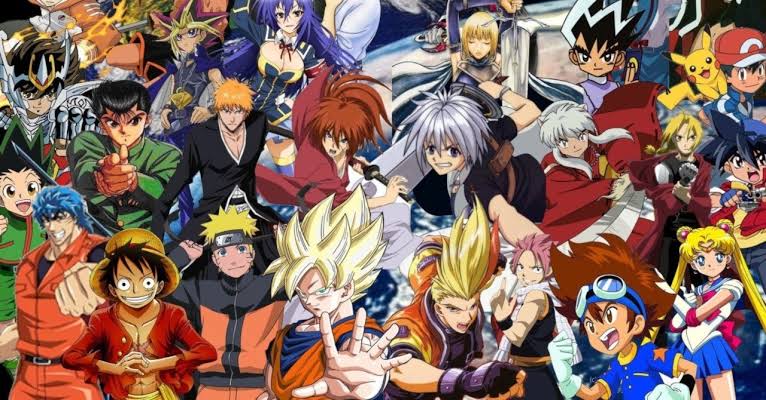
Different characters of anime

Etymology

As a type of animation, anime is an art form that comprises many genres found in other mediums; it is sometimes mistakenly classified as a genre itself.In Japanese, the term anime is used to refer to all animated works, regardless of style or origin. English-language dictionaries typically define anime as “a style of Japanese animation”or as “a style of animation originating in Japan”. Other definitions are based on origin, making production in Japan a requisite for a work to be considered “anime”.

The etymology of the term anime is disputed. The English word “animation” is written in Japanese katakana pronounced in its shortened form. Some sources claim that the term is derived from the French term for animation dessin animé but others believe this to be a myth derived from the popularity of anime in France in the late 1970s and 1980s.

In English, anime—when used as a common noun—normally functions as a mass noun. As with a few other Japanese words, such as saké and Pokémon, English texts sometimes spell anime as animé with an acute accent over the final e, to cue the reader to pronounce the letter, not to leave it silent as English orthography may suggest. Prior to the widespread use of anime, the term Japanimation was prevalent throughout the 1970s and 1980s. In the mid-1980s, the term anime began to supplant Japanimation;in general, the latter term now only appears in period works where it is used to distinguish and identify Japanese animation.

Modern Era of Anime

In the 1960s, manga artist and animator Osamu Tezuka adapted and simplified Disney animation techniques to reduce costs and limit frame counts in his productions. Originally intended as temporary measures to allow him to produce material on a tight schedule with an inexperienced staff, many of his limited animation practices came to define the medium’s style. Three Tales (1960) was the first anime film broadcast on television; the first anime television series was Instant History (1961–64).An early and influential success was Astro Boy (1963–66), a television series directed by Tezuka based on his manga of the same name. Many animators at Tezuka’s Mushi Production later established major anime studios (including Madhouse, Sunrise, and Pierrot).

The 1970s saw growth in the popularity of manga, many of which were later animated. Tezuka’s work—and that of other pioneers in the field—inspired characteristics and genres that remain fundamental elements of anime today. The giant robot genre (also known as “mecha”), for instance, took shape under Tezuka, developed into the super robot genre under Go Nagai and others, and was revolutionized at the end of the decade by Yoshiyuki Tomino, who developed the real robot genre. Robot anime series such as Gundam and Super Dimension Fortress Macross became instant classics in the 1980s, and the genre remained one of the most popular in the following decades.The bubble economy of the 1980s spurred a new era of high-budget and experimental anime films, including Nausicaä of the Valley of the Wind (1984), Royal Space Force: The Wings of Honnêamise (1987), and Akira (1988).

Neon Genesis Evangelion (1995), a television series produced by Gainax and directed by Hideaki Anno, began another era of experimental anime titles, such as Ghost in the Shell (1995) and Cowboy Bebop (1998). In the 1990s, anime also began attracting greater interest in Western countries; major international successes include Sailor Moon and Dragon Ball Z, both of which were dubbed into more than a dozen languages worldwide. In 2003, Spirited Away, a Studio Ghibli feature film directed by Hayao Miyazaki, won the Academy Award for Best Animated Feature at the 75th Academy Awards. It later became the highest-grossing anime film, earning more than $355 million. Since the 2000s, an increased number of anime works have been adaptations of light novels and visual novels; successful examples include The Melancholy of Haruhi Suzumiya and Fate/stay night (both 2006)

Hades

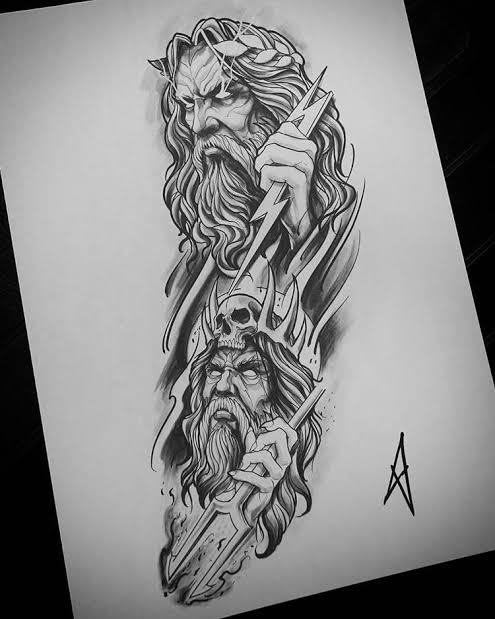
Hades in the ancient Greek religion and myth, is the god of the dead and the king of the underworld, with which his name became synonymous.Hades was the eldest son of Cronus and Rhea, although the last son regurgitated by his father. He and his brothers, Zeus and Poseidon, defeated their father’s generation of gods, the Titans, and claimed rulership over the cosmos. Hades received the underworld, Zeus the sky, and Poseidon the sea, with the solid earth, long the province of Gaia, available to all three concurrently. Hades was often portrayed with his three-headed guard dog Cerberus.

Hades

Early Years (Mythology)

In Greek mythology, Hades, the god of the underworld, was the first-born son of the Titans Cronus and Rhea. He had three older sisters, HestiaDemeter, and Hera, as well as a younger brother, Poseidon, all of whom had been swallowed whole by their father as soon as they were born. Zeus was the youngest child and through the machinations of their mother, Rhea, he was the only one that had escaped this fate. Upon reaching adulthood, Zeus managed to force his father to disgorge his siblings. After their release, the six younger gods, along with allies they managed to gather, challenged the elder gods for power in the Titanomachy, a divine war. The war lasted for ten years and ended with the victory of the younger gods. Following their victory, according to a single famous passage in the Iliad (Book XV, ln.187–93), Hades and his two brothers, Poseidon and Zeus, drew lotsfor realms to rule. Zeus received the sky, Poseidon received the seas, and Hades received the underworld, the unseen realm to which the souls of the dead go upon leaving the world as well as any and all things beneath the earth. Some myths suggest that Hades was dissatisfied with his turnout, but had no choice and moved to his new realm.Hades obtained his wife and queen, Persephone, through abduction at the behest of Zeus. This myth is the most important one Hades takes part in;it also connected the Eleusinian Mysteries with the Olympian pantheon, particularly as represented in the Homeric Hymn to Demeter, which is the oldest story of the abduction, most likely dating back to the beginning of the 6th century BC.

Persephone

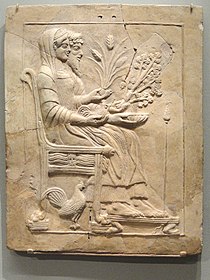
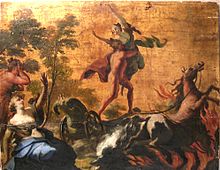
Persephone did not submit to Hades willingly, but was abducted by him while picking flowers in the fields of Nysa (her father, Zeus, had previously given Persephone to Hades, to be his wife, as is stated in the first lines of the Homeric Hymn to Demeter). In protest of his act, Demeter cast a curse on the land and there was a great famine; though, one by one, the gods came to request she lift it, lest mankind perish and cause the gods to be deprived of their receiving gifts and sacrifices, Demeter asserted that the earth would remain barren until she saw her daughter again. Zeus then sends for his son, Hermes, and instructs him to go down to the Underworld in hopes that he may be able to convince Hades to allow Persephone to return to Earth, so that Demeter might see Persephone and cause the famine to stop. Hermes obeys and goes down to Hades’ realm, wherein he finds Hades seated upon a couch, Persephone seated next to him. Hermes relays Zeus’ message, and Hades complies,

Oil painting of Persephone Abducted by Hades

Persephone does admit that she ate the food of the dead, as she tells Demeter that Hades gave her a pomegranate seed and forced her to eat it. Persephone’s eating the pomegranate seed binds her to Hades and the Underworld, much to the dismay of Demeter. Zeus, however, had previously proposed a compromise, to which all parties had agreed: of the year, Persephone would spend one third with her husband.

Realms Of Hades

In Roman mythology, the entrance to the Underworld located at Avernus, a crater near Cumae, was the route Aeneas used to descend to the realm of the dead. By synecdoche, “Avernus” could be substituted for the underworld as a whole. The di inferi were a collective of underworld divinities.

For Hellenes, the deceased entered the underworld by crossing the Styx, ferried across by Charon kair’-on), who charged an obolus, a small coin for passage placed in the mouth of the deceased by pious relatives. Paupers and the friendless gathered for a hundred years on the near shore according to Book VI of Vergil’s Aeneid. Greeks offered propitiatory libations to prevent the deceased from returning to the upper world to “haunt” those who had not given them a proper burial. The far side of the river was guarded by Cerberus, the three-headed dog defeated by Heracles (Roman Hercules). Passing beyond Cerberus, the shades of the departed entered the land of the dead to be judged.

The five rivers of the realm of Hades, and their symbolic meanings, are Acheron (the river of sorrow, or woe), Cocytus (lamentation), Phlegethon (fire), Lethe (oblivion), and Styx (hate), the river upon which even the gods swore and in which Achilles was dipped to render him invincible. The Styx forms the boundary between the upper and lower worlds. See also Eridanos.

The first region of Hades comprises the Fields of Asphodel, described in Odyssey xi, where the shades of heroes wander despondently among lesser spirits, who twitter around them like bats. Only libations of blood offered to them in the world of the living can reawaken in them for a time the sensations of humanity.

Beyond lay Erebus, which could be taken for a euphonym of Hades, whose own name was dread. There were two pools, that of Lethe, where the common souls flocked to erase all memory, and the pool of Mnemosyne (“memory”), where the initiates of the Mysteries drank instead. In the forecourt of the palace of Hades and Persephone sit the three judges of the Underworld: Minos, Rhadamanthus, and Aeacus. There at the trivium sacred to Hecate, where three roads meet, souls are judged, returned to the Fields of Asphodel if they are neither virtuous nor evil, sent by the road to Tartarus if they are impious or evil, or sent to Elysium (Islands of the Blessed) with the “blameless” heroes.

In the Sibylline oracles, a curious hodgepodge of Greco-Roman and Judaeo-Christian elements, Hades again appears as the abode of the dead, and by way of folk etymology, it even derives Hades from the name Adam (the first man), saying it is because he was the first to enter there.[84] Owing to its appearance in the New Testament of the Bible, Hades also has a distinct meaning in Christianity.


Atlantis : The lost City

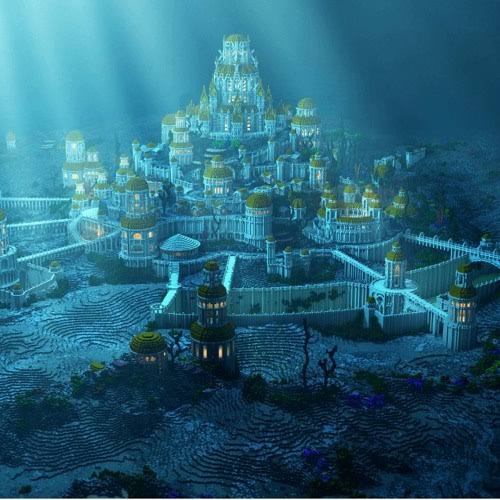
Atlantis is a fictional island mentioned in an allegory on the hubris of nations in Plato’s works Timaeus and Critias, wherein it represents the antagonist naval power that besieges “Ancient Athens”, the pseudo-historic embodiment of Plato’s ideal state in The Republic.In the story, Athens repels the Atlantean attack unlike any other nation of the known world, supposedly bearing witness to the superiority of Plato’s concept of a state.The story concludes with Atlantis falling out of favor with the deities and submerging into the Atlantic Ocean. While present-day philologists and classicists agree on the story’s fictional character,there is still debate on what served as its inspiration. Plato is known to have freely borrowed some of his allegories and metaphors from older traditions, as he did, for instance, with the story of Gyges.This led a number of scholars to investigate possible inspiration of Atlantis from Egyptian records of the Thera eruption,the Sea Peoples invasion, or the Trojan War. Others have rejected this chain of tradition as implausible and insist that Plato created an entirely fictional account, drawing loose inspiration from contemporary events such as the failed Athenian invasion of Sicily in 415–413 BC or the destruction of Helike in 373 BC.

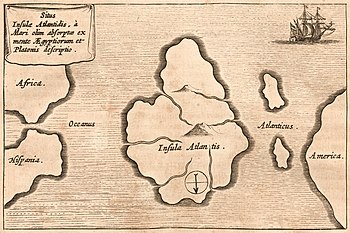
Is this really the map of Atlantis!!!

PLATO’S DIALOGUES

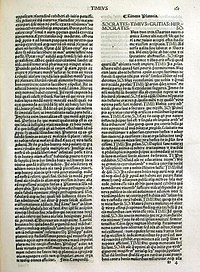
The only primary sources for Atlantis are Plato’s dialogues Timaeus and Critias; all other mentions of the island are based on them. The dialogues claim to quote Solon, who visited Egypt between 590 and 580 BC; they state that he translated Egyptian records of Atlantis.Written in 360 BC, Plato introduced Atlantis in Timaeus. The four people appearing in those two dialogues are the politicians Critias and Hermocrates as well as the philosophers Socrates and Timaeus of Locri, although only Critias speaks of Atlantis. In his works Plato makes extensive use of the Socratic method in order to discuss contrary positions within the context of a supposition.

The Timaeus begins with an introduction, followed by an account of the creations and structure of the universe and ancient civilizations. In the introduction, Socrates muses about the perfect society, described in Plato’s Republic (c. 380 BC), and wonders if he and his guests might recollect a story which exemplifies such a society. Critias mentions a tale he considered to be historical, that would make the perfect example, and he then follows by describing Atlantis as is recorded in the Critias. In his account, ancient Athens seems to represent the “perfect society” and Atlantis its opponent, representing the very antithesis of the “perfect” traits described in the Republic.

Location Hypothesis

In or near the Mediterranean Sea
Most of the historically proposed locations are in or near the Mediterranean Sea: islands such as Sardinia,Crete, Santorini (Thera), Sicily, Cyprus, and Malta; land-based cities or states such as Troy, Tartessos, and Tantalis (in the province of Manisa, Turkey); Israel-Sinai or Canaan;and northwestern Africa.

The Thera eruption, dated to the seventeenth or sixteenth century BC, caused a large tsunami that some experts hypothesize devastated the Minoan civilization on the nearby island of Crete, further leading some to believe that this may have been the catastrophe that inspired the story.In the area of the Black Sea the following locations have been proposed: Bosporus and Ancomah (a legendary place near Trabzon).

Others have noted that, before the sixth century BC, the mountains on either side of the Gulf of Laconia were called the “Pillars of Hercules”,and they could be the geographical location being described in ancient reports upon which Plato was basing his story. The mountains stood at either side of the southernmost gulf in Greece, the largest in the Peloponnese, and that gulf opens onto the Mediterranean Sea. If from the beginning of discussions, misinterpretation of Gibraltar as the location rather than being at the Gulf of Laconia, would lend itself to many erroneous concepts regarding the location of Atlantis. Plato may have not been aware of the difference. The Laconian pillars open to the south toward Crete and beyond which is Egypt. The Thera eruption and the Late Bronze Age collapse affected that area and might have been the devastation to which the sources used by Plato referred. Significant events such as these would have been likely material for tales passed from one generation to another for almost a thousand years.

In the Atlantic Ocean
The location of Atlantis in the Atlantic Ocean has a certain appeal given the closely related names. Popular culture often places Atlantis there, perpetuating the original Platonic setting as they understand it. The Canary Islands and Madeira Islands have been identified as a possible location, west of the Straits of Gibraltar, but in relative proximity to the Mediterranean Sea. Detailed studies of their geomorphology and geology have demonstrated, however, that they have been steadily uplifted, without any significant periods of subsidence, over the last four million years, by geologic processes such as erosional unloading, gravitational unloading, lithospheric flexure induced by adjacent islands, and volcanic underplating.

Various islands or island groups in the Atlantic were also identified as possible locations, notably the Azores.Similarly, cores of sediment covering the ocean bottom surrounding the Azores and other evidence demonstrate that it has been an undersea plateau for millions of years.The area is known for its volcanism however, which is associated with rifting along the Azores Triple Junction. The spread of the crust along the existing faults and fractures has produced many volcanic and seismic events. The area is supported by a buoyant upwelling in the deeper mantle, which some associate with an Azores hotspot. Most of the volcanic activity has occurred primarily along the Terceira Rift. From the beginning of the islands’ settlement, around the 15th century, there have been about 30 volcanic eruptions (terrestrial and submarine) as well as numerous, powerful earthquakes.The island of São Miguel in the Azores is the site of the Sete Cidades volcano and caldera, which are the byproducts of historical volcanic activity in the Azores.

The submerged island of Spartel near the Strait of Gibraltar has also been suggested.

Ireland
In 2004, Swedish physiographist Ulf Erlingssonproposed that the legend of Atlantis was based on Stone Age Ireland. He later stated that he does not believe that Atlantis ever existed but maintained that his hypothesis that its description matches Ireland’s geography has a 99.8% probability. The director of the National Museum of Ireland commented that there was no archaeology supporting this.

THE LAND OF LOST

The fact that Atlantis is a lost land has made of it a metaphor for something no longer attainable. For the American poet Edith Willis Linn Forbes (1865-1945), “The Lost Atlantis” stands for idealisation of the past; the present moment can only be treasured once that is realised.[132] Ella Wheeler Wilcox finds the location of “The Lost Land” (1910) in one’s carefree youthful past.[133] Similarly, for the Irish poet Eavan Boland in “Atlantis, a lost sonnet” (2007), the idea was defined when “the old fable-makers searched hard for a word/ to convey that what is gone is gone forever”.

For some male poets too, the idea of Atlantis is constructed from what cannot be obtained. Charles Bewley in his Newdigate Prize poem (1910) thinks it grows from dissatisfaction with one’s condition,

And, because life is partly sweet
And ever girt about with pain,
We take the sweetness, and are fain
To set it free from grief’s alloy
in a dream of Atlantis. Similarly for the Australian Gary Catalano in a 1982 prose poem, it is “a vision that sank under the weight of its own perfection”.W. H. Auden, however, suggests a way out of such frustration through the metaphor of journeying toward Atlantis in his poem of 1941.While travelling, he advises the one setting out, you will meet with many definitions of the goal in view, only realising at the end that the way has all the time led inward.

Epic narratives
A few late-19th century verse narratives complement the genre fiction that was beginning to be written at the same period. Two of them report the disaster that overtook the continent as related by long-lived survivors. In Frederick Tennyson’s Atlantis (1888), an ancient Greek mariner sails west and discovers an inhabited island which is all that remains of the former kingdom. He learns of its end and views the shattered remnant of its former glory, from which a few had escaped to set up the Mediterranean civilisations.In the second, Mona, Queen of Lost Atlantis: An Idyllic Re-embodiment of Long Forgotten History (Los Angeles CA 1925) by James Logue Dryden (1840–1925), the story is told in a series of visions. A Seer is taken to Mona’s burial chamber in the ruins of Atlantis, where she revives and describes the catastrophe. There follows a survey of the lost civilisations of Hyperborea and Lemuria as well as Atlantis, accompanied by much spiritualist lore.
William Walton Hoskins (1856–1919) admits to the readers of his Atlantis and other poems (Cleveland OH, 1881), that he is only 24. Its melodramatic plot concerns the poisoning of the descendant of god-born kings. The usurping poisoner is poisoned in his turn, following which the continent is swallowed in the waves. Asian gods people the landscape of The Lost Island (Ottawa 1889) by Edward Taylor Fletcher (1816–97). An angel foresees impending catastrophe and that the people will be allowed to escape if their semi-divine rulers will sacrifice themselves. A final example, Edward N. Beecher’s The Lost Atlantis or The Great Deluge of All (Cleveland OH, 1898) is just a doggerel vehicle for its author’s opinions: that the continent was the location of the Garden of Eden; that Darwin’s theory of evolution is correct, as are Donnelly’s views.

Atlantis was to become a theme in Russia following the 1890s, taken up in unfinished poems by Valery Bryusov and Konstantin Balmont, as well as in a drama by the schoolgirl Larisa Reisner.One other long narrative poem was published in New York by George V. Golokhvastoff. His 250-page The Fall of Atlantis (1938) records how a high priest, distressed by the prevailing degeneracy of the ruling classes, seeks to create an androgynous being from royal twins as a means to overcome this polarity. When he is unable to control the forces unleashed by his occult ceremony, the continent is destroyed

THE HANDMAID’S TALE

The Handmaid’s Tale is a dystopian novel by Canadian author Margaret Atwood, published in 1985. It is set in a near-future New England, in a strongly patriarchal, totalitarian theonomic state, known as Republic of Gilead, that has overthrown the United States government.The central character and narrator is a woman named Offred, one of the group known as “handmaids”, who are forcibly assigned to produce children for the “commanders” – the ruling class of men.The novel explores themes of subjugated women in a patriarchal society and the various means by which they resist and attempt to gain individuality and independence. The novel’s title echoes the component parts of Geoffrey Chaucer’s The Canterbury Tales, which is a series of connected stories (such as “The Merchant’s Tale” and “The Parson’s Tale”)

Plot

After a staged attack that killed the President of the United States and most of Congress, a radical political group called the “Sons of Jacob” uses theonomic ideology to launch a revolution.[7] The United States Constitution is suspended, newspapers are censored, and what was formerly the United States of America is changed into a military dictatorship known as the Republic of Gilead. The new regime moves quickly to consolidate its power, overtaking all other religious groups, including traditional Christian denominations. In addition, the regime reorganizes society using a peculiar interpretation of some Old Testament ideas, and a new militarized, hierarchical model of social and religious fanaticism among its newly created social classes. Above all, the biggest change is the severe limitation of people’s rights, especially those of women, who are not allowed to read, write, own property, or handle money. Most significantly, women are deprived of control over their own reproductive functions.

The story is told in first-person narration by a woman named Offred. In this era of environmental pollution and radiation, she is one of the few remaining fertile women. Therefore, she is forcibly assigned to produce children for the “Commanders,” the ruling class of men, and is known as a “Handmaid” based on the biblical story of Rachel and her handmaid Bilhah. Apart from Handmaids, other women are also classed socially and follow a strict dress code, ranked highest to lowest: the Commanders’ Wives in blue; the Handmaids in red with white veils around their faces; the Aunts (who train and indoctrinate the Handmaids) in brown; the Marthas (cooks and maids) in green; Econowives (the wives of lower-ranking men who handle everything in the domestic sphere) in blue, red and green stripes; young, unmarried girls in white; and widows in black.

Offred details her life starting with her third assignment as a Handmaid to a Commander. Interspersed with her narratives of her present-day experiences are flashbacks of her life before and during the beginning of the revolution, including her failed attempt to escape to Canada with her husband and child, her indoctrination into life as a Handmaid by the Aunts, and the escape of her friend Moira from the indoctrination facility. At her new home, she is treated poorly by the Commander’s wife, a former Christian media personality named Serena Joy who supported women’s domesticity and subordinate role well before Gilead was established. To Offred’s surprise, the Commander requests to see her outside of the “Ceremony,” a reproductive ritual obligatory for handmaids and intended to result in conception in the presence of his wife. The two begin an illegal relationship where they play Scrabble and Offred is allowed to ask favours of him, whether in terms of information or material items. Finally, he gives her lingerie and takes her to a covert, government-run brothel called Jezebel’s. Offred unexpectedly encounters Moira there, with her will broken, and she learns that those who are found breaking the law are sent to the Colonies to clean up toxic waste or are allowed to work at Jezebel’s as punishment.

In the days between her visits to the Commander, Offred also learns from her shopping partner, a woman called Ofglen, of the Mayday resistance, an underground network working to overthrow the Republic of Gilead. Not knowing of Offred’s criminal acts with her husband, Serena begins to suspect that the Commander is infertile, and arranges for Offred to begin a covert sexual relationship with Nick, the Commander’s personal servant. After their initial sexual encounter, Offred and Nick begin to meet on their own initiative as well, with Offred discovering that she enjoys these intimate moments despite memories of her husband, and shares potentially dangerous information about her past with him. However, shortly after, Ofglen disappears (reported as a suicide), and Serena finds evidence of the relationship between Offred and the Commander, which causes Offred to contemplate suicide.

Offred tells Nick that she thinks she is pregnant. Shortly afterward, men arrive at the house wearing the uniform of the secret police, the Eyes of God, known informally as “the Eyes”, to take her away. As she is led to a waiting van, Nick tells her to trust him and go with the men. It is unclear whether the men are actually Eyes or members of the Mayday resistance. Offred is still unsure if Nick is a member of Mayday or an Eye posing as one, and does not know if leaving will result in her escape or her capture. Ultimately, she enters the van with her future uncertain.

The novel concludes with a metafictional epilogue, described as a partial transcript of an international historical association conference taking place in the year 2195. The keynote speaker explains that Offred’s account of the events of the novel was recorded onto cassette tapes later found and transcribed by historians studying what is then called “the Gilead Period”.

Indian Olympic medal Contender: Proud Of Our Girls

Shooting
India’s 15-member shooting contingent is the favourite to bring back a big haul of medals.

The country’s biggest hopes are pinned on Manu Bhaker and Saurabh Chaudhary.

Indian shooters Manu Bhaker and Saurabh Chaudhary won the gold in the final of mixed 10m Air Pistol at ISSF World Cup, at Karni Singh Shooting Ranges on 27 February 2019 in New Delhi, India


Nineteen-year-old Bhaker, one of the top contenders in the 10m Women’s Air Pistol event, has in the past won it all from World Cup gold medals to the Commonwealth medal and Youth Olympics.

Shooter Saurabh Chaudhary, world number two and Youth Olympics champion, became the youngest Indian shooter to win a gold at the Asian Games in 2018 when he was just 16.

Both Bhaker and Chaudhary are top contenders for a medal finish when they pair up for the 10m Air pistol mixed event. The duo won five successive golds at international shooting events and a silver at the World Cup in Croatia in June.

Badminton

At the Rio Olympics, 21-year-old PV Sindhu bagged a silver – and won a billion hearts. Not everyone had expected a medal back then from the young shuttler. But five years on, expectations are high.

“I was just a participant back then, but now everyone says Sindhu has to get a medal,” she told the BBC recently.


Despite inconsistencies in her performance since 2019, Sindhu remains India’s top medal hope

Last year, the ace shuttler won the inaugural BBC Indian Sportswoman of the Year award.

In 2019, she was crowned the World Badminton Champion but her form has had inconsistencies since then. However, she remains India’s top medal prospect.

Boxing

Boxing
Mary Kom, also known as Magnificent Mary, the Iron Lady and many other nicknames, is a medal favourite for India.

She won a bronze at the 2012 London Olympics and will be looking to change the colour of her medal this time when she participates in the Flyweight section (51kg).


This could be the last Olympic Games for the boxing star

In May, she picked up a silver when she lost the final to Kazakhstan’s Nazym Kyzaibay during the Asian Boxing Championships in Dubai.

At 38, Kom may well be taking part in her last Olympics, and India will be rooting for her to increase her tally before she takes off her gloves.

Archery
Only last month, archer Deepika Kumari won three golds at the Archery World Cup in Paris.


Deepika Kumari is the number one ranked recurve woman in the world

She is now the world number one in the women’s recurve category and a strong candidate for a medal in Tokyo.

Kumari has won nine gold, 12 silver and seven bronze medals at various World Cups and will be looking to add the Olympic medal to her tally now.

Wrestling
India had a decent run at the Rio Olympics in 2016, with Sakshi Malik earning a bronze medal. In Tokyo, Vinesh Phogat leads the women’s wrestling team.

Having suffered a freak injury during the Rio Olympics, Phogat returned to India in a wheelchair and underwent surgery.

The 26-year-old is now roaring to go in the 53kg category with some great wins in the last couple of months, as well as reclaiming the number one ranking.

Mirabai Chanu : The Girl with silver wings

Saikhom Mirabai Chanu (born 8 August 1994) is an Indian weightlifter.She won Silver medal at the 2020 Tokyo Olympics in Women’s 49 kg, helping to secure India its 1st medal of the games.A regular presence in international events since 2014 in the 48 kg category, Mirabai Chanu has won the World Championships and multiple medals at the Commonwealth Games. She was awarded the Padma Shri by the Government of India for her contributions to the sport. First lifter to win a silver at the Olympics and second to win a medal after Karnam Malleswari‘s bronze in Sydney 2000.She was awarded Rajiv Gandhi Khel Ratna award by the Government of India in 2018.Chanu had won the silver medal in the women’s 48 kg weight class at the 2014 Commonwealth Games, Glasgow; she went on to break the games record en route to the gold medal at the 2018 edition of the event held in Gold Coast. Her biggest achievement came in 2017, when she won the gold medal at World Weightlifting Championships held in Anaheim, California

Career stats

Chanu’s first major breakthrough came at the Glasgow edition of the Commonwealth Games; she won the silver medal in the 48 kg weight category.

Chanu qualified for the 2016 Rio Olympics in the women’s 48 kg category. However, she failed to finish the event, owing to no successful lifts in any of her three attempts in the clean & jerk section.In 2017, she won the Gold medal in the Women’s 48 kg category by lifting a competition record 194 kg in total (85 kg snatch and 109 kg clean & jerk) in the 2017 World Weightlifting Championships held at Anaheim, CA, United States.

In 2021, Mirabai Chanu became the 1st and only woman Indian weightlifter to qualify for the 2021 Summer Games by securing the 2nd position in the 49kg category. The 27 year old, lifted 86 kg in snatch and then created the world record by lifting a massive 119 kg in the clean and jerk, for a total of 205 kg, which won her a Bronze medal and a ticket for Tokyo Olympics.

Chanu lifted a total of 196 kg, 86 kg in Snatch and 110 kg in Clean and Jerk to win the first gold medal for India in the Commonwealth Games 2018. En route to the medal, she broke the games record for the weight category; the effort also marked her personal best performance.She won Bronze in Clean and Jerk at 49 kg Category in 2019 Asian Weightlifting Championships. The total weight of 199 kg was her best ever and she just missed out on a bronze medal as her Snatch weight was lower than the third place athlete, both of whom had an identical total. At the 2019 World Weightlifting Championships, Mirabai lifted a total of 201kgs (87kgs Snatch and 114kgs Clean & Jerk) to finish 4th. This personal best total also created a new national record in the 49kg category. She broke her personal record again four months later when she lifted 203kgs (88kgs in Snatch and 115kg in Clean & Jerk,) in the 49kg category to win the gold medal at the 2020 Senior National Weightlifting Championships.

Chanu won the silver medal at the 2020 Summer Olympics in Tokyo, becoming the 1st Indian weightlifter to win silver in Olympics, winning a silver medal in 49kg weightlifting with a total lift of 202 kg. Chanu managed to lift a total of 202 kg in the women’s 49kg category to become the second Indian weightlifter after Karnam Malleswari to win an Olympic medal. A new Olympic record was registered by Mirabai Chanu with a successful lift of 115kg in clean and jerk.

She was awarded USD $1,400,000 from a private donor in India for successfully winning an Olympic medal.

Olympic ❤️

Award

₹20 lakh (US$28,000) from the Government of Manipur for the gold medal in the 2017 World Weightlifting Championships.
For winning the silver medal at the 2020 Tokyo Summer Olympics
₹50 lakh (US$70,000) from the Government of India.
₹1 crore (US$140,000) from the Government of Manipur.

Tokyo Olympics Hockey India vs New Zealand

MATCH REPORT

A brace from Harmanpreet Singh, both off penalty corners, and a Rupinder Pal Singh penalty-stroke conversion cancelled out Kane Russell’s opening goal for New Zealand as India took a 3-1 lead in the 33rd minute.

MATCH HIGHLIGHTS:

AND THE GAME IS OVER! INDIA BEATS NEW ZEALAND 3-2!!!

60′ PC FOR NEW ZEALAND! A brilliant run from Hugo Inglis gives NZL a chance to make it 3-3. But the Indian defence stands strong to keep the score 3-2 in their favour.

59′ NZL REFERRAL! This one is just out of pure desperation. The New Zealand players think they can win a penalty corner here. However, they end up empty handed.

58′ SREEJESH YOU BEAUTY! Kane Russell hit a stunning shot towards the top left corner of the post off a penalty corner. Indian goalie PR Sreejesh executed a full-stretch dive to his right to deny New Zealand the equaliser. Moments later, he pulled off another remarkable save in open play.

57′ BACK-TO-BACK PCs FOR NEW ZEALAND! After a long referral, NZL is eventually given the penalty corner. And, surprise, surprise! the team has won one more.

55′ Harmanpreet Singh has been the standout player on the field here. He’s put in a very good defensive shift and has converted two penalty corners. The substitute Birendra Lakra has been excellent since coming on as well.

52′ New Zealand has a slight edge when it comes to possession (52-48) today. However, the team has been a bit wasteful up front (1/5 PCs with a shooting efficiency of 25%), and that’s why India has the lead.

49′ After three consecutive successful referrals, India has a failed one in an attempt to win a penalty corner. New Zealand regains possession.

47′ Amit Rohidas and Lalit Upadhyay come up with a decent move on the left flank for India. The New Zealand defence stays compact to avert the danger.

THE FOURTH QUARTER BEGINS!

We are heading towards a thrilling final 15 minutes as India leads New Zealand 3-2 in men’s hockey on day two of the Tokyo Olympics.

THE THIRD QUARTER IS DONE AND DUSTED!

43′ GOOOOAAAAALLLLL!!!!!!! NEW ZEALAND PULLS A GOAL BACK!!!! A major lapse in concentration for the Indian defence and NZL capitalises on it. Nick Wilson receives a pass on the right flank, dribbles past Birendra Lakra and sets up Stephen Jenness, who scores past Sreejesh with ease.

40′ UPDATE: Australia beats Japan 5-3 to register the first points in Hockey at the Tokyo Olympics. The Aussies are in the same group (Pool A) as India and New Zealand.

38′ The Indian forwards are pressurising the New Zealand defence big time here. Sreejesh has had absolutely nothing to deal with at the other end this quarter.

36′ ANOTHER INDIAN PENALTY CORNER! Harmanpreet almost completed his hat-trick with the shot on target. But NZL keeper Hayward made a good save.

33′ GOAAALLLLLLLL!!!!! INDIA TAKE A 3-1 LEAD NOW!!! Another Indian penalty corner, another Harmanpreet goal. New Zealand looks extremely rusty in the middle since conceding the second goal.

32′ EARLY CHANCES FOR INDIA! Mandeep Singh has been a menace up front. He’s been supported well by Dilpreet Singh on the right. Another Indian goal looks likely.

THE THIRD QUARTER IS UNDERWAY!

Indian athletes are also in action in various other sports at the Tokyo 2020 Olympics today. Follow them through the links provided below.

SHOOTING BLOG | Read more

ARCHERY BLOG | Read more

THE SECOND QUARTER IS OVER!

29′ New Zealand enjoyed a long period of dominance in this quarter but India scored against the run of play. Nick Wilson’s missed chance could come back to haunt NZL.

26′ GOOOOAAAALLLL!!!!! INDIA TAKES THE 2-1 LEAD!! A penalty-corner innovation from the Indians and Harmanpreet Singh finds the back of the net. Rupinder Pal, the usual PC converter, slipped the ball towards Harmanpreet on his left to trick the New Zealand players.

24′ VERY CLOSE! Vivek Sagar Prasad had a wonderful chance to score. But the New Zealand defence gets the better of him close to goal.

22′ JAPAN 3 – 3 AUSTRALIA! In the other Olympic men’s hockey game happening now, the host nation and the 2004 gold medalist from Athens are involved in an exciting clash, which is in the third quarter.

19′ WHAT A CHANCE FOR INDIA! The captain Manpreet received a long pass from substitute Lalit. He was one-on-one with the NZL goalie. However, his lob attempt was saved by Hayward.

17′ New Zealand is dominating possession against India right now. The Indians are losing the ball cheaply in midfield quite too often.

THE SECOND QUARTER BEGINS!

A penalty-stroke goal from Rupinder Pal Singh cancelled out a penalty-corner strike from Kane Russell as India and New Zealand are tied 1-1 after the opening 15 minutes.

THE FIRST QUARTER COMES TO AN END!

15′ INDIAN COUNTER-ATTACK! The substitute Gurjant Singh rushes forward with the ball. But the New Zealand defence tracks back in time to avert the danger.

13′ FOUR CONSECUTIVE PCS FOR NEW ZEALAND! The Indian defence is struggling to get the ball away here. Sreejesh pulled off a brilliant save for India just moments ago. NZL messes up another penalty corner.

10′ GOOOOAAAAALLLL!!!!!! INDIA EQUALISES!!! Rupinder Pal won a penalty stroke from a penalty corner and he sent NZL keeper Leon Hayward the wrong way from close range.

9′ The experienced duo of Birendra Lakra and Lalit Upadhyay haven’t started in the first quarter. The youngster Vivek Sagar Prasad is also on the bench.

6′ GOOOOAAAALLLL!!!! NEW ZEALAND TAKES THE 1-0 LEAD!! NZL won its first penalty corner and Kane Russell converts it with precision.

5′ FOUL! Indian skipper Manpreet Singh hits New Zealand defender Nic Woods on the face with his stick, unintentionally. Woods is being treated on the field.

3′ PENALTY CORNER FOR INDIA! Mandeep Singh won this one after receiving a pass from Nilakanta Sharma. HITS THE POST! Rupinder Pal Singh misses the target by a whisker.

1′ Good early pressure from India here. Dilpreet Singh moves forward with pace on the right flank but isn’t able to create a clear-cut chance.

AND THE MATCH BEGINS!


The team lineups are out!

INDIA XI: PR Sreejesh (GK), Rupinder Pal Singh, Surender Kumar, Harmanpreet Singh, Amit Rohidas, Manpreet Singh (C), Hardik Singh, Nilakanta Sharma, Dilpreet Singh, Mandeep Singh, Shamser Singh.

COACH – Graham Reid.

NEW ZEALAND XI: Leon Hayward (G), Dane Lett, Nic Woods, Kane Russell, Blair Tarrant (C), Shea McAleese, Nick Ross, Hugo Inglis, Sam Lane, Stephen Jenness, Nick Wilson.

COACH – Darren Smith.


The world’s best coaches and scientific training have given Indian hockey a refreshingly new identity, Moscow Olympics gold medallist MM Somaya writes ahead of the country’s hockey teams’ opening games at the Tokyo Olympics.

READ MORE | Read more

He was marked out for greatness as a player and a leader even before he became a constant in the national side. Having led the Indian team at the Junior World Cup, Manpreet Singh has always had confidence in abundance but it has been tempered with a sense of responsibility as captain.

Ahead of his third Olympics, the Indian skipper shared his plans, disappointments and determination to succeed at Tokyo.

FULL STORY | Read more

MATCH PREVIEW:

It has been over 40 years since the Indian men claimed the most recent of their incredible eight Olympic hockey gold medals, which arrived at Moscow 1980.

However, their superb form in recent times makes them serious contenders to claim a ninth title at the upcoming event in Tokyo.

The team has claimed victories against nearly all the top teams in world hockey over the past few years, with Australia-born head coach Graham Reid, a former international with the Kookaburras, getting the best out of a talented and exceptionally fit collection of athletes.

India had booked its ticket to Tokyo with two victories over Russia in the 2019 FIH Hockey Olympic Qualifiers, winning 4-2 and 7-1 in Bhubaneswar.

“It has not been an easy process to make the final selection of 16 players as there is a lot of quality and ambition in this group of players,” Reid said ahead of the 2021 Tokyo Olympic Games.

RELATED | Read more

“The performance levels of all athletes are at an optimum level and more importantly they work well together. They know what it means to represent the country at the Olympics. We’re now focused on training with the same intensity and our goal is to put forward our best performance as a collective unit in Tokyo,” he added.

Meanwhile, coached by former Black Sticks midfielder Darren Smith, New Zealand – which shocked the world by becoming Olympic champion at Montreal 1976 – is renowned for its tireless work ethic as a team but is also blessed with some exceptional individuals.

Stephen Jenness and Hugo Inglis are both wonderful attacking talents, while veteran defender Shea McAleese and penalty corner expert Kane Russell are consistently excellent performers.

New Zealand reached Tokyo with two victories over Korea in the 2019 FIH Hockey Olympic Qualifiers, winning 3-2 and 3-0 in Stratford.

“It’s a pretty experienced group but it’s also the first pinnacle event for players like Sam Lane who have previously missed out through injury or Jacob Smith and Nick Ross who have been rewarded for their perseverance. They’ve shown they’re really determined to be there,” said coach Smith.

THE SQUADS:

India – P.R. Sreejesh, Manpreet Singh, Harmanpreet Singh, Rupinder Pal Singh, Surender Kumar, Amit Rohidas, Birendra Lakra, Hardik Singh, Vivek Sagar Prasad, Nilakanta Sharma, Sumit, Shamsher Singh, Dilpreet Singh, Gurjant Singh, Lalit Kumar Upadhyay, Mandeep Singh.

New Zealand – Leon Hayward, Blair Tarrant, Hugo Inglis, Steve Edwards, Sean Findlay, Stephen Jenness, Sam Lane, Dane Lett, Shea McAleese, Jared Panchia, Nick Ross, Kane Russell, Jacob Smith, Dylan Thomas, Nick Wilson, Nic Woods.


Sony TEN 3 HD/SD will telecast India events with Hindi commentary while Sony TEN 1 HD/SD and Sony TEN 2 HD/SD will have English commentary.

Live streaming of the events will be available on the SonyLIV and JioTV apps.


10 Reasons Why Agriculture Is Important

Civilization began with agriculture, and though humanity has changed significantly, agriculture still remains very important. In certain countries, its significance is more obvious, but the reality is that every country in the world depends on agriculture for one thing or another. Here are ten reasons why agriculture is important:#1. It’s the main source of raw materialsMany raw materials, whether it’s cotton, sugar, wood, or palm oil, come from agriculture. These materials are essential to major industries in ways many people aren’t even aware of, such as the manufacturing of pharmaceuticals, diesel fuel, plastic, and more. In fact, raw materials are so important in production that the economic health of a country strongly depends on how many raw materials it possesses.#2. It’s important to international tradeRaw materials from agriculture make up a huge portion of what’s traded internationally. Countries with plenty of those supplies export them and trade for materials they don’t have. If a country’s agriculture suffers for some reason, prices can go up and it disrupts the flow of trade. Currently, the EU is the first trader of agricultural products in the world, both for imports and exports.#3. It plays a big role in a nation’s revenueSpeaking of trade, developing countries still get most of their national income from agricultural exports. While developed countries don’t depend on agriculture as much as they used to, their economies would definitely take a hit if all exports suddenly stopped. . It provides employmentThe agricultural industry is still one of the biggest sources of employment and in many areas, it’s actually booming. Whether it’s working as a farmer, harvester, technician for farm equipment, scientist, and so on, there are plenty of jobs available in this field. In developing countries, agricultural jobs help reduce high rates of unemployment. When it comes to reducing poverty, evidence shows that focusing on agriculture is significantly more effective than investing in other areas.#5. It’s crucial to a country’s developmentEconomic development is tied to a country’s agriculture sector. When trade, national revenue, and employment are combined in a positive way, a country enjoys reduced poverty and boosted economic growth. Because strong agriculture results in benefits fairly quickly, focusing on it is one of the best ways to speed up development and improve a country’s standing in the world.#6. It can help heal the environment Agriculture possesses the power to harm or heal. When farmers prioritize biodiversity on their land, it benefits the earth. Having more biodiversity results in healthier soil, less erosion, better water conservation, and healthier pollinators. This is all good news for the environment as a whole, making agriculture an important part of the cycle of life. #7. It goes hand-in-hand with warAgriculture is such an important part of a country’s infrastructure, it makes sense it would impact conflicts and war. Throughout history, the need for land to grow food fueled many conflicts. In more modern times, specifically WWI, America’s farming industry boomed because they needed to supply Europe with agricultural products. For countries who don’t have assistance, war can break down the agricultural sector, affecting people for decades to come. When discussing agriculture, it’s impossible to not at least mention its connection to conflict.#8. It’s the source of our food supplyArguably the most important aspect of agriculture is that it’s the source of the world’s food supply. No matter where or what you are eating, the ingredients in your meals came from somewhere. All roads lead to agriculture. In countries dealing with food insecurity and severe malnourishment, it’s because their agriculture sectors are suffering. When agriculture thrives, fewer people go hungry.#9. It drives innovation in technologyBecause healthy agriculture is so essential to a country’s well-being, it’s been the setting of some of the most exciting innovations in technology. Through artificial intelligence, blockchain software, gene manipulation, and more, scientists and farmers have been figuring out ways to increase crop productivity, use less water, and reduce negative impacts on the environment. For scientists and tech companies, agribusiness is one of the most fascinating and productive fields to work in. #10. The state of agriculture reflects our futureWhen it comes to pollution and climate change, the environment and agriculture suffer the quickest and with the most clear consequences. If effective changes aren’t made, climate change’s impact on agriculture will decimate a country’s economy and eventually wipe out the food supply. To get a better idea about where humanity is going to end up, look at agriculture. What’s being done to adapt to a rapidly-changing climate? What will our food supply look like? The state of agriculture is a good litmus test of what we can expect the future to look like.

Wrath of Man Review

Wrath of Man is a 2021 action thriller heist film directed by Guy Ritchie, from a script he co-wrote with Ivan Atkinson and Marn Davies, and is loosely based on the 2004 French film Cash Truck by Nicolas Boukhrief. It is Ritchie’s fourth directorial collaboration with lead actor Jason Statham, and first since Revolver (2005). Statham stars as H, a new cash truck driver in Los Angeles who thwarts a robbery only to have his mysterious past begin to get questioned. Holt McCallany, Jeffrey Donovan, Chris Reilly, Josh Hartnett, Laz Alonso, Raúl Castillo, DeObia Oparei, Eddie Marsan, and Scott Eastwood also star.

The 🎥

Plot

The movie is separated into four parts, each chapter circling back to one main event that sets off a chain reaction. Beginning with “A Dark Spirit,” an armoured truck is robbed by heavily armed individuals dressed as construction workers. Two guards and a civilian are killed during the robbery.

Five months after the robbery, a mysterious Patrick Hill applies to Fortico Security, an armoured truck company. In his interview, his soon-to-be superior, Terry, commends him for his references and warns him of the robbery. Hill is then introduced to Bullet, who nicknames him “H” and oversees his training and qualifying tests. “H” barely manages to pass the tests and gets off to a rocky start with his new colleagues, particularly “Boy Sweat” Dave. On his first official training day, “H,” Dave, and “Bullet” are assigned to the same pickup. Dave, who has a “we are the prey” attitude about the job, tells “H” more about the robbery where guards were killed. He reveals that he was supposed to drive the truck but had called in sick that day.

During a training pickup, “Bullet” is taken hostage, and the kidnappers demand the $2 million in their truck. Dave panics, but “H” convinces him to drive to save “Bullet.” When “H” and Dave meet the kidnappers, “H” quickly disposes of them with expert marksmanship, despite his mediocre shooting skills from his qualification tests. The police investigators assigned to the robbery question “H” about his true abilities against his training. Then they ask him to watch security footage of the previously mentioned robbery to see if he thinks the two crimes are connected. “H” denies the connection and is released back to Terry. Terry tries to give “H” desk duty for a month in case of PTSD until the CEO of Fortico comes to personally thank “H,” allowing him to continue work in the field.

The police investigators later identify “H” to their superior, FBI Agent King, as someone the Bureau had been looking for 25 years. However, King tells them to let “H” off the hook and “let the painter paint.” As a result of the attempted robbery, many of “H”‘s coworkers now believe him to be a hero. In what appears to be his hotel room later that night, “H” is visited by a woman who gives him Fortico employee files, photos of coworker Dana Curtis’ family, and an autopsy report. “H” reviews a copy of the robbery footage shown to him by the police investigators.

In a later routine pickup with just “H” and “Bullet,” the truck is attacked again. “H” faces the robbers after they flood the armored truck with tear gas, and they quickly retreat after one of the robbers sees “H”‘s face. Terry doesn’t believe his story, thinking him to now be a psychopath. The Fortico CEO, however, commends “H” once again and sends him on his way. “H” later sleeps with Dana and holds her at gunpoint to interrogate her about a private cash stash he finds. She claims she stole money once from a liquor store for retirement savings. “H” spares her life but threatens further repercussions if he learns she is withholding other information.

The second part, titled “Scorched Earth,” begins with a flashback five months earlier. “H” is out with his son Dougie when he reluctantly agrees to a work call asking him to help with the recon of an armoured truck route. “H” makes an excuse to get some burritos at a food truck and stops on the other side of the bridge from the Fortico depot. Dougie stays in the car while he goes out. While waiting by the food truck, “H” calls his underling to confirm the truck’s route. As the armored truck goes under the bridge, it is attacked by the disguised and heavily armed construction workers, who kill the guards for trying to fight back as well as Dougie for witnessing Jan’s face. When “H” runs toward them, he is gunned down as well but survives. Three weeks later, “H” wakes up in a hospital after life-saving surgery and learns of his son’s death. He is in complete shock, showing little emotion, even when his wife claims their son’s death was his fault and leaves him.

“H” meets up with FBI Agent King and requests intel. King has a list of possible suspects that the FBI is also looking into, unsure of who “H” is looking for. King tells “H” he can do what he likes, but to consider he can only turn a blind eye for so long. “H” is then revealed to be Mason Hargreaves, the boss of a crime syndicate. His syndicate’s direct underlings – Mike, Brendan, and Moggy – are the men who will make the second attack on “H’s” cash truck. “H” demands to find the specific face responsible for killing Dougie. His men claim they’ve already begun searching, scorching the earth for justice, but have yet to find the culprit. After exhausting their list of suspects and coming up with no possible leads, leaving carnage in their wake, Mike suggests that the robbery was an inside job. “H,” says he will fly back to London to clear his mind. Instead, he arranges a local contact, Kirsty, to provide him with the forged identity of Patrick Hill, put him up in a hotel, and locate the autopsy report of Dougie’s death.

In the third part, “Bad Animals, Bad,” we meet a bored former military platoon consisting of Carlos, Sam, Brad, Tom, and Jan, commanded by their platoon leader Jackson. Struggling to make ends meet, most unemployed or working underpaid jobs, the group decides to start stealing money in increasingly ambitious heists. The heists are planned in great detail by Jackson and Tom, while maintaining the façade of ordinary lives with families, except for Jan; he appears to be the black sheep of the group, showing little respect for Jackson and complaining about everything from how the money is divided to what they can purchase with their shares. The first attempt to steal from a wealthy man for whom Carlos works as security comes up with only a few hundred thousand dollars. They then resolve to utilize contacts in armoured truck companies to steal millions of dollars. Each heist comes with increasing wealth and costs. When they perform the Fortico heist, Jan is revealed to be the one that kills the guards and Dougie against the wishes of the rest of the team.

The last part, titled “Lungs, Liver, Spleen, Heart,” is set back in the present. Jackson and Tom bring the team together for a much larger but riskier final heist to steal over $150 million from the Fortico depot on Black Friday. “H” and “Bullet” are riding together when “Bullet” reveals he is the thieves’ insider and asks “H” to cooperate to avoid death. Four of the thieves, dressed in full body armour, hide in the truck to gain access into the depot while Jackson and Tom take a black vehicle behind them. Their goal is to keep the scene drama-free, open the gate to let Jackson’s vehicle in, and empty the depot before SWAT arrives 8 minutes later. Once the hostage cash truck successfully enters the depot, they take hostages, including Terry and Dave. Dana and two other workers named Stuart and Shirley are in the back of another truck, unaware of the situation beyond them. The thieves demand the gate be opened, but one worker, John, triggers the alarm. The workers behind the weapons desk begin shooting at the thieves but are quickly subdued. They let Jackson and Tom in and start taking the money. Dana and Stuart have called the cops now, but Shirley can’t stay hidden and decides to start shooting despite protests from the others.

In the commotion, “H” chokes Carlos out and frees Terry and Dave. He takes Carlos’s body armour to fight back, inspiring Dave to do the same while Terry hides. Realizing they may not make it out, “Bullet” breaks his cover and shoots Dave, Dana, and the remaining guards. He shoots “H” last and leaves him to die. “Bullet,” Jackson, and Jan are the only ones to make it out of the depot, though Jackson is critically wounded. They evade police and make it to a garage where they have access to underground tunnels. Believing Jan will try to kill them, Jackson takes out a pistol, but Jan stops him and slits his throat. When Jan and “Bullet” make it to the end of the tunnel, “Bullet” takes out a gun to kill Jan, but Jan kills him first. Jan successfully makes away with all the money before the police can deduce what happened.

At the apartment, Jan finds a phone ringing in one of the money bags, which was planted there by “H” to track his location. “H” confronts Jan with Dougie’s autopsy report before shooting him in the same places Dougie was shot. “H” turns in the money to his FBI contact and drives off with Mike.

Release

The film was released internationally in several countries, beginning on April 22, 2021, including Russia, New Zealand, Australia and Taiwan. It was later released in the United States on May 7, 2021. It is set to be released in China on May 10. The film was originally set for release in the United States on January 15, but was pulled due to the COVID-19 pandemic. It was later rescheduled for April 23,before being pushed to May 7.

Home media
The film was released on Blu-ray and DVD on July 13, 2021, by MGM Home Entertainment through Warner Bros. Home Entertainment