People who single handedly brought a CHANGE in the society

What we learn from our society we follow that and pass on the same to the generation which follows. In India, if anyone wants to make a change in the normal dynamical functioning of a society, they are generally demotivated by the statement that “What will happen by a SINGLE PERSON’s efforts”. This is what we have heard since ages and this is what is being passed on to us from the older generations. As people prefer security in every sense, whether it be life security, job or financial security. Because to make changes requires guts to stand alone and continue doing what one believes in.

Also, we inspire each other in the way we may have never thought of. How many of you after watching a sport inspired movies have at least once tried that sport? Inspiration lies in every corner of the world i.e. if you really open your eyes to see it.

This blog will tell you about some INDIANS who single handedly managed to bring a drastic change in the society.

  1. JADAV PAYENG– Popularly known as the “FOREST MAN OF INDIA”, a title which was conferred to him by the vice Chancellor of the Jawaharlal Nehru University in 2012, Jadav is a man responsible for creating the  forest that stands at 550 hectares today on the island of Majuli near Jorhat.

It all started when a teenager Jadav living in the state of Assam near the Brahmaputra river region noticed the decreasing number of reptiles and snakes from the forests near his house due to excessive cutting of the trees. The elders of his village told him that if a house is not made for the animals they will all die. He thought about how he will feel when instead of snakes, the number of human started to decrease. He knew he had to do something, so he went to the forest department with his problem which was actually everyone’s but it was conveniently ignored. The forest department then taunted him to start planting trees himself and that is what he did. He started planting saplings on a small deserted island near the Brahmaputra river for nearly three decades and now this full grown forests spread over many hectares of land.

People travel from across the globe to see his forest that is visited by 120 species of birds, including migratory ones; and elephants, rhinos, and tigers that visit from Kaziranga National Park. Also, a herd of 50 to 150 elephants remains in the forest for nearly three months a year. Locals call it ‘Mulai forest’; Mulai is Jadav’s nickname.

While rest of his friends have a stable , comfortable life in the cities, Jadav refused to leave the forests which was his home and live with his wife and 3 children in a hut in the village. He says that his awards are his wealth.

2.SUDHANSHU BISWAS- A revolutionary freedom fighter who was one of those many unsung heroes who were the support to the ones at front on the battlefront, is the founder of 18 schools which educates poor and orphan children with the aim of giving them a brighter life. After India gained Independence , Biswas wen toff to Himalayas to understand true purpose of life and when he came back , there was a new mission he decided to embark upon. Biswas established two Ashrams in South 24 Parganas. Later, in 1973, he set up Sri Ramakrishna Sevashram near Baruipur. By 1996, he had built 18 free schools for the poor and downtrodden in the most underdeveloped areas of Sundarbans. He also has a old age home for people from nearby villages .

It is truthfully said that a REVOLUTIONARY NEVER DIES. Now in his 90s, Biswas still continues to run the schools and even teaches mathematics to the students. Biswas has proved that Age is just a number, it is the will power that matters.

3. RITU BIYANI – After having suffered and recovered from Breast cancer herself, she made it a point to educate the women living in the tribal , urban and rural areas to educate them about Breast cancer and help them find adequate treatment for the same. In India, women generally tends to ignore their health problems as they do not wish to disturb the dynamics of her family by bringing forth her health issue. The reason being that In Indian households women carry the ultimate responsibility of the family from feeding to taking care of everyone. In the process of fulfilling their responsibilities , they often tend to care about themselves and this carelessness then leads to dangerous consequences.

Many women doesn’t know or fail to notice the early signs of breast cancer and even if they do , they fail to get proper help for the same. Ritu Biyani holds a LIMCA BOOK OF RECORDS recognition in being the only woman to travel across the four points of the country to spread awareness about the same. If she might also have “minded with her own business” after getting recovered, then the many whose lives have been saved because of her efforts may have died.

Her BREAST CANCER AWARENESS CAMPAIGN continues to help those who have been living under darkness and scaredness of this disease taking them away soon.

4.GANGADHARA TILAK KATNAM-Once on a rainy day in Hyderabad, the car driven by Mr. Tilak suddenly fell, into a pothole and he ended up accidentally spoiling the uniform of kids standing nearby. He felt so ashamed for the same but again it was not his fault. Gangadhar like many other Indians could have left the matter at this but no he decided to find a solution by himself as such things which are the responsibility of the authorities are blatantly ignored by them. Now, a retired railway officer at 67, instead of enjoying his retirement he set off every morning in his car filled with gunny sacks containing tar to repair the roads himself. He picks these left over sacks from the roadsides and when the quantity fell short of the required amount , he even uses money from his own pocket.

It is his dream to see a pothole -less Hyderabad. He has until now  fill over 1,125 potholes so far. For two and half years, he filled potholes single-handedly and with his own money. Now many citizens and software engineers are joining in Gangadhara’s Shramadaan (voluntary contribution of labor). From June 2012, the GHMC (Greater Hyderabad Municipal Corporation) started supplying BT MiX material to Gangadhara.

How Body Shaming affects one’s well being

We all know and accept the fact that different humans will have different characterstics, likes and dislikes but what about the physical appearance. Why is it that a standard is set for people which everyone accept them to follow . The ones who fail to meet the standard criteria are then “shamed” on the pretext of motivation.

Crticising someone for their body fat, “thin” built, hair texture and colour, hair density or bald looks, too much height or “such a shorty”, different body shapes, size of various body parts like small or heavy breasts or hips, skin tone etc comes under the broad term of BODY SHAMING. Not only just the looks but people are shamed with the accessories they decide to decorate their body with like tattoos, piercings etc and also with the marks that the diseases or some accidents leave. The memories of diseases and the accidents are traumatic enough, in addition to this one has to bear the addition burden of someone not liking some marks on their bodies which they have learnt to make peace with hereby scratching the old wounds making the person relive the trauma.

A person is defined by its physical and mental health. While the latter includes moral virtues , the former stands for a healthy body where all oragans function properly. Different skin colors , height, length of hair until and unless you have got an illness is all okay and acceptable. Anything which doesn’t threaten the working of your organs is completely normal. Sadly, this is not the case today.

This blog will tell you what leads people to body shame others and affect it has on the victim.

What causes people to BODY SHAME

  • It is like a chain reaction which goes on in the society. There are some standards set by the people themselves which they expect everyone to follow to be “an epitome of PERFECTION”. For example – If you are a male , you ought to have good height, good muscles, lusty dense hairs and if you are a female, then the list extends to a great measure. A “good Indian girl” ought to have “fair ” skin , should not be covered in the layers of “fat”, should have markless, flawless skin, medium height , good natural color hair, tattoos makes one characterless and piercings except the traditional ear and nose also contribute to the former category. Now I ask, which text or rule book has defined these charactersticcs of a man or woman. The most funniest thing is the third gender is not even mentioned and talked baout anywhere instead they are shamed. Because some “boys” prefer wearing make up with female clothing and some girls keep short hairs and speak for themselves. The onlything which are ancient texts teaches us is to be honest , hardworking and possess good moral virtues there was never a mention about the physical appearnce. History is evident of the fact that people who were beyond this tandard criteria , proved better than the ones who followed it . The best example being Physics genius STEPHENS HAWKING. It is a sort of revenge game which continues.Because the people were teased and criticsed about their looks by the others they continue to do it with the rest to take out their frustration. The origin of this “toxic game” being unknown.
  • A default reaction to something which someone says or does and we dont like is to comment on their physical attributes making that person feel guilty about themselves . Like if someone acts in the manner which we dont like, people are often heard saying, “Obviously, she/he will do that. Didn’t you see how ugly they are”. This process of making a person guilty by remarking about their physical attributes is very common in today’s world specially in this age of social media.

Affects of BODY SHAMING

  • Reduction of self esteem, self confidence because you think you are not worthy or capable because someone told you that you are “unfit”. Everyone is unique with a different story behind each of their “not normal looks”, until and unless the third person knows about it they should not comment about it. This is very common to feel because confidence is the belief we have on ourselves which motivate and enable us to do the things properly and our confidence specially in the teen years is based on what the people around us friends, peers or family feels about us. In these growing years, one needs motivation and support in the form of words not the harsh words making people to change their appearance and hate themselves. This often leads to anxiety, stress, eating disorders bringing the ACTUAL DISEASES, depression sometimes leading people to self harm themselves. And then people says today’s youth is so reckless and “Teenagers attempt suicide because they were CORRECTED ABOUT SOMETHING or Scolded for their won well being”. Correcting someone’s natural built is equal to meddling with the nature and we have enough evidences of the consequences of meddling with the nature. This all is the result of the trauma which sometimes lead people into the actual bad habbits like alchol, drugs fastening the process towards their mortality.
  • In order to fit into the “standard criteria” , people undergo diets, proteins for increasing weights and heights, laser treatments for those who have thin hair or bald look, dozens of products containing many harmful chemicals to whiten their skin tone. This not only takes a toll on financial health , but also on the mental physical health. The treatments are not always effective , it causes more harm than good at times. The stress and anxiety in the anticipation of the result is a very acute thing which is actually to be worried about.

We need to stop criticising people on the pretext of looking after them If you really want to look after your “loved ones” , then it should be to take care of their health in all aspects not to bring them on the verge of madness.

Mawlynnong- India’s pride

Located in the east Khasi hills 90 kilometers away from Shillong, in the state of meghalaya is this small village with around 600 inhabitants , which was acclaimed to be the cleanest village in India in 2005. In 2003, it was also acclaimed as the cleanest village in Asia. Known as “God’s own garden” , this small village has already made a big impact on the world by showing the world how the following of all the rules and living in harmony with the nature can help in making this world a beautiful place to co-exist.

How did Mawlynnong became the cleanest village

Back in 1887 when India was still under the British rule, Mawlynnong suffered from a devastating plague which the villagers believed to be the wrath of evil witches and didn’t knew what to do. According to history, Welsh Christian missionaries from Bangladesh were sent to help the people recover from the plague there. The missionnaries took care of the people and started to educate them. They also told them that the plague was not the result of wrath of evil witches, rather it was extreme uncleannliness in the village which caused that plague. The villagers then started to clean their houses as well as every nook and corner of the village . The tradition continues till date. Interestingly, villagers link the tradition of cleanliness to Christianity. They say it is the missionaries that changed their lives and taught them ways to reach God through cleanliness and since then they follow the religion of Christianity. This is the true model of how the superstitions if used positively can bring a large impact.

The villagers also decided to have drainpipes to efficiently remove the filth from their houses and now every single house has a proper and efficient drainage system.

The streets there have beautifully carved bamboo dustbins outside every house and in every public place. The villagers turn the wet compost from the domestic use into manure which they use to grow the vegetables and fruits. The village is a model of the adequate use of every resource available and the best example of recycle and reuse.

Other highlights of this wonderful village

Rain water harvesting is another feature of the village. When it rains, which is a verycommon thing in the state of Meghalaya people collect rainwater even in bottles. The base of the bottle is cut and the inverted bottle is then hanged at the place where it can capture rain drops. The mouth of the bottle is attached to a pipe which is then connected to the washroom and is used in toliets and to clean the floor.

Proper sanitization is another prominent feature here where every house has proper toilets and even the public toilets are healthily maintained.

Also, the village has a 100% literacy rate. Nelson Mandela once rightly said that EDUCATION IS THE ONLY WEAPON WHICH CAN BE USED TO CHANGE THE WORLD. Mawlynnong being the best example of this proverbial fact.

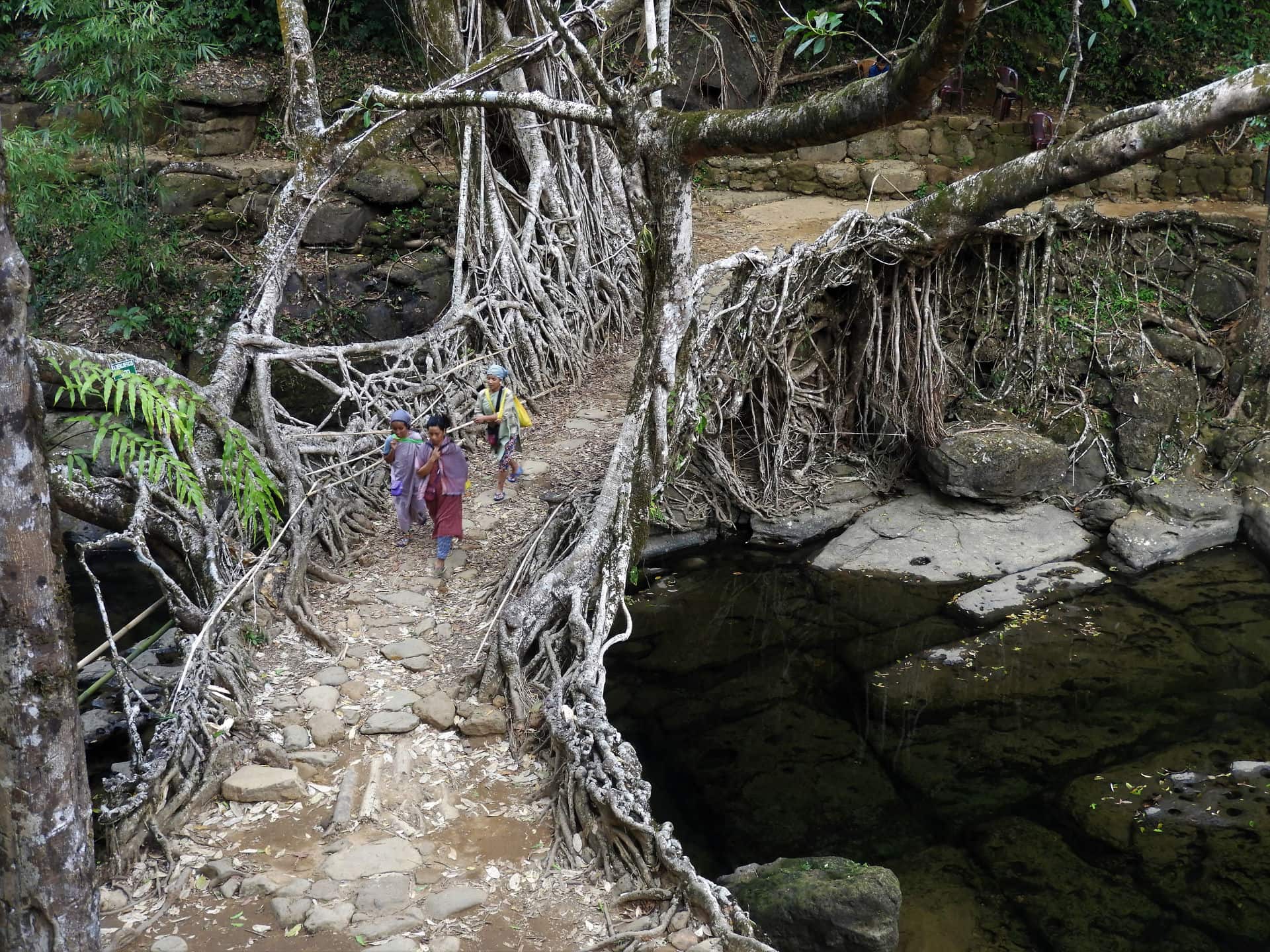
Last but not the least, The living root bridges are the classic feature of the place which also attracts a large number of tourists every year from across the globe. At a time , when humans talk about science and innovation here is an extra ordinary example of bio engineering made by humans in joint partnership with the nature. This man made root bridge was originally constructed by the villagers to cross the overflowing stream during monsoon by intertwining the thick roots of a variety of rubber tree (Ficus elastica), grown on the other side of the stream. The intertwined roots were then kept in a position over the stream such that it can be crossed. The roots were then covered by large rocks and mud to complete the path. Over the years , as the roots grew the bridge became stronger. Each day when any villager spot a new root merging , they immediately join it with the bridge and hence it continued to become strong and stay still bearing the heavy rains of the North Eastern Monsoon.

To see the bridge, one has to take a simple downward trek where the entry fee of Rs. 10 is taken from each visitor to see the bridge which is used for the village development.

How it manages cleanliness even today

Every day at a designated time no matter what the weather is , an appointed set of sweepers come and clean the nook and corner of the village which takes them around an hour. It is the dedication of the people and the fear that if they violate cleanliness even for a day, curse will fall upon them, is the thing which drives them to continuously strive hard to continue with the old age tradition even today.

A place like Mawlynnong which attracts a large number of tourists each year , the cleanliness and the sanitization is hard to maintain but they do it. Plastic bags, smoking and littering is completely banned in the area. Any violators are bound to pay a mandatory hefty fine and sometimes also serve the prison sentence.

It won’t be wrong to say that MAWLYNNONG IS THE TRUE MODEL OF AN IDEAL BEAUTIFUL PLACE which inspires us in so many ways. It tells us that every effort counts .

Overpopulation in India- Causes and effects

A country is said to be over populated when the inhabitants of the country exceeds the rate of availability and production of resources. With a present population of approximately 139 crores , India stands at being the second most populous country in the world after China. The large population of the country exceeds the resources it produces, which in turn doesn’t satisfy the needs of all the people living here. Thus, India can be called an overpopulated nation and over population is a big problem here because of the same said reason.

Being a developing country, India needs a less population to resource ratio so that it can satisfy the needs of all the people here. Increasing the production of resources may be impossible at times as one can increase the food production and other things upto a limit only else the balance will be disrupted., This leaves the only option of controlling the population of the sub-continent. This blog will highlight some of the major causes of the over population and the effects which it has on the people.

Causes of overpopulation

  • CHILD MARRIAGE– The age where a person is supposed to be nurtured and grow, he/she is tied in a responsibility of which they have no concrete idea of. There is a reason why the legal age of marriage is said to be at 18 because it gives ample time to a “child” to grow and prepare themselves for many responsibilities. The orthodox beliefs in India have often led to children being married at as low as 10 years of age. When a child themselves becomes a parent. this is more likely to raise the number of population in the country. Not to mention the negative affects of child marriage which often leads to the death of weak mother or the child.
  • ILLITERACY AND TABOOS IN THE COUNTRY– India has an illiteracy rate of almost 31%. The lack of knowledge about some major issues like the need of birth control and how to do so, have also led to the rising number of population. Also, since to talk about “sex” openly in India is a taboo, sex education lacks in the people here. They would rather prefer to do it inside the close doors and add to the rising miseries which overpopulation brings than to talk about it and control it.
  • RELIGIOUS AND ORTHODOX BELIEFS IN THE COUNTRY- People here consider children to be God’s gift like it happens everywhere else, but they refuse to control the number of children they are producing as they feel that it is God’s wish and who are we humans to go against it”. Also, the Indian belief of having a male who will take their family name forward leads couples to birth many children till they do not get a boy.
  • ILLEGAL MIGRATION– Migration of people from Nepal and Bangladesh has also led to the increase in number of population where the condition is such that there is no sufficient food to feed even the natives.
  • POVERTY- There involves a paradoxical relation ship between poverty and over population. Poverty is one of the outcomes of over population as the number of feeding mouths keeps on increasing for a person with less amount of money. Whereas some people believe that if they produce more children they will have more earning members which in turn will relieve them of poverty.(This is also one of the reason of over a million child labors in the country). However, they forget to keep in mind the fact that , more the number of people more will be the responsibility to feed the members until they grow old enough to earn . Even after the children grow old enough to earn, they are not able to fetch a good amount of money because they have malnutrition.
  • THE WIDENING GAP BETWEEN BIRTH AND DEATH RATES.– Due to improved medical facilities, the life of an average individual has increased lowering the death rates while the birth rates goes on increasing every moment. By decrease in the death rate it doesn’t mean that people must die to control the population, IT IS JUST A STATED FACT.

POVERTY, MALNUTRITION IN CHILDREN, UNEMPLOYMENT due to rising number of people and less opportunities ,global warming, environmental pollution, habitat loss, the sixth mass extinction, intensive farming practices and the consumption of finite natural resources, such as fresh water, arable land and fossil fuels are the consequences of overpopulation which gives a signal that if the population is not controlled then it can become a curse on us.

The art of being happy

Being happy doesn’t means flashing a forced smile all day long, rather it means a deep sense of satisfaction and gratitude in whatever you do. It is a feeling of liberation, serenity which brings calmness to your soul and your joy is reflected by the way your eyes twinkles. Smiling or laughing is a way to express the feelings of happiness, amusement or hilariousness but it doesn’t conveys you being happy. If your brain is conflicted with many thoughts, with various things making a messy knot in your brain , your ability to think and act straight will go away. Your body’s main focus will be to make you live not to make you happy. The different processes in your body will not try to untangle your messy knots, its your will power which will have to take the initiative of untying the knots and keeping the thought process straight. It is when you have no messy untangled knots in your brain and you have the ability to think and act with your brain, you will find a satisfaction in whatever you do without any regrets .

Decisions we take should be based on entirely our choice not on the pressure or in an attempt to make others around you happy. This is because when you do the thing you mind and heart agrees to , you will find a tremendous amount of satisfaction and serenity and will be completely ready to bear the outcome of the decision whether positive or negative. The deep sense of satisfaction will make you JOYFUL which is a sign towards a happy human.

In short, when your actions and thoughts are in your control and you derive JOY from what you does is what is being called happy.

Happiness is when what you think, what you say and what you do are in harmony with each other.

Mahatma Gandhi

Ways to keep yourself happy

  • DONOT GO BEHIND THE RAT RACE. DECIDE FOR YOURSELF. REDUCE YOUR WANTS AND INCREASE YOUR RESPONSIBILITIES. – When you join the rat race by following what million other does because you will that these many people together can’t be wrong, you deprive yourself of the things that you as an individual has planned for yourself. Unplanned things seldom goes good specially when we are talking about the life changing decisions rather it be career, job, relationship or even a small thing like choosing a book. If you choose a book to read on the basis of what others have chosen because you feel that your choice is not upto mark , your mind will get frustrated and confused thinking whether it was a good decision as it already had its own plans. The state of confusion will make you feel negative snatching your peace of mind away. Also, a human has many desires but when the list of desires overpower the list of responsibilities is the time when guilt starts to seep in for not fulfilling the responsibility. The presence of guilt will birth the messy knots snatching your peace and happiness away. Make sure that your desires and wants does not overpower your responsibilities and you fulfill everything that you are accountable for on time and you have enough courage to do what you want to do.
  • DON’T LOOK AT SOMEONE WHO IS FACING LESS PROBLEMS THAN YOU RATHER LOOK UPTO SOMEONE WHOSE CRISIS ARE GREATER THAN YOURS– When you compare your crisis with the heavy baggage it will automatically feel less and your mind will stop the games of comparisons . It will understand that you are not the only person in the world to face this . There are a lot more in worse conditions. This small bit of motivation will help you entangle your messy knots and get calmness which leads to the gateway of happiness.
  • IT IS OKAY TO NOT BE OKAY –Life is full of battles and changes which makes us question are worth and rises insecurity when things goes out of our control. Remind your brain during these times that it is the courage which matters. If you let your valor down now, then your enemy which are the life crisis will overpower you. The bumpers in life are similar to speed breakers on road which are made to keep the life in control. As too much of anything is not good. In a way how a vehicle never gives up by facing the speed breakers you should also never give up while facing the problems and accept it as a part of life which will help you grow.
  • COME OUT OF YOUR PAST- Past can be haunted and traumatic. It is a nature of the brain to hold strong affinity towards the things which had gone wrong in past. Remember then that EVERYTHING IS TEMPORARY NOTHING IS PERMANENT , WITH TIME EACH THING FADES AWAY, WHETHER GOOD OR BAD. Now if you continue to hang on to the past it will destroy you present which in future become your past. Also, since the actions of present makes the future, there are chances of a spoilt future too. So LET GO. It is okay TO MAKE MISTAKES UNTIL YOU ARE LEARNING FROM IT.
  • DEDICATE YOUR LIFE TO A LARGER GOAL. SHARE YOUR HAPPINESS WITH OTHERS. KNOWING THAT YOU ARE THE REASON FOR SOMEONE’S JOYFUL SMILE AND NOT A FORCED ONE WILL MANIFOLD THE HAPPINESS MULTIPLE TIMES.

A happy soul means a healthy body. Several researches have proved that the ones who are happy have a strong immune system and a lesser risk to heart and stress problems and diabetes. A happy you will have a good mental health removing the chances of depression and anxiety monsters to ever attack you as your brain will be well trained to reach upto that goal of happiness no matter what the storm is.

Unpopular UNESCO World Heritage sites in India

What is a word heritage site?

A World Heritage Site is a landmark or area of cultural, historical, scientific or any other significance which is given legal protection by an International Convention administered by the UNESCO(United Nations Educational, Scientific and Cultural Organisation). Such sites are specially marked as well as protected to preserve and maintain the heritage of the places which are unique, rare and of outstanding value to the humanity . These sites are conserved to protect them from trespassing which will end up in destroying the beauty of the place. These sites can include ancient or historical sites, buildings, lakes , mountains, forests, cities , monuments or wild areas which maintain the above criteria.

There are a total of 1121 sites recognized as World heritage sites across 165 countries by the UNESCO. India is the fifth position in the list of countries holding largest number of World Heritage sites with a total of 38 sites spreaded across the country.

Here is the list of 10 most unpopular World Heritage Sites that are rarely known

Unpopular World Heritage Sites in India

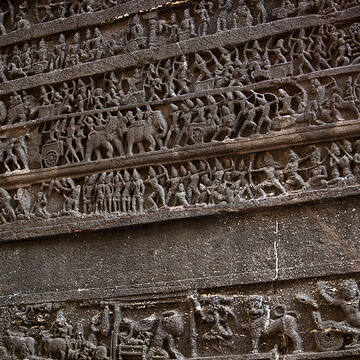
  1. ELLORA CAVES

A perfect blend of historical religion and architectural significance is the Ellora caves situated in Verul, Maharashtra. It is one of the world’s largest rock-cut Hindu Temple cave complexes enclosing within the walls of the cave beautifully carved artefacts of Hinduism, Buddhism and Jainism’s religious artefacts.

2. GROUP OF MONUMENTS , MAHABALIPURAM

The Group of Monuments is a collection of 7th- and 8th-century CE religious monuments in the coastal resort town of Mahabalipuram, Tamil Nadu, situated on the coast of Bay of Bengal. It is known especially for its rathas (temples in the form of chariots), mandapas (cave sanctuaries), giant open-air reliefs such as the famous ‘Descent of the Ganges’, and the temple of Rivage, with thousands of sculptures to the glory of Shiva carved out of stones.

3. KEOLADEO GHANA NATIONAL PARK

Situated in the state of rich history and heritage is the Keoladeo National park in Bharatpur, Rajasthan which was in earlier times a duck hunting reserve for the Maharajas that ruled various kingdoms in India before. Now, it is the major wintering areas for large numbers of aquatic birds from Afghanistan, Turkmenistan, China and Siberia. Some 364 species of birds, including the rare Siberian crane, have been recorded in the park. The other wildlife of the sanctuary include, Nilgai, Chital , Sambar, Indian Porcupine, Indian Gray Mangoose, Jungle Cat, fishing Cat, civet, Jackals and striped hyenas. The park has well defined treks which can be explored either on foot or on rickshaws provided there. Infact, the national park provides rickshaw pullers for the bird watching who are also the fabulous guides to the area.

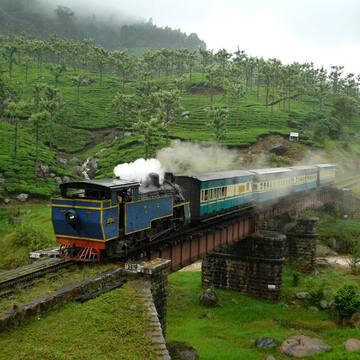
4. MOUNTAIN RAILWAYS

What better than an experience of travelling in rumbling train apartments amidst the majestic mountains. The Darjeeling Himalayan railway, Nilgiri Toy Train and the Kalka Shimla train which offers the experience of travelling in the train over the steepest heights surrounded by nature all around was declared as the world heritage site as it explores that hidden part of the country which is still saved from encroachment . The toy train on Nilgiri line takes passengers from a height of 1,069 ft to 7,228 ft. This rail network is one of the steepest in Asia. 

5. THE CHURCHES AND CONVENTS OF GOA

This coastal southern state of India on the coast of Arabian sea which is famous for its party life and beaches also has many monuments and churches of historical significance. Goa was the capita lof the Portugeese traders that came to India in around 16th century and therefore consists many victorian style buildings.

The main buildings that are included, are:

  • St. Catherine’s Chapel
  • Church and Convent of Francis of Assisi
  • Sé Cathedral
  • Basilica of Bom Jesus
  • Church of Saint Cajetan including the seminary
  • Church of Our Lady of the Rosary
  • St. Augustine Tower

The Basilica of Bom Jesus holds the mortal remains of St. Francis Xavier, a missionary across Asia (India, Japan, China) who died in 1552. He is regarded as the patron saint of Goa. Once every decade on December 3, the body is taken down for veneration and for public viewing.

Should India have a national language?

A national language is the symbol of unity amongst the people of a nation and binds them together. It is what separates a nation from other nation’s. Amidst the sea of human beings of different race and culture having same facial features, it is a language which the person speaks that shows his/her identity(nation). It is a heritage of the entire nation which the people take pride in and it is what becomes their identity on the global platform. A person knowing many languages, connects them to many culture but there will be only one particular language in which they will take pride which is their national language.

Significance of national languages

History is evident of the statement that all the great leaders did their best to strengthen their national language to get an authority of power for their nation at the global platforms. One such example is of Zedong Mao, founding father of the People’s Republic of China ,who despite knowing many languages preferred to converse in Chinese at all global platforms . Today Mandarin Chinese, one of the thirteen Chinese languages is the official language of China and is the largest spoken language by the native speakers i.e. majority of the Chinese population prefer to converse in this single language which showcase their strength and unity.

Language Movement was one of the major cause of the start of civil disobedience movement in East Pakistan which led to the formation of an independent nation what we now call Bangladesh. During the partition of India , Pakistan got the western part as well as extreme eastern part of the former India which consisted majority of Bengali Muslims followed by Bengali Hindus and Christians. Though the religions were different it was the common term “Bengali” which is the language spoken by the natives of Bengal, which united the people there and thus put forth the pressure on the dominant Pakistan government to carry out all the official works in Bengali instead of Urdu. The clash of language and the reluctance of the latter to fulfill the demands of the inhabitants of West Pakistan was the reason for the formation of a new country.

What is the need of a National Language in India

India is a land inhabited by billions of people belonging to different culture practicing different customs and traditions but what unites us is the term “INDIANS” i.e. the nationality we share. There are 22 languages recognized by the Indian constitution which are mentioned in the eighth schedule. In the land of diversity while our nationality is the thing which bonds us, language sometime acts as a barrier to express oneself when a person is in a different part of the country.

If a north Indian from Punjab goes to South, trying to converse in their regional language ,their mother tongue which is Punjabi, the receipient may not understand the words. However, if there was a common language apart from the mother tongue which both the parties understand the act of expressing would have become more easier.

Should Hindi be recognized as a national language?

According to the CBSE curriculum, which have its school spread across almost every city of the country, Hindi is a compulsory language till class VIII.

Moreover, there are two main branches of languages in India which are Indo-Iranian and Dravidian languages. The INDO-IRANIAN BRANCH OF LANGUAGE is mainly spoken in the northern part of the country and various languages spoken in the northern part are derived from it like Hindi, English, Punjabi, Marathi, Bengali, Urdu. Being from the same branch of language they are more or less the same.

Whereas, the DRAVIDIAN branch of language is dominant in south taking regional languages such as Tamil, Telugu, Kannada and Malyalam under it wing.

Also, the north eastern languages are different from both of these.

Since majority of India speaks Hindi, it can be included as the national language not forgetting that it symbolizes the name of the nation in hindi which is HINDUSTAN.

Why is WASTE a hazardous problem in India

Urban India generates 62 million tones of municipal solid waste annually of which 43 million is collected by the authorities assigned workers or vehicles. Out of this 43 million tones of waste collected, 39 million tones is dumped in the open sanitary landfills, the most convenient and oldest form of waste disposal which is a total disaster in recent times and only 12 million tones of waste is treated. The municipal waste dumped on the open stretches of land , contains all kinds of wastes- degradable, non degradable and hazardous domestic waste. The ragpickers in India act as an important source of segregation segregating the plastic and metals from the waste which is then sent to factories for recycling but the problem doesn’t get solve here.

In a population of billions , it is not possible for segregation to be done manually everywhere which leads to the mixture of the non degradable harmful materials with the biodegradable ones. Also, plastic poly bags, pose a great danger for animals as there have been more than one incident where cows or street dogs are found to have swallowed the plastic bags while loitering in the waste to find food.

There are other waste disposal methods also like Incineration and Composting. In Incineration, the waste is combusted at high pressure and heat to convert it into ash, heat and gases. The method was used since ages to get rid of hazardous bio medical waste but this process releases pollutants like particulate matter, metals, acid gases, oxides of nitrogen, and sulphur, aside from the release of innumerable substances of unknown toxicity which causes respiratory ailments. Though the proper treatment of the gases before releasing them into air is mandatory but due to the lack of resources and scientific technology , the gas is released untreated , hence causing severe damages to the environment.

Composting method is used for the bio degradable domestic waste like vegetable peels, papers, waste plants etc. These wastes are then left to decompose using the natural process and the residue serves as an excellent manure. This is the best waste treatment which can be used at homes also. However, the poor segregation of waste does not allow the success of this process.

Reasons for poor segregation

In India , all though most of the places provide door to door garbage collection facility which is collected in tri cycles or hand carts at many places and the lack of knowledge on people’s part does not let them segregate the waste. People consider the segregation of waste into degradable and non degradable items as a time consuming process. Moreover, in urban cities, where the municipalities offer garbage vans with separate columns for degradable and non degradable wastes, has not proved to be beneficial as people dump all types of wastes together.

After the launch of Swacch Bharat Abhiyan by the Hon’ble Prime Minister Mr. Narender Modi on October 2nd, 2014,green and blue dustbins for degradable and bio degradable wastes are put almost in every locality. However, the tardiness and laziness of people doesn’t allow them to use it in an effective way.

The waste dumped on open stretches of land or on road side is not only a sore to the eye but also is responsible for the contamination of environment in more than one ways.

Hazardous effect of waste disposal system famous in India on the environment

  1. SOIL CONTAMINATION– The disposal of collective waste collected from houses includes hazardous and non bio degradable waste also which does not blend in soil easily and the long exposure to the atmosphere leads to the discharge of harmful chemicals which blends with the soil , hence polluting it. For example, when plastic bottles are dumped in open, they release DEHA, a carcinogen that affects our reproduction systems, causes liver dysfunction, and weight loss. Soil contamination does not only affect plant growth, it is also unhealthy to humans and animals feeding on those plants.
  2. WATER CONTAMINATION– The chemicals from the disposed waste seeps into the ground water through the soil, hence polluting groundwater table which is used for many purposes from houses to farms to the factories.
  3. AIR CONTAMINATION – The plastic and other wastes which is burnt by the ragpickers for gaining warmth during winters or to clear the dumping ground, produces gases which are responsible for ozone depletion. Also, the accumulation of excessive rotten material at a place leads to the production of landfill gases which again harms the humans inhabiting the nearby areas.
  4. HARMFUL FOR HUMANS AND ANIMALS AND GIVE RISE TO INSECT BORNE DISEASES ALSO- As mentioned in the above points, the dumped waste causes severe health hazards to humans as well as animals. Also, the dirty landfills becomes a breeding ground for mosquitoes and house fly who transmits the dirt they pick up from there to the domestic houses they visit. Mosquitoes breed in cans and tires that collect water, and can carry diseases such as malaria and dengue. Rats find food and shelter in landfills and sewage, and they can carry diseases such as leptospirosis and salmonellosis.
  5. EXTREME CLIMATE CHANGES– Decomposing waste emits gases that rise to the atmosphere and trap heat. Greenhouse gases are one of the major culprits behind the extreme weather changes that the world is experiencing. From extremely strong storms and typhoons to smouldering heat, people are experiencing and suffering the negative effects of greenhouse gases.

These all factors are leading to slow death of our planet.

Change starts from ourselves. The pragmatic approach of the three R’s- REDUCE, REUSE and RECYCLE which we once learnt in the school is needy during these times.

Ways to a fruitful life for teens

TEENAGE IS OFTEN DESCRIBED AS A BURNING AGE” because this period is of the uttermost importance in an individual’s life as one goes through physical , social, emotional and mental changes through this period. The transition from a child to adult is not easy. It brings with itself many sets of complications.

While 00 to 14 years are categorised under children , the age group between 15 to 24 is categorised as youths. Teenage takes the age group between 13 to 18 years i.e the individuals going through this age are treated at times as children and other times as youths. Now this is a very confusing period, not knowing sometimes when to be a child and when to be an adult. Along with the physical changes that body experiences, comes its own set of insecurities. “Puberty hits everyone differently” is a famous line, and is very true . some elongates in height some in weight, some faces skin problems while some have clear skin. Some experiences hairfall while for others it grows in a lustrous manner. The matter of dressing becomes important in this period and leads to people feeling inferior as they do not set in the standards of “fair, clear skin,lustrous hair and “good height’ categories” set up by the SOCIETY and hence starts feeling lowly of themselves.

It is also a transition from secondary to senior secondary levels to that of college. Which in turn includes more exposure to electronic devices, meeting new people , SOCIETY expecting you to behave “maturely” without actually clarifying what “maturity ” means. People move, shift places to pursue further education meet new people, come out of the protective circle of the family.

all these changes affects the mental as well as emotional development of an individual . The ones good in study lack behind because the generation gap portrays parents more as villians and friends as well wishers. In some cases, these “well wishers” turns out to be actual villians, and to keep up with the company and portray themselves as “cool” and not “old fashioned” along with the lack of maturity that is the difference between right and wrong leads people to take some wrong step whether, it be a career decision, getting addicted to something, getting in wrong relationships. It is okay to commit mistakes but what is important is to learn from them. As the time passes, the past seems distant but the baggage continues. The various changes lead to stress which in turn causes delaying food habits, getting more addicted to somethings like social media which leads to low productivity.

“I FEEL LOW TODAY” is the case with most of us. The actual reason we never know. It can be any one of the above mentioned or something else also. Here are a few tips which will help you to come out of the low phase by yourself because if you succumbed to this phase then you will loose some of the most precious years which included young hearts full of energy and passion

  1. WAKE UP EARLY– One of the major happenings in the low phase is not being able to sleep at night. No matter how late you sleep torture yourself with blazing alarms or asking your family to pour water on you to wake you up but do wake up. Go outside see the sun. It doesnt matter if you dont excercise or jog, just simple rounds while seeing the sun illuminating the sky with its glorious rays, birds flying in groups, calm atmosphere of mornings will give you HOPE that this is a new day , a new beginning. It will refresh your mind and soul which is the best start to the day.
  2. EAT HEALTHY- Do not skip your meals no matter how low you feel. Because if you do, the body will not get required amount of nutrients which will affect the normal functioning. So the body will go to the stand by mode where its priority will be the functioning if essential parts such as heart leaving behind other things. This will lead to lethargy , hairfall , acne and many more problems which in turn will make you more like a panda.
  3. MOVE SOME MUSCLES – Doesn’t matter whether you workout or not, but just some brisk walk or helping in housework using the traditional means to mop and broom the floor will make your body move and will give you energy. The body will feel light and it will increase your productivity.
  4. REDUCE YOUR SCREEN TIME– I don’t think there is any explanation needed to this point. The more you get stick to your screen more you will waste your time and more you will regret.
  5. MEDIATE- Only for five minutes but do it. it will calm your racing mind.

Sonagachi: Asia’s largest red light district in the heart of Kolkata

Situated in North Kolkata, in the oldest part of 300 year old city situated on the banks of River Hooghly, is Sonagachi, Asia’s largest red light district whose narrow , rat infested lanes houses around 11, 000 sex workers.

Click on the link to know what are the red light areas.

SONAGACHI in Bengali means TREE OF GOLD. There is a fascinating story behind the origin of its name.

SONAGACHI- a place of SAINT and SIN

Sonagachi is named after a Muslim saint turned dacoit, Sanaullah. The area in olden times was known as the den of notorious dacoit Sanaullah who lived with his mother. After his death, when his mother lamented the loss of her son she heard a voice which said ,” Mother don’t cry, I have now become a Gazi”. Gazi which means a “warrior who help in the spread of Islam” is the title given to the Muslim saints. Thereafter, a mosque was constructed in his rememberance and many people came there for cures and the mosque came to be know as the Dargah of Sanaullah and the area as Sonagachi. This fascinating tale was traced by PT Nair, Kolkata’s “barefoot historian” in his book ‘ A History of Calcutta’s streets’.

Though the transformation from a dacoit to warrior may seem strange but it is pretty normal as there were many Bengali Hindu dacoits who were the devotees of Goddess Kali and a robin hood figure for the people.

Though there is no direct documentary tracing the reasons responsible for the transformation of Sonagachi into a Red light district but some stories blame the neighborhood of the area which was a business one. Sonagachi is in the neighborhood of Chitpur which many centuries back was a business center even before the arrival of the Britishers. Any place with large number of travellers or pilgrims in the British area was bound to have a red light area which housed brothels enclosing many women who were seen as nothing but a toy.

Brothels in those times were known to be owned by the prominent Bengali families . The now decrepit mansions which has suggestive names like “Prem kutir” houses and provides livelihood to thousands of woman living there.

SONAGACHI- where bounts of make up hides the pain

Majority of the sex workers there like any other red light district are trafficked . They were dubbed by husbands , lovers or by the well wishers in the false hope of a better future and “sold” to this area which has painful stories behind every gesture. The 10 by 10 rooms in the brothels provides a perfect balance of the personal + professional lives of the workers. The single bed with condoms stacked beneath the mattress and household utensils underneath the bed is a reminder of the family life for which these places and this profession provides the money for. The glossy make up, flashy lights , scented rooms and loud music is a facade to drown the cries of the children of sex workers and also the horrors faced by the workers.

To us , as the third persons the place may seem like hell , but for some workers it is a place of refugee which accepted and provided shelter to them when nobody else did. A sex worker told her story to Indian Express mentioning how she dreamt to be a teacher in a rural conservative household but since the idea of woman in the professional zone is strictly prohibited in a rural conservative home, she had to give up on her home until she found a “well wisher” who on the pretext of helping her get education sold her to these narrow lanes of Sonagachi , which after all these years are her safe haven.

Women here are scared of love because all they got in the name of love from the men outside is just hurt. Another sex worker recalled her leaving the brothel with the man she loved only to come to know months after being pregnant with his child that he already had two wives and in order to escape the physical torture , she had no where else but the lanes of Sonagachi to return.

The children of these workers have a hard time coming i terms with their mother’s profession. They have only their mother in terms of family , identity of the fathers being unknown . While some children slips into depression and denounce their mothers, the others leave their mother forever when they are able to stand on their feet while some understand the sacrifices she gave in terms of her body, soul and peace to provide for them.

Health concerns of the workers

The local government , a few years back had started the “Sonagachi project” which educates women about the use of condoms necessary to prevent HIV diseases. The result is that today the area as compared to other red light districts has low rate of Hiv.

During the covid lockdown, when there were no customers, local authorities and NGO provided ration here and educated the women about measures to keep themselves save from Covid-19. Authorities also ensured the vaccination of the workers.

Government’s drive against drug racket in Assam: The drug racket in NORTH EAST

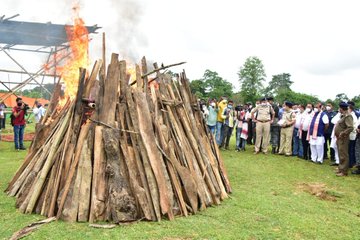
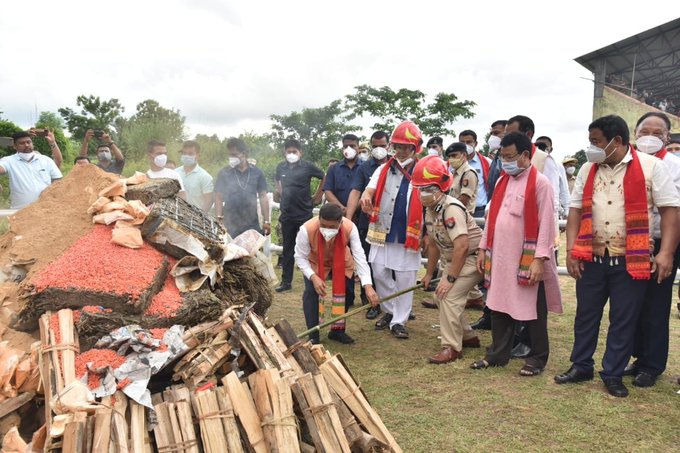
ASSAM STARTED A TWO DAY DRIVE TODAY TO BURN DRUGS WORTH RS. 163 CRORES IN PUBLIC WHICH WERE CONFISCATED IN THE LAST TWO MONTHS . When Himanta Biswa Sarma was sworned in as the Chief minister of Assam , he started taking strict actions to destroy the drug racket in Assam. Within two months, the state police had seized 18.82 kg of heroin, 7944.72 kg cannabis, 67,371 bottles of cough syrup, 12,70,394 numbers of unprescribed sedative tablets, 1.93 kg of morphine, 3 kg methamphetamine and 3,313 kg of opium , all of which worth rupees 163 crores. Sadly, this is just the 20 – 30% of the total narcotics market in Assam which is estimated to worth between 2000- 3000 crores in Indian currency. Under the drive which started today, a segment of the seized drugs was burnt at Diphu and Golaghot while the remaining drugs will be burnt tomorrow in Nagaon and Hojai. The public burning is to drive home the clear message of Assam’s zero tolerance over drugs.

The massive drug racket is not only limited till Assam but is spread in the entire country with the North Eastern states and North Western states providing a gateway linking the country to the Global narcotics industry. This blog will give you the reasons so as to why North East became the hub of drugs which destroys millions of lives.

Why has North East become the hub of drugs

India’ s strategic position places it between the GOLDEN CRESCENT ( Afghanistan, Pakistan and Iran) on the North western side and the infamous Golden Triangle (Myanmar, Thailand, and Laos) on the northeast which are two of the largest sources of illicit drugs in South East Asia. The Golden Triangle is Asia’s main opium producing area and serves as the oldest narcotics supply route to Europe and North America.

The Indian states of Arunachal Pradesh,bNagaland, Mizoram and Manipur shares its border with Myanmar which serves as an entry way of drugs in India through the Eastern side .Drugs produced in the ‘Golden Triangle’ enter India through Mizoram, Manipur, and Nagaland from Bhamo, Lashio, and Mandalay in Myanmar. The route bifurcates and one channel moves northwards through Moreh in Manipur while other moves southwards to enter Champai in Mizoram. Moreh (Manipur), Champai (Mizoram), Dimapur (Nagaland), and Guwahati (Assam) have become the nucleus of drug trafficking industry in India’s northeast.3

The Indo-Myanmar border is guarded by the Assam Rifles (AR), a paramilitary force, under the operational control of Indian Army’s Eastern Command which also serves as an route for the supply of the contaband items. The traffickers chooses the short time when the Army is off the shift or is on rounds to supply the drugs. The information about the army timings is provide by the locals who sympathize by the criminals many of whom are the part of the local terrorist groups of the North East. Further due to friendly Indo- Myanmar relations , The border is not permanently sealed allowing some free movement between the borders for the limited time period in a day which again enables the transfer of drugs as the traffickers develop smart ways to avoid the scanning of their items containing drugs.

Moreover, poor state of education, unemployment, poverty, increasing spread of HIV/AIDS, ethnic conflicts are some of the issues faced here. Children are forcefully used as drug carriers in promise of better livelihood. These issues have seldom featured in policies of successive governments. Criminals use this vulnerability of local population and manipulate their minds into joining criminal ranks. Such fragile situation along the India-Myanmar border jeopardizes the region into becoming a hub of drug trafficking.

The Chief Minister of Assam in a statement said that he has provided full liberty to the police forces to arrest the drug traffickers which also involves the use of gun to stop the trafficker from running or in the act of self defense if the trafficker counter attacks. The shooting of traffickers has invoked much criticism but Sarma said he is not going to compromised on the safety of his officers.

Further drugs were also used for payment by the criminals in exchange of smuggled arms, fake currency and other prohibited items thus causing social problems and crimes. The CM also mentioned that it was important to do this in order to save Assam from being another “Udta Punjab” (reference to the bollywood movie showing drug racket in Punjab).

The action taken by Assam government is appreciable . Only if all the border states work in tandem with each other and take strict actions, only then we can cease the entry of drugs in India and save lakhs of youths from spoiling their lives under its influence.

India’s RED LIGHT Areas

What is meant by a RED LIGHT AREA?

Red Light Area is a term that is used to denote the presence of the area which hosts prostitution places like brothels , strip clubs etc.in a district. The term “red light area” comes from the use of red lanterns in the olden times which were used to indicate the presence of a brothel house in a city. Gradually, the red lanterns were replaced by red lights which were used for identification of such houses. Also, there is another explanation to it which states that when the sailors in Europe would return by sea to the coasts of Amsterdam , the women who worked as prostitutes would be frail, weak as a result of living in poor hygenic places which would make their skin and hair camouflaged carrying red lanterns which would differentiate them from the other women.

The history of Prostitution in India

During the Mughal era, the tradition of “tawaifs” came into being, where there were separate women courtesans to entertain the upper nobility with their singing, dancing and Urdu reciting skills. With the end of Mughal Era and the coming of Britishers it turned into the business of prostitution where a woman was suppose to offer her body for pleasing the nobles and the powerful instead of her talents. When Goa was a Portuguese colony during the 16th and 17th century, they used to trade Japanese women and girls as slaves to pleasure their sailors from Portuguese. With the coming of Britishers, it turned more vast. Britishers established various colonies which used to house brothels housing prostitutes which were bought from rural India at a “price” thus commoditization of women to make them prostitutes started.

Every British camp had 12 to 15 Indian prostitutes for pleasuring British soldiers. When the historian says that the Britishers have exploitd us in more than one way it is utterly true. Kamathipura, Mumbai’s largest red light district was the first establishment by the Britishers in India in 1795. The sex trade today has gone all berserk with children being trapped and made to be prostitutes. The red light area is a different sort of world for these girls majority of them belonging to poor families from far way state, being pushed into sex trafficking on the pretext of getting jobs by the pimps from a very young age.

List of largest red light areas in India

  1. Sonagachi, Kolkata- It is Asia’s largest red light area housing over 10,000 females with multiple brothels situated in its winding narrow lanes.
  2. Kamathipura, Mumbai. – Darkness is the first word which comes to mind on hearing this name. The voices of innocent young girls who had just gained their womanhood being pushed into this gory trade where they have no idea what is happening with them except the feeling of pain and utter disgust. The area had around 45,000 women in 1992 which was reduced to 500 in 2016 as per the official numbers.
  3. Budhwar Peth, Pune
  4. Meergunj, Allahabad
  5. G.B. Road, Delhi
  6. Chaturbhujsthan, Muzaffarpur
  7. Itwari, Nagpur
  8. Shivdaspur, Varanasi

***The stories of horrors inside of these red light areas can not be summarised in one blog. There will be second blog containing the darkness hidden in the RED LIGHT areas . It is so ironical that despite the name of these areas containing the word “light”, there is just darkness in there.

Apart from the labelled Red light areas where majority of the women are traded by others there are more such areas in India where the entire village is involved in sex trade and prostitution is the main source of income there where a woman earns by selling her body to feed herself and the males of the family.

  • Natpura Village , Uttar Pradesh – Located in the eatsern UP’s Hardoi district, in a population of 5000 more than 70% of the women are involved in sex trade. The children here live only with their mothers, have no surnames and no clues of their fathers. This bizzare tradition is followed here since 4000 years now.
  • Bachara tribe, Madhya Pradesh – Bachara is a tribal matriarchal community in the western part of Madhya Pradesh and women here are said to be the descendants of royal courtesans. Here, girls are forced into prostitution by their own fathers and brothers. The responsibility of making both ends meet is in the hands of the eldest daughter of the family. Most of such families have a dedicated room in their houses to continue this dreaded profession.
  • Wadia Village, Gujarat– Known as the village of “sex workers” , males of the family search for potential customers for the females with the price ranging from 5000 to 10, 0000. The village is occupied by the “Saraniya tribe” which follows this custom since past 80 years. No matter how many educational drives regarding the wrongs of continuing this are done in the village there is no stop to it.

Is Prostitution legal in India?

Though Prostitution is legal, pimping, child trafficking and owning brothels is not. The power of money however succeeds in silencing the hands of the officials incharge to ensure that a woman gives her body by her choice not by force .

Pilpantri: a model of environmentalism and feminism

Pilpantri, a village with a population of 8000 , located in Rajasmand district of Rajasthan has been a matter of pride for the entire nation. It is the perfect example of how the cycle of change starts from one person itself. This small village has been attracting attention from all over the world due to its efforts of saving the environment and promoting the girl child birth and education. Now, feminism and Rajasthan in one sentence may be shocking to some as Rajasthan has a tanned image for female infanticide, child marriage and is considered to be one of the least progressive state for females. However, times are changing. Pilpantri, itself being an example of this change which has made it a role model of eco feminism.

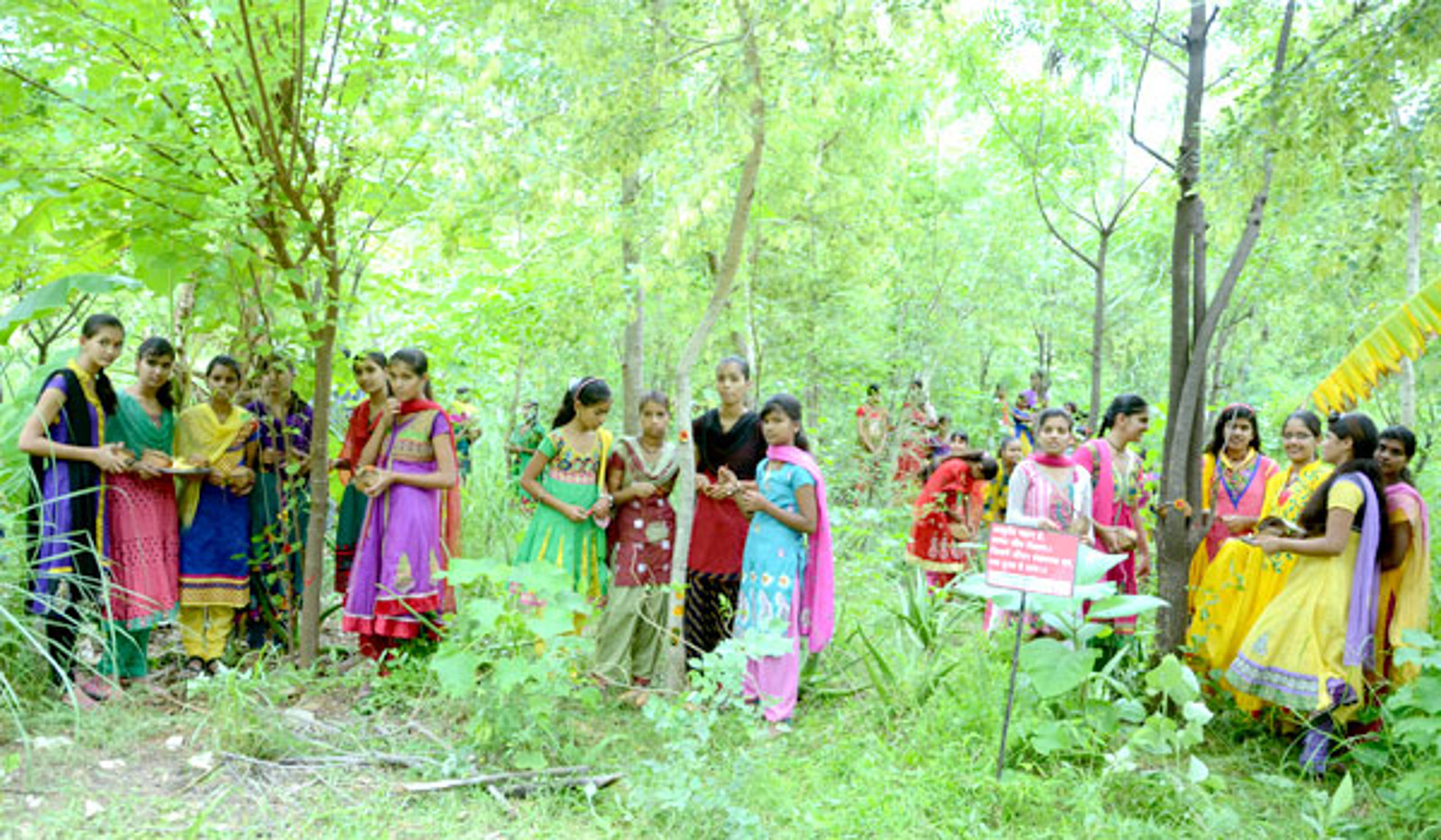
This village plants 111 trees for every single girl child being born there. The number of trees being “111” for every girl child has a different story behind it. India is a land of traditions which is what makes us unique. It is a tradition in India that on every auspicious occasion a donation of 101, 111, 1100 or the similar numbers being made ,which is termed as “shagun” in Indian terms. The traditions when used in an innovative way may prove extremely beneficial for the present times. The plantation of such a huge number for every girl child born increases the green cover around the village protecting the people there from the pollution and its aftermath, which is one of the biggest problems in India. The saying “Nature has solution to every problem provided you regard it well” holds true.

History of the plantation drive

In 2005, when Shyam Sunder Paliwal had taken over as the village sarpanch, the entire area surrounded by hills was denuded for mining. The district of Rajasmand is known for marble block mining and is the largest producer of marble in the entire country. Mining leads to the loss of vegetation and invites several problems in the mined areas such as floods, water logging, soil erosion as the natural protectors of environment i.e. the trees are sacrificed in mining and no or least attempt is made to restore them.

Two years later, when Kiran , Paliwal’s 17 year old darling daughter died due to dehydration, he decided to honor her by planting a tree in her name on the village entrance. He then thought of implying this scheme for the birth of every daughter in the village . Not only to celebrate the birth of a girl (which is a very rare practice in India) are trees planted but also to commemorate the lives of those who died. The village plants 11 trees in the memory of every person that dies here.

Pilpantri as a model of feminism

In India, where patriarchy has a strong hold, females are neglected since birth and are seen only as an institution to carry on the generations forward. The birth of the female becomes a matter of shame for the family while some starts to worry about the dowry of a new born girl. To put a stop to all these problems, the people came with a very “horrifying” solution which is to kill the girl before she is born. A report suggests that in Rajasthan, the child sex ratio is 888 girls per 1000 boys. The census also revealed that of total deaths in Rajasthan, over 20% of them were infant deaths. Overall, the female child population (age 0-6) between 2001 and 2011 dropped by 3 million. One journalist referred to this as “the silent genocide.” Female infants are sometimes tragically killed by opium poisoning, starvation, or even being crushed with stones or drowned in water.

Pilpantri , a small hamlet not only cares for the environment with every girl born but also secures her future through the various schemes implemented by the village. As reported by The Hindu, Rs. 21,000 is collected from the village residents at the birth of a girl child and Rs.10,000 from the girl’s father and this sum of Rs. 31,000 is made into a fixed deposit for the girl, with a maturity period of 20 years. Also, the village authorities make these parents sign an affidavit promising that they would not marry her off before the legal age, send her to school regularly and take care of the trees planted in her name.

When the girls grow up, they tie Rakhi( a holy sibling bond signifying the protection of each other) to the trees.

Pilpantri as a model for environmentalism

According to a report by BBC, the region now has more than 350,000 trees, from mango and gooseberry to sandalwood, neem, peepal and bamboo, growing across the once-barren lands and covering an estimated 1,000 hectares. To plant the trees what is required is soil and water along with the saplings. The more the greenery, it will attract higher numbers of birds , bring more rain and prosperity to the region.

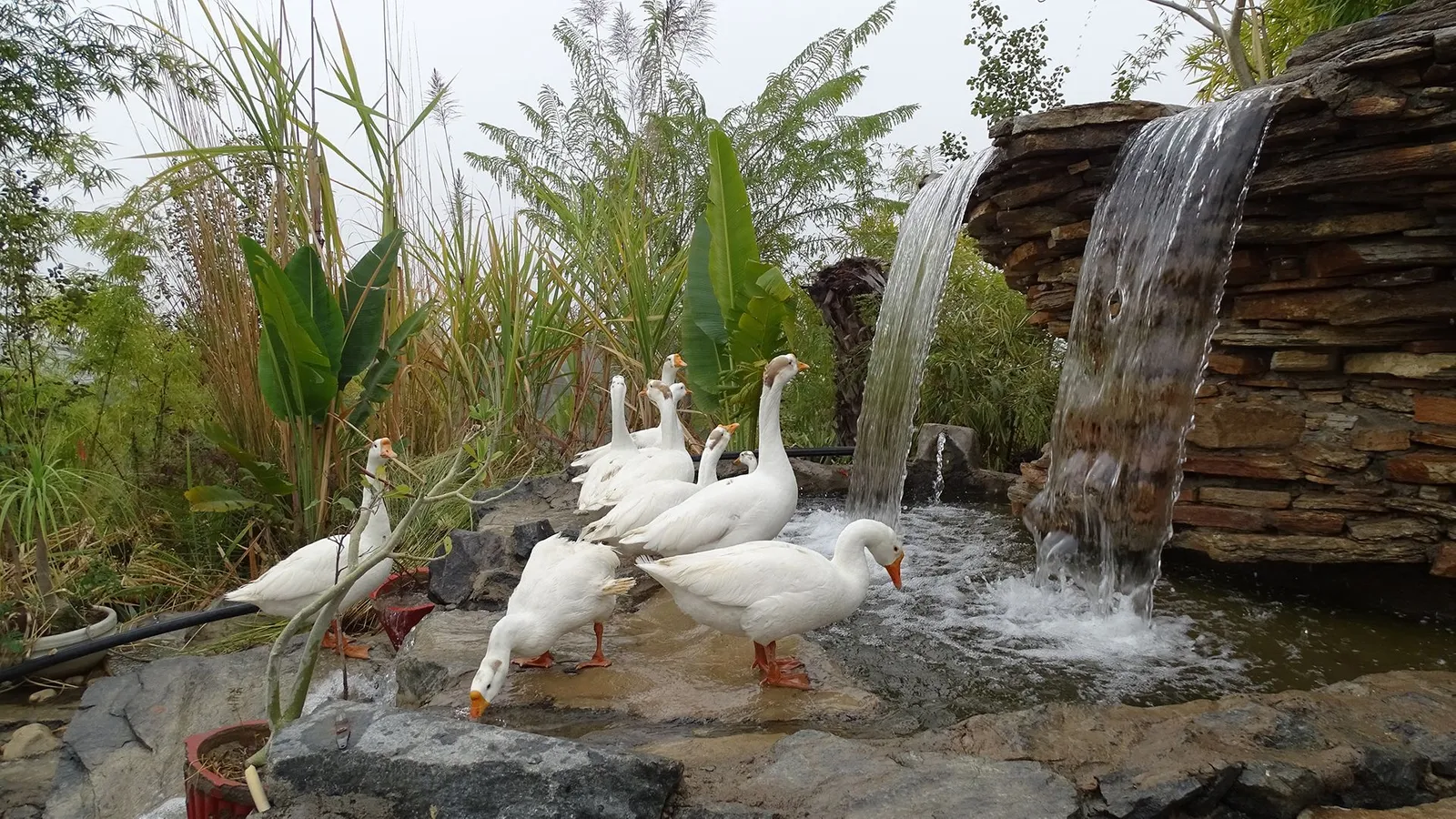
The village has also developed a water harvesting system , where the run off rain water is collected through ditches, bunds and dams. Now, clear pools of water shone and adorn the village attracting animals like geese and rabbits.

Also, to protect the large number of trees from termites villagers plants aloe vera in large amounts near the trees which in turn is utilized by the women of the village to make aloe juice ,gels and cosmetics for sale in the market, increasing the village economy and their independency.

In 2018 the state government instituted a training center there to educate people on the “Piplantri Model”. The building hosts engineers, officials and residents from other districts who hope to replicate Piplantri’s model of water harvesting and tree planting elsewhere in Rajasthan and the country. As many as 50 to 60 visitors come to Piplantri some days – most of whom come to attend workshops in the training center – and the village even has a set of cottages to house them. 

Now, the birth of a daughter is no more considered to be a burden but a matter of pride and celebration. It is the efforts of Shyam Sunder Paliwal which have adorned the earlier dried village considering females as a burden , into a developed hamlet which is an inspiration for the entire country in more than one ways. The woman has been associated with “fertile lands” in literary terms by many poets since ancient times . It is not only because of her ability to reproduce which gives her this association but also her ability to nurture and regrow an arid land of which Pilpantri is the best example.

The reason behind the rising number of old age homes in India

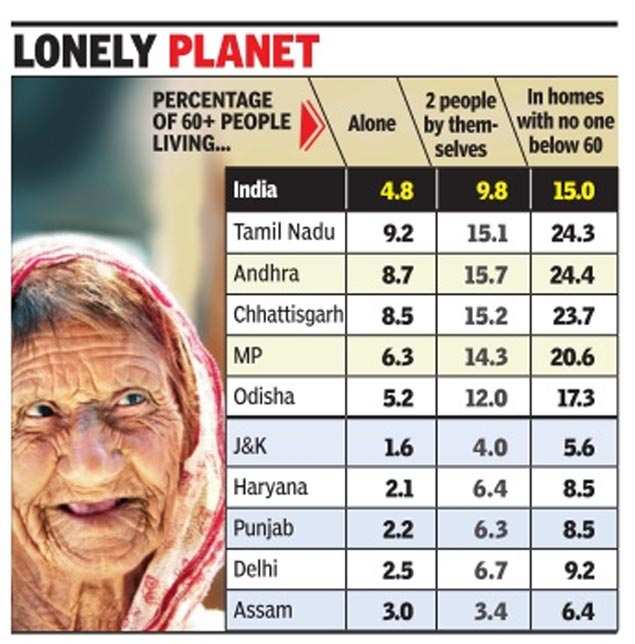
According to Population Census 2011, there are nearly 104 million elderly persons (aged 60 years or above) in India; 53 million females and 51 million males. A report released by the United Nations Population Fund and HelpAge India suggests that the number of elderly persons is expected to grow to 173 million by 2026. Currently 71% of the elderly population resides in urban areas while 29% are in rural areas. With the changing times, children moves out to different cities or even different countries with the aim of gaining better living aspects leaving behind their parents for whom it is not possible to adjust with the lifestyle changes which migration brings . In some cases while the parents agree to move in with their children , in other cases it is observed that when parents age children starts to see them as a burden and a responsibility that they want to get rid off which lead them in abandoning their own parents.

Currently there are 728 old age homes in India, with the information available for 547 homes out of which 325 homes accommodates elderly people free of cost, while 95 others charges for the accommodations while nearly 110 other homes have both free as well as pay staying facility available . Kerala , the state which has the highest literary rate in India is also reported to have the highest number of old age homes i.e. 278.

India has always been a nation of traditions where a child since birth is taught to touch the feet of elders as a mark of respect. It is considered an insult to leave the parents at old age home, to not provide for them in their vulnerable age as many children consider taking care of their aging parents as a forced liability as their growing age weakens their physical ability. This blog will highlight some of the reasons why the number of elderly people in old age homes continuously rising.

The reasons for the rising numbers

The families in India few decades back were joint families with parents, grandparents, siblings their wives and children living together under a single roof in a small town or villages. Those were the times when urbanisation had not really hit the sub continent and the aging elders have does not have to worry about someone taking care of them.

  • The migration which the children go through sometimes from a state to another or to another country, makes it difficult for the elders to adjust with their children’s new surroundings as it is very natural to adjust in an experience to which you are foreign almost your entire life. Even if they do adjust they tend to feel very lonely while the children go to work. As the urban system which consists of living in flats or even houses in the cities had made people isolated in their own world owing to their hectic schedules . In these cases , children feel that if their parents will get the company of their own age then they will feel better and will be able to lead a happy retirement.
  • As the times progressed, opportunities increased children started moving away from their parents as the trend of nuclear families came in fashion. Also, the generation gap between the elderly and the young does not allow elders to accept some of their children’s choices like many still have objections to an independent working daughter in law. These issues creates rift in the family dynamics leaving no option other than to move the parents out of their houses. Since in India children never shy away from taking their parent’s savings which they had saved for their old age for their personal benefits and the middle class families can’t afford another place for the parents to live close by, parents ends up in the old age homes . Also, there are some horrific cases reported where children tend to abandon their parents by the excuse of sending them off to pilgrimage or to any other city leaving them stranded. The reason this occurs is because the younger generation refuse to adjust with the older ones by being cruel and mean to them for their limited physical capability. In such cases, the passer by then drop them to the old age homes.
  • While many children move out of their parent’s house for job or education purposes leaving their parents alone, their security always remain their prime issue. Though many youngsters have surveillance cameras and advanced security systems installed in the house , still the rising number of crimes against the elderly where the houses with just elder people becomes a target for robbery even murder is worth worrying. In such cases children feel the environment of old age to be safe.

The conditions in old age homes

While many old age homes provide good accommodation and facilities many are reported to provide stale and inadequate amount of food, no medical attention even after taking money for the proper services by the children. Their are instances of cases of violence in the old age homes . Such one instance is a time, when an elderly was reported to be beaten by the management for complaining about the quantity and quality of food served.

The people in old age homes are not always happy as somewhere or the other they still miss their children who either comes on weekends and important occasions. While there is this other set of children for whom parents are a forced responsibility , who never show up after giving false hopes of coming every weekend. In the latter cases, it is the management of the homes which take care of the medical needs of the elders through donations. There are also cases when children do not even come after the death of their parents.

Conclusion

Everything in this world is a part of the vicious cycle of Karma with the proverb “As you sow so shall you reap” being true. When a child is born it is completely dependent on its parents for its needs. Similarly there reaches a time when the human body gives up to age making it difficult for the older people even to do their necessary works. In such cases they become dependent on their children who will have to learn to adjust to the maximum to cater their parent’s needs. Else, when their time would come they would also die in old age homes with their own blood having no care about it.

Also, government should work on increasing the number of old age homes in states and also upgrade the security making sure that the elders are safe in the homes.

Impact of Covid-19 on environment

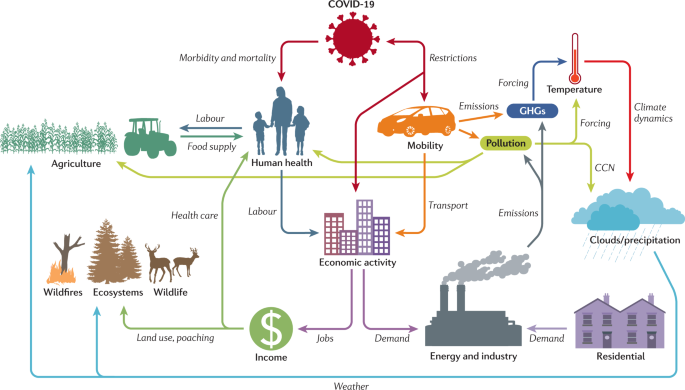
The activities human does has its impact directly on the environment which in turn affect humans in the long term . In the last two centuries the concern for the environment protection arose first during the Industrial Revolution in Europe which changed the entire dynamics of the world leading to revolutionary changes but the burning of coal to run the machines in the industries led to smoke pollution. With time as the number of industries increased globally so did the number of harmful pollutants released in the air causing high smog level, acid rain , respiratory diseases among many other things. It was not just the air but also the water where the waste from industries was directly released making water misfit for humans as well as posing threat to the animals in there. Everything on the surface of earth is interrelated , the cycle of destruction which once starts consumes everything within it fueled by the human greed. Extensive mining , improper waste disposal, excessive noise from honking of cars and other sources leads to different forms of air, soil and noise pollution . Over the years, different governments have come up with different plans to preserve and protect the natural resources and environment along with various methods to reduce the negative impact of globalization and industrialization on the environment.

The covid-19 pandemic which hit the world in early 2020 and has claimed almost a million lives till now had the countries going into the complete lockdown to prevent the further spread of the disease. Lockdown ceased the normal routines of the people as everyone was caged inside their houses with many loosing their jobs, many getting rest from the normally hectic lives, the conditions of the medical professionalists being worse as they had to deal with a foreign deadly disease which they had no idea about. The lockdown which closed all industries and workplaces brought down the world economy to a major level. Despite all these hardships, the only positive thing which happened was the clearance of the environment such as air and water which had been polluted beyond repair by the humans.

Everything has its own pros and cons. This blogs will tell you about the positive and negative impact of covid-19 on environment.

Positive impacts

  • There was a phenomenal reduction observed in the emission of green house gases such as carbon dioxide , methane and nitrous oxides due to closed industries and shut down of transportation which led to cleaner air. According to a study, China which had an average of 2,00,000 metric tones of carbon dioxide emission saw the emission being reduced by 25% which according to the Earth system scientists saved the lives of over 77000 people in two months. The decrease in air pollution brought with it 50% reduction of nitrogen dioxide and oxides of carbons levels which also decreased the rain in that particular time period being acidic. Acid rain which had led to many diseases and corrosion of metals and monuments such as our mighty Taj Mahal is caused by the combination of nitrogen dioxide with oxygen and water vapor present in the atmosphere which leads to the production of the harmful nitric acid along with water.
  • India, where the AQI(Air Quality Index) had worsen in the last decade, saw a drastic improvement in the air quality. The AQI obtained by the Central Pollution Control Board(CPCB) was assessed by comparing the level of pollutants degrading the air quality( PM10, PM2.5, Carbon monoxide and sulphur dioxide) in the unlock (pre covid-19) phase to that in the four lockdowns which the country experienced. It was observed that there was a gradual to rapid reduction in the level of these harmful pollutants and increment in ozone concentration due to the reduction in Nitrogen dioxide concentration by almost 80%.
  • Water Pollution which is a major problem in India and Bangladesh with industries releasing their waste water without its proper treatment in the water bodies causing the decrease in oxygen level in the water affecting the aquatic life present there and also making it unfit for human use. According to various reports, the Ganga and Yamuna rivers of the country which were one of the highly polluted rivers due to the dumping of garbage and industrial releases pre covid showed the signs of rejunevation during the lockdown. No discharge of harmful affluent in these water bodies led to the decline in nitrite concentration in water increasing the dissolved oxygen level. Further, it was reported that the districts in Ganga river basins experienced 60% more rainfall than what it normally experiences which led to the increased discharge of water in river further contributing towards the dilution of remaining pollutants.
  • Also, the animals which were rarely found in open such as the sea turtles finally retreated to their original natural habitant with many sea turtle and rare species of fishes being spotted in the open and on the beaches which were deserted in the lockdown.

Negative Impacts

  • People were advised to use masks and gloves as a precaution against covid-19. The inappropriate disposal of masks and gloves along with other bio medical waste which was used to treat the covid-19 patients will lead to more harm in the long term. Governments advised people against the open disposal of the bio medical wastes but lack of proper knowledge led people to do the otherwise contributing in the water and soil pollution.
  • Also, the flora and fauna which was protected by human guards against the illegal human activities was also at risk. As with lockdown, decrease in man power guarding the reserved forests and sanctuaries decreased which led to the increase in illegal deforestation, wildlife hunting among other things.

Covid-19 can be seen as the nature’s warning to humans to stop interfering in the natural things and to mend its relation with the environment , else the consequences will be terrible.