Does India has low divorce rate because of happy marriages?

Divorce refers to the legal cancellation of marriage declaring that marriage as null and void. Marriage which is said to be a union of two individuals is generally expected to last till the death of the couple but in some cases when the couple feels that they are not compatible with each other or are hindering each other’s growth or any other reason , they decide to legally cancel their marriage . The reasons for divorce are many not just the two reason which are mentioned above raging from domestic violence, to the cases where one partner commits infidelity to cruelty, insanity, desertion etc. It is not good to continue in a relation which is turning toxic as it will affect the mental as well as physical well being of an individual.

India , the second most populated country in the world has less than 1% of divorce rate while Maldives which is 11,031 times less populated in India has the highest divorce rate in the world with 10.67% of divorces happening per 1000 inhabitants. The reason for such a high rate is that being a Muslim country, Maldives prevents any kind of premarital physical relations and as soon as the children turn 18 , they marry . Also the marriages there are not at all a costly affair with $10 being the fee for the judge and 10 relatives being invited to the wedding. The decisions taken in such tender age of 18 are often proves to be wrong , as the partners mature with time they realise that their aims are very different from others. Also, there are no social obligation restricting them in a unhappy marriage.

Why is there such a huge discrepancy between both the countries? Is it because people in India are quite happy with their partners? Or is it because they are married with their choice of life partner? Read the blog completely to know the reasons.

Why does India has such low divorce rate?

The main reason for divorce rate being the lowest in the second most populated country in the world is that people consider divorce to be a taboo. Marriages in India are a big affair with every acquaintance being invited and treated to the best lavish dishes and luxurious gifts that the family can provide which often leads to the expenditure of the entire savings of the family and heft loan amounts. According to a common belief, here marriages are made in Heaven and even if you are suffering terribly you should not break the bond which is said to be pious tying to people in a matrimony for their next seven human lives. This belief is very contrary to what the VEDAS(the oldest religious scriptures in the world which is a theoretical source for all the laws written in the SMRITIS which used to govern the laws in ancient times) say.

Also, there is a social stigma attached to the divorces which questions the character of mainly the woman stating her to be incapable of “fulfilling her husband’s demands”. Women since centuries now, are a piece of toy who despite all her qualification fails to be called a successful woman if she is not married and has not produced the kids. It is a woman who is supposed to adjust, putting even her self respect at stake. This is the reason where a woman even after becoming a victim to domestic violence never dares to file for separation as victim blaming and shaming starts soon after and she eventually accepts domestic violence as a part of her life. A woman is supposed to have no voice of hers as she is considered incapable of taking correct decisions for herself. What an irony it is that staying in a venomous marriage is considered to be good for a woman! This is the reason that the states of Bihar, Haryana, Rajasthan and UP where patriarchy still has a strong hold have the lowest divorce rates while the liberal North East has the high rates. It is the state of Mizoram in India that has the highest divorce rate of 6.34%

The time period of divorce also stretches infinitely long sometimes taking years when the divorce is not mutual which drains the involved parties emotionally, mentally and financially due to the amount of alimony involved.

What does the VEDAS say about the marriage and divorce

According to Kirron Krishnan a Vedic spiritual theist, Rigveda (which contains information about religious, social and economic life of the people) or any of the other three Vedas do not contain any mention of the term called divorce. In those times the term was not needed because according to Rigveda , the husband takes the hand of the bride to live with her till their old age playing with their grandchildren respecting her , loving her and supporting her all along. Meanwhile the wife was the queen of her husband’s household who would over the same support , respect and love back. It was a mutual show of respect by both the parties which did not leave any scope for any domestic violence case. Further, unlike in today’s time where a daughter is considered to be a liability who is born just to be married off, in the days when India was a golden bird the women were trained and skilled by her family and was married to the groom of her choice and the same was prevalent with men.

However there is the mention of remarriage if one partner dies , rennounces the world , disappears , is involved in criminal activity or is impotent. The laws in the ancient times were far more suitable for both the genders than they are today.

Is it good to have such a low divorce rate in the country

By stating that the low divorce rates are not good it doesn’t implies that the divorces are good and more people should have it. If the couple in the marriage is happy then there are no issues, but if the couple in the marriage is not happy with each other and is only together “because they have no other way” then it is completely wrong as it will generate negative vibes harming the couple as well as their innocent children . It is seen in more than one cases that the children from unhappy marriages results in being a frustration box to their parents’ outbursts which hampers the growth of the child.
Has OTT platforms changed the dynamics of the Indian cinema

What is an OTT platform

OTT stands for over the top media , which offers media services to the viewers directly through the internet by passing the cables, broadcast, sattellite television platforms and the distributors or controllers of the entertainment content.

Cinema is basically the art or technique of making motion pictures of bringing the stories made by the creative minds to life with the help of the camera. it is immensely popular in India with over 1800 films releasing in many Indian languages per year with Mumbai, Chennai, Bangalore, Kolkata, Kochi, Bhubaneshwar-Cuttack and Guwahati being the main centers of the film production. Cinema in India not only serves a purpose of being a platform for showcasing art and providing entertainment to the masses but also it is an emotion. Whenever there has to be a celebration in the Indian households people do it by going to the theatres enjoying their time out relishing the feel of the reel stories with their favorite beverages in their hands. When we are happy or sad we watch movies, the choice of the films we watch represents our mood.

Indian Cinema over the years

Over the years, the cinema has transformed from giving classic deliveries over the daily situations of the lives, to the typical action packed romance films where a poor boy goes against all the odds to marry her rich girl or vice versa to the films depicting the importance of family to the films depicting social issues which are lesser known and require our immediate attention to the real life inspirations. Over the past half century and more there has been a rapid change in the dynamics of what film industry used to be and people’s perception about it.

We see ourselves in the character and derive joy from it and maybe learn things also from them . The vilian on the screen automatically was our definition of a bad guy. The iconic DDLJ’s “Tujhko dekha hai toh jana sanam “ song which was shot in the mustard feel continues to rein people’s heart over almost every generation even today 25 years after its release. This is what is about the movies, it takes us for a moment away from this hectic world.

The contribution of OTT platforms

With the covid-19 pandemic engulfing the world in its dreadness, everyone is locked in their homes with the theatres which since many decades have played home to hosting the movies on the big screen being closed. Though nothing comes close to the feeling of watching a story which sometimes consists of your dreams, unfold on the big screen, OTT platforms are what which came to our rescue in these times.

While the OTT platforms like Amazon Prime video, Netflix, zee5 are there since years now , but its the pandemic which had made people watch these. With the introduction of OTT came web series, a mid version of serials and movies. While a movie has to wrap up in 3 hours maximum and a tv serial goes on till infinity , web series are slightly longer than the 3 hour duration and are finite with the content i.e. there is no pressure to extend the content till infinity for the sake of TRPs. The content which includes these web series are the one which is too long to be caged within the 3 hours of the movie. And this has led to some serious changes in what Indian cinema is now.

Gone is the time of showcasing a damsel in distress who needs her Knight in shinning armor to save her, it is the time of equality and this is what the majority of content on OTT serves today. Not just the web series but the films which are releasing on these OTT platforms now showcase the need for change in today’s time. With people idolising the cinema and its actors, it is very helpful if those actors help drive an important message home.

Also, it has given an opportunity for the actors to showcase their skills and the ones who were once underrated are a household name now. Moreover, the OTT platforms are available at the lower rates with a subscription for an entire year in many Indian languages, it is just like the theatres shifting to the comfort of your homes with more valuable content . This helps people in watching end number of series and films over that platform in the amount of money that they would have spent on just one movie in the theatres. The reason for this cost reduction be the removal of distributors and many others who played an important role in the release of a film.

Ghost Villages of Uttarakhand

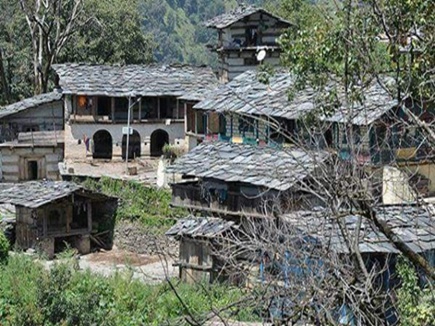
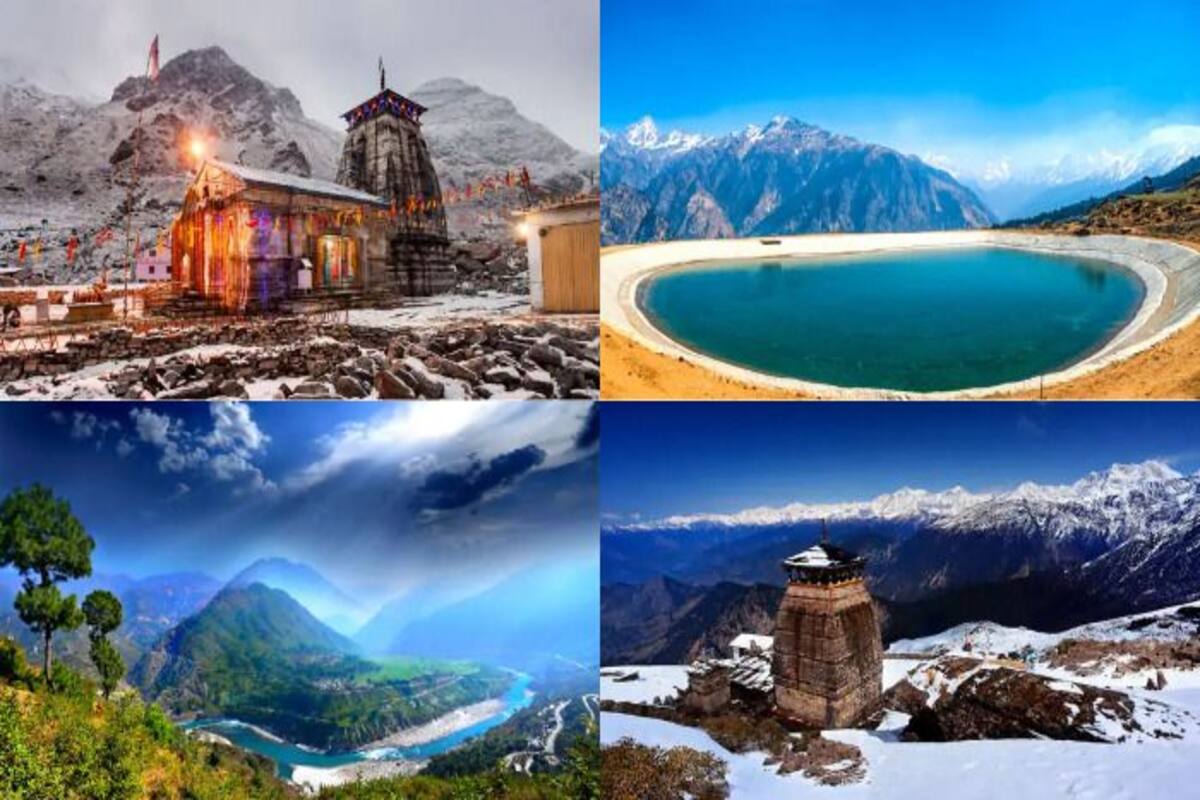
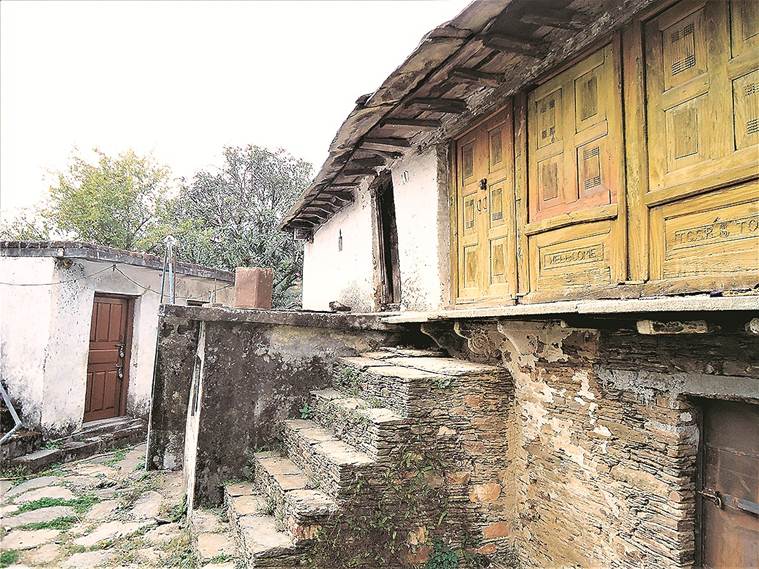
Uttarakhand fondly known as the Abode of God due to its rich cultural and religious history which is still stored in many temples sprawled across the state is also the origin of river Ganga and Yamuna , two of the most sacred rivers of India. The shrine of Baba Amarnath and Kedarnath in the state makes it a famous destination for pilgrims from all over the world not to mention the large number of tourists it attracts every year due to the picturesque scenery which the state offers . Despite such rich heritage of the state, in the last two decades it has faced a major issue where out of 16.739 villages in the state, 1702 villages were declared “Ghost villages” as they have no inhabitants. Whereas about 405 villages have less than 10 people as its residents( The data is based on the Census of 2011). The question is that why the area which was separated from Uttar Pradesh to form a separate state of UTTARAKHAND so that the people here may have better growth opportunities, has seen such a drastic decline in population over the last decade. Is there really some ghost as the title “ghost village” suggests that has occupied the place of the human beings? What is the reason that despite such a large number of tourists and pilgrims visiting the state every year, the villages here which act as a treasure chest preserving the culture, the heritage and the history of the place, are empty? This blog will answer all these questions.

Why are the villages devoid of any human habitant?

People from the villages have migrated to other states and other cities of Uttarakhand such as Rishikesh , Haridwar , Dehradun etc. in search of employment with an aim to have better lives. Initially, it was just the youngsters who would migrate to other places for earning but eventually as the time passed and the villages remained remote, elders also started to shift simultaneously as the cities offer better healthcare facilities. Imagine the emotional turmoil which people go through when they have to leave their homeland, their birthplace just to feed themselves.

The reasons for migration

  • The villages in Uttarakhand are least developed with many villages still having a narrow risky trek which connects them to the main road. Electricity till a decade ago was foreign to these places. Authorities pay absolutely no attention in catering to the needs of the people living there. Though the state is blessed with two of the most sacred rivers, yet the residents specially in the villages have to struggle even for water. Urbanisation in the hills brought with it such affects that many villages which were blessed with the streams full of water almost the entire year many decades back are now witnessing dried streams and barren land . Though the famous tourist places of the state, such as Almora, Nainital, Rishikesh, Haridwar, the capital city Dehradun etc. are provided with the facilities which ensures the safety and well being of humans, villages are still untouched.
  • Safety is another big issue which the residents have to face. The villages which are located amidst the dense jungles of the Himalayas are home to many wild animals many of which are man eaters. Even if the animal is not a man eater, wild animals such as wild boar , wild pig destroys the crops leaving no source of living for the people.
  • Since the entire state is situated in the mountains, the paths there are steep which leaves scope only for terrace farming and does not allows the growth of many crops. The crops which are grown are either destroyed by wild animals or by the famous mountain rains with very little left to fill the stomach with. Owing to these reasons, people have gradually stopped farming. Also, the extremely effective implementation of welfare schemes like the Mahatma Gandhi National Rural Employment Guarantee Act (MGNREGA) which allows the people working as laborers under the MGNREGA projects give them enough amount for sustenance and the enforcement of the food Security Act gives them enough ration to survive with . The reasons mentioned under this bullet point can be considered as the reasons for the decline of farming which was the sustenance profession of the state since years and validates the moving of people in search of better life opportunities.
  • Also, the people in the villages feel that City life is a heaven with all sorts of opportunities something which is rarely visible to them in the naturistic villages. Litle did they realize , that the reason for a large number of tourists coming to the state every year is their want to escape from the monstrous daily problems of the city life. How ironic it is , that geography has created such a vast opinion between two sets of human beings each one thinking that the other set resides in heaven! Well, this is how life is full of oxymorons and ironies!

Is the presence of ghost villages good for the state?

The answer is a big NO. Experts say that migration leads to abandonment of villages which causes degradation of land, makes villages unlivable, and further fuels migration. In fact, the migration to cities has been in such great numbers that Uttarakhand has recorded the highest increase in the share of urban population in any of the Himalayan states of the country while its rural decadal growth rate is the lowest. The inter state migration which was at its peek during the early 2000s when the state was newly formed was transformed into an intra-state migration after the devastating floods which destroyed Uttarakhand in 2013. The consequences being that the cities are overpopulated as they had no proper arrangements made to accommodate such a large number with the standards of living deteriorating for everyone. Whereas the villages have lost their mark.

The empty village homes are now covered with the wild shrubs and has increased the area of exploration to the wild animals such as tigers and leopards many of which are man eaters. The increase encroachment of animalsin the human settlements may prove fatal to the villages which are still lively though in less numbers.

Owing to the nationwide lockdown in 2020, many of the migrants have come back home to resettle in their roots and are now trying farming which is more difficult now owing to the covering of the farming areas by the wild shrubs which are difficult to remove. The resettling phase will again be a difficult one as these villages are still the same with no better facilities.

Environmentalist Anil Joshi, who in 2015 undertook a 20-day march across Uttarakhand as part of the Gaon Bachao Andolan (“save village movement”) to address the issue of migration from villages says ” we should ask the government why there is still a need to migrate”. His words hits a deep chord forcing us to think, why is it this difficult to fulfill the basic needs of the simple villagers so that they can stay close to their roots saving our culture and our future.

Does only physical abuse counts as Domestic Violence?

The term violence refers to the intentional hurt which a person gives to another person in order to fulfill their motive which is to see the other person in pain. Now, the type of violence which we know is the one which is visible to our eyes i.e. if the victim’s body showing an evidence of any kind of hurt , then it is considered to be a violence but what about the mental and emotional trauma that the person(the victim) has to suffer due to this “physical violence”.

We hear the cases of major fights on the road, or any mob outrage , the culprits are charged against various sections which provides punishment for basically only the visual harm but if the mental trauma of the victims is also to be taken into consideration , then the charges pressed will be so many.

Domestic violence in the same way is a term which is constituted to take the women under its shed if they suffer any kind of physical abuse from their husbands or their in-laws. The term domestic refers to anything which is related to the establishment of the family i.e. mainly the issues that happens after marriage as it is when the formation of a family actually starts, traditionally speaking . When a woman gets married in India, she is considered as a multitasking robot and also referred to as Goddess Lakshmi , the Hindu Goddess who symbolises money and prosperity. Until recently I thought that the reason of the reference of a married woman to Goddess Lakshmi is because the arrival of a daughter in law in a family is considered to be auspicious and she is regarded as the carrier of fortune and also she is the carrier of the future generation of the family thus prospering the family with happiness. I was so wrong. The reference to the Holy Goddess of Wealth is because the arrival of a new daughter in law in a family brings a lot of money to the family which the new woman brings in from her family. This money in older terms was refferred to as a ritual, a set of gifts which the Bride’s and Groom’s family and friends gives to the newly married couple in order to help them set their new household. In today’s terms these never ending lists of gifts which commonly includes luxurious items for every member of the family and in the cases when this demand is not meant , the woman has to bear the wrath which sometimes lead to her being burnt alive. The bride is basically seen as a no repayment bank which will solve all the financial problems of the family and the consequences when the expectations are not met are horrific to say the least. If not death, then the hits , rape by other males of the family with husbands consent , continues for a life time.

Not to mention the emotional and mental trauma which a woman has to suffer. She stands at a threshold in these cases because if she dares to escape this turmoil by going back to her parents house, she will labelled as “tainted”, and a thousand other faults will be found out in her which will be humiliating for her family. AND no girl wants their family to face humiliation because of them. This is just one instance of one of the type of domestic violence that is very prevalent in India. Mental and emotional abuse are also a very popular form but not many are aware of it because there is no provision for the law to find the damage to a woman’s mental stability that has been caused by the family she has been married into. Now, the term “affecting the mental stability” does not means that a woman gets completely retarded but the trauma which these instance causes which leads her to question her self worth, her confidence, her judgement and eventually she becomes a puppet in the hands of this patriarchy.

This blog will provide some insights into the causes, affects and the consequences of the mental abuse which a woman has to undergo.

Causes of Mental and Emotional abuse

In India, there are several definitions to define a good wife. These may include her “respectful” sense of dressing which in a traditional way prohibits an exhibition of even an inch of skin except when she is wearing a saree, catering to all the demands of her husband from being his washerperson, cook, maid even his frustration box to leash out his frustration which may include either physical abuse or marital rape. Oh! the term marital rape does not even exists nor in the judiciary(not for woman who are legal adults) nor in the dictionary of the patriarchy. These all things are termed under “wife duties”. Amidst all these we tend to forget that the woman is also a human being with emotions and feelings and is supposed to be respected. Mostly after marriage a woman is made to give up on her career , if she had any( as daughters in India are nothing but a liability who are educated to just financially help their partner if the need arises in future. Though this concept is changing now but is still prevalent for 70 percent of the households) to concentrate better on her family. She is put under constant restrictions and is constantly judgesd for everything she does. This takes the identity of a woman. She starts seeing herself just as a wife , a daughter-in-law, a mother, but never as a person. The snatch of this basic freedom to do the basic things can led to decline of confidence and cause a trauma which even after years still continues to haunt.

This basically comes as a result of the supremacy which one gender wants to show on another. Marriage is a bond of togetherness, and whenever we combine to persons in a closed spaces some compromises have to be made by both the parties to accommodate and live but the problem arises when just the female is expected to change herself.

consequences

This emotional and mental trauma then becomes a sort of family heirloom which is passed from one generation to the other. I call it as a sadist thing to feel one’s peace through the trauma of others. This the biggest consequence of the mental trauma that a woman has to undergo that these all things becomes natural to her and without her even realising the fact that she is becoming a part of the same system she lets the emotion of revenge take over her. It is a revenge cycle which continues where a mother in law tries to dominate her daughter-in-law using all the measures without involving any physical abuse at times, “because this is how it has always been” is their counterargument. Whereas, the mothers who have been dictated all their lives if has no sons to transform this heirloom to their son’s wife, then transfers it to her daughter by being extra dominating and dictating her life to such an extent that she looses all her self confidence, develops self loathe and is left with no esteem. Ironically, these very qualities which sets a human different from an animal is snatched just to have a “long period of marriage”, the words “happiness”, “success of marriage” being hidden. Because in India what matters is the time period of the marriage not the happiness and compatibility of the two individuals sharing this Holy bond.

Every female in India has to suffer some restrictions which comes as a protective measure by the families against the raising of number of crimes against woman but the problem arises when her personal decisions such as the choice of her inner garments are also being dictated upon by the females of her family. When she is made to got through those rude snides questioning her character if she ever as much as laughs with a member of the opposite gender who is not family, when her self dependence is shamed and when she constantly becomes a box for all the frustrations .

Anubhav Sinha’s bollywood directorial THAPPAD starring Tapsee Pannu proves my point of woman being a frustration box no matter what the financial condition of the family is.

What we can do to stop this is STOP PASSING TRAUMA AS A HEIRLOOM. It has to stop at some point otherwise the wrath which it emits will risk the future of even the coming generations.

Child Labor

The human beings between the age of 0 to 14 years are classified as children. It is the age of innocence which forms the basic foundation of a person’s character. It is in this age where the basic physical and mental structure of an individual develops and also morals like integrity, perseverance, honesty and hard work are cultivated. This age can be compared to that of a blooming bud which needs proper nourishment in the form of water , sunlight and nutrients to bloom into a beautiful big flower. Any kind of extra interference in the normal building of a human body tampers the growth and cause serious consequences for the future that is the adulthood which in turn affects the nation as a whole.

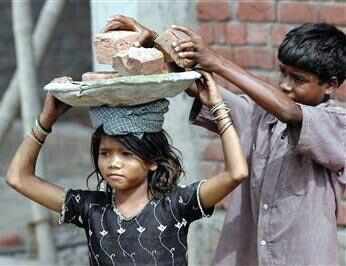
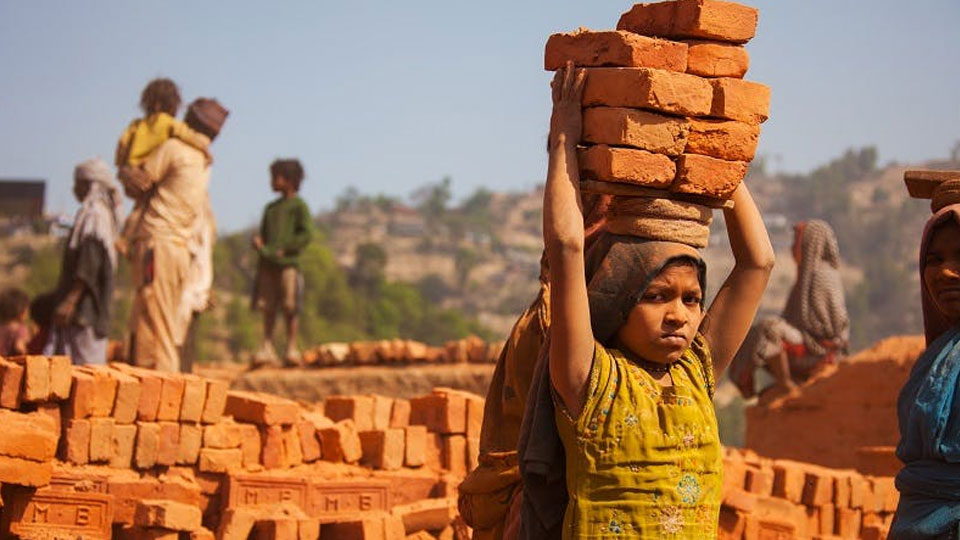
The term child labor refers to the exploitation of children by making them do any type of work that deprives them of their innocence, cause damage to their physical health, mental trauma, affects their dignity and causes any kind of moral or social harm. If in the age of learning an individual will be force to work and will be exposed to physically and morally dangerous situations or any kind of violence it will make that child to grow into an adult full of social loathe, low learning, may also make him/her abusive as the absence of proper learning and tremendous pressure tampers the brain to a great extent and that individual may not even be able to live a basic life maybe adopting the way of crime. They will have this mentality that no matter the amount of hard work which is put , the people who are born to just serve (work) can never succeed by the hook.

The United Nations Children’s Fund(UNICEF) has revealed in its report that India with its larger population has the highest number of labors under 14 years of age i.e. it has the highest number of child labors. This blog will tell you the reasons for these high numbers and the measures taken by government to prevent the exploitation of children.

Why is India leading in Child labor

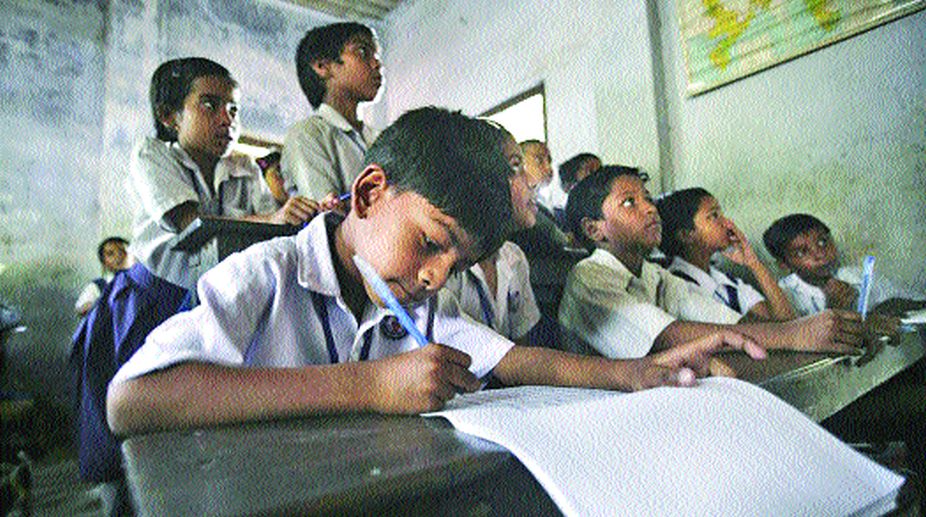
According to the statistics, over 68.8% of the total Indian population is in poverty with an income of less than $2 per day (i.e. 150 rupees) per family where the number of family members can extend more than 10 too with minimum earning members. In a situation where hand to mouth existence becomes difficult, it is very obvious that people tends to increase the number of heir earning members and thus the children in the age of learning becomes the earning members. Education becomes a very high graded luxury in such cases though the government schools provide free education for children upto 14 years of age. Parents believe that the money child will earn in 8 hours which would have been spent in school will at least gather them one meal.

This is the reason the children of 7- 8 years of age are sent far away from their homes on the pretext of getting good jobs when they are in reality being pushed into trafficking. While in some cases tired of poverty, parents themselves sell their children for a small portion amount of money. The trafficked children are then brought into the “child begging industry” where one of their body part is removed and they are forced to beg money as such children evokes the emotion of pity. Organ trafficking is also a part of this big racket which leads to the early deaths in children.

Few children mostly girls are introduced into sex trafficking and as domestic maids where they encounter not only physical and sexual violence but also are starved for days with maximum labor. This is a complete violation of their innocence and dignity.

Child soldiers are another category where these children are sent to serve for money and are trained to rebel against a group of individuals or a government since their childhood days. The best example of child soldiers is the incorporation of children in the terrorist groups which inculcates the strong emotion of hate in them at such a tender age.

Further, the children are naive and can work for longer hours in a relatively low income which makes them a perfect employee for the illegal small scale industries like firecrackers, bidi making etc. It has been reported more than once of many children getting injured in the blast accidents which happens in such industries.

The illegal employment of children working in Brick kilns, minning areas , stone quarries have led to several health problems such as severe respiratory ailments, weakness, hair loss, vision loss and premature aging.

Steps taken to cease this violation

According to data from Census 2011, India was recorded to have 10.1 million (nearly 1 crore) children working as child labors out of which 5.6 million were boys and 4.4 million girls. Whereas, 152 million children works as child labors worldwide with 88 million being boys and rest 64 million being girls. This statistic shows that 1 out of every 10 children works as a child labor worldwide.

The Indian Constitution has labelled Child Labor as a criminal offence with many acts offering a minimum of 3 years of jail if a person is found guilty of child labor. Also, section 372 of IPC(1860) declares the selling of a minor for the purpose of prostitution as a non bailable offence with over 10 years of imprisonment and fine.

Further several non profit organisations are also working to rescue the children from bondages and grant them their fundamental right of Right To Education. Kailash Satyarthi, a receiver of the Nobel Peace Prize in 2014 has worked since years for the upliftment of suppressed children and to terminate child labor. His foundation The Kailash Satyarthi Children’s Foundation has rescued many children from the exploitation and continues to do so till date.

Child labor is a plague which robs the innocence and the growth from the children who are not privileged, which if not stopped from the common effort will continue to affect the future of the nation.

Sugarcane- a resource for food, industries, culture and history

For a majority of Indians their first love is “doodh waali chai” with a large amount of sugar. It is also a well known fact about the love that exists between the Indians and the sweets. The basic ingredients of all these eatables which are a source of happiness for us is SUGAR. When the different forms of sugar goes in our system they not only boost our immune system , maintains over all health but also boost up our energy levels.

Ever wondered how this crystalline dose of happiness was first created? Sugar comes from the crop of Sugarcane of which India is the second largest producer. Today India has 732 sugar mills both private and government runned with Uttar Pradesh leading in the sugar production in India. The crop of sugarcane provides employment to nearly 50 million farmers and over 5 lakh workers directly employed in the sugar mills in the country. Further, sugar is not the only product extracted from sugarcane, sugarcane juice is a very popular summer drink in India and jaggery a sweet brown mass is like a national sweet for winters which is also said to maintain the immune system in the chilly winters of the North.

A product of such vast food value has a great industrial value as well as provides 7.5 % of employment in the Indian economy and has over 1% contribution in the GDP value. Read the blog further to know about the history of the production of this big stick of juice which has a great cultural and monetary significance .

Although sugar was being used in India from time immemorial , there was no sugar industry in India before 1904 which was set up in Saran, Bihar. Prior to that the juice from sugar cane was extracted and the crystals formed on boiling the juice were used as sugar . Though the crystals were not as refines as the sugar we get today , it served the purpose. These crystals were called SARKARA in the ancient times which mean sgravel in Sanskrit. The word sugar is a derivative from Sarkara.

BY-Products of Sugarcane and its industrial value

Bagasse and Molasses are the two major by products of sugarcane which holds a great industrial value.

Bagasse is the heterogeneous fibrous residue that remains after sugarcane stalks are crushed for sugar extraction. Typically, from processing 100 tons of sugarcane in a factory, 30–34 tons of bagasse is obtained . Bagasse is mainly used in cellulose based industries such as pulp, paper, particle boards and as a cattle fodder. In order to conserve the forests, initiatives are being taken to replace the wooden products by equally sustainable material. Bagasse based particle board and fibre based board plants are set up to produce wooden boards which are used as a wood replacement in making table tops, office racks, partition ceilings etc.

Molasses is the final mother liquor leftover after the crystallization of sugar which is sent out of the factory. However, the total sugar content of molasses is 45–55 per cent. It is by virtue of this total content that molasses is a valuable raw material for the production of many value-added products. The main products that can be produced from it on commercial scale are ethyl alcohol, citric acid, lactic acid, cattle feed, oxalic acid, bakers yeast, mono sodium glutamate, torula yeast, lysine etc which are some of great industrial value being used in one or the other industries. In addition to this, many alcohol-based chemicals like acetic acid, acetic anhydride, acetone, ethyl acetate, ethyl benzene, styrene, poly-styrene, poly-ethylene and synthetic rubber are also produced using cane molasses.

The historical and cultural value of sugarcane

There are references of sugarcane cultivation, its crushing and preparation of Gur ( jaggery) in Atharva Veda as well as Kautaliya’s Arthasastra. Also, the scribes of Alexander the Great, who happens to visit India in 327 BC recorded that the inhabitants chewed a marvelous reed which produced a kind of honey without the help of bees,which was a reference to none other than the famous jaggery. Also, the Indian religious offerings contain five ‘Amrits’ (elixirs) like milk, curd, ghee (clarified butter), honey and sugar — which indicates how important sugar is not only as an item of consumption but as an item which influences the Indian way of life.

It is fascinating to know how a crop which is hardly 3 to 4 m in height is of such value and importance in the Indian sub continent.

Who was Father Stan Swamy

The news headlines today are echoing with the death of Stan Lourduswamy aka father Stan Swamy, an accuse in the Bhima Koregaon violence who was jailed under the UAPA in the Elgar Parishad Case and died a custodial death on July 5, 2021 at the age of 84. Several people are stating his death to be an “institutional murder” and the fact that despite him suffering from Parkinson’s disease and being admitted in the hospital his bail plea on “medical grounds” was rejected, has irked the people world over. Even the Human Rights Commission of the UN has expressed anguish over Father Stan’s custodial death.

The opposition leaders have addressed a joint letter to the President Of India, urging him to investigate Father’s death. The blog will update you about the reason of his conviction.

What was the Elgar Parishad Case

On December 31, 2017 a conference named Elgar Parishad was held to commemorate the 200th anniversary of Bhima -Koregaon battle which was the battle won by Mahars for the first time against the “high caste” Marathas by siding with the Britishers in 1818, where nearly 35,000 caste people were gathered. On 1st January, in an inter caste violence a man was killed which led to the Dalit agitations being spread in the entire state. The organizers of the conference were arrested for spreading the violence further and their actions are being linked to the maoist activities.

Father Stan , a Jesuit priest and a tribal activist was arrested by the National Intelligence Agency under UNLAWFUL ACTIVITIES PREVENTION ACT(UAPA) due to his links with the Communist Party of India(a maoist party) which is claimed to have further aggressed the violence. However, it was reported that months after his arrest , the NIA was yet to file charges against him. Reports claimed him to be the frailest among all those who were arrested for the Bhima – Koregaon violence.

10 opposition leaders wrote a join letter to the President of India seeking investigation in what is claimed to be a framed “institutional murder”. The letter was signed by Congress President Sonia Gandhi, Former Prime Minister HD Deve Gowda , chief Ministers Mamta Banerjee, MK Stalin and Hemant Soren along with several left leaders. In May this year, Father was infected for covid-19 and the disease was not detected until his condition went a bit severe and he was transferred to Holy Family Hospital in Mumbai. He died due to cardiac arrest in the very same hospital at 1.29 pm on July 5.

It is reported that during Father Stan’s last appearance before the Bombay HC through video conferencing in Taloja jail, he said that he did not want any treatment but to die in his beloved Ranchi where he had spent a major period of his life advocating for the Tribal Rights. His last rites are to take place in a Bombay church tomorrow. His family in Tamil Nadu and his wide number of admirers will be participating in the mass through online means keeping in mind the covid-19 protocols. He is remembered fondly as one of those who inspired everyone with his strength and integrity despite his frail health.

CBSE’s decision to conduct 2022 Board exams in two terms, beneficial or not

Covid-19 has affected lives of everyone with people compromising on the most important events of their lives. Uncertainty is very common during these times especially for ones who have their most important exams of their lives hanging on a thread. When the first wave of Covid-19 hit in 2020 , few remaining board papers were cancelled by both- the ICSE and the CBSE. With the second wave of covid-19 hitting the subcontinent in its most horrible form, the students who were supposed to give their boards were highly stressed and confused about the position of their board exams. However, long after the general date of the commencement of the exam, the Board exams were declared CANCEL among much speculation.

With an aim to not arose confusion among students regarding the position of their Board exams if the worst case scenario happens, CBSE declared its 2022 Board Exam’s scheme today keeping in mind the worst happening possibilities of covid-19 which may or may not happen during the scheduled time.

CBSE’s decision

The CBSE has decided to hold 2022 boards in two terms- Term I and Term II respectively. As per the new criteria, the syllabus for the academic session 2021-22 will be divided into two terms with each term containing 50% of the original syllabus . The term end exams will be of 90 minutes duration each, while the the term-1 will be conducted in November-December, the term-2 exams will be conducted in March-April and the final rsult will include the average of both the terms. The pattern of the exams have also changed ensuring not to put much pressure on the students while the difficult times are going on. The term-1 exams will have MCQs including case based MCQ and assertion-reasoning type MCQs instead of the general descriptive paper which students are writing for their boards since ages. However , term-2 will have questions on different formats and in the case the condition is not conducive in March, the duration for the term-2 exams will be extended to two hours.

CBSE has asked the schools to continue the online classes unless further notice from the authorities and have especially asked them to create a student profile for each student which will record their assessments undertaken over the year. This year more focused will be paid to the Internal Assessments so that if the condition arose where the students are not able to give the exams in the formats that have been planned, the Internal Assessment marks can be relied upon. While for classes 9th and 10th, the internal assessment will include periodic tests, practical works, speaking and listening activities which have to be conducted in the entire academic session, classes 11th and 12th will have Unit Tests at the end of every topic, exploratory activities, practicals and projects. CBSE will facilitate schools to upload the internal assessment marks on the CBSE IT platform which is used by the schools this year to upload the home exams marks for classes 11th and 12th.

Is the decision beneficial for students?

Keeping in mind the situation which had occurred in the second wave with almost every family facing death of one or more members due to the deadly disease and hospitalizations due to severe health issues, this decision is extremely beneficial for the students. The second wave brought with it the terror of death, with everyone in stress about the deadly situation going around which brought extreme pressure for the students who didn’t know whether or not they will be able to write their boards. The studies show that it is not possible for the brain to work normally in the situations of extreme stress and if the board exams are to be held somehow even by the online means, it won’t be an unbiased exam and will be highly unfair for the students who had the ability but couldn’t perform.

With the division of syllabus in two parts with each term conducting exams only with the one part of the syllabus, has reduced the stress which the board students would be facing. Further, the decision of the board to keep internal assessment as a priority which generally is not for the board students ,ensures that the students get fair opportunity to perform throughout the year and maintain a good score at the end if the evaluation is to be based on internals .

Chennai’s water crisis- Natural or man made?

Chennai, the capital city and heartthrob of Tamil Nadu observed ZERO DAY on 19th June, 2019 when there was no water left in all the four reservoir tanks built in the city. Chennai is a city located on southeast coast of India serving as a gateway to the magnificent South India with the Bay of Bengal surrounding it on one side, the city is intersected by three rivers. How come that the city which has “abundant of water bodies” becomes dry. Read this blog to know how the water crisis in Chennai is a result of man’s selfish actions and is a warning giving a hint of what the nature holds for us in future if we degrade it.

Causes of water scarcity in Chennai

Chennai is situated on the south east coast of India and receives majority of its rain during winters because being situated on the south east coast, it lies on the leeward side of the Western Ghats preventing the south west monsoon winds which originates in the Arabian sea on the west coast of India to shed its rain there during summers when generally rest of the country experiences monsoon. Thus it gets majority of its rain from retreating southwest monsoon winds and northeast winds during the months of December and January. The rest of the months the city has to rely on occasional rains and mainly on the reserved water which is scarce in Chennai.

Owing to Urbanisation and construction on the bodies which once were the catchment and flood relief basins, the space required to hold the rains is now blocked. The very suitable example being the very famous IT corridor of Chennai which is built on 230 square kilometers of marshland , has reduced the area of the places to hold the precipitation which occurs during its monsoon. Moreover with the rise in the number of Industries , the water bodies in Chennai are highly polluted. Though the industrialization resulted in Chennai being called “The Deteroit of India” due to the vast automobile sector established there housing the scions such as the Tata motors, the neglection of the authorities in maintaining the precious water bodies resulted to Chennai experiencing the ZERO DAY.

Chennai receives rain on an average of 54 days per year with a minimum average of 140 centimeters of rainfall which is enough for the survival if the water is properly harvested but it is the inability to collect and reserve the rain water which led to the MAN MADE water crisis. Between 1893 and 2017 the area covered by the water bodies is reduced from 12.6 square kilometers to 3.2 square kilometers. As reported by The Diplomat, NITI Aayog  predicted in June that 21 Indian cities would run out of groundwater in 2020. A report by the London-based risk analytics firm Verisk Maplecroft named Chennai as facing an “extreme risk” of water stress, saying its present crisis “could be the new normal for tens of millions of people” in India’s urban centers.

Since there is no enough reserved water for the heat days which comes in June and the water remaining in the water bodies is either too saline or too polluted to be fit for use, Chennai has to rely on the tanks which carry water from hundreds of kilometers far away to satisfy its water needs. As suggested by the various reports , there is 85 percent decline in Chennai’s groundwater levels.

Actions taken by the Government to prevent

  • Chief Minister of Tamil Nadu Edappadi Palaniswami , after that dreadful day in June 2019, announced a public program including maximum participation of women covering everything from rainwater harvesting to water saving and recycling to the protection of water bodies and a massive study on how to clean the polluted rivers. Until the research and the plan is completed , the government decided the construction of desalination plants in the city which though costly will help in a great way to solve Chennai’s water problems until the natural water bodies are restored, by desalining the sea water making it fit for domestic and industrial use. The plan is however still in the initial process as there are many protests regarding how it will cause environmental damages and intense loss to the local fisheries.
  • The past always comes to the rescue. Supported by the Asian Infrastructure Investment Bank and the Dutch Government , the Greater Chennai Corporation has started an initiative called “the city of 1000 tanks” which aims at restoring the tanks near the temples and making it the reservoirs for storing the rain water just like in the past and building new tanks too surrounded by green slopes to help catch the rainwater and increase the groundwater level.

The state of Tamil Nadu of which Chennai is the capital has predicted in its climate action plan that the annual temperature of the city will raise by 3.1 degree celsius by 2100 from its original level of what it was in 1983 and 2000s with the annual rainfall falling by 9%.Further , the little rainfall which the city experience in June and September which was enough to refill the reservoirs and maintain the growth of crops will decrease while the winter rainfall will increase causing more floods and droughts.

The condition which Chennai is facing can be taken as a threat issued by nature to not degrade it else the consequences can be severe. The day is not too far when the rest of the world may also experience what Chennai is , if the present practice continues and that day will lead to our downfall.

FEMINISM- a necessity or a drama (PART-1)

The word FEMINISM comes from the word FEMININE which means “being a woman”. How is it that out of over a million words in the English language this particular word has created an uproar in the recent times with each woman becoming a “Feminist” proclaiming about her rights under this word and is criticized by others who think this is all a show of gaining attention , popularity and superiority. Read this blog completely to understand what actually caused to the popularity of the word , its implication in Indian terms and how has it helped women.

Feminism

FEMINISM refers to social , political and economic equality to women with respect to the males. Since God has given a woman the power to create life and nurture it , she automatically has a greater emotional quotient and her motherly attributes of being considerate, polite, loving , emotional is taken to be her weakness. Further since she has the organs to produce a human being , she is termed as “delicate” or in real words “WEAK”. WEAK is the term which has led the males believe that they are stronger and more capable and this has led to them ruling a woman since ages. The irony of the situation is that it is not just the males but also few women who thinks the entire woman race to be a subordinate to men and is born just to be a frustration box for the males.

So feminism in simpler words can be termed as a movement which was started to get women equal rights in education, property and employment matters and travelled as far as to the emotional treatment a woman has to suffer. It defines that a woman should be judged on the basis of her mental strength, her capabilities, her behavior rather than being judged for just being a WOMAN. It stands for women standing up to the male dominating world to fight for their self respect .

History of Feminism

The first instance of feminism which was the earliest reported one darts all the way back to 3rd century BCE in Rome where Roman women filled the Capitoline Hill and blocked every entrance to the Forum when consul Marcus Porcius Cato resisted attempts to repeal laws limiting women’s use of expensive goods. Cato’s words “If they are victorious now, what will they not attempt? As soon as they begin to be your equals, they will have become your superiors” proves that he somewhere believed women to be capable of exceeding men and it was this fear of letting that race which was suppressed since ages to be set free without any illogical restrictions bounding them which will make them realise their worth and will subsequently be no longer a personal robotic toy for men.

There was a time when the entire world was suppressing women. Women in each part of the world were denied the rights which would ensure her success instead she was just being treated as a caged animal. Until 19th century Europe did not give the women the right to inherit their father’s property which generally goes to the first child . In the absence of mail heir the property would go to a male relative however distant or evil he maybe. Jane Austen’s novel PRIDE AND PREJUDICE is the best example to this point where the Bennet family which consisted of all females had no right to their ancestral property .

While there were many other rules for women such as they had to step out covering their head as a mark of respect for the “SUPERIOR MALES”, had no right to vote or hold an elective office, cannot participate in any sort of buisness and went as far as to a man getting right to sell of his wife in many parts of the world. These actions proved that women were treated to be a non living enity with no feelings whatsoever.

After several protests, letters addressing women concerns being published, criticism the cause faced by the chauvinists , the woman were granted their rightful rights in many places in the world but the battle is till to be won. Many countries specially the ones in Asia still are treated as the object of male plight and fury.

With different culture the take and views on feminism chnages, let us see what brought about the changes for Indian women though the Feminism here was partly inspired by the west but its meanings and implications are different for the Indian women.

Feminism in India

Women in India are oppressed not only by the males but more by the fellow females. It is like a sort of inheritance being passed from one generation to the other where a girl is told by all the females in her family be it grandmother, mother or aunts that she should always keep all the males in her family above her and sort of idolise them and they are led to believe that if something wrong happens with them then it is the result of their own actions. This is the reason that many women silently suffer all kinds of domestic violence till their last breaths because this was what they had been taught since their birth.

Feminism in India can be divided into broadly three phases.

  • The first phase was witnessed in mid 19th century when several reforms in education and customs involving women were introduced. Sati, a practice which involved a woman setting herself on the fire by sitting on her husband’s pyre incase he expires before her, was abolished by Raja Ram Mohan Roy in the British Rule. This till date is considered as a biggest step in encouraging a woman where she was told she is much more than being a wife and her life does not ends with her husbands. Rani Lakshmi Bai the woman who fought Britishers with her infant son tied on her back after her husband’s death to save her kingdom from their clutches still continues to be an inspiration for many.
  • The second phase was witnessed from 1915 till India gained its independence and it started with Mahatma Gandhi incorporating women into his non cooperation movement , a first open political gathering where females were included. After this movement there were various Independent female groups created to fight for the Independence which managed to be off radar and continue their contribution in secrecy as Britishers had no hope that Indian women can step out of their domestic roles.
  • The third phase was witnessed after independence where women were included in the formation of the world’s largest democracy, has the power to vote and hold an elective office ,get educated and be independent. This phase continues till date and has witnessed many changes along the way. From it becoming normal for girls to get educated and work, to the extension of minimum age of marriage for a girl till 18 years by the Constitution of India to prenatal sex determination and Female Infanticide being considered as a criminal offence with severe punishment it may seem that India has come a long way and the women here are treated with equality and respect which they deserve but sadly this is not the case. Though the upper surface appears to be cleared there are still many horrible trenches inside.

Present Condition of Women in India

Feminism and plight of women in India cannot be sumarised under a single term. The heterogenity of Indian cultures bring with it multiple patriarchies and multiple feminist movements but the basic plight remains the same.

India is a highly patriarchal society where even today in 2021 people claim to be modern and “allowing their women” to have privileges same as that of men but the small privileges of getting educated , working comes at a price. Price of still not be able to take stand when she is wronged , the reason being a woman is pointed every time she becomes a victim while in some case she may act to be a victim hence committing a grievance sin but this minority is turned into making independent decision taking woman being regarded as “too bold” or “unfit” for the society by the chauvinist groups.

****Since even the basic points regarding the topic are indefinitely extended and talked about, it is difficult to make all the basic points in one blog and there will be a continuation to this blog soon.

I would conclude this blog here by stating that feminism is not the superiority of females over the males rather it is about them being treated equally both physically and mentally without any prejudice about them being a woman. It takes a lot to be a woman and to every woman out there be proud of what you are!

Impact of Covid-19 on Digital Education In India

“Education is the strongest weapon that can be used to change the world.”

– Nelson Mandela

As rightly said by Mr. Mandela ,education gives us knowledge which in turn gives us wisdom which teaches us to differentiate between good and bad. Education is not only needed to have a good economic strata but also to have a righteous sense of living . It gives us the power to stand for ourselves when we are being wronged.

The global pandemic which we are facing today has imposed many restrictions on us and in order to keep ourselves safe we are supposed to maintain social distancing as a result of which all the places which wholeheartedly invited the crowd before, are closed down now, the educational institutes being one among them. Read this blog further to know how covid-19 has affected education in the country like ours where during pre pandemic times also many loopholes were present.

The Indian Education system

Around 60% of the total Indian population is considered to be in poverty that is they barely manage a hand to mouth existence . In this case education is definitely a luxury to them . The Constitution of India has declared an individual’s Right to Education as a fundamental right under which children between 6 to 14 years of age are eligible to get free education in government schools across the country. Also, according to section 12(1)(c) of the Right to Education Act of 2009, all the private schools in the country are supposed to reserve 25% seats for the children belonging to the EWS Category(Economically Weaker Section).

Now, Private schools in India also falls in two categories: one is the category belonging to the government recognized schools which charges fair amount of fees and claims to provide quality education. They are affordable by the middle class families and the families falling about them in the economic strata. Second category belongs to the schools which are not recognized by government, charge decent fees and are affordable by the lower middle class families who has a option of government schools but don’t want their child going there due to the below mentioned reasons.

Now coming upon the schools funded by the government, these schools are generally in the limelight for their poor infrastructure, absentee teachers, low student ratio(**this was the case before the commencement of the pandemic). In the pandemic times, the government schools which are well equipped like the ones in Delhi, witnessed only 25 to 30% attendance. The condition of rest of the government funded schools which were just for the namesake can be imagined.

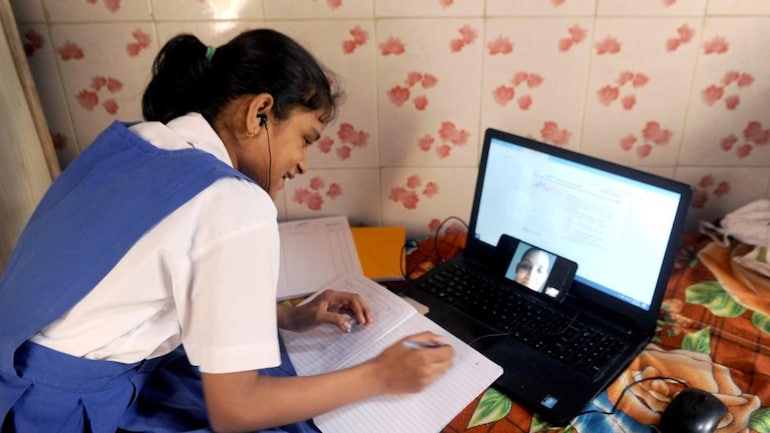
With people adapting to “new normal” in these pandemic times, the world has turned digital and so has the education system. Gone are the times where children would wake up early in the morning, go through their own struggles of going to school to study in the TRADITIONAL WAY OF LEARNING where teachers would come and address a section of class. This “new normal” is the time for ONLINE CLASSES where what matters the most in just learning as to not face a complete loss and at least take out the best in these times . The education in the “new normal” has lost its essence, punctuality , discipline and integrity.

Covid-19 and Indian Education

With the commencement of the pandemic around 1.5 million schools have been closed affecting almost 286 million children in one way or the other from primary to the secondary levels. According to a report released by UNICEF, “The pandemic has affected over 90% of the total student population of the world”. In India itself, the main problem is that not every area has been digitalized yet and in the digitalized areas also not everyone has access to required number of devices and good internet connectivity. Only 24% of the total houses in India have access to internet whereas in rural areas these numbers have dropped upto 4%. Further a survey conducted by the Niti Aayog in 2018 reported that around 55000 villages have no mobile network coverage let alone the internet connectivity and around 35 % schools operate without electricity. In these circumstances, many students have been forced to dropout of the schools which is a destruction of India’s bright future and talent.

Steps taken to solve the digitalization issue

  • The introduction of the BHARATNET project which ensure the broadband connectivity to over 2,50,000 gram panchayats through optic fiber technology which will enhance the network quality .
  • Many Government schools have started training teachers on how to teach through net which is important for the successful accomplishment of the project which involves ensuring that no child looses his/her right to education even in these pandemic times.
  • Many crowd funding platforms have been launched by the government and individuals which aims on providing devices and enhancing infrastructure to enable online classes. The Government of Maharashtra through one such platform has managed to generate rupees 216 crores which will be further used towards the cause. Also, in Kerala 4 tenth standard students have managed to generate rupees four lakhs through one such platform which they will use to buy devices for the students who are not able to afford.

WE CAN JUST HOPE THAT THE COMING TIME WILL NOT BE A DOOM AND WE WILL GET SOME IMPROVEMENTS .

UNDERRATED ART FORMS OF INDIA

India is a land of different cultures where over 1.5 billion people belonging to different communities live together . Many years back when India was called the GOLDEN BIRD , which was then brutally plundered by the foreign invaders, was not only because of the monetary wealth but also due to the rich culture and art form which the land once inhabited. Today centuries later, when we are still reeling from the affect of past attacks and with modernization reigning over, it has become extremely difficult and also important to preserve the dying art forms to save a remainder of our rich heritage . Also these art forms have been a source of income for lakhs of people .

While the term ART includes dance, singing and the paintings , in this blog we will have a glimpse on the five lesser known and underrated art forms which are desperately needed to be saved.

Madhubani Paintings

Originated in Madhubani district of Mithila region of Bihar, these paintings are said to have been made on the walls of every house of all the villages to celebrate the wedding of Lord Ram and Goddess Sita. The paintings are made using fingers, twigs, nib pens , brushes and matchsticks as tools. The color in the original Madhubani painting is given using natural dyes and pigments. Originally done on a freshly plastered mud wall , now for the commercial purposes the paintings are being made on a canvas or cloth. The paintings generally represents mythological Hindu deities, court scenes , traditional weddings and social gatherings. The All India Handicrafts Board and the Government of India in order to promote these traditional art form have asked women from the non agricultural backgrounds to continue painting on canvas or cloth and this has also become a source of income for many families.

Miniature Paintings

The origin of these paintings darts back to 7th century under the patronage of the Palas of Bengal. It is a kaleidoscope of history, scriptures and lives of people through ages made by the use of delicate brushwork, mixture of different colors and graceful forms. The paintings are so delicately made that even today in this world of modernization the brushes used for these paintings are made from Squirrel’s hairs. This intense labor of love illustrating the ancient mythology is created on palm leaves, paper, wood , ivory panel and cloth using natural colors such as stone dust, silver dust and real gold

Chambal Rumaal

This art form is an embroidered handicraft promoted under the patronage of the rulers of Chamba and was a common gift item exchanged during the marriages in ancient times. It is said that the earliest reported form of this art was made by Bebe Nanaki , the sister of Guru Nanak in 16th century and is still preserved in the Hoshiarpur Gurudwara. The art form is now continued in various parts of Himachal Pradesh and is made on a square or rectangle shaped cut muslin or khaddar material. Embroider Lalita Vakil got the NARI SHAKTI AWARD by the President of India Mr. Ram Nath Kovind for promoting this art form and giving employment to many women.

Gond Art

This art form is the tribal art of the Gond tribe which is one of the largest tribes of Madhya Pradesh. The art form preserves and communicate the culture of the Gond Tribal Community. The paintings constitute of two main designs called DIGNA and BHITTICHIBA . While the DIGNA designs constitutes of traditional geometric patterns which were originally made on the floors and walls of the house , the BHITTICHIBA designs constitutes the animals , plants and trees which were made on the walls of the houses.

Pattachitra Art

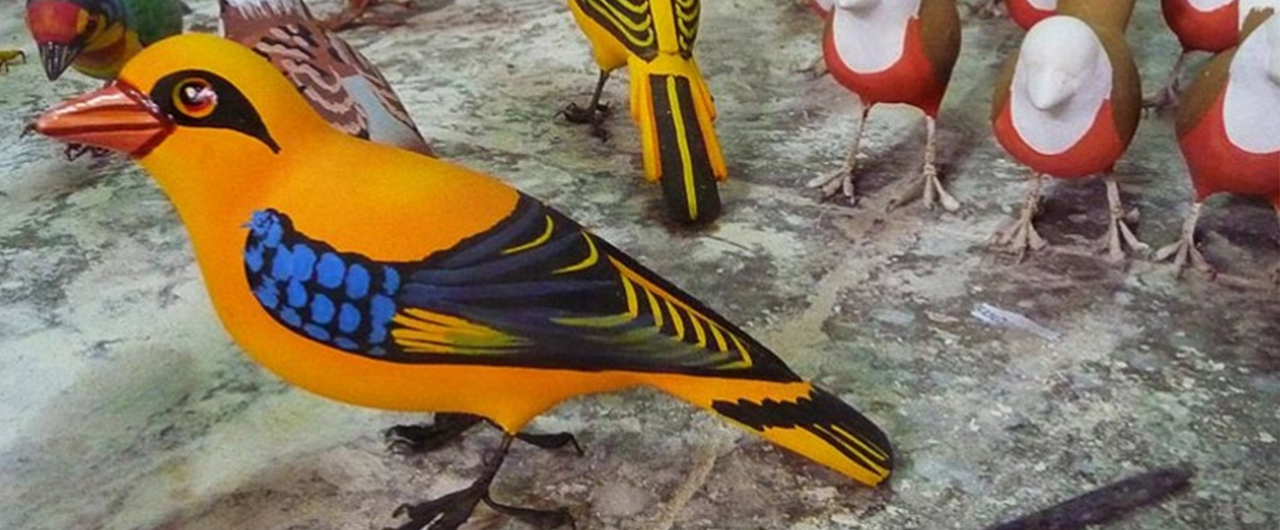
The art form includes the ancient artworks of Odisha which were generally used for ritual purposes and as a souvenir for the pilgrims of Puri and other temples. The cloth based scroll painting captures mythological narratives and folktales which are inscribed on the cloth with intricate details. The painting is made on a traditional canvas which is made by coating a gauze like fine cotton cloth with white stone powder and gum made of tamarind seeds which makes the canvas ready to accept the paints made by natural means. it is basically a dominant icon painting and almost all the chitarakars of this community hails from Puri , a small village in the heart of Odisha . It is also the only village in the entire country where everyone is engaged in one art form or the other such as patta painting, wooden toys making and stone crafting.

The rich ancient heritage of Indian art forms cannot be contained anywhere. This blog was just a means to let people know of the beautiful things which we are missing on.

THE BEST PARAGLIDING DESTINATION IN INDIA

Why do people paraglide

We human beings are blessed with the ability to talk, express our thoughts and feelings, walk freely on the land and various other things. Man is a curious creature wanting to try and explore new things and experiencing joy in that. Seeing the birds fly freely in the sky witnessing the nature and human made settlements through the microscopic view , many feet away from land has often led people to wonder how it would be to be in that sky. Well the creation of Aeroplane did do a little to experience that but still nothing comes closer to the experience of getting yourself loose in the air without a metal box enclosing you. The feeling of spreading your limbs freely experiencing the glories of nature , the very reason of our existence is incredible. And what if there is an opportunity to be this free bird amidst the world famous mighty Himalayas- where the wind from the great mountains will caress your face destressing you of your worries, the luscious greenery will provide you peace , the valleys and the rivers flowing hundreds and thousands of feet below you will scream peace and tranquility providing relief to the buried souls. Yes it is PARAGLIDING we are talking about.

To all the adventure sport lovers who are missing the rush of adrenaline flow through them while they take the “safe risks” by flying in air, in this covid pandemic where staying at home is the sole option, this blog is for you to read . The blog I am sure will give you all the reasons and information regarding paragliding in BIR BILLING.

Why to choose Bir as a paragliding destination

Bir , a small village located in the heart of Kangra district in Himachal Pradesh- The land of Gods , is a paradisal abode for all the adrenaline lovers, offering an unforgettable lifetime experience of letting yourself free amongst the clouds while gliding through them. IT IS THE BEST PARAGLIDING DESTINATION IN INDIA which attracts gliders from all over the world. Bir has also played as a host of 2015 Paragliding world cup.

The Bir-Billing area is a popular site for paragliders both searching for tandem paragliding as well as solo paragliding which attracts people from all over the world to paraglide. It is the highest paragliding spot in India and is the best budget friendly option which enables you to take a flight from 2430 meters above the sea level. It also offers you an opportunity to camp and relax in the lap of nature , away from all the worries , in a pocket friendly way.

Bir Billing can be accessed via road, train and flight. The Gaggal airport in Dharmshala is the nearest air port to Bir which is connected to Kullu and Delhi and the distance between Dharmshala to Bir is 68 kilometers which can be accessed only by road. To reach Bir by train one has to travel till Pathankot railway station and then take a toy train to Ahju railway station which is just 3 kilometers away from Bir. The toy train experience is also a wonderful one and I would recommend taking the train option as the toy train seeping through the majestic Himalayan valleys and tunnels will take you a step closer to the nature. Also there are buses at regular intervals from Dharmshala and Shimla to take you to Bir and overnight buses from Delhi to Dharmshala and Shimla runs daily.

Paragliding in Bir

The take off site at Bir offers a mighty 360 degree view of Dhauladhar Mountain Range. A single paragliding flight of about 15 minutes will cost rupees 2000 generally while a 30 minute long flight will cost you around 3000 rupees.(Note these are the general rates and it may differ from one paragliding company to the other).

You will be taken to the take off site by the company you choose to paraglide with. For the first time paragliders , tandem paragliding where you will paraglide with a professional paraglider, is highly recommended. A harness securing you with the paraglider will be tied to ensure your safety and the balloon and navigation will be the responsibility of your paraglider. You will have to take a short run pre take off from the cliff in the air which will get you set free in the air. The process of the short run followed by the jumping in air can be a bit scary but within two minutes max your fear will be overpowered by excitement and ecstasy of being able to shake your hands and limbs freely in the air without a caged body .

Best Time to visit Bir

The best time to visit Bir is between October to June. However paragliding in December and January when the mighty Himalayas are covered in white sheet of snow is simply fantastic. However, the paragliding may be stalled sometimes due to snowfall in the winter months.

For staying you can either choose the option of rental homes or the hotels, the prices of which starts from 500 rupees per night and go as high as to 3000 rupees per night depending upon the luxuries.

WHY IS IT IMPORTANT TO SAVE TIGER

We have often come across various initiatives raised by many conservationist with the title of SAVE TIGERS. There are also many rigid laws formed by the government to protect Tigers. Have you ever wondered that why this ferocious feline needs protection and is so important that has many acts in the Constitution of India for its protection as well as has a huge fan following which wants this animal to be saved. Well the very first reason which may across any Indian’s mind is that – it is our national animal, our pride and we ought to protect it. The reason is very absolute but there is more to it. Read this blog completely to know how this ferocious predator acts as a climate regulator and a job provider to many , maybe indirectly if not directly.

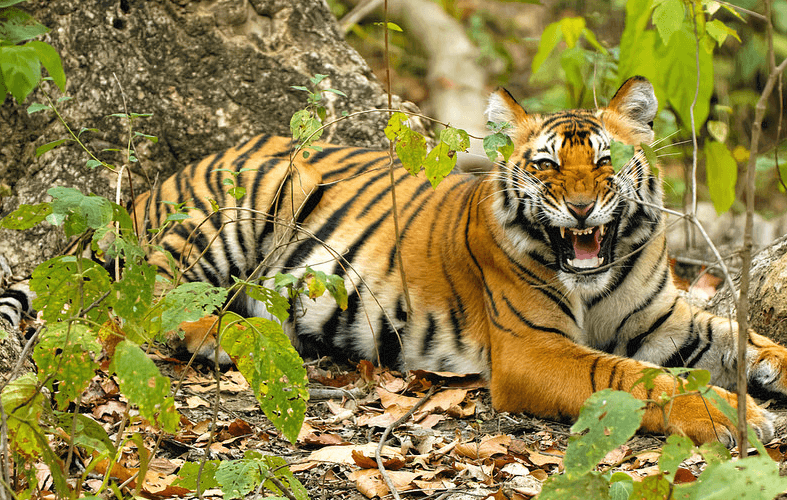
Tiger known by the scientific name of Panthera tigris is one of the most endangered species of the world today. Known for its strength and agility which makes it the apex predator in the ecosystem, today the existence of this species has reduced to just 4000 big cats all over the world from the huge number of 1,00,000 which used to be a century ago. IUCN(The International Union for Conservation of Nature) has recognized 9 subspecies of the big cats out of which 3 are critically endangered while the other six are almost extinct.

Why is Tiger important for our existence?

  • Tigers are considered to be the indicators of Ecological wellness as they are the dominant predators of the ecosystem. They mainly hunt on herbivores keeping their number in check . The decrease in the number of tigers can lead to the increase in the number of herbivores and ultimately if the tigers get completely extinct there will be no check on the population of herbivores which will disrupt the ecological balance proving extremely fatal for the entire living species on the earth. The forests which acts as climate regulator and controller will be destroyed by the herbivores as they will eat all the plants and trees. Also, forests help in maintaining the carbon storage value in the atmosphere. Keeping in adherence with the above point , the loss of green cover for this particular reason will lead to the increase in the carbon value thus destroying earth. For example- Forests protected for Amur tigers in Russia reserves around 130,000 tonnes of carbon per year which is equivalent to the carbon produced by over 25000 cars per year.
  • We all know forests are the natural regulators of climate helping to keep every compound of atmosphere in check. Due to globalization we have already lost a large area of forest cover which has lead to several problems such as global warming. Also , since tigers need a large green cover for their habitat, it has also become important to save their habitat which in turn will save atleast some of the forest cover . It has also been noted that protected forests generate cleaner water and regulate the flow of water. While the cloud forests increase the flow of water flowing in rivers passing through the protected tiger habitats , the humid forests decrease the flow, hence maintaining the flow of water, the absence of which could lead to floods or drought conditions in several areas.
  • Apart from the indirect ecological service that the tigers provide by preserving forests, they also generate employment and promotes industrialization . The forests in Tiger habitats are a home for large number of medicinal plants ,other animals , forest products such as timber and provides employment opportunity to many people who work to access the forest commodities . The tiger habitats also attracts a large number of tourists which gives more job and increase the tourism sector.

The population of big cats in India

Since India houses almost 70 percent of the total tiger population of the world at a time , we had to play the important role in tiger conservation. Keeping which in mind the Government of India had started “Project Tiger” in 1972 with the aim to conserve the big cats. India has managed to maintain a number of almost 2800 big cats by converting many forests into protected Tiger reserves. India has more than 50 tiger reserves today.

Do the problem ends here? No, it does’ not. This blog was just a small effort to let people know the actual reasons behind tiger conservation and to create awareness that ” no tigers, no forests, no life”.

The Heart of India – Madhya Pradesh

Surrounded by the Aravalli in the west , the river plains of Ganga and Yamuna r in the NORTH , the plains of Chhattisgarh in the East and the Deccan plateau in the SOUTH , lies MADHYA PRADESH in the central region of India forming the heart of the great nation.

The state has the second highest area per square kilometer after Rajasthan housing 52 districts where people from different religion and culture lives together in harmony. like the human heart which is considered to be precious for the whole well being , the heart of India – MADHYA PRADESH , is considered not only as the highest producer of coal but also has largest reserves of Coal and Copper. The state is blessed with the presence of five rivers namely Rivers Narmada, Tapti, Mahanadi , Chambal and Indravati.

With over 77,482 square kilometer of area under the green shade , the state has the largest forest cover in India which houses many animals, birds and provides employment to many people who are involved with forest conservation and agricultural as well as medical and textile industries. It is also known as the TIGER STATE OF INDIA and is on its way to gain the recognition as the LEOPARD STATE OF INDIA also since it houses nearly 528 tigers and over 3000 leopards the highest number of respective animals as compared to any other Indian state at present.

The mining industry as well as the forest and agricultural industries have resulted in increasing the employment opportunites as well as the annual contribution of the state to the net Gross Domestic Product Value.

Reasons to visit the heart of India

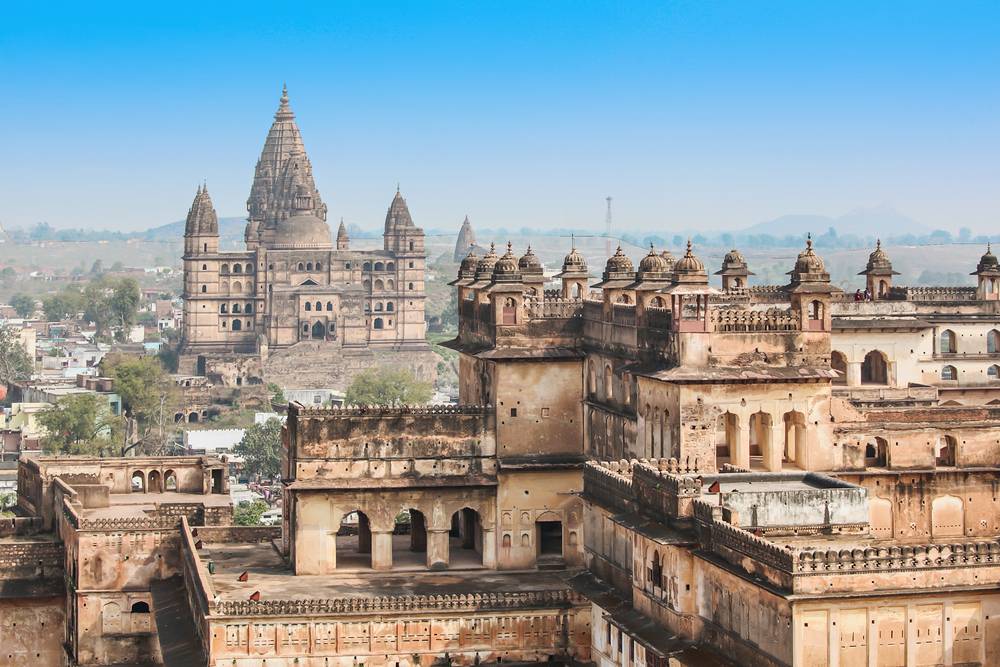
If you are an adventure junkie, an admirer of art forms, a nature lover , an animal lover, a foodie, a religious person or a person with a soft heart for history and grandeur or all of the above , the state will not disappoint you. It surely has something to offer to everyone who visits it. While the cities of Khajuraho , Ujjain and Maheshwar are regarded as the cities of temples with each city presenting the rich gloriousness of India’s past, Gwalior gives you a glimpse into the grandeur palaces whereas Pachmarhi , the only hill station in the state serves as an ultimate trekking destination with nature all around.

The foodie in you will find solace in every city specially those of Bhopal and Indore which provides the lip smacking cuisines. For all the art lovers out there, the state has a rich history of various art forms which are continuing for over 2000 years to the present with the support from government. The BHIL/PITHORA paintings, the MRABLE ART ,the CHARISMATIC CHANDERI SILK cloth items from the city of Chanderi , the MANDANA art among others are still in trend and gives a peek into the rich ancient heritage a part of which we had still managed to maintain.

Above is the picture of PAPER MACHE , the art form of Ujjain which brings the artefacts to life.

NATURAL THREATS POSED TO THE STATE DUE TO HUMAN INVASION

The presence of large abundance of natural resources has led to excessive mining which has resulted in the loss of forest cover thereby making many animals lose their home , soil erosion and has increased the air and water pollution. The Panna Tiger Reserve which houses the largest number of Tigers in the state had lost nearly all of its big cats between the year 2003 to 2008 owing to food poisoning , poaching and accidents. Though with the efforts of Hardworking forest officials and the government the number was restored , such situations can arise in the future also causing a threat to the national animal.

Other activities such as clearance of forest cover and illegal poaching if continued in the future may lead to the problems in the state causing the BLOCKAGE IN THE HEART OF INDIA thus affecting the entire nation in the aftermath.

As everything has its own pros and cons , so is with the state but despite everything it still remains a beauty to be seen , cherished and explored at least once in the lifetime.