“ROBERT BRUCE” Biography

“Robert Bruce” was a warrier and King of Scotland. He was born on 11 July, 1274 in Turnberry Castle, Ayrshire. His father’s name was Robert de Brus and mother’s name was Marjorie, Countess of Carrick. Robert was born into an aristocratic Scottish family. His father was the 6 th Annandale. Robert Bruce would most probably have become trilingual at an early age. In early 1296 Robert married his first wife Isabella of map juice also married Elizabeth. By Elizabeth he had four children David II, John, Matilda and Margaret.
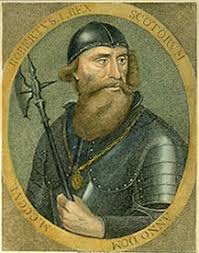
England was at war with Scotland the king of England wanted to capture Scotland and make it a part of England Robert the Bruce had a small Army of Scottish soldiers. They fought 6 battles with England but lost each time. The English Army was much bigger with more resources with them and stronger than Scottish Soldier when King Bruce and his Army lost the 6 th battle they where driven out of their own country the entire Army of Scotland got scattered. The king became a refuge in his own country he had to hide in the forests and caves. Because if the English Army caught him he would be imprisoned. One day when he was lying down on the Rocky bed of a cave hungry and tried, he noticed a spider getting ready to spin a web he watched her fascinated as she worked slowly and with great care. She tried but failed but she did not lose hope and tried again six times she tried and six times she failed King Bruce was amazed. This tiny creature kept on trying again and again Robert find a lot of similarity between the spider and him he also tried to fight the English Army six times and feel just like the spider. Robert the Bruce carefully watched the spider try for the seventh time. If forgot about his own trouble and follow the spider the spider held hair thread and managed to reach the other end of the cave and succeed in the seventh attempt. King Bruce was filled with new hope and courage and thought to himself let me try one more time I just might win Robert the Bruce that that his captured on me together and told just story of the spider to gave them new hope with inspiration. Robert Bruce gathered his scattered army together and told the story of the spider to gave the new hope with inspiration he again built and Army of brave scotsman. A servant battle was found and they managed to defeat the English army in June 1314. The king of England was forced to go back to his own country England finally recognised Scotland as an independent country Robert the Bruce became crowned king of Scott on 25 March 1306. Robert died on 7 June,1329, at the Manor of Cardross, near Dumbarton, at the age of 54.
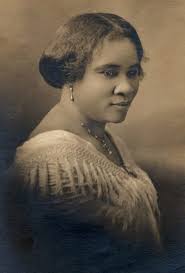
“MADAM C. J. WALKER” Biography

Madam C. J. Walker nickname was Breedlove. She was an entrepreneur she was born in Delta, louisiana, the United States on December 23, 1867. Her father’s name was Owen Breedlove and Mother’s name was Minerva Breedlove. Her family members were slaves. She had five siblings.

In 1872 her mother died possibly from cholera her father remarried but he died within a few years at the age of 7 she was orphaned. She moved to Vicksburg, Mississippi, at the age of ten and worked as a domestic. She lived with her older sister, Louvenia and brother-in-law, Jesse Powell. She went on to work with an entrepreneur named Annie Turnbo Malone and sold hair care products on behalf of the business women. Her knowledge of hair care products helped Sarah turn into a beautician hair dresser and a retailer who earned profits through the sales of cosmetic creams. She soon started employing many female agents to create awareness of the culture of enhancing beauty. In 1908 she set up an institution named “Lelia college” in a bid to groom the salesperson into hair culturist. He then relocated to the city of Indianapolis years later and initiated various business establishment related to hair care which included a beauty school and salon. During the year 1917 this business women organised an annual meet of Madame Walker Beauty culturists in tha city of Philadelphia. This event was one of the first of its kind in the United states during its time in 1917 she even initiated the “Walker Hair culturists” Union of America which was the first ever convention at that time which was exclusively aimed at encouraging women to venture into commerce the idea of starting a beauty product hit Walker after she lost her hair and faced scalp problem due to washing herself with water which was contaminated with chemicals like “Lye”. She was barred 14 years old she entered the wedlock with a man named Moses MC Williams. The couple had a baby girl who was named A’ Lelia. Her husband died when Sarah was hardly twenty years old. In January 1906, She married Charles Joseph Walker. Sarah adopted the name Madame C. J Walker only after she married Charles. She died in Irvington-on-Hudson, New York, United States on May 25, 1919, at the age of 51. “IF I HAVE ACCOMPLISHED ANYTHING IN LIFE IT IS BECAUSE I HAVE BEEN WILLING TO WORK HARD”.

“MARCO POLO” Biography

“Marco Polo” was an Italian Merchant he was born in presumably Venice, the Republic of Venice in 1254. His father’s name was Niccolo Polo and mother’s name was Nicole Anna Defuseh. His father was a Merchant.

In 1271 he along with his father and uncle maffeo Polo commenced expedition to Asia they traveled the Persia and Tartary. In 1274, after traveling for the three years, they reached Cathay, Northern China. In 1275 he was chosen to be the official representative of Emperor Kublai Khan and joined the king on various missions, for which he travelled extensively all over China in 1280 he travelled to many parts of the Asian continent and he was subsequently appointed as the governor of one of the Kublai Khan’s cities. In 1292, Kublai Khan got his daughter, Princess Cocachin married. Polo travelled along with the wedding party to Persia in a ship and they stopped in Borneo, Sumatra and Ceylon, among other places. In 1295, after the death of Kublai Khan the previous year, 24 years after he had set on a voyage to china, he returned to Venice with a vast collection of fine jewels, riches and treasures. On October 9, 1298, the Battle of Curzola between Venice and Genie commenced and during this time he was captured and imprisoned for several months. During his time in jail he Shayad accounts of his travel experiences and expeditions with a fellow inmate, Rustichello da Pisa, who later authored the book “The Travels of Marco Polo”. In August 1299, he was released from prison, after which he traveled to his home in Venice, where his family had settled in a big bungalow he settledown in Venice and went on to become one of the affluent merchant’s in the city, who granted loans to other travelers who wished to go out on expeditions. In 1300, the book “The Travels of Marco Polo” was released; the book becomes an instant bestseller and made him one of the most famous figures in Venice published in 1962, the book “Invisible cities”, written by Italo Calvino was based on the cities Marco Polo climbed to have visited and also his experiences in China. The airport of Venice is named the Venice Marco Polo Airport, in his honor. In 1300, he wedded Donata Badoer. The couple had three daughters together, Fantina, Bellela and Moreta. He died in Venice, the Republic of Venice on 8 January, 1324, at the age of 69-70. “MY HEART BEATS AS MUCH AS I CAN BREATHE”.

“RABINDRANATH TAGORE” Biography

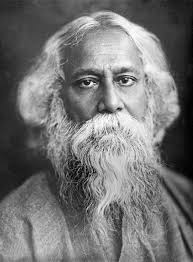
“Rabindranath Tagore” was a famous Bengali polymath who reshaped Bengali literature and music. Rabindranath Tagore was born in 7 May, 1861 at the city of Kolkata No. 6 Dwarkanath Tagore Jorasanko, Thakur Bari. His father was Devendranath Tagore And mother was Sarada Devi. He was the youngest of his parents’ 14 children. He was the Bengali Brahman by birth and his nickname was “Rab” or “Rabi”.

Tagore wrote his first poem when he was only eight years old. In 1877 when he was 16 Tagore published his first large poetry collection. In 1878, Tagore went to London. He enrolled at Public School in Brighton England he wanted to become a barrister letter he studied at University College London but in 1880 after Tagore did not do well in school his father called him back for London. His wife name is Mrinalini Devi. He got married on 9th December 1883 at the age of 22 he had five children in 1890 Tagore began managing his family’s estates in Shelidah. In 1898, Tagore’s wife and children joined him there. Tagore travelled across the vast estate. He was a poet, novelist, theorist, painter, music composer and a true Indian. And Bengali by Hart author of Gitanjali for which he become the first non European to win the Nobel Prize in Literature. In 1930 Tagore wrote around 2,230 songs 2,500 paintings and drawings. Tagore wrote the national anthems of India and Bangladesh Sri Lanka National Anthem is based on a Bengali song originally written by Tagore. In 1938, poet writer and humanitarian Rabindranath Tagore was the first Indian to be awarded the Nobel Prize for literature and he played a key role In The Renaissance of modern India Tagore is most widely known for his poetry but he was also and accomplished author of novels short stories plays and articles he took an active interest in a widespread range of social cultural and artistic endeavours he has been described as one of the first 28 centuries Global man he died at August 7 1941 in Kolkata India at the age of 80.

“ALESSANDRO VOLTA” Biography

“Alessandro Volta” was an Italian physicist and inventor of electric battery. He was born in Como, of Milan, on 18 February, 1745. His father’s name was Filippo Volta and mother name was Donna Maddalena. Child he did not display much Intelligence and did not start peking until he was four years old.

He received his early education at the royal seminary in como in 1774 Volta began his career in the field of Physics by teaching the subject at the Royal School of Como. During the year he studied atmospheric electricity and conducted experiments in fields of electrochemistry electromagnetism and electrophysiology in 1775, he pioneered the electroporous, a device that produced a static electric charge. This was a device that would be charged with electricity only bye rubbing and this charge could be transferred to other object between 1776 and 1778 Volta worked in the realm of gases and discovered methane gas in the nature environment which he was able to isolate by the end of this period. In 1880, he invented Volatile the first elected battery. This battery was actually a pile of alternating disc of Copper and zinc, separated by pieces of cardboard soaked in a brine that had tha ability to maintain steady electric current. He also developed the law of capacitance and theorized the law of bimetallic contact. One of the major published works of this ingenious scientist, was “De vi attractive ignis electrici”, on 1769, it was based on his extensive research on attractive force present in the electric fire. He is also regarded as the father of the electric automobile in 1791 he was made a fellow of the Royal Society of London for his groundbreaking work and physics at specially development of electroscope. He married Terasa Peregrini, in 1794, at the age of 48. The couple had three sons in 1794 he was awarded the Copley medal by the Royal Society of London for development of Voltas law of the electrochemical series. In 1801 he was honoured with the title of “Count”, by Napolean Bonaparte after he demonstrated the functionality of his battery to him. He died in Como, Lombardy-Venetia, on 5 March, 1826, at the age of 82.

“ROBERT HOOKE” Biography

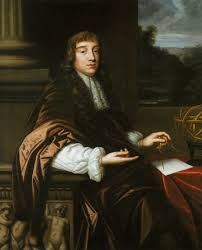
“Robert Hooke” was an architect natural philosopher and brilliant scientist. He was born on 28 July, 1635 in freshwater, Isle of Wight, England. His father’s name was John Hooke and Mother’s name was Cecily Gyles. His father was a Church of England priest. Robert had three siblings. He received most of education at home because our continual frail health. His father passed away in 1648.

He studied Greek Latin mechanics and mathematics in 1655 Robert hooke become an assistant to the famous scientist Robert Boyle and worked in this capacity till 1662. He helped in the construction and operation of Boyle’s air pump. He discovered the law of elasticity which eventually came to be known as Hooks law. He described this law in an anagram ceiiionsssttuv in 1660 and gave its solution in 1678. This La is extensively used in all branches of Science and Engineering in 1660 the Royal Society were formed by 12 men at the Gresham college and on Sir Moray proposal along with Boyle’s support. Hooke was named as the curator of the society. He became a fellow of the society in 1663, he succeeded Arthur Dacresias professor of geometry at the Gresham College. In 1665 he published the book micrographia which considered to be one of the most important scientific books ever written he made tremendous contribution to time keeping by improving pendulum clocks. In astronomy Robert Hooke studied the Pleiades star cluster, the crater on the Moon rings of Saturn and the double star system Gamma Arietis. In 1582 he proposed A Remarkable mechanistic model of the human memory which addressed the components of encoding memory capacity repetition retriever and forgetting. he was also an architect who served as a Surveyor of London city. After the great fire in 1666 he help to rebuild the city and core designed many architecture Robert hooke is received the degree of doctor of physic in 1691 he never married but his diary records that he had sexual relations with his niece, Grace, and several of his housekeepers. He point records that on the this housekeepers gave birth to you girl but does note the paternity of the child. He died in London United Kingdom on 3rd March 1703 at the age 67.

“ADAM SMITH” Biography

“Adam Smith” was an Economist and Philosopher. He was born in Kirkcaldy, Fife, Scotland, on 15 June, 1723. His father’s name was Adam Smith and Mother’s name was Margaret Douglas. His father was a lawyer which mother had a great influence on this education.

He went to Burgh School of Kirkcaldy where he learnt writing, mathematics and history he later studied philosophy from University of Glasgow when he turned 14. He also attended Balliol college at Oxford to study European literature. Soon after Smith finished graduation a series of public lectures delivered by at Edinburgh led him to collaborate with clause about David Hume during the Scottish Enlightenment in 1750. Smith shared a very close intellectual Bond with Hume and they wrote on politics, history religion and economics Smith became a professor of moral philosophy Glasgow in 1751. He wrote his Classic ” Theory of Moral Sentiments” around this time. He was elected as a member of Philosophical Society of Edinburgh in 1752. Smith spent the next thirteen years as an academic which he recalled as his best years. In 1763, Smith resigned from his professorship to tutor Henry Scott’s step son. Henry Scott was introduced to Smith through David Hume. He was elected a fellow of the Royal Society of London and was elected as a member of the literary club in 1775 the wealth of nations was published in next year and it become an instant success in 1788 Smith returned to France where was Mother was living and he was appointed as commissioner of customs between 1787 and 1789 he was given the position of Lord Rector of University of Glass gow. During Smith professorship at Glassgow in 1759, he wrote and published one of his classic theory of moral sentiments. His bestseller the wealth of nations which was published in 1776 was a powerful and very influential book Smith never married in his life. Smith was conferred with the title of “Father of modern economics” the book came to be known as the first modern work of Economics. He died in Edinburg Scotland on 17 July 1790, at the age of 67.”ALL MONEY IS A MATTER OF BELIEF”.

“CHARLES BABBAGE” Biography

“Charles Babbage” is the father of “Computer”. He was born on December 26, 1791 in London. His father’s name was Benjamin Babbage and mother’s name was Betsy Plumleigh Babbage. Charles was one of the four children born to Benjamin Babbage who was a banker and merchant. The Babage family was wealthy.

Charles received much of his early education from private tutors. In 1810 he entered Trinity College of Cambridge University. There he found that he knew more about Mathematics then his instructors in 1814 the same year of Charles graduation from Cambridge. Same year, he married Georgiana Whitmore. They had 8 children together but only 3 live beyond childhood after his graduation he lectured on astronomy at the royal Institution and in 1816 was elected a fellow of the Royal Society in 1820 he helped to established the astronomical society in 1822 Charles began work on his difference engine. That machine or capable of performing mathematical calculations. At the time numerical tables were calculated by humans which resulted in high error rates in the table they produced his first prototype which was not finished during Charles lifetime was composed of 25,000 parts and would have weighed around 15 tons. A second prototype was also designed by Babbage the London science museum constructed the machine from Babbage original plan in 1991. It performed its first Calculation at the Science Museum London returning result 231 digits Babbage then began work on a more advanced machine known as the analytical engine. This machine can be programmed through a series of hole punched cards and intended to use several techniques that are still used in modern computing. In 1838, he invented the pilot a metal frame in front of locomotives that clears the tracks of obstacles and designed a dynamometer car that would record the progress of the locomotiv. Babbage also invented an ophthalmoscope, which is used in eye examination. Charles Babbage died on October 18, 1871, at the age of 79. “PERHAPS IT WOULD BE BETTER FOR SCIENCE. THAT ALL CRITICISM SHOULD BE AVOWED”.

“ALEXANDER THE GREAT” Biography

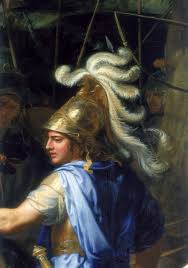
“Alexander the Great” he was an emperor of Greece he was born on July 20, 0356 BC in pella Macedon ancient Greece. His father’s name was Philip II of Macedon and mother’s name was Olympias. His father was the King of Macedon.

As a child he learnt to read, write, ride, fight and hurt. He grew up to be a brave boy and tamed an unruly horse when he was just 12 years old. The horse named Bucephalas, became his favourite horse and served him for several years King Philip asked the great philosopher Aristotle to teach Alexander and provided the temple of the Nymphs at Mieza as a classroom. Aristotle tutored Alexander and the children of macedonian nobles in kya English subjects like medicine philosophy morals religion and logic and art under his tutelage Alexander also developed a love for literature. When Alexander was 16 his father left him in charge of the kingdom as a Regent while he waged a war against Byzantion. During Philip’s absence, the Thracian Maedi revolted against Macedonia. In spite of still being young boy Alexander responded quickly and bravely Drove them away from their territory. King Philip was assassinated by the captain of bodyguards Pausanias, in 336 BC. Alexander just 20 years old at that time was proclaimed king by the nobles and army up on ascending The Throne he has set upon eliminating all his domestic Enemies and potential revels to the Throne. He and his mother ordered the execution of his cousins and check the buildings who they considered to be treat. The news of king Philip death sparked a series of rebellion from the Thebes, Athens, Thessaly, and the Thracian tribes north of Macedon. Alexander gathered a Macedonian cavalry of 30,000 and forced the Thessalian army to surrender. He what also successful in defeating the Thracian tribes.

In 334 BC, Alexander the great led his army in the battle of the Granicus River fought against the Persian Empire and got victory. He started battle with King Darius III and got a big victory Alexander captured Darius wife, Stateira I, his daughter’s Stateira II and Drypetis, and his mother, Susygambis, and treated all the captured women very respectfully. Alexander and his Army marched into India in 327 BC launching a campaign into the North Western Indian subcontinent by this time he had become very ambitious and decide to conquer the entire known world which the Greek thought ended in North Western India the greatest of Alexander’s battle in India was the battle of the Hydaspes River against King Porus of the Paurava Kingdom on the banks of the Hydaspes River in Punjab in 326. The Macedonians emerged victorious and annexed Punjab. Alexander married three times first to Roxana, at 328 BC, later the Persian princesses Stateira II and Parysatis II at 325 BC. Alexander died of Malaria, in the palace of Nebuchadnezzar II, in Babylon, at the age of 32, in June 0323 BC. ” THERE IS NOTHING IMPOSSIBLE TO HIM WHO WILL TRY”.

“CHARLES DARWIN” Biography

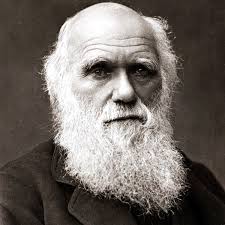
“Charles Darwin” was a naturalist and geologist he was born in The Mount Shrewsbury, Shropshire, England on 12 February, 1809. His father’s name was Robert Darwin and mother’s name was Susannah Darwin. His father was a Doctor and financier by profession, and Mother was a Physician. He was the fifth of six children.

He attained his basic education from September, 1818 at Anglican Shrewsbury school, before attending the University of Edinburgh Medical school. He first presented his discovery on March 27,1827, at the Plinian where he argued that the black spores found in oyster shells where in actuality the eggs of a skate leech. His lack of interest in medical studies led his father to enrolled him at the Christ’s College to attain BA degree. He despised mainstream education and showed a profound interest in botany. He graduated with distinction in 1831. In 1831, Darwin set sail on the HMS Beagle, a naval survey ship. Darwin was there to collect plant and animal specimens from the countries and island the ship visited. The voyage took five years. For Charles Darwin the most important part of the journey was the time spent in the Galapagos Islands these islands are the home to plants and animals that cannot be found anywhere else in the world Darwin noticed that each of the different Island was home to different type of tortoise Darwin was married to his first cousin, Emma Wedgewood in the year 1839, at the age of 29 the couple had ten children when the Beagle returned to England, and Darwin began to study the specimens, he had collected in more detail he realised that the differences in finches of the Galapagos Islands followed a similar pattern to those he had observed in the tortoise the finches from all of the islands where similar, but bad from different islands had different beaks Darwin started to study other animals and plants, and he began to Piece together his theory of natural selection which explains how population evolved Darwin did not publish his findings straight away because he knew that they would be extremely controversial and upset many people on the origin of species finally came out in 1859 it was a massive talking point because it challenged the truth of the creation story found in the Bible today Darwin theory of natural selection has been accepted scientific fact and new Fossil discoveries are constantly adding to our knowledge of the different stages of evolution Darwin’s appears on UK€10 notes, and a statue of him has been placed in the main hall of London’s Natural History Museum. In 1858, after two decades of scientific investigation, he introduced his Revolutionary theory of evolution more than 120 species have been named after Darwin he died on April 19 1882 ine down House Downe, Kent England due to angina attacks and heart failure.

“ARISTOTLE” Biography

“Aristotle” was a philosopher and teacher of Alexander “The Great”. He was born in 384 BC on Stagira, Greece. His father’s name was Nicomachus. His father Nicomachus named him Aristotle, which means “the best purpose”. His father served as a personal physician to king Amyntas of Macedon.

Being a physician’s son he was inspired to his father’s scientific work but did not show much interest in medicine. When he turned 18, he is shifted to Athens to pursue his education at Plato’s Academy. He left Athens somewhere in 348-347 B.C, spending almost 20 years in the City 343 B.C, after the death of Hermias, Philip II of Macedon invited him to become the tutor of his son Alexander Aristotle became the head of Royal Academy of macedon here he become a tutor not only to Alexander but came lessons to two other future kings- Cassander and Ptolemy- as well. In his role as tutor to Alexander, he encouraged him to conquer east. In 335 B.C, he returned to Athens where he established his own school called Lyceum. For the next 12 years, Aristotle organized his school as a centre of research on astronomy, zoology, geography, physics, anatomy and many other fields. Aristotle wrote 170 books, 47 of which still exists more than 2,000 years later. Aristotle was also a philosopher who wrote about ethics psychology economics theology Political Science and rhetoric later inventions search of the telescope and the microscope would prove many of Aristotle’s theories to be incorrect but his ideas formed the basis of modern science Aristotle married two times first time to Pythias. A daughter was born to the couple. Later he married of Stageira. They blessed with a son. He breathed his last, in 322 B.C, in Euboea, due to natural causes, at the age of 62. “PLEASURE IN THE JOB PUTS PERFECTION IN THE WORK”.

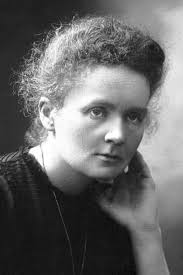
“MARIE CURIE” Biography

“Marie Curie” was the first woman to win a Nobel prize. She was born in Warsaw, the Kingdom of Poland then part of the Russian Empire. On 7 November, 1867 her father’s name was Wladyslaw Sklodowska, and her mother’s name was Bronislawa Sklodowska. Her father and mother was a teacher she was the youngest of the five children she was ten years old and began attending the boarding school of J. Sikorska.

Then she attended a gymnasium for girls from which she graduated on 12 June 1983 with a gold medal she started her practical scientific training at the chemical laboratory in 1891 she moved to France where she enrolled herself at the Sorbonne University. In 1993 she was awarded a master’s degree in Physics she returns to Paris to pursue a Ph.D. In 1894 Marie met Pierre Curie. Like Marie, he was a scientist and the two of them fell in love. They married on July 26, 1895, and they had to daughter. Marie became fascinated by rays that were recently discovered by scientists Wilhelm Roentgen and Henri Becquerel. Roentgen discovered X- rays and Becquerel had found rays given off by and elements called uranium Marie begin to do experiments once Marie was examining a material called pitchblende see it budget there to be a few raised from the Uranium pitchblende. But instead, Marie found a lot of rays she soon realized that there must be new and discovered the element in pitchblende Mary and her husband spent many hours in the science lab investigating pitchblende and the new element the event figured out that there where to a new element in “Pitchblende” they had discovered two new elements for the periodic table Mary named owner of the element polonium after her Homeland Poland she named “The Other radium” because it gave off such strong rays the curies came up with the term “radioactivity” to describe elements that emitted strong rays. In 1903, the Nobel prize in physics was awarded to Marie and Pierre Curie as well as Henri Becquerel for their work in radiation. Marie became the first woman to be awarded the prize. In 1911, Marie won the Nobel in chemistry for the two elements, polonium, and radium. She was the first person to be awarded two Nobel prizes. Marie became very famous. Scientists came from around the world to study radioactivity with Marie soon doctors found that radiology could help with curing cancer when World War I started Marie learned that doctors could use X-rays to help determine what was wrong with an injured Soldier. At that time Marie finds out a new portable system to carry the machine and helped over 1 million soldiers during the war she was the first woman to be awarded the prestigious Nobel Prize and the only to win into the field and multiple Sciences. She died in Passy, Haute-Savoie, France on 4 July 1934, at the age of 66. “YOU CANNOT HOPE TO BUILD A BETTER WORLD WITHOUT IMPROVING THE INDIVIDUALS”.

“SIR ISSAC NEWTON” Biography

“Sir Isaac Newton” was a scientist mathematician and astronomer. He was born on January 4, 1643, in Woolsthorpe, England. His father’s name was Isaac Newton SR and his mother’s name was Hannah Ayscough. His father was a farmer and had died three months before Newton’s birth his mother remarried when Isaac was three years old and left young Issac in the care of his grandparents.

Issac attended a school where he was an adequate student at one point his mother tried to take him out of gold so he could help on the farm, but Issac had no interest in becoming a farmer and was soon back at school. Newton attained his preliminary education from the King School in Grantham where he had sold and achieved the top rank. He then enrolled himself as a sizar at the Trinity College, Cambridge in 1661. The young Isaac Newton is sitting in his garden when an apple falls on his head and with any stroke of brilliant Insight he suddenly comes up with his theory of gravity he would spend much of his life at Cambridge becoming a professor of mathematics and a fellow of the Royal Society. He eventually was elected to represent Cambridge University, as a member of parliament Issac had to leave Cambridge from 1665 to 1667, because of the Great Plague. He spent these two years in study in isolation at his home in Woolsthorpe developing theories on calculus, Gravity, and the laws of motion. In 1696 Newton become the warden of the Royal Mint in London he took his duties seriously and tried to get rid of corruption as well to Reform the currency of England he was elected president of the Royal Society in 1703 and was knighted by Queen Anne in 1705. In 1687 Newton published his most important work called “The Philosophies Naturalis Principia Mathematica”. In this work, he describes the three laws of motion as well as the law of universal Gravity this work would go down as one of the most important works in the history of science. It not only introduced the theory of gravity but defined the principles of modern physics outlined in the Principia is a theory about gravity that helps to explain the movement of the planets and the sun this theory is known today as Newton’s law of universal gravitation. Newton’s laws of motion were three fundamental laws of physics that laid the foundation for classical mechanics Newton invented a wall new type of mathematics which he called”Fluxions”. Today we called Smart Calculus and it is an important type of math used in “Advanced Engineering and Science”. In 1658 Newton invented the reflecting telescope this type of telescope used to reflect light and form an image nearly all of the major telescopes used in Astronomy today are reflecting telescopes. He died on March 31st, 1727, in London England at the age of 84 “TWO EVERY ACTION THERE IS AN EQUAL AND OPPOSITE REACTION”.

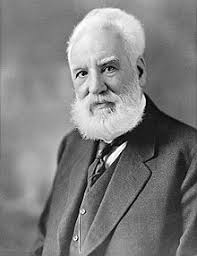
“ALEXANDER GRAHAM BELL” Biography

“Alexander Graham Bell” he was the inventor of Telephone. He was born on March 3rd 1847 in Edinburg Scotland. His father’s name was Alexander melville Bell and mother’s name was Elisa grace. His father was a professor and mother was a painter and pianist. He had two brothers but both of whom died of Tuberculosis.

Throughout his childhood is spent short period of time in traditional educational institutions including Edinburghs Royal High School, which he left at the age of 15 he initially attended University of Edinburgh and then the university College London England but did not receive a formal education in 1817 after the death of two of his brother the bell family moved to Canada for the sake of his health expanding on his father work of teaching deaf people to communicate he began working on transmitting and telephonic messages in 1872 he founded School of “vocal physiology and mechanics of speech”in Boston where he taught elocution to his pupils in 1873 he was appointed the professor of vocal physiology and Elocution at the Boston University School of oratory. While pursuing his teaching profession he was drawn towards an idea of transmitting the human voice over wires. In 1874, he hired an assistant Thomas Watson is skilled electrician, who developed the tools and instruments he needed Jo continue the project on March 10 1876 he produced the first intelligible telephone call when he said Mr Watson come here I want to see you Thomas Watson who was in another room here Bells voice and it came to see the telephone had worked a legal battle ensued with inventors Elisha Gray, who claimed his invention of the predated Bell’s. But the court ruled in Bell’s favor and subsequently”Bell Telephone Company was formed in 1877.

On July 11,1877 he married his deaf student, Mabel Hubbard at the age of 30. They had four children, They are Elsie May Bell, Marian Hubbard Bell, Edward Bell, and Robert Bell. By 1883, he created the technology for the Graphophone and other early sound recording equipment in magnetic recording technology that was an early form of tape recording towards the end of the nineteenth century his interest began to move away sound transmission and recording to transport Technologies he developed a passion for air travel and helped to established the aerial experiment Association in 1907 in all he held 18 patents in his name alone and to all that he shared with collaborators among them telephone, Photo phone, Hydrofoil board, Audio meter, HD-4, Metal detector, Tetrahedral kite are noteworthy. He was one of the founders of the National Geographic society in 1888 and served as its president from 1896 to 1904 he died on August 2, 1922 in Beninn Bhreagh, Nova Scotia, at age of 75 due to complications from Diabetes “BEFORE ANYTHING ELSE , PREPARATION IS THE KEY TO SUCCESS”.

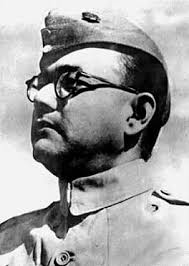
“SUBHASH CHANDRA BOSE” Biography

“Subhas Chandra Bose” was known as Netaji. He was the most prominent leader who are appeared at a time when most required for Indian freedom struggle. He was born on 23rd January, 1897 in the Eastern Indian city of Cuttack in the state of Odisha. His father’s name was janakinath Bose and mother’s name was prabhavati Devi. His father was a prosperous lawyer and mother came from an aristocratic family. Subhash was the ninth in the family of 14 children he was a brilliant student since childhood.

Subash excelled at his studies attaining an overall second position in the matriculation examination he enrolled at the College in 1911 but was sacked out from the same for assaulting Professor Oaten for the latter’s anti-India comments. Subhas then completed his graduation from Scottish Church College at the University of Calcutta attaining a BA in Philosophy in 1918. After passing BA he left India to study in Fitzwilliam College Cambridge from where he matriculated in 1919 following his father’s wish Subash did crack the examination with a 4th rank and secured a job with the Civil Service Department but Subhash refused to work as an administrative officer as he did not she want to serve Britishers he started newspaper named Swaraj at 1923 under the guidance and support of Chittaranjan Das, the spirit of nationalism grieve By leaps And bounds in Subash in the year 1923 super was selected the president of all India Youth Congress and also the secretary of Bengal State Congress Subhash also Rose to the position of the editor for the newspaper forward founded by Chitranjan Das and qualified to the post of the SEO of Kolkata Municipal Corporation his nationalistic attitude and contribution in the Indian struggle for independence did not go well with the British and 1925. He was sent to Prison in mandalay till 1927, coming out of the Prison in 1927, Subhas behind his Political career on a full-fledged note he secured the position of the general secretary of the Congress Party and started working alongside Jawaharlal Nehru in the struggle for independence three years later Subhash Rose to become the mayor of Kolkata in the mid 1930 he travelled extensively in Europe visiting Indian students and European politicians including Benito Mussolini over the years to Boss had gained so much of popularity that he become a leader of national stature Alto the popularity and admiration won him a nomination as a Congress President Neta Ji appeared as a powerful leader in Congress and he was elected president for two consecutive terms but he had conflicts in thought with Mahatma Gandhi because Netaji believed in active measure to gain freedom and independence Mahatma Gandhi was a believer of nonviolence for that reason he left the Indian National Congress and established a separate political party named all India forward bloc Netaji always insisted for complete and conditional Independence for India from the British roll virus All India Congress Committee wanted in phases through a dominant status.

He got married secretly without ceremony or weakness with Emily Schenk. On December 26th, 1937 at the age of 40, they had one daughter named Anita Bose Pfaff. It was in 1944 that Netaji give his motivational speech to Patriots give him blood and he will give them freedom inspired by the highly provocative words people joined him in large numbers for his fight against the British Raj during the Second World War Netaji start the opportunity to take advantage of British weakness and travel to Soviet Union Nazi Germany and imperial Japan seeking Alliance to attack the Indian British government with the support of Imperial Japan Netaji formed Indian National Army Azad Hindi Fauz with Indian prisoners of War and plantation workers from British Malaya Singapore and other parts of southeast Asia soldiers he also formed Azad Hindi government in exile with the support from Japan and regroup and let the Indian National Army in failed military campaigns against the Allies at Impala and Burma. Subhas Chandra Bose died on 18 August 1945 in Taipei Taiwan in a plane crash. “GIVE ME BLOOD AND I WILL GIVE YOU FREEDOM,” Said “SUBASH CHANDRA BOSE”.