

It is observed on 7 August every year to honour the handloom weavers in the country. The National Handloom Day is celebrated to mark the 100th anniversary of the Swadeshi Movement, which started in 1905.The first National Handloom Day was organised by Prime Minister Narendra Modi in Chennai.This year 6th National Handloom Day is celebrated.Handloom sector is a symbol of the country’s glorious cultural heritage and an important source of livelihood in the country. The sector is key to women empowerment as over 70% of handloom weavers and allied workers are women. Lets respect, celebrate and encourage handloom sector thereby empowering our handloom weavers and workers financially and instilling pride in their exquisite craftsmanship in our Country.
Author: 1111 EduPub
EduPub (Edupedia Publications Pvt Ltd) is a company dedicated to the development of the education, learning, research and innovation in the field of the research and books publication. We are pioneer in providing wide range of services to educational institutions, government agencies, individuals and corporates in the field of training and education, research and development, research and innovation. research and publication.
What is the National Sport of India?
Every Indian School child is taught that the peacock is India’s National Bird, Tiger is the national Animal, Jana gana Mana is the national Anthem, and Hockey is the national sport.
But in India, the Ministry of Youth Affairs and Sports in 2012 cleared that no particular sport is recognised as India’s National Game.
Some people called Hockey as the National Sport probably because of the international success that hockey gained since it’s Olympic debut in the early 20th century. In 1928, the Indian men’s hockey team made their debut at the Olympics, and won 6 gold medal between 1928-1956. Though their performance declined later.
Similarly, some people believe Kabaddi as the National Sport of India because Kabaddi too is most popularly played in India. Kabaddi is one of the Oldest sports in our country.
But the truth is that the national game of India is neither Hockey nor Kabaddi. There is no sport which has been declared or recognised as the National Sport of India till date.
First Athletics Gold in Olympics
Neeraj Chopra won Gold in the men’s Javelin throw final with a throw of 87.58 to win the first gold medal in athletics for India and the second gold overall.
This is India’s 7th medal at Tokyo Olympic, the best ever medal haul for India at a single edition of the games.
The first Gold medalist in Olympics for India was Abhinav Bindra in shooting and Neeraj becomes the second Gold medalist for India in the history of Olympics.
So far, India won 1 gold, 2 silvers and 4 bronze at Tokyo Olympics.
Golfer Aditi Ashok
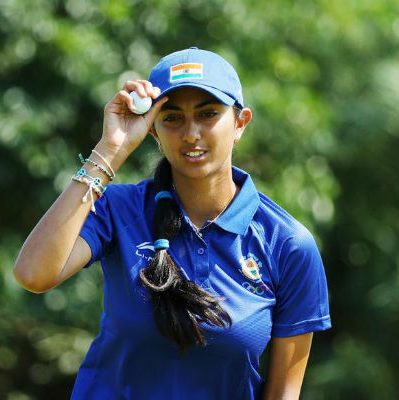
Aditi Ashok is a golf player. She is the news today in each and every corner of India due to her performance in 2021 Olympics for grabbing fourth place in golf. During Rio Olympics she was the youngest among all the participants in Riyo Olympics.
Aditi is from Bangalore, Karnataka she started playing golf at the age of 5 and she is 23 years old. When she started playing golf there were only three golf courses in Bangalore. Due to her interest in golf, her father joined her to the Karnataka Golf Association driving range.
Today she lost the bronze medal in her last shot. Even though she didn’t win the game today she made us to remember that even Indian’s play golf. This is the unbelievable truth that many people had no knowledge about golf till today. She is influencing and motivating younger generation to play golf through her achievement in 2021 Olympics.
Aditi says support from her school teacher, coach, parents and golf union has made her to come this far. Lets congratulate Aditi for securing 4th place in golf. She made us feel proud today.
>>Stay connected for more updates 🙂
Sixth medal for India at Tokyo Olympic
Bajrang Punia became the sixth ever Indian wrestler to win an Olympic medal, and the second wrestler from India to win a medal at Tokyo Olympics.
Indian wrestler Bajrang Punia defeated Kazakhstan’s Daulet Niyazbekov to win the bronze medal in men’s freestyle 65kg wrestling at Tokyo Olympics.
Punia won the 6th medal for India at the games this year, and the 4th bronze for the nation.
Now India is eyeing it’s highest Olympic medal haul in an Olympic campaign (as India equals best ever Olympics medals haul of 6 medals now.)
Sanitizer and why it kills.
Ever wondered why 70% alcohol is used in sanitizer and not 99% alcohol. It seems better to use pure alcohol than 70% diluted, well if you too think so then you are wrong.Suppose we pour pure alcohol over a single celled organism the alcohol will enter the Cell Wall and coagulate the protein just inside the cell wall very quickly creating a coagulated ring between the cell wall and other parts of the cell. Thus this already coagulated protein prevents further penetration of alcohol in the cell and the cell enters a dormant state.Whereas 70% diluted alcohol coagulates proteins but at slower rate, so slow that it reaches all the way through cell before it could be blocked. Thus the entire cell is coagulated and the organism dies
6 Helpful and Unique Travel Accessories for College Students
Whether you plan to travel abroad, or you just want to get away for Spring Break, you’ll need some basic travel gear. These are some of the best travel necessities I’ve found anywhere. Prepare for the unexpected and look good doing it with all these unique travel accessories and gear.
1.A Rolling Duffel

The Rolling Duffel is roomy and expandable. With lots of pockets and compartments, you’ll be able to carry everything you need for a long trip. And because it’s so lightweight, you won’t need to worry about paying extra baggage.
It has recessed wheels and the handle fits down into the body for added convenience.This rolling duffel from Olympia is perfect for your study abroad, spring break, or homeward bound adventure.
2.An antibacterial Toothbrush Covers

Toothbrush covers the little clip-on toothbrush protector will keep germs away while you’re travelling—or even when you’re not. Just clip it on and your toothbrush can stay clean and germ-free. Best of all, it fits any standard toothbrush—even electric ones!
3.A travel Hanging Toiletry Bag

Travel hanging toiletry bag.This is a brilliant little travel toiletry bag. Once you use it you’ll wonder how you managed without it. Place your belongings into a toiletry bag, roll it up, and pack it away in your suitcase. When you arrive at your destination, unroll and hang it in your room or hostel. No matter where you go, you can keep it all together with this little roll-up toiletry bag.
4.A 21-Piece Necessities Kit

A 21-Piece Necessities travel kit with shampoo, soap, creams, and other gear.A 21-piece necessities kit is perfect for travellers or those who love to sample newer products on the go. You can fill it up with everything you need, from shaving necessities, travel toothbrushes, sleeping masks, earplugs, and more. You’ll find everything you need to make travelling easier and your stay more restful.
5.A Multi-Purpose Passport Wallet
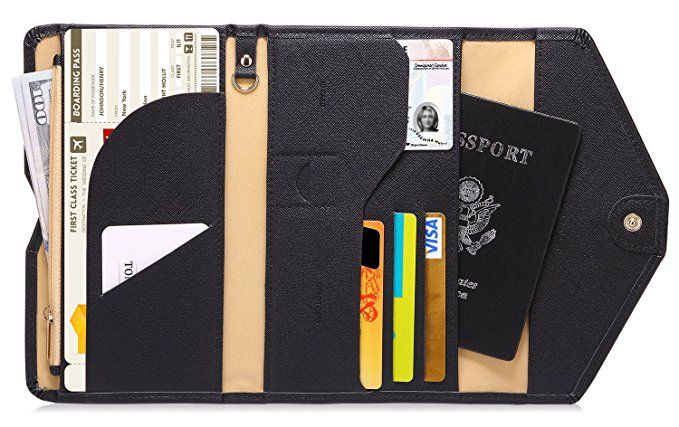
A passport wallet filled with cards.A handy wallet is an international traveller’s best friend. It has so much room you could choose to forgo your handbag for this wallet.Note that it should be spacious enough to hold your currency, passport, credit cards, and anything else you need to keep secure and on your person while travelling.It should be made of a material which is to clean.
6.A Collapsible Water Bottle

A Collapsible Water Bottle which is made of 100% food-grade material is surely great value for money and also a space saver.It should be light to carry and is even leak-proof and you can easily keep yourself hydrated.
No matter where your travels take you, you’ll always be prepared with these unique travel accessories.
Planting trees!!!!
We all know that the world is heading towards deforestation, global warming, drought etc., What is the major cause of this global changes? It is us. We humans are quite selfish when it comes our own deeds. We keep on cutting the trees, increasing pollution, high useage of plastic etc. What can we do to make our earth lively and healthy? There is no other remedy than planting trees. Yes, there reason we live is the trees. Without them we won’t be alive. Let’s see about planting trees and its importance.
Why trees are important to us?!?!
Trees are important to the environment because they provide oxygen and they act as carbon sinks. A carbon sink is a natural or artificial body that stores carbon dioxide. The more trees you have, the more carbon dioxide that you can store. This is because they take in carbon dioxide and then release oxygen, which allows them to store more carbon dioxide.
Planting trees has several benefits, including the fact that they help to reduce greenhouse gases (GHGs). They also help to reduce the amount of carbon dioxide in the atmosphere. As a result, planting trees can help to mitigate the effects of climate change.
Trees are also important for the environment because they provide a habitat for wildlife. They also help to improve the quality of air and water, and they provide a home for birds, insects, and other small animals.
When you plant a tree, you are helping to reduce the amount of carbon dioxide in the atmosphere. So, it is important that you plant a tree. The more trees you plant, the more you will be helping the environment.
What are the trees can be planted??
There are several different types of trees that can be planted. Some of these include the following:
Oak trees, Redwood trees, Pine trees, Alder trees, Fir trees,Bamboo trees,Evergreen trees, Deciduous trees.
METHOD OF PLANTING TREES:
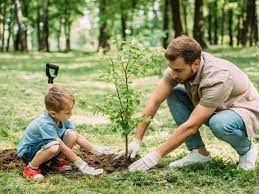
- Dig a big hole, put the rootball in, cover with dirt.
This is probably the most common method. It’s simple and easy, but it’s not the best. The tree will grow fine if you fill the hole with a small amount of compost. This will help the tree get established quicker and, in the long term, will make the tree more resilient to drought. But it’s harder to dig a big hole, and it’s hard to get the compost in there without disturbing the rootball. It’s also worth noting that the tree is going to be much happier if you can put the hole in a slightly damp area.
Do water the plant regularly until its becomes a tree. You may plant whatever tree you like and the most important thing is to maintain them in a good condition. Everybody says plant trees, save earth, save water. But in reality, how many of us has really planted trees? Think about it and find the best answer yourself!!
Read more;
Rename of Rajiv Gandhi Khel Ratna Award
Prime Minister Narendra Modi announced today the Rajiv Gandhi Khel Ratna Award, the highest sporting honour of India, has been renamed as Major Dhyan Chand Khel Ratna Award. The renaming recognises the ultimate hockey hero and legend of the sport, Dhyan Chand.
The prime Minister said the move was based on the numerous requests he received from across the country.
Sardar Vallabhbhai Patel- the man behind ‘Akhand Bharat’.
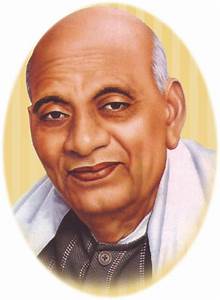
Sardar Vallabhbhai Patel was known as the ‘Iron Man of India.’ An advocate he was born on October 31, 1875, in a farmer’s family at Nadiad in Gujrat. His father Zaverbhai had fought against the British and served in the army of the Rani of Jhansi. The sons learned patriotism from their father. Vallabhbhai and his brother used to go to the fields with their father and on the way their father used to teach them simple mathematics. Their father imbibed in them values like honesty and fearlessness. His mother too was an influence on him and instilled great religious values in him. Vallabhbhai showed leadership and determination early in life.
He wanted to study law in England. But he did not have the means as his family was very poor. His brother too was a lawyer. He had attended classes before the examination, but Vallabhbhai studied on his own, read law books. Sometimes he attended court sessions and studied the cases carefully. He learned more from observing lawyers. He then gave the examination and started his practice from a small room. Vallabhbhai soon earned himself a name as a prominent lawyer. Later on, he went to England and studied and passed the barrister at law Examination. On his return to India, he set up his practice in Ahmedabad. Vallabhbhai met Gandhiji at a political conference and was greatly influenced by him. He gave up his western-style attire and worked in the national movement led by Gandhiji.
In 1918 when heavy rain destroyed crops in Gujrat, the farmers of Kheda district were greatly disturbed. They had to pay the taxes in any circumstances. They approached Gandhiji to help them, Gandhiji delegated the responsibility to Vallabhbhai Patel. Under his leadership, the farmers launched a ‘NO TAX’ campaign, but on peaceful lines. Patel was with farmers and even started dressing like them. Vallabhbhai dressed in a Dhoti, Kurta, and cap. He encouraged the farmers to stand firm. They needed him and did not budge despite the government seized their land, crop, and cattle. Eventually, their determination won out and the government was faced to give up its demand for the taxes.
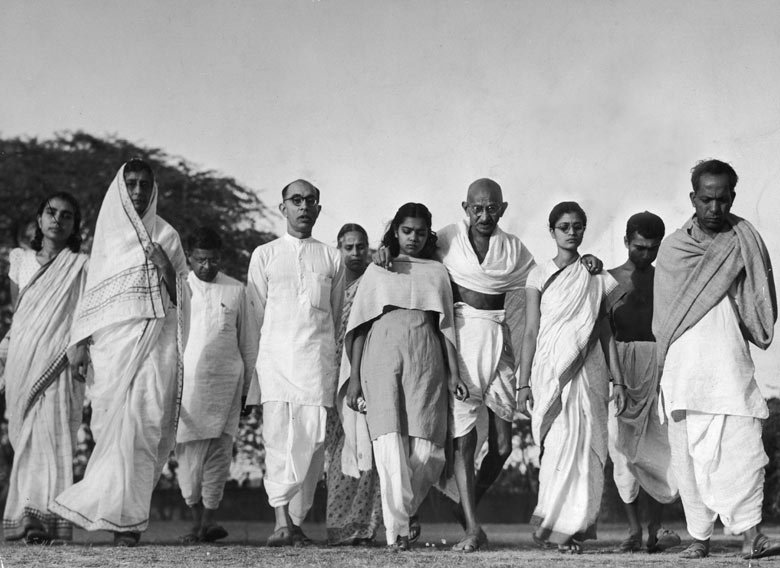
During the non-cooperation movement, Patel gave up his practice as a barrister which earned him thousands of rupees. He asked the people not to co-operate in any way. He set up the Gujrat Vidyapeeth to educate children and asked them not to send their children to government-run schools. Patel as a follower of Gandhiji also took to Satyagraha and spinning the charkha and boycott foreign goods. In 1923 the government ordered that the tricolored flag should not be carried on any of the roads in Nagpur where the government officers lived. The people decided to disobey this order. They were offended, “why should we not display our flag in our country”. Vallabhbhai Patel was called upon to guide them. Satyagrahis from all over the country poured in. The agitation went on for about three and a half months. Eventually, the government had to withdraw the order, and the satyagraha ended in a victory for the people.
Mahatma Gandhi was very pleased with his disciple and called him ‘Sardar’ which means leader. From that time he came to be known as Sardar Vallabhbhai Patel.
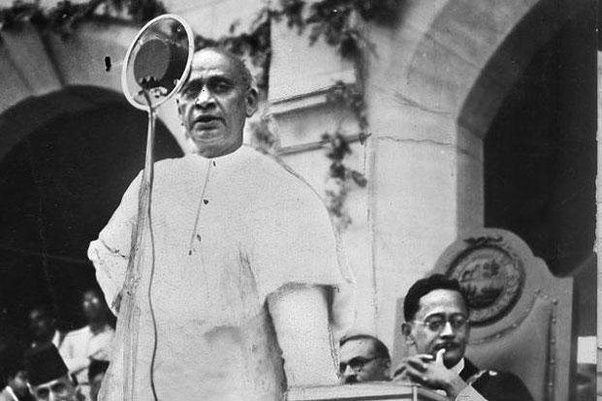
In 1942 the congress called on the British to ‘Quit India’. Many leaders were jailed including Sardar Vallabhbhai Patel. They were released after 3 years but this too did not deter them. Patel declared that they would not let anything come in the way of India’s freedom. Finally on the 15th of August 1947 when India became free, Pandit Jawaharlal Nehru became the first Prime Minister. Sardar Patel’s greatest achievement was the integration of the princely states with the rest of India. At the time of Independence, they were given the option of joining India or Pakistan or to remain separate (independent). Sardar Patel was foresighted and he felt that the future of India lay in the consolidation of these princely states. He pleaded to them to maintain the unity of the country to make laws together as one nation. Hence he initiated the ‘Instrument of Accession’. According to this, issues like Defense, External Affairs, Transport, and communication, etc. were completely in the hands of the Indian government while the rest other powers were in the hands of the princely states. The rulers on the Indian side of the border signed the instrument and merged their states with India. Sardar firmly dealt with troublesome states like Junagadh and Hyderabad which though on the Indian side wished to join Pakistan or remain independent. Overall the integration of the princely states with the Indian Union took place peacefully.
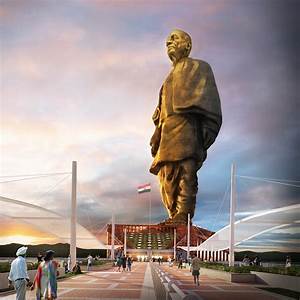
Saradar Vallabhbhai Patel was known as the ‘Man of Steel’, the Iron man of India, a man of few words, a dominant personality but cautious by nature. On his death in Bombay in December 1950, Jawahar Nehru the then Prime Minister of India stated that he was the Architect of Modern India. He left behind him a united India, he is remembered with reverence, and his qualities are greatly admired. The Statue of Unity was built in Gujrat in his honor.
Realistic Ways to Save Time and Money in College
The transition to college can be stressful, no matter how prepared you are. As a student, you have many decisions to make, like what to major in, which classes to take, and how to get involved on campus.
Add in the responsibility of paying for school, keeping up with a part-time or full-time job, and a steady load of coursework, and it’s easy to become overwhelmed and financially overextended. As a college student, I learned the hard way what happens when you procrastinate and overspend.
Here are a few tips you can use to save time and money in college, so you can worry less—and feel confident about your future.
How to Make the Most of the Time You Have
Learning to manage your time is an essential skill to being successful in college (and in your future career). While the best approach to time management may look different from one person to the next, here are a few ideas to get started.
Once you’ve picked your classes and have your course syllabi for the semester, buy or create a calendar. From here, outline the semester, highlighting essential dates for midterms, papers, presentations, and other assignments. You can colour-code it and get as creative as you like—the point is to see every deadline coming your way. Once you have this completed, try these things:
1.Plan by week
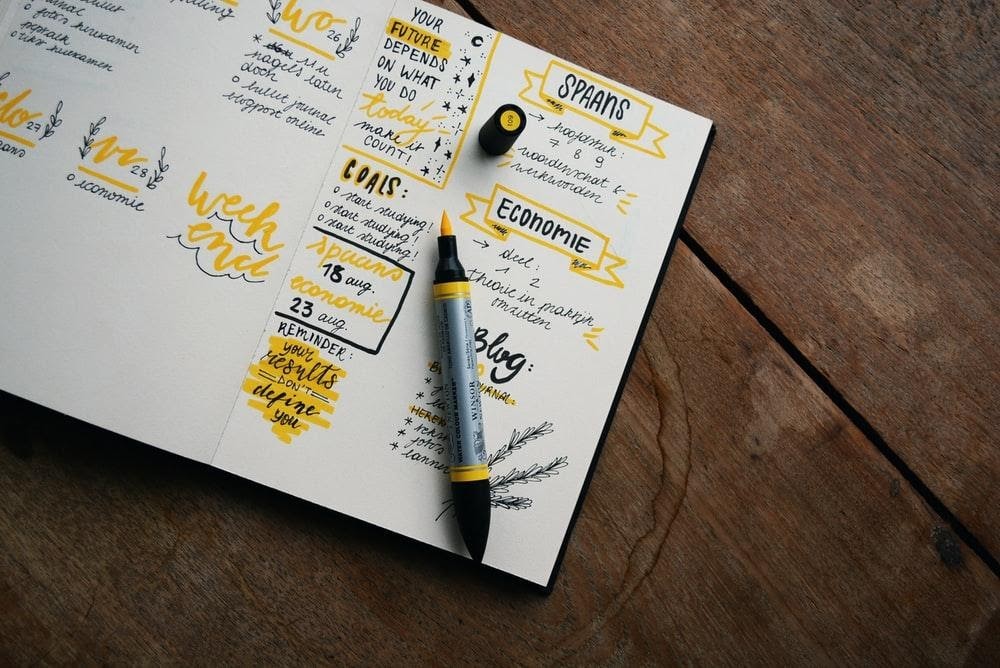
Schedule out your week in a daily planner, whether on paper or on your phone. If you’re like me and like to schedule everything, record when you’ll go to the gym, break for meals, spend time with friends, study, and pursue other activities. If you prefer a rough outline of your schedule, jot in any significant deadlines for a given week. This technique will keep you on track and help you avoid pulling all-nighters, which can mess with your schedule and, potentially, your grades and mental health.
2.Start with the simple to-dos

Completing easy tasks immediately after class—or as soon as you can—are an easy way to cross off your to-do list without worrying about anything on it falling to the wayside. One of my undergraduate classes required self-reflection pieces each week. I always completed them right after class because the material was fresh in my head, which made the writing process quicker and in a way, more genuine.
For a larger writing assignment, calculate how much time you have to complete it and divide that by the minimum number of pages you’re required to write. For instance, if you’re assigned a 20-page paper and you have 12 weeks to complete it, you’ll need to write about 1.66 pages per week to get it done. It seems much more manageable when you look at it this way.
3.Back up your work

Technology is a beautiful thing, but when it fails us, it can have catastrophic effects. Ever have a 15-page paper due the next morning, and your hard drive dies? Your professor may or may not be understanding, and I would guess that you’d prefer to do without the frustration (and extra work) that a similar incident could cause.
So be sure to email yourself a copy of the writing assignment you were working on and save a copy on a USB. This way, if your computer died, I had two options for getting it back. You can also use Google docs to save your work. It never hurts to have multiple copies of your work.
4.Keep distractions at bay

I can’t stress this enough; there is no more significant time waster than setting aside time to get work done and getting distracted by friends, your cat, the weather, the TV, anything. If you know that you are easily distracted at home, then seek out time at the library or in a study room. If you struggle to focus, set aside an hour to study, take a break, and repeat.
Let’s Talk About Money Management
Money is probably one of the most significant stressors facing college students, thanks in part to growing tuition and fees, additional academic expenses like textbooks, and the limited time to devote to earning money. Here are some ideas on how to maximize your budget.
1.Change up your grocery shopping habits

Want to save money on food? Know that thinking cheap doesn’t have to mean scrimping on quality. Most towns and cities have a farmer’s market that offers seasonal produce and other goods at a severely discounted price. If there isn’t a farmer’s market in your area, consider splitting a membership to a warehouse store like spencer’s or Walmart with a few friends or roommates. Planning for regular shopping trips may be enough to let you opt-out of your campus meal plan—and save a fortune on food.
2.Skip the restaurant
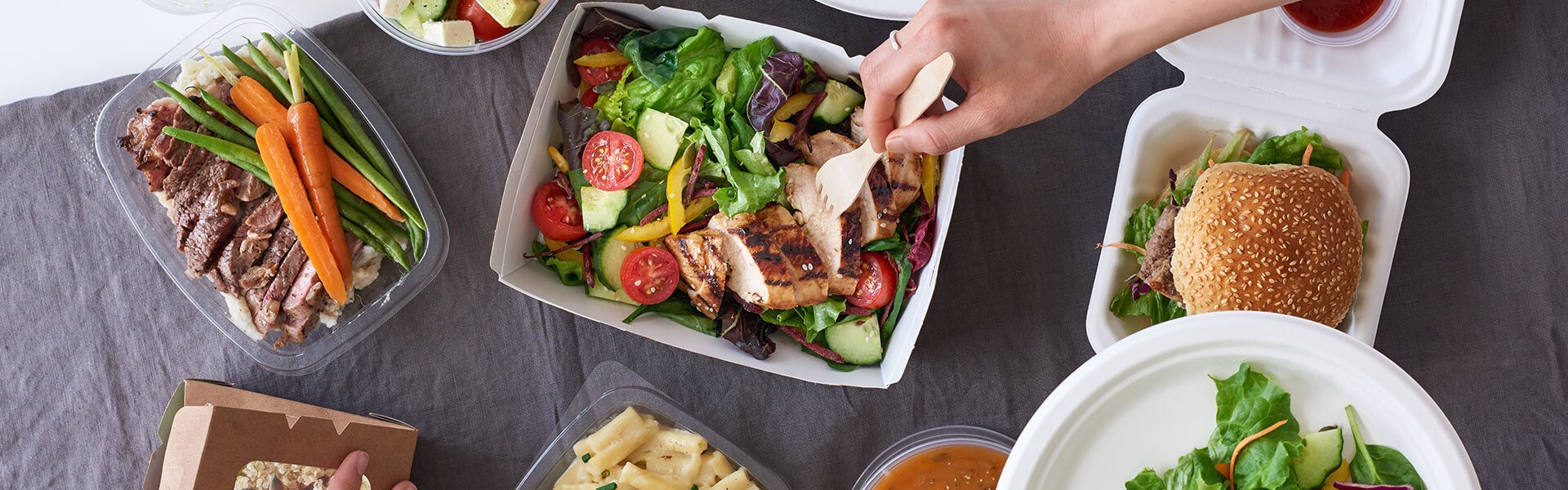
As great as not having to cook is, in many cases, what you order at a given restaurant can almost always be made at home for less. For those who see heading out for a meal as a time to catch up and socialize with friends, consider inviting a group over for a communal meal. Not only will you save money, but you’ll also have leftovers and the added fun of making a meal together.
3.Look for freebies
As the old saying goes, “the best things in life are free.” This sentiment rings especially true as a college student. In my experience, most of the outings with friends, guest lectures, and concerts I attended were free and found through local paper, word of mouth, and social media. I made such a routine of it that my the second year, I had barely paid anything for entertainment and other events. The best part was, my friends, became so curious about my adventures that they all started tagging along—and saving money too.
Rani Lakshmi Bai- an epitome of bravery and courage.
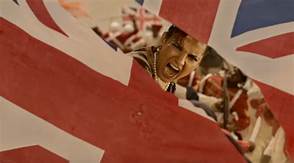
Rani Lakshmi Bai was the queen of the princely state of Jhansi, which is located on the northern side of India in UP. She was one of the leading personalities of the first war of Independence that started in 1857. The name of Rani Lakshmi Bai will be immortal in the history of India. She was considered as the heroine of India’s war of Independence. Her struggle against the British is legendry. She was a true patriot and full of self-respect. She was born on the 19th of November 1835 in the town of Bithur. Her parents were Moropanth and Bhagirathibai. Manikarnika or Manu as she was named at birth, lost her mother at the age of four, Manu was brought up by her father. With education, she also learned skills like sword fighting, horse riding, and using a gun.
She was married to Gangadhar Rao, the king of Jhansi at the tender age of eight. Thus, she became the Rani of Jhansi. Jhansi is now the district in Uttar Pradesh. There was a treaty between the British and the Raja of Jhansi. One being that if the British needed any help then Jhansi would help them and the other being that the British decide who would be the ruler of Jhansi. On 21st November 1853, Lakshmi’s husband and the only son died. During that period, Lord Dalhousie was the Governor-General of British India. The adopted child was named Damodar Rao. As per the Hindu tradition, he was their legal heir. However, the British rulers refused to accept him as the legal heir. As per the Doctrine of Lapse, Lord Dalhousie decided to seize the state of Jhansi.
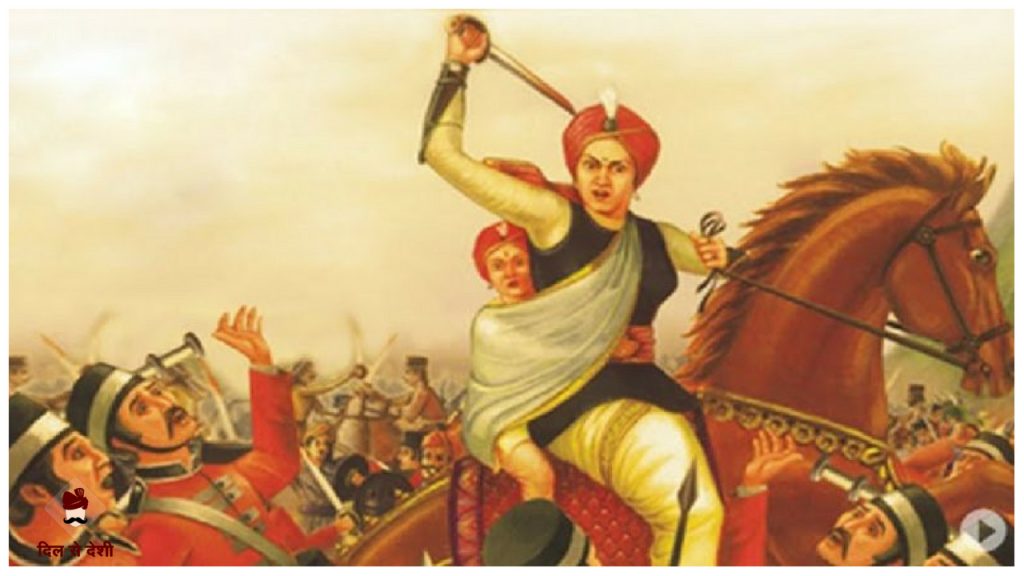
Rani Lakshmi Bai went to a British lawyer and consulted him. Thereafter, she filed an appeal for the hearing of her case in London. But, her plea was rejected. The British authorities confiscated the state jewels. Also, an order was passed asking the Rani to leave the Jhansi fort and move to the Rani Mahal in Jhansi. Lakshmi Bai was firm about protecting the state of Jhansi. Jhansi became the focal point of the uprising. Rani of Jhansi began to strengthen her position. By seeking the support of others, she formed a volunteer army. The army not just consisted of the menfolk, but the women were also actively involved. Women were also given military training to fight the battle. In the revolt, Rani Lakshmi Bai was accompanied by her generals.
Rani Lakshmi Bai prepared herself well for this fight for freedom. She used to set out on horseback, attired like a man with a metal helmet with a flowing turban, a protective plate bound to the chest, pyjamas, and a sash over them. With weapons like pistols and daggers, Rani was now ready for battle against the British. From the period between Sep-Oct 1857, Rani defended Jhansi from being invaded by the armies of the neighboring rajas of Orchha and Datia. In January 1858, the British army headed its way towards Jhansi. The conflict went for two weeks. Finally, the Britishers succeeded in the annexation of the city. However, rani Lakshmi Bai managed to escape along with her son, in the guise of a man.
She took refuge in Kalpi. She then attacked the Gwalior fort and the Raja later surrendered. The British army then attacked the fort of Gwalior. Rani and her army fought courageously but got defeated. Rani Lakshmi Bai sustained many injuries. She died on 17th June. It is believed that when she was lying unconscious on the battlefield, a Pandit found her and brought her to an ashram, where she died. For her immense effort, she is referred to as the ‘Icon of Indian Nationalist Movement’. Her story became a beacon for the upcoming generations of freedom fighters.
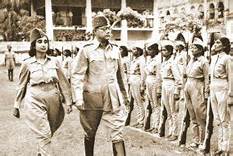
A lot of literature has been written on the life history of Rani Lakshmi Bai of Jhansi. Heroic poems have been composed in her honor. Rani Lakshmi Bai became a national heroine and is a perfect example of female bravery. When the Indian National Army formed its first female unit, it named the Unit after her. Indian poetess Subhadra Kumari Chauhan wrote a poem in the Veer Ras style about her, while is still recited by children in schools all over India. The Rani of Jhansi was immortalized in bronze statues both at Jhansi and Gwalior.
Indian women’s Hockey team in Olympics
The time the women had made their first Olympic apperance was at the 1980 games in Moscow. The second Olympic appearance was at the 2016 Olympics in Rio de Janeiro.
The Indian Women’s hockey team had created history after they had entered the semi-finals of the big tournament. While they lost against Argentina, they will now play for the bronze in their maiden Olympic podium clash at Oi Hockey Stadium against Great Britain tomorrow (6th August,2021) at 7 AM.
The SmartPhone Buying Guide

Smartphones have transformed over the past two decades and they have become an integral part of our lives. They have a wide spectrum of applications; some of them being making calls, clicking pictures, accessing the internet, playing games and the list goes on and on.
Nowadays, we can buy smartphones for as low as INR 5000 and as high as INR 1,00,000 +. India being the second-largest market for smartphones in the world offers a wide range of choices for smartphone users. But then with this sheer number of choices, it often becomes difficult for us to chose which smartphone to pick and almost becomes an exercise involving spending hours on the internet to figure out the features and decide one.
Here’s a list of some essential things you should consider before buying a new smartphone.
BUILD QUALITY
The very first thing which is taken into consideration while buying a smartphone is the build quality. The build quality of a material defines its durability. So better the build quality of the smartphone, the more durable it would be. There are mainly two categorizations in the smartphone industry based on the build quality – metal and plastic.
Nowadays, some phone manufacturers are using glass coverings, but these are very rare. The ones with the metal body are the sturdiest as they can survive a drop from 2-3 feet whereas the survival of the other two body types is limited.
DISPLAY
Display type and quality are yet another important factor when it comes to smartphones. The media experience depends solely on the display quality. Better the display quality, richer the media experience. There are mainly two types of display technology – LCD and AMOLED. The main difference between them being the projection of light. LCD screens are said to offer brighter and better display in direct sunlight whereas the AMOLED display provides sharper contrast and more saturated colors.
CAMERA
In this picture and video-loving world, camera quality is one of the most important aspects of any phone. But most people just focus on the number of megapixels which is not the right criteria to judge a camera. Just having a higher number of megapixels does not ensure a better camera quality. The overall camera quality depends on several other factors apart from megapixels like ISO, aperture, etc. The other features to look out for are the number of Cameras, Aperture Size, hybrid autofocus, optical stabilization, manual modes, special effects, unique selfie feature, and many more.
PROCESSOR
This is the hub of the device on which the overall performance of a phone like its clock speed, refresh-rate, etc depends. It acts as the brain of a device and is responsible for controlling every function and action call. The processing speed is mentioned in terms of GHz (Giga Hertz). The higher the GHz, the faster would be the processor and thus the overall performance of the phone would also be faster.
BATTERY
It is one of the most important features to consider when deciding on a new phone. We cannot keep our phones connected to the charger or power bank throughout the day. So, it becomes really important to keep the battery capacity in consideration. The battery capacity is denoted in milliampere-hour (mAh) which is the amount of electrical charge a particular battery will hold.
INTERNAL STORAGE
It is the amount of space that is available in your device by default i.e, without any external attachments. The ideal storage space for a smartphone varies depending on the user. Some people prefer to keep lots of data and applications while others don’t. Hence they should accordingly choose the device whose Internal Storage suits their need the best. Although one can always expand the device storage via MicroSD cards.
Women Boxer clinched Bronze
Women Boxer Lovlina Burgohain won bronze medal for India in Tokyo Olympic after being defeated in semi final. She lost the match to top seed Busenaz Surmenili of Turkey in a 0-5 score.
Lovlina, was assured of bagging a medal after defeating former world champion Nien Chin Chen of Chinese Taipei 4-1 to enter the semi-finals of the welter weight category.
She has became the third Indian boxer after Vijender Singh and Mary Kom to win an Olympic medal.
 Eduindex
You must be logged in to post a comment.