Open Access Publication

EDUpub fully supports open access i.e. articles will be available free of charge to the readers without any kind of registration. Users have the right to read, download, copy, distribute, print, search, link to the full texts of these articles, or use them for any other lawful purpose under  Creative Commons Attribution-NonCommercial 4.0 International (CC BY-NC 4.0) end user license.

Authors will not be asked to transfer any kind of copyright to the EDUpub Publisher, but will instead be asked to agree during submission to CC BY-NC 4.0 license.

<

p style=”color: #444444;font-family: Verdana, Geneva, sans-serif;font-size: 14.592000007629395px;margin-bottom: 1rem;margin-top: 1.25em;text-align: justify”>Besides Open Access EDUpub also supports self-archiving of published articles as long as proper citation and link to publisher version have been provided. 

About EDUpub Publisher

About EDUpub Publisher

EDUpub Publisher is a unique international publisher for publishing online open-access research contents of the highest quality and significance in all areas of academic research and technology. Open access ensures accessibility to a wide range of audience by allowing an individual to have unrestricted use and reuse of published content as per CC license policy provided on each publication’s homepage. As an open access publisher, we are providing an opportunity for global researchers to get involved in updating themselves with the ongoing research. We publish international, open access, peer-reviewed academic journals, Books, Thesis, Dissertation, Conference Proceedings, Abstract Book, Conference Special Issue, Preprints, etc. Whether you are an Inspiring teacher, scientist, creative aspirants, curious students or researcher; we are cordially inviting you to browse our website and learn about ongoing researches in the field. In order to maintain manuscript quality, each manuscript submitted shall undergo peer review process. All the Journal with EDUpub Publisher follows a rigorous peer-review process to retain high standards of published articles.

EDUpub Logo

Vision of EDUpub

Lead with authoritative source of scientific information in advancing the research community as well as humanity.

Mission of EDUpub

EDUpub is an international scholarly publisher that helps scholars, institutions, and professionals with open and free research contents to improve & advance the knowledge for the benefit of humanity. Our mission is to follow the best publishing practice and emerge as a trusted and reliable source of scholarly contents by-

Following publication ethics.
Promoting only standard publishing practice.
Maintaining honesty and transparency in publication process.
Opposing & not following potentially questionable practices.
Not allowing author misconduct.
Providing information & resources for young researchers.
Increasing visibility, availability, and readership.
We are committed to advance, promote, and serve the research community by maintaining the publishing integrity for the benefit of humanity.

Follow EDUpub & Stay Up to Date
Facebook
Linkedin
Twitter
Youtube

Our Services

  • Journals
  • Preprint
  • Academic Thesis
  • Edited Volume
  • Conference Issue
  • Proceedings
  • Abstract Book
  • Monograph

Book Publishing with ISBN

EDUpub offers scholarly book publication with ISBN and DOI. As an author, it is important that you take time to consider the right publisher and right book’s category for your important publication. The author will retain exclusive copyright and grant non-exclusive publishing and commercial right to AIJR Publisher with open access end-user license. Books will get promoted to potential readers worldwide by online distribution through EDUpub publishing platform and other open access archiving services.

Currently, AIJR will consider online publication for the following types of books directly from the author(s)-

  • Academic Thesis / Dissertation
  • Edited Volumes/Books 
  • Monographs (
  • Project Reports as Book (Requires NOC from funding agency)

EDUpub also publish following types of books from conference organizer-

  • Conference Proceedings
  • Conference Abstract Book

Benefits of Publishing book with EDUpub

  • Peer-Reviewed: We are publishing refereed books, our all publications are peer-reviewed.
  • Open Access: All books are published with free access to everybody worldwide, No hidden fees.
  • ISBN: Each publication will get assigned an ISBN number and registered in the international database.
  • Retain copyright: The author retains copyright and granted non-exclusive publishing right to the EDUpub Publisher. Author(s) are free to disseminate their published article, make copies for any use, and/or deposit in any repository or archive they like by linking to the original published article.
  • Support the community: By publishing your book with us you support the EDUpub Publisher and enable youths to read your work.
  • Be read: Due to our books are free to everybody, more people access the books and cite you.
  • Print on Demand: We also offer a print version (with separate print ISBN) on demand, contact us for a quote.

How to Get Book Published 

Send manuscript for review to editor@pen2print.org 

Encroachment Of Public Land In The Garb Of A Place For Worship

In a latest, landmark, laudable and learned judgment titled Bal Bhagwan vs Delhi Development Authority in CM(M) 416/2019 delivered just recently on December 18, 2020 while dismissing a suit filed by a temple manager seeking permanent injunction against the Delhi Development Authority (DDA) from forcefully dispossessing him from 4 temple properties built on public land, a Single Judge Bench of Justice Pratibha M Singh observed that a trend could be seen of public land being “sought to be encroached upon under the shelter of a place of worship. As is seen in a large number of cases, rights are claimed by parties under the garb of temples or other places of worship located on government land.” We all know fully well how suddenly photos of some God or saint etc appear on some vacant land adjoining road or even in middle of road and how people start worshipping there and gradually a religious shrine in form of temple or dargah etc appears there and what is most concerning is that we see all this happening even in “Army Cantonment” areas also which sometimes even pose a security threat as enemy spies of foreign nations sometimes take refuge there as we have heard in news channels also but most alarmingly is mostly always either ignored or taken most lightly and all this happens right under the nose of the district administration! Moreover such illegal structures sometimes pose other problems also apart from security threats! So what Justice Pratibha M Singh has pointed out is nothing but the stark truth! 

While stating the brief background of the case, Justice Pratibha then mentions in para 4 that, “The present petition arises out of a suit for permanent injunction filed by the Petitioner/Plaintiff (hereinafter, “Plaintiff”) – Mr. Bal Bhagwan against the Delhi Development Authority (hereinafter, “DDA”) seeking permanent injunction restraining the DDA from demolishing or forcibly dispossessing the Plaintiff from three temple premises namely Mandir Kali Mai, Mandir Bada Beer Dham and Mandir Shivji Maharaj situated on private land bearing Khasra No. 1075/803/50 measuring 4 bigha 3 biswas and a temple premises of Sankat Mochan Bajrang Bali on land measuring 2 bigha 11 biswas in Khasra No. 1074/803/50 of village Khampura Raya, Delhi bearing MCD No.2151/18, Swami Onkara Nand Ashram, New Patel Nagar, New Delhi (hereinafter, “suit property”).” 
While elaborating further, it is then stated in para 5 that, “The Plaintiff had moved an application for interim injunction under Order XXXIX Rules 1 and 2 CPC before the Civil Judge. Vide order dated 10th December, 2018, the Ld. Civil Court dismissed the application for injunction. Thereafter, the Plaintiff preferred an appeal, which was also dismissed vide the impugned order dated 27th February, 2019. This Court, at the time of admission of the present petition, on 12th March, 2019, issued notice and directed that no coercive steps be taken by the DDA against the Plaintiff.”
To put things in perspective, it is then envisaged in para 6 that, “The case of the Plaintiff has been captured in brief in the plaint. The Plaintiff claims that he is the Chela of Late Swami Onkara Nand who was managing/running four temples situated on the suit property. The temples were located on two separate khasras, with three temples being located on Khasra No. 1075/803/50 and one temple being located on Khasra No.1074/803/50. It is claimed that the said four temples are in the possession of the Plaintiff as they are managed by him and they have been running at least since the 1960s.”
While continuing further in the same vein, it is then pointed out in para 7 that, “Swami Onkara Nand expired on 10th May, 1982 and by way of a registered Will dated 13th April, 1982, the Plaintiff was made the manager of the entire temple complex. It is claimed that the DDA attempted to take forcible possession of the suit property and dispossess the Plaintiff, leading to the filing of the suit for permanent injunction. The DDA filed its written statement and claimed that the entire land is government land and that the Plaintiff is in illegal occupation of the same. It took the stand that the Plaintiff, who has no rights in the suit property, cannot prevent the DDA from taking over the land which is meant for rehabilitation of the Kathputli Colony dwellers and had been vested in the DDA by the Ministry of Rehabilitation way back in 1982. Both Courts have agreed with the DDA and have dismissed the Plaintiff’s application for interim injunction.”
On one hand, it is mentioned in para 8 while stating plaintiff’s submissions that, “Mr. Kapur, ld. counsel appearing for the Plaintiff has urged before this Court that insofar as the DDA is concerned, the issue only relates to 2 Bighas and 11 Biswas as the other land has been held to be Shamlat Deh land. The stand of the DDA is that the land was acquired and was put at its disposal. However, the Plaintiff claims that he himself is in settled possession of the land in question. Reliance is placed on the Jamabandis dating back to 1946-47 and the Khasra Girdawaris dating back to 1967-68, which show the existence of the temple. Mr. Kapur specifically relies upon the various documents of the Revenue Authorities filed by the DDA to show that these documents themselves establish the existence of the temple as also the fact that the same was managed by Swami Onkara Nand. Vehement reliance is also placed on an alleged copy of DDA’s City Planning Wing’s document which shows the regularisation of New Patel Nagar area of which the suit property is alleged to be forming part. It is claimed that the survey which was conducted in this area on 15th September, 1977 itself shows the existence of a temple on the said land.”
On the other hand, it is then mentioned in para 20 while stating DDA’s submissions that, “Mr. Rajiv Bansal, ld. senior counsel along with Mr. Dhanesh Relan, ld. counsel appears for the DDA. He raises two preliminary objections. The first preliminary submission is that the petition is under Article 227 of the Constitution of India which is not an appellate remedy. The scope of judicial review is limited in such a petition. The Court is not to act as an appellate authority and neither is such a petition to be treated as a second appeal. The Court cannot interfere unless there is flagrant miscarriage of justice or abuse of principles of law. The Trial Court’s finding has to be perverse or patently erroneous for the Court to exercise jurisdiction in such a petition. It is submitted that the Court cannot re-appreciate the evidence and also cannot reverse the finding on insufficiency of evidence. The Court also cannot substitute the trial court’s finding with its own opinion in the matter. It is further submitted that if there are two concurrent findings, the power under Article 227 ought to be sparingly exercised. Reliance is placed on the following judgments:
a) Annad Kumar v. Dinesh Kumar, (2017) 125 ALR 75 
b) Surender v. Roshani & Ors., 2010 SCCOnline Del 2482 
c) Estralla Rubber v. Dass Estate (P) Ltd., (2001) 8 SCC 97 
d) Ouseph Mathai & Ors. v. M. Abdul Khadir, (2002) 1 SCC 319
e) Nawab Shaqafath Ali Khan v. Nawab Imdad Jah Bahadur, (2009) 5 SCC 162.”
Truth be told, it is then disclosed in para 37 that, “An application under Order XXXIX Rules 1 & 2 CPC, which was rejected by both the Trial Court and the Appellate Court, is the subject matter of the present petition, which has been argued extensively by ld. counsels for the parties. This comes as no surprise as the land involved is precious land located in the heart of Delhi in which the Plaintiff wishes to continue to retain possession.”
Significantly, it is then pointed out in para 39 that, “A perusal of the plaint shows that the Plaintiff claims ownership in the suit property. Paragraph 10 of the plaint reads as under: 
“10. That the plaintiff is owner in possession or a transferee/successor from the original owner of the suit property through documents in his favour and is legal occupier of the suit property.”
However, before this Court, the Plaintiff concedes that he does not have any document of title in respect of the suit property. Thus, the only question is whether the Plaintiff is entitled to interim relief from being dispossessed.”
No less significant is what is then stated in para 40 that, “In the plaint it is admitted that the land is government land and that the Plaintiff has rights in the same by way of adverse possession. The relevant extract of the plaint reads as under:
“That no action to take forcible possession after dispossessing the plaintiff from the suit land can be taken as the same is barred by Section 27 read with Article 112 of Limitation Act, 1963. The government can take action for eviction and for possession against the alleged illegal occupant on the government land within 30 years and the period of limitation had began to run. under this act against a like suit by a private person and hence the threat of alleged action of dispossession/forcible dispossession by the defendant is barred by time as the right of the defendant has extinguished in respect of the suit property. 
Even otherwise the plaintiff is owner by adverse possession in view of notice of defendant issued in the month of November, 1982 to the plaintiff and other residents of the area site of New Patel Nagar in respect of alleged acquired land of village Khampur Raya, Delhi.”
For the sake of clarity, it is then stated in para 41 that, “However, before this Court the Plaintiff’s case has changed and is one of settled possession and not of adverse possession. The issue, therefore, is very short – Whether the Plaintiff claiming settled possession without any ownership can be dispossessed or is entitled to injunction against dispossession?”
Of course, it cannot be ignored that Justice Pratibha then points out in para 44 that, “The Trial Court vide its order dated 10th December, 2018 held as under:
i. That one part of the suit property lies in Khasra No.1074/803/50 and another part lies in Khasra No.1075/803/50;
ii. Insofar as Khasra No. 1074/803/50 is concerned, the same is part of acquired land, which was purchased by the DDA on 2nd September, 1982. The acquisition is not challenged and the same is more than 60 years old. The Plaintiff, thus, encroached in Khasra No. 1074/803/50.; 
iii. Insofar as Khasra No.1075/803/50 is concerned, the same is private land i.e. Shamlat Deh land. Following the judgment in Jagpal Singh (supra), the Trial Court held that Shamlat Deh land is meant for the common use of the village and no one person can claim rights in the same.;
iv. That the Plaintiff does not have title on either part of the suit property and, at best, he is an encroacher.;
v. The Plaintiff claims ownership on one hand and on the other hand, claims rights by way of adverse possession.;
vi. The judgment in Rame Gowda (supra) has been considered by the Trial court along with the judgment in Maria Margarida (supra). The Trial Court holds that the moment the pleadings are filed by the parties and the Court applies its mind to the matter and finds that the Plaintiff has no title to the land, the requirement of due process of law is complete. The Plaintiff was found to be an unauthorised occupant who had no right to remain on the land. Thus, the injunction application was dismissed.”
What’s more, it is then rightly noted in para 45 that, “The Plaintiff filed an appeal against the said order, which was heard by the ld. ASCJ. The Appellate Court, vide its order dated 27th February, 2019, held that the land belongs to the DDA and the Trial Court has rightly rejected the prayer for injunction.” 
Briefly stated, it is then also conceded in para 46 that, “The petition before this Court is under Article 227 of the Constitution of India. Clearly, the extent of intervention in such cases is quite limited. There are concurrent findings by the Trial Court and Appellate Court. All the relevant facts have been considered by the Courts below. Thus, in view of the settled legal position, no interference would ordinarily be called for in the writ petition.”
Be it noted, it is then rightly mentioned in para 62 that, “Several judgments on various propositions have been cited, which, according to the Court, do not require any consideration in the present case. The main question to be determined is whether the Plaintiff, who is in settled possession, can be dispossessed in an application under Order XXXIX Rules 1 & 2 CPC. The answer is a clear yes.” 
Furthermore, it is also pointed out in para 63 that, “Insofar as the Shamlat Deh land is concerned, the Plaintiff cannot claim any rights in the same as the same vests for the common interest of the villagers. This Court agrees with the stand of the DDA that the land has been urbanised and once urbanization takes place, the village owners have no rights.”
More significantly, it is then elucidated in para 66 that, “Though the land in question was vested in the DDA several years ago, the DDA is yet to obtain possession of the land. An important developmental project has been derailed because of the present litigation as the DDA continues to make valiant attempts to obtain possession in accordance with law. The photographs in the present case are extremely revealing. The mandir constitutes a miniscule portion of the entire land which has various commercial shops and residences. The case of the DDA is that the Plaintiff is earning huge revenues by collecting rent from these occupants, however, this Court does not see the need to go into this aspect. Clearly, the Plaintiff, or anyone occupying or claiming rights through the Plaintiff, does not have any right to continue to remain in possession of the suit property. Ld. counsel for the DDA has submitted that an alternative accommodation has been given to the dwellers in the colony. It is for the DDA to ensure that the same is provided to everyone in occupation, in accordance with its policy.”
Most remarkably, most significantly and most appropriately, what forms the cornerstone of this extremely laudable judgment as illustrated by Justice Pratibha finds mention in para 67 in which it is stated explicitly, elegantly and effectively that, “Finally, this Court expresses grave concern over the fact that public land is sought to be encroached upon under the shelter of a place of worship. As is seen in a large number of cases, rights are claimed by parties under the garb of temples or other places of worship located on government land. This trend has been repeatedly frowned upon by the Supreme Court and other courts. The Supreme Court, in its judgment in Union of India v. State of Gujarat & Ors., (2011) 14 SCC 62 has, in fact, taken cognizance of this menace and directed State Governments and Union Territories to review the situation and take appropriate action in an expeditious manner. The relevant extract of the judgment reads as under: 
“5. As an interim measure, we direct that henceforth no unauthorised construction shall be carried out or permitted in the name of temple, church, mosque or gurdwara, etc. on public streets, public parks or other public places, etc. In respect of the unauthorised construction of religious nature which has already taken place, the State Governments and the Union Territories shall review the same on case-to-case basis and take appropriate steps as expeditiously as possible.””
Equally significant is what is then stated in para 68 that, “Such attempts by unscrupulous parties ought to be discouraged, inasmuch as the occupants, under the garb of a place of worship, turn the land into a completely unplanned encroachment by hundreds of people. The authorities have an obligation to ensure that in public land, places of worship are not created in this manner. Moreover, in the present case, an infrastructure project is being completely crippled due to the pendency of this litigation. This would be contrary to even public interest.”
Finally, it is then held in the last para 69 that, “The land, being public land, the Plaintiff is not entitled to any relief. The petition is dismissed with costs of Rs.1 lakh to be deposited by the Plaintiff with the High Court of Delhi (Middle Income Group) Legal Aid Society. All pending applications are also disposed of.” 
To sum up, Justice Pratibha M Singh of Delhi High Court has rightly, remarkably and reasonably pointed out that encroachment of public land in the garb of a place for worship ought to be discouraged. For this to happen effectively, the district administration must immediately swing into action. For this to happen in turn the State Government must promptly swing into action and not be guided by vote-bank politics as most unfortunately we see happening on a regular basis in our country and all those parties who have been ruling different states since independence till now are equally responsible! 
Sanjeev Sirohi, Advocate,
s/o Col BPS Sirohi,
A 82, Defence Enclave,
Sardhana Road, Kankerkhera,
Meerut – 250001, Uttar Pradesh


Clean Road Outside Police Station For A Week

It goes without saying that the single biggest problem faced by a victim when he/she suffers due to some crime committed against him/her is lodging of FIR in the police station. What is worst is that no government whether in the Centre or in the State has ever cared to enact the most strict law imposing at least a very heavy penalty on any police cop in uniform if he/she refuses to lodge an FIR in a police station on any ground whatsoever. Time and again we keep hearing cases of police refusing to lodge FIR and this is primarily to send a message everywhere that our zone is free of crime. 

As if this was not enough, many times we even read in different newspapers that police was unduly demanding money for lodging of FIR and that too from poor people, farmers etc! This must not only be deprecated but should also stop now and the buck has to stop somewhere as this most dangerous menace has grown interminably over the last few decades not just in Karnataka but all over the nation! We cannot ignore this any longer now! Centre must act now and so also must States! 
Just recently, we saw how on December 17, 2020, in a latest, learned, laudable, landmark and lambasting judgment titled Tarabai vs The State of Karnataka and 4 others in Writ Petition Habeas Corpus No. 200012/2020, the Kalaburagi Bench of Karnataka High Court Karnataka High Court has directed the station house officer of the Station Bazar Police Station, Kalaburagi, to clean the road in front of his police station for one week, for failing to take note of a complaint made by a mother whose son was allegedly abducted. This is really horrible that first criminals attack and make victims cry. As if this is not enough, the victim is then again made to further cry in agony when police officials shamelessly, senselessly and stupidly refuse to lodge an FIR on one pretext or the other! 
While stating the purpose of the writ petition, the Bench then states that, “This Writ Petition Habeas Corpus is filed under Article 226 of the Constitution of India, praying to issue a writ or order or direction in the nature of Habeas Corpus thereby directing the respondents to produce the son of the petitioner namely Suresh S/o Heerasing Rathod R/o Minajgi Tanda Tq. & Dist. Kalaburagi who is unlawfully taken away by the respondent No.5 on 20.10.2020 before this Court.”
To start with, this notable judgment authored by Justice P Krishna Bhatt for himself and Justice S Sunil Dutt Yadav sets the ball rolling by first and foremost observing in para 1 that, “The petitioner Tarabai is present along with her son Suresh,” and then observing in para 2 that, “This Habeas Corpus writ petition was filed on account of her son Suresh going missing on 20.10.2020. Subsequently, he was produced before the court on 03.11.2020. The entire development in the case after Suresh going missing discloses to us a very disturbing facet of the functioning of the police stations in this area of the State. The problem, primarily, is one of police officers not complying with the procedure prescribed under the Code of Criminal Procedure, which places a high premium on the guarantee of liberty of the individuals.” 
To put things in perspective, the Bench then observes in para 3 that, “In our proceedings dated 03.11.2020, we had noted that respondent no.3 in these proceedings has admitted that the petitioner Tarabai had approached him in the police station with a grievance that her son had been abducted and thereafter he was not found. The respondent no.3, at that point of time, was quite conscious that what was conveyed to him by the petitioner Tarabai constituted a cognizable offence and, therefore, he was obliged to make an entry in the Station House Diary in regard to the same and further he was required to register FIR. If the facts disclosed to him amounted to an offence taking place within the limits of his police station, then he should have proceeded with the investigation of the case and if the offence disclosed took place outside his jurisdiction, then he was obliged to transfer the FIR to the jurisdictional police station for further investigation of the case. Inspite of the same, he has overlooked the mandate of law in as much as he has not made an entry in the Station House Diary regarding the substance of the information received nor has he registered FIR which has resulted in stultifying the precious right of the petitioner and her son Suresh.”
While elaborating further, the Bench then points out in para 4 that, “When we called upon the respondent no.3 who is present before the court to account for the said infraction of the law affecting the liberty of Suresh, the learned AGA representing him submits that a lenient view may be taken for the said violation of the procedure notwithstanding the serious implications for the liberty of Suresh and she further submits that respondent no.3 is prepared to file an undertaking to do some community service to atone for the same. We permit him to do so. The respondent no.3 has now filed an undertaking which reads as under: 
“I the undersigned do hereby state that, as per the direction of the Hon’ble Court, I am ready to comply with the direction issued by the Hon’ble Court by cleaning the road in front of my Police Station for one week.
That I render my unconditional apology for not registering the First Information Report and assure the Hon’ble Court that I will not repeat the same in future.””
To say the least, the Bench then quite significantly notes in para 5 that, “We accept the same and direct the respondent no.3 to comply with the undertaking by cleaning the road in front of his police station for a period of one week.”
More seriously, the Bench then observes in para 6 that, “However, this aspect of the matter requires serious consideration by the superior officers of the department.”
On a related note, the Bench then also goes on to add in para 7 that, “Therefore, we direct the Superintendent of Police, Kalaburagi District to hold a Workshop/ Orientation course to all the police officers working within the Kalaburagi District on the subject of “Zero FIR” vide 1) KIRTI VASHIST v. STATE AND OTHERS [ 2019 SCC OnLine Del 11713 Para 16 to 20] and 2) RHEA CHAKRABORTY V. STATE OF BIHAR AND OTHERS [2020 SCC OnLine SC 654 Para 23, 28] and the provisions under the Code of Criminal Procedure, 1973 pertaining to registration of FIR and investigation of cases.”
Now coming to the concluding paras. Para 8 then goes on to state that, “Since Mr. Suresh has been produced before the court, nothing survives for consideration in this writ petition and, accordingly, we close the same.” Finally, it is then held in the last para 9 that, “The writ petition is disposed of with the above directions.”
No doubt, Karnataka High Court in this leading case has made a good start by asking the station house officer to clean road outside police station for a week as a punishment for failing to register FIR. For this, Justice S Sunil Dutt Yadav and Justice P Krishna Bhat of Karnataka High Court must be commended, complimented and congratulated. They have certainly set a good precedent on this score.
Needless to say, but this alone is just not enough. It is high time that refusing to lodge an FIR be made a non-bailable offence and there must be imprisonment for 6 months to an year and a penalty of not less than Rs 20,000 to Rs 50,000. If the same police official again commits the same offence then he must be dismissed from service and the punishment me jail for a term of 5 years along with a higher penalty of Rs 1 lakh. 
It goes without saying that Centre and State Governments have repeatedly mocked at victim’s interminable sufferings on this count and have only rendered lip service and that too just at the time when the offence is committed so that the feelings of people get assuaged and they don’t start agitating in a big manner. This most stop now forthwith by enacting a law in this regard at the earliest! All that is needed is just a strong political will and this has to be demonstrated in abundance if they really want that victims are not made to run from pillar to post just for the purpose of lodging an FIR! 
To sum up, those police officers who refuse to lodge FIR have no right to remain in uniform. They must make way for other aspirants. There has to be zero tolerance for acts of gross indiscipline like this!
Not lodging an FIR is also an act of crime as the victim is further made to suffer and demanding bribe for lodging FIR is even far more serious which deserves not just dismissal from service but life imprisonment also! But how many times do we hear police officials getting punished for not lodging FIR. They compel litigants to lodge FIR many times under lighter offences also like in cases of theft they lodge it as just lost and many times just refuse to lodge FIR on extraneous grounds like offender being rich and powerful or on monetary considerations or some other considerations!
No doubt, it is a sad commentary on this score that no strictness is shown whatsoever on this count! It is most hurting to see that while many state governments like UP, Madhya Pradesh among others waste no time in enacting law against “love jihad” which many term as “most discriminatory” as it targets Muslims only which is clear from its name itself even though its makers may deny this and as we keep reading in different newspapers and magazines also and instead call this new law as “love police” as this new law confers unfettered power on police to harass, humiliate and harangue couples even though it may be by consent which is just ridiculous and cannot be justified under any circumstances! There must be provision for punishing police officers if they are found to harass innocent couple so that no policemen ever dares to go the wrong way! 
One only hopes that good sense prevails over our State governments and Centre and they all enact laws promptly on this count also so that no police officer ever dare to refuse to lodge an FIR under any circumstances whatsoever! We are just about to complete 75 years of independence but what a crowning irony that even till now we see no initiative being taken by any government on this score, not at least to the best of my knowledge! Karnataka High Court by this extremely wonderful ruling has at least made a good beginning on this score but certainly it is now the bounden duty of our lawmakers both in States and in Centre to also enact the strictest law on this count as it is definitely not the job of the judiciary to enact laws! 
Sanjeev Sirohi, Advocate,
s/o Col BPS Sirohi,
A 82, Defence Enclave,
Sardhana Road, Kankerkhera,
Meerut – 250001, Uttar Pradesh

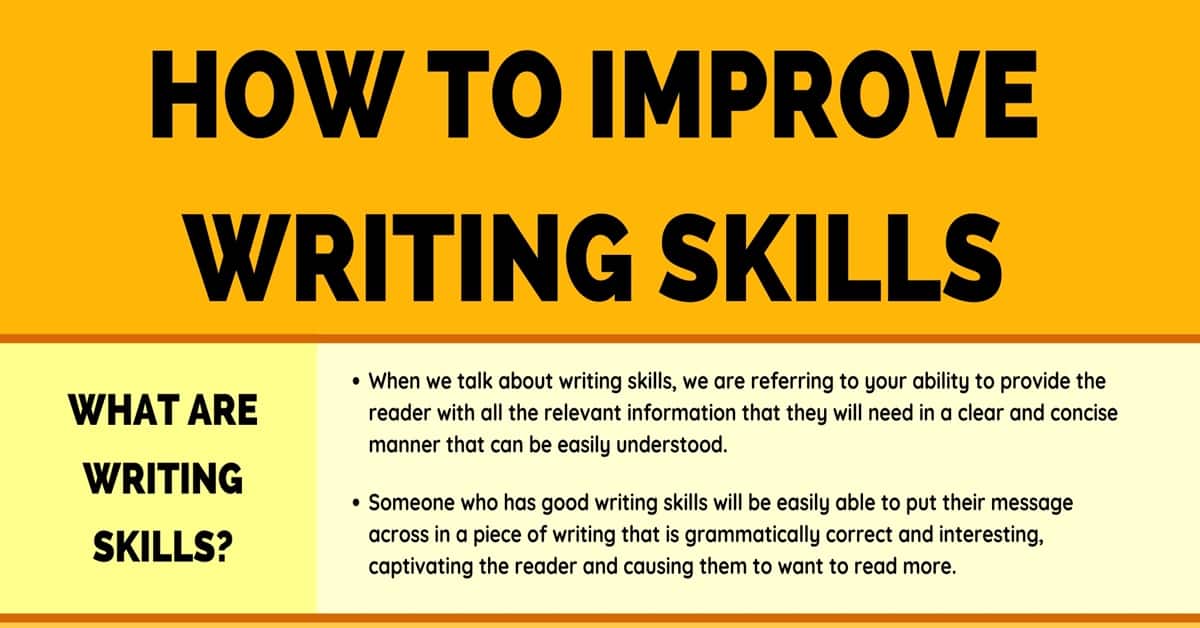
Improving Writing Skills through Project-Based Learning

Writing is one of the keys to effective communication. However, we often discover that students face difficulties in organizing their thoughts, conceptualizing ideas, and starting out essays. For most students, writing can be a nightmare that usually causes academic frustrations and mental anxieties. 

David Anderson, an author at IHateWritingEssays review blog, says it is important for the key players in the academic world to provide a conducive learning environment that would help students to embrace essay writing not as a boring task they hate but as a stimulating activity that fosters imagination, self-expression, and creativity. In order to achieve this, teachers must be open to using active means of learning that would ignite the fire of critical thinking and passionate writing among students. 

Project-based learning can help improve the writing skills of students through the following ways: 

  1. Finding the purpose and motivation to write

Most writing assignments are usually given without any prior explanation or conceptual discovery. Teachers or professors could easily instruct their students to write about a particular topic and submit the output on a certain day. This passive and traditional method can be very harmful to students who are not that naturally inclined to writing. 

To correct this, project-based learning can be implemented during the distribution of writing tasks. The class can initially be introduced to a topic of interest through group discussion, film screening, or community immersion. This would build the foundation for a better understanding of the topic. 

If the topic is about animal welfare, then students can be brought to an animal shelter where they could see the plight of the abused creatures. They could also interview animal rights advocates and adopt the same cause as well. This would help the students form a more compelling thesis statement and also give them a stronger motivation for writing. A purposeful writing can result in an immeasurable effectiveness in terms of developing their arguments. 

  1. Discovering other perspectives through collaboration

Writing may be a means of self-expression, but it can also be a way for students to improve their own outputs by incorporating the viewpoints of their team. Since project-based learning basically promotes collaboration and teamwork, then students can capitalize on such experience to reflect on their own writing style. They can also use the input from group discussions to analyze the strengths and weaknesses of their own arguments. 

Becoming open to the opinion of other people and accepting certain points for revision can help students enhance their writing potentials. Effective writers must be humble enough to accept constructive criticisms in order to improve their output. 

  1. Expanding the depth of arguments through research

Most writing assignments that are given in relation to projects require the application of ideas in real life situations. Because of this, they are exposed to different research methods that are not limited to reading textbooks and articles that are related to the given topic. In order to come up with more compelling stories and reflective discussions, then students are encouraged to combine different frameworks in the conduct of research.

Writing tasks that are given under project-based learning methods have meaningful purposes in contrast to superficial assignments in traditional settings. When students understand that their writing can potentially address certain issues or solve societal problems, then they are more willing to exert further effort in crafting persuasive essays, informative articles, or any other writing output. 

  1. Infusing their own personality and expressing their own voice in writing

Project-based learning methods result in the discovery of a student’s opinion on a particular matter. Writing without passion necessarily results in boring and ineffectual articles or reports. 

When students are allowed to formulate their own inquiry regarding a particular topic, they are given a chance to follow their own methods and thereby create more personal views on the matter. Incorporating their own personality and voice could be very effective in developing their own writing style. There is no need to be limited by rigorous guidelines, thus they could enhance the output by being more imaginative, creative, and reflective in writing. 

Project-based learning promotes the improvement of writing skills among students of different levels. By creating changes in the educational system and becoming more open to such learning styles, then we could expect to see better writers in the future. 

Author’s Bio: Carol is very keen on teaching students new, effective ways of learning. When not freelancing and blogging on education-related matters, Carol enjoys travelling. She takes immense pleasure of visiting new countries.

FAQs


Frequently Asked Questions

  • Spotlight is an invite-only program built to provide a unique publishing solution for aspiring thought leaders. Our exclusive team of book experts will help you build, publish and promote your book worldwide and establish your global author brand.

  • What is the difference between Brand and Incubate?

    You have your manuscript, you want a global author brand. With our best marketing experts working on your book, day in and day out, we will do just that – position your book correctly, align the entire publishing process to the positioning and promote it to the right audience at the right time.

    In short, Brand includes,

    • Book positioning
    • An all-inclusive marketing strategy
    • An Amazon prime listing for 6 months

    Incubate includes all the services in Brand plus Retail display and Book PR.

    This means that you will get everything in Brand plus

    • Author Interviews
    • Online PR
    • Book Reviews
    • Book fair display
  • Does the Spotlight team work with any aspiring writer?

    The answer is no.

    • First of all, the program is currently open ONLY for nonfiction writers.
    • Secondly, we are looking for thinkers, for people with deep knowledge about their subject. Do you think you’re one of them? Plus, if you don’t know what you’re talking about, it’s going to be hard to sell the idea.
    • Do you know what you want from your book? Because the publishing industry is very different, which means the RoI works differently too. So we need someone with realistic expectations.
    • Most importantly, we are in the business of spreading ideas so we take this very seriously. We are looking for driven writers who are in it to ride or die – because that’s how we roll.
  • Is there any author who should not pick Spotlight?

    Yes, of course. You should not pick Spotlight if

    • You don’t know why you’re publishing your book. You need to know exactly what you’re doing this for and why you’re doing it.
    • You are a fiction writer. We’re currently catering to nonfiction writers. However, we’ll keep you updated. We intend to launch a custom-build program for fiction writers soon.
    • You aren’t very sure about the subject you intend to write about. Like we mentioned earlier, we don’t have ghostwriters to research and write your books for you. The book is yours, so you have to know what you’re talking about.
  • How do I know if I am eligible for the Spotlight Program?

    • You must be a subject matter expert and your book must be in the same area of expertise that you are from. In other words, you must know your book’s subject deeply enough to write about it.
    • You must have a clear objective for writing this book. If you don’t have an objective, then you might not be clear about what you want from this book.
    • You must have basic writing skills. You don’t need to be a literature graudate to write a book, but you will need to have a basic command over written English.
    • You need to have a clear understanding of how books work, and a reasonable expectation for ROI This means there needs to be a purpose behind writing the book as your ROI is based on your objective.
  • What is assisted writing?

    The biggest struggle writers face when they decide to publish a book is writing it. This could be because of lack of time, being unsure about how to go about your idea or because writers don’t know how to give their knowledge some structure. Our assisted writing program’s sole purpose is to help you turn your idea into a full-blown book. You will work with our in-house book authoring coach, who will help you from start to finish.

    This means that they will:

    • figure out the book’s objective
    • identify the right audience for it
    • help you create a chapter outline
    • give you an extensive writing plan, with pitstops and guidelines
    • ensure that you stick to your deadlines, with regular follow-ups
    • stick with you until you finish writing your final draft

EDUpub

Publishing services of the highest quality and the most affordable rates is what you get at EDUpub. We are the fastest growing publishing company in the world, with a growing author community of more than 1,000 authors. Publishing a book has been made significantly easier with our guided publishing program and our EDUpub publishing platform. 

Submit your manuscript, sit back and relax as our book experts build your book one page at a time or use our pre-made templates to publish your book on our platform. To put it concisely, EDUpub offers the best way to publish books with the integration of quality services and innovation in technology. 

Talk to our publishing experts, get your free publishing plan, write mail to editor@pen2print.org 

Publishing Process

Book Publishing Process

1. Reviewing the idea

Send us your completed manuscript if you have already finsihed writing or a small summary of your book idea if you are planning to write and we’ll review it and get back to you in 24 hours. After this, you’ll sign a contract and we’ll assign a Spotlight Publishing Manager for your project.

2. Positioning your brand

Our book authoring coach will work with you to figure out the objective of your book, who will benefit from it and what your selling point is. This is important because the rest of the writing and publishing process will depend on it.

3. Creating the content plan

The main objective of assisted writing is to create structure and direction for you when you write your book. So the first thing we’ll do is create an outline for your book, which will be the framework for the entire project. Your coach will also help you figure out your writing plan and schedule your writing with you.

4. Helping you write

From chapter templates to the structure and the writing style, your book authoring coach will be with you until the finish line, making sure you get exactly what you envision for your book. Of course, every word in the book will be yours. The writing coach will not try to change the content. In short, we won’t ghostwrite.

5. Editing your manuscript

Editing will begin once the writing ends when you have a full manuscript in hand. An editor will thoroughly copy edit your book and ensure that there are no language-related or hygiene issues in your script.

6. Designing your cover

Our team of cover designers will analyze the positioning of your book, do thorough research and create cover options for you. Of course, your input will play a major role in the design of the cover.

7. Distributing your book

Apart from making your book available on all major online stores worldwide, we will make sure your book is available in 15 premium bookstores in the country.

8. Promoting your brand

Our book marketing experts will work with you for 3 months to build a strong content marketing plan for you and will also run a 360-degree campaign to give your book sales a boost.

After which, we will also train you to sustain the branding efforts to build your brand.

Use your book as a Branding tool

Are you a professional speaker? Do you want to increase your credibility and promote your brand? Work with an exclusive team of book experts, who will help you position your brand correctly, to the right audience.

Privacy Policy

 This policy covers how we use your personal information. We take your privacy seriously and will take all measures to protect your personal information.

Any personal information received will only be used to fill your order. We will not sell or redistribute your information to anyone. At no time do we keep or store your payment information, including credit card numbers and expiration dates.

If you sign up for our mailing list, your information will never be sold or distributed to anyone. It will be used soley by us for our mailing list.

Advertise with Us


Increase Your Web Traffic and Sales Leads.    

Is your company is looking to increase its customer base and market penetration? 

Do you want to get in front of an audience of active readers?

If you answered yes to both of the questions above, you have come to the right place. 

  • Banner ads 
    • $275 per banner ad for one-month
  • Email advertising through EDUpub Publishing Company
    • $275 per email message

Our digital marketing/advertising methods allow you to get your brand and message in front of an audience of active medical professionals devoted to wound care and/or hyperbaric medicine.

Reach Your Target Audience

Cost-Effective Advertising

<

p align=”center”>Increase Your Sales and Web Traffic 

Contact Us: editor@pen2print.org 

With over 50 years in business, our publications have demonstrated success in the marketplace and proven longevity.

We invite you to take advantage of these effective and affordable marketing/advertising opportunities.

We look forward to working with you!