The Importance of Publication in an Academic Career

 The Importance of Publication in an Academic Career

“Publish or perish.” That’s the mantra that academics have drilled into their heads from the moment they start their quest for an academic career. In today’s academic world, publishing in an academic journal isn’t just an important way to improve one’s reputation or make a dent in the intellectual community. Instead, it’s a life-or-death factor in determining each step on the career ladder. Let’s take a look at some of the ways that the modern university system has turned academic articles into the most important measurement of a professor’s worth.

Publication in Academic Career.jpg

The phrase “publish or perish” was coined in 1932 to describe the pressure that academics faced to place research articles in scholarly journals. But now, almost nine decades later, publication is the measurement by which universities judge the value of scholars for hiring and promotion. The reason for this is a series of perverse incentives tied to publicity. 

Originally, academic articles were designed to share research with other scholars in order to further the intellectual development of academic fields. However, over time, academic articles came to be seen less as a way to share information than as a way to promote one’s own research skills and ability to generate groundbreaking new information. 

Universities, in turn, saw journal articles as a way to call attention to the quality of the research work done in their institutions, and a way to gain mainstream media attention, and thus to attract new sources of fundraising and revenue. There are a lot of websites which offer custom academic writing services for students. Such online writing companies hire professional freelance writers to prepare essays and research projects for money.

This, in turn, has led administrators to see scholarly publications as a way to determine which professors offer the school a good return on investment. According to a study released in 2010, a growing number of universities evaluate potential new hires based entirely on the length of their publication list, without consideration of other factors, such as teaching experience and quality.

However, because many administrators have no background in the subjects taught by the professors they are evaluating, this has created a perverse incentive to simply publish anything, no matter the quality, in order to rack up publication credits to pad a C.V. To that end, the number of scholarly journals has exploded in recent decades. Currently, there are now more than 28,000 scholarly peer-reviewed journals, publishing an astonishing 2.5 million articles each year.  The number of published articles has grown at a steady rate of 4-5% per year, according to the International Association of Scientific, Technical and Medical Publishers. 

Obviously, that volume cannot represent unalloyed quality. The more papers that are published each year, the more papers that will have quality problems.

The glut of publishing is driven by the university system, in which the number of scholarly publications determines a professor’s fitness to advance through the ranks and to gain tenure. Recently, impact scores—referring to the quality of the journal in which a paper is published, how many other scholars cite a paper, or how many news articles refer to it—have come into vogue as a way to distinguish between an academic with high quality work and one who churns our hack work for credits, but the overwhelming pressure remains to produce volume over quality. This has led to a bizarre phenomenon known unofficially as “salami slicing,” where professors will divide their research into the smallest units possible so that they can wring extra articles out of a topic that previously would have been covered in a single paper. This makes it harder for future researchers to gather the applicable information, but it means that the author ends up with extra papers on his or her C.V.

What makes the explosion of articles as a metric of success so disturbing is that most universities do not pay professors to write them, nor do journals, which typically seize the writer’s copyright and then profit from the articles themselves. Instead, professors are asked to squeeze article writing into their free time outside of their professional teaching and research obligations, or else to fit a growing number of articles into limited annual research periods.

The resulting distortion of priorities has unintended consequences: Universities that prioritize publications end up with professors who must place writing articles—their unpaid labor—above their official job of teaching undergraduate and graduate students and conducting research. Consequently, both purposes of the modern university—teaching and research—suffer as professors scramble to prioritize whichever and whatever subjects can generate the most articles and the most media attention, rather than the research that will result in the greatest impact on the world. 

While most academics would prefer to do important work over voluminous work, the consequences of not publishing are daunting: An academic who does not publish regularly will not receive tenure, and will quickly find that his or her position has been replaced by someone with a longer C.V. Academic publishing is less about sharing knowledge than an arms race to pad a C.V. for the benefit of administrators who will never read the articles listed on it.

How To Write Essays Quickly

 So, you have been given the task of writing an essay. Perhaps, you have not started working on it right away which means that you are currently pressed for time. It is not surprising if you start looking for an essay writing service one hour on the internet.


You need to submit your paper on time, otherwise you will get a lower grade or no grade at all which is even worse. Almost every student on the planet can relate as we have all been there. Lots of tasks have to be submitted almost simultaneously. You do not even remember when you have had a decent break from the studying process. You have been feeling extremely exhausted lately. Luckily, there are lots of ways to make your life easier at this stage of your life.

Where To Get Sample Essays in One Hour?

The reasons why you cannot complete a certain academic writing task can be various. Sometimes you simply do not have enough time to write another essay. In other cases, you are so exhausted that even if you force yourself to stay up all night and work on your paper, you will still come up with a piece of writing that is below average. You are aware of the fact that you cannot submit something of a very poor quality.

The good news is that help is available, and it is right at your disposal. In other words, you can get a sample essay online which will sufficiently decrease the amount of time you will need to spend on the accomplishment of this task. The only thing left for you to do is to choose an academic essay writing service you consider to be reliable, and to place an order on their website. The latter will not take a lot of time as the order process is very simple. You are only required to follow a few steps. After that, an experienced writer gets down to task accomplishment which presupposes that you can finally take that break you have been dreaming of.

What is particularly great about such service is that they can write an essay in one hour. Surely, you might be skeptical at first. Yet, the writers at these companies have acquired so much knowledge and experience that it does not take them long to come up with a unique and impressive piece of writing, provided that you do not require a 14-page long essay to be written in an hour, of course.

Taking everything into account, find a paper writing service you can trust, allocate a couple of minutes on the order process, sit back and relax. Let the experts do all the work for you. Instead, you can use this opportunity to spend your free time on something more enjoyable, such as hanging out with your friends or watching a movie. Getting a sample essay online is a great alternative when you are pressed for time or do not have any ideas in regards to the topic you have been given.

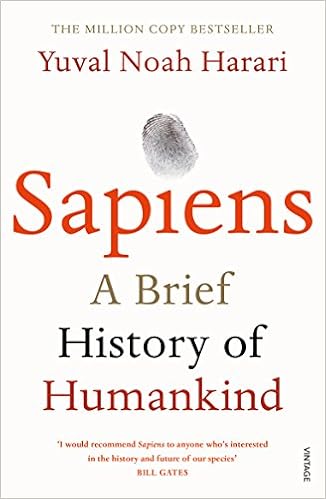
Sapiens: A Brief History of Humankind

What makes us brilliant? What makes us deadly? What makes us Sapiens? Yuval Noah Harari challenges everything we know about being human in the perfect read for these unprecedented times. Earth is 4.5 billion years old. In just a fraction of that time, one species among countless others has conquered it: us. In this bold and provocative book, Yuval Noah Harari explores who we are, how we got here and where we’re going. ‘I would recommend Sapiens to anyone who’s interested in the history and future of our species’ Bill Gates ‘Interesting and provocative… It gives you a sense of how briefly we’ve been on this Earth’ Barack Obama ONE OF THE GUARDIAN’S 100 BEST BOOKS OF THE 21st CENTURY

General Knowledge 2021

  1. General Knowledge 2021 is a compact version of all current events of the whole year. 2. Divided into 5 Key Sections; History, Geography, Indian Polity, Indian Economy, General Science and General Knowledge. 3. A separate section has been provided for Current Affairs 4. Provides accurate, perfect and complete coverage of facts. 5. It is useful for the preparation of SSC, Bank, Railway, Police, NDA/CDS and various other competitive exams.

General knowledge has become the essential part for human social life. Have little knowledge about most of the hot topics it not only makes aware of the world but also gives you the satisfaction of being socially accepted. The more you keep yourself aware & updated with happenings around you the better you perform, not just in the various exams but also at your work by making better decisions according to the recent tastes and preferences in the market. Get the compact version of all current events of the whole year with new edition of the ‘General Knowledge 2021’. This book has been prepared for the students who are going to appear for the various upcoming examinations. It covers the key subjects including History, Geography, Indian Polity, Indian Economy, General Science and General Knowledge with latest facts and updates supported by figures,graphics and tables. A separate section has been provided for Current Affairs right in the beginning of the book promoting actual knowledge from recent happening occurred at different areas. Providing accurate, perfect and complete coverage of facts, it is a complete general knowledge book, useful for the preparation of SSC, Bank, Railway, Police, NDA/CDS and various other competitive exams. TABLE OF CONTENT Current Affairs, History, Geography, Indian Polity, Indian Economy, General Science and General Knowledge.

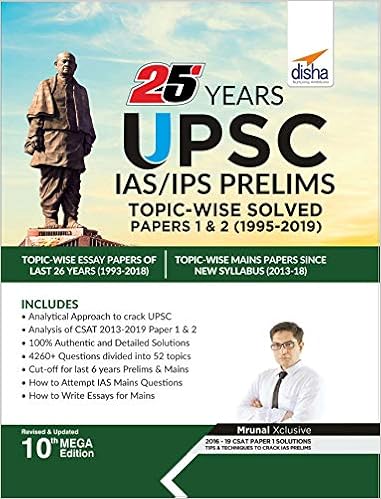
25 Years UPSC IAS/ IPS Prelims Topic-wise Solved Papers

The thoroughly revised and updated 10th edition of Disha’s bestseller “UPSC IAS/ IPS Prelims topic-wise Solved Papers 1 and 2 (1995-2019)” consists of past years solved papers of the General Studies Paper 1 and 2 distributed into 8 units and 52 topics. The book has been empowered with unique inputs/ articles by one of the most esteemed faculties for IAS – mrunal on ‘understanding the IAS exam and strategies to crack the Prelim and Main exam’, how to attempt the IAS main exam questions?, how to write essays for GS IV main exam, along with solutions to 2017-19 exams. The book provides unsolved Mains papers from 2013-18, divided topic-wise. The book also provides list of essays divided topic-wise from 1993-2018.The strength of the book lies in the Errorless detailed solutions. The book is 100% useful for both the General Studies Papers (1 and 2) of the Prelims/ CSAT.

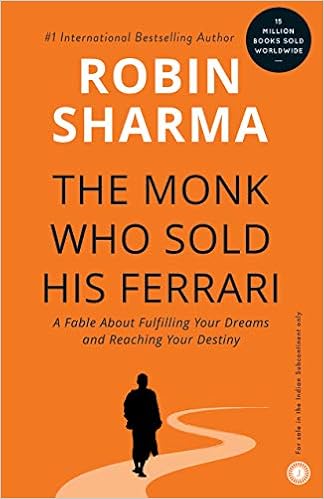
The Monk Who Sold His Ferrari

A renowned inspirational fiction, The Monk Who Sold His Ferrari is a revealing story that offers the readers a simple yet profound way to live life. The plot of this story revolves around Julian Mantle, a lawyer who has made his fortune and name in the profession. A sudden heart-attack creates havoc in the successful lawyer’s life. Jolted by the sudden onset of the illness, his practice comes to a standstill. He ponders over material success being worth it all, renounces all of it and leaves for India.

A visit to India about a spiritual awakening that opens up new vistas and Julian begins to view life in a different perspective. He decides to live his life once again but in a way that is much more fulfilling and meaningful than before. In the book, the reader goes through a spiritual journey and into a very old culture that has gathered much wisdom over the millennia. The book advocates about how to live happily, think deep and rightly, value time and relationships, be more disciplined, follow the heart’s call and live every moment of the life. Written in simple words, the book has turned out to be a bestseller and is more than just an endearing story. Through storytelling, Robin Sharma showcases the miracles and wonders of living a fulfilling life. In the process, the book introduces readers to enlightening yet simple principles that vouch to make life better, happier and more meaningful. A bestselling novel, what readers all over the globe appreciate about this book is its deft amalgam of the philosophies from both western and eastern worlds. The book has been followed by important personalities around the world. About the Author Robin Sharma, the bestselling author of ‘The Monk Who Sold His Ferrari’, first published in 1999, is an International Leadership Professional Guru who is credited with having written 15 books on leadership. He has been guiding people to live a better life, by drawing inspiration from his own life experiences. The Leader Who Had No Title, The Leader Who Had No Title, The Greatness Guide and The Saint and The Saint are among his best books. He heads the Sharma Leadership International Inc, a firm that trains people in leadership. A former litigation lawyer, Robin holds a law degree from Dalhousie Law School, Canada. This book along with The Greatness Guide has been among the world’s bestsellers and has been translated in as many as 70 languages all over the world.

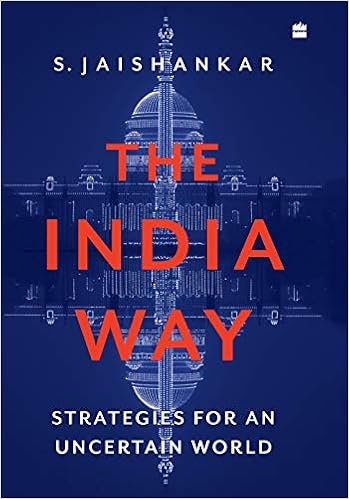
The India Way: Strategies for an Uncertain World

The decade from the 2008 global financial crisis to the 2020 coronavirus pandemic has seen a real transformation of the world order. The very nature of international relations and its rules are changing before our eyes. For India, this means optimal relationships with all the major powers to best advance its goals. It also requires a bolder and non-reciprocal approach to its neighbourhood. A global footprint is now in the making that leverages India’s greater capability and relevance, as well as its unique diaspora. This era of global upheaval entails greater expectations from India, putting it on the path to becoming a leading power. In The India Way, S. Jaishankar, India’s Minister of External Affairs, analyses these challenges and spells out possible policy responses. He places this thinking in the context of history and tradition, appropriate for a civilizational power that seeks to reclaim its place on the world stage.

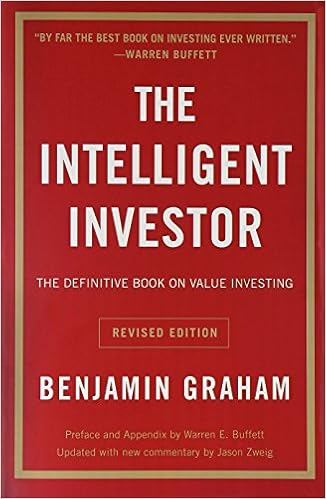
The Intelligent Investor

It is a widely acclaimed book by Benjamin Graham on value investing. Written by one of the greatest investment advisers of twentieth century, the book aims at preventing potential investors from substantial errors and also teaches them strategies to achieve long-term investment goals.

Over the years, investment market has been following teachings and strategies of Graham for growth and development. In the book, Graham has explained various principles and strategies for investing safely and successfully without taking bigger risks. Modern-day investors still continue to use his proven and well-executed techniques for value investment. The current edition highlights some of the important concepts that are useful for latest financial orders and plans. Keeping Graham’s unique text in original form, the book focuses on major principles that can be applied in day-to-day life. All the concepts and principles are explained with the help of examples for better clarity and understanding of the financial world. Combination of original plan of Graham and the current financial situations are the reason behind this book’s preference today’s investors. It is a detailed version with several wisdom quotes that are likely to change one’s investing career and lead to the path of financial safety and security. About the Author: A professional investor and economist, known all over the world, Benjamin Graham is believed to be the father of value investing. He first taught this new investment approach at Columbia Business School. A British-born, he is credited with having pioneered numerous cutting edge concepts that, many believe, pushed several of his followers in the world of investments, to the top.

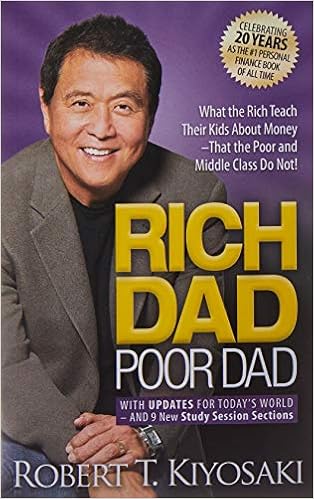
Rich Dad Poor Dad : What The Rich Teach Their Kids About Money That the Poor and Middle Class Do Not!

It has since become the #1 Personal Finance book of all time… translated into dozens of languages and sold around the world. Rich Dad Poor Dad is Robert’s story of growing up with two dads — his real father and the father of his best friend, his rich dad — and the ways in which both men shaped his thoughts about money and investing. The book explodes the myth that you need to earn a high income to be rich and explains the difference between working for money and having your money work for you.

20 Years… 20/20 Hindsight In the 20th Anniversary Edition of this classic, Robert offers an update on what we’ve seen over the past 20 years related to money, investing, and the global economy. Sidebars throughout the book will take readers “fast forward” — from 1997 to today — as Robert assesses how the principles taught by his rich dad have stood the test of time. In many ways, the messages of Rich Dad Poor Dad, messages that were criticized and challenged two decades ago, are more meaningful, relevant and important today than they were 20 years ago. As always, readers can expect that Robert will be candid, insightful… and continue to rock more than a few boats in his retrospective. Will there be a few surprises? Count on it. Rich Dad Poor Dad… • Explodes the myth that you need to earn a high income to become rich • Challenges the belief that your house is an asset • Shows parents why they can’t rely on the school system to teach their kids about money • Defines once and for all an asset and a liability • Teaches you what to teach your kids about money for their future financial success “

Grandma's Bag of Stories

Memories of a grandparent spinning tales around animals and mysterious characters have kept many of us rapt till date. Sudha Murty’s Grandma’s Bag of Stories is simply delightful. The story starts with Anand, Krishna, Raghu and Meena arriving at their grandparents’ house in Shiggaon. Overjoyed Ajji and Ajja(Grandmother and grandfather in Kannada) get the house ready, while Ajji prepares delicious snacks for children. Finally, times comes when everyone gathers around Ajji, as she opens her big bag of stories. She tells stories of kings and cheats, princesses and onions, monkeys and mice and scorpions and hidden treasures.

Though unlikely in combination, stories makes perfect sense when Grandma is the one narrating them. This book is ideal for young children and those who are 5+ in age. Stories are accompanied by colourful illustrations and morals. Lucid and simple language of the book, makes reading a pleasure. About the author: Active Indian social worker and writer, Sudha Murty was born 19th August 1950. She writes in two languages: Kannada and English. Sudha started her career in field of computer science and engineering. She is an active member in the Gate Foundation and the chairperson of a non-profit organization, Infosys Foundation in Karnataka. Credited for founding several orphanages, Sudha has also participated in various rural development efforts, to provide library and computer facilities in all Government schools of Karnataka. One of her many achievements includes establishing the ‘The Murty Classical Library of India’ at Harvard University. Apart from writing novels, she has also acted in films: Pitruroon (Marathi film) and Prarthana(Kannada film).

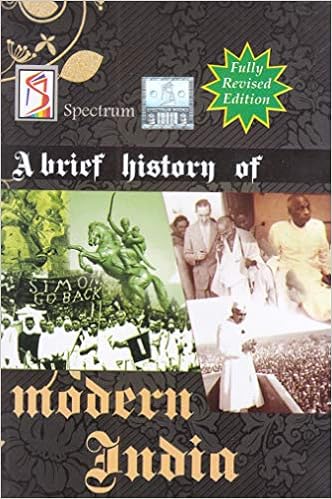
A Brief History of Modern India

This book brings together various aspects of the turbulent period (from arrival of the Europeans on Indian soil and the establishment of British rule in India to the day India won independence and the early years of freedom) in a systematic and succinct manner: major and important details and milestones are effectively discussed while several relevant but little known details are also highlighted.It is not just the mainstream freedom struggle that has been considered; the disparate efforts—small but significant— of several groups have also been discussed. The political and socio-economic developments that have influenced the growth of modern India have been dealt with in independent chapters.

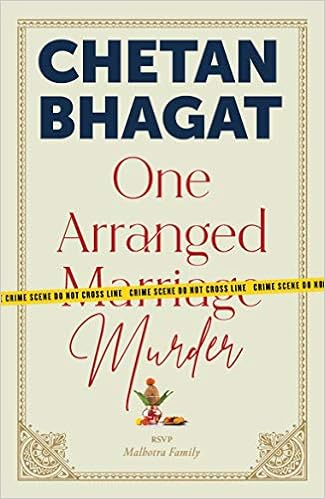
One Arranged Murder

Keshav has set up an investigation agency with his best friend, Saurabh. Can the two amateur detectives successfully solve another murder case that affects them personally? And where will it leave their friendship? ‘Ever since you found Prerna, I lost my best friend’ is what I told Saurabh. Hi, this is Keshav, and Saurabh, my best friend, flatmate, colleague and business partner, won’t talk to me. Because I made fun of him and his fiancée. Saurabh and Prerna will be getting married soon. It is an arranged marriage. However, there is more cheesy romance between them than any love-marriage couple. On Karva Chauth, she fasted for him. She didn’t eat all day. In the evening, she called him and waited on the terrace for the moon and for Saurabh to break her fast. Excited, Saurabh ran up the steps of her three-storey house. But when he reached … Welcome to One Arranged Murder, an unputdownable thriller from India’s highest-selling author. A story about love, friendship, family and crime, it will keep you entertained and hooked right till the end.

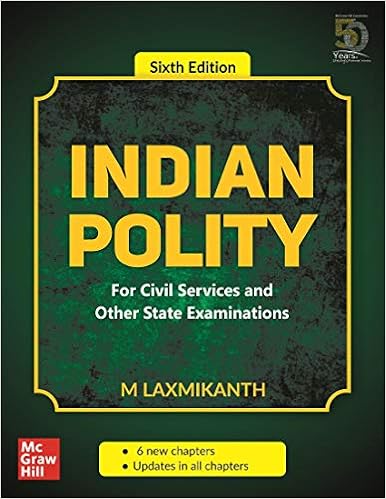
Indian Polity – For Civil Services and Other State Examinations

The book “Indian Polity”, 6th edition is a must-read for the aspirants appearing for the Civil Services Examinations as well as the other state Services Examinations. It is conceived to cater to the requirements of not just students appearing for competitive examinations but also postgraduates, research scholars, academics and General readers who are interested in the country political, Civil and constitutional issues. The extant chapters have been thoroughly revised and updated as per the recent developments.<Salient features: ✔ 80 chapters and 16 appendices covering the entire Indian political and constitutional spectrum ✔ chapters rearranged as per the latest pattern of the examination ✔ coverage on the recent developments in Jammu & Kashmir and Ladakh, constitutional interpretation, judicial review and judicial activism ✔ updated previous years’ questions and revised practice questions for both Preliminary and Mains Examinations ✔ one-stop reference for the Civil Services aspirants, students of law, political Science and public Administration ✔ 6 New chapters: Goods and Services Tax Council National Commission for backward classes National investigation agency National disaster Management role of regional parties coalition government